

Dual microglia effects on blood brain barrier permeability induced by systemic inflammation
Open accessThe DOI matches its Crossref record; 72 of the 72 references it cites were found in a registry or an index.
Abstract
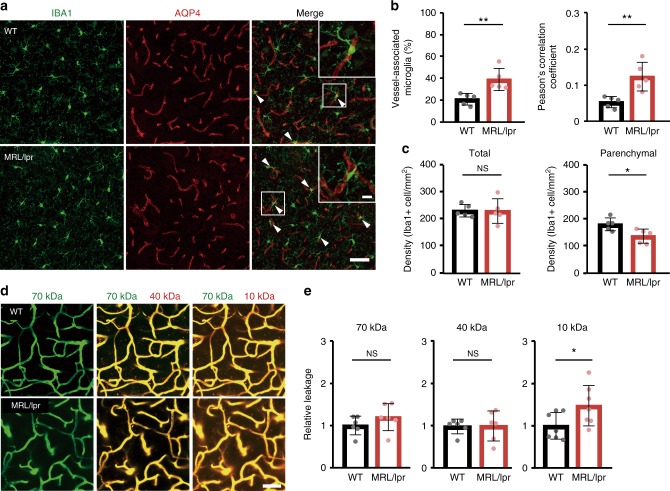
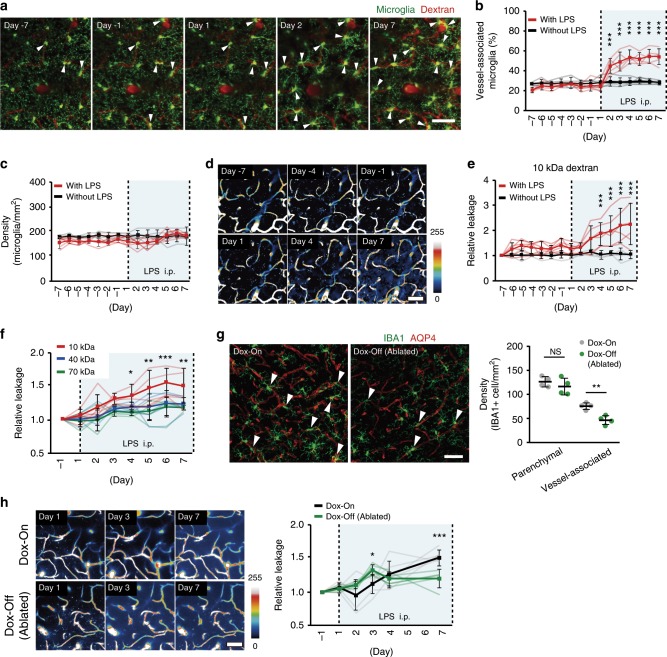
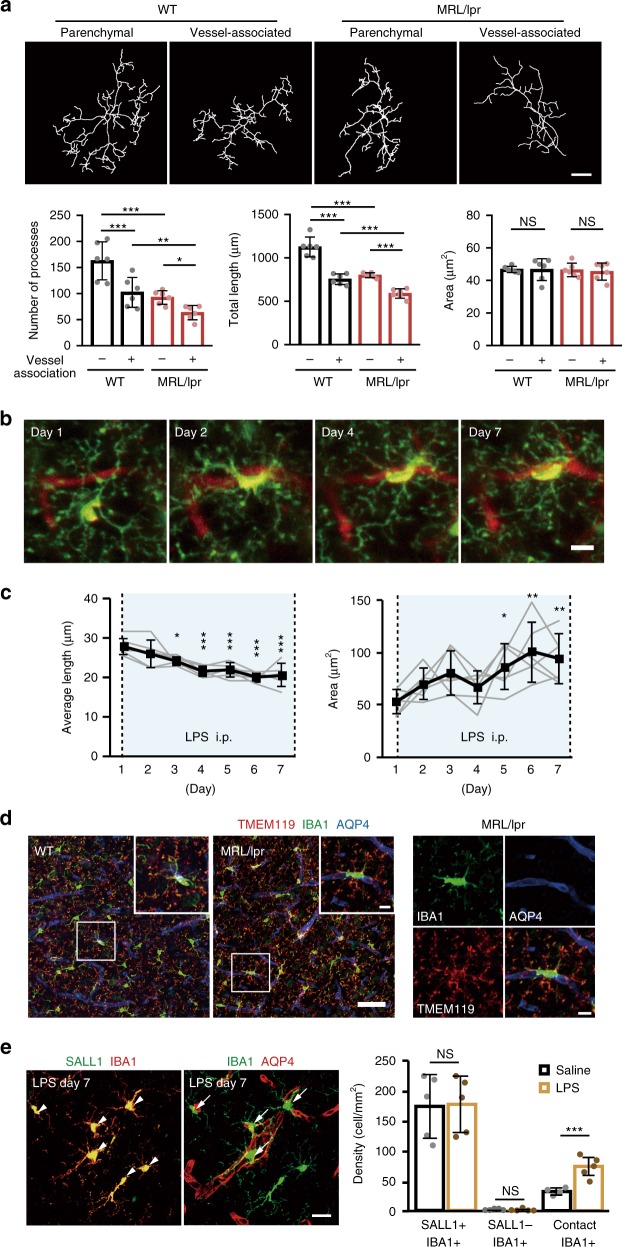
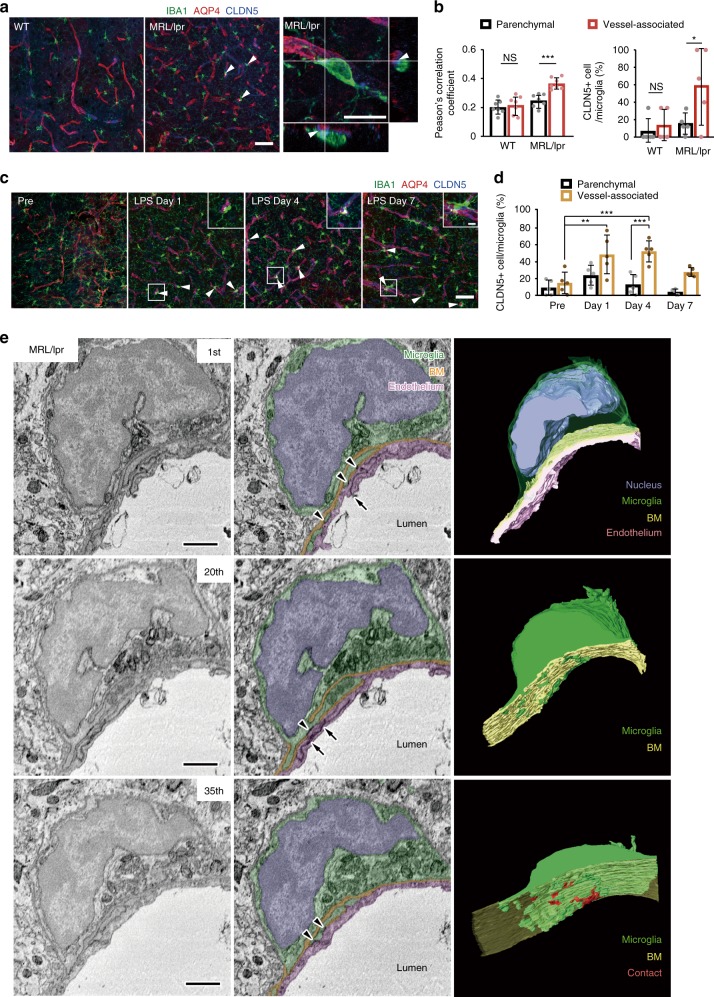
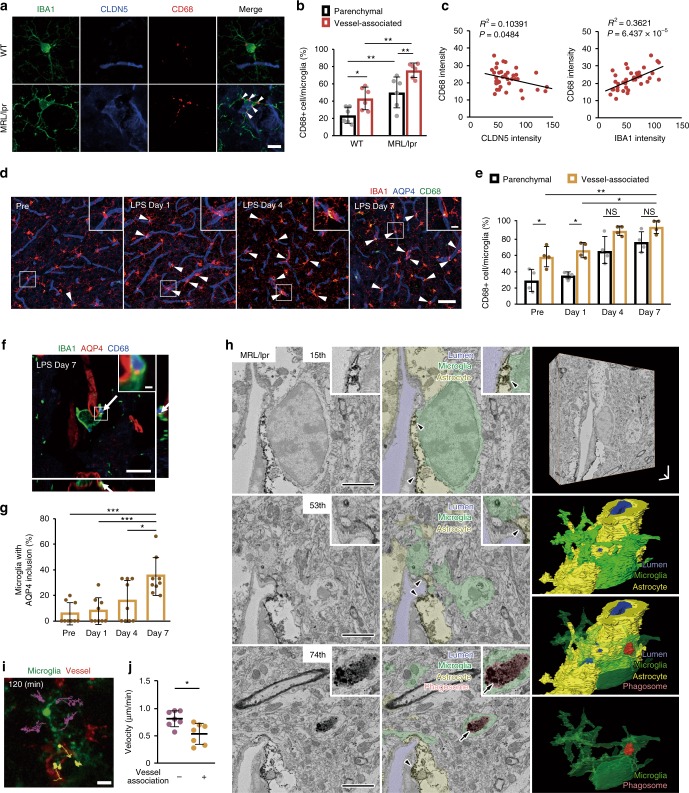
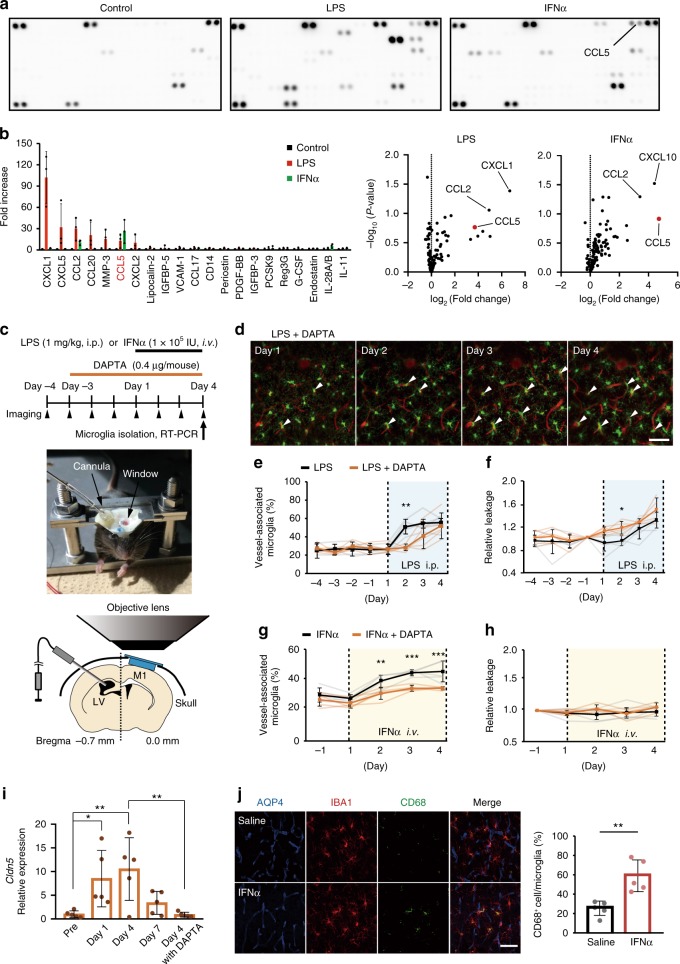
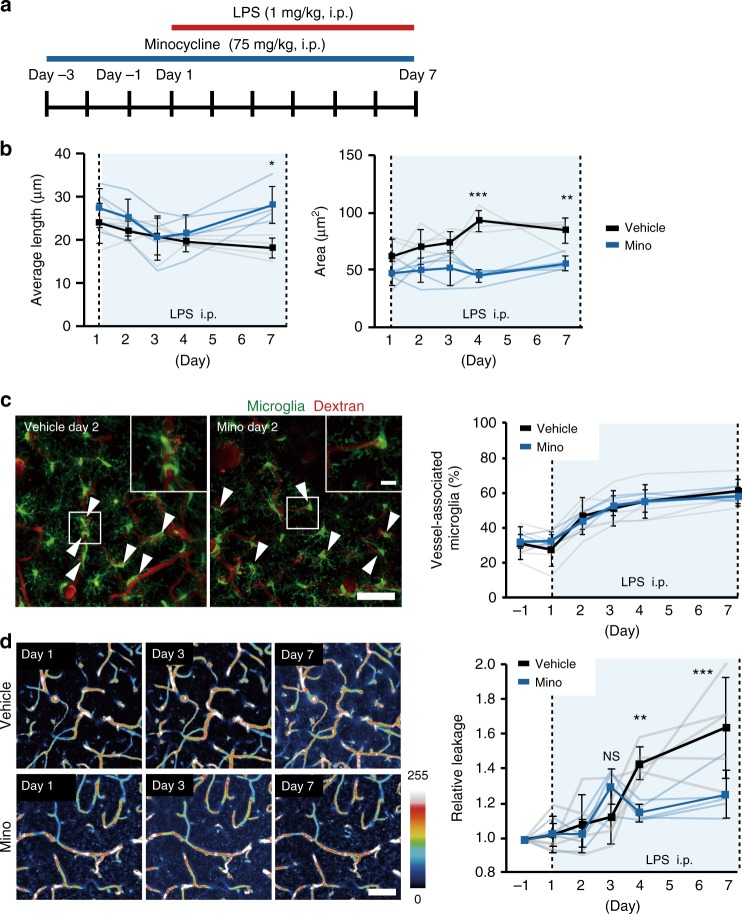
Microglia survey brain parenchyma, responding to injury and infections. Microglia also respond to systemic disease, but the role of blood–brain barrier (BBB) integrity in this process remains unclear. Using simultaneous in vivo imaging, we demonstrated that systemic inflammation induces CCR5-dependent migration of brain resident microglia to the cerebral vasculature. Vessel-associated microglia initially maintain BBB integrity via expression of the tight-junction protein Claudin-5 and make physical contact with endothelial cells. During sustained inflammation, microglia phagocytose astrocytic end-feet and impair BBB function. Our results show microglia play a dual role in maintaining BBB integrity with implications for elucidating how systemic immune-activation impacts neural functions.
Overview
The claims and statistics of this paper haven’t been checked yet.
Free: it reads the open-access text and checks the first 5 claims that cite a source we can check. Create a free account to check every claim.
Integrity signals
Registry
Cites
Statistics
Figures
Verification
Claims the paper makes
The claims and statistics of this paper haven’t been checked yet.
Free: it reads the open-access text and checks the first 5 claims that cite a source we can check. Create a free account to check every claim.
Claims other papers make about this one
Each is checked against this paper’s own text: does it say what the citing paper says it does?
The source backs part of the claim, not all of it — or backs it for a different population, condition or comparison.
In the citing paper
“sustained activation triggered by the RAGE ligand S100B exacerbates abnormal BBB permeability [17,18].”
From Research Advances in the Pathogenesis of Sepsis-Associated Encephalopathy (2026) · cites this paper as [18]
Experimental — accuracy not yet measuredThe source backs part of the claim, not all of it — or backs it for a different population, condition or comparison.
In the citing paper
“According to previous studies, systemic inflammation may disrupt the BBB, allowing pro-inflammatory molecules (such as cytokines and LPS) to enter the CNS [60,61,62].”
From Neuroprotective Effects of Bifidobacterium breve CCFM1067 in MPTP-Induced Mouse Models of Parkinson’s Disease (2022) · cites this paper as [61]
Experimental — accuracy not yet measuredThe cited source says what the claim attributes to it.
In the citing paper
“An in vivo study showed that LPS injection induced 10 kDa dextran translocation across the BBB in mice”
From The modulatory effects of gut microbes and metabolites on blood-brain barrier integrity and brain function in sepsis-associated encephalopathy (2023) · cites this paper as Haruwaka et al., 2019
The check wasn’t confident either way, so it gives no verdict — never disputed.
In the citing paper
“Furthermore, species differences in microglial density, BBB tight junction composition, and cholinergic system organization between rodents and humans likely restrict direct extrapolation of preclinical findings to human patients [15,16,18].”
From Research Advances in the Pathogenesis of Sepsis-Associated Encephalopathy (2026) · cites this paper as [18]
Experimental — accuracy not yet measured
Self-check
Percentages, sums and reported differences re-computed from the paper’s own numbers.
The self-check needs the paper’s full text.
Citations
Cites
1 retracted
Microglia-dependent synapse loss in type I interferon-mediated lupus
Bialas, A. R., Presumey, J., Das, A., van der Poel, C. E., Lapchak, P. H., Mesin, L., Victora, G., Tsokos, G. C., Mawrin, C., Herbst, R., et al. (2017) · Nature · doi:10.1038/nature22821 · Cited by 197
RetractedMetascape provides a biologist-oriented resource for the analysis of systems-level datasets
Zhou, Y., Zhou, B., Pache, L., Chang, M., Khodabakhshi, A. H., Tanaseichuk, O., Benner, C., & Chanda, S. K. (2019) · Nature Communications · doi:10.1038/s41467-019-09234-6 · Cited by 14,611
Resting microglial cells are highly dynamic surveillants of brain parenchyma in vivo
Nimmerjahn, A., Kirchhoff, F., & Helmchen, F. (2005) · Science · doi:10.1126/science.1110647 · Cited by 5,827
Astrocyte-endothelial interactions at the blood-brain barrier
Abbott, N. J., Rönnbäck, L., & Hansson, E. (2006) · Nature Reviews Neuroscience · doi:10.1038/nrn1824 · Cited by 5,595
Structure and function of the blood–brain barrier
Abbott, N. J., Patabendige, A. A. K., Dolman, D. E. M., Yusof, S. R., & Begley, D. J. (2010) · Neurobiology of Disease · doi:10.1016/j.nbd.2009.07.030 · Cited by 5,185
Zhang, Y., Chen, K., Sloan, S. A., Bennett, M. L., Scholze, A. R., O'Keeffe, S., Phatnani, H. P., Guarnieri, P., Caneda, C., Ruderisch, N., et al. (2014) · The Journal of Neuroscience · doi:10.1523/jneurosci.1860-14.2014 · Cited by 4,875
Microglia Sculpt Postnatal Neural Circuits in an Activity and Complement-Dependent Manner
Schafer, D. P., Lehrman, E. K., Kautzman, A. G., Koyama, R., Mardinly, A. R., Yamasaki, R., Ransohoff, R. M., Greenberg, M. E., Barres, B. A., & Stevens, B. (2012) · Neuron · doi:10.1016/j.neuron.2012.03.026 · Cited by 4,089
ATP mediates rapid microglial response to local brain injury in vivo
Davalos, D., Grutzendler, J., Yang, G., Kim, J. V., Zuo, Y., Jung, S., Littman, D. R., Dustin, M. L., & Gan, W.-B. (2005) · Nature Neuroscience · doi:10.1038/nn1472 · Cited by 3,913
Microglia: Active sensor and versatile effector cells in the normal and pathologic brain
Hanisch, U.-K., & Kettenmann, H. (2007) · Nature Neuroscience · doi:10.1038/nn1997 · Cited by 3,676
Kettenmann, H., Hanisch, U.-K., Noda, M., & Verkhratsky, A. (2011) · Physiological Reviews · doi:10.1152/physrev.00011.2010 · Cited by 3,547
Research works printed but not linked: 2
- Yang Y Attenuation of acute stroke injury in rat brain by minocycline promotes blood-brain barrier remodeling and alternative microglia/macrophage activation during recovery J. Neuroinflammation 2015 12 26 10.1186/s12974-015-0245-4 25889169 PMC4340283 · DOI · Paper page
- McKim DB Microglial recruitment of IL-1beta-producing monocytes to brain endothelium causes stress-induced anxiety Mol. Psychiatry 2018 23 1421 1431 10.1038/mp.2017.64 28373688 PMC5628107 · DOI · Paper page
Cited by
The blood–brain barrier in systemic infection and inflammation
Galea, I. (2021) · Cellular & Molecular Immunology · doi:10.1038/s41423-021-00757-x · Cited by 738
“However, once inflammation was sustained, this initial protective response was followed by a transformation of the vessel-associated microglia to a CD68-positive phagocytic phenotype with loss of BBB integrity [100].”
BackgroundThe blood-brain barrier in aging and neurodegeneration
Knox, E. G., Aburto, M. R., Clarke, G., Cryan, J. F., & O’Driscoll, C. M. (2022) · Molecular Psychiatry · doi:10.1038/s41380-022-01511-z · Cited by 738
“However, sustained inflammation promotes BBB disruption by inducing microglial-led phagocytosis of astrocytic end-feet [62].”
BackgroundPeripheral inflammation and blood–brain barrier disruption: effects and mechanisms
Huang, X., Hussain, B., & Chang, J. (2021) · CNS Neuroscience & Therapeutics · doi:10.1111/cns.13569 · Cited by 709
Maternal immune activation and neuroinflammation in human neurodevelopmental disorders
Han, V. X., Patel, S., Jones, H. F., & Dale, R. C. (2021) · Nature Reviews Neurology · doi:10.1038/s41582-021-00530-8 · Cited by 683
Mou, Y., Du, Y., Zhou, L., Yue, J., Hu, X., Liu, Y., Chen, S., Lin, X., Zhang, G., Xiao, H., et al. (2022) · Frontiers in Immunology · doi:10.3389/fimmu.2022.796288 · Cited by 432
“CCL5 is one of the chemotactic factors guiding microglial migration, and administration of the CCR5 antagonist DAPTA delayed microglial migration and DAPTA can decrease the number of vessel-associated microglia (87).”
BackgroundInfluentialMechanisms of Blood–Brain Barrier Protection by Microbiota-Derived Short-Chain Fatty Acids
Fock, E., & Parnova, R. (2023) · Cells · doi:10.3390/cells12040657 · Cited by 385
Ronaldson, P. T., & Davis, T. P. (2020) · Journal of Cerebral Blood Flow & Metabolism · doi:10.1177/0271678x20951995 · Cited by 392
“Specifically, CCR5-dependent migration of activated microglia to the perivascular space early in the course of inflammation protects the BBB phenotype, while sustained inflammation triggers activated microglia to induce BBB damage.(28) In contrast, measurable disruption of rat brain endothelial tight junction protein…”
BackgroundInfluentialThe Impact of Systemic Inflammation on Alzheimer’s Disease Pathology
Xie, J., Van Hoecke, L., & Vandenbroucke, R. E. (2022) · Frontiers in Immunology · doi:10.3389/fimmu.2021.796867 · Cited by 324
Sun, Y., Koyama, Y., & Shimada, S. (2022) · Frontiers in Aging Neuroscience · doi:10.3389/fnagi.2022.903455 · Cited by 304
“Microglia phagocytose astrocytic end-feet and impair BBB function, leading to BBB leakage (Haruwaka et al., 2019).”
BackgroundBisht, K., Okojie, K. A., Sharma, K., Lentferink, D. H., Sun, Y.-Y., Chen, H.-R., Uweru, J. O., Amancherla, S., Calcuttawala, Z., Campos-Salazar, A. B., et al. (2021) · Nature Communications · doi:10.1038/s41467-021-25590-8 · Cited by 300
The role of gut dysbiosis in Parkinson’s disease: mechanistic insights and therapeutic options
Wang, Q., Luo, Y., Ray Chaudhuri, K., Reynolds, R., Tan, E.-K., & Pettersson, S. (2021) · Brain · doi:10.1093/brain/awab156 · Cited by 281
Neuroinflammation after surgery: from mechanisms to therapeutic targets
Yang, T., Velagapudi, R., & Terrando, N. (2020) · Nature Immunology · doi:10.1038/s41590-020-00812-1 · Cited by 274
Blood-Brain Barrier Disruption by Lipopolysaccharide and Sepsis-Associated Encephalopathy
Peng, X., Luo, Z., He, S., Zhang, L., & Li, Y. (2021) · Frontiers in Cellular and Infection Microbiology · doi:10.3389/fcimb.2021.768108 · Cited by 267
Sepsis-Associated Encephalopathy and Blood-Brain Barrier Dysfunction
Gao, Q., & Hernandes, M. S. (2021) · Inflammation · doi:10.1007/s10753-021-01501-3 · Cited by 257
Challenges of Organoid Research
Andrews, M. G., & Kriegstein, A. R. (2022) · Annual Review of Neuroscience · doi:10.1146/annurev-neuro-111020-090812 · Cited by 250
Shaping Neuronal Fate: Functional Heterogeneity of Direct Microglia-Neuron Interactions
Cserép, C., Pósfai, B., & Dénes, Á. (2021) · Neuron · doi:10.1016/j.neuron.2020.11.007 · Cited by 256
“microglial cells and brain vasculature are essential during both development and adulthood (Haruwaka et al., 2019; Zhao et al., 2018).”
Hussain, B., Fang, C., & Chang, J. (2021) · Frontiers in Neuroscience · doi:10.3389/fnins.2021.688090 · Cited by 255
Mei, B., Li, J., & Zuo, Z. (2021) · Brain, Behavior, and Immunity · doi:10.1016/j.bbi.2020.10.008 · Cited by 231
“CNS Neurosci Ther 18 (12), 994–1002.”
BackgroundInfluentialTaylor, J., Parker, M., Casey, C. P., Tanabe, S., Kunkel, D., Rivera, C., Zetterberg, H., Blennow, K., Pearce, R. A., Lennertz, R. C., et al. (2022) · British Journal of Anaesthesia · doi:10.1016/j.bja.2022.01.005 · Cited by 212
Blevins, B. L., Vinters, H. V., Love, S., Wilcock, D. M., Grinberg, L. T., Schneider, J. A., Kalaria, R. N., Katsumata, Y., Gold, B. T., Wang, D. J. J., et al. (2021) · Acta Neuropathologica · doi:10.1007/s00401-020-02235-6 · Cited by 200
Comer, A. L., Carrier, M., Tremblay, M.-È., & Cruz-Martín, A. (2020) · Frontiers in Cellular Neuroscience · doi:10.3389/fncel.2020.00274 · Cited by 205
“has been shown to affect microglial function, while dynamic neuroimmune interactions were described at the BBB in both health and diseased sates (Merlini et al., 2012; Borjini et al., 2019; Haruwaka et al., 2019).”
BackgroundDevelopment of Novel Therapeutics Targeting the Blood–Brain Barrier: From Barrier to Carrier
Li, J., Zheng, M., Shimoni, O., Banks, W. A., Bush, A. I., Gamble, J. R., & Shi, B. (2021) · Advanced Science · doi:10.1002/advs.202101090 · Cited by 202
Chen, T., Dai, Y., Hu, C., Lin, Z., Wang, S., Yang, J., Zeng, L., Li, S., & Li, W. (2024) · Fluids and Barriers of the CNS · doi:10.1186/s12987-024-00557-1 · Cited by 189
“Moreover, activated microglia phagocytose astrocytic end-feet, lead to the loss of astrocyte-vascular connections and subsequent BBB disruption [83, 84].”
BackgroundGe, X., Tang, P., Rong, Y., Jiang, D., Lu, X., Ji, C., Wang, J., Huang, C., Duan, A., Liu, Y., et al. (2021) · Redox Biology · doi:10.1016/j.redox.2021.101932 · Cited by 196
Parkinson's Disease: A Multisystem Disorder
Costa, H. N., Esteves, A. R., Empadinhas, N., & Cardoso, S. M. (2023) · Neuroscience Bulletin · doi:10.1007/s12264-022-00934-6 · Cited by 181
“But if the inflammation is sustained and becomes chronic and systemic, microglia adopt a phagocytic phenotype that contributes to an increased permeability of this barrier [126].”
BackgroundCerebral dysfunctions caused by sepsis during ageing
Manabe, T., & Heneka, M. T. (2022) · Nature Reviews Immunology · doi:10.1038/s41577-021-00643-7 · Cited by 191
Neuropathology and virus in brain of SARS-CoV-2 infected non-human primates
Rutkai, I., Mayer, M. G., Hellmers, L. M., Ning, B., Huang, Z., Monjure, C. J., Coyne, C., Silvestri, R., Golden, N., Hensley, K., et al. (2022) · Nature Communications · doi:10.1038/s41467-022-29440-z · Cited by 188
Tansley, S., Uttam, S., Ureña Guzmán, A., Yaqubi, M., Pacis, A., Parisien, M., Deamond, H., Wong, C., Rabau, O., Brown, N., et al. (2022) · Nature Communications · doi:10.1038/s41467-022-28473-8 · Cited by 177
Shi, Z., Yu, P., Lin, W.-J., Chen, S., Hu, X., Chen, S., Cheng, J., Liu, Q., Yang, Y., Li, S., et al. (2023) · Neuron · doi:10.1016/j.neuron.2022.12.009 · Cited by 175
Immune Dysregulation in Autism Spectrum Disorder: What Do We Know about It?
Robinson-Agramonte, M. D. L. A., Noris García, E., Fraga Guerra, J., Vega Hurtado, Y., Antonucci, N., Semprún-Hernández, N., Schultz, S., & Siniscalco, D. (2022) · International Journal of Molecular Sciences · doi:10.3390/ijms23063033 · Cited by 176
Shemer, A., Scheyltjens, I., Frumer, G. R., Kim, J.-S., Grozovski, J., Ayanaw, S., Dassa, B., Van Hove, H., Chappell-Maor, L., Boura-Halfon, S., et al. (2020) · Immunity · doi:10.1016/j.immuni.2020.09.018 · Cited by 175
Matsuno, H., Tsuchimine, S., O’Hashi, K., Sakai, K., Hattori, K., Hidese, S., Nakajima, S., Chiba, S., Yoshimura, A., Fukuzato, N., et al. (2022) · Molecular Psychiatry · doi:10.1038/s41380-022-01618-3 · Cited by 164
“2), and several recent reports have clarified that microglia controls not only synaptic functions but also vascular integrity [82, 83].”
BackgroundThe microglial component of amyotrophic lateral sclerosis
Clarke, B. E., & Patani, R. (2020) · Brain · doi:10.1093/brain/awaa309 · Cited by 164
Sen, M. K., Mahns, D. A., Coorssen, J. R., & Shortland, P. J. (2022) · Glia · doi:10.1002/glia.24148 · Cited by 159
“Other studies have also shown that progressive microglial activation results in phagocytosis of astrocytic end-feet, resulting in BBB disruption (Haruwaka et al., 2019).”
BackgroundMolecular Mechanisms of Neuroinflammation in Aging and Alzheimer’s Disease Progression
Andronie-Cioara, F. L., Ardelean, A. I., Nistor-Cseppento, C. D., Jurcau, A., Jurcau, M. C., Pascalau, N., & Marcu, F. (2023) · International Journal of Molecular Sciences · doi:10.3390/ijms24031869 · Cited by 164
“However, sustained inflammation causes microglia to polarize toward the phagocytic phenotype, engulfing astrocytic fragments and end feet and weakening the BBB [23].”
BackgroundInfluentialBiomaterials and 3D Bioprinting Strategies to Model Glioblastoma and the Blood–Brain Barrier
Tang, M., Rich, J. N., & Chen, S. (2021) · Advanced Materials · doi:10.1002/adma.202004776 · Cited by 160
Cells of the Blood–Brain Barrier: An Overview of the Neurovascular Unit in Health and Disease
McConnell, H., & Mishra, A. (2022) · Methods in molecular biology · doi:10.1007/978-1-0716-2289-6_1 · Cited by 200
Blood–brain barrier alterations and their impact on Parkinson’s disease pathogenesis and therapy
Lau, K., Kotzur, R., & Richter, F. (2024) · Translational Neurodegeneration · doi:10.1186/s40035-024-00430-z · Cited by 187
“While initially trying to maintain the BBB integrity, they turn into BBB-disrupt-ing phenotypes with persistent inflammation [37].”
BackgroundMicroglial activation and blood–brain barrier permeability in cerebral small vessel disease
Walsh, J., Tozer, D. J., Sari, H., Hong, Y. T., Drazyk, A., Williams, G., Shah, N. J., O’Brien, J. T., Aigbirhio, F. I., Rosenberg, G., et al. (2021) · Brain · doi:10.1093/brain/awab003 · Cited by 160
“Furthermore, relationships between inflammation and BBB permeability may differ according to disease stage.(35) Systemic inflammation was found to induce migration of”
BackgroundSepsis‐Induced Brain Dysfunction: Pathogenesis, Diagnosis, and Treatment
Pan, S., Lv, Z., Wang, R., Shu, H., Yuan, S., Yu, Y., & Shang, Y. (2022) · Oxidative Medicine and Cellular Longevity · doi:10.1155/2022/1328729 · Cited by 156
“Activated microglia may also exacerbate brain dysfunction by altering the permeability of the BBB [105].”
Neuropathobiology of COVID-19: The Role for Glia
Tremblay, M.-E., Madore, C., Bordeleau, M., Tian, L., & Verkhratsky, A. (2020) · Frontiers in Cellular Neuroscience · doi:10.3389/fncel.2020.592214 · Cited by 159
“While microglia are associated with the regulation of vascular remodelling, blood flow and BBB maintenance, the molecular mechanisms underlying these emerging functions are largely undetermined (Zhao et al., 2018; Halder and Milner, 2019; Haruwaka et al., 2019).”
BackgroundCrosstalk between Inflammation and the BBB in Stroke
Huang, Y., Chen, S., Luo, Y., & Han, Z. (2020) · Current Neuropharmacology · doi:10.2174/1570159x18666200620230321 · Cited by 168
“In normal brain tissue under physiological conditions, astrocytes make contact with microglia in the local microenvironment and maintain the microglia in a dormant state [26].”
BackgroundMicroglia-mediated neuroinflammation and neuroplasticity after stroke
Wang, Y., Leak, R. K., & Cao, G. (2022) · Frontiers in Cellular Neuroscience · doi:10.3389/fncel.2022.980722 · Cited by 180
“On the other hand, vessel-associated microglia maintain BBB integrity via production of tight-junction protein Claudin-5 and physical communication with ECs (Haruwaka et al., 2019).”
BackgroundInfluentialMicroglial activation states and their implications for Alzheimer's Disease
Valiukas, Z., Tangalakis, K., Apostolopoulos, V., & Feehan, J. (2025) · The Journal of Prevention of Alzheimer s Disease · doi:10.1016/j.tjpad.2024.100013 · Cited by 206
Borrajo, A., Spuch, C., Penedo, M. A., Olivares, J. M., & Agís-Balboa, R. C. (2021) · Annals of Medicine · doi:10.1080/07853890.2020.1814962 · Cited by 150
“Four major types of macrophages have been identified in the CNS: meningeal, choroid-plexus, perivascular, and microglia [6,48,49].”
BackgroundA Developmental Analysis of Juxtavascular Microglia Dynamics and Interactions with the Vasculature
Mondo, E., Becker, S. C., Kautzman, A. G., Schifferer, M., Baer, C. E., Chen, J., Huang, E. J., Simons, M., & Schafer, D. P. (2020) · Journal of Neuroscience · doi:10.1523/jneurosci.3006-19.2020 · Cited by 160
Biology and Models of the Blood–Brain Barrier
Hajal, C., Le Roi, B., Kamm, R. D., & Maoz, B. M. (2021) · Annual Review of Biomedical Engineering · doi:10.1146/annurev-bioeng-082120-042814 · Cited by 137
“In addition to their individual functions, which involve relaying information for neurons and immune defense for microglia, these two cell types play a nonnegligible role in homeostasis, as microglial cells control proliferation and differentiation of neurons in the parenchyma and maintain BBB integrity via claudin-5…”
BackgroundRecent advances in drug delivery and targeting to the brain
Sethi, B., Kumar, V., Mahato, K., Coulter, D. W., & Mahato, R. I. (2022) · Journal of Controlled Release · doi:10.1016/j.jconrel.2022.08.051 · Cited by 145
Neuroinflammation: The central enabler of postoperative cognitive dysfunction
Liu, Y., Yang, W., Xue, J., Chen, J., Liu, S., Zhang, S., Zhang, X., Gu, X., Dong, Y., & Qiu, P. (2023) · Biomedicine & Pharmacotherapy · doi:10.1016/j.biopha.2023.115582 · Cited by 147
Kline, E. M., Houser, M. C., Herrick, M. K., Seibler, P., Klein, C., West, A., & Tansey, M. G. (2021) · Movement Disorders · doi:10.1002/mds.28411 · Cited by 130
Planas, A. M. (2024) · Glia · doi:10.1002/glia.24501 · Cited by 152
“However, after systemic inflammation microglia also migrate toward the blood vessels but this phenomenon was found to be mediated by the CCL5-CCR5 axis and occurred before any signs of BBB leakage could be detected (Haruwaka et al., 2019).”
BackgroundBlood-brain barrier integrity in the pathogenesis of Alzheimer’s disease
Huang, Z., Wong, L.-W., Su, Y., Huang, X., Wang, N., Chen, H., & Yi, C. (2020) · Frontiers in Neuroendocrinology · doi:10.1016/j.yfrne.2020.100857 · Cited by 126
Tate, W. P., Walker, M., Sweetman, E., Helliwell, A., Peppercorn, K., Edgar, C. D., Blair, A., & Chatterjee, A. (2022) · Frontiers in Neurology · doi:10.3389/fneur.2022.877772 · Cited by 142
“Microglia respond to peripheral inflammation by releasing inflammatory cytokines that can lead to a pathological state (86).”
BackgroundInfluentialMicroglia at the blood brain barrier in health and disease
Mayer, M. G., & Fischer, T. (2024) · Frontiers in Cellular Neuroscience · doi:10.3389/fncel.2024.1360195 · Cited by 144
Blood–Brain Barrier Dysfunction in the Pathogenesis of Major Depressive Disorder
Wu, S., Yin, Y., & Du, L. (2021) · Cellular and Molecular Neurobiology · doi:10.1007/s10571-021-01153-9 · Cited by 137
Gut microbiota regulates blood‐cerebrospinal fluid barrier function and Aβ pathology
Xie, J., Bruggeman, A., De Nolf, C., Vandendriessche, C., Van Imschoot, G., Van Wonterghem, E., Vereecke, L., & Vandenbroucke, R. E. (2023) · The EMBO Journal · doi:10.15252/embj.2022111515 · Cited by 125
Neurovascular Coupling in Development and Disease: Focus on Astrocytes
Stackhouse, T. L., & Mishra, A. (2021) · Frontiers in Cell and Developmental Biology · doi:10.3389/fcell.2021.702832 · Cited by 125
Blood brain barrier and inflammation in depression
Medina-Rodriguez, E. M., & Beurel, E. (2022) · Neurobiology of Disease · doi:10.1016/j.nbd.2022.105926 · Cited by 123
Central role of microglia in sepsis-associated encephalopathy: From mechanism to therapy
Yan, X., Yang, K., Xiao, Q., Hou, R., Pan, X., & Zhu, X. (2022) · Frontiers in Immunology · doi:10.3389/fimmu.2022.929316 · Cited by 121
“Prior to the change in BBB permeability, microglia begin to migrate to the cerebrovascular site and respond to the surrounding inflammatory factors, which play a certain protective role in the BBB in the early stage (67).”
BackgroundNikolopoulos, D., Manolakou, T., Polissidis, A., Filia, A., Bertsias, G. K., Koutmani, Y., & Boumpas, D. T. (2023) · Annals of the Rheumatic Diseases · doi:10.1136/ard-2022-223506 · Cited by 132
“46 Here, we demonstrate for the first-time intrinsic activation of the microglia in the presence of an intact BBB at early stages of the disease.”
Pérez-López, A., Torres‐Suárez, A. I., Martín‐Sabroso, C., & Aparicio-Blanco, J. (2023) · Advanced Drug Delivery Reviews · doi:10.1016/j.addr.2023.114816 · Cited by 132
Zhao, L., Li, Z., Vong, J. S. L., Chen, X., Lai, H.-M., Yan, L. Y. C., Huang, J., Sy, S. K. H., Tian, X., Huang, Y., et al. (2020) · Nature Communications · doi:10.1038/s41467-020-18249-3 · Cited by 126
Maternal immune activation induces sustained changes in fetal microglia motility
Ozaki, K., Kato, D., Ikegami, A., Hashimoto, A., Sugio, S., Guo, Z., Shibushita, M., Tatematsu, T., Haruwaka, K., Moorhouse, A. J., et al. (2020) · Scientific Reports · doi:10.1038/s41598-020-78294-2 · Cited by 120
Self-citationWei, P., Wang, K., Luo, C., Huang, Y., Misilimu, D., Wen, H., Jin, P., Li, C., Gong, Y., & Gao, Y. (2021) · Journal of Neuroinflammation · doi:10.1186/s12974-021-02188-x · Cited by 129
“BBB disruption can simultaneously cause microglial activation in return, forming a feed-forward loop[15, 16].”
BackgroundGoddery, E. N., Fain, C. E., Lipovsky, C. G., Ayasoufi, K., Yokanovich, L. T., Malo, C. S., Khadka, R. H., Tritz, Z. P., Jin, F., Hansen, M. J., et al. (2021) · Frontiers in Immunology · doi:10.3389/fimmu.2021.726421 · Cited by 128
Gut Microbiome and Neuroinflammation in Hypertension
Richards, E. M., Li, J., Stevens, B. R., Pepine, C. J., & Raizada, M. K. (2022) · Circulation Research · doi:10.1161/circresaha.121.319816 · Cited by 120
The role of the blood–brain barrier during neurological disease and infection
Patabendige, A., & Janigro, D. (2023) · Biochemical Society Transactions · doi:10.1042/bst20220830 · Cited by 112
Beltrán-Velasco, A. I., & Clemente‐Suárez, V. J. (2025) · International Journal of Molecular Sciences · doi:10.3390/ijms26062440 · Cited by 138
“These tight junctions form a highly selective physical barrier [7], restricting paracellular molecular passage and preventing the entry of toxins, pathogens, and plasma macro-molecules into the brain parenchyma [8,9].”
Blood-brain barrier disruption: a culprit of cognitive decline?
Che, J., Sun, Y., Deng, Y., & Zhang, J. (2024) · Fluids and Barriers of the CNS · doi:10.1186/s12987-024-00563-3 · Cited by 125
“Microglia can interact with the vascular components at the BBB. Microglia-BBB interactions are critical in microglial response to NVU damage [278]; however, depletion of microglia alone does not alter BBB permeability [279], but increases LPS-induced BBB permeability in adult mice [280].”
BackgroundVascular dementia: A microglia's perspective
Yang, Y. R., Zhao, X., Zhu, Z., & Zhang, L. (2022) · Ageing Research Reviews · doi:10.1016/j.arr.2022.101734 · Cited by 118
Endothelial Dysfunction in Neurodegenerative Diseases
Fang, Y., Hsieh, Y., Hu, C., & Tu, Y. (2023) · International Journal of Molecular Sciences · doi:10.3390/ijms24032909 · Cited by 110
“Altered microglia morphology N/A BBB integrity compromised [72]”
BackgroundConole, E. L. S., Stevenson, A. J., Green, C., Harris, S. E., Maniega, S. M., Hernández, M. V., Harris, M. A., Bastin, M. E., Wardlaw, J. M., Deary, I. J., et al. (2021) · Neurology · doi:10.1212/wnl.0000000000012997 · Cited by 113
Tang, C., Wang, C., Wang, J., Wang, Q., Li, S., Wang, H., Zhou, F., & Li, J. (2022) · Nutrients · doi:10.3390/nu14091882 · Cited by 105
“In turn, studies reveal that overactivated microglia impairs BBB function by secreting inflammatory cytokines and phagocytose astrocytic end-feet in mice with sustained systemic inflammation [35,50].”
BackgroundMicrovascular Changes in Parkinson’s Disease- Focus on the Neurovascular Unit
Paul, G., & Elabi, O. F. (2022) · Frontiers in Aging Neuroscience · doi:10.3389/fnagi.2022.853372 · Cited by 107
The Translational Potential of Microglia and Monocyte-Derived Macrophages in Ischemic Stroke
Wicks, E. E., Ran, K. R., Kim, J. E., Xu, R., Lee, R. P., & Jackson, C. M. (2022) · Frontiers in Immunology · doi:10.3389/fimmu.2022.897022 · Cited by 92
“Some studies have suggested that perivascular activated microglia play an important role in blood vessel repair as well as promoting the integrity of the BBB, which is compromised during ischemic stroke (86, 87).”
BackgroundBöttcher, C., Fernández-Zapata, C., Snijders, G. J. L., Schlickeiser, S., Sneeboer, M. A. M., Kunkel, D., De Witte, L. D., & Priller, J. (2020) · Translational Psychiatry · doi:10.1038/s41398-020-00992-2 · Cited by 90
Spitzer, D. E., Guérit, S., Pütz, T., Khel, M. I., Armbrust, M., Dunst, M., Macas, J., Zinke, J., Devraj, G., Jia, X., et al. (2022) · Acta Neuropathologica · doi:10.1007/s00401-022-02452-1 · Cited by 105
“The neurovascular unit (NVU) comprises endothelial cells [51, 75, 132], pericytes [4, 23, 46, 106, 111], astrocytes [1, 55, 129, 133], and microglia [35, 44, 95, 108], which, together with neurons [84], critically regulate and maintain BBB integrity through a continuous and dynamic neurovascular interaction.”
BackgroundGullotta, G. S., Costantino, G., Sortino, M. A., & Spampinato, S. F. (2023) · International Journal of Molecular Sciences · doi:10.3390/ijms24119144 · Cited by 111
“The phenotypical changes of microglia are evident also in short time windows, as described by Haruwaka and colleagues: at 4–7 days after LPS administration, microglia phagocytose the astrocytic endfeet, thus promoting BBB disruption [11].”
BackgroundInfluentialNoteworthy perspectives on microglia in neuropsychiatric disorders
Zhu, H., Guan, A., Liu, J., Li, P., Zhang, Z., & Wang, S. (2023) · Journal of Neuroinflammation · doi:10.1186/s12974-023-02901-y · Cited by 105
“However, persistent inflammation boosts these vessel-associated microglia to engulf astrocytic end-feet and wreck BBB function [121].”
BackgroundKorte, N., Barkaway, A., Wells, J. A., Freitas, F., Sethi, H., Andrews, S. P., Skidmore, J., Stevens, B., & Attwell, D. (2024) · Nature Neuroscience · doi:10.1038/s41593-024-01753-w · Cited by 110
“Consistent with microglia migrating toward vessels in AD and during brain inflammation 53,54 , we found that the distance between Iba1-labeled microglia/PVM somata and pericyte somata was reduced in the barrel cortex in vivo and in the cortex of perfusion-fixed ADxNG2-dsRedxIba-eGFP mice compared…”
BackgroundMethodSepsis-associated encephalopathy: From pathophysiology to clinical management
Hong, Y., Chen, P., Gao, J., Lin, Y., Chen, L., & Shang, X. (2023) · International Immunopharmacology · doi:10.1016/j.intimp.2023.110800 · Cited by 102
Jurcău, M. C., Jurcău, A., Cristian, A., Hogea, V. O., Diaconu, R. G., & Nunkoo, V. S. (2024) · International Journal of Molecular Sciences · doi:10.3390/ijms251910535 · Cited by 104
“Subsequently, systemic adaptive immune cells, such as lymphocytes and macrophages, can infiltrate the CNS and perpetuate the neuroinflammatory state by interacting with glial cells, or they can modulate the immune response by releasing various cytokines [138].”
BackgroundPhagocytic astrocytes: Emerging from the shadows of microglia
Konishi, H., Koizumi, S., & Kiyama, H. (2022) · Glia · doi:10.1002/glia.24145 · Cited by 88
Self-citationIn vivo methods for imaging blood–brain barrier function and dysfunction
Harris, W. J., Asselin, M., Hinz, R., Parkes, L. M., Allan, S. M., Schießl, I., Boutin, H., & Dickie, B. (2022) · European Journal of Nuclear Medicine and Molecular Imaging · doi:10.1007/s00259-022-05997-1 · Cited by 99
No-reflow after recanalization in ischemic stroke: From pathomechanisms to therapeutic strategies
Sun, F., Zhou, J. W., Chen, X., Yang, T., Wang, G., Ge, J., Zhang, Z., & Mei, Z. (2024) · Journal of Cerebral Blood Flow & Metabolism · doi:10.1177/0271678x241237159 · Cited by 107
“53 However, microglial activation induced by ischemic stroke can overexpress neurotoxic mediators, activating neighboring astrocytes.”
BackgroundBlood–brain barrier endothelial cells in neurodegenerative diseases: Signals from the “barrier”
Yuan, Y., Sun, J., Dong, Q., & Cui, M. (2023) · Frontiers in Neuroscience · doi:10.3389/fnins.2023.1047778 · Cited by 93
“These vessel-associated microglia can maintain BBB integrity, while they may transform into phagocytic phenotype and impair BBB during sustained inflammation (Haruwaka et al., 2019).”
BackgroundInteractions between glial cells and the blood-brain barrier and their role in Alzheimer's disease
Zhao, M., Jiang, X., Zhang, H., Sun, J., Pei, H., Ma, L., Cao, Y., & Li, H. (2021) · Ageing Research Reviews · doi:10.1016/j.arr.2021.101483 · Cited by 99
Preininger, M. K., & Kaufer, D. (2022) · International Journal of Molecular Sciences · doi:10.3390/ijms23116217 · Cited by 91
“Studies in mice have shown that in the short term, this inflammation triggers microglia to migrate to damaged vessels and maintain the BBB via the expression of the TJ protein, Claudin-5; however, during sustained inflammation, microglia phagocytose astrocytic end-feet, further impairing BBB integrity [96].”
BackgroundA microengineered Brain-Chip to model neuroinflammation in humans
Pediaditakis, I., Kodella, K. R., Manatakis, D. V., Le, C. Y., Barthakur, S., Sorets, A., Gravanis, A., Ewart, L., Rubin, L. L., Manolakos, E. S., et al. (2022) · iScience · doi:10.1016/j.isci.2022.104813 · Cited by 88
Silva, J., Alves, C., Martins, A., Susano, P., Simões, M., Guedes, M., Rehfeldt, S. C. H., Pintéus, S., Gaspar, H., Rodrigues, A., et al. (2021) · International Journal of Molecular Sciences · doi:10.3390/ijms22041888 · Cited by 95
“Thus, the uncontrolled release of inflammatory cytokines, such as TNF-α and IL-6, is a key event for neurodegenerative diseases progression [62,63].”
BackgroundThe Impact of Obesity on Microglial Function: Immune, Metabolic and Endocrine Perspectives
Alexaki, V. I. (2021) · Cells · doi:10.3390/cells10071584 · Cited by 71
Tau at the interface between neurodegeneration and neuroinflammation
Didonna, A. (2020) · Genes & Immunity · doi:10.1038/s41435-020-00113-5 · Cited by 82
Microglia as Therapeutic Target for Radiation-Induced Brain Injury
Liu, Q., Yan, H., Duan, M., Yang, Q., Ren, B., & Tang, F. R. (2022) · International Journal of Molecular Sciences · doi:10.3390/ijms23158286 · Cited by 88
Wu, Y., Bogale, T. A., Koıstınaho, J., Pizzi, M., Rõlova, T., & Bellucci, A. (2024) · Acta Neuropathologica · doi:10.1007/s00401-024-02696-z · Cited by 93
“Brain macrophages are essential sentinels in the immune response as they become activated under brain injury or immunological stimuli [47] and the resulting neuroinflammation can contribute to neurodegeneration both directly as well as by impairing the BBB [56, 102, 118, 135].”
BackgroundGuo, Q., Gobbo, D., Zhao, N., Zhang, H., Awuku, N.-O., Liu, Q., Fang, L., Gampfer, T. M., Meyer, M. R., Zhao, R., et al. (2024) · Nature Communications · doi:10.1038/s41467-024-50466-y · Cited by 103
“Previous studies suggested that systemic in fl ammation could disrupt BBB integrity 4,18 and adenosine analogues acting on endothelial A1 and A2a ARs result in the opening of the BBB 19 .”
Tissue-resident immune cells: from defining characteristics to roles in diseases
Li, J., Chu, X., Li, C., & He, J. (2025) · Signal Transduction and Targeted Therapy · doi:10.1038/s41392-024-02050-5 · Cited by 102
Hypothalamic inflammation in metabolic disorders and aging
Bhusal, A., Rahman, M. H., & Suk, K. (2021) · Cellular and Molecular Life Sciences · doi:10.1007/s00018-021-04019-x · Cited by 95
“Surprisingly, during systemic inflammation, vessel-associated microglia can phagocytize astrocytic end-feet, impairing the BBB function [318].”
BackgroundStructural and Functional Remodeling of the Brain Vasculature Following Stroke
Andrade, M. F., Raman‐Nair, J., & Lacoste, B. (2020) · Frontiers in Physiology · doi:10.3389/fphys.2020.00948 · Cited by 89
“While microglial ablation in the mature mouse brain does not affect BBB function (Parkhurst et al., 2013; Haruwaka et al., 2019), microglia can modulate BBB integrity in opposite ways during inflammation.”
BackgroundA “multi-omics” analysis of blood–brain barrier and synaptic dysfunction in APOE4 mice
Barisano, G., Kisler, K., Wilkinson, B., Nikolakopoulou, A. M., Sagare, A. P., Wang, Y., Gilliam, W., Huuskonen, M. T., Hung, S.-T., Ichida, J. K., et al. (2022) · Journal of Experimental Medicine · doi:10.1084/jem.20221137 · Cited by 78
“These findings were consistent with data showing that microglia migrate rapidly to the sites of capillary wall lesions to seal and repair damaged BBB, which requires G protein – coupled purinergic receptor P2RY12 (Haruwaka et al., 2019; Lou et al., 2016).”
Stress and the gut-brain axis: an inflammatory perspective
Morys, J., Małecki, A., & Nowacka-Chmielewska, M. M. (2024) · Frontiers in Molecular Neuroscience · doi:10.3389/fnmol.2024.1415567 · Cited by 95
Metadata
- Authors
- Haruwaka, K., Ikegami, A., Tachibana, Y., Ohno, N., Konishi, H., Hashimoto, A., Matsumoto, M., Kato, D., Ono, R., Kiyama, H., Moorhouse, A. J., Nabekura, J., & Wake, H.
- Affiliations
- National Institutes of Natural Sciences (JP)
- Kobe University (JP)
- Jichi Medical University (JP)
- Nagoya University (JP)
- Nagoya City University (JP)
- UNSW Sydney (AU)
- Japan Science and Technology Agency (JP)
- Corresponding author
- Wake, Hiroaki
- ORCID
- Venue
- Nature Communications
- Published
- 2019-12-20
- Volume
- 10
- Issue
- 1
- Pages
- 5816-5816
- ISSN
- 2041-1723 (ISSN-L)
- PMC
- PMC6925219
- OpenAlex
- W2994871395
- Semantic Scholar
- c3f552b178950359c479d733c849b698185fc437
- Cited by
- 923
- References
- 72
- Citations by year
- 2026: 106 · 2025: 157 · 2024: 180 · 2023: 149 · 2022: 147 · 2021: 124 · 2020: 59
- FWCI
- 36.32
- Type
- journal article
- Language
- en
- Open access
- gold
- doi.org
- Licence
- cc-by
- creativecommons.org/licenses/by/4.0 (tdm)
- creativecommons.org/licenses/by/4.0 (vor)
- Locations
- Nature Communications (publishedVersion, cc-by)
- Europe PMC (PubMed Central) (publishedVersion, cc-by)
- PubMed Central (publishedVersion, cc-by)
- PubMed (publishedVersion)
- Institutional Repositories DataBase (IRDB) (submittedVersion, cc-by)
- RePEc: Research Papers in Economics (submittedVersion)
- Kobe University Repository Kernel (Kobe University) (submittedVersion, cc-by)
- DOAJ (DOAJ: Directory of Open Access Journals) (submittedVersion)
- DOAJ (DOAJ: Directory of Open Access Journals) (submittedVersion, cc-by-sa)
- Funders
- Japan Society for the Promotion of Science (18H02598, 18K06852, 16H06280, 19H05219, 17H01530, 26710004, 19H04753, 19K06904)
- Topics
- Life Sciences › Neuroscience › Neurology › Barrier Structure and Function Studies
- Life Sciences › Neuroscience › Neurology › Neuroinflammation and Neurodegeneration Mechanisms
- Health Sciences › Medicine › Clinical Neurology › Traumatic Brain Injury and Neurovascular Disturbances
- Keywords
- microglia, blood-brain barrier permeability, systemic inflammation, CCR5, microglial migration, claudin-5, tight junctions, neuroinflammation
- MeSH terms
- Intravital Microscopy, Animals, Astrocytes, Blood-Brain Barrier, Cerebrovascular Circulation, Disease Models, Animal, Humans, Lupus Erythematosus, Systemic, Male, Permeability, Phagocytosis, Stereotaxic Techniques, Microglia, Tight Junctions, Receptors, CCR5, Endothelial Cells, Mice, Claudin-5
About these checks
Registry, retraction, Cites and statistics results are computed, not judged, with one exception: a printed reference that no index lists is read once by a model before it counts as a citation error. Claims are extracted by a model and kept only when their quote appears verbatim in the text; each cited source is then checked, with a model’s help, for whether it says what the claim relies on. Those verdicts can be wrong — read the claim’s quote and the cited source before relying on one.
Statistics and arithmetic are recomputed, not judged.
Confidence bands are shown only for fields calibrated on our annotated test set. None is calibrated yet, so no band is shown.
What counts as a claim ›How we measure confidence ›How we check this ›
Are you an author, or do you see a problem with this page? Request a review
Data sources
Bibliographic data: Semantic Scholar, OpenAlex, Crossref.
Contains information from the Semantic Scholar Academic Graph Datasets, made available under the ODC Attribution License (ODC-BY 1.0).
Semantic Scholar’s data is described in: Kinney, R., et al. (2023). The Semantic Scholar Open Data Platform. arXiv:2301.10140.
