

Sestrin prevents atrophy of disused and aging muscles by integrating anabolic and catabolic signals
Open accessThe DOI matches its Crossref record; 47 of the 48 references it cites were found in a registry or an index.
Abstract
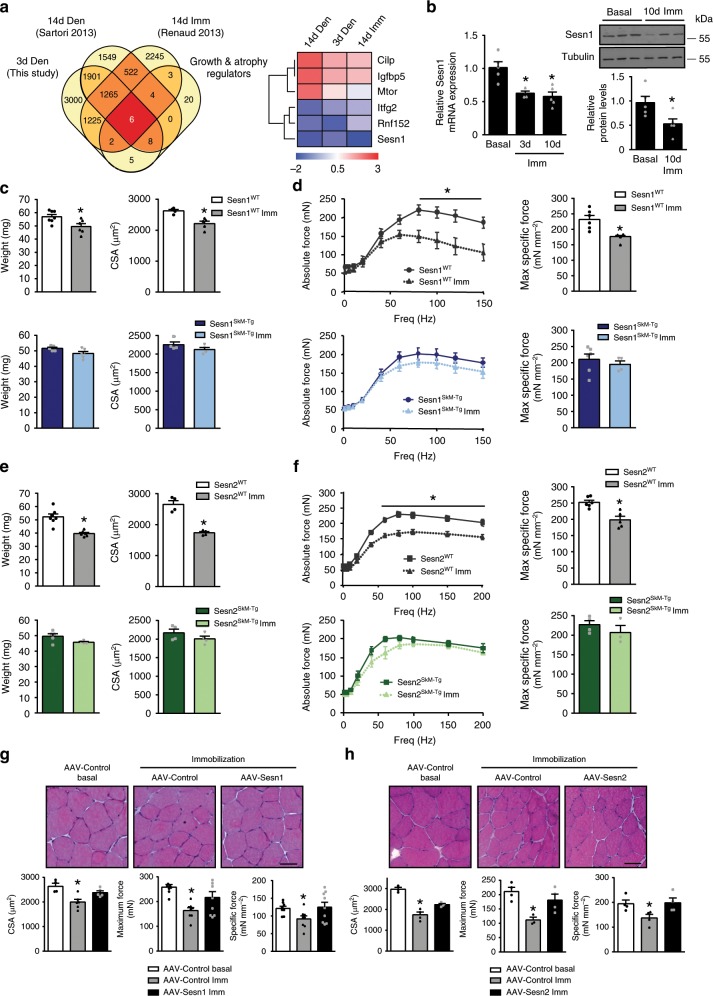
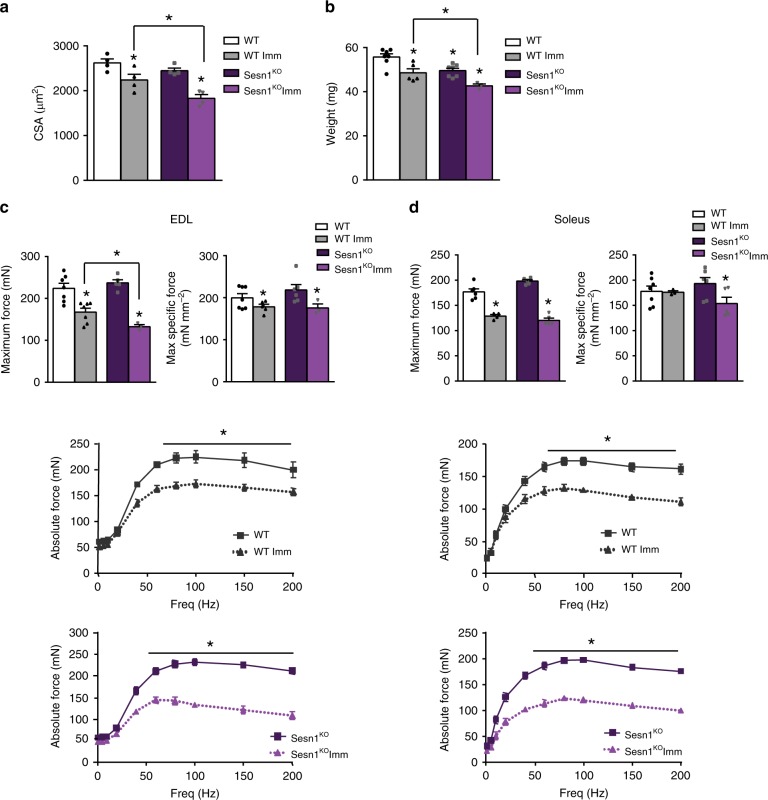
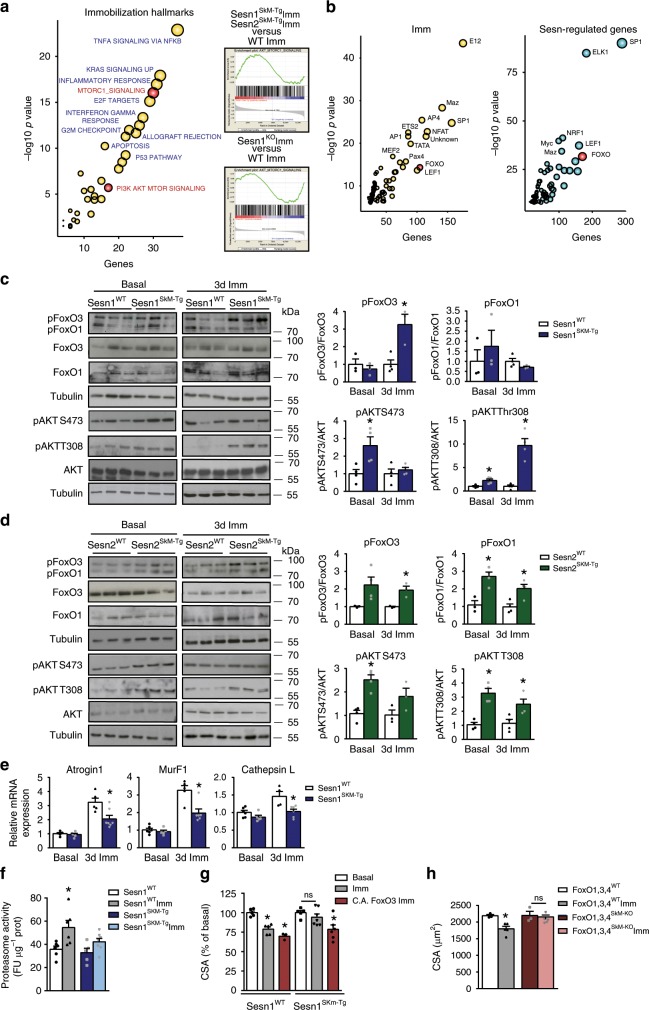
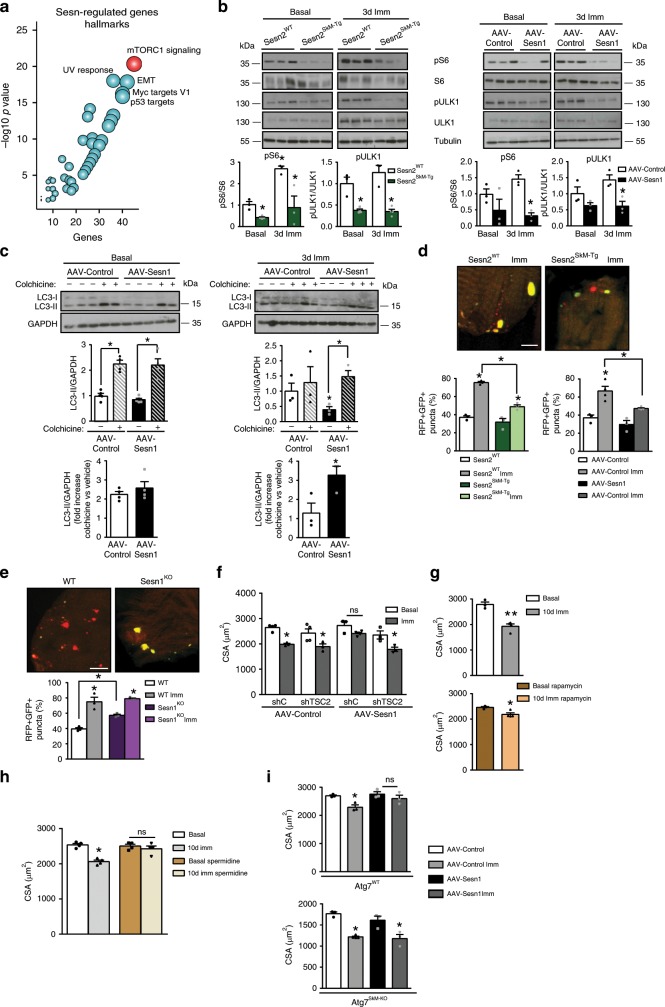
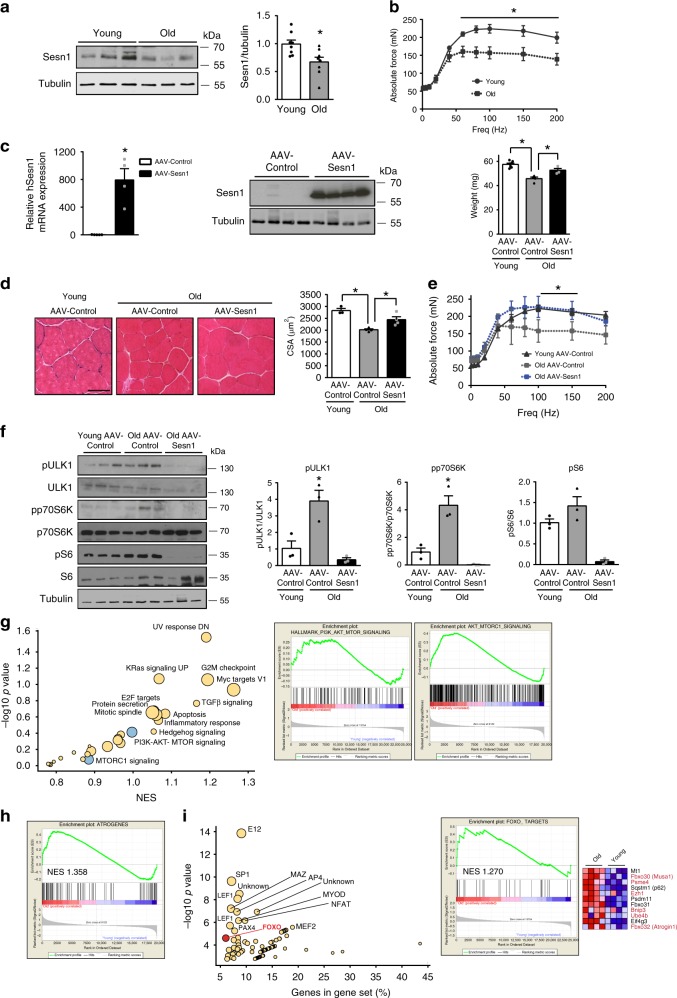
A unique property of skeletal muscle is its ability to adapt its mass to changes in activity. Inactivity, as in disuse or aging, causes atrophy, the loss of muscle mass and strength, leading to physical incapacity and poor quality of life. Here, through a combination of transcriptomics and transgenesis, we identify sestrins, a family of stress-inducible metabolic regulators, as protective factors against muscle wasting. Sestrin expression decreases during inactivity and its genetic deficiency exacerbates muscle wasting; conversely, sestrin overexpression suffices to prevent atrophy. This protection occurs through mTORC1 inhibition, which upregulates autophagy, and AKT activation, which in turn inhibits FoxO-regulated ubiquitin–proteasome-mediated proteolysis. This study reveals sestrin as a central integrator of anabolic and degradative pathways preventing muscle wasting. Since sestrin also protected muscles against aging-induced atrophy, our findings have implications for sarcopenia.
Overview
The claims and statistics of this paper haven’t been checked yet.
Free: it reads the open-access text and checks the first 5 claims that cite a source we can check. Create a free account to check every claim.
Integrity signals
Registry
Cites
Statistics
Figures
Verification
Claims the paper makes
The claims and statistics of this paper haven’t been checked yet.
Free: it reads the open-access text and checks the first 5 claims that cite a source we can check. Create a free account to check every claim.
Claims other papers make about this one
Each is checked against this paper’s own text: does it say what the citing paper says it does?
In the citing paper
“Exacerbated muscle loss during denervation and fasting, and abolished sestrin‐mediated protection against disuse‐induced muscle atrophy”
From Autophagy in major human diseases (2021) · cites this paper as Segales et al (2020)
In the citing paper
“Exacerbated disuse‐induced muscle atrophy after constitutive mTORC1‐signaling activation”
From Autophagy in major human diseases (2021) · cites this paper as Segales et al (2020)
In the citing paper
“Indeed, physical inactivity-associated skeletal muscle loss and weakness is a major health problem and is a common consequence of a variety of disease conditions, including bed rest, chronic illness, and neuromuscular disorders4,7,9–11, whereas exercise is effective in counteracting the effects of many chronic diseases on muscle mass and function4,12,13.”
From Disuse-associated loss of the protease Lonp1 in muscle impairs mitochondrial function and causes reduced skeletal muscle mass and strength (2022) · cites this paper as [7]
Self-check
Percentages, sums and reported differences re-computed from the paper’s own numbers.
The self-check needs the paper’s full text.
Citations
Cites
Subramanian, A., Tamayo, P., Mootha, V. K., Mukherjee, S., Ebert, B. L., Gillette, M. A., Paulovich, A., Pomeroy, S. L., Golub, T. R., Lander, E. S., et al. (2005) · Proceedings of the National Academy of Sciences · doi:10.1073/pnas.0506580102 · Cited by 53,625
Repertoires of Autophagy in the Pathogenesis of Ocular Diseases
Li, Y.-J., Jiang, Q., Cao, G.-F., Yao, J., & Yan, B. (2015) · Cellular Physiology and Biochemistry · doi:10.1159/000373980 · Cited by 16,304
AMPK and mTOR regulate autophagy through direct phosphorylation of Ulk1
Kim, J., Kundu, M., Viollet, B., & Guan, K.-L. (2011) · Nature Cell Biology · doi:10.1038/ncb2152 · Cited by 7,227
Identification of ubiquitin ligases required for skeletal muscle atrophy.
Bodine, S. C., Latres, E., Baumhueter, S., Lai, V. K.-M., Nunez, L., Clarke, B. A., Poueymirou, W. T., Panaro, F. J., Na, E., Dharmarajan, K., et al. (2001) · Science · doi:10.1126/science.1065874 · Cited by 3,521
Sandri, M., Sandri, C., Gilbert, A., Skurk, C., Calabria, E., Picard, A., Walsh, K., Schiaffino, S., Lecker, S. H., & Goldberg, A. L. (2004) · Cell · doi:10.1016/s0092-8674(04)00400-3 · Cited by 3,012
Self-citationKimura, S., Noda, T., & Yoshimori, T. (2007) · Autophagy · doi:10.4161/auto.4451 · Cited by 2,278
ULK-Atg13-FIP200 Complexes Mediate mTOR Signaling to the Autophagy Machinery
Jung, C. H., Jun, C. B., Ro, S.-H., Kim, Y.-M., Otto, N. M., Cao, J., Kundu, M., & Kim, D.-H. (2009) · Molecular Biology of the Cell · doi:10.1091/mbc.e08-12-1249 · Cited by 2,025
Stitt, T. N., Drujan, D., Clarke, B. A., Panaro, F., Timofeyva, Y., Kline, W. O., Gonzalez, M., Yancopoulos, G. D., & Glass, D. J. (2004) · Molecular Cell · doi:10.1016/s1097-2765(04)00211-4 · Cited by 1,964
FoxO3 Controls Autophagy in Skeletal Muscle In Vivo
Mammucari, C., Milan, G., Romanello, V., Masiero, E., Rudolf, R., Del Piccolo, P., Burden, S. J., Di Lisi, R., Sandri, C., Zhao, J., et al. (2007) · Cell Metabolism · doi:10.1016/j.cmet.2007.11.001 · Cited by 1,953
Self-citationRheb GTPase is a direct target of TSC2 GAP activity and regulates mTOR signaling
Inoki, K., Li, Y., Xu, T., & Guan, K.-L. (2003) · Genes & Development · doi:10.1101/gad.1110003 · Cited by 1,911
Atrogin-1, a muscle-specific F-box protein highly expressed during muscle atrophy
Gomes, M. D., Lecker, S. H., Jagoe, R. T., Navon, A., & Goldberg, A. L. (2001) · Proceedings of the National Academy of Sciences · doi:10.1073/pnas.251541198 · Cited by 1,774
Multiple types of skeletal muscle atrophy involve a common program of changes in gene expression
Lecker, S. H., Jagoe, R. T., Gilbert, A., Gomes, M., Baracos, V., Bailey, J., Price, S. R., Mitch, W. E., & Goldberg, A. L. (2004) · The FASEB Journal · doi:10.1096/fj.03-0610com · Cited by 1,539
Autophagy maintains stemness by preventing senescence
García-Prat, L., Martínez-Vicente, M., Perdiguero, E., Ortet, L., Rodríguez-Ubreva, J., Rebollo, E., Ruiz-Bonilla, V., Gutarra, S., Ballestar, E., Serrano, A. L., et al. (2016) · Nature · doi:10.1038/nature16187 · Cited by 1,355
Self-citationp53 Target Genes Sestrin1 and Sestrin2 Connect Genotoxic Stress and mTOR Signaling
Budanov, A. V., & Karin, M. (2008) · Cell · doi:10.1016/j.cell.2008.06.028 · Cited by 1,326
Self-citationSestrin2 is a leucine sensor for the mTORC1 pathway
Wolfson, R. L., Chantranupong, L., Saxton, R. A., Shen, K., Scaria, S. M., Cantor, J. R., & Sabatini, D. M. (2016) · Science · doi:10.1126/science.aab2674 · Cited by 1,306
Autophagy is required to maintain muscle mass.
Masiero, E., Agatea, L., Mammucari, C., Blaauw, B., Loro, E., Komatsu, M., Metzger, D., Reggiani, C., Schiaffino, S., & Sandri, M. (2009) · Cell Metabolism · doi:10.1016/j.cmet.2009.10.008 · Cited by 1,282
Self-citationTee, A. R., Manning, B. D., Roux, P. P., Cantley, L. C., & Blenis, J. (2003) · Current Biology · doi:10.1016/s0960-9822(03)00506-2 · Cited by 1,080
Regulation of skeletal muscle growth by the IGF1-Akt/PKB pathway: insights from genetic models
Schiaffino, S., & Mammucari, C. (2011) · Skeletal Muscle · doi:10.1186/2044-5040-1-4 · Cited by 816
Regeneration of peroxiredoxins by p53-regulated sestrins, homologs of bacterial AhpD
Budanov, A. V., Sablina, A. A., Feinstein, E., Koonin, E. V., & Chumakov, P. M. (2004) · Science · doi:10.1126/science.1095569 · Cited by 731
Self-citationMilan, G., Romanello, V., Pescatore, F., Armani, A., Paik, J.-H., Frasson, L., Seydel, A., Zhao, J., Abraham, R., Goldberg, A. L., et al. (2015) · Nature Communications · doi:10.1038/ncomms7670 · Cited by 709
Self-citationSestrin as a feedback inhibitor of TOR that prevents age-related pathologies
Lee, J. H., Budanov, A. V., Park, E. J., Birse, R., Kim, T. E., Perkins, G. A., Ocorr, K., Ellisman, M. H., Bodmer, R., Bier, E., et al. (2010) · Science · doi:10.1126/science.1182228 · Cited by 570
Self-citationSignaling pathways controlling skeletal muscle mass
Egerman, M. A., & Glass, D. J. (2014) · Critical Reviews in Biochemistry and Molecular Biology · doi:10.3109/10409238.2013.857291 · Cited by 555
Spermidine and resveratrol induce autophagy by distinct pathways converging on the acetylproteome
Morselli, E., Mariño, G., Bennetzen, M. V., Eisenberg, T., Megalou, E., Schroeder, S., Cabrera, S., Bénit, P., Rustin, P., Criollo, A., et al. (2011) · Journal of Cell Biology · doi:10.1083/jcb.201008167 · Cited by 499
BMP signaling controls muscle mass
Sartori, R., Schirwis, E., Blaauw, B., Bortolanza, S., Zhao, J., Enzo, E., Stantzou, A., Mouisel, E., Toniolo, L., Ferry, A., et al. (2013) · Nature Genetics · doi:10.1038/ng.2772 · Cited by 467 · cited 5×
“Denervation was performed as previously described40.”
InfluentialSelf-citationSestrins Orchestrate Cellular Metabolism to Attenuate Aging
Lee, J. H., Budanov, A. V., & Karin, M. (2013) · Cell Metabolism · doi:10.1016/j.cmet.2013.08.018 · Cited by 338
Self-citationCastets, P., Lin, S., Rion, N., Di Fulvio, S., Romanino, K., Guridi, M., Frank, S., Tintignac, L. A., Sinnreich, M., & Rüegg, M. A. (2013) · Cell Metabolism · doi:10.1016/j.cmet.2013.03.015 · Cited by 302
Maintenance of metabolic homeostasis by Sestrin2 and Sestrin3
Lee, J. H., Budanov, A. V., Talukdar, S., Park, E. J., Park, H. L., Park, H.-W., Bandyopadhyay, G., Li, N., Aghajan, M., Jang, I., et al. (2012) · Cell Metabolism · doi:10.1016/j.cmet.2012.08.004 · Cited by 295
Self-citationA sestrin-dependent Erk–Jnk–p38 MAPK activation complex inhibits immunity during aging
Lanna, A., Gomes, D. C. O., Muller-Durovic, B., McDonnell, T., Escors, D., Gilroy, D. W., Lee, J. H., Karin, M., & Akbar, A. N. (2017) · Nature Immunology · doi:10.1038/ni.3665 · Cited by 284
Self-citationSerrano, A. L., Murgia, M., Pallafacchina, G., Calabria, E., Coniglio, P., Lømo, T., & Schiaffino, S. (2001) · Proceedings of the National Academy of Sciences · doi:10.1073/pnas.231148598 · Cited by 265
Self-citationFibrinogen drives dystrophic muscle fibrosis via a TGFβ/alternative macrophage activation pathway
Vidal, B., Serrano, A. L., Tjwa, M., Suelves, M., Ardite, E., De Mori, R., Baeza-Raja, B., Martínez de Lagrán, M., Lafuste, P., Ruiz-Bonilla, V., et al. (2008) · Genes & Development · doi:10.1101/gad.465908 · Cited by 257
Self-citationQuantitation of "autophagic flux" in mature skeletal muscle
Ju, J.-S., Varadhachary, A. S., Miller, S. E., & Weihl, C. C. (2010) · Autophagy · doi:10.4161/auto.6.7.12785 · Cited by 229
PAI-1–regulated miR-21 defines a novel age-associated fibrogenic pathway in muscular dystrophy
Ardite, E., Perdiguero, E., Vidal, B., Gutarra, S., Serrano, A. L., & Muñoz‐Cánoves, P. (2012) · The Journal of Cell Biology · doi:10.1083/jcb.201105013 · Cited by 122
Self-citationPeeters, H., Debeer, P., Bairoch, A., Wilquet, V., Huysmans, C., Parthoens, E., Fryns, J. P., Gewillig, M., Nakamura, Y., Niikawa, N., et al. (2003) · Human Genetics · doi:10.1007/s00439-003-0917-5 · Cited by 116
Biochemical Basis of Sestrin Physiological Activities
Ho, A., Cho, C.-S., Namkoong, S., Cho, U.-S., & Lee, J. H. (2016) · Trends in Biochemical Sciences · doi:10.1016/j.tibs.2016.04.005 · Cited by 111
Barns, M. E., Gondro, C., Tellam, R. L., Radley‐Crabb, H. G., Grounds, M. D., & Shavlakadze, T. (2014) · The International Journal of Biochemistry & Cell Biology · doi:10.1016/j.biocel.2014.04.025 · Cited by 98
Tao, R., Xiong, X., Liangpunsakul, S., & Dong, X. C. (2015) · Diabetes · doi:10.2337/db14-0539 · Cited by 96
Brocca, L., Toniolo, L., Reggiani, C., Bottinelli, R., Sandri, M., & Pellegrino, M. A. (2017) · The Journal of Physiology · doi:10.1113/jp273097 · Cited by 93
Self-citationSestrin modulator NV-5138 produces rapid antidepressant effects via direct mTORC1 activation
Kato, T., Pothula, S., Liu, R.-J., Duman, C. H., Terwilliger, R., Vlasuk, G. P., Saiah, E., Hahm, S., & Duman, R. S. (2019) · Journal of Clinical Investigation · doi:10.1172/jci126859 · Cited by 88
Byun, J.-K., Choi, Y.-K., Kim, J.-H., Jeong, J. Y., Jeon, H.-J., Kim, M.-K., Hwang, I., Lee, S.-Y., Lee, Y. M., Lee, I.-K., et al. (2017) · Cell Reports · doi:10.1016/j.celrep.2017.06.066 · Cited by 83
SESN-1 is a positive regulator of lifespan in Caenorhabditis elegans
Yang, Y.-L., Loh, K.-S., Liou, B.-Y., Chu, I., Kuo, C., Chen, H., & Chen, C. (2013) · Experimental Gerontology · doi:10.1016/j.exger.2012.12.011 · Cited by 76
Calura, E., Cagnin, S., Raffaello, A., Laveder, P., Lanfranchi, G., & Romualdi, C. (2008) · BMC Genomics · doi:10.1186/1471-2164-9-630 · Cited by 67
Monitoring Mitophagy in Neuronal Cell Cultures
Zhu, J., Dagda, R. K., & Chu, C. T. (2011) · Methods in Molecular Biology · doi:10.1007/978-1-61779-328-8_21 · Cited by 58
Zeng, N., D'Souza, R. F., Mitchell, C. J., & Cameron-Smith, D. (2018) · Experimental Gerontology · doi:10.1016/j.exger.2018.05.006 · Cited by 41
Prete, Z. D., Musarò, A., & Rizzuto, E. (2008) · Annals of Biomedical Engineering · doi:10.1007/s10439-008-9496-x · Cited by 40
Tanfani, F., CURATOLA, G., & Bertoli, E. (1989) · Chemistry and Physics of Lipids · doi:10.1016/0009-3084(89)90021-2 · Cited by 31
Exploration of Novel Anti-Oxidant Protein Sestrin in Frailty Syndrome in Elderly
Rai, N., Gunasekaran, V., Pradhan, R., Ambashtha, A., Upadhyay, A. D., Dwivedi, S. N., Dey, A. B., & Dey, S. (2018) · Aging and Disease · doi:10.14336/ad.2017.0423 · Cited by 26
[Four cases of rib anomalies].
Takemoto, R. M., Murakami, Y., Nagata, H., & TEZUKA, M. (1987) · PubMed · Cited by 1
Research works printed but not linked: 1
- Madaro L Smeriglio P Molinaro M Bouche M Unilateral immobilization: a simple model of limb atrophy in mice Basic Appl. Myol. 2008 18 149 153
Cited by
Autophagy in major human diseases
Klionsky, D. J., Petroni, G., Amaravadi, R. K., Baehrecke, E. H., Ballabio, A., Boya, P., Bravo‐San Pedro, J. M., Cadwell, K., Cecconi, F., Choi, A. M. K., et al. (2021) · The EMBO Journal · doi:10.15252/embj.2021108863 · Cited by 1,585
Mechanisms of muscle atrophy and hypertrophy: implications in health and disease
Sartori, R., Romanello, V., & Sandri, M. (2021) · Nature Communications · doi:10.1038/s41467-020-20123-1 · Cited by 940
Self-citationROS: Basic Concepts, Sources, Cellular Signaling, and its Implications in Aging Pathways
de Almeida, A. J. P. O., de Oliveira, J. C. P. L., da Silva Pontes, L. V., de Souza Júnior, J. F., Gonçalves, T. A. F., Dantas, S. H., de Almeida Feitosa, M. S., Silva, A. O., & de Medeiros, I. A. (2022) · Oxidative Medicine and Cellular Longevity · doi:10.1155/2022/1225578 · Cited by 474
Control of satellite cell function in muscle regeneration and its disruption in ageing
Sousa-Victor, P., García-Prat, L., & Muñoz-Cánoves, P. (2022) · Nature Reviews Molecular Cell Biology · doi:10.1038/s41580-021-00421-2 · Cited by 476
Self-citationSenescence atlas reveals an aged-like inflamed niche that blunts muscle regeneration
Moiseeva, V., Cisneros, A., Sica, V., Deryagin, O., Lai, Y., Jung, S., Andrés, E., An, J., Segalés, J., Ortet, L., et al. (2023) · Nature · doi:10.1038/s41586-022-05535-x · Cited by 423
Self-citation
Metadata
- Authors
- Segalés, J., Perdiguero, E., Serrano, A. L., Sousa-Victor, P., Ortet, L., Jardí, M., Budanov, A. V., Garcia-Prat, L., Sandri, M., Thomson, D. M., Karin, M., Hee Lee, J., & Muñoz-Cánoves, P.
- Affiliations
- Universitat Pompeu Fabra (ES)
- Engelhardt Institute of Molecular Biology (RU)
- University of Padua (IT)
- Brigham Young University (US)
- University of California San Diego (US)
- ORCID
- Venue
- Nature Communications
- Published
- 2020-01-13
- Volume
- 11
- Issue
- 1
- Pages
- 189-189
- ISSN
- 2041-1723 (ISSN-L)
- PMC
- PMC6955241
- OpenAlex
- W2999033167
- Cited by
- 153
- References
- 48
- Citations by year
- 2026: 17 · 2025: 25 · 2024: 20 · 2023: 13 · 2022: 30 · 2021: 19 · 2020: 29
- FWCI
- 7.54
- Type
- journal article
- Language
- en
- Open access
- gold
- doi.org
- Licence
- cc-by
- creativecommons.org/licenses/by/4.0 (tdm)
- creativecommons.org/licenses/by/4.0 (vor)
- Locations
- Nature Communications (publishedVersion, cc-by)
- PubMed Central (publishedVersion, cc-by)
- PubMed (publishedVersion)
- Repositori digital de la UPF (Universitat Pompeu Fabra) (submittedVersion, cc-by)
- Padua Research Archive (University of Padova) (submittedVersion, cc-by)
- RePEc: Research Papers in Economics (submittedVersion)
- LA Referencia (Red Federada de Repositorios Institucionales de Publicaciones Científicas) (submittedVersion, cc-by)
- DOAJ (DOAJ: Directory of Open Access Journals) (submittedVersion, cc-by-sa)
- DOAJ (DOAJ: Directory of Open Access Journals) (submittedVersion)
- eScholarship (California Digital Library) (submittedVersion)
- eScholarship (California Digital Library) (submittedVersion, cc-by)
- Portuguese National Funding Agency for Science, Research and Technology (RCAAP Project by FCT) (submittedVersion, other-oa)
- Lenus, The Irish Health Repository (Dr Steevens Hospital Library) (submittedVersion)
- Funders
- Ellison Medical Foundation (AG‐NS‐0932‐12)
- Ministerio de Ciencia, Innovación y Universidades (HR17-00040, SAF2015, ERC-2016-AdG-741966, SAF 2015-70270-REDT, SEV-2015-0505, UPGRADE-H2020-825825, MDM-2014-0370, RTI2018, RTI2018-096068-B-I00)
- European Commission (825825)
- Centro Nacional de Investigaciones Cardiovasculares (MDM-2014-0370, SEV‐2015‐0505, HR17-00040, RTI2018-096068-B-I00, ERC-2016-AdG-741966, UPGRADE-H2020-825825, SAF 2015-70270-REDT)
- Russian Science Foundation (17‐14‐01420, 17-14-)
- National Institutes of Health (SEV-2015-0505, MDM-2014-0370, UPGRADE-H2020-825825, H2020)
- Horizon 2020 Framework Programme (H2020-MSCA-RISE-2014, H2020-MSCA, H2020-MSCA-RISE, MSCA- RISE-2014, SEV-2015-0505, UPGRADE-H2020-825825, MDM-2014-0370, 825825)
- Instituto de Salud Carlos III (MDM-2014-0370, SEV-2015-0505, H2020)
- National Institute of Diabetes and Digestive and Kidney Diseases (R01DK102850, R01DK114131, R01DK111465)
- Topics
- Life Sciences › Biochemistry, Genetics and Molecular Biology › Molecular Biology › Muscle Physiology and Disorders
- Health Sciences › Medicine › Physiology (medical) › Nutrition and Health in Aging
- Health Sciences › Nursing › Nutrition and Dietetics › Muscle metabolism and nutrition
- Keywords
- sestrins, skeletal muscle atrophy, disuse, muscle aging, sarcopenia, mTORC1 inhibition, autophagy, Akt signaling, FOXO, muscle atrophy
- MeSH terms
- Forkhead Box Protein O1, Forkhead Box Protein O3, Mechanistic Target of Rapamycin Complex 1, Sestrins, Aging, Animals, Autophagy, Disease Models, Animal, Heat-Shock Proteins, Humans, Male, Mice, Inbred C57BL, Mice, Transgenic, Muscle Proteins, Muscular Atrophy, Nuclear Proteins, Signal Transduction, Gene Expression, Muscle, Skeletal, Mice, Sarcopenia
About these checks
Registry, retraction, Cites and statistics results are computed, not judged, with one exception: a printed reference that no index lists is read once by a model before it counts as a citation error. Claims are extracted by a model and kept only when their quote appears verbatim in the text; each cited source is then checked, with a model’s help, for whether it says what the claim relies on. Those verdicts can be wrong — read the claim’s quote and the cited source before relying on one.
Statistics and arithmetic are recomputed, not judged.
Confidence bands are shown only for fields calibrated on our annotated test set. None is calibrated yet, so no band is shown.
What counts as a claim ›How we measure confidence ›How we check this ›
Are you an author, or do you see a problem with this page? Request a review
Data sources
Bibliographic data: Semantic Scholar, OpenAlex, Crossref.
Contains information from the Semantic Scholar Academic Graph Datasets, made available under the ODC Attribution License (ODC-BY 1.0).
Semantic Scholar’s data is described in: Kinney, R., et al. (2023). The Semantic Scholar Open Data Platform. arXiv:2301.10140.
