

The DOI matches its Crossref record; 94 of the 96 references it cites were found in a registry or an index.
Transcriptomic profiling of skeletal muscle adaptations to exercise and inactivity
Open accessPublished version of a preprint
Abstract
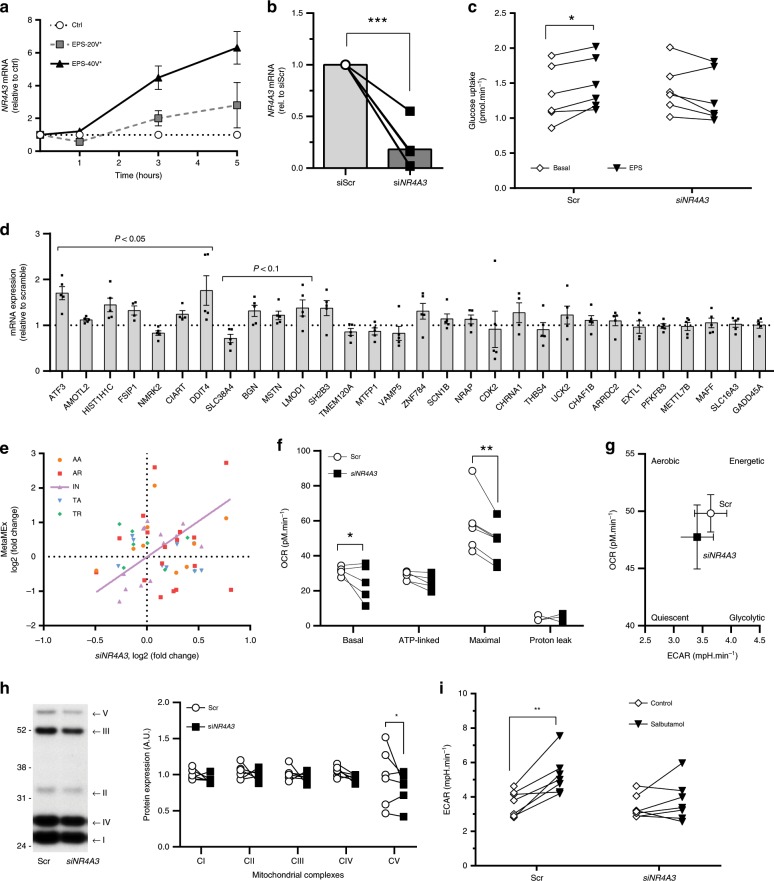
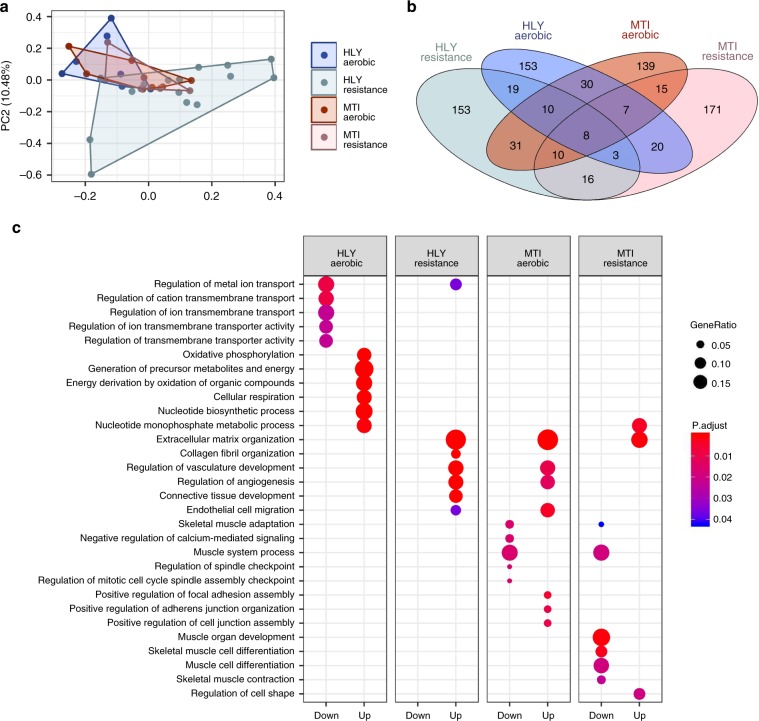
The molecular mechanisms underlying the response to exercise and inactivity are not fully understood. We propose an innovative approach to profile the skeletal muscle transcriptome to exercise and inactivity using 66 published datasets. Data collected from human studies of aerobic and resistance exercise, including acute and chronic exercise training, were integrated using meta-analysis methods ( www.metamex.eu ). Here we use gene ontology and pathway analyses to reveal selective pathways activated by inactivity, aerobic versus resistance and acute versus chronic exercise training. We identify NR4A3 as one of the most exercise- and inactivity-responsive genes, and establish a role for this nuclear receptor in mediating the metabolic responses to exercise-like stimuli in vitro. The meta-analysis (MetaMEx) also highlights the differential response to exercise in individuals with metabolic impairments. MetaMEx provides the most extensive dataset of skeletal muscle transcriptional responses to different modes of exercise and an online interface to readily interrogate the database.
Overview
The claims and statistics of this paper haven’t been checked yet.
Run the check — free, no account needed. It reads the open-access text and checks the sources it cites.
Integrity signals
Registry
Cites
Statistics
Figures
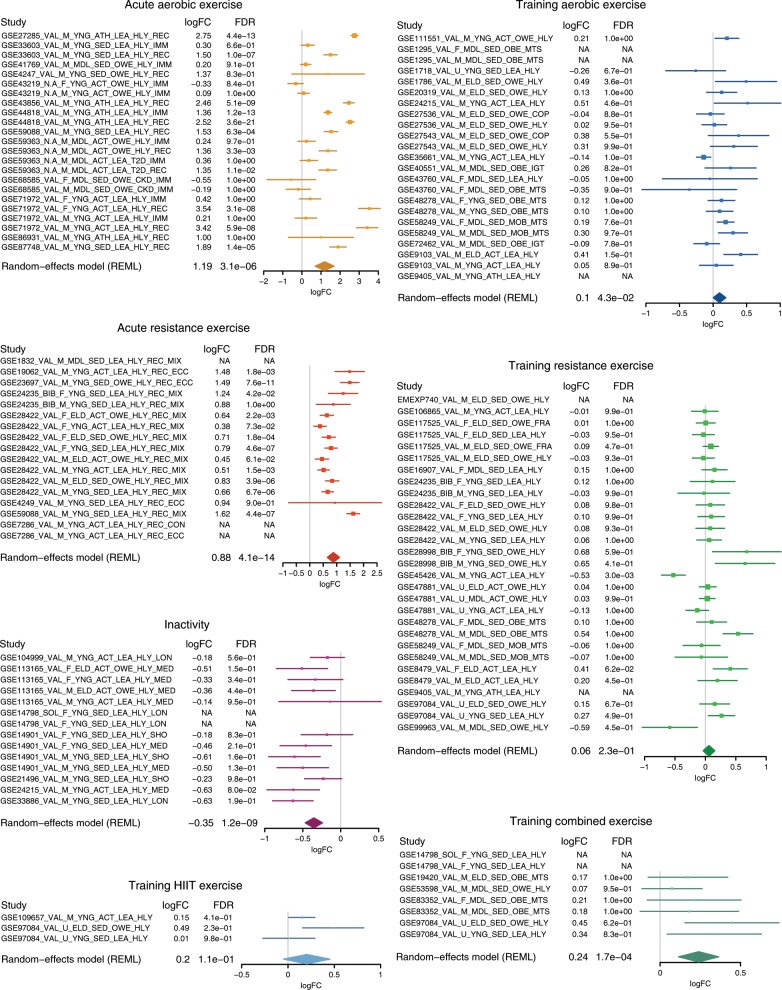
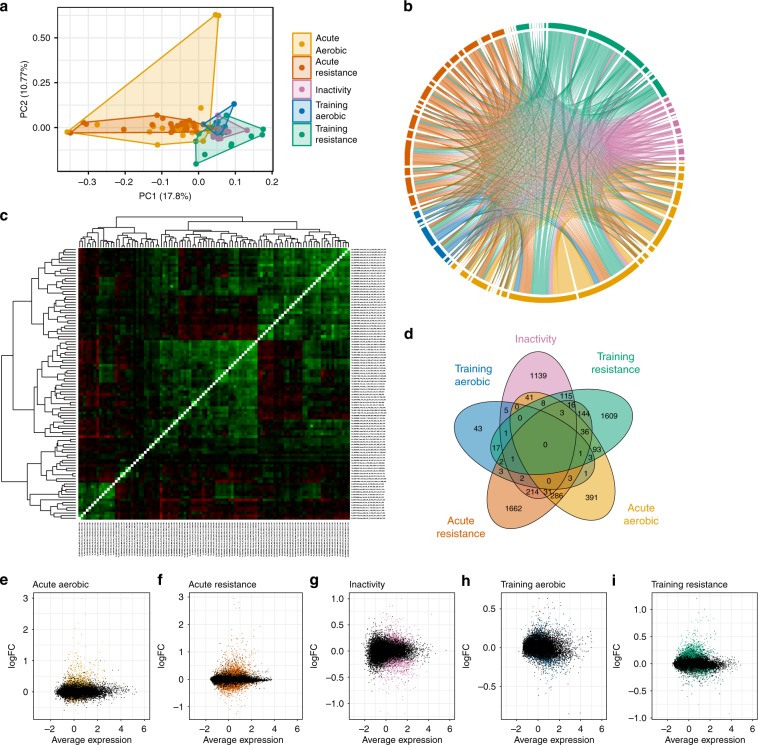
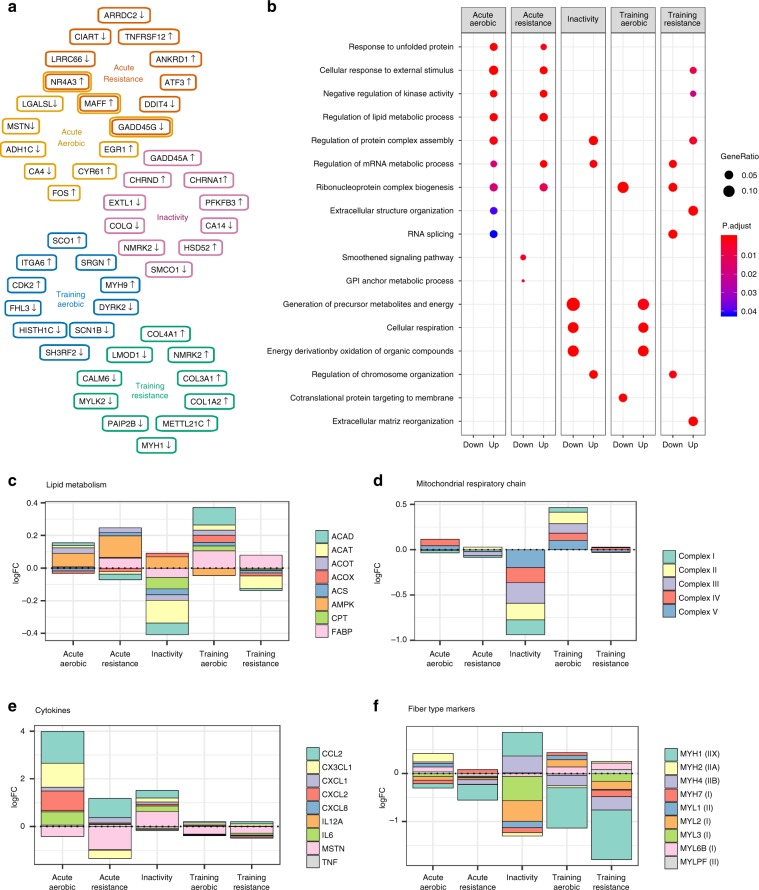
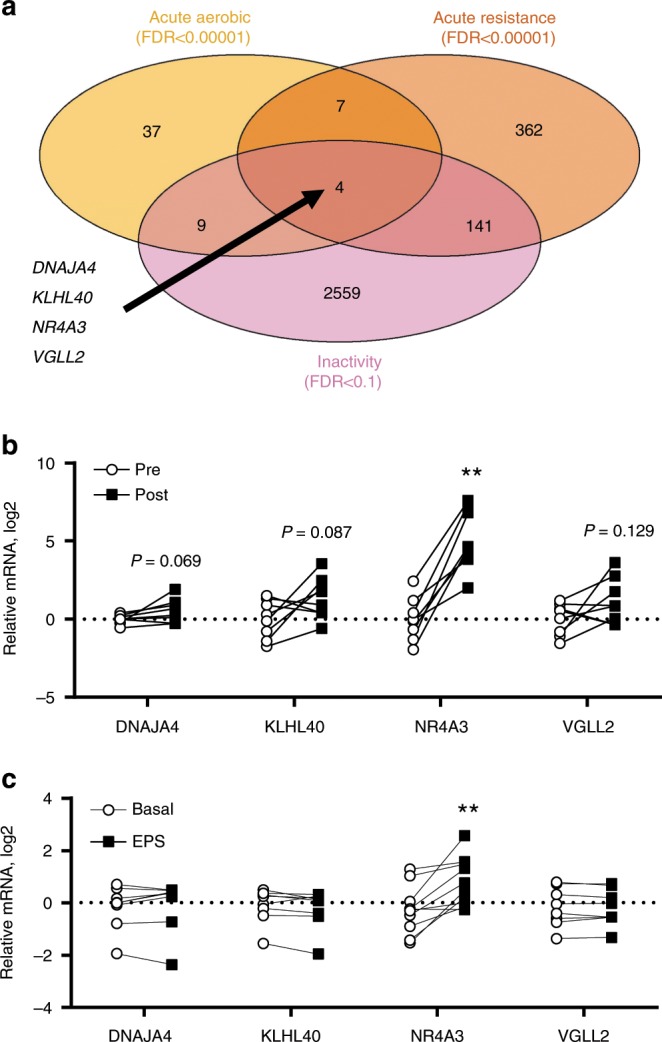
Verification
Claims the paper makes
The claims and statistics of this paper haven’t been checked yet.
Run the check — free, no account needed. It reads the open-access text and checks the sources it cites.
Claims other papers make about this one
Each is checked against this paper’s own text: does it say what the citing paper says it does?
The cited source says what the claim attributes to it.
In the citing paper
“After resistance exercise, myostatin expression significantly decreases in human skeletal muscle (meta-analysis of human biopsy studies, [191]).”
From Effects of Skeletal Muscle Hypertrophy on Fat Mass and Glucose Homeostasis in Humans and Animals: A Narrative Review with Systematic Literature Search (2025) · cites this paper as [191]
Self-check
Percentages, sums and reported differences re-computed from the paper’s own numbers.
The self-check needs the paper’s full text.
Citations
Cites
Moderated estimation of fold change and dispersion for RNA-seq data with DESeq2
Love, M. I., Huber, W., & Anders, S. (2014) · Genome Biology · doi:10.1186/s13059-014-0550-8 · Cited by 95,106
limma powers differential expression analyses for RNA-sequencing and microarray studies
Ritchie, M. E., Phipson, B., Wu, D., Hu, Y., Law, C. W., Shi, W., & Smyth, G. K. (2015) · Nucleic Acids Research · doi:10.1093/nar/gkv007 · Cited by 40,458
clusterProfiler: an R Package for Comparing Biological Themes Among Gene Clusters
Yu, G., Wang, L.-G., Han, Y., & He, Q.-Y. (2012) · OMICS: A Journal of Integrative Biology · doi:10.1089/omi.2011.0118 · Cited by 36,259
Conducting Meta-Analyses in R with the metafor Package
Viechtbauer, W. (2010) · Journal of Statistical Software · doi:10.18637/jss.v036.i03 · Cited by 20,464
Lack of Exercise Is a Major Cause of Chronic Diseases
Booth, F. W., Roberts, C. K., & Laye, M. J. (2012) · Comprehensive Physiology · doi:10.1002/cphy.c110025 · Cited by 2,575
Exercise Metabolism and the Molecular Regulation of Skeletal Muscle Adaptation
Egan, B., & Zierath, J. R. (2013) · Cell Metabolism · doi:10.1016/j.cmet.2012.12.012 · Cited by 2,084
Self-citationBoulé, N. G., Haddad, E., Kenny, G. P., Wells, G. A., & Sigal, R. J. (2001) · JAMA · doi:10.1001/jama.286.10.1218 · Cited by 1,889
Wilmot, E. G., Edwardson, C. L., Achana, F. A., Davies, M. J., Gorely, T., Gray, L. J., Khunti, K., Yates, T., & Biddle, S. J. H. (2012) · Diabetologia · doi:10.1007/s00125-012-2677-z · Cited by 1,789
A framework for oligonucleotide microarray preprocessing
Carvalho, B. S., & Irizarry, R. A. (2010) · Bioinformatics · doi:10.1093/bioinformatics/btq431 · Cited by 1,554
AMPK: Sensing Glucose as well as Cellular Energy Status
Lin, S., & Hardie, D. G. (2017) · Cell Metabolism · doi:10.1016/j.cmet.2017.10.009 · Cited by 1,198
The role of exercise and PGC1α in inflammation and chronic disease
Handschin, C., & Spiegelman, B. M. (2008) · Nature · doi:10.1038/nature07206 · Cited by 1,083
Metabolic Flexibility in Health and Disease
Goodpaster, B. H., & Sparks, L. M. (2017) · Cell Metabolism · doi:10.1016/j.cmet.2017.04.015 · Cited by 995
Muscle damage and inflammation during recovery from exercise.
Peake, J., Neubauer, O., Gatta, P. D. D., & Nosaka, K. (2016) · Journal of applied physiology · doi:10.1152/japplphysiol.00971.2016 · Cited by 740
Endurance Exercise as a Countermeasure for Aging
Lanza, I. R., Short, D. K., Short, K. R., Raghavakaimal, S., Basu, R., Joyner, M. J., McConnell, J. P., & Nair, K. S. (2008) · Diabetes · doi:10.2337/db08-0349 · Cited by 582
Robinson, M. M., Dasari, S., Konopka, A. R., Johnson, M. L., Manjunatha, S., Esponda, R. R., Carter, R. E., Lanza, I. R., & Nair, K. S. (2017) · Cell Metabolism · doi:10.1016/j.cmet.2017.02.009 · Cited by 539
Exercise Promotes Healthy Aging of Skeletal Muscle
Cartee, G. D., Hepple, R. T., Bamman, M. M., & Zierath, J. R. (2016) · Cell Metabolism · doi:10.1016/j.cmet.2016.05.007 · Cited by 483
Self-citationUnderstanding the Cellular and Molecular Mechanisms of Physical Activity-Induced Health Benefits
Neufer, P. D., Bamman, M. M., Muoio, D. M., Bouchard, C., Cooper, D. M., Goodpaster, B. H., Booth, F. W., Kohrt, W. M., Gerszten, R. E., Mattson, M. P., et al. (2015) · Cell Metabolism · doi:10.1016/j.cmet.2015.05.011 · Cited by 474
Analysis of global mRNA expression in human skeletal muscle during recovery from endurance exercise
Mahoney, D. J., Parise, G., Melov, S., Safdar, A., & Tarnopolsky, M. A. (2005) · The FASEB Journal · doi:10.1096/fj.04-3149fje · Cited by 429
Circadian rhythms and exercise — re-setting the clock in metabolic disease
Gabriel, B. M., & Zierath, J. R. (2019) · Nature Reviews Endocrinology · doi:10.1038/s41574-018-0150-x · Cited by 382
Self-citationResistance Exercise Reverses Aging in Human Skeletal Muscle
Melov, S., Tarnopolsky, M. A., Beckman, K. B., Felkey, K., & Hubbard, A. (2007) · PLoS ONE · doi:10.1371/journal.pone.0000465 · Cited by 360
Massage Therapy Attenuates Inflammatory Signaling After Exercise-Induced Muscle Damage
Crane, J. D., Ogborn, D. I., Cupido, C., Melov, S., Hubbard, A., Bourgeois, J. M., & Tarnopolsky, M. A. (2012) · Science Translational Medicine · doi:10.1126/scitranslmed.3002882 · Cited by 353
van der Berg, J. D., Stehouwer, C. D. A., Bosma, H., van der Velde, J. H. P. M., Willems, P. J. B., Savelberg, H. H. C. M., Schram, M. T., Sep, S. J. S., van der Kallen, C. J. H., Henry, R. M. A., et al. (2016) · Diabetologia · doi:10.1007/s00125-015-3861-8 · Cited by 299
Raue, U., Trappe, T. A., Estrem, S. T., Qian, H.-R., Helvering, L. M., Smith, R. C., & Trappe, S. W. (2012) · Journal of Applied Physiology · doi:10.1152/japplphysiol.00435.2011 · Cited by 262
A transcriptional map of the impact of endurance exercise training on skeletal muscle phenotype
Keller, P., Vollaard, N. B. J., Gustafsson, T., Gallagher, I. J., Sundberg, C. J., Rankinen, T., Britton, S. L., Bouchard, C., Koch, L. G., & Timmons, J. A. (2011) · Journal of Applied Physiology · doi:10.1152/japplphysiol.00634.2010 · Cited by 261
Leiomodin Is an Actin Filament Nucleator in Muscle Cells
Chéreau, D., Boczkowska, M., Skwarek‐Maruszewska, A., Fujiwara, I., Hayes, D., Rębowski, G., Lappalainen, P., Pollard, T. D., & Domínguez, R. (2008) · Science · doi:10.1126/science.1155313 · Cited by 260
Time- and exercise-dependent gene regulation in human skeletal muscle
Zambon, A. C., McDearmon, E. L., Salomonis, N., Vranizan, K. M., Johansen, K. L., Adey, D., Takahashi, J. S., Schambelan, M., & Conklin, B. R. (2003) · Genome Biology · doi:10.1186/gb-2003-4-10-r61 · Cited by 254
Alibegovic, A. C., Sonne, M. P., Højbjerre, L., Bork-Jensen, J., Jacobsen, S., Nilsson, E., Færch, K., Hiscock, N., Mortensen, B., Friedrichsen, M., et al. (2010) · American Journal of Physiology-Endocrinology and Metabolism · doi:10.1152/ajpendo.00590.2009 · Cited by 247
Aberrant mitochondrial homeostasis in the skeletal muscle of sedentary older adults
Safdar, A., Hamadeh, M. J., Kaczor, J. J., Raha, S., deBeer, J., & Tarnopolsky, M. A. (2010) · PLoS ONE · doi:10.1371/journal.pone.0010778 · Cited by 217
Granata, C., Oliveira, R. S. F., Little, J. P., Renner, K., & Bishop, D. J. (2016) · The FASEB Journal · doi:10.1096/fj.15-276907 · Cited by 215
Self-citationExpression and function of myostatin in obesity, diabetes, and exercise adaptation
ALLEN, D. L., HITTEL, D. S., & MCPHERRON, A. C. (2011) · Medicine & Science in Sports & Exercise · doi:10.1249/mss.0b013e3182178bb4 · Cited by 207
Molecular Networks of Human Muscle Adaptation to Exercise and Age
Phillips, B. E., Williams, J. P., Gustafsson, T., Bouchard, C., Rankinen, T., Knudsen, S., Smith, K., Timmons, J. A., & Atherton, P. J. (2013) · PLoS Genetics · doi:10.1371/journal.pgen.1003389 · Cited by 199
Natriuretic peptides enhance the oxidative capacity of human skeletal muscle
Engeli, S., Birkenfeld, A. L., Badin, P.-M., Bourlier, V., Louche, K., Viguerie, N., Thalamas, C., Montastier, É., Larrouy, D., Harant, I., et al. (2012) · Journal of Clinical Investigation · doi:10.1172/jci64526 · Cited by 197
The Limits of Exercise Physiology: From Performance to Health
Gabriel, B. M., & Zierath, J. R. (2017) · Cell Metabolism · doi:10.1016/j.cmet.2017.04.018 · Cited by 192
Self-citationAbadi, A., Glover, E. I., Isfort, R. J., Raha, S., Safdar, A., Yasuda, N., Kaczor, J. J., Melov, S., Hubbard, A., Qu, X., et al. (2009) · PLoS ONE · doi:10.1371/journal.pone.0006518 · Cited by 189
Sharples, A. P., Stewart, C. E., & Seaborne, R. A. (2016) · Aging Cell · doi:10.1111/acel.12486 · Cited by 180
Identification of human exercise-induced myokines using secretome analysis
Catoire, M., Mensink, M., Kalkhoven, E., Schrauwen, P., & Kersten, S. (2014) · Physiological Genomics · doi:10.1152/physiolgenomics.00174.2013 · Cited by 179
Dempsey, P. C., Owen, N. G., Yates, T. E., Kingwell, B. A., & Dunstan, D. W. (2016) · Current Diabetes Reports · doi:10.1007/s11892-016-0797-4 · Cited by 165
Huffman, K. M., Koves, T. R., Hubal, M. J., AbouAssi, H., Beri, N., Bateman, L. A., Stevens, R. D., Ilkayeva, O., Hoffman, E. P., Muoio, D. M., et al. (2014) · Diabetologia · doi:10.1007/s00125-014-3343-4 · Cited by 153
Granata, C., Oliveira, R. S. F., Little, J. P., Renner, K., & Bishop, D. J. (2016) · The FASEB Journal · doi:10.1096/fj.201500100r · Cited by 145
Self-citationRimbert, V., Boirie, Y., Bedu, M., Hocquette, J.-F. J.-F., Ritz, P., & Morio, B. (2004) · The FASEB Journal · doi:10.1096/fj.03-1104fje · Cited by 128
The Orphan Nuclear Receptor, NOR-1, Is a Target of β-Adrenergic Signaling in Skeletal Muscle
Pearen, M. A., Ryall, J. G., Maxwell, M., Ohkura, N., Lynch, G. S., & Muscat, G. E. O. (2006) · Endocrinology · doi:10.1210/en.2006-0447 · Cited by 124
Gene expression profiling in human skeletal muscle during recovery from eccentric exercise
Mahoney, D. J., Safdar, A., Parise, G., Melov, S., Fu, M., MacNeil, L., Kaczor, J. J., Payne, E. T., & Tarnopolsky, M. A. (2008) · American Journal of Physiology-Regulatory, Integrative and Comparative Physiology · doi:10.1152/ajpregu.00847.2007 · Cited by 123
Kostek, M. C., Chen, Y., Cuthbertson, D. J., Shi, R., Fedele, M. J., Esser, K. A., & Rennie, M. J. (2007) · Physiological Genomics · doi:10.1152/physiolgenomics.00151.2006 · Cited by 122
Skeletal muscle gene expression in response to resistance exercise: sex specific regulation
Liu, D., Sartor, M. A., Nader, G. A., Gutmann, L., Treutelaar, M. K., Pistilli, E. E., IglayReger, H. B., Burant, C. F., Hoffman, E. P., & Gordon, P. M. (2010) · BMC Genomics · doi:10.1186/1471-2164-11-659 · Cited by 122
Nikolić, N., Görgens, S. W., Thoresen, G. H., Aas, V., Eckel, J., & Eckardt, K. (2016) · Acta Physiologica · doi:10.1111/apha.12830 · Cited by 122
Catoire, M., Mensink, M., Boekschoten, M. V., Hangelbroek, R., Müller, M., Schrauwen, P., & Kersten, S. (2012) · PLoS ONE · doi:10.1371/journal.pone.0051066 · Cited by 116
Endurance training-induced changes in insulin sensitivity and gene expression
Teran-Garcia, M., Rankinen, T., Koza, R. A., Rao, D. C., & Bouchard, C. (2005) · American Journal of Physiology-Endocrinology and Metabolism · doi:10.1152/ajpendo.00467.2004 · Cited by 116
van Tienen, F. H. J., Praet, S. F. E., de Feyter, H. M., van den Broek, N. M., Lindsey, P. J., Schoonderwoerd, K. G. C., de Coo, I. F. M., Nicolay, K., Prompers, J. J., Smeets, H. J. M., et al. (2012) · The Journal of Clinical Endocrinology & Metabolism · doi:10.1210/jc.2011-3454 · Cited by 111
Global gene expression in skeletal muscle from well-trained strength and endurance athletes
STEPTO, N. K., COFFEY, V. G., CAREY, A. L., PONNAMPALAM, A. P., CANNY, B. J., POWELL, D., & HAWLEY, J. A. (2009) · Medicine & Science in Sports & Exercise · doi:10.1249/mss.0b013e31818c6be9 · Cited by 108
Pearen, M. A., Eriksson, N. A., Fitzsimmons, R. L., Goode, J. M., Martel, N., Andrikopoulos, S., & Muscat, G. E. O. (2012) · Molecular Endocrinology · doi:10.1210/me.2011-1274 · Cited by 94
Hansen, J. S., Zhao, X., Irmler, M., Liu, X., Hoene, M., Scheler, M., Li, Y., Beckers, J., de Angelis, M. H., Häring, H., et al. (2015) · Diabetologia · doi:10.1007/s00125-015-3584-x · Cited by 93
Resistance exercise training influences skeletal muscle immune activation: a microarray analysis.
Gordon, P., Liu, D.-M., Sartor, M., Iglayreger, H., Pistilli, E., Gutmann, L., Nader, G., & Hoffman, E. (2012) · Journal of applied physiology · doi:10.1152/japplphysiol.00860.2011 · Cited by 93
Reich, K. A., Chen, Y., Thompson, P. D., Hoffman, E. P., & Clarkson, P. M. (2010) · Journal of Applied Physiology · doi:10.1152/japplphysiol.00444.2010 · Cited by 85
Böhm, A., Hoffmann, C., Irmler, M., Schneeweiß, P., Schnauder, G., Sailer, C., Schmid, V., Hudemann, J., Machann, J., Schick, F., et al. (2016) · Diabetes · doi:10.2337/db15-1723 · Cited by 84
Exercise and diabetes: relevance and causes for response variability
Böhm, A., Weigert, C., Staiger, H., & Häring, H. (2015) · Endocrine · doi:10.1007/s12020-015-0792-6 · Cited by 83
Hangelbroek, R., Fazelzadeh, P., Tieland, M., Boekschoten, M. V., Hooiveld, G. J. E. J., van Duynhoven, J., Timmons, J. A., Verdijk, L. B., de Groot, C. P. G. M., van Loon, L. J. C., et al. (2016) · Journal of Cachexia Sarcopenia and Muscle · doi:10.1002/jcsm.12099 · Cited by 83
Jensen, T. E., Wojtaszewski, J. F. P., & Richter, E. A. (2009) · Acta Physiologica · doi:10.1111/j.1748-1716.2009.01979.x · Cited by 78
Transcriptome response of human skeletal muscle to divergent exercise stimuli
Dickinson, J. M., D’Lugos, A. C., Naymik, M., Siniard, A. L., Wolfe, A. J., Curtis, D. R., Huentelman, M. J., & Carroll, C. C. (2018) · Journal of Applied Physiology · doi:10.1152/japplphysiol.00014.2018 · Cited by 77
Leskinen, T., Rinnankoski-Tuikka, R., Rintala, M., Seppänen-Laakso, T., Pöllänen, E., Alen, M., Sipilä, S., Kaprio, J., Kovanen, V., Rahkila, P., et al. (2010) · PLoS ONE · doi:10.1371/journal.pone.0012609 · Cited by 75
Neubauer, O., Sabapathy, S., Lazarus, R., Jowett, J., Desbrow, B., Peake, J., Cameron-Smith, D., Haseler, L., Wagner, K., & Bulmer, A. (2013) · Journal of applied physiology · doi:10.1152/japplphysiol.00143.2013 · Cited by 75
Turan, N., Kalko, S., Stincone, A., Clarke, K., Sabah, A., Howlett, K., Curnow, S. J., Rodriguez, D. A., Cascante, M., O'Neill, L., et al. (2011) · PLoS Computational Biology · doi:10.1371/journal.pcbi.1002129 · Cited by 74
Simplified data access on human skeletal muscle transcriptome responses to differentiated exercise
Vissing, K., & Schjerling, P. (2014) · Scientific Data · doi:10.1038/sdata.2014.41 · Cited by 70
Chopard, A., Cunff, M. L., Danger, R., Lamirault, G., Bihouée, A., Teusan, R., Jasmin, B. J., Marini, J. F., & Leger, J. J. (2009) · Physiological Genomics · doi:10.1152/physiolgenomics.00036.2009 · Cited by 69
ROWLANDS, D. S., Thomson, J. S., Timmons, B. W., Raymond, F., Fuerholz, A., Mansourian, R., Zwahlen, M.-C., Métairon, S., Glover, E. I., Stellingwerff, T., et al. (2011) · Physiological Genomics · doi:10.1152/physiolgenomics.00073.2011 · Cited by 66
Miyamoto‐Mikami, E., Tsuji, K., Horii, N., Hasegawa, N., Fujie, S. J., Homma, T., Uchida, M., Hamaoka, T., Kanehisa, H., Tabata, I., et al. (2018) · Scientific Reports · doi:10.1038/s41598-018-35115-x · Cited by 66
Hyldahl, R. D., Xin, L., Hubal, M. J., Moeckel‐Cole, S., Chipkin, S. R., & Clarkson, P. M. (2011) · The FASEB Journal · doi:10.1096/fj.10-177105 · Cited by 65
Pearen, M. A., Goode, J. M., Fitzsimmons, R. L., Eriksson, N. A., Thomas, G. P., Cowin, G., Wang, S.-C., Tuong, Z. K., & Muscat, G. E. O. (2013) · Molecular Endocrinology · doi:10.1210/me.2013-1205 · Cited by 63
Murton, A. J., Billeter, R., Stephens, F. B., Etages, S. G. D., Graber, F., Hill, R. J. W., Marimuthu, K., & Greenhaff, P. L. (2013) · Journal of Applied Physiology · doi:10.1152/japplphysiol.00426.2013 · Cited by 63
Transcriptomic and epigenetic responses to short-term nutrient-exercise stress in humans
Laker, R. C., Garde, C., CAMERA, D. M., Smiles, W. J., Zierath, J. R., Hawley, J. A., & Barrès, R. (2017) · Scientific Reports · doi:10.1038/s41598-017-15420-7 · Cited by 61
Self-citationGene and MicroRNA Expression Responses to Exercise; Relationship with Insulin Sensitivity
McLean, C. G., Mielke, C. J., Cordova, J. M., Langlais, P. R., Bowen, B. P., Miranda, D. N., Coletta, D. K., & Mandarino, L. J. (2015) · PLoS ONE · doi:10.1371/journal.pone.0127089 · Cited by 60
Looking Ahead Perspective: Where Will the Future of Exercise Biology Take Us?
Zierath, J. R., & Wallberg‐Henriksson, H. (2015) · Cell Metabolism · doi:10.1016/j.cmet.2015.06.015 · Cited by 59
Self-citationAl‐Khalili, L., Kramer, D., Wretenberg, P. F., & Krook, A. (2004) · Acta Physiologica Scandinavica · doi:10.1111/j.1365-201x.2004.01259.x · Cited by 58
Self-citationHittel, D. S., Kraus, W. E., Tanner, C. J., Houmard, J. A., & Hoffman, E. P. (2004) · Journal of Applied Physiology · doi:10.1152/japplphysiol.00331.2004 · Cited by 56
South Pacific Islanders resist type 2 diabetes: comparison of aerobic and resistance training
Sukala, W. R., Page, R., ROWLANDS, D. S., Krebs, J. D., Lys, I., Leikis, M. J., Pearce, J., & Cheema, B. S. (2011) · European Journal of Applied Physiology · doi:10.1007/s00421-011-1978-0 · Cited by 53
Effects of Aerobic Training on Gene Expression in Skeletal Muscle of Elderly Men
Radom‐Aizik, S., Hayek, S., Shahar, I., Rechavi, G., Kaminski, N., & Ben-Dov, I. (2005) · Medicine & Science in Sports & Exercise · doi:10.1249/01.mss.0000181838.96815.4d · Cited by 53
Evidence of a broad histamine footprint on the human exercise transcriptome
Romero, S. A., Hocker, A. D., Mangum, J. E., Luttrell, M. J., Turnbull, D. W., Struck, A. J., Ely, M. R., Sieck, D. C., Dreyer, H. C., & Halliwill, J. R. (2016) · The Journal of Physiology · doi:10.1113/jp272177 · Cited by 52
Damas, F., Ugrinowitsch, C., Libardi, C. A., Jannig, P. R., Hector, A. J., McGlory, C., Lixandrão, M. E., VECHIN, F. C., Montenegro, H., Tricoli, V., et al. (2018) · European Journal of Applied Physiology · doi:10.1007/s00421-018-3984-y · Cited by 51
MacNeil, L., Melov, S., Hubbard, A., Baker, S. K., & Tarnopolsky, M. A. (2010) · PLoS ONE · doi:10.1371/journal.pone.0010695 · Cited by 49
Rowlands, D., Nelson, A. R., Raymond, F., Métairon, S., Mansourian, R., Clarke, J., Stellingwerff, T., & Phillips, S. M. (2016) · Physiological Genomics · doi:10.1152/physiolgenomics.00068.2015 · Cited by 44
Stephenson, E. J., Stepto, N. K., Koch, L. G., Britton, S. L., & Hawley, J. A. (2012) · Journal of Applied Physiology · doi:10.1152/japplphysiol.00788.2012 · Cited by 41
Muscle Contraction Induces Acute Hydroxymethylation of the Exercise-Responsive Gene Nr4a3
Pattamaprapanont, P., Garde, C., Fabre, O., & Barrès, R. (2016) · Frontiers in Endocrinology · doi:10.3389/fendo.2016.00165 · Cited by 40
Changes in Gene Expression in Responders and Nonresponders to a Low-Intensity Walking Intervention
Osler, M. E., Fritz, T., Caidahl, K., Krook, A., Zierath, J. R., & Wallberg‐Henriksson, H. (2015) · Diabetes Care · doi:10.2337/dc14-2606 · Cited by 39
Self-citationPöllänen, E., Fey, V., Törmäkangas, T., Ronkainen, P. H. A., Taaffe, D. R., Takala, T., Koskinen, S., Cheng, S., Puolakka, J. O., Kujala, U. M., et al. (2010) · AGE · doi:10.1007/s11357-010-9140-1 · Cited by 37
The Nuclear Receptor, Nor-1, Induces the Physiological Responses Associated With Exercise
Goode, J. M., Pearen, M. A., Tuong, Z. K., Wang, S.-C., Oh, T. G., Shao, E. X., & Muscat, G. E. O. (2016) · Molecular Endocrinology · doi:10.1210/me.2015-1300 · Cited by 31
Rullman, E., Mekjavić, I. B., Fischer, H., & Eiken, O. (2016) · Physiological Reports · doi:10.14814/phy2.12753 · Cited by 30
Mahmassani, Z. S., Reidy, P. T., McKenzie, A. I., Stubben, C., Howard, M. T., & Drummond, M. J. (2019) · Journal of Applied Physiology · doi:10.1152/japplphysiol.01093.2018 · Cited by 29
Promoter-specific regulation of PPARGC1A gene expression in human skeletal muscle
Popov, D. V., Lysenko, E. A., Vepkhvadze, T. F., Kurochkina, N. S., Makhnovskii, P. A., & Виноградова, О. Л. (2015) · Journal of Molecular Endocrinology · doi:10.1530/jme-15-0150 · Cited by 22
Gene Expression, Fiber Type, and Strength Are Similar Between Left and Right Legs in Older Adults
Tarnopolsky, M. A., Phillips, S. M., Parise, G., Varbanov, A. R., Demuth, J. P., Stevens, P. J., Qu, A., Wang, F., & Isfort, R. J. (2007) · The Journals of Gerontology Series A · doi:10.1093/gerona/62.10.1088 · Cited by 19
Lammers, G., van Duijnhoven, N. V., Hoenderop, J., Horstman, A., de Haan, A. D., Janssen, T., de Graaf, M., Pardoel, E. M., Verwiel, E., Thijssen, D., et al. (2013) · Experimental Physiology · doi:10.1113/expphysiol.2012.068726 · Cited by 17
The Nuclear Receptor Nor-1 Is a Pleiotropic Regulator of Exercise-Induced Adaptations
Pearen, M. A., & Muscat, G. E. O. (2018) · Exercise and Sport Sciences Reviews · doi:10.1249/jes.0000000000000143 · Cited by 16
Exercise Improves Insulin Sensitivity in the Absence of Changes in Cytokines
Verheggen, R. J. H. M., Poelkens, F., Roerink, S. H. P. P., Ramakers, R. E. F. S., Catoire, M., Hermus, A. R., Thijssen, D. H. J., & Hopman, M. T. E. (2016) · Medicine & Science in Sports & Exercise · doi:10.1249/mss.0000000000001035 · Cited by 15
Barberio, M. D., Huffman, K. M., Giri, M., Hoffman, E. P., Kraus, W. E., & Hubal, M. J. (2016) · Medicine & Science in Sports & Exercise · doi:10.1249/mss.0000000000001041 · Cited by 15
Reibe, S., Hjorth, M., Febbraio, M., & Whitham, M. (2018) · Physiological Genomics · doi:10.1152/physiolgenomics.00127.2017 · Cited by 11
Coletta, D. K., Campbell, L. E., Weil, J., Kaplan, B. E., Clarkson, M., Finlayson, J., Mandarino, L. J., & Chakkera, H. A. (2016) · PLoS ONE · doi:10.1371/journal.pone.0160327 · Cited by 10
Cited by
Sorted by citations
Single-nucleus RNA-seq identifies transcriptional heterogeneity in multinucleated skeletal myofibers
Petrany, M. J., Swoboda, C. O., Sun, C., Chetal, K., Chen, X., Weirauch, M. T., Salomonis, N., & Millay, D. P. (2020) · Nature Communications · doi:10.1038/s41467-020-20063-w · Cited by 397
The many actions of insulin in skeletal muscle, the paramount tissue determining glycemia
Sylow, L., Tokarz, V. L., Richter, E. A., & Klip, A. (2021) · Cell Metabolism · doi:10.1016/j.cmet.2021.03.020 · Cited by 366
Exercise Metabolism and Adaptation in Skeletal Muscle
Smith, J. A. B., Murach, K. A., Dyar, K. A., & Zierath, J. R. (2023) · Nature Reviews Molecular Cell Biology · doi:10.1038/s41580-023-00606-x · Cited by 342
Self-citationTemporal dynamics of the multi-omic response to endurance exercise training
MoTrPAC Study Group, authors, P., Analysts, L., Amar, D., Gay, N. R., Beltran, P. M. J., Generators, L. D., Bae, D., Dasari, S., Dennis, C., et al. (2022) · Nature · doi:10.1016/j.mcpro.2022.100313 · Cited by 322
Egan, B., & Sharples, A. P. (2023) · Physiological Reviews · doi:10.1152/physrev.00054.2021 · Cited by 278
Metadata
- Authors
- Pillon, N. J., Gabriel, B. M., Dollet, L., Smith, J. A. B., Sardón Puig, L., Botella, J., Bishop, D. J., Krook, A., & Zierath, J. R.
- Affiliations
- Karolinska Institutet (SE)
- Victoria University (AU)
- University of Copenhagen (DK)
- Corresponding author
- Zierath, Juleen R.
- ORCID
- Venue
- Nature Communications
- Published
- 2020-01-24
- Volume
- 11
- Issue
- 1
- Pages
- 470-470
- ISSN
- 2041-1723 (ISSN-L)
- PMC
- PMC6981202
- OpenAlex
- W3002380642
- Cited by
- 457
- References
- 96
- Citations by year
- 2026: 77 · 2025: 74 · 2024: 84 · 2023: 54 · 2022: 74 · 2021: 60 · 2020: 33
- FWCI
- 5.29
- Type
- journal article
- Language
- en
- Open access
- gold
- doi.org
- Locations
- Nature Communications (publishedVersion, cc-by)
- bioRxiv (Cold Spring Harbor Laboratory) (acceptedVersion, cc-by-nc-nd)
- Europe PMC (PubMed Central) (publishedVersion, cc-by)
- PubMed Central (publishedVersion, cc-by)
- PubMed (publishedVersion)
- Research at the University of Copenhagen (University of Copenhagen) (publishedVersion, cc-by)
- Victoria University Research Repository (Victoria University) (submittedVersion, cc-by)
- Aberdeen University Research Archive (Aberdeen University) (submittedVersion, other-oa)
- RePEc: Research Papers in Economics (submittedVersion)
- DOAJ (DOAJ: Directory of Open Access Journals) (submittedVersion, cc-by-sa)
- DOAJ (DOAJ: Directory of Open Access Journals) (submittedVersion)
- Deakin Research Online (Deakin University) (submittedVersion)
- Figshare (submittedVersion, cc-by)
- Funders
- Wenner-Gren Foundation
- Judith Jane Mason and Harold Stannett Williams Memorial Foundation
- European Commission (675610, 704978, 2015-00165)
- European Foundation for the Study of Diabetes
- Karolinska Institutet (2009-1068)
- Novo Nordisk (NNF18CC0034900)
- Stockholms Läns Landsting (SLL20170159, NNF14OC0011493, SLL20150517)
- Vetenskapsrådet (2015-00165, 2018-02389, 2018-02389, P2018-0097, 2015-00165, 2018-, NNF14OC0011493, 2009–1068)
- Centrum för idrottsforskning (P2018-0097)
- Novo Nordisk Fonden (NNF17OC0030088, NNF19OC0055072, NNF15SA0018346, NNF 18 CC0034900, NNF14OC0011493, NNF14OC0009941)
- Novo Nordisk Foundation Center for Basic Metabolic Research (NNF14OC0011493, NNF 18 CC0034900, NNF17OC0030088)
- Australian Research Council (DP140104165)
- H2020 Marie Skłodowska-Curie Actions (675610, NNF18CC0034900, 704978)
- Topics
- Life Sciences › Biochemistry, Genetics and Molecular Biology › Molecular Biology › Muscle Physiology and Disorders
- Health Sciences › Medicine › Physiology (medical) › Cardiovascular and exercise physiology
- Life Sciences › Biochemistry, Genetics and Molecular Biology › Genetics › Genetics and Physical Performance
- Keywords
- skeletal muscle transcriptome, exercise training, physical inactivity, aerobic exercise, resistance training, NR4A3, nuclear receptors, metabolic response, metabolic dysfunction
- MeSH terms
- Adaptation, Physiological, DNA-Binding Proteins, Humans, Receptors, Steroid, Receptors, Thyroid Hormone, Exercise, Muscle, Skeletal, Gene Expression Profiling, Gene Regulatory Networks, Resistance Training, Sedentary Behavior, Gene Ontology
About these checks
Registry, retraction, Cites and statistics results are computed, not judged, with one exception: a printed reference that no index lists is read once by a model before it counts as a citation error. Claims are extracted by a model and kept only when their quote appears verbatim in the text; each cited source is then checked, with a model’s help, for whether it says what the claim relies on. Those verdicts can be wrong — read the claim’s quote and the cited source before relying on one.
Statistics and arithmetic are recomputed, not judged.
Confidence bands are shown only for fields calibrated on our annotated test set. None is calibrated yet, so no band is shown.
What counts as a claim ›How we measure confidence ›How we check this ›
Are you an author, or do you see a problem with this page? Request a review
