

Wireless battery-free body sensor networks using near-field-enabled clothing
Open accessThe DOI matches its Crossref record; 55 of the 58 references it cites were found in a registry or an index.
Abstract
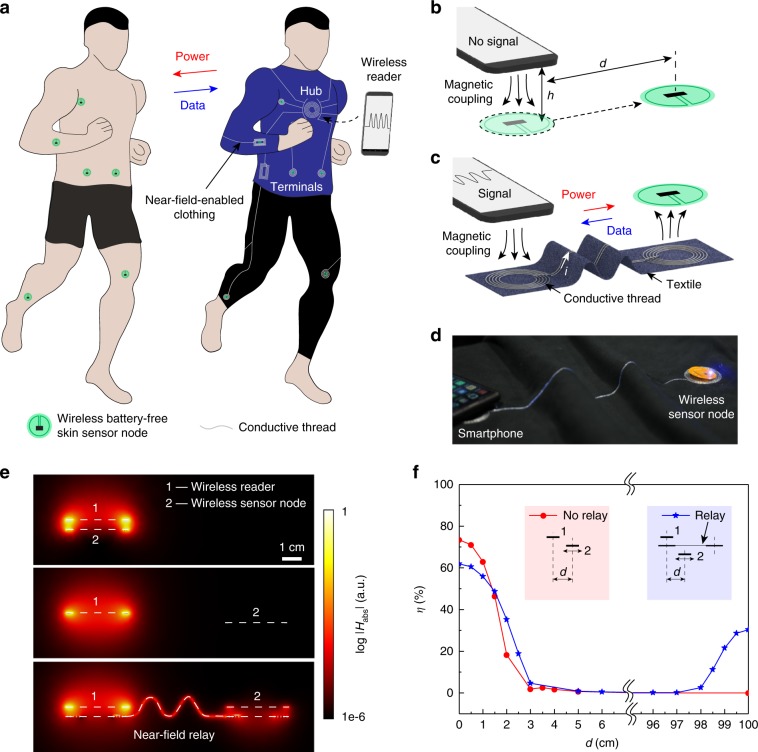
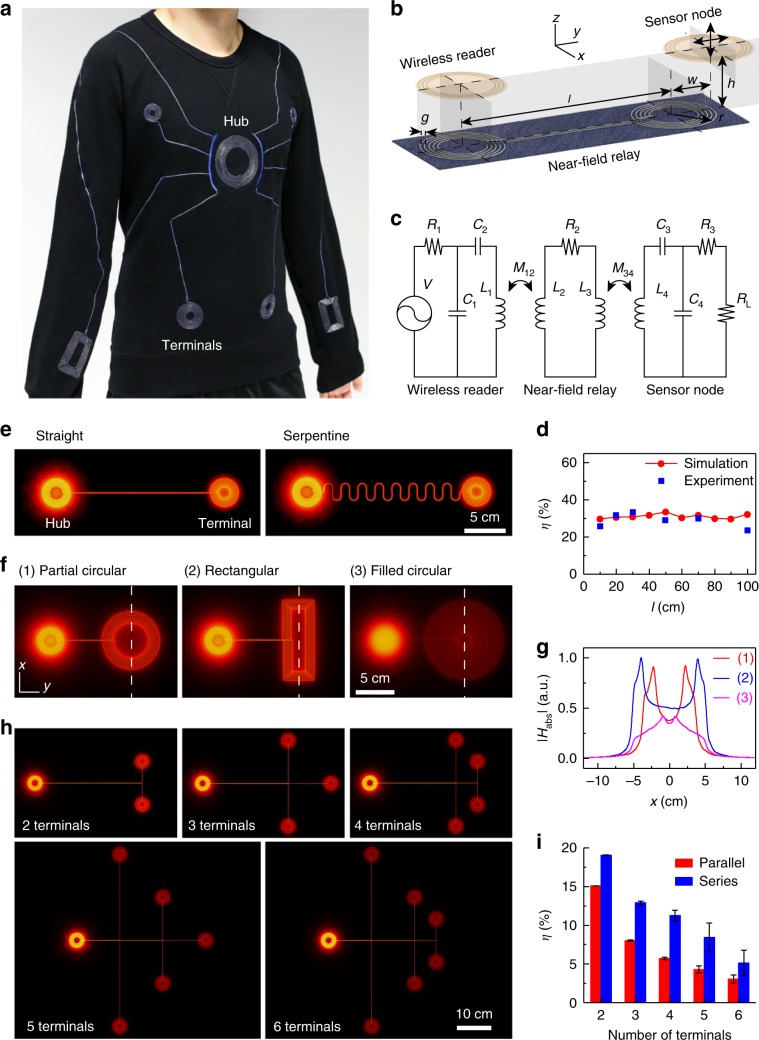
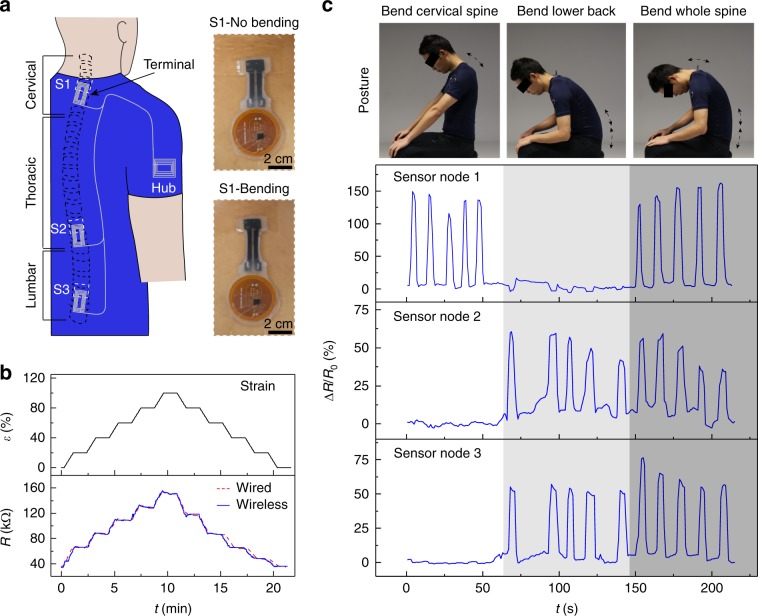
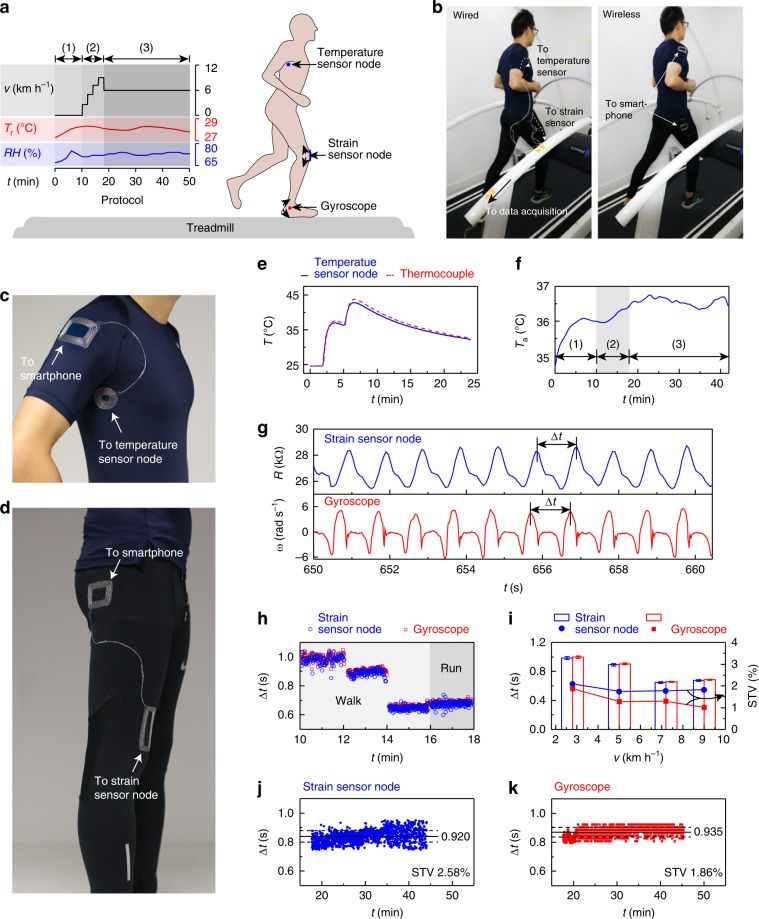
Networks of sensors placed on the skin can provide continuous measurement of human physiological signals for applications in clinical diagnostics, athletics and human-machine interfaces. Wireless and battery-free sensors are particularly desirable for reliable long-term monitoring, but current approaches for achieving this mode of operation rely on near-field technologies that require close proximity (at most a few centimetres) between each sensor and a wireless readout device. Here, we report near-field-enabled clothing capable of establishing wireless power and data connectivity between multiple distant points around the body to create a network of battery-free sensors interconnected by proximity to functional textile patterns. Using computer-controlled embroidery of conductive threads, we integrate clothing with near-field-responsive patterns that are completely fabric-based and free of fragile silicon components. We demonstrate the utility of the networked system for real-time, multi-node measurement of spinal posture as well as continuous sensing of temperature and gait during exercise.
Overview
The claims and statistics of this paper haven’t been checked yet.
Free: it reads the open-access text and checks the first 5 claims that cite a source we can check. Create a free account to check every claim.
Integrity signals
Registry
Cites
Statistics
Figures
Verification
Claims the paper makes
The claims and statistics of this paper haven’t been checked yet.
Free: it reads the open-access text and checks the first 5 claims that cite a source we can check. Create a free account to check every claim.
Claims other papers make about this one
Each is checked against this paper’s own text: does it say what the citing paper says it does?
The source backs part of the claim, not all of it — or backs it for a different population, condition or comparison.
In the citing paper
“In medical rehabilitation, temperature sensing is commonly used to monitor the body, which can be a reference for health.[225,226]”
From Flexible Electronics and Devices as Human–Machine Interfaces for Medical Robotics (2022) · cites this paper as [225]
Experimental — accuracy not yet measured
Self-check
Percentages, sums and reported differences re-computed from the paper’s own numbers.
The self-check needs the paper’s full text.
Citations
Cites
Kim, D.-H., Lu, N., Ma, R., Kim, Y.-S., Kim, R.-H., Wang, S., Wu, J., Won, S. M., Tao, H., Islam, A., et al. (2011) · Science · doi:10.1126/science.1206157 · Cited by 4,836
Wearable biosensors for healthcare monitoring
Kim, J., Campbell, A. S., de Ávila, B. E.-F., & Wang, J. (2019) · Nature Biotechnology · doi:10.1038/s41587-019-0045-y · Cited by 3,373
An ultra-lightweight design for imperceptible plastic electronics
Kaltenbrunner, M., Sekitani, T., Reeder, J., Yokota, T., Kuribara, K., Tokuhara, T., Drack, M., Schwödiauer, R., Graz, I., Bauer-Gogonea, S., et al. (2013) · Nature · doi:10.1038/nature12314 · Cited by 2,485
The rise of plastic bioelectronics
Someya, T., Bao, Z., & Malliaras, G. G. (2016) · Nature · doi:10.1038/nature21004 · Cited by 1,884
Lee, H., Choi, T. K., Lee, Y. B., Cho, H. R., Ghaffari, R., Wang, L., Choi, H. J., Chung, T. D., Lu, N., Hyeon, T., et al. (2016) · Nature Nanotechnology · doi:10.1038/nnano.2016.38 · Cited by 1,802
Ultrasensitive mechanical crack-based sensor inspired by the spider sensory system
Kang, D., Pikhitsa, P. V., Choi, Y. W., Lee, C., Shin, S. S., Piao, L., Park, B., Suh, K.-Y., Kim, T.-I., & Choi, M. (2014) · Nature · doi:10.1038/nature14002 · Cited by 1,626
Multifunctional wearable devices for diagnosis and therapy of movement disorders
Son, D., Lee, J., Qiao, S., Ghaffari, R., Kim, J., Lee, J. E., Song, C., Kim, S. J., Lee, D. J., Jun, S. W., et al. (2014) · Nature Nanotechnology · doi:10.1038/nnano.2014.38 · Cited by 1,462
Self-citationSkin-inspired highly stretchable and conformable matrix networks for multifunctional sensing
Hua, Q., Sun, J., Liu, H., Bao, R., Yu, R., Zhai, J., Pan, C., & Wang, Z. L. (2018) · Nature Communications · doi:10.1038/s41467-017-02685-9 · Cited by 1,413
Ultrathin conformal devices for precise and continuous thermal characterization of human skin
Webb, R. C., Bonifas, A. P., Behnaz, A., Zhang, Y., Yu, K. J., Cheng, H., Shi, M., Bian, Z., Liu, Z., Kim, Y.-S., et al. (2013) · Nature Materials · doi:10.1038/nmat3755 · Cited by 1,229
Soft Microfluidic Assemblies of Sensors, Circuits, and Radios for the Skin
Xu, S., Zhang, Y., Jia, L., Mathewson, K. E., Jang, K.-I., Kim, J., Fu, H., Huang, X., Chava, P., Wang, R., et al. (2014) · Science · doi:10.1126/science.1250169 · Cited by 1,199
Cited by
Items 201–300 of 355
Battery-Free Shape Memory Alloy Antennas for Detection and Recording of Peak Temperature Activity
Wang, W., Zeng, W., & Sonkusale, S. (2022) · Crystals · doi:10.3390/cryst12010086 · Cited by 14
Dautta, M., Hajiaghajani, A., Ye, F., Escobar, A. R., Jimenez, A., Dia, K. K. H., & Tseng, P. (2022) · Small Science · doi:10.1002/smsc.202200013 · Cited by 16
Full-body NFC: body-scale near-field sensor networks with machine-knittable meandered e-textilesPreprint
Takahashi, R., Han, C., Yukita, W., Ho, J. S., Sasatani, T., Noda, A., Yokota, T., Someya, T., & Kawahara, Y. (2025) · arXiv (Cornell University) · doi:10.48550/arxiv.2503.13240 · Cited by 14
“%) to suppress the EM interference with the body [26, 27, 55, 64].”
InfluentialSelf-citationWu, H., Yang, M., Shi, S., Zhi, C., Chen, D., Hu, X. N., Yu, R., Qiu, S., Leung, H. M., Hu, J., et al. (2025) · Advanced Fiber Materials · doi:10.1007/s42765-025-00625-7 · Cited by 15
“Intelligent sensors, such as temperature sensors, heart rate monitors, and accelerometers, enable real-time physiological data collection and analysis [241, 242].”
Skin Mountable Capillaric Strain Sensor with Ultrahigh Sensitivity and Direction Specificity
Yepes, L. R., Demir, E., Lee, J. Y., Sun, R., Smuck, M. W., & Araci, I. E. (2020) · Advanced Materials Technologies · doi:10.1002/admt.202000631 · Cited by 13
Self-citationGarnier, B., Mariage, P., Rault, F., Cochrane, C., & Končar, V. (2023) · Scientific Reports · doi:10.1038/s41598-023-31832-0 · Cited by 13
A battery-free wireless sensor for encrypted signal transmission via Maxwell’s displacement current
Yi, J., Liu, S., Gao, Z., Wu, S., Ji, H., Hou, J., Jiang, G., Sun, X., & Wen, Z. (2025) · Microsystems & Nanoengineering · doi:10.1038/s41378-025-00987-3 · Cited by 12
Artificial Intelligence for data modeling in triboelectric nanogenerators
Li, C., & Nazar, A. M. (2025) · Array · doi:10.1016/j.array.2025.100451 · Cited by 12
Lee, C.-J., Liang, R.-H., Yang, L.-C., Chiang, C.-H., Wu, T.-Y., & Chen, B. (2022) · ACM Symposium on User Interface Software and Technology (UIST) · doi:10.1145/3526113.3545658 · Cited by 12
“Figure 2a displays a schematic of a full relay, which can be used for extending the NFC reader antenna’s read range [11, 28, 42].”
BackgroundLi, Z., Lee, J., Lim, J., & Lee, B. (2023) · Sensors · doi:10.3390/s23052810 · Cited by 12
“Wearable devices [1–4], which collect various physiological information about the human body are widely used in many areas, such as medical devices, sports, and human–machine interface research [5].”
Self-citationLiu, Y., Luo, T., Ding, C., Xuan, L., Li, J., & Yang, R. (2024) · Advanced Materials Technologies · doi:10.1002/admt.202400619 · Cited by 12
Gravity‐Driven Air‐Liquid Interface Flexible Sensor for Human Motion Detection
Zhuang, Z., Ding, K., Zhong, H., Shen, L., & Zhang, Z. (2025) · Small · doi:10.1002/smll.202412022 · Cited by 11
Antenna as sensors: a mini review
Subad, R. A. S. I., Kashouty, M. F. E., & Das, S. (2025) · Journal of Materials Chemistry C · doi:10.1039/d5tc02661j · Cited by 13
Advanced conductive textiles: from nanomaterial integration to wearable applications
Arab, K., Sheikhzade, M. H., Fakhri, V., Naqvi, M., Dare, M. T., Jafari, A., Moghaddam, A., Altaee, A., Alibakhshi, E., Aminabhavi, T. M., et al. (2026) · Advanced Composites and Hybrid Materials · doi:10.1007/s42114-026-01746-2 · Cited by 11
Polymer-Based Flexible Wireless Sensors for Health Monitoring
Huang, H., Xue, G., Zhan, J., Yang, Y. C., Jia, B., Dong, Z., Deng, Z., & Zhao, X. (2026) · Nano-Micro Letters · doi:10.1007/s40820-026-02233-5 · Cited by 16
Advances and Challenges in Wearable Sensors for Health Monitoring
Brazaca, L. C., Lozano, A. M., Mayol, B., Scheidt, D. T., Fazio, D. D., Kim, E., Maroli, G., Rosati, G., Ates, H. C., Wang, H., et al. (2026) · ACS Applied Materials & Interfaces · doi:10.1021/acsami.6c04520 · Cited by 13
Self-citationJin, Y., Yu, M., Nguyen, D. T., Yang, X. Y., Li, Z., Xiong, Z., Li, C., Liu, Y., Kong, Y. L., & Ho, J. S. (2024) · npj Flexible Electronics · doi:10.1038/s41528-024-00293-4 · Cited by 12
“Analysis of the stride time variability (STV) – an important physiological indicator of fatigue – showed that the STV varies from 2.36% to 3.06% depending on the gait, which is consistent with the 3% benchmark for healthy subjects with normal gait control 51,52 .”
InfluentialSelf-citationZnO Decorated Graphene-Based NFC Tag for Personal NO2 Exposure Monitoring during a Workday
Santos-Betancourt, A., Santos-Ceballos, J. C., Alouani, M. A., Malik, S. B., Romero, A., Ramírez, J. L., Vilanova, X., & Llobet, E. (2024) · Sensors · doi:10.3390/s24051431 · Cited by 11
“Moreover, Lin et al. [33] reported the integration of NFC functionality into textiles and demonstrated continuous physiological monitoring of the spinal posture.”
BackgroundLi, S.-L., Chen, M.-Q., Wu, M., Li, Y., & Zeng, J. (2025) · Chemical Engineering Journal · doi:10.1016/j.cej.2025.167266 · Cited by 10
Sun, Z., & Yin, L. (2025) · Sensor Review · doi:10.1108/sr-08-2025-0563 · Cited by 11
Artificial Intelligence-Enhanced Flexible Sensors for Human Motion and Posture Sensing
Jiang, Y., & He, T. (2026) · Sensors · doi:10.3390/s26051562 · Cited by 10
A battery-free wireless epidermal sensor network for continuous systolic blood pressure monitoring
Kurt, S. A., Kasper, K. A., Xu, Q., Yang, X. Y., Xiao, X., Zeng, Q., Stuart, T., Li, Z., Liu, Y., Song, J., et al. (2026) · Nature Electronics · doi:10.1038/s41928-026-01597-1 · Cited by 13
“Such clothing can power and interconnect epidermal sensors across the body via near-field communication 14,15 (NFC) or Bluetooth low energy 16,17 (BLE), allowing for continuous health monitoring with free motion.”
InfluentialSelf-citationTextile-Integrated Phased Surfaces for Wireless Networking of Bioelectronic Devices
Tian, X., Zeng, Q., Nguyen, D. T., & Ho, J. S. (2023) · IEEE Transactions on Antennas and Propagation · doi:10.1109/tap.2023.3322752 · Cited by 10
“A more robust approach is to integrate the networking system into a textile platform [8], [26], [27], [28], [29], achieved through techniques such as embroidering near-field communication (NFC) coils [30] or spoof surface plasmon (SSP) waveguides onto textiles [31], [32], [33], [34].”
Self-citationNFC-Enabled Dual-Channel Flexible Printed Sensor Tag
Choi, J., Visagie, I., Chen, Y., Abbel, R., & Parker, K. (2023) · Sensors · doi:10.3390/s23156765 · Cited by 11
“Examples include epidermal patches with strain or temperature sensing [11–14], full-body sensor patches for pressure and temperature mapping [8], body sensor networks on clothing [4], pulse oximeters on fingernails [9], optical skin characterisation [10], and sweat monitoring and analysis [6,7,15].”
BackgroundDesign and analysis of magnetostrictive sensors for wireless temperature sensing
Rajagopal, M. C., & Sinha, S. (2021) · Review of Scientific Instruments · doi:10.1063/5.0035296 · Cited by 10
BIT: Battery-free, IC-less and Wireless Smart Textile Interface and Sensing System
Xu, W., Li, T., Wang, Y., Yang, X.-D., & Wu, T.-Y. (2025) · CHI Conference on Human Factors in Computing Systems · doi:10.1145/3706598.3713100 · Cited by 11
“To address these issues, various methods have been proposed [24, 25, 30, 33, 44, 69, 75, 76], among which resonant sensors hold significant promise [19, 23, 28, 42, 57, 60].”
Bodily Electrodermal Representations for Affective Computing
Shui, X., Lin, R., Luo, Z., Lin, B., Mao, X., Li, H., Liu, R., & Zhang, D. (2023) · IEEE Transactions on Affective Computing · doi:10.1109/taffc.2023.3315973 · Cited by 9
Self-citationLeveraging body dielectric polarization for ambient electromagnetic energy recovery via e-textile
Li, Y., Yang, W., Shokurov, A. V., & Menon, C. (2025) · Nature Communications · doi:10.1038/s41467-025-64053-2 · Cited by 8
Chemically Doped Conductive Polymers for Wearable Health Monitoring
Zuo, M., Song, J., Hu, H., Zheng, L., Zhang, L., & Lawrie, C. H. (2026) · Advanced Materials Technologies · doi:10.1002/admt.202502209 · Cited by 9
“Textile-based near-field relays have been demonstrated to extend NFC connectivity across garments, enabling multinode, smartphone-readable sensing during motion (Figure 5g ) [ 74 ].”
Gaubert, V., Yendigoyeva, A., Muniraj, V. K. A., Boddaert, X., Djenizian, T., & Delattre, R. (2024) · Advanced Engineering Materials · doi:10.1002/adem.202301436 · Cited by 8
Single-fibre-enabled, self-powered wireless body area networks
Wei, Z., Yang, W., Hu, X., Li, K., Li, Y., Zhang, Q., Hou, C., & Wang, H. (2025) · Wearable electronics. · doi:10.1016/j.wees.2025.01.001 · Cited by 8
Healable and Conductive Two-Dimensional Sulfur Iodide for High-Rate Sodium Batteries
Qian, M., Wu, F., Zhang, J., Wang, J., Song, T., & Tan, G. (2024) · ACS Applied Materials & Interfaces · doi:10.1021/acsami.4c05252 · Cited by 8
Near-field-enabled Clothing for Wearable Wireless Power Transfer
Kim, H., Lin, R., Achavananthadith, S., & Ho, J. S. (2020) · IEEE Wireless Power Transfer Conference · doi:10.1109/wptc48563.2020.9295507 · Cited by 10
“to multiple skin-adhesive sensors [8], Here, we provide a detailed design procedure for the optimized design of such textile patterns for maximum wireless power transfer effi ciency, and derive an equivalent circuit model that provides design insights.”
MethodSelf-citationFibre-based wearable electronic technology for personal protective clothing
Hassan, E. A. M., Ahmed, M. A., Zhu, S., & Alebeid, O. K. (2022) · Elsevier eBooks · doi:10.1016/b978-0-323-90477-3.00019-5 · Cited by 8
Unobstructive and safe-to-wear watt-level wireless charger
Kim, S., Wells, J., Bhattacharya, S., Nathan, H., He, J., Tubilla, I., Huh, H., Kakani, P., Farshkaran, A., Pasupathy, P., et al. (2024) · npj Flexible Electronics · doi:10.1038/s41528-024-00363-7 · Cited by 7
Liu, F., Cui, F., Tong, Y., Li, C., Fang, B., & Jing, X. M. (2025) · Journal of Electronic Materials · doi:10.1007/s11664-025-12232-8 · Cited by 7
Wang, F., Li, Q., Wang, Z., & Su, Y. (2025) · Soft Science · doi:10.20517/ss.2025.66 · Cited by 6
Li, S.-L., Wu, M., Li, Y.-D., Zhang, M.-Q., & Zeng, J. (2025) · International Journal of Biological Macromolecules · doi:10.1016/j.ijbiomac.2025.140493 · Cited by 6
Li, C., Zhang, K., Li, J., Ye, Q., Zhang, K., Wang, B., & Peng, H. (2025) · Macromolecules · doi:10.1021/acs.macromol.4c01738 · Cited by 6
Park, H., Kim, M., Gbadam, G. S., Lee, C., Joo, H., Gwak, S., Lee, B., Kim, K. N., & Lee, J. (2025) · Advanced Science · doi:10.1002/advs.202415998 · Cited by 6
Self-citationWang, Y., Yuan, Z., & Shen, G. (2024) · Science China Materials · doi:10.1007/s40843-024-2938-6 · Cited by 6
“However, traditional wearable devices that rely on rigid von Neumann architectures and incorporate silicon chips face challenges in seamless integration, energy efficiency, and comfort [1–3].”
Coil design for wireless power transfer and communication over hinges of smart glasses
Takaki, K., Sasatani, T., Kasashima, H., Kawahara, Y., & Naemura, T. (2020) · International Symposium on Wearable Computers · doi:10.1145/3410531.3414299 · Cited by 6
“This technology has been applied in various domains such as power delivery over mechanical joints in robotics applications [20], and power delivery and communication via coils fabricated on wearable media for charging wearable and mobile devices [13, 14].”
MethodWireless Sensing for Monitoring of Coal Gangue Mixing Based on PT Symmetry
Xi, H., Dong, Y., Zhang, L., Liu, Y., Su, X., Feng, C., Zang, F., Dong, L., & Shi, Y. (2022) · IEEE Access · doi:10.1109/access.2022.3185238 · Cited by 6
A DIY approach to wearable sensor networks
Lin, R., & Ho, J. S. (2021) · Nature Electronics · doi:10.1038/s41928-021-00674-x · Cited by 6
Self-citationZheng, J., Cao, T., Wang, J., Xu, W., Qu, Y., Wang, J., Wu, Y., Song, Y., He, L., Chen, X., et al. (2024) · Cellulose · doi:10.1007/s10570-024-06315-8 · Cited by 5
“…humidity, etc.), electronic devices that mimic or go beyond the sensing behavior of human skin have sparked extensive attention in fields such as health monitoring, artificial intelligence, human–computer interaction, and soft robotics (Lin et al. 2020; Zhao et al. 2022a, b; Guo et al. 2021).”
Programmable threshold sensing in wireless devices using Ising dynamics
Casilli, N., Kim, S., Hussein, H. M. E., Tetro, R., Colombo, L., Rinaldi, M., Feng, P. X. ‐., Alù, A., & Cassella, C. (2025) · Nature Electronics · doi:10.1038/s41928-025-01392-4 · Cited by 5
“This constraint limits their usability in widespread sensor deployments 13 .”
Sadi, M. S., Onuralp, D. B., Morsada, Z., Kumpikaitė, E., Ordu, M., & Hossain, M. M. (2025) · Sustainable materials and technologies · doi:10.1016/j.susmat.2025.e01782 · Cited by 5
Development of an integrated platform for modular smart garments
Ahn, J., Lee, Y., Park, S., & Kim, S. (2025) · Fashion and Textiles · doi:10.1186/s40691-025-00447-6 · Cited by 5
Integrating wearable devices with AI to explore a disease world spanning time and space
Liu, Y., Wu, Y., Ren, H.-X., Wu, S., Hong, J., Du, J., Sun, M., Lin, Z.-H., & Miao, Y.-B. (2025) · Nano Energy · doi:10.1016/j.nanoen.2025.111481 · Cited by 6
Textile Radio-Frequency Active Devices and Systems: Wireless Communication and Energy Harvesting
Song, W., Chen, H., Kou, Z., Chen, Z., Li, J., Liu, T., Fan, X., & Lu, W. (2025) · Research · doi:10.34133/research.1101 · Cited by 6
“Such platforms facilitate seamless multi-device integration [ 15 , 29 ], energy harvesting [ 30 – 32 ], and distributed sensing [ 16 , 22 ], enabling more intelligent and autonomous wearable systems.”
Zhang, Q., Wang, Y., Ye, Z., Zhan, W., Yang, Z., Peng, N., Liu, M., & Zhang, X. (2026) · Advanced Functional Materials · doi:10.1002/adfm.75245 · Cited by 5
LC Repeater-Inspired Battery-Free, Chipless, Flexible Body Sensor Network With Lightweight Reader
Lyu, E.-Z., Sung, Y., Hsu, D.-Y., Su, G.-L., & Wang, T.-W. (2025) · IEEE Transactions on Instrumentation and Measurement · doi:10.1109/tim.2025.3541681 · Cited by 10
“Thus, NFC-based sensors can be battery-free, making them ideal for use as passive wireless biomedical sensors in wearable and implanted forms for physical [22], [23], [24], [25], [26] and chemical [27], [28] sensing applications.”
Highly sensitive flexible strain sensors with novel tubular fiber design for human motion monitoring
Lan, W., Wu, X., Ding, Q., Zhou, T., Liao, Y., Gao, S., Liu, Y., & Wei, B. (2024) · Journal of Materials Science Materials in Electronics · doi:10.1007/s10854-024-12641-1 · Cited by 5
Fan, Y., Liu, X., Yang, H., & Ju, Z. (2025) · Electronics · doi:10.3390/electronics14091898 · Cited by 5
“This has led to the widespread popularity of wearable devices in many fields, including medical and health [1,2], sports and entertainment [3], and rescue and military [4].”
Body Sensor Networks for Healthcare: Advancements and Solutions
Abbas, A. M. (2021) · EAI/Springer Innovations in Communication and Computing · doi:10.1007/978-3-030-77746-3_7 · Cited by 5
Castrejón-Peralta, C., Montiel-Pérez, J. Y., Gante-Díaz, S. A., Vázquez, J. A. C., Rubín-Alvarado, A. A., Reyes-Vera, Z., Torres-Delgadillo, J. M., Sossa, H., Villegas, O. O. V., & Sánchez, V. G. C. (2026) · Applied Sciences · doi:10.3390/app16021126 · Cited by 5
“[44] developed a wireless, battery-free body sensor integrated into textile substrates.”
Xia, H., Wang, S., Ding, Y., Li, G., Tang, J., Ding, B., Liu, Z., Zhao, Z., Zou, L., & Zheng, X. (2026) · Journal of Alloys and Compounds · doi:10.1016/j.jallcom.2026.186716 · Cited by 4
Smart Closed‐Loop Systems in Personalized Healthcare: Advances and Outlook
Khosravi, S., Lee, S. W., Uddin, M. A., Hassanpoor, S., Suvindran, N., Le, K., Arkaz, H., Narayana, H., Soltanian, S., Khorsandi, D., et al. (2026) · Advanced Materials Technologies · doi:10.1002/admt.202502260 · Cited by 6
“…and laser micromachining double-sided copper-clad polyimide film Low [ 337 ] Near field sensor network Embroidery of conductive threads Low (4 mW) [ 343 ] Body sensor network Laser-cutting conductive fabric Low [ 7 ] Abbreviation : BLE, Bluetooth low energy; NFC, Near-field communication; RFID,…”
Wang, K., Qi, E., Song, X., Ghamarinia, M., Quiquero, D., Zhao, Y., & Shi, H. (2026) · ACS Applied Energy Materials · doi:10.1021/acsaem.5c03959 · Cited by 4
Zhang, W., Hu, W., Li, C., Wang, K., Shi, F., Liu, F. M., Wang, L., & Xu, L. H. (2026) · Science Advances · doi:10.1126/sciadv.aeg9950 · Cited by 5
A single-chip optoelectronic sensor integrated with the human body for tactile perception and memory
Yang, X., Yang, W., Wang, W., Li, K., Li, Y., Zhang, Q., Wang, H., & Hou, C. (2024) · Device · doi:10.1016/j.device.2024.100600 · Cited by 4
Embroidered textile antenna with dual‐band capability for body‐centric communication systems
Ghosh, D., Choudhury, S., Nandi, A., & Chakraborty, U. (2024) · Microwave and Optical Technology Letters · doi:10.1002/mop.70012 · Cited by 5
Power-on-Touch: Powering Actuators, Sensors, and Devices during Interaction
Mazursky, A., Gupta, A., de la Cruz, A., & Lopes, P. (2025) · CHI Conference on Human Factors in Computing Systems · doi:10.1145/3706598.3713987 · Cited by 4
“In fact, higher frequencies may lead to improved wearability, as they afford coils with fewer turns/smaller diameters [32, 74].”
Magnetic Blind Beamforming for Battery-Free Wireless Sensor Networks
Ofori, A. A., & Guo, H. (2022) · IEEE Transactions on Green Communications and Networking · doi:10.1109/tgcn.2022.3154923 · Cited by 4
“However, battery-free sensors cannot respond without being powered up [23].”
BackgroundAdaptive Impedance Matching Network for Contactless Power and Data Transfer in E-Textiles
Lindeman, P., Steijlen, A. S. M., Bastemeijer, J., & Bossche, A. (2023) · Sensors · doi:10.3390/s23062943 · Cited by 4
“Comparing with the system presented in [29], our system represents a nearly eight-fold increase in power transfer.”
BackgroundMethodInfluentialGuo, W., Hu, J., & Yan, X. (2023) · ACS Sustainable Chemistry & Engineering · doi:10.1021/acssuschemeng.3c00323 · Cited by 4
Linh, N. N., Hiep, L. T. H., Viet, N. K., Bui, H. N., Nguyen, H. A., Tùng, B. S., Khuyen, B. X., Pham, T. S., & Lãm, V. Đ. (2025) · Physica Scripta · doi:10.1088/1402-4896/addb02 · Cited by 4
Wang, C., Tian, L., Li, J., Wu, H., Li, S., Ma, J., Wang, Y., Fan, W., Ni, J., Hou, F., et al. (2026) · ACS Applied Nano Materials · doi:10.1021/acsanm.5c05113 · Cited by 3
Fully textile passive wireless sensing for human movement monitoring with multiple sensors
Galli, V., Ahmadizadeh, C., & Menon, C. (2026) · Frontiers in Bioengineering and Biotechnology · doi:10.3389/fbioe.2026.1724364 · Cited by 4
“This factor introduces the issue of fragile connections between soft and flexible textiles sensors and rigid electronic modules (Lin et al., 2020; Du et al., 2022).”
From materials to systems: resonant inductive coupling for wireless bioelectronics
Kim, D., Joo, J., Kim, B., Park, Y., Won, S. M., & Yoo, J. (2026) · npj Flexible Electronics · doi:10.1038/s41528-026-00576-y · Cited by 4
“Near-fi eld-enabled clothing, for example, uses embroidered conductive yarns to form inductive relay networks that extend NFC operating range up to 1 m and power multiple battery-free sensors during movement 136 .”
Luo, C., Zhang, Y., Zhang, J., Hui, L., Qi, R., Han, Y., Sun, X. Y., Li, Y., Wei, Y., Zhang, Y., et al. (2025) · Sensors · doi:10.3390/s25072153 · Cited by 3
Advances in Wearable Sensors: Signalling the Provenance of Garments Using Radio Frequency Watermarks
Foroughi, J., Safaei, F., Raad, R., & Mitew, T. (2020) · Sensors · doi:10.3390/s20226661 · Cited by 3
“Consequently, textiles antennas enable the flexibility and porosity of fabrics that would provide desirable requirements for the ideal garments; such garments would be soft, deformable, breathable, and protective for the skin [11,15].”
BackgroundFeasibility of Implant Strain Measurement for Assessing Mandible Bone Regeneration
Rothweiler, R. M., Zankovic, S., Brandenburg, L. S., Fuessinger, M. A., Groß, C., Voss, P. J., & Metzger, M. C. (2022) · Micromachines · doi:10.3390/mi13101602 · Cited by 3
“Furthermore, recording can only be achieved when the receiver is placed next to the coil; a continuous measurement is hardly possible anymore [25,26].”
BackgroundAn Oscillator with Inductively Coupled Resonators for Readout of Stretchable Resistive Strain Sensor
Mårtensson, B., Mitomo, H., Behmanesh, B., Matsuhisa, N., & Ishikuro, H. (2023) · IEEE International Midwest Symposium on Circuits and Systems (MWSCAS) · doi:10.1109/mwscas57524.2023.10406047 · Cited by 4
“Stretchable electronics is a relatively new and interesting research area [1]–[4].”
BackgroundExperimental study and application on a novel skin energy harvesting and storage system
Liu, F., Chang, S., Xia, L., Zhou, H., Zhang, C., Tong, Y., Wang, S., Cui, F., Chen, J., Xuan, W., et al. (2024) · Journal of Energy Storage · doi:10.1016/j.est.2024.111610 · Cited by 2
A hair-thin fiber aqueous rechargeable Zn-ion battery with high energy density
Yan, J., Xue, J., Li, J., Yang, S., Xu, C., Qin, L., & Fan, X. (2025) · Chemical Communications · doi:10.1039/d5cc04106f · Cited by 2
Biodegradable Silicon-Based Electromagnetic Energy Harvester toward Wireless Power Supply
Zhao, H., Wu, X., Zhou, J., Yin, A., Sun, W., Meng, D., He, Y., Zhang, Y., Xue, Z., & Guo, Q. (2025) · ACS Applied Materials & Interfaces · doi:10.1021/acsami.5c11418 · Cited by 3
EverRing: Powering Battery-Free, Highly-Capable Smart Rings with Headset RF Energy
DeVrio, N., & Harrison, C. (2025) · ACM International Symposium on Wearable Computers (ISWC) · doi:10.1145/3715071.3750420 · Cited by 2
Chen, J., Wen, X., Wang, Z., Zhou, T., Xu, L., Tang, Q., & Lee, C. (2025) · Nano Research · doi:10.26599/nr.2025.94908273 · Cited by 2
Su, G.-L., Lyu, E.-Z., & Wang, T.-W. (2025) · IEEE Internet of Things Journal · doi:10.1109/jiot.2025.3647891 · Cited by 2
“1) Integrated Coil Relay Networks: Lin et al. [17] demonstrated a clothing-integrated system using conductive threads to form an embedded relay network that connected multiple sensor nodes to a centralized hub.”
InfluentialHuman motion recognition and prediction using loose cloth
Shen, T., Morris, S., Giulio, I. D., & Howard, M. (2026) · Nature Communications · doi:10.1038/s41467-025-67509-7 · Cited by 2
“For example, (i) sensors tightly attached to rigid components of the body (e.g. arm, thigh, wrist, etc.) 28 – 30 , (ii) attached to tight-fi tting clothing 16,31 – 33 or (iii) statistical machine learning/signal processing methods have been employed to reduce artefacts 34 – 38 .”
A Wireless, Battery‐Free Artificial Throat Patch with Deep Learning for Emotional Speech Recognition
Xu, B., Lin, G., Hong, X., Liu, C., Qu, X., Jiao, K., Zhang, L., Xu, B., Yan, J., Qiao, Y., et al. (2026) · Advanced Science · doi:10.1002/advs.202516617 · Cited by 2
Wu, X., Qi, L., Wang, Y., Zou, M., Li, D., Zhou, Y., Huang, T., Jin, J., Lü, H., Zhu, M., et al. (2026) · Science Advances · doi:10.1126/sciadv.aec5676 · Cited by 2
Patra, R., Nkimbeng, C. H. S., & Choi, J. W. (2026) · Journal of Sensor and Actuator Networks · doi:10.3390/jsan15030042 · Cited by 2
The 2026 global roadmap for textile-integrated wearable technologies in health
Elgendi, M., Chen, J., Xiao, X., Yin, J., GRANADOS, D. F. P., Menon, C., Riener, R., Allen, J., Pineda-Alpizar, A. F., Zheng, D., et al. (2026) · Physiological Measurement · doi:10.1088/1361-6579/ae85b0 · Cited by 3
UART for Wearables (U4We): DC Power and Carrierless Signal Transfer Over Conductive Textiles
Noda, A. (2026) · IEEE Transactions on Circuits & Systems II Express Briefs · doi:10.1109/tcsii.2026.3735640 · Cited by 2
“RFID (radio frequency identification) / NFC (near-field communication) sensors can operate batterylessly [5], [6] but are sensitive to reader coupling.”
Zhang, J., Yao, H., Zhang, Y., Jiang, W.-B., Wu, Y., Zhang, Y.-J., Ao, T., & Zheng, H. (2022) · Acta Physica Sinica · doi:10.7498/aps.71.20211632 · Cited by 2
Self-citationChen, S., Xi, X., Liu, R., & Guo, X. (2022) · IEEE International Symposium on Circuits and Systems proceedings · doi:10.1109/iscas48785.2022.9937829 · Cited by 3
Subramanian, M., Subhashini, N., Devesh, K., Ragavan, K., & Pankaj, S. (2025) · Advances in computer and electrical engineering book series · doi:10.4018/979-8-3693-7600-3.ch007 · Cited by 2
Digitally-embroidered Liquid Metal Textiles for Near-field Wireless Body Sensor Networks
Lin, R., Kim, H., Achavananthadith, S., & Ho, J. S. (2021) · Wearable and Implantable Body Sensor Networks · doi:10.1109/bsn51625.2021.9507043 · Cited by 2
Self-citationWirelessly Powered Sensor Network for High Data Rate, Continuous Health Monitoring
Kurt, S. A., Yang, X. Y., & Ho, J. S. (2022) · 2022 Wireless Power Week (WPW) · doi:10.1109/wpw54272.2022.9853912 · Cited by 2
Self-citationMa, L., & Li, J. (2022) · International Journal of Clothing Science and Technology · doi:10.1108/ijcst-03-2022-0047 · Cited by 2
Progress in physiological textile sensors for biomedical applications
Shuvo, I. I., & Dolez, P. I. (2023) · Elsevier eBooks · doi:10.1016/b978-0-323-91593-9.00002-x · Cited by 3
Finite Element Analysis of Relative Slip Between Tight Tops and the Human Body
Bai, Y., Zhao, J., Ding, H., Li, Q., & Zhu, S. (2024) · AATCC Journal of Research · doi:10.1177/24723444241257542 · Cited by 2
Development of Energy Autonomous Wearable Sensor Node for Oxygen Monitoring in Underground Tunnels
Akbari, S., Voigt, T., Subramanian, R. S. V., & Song, W. (2024) · Mediterranean Conference on Embedded Computing (MECO) · doi:10.1109/meco62516.2024.10577893 · Cited by 2
“Wearable sensor nodes are used in various applications [7] [9].”
BackgroundA Wearable and Unobstructive Qi-Compatible Wireless ChargerPreprint
Lu, N., Kim, S., Wells, J., Bhattacharya, S., Nathan, H., He, J., Tubilla, I., Huh, H., Kakani, P., Farshkaran, A., et al. (2023) · Research Square · doi:10.21203/rs.3.rs-3509616/v1 · Cited by 2
Demonstrating BIT: Battery-free, IC-less and Wireless Smart Textile Interface and Sensing System
Xu, W., Li, T., Wang, Y., Yang, X.-D., & Wu, T.-Y. (2025) · CHI Conference Extended Abstracts on Human Factors in Computing Systems (CHI EA) · doi:10.1145/3706599.3721272 · Cited by 1
“To address these issues, various methods have been proposed [13, 14, 16, 17, 21, 29, 31, 32], among which resonant sensors hold significant promise [9, 12, 15, 20, 24, 25].”
RadioGami: Batteryless, Long-range Wireless Paper Sensors Using Tunnel Diodes
Fahad, I., Scott, D., Zahid, A., Bringle, M., Patil, S., Bevins, E., Palileo, C., & Swaminathan, S. G. (2025) · Proceedings of the ACM on Interactive Mobile Wearable and Ubiquitous Technologies · doi:10.1145/3729487 · Cited by 1
“[4], RF Bandaid [47], PaperID [26], OptoSense [63], ForceSticker [15], LiveTag [13], Electronic Tattoo [3], NFC Clothing [31], Sweat cortisol [8].”
Human complex joint motion recognition based on plastic optical fiber wearable system
Chen, Z., Wang, S., Yang, H. L., Wu, Q., He, Z., Chen, M., Liu, J., Hu, Y., Zhang, Y., Fu, Y., et al. (2025) · Sensors and Actuators A Physical · doi:10.1016/j.sna.2025.117298 · Cited by 1
Metadata
- Authors
- Lin, R., Kim, H.-J., Achavananthadith, S., Kurt, S. A., Tan, S. C. C., Yao, H., Tee, B. C. K., Lee, J. K. W., & Ho, J. S.
- Affiliations
- National University of Singapore (SG)
- Corresponding author
- Lin, Rongzhou
- Ho, John S.
- ORCID
- Venue
- Nature Communications
- Published
- 2020-01-23
- Volume
- 11
- Issue
- 1
- Pages
- 444-444
- ISSN
- 2041-1723 (ISSN-L)
- PMC
- PMC6978350
- OpenAlex
- W3002340625
- Semantic Scholar
- 9fb7c4cd82602c0ef48db5c466e5cb9fe2b65f1a
- Cited by
- 331
- References
- 58
- Citations by year
- 2026: 37 · 2025: 62 · 2024: 54 · 2023: 52 · 2022: 59 · 2021: 51 · 2020: 16
- FWCI
- 13.98
- Type
- journal article
- Language
- en
- Open access
- gold
- doi.org
- Licence
- cc-by
- creativecommons.org/licenses/by/4.0 (tdm)
- creativecommons.org/licenses/by/4.0 (vor)
- Locations
- Nature Communications (publishedVersion, cc-by)
- Europe PMC (PubMed Central) (publishedVersion, cc-by)
- PubMed Central (publishedVersion, cc-by)
- PubMed (publishedVersion)
- National University of Singapore (submittedVersion)
- RePEc: Research Papers in Economics (submittedVersion)
- DOAJ (DOAJ: Directory of Open Access Journals) (submittedVersion)
- DOAJ (DOAJ: Directory of Open Access Journals) (submittedVersion, cc-by-sa)
- Funders
- National Research Foundation (AISG-GC-2019-002)
- National Research Foundation Singapore (AISG-GC-2019-002, NRFF2017-07)
- Ministry of Education, India
- Topics
- Physical Sciences › Engineering › Biomedical Engineering › Advanced Sensor and Energy Harvesting Materials
- Physical Sciences › Engineering › Biomedical Engineering › Wireless Body Area Networks
- Physical Sciences › Engineering › Biomedical Engineering › Non-Invasive Vital Sign Monitoring
- Keywords
- battery-free sensors, wireless body sensor networks, near field communication, smart textiles, functional clothing, wireless power transfer, physiological monitoring, temperature sensing, human-machine interaction
- MeSH terms
- Clothing, Equipment Design, Humans, Knee, Posture, Electric Power Supplies, Spine, Temperature, Exercise, Walking, Monitoring, Ambulatory, Electromagnetic Phenomena, Wireless Technology
About these checks
Registry, retraction, Cites and statistics results are computed, not judged, with one exception: a printed reference that no index lists is read once by a model before it counts as a citation error. Claims are extracted by a model and kept only when their quote appears verbatim in the text; each cited source is then checked, with a model’s help, for whether it says what the claim relies on. Those verdicts can be wrong — read the claim’s quote and the cited source before relying on one.
Statistics and arithmetic are recomputed, not judged.
Confidence bands are shown only for fields calibrated on our annotated test set. None is calibrated yet, so no band is shown.
What counts as a claim ›How we measure confidence ›How we check this ›
Are you an author, or do you see a problem with this page? Request a review
Data sources
Bibliographic data: Semantic Scholar, OpenAlex, Crossref.
Contains information from the Semantic Scholar Academic Graph Datasets, made available under the ODC Attribution License (ODC-BY 1.0).
Semantic Scholar’s data is described in: Kinney, R., et al. (2023). The Semantic Scholar Open Data Platform. arXiv:2301.10140.
