

Single-cell RNA-sequencing of differentiating iPS cells reveals dynamic genetic effects on gene expression
Open accessPublished version of a preprint
The DOI matches its Crossref record; 64 of the 64 references it cites were found in a registry or an index.
Abstract
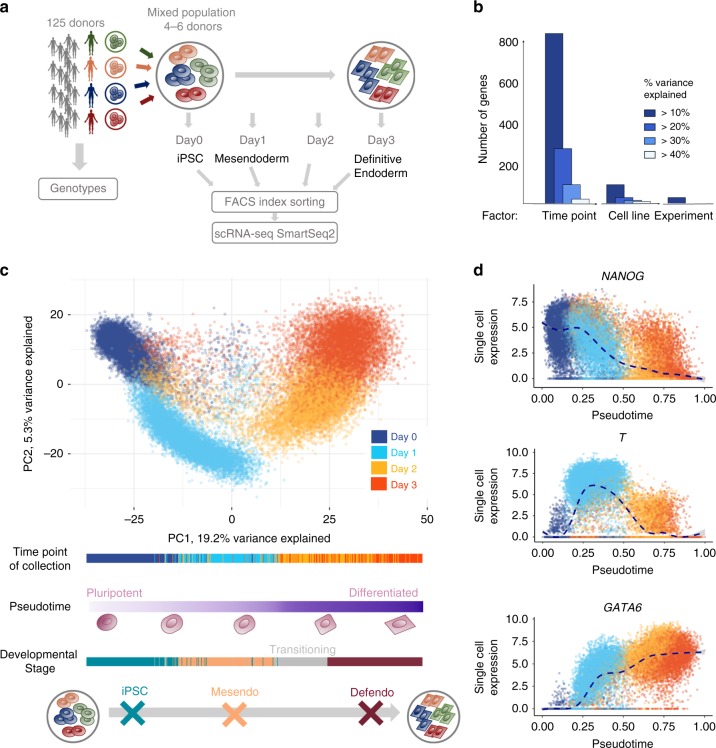
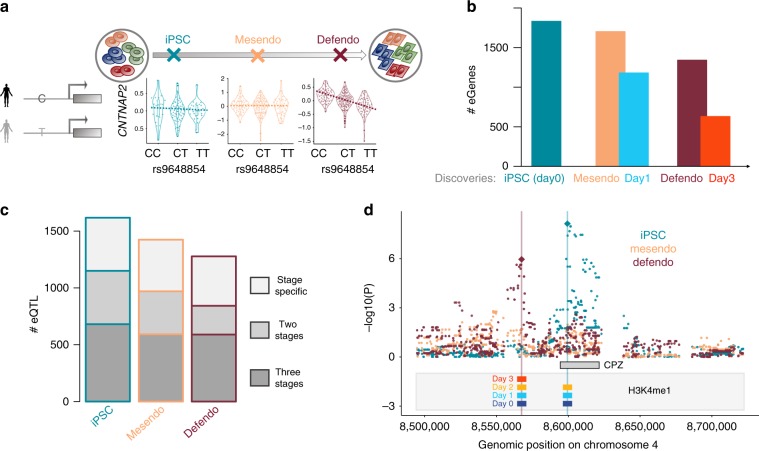
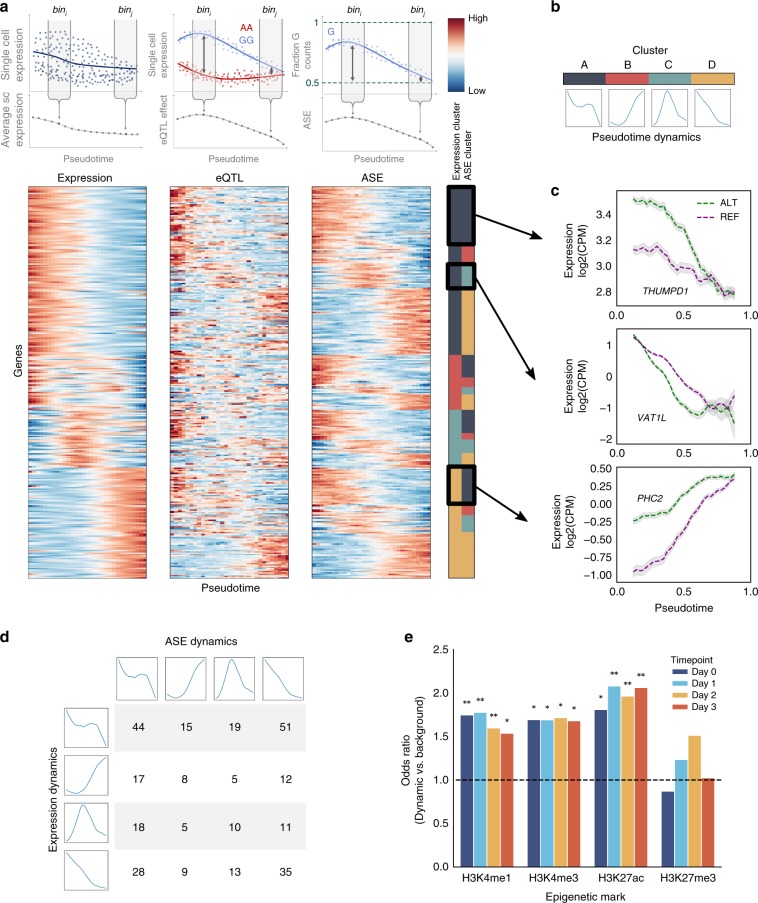
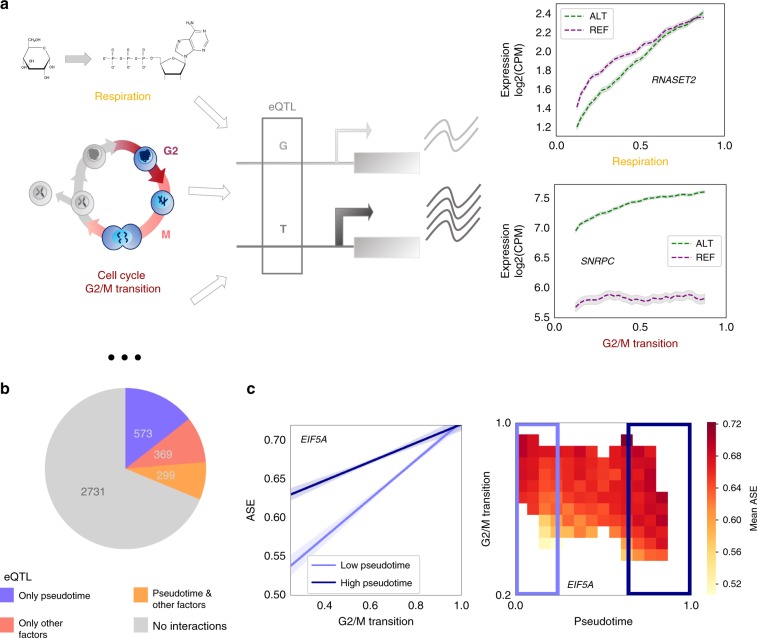
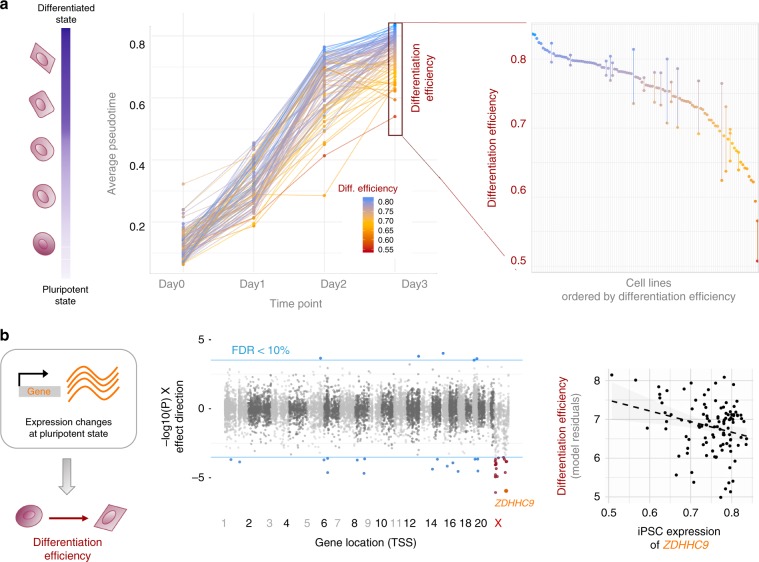
Recent developments in stem cell biology have enabled the study of cell fate decisions in early human development that are impossible to study in vivo. However, understanding how development varies across individuals and, in particular, the influence of common genetic variants during this process has not been characterised. Here, we exploit human iPS cell lines from 125 donors, a pooled experimental design, and single-cell RNA-sequencing to study population variation of endoderm differentiation. We identify molecular markers that are predictive of differentiation efficiency of individual lines, and utilise heterogeneity in the genetic background across individuals to map hundreds of expression quantitative trait loci that influence expression dynamically during differentiation and across cellular contexts.
Overview
The claims and statistics of this paper haven’t been checked yet.
Free: it reads the open-access text and checks the first 5 claims that cite a source we can check. Create a free account to check every claim.
Integrity signals
Registry
Cites
Statistics
Figures
Verification
Claims the paper makes
The claims and statistics of this paper haven’t been checked yet.
Free: it reads the open-access text and checks the first 5 claims that cite a source we can check. Create a free account to check every claim.
Claims other papers make about this one
Each is checked against this paper’s own text: does it say what the citing paper says it does?
The source backs part of the claim, not all of it — or backs it for a different population, condition or comparison.
In the citing paper
“Alternatively cells were mapped to known reference cell (sub)types or states4,5,11,12, making effective use only of cell-state or cell-type specific marker genes.”
From Targeted Perturb-seq enables genome-scale genetic screens in single cells (2020) · cites this paper as [12]
Experimental — accuracy not yet measuredIn the citing paper
“A number of single-cell RNA-seq eQTL datasets have been published from differentiating iPSCs and peripheral blood cells10,48–50 and many others are likely to follow in the near future.”
From A compendium of uniformly processed human gene expression and splicing quantitative trait loci (2021) · cites this paper as [48]
Self-check
Percentages, sums and reported differences re-computed from the paper’s own numbers.
The self-check needs the paper’s full text.
Citations
Cites
Fitting Linear Mixed-Effects Models Using lme4
Bates, D., Mächler, M., Bolker, B., & Walker, S. (2015) · Journal of Statistical Software · doi:10.18637/jss.v067.i01 · Cited by 86,835
Fast and accurate short read alignment with Burrows-Wheeler transform
Li, H., & Durbin, R. (2009) · Bioinformatics · doi:10.1093/bioinformatics/btp324 · Cited by 58,607
Self-citationSTAR: ultrafast universal RNA-seq aligner
Dobin, A., Davis, C. A., Schlesinger, F., Drenkow, J., Zaleski, C., Jha, S., Batut, P., Chaisson, M., & Gingeras, T. R. (2013) · Bioinformatics · doi:10.1093/bioinformatics/bts635 · Cited by 51,709 · cited 1×
“Trimmed reads were mapped to the human reference genome build 37 using STAR [40] (version: 020201) in two-pass alignment mode, using the default settings proposed by the ENCODE consortium (STAR manual).”
PLINK: a tool set for whole-genome association and population-based linkage analyses.
Purcell, S., Neale, B., Todd-Brown, K., Thomas, L., Ferreira, M. A. R., Bender, D., Maller, J., Sklar, P., de Bakker, P. I. W., Daly, M. J., et al. (2007) · The American Journal of Human Genetics · doi:10.1086/519795 · Cited by 34,089 · cited 2×
“Association tests were performed using a linear mixed model (LMM), accounting for population structure and sample repeat structure (see below) as random effects (using a kinship matrix estimated using PLINK [50]).”
Cutadapt removes adapter sequences from high-throughput sequencing reads
Martin, M. (2011) · EMBnet.journal · doi:10.14806/ej.17.1.200 · Cited by 33,889
BEDTools: a flexible suite of utilities for comparing genomic features
Quinlan, A. R., & Hall, I. M. (2010) · Bioinformatics · doi:10.1093/bioinformatics/btq033 · Cited by 27,437
An integrated encyclopedia of DNA elements in the human genome
The ENCODE Project Consortium (2012) · Nature · doi:10.1038/nature11247 · Cited by 18,072
Salmon provides fast and bias-aware quantification of transcript expression
Patro, R., Duggal, G., Love, M. I., Irizarry, R. A., & Kingsford, C. (2017) · Nature Methods · doi:10.1038/nmeth.4197 · Cited by 12,700
Statistical significance for genomewide studies
Storey, J. D., & Tibshirani, R. (2003) · Proceedings of the National Academy of Sciences · doi:10.1073/pnas.1530509100 · Cited by 9,692 · cited 1×
“We then adjusted for multiple testing using this empirical null distribution.”
SCANPY: large-scale single-cell gene expression data analysis
Wolf, F. A., Angerer, P., & Theis, F. J. (2018) · Genome Biology · doi:10.1186/s13059-017-1382-0 · Cited by 8,881
Cited by
Items 101–200 of 336
Molecular neuroanatomy of anorexia nervosa
Howard, D., Negraes, P. D., Voineskos, A. N., Kaplan, A. S., Muotri, A. R., Duvvuri, V., & French, L. (2020) · Scientific Reports · doi:10.1038/s41598-020-67692-1 · Cited by 31
Current and future perspectives of single-cell multi-omics technologies in cardiovascular research
Tan, W. L. W., Seow, W. Q., Zhang, A., Rhee, S., Wong, W. H., Greenleaf, W. J., & Wu, J. C. (2023) · Nature Cardiovascular Research · doi:10.1038/s44161-022-00205-7 · Cited by 23
The Power of Single-Cell RNA Sequencing in eQTL Discovery
Maria, M., Pouyanfar, N., Örd, T., & Kaikkonen, M. U. (2022) · Genes · doi:10.3390/genes13030502 · Cited by 25
“differentiation (iPSCs), and at mesendoderm and definitive endoderm stages of differentiation (Table 1) [9].”
BackgroundInfluentialInferring cell-type-specific causal gene regulatory networks during human neurogenesis
Aygün, N., Liang, D., Crouse, W. L., Keele, G. R., Love, M. I., & Stein, J. L. (2023) · Genome biology · doi:10.1186/s13059-023-02959-0 · Cited by 26
Implementation and validation of single-cell genomics experiments in neuroscience
Colonna, M., Konopka, G., Liddelow, S. A., Nowakowski, T. J., Awatramani, R. B., Bateup, H. S., Cadwell, C. R., Caglayan, E., Chen, J. L., Gillis, J., et al. (2024) · Nature Neuroscience · doi:10.1038/s41593-024-01814-0 · Cited by 23
“One reductionist approach to begin to interrogate function of a cluster of cells involves use of (induced or embryonic) pluripotent stem cell (PSC) models, either using two or three dimensional culture systems 53-55 .”
Efficient and accurate mixed model association tool for single-cell eQTL analysis
Zhou, W., Cuomo, A. S. E., Xue, A., Kanai, M., Chau, G., Krishna, C., Xavier, R. J., MacArthur, D. G., Powell, J. E., Daly, M. J., et al. (2024) · doi:10.1101/2024.05.15.24307317 · Cited by 26
Self-citationscReQTL: an approach to correlate SNVs to gene expression from individual scRNA-seq datasets
Liu, H., Prashant, N. M., Spurr, L. F., Bousounis, P., Alomran, N., Ibeawuchi, H., Sein, J., Słowiński, P., Tsaneva-Atanasova, K. T., & Horvath, A. (2021) · BMC Genomics · doi:10.1186/s12864-020-07334-y · Cited by 26
Multispecies autocatalytic RNA reaction networks in coacervates
Ameta, S., Kumar, M., Chakraborty, N., Matsubara, Y. J., Prashanth, S., Gandavadi, D., & Thutupalli, S. (2023) · Communications Chemistry · doi:10.1038/s42004-023-00887-5 · Cited by 23
Leveraging Single-Cell Populations to Uncover the Genetic Basis of Complex Traits
Minow, M. A. A., Marand, A. P., & Schmitz, R. J. (2023) · Annual Review of Genetics · doi:10.1146/annurev-genet-022123-110824 · Cited by 22
“For example, a study of human endoderm differentiation from 125 individuals leveraged scRNA-seq to identify developmentally or cellularly restricted eQTL for 1,833 genes (~17% of genes tested) (21).”
BackgroundPopp, J. M., Rhodes, K., Jangi, R., Li, M., Barr, K., Tayeb, K., Battle, A. J., & Gilad, Y. (2024) · Cell Genomics · doi:10.1016/j.xgen.2024.100701 · Cited by 29
“…in marker gene expression with respect to pseudotime, we adopted a sliding window approach used by Cuomo et al. (taking the average expression of 10% of cells in each window, sliding along pseudotime by 2.5% of cells), 15 followed by min-max normalization for each gene. using the Gene Ontology.”
InfluentialKelly, V. C., al-Rawi, A., Lewis, D. A., Kustatscher, G., & Ly, T. (2021) · Molecular & Cellular Proteomics · doi:10.1016/j.mcpro.2021.100169 · Cited by 21
Qiu, Y., Wang, H., Fan, M., Pan, H., Guan, J., Jiang, Y., Jia, Z., Wu, K., Zhou, H., Zhuang, Q., et al. (2023) · Cell Death and Disease · doi:10.1038/s41419-023-05899-6 · Cited by 23
Sawada, T., Barbosa, A. R., Araújo, B. H. S., McCord, A. E., D’Ignazio, L., Benjamin, K. J., Sheehan, B., Zabolocki, M., Feltrin, A. S., Arora, R., et al. (2023) · American Journal of Psychiatry · doi:10.1176/appi.ajp.20220723 · Cited by 23
Dissecting the biology of feeding and eating disorders
Huckins, L. M., Brennand, K., & Bulik, C. M. (2024) · Trends in Molecular Medicine · doi:10.1016/j.molmed.2024.01.009 · Cited by 22
Kim, S., Seo, S., Stein-O’Brien, G., Jaishankar, A., Ogawa, K., Micali, N., Luria, V., Karger, A., Wang, Y., Kim, H., et al. (2024) · Stem Cell Reports · doi:10.1016/j.stemcr.2024.07.004 · Cited by 19
Roccio, M. (2020) · Stem Cells · doi:10.1002/stem.3315 · Cited by 21
ClustAssess: tools for assessing the robustness of single-cell clusteringPreprint
Shahsavari, A., Munteanu, A., & Mohorianu, I. I. (2022) · bioRxiv (Cold Spring Harbor Laboratory) · doi:10.1101/2022.01.31.478592 · Cited by 21
Discovering single-cell eQTLs from scRNA-seq data only
Ma, T., Li, H., & Zhang, X. (2022) · Gene · doi:10.1016/j.gene.2022.146520 · Cited by 21
Huang, M. C., Zhang, Z., & Zhang, N. R. (2020) · bioRxiv (Cold Spring Harbor Laboratory) · doi:10.1101/2020.08.03.234765 · Cited by 15
Debiased personalized gene coexpression networks for population-scale scRNA-seq data
Lu, S., & Keleş, S. (2023) · Genome Research · doi:10.1101/gr.277363.122 · Cited by 22
“The correlation matrix Σ was estimated through a SCTransform normalized expression matrix of the data set Cuomo_2020.”
BackgroundMethodInfluentialResztak, J., Wei, J., Zilioli, S., Sendler, E. D., Alazizi, A., Mair-Meijers, H. E., Wu, P., Wen, X., Slatcher, R. B., Zhou, X., et al. (2023) · Genome Research · doi:10.1101/gr.276765.122 · Cited by 22
“Single-celltranscriptomicscanalsobeusedtostudyheterogeneous cell states during important biological processes, such as cell type differentiation during development (Mohammed et al. 2017; Cuomo et al. 2020).”
InfluentialVarshney, A., Manickam, N., Orchard, P., Tovar, A., Ventresca, C., Zhang, Z., Feng, F., Mears, J., Erdos, M. R., Narisu, N., et al. (2023) · doi:10.1101/2023.12.15.571696 · Cited by 19
The genetic and evolutionary basis of gene expression variation in East Africans
Kelly, D. E., Ramdas, S., Ma, R., Rawlings-Goss, R., Grant, G. R., Ranciaro, A., Hirbo, J. B., Beggs, W. R., Yeager, M., Chanock, S. J., et al. (2023) · Genome biology · doi:10.1186/s13059-023-02874-4 · Cited by 20
“Generation of induced pluripotent stem cells (iPSC) may allow for the study of gene regulation across developing tissues or differentiated cells within diverse populations [76, 77], but such approaches remain technically difficult.”
BackgroundFarbehi, N., Neavin, D. R., Cuomo, A. S. E., Studer, L., MacArthur, D. G., & Powell, J. E. (2024) · Nature Genetics · doi:10.1038/s41588-024-01731-9 · Cited by 19
“To complicate matters further, there is growing evidence that many of these loci exert their effects in a cell-type-or context-dependent manner (for example, varying physiological or environmental stimuli) 13–16 .”
InfluentialSelf-citationWang, L., Khunsriraksakul, C., Markus, H., Chen, D., Zhang, F., Chen, F., Zhan, X., Carrel, L., Liu, D. J., & Jiang, B. (2024) · Nature Communications · doi:10.1038/s41467-024-48143-1 · Cited by 24
“are novel findings by comparing with results from existing analysis and these novel findings makes biological sense, then that would be a more direct evidence of the value of the method.”
InfluentialMachine Learning Prediction of Food ProcessingPreprint
Menichetti, G., Ravandi, B., Mozaffarian, D., & Barabási, A.-Ĺ. (2021) · medRxiv · doi:10.1101/2021.05.22.21257615 · Cited by 16
Cell state-specific cytoplasmic density controls spindle architecture and scaling
Kletter, T., Muñoz, O., Reusch, S., Biswas, A., Halavatyi, A. A., Neumann, B., Kuropka, B., Zaburdaev, V., & Reber, S. (2025) · Nature Cell Biology · doi:10.1038/s41556-025-01678-x · Cited by 15
Reich, M. S., Kindra, M., Dargent, F., Hu, L., Flockhart, D. T. T., Norris, D. R., Kharouba, H. M., Talavera, G., & Bataille, C. P. (2023) · Frontiers in Ecology and Evolution · doi:10.3389/fevo.2023.1085903 · Cited by 21
Integration of CRISPR-engineering and hiPSC-based models of psychiatric genomics
Matos, M. R., Ho, S., Schrode, N., & Brennand, K. (2020) · Molecular and Cellular Neuroscience · doi:10.1016/j.mcn.2020.103532 · Cited by 18
“While a large portion of variability between samples indeed reflects the genomic differences between individuals (Carcamo-Orive et al., 2017; Cuomo et al., 2020; Hoffman et al., 2017), adjusting for stochastic differences in the efficiency of neuronal differentiation can improve reproducibility.”
BackgroundBrennand, K. (2022) · American Journal of Psychiatry · doi:10.1176/appi.ajp.20220235 · Cited by 18
Impact of disease-associated chromatin accessibility QTLs across immune cell types and contexts
Mu, Z., Randolph, H. E., Aguirre-Gamboa, R., Ketter, E., Dumaine, A., Locher, V., Brandolino, C., Liu, X., Kaufmann, D. E., Barreiro, L. B., et al. (2026) · Cell Genomics · doi:10.1016/j.xgen.2025.101061 · Cited by 24
“We used phenotypic principal components (PCs), genotype PCs, and multiple quality control measurements as covariates 26 (Figure S6A).”
Morey, R. A., Zheng, Y., Bayly, H., Sun, D., Garrett, M. E., Gasperi, M., Maihofer, A. X., Baird, C. L., Grasby, K. L., Huggins, A. A., et al. (2024) · Translational Psychiatry · doi:10.1038/s41398-024-03152-y · Cited by 15
Integration of a multi-omics stem cell differentiation dataset using a dynamical model
van den Berg, P. R., Bérenger-Currias, N. M. L. P., Budnik, B., Slavov, N., & Semrau, S. (2023) · PLoS Genetics · doi:10.1371/journal.pgen.1010744 · Cited by 17
The promise and reality of therapeutic discovery from large cohorts
Melamud, E., Taylor, D. L., Sethi, A., Cule, M., Baryshnikova, A., Saleheen, D., van Bruggen, N., & FitzGerald, G. A. (2020) · Journal of Clinical Investigation · doi:10.1172/jci129196 · Cited by 14
“Additionally, efforts have begun to profile tissues at the single-cell level in normal conditions (28), as well as various developmental (29) and environmental contexts (30).”
BackgroundFaravelli, I., Antón-Bolaños, N., Brown, J. R., & Arlotta, P. (2025) · Annual Review of Genomics and Human Genetics · doi:10.1146/annurev-genom-111522-014009 · Cited by 18
Single‐Cell and Spatial Omics: Methods and Applications
Cen, X., Huang, X., Deng, E., Gong, X., Tan, N., Ye, J. T., Wang, Y., Eils, R., Luo, Q., Li, Y., et al. (2026) · MedComm · doi:10.1002/mco2.70713 · Cited by 18
Stem Cell Models for Context-Specific Modeling in Psychiatric Disorders
Seah, C., Huckins, L. M., & Brennand, K. (2022) · Biological Psychiatry · doi:10.1016/j.biopsych.2022.09.033 · Cited by 12
Das, P., Martin, R. S., & McCord, R. P. (2023) · Nucleus · doi:10.1080/19491034.2023.2197693 · Cited by 13
Label-free imaging of 3D pluripotent stem cell differentiation dynamics on chip
Atwell, S. X., Waibel, D., Boushehri, S. S., Wiedenmann, S., Marr, C., & Meier, M. (2023) · Cell Reports Methods · doi:10.1016/j.crmeth.2023.100523 · Cited by 15
Fouché, A., & Zinovyev, A. Y. (2023) · Frontiers in Bioinformatics · doi:10.3389/fbinf.2023.1191961 · Cited by 16
A systematic review of single-cell RNA sequencing applications and innovations
Rafi, F. R., Heya, N. R., Hafiz, M. S., Jim, J. R., Kabir, M. M., & Mridha, M. F. (2025) · Computational Biology and Chemistry · doi:10.1016/j.compbiolchem.2025.108362 · Cited by 18
Dynamic neuro-immune regulation of psychiatric risk loci in human neurons
Townsley, K. G., Lee, S. H., Williams, S., Cartwright, S., Cohen, S., Sen, A., Jia, M., Young, H. E., Dobbyn, L., Deans, M., et al. (2026) · Nature Communications · doi:10.1038/s41467-026-77114-x · Cited by 18
Mennen, R. H., Oldenburger, M. M., & Piersma, A. H. (2021) · Reproductive Toxicology · doi:10.1016/j.reprotox.2021.11.009 · Cited by 14
Induced Pluripotent Stem Cells in Disease Biology and the Evidence for Their In Vitro Utility
Adegunsoye, A., Gonzales, N. M., & Gilad, Y. (2023) · Annual Review of Genetics · doi:10.1146/annurev-genet-022123-090319 · Cited by 16
Functional genomics in stem cell models: considerations and applications
Shevade, K., Peddada, S., Mader, K., & Przybyla, L. (2023) · Frontiers in Cell and Developmental Biology · doi:10.3389/fcell.2023.1236553 · Cited by 14
“…disorders such as Alzheimer’s and Parkinson’s disease (Ferrari et al, 2020; Cetin et al, 2022), immunological disorders rooted in macrophage dysfunction (Daigneault et al, 2010; Chanput et al, 2014; Mendoza-Coronel and Castañón-Arreola, 2016), cystic fibrosis (McCarron et al, 2021), and others.”
BackgroundWang, F., Yi, C., Chen, J., He, R., Liu, J., & Li, Y. (2025) · Nature Communications · doi:10.1038/s41467-025-64227-y · Cited by 14
Biobank-scale methods and projections for sparse polygenic prediction from machine learning
Raben, T. G., Lello, L., Widén, E., & Hsu, S. (2023) · Scientific Reports · doi:10.1038/s41598-023-37580-5 · Cited by 15
Expression quantitative trait locus studies in the era of single-cell omics
Luo, J., Wu, X., Cheng, Y., Chen, G., Wang, J., & Song, X. (2023) · Frontiers in Genetics · doi:10.3389/fgene.2023.1182579 · Cited by 11
Yu, X., Hu, X., Wan, X., Zhang, Z., Wan, X., Cai, M., Yu, T., & Xiao, J. (2025) · The American Journal of Human Genetics · doi:10.1016/j.ajhg.2024.12.018 · Cited by 15
Phenotyping Neurodegeneration in Human iPSCs
Li, J., & Fraenkel, E. (2021) · Annual Review of Biomedical Data Science · doi:10.1146/annurev-biodatasci-092820-025214 · Cited by 13
Using epigenomics to understand cellular responses to environmental influences in diseases
Wattacheril, J. J., Raj, S. M., Knowles, D. A., & Greally, J. M. (2023) · PLoS Genetics · doi:10.1371/journal.pgen.1010567 · Cited by 14
“Furthermore, now that we are in the era of increasingly sophisticated single-cell genomic assays, we are finding unexpected heterogeneity within canonical cell types, and effects of functional sequence variants that are restricted to subtypes of cells [3], representing unprecedented insights into how environmental inf…”
BackgroundStrober, B. J., Tayeb, K., Popp, J. M., Qi, G., Gordon, M. G., Perez, R. K., Ye, C., & Battle, A. J. (2024) · Genome biology · doi:10.1186/s13059-023-03152-z · Cited by 13
“Furthermore, an individual cell may be defined by multiple, overlapping contexts, such as both cell type and a perturbation response affecting partially overlapping sets of cells [9,20,21].”
BackgroundLindi, S. A., Mallet, N. P., & Leblois, A. (2023) · Journal of Neuroscience · doi:10.1523/jneurosci.0419-23.2023 · Cited by 19
Common genetic variation impacts stress response in the brainPreprint
Seah, C., Signer, R. H., Deans, M., Bader, H. N., Rusielewicz, T., Hicks, E. M., Young, H. E., Cote, A. C., Townsley, K. G., Xu, C., et al. (2023) · bioRxiv (Cold Spring Harbor Laboratory) · doi:10.1101/2023.12.27.573459 · Cited by 13
Tandem repeat variation shapes immune cell type-specific gene expression
Tanudisastro, H. A., Cuomo, A. S. E., Weisburd, B., Welland, M. J., Spenceley, E., Franklin, M., Xue, A., Huang, H. L., Bowen, B., Fan, J., et al. (2026) · Nature · doi:10.1101/2024.11.02.621562 · Cited by 16
“Single-cell analysis provides insight into cellular heterogeneity 17 , differentiation pathways 18 , and disease progression 19 .”
Self-citationCong, B., Zhang, F., & Zhang, H. (2025) · World Journal of Stem Cells · doi:10.4252/wjsc.v17.i9.108523 · Cited by 17
Computational methods for allele-specific expression in single cells
Qi, G., & Battle, A. J. (2024) · Trends in Genetics · doi:10.1016/j.tig.2024.07.003 · Cited by 11
Jia, Y., Dong, H., Li, L., Wang, F., Juan, L., Wang, Y., Guo, H., & Zhao, T. (2024) · Nucleic Acids Research · doi:10.1093/nar/gkae837 · Cited by 13
Cheetham, N. J., Bowyer, V., García, M. P., Bowyer, R. C. E., Carpentieri, J., Guise, A., Thompson, E. J., Sudre, C. H., Molteni, E., Antonelli, M., et al. (2025) · BMJ Public Health · doi:10.1136/bmjph-2024-001166 · Cited by 10
Pluripotent cell states and fates in human embryo models
Sözen, B., Tam, P., & Pera, M. F. (2025) · Development · doi:10.1242/dev.204565 · Cited by 12
A systems view of cellular heterogeneity: Unlocking the “wheel of fate”
Movasat, H., Giacopino, E., Shahdoost, A., Nokoorani, Y. D., Abrbekouh, A. H., Tahamtani, Y., & Shakiba, N. (2025) · Cell Systems · doi:10.1016/j.cels.2025.101300 · Cited by 19
Zhang, Z., Li, W., Zhan, Q., Aillaud, M., Botey-Bataller, J., Zoodsma, M., ter Horst, R., Joosten, L. A. B., Bock, C., Schulte, L. N., et al. (2025) · Nature Communications · doi:10.1038/s41467-025-61192-4 · Cited by 14
Self-citationComputational tools for analyzing single-cell data in pluripotent cell differentiation studies
Ding, J., Alavi, A., Ebrahimkhani, M. R., & Bar‐Joseph, Z. (2021) · Cell Reports Methods · doi:10.1016/j.crmeth.2021.100087 · Cited by 10
“This is particularly important in iPSC differentiation, as batch effects, such as time point of collection, cell line of origin, and experimental batch, often dominate the variability in the data (Cuomo et al., 2020).”
BackgroundInfluentialCdc42 regulates cytokine expression and trafficking in bronchial epithelial cells
Shouib, R., & Eitzen, G. (2022) · Frontiers in Immunology · doi:10.3389/fimmu.2022.1069499 · Cited by 12
Sun, Y., Shim, W. J., Shen, S., Sinniah, E., Pham, D., Su, Z., Mizikovsky, D., White, M. D., Ho, J. W. K., Nguyen, Q. H., et al. (2023) · Nucleic Acids Research · doi:10.1093/nar/gkad307 · Cited by 10
“To test this, we analysed expression of RTS prioritised genes to evaluate their expression abundance correlated with differentiation trajectory using pseudotime analysis of definiti v e endoderm ov er three days of dif ferentia tion measured from 125 iPSC lines ( 38 ).”
MethodInfluentialDeepChIA-PET: Accurately predicting ChIA-PET from Hi-C and ChIP-seq with deep dilated networks
Liu, T., & Wang, Z. (2023) · PLoS Computational Biology · doi:10.1371/journal.pcbi.1011307 · Cited by 10
Vickers, A., Zandstra, P. W., Laddach, A., Poletti, M., Salameti, V., Fraternali, F., Danovi, D., & Watt, F. M. (2021) · Stem Cell Reports · doi:10.1016/j.stemcr.2021.09.017 · Cited by 9
“Our analysis pipeline can be used tomap genetic variants to quantitative cell behavioral traits, which contributes to the growing number of iPSC-based cellular genetics studies investigating interindividual heterogeneity in genomic, proteomic, and cellular traits during development, health, and disease (Bonder et al.,…”
BackgroundMethodSelf-citationJezierski, A., Baumann, E., Aylsworth, A., Costain, W. J., Corluka, S., Banderali, U., Sodja, C., Ribecco‐Lutkiewicz, M., Alasmar, S., Martina, M., et al. (2021) · Stem Cell Reviews and Reports · doi:10.1007/s12015-021-10263-2 · Cited by 10
Dharmaratne, M., Kulkarni, A. S., Fard, A. T., & Mar, J. C. (2022) · GigaScience · doi:10.1093/gigascience/giac126 · Cited by 11
Single cell multiomics systems biology for molecular toxicity
Diamante, G., Ha, S. M., Wijaya, D., & Yang, X. (2024) · Current Opinion in Toxicology · doi:10.1016/j.cotox.2024.100477 · Cited by 11
Zaragoza, M. V., Bui, T.-A., Widyastuti, H. P., Mehrabi, M., Cang, Z., Sha, Y., Grosberg, A., & Nie, Q. H. (2024) · Cells · doi:10.3390/cells13171479 · Cited by 9
Yang, Q., Lee, N., Johnson, N., Hong, J., Zhao, J. Q., Sun, X., & Zhang, J. (2025) · BBA Advances · doi:10.1016/j.bbadva.2025.100151 · Cited by 13
“For stem cell-based reagents, the stemness and committed differentiation stage of the cells can be defined through different stem cell factor expressions[152 – 155].”
Impact of disease-associated chromatin accessibility QTLs across immune cell types and contextsPreprint
Mu, Z., Randolph, H. E., Aguirre‐Gamboa, R., Ketter, E., Dumaine, A., Locher, V., Brandolino, C., Liu, X., Kaufmann, D., Barreiro, L. B., et al. (2024) · medRxiv · doi:10.1101/2024.12.05.24318552 · Cited by 9
Wu, H., Wang, L., Zhao, S., Gao, M., Cao, J., Hao, Y., Yu, L., Zhao, T., Wang, S., Han, J., et al. (2025) · Advanced Science · doi:10.1002/advs.202414175 · Cited by 11
Integrating single-cell genomics pipelines to discover mechanisms of stem cell differentiation
Shen, S., Sun, Y., Matsumoto, M., Shim, W. J., Sinniah, E., Wilson, S. B., Werner, T., Wu, Z., Bradford, S. T., Hudson, J. E., et al. (2021) · Trends in Molecular Medicine · doi:10.1016/j.molmed.2021.09.006 · Cited by 9
Topography modulates climate sensitivity of multidecadal trends of holm oak decline
López‐Ballesteros, A., Rodríguez‐Caballero, E., Moreno, G., Escribano, P., Hereş, A., & Yuste, J. C. (2023) · Global Change Biology · doi:10.1111/gcb.16927 · Cited by 10
Zhou, Z., Du, J., Wang, J., Liu, L., Gordon, M. G., Ye, C., Powell, J. E., Li, M. J., & Rao, S. (2024) · Database · doi:10.1093/database/baae010 · Cited by 11
Rare Does Not Mean Worthless: How Rare Diseases Have Shaped Neurodevelopment Research in the NGS Era
Zaghi, M., Banfi, F., Bellini, E. N., & Sessa, A. (2021) · Biomolecules · doi:10.3390/biom11111713 · Cited by 8
Integration with systems biology approaches and -omics data to characterize risk variation
Young, H. E., Cote, A. C., & Huckins, L. M. (2022) · Elsevier eBooks · doi:10.1016/b978-0-12-819602-1.00017-6 · Cited by 10
Isoda, M., Sanosaka, T., Tomooka, R., Mabuchi, Y., Shinozaki, M., Andoh-Noda, T., Banno, S., Mizota, N., Yamaguchi, R., Okano, H., et al. (2023) · Communications Biology · doi:10.1038/s42003-023-04995-9 · Cited by 7
“Recent advances in single cell RNA-seq technology have allowed assessment of heterogeneity and transcription at the single cell resolution in various tissues and iPSC-derivatives, leading to understanding of the molecular events during development and differentiation 17 .”
Single-cell eQTL mapping in yeast reveals a tradeoff between growth and reproduction
Boocock, J., Alexander, N., Tapia, L. A., Walter-McNeill, L., Patel, S. P., Munugala, C., Bloom, J. S., & Kruglyak, L. (2025) · eLife · doi:10.7554/elife.95566.3 · Cited by 12
Neavin, D. R., Nguyen, Q. H., Daniszewski, M., Liang, H. H., Chiu, H. S., Senabouth, A., Lukowski, S. W., Crombie, D. E., Lidgerwood, G. E., Hernández, D., et al. (2020) · bioRxiv (Cold Spring Harbor Laboratory) · doi:10.1101/2020.06.21.163766 · Cited by 8
Oelen, R., de Vries, D. H., Brugge, H., Gordon, G., Vochteloo, M., Ye, C., Westra, H.-J., Franke, L., & van der Wijst, M. G. P. (2021) · bioRxiv (Cold Spring Harbor Laboratory) · doi:10.1101/2021.06.04.447088 · Cited by 8
Resztak, J., Wei, J., Zilioli, S., Sendler, E. D., Alazizi, A., Mair-Meijers, H. E., Wu, P., Wen, X., Slatcher, R. B., Zhou, X., et al. (2021) · bioRxiv (Cold Spring Harbor Laboratory) · doi:10.1101/2021.09.30.462672 · Cited by 7
Bridging population and cell: modelling complex diseases with human induced pluripotent stem cells
van Zanten, E., Loehrer, E. A., van Meurs, J. B. J., Narcisi, R., Gribnau, J. H., Poot, R. A., & Adams, H. H. H. (2026) · European Journal of Human Genetics · doi:10.1038/s41431-026-02071-4 · Cited by 8
A Multimodal Omics Framework to Empower Target Discovery for Cardiovascular Regeneration
Li, Z., Brittan, M., & Mills, N. L. (2023) · Cardiovascular Drugs and Therapy · doi:10.1007/s10557-023-07484-7 · Cited by 7
“Tools like MOFA [97] and Seurat v4 [98] are used for global integration and LMM [99] for local integration.”
MethodModels of Congenital Adrenal Hyperplasia for Gene Therapies Testing
Glazova, O., Bastrich, A., Deviatkin, A. A., Onyanov, N., Kaziakhmedova, S., Shevkova, L., Sakr, N., Petrova, D., Vorontsova, M. V., & Volchkov, P. (2023) · International Journal of Molecular Sciences · doi:10.3390/ijms24065365 · Cited by 8
“For example, gene expression markers for the differentiating ability of the iPSC lineage were identified in a study of molecular genetic variability at an early stage of human development [67].”
BackgroundReliable multiplex generation of pooled induced pluripotent stem cells
Smullen, M., Olson, M. N., Reichert, J. M., Dawes, P., Murray, L. F., Baer, C. E., Wang, Q., Readhead, B. P., Church, G. M., Lim, E. T., et al. (2023) · Cell Reports Methods · doi:10.1016/j.crmeth.2023.100570 · Cited by 10
Benaglio, P., Newsome, J. M., Han, J. Y., Chiou, J., Aylward, A., Corban, S., Okino, M.-L., Kaur, J., Gorkin, D. U., & Gaulton, K. J. (2020) · bioRxiv (Cold Spring Harbor Laboratory) · doi:10.1101/2020.12.03.387894 · Cited by 7
Bars‐Cortina, D. (2022) · bioRxiv (Cold Spring Harbor Laboratory) · doi:10.1101/2022.11.07.512066 · Cited by 8
Wigdor, E. M., Samocha, K. E., Eberhardt, R. Y., Chundru, V. K., Firth, H. V., Wright, C. F., Hurles, M. E., & Martin, H. C. (2024) · Scientific Reports · doi:10.1038/s41598-024-58894-y · Cited by 8
“Furthermore, eQTLs can be cell, state-and time-dependent 32,45–51 .”
Interpretable deep generative models for genomicsPreprint
Choi, Y., Li, R., & Quon, G. (2021) · bioRxiv (Cold Spring Harbor Laboratory) · doi:10.1101/2021.09.15.460498 · Cited by 6
Multi-donor human cortical Chimeroids reveal individual susceptibility to neurotoxic triggersPreprint
Antón-Bolaños, N., Faravelli, I., Faits, T., Andreadis, S., Trattaro, S., Kästli, R., Adiconis, X., Bella, D. J. D., Tegtmeyer, M., Nehme, R., et al. (2023) · bioRxiv (Cold Spring Harbor Laboratory) · doi:10.1101/2023.10.05.558331 · Cited by 6
“Because human PSCs from multiple donors can be grown and differentiated together in 2D cultures (Cederquist et al., 2020; Cuomo et al., 2020; Jerber et al., 2021; Limone et al., 2023; Mitchell et al., 2020; Neavin et al., 2023; Villa et al., 2022; Warren & Cowan, 2018; Wells et al., 2023), we first attempted to genera…”
BackgroundMethodMarderstein, A. R., Kundu, S., Padhi, E. M., Deshpande, S., Wang, A., Robb, E., Sun, Y., Yun, C. M., Pomales-Matos, D. A., Xie, Y., et al. (2025) · bioRxiv (Cold Spring Harbor Laboratory) · doi:10.1101/2025.02.18.638922 · Cited by 6
Feng, C., Peets, E. M., Zhou, Y., Crepaldi, L., Usluer, S., Dunham, A. S., Braunger, J. M., Su, J., Strauß, M. E., Muraro, D., et al. (2025) · Cell Genomics · doi:10.1016/j.xgen.2025.101076 · Cited by 18
“50 The knockdowns that drove the shared signal were master pluripotency regulator OCT4 and knockdowns with predicted off-target effects (Table S4; STAR Methods) and components of the mediator and Paf complexes, which resulted in their downregulation, and NuA4 complex member ING3 gene, CNOT1 , and…”
InfluentialSelf-citationVattulainen, M., Smits, J. G. A., Arts, J. A., Cunha, D. L., Ilmarinen, T., Skottman, H., & Zhou, H. (2024) · Stem Cell Reports · doi:10.1016/j.stemcr.2024.06.001 · Cited by 9
Kalra, S., Lanno, S., Sanchez, G., & Coolon, J. D. (2024) · Communications Biology · doi:10.1038/s42003-024-07255-6 · Cited by 11
“Moststudiesinthisareahavefocusedonasingleorfew suchsourcesofvariationwithfewerstudiespublishedthemoretreatments thataresimultaneouslyexaminedwithinagivenstudy 8,11,34 – 38 .”
His‐MMDM: Multi‐Domain and Multi‐Omics Translation of Histopathological Images with Diffusion Models
Li, Z., Su, T., Zhang, B., Han, W., Zhang, S., Sun, G., 丛玉炜, Chen, X., Qi, J., Wang, Y., et al. (2026) · Advanced Science · doi:10.1002/advs.202518066 · Cited by 7
Elucidation of disease etiology by trans-layer omics analysis
Shirai, Y., & Okada, Y. (2021) · Inflammation and Regeneration · doi:10.1186/s41232-021-00155-w · Cited by 7
Abe, H., Lin, P. C., Zhou, D., Ruderfer, D. M., & Gamazon, E. R. (2024) · Human Genetics and Genomics Advances · doi:10.1016/j.xhgg.2024.100397 · Cited by 10
“1,4 We hypothesize that developing in silico models of lineage-specific dynamic regulatory effects on gene expression will extend our understanding of the molecular basis of complex diseases.”
Influential
Metadata
- Authors
- Cuomo, A. S. E., Seaton, D. D., McCarthy, D. J., Martinez, I., Bonder, M. J., Garcia-Bernardo, J., Amatya, S., Madrigal, P., Isaacson, A., Buettner, F., Knights, A., Natarajan, K. N., HipSci Consortium, Agu, C. A., Alderton, A., Danecek, P., Denton, R., Durbin, R., Gaffney, D. J., Goncalves, A., Halai, R., Harper, S., Kirton, C. M., Kolb-Kokocinski, A., Leha, A., McCarthy, S. A., Memari, Y., Patel, M., Birney, E., Casale, F. P., Clarke, L., Harrison, P. W., Kilpinen, H., Streeter, I., Denovi, D., Meleckyte, R., Moens, N., Watt, F. M., Ouwehand, W. H., Lamond, A. I., Bensaddek, D., Beales, P., Vallier, L., Marioni, J. C., Chhatriwala, M., & Stegle, O.
- Affiliations
- European Bioinformatics Institute (GB)
- Wellcome Sanger Institute (GB)
- Ames Research Center (US)
- University of Southern Denmark (DK)
- King's College London (GB)
- National Health Service (GB)
- University of Dundee (GB)
- University College London (GB)
- Wellcome/MRC Cambridge Stem Cell Institute (GB)
- Corresponding author
- Vallier, Ludovic
- Marioni, John C.
- Chhatriwala, Mariya
- Stegle, Oliver
- ORCID
- Cuomo, Anna S. E.
- Seaton, Daniel D.
- McCarthy, Davis J.
- Bonder, Marc Jan
- Madrigal, Pedro
- Isaacson, Abigail
- Buettner, Florian
- Knights, Andrew
- Natarajan, Kedar Nath
- Agu, Chukwuma A.
- Danecek, Petr
- Durbin, Richard
- Gaffney, Daniel J.
- Leha, Andreas
- McCarthy, Shane A.
- Memari, Yasin
- Birney, Ewan
- Casale, Francesco Paolo
- Clarke, Laura
- Harrison, Peter W.
- Kilpinen, Helena
- Streeter, Ian
- Meleckyte, Ruta
- Watt, Fiona M.
- Ouwehand, Willem H.
- Lamond, Angus I.
- Bensaddek, Dalila
- Beales, Philip
- Vallier, Ludovic
- Marioni, John C.
- Chhatriwala, Mariya
- Stegle, Oliver
- Venue
- Nature Communications
- Published
- 2020-02-10
- Volume
- 11
- Issue
- 1
- Pages
- 810-810
- ISSN
- 2041-1723 (ISSN-L)
- PMC
- PMC7010688
- OpenAlex
- W3004479572
- Semantic Scholar
- a688fc6ea43c847dfdd53e5442b3edd4aaa1b3d8
- Cited by
- 331
- References
- 63
- Citations by year
- 2026: 27 · 2025: 43 · 2024: 48 · 2023: 80 · 2022: 57 · 2021: 54 · 2020: 21
- FWCI
- 17.28
- Type
- journal article
- Language
- en
- Update notices
- correction (2020-03-23)
- Open access
- gold
- doi.org
- Licence
- cc-by
- creativecommons.org/licenses/by/4.0 (tdm)
- creativecommons.org/licenses/by/4.0 (vor)
- Locations
- Nature Communications (publishedVersion, cc-by)
- PubMed Central (publishedVersion, cc-by)
- PubMed (publishedVersion)
- University of Groningen research database (University of Groningen / Centre for Information Technology) (publishedVersion, other-oa)
- Minerva Access (University of Melbourne) (submittedVersion, cc-by)
- University of Southern Denmark Research Portal (University of Southern Denmark) (submittedVersion, cc-by)
- DOAJ (DOAJ: Directory of Open Access Journals) (submittedVersion, cc-by-sa)
- Funders
- Villum Fonden (00025397)
- Wellcome Trust (WT098503)
- Cancer Research UK (22231, DRCPGM\100015)
- Medical Research Council (MR/M008975/1, MC_PC_12009, WT098503, MC_PC_17230)
- Engineering and Physical Sciences Research Council (TS/H001220/1)
- H2020 Marie Skłodowska-Curie Actions (EI3POD, 664726)
- Topics
- Life Sciences › Biochemistry, Genetics and Molecular Biology › Molecular Biology › Pluripotent Stem Cells Research
- Life Sciences › Biochemistry, Genetics and Molecular Biology › Molecular Biology › Single-cell and spatial transcriptomics
- Life Sciences › Biochemistry, Genetics and Molecular Biology › Molecular Biology › Developmental Biology and Gene Regulation
- Keywords
- induced pluripotent stem cells, endoderm differentiation, expression quantitative trait loci, single-cell RNA sequencing, population genetic variation, differentiation efficiency, molecular markers, cellular heterogeneity, human development, donor heterogeneity
- MeSH terms
- Cell Differentiation, Cell Line, Endoderm, Female, Humans, Male, Gene Expression, Genetic Heterogeneity, Gene Expression Profiling, Quantitative Trait Loci, Genetic Association Studies, Induced Pluripotent Stem Cells, Single-Cell Analysis, Gene-Environment Interaction
About these checks
Registry, retraction, Cites and statistics results are computed, not judged, with one exception: a printed reference that no index lists is read once by a model before it counts as a citation error. Claims are extracted by a model and kept only when their quote appears verbatim in the text; each cited source is then checked, with a model’s help, for whether it says what the claim relies on. Those verdicts can be wrong — read the claim’s quote and the cited source before relying on one.
Statistics and arithmetic are recomputed, not judged.
Confidence bands are shown only for fields calibrated on our annotated test set. None is calibrated yet, so no band is shown.
What counts as a claim ›How we measure confidence ›How we check this ›
Are you an author, or do you see a problem with this page? Request a review
Data sources
Bibliographic data: Semantic Scholar, OpenAlex, Crossref.
Contains information from the Semantic Scholar Academic Graph Datasets, made available under the ODC Attribution License (ODC-BY 1.0).
Semantic Scholar’s data is described in: Kinney, R., et al. (2023). The Semantic Scholar Open Data Platform. arXiv:2301.10140.
