

Single-cell RNA-sequencing of differentiating iPS cells reveals dynamic genetic effects on gene expression
Open accessPublished version of a preprint
The DOI matches its Crossref record; 64 of the 64 references it cites were found in a registry or an index.
Abstract
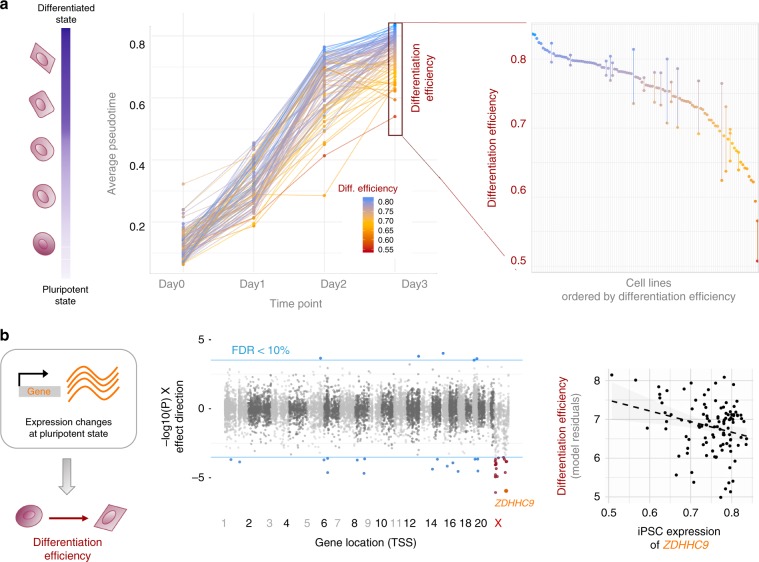
Recent developments in stem cell biology have enabled the study of cell fate decisions in early human development that are impossible to study in vivo. However, understanding how development varies across individuals and, in particular, the influence of common genetic variants during this process has not been characterised. Here, we exploit human iPS cell lines from 125 donors, a pooled experimental design, and single-cell RNA-sequencing to study population variation of endoderm differentiation. We identify molecular markers that are predictive of differentiation efficiency of individual lines, and utilise heterogeneity in the genetic background across individuals to map hundreds of expression quantitative trait loci that influence expression dynamically during differentiation and across cellular contexts.
Overview
The claims and statistics of this paper haven’t been checked yet.
Free: it reads the open-access text and checks the first 5 claims that cite a source we can check. Create a free account to check every claim.
Integrity signals
Registry
Cites
Statistics
Figures
Verification
Claims the paper makes
The claims and statistics of this paper haven’t been checked yet.
Free: it reads the open-access text and checks the first 5 claims that cite a source we can check. Create a free account to check every claim.
Claims other papers make about this one
Each is checked against this paper’s own text: does it say what the citing paper says it does?
The source backs part of the claim, not all of it — or backs it for a different population, condition or comparison.
In the citing paper
“Alternatively cells were mapped to known reference cell (sub)types or states4,5,11,12, making effective use only of cell-state or cell-type specific marker genes.”
From Targeted Perturb-seq enables genome-scale genetic screens in single cells (2020) · cites this paper as [12]
Experimental — accuracy not yet measuredIn the citing paper
“A number of single-cell RNA-seq eQTL datasets have been published from differentiating iPSCs and peripheral blood cells10,48–50 and many others are likely to follow in the near future.”
From A compendium of uniformly processed human gene expression and splicing quantitative trait loci (2021) · cites this paper as [48]
Self-check
Percentages, sums and reported differences re-computed from the paper’s own numbers.
The self-check needs the paper’s full text.
Citations
Cites
Fitting Linear Mixed-Effects Models Using lme4
Bates, D., Mächler, M., Bolker, B., & Walker, S. (2015) · Journal of Statistical Software · doi:10.18637/jss.v067.i01 · Cited by 86,835
Fast and accurate short read alignment with Burrows-Wheeler transform
Li, H., & Durbin, R. (2009) · Bioinformatics · doi:10.1093/bioinformatics/btp324 · Cited by 58,607
Self-citationSTAR: ultrafast universal RNA-seq aligner
Dobin, A., Davis, C. A., Schlesinger, F., Drenkow, J., Zaleski, C., Jha, S., Batut, P., Chaisson, M., & Gingeras, T. R. (2013) · Bioinformatics · doi:10.1093/bioinformatics/bts635 · Cited by 51,709 · cited 1×
“Trimmed reads were mapped to the human reference genome build 37 using STAR [40] (version: 020201) in two-pass alignment mode, using the default settings proposed by the ENCODE consortium (STAR manual).”
PLINK: a tool set for whole-genome association and population-based linkage analyses.
Purcell, S., Neale, B., Todd-Brown, K., Thomas, L., Ferreira, M. A. R., Bender, D., Maller, J., Sklar, P., de Bakker, P. I. W., Daly, M. J., et al. (2007) · The American Journal of Human Genetics · doi:10.1086/519795 · Cited by 34,089 · cited 2×
“Association tests were performed using a linear mixed model (LMM), accounting for population structure and sample repeat structure (see below) as random effects (using a kinship matrix estimated using PLINK [50]).”
Cutadapt removes adapter sequences from high-throughput sequencing reads
Martin, M. (2011) · EMBnet.journal · doi:10.14806/ej.17.1.200 · Cited by 33,889
BEDTools: a flexible suite of utilities for comparing genomic features
Quinlan, A. R., & Hall, I. M. (2010) · Bioinformatics · doi:10.1093/bioinformatics/btq033 · Cited by 27,437
An integrated encyclopedia of DNA elements in the human genome
The ENCODE Project Consortium (2012) · Nature · doi:10.1038/nature11247 · Cited by 18,072
Salmon provides fast and bias-aware quantification of transcript expression
Patro, R., Duggal, G., Love, M. I., Irizarry, R. A., & Kingsford, C. (2017) · Nature Methods · doi:10.1038/nmeth.4197 · Cited by 12,700
Statistical significance for genomewide studies
Storey, J. D., & Tibshirani, R. (2003) · Proceedings of the National Academy of Sciences · doi:10.1073/pnas.1530509100 · Cited by 9,692 · cited 1×
“We then adjusted for multiple testing using this empirical null distribution.”
SCANPY: large-scale single-cell gene expression data analysis
Wolf, F. A., Angerer, P., & Theis, F. J. (2018) · Genome Biology · doi:10.1186/s13059-017-1382-0 · Cited by 8,881
Clustering by Passing Messages Between Data Points
Frey, B. J., & Dueck, D. (2007) · Science · doi:10.1126/science.1136800 · Cited by 6,758 · cited 1×
“Grouping of genes by single-cell co-expression was performed using affinity propagation [54], as implemented by the Python scikit-learn library [55].”
Full-length RNA-seq from single cells using Smart-seq2
Picelli, S., Faridani, O. R., Björklund, Å. K., Winberg, G., Sagasser, S., & Sandberg, R. (2014) · Nature Protocols · doi:10.1038/nprot.2014.006 · Cited by 4,137 · cited 2×
“Single-cell transcriptomes 441 of sorted cells were assayed as follows: reverse transcription and cDNA amplification was 442 performed according to the SmartSeq2 protocol [7], and library preparation was performed 443 using an Illumina Nextera kit.”
Genetic effects on gene expression across human tissues
GTEx Consortium (2017) · Nature · doi:10.1038/nature24277 · Cited by 4,036
Buniello, A., MacArthur, J. A. L., Cerezo, M., Harris, L. W., Hayhurst, J., Malangone, C., McMahon, A., Morales, J., Mountjoy, E., Sollis, E., et al. (2019) · Nucleic Acids Research · doi:10.1093/nar/gky1120 · Cited by 4,000 · cited 1×
“We considered all GWAS 665 variants from the GWAS catalog as available as part of ENSEMBL 94 [53], for all traits and 666 diseases.”
Howie, B. N., Donnelly, P., & Marchini, J. (2009) · PLoS Genetics · doi:10.1371/journal.pgen.1000529 · Cited by 3,928
Zerbino, D. R., Achuthan, P., Akanni, W., Amode, M. R., Barrell, D., Bhai, J., Billis, K., Cummins, C., Gall, A., Girón, C. G., et al. (2018) · Nucleic Acids Research · doi:10.1093/nar/gkx1098 · Cited by 2,605 · cited 1×
“Gene-level expression quantification was performed using Salmon [41] (version: 0.8.2), using the “--seqBias”, “--gcBias” and “VBOpt” options using ENSEMBL transcripts (built 75) [42].”
InfluentialVisualizing Spatiotemporal Dynamics of Multicellular Cell-Cycle Progression
Sakaue-Sawano, A., Kurokawa, H., Morimura, T., Hanyu, A., Hama, H., Osawa, H., Kashiwagi, S., Fukami, K., Miyata, T., Miyoshi, H., et al. (2008) · Cell · doi:10.1016/j.cell.2007.12.033 · Cited by 2,173 · cited 1×
“The generation of FUCCI-hESC lines is based on the FUCCI system (52,53).”
Derivation of pluripotent epiblast stem cells from mammalian embryos
Brons, I. G. M., Smithers, L. E., Trotter, M. W. B., Rugg-Gunn, P., Sun, B., Chuva de Sousa Lopes, S. M., Howlett, S. K., Clarkson, A., Ahrlund-Richter, L., Pedersen, R. A., et al. (2007) · Nature · doi:10.1038/nature05950 · Cited by 2,007 · cited 1×
“Cells were grown in defined culture conditions as described previously [58].”
Self-citationMcCarthy, D. J., Campbell, K. R., Lun, A. T. L., & Wills, Q. F. (2017) · Bioinformatics · doi:10.1093/bioinformatics/btw777 · Cited by 1,852 · cited 1×
“Transcript-level expression values were summarized at 471 a gene level (estimated counts per million (CPM)) and quality control of scRNA-seq data was 472 performed with the scater Bioconductor package in R [43].”
Self-citationA linear complexity phasing method for thousands of genomes
Delaneau, O., Marchini, J., & Zagury, J.-F. (2012) · Nature Methods · doi:10.1038/nmeth.1785 · Cited by 1,850 · cited 1×
“haplotypes from the UK10K cohorts and 1000 Genomes Phase 1 data [33,34].”
Efficient differentiation of human embryonic stem cells to definitive endoderm
D'Amour, K. A., Agulnick, A. D., Eliazer, S., Kelly, O. G., Kroon, E., & Baetge, E. E. (2005) · Nature Biotechnology · doi:10.1038/nbt1163 · Cited by 1,730 · cited 1×
“In order to further investigate these associations, 185 we used staining for the percentage of CXCR4+ as an independent measure of differentiation 186 efficiency [15].”
A step-by-step workflow for low-level analysis of single-cell RNA-seq data with Bioconductor
Lun, A. T. L., McCarthy, D. J., & Marioni, J. C. (2016) · F1000Research · doi:10.12688/f1000research.9501.2 · Cited by 1,574 · cited 1×
“Size factor normalization of counts was performed using the scran Bioconductor package in R [44].”
Self-citationDiffusion pseudotime robustly reconstructs lineage branching
Haghverdi, L., Büttner, M., Wolf, F. A., Buettner, F., & Theis, F. J. (2016) · Nature Methods · doi:10.1038/nmeth.3971 · Cited by 1,385
Self-citationGOATOOLS: A Python library for Gene Ontology analyses
Klopfenstein, D. V., Zhang, L., Pedersen, B. S., Ramírez, F., Warwick Vesztrocy, A., Naldi, A., Mungall, C. J., Yunes, J. M., Botvinnik, O., Weigel, M., et al. (2018) · Scientific Reports · doi:10.1038/s41598-018-28948-z · Cited by 1,290 · cited 1×
“GO enrichment of each cluster was performed by Fisher’s exact test in Python using GOATOOLS [56], and results are listed in Table S9 (FDR 10%).”
Hastie, T., & Stuetzle, W. (1989) · Journal of the American Statistical Association · doi:10.1080/01621459.1989.10478797 · Cited by 1,249
Buettner, F., Natarajan, K. N., Casale, F. P., Proserpio, V., Scialdone, A., Theis, F. J., Teichmann, S. A., Marioni, J. C., & Stegle, O. (2015) · Nature Biotechnology · doi:10.1038/nbt.3102 · Cited by 1,136
Self-citationMultiplexed droplet single-cell RNA-sequencing using natural genetic variation
Kang, H. M., Subramaniam, M., Targ, S., Nguyen, M., Maliskova, L., McCarthy, E., Wan, E., Wong, S., Byrnes, L., Lanata, C. M., et al. (2018) · Nature Biotechnology · doi:10.1038/nbt.4042 · Cited by 1,101
The UK10K project identifies rare variants in health and disease
The UK10K Consortium, Writing group, Walter, K., Min, J. L., Huang, J., Crooks, L., Memari, Y., McCarthy, S., Perry, J. R. B., Xu, C., et al. (2015) · Nature · doi:10.1038/nature14962 · Cited by 1,040 · cited 1×
“Imputation was performed based on a joint reference panel of haplotypes from the UK10K cohorts and 1000 Genomes Phase 1 data [33,34].”
Self-citationBock, C., Kiskinis, E., Verstappen, G., Gu, H., Boulting, G., Smith, Z. D., Ziller, M., Croft, G. F., Amoroso, M. W., Oakley, D. H., et al. (2011) · Cell · doi:10.1016/j.cell.2010.12.032 · Cited by 1,009
Association analyses of more than 140,000 men identify 63 new prostate cancer susceptibility loci
Study, T. P., Schumacher, F. R., (APCB), A. P. C. B., Study, T. I., Canary PASS Investigators, Breast and Prostate Cancer Cohort Consortium (BPC3), The PRACTICAL (Prostate Cancer Association Group to Investigate Cancer-Associated Alterations in the Genome) Consortium, (CAPS), C. O. T. P. I. S., Prostate Cancer Genome-wide Association Study of Uncommon Susceptibility Loci (PEGASUS), The Genetic Associations and Mechanisms in Oncology (GAME-ON)/Elucidating Loci Involved in Prostate Cancer Susceptibility (ELLIPSE) Consortium, et al. (2018) · Nature Genetics · doi:10.1038/s41588-018-0142-8 · Cited by 902
The UCSC Genome Browser database: 2014 update
Karolchik, D., Barber, G. P., Casper, J., Clawson, H., Cline, M. S., Diekhans, M., Dreszer, T. R., Fujita, P. A., Guruvadoo, L., Haeussler, M., et al. (2014) · Nucleic Acids Research · doi:10.1093/nar/gkt1168 · Cited by 670
The Cell-Cycle State of Stem Cells Determines Cell Fate Propensity
Pauklin, S., & Vallier, L. (2013) · Cell · doi:10.1016/j.cell.2013.08.031 · Cited by 623
Self-citationFast and efficient QTL mapper for thousands of molecular phenotypes
Ongen, H., Buil, A., Brown, A. A., Dermitzakis, E. T., & Delaneau, O. (2016) · Bioinformatics · doi:10.1093/bioinformatics/btv722 · Cited by 598 · cited 1×
“In order to adjust 614 for multiple testing, we used an approximate permutation scheme, analogous to the approach 615 proposed in [51].”
Common genetic variation drives molecular heterogeneity in human iPSCs
Kilpinen, H., Goncalves, A., Leha, A., Afzal, V., Alasoo, K., Ashford, S., Bala, S., Bensaddek, D., Casale, F. P., Culley, O. J., et al. (2017) · Nature · doi:10.1038/nature22403 · Cited by 586 · cited 4×
“In 48 particular, the generation of population-scale collections of human induced pluripotent stem 49 cells (iPSCs) [1,2] has allowed for assessing regulatory genetic variants in pluripotent [1,2] as 50 well as in differentiated cells [3–5].”
InfluentialSelf-citationChu, L.-F., Leng, N., Zhang, J., Hou, Z., Mamott, D., Vereide, D. T., Choi, J., Kendziorski, C., Stewart, R., & Thomson, J. A. (2016) · Genome Biology · doi:10.1186/s13059-016-1033-x · Cited by 477 · cited 1×
“The success of the differentiation protocol was validated using canonical cell-surface marker expression: consistent with previous studies [9], an average of 72% cells were TRA-1-60(+) in the undifferentiated state (day0) and an average of 49% of cells were CXCR4(+) three days post differentiation…”
Characterizing transcriptional heterogeneity through pathway and gene set overdispersion analysis
Fan, J., Salathia, N., Liu, R., Kaeser, G. E., Yung, Y. C., Herman, J. L., Kaper, F., Fan, J.-B., Zhang, K., Chun, J., et al. (2016) · Nature Methods · doi:10.1038/nmeth.3734 · Cited by 392
Mitochondrial Regulation in Pluripotent Stem Cells
Xu, X., Duan, S., Yi, F., Ocampo, A., Liu, G.-H., & Izpisua Belmonte, J. C. (2013) · Cell Metabolism · doi:10.1016/j.cmet.2013.06.005 · Cited by 374 · cited 1×
“Variation in cell cycle stage is a common feature of single-cell datasets [20], while variation in metabolic state during iPSC differentiation is well known [57].”
Production of hepatocyte-like cells from human pluripotent stem cells
Hannan, N. R. F., Segeritz, C.-P., Touboul, T., & Vallier, L. (2013) · Nature Protocols · doi:10.1038/nprot.2012.153 · Cited by 338 · cited 5×
“Here, we use a pooled cell differentiation assay to study endoderm differentiation across a set of 125 human iPSC lines, profiling changes in gene expression via single-cell RNA-56 sequencing at 4 developmental timepoints [6].”
InfluentialSelf-citationHIPSCI Consortium, Alasoo, K., Rodrigues, J., Mukhopadhyay, S., Knights, A. J., Mann, A. L., Kundu, K., Hale, C., Dougan, G., & Gaffney, D. J. (2018) · Nature Genetics · doi:10.1038/s41588-018-0046-7 · Cited by 338 · cited 1×
“(4) Conversion of quantifications from “chrB allele reads” to “reads from the chromosome containing the alternative allele of the eQTL SNP”, again by using the available phasing information.”
Self-citationNeural Subtype Specification from Human Pluripotent Stem Cells
Tao, Y., & Zhang, S.-C. (2016) · Cell Stem Cell · doi:10.1016/j.stem.2016.10.015 · Cited by 287
Practical Guidelines for the Comprehensive Analysis of ChIP-seq Data
Bailey, T., Krajewski, P., Ladunga, I., Lefebvre, C., Li, Q., Liu, T., Madrigal, P., Taslim, C., & Zhang, J. (2013) · PLoS Computational Biology · doi:10.1371/journal.pcbi.1003326 · Cited by 275 · cited 1×
“Peak calling analysis [64] was performed using PeakRanger [65] , and only the peaks that were reproducible at an FDR of ≤0.05 in two biological replicates were selected for further processing.”
InfluentialSelf-citationCarcamo-Orive, I., Hoffman, G. E., Cundiff, P., Beckmann, N. D., D’Souza, S. L., Knowles, J. W., Patel, A., Hendry, C., Papatsenko, D., Abbasi, F., et al. (2017) · Cell Stem Cell · doi:10.1016/j.stem.2016.11.005 · Cited by 263 · cited 4×
“As (2), but testing for the additional effect of (pseudotime x factor) included as a covariate:”
InfluentialVallier, L., Touboul, T., Chng, Z., Brimpari, M., Hannan, N., Millan, E., Smithers, L. E., Trotter, M., Rugg-Gunn, P., Weber, A., et al. (2009) · PLoS ONE · doi:10.1371/journal.pone.0006082 · Cited by 251 · cited 1×
“hESCs were differentiated into endoderm as previously described 788 [61].”
Self-citationLearning scikit-learn: Machine Learning in Python
Garreta, R., & Moncecchi, G. (2013) · International Linear Collider · Cited by 233
Molecular and functional variation in iPSC-derived sensory neurons
HIPSCI Consortium, Schwartzentruber, J., Foskolou, S., Kilpinen, H., Rodrigues, J., Alasoo, K., Knights, A. J., Patel, M., Goncalves, A., Ferreira, R., et al. (2018) · Nature Genetics · doi:10.1038/s41588-017-0005-8 · Cited by 223
Self-citationAnguera, M. C., Sadreyev, R., Zhang, Z., Szanto, A., Payer, B., Sheridan, S. D., Kwok, S., Haggarty, S. J., Sur, M., Alvarez, J., et al. (2012) · Cell Stem Cell · doi:10.1016/j.stem.2012.03.008 · Cited by 168 · cited 1×
“These results are consistent with previous observations that X chromosome reactivation is a marker of poor differentiation capacity of iPSCs in general [16,17].”
Pashos, E. E., Park, Y., Wang, X., Raghavan, A., Yang, W., Abbey, D., Peters, D. T., Arbelaez, J., Hernandez, M., Kuperwasser, N., et al. (2017) · Cell Stem Cell · doi:10.1016/j.stem.2017.03.017 · Cited by 167
Genotype harmonizer: automatic strand alignment and format conversion for genotype data integration
Deelen, P., Bonder, M., van der Velde, K., Westra, H.-J., Winder, E., Hendriksen, D., Franke, L., & Swertz, M. A. (2014) · BMC Research Notes · doi:10.1186/1756-0500-7-901 · Cited by 161 · cited 2×
“Single-sample VCFs were merged and subsequent QC was performed using Genotype Harmonizer [35] and BCFtools.”
Self-citationPeakRanger: A cloud-enabled peak caller for ChIP-seq data
Feng, X., Grossman, R., & Stein, L. (2011) · BMC Bioinformatics · doi:10.1186/1471-2105-12-139 · Cited by 160 · cited 1×
“Peak calling analysis [64] was performed using PeakRanger [65] , and only the peaks that were reproducible at an FDR of ≤0.05 in two biological replicates were selected for further processing.”
InfluentialAllele-specific expression reveals interactions between genetic variation and environment
Knowles, D. A., Davis, J. R., Edgington, H., Raj, A., Favé, M.-J., Zhu, X., Potash, J. B., Weissman, M. M., Shi, J., Levinson, D. F., et al. (2017) · Nature Methods · doi:10.1038/nmeth.4298 · Cited by 145 · cited 2×
“This approach extends previous work using 344 ASE to discover GxE interactions [23,24], taking advantage of the resolution provided by 345 single-cell data.”
Efficient set tests for the genetic analysis of correlated traits
Casale, F. P., Rakitsch, B., Lippert, C., & Stegle, O. (2015) · Nature Methods · doi:10.1038/nmeth.3439 · Cited by 136 · cited 3×
“Variance component analysis was performed, per gene, by fitting a random effects model using LIMIX [45] to the gene’s expression profiles across cells.”
InfluentialSelf-citationf-scLVM: scalable and versatile factor analysis for single-cell RNA-seq
Buettner, F., Pratanwanich, N., McCarthy, D. J., Marioni, J. C., & Stegle, O. (2017) · Genome Biology · doi:10.1186/s13059-017-1334-8 · Cited by 135
Self-citationPauklin, S., Madrigal, P., Bertero, A., & Vallier, L. (2016) · Genes & Development · doi:10.1101/gad.271452.115 · Cited by 130 · cited 1×
“793 794 We performed ChIP as described previously [62].”
Self-citationThe effects of genetic variation on gene expression dynamics during development
Francesconi, M., & Lehner, B. (2013) · Nature · doi:10.1038/nature12772 · Cited by 129 · cited 1×
“elegans using recombinant inbred 290 lines [19].”
Human Embryonic Stem Cells Do Not Change Their X Inactivation Status during Differentiation
Patel, S., Bonora, G., Sahakyan, A., Kim, R., Chronis, C., Langerman, J., Fitz-Gibbon, S., Rubbi, L., Skelton, R. J. P., Ardehali, R., et al. (2017) · Cell Reports · doi:10.1016/j.celrep.2016.11.054 · Cited by 123 · cited 1×
“These results are consistent 206 with previous observations that X chromosome reactivation is a marker of poor differentiation 207 capacity of iPSCs in general [16,17].”
High-throughput allele-specific expression across 250 environmental conditions
Moyerbrailean, G. A., Richards, A. L., Kurtz, D., Kalita, C. A., Davis, G. O., Harvey, C. T., Alazizi, A., Watza, D., Sorokin, Y., Hauff, N., et al. (2016) · Genome Research · doi:10.1101/gr.209759.116 · Cited by 118 · cited 1×
“This approach extends previous work using ASE to discover GxE interactions [23,24], taking advantage of the resolution provided by single-cell data.”
Genome-wide association study identifies 14 novel risk alleles associated with basal cell carcinoma
Chahal, H. S., Wu, W., Ransohoff, K. J., Yang, L., Hedlin, H., Desai, M., Lin, Y., Dai, H., Qureshi, A. A., Li, W., et al. (2016) · Nature Communications · doi:10.1038/ncomms12510 · Cited by 112
Human Pluripotent Stem Cell-Derived Endoderm for Modeling Development and Clinical Applications
Yiangou, L., Ross, A., Goh, K. J., & Vallier, L. (2018) · Cell stem cell · doi:10.1016/j.stem.2018.03.016 · Cited by 85 · cited 1×
“Cells were re-suspended in E8 media and plated at a density of 15,000 cells per cm 2 in gelatin/MEF coated plates [6,31] in the presence of 10 µM Rock inhibitor – Y27632 [10 mM] (Sigma, Cat # Y0503 - 5 mg).”
Self-citationLinker, S. M., Urban, L., Clark, S. J., Chhatriwala, M., Amatya, S., McCarthy, D. J., Ebersberger, I., Vallier, L., Reik, W., Stegle, O., et al. (2019) · Genome Biology · doi:10.1186/s13059-019-1644-0 · Cited by 68
Self-citationPopulation-scale proteome variation in human induced pluripotent stem cells
(2020) · doi:10.7554/elife.57390 · Cited by 59
Self-citationThe Cell-Cycle State of Stem Cells Determines Cell Fate Propensity
Pauklin, S., & Vallier, L. (2014) · Cell · doi:10.1016/j.cell.2014.02.044 · Cited by 51 · cited 1×
“785 786 The generation of FUCCI-hESC lines has been described in [59] and are based on the FUCCI 787 system described in [60].”
Self-citationCorrection to: DNA copy number evolution in Drosophila cell lines
Lee, H., McManus, C. J., Cho, D.-Y., Eaton, M. L., Renda, F., Somma, M. P., Cherbas, L., May, G. E., Powell, S., Zhang, D., et al. (2019) · Genome biology · doi:10.1186/s13059-019-1668-5 · Cited by 21
McCarthy, D. J., Rostom, R., Huang, Y., Kunz, D. J., Danecek, P., Bonder, M. J., Hagai, T., HipSci Consortium, Wang, W., Gaffney, D. J., et al. (2018) · bioRxiv (Cold Spring Harbor Laboratory) · doi:10.1101/413047 · Cited by 13
Self-citationPopulation-scale proteome variation in human induced pluripotent stem cells
Mirauta, B. A., Seaton, D. D., Bensaddek, D., Brenes, A., Bonder, M. J., Kilpinen, H., HipSci Consortium, Stegle, O., & Lamond, A. I. (2018) · doi:10.1101/439216 · Cited by 10
Self-citation
Cited by
Methods and applications for single-cell and spatial multi-omics
Vandereyken, K., Sifrim, A., Thienpont, B., & Voet, T. (2023) · Nature Reviews Genetics · doi:10.1038/s41576-023-00580-2 · Cited by 1,244
“…of genetic variation on gene expression (expression quantitative trait loci (eQTLs)) in differentiating induced pluripotent stem cells (iPS cells) 136 or the effect of genetic perturbations on gene expression using multiplexed CRISPR technologies to identify cis -acting enhancer–gene pairs 137 .”
BackgroundCano-Gamez, E., & Trynka, G. (2020) · Frontiers in Genetics · doi:10.3389/fgene.2020.00424 · Cited by 613
Computational principles and challenges in single-cell data integration
Argelaguet, R., Cuomo, A. S. E., Stegle, O., & Marioni, J. C. (2021) · Nature Biotechnology · doi:10.1038/s41587-021-00895-7 · Cited by 472
“Additionally, van der Wijst et al. 50 and Cuomo et al. 51 combined differentiation of induced pluripotent stem cells (iPSCs) across multiple donors and single-cell expression profiles as well as allele-specific expression to show how eQTLs influence expression dynamically along the developmental axis (extending work f…”
BackgroundSelf-citationA compendium of uniformly processed human gene expression and splicing quantitative trait loci
Kerimov, N., Hayhurst, J. D., Peikova, K., Manning, J. R., Walter, P., Kolberg, L., Samoviča, M., Sakthivel, M. P., Kuzmin, I., Trevanion, S. J., et al. (2021) · Nature Genetics · doi:10.1038/s41588-021-00924-w · Cited by 440
Single-nucleus cross-tissue molecular reference maps toward understanding disease gene function
Eraslan, G., Drokhlyansky, E., Anand, S., Fiskin, E., Subramanian, A., Slyper, M., Wang, J., Van Wittenberghe, N., Rouhana, J. M., Waldman, J., et al. (2022) · Science · doi:10.1126/science.abl4290 · Cited by 405
Metadata
- Authors
- Cuomo, A. S. E., Seaton, D. D., McCarthy, D. J., Martinez, I., Bonder, M. J., Garcia-Bernardo, J., Amatya, S., Madrigal, P., Isaacson, A., Buettner, F., Knights, A., Natarajan, K. N., HipSci Consortium, Agu, C. A., Alderton, A., Danecek, P., Denton, R., Durbin, R., Gaffney, D. J., Goncalves, A., Halai, R., Harper, S., Kirton, C. M., Kolb-Kokocinski, A., Leha, A., McCarthy, S. A., Memari, Y., Patel, M., Birney, E., Casale, F. P., Clarke, L., Harrison, P. W., Kilpinen, H., Streeter, I., Denovi, D., Meleckyte, R., Moens, N., Watt, F. M., Ouwehand, W. H., Lamond, A. I., Bensaddek, D., Beales, P., Vallier, L., Marioni, J. C., Chhatriwala, M., & Stegle, O.
- Affiliations
- European Bioinformatics Institute (GB)
- Wellcome Sanger Institute (GB)
- Ames Research Center (US)
- University of Southern Denmark (DK)
- King's College London (GB)
- National Health Service (GB)
- University of Dundee (GB)
- University College London (GB)
- Wellcome/MRC Cambridge Stem Cell Institute (GB)
- Corresponding author
- Vallier, Ludovic
- Marioni, John C.
- Chhatriwala, Mariya
- Stegle, Oliver
- ORCID
- Cuomo, Anna S. E.
- Seaton, Daniel D.
- McCarthy, Davis J.
- Bonder, Marc Jan
- Madrigal, Pedro
- Isaacson, Abigail
- Buettner, Florian
- Knights, Andrew
- Natarajan, Kedar Nath
- Agu, Chukwuma A.
- Danecek, Petr
- Durbin, Richard
- Gaffney, Daniel J.
- Leha, Andreas
- McCarthy, Shane A.
- Memari, Yasin
- Birney, Ewan
- Casale, Francesco Paolo
- Clarke, Laura
- Harrison, Peter W.
- Kilpinen, Helena
- Streeter, Ian
- Meleckyte, Ruta
- Watt, Fiona M.
- Ouwehand, Willem H.
- Lamond, Angus I.
- Bensaddek, Dalila
- Beales, Philip
- Vallier, Ludovic
- Marioni, John C.
- Chhatriwala, Mariya
- Stegle, Oliver
- Venue
- Nature Communications
- Published
- 2020-02-10
- Volume
- 11
- Issue
- 1
- Pages
- 810-810
- ISSN
- 2041-1723 (ISSN-L)
- PMC
- PMC7010688
- OpenAlex
- W3004479572
- Semantic Scholar
- a688fc6ea43c847dfdd53e5442b3edd4aaa1b3d8
- Cited by
- 331
- References
- 63
- Citations by year
- 2026: 27 · 2025: 43 · 2024: 48 · 2023: 80 · 2022: 57 · 2021: 54 · 2020: 21
- FWCI
- 17.28
- Type
- journal article
- Language
- en
- Update notices
- correction (2020-03-23)
- Open access
- gold
- doi.org
- Licence
- cc-by
- creativecommons.org/licenses/by/4.0 (tdm)
- creativecommons.org/licenses/by/4.0 (vor)
- Locations
- Nature Communications (publishedVersion, cc-by)
- PubMed Central (publishedVersion, cc-by)
- PubMed (publishedVersion)
- University of Groningen research database (University of Groningen / Centre for Information Technology) (publishedVersion, other-oa)
- Minerva Access (University of Melbourne) (submittedVersion, cc-by)
- University of Southern Denmark Research Portal (University of Southern Denmark) (submittedVersion, cc-by)
- DOAJ (DOAJ: Directory of Open Access Journals) (submittedVersion, cc-by-sa)
- Funders
- Villum Fonden (00025397)
- Wellcome Trust (WT098503)
- Cancer Research UK (22231, DRCPGM\100015)
- Medical Research Council (MR/M008975/1, MC_PC_12009, WT098503, MC_PC_17230)
- Engineering and Physical Sciences Research Council (TS/H001220/1)
- H2020 Marie Skłodowska-Curie Actions (EI3POD, 664726)
- Topics
- Life Sciences › Biochemistry, Genetics and Molecular Biology › Molecular Biology › Pluripotent Stem Cells Research
- Life Sciences › Biochemistry, Genetics and Molecular Biology › Molecular Biology › Single-cell and spatial transcriptomics
- Life Sciences › Biochemistry, Genetics and Molecular Biology › Molecular Biology › Developmental Biology and Gene Regulation
- Keywords
- induced pluripotent stem cells, endoderm differentiation, expression quantitative trait loci, single-cell RNA sequencing, population genetic variation, differentiation efficiency, molecular markers, cellular heterogeneity, human development, donor heterogeneity
- MeSH terms
- Cell Differentiation, Cell Line, Endoderm, Female, Humans, Male, Gene Expression, Genetic Heterogeneity, Gene Expression Profiling, Quantitative Trait Loci, Genetic Association Studies, Induced Pluripotent Stem Cells, Single-Cell Analysis, Gene-Environment Interaction
About these checks
Registry, retraction, Cites and statistics results are computed, not judged, with one exception: a printed reference that no index lists is read once by a model before it counts as a citation error. Claims are extracted by a model and kept only when their quote appears verbatim in the text; each cited source is then checked, with a model’s help, for whether it says what the claim relies on. Those verdicts can be wrong — read the claim’s quote and the cited source before relying on one.
Statistics and arithmetic are recomputed, not judged.
Confidence bands are shown only for fields calibrated on our annotated test set. None is calibrated yet, so no band is shown.
What counts as a claim ›How we measure confidence ›How we check this ›
Are you an author, or do you see a problem with this page? Request a review
Data sources
Bibliographic data: Semantic Scholar, OpenAlex, Crossref.
Contains information from the Semantic Scholar Academic Graph Datasets, made available under the ODC Attribution License (ODC-BY 1.0).
Semantic Scholar’s data is described in: Kinney, R., et al. (2023). The Semantic Scholar Open Data Platform. arXiv:2301.10140.
