

Single-cell transcriptomics identifies an effectorness gradient shaping the response of CD4+ T cells to cytokines
Open accessPublished version of a preprint
The DOI matches its Crossref record; 89 of the 89 references it cites were found in a registry or an index.
Abstract
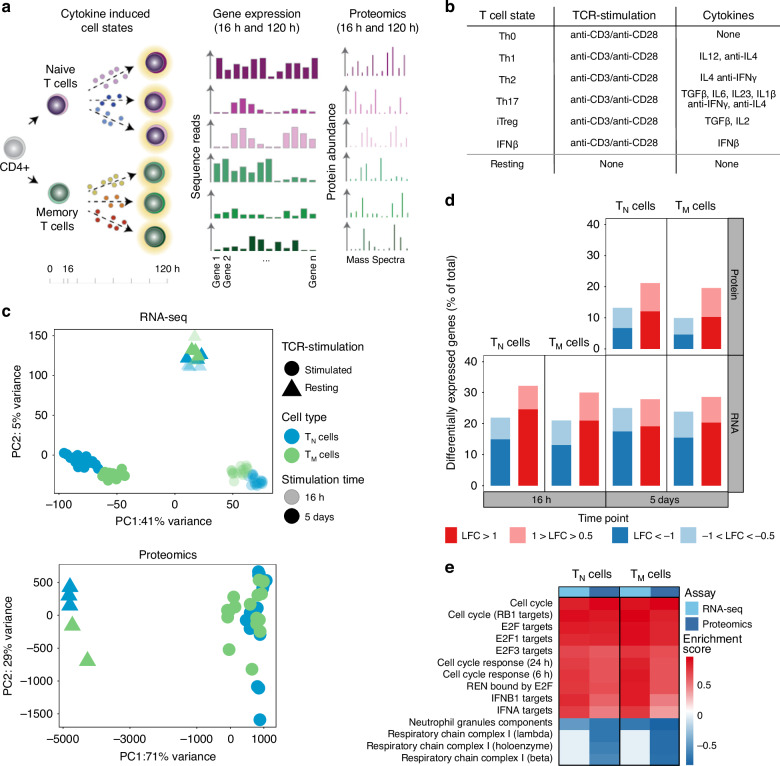
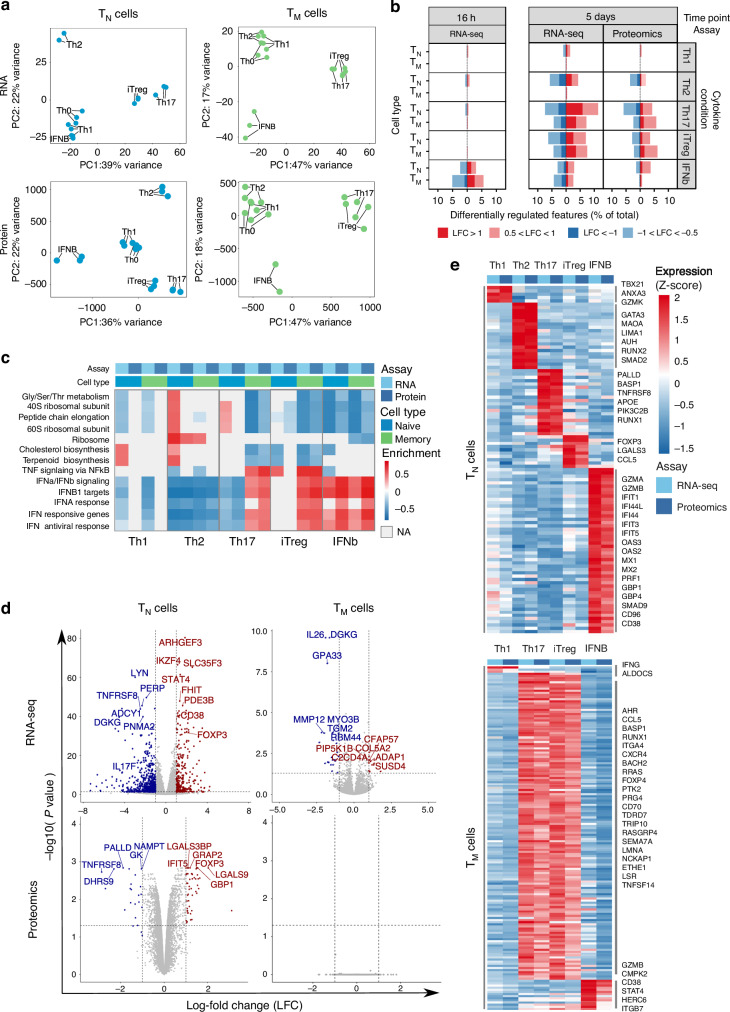
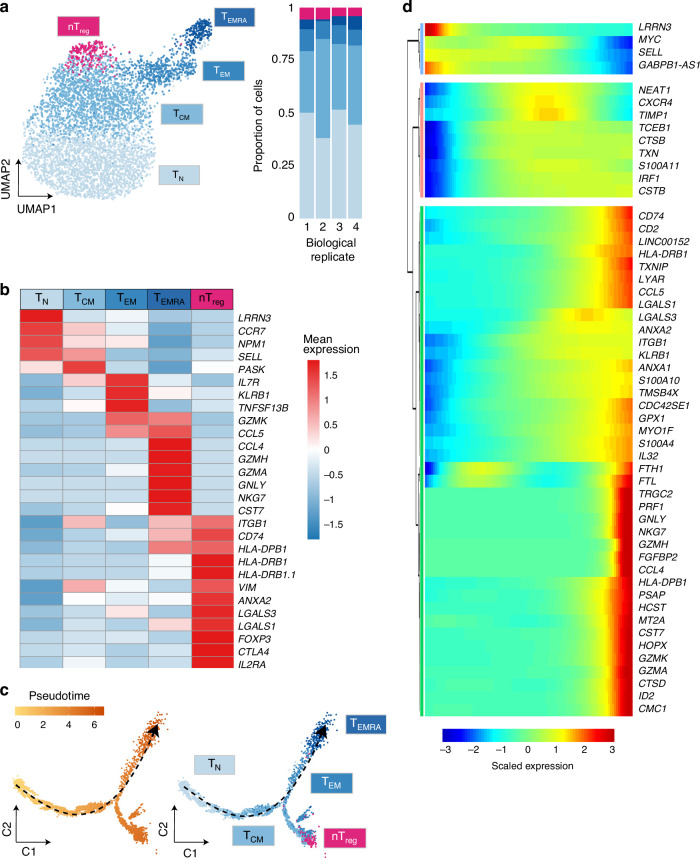
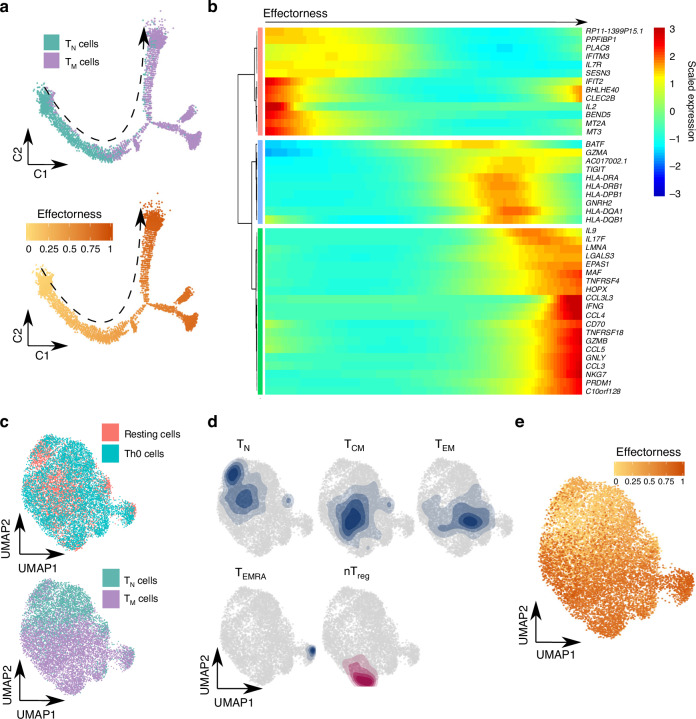
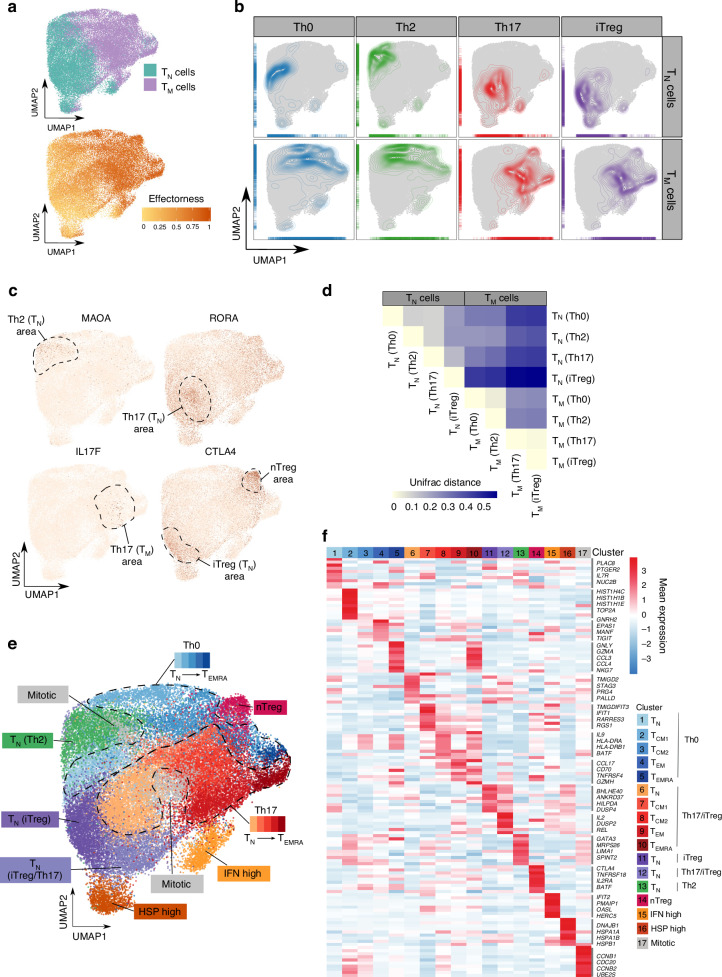
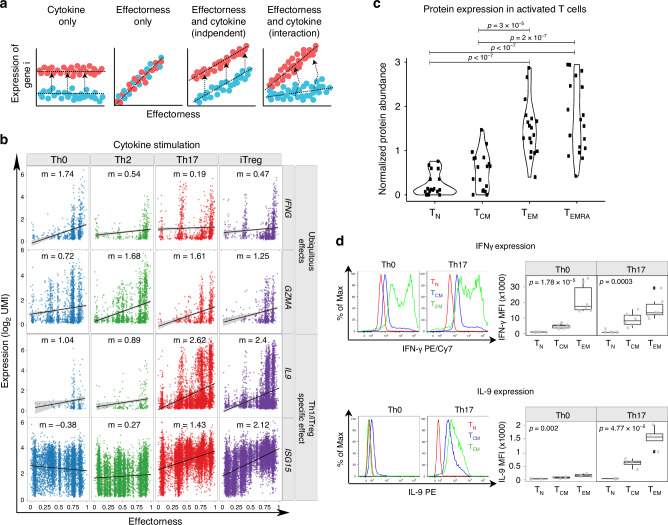
Naïve CD4 + T cells coordinate the immune response by acquiring an effector phenotype in response to cytokines. However, the cytokine responses in memory T cells remain largely understudied. Here we use quantitative proteomics, bulk RNA-seq, and single-cell RNA-seq of over 40,000 human naïve and memory CD4 + T cells to show that responses to cytokines differ substantially between these cell types. Memory T cells are unable to differentiate into the Th2 phenotype, and acquire a Th17-like phenotype in response to iTreg polarization. Single-cell analyses show that T cells constitute a transcriptional continuum that progresses from naïve to central and effector memory T cells, forming an effectorness gradient accompanied by an increase in the expression of chemokines and cytokines. Finally, we show that T cell activation and cytokine responses are influenced by the effectorness gradient. Our results illustrate the heterogeneity of T cell responses, furthering our understanding of inflammation.
Overview
The claims and statistics of this paper haven’t been checked yet.
Free: it reads the open-access text and checks the first 5 claims that cite a source we can check. Create a free account to check every claim.
Integrity signals
Registry
Cites
Statistics
Figures
Verification
Claims the paper makes
The claims and statistics of this paper haven’t been checked yet.
Free: it reads the open-access text and checks the first 5 claims that cite a source we can check. Create a free account to check every claim.
Claims other papers make about this one
Each is checked against this paper’s own text: does it say what the citing paper says it does?
The cited source says what the claim attributes to it.
In the citing paper
“Moreover, comparisons to matching proteomics data 13 revealed that pseudobulk methods also more accurately predicted changes in protein abundance (Supplementary Fig. 1e-f ).”
From Confronting false discoveries in single-cell differential expression (2021) · cites this paper as [13]
The cited source says what the claim attributes to it.
In the citing paper
“An extensive survey of the literature identified a total of eighteen ‘gold standard’ datasets that met these criteria (Fig. 1a ) 12 – 15 .”
From Confronting false discoveries in single-cell differential expression (2021) · cites this paper as [13]
The cited source says what the claim attributes to it.
In the citing paper
“An extensive survey of the literature identified a total of eighteen ‘gold standard’ datasets that met these criteria (Fig. 1a)12–15.”
From Confronting false discoveries in single-cell differential expression (2021) · cites this paper as [14]
Self-check
Percentages, sums and reported differences re-computed from the paper’s own numbers.
The self-check needs the paper’s full text.
Citations
Cites
Controlling the False Discovery Rate: A Practical and Powerful Approach to Multiple Testing
Benjamini, Y., & Hochberg, Y. (1995) · Journal of the Royal Statistical Society Series B: Statistical Methodology · doi:10.1111/j.2517-6161.1995.tb02031.x · Cited by 109,482 · cited 2×
“Multiple testing correction was performed using the Benjamini-Hochberg procedure 57 .”
Moderated estimation of fold change and dispersion for RNA-seq data with DESeq2
Love, M. I., Huber, W., & Anders, S. (2014) · Genome Biology · doi:10.1186/s13059-014-0550-8 · Cited by 95,106
STAR: ultrafast universal RNA-seq aligner
Dobin, A., Davis, C. A., Schlesinger, F., Drenkow, J., Zaleski, C., Jha, S., Batut, P., Chaisson, M., & Gingeras, T. R. (2013) · Bioinformatics · doi:10.1093/bioinformatics/bts635 · Cited by 51,709 · cited 2×
“Sequencing reads were aligned to the reference human genome using STAR 53 (v2.”
limma powers differential expression analyses for RNA-sequencing and microarray studies
Ritchie, M. E., Phipson, B., Wu, D., Hu, Y., Law, C. W., Shi, W., & Smyth, G. K. (2015) · Nucleic Acids Research · doi:10.1093/nar/gkv007 · Cited by 40,458
KEGG: Kyoto Encyclopedia of Genes and Genomes
Kanehisa, M. (2000) · Nucleic Acids Research · doi:10.1093/nar/28.1.27 · Cited by 37,077
KEGG: Kyoto Encyclopedia of Genes and Genomes
Ogata, H., Goto, S., Sato, K., Fujibuchi, W., Bono, H., & Kanehisa, M. (1999) · Nucleic Acids Research · doi:10.1093/nar/27.1.29 · Cited by 31,232
featureCounts: an efficient general purpose program for assigning sequence reads to genomic features
Liao, Y., Smyth, G. K., & Shi, W. (2014) · Bioinformatics · doi:10.1093/bioinformatics/btt656 · Cited by 27,219
Integrating single-cell transcriptomic data across different conditions, technologies, and species
Butler, A., Hoffman, P., Smibert, P., Papalexi, E., & Satija, R. (2018) · Nature Biotechnology · doi:10.1038/nbt.4096 · Cited by 13,174
UMAP: Uniform Manifold Approximation and Projection
McInnes, L., Healy, J., Saul, N., & Großberger, L. (2018) · Journal of Open Source Software · doi:10.21105/joss.00861 · Cited by 9,826
Analysis of protein-coding genetic variation in 60,706 humans
Exome Aggregation Consortium, Lek, M., Karczewski, K. J., Minikel, E. V., Samocha, K. E., Banks, E., Fennell, T., O’Donnell-Luria, A. H., Ware, J. S., Hill, A. J., et al. (2016) · Nature · doi:10.1038/nature19057 · Cited by 9,587
Cited by
Confronting false discoveries in single-cell differential expression
Squair, J. W., Gautier, M., Kathe, C., Anderson, M. A., James, N. D., Hutson, T. H., Hudelle, R., Qaiser, T., Matson, K. J. E., Barraud, Q., et al. (2021) · doi:10.1101/2021.03.12.435024 · Cited by 1,086
Bifidobacteria-mediated immune system imprinting early in life
Henrick, B. M., Rodriguez, L., Lakshmikanth, T., Pou, C., Henckel, E., Arzoomand, A., Olin, A., Wang, J., Mikes, J., Tan, Z., et al. (2021) · Cell · doi:10.1016/j.cell.2021.05.030 · Cited by 800
Single-cell eQTL mapping identifies cell type–specific genetic control of autoimmune disease
Yazar, S., Alquicira-Hernandez, J., Wing, K., Senabouth, A., Gordon, M. G., Andersen, S., Lu, Q., Rowson, A., Taylor, T. R. P., Clarke, L., et al. (2022) · Science · doi:10.1126/science.abf3041 · Cited by 682
The immunology of multiple sclerosis
Attfield, K. E., Jensen, L. T., Kaufmann, M., Friese, M. A., & Fugger, L. (2022) · Nature Reviews Immunology · doi:10.1038/s41577-022-00718-z · Cited by 380
Zhang, M. J., Hou, K., Dey, K. K., Sakaue, S., Jagadeesh, K. A., Weinand, K., Taychameekiatchai, A., Rao, P., Pisco, A. O., Zou, J., et al. (2022) · Nature Genetics · doi:10.1038/s41588-022-01167-z · Cited by 302
A microbiota-modulated checkpoint directs immunosuppressive intestinal T cells into cancers
Fidelle, M., Rauber, C., Alves Costa Silva, C., Tian, A.-L., Lahmar, I., de La Varende, A.-L. M., Zhao, L., Thelemaque, C., Lebhar, I., Messaoudene, M., et al. (2023) · Science · doi:10.1126/science.abo2296 · Cited by 243
Single-cell transcriptome profiling of an adult human cell atlas of 15 major organs
He, S., Wang, L.-H., Liu, Y., Li, Y.-Q., Chen, H.-T., Xu, J.-H., Peng, W., Lin, G.-W., Wei, P.-P., Li, B., et al. (2020) · Genome Biology · doi:10.1186/s13059-020-02210-0 · Cited by 237
“Given that previous in vitro studies have demonstrated a potential development from central memory T cells to Treg cells upon stimulation[63, 64], this observation suggested that differentiation of Treg cells from central memory T cells is possible.”
BackgroundEngineering cytokine therapeutics
Deckers, J., Anbergen, T., Hokke, A. M., de Dreu, A., Schrijver, D. P., de Bruin, K., Toner, Y. C., Beldman, T. J., Spangler, J. B., de Greef, T. F. A., et al. (2023) · Nature Reviews Bioengineering · doi:10.1038/s44222-023-00030-y · Cited by 214
Immune disease risk variants regulate gene expression dynamics during CD4+ T cell activation
Soskic, B., Cano-Gamez, K., Smyth, D. J., Ambridge, K., Ke, Z., Matte, J. C., Bossini-Castillo, L., Kaplanis, J., Ramirez-Navarro, L., Lorenc, A., et al. (2022) · Nature Genetics · doi:10.1038/s41588-022-01066-3 · Cited by 186
Self-citationSingh, A., Schurman, S. H., Bektas, A., Kaileh, M., Roy, R., Wilson, D. M., Sen, R., & Ferrucci, L. (2024) · Cold Spring Harbor Perspectives in Medicine · doi:10.1101/cshperspect.a041197 · Cited by 182
An atlas of cells in the human tonsil
Massoni-Badosa, R., Aguilar-Fernández, S., Nieto, J. C., Soler-Vila, P., Elosua-Bayes, M., Marchese, D., Kulis, M., Vilas-Zornoza, A., Bühler, M. M., Rashmi, S., et al. (2024) · Immunity · doi:10.1016/j.immuni.2024.01.006 · Cited by 183
“Conversely, CM pre-non-Tfh cells showed lower expression of follicular markers and increased ANXA1, S100A4 and ITGB1 levels, classical markers of CM T cells (Figure 2B; Figure S3A; Table S5) (Cano-Gamez et al., 2020).”
BackgroundGut CD4+ T cell phenotypes are a continuum molded by microbes, not by TH archetypes
Kiner, E., Willie, E., Vijaykumar, B., Chowdhary, K., Schmutz, H., Chandler, J., Schnell, A., Thakore, P. I., LeGros, G., Mostafavi, S., et al. (2021) · Nature Immunology · doi:10.1038/s41590-020-00836-7 · Cited by 168
Alladina, J. W., Smith, N. P., Kooistra, T., Slowikowski, K., Kernin, I., Deguine, J., Keen, H. L., Manakongtreecheep, K., Tantivit, J., Rahimi, R. A., et al. (2023) · Science Immunology · doi:10.1126/sciimmunol.abq6352 · Cited by 175
A cell atlas foundation model for scalable search of similar human cells
Heimberg, G., Kuo, T., DePianto, D. J., Salem, O., Heigl, T., Diamant, N., Scalia, G., Biancalani, T., Turley, S. J., Rock, J. R., et al. (2025) · Nature · doi:10.1038/s41586-024-08411-y · Cited by 136
Determining a multimodal aging clock in a cohort of Chinese women
Li, J., Xiong, M., Fu, X.-H., Fan, Y., Dong, C., Sun, X., Zheng, F., Wang, S.-W., Liu, L., Xu, M., et al. (2023) · Med · doi:10.1016/j.medj.2023.06.010 · Cited by 140
(2021) · doi:10.1101/2021.07.29.454078 · Cited by 139
Chen, A. F., Parks, B., Kathiria, A. S., Ober-Reynolds, B., Goronzy, J. J., & Greenleaf, W. J. (2022) · Nature Methods · doi:10.1038/s41592-022-01461-y · Cited by 139
Single-cell genomics meets human genetics
Cuomo, A. S. E., Nathan, A., Raychaudhuri, S., MacArthur, D. G., & Powell, J. E. (2023) · Nature Reviews Genetics · doi:10.1038/s41576-023-00599-5 · Cited by 124
Sohail, A., Iqbal, A., Sahini, N., Chen, F., Tantawy, M. A., Waqas, S. F., Winterhoff, M., Ebensen, T., Schultz, K., Geffers, R., et al. (2022) · PLoS Pathogens · doi:10.1371/journal.ppat.1010219 · Cited by 122
Single-cell sequencing shows cellular heterogeneity of cutaneous lesions in lupus erythematosus
Zheng, M., Hu, Z. Q., Mei, X., Ouyang, L., Song, Y., Zhou, W., Kong, Y., Wu, R., Rao, S., Long, H., et al. (2022) · Nature Communications · doi:10.1038/s41467-022-35209-1 · Cited by 117
The Identity of Human Tissue-Emigrant CD8+ T Cells
Buggert, M., Vella, L. A., Nguyen, S., Wu, V. H., Chen, Z., Sekine, T., Perez‐Potti, A., Maldini, C. R., Manne, S., Darko, S. W., et al. (2020) · Cell · doi:10.1016/j.cell.2020.11.019 · Cited by 121
Chung, H. K., McDonald, B., & Kaech, S. M. (2021) · The Journal of Experimental Medicine · doi:10.1084/jem.20201730 · Cited by 110
Single-dose intranasal vaccination elicits systemic and mucosal immunity against SARS-CoV-2
An, X., Martinez-Paniagua, M. A., Rezvan, A., Sefat, S. R., Fathi, M., Singh, S., Biswas, S., Pourpak, M., Yee, C., Liu, X., et al. (2021) · iScience · doi:10.1016/j.isci.2021.103037 · Cited by 102
Reshef, Y., Rumker, L., Kang, J. B., Nathan, A., Korsunsky, I., Asgari, S., Murray, M. B., Moody, D. B., & Raychaudhuri, S. (2021) · Nature Biotechnology · doi:10.1038/s41587-021-01066-4 · Cited by 102
“…neighborhood loadings on NAM-PC1 correlate strongly across cells with a previously-defined transcriptional signature of “innateness,” the degree of effector function in each cell (r=0.81; Figure 5A)[24, 25], and individual gene correlations to NAM-PC1 also reflect this (Supplementary Table 10).”
BackgroundInfluentialZwijnenburg, A. J., Pokharel, J., Varnaitė, R., Zheng, W., Hoffer, E., Shryki, I., Comet, N. R., Ehrström, M., Gredmark‐Russ, S., Eidsmo, L., et al. (2023) · Immunity · doi:10.1016/j.immuni.2023.06.025 · Cited by 103
Identification of a unique subset of tissue-resident memory CD4 + T cells in Crohn’s disease
Yokoi, T., Murakami, M., Kihara, T., Seno, S., Arase, M., Wing, J. B., Søndergaard, J. N., Kuwahara, R., Minagawa, T., Oguro-Igashira, E., et al. (2022) · Proceedings of the National Academy of Sciences · doi:10.1073/pnas.2204269120 · Cited by 86
“CD4 Tem did not display discrete clusters of T helper subtypes, such as Th1 and Th2, but was rather defined by the continuous activation and effector status of each cluster, as previously described (27, 28).”
McCluskey, D., Benzian-Olsson, N., Mahil, S. K., Hassi, K., Wohnhaas, C. T., Burden, A. D., Griffiths, C. E. M., Ingram, J. R., Levell, N. J., Parslew, R., et al. (2022) · Journal of Allergy and Clinical Immunology · doi:10.1016/j.jaci.2022.04.027 · Cited by 86
Integration features of intact latent HIV-1 in CD4+ T cell clones contribute to viral persistence
Huang, A. S., Ramos, V., Oliveira, T. Y., Gaebler, C., Janković, M., Nussenzweig, M. C., & Cohn, L. B. (2021) · The Journal of Experimental Medicine · doi:10.1084/jem.20211427 · Cited by 78
Tan, B. J. Y., Sugata, K., Reda, O., Matsuo, M., Uchiyama, K., Miyazato, P., Hahaut, V., Yamagishi, M., Uchimaru, K., Suzuki, Y., et al. (2021) · Journal of Clinical Investigation · doi:10.1172/jci150472 · Cited by 88
Singh, S., Lee, N., Pedroza, D. A., Bado, I., Hamor, C., Zhang, L., Aguirre, S., Hu, J., Shen, Y., Xu, Y., et al. (2022) · Cancer Research · doi:10.1158/0008-5472.can-21-3714 · Cited by 71
Wang, X., Shen, X., Chen, S., Liu, H., Hong, N., Zhong, H., Chen, X. X., & Jin, W. (2022) · The Journal of Immunology · doi:10.4049/jimmunol.2100581 · Cited by 77
Autoreactive T cells target peripheral nerves in Guillain–Barré syndrome
Súkeníková, L., Mallone, A., Schreiner, B., Ripellino, P., Nilsson, J., Stoffel, M., Ulbrich, S. E., Sallusto, F., & Latorre, D. (2024) · Nature · doi:10.1038/s41586-023-06916-6 · Cited by 82
The current landscape of single-cell transcriptomics for cancer immunotherapy
Guruprasad, P., Lee, Y. G., Kim, K. H., & Ruella, M. (2020) · The Journal of Experimental Medicine · doi:10.1084/jem.20201574 · Cited by 65
“…cells contribute heavily to antitumor responses, recent scRNA-seq studies have demonstrated the large and confusing functional spectrum of T helper subsets (Szabo et al., 2019; Cano-Gamez et al., 2020); this delays any straightforward method to probe these T helper populations for cancer treatment.”
BackgroundCD74 is a functional MIF receptor on activated CD4+ T cells
Zhang, L., Woltering, I., Holzner, M., Brandhofer, M., Schaefer, C.-C., Bushati, G., Ebert, S., Yang, B., Muenchhoff, M., Hellmuth, J. C., et al. (2024) · Cellular and Molecular Life Sciences · doi:10.1007/s00018-024-05338-5 · Cited by 75
Xie, L., Zhang, S., Huang, L., Peng, Z., Lu, H., He, Q., Chen, R., Hu, L., Wang, B., Sun, B., et al. (2022) · Brain Behavior and Immunity · doi:10.1016/j.bbi.2022.11.001 · Cited by 66
ヒトT細胞白血病ウイルスは感染CD4T細胞に、過剰なT細胞活性化を誘導し成人T細胞白血病を引き起こす
Benjy, T. J. Y., & ベンジー, タ. ジ. ヤ. (2022) · Institutional Repositories DataBase (IRDB) · Cited by 59
Hiltensperger, M., Beltrán, E., Kant, R., Tyystjärvi, S., Lepennetier, G., Domínguez Moreno, H., Bauer, I. J., Grassmann, S., Jarosch, S., Schober, K., et al. (2021) · Nature Immunology · doi:10.1038/s41590-021-00948-8 · Cited by 57
Mysore, V., Culleré, X., Settles, M. L., Ji, X., Kattan, M. W., Desjardins, M., Durbin-Johnson, B. P., Gilboa, T., Baden, L. R., Walt, D. R., et al. (2021) · Med · doi:10.1016/j.medj.2021.08.004 · Cited by 61
Transcriptomes and metabolism define mouse and human MAIT cell populations
Chandra, S., Ascui, G., Riffelmacher, T., Chawla, A., Ramírez-Suástegui, C., Castelan, V. O. C., Seumois, G., Simon, H. A., Murray, M. P., Seo, G., et al. (2023) · Science Immunology · doi:10.1126/sciimmunol.abn8531 · Cited by 67
Myocardial Milieu Favors Local Differentiation of Regulatory T Cells
Delgobo, M., Weiß, E., Ashour, D., Richter, L., Popiolkowski, L., Arampatzi, P., Stangl, V., Arias-Loza, P., Mariotti-Ferrandiz, E., Rainer, P. P., et al. (2023) · Circulation Research · doi:10.1161/circresaha.122.322183 · Cited by 57
Interpreting ‘anti‐inflammatory’ cytokine responses to exercise: focus on interleukin‐10
Islam, H., Neudorf, H., Mui, A. L., & Little, J. P. (2021) · The Journal of Physiology · doi:10.1113/jp281356 · Cited by 75
Allergic airway recall responses require IL-9 from resident memory CD4 + T cells
Ulrich, B. J., Kharwadkar, R. P., Chu, M., Pajulas, A., Muralidharan, C., Koh, B., Fu, Y., Gao, H., Hayes, T. A., Zhou, H., et al. (2022) · Science Immunology · doi:10.1126/sciimmunol.abg9296 · Cited by 58
Single-cell immune profiling reveals functional diversity of T cells in tuberculous pleural effusion
Cai, Y., Wang, Y., Shi, C., Dai, Y., Li, F., Xu, Y., Zhang, P., Kong, F., Deng, G., Wen, Z., et al. (2022) · The Journal of Experimental Medicine · doi:10.1084/jem.20211777 · Cited by 66
“…annotation of the CD4 T and CD8 T subsets, marker-gene signatures collected from published datasets (Table S5; Zemmour et al., 2018; Zhang et al., 2018; Leruste et al., 2019; Li et al., 2019; Cano-Gamez et al., 2020; Ren et al., 2021) were used for the cell identity or phenotyping determination.”
MethodBoukhaled, G. M., Gadalla, R., Elsaesser, H. J., Abd-Rabbo, D., Quevedo, R., Yang, S. Y. C., Guo, M., Wang, B. X., Noamani, B., Gray, D., et al. (2022) · Nature Immunology · doi:10.1038/s41590-022-01262-7 · Cited by 59
Zemek, R. M., Chin, W. L., Fear, V. S., Wylie, B., Casey, T. H., Forbes, C., Tilsed, C. M., Boon, L., Guo, B. B., Bosco, A., et al. (2022) · Nature Communications · doi:10.1038/s41467-022-32567-8 · Cited by 55
T helper cell subsets: diversification of the field
Zielinski, C. E. (2023) · European Journal of Immunology · doi:10.1002/eji.202250218 · Cited by 64
“…expression along their differentiation process upon stimulation through their T cell receptor and costimuli, stressing the concept that the Th1-associated features, particularly the signature cytokine IFN-γ , can be adopted by alternative Th cell subsets along their effectorness trajectory [58].”
BackgroundKotliar, D., Curtis, M. L., Agnew, R., Weinand, K., Nathan, A., Baglaenko, Y., Slowikowski, K., Zhao, Y., Sabeti, P. C., Rao, D. A., et al. (2025) · Nature Methods · doi:10.1038/s41592-025-02793-1 · Cited by 68
Ammons, D. T., Harris, R. A., Hopkins, L. S., Kurihara, J. N., Weishaar, K. M., & DOW, S. W. (2023) · Frontiers in Immunology · doi:10.3389/fimmu.2023.1162700 · Cited by 50
“Each population had upregulation of canonical features (Th1 = IL18R1/TBX21; Th2 = GATA3; Th17 = RORA/RORC, Treg = CTLA4/FOXP3) which acted to further validate cell classifications and provide novel markers to distinguish each cell type (29, 32).”
BackgroundHLA-DQB1*05 subtypes and not DRB1*10:01 mediates risk in anti-IgLON5 disease
Yogeshwar, S., Muñiz‐Castrillo, S., Sabater, L., Sempere, V. P., Mallajosyula, V. V. A., Luo, G., Yan, H., Yu, E., Zhang, J., Lin, L., et al. (2024) · Brain · doi:10.1093/brain/awae048 · Cited by 46
Iqbal, F., Lupieri, A., Aikawa, M., & Aïkawa, E. (2020) · Arteriosclerosis Thrombosis and Vascular Biology · doi:10.1161/atvbaha.120.314776 · Cited by 46
Tracy, S. I., Venkatesh, H., Hekim, C., Heltemes-Harris, L. M., Knutson, T. P., Bachanová, V., & Farrar, M. A. (2022) · Blood · doi:10.1182/blood.2021015341 · Cited by 54
Heimberg, G., Kuo, T., DePianto, D., Heigl, T., Diamant, N., Salem, O., Scalia, G., Biancalani, T., Turley, S., Rock, J., et al. (2023) · doi:10.1101/2023.07.18.549537 · Cited by 40
Intestinal single-cell atlas reveals novel lymphocytes in pigs with similarities to human cells
Wiarda, J. E., Trachsel, J., Sivasankaran, S. K., Tuggle, C. K., & Loving, C. L. (2022) · Life Science Alliance · doi:10.26508/lsa.202201442 · Cited by 47
“…Naive CD4 and CD8 αβ T cells had signi fi cantly higher expression of genes related to cell circulation and a naive T cell phenotype, including CCR7 , S1PR1 , LEF1 , and KLF2 (Fig 2B and Table S8; Willinger et al, 2006; Sebzda et al, 2008; Skon et al, 2013; Cano-Gamez et al, 2020; Shan et al, 2021).”
An atlas of transcribed enhancers across helper T cell diversity for decoding human diseases
Oguchi, A., Suzuki, A., Komatsu, S., Yoshitomi, H., Bhagat, S., Son, R., Bonnal, R. J. P., Kojima, S., Koido, M., Takeuchi, K., et al. (2024) · Science · doi:10.1126/science.add8394 · Cited by 42
Staphylococcal phosphatidylglycerol antigens activate human T cells via CD1a
Monnot, G., Wegrecki, M., Cheng, T., Chen, Y., Sallee, B. N., Chakravarthy, R., Karantza, I. M., Tin, S. Y., Khaleel, A. E., Monga, I., et al. (2022) · Nature Immunology · doi:10.1038/s41590-022-01375-z · Cited by 39
Functional interrogation of lymphocyte subsets in alopecia areata using single-cell RNA sequencing
Lee, E. Y., Dai, Z., Jaiswal, A., Wang, E. H. C., Anandasabapathy, N., & Christiano, A. M. (2023) · Proceedings of the National Academy of Sciences · doi:10.1073/pnas.2305764120 · Cited by 38
Meyer, M., Wang, Y., Edwards, D. K., Smith, G. R., Rubenstein, A. B., Ramanathan, P., Mire, C. E., Pietzsch, C. A., Chen, X., Ge, Y., et al. (2021) · Journal of Clinical Investigation · doi:10.1172/jci148036 · Cited by 43
“The nondividing CD4+ T cells in VI hamsters had higher expression of genes representative of T helper (Th) 1 responses (Il-2 and Anxa1) (32-34) and memory phenotypes (S100a4, Lgals1 and Anxa1) than MI and N groups (Supplemental Figure 11).”
BackgroundInterleukin-10 induces interferon-γ-dependent emergency myelopoiesis
Cardoso, A., Martins, A. C. M., Maceiras, A. R., Liu, W., Castro, I., Castro, A. G., Bandeira, A., Santo, J. P. D., Cumano, A., Li, Y., et al. (2021) · Cell Reports · doi:10.1016/j.celrep.2021.109887 · Cited by 38
Lobato-Moreno, S., Yildiz, U., Claringbould, A., Servaas, N. H., Vlachou, E. P., Arnold, C., Bauersachs, H. G., Campos-Fornés, V., Kim, M., Berest, I., et al. (2025) · Nature Methods · doi:10.1038/s41592-025-02700-8 · Cited by 39
An integrated single-cell atlas of blood immune cells in aging
Filippov, I., Schauser, L., & Peterson, P. (2024) · npj Aging · doi:10.1038/s41514-024-00185-x · Cited by 35
Opejin, A., Surnov, A., Misulovin, Z., Pherson, M., Gross, C. J., Iberg, C. A., Fallahee, I., Bourque, J., Dorsett, D., & Hawiger, D. (2020) · Cell Reports · doi:10.1016/j.celrep.2020.108424 · Cited by 33
“Hopx is also expressed in some Foxp3neg differentiated lymphocytes, including CD4+ effector T cells (such as cytotoxic CD4+ cells) (Albrecht et al., 2010; Cano-Gamez et al., 2020; De Simone et al., 2019; Serroukh et al., 2018).”
BackgroundResultInfluentialChen, M., Yang, L. C., Zhou, P., Jin, S., Wu, Z. Q., Tan, Z., Xiao, W., Xu, S., Zhu, Y. N., Wang, M., et al. (2024) · Nature Communications · doi:10.1038/s41467-024-52946-7 · Cited by 36
Goods, B. A., Askenase, M. H., Markarian, E., Beatty, H. E., Drake, R. S., Fleming, I., DeLong, J. H., Philip, N. H., Matouk, C. C., Awad, I. A., et al. (2021) · JCI Insight · doi:10.1172/jci.insight.145857 · Cited by 28
Loh, L., Carcy, S., Krovi, S. H., Domenico, J. M., Spengler, A., Lin, Y., Torres, J., Prabakar, R. K., Palmer, W. H., Norman, P. J., et al. (2024) · Cell Reports · doi:10.1016/j.celrep.2024.114705 · Cited by 32
Matute, J. D., Finander, B., Pépin, D., Ai, X., Smith, N. P., Li, J. Z., Edlow, A. G., Villani, A., Lerou, P. H., & Kalish, B. T. (2021) · Pediatric Research · doi:10.1038/s41390-021-01793-z · Cited by 27
“Increased expression of CCR7 in T cell Cluster 2 suggests that this cluster includes either naive T cells or central memory T cells,(73) and increased CTSW and KLRB1 in Cluster 3 suggest that this cluster includes effector and memory T cells.(74,75) In adults with COVID-19, CD8 T cells show decreased cytotoxic potenti…”
BackgroundUsing blood transcriptome analysis for Alzheimer's disease diagnosis and patient stratification
Zhong, H., Zhou, X., Uhm, H., Jiang, Y., Cao, H., Chen, Y., Mak, T. T. W., Lo, R. M. N., Wong, B. W. Y., Cheng, E. Y. L., et al. (2024) · Alzheimer's & Dementia · doi:10.1002/alz.13691 · Cited by 25
“43,44”
Feio‐Azevedo, R., Boesch, M., Radenkovic, S., Melkebeke, L. V., Smets, L., Wallays, M., Boeckx, B., Philips, G., de Oliveira, J. P., Ghorbani, M., et al. (2024) · Hepatology · doi:10.1097/hep.0000000000000907 · Cited by 32
“[33] Another cluster expressed markers associated with effector memory T cells ( IL7R and KLRB1) (CD4_T EM ) (Figure 4B; Supplemental Figure S4B, http://links.lww.com/HEP/ I463).”
Transcript-specific enrichment enables profiling of rare cell states via single-cell RNA sequencing
Abay, T., Stickels, R. R., Takizawa, M., Nalbant, B. N., Hsieh, Y.-H., Hwang, S., Snopkowski, C., Yu, K. K. H., Abou-Mrad, Z., Tabar, V. S., et al. (2025) · Nature Genetics · doi:10.1038/s41588-024-02036-7 · Cited by 33
“…major CD4 + T cell subsets, including regulatory T cells (T reg cells) expressing FOXP3 , naive T cells marked by LEF1 , central/effector memory cells marked by BHLHE40 , interferon-responsive cells expressing IFIT genes 18 and cytotoxic CD4 + cells expressing granzyme H ( GZMH ; Extended Data Fig.”
Clinical and molecular dissection of CAR T cell resistance in pancreatic cancer
Aznar, M. A., Good, C. R., Barber-Rotenberg, J. S., Agarwal, S., Wilson, W. V., Watts, A., Zhang, Z., Gonzales, D. M., Donahue, G., Hwang, W.-T., et al. (2025) · Cell Reports Medicine · doi:10.1016/j.xcrm.2025.102301 · Cited by 40
The β-Cell Genomic Landscape in T1D: Implications for Disease Pathogenesis
Ramos-Rodríguez, M., Pérez-González, B., & Pasquali, L. (2021) · Current Diabetes Reports · doi:10.1007/s11892-020-01370-4 · Cited by 29
Naive T Cells in Graft Versus Host Disease and Graft Versus Leukemia: Innocent or Guilty?
Dekker, L., Sanders, E., Lindemans, C. A., de Koning, C. C. H., & Nierkens, S. (2022) · Frontiers in Immunology · doi:10.3389/fimmu.2022.893545 · Cited by 33
Revealing the heterogeneity of CD4+ T cells through single-cell transcriptomics
Morgan, D. M., Shreffler, W. G., & Love, J. C. (2022) · Journal of Allergy and Clinical Immunology · doi:10.1016/j.jaci.2022.08.010 · Cited by 28
Prummel, K. D., Woods, K., Kholmatov, M. M., Schmitt, E. C., Vlachou, E. P., Labyadh, M., Wehner, R., Poschmann, G., Stühler, K., Winter, S., et al. (2025) · Nature Communications · doi:10.1038/s41467-025-65803-y · Cited by 34
Clinical and CSF single-cell profiling of post-COVID-19 cognitive impairment
Hu, W. T., Kaluzová, M., Dawson, A., Sotelo, V., Papas, J., Lemenze, A. D., Shu, C., Jomartin, M., Nayyar, A., & Hussain, S. (2024) · Cell Reports Medicine · doi:10.1016/j.xcrm.2024.101561 · Cited by 30
Iu, D. S., Maya, J., Vu, L. T., Fogarty, E. A., McNairn, A. J., Ahmed, F., Franconi, C. J., Munn, P. R., Grenier, J. K., Hanson, M. R., et al. (2024) · Proceedings of the National Academy of Sciences · doi:10.1073/pnas.2415119121 · Cited by 30
“We used an established single - cell effector potential index that reflects T cell activation and cytokine response ( 28 ).”
Yi, Q., Wang, J., Liu, T., Yao, Y., Loveless, I. M., Subedi, K., Toor, J. S., Adrianto, I., Xiao, H. F., Chen, B., et al. (2023) · Cancer Letters · doi:10.1016/j.canlet.2023.216149 · Cited by 25
An, Q., Duan, L., Wang, Y., Wang, F., Liu, X., Liu, C., & Hu, Q. (2025) · Journal of Translational Medicine · doi:10.1186/s12967-025-06167-1 · Cited by 34
Janoschka, C., Lindner, M., Koppers, N., Starost, L. J., Liebmann, M., Eschborn, M., Schneider‐Hohendorf, T., Windener, F., Schafflick, D., Fleck, A.-K., et al. (2022) · Proceedings of the National Academy of Sciences · doi:10.1073/pnas.2209944120 · Cited by 24
“…into the CNS, illustrated by upregulation of gene transcripts for molecules associated with migration/homing/ tissue residency [e.g., CCR4, KLRB1 (CD161), CXCR6, ITGAE ] (4, 24, 27, 45–47), effector function, and chemoattraction of other immune cells (e.g., IFNG, CCL5, CCL20, CCL4 ) (20, 27, 48).”
Eschke, M., Moore, P. F., Chang, H., Alber, G., & Keller, S. M. (2023) · Frontiers in Immunology · doi:10.3389/fimmu.2023.1123366 · Cited by 24
Modeling group heteroscedasticity in single-cell RNA-seq pseudo-bulk data
You, Y., Dong, X., Wee, Y. K., Maxwell, M. J., Alhamdoosh, M., Smyth, G. K., Hickey, P. F., Ritchie, M. E., & Law, C. W. (2023) · Genome biology · doi:10.1186/s13059-023-02949-2 · Cited by 31
“Baseline expression frequencies were generated by the function edgeR::goodTuringProportions on reference data [42] (iTreg cells were used, and genes with UMI counts > 200 were kept).”
MethodBigley, T. M., Yang, L., Kang, L., Sáenz, J. B., Victorino, F., & Yokoyama, W. M. (2022) · The Journal of Experimental Medicine · doi:10.1084/jem.20211403 · Cited by 21
“Although T cell differentiation can be impacted by the amount and type of stimulation, as well as developmental age and origin (Cano-Gamez et al., 2020; Jelley-Gibbs et al., 2005; Joshi et al., 2007; Mold et al., 2010; Plumlee et al., 2013; van Faassen et al., 2005; Wang et al., 2016; Zens et al.,…”
BackgroundBets, V. D., Achasova, K. M., Borisova, M. A., Kozhevnikova, E. N., & Litvinova, E. A. (2022) · Biochemistry (Moscow) · doi:10.1134/s0006297922040010 · Cited by 22
Lei, X., Xiao, R., Chen, Z., Ren, J., Zhao, W., Tang, W., Wen, K., Zhu, Y., Li, X., Ouyang, S., et al. (2024) · Proceedings of the National Academy of Sciences · doi:10.1073/pnas.2412120121 · Cited by 26
Paczkowska, J., Tang, M., Wright, K., Song, L., Luu, K., Shanmugam, V., Welsh, E. L., Weirather, J. L., Besson, N. R., Olszewski, H., et al. (2024) · Nature Communications · doi:10.1038/s41467-024-54512-7 · Cited by 21
“6 and Supplementary Data 5) 50,51 .”
Hackstein, C.-P., Costigan, D., Drexhage, L. Z., Pearson, C. F., Bullers, S. J., Ilott, N. E., Akther, H. D., Gu, Y., FitzPatrick, M. E. B., Harrison, O. J., et al. (2022) · Nature Communications · doi:10.1038/s41467-022-35126-3 · Cited by 23
Understanding T cell aging to improve anti-viral immunity
Zhang, H., Weyand, C. M., Goronzy, J. J., & Gustafson, C. E. (2021) · Current Opinion in Virology · doi:10.1016/j.coviro.2021.09.017 · Cited by 20
Roles of Hopx in the differentiation and functions of immune cells
Bourque, J., Kousnetsov, R., & Hawiger, D. (2022) · European Journal of Cell Biology · doi:10.1016/j.ejcb.2022.151242 · Cited by 23
Cook, C. P., Taylor, M. A., Liu, Y., Schmidt, R. L. J., Sedgewick, A. J., Kim, E., Hailer, A., North, J. P., Harirchian, P., Wang, H., et al. (2022) · Cell Reports Medicine · doi:10.1016/j.xcrm.2022.100715 · Cited by 26
Kuehn, J., Schleifenbaum, S., Hendling, M., Siebenhandl, S., Krainer, J., Fuehner, S., Hellige, A., Park, C., Hinze, C. H., Wittkowski, H., et al. (2023) · Arthritis & Rheumatology · doi:10.1002/art.42409 · Cited by 20
“Importantly, we also analyzed available whole blood RNA sequencing data (GSE112057) (33) obtained from healthy controls (n = 12), systemic JIA patients (n = 26), polyarticular JIA patients (n = 46), and oligoarticular JIA patients (n = 43) for expression of genes characteristic of systemic JIA (IL1B, IL1R1, IL1RN, S10…”
MethodT cell plasticity in renal autoimmune disease
Soukou, S., Huber, S., & Krebs, C. F. (2021) · Cell and Tissue Research · doi:10.1007/s00441-021-03466-z · Cited by 22
“Importantly, the concept of stable lineage commitment of these T cell subsets has been challenged by publications that indicate alterations of the cytokine and transcriptional profile in T cells (Cano-Gamez et al. 2020; Gagliani et al. 2015; Hirota et al. 2011; Kiner et al. 2021).”
BackgroundHu, Z. Q., Zheng, M., Guo, Z., Zhou, W., Zhou, W., Nan, Y., Zhang, G., Lu, Q., & Zhao, M. (2024) · Clinical Immunology · doi:10.1016/j.clim.2024.110219 · Cited by 17
Mo, S., Shi, C., Cai, Y., Xu, M., Xu, H., Xu, Y., Zhang, K., Zhang, Y., Liu, J., Che, S., et al. (2024) · Frontiers in Immunology · doi:10.3389/fimmu.2024.1387808 · Cited by 19
Heterogeneity, subsets, and plasticity of T follicular helper cells in allergy
Grydziuszko, E., Phelps, A., Bruton, K. M., Jordana, M., & Koenig, J. F. E. (2022) · Journal of Allergy and Clinical Immunology · doi:10.1016/j.jaci.2022.08.023 · Cited by 18
Zhao, Y., Zhang, J., Cheng, X., Huang, W., Shen, S., Wu, S., Huang, Y., Nie, G., Wang, H., & Qiu, W. (2023) · Advanced Science · doi:10.1002/advs.202300738 · Cited by 18
A distinct “repair” role of regulatory T cells in fracture healing
Wu, T., Wang, L., Jian, C., Zhang, Z., Zeng, R., Mi, B., Liu, G., Zhang, Y., & Chen, S. (2024) · Frontiers of Medicine · doi:10.1007/s11684-023-1024-8 · Cited by 23
Yan, J., Zeng, Q., & Wang, X. (2024) · BMC Bioinformatics · doi:10.1186/s12859-024-05889-1 · Cited by 22
Luo, G., Zhang, J., Lin, L., & Mignot, E. J.-M. (2022) · Proceedings of the National Academy of Sciences · doi:10.1073/pnas.2205797119 · Cited by 21
Alda-Catalinas, C., Ibarra-Soria, X., Flouri, C., Gordillo, J. E., Cousminer, D. L., Hutchinson, A., Sun, B., Pembroke, W. G., Ullrich, S., Krejčí, A., et al. (2024) · Genome biology · doi:10.1186/s13059-024-03176-z · Cited by 20
“…of CD3/CD28 stimulation [35] or (ii) ATAC-seq peaks from multiple CD4 + T cells from [19]; (2) the expected target gene, as defined by Gasperini et al. [49], was amongst the top 50% expressed genes in primary T cells, as assessed from a scRNA-seq dataset of CD3/CD28 stimulated CD4 + T cells [95].”
MethodEx vivo modeling of precision immuno-oncology responses in lung cancer
Alsaed, B., Smolander, J., Laitinen, H. K., Lin, L., Bobik, N., Lahtinen, L., Räsänen, M., Jansouz, S., Peltonen, K., Jokinen, E., et al. (2024) · Science Advances · doi:10.1126/sciadv.adq6830 · Cited by 18
Staeger, R., Tastanova, A., Ghosh, A., Winkelbeiner, N., Shukla, P., Kolm, I., Turko, P., Benlahrech, A., Harper, J. V., Broomfield, A., et al. (2025) · Journal of Clinical Investigation · doi:10.1172/jci181464 · Cited by 16
“Subcluster 6 was marked by expression of CD8A , CD8B , and the activation-related markers IL2RA , IL32 , ENO1 , and ACTB (25, 39, 40), therefore corresponding to activated CD8 + T cells.”
Metadata
- Authors
- Cano-Gamez, K., Soskic, B., Roumeliotis, T. I., So, E., Smyth, D. J., Baldrighi, M., Willé, D., Nakic, N., Esparza-Gordillo, J., Larminie, C. G. C., Bronson, P. G., Tough, D. F., Rowan, W. C., Choudhary, J. S., & Trynka, G.
- Affiliations
- Wellcome Sanger Institute (GB)
- Institute of Cancer Research (GB)
- GlaxoSmithKline Research & Development Limited (United Kingdom) (GB)
- Biogen (United States) (US)
- GlaxoSmithKline (United Kingdom) (GB)
- Corresponding author
- Soskic, Blagoje
- Trynka, Gosia
- ORCID
- Venue
- Nature Communications
- Published
- 2020-04-14
- Volume
- 11
- Issue
- 1
- Pages
- 1801-1801
- ISSN
- 2041-1723 (ISSN-L)
- PMC
- PMC7156481
- OpenAlex
- W3015671642
- Semantic Scholar
- eda68663c5dac8f3955cc1e1732f8fa26a78969c
- Cited by
- 274
- References
- 88
- Citations by year
- 2026: 15 · 2025: 46 · 2024: 73 · 2023: 47 · 2022: 49 · 2021: 28 · 2020: 16
- FWCI
- 13.03
- Type
- journal article
- Language
- en
- Open access
- gold
- doi.org
- Licence
- cc-by
- creativecommons.org/licenses/by/4.0 (tdm)
- creativecommons.org/licenses/by/4.0 (vor)
- Locations
- Nature Communications (publishedVersion, cc-by)
- bioRxiv (Cold Spring Harbor Laboratory) (acceptedVersion, cc-by)
- PubMed Central (publishedVersion, cc-by)
- PubMed (publishedVersion)
- RePEc: Research Papers in Economics (submittedVersion)
- DOAJ (DOAJ: Directory of Open Access Journals) (submittedVersion, cc-by-sa)
- Funders
- Wellcome Trust (WT206194)
- Topics
- Life Sciences › Immunology and Microbiology › Immunology › T-cell and B-cell Immunology
- Life Sciences › Immunology and Microbiology › Immunology › Psoriasis: Treatment and Pathogenesis
- Life Sciences › Biochemistry, Genetics and Molecular Biology › Molecular Biology › Single-cell and spatial transcriptomics
- Keywords
- CD4+ T cells, memory T cells, naive T cells, cytokine response, Th17 polarization, Th2 differentiation, central memory T cells, effector memory T cells, transcriptional heterogeneity, chemokine expression, T cell activation, inflammation
- MeSH terms
- Gene Expression Regulation, Humans, Lymphocyte Activation, Male, Middle Aged, Receptors, Antigen, T-Cell, CD4-Positive T-Lymphocytes, Cytokines, Cell Polarity, CD28 Antigens, Proteome, Principal Component Analysis, Single-Cell Analysis, Transcriptome
About these checks
Registry, retraction, Cites and statistics results are computed, not judged, with one exception: a printed reference that no index lists is read once by a model before it counts as a citation error. Claims are extracted by a model and kept only when their quote appears verbatim in the text; each cited source is then checked, with a model’s help, for whether it says what the claim relies on. Those verdicts can be wrong — read the claim’s quote and the cited source before relying on one.
Statistics and arithmetic are recomputed, not judged.
Confidence bands are shown only for fields calibrated on our annotated test set. None is calibrated yet, so no band is shown.
What counts as a claim ›How we measure confidence ›How we check this ›
Are you an author, or do you see a problem with this page? Request a review
Data sources
Bibliographic data: Semantic Scholar, OpenAlex, Crossref.
Contains information from the Semantic Scholar Academic Graph Datasets, made available under the ODC Attribution License (ODC-BY 1.0).
Semantic Scholar’s data is described in: Kinney, R., et al. (2023). The Semantic Scholar Open Data Platform. arXiv:2301.10140.
