

Single-cell transcriptomics identifies an effectorness gradient shaping the response of CD4+ T cells to cytokines
Open accessPublished version of a preprint
The DOI matches its Crossref record; 89 of the 89 references it cites were found in a registry or an index.
Abstract
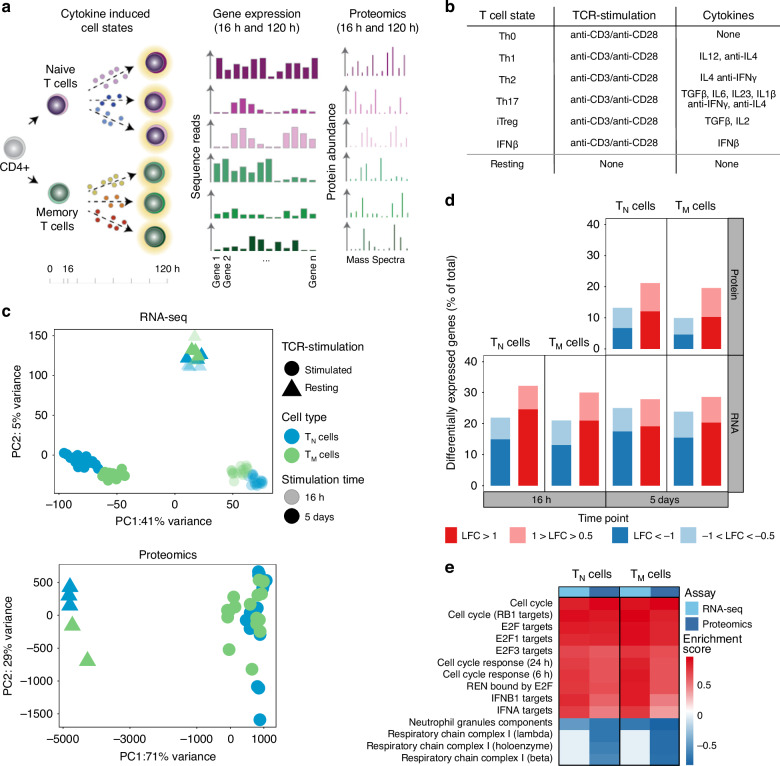
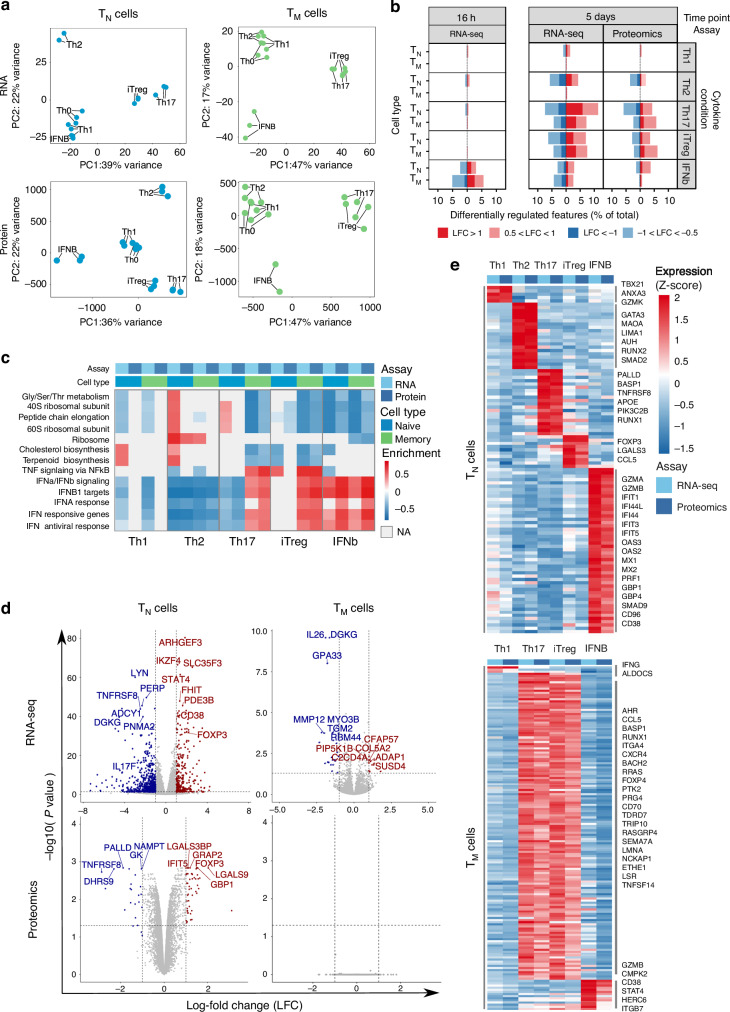
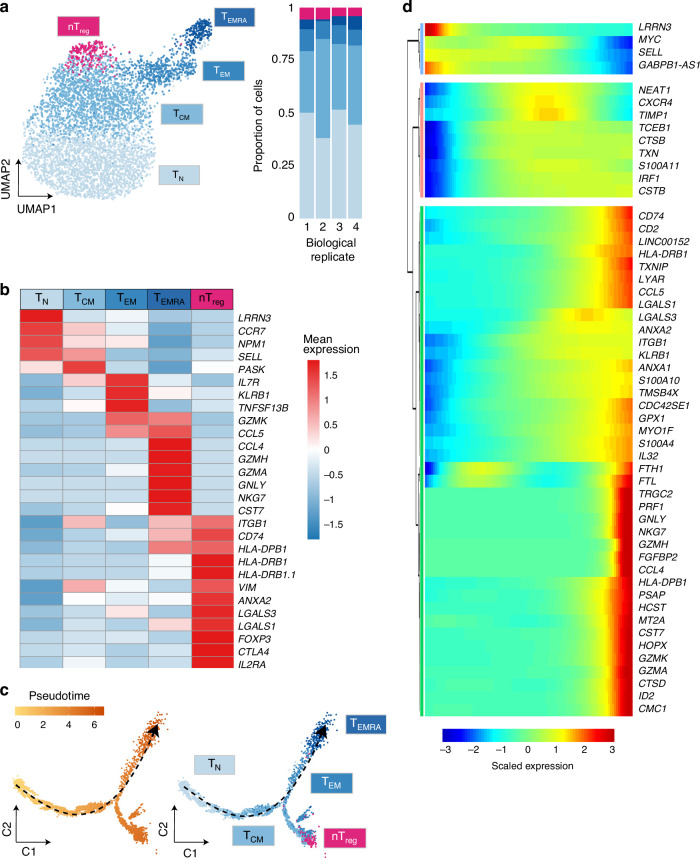
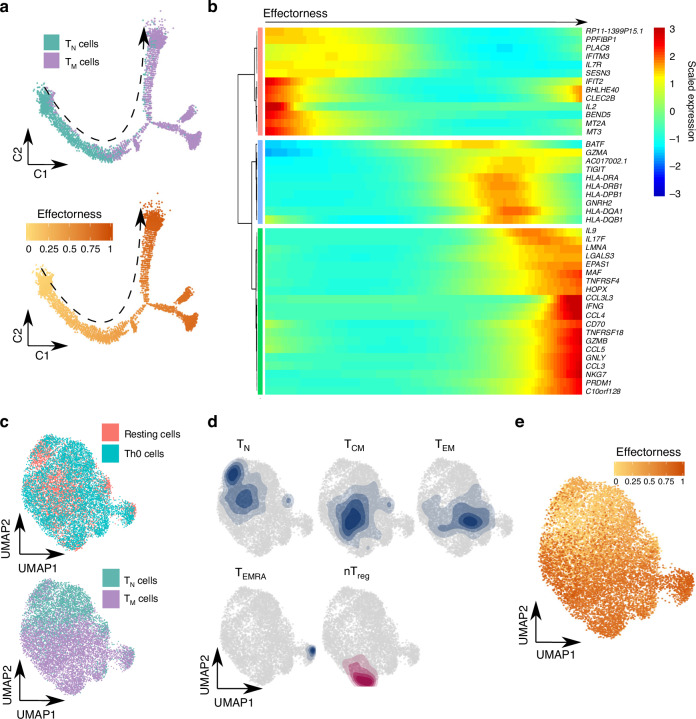
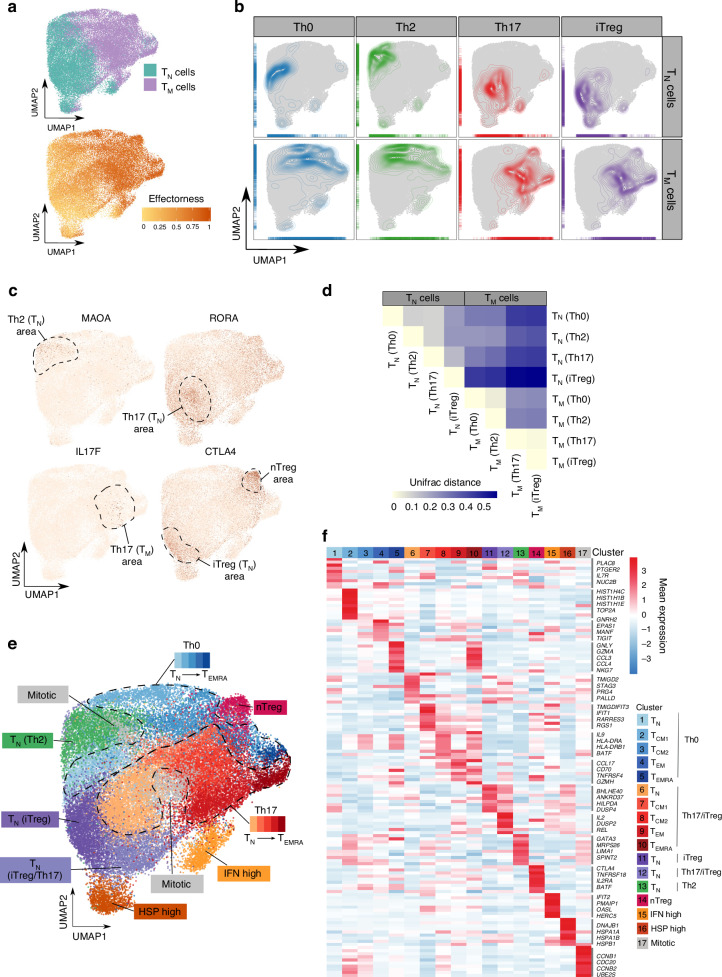
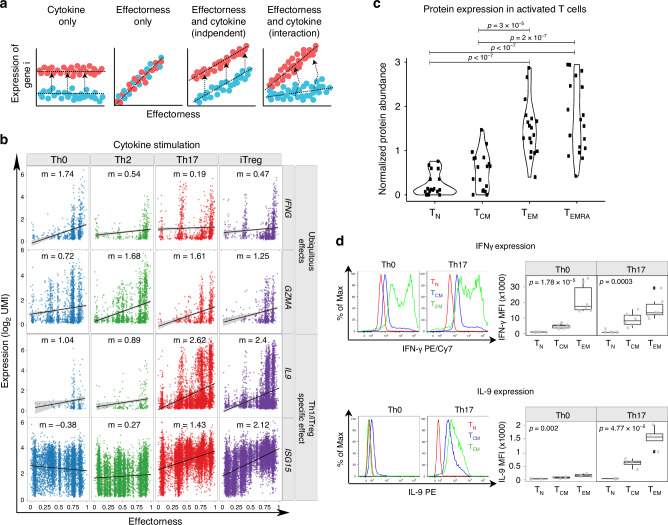
Naïve CD4 + T cells coordinate the immune response by acquiring an effector phenotype in response to cytokines. However, the cytokine responses in memory T cells remain largely understudied. Here we use quantitative proteomics, bulk RNA-seq, and single-cell RNA-seq of over 40,000 human naïve and memory CD4 + T cells to show that responses to cytokines differ substantially between these cell types. Memory T cells are unable to differentiate into the Th2 phenotype, and acquire a Th17-like phenotype in response to iTreg polarization. Single-cell analyses show that T cells constitute a transcriptional continuum that progresses from naïve to central and effector memory T cells, forming an effectorness gradient accompanied by an increase in the expression of chemokines and cytokines. Finally, we show that T cell activation and cytokine responses are influenced by the effectorness gradient. Our results illustrate the heterogeneity of T cell responses, furthering our understanding of inflammation.
Overview
The claims and statistics of this paper haven’t been checked yet.
Free: it reads the open-access text and checks the first 5 claims that cite a source we can check. Create a free account to check every claim.
Integrity signals
Registry
Cites
Statistics
Figures
Verification
Claims the paper makes
The claims and statistics of this paper haven’t been checked yet.
Free: it reads the open-access text and checks the first 5 claims that cite a source we can check. Create a free account to check every claim.
Claims other papers make about this one
Each is checked against this paper’s own text: does it say what the citing paper says it does?
The cited source says what the claim attributes to it.
In the citing paper
“Moreover, comparisons to matching proteomics data 13 revealed that pseudobulk methods also more accurately predicted changes in protein abundance (Supplementary Fig. 1e-f ).”
From Confronting false discoveries in single-cell differential expression (2021) · cites this paper as [13]
The cited source says what the claim attributes to it.
In the citing paper
“An extensive survey of the literature identified a total of eighteen ‘gold standard’ datasets that met these criteria (Fig. 1a ) 12 – 15 .”
From Confronting false discoveries in single-cell differential expression (2021) · cites this paper as [13]
The cited source says what the claim attributes to it.
In the citing paper
“An extensive survey of the literature identified a total of eighteen ‘gold standard’ datasets that met these criteria (Fig. 1a)12–15.”
From Confronting false discoveries in single-cell differential expression (2021) · cites this paper as [14]
Self-check
Percentages, sums and reported differences re-computed from the paper’s own numbers.
The self-check needs the paper’s full text.
Citations
Cites
Controlling the False Discovery Rate: A Practical and Powerful Approach to Multiple Testing
Benjamini, Y., & Hochberg, Y. (1995) · Journal of the Royal Statistical Society Series B: Statistical Methodology · doi:10.1111/j.2517-6161.1995.tb02031.x · Cited by 109,482 · cited 2×
“Multiple testing correction was performed using the Benjamini-Hochberg procedure 57 .”
Moderated estimation of fold change and dispersion for RNA-seq data with DESeq2
Love, M. I., Huber, W., & Anders, S. (2014) · Genome Biology · doi:10.1186/s13059-014-0550-8 · Cited by 95,106
STAR: ultrafast universal RNA-seq aligner
Dobin, A., Davis, C. A., Schlesinger, F., Drenkow, J., Zaleski, C., Jha, S., Batut, P., Chaisson, M., & Gingeras, T. R. (2013) · Bioinformatics · doi:10.1093/bioinformatics/bts635 · Cited by 51,709 · cited 2×
“Sequencing reads were aligned to the reference human genome using STAR 53 (v2.”
limma powers differential expression analyses for RNA-sequencing and microarray studies
Ritchie, M. E., Phipson, B., Wu, D., Hu, Y., Law, C. W., Shi, W., & Smyth, G. K. (2015) · Nucleic Acids Research · doi:10.1093/nar/gkv007 · Cited by 40,458
KEGG: Kyoto Encyclopedia of Genes and Genomes
Kanehisa, M. (2000) · Nucleic Acids Research · doi:10.1093/nar/28.1.27 · Cited by 37,077
KEGG: Kyoto Encyclopedia of Genes and Genomes
Ogata, H., Goto, S., Sato, K., Fujibuchi, W., Bono, H., & Kanehisa, M. (1999) · Nucleic Acids Research · doi:10.1093/nar/27.1.29 · Cited by 31,232
featureCounts: an efficient general purpose program for assigning sequence reads to genomic features
Liao, Y., Smyth, G. K., & Shi, W. (2014) · Bioinformatics · doi:10.1093/bioinformatics/btt656 · Cited by 27,219
Integrating single-cell transcriptomic data across different conditions, technologies, and species
Butler, A., Hoffman, P., Smibert, P., Papalexi, E., & Satija, R. (2018) · Nature Biotechnology · doi:10.1038/nbt.4096 · Cited by 13,174
UMAP: Uniform Manifold Approximation and Projection
McInnes, L., Healy, J., Saul, N., & Großberger, L. (2018) · Journal of Open Source Software · doi:10.21105/joss.00861 · Cited by 9,826
Analysis of protein-coding genetic variation in 60,706 humans
Exome Aggregation Consortium, Lek, M., Karczewski, K. J., Minikel, E. V., Samocha, K. E., Banks, E., Fennell, T., O’Donnell-Luria, A. H., Ware, J. S., Hill, A. J., et al. (2016) · Nature · doi:10.1038/nature19057 · Cited by 9,587
Cited by
Items 101–200 of 288
Characterization of proteogenomic signatures of differentiation of CD4+ T cell subsets
Kanno, T., Konno, R., Miyako, K., Nakajima, T., Yokoyama, S., Sasamoto, S., Asou, H. K., Ohzeki, J., Kawashima, Y., Hasegawa, Y., et al. (2022) · DNA Research · doi:10.1093/dnares/dsac054 · Cited by 17
Obermayer, B., Keilholz, L., Conrad, T., Frentsch, M., Blau, I., Vuong, L., Lesch, S., Movasshagi, K., Tietze-Stolley, C., Loyal, L., et al. (2023) · Frontiers in Immunology · doi:10.3389/fimmu.2023.1114368 · Cited by 15
“Accordingly, CD8TEM score right alongside NK-cells in metrics for cytotoxicity and effectorness (26, 27).”
BackgroundMethodDaďová, P., Mikulová, A., Jaroušek, R., Chorvátová, M., Uldrijan, S., & Kubala, L. (2023) · International Immunopharmacology · doi:10.1016/j.intimp.2023.111166 · Cited by 27
Terzoli, S., Marzano, P., Cazzetta, V., Piazza, R., Sandrock, I., Ravens, S., Tan, L., Prinz, I., Balin, S., Calvi, M., et al. (2024) · npj Vaccines · doi:10.1038/s41541-024-00853-9 · Cited by 17
“ComparedtomoreheterogeneousV δ 2Tcells,V δ 1Tcellsaggregate in two clusters with T EM /T EMRA cytotoxic outlines that mainly differ in V γ chain usage, expression of KLRC2 (NKG2C), and TFs expression such as ZNF683 (Supplementary Fig.”
InfluentialAnalysis of multi-condition single-cell data with latent embedding multivariate regression
Ahlmann-Eltze, C., & Huber, W. (2025) · Nature Genetics · doi:10.1038/s41588-024-01996-0 · Cited by 15
“For both benchmarks, we used 13 single-cell datasets (Angelidis et al., 2019; Aztekin et al., 2019; Bhattacherjee et al., 2019; Bunis et al., 2021; Cano-Gamez et al., 2020; Goldfarbmuren et al., 2020; Hrvatin et al., 2018; J¨akel et al., 2019; Kang et al., 2018; Pijuan-Sala et al., 2019; Reyfman et…”
Imran, S., Neeland, M. R., Peng, S., Vlahos, A., Martino, D., Dharmage, S. C., Tang, M. L. K., Sawyer, S. M., Dang, T. D., McWilliam, V. L., et al. (2022) · Pediatric Allergy and Immunology · doi:10.1111/pai.13890 · Cited by 14
Zhou, W., Yuan, W., Chen, Y., Li, C., Hu, L., Li, Q., Wang, J., Xue, R., Sun, Y., Xia, Q., et al. (2023) · Journal of Hazardous Materials · doi:10.1016/j.jhazmat.2023.132896 · Cited by 15
Single-cell analysis of bronchoalveolar cells in inflammatory and fibrotic post-COVID lung disease
Mehta, P., Estrada, B., Denneny, E., Foster, K. A., Turner, C. T., Mayer, A., Milighetti, M., Platé, M., Worlock, K. B., Yoshida, M., et al. (2024) · Frontiers in Immunology · doi:10.3389/fimmu.2024.1372658 · Cited by 16
Kanno, T., Konno, R., Satô, M., Kurabayashi, A., Miyako, K., Nakajima, T., Yokoyama, S., Sasamoto, S., Asou, H. K., Ohzeki, J., et al. (2024) · Communications Biology · doi:10.1038/s42003-024-06339-7 · Cited by 20
Wu, Y., & Tang, F. (2025) · Genome biology · doi:10.1186/s13059-025-03639-x · Cited by 21
The transcriptomics profiling of blood CD4 and CD8 T-cells in narcolepsy type I
Khajavi, L., Nguyen, X., Queriault, C., Chabod, M., Barateau, L., Dauvilliers, Y. A., Zytnicki, M., & Liblau, R. (2023) · Frontiers in Immunology · doi:10.3389/fimmu.2023.1249405 · Cited by 16
Paramithiotis, E., Varaklis, C., Pillet, S., Shafiani, S., Lancelotta, M. P., Steinhubl, S. R., Sugden, S., Clutter, M., Montamat‐Sicotte, D., Chermak, T., et al. (2023) · Frontiers in Immunology · doi:10.3389/fimmu.2023.1166059 · Cited by 15
Kernel-based testing for single-cell differential analysis
Ozier‐Lafontaine, A., Fourneaux, C., Durif, G., Arsenteva, P., Vallot, C., Gandrillon, O., Gonin-Giraud, S., Michel, B., & Picard, F. (2024) · Genome biology · doi:10.1186/s13059-024-03255-1 · Cited by 19
Antunes, R. D. S., Quiambao, L. G., Soldevila, F., Sutherland, A., Peters, B., & Sette, A. (2020) · Cytokine · doi:10.1016/j.cyto.2020.155313 · Cited by 13
Cannarile, M. A., Gomes, B., Cañamero, M., Reis, B., Byrd, A. L., Charo, J., Yadav, M., & Karanikas, V. (2021) · Clinical Cancer Research · doi:10.1158/1078-0432.ccr-20-2345 · Cited by 14
“More recently, transcriptomic approaches are becoming more popular, because they can provide more granularity into the cellular contributors of antitumor immunity (115).”
BackgroundExploring the dynamics and influencing factors of CD4 T cell activation using single-cell RNA-seq
Li, H., Liu, H., Liu, Y., Wang, X., Yu, S., Huang, H., Shen, X., Zhang, Q., Hong, N., & Jin, W. (2023) · iScience · doi:10.1016/j.isci.2023.107588 · Cited by 15
Carmona, E. G., Callejas-Rubio, J. L., Raya, E., Ríos-Fernández, R., Villanueva-Martín, G., Cid, M. C., Hernández‐Rodríguez, J., Ballestar, E., Timmermann, B., Ortego‐Centeno, N., et al. (2023) · Journal of Autoimmunity · doi:10.1016/j.jaut.2023.103124 · Cited by 15
The 15‐Year Survival Advantage: Immune Resilience as a Salutogenic Force in Healthy Aging
Manoharan, M. S., Lee, G. C., Harper, N., Meunier, J. A., Restrepo, M. I., Jiménez, F., Karekatt, S., Branum, A. P., Gaitán, Á. A., Andampour, K., et al. (2025) · Aging Cell · doi:10.1111/acel.70063 · Cited by 13
Single-cell RNA sequencing analysis of T helper cell differentiation and heterogeneity
Jaroušek, R., Mikulová, A., Daďová, P., Tauš, P., Kurucová, T., Plevová, K., Tichý, B., & Kubala, L. (2022) · Biochimica et Biophysica Acta (BBA) - Molecular Cell Research · doi:10.1016/j.bbamcr.2022.119321 · Cited by 16
Cytotoxic T Cells Targeting Spike Glycoprotein Are Associated with Hybrid Immunity to SARS-CoV-2
Phan, J. M., Layton, E. D., Yu, K. K. Q., Aguilar, M. S., Golez, I., Franko, N., Logue, J. K., Rodda, L. B., Howard, C. A., Pepper, M., et al. (2023) · The Journal of Immunology · doi:10.4049/jimmunol.2200815 · Cited by 13
Aala, W., Hou, P., Hong, Y., Lin, Y., Lee, Y.-R., Tu, W., Papanikolaou, M., Benzian-Olsson, N., Onoufriadis, A., Harn, H. I., et al. (2024) · British Journal of Dermatology · doi:10.1093/bjd/ljae110 · Cited by 12
Single-cell technologies in psoriasis
Cui, N., Xu, X., & Zhou, F. (2024) · Clinical Immunology · doi:10.1016/j.clim.2024.110242 · Cited by 12
Liu, Y., Liang, W., Chang, Y., He, Z., Wu, M., Zheng, H., Ke, X., Lv, M., Liu, Q., Liu, Q., et al. (2022) · Frontiers in Immunology · doi:10.3389/fimmu.2022.950884 · Cited by 11
“Th2 as well as Th1, Th17, T follicular helper (TFH), and regulatory T (Treg) cells differentiate from naïve CD4+ T cells upon activation with cytokines and inducible transcription factors (34).”
BackgroundScott, O., Visuvanathan, S., Reddy, E. C., Mahamed, D., Gu, B., Roifman, C. M., Cohn, R. D., Guidos, C. J., & Ivakine, E. A. (2023) · Frontiers in Immunology · doi:10.3389/fimmu.2023.1183273 · Cited by 13
“Frontiers in Immunology 09 Among the genes significantly down-regulated in mutant CD4 T cells were several associated with a naïve quiescent state (54, 55), such as Sell (encoding CD62L), Ccr7, Il6ra, Il7ra, and Bach2 (Figure 5B top), suggesting that they were more activated.”
BackgroundYao, C., Bora, S. A., Chen, P., Goodridge, H. S., & Gharib, S. A. (2021) · STAR Protocols · doi:10.1016/j.xpro.2021.100582 · Cited by 12
Computational methods for allele-specific expression in single cells
Qi, G., & Battle, A. J. (2024) · Trends in Genetics · doi:10.1016/j.tig.2024.07.003 · Cited by 11
Deciphering the Complexities of Pulmonary Hypertension: The Emergent Role of Single-Cell Omics
Rafikov, R., Pérez, V. D. J., Dekan, A., Kudryashova, T. V., & Rafikova, O. (2025) · American Journal of Respiratory Cell and Molecular Biology · doi:10.1165/rcmb.2024-0145ps · Cited by 10
Ramarapu, R., Wulcan, J. M., Chang, H., Moore, P. F., Vernau, W., & Keller, S. M. (2024) · Frontiers in Immunology · doi:10.3389/fimmu.2024.1438004 · Cited by 12
TrAGEDy—trajectory alignment of gene expression dynamics
Laidlaw, R. F., Briggs, E. M., Matthews, K. R., Mamlouk, A. M., McCulloch, R., & Otto, T. D. (2025) · Bioinformatics · doi:10.1093/bioinformatics/btaf073 · Cited by 13
“…patterns associated with a variety of interesting biological events have been investigated, such as regulators of myogenesis (Trapnell et al. 2014), effector gradients in CD4 þ T cells (Cano-Gamez et al. 2020), and life cycle transitions of the pathogen Trypanosoma brucei (Briggs et al. 2021).”
Precisely defining disease variant effects in CRISPR-edited single cells
Baglaenko, Y., Mu, Z., Curtis, M. L., Mire, H. M., Jayanthi, V., Suqri, M. A., Liu, C.-J., Agnew, R., Nathan, A., Mah-Som, A. Y., et al. (2025) · Nature · doi:10.1038/s41586-025-09313-3 · Cited by 26
Ayass, M. A., Tripathi, T., Zhu, K., Nair, R. R., Melendez, K., Zhang, J. C., Fatemi, S., Okyay, T., Griko, N. B., Ghelan, M. B., et al. (2023) · Methods · doi:10.1016/j.ymeth.2023.11.003 · Cited by 11
Bredel, D., Tihic, E., Mouraud, S., Danlos, F., Susini, S., Aglave, M., Alfaro, A., Mohamed-Djalim, C., Rouanne, M., Halse, H. M., et al. (2023) · Journal of Experimental & Clinical Cancer Research · doi:10.1186/s13046-023-02897-6 · Cited by 12
Sierra-Ulloa, D., Fernández, J., Cacelín, M., González-Aguilar, G. A., Saavedra, R., & Tenorio, E. P. (2024) · Frontiers in Immunology · doi:10.3389/fimmu.2024.1429302 · Cited by 9
A basigin antibody modulates MCTs to impact tumor metabolism and immunity
Zhang, H., Yang, X., Xue, Y., Huang, Y. F., Mo, Y., Huang, Y., Zhang, H., Zhang, X., Zhao, W., Jia, B., et al. (2025) · Cell Discovery · doi:10.1038/s41421-025-00777-1 · Cited by 15
“Additionally, TNFRSF8, in conjunction with FOXP3 and CTLA4, serves as a marker for identifying tumor-in fi ltrating Tregs that play a role in tumor localization and evasion 47 – 49 .”
Immune cell identifier and classifier (ImmunIC) for single cell transcriptomic readouts
Park, S. Y., Ter-Saakyan, S., Faraci, G., & Lee, H. Y. (2023) · Scientific Reports · doi:10.1038/s41598-023-39282-4 · Cited by 9
Wang, T., Pan, Y., Ju, F., Zheng, S., Liu, C., Min, Y., Jiang, Q., Liu, X., Xia, H., Liu, G., et al. (2025) · Nature Cell Biology · doi:10.1038/s41556-025-01755-1 · Cited by 12
Sekar, P. K. C., & Veerabathiran, R. (2025) · Clinical Immunology Communications · doi:10.1016/j.clicom.2025.12.002 · Cited by 10
Gao, R., Li, A., Li, S., Li, X., Zhang, S., Zhang, X., & Xu, J. (2023) · American Journal of Transplantation · doi:10.1016/j.ajt.2023.04.017 · Cited by 8
Cerapio, J., Gravelle, P., Quillet‐Mary, A., Valle, C., Martins, F., Franchini, D., Syrykh, C., Brousset, P., Traverse‐Glehen, A., Ysebaert, L., et al. (2024) · The Journal of Pathology · doi:10.1002/path.6296 · Cited by 8
T cell-mediated SIV dissemination into the CNS: a single-cell transcriptomic analysis
Xu, X., Niu, M., Lamberty, B. G., Emanuel, K. M., Estrella, L. D., & Fox, H. S. (2025) · Journal of Neuroinflammation · doi:10.1186/s12974-025-03543-y · Cited by 6
A review of CD4+ T cell differentiation and diversity in dogs
Lang, H. P., Osum, K. C., & Friedenberg, S. G. (2024) · Veterinary Immunology and Immunopathology · doi:10.1016/j.vetimm.2024.110816 · Cited by 9
Landscape of Hopx expression in cells of the immune system
Bourque, J., Opejin, A., Surnov, A., Iberg, C. A., Gross, C. J., Jain, R., Epstein, J. A., & Hawiger, D. (2021) · Heliyon · doi:10.1016/j.heliyon.2021.e08311 · Cited by 9
“…cells including some CD4þ and CD8þ T cells, NK, NKT cells, and also some B cells (Albrecht et al., 2010; Baas et al., 2016; Bezman et al., 2012; Cano-Gamez et al., 2020; Capone et al., 2021; Crawford et al., 2014; De Simone et al., 2019; Descatoire et al., 2014; Gordy et al., 2011; Hawiger…”
BackgroundResultInfluentialLong, X., Luo, C., & Zhu, Z. (2022) · Frontiers in Immunology · doi:10.3389/fimmu.2022.919550 · Cited by 8
“This research gave rise to new paradigms representing effector T cell heterogeneity as a transcriptional continuum, progressing from naïve T cells towards increased expression of effector molecules shaping their response to activation and cytokine polarization (17).”
BackgroundShi, Y., Lee, J., Kang, H., & Jiang, H. (2022) · Genes · doi:10.3390/genes13020377 · Cited by 7
Transcriptomes and metabolism define mouse and human MAIT cell heterogeneityPreprint
Chandra, S., Ascui, G., Riffelmacher, T., Chawla, A., Ramírez-Suástegui, C., Castelan, V. O. C., Seumois, G., Simon, H. A., Murray, M. P., Seo, G., et al. (2021) · bioRxiv (Cold Spring Harbor Laboratory) · doi:10.1101/2021.12.20.473182 · Cited by 7
Zheng, J., Yang, Q., Liu, H., Zhao, H., Wang, S., Liu, Y., Wu, X., Ding, Y., Ying, H., Ye, Y., et al. (2025) · Advanced Science · doi:10.1002/advs.202507451 · Cited by 9
Virus-Specific Regulatory T Cells Persist as Memory in a Neurotropic Coronavirus Infection
Sariol, A., Zhao, J., Abrahante, J. E., & Perlman, S. M. (2022) · The Journal of Immunology · doi:10.4049/jimmunol.2100794 · Cited by 7
Cis-regulatory atlas of primary human CD4+ T cells
Stefan, K., & Barski, A. (2023) · BMC Genomics · doi:10.1186/s12864-023-09288-3 · Cited by 5
“It is known that CD4+ T cells are transcriptionally plastic, responding to cytokine stimuli with diverse and distinct transcriptional programs [21].”
BackgroundAutoimmunity-associated allele of tyrosine phosphatase gene PTPN22 enhances anti-viral immunity
Orozco, R. C., Marquardt, K., Pratumchai, I., Shaikh, A. F., Mowen, K. A., Domissy, A., Teijaro, J. R., & Sherman, L. A. (2024) · PLoS Pathogens · doi:10.1371/journal.ppat.1012095 · Cited by 8
Wigdor, E. M., Samocha, K. E., Eberhardt, R. Y., Chundru, V. K., Firth, H. V., Wright, C. F., Hurles, M. E., & Martin, H. C. (2024) · Scientific Reports · doi:10.1038/s41598-024-58894-y · Cited by 8
Dissecting genetic determinants of variation in human immune responses
Tong, O., & Fairfax, B. P. (2020) · Current Opinion in Immunology · doi:10.1016/j.coi.2020.05.005 · Cited by 7
Liu, N., Sadlon, T. J., Wong, Y. Y., Pederson, S., Breen, J., & Barry, S. C. (2022) · Epigenetics & Chromatin · doi:10.1186/s13072-022-00456-5 · Cited by 7
“This accessibility of regulatory variants among a population could potentially explain additional variation in effector responses in T cell activation [120], relevant not only to autoimmune disease, but also to broader immune responses for example to SARS-CoV-2.”
BackgroundMercado, M. A. B., Li, Q., Quick, C. M., Kim, Y., Palmer, R., Huang, L., & Li, L. (2024) · PLoS Pathogens · doi:10.1371/journal.ppat.1011983 · Cited by 7
CD8⁺ T cell heterogeneity in aging: insights from single-cell profiling
Filippov, I., & Peterson, P. (2025) · Immunity & Ageing · doi:10.1186/s12979-025-00550-8 · Cited by 5
“LRRN3 , another marker associated with naïve CD8 ⁺ cells, is found in only a small subset, while CD69 is more highly expressed in TCM cells [9, 18].”
Transcription of HIV-1 is heterogenous among authentic latent CD4+ T cell clones
Bittar, C., Teixeira, A. R., Oliveira, T. Y., Santos, G. S. S., Lenart, K., Fumagalli, M. J., Weymar, G. H. J., Kaczynska, A., Linden, N., Ferreira, I. A. T. M., et al. (2025) · The Journal of Experimental Medicine · doi:10.1084/jem.20251584 · Cited by 10
Scoring gene importance by interpreting single-cell foundation models
Gold, M. P., Reyes, M., Diamant, N., Kuo, T. C.-Y., Hajiramezanali, E., Newburger, J. W., Son, M. B. F., Lee, P. Y., Scalia, G., BenTaieb, A., et al. (2026) · Nature Biotechnology · doi:10.1038/s41587-026-03112-5 · Cited by 9
Vázquez‐Mera, S., Martelo‐Vidal, L., Miguéns‐Suárez, P., Bravo, S. B., Saavedra‐Nieves, P., Arias, P., Ferreiro‐Posse, A., Vázquez-Lago, J. M., Salgado, F. J., González‐Barcala, F. J., et al. (2024) · Allergy · doi:10.1111/all.16327 · Cited by 5
“T EMRA cells also express effector molecules characteristic of cytotoxic T lymphocytes (e.g. GPR56, CD244, perforin and granzyme B) 62,63 or in - nate subsets (e.g. TLR or CD14).”
Systems immunology approaches to study T cells in health and disease
Yang, A., & Poholek, A. C. (2024) · npj Systems Biology and Applications · doi:10.1038/s41540-024-00446-1 · Cited by 8
A partial loss-of-function variant in STAT6 protects against type 2 asthma
Kristjánsdóttir, K., Norddahl, G. L., Ivarsdottir, E. V., Halldorsson, G. H., Einarsson, G., Bjarnadóttir, K., Rutsdottir, G., Arnthorsson, A. O., Erikstrup, C., Guðmundsdóttir, S., et al. (2024) · Journal of Allergy and Clinical Immunology · doi:10.1016/j.jaci.2024.10.002 · Cited by 5
Statistical and machine learning methods to study human CD4+ T cell proteome profiles
Suomi, T., & Elo, L. L. (2022) · Immunology Letters · doi:10.1016/j.imlet.2022.03.006 · Cited by 5
Huang, L., Rau, C., Liu, Y., Wu, C., Chien, P., Lin, H.-P., Wu, Y.-C., Huang, C.-Y., Hsieh, T.-M., & Hsieh, C. (2023) · Biomedicines · doi:10.3390/biomedicines11071848 · Cited by 5
Sandoval, S., Malany, K., Thongphanh, K., Martinez, C. A., Goodson, M. L., Souza, F. D. C., Lin, L.-W., Sweeney, N. K., Pennington, J. M., Lein, P. J., et al. (2023) · Frontiers in Immunology · doi:10.3389/fimmu.2023.1193535 · Cited by 6
Transcriptomic diversity of innate lymphoid cells in human lymph nodes compared to BM and spleen
Hashemi, E., McCarthy, C., Rao, S., & Malarkannan, S. (2024) · Communications Biology · doi:10.1038/s42003-024-06450-9 · Cited by 10
Development of a humanized mouse model with functional human materno-fetal interface immunity
Dong, S., Fu, C., Shu, C., Xie, M., Li, Y., Zou, J., Meng, Y., Xu, P., Shan, Y., Tian, H., et al. (2024) · JCI Insight · doi:10.1172/jci.insight.176527 · Cited by 5
“Naive T cells were found at the start point of the trajectory and gradually transitioned toward effector memory (EM) T cells, which was consistent with previous reports (56).”
ResultRapid assay development for low input targeted proteomics using a versatile linear ion trap
Shannon, A. E., Teodorescu, R., Song, N. J., Heil, L. R., Jacob, C. C., Remes, P. M., Li, Z., Rubinstein, M. P., & Searle, B. C. (2025) · Nature Communications · doi:10.1038/s41467-025-58757-8 · Cited by 7
Petkov, S., & Chiodi, F. (2022) · Genomics · doi:10.1016/j.ygeno.2022.110367 · Cited by 8
Single-cell sequencing analysis within biologically relevant dimensions
Kousnetsov, R., Bourque, J., Surnov, A., Fallahee, I., & Hawiger, D. (2024) · Cell Systems · doi:10.1016/j.cels.2023.12.005 · Cited by 7
Single cell transcriptomics-level Cytokine Activity Prediction and Estimation (SCAPE)Preprint
Javaid, A., & Frost, H. R. (2023) · bioRxiv (Cold Spring Harbor Laboratory) · doi:10.1101/2023.10.17.562739 · Cited by 5
Pareto optimality reveals an atlas of cellular archetypes
Crowley, G., Alon, U., & Quake, S. R. (2026) · Proceedings of the National Academy of Sciences · doi:10.1073/pnas.2530194123 · Cited by 4
Wang, Y., Xu, M., Yao, Y., Li, Y., Zhang, S., Fu, Y., & Wang, X. (2024) · Oncology Letters · doi:10.3892/ol.2024.14300 · Cited by 8
“Furthermore, when comparing differential genes of two groups of cells, the basic principles of statistics was similar with finding marker genes of several clusters and the function in Seurat was called ‘Find Marker’.”
BackgroundMethodInfluentialLal, K. G., Phuang‐Ngern, Y., Suhkumvittaya, S., Leeansyah, E., Alrubayyi, A., Dias, J., Waickman, A. T., Kim, D., Kroon, E. D. M. B., Pinyakorn, S., et al. (2020) · Viruses · doi:10.3390/v12121426 · Cited by 4
“Studies using RNAseq have identified a gradient in the effectorness [28] and innateness [29] in T cells.”
MethodPandey, R. V., Strobl, J., Redl, A., Unterluggauer, L., Gail, L. M., Kleißl, L., Müller, S., Atzmüller, D., Fife, V. E. R., Krausgruber, T., et al. (2023) · Clinical Immunology · doi:10.1016/j.clim.2023.109245 · Cited by 4
Lin, Y., Wu, C., Chen, P., Huang, C., Yang, C., Dutta, A., Huang, C., & Lin, C. (2023) · International Immunology · doi:10.1093/intimm/dxad015 · Cited by 5
Reshef, Y., Rumker, L., Kang, J. B., Nathan, A., Korsunsky, I., Asgari, S., Murray, M. B., Moody, D. B., & Raychaudhuri, S. (2021) · bioRxiv (Cold Spring Harbor Laboratory) · doi:10.1101/2021.04.19.440534 · Cited by 4
Bartoli‐Leonard, F., Chelvanambi, S., Pham, T., Turner, M. E., Blaser, M. C., Caputo, M., Aikawa, M., Pang, A. Y., Muehlschlegel, J. D., & Aikawa, E. R. (2023) · bioRxiv (Cold Spring Harbor Laboratory) · doi:10.1101/2023.07.08.548203 · Cited by 4
“06 "Severe" aortic incompetence, n (%) 10 (42) Previous AA, n (%) 6 (25) Previous CABG, n (%) 6 (25)”
BackgroundSingle-cell transcriptome and T cell receptor profiling of the tuberculin skin testPreprint
Turner, C. T., Rosenheim, J., Thakker, C. E., Chandran, A., Wilson, H., Venturini, C., Pollara, G., Chain, B., Tomlinson, G. S., & Noursadeghi, M. (2024) · bioRxiv (Cold Spring Harbor Laboratory) · doi:10.1101/2024.06.25.600676 · Cited by 4
“…demonstrated that non-specific TCR stimulation of CD4 T cells in vitro leads to an activated phenotype that can be detected at 16 hr, whereas the effect of additional polarising cytokines is only apparent at a later time point (5 days), implying that T cell activation precedes polarisation (26).”
BackgroundResultBittar, C., Teixeira, A. R., Oliveira, T. Y., Santos, G. S. S., Lenart, K., Fumagalli, M. J., Linden, N., Ferreira, I. A. T. M., Caskey, M. F., Jones, R. B., et al. (2025) · bioRxiv (Cold Spring Harbor Laboratory) · doi:10.1101/2025.08.05.668730 · Cited by 4
Guiraud, V., Fauchois, A., Soulié, C., Leducq, V., Veyri, M., Assoumou, L., Boutolleau, D., Costagliola, D. G., Lambotte, O., Spano, J., et al. (2025) · Scientific Reports · doi:10.1038/s41598-025-15349-2 · Cited by 4
Karmi, N., Oelen, R., Bigaeva, E., de Jong, S., Haveman, J. W., van der Heide, F., Hermoso, M. A., van der Wijst, M. G. P., Kats‐Ugurlu, G., Weersma, R. K., et al. (2025) · Transplantation · doi:10.1097/tp.0000000000005411 · Cited by 3
Transcriptome-wide association studies at cell-state level using single-cell eQTL data
Qi, G., Lila, E., Ji, Z., Shojaie, A., Battle, A. J., & Sun, W. (2025) · Cell Genomics · doi:10.1016/j.xgen.2025.101060 · Cited by 9
“37,38 Therefore, characterizing gene effects at specific cell states is important for understanding disease mechanisms and identifying high-resolution drug targets.”
Emerging insights and challenges for understanding T cell function through the proteome
Solt, L. A. (2022) · Frontiers in Immunology · doi:10.3389/fimmu.2022.1028366 · Cited by 4
“that point had not been studied in-depth (37).”
BackgroundLipid metabolic reprogramming of hepatic CD4 + T cells during SIV infection
Clain, J. A., Boutrais, S., Dewatines, J., Racine, G., Rabezanahary, H., Droit, A., Zghidi‐Abouzid, O., & Estaquier, J. (2023) · Microbiology Spectrum · doi:10.1128/spectrum.01687-23 · Cited by 5
“Similarly, SLAMF7 expression was reported to be associated with inflammatory diseases and tissue lesions driving an IgG4 humoral response (33, 47, 48), which is generally associated with Th2 cells (49, 50).”
BackgroundCheng, D., Qiu, K., Li, D., Mao, M., Rao, Y., Song, Y., Feng, L., Shao, X., Jiang, C., Wang, Y., et al. (2024) · MedComm · doi:10.1002/mco2.572 · Cited by 3
Immunotherapy in the Context of Aortic Valve Diseases
Bartoli‐Leonard, F., Pennel, T. C., & Caputo, M. (2024) · Cardiovascular Drugs and Therapy · doi:10.1007/s10557-024-07608-7 · Cited by 3
Yang, Y., Miao, J., Du, J., Xu, S., Zhang, K., Wu, T., Tao, C., Wang, Y., Fang, M., & Yang, S. (2024) · International Journal of Biological Macromolecules · doi:10.1016/j.ijbiomac.2024.136245 · Cited by 3
Kazmierski, J., Postmus, D., Pietrobon, A. J., Wyler, E., Jansen, J., Møller, L. F., Fadejeva, J., Steijaert, T. H., Fischer, C., Koppe, U., et al. (2020) · bioRxiv (Cold Spring Harbor Laboratory) · doi:10.1101/2020.05.04.075119 · Cited by 4
Wigdor, E. M., Samocha, K. E., Eberhardt, R. Y., Chundru, V. K., Firth, H. V., Wright, C. F., Hurles, M. E., & Martin, H. C. (2023) · medRxiv · doi:10.1101/2023.04.20.23288860 · Cited by 3
Closing the loop: Teaching single-cell foundation models to learn from perturbationsPreprint
Pershad, Y., Nandi, T., Amburg, J. C. V., Parker, A., Ostrowski, L., Giannini, H. K., Ong, D. E., Heimlich, J. B., Obeng, E. A., Ericson, K. R., et al. (2025) · bioRxiv (Cold Spring Harbor Laboratory) · doi:10.1101/2025.07.08.663754 · Cited by 5
Briem, O., Tahin, B., Frank, A. M., Olsson, L. M., Gerdtsson, A. S., Källberg, E., & Leandersson, K. (2025) · Journal of Translational Medicine · doi:10.1186/s12967-025-06415-4 · Cited by 3
Nanomaterials Trigger Functional Anti‐Tumoral Responses in Primary Human Immune Cells
Mittelheisser, V., Lefèbvre, O., Banerjee, M., Ghosh, S., Dupas, A., Diringer, M., Blumberger, J., Bochler, L., Harlepp, S., Larnicol, A., et al. (2025) · Advanced Science · doi:10.1002/advs.202505729 · Cited by 7
CHASERR-CHD2 dynamics in T cell quiescence and its modulation by cyclosporine
Budkina, A., Zubritskiy, A. V., Marakulina, D., Loguinova, M. Y., Sergeev, N. A., & Medvedeva, Y. A. (2025) · Frontiers in Immunology · doi:10.3389/fimmu.2025.1652359 · Cited by 2
Zhu, H., Cai, J., Xu, Q., Xu, L., He, D., Chen, X., Chen, T., Wang, P., Li, Y., Ye, W., et al. (2026) · Communications Biology · doi:10.1038/s42003-026-09615-w · Cited by 4
“…including CD4 + naïve T cells ( CD4 + , CCR7 + , SELL + ) 37,40 , CD4 + memory T cells ( CD4 + , S100A4 + , TNFRSF4 + , TIMP1 + , GPR183 + ) 36,37,41 , CD4 + Treg ( CD4 + , FOXP3 + ) cells 36,37 , CD4 + exhausted-like T cell ( CD4 + , FOXO1 + , IL7R high , CCR7 − ) 42 , CD8 + naïve T cells (…”
Couto, P. S., Stibbs, D. J., Sanchez, B. C., Springuel, P., McLean, S., Schultz, U., Effenberger, M. J. P., Takeuchi, Y., & Rafiq, Q. A. (2026) · Molecular Therapy Advances · doi:10.1016/j.omta.2026.201691 · Cited by 5
“62 The different transduction methods resulted in varying transduction efficiencies.”
Single‐Cell Transcriptomics Reveals a Pivotal Role of DOCK2 in Sjögren Disease
Shen, Y., Voigt, A., Bhattacharyya, I., & Nguyen, C. Q. (2024) · ACR Open Rheumatology · doi:10.1002/acr2.11738 · Cited by 2
Design and Culture of Biomaterial Scaffolds for Orthopedic Applications
Gibson, J., Chen, W., Graham, A., McLay, S. J., Guo-Yue, A., & Priddy, L. B. (2025) · Springer eBooks · doi:10.1007/978-3-031-81743-4_6 · Cited by 2
Papanikolaou, S., Κοσμαρά, Δ., Stathopoulou, C., Sidiropoulos, P. I., Konstantopoulos, D., & Bertsias, G. K. (2022) · Mediterranean Journal of Rheumatology · doi:10.31138/mjr.33.1.94 · Cited by 2
Bailin, S. S., Kropski, J. A., Gangula, R., Hannah, L., Simmons, J. D., Mashayekhi, M., Ye, F., Fan, R., Chopra, A., Ram, R., et al. (2022) · SSRN Electronic Journal · doi:10.2139/ssrn.4097122 · Cited by 2
Kernel-Based Testing for Single-Cell Differential AnalysisPreprint
Ozier‐Lafontaine, A., Fourneaux, C., Durif, G., Arsenteva, P., Vallot, C., Gandrillon, O., Gonin-Giraud, S., Michel, B., & Picard, F. (2023) · arXiv (Cornell University) · doi:10.48550/arxiv.2307.08509 · Cited by 2
Transcript-specific enrichment enables profiling rare cell states via scRNA-seqPreprint
Abay, T., Stickels, R. R., Takizawa, M. T., Nalbant, B. N., Hsieh, Y.-H., Hwang, S., Snopkowski, C., Yu, K. K. H., Abou-Mrad, Z., Tabar, V. S., et al. (2024) · bioRxiv (Cold Spring Harbor Laboratory) · doi:10.1101/2024.03.27.587039 · Cited by 2
“…the 9,035 cells from the CD4 , CD3E double-positive population, identified major CD4 + T cell subsets, including regulatory T cells (T regs) expressing FOXP3 , naive T cells marked by LEF1 , interferon-responsive cells expressing IFIT genes 16 , and cytotoxic CD4 + cells expressing GZMH ( Fig.”
BackgroundNanomaterials trigger functional responses in primary human immune cellsPreprint
Mittelheisser, V., Lefèbvre, O., Banerjee, M., Ghosh, S., Dupas, A., Diringer, M., Blumberger, J., Bochler, L., Harlepp, S., Larnicol, A., et al. (2024) · bioRxiv (Cold Spring Harbor Laboratory) · doi:10.1101/2024.10.17.618911 · Cited by 2
Metadata
- Authors
- Cano-Gamez, K., Soskic, B., Roumeliotis, T. I., So, E., Smyth, D. J., Baldrighi, M., Willé, D., Nakic, N., Esparza-Gordillo, J., Larminie, C. G. C., Bronson, P. G., Tough, D. F., Rowan, W. C., Choudhary, J. S., & Trynka, G.
- Affiliations
- Wellcome Sanger Institute (GB)
- Institute of Cancer Research (GB)
- GlaxoSmithKline Research & Development Limited (United Kingdom) (GB)
- Biogen (United States) (US)
- GlaxoSmithKline (United Kingdom) (GB)
- Corresponding author
- Soskic, Blagoje
- Trynka, Gosia
- ORCID
- Venue
- Nature Communications
- Published
- 2020-04-14
- Volume
- 11
- Issue
- 1
- Pages
- 1801-1801
- ISSN
- 2041-1723 (ISSN-L)
- PMC
- PMC7156481
- OpenAlex
- W3015671642
- Semantic Scholar
- eda68663c5dac8f3955cc1e1732f8fa26a78969c
- Cited by
- 274
- References
- 88
- Citations by year
- 2026: 15 · 2025: 46 · 2024: 73 · 2023: 47 · 2022: 49 · 2021: 28 · 2020: 16
- FWCI
- 13.03
- Type
- journal article
- Language
- en
- Open access
- gold
- doi.org
- Licence
- cc-by
- creativecommons.org/licenses/by/4.0 (tdm)
- creativecommons.org/licenses/by/4.0 (vor)
- Locations
- Nature Communications (publishedVersion, cc-by)
- bioRxiv (Cold Spring Harbor Laboratory) (acceptedVersion, cc-by)
- PubMed Central (publishedVersion, cc-by)
- PubMed (publishedVersion)
- RePEc: Research Papers in Economics (submittedVersion)
- DOAJ (DOAJ: Directory of Open Access Journals) (submittedVersion, cc-by-sa)
- Funders
- Wellcome Trust (WT206194)
- Topics
- Life Sciences › Immunology and Microbiology › Immunology › T-cell and B-cell Immunology
- Life Sciences › Immunology and Microbiology › Immunology › Psoriasis: Treatment and Pathogenesis
- Life Sciences › Biochemistry, Genetics and Molecular Biology › Molecular Biology › Single-cell and spatial transcriptomics
- Keywords
- CD4+ T cells, memory T cells, naive T cells, cytokine response, Th17 polarization, Th2 differentiation, central memory T cells, effector memory T cells, transcriptional heterogeneity, chemokine expression, T cell activation, inflammation
- MeSH terms
- Gene Expression Regulation, Humans, Lymphocyte Activation, Male, Middle Aged, Receptors, Antigen, T-Cell, CD4-Positive T-Lymphocytes, Cytokines, Cell Polarity, CD28 Antigens, Proteome, Principal Component Analysis, Single-Cell Analysis, Transcriptome
About these checks
Registry, retraction, Cites and statistics results are computed, not judged, with one exception: a printed reference that no index lists is read once by a model before it counts as a citation error. Claims are extracted by a model and kept only when their quote appears verbatim in the text; each cited source is then checked, with a model’s help, for whether it says what the claim relies on. Those verdicts can be wrong — read the claim’s quote and the cited source before relying on one.
Statistics and arithmetic are recomputed, not judged.
Confidence bands are shown only for fields calibrated on our annotated test set. None is calibrated yet, so no band is shown.
What counts as a claim ›How we measure confidence ›How we check this ›
Are you an author, or do you see a problem with this page? Request a review
Data sources
Bibliographic data: Semantic Scholar, OpenAlex, Crossref.
Contains information from the Semantic Scholar Academic Graph Datasets, made available under the ODC Attribution License (ODC-BY 1.0).
Semantic Scholar’s data is described in: Kinney, R., et al. (2023). The Semantic Scholar Open Data Platform. arXiv:2301.10140.
