

The DOI matches its Crossref record; 76 of the 77 references it cites were found in a registry or an index, and 1 are not checked yet.
Mapping mutations to the SARS-CoV-2 RBD that escape binding by different classes of antibodies
Open accessPublished version of a preprint
Abstract
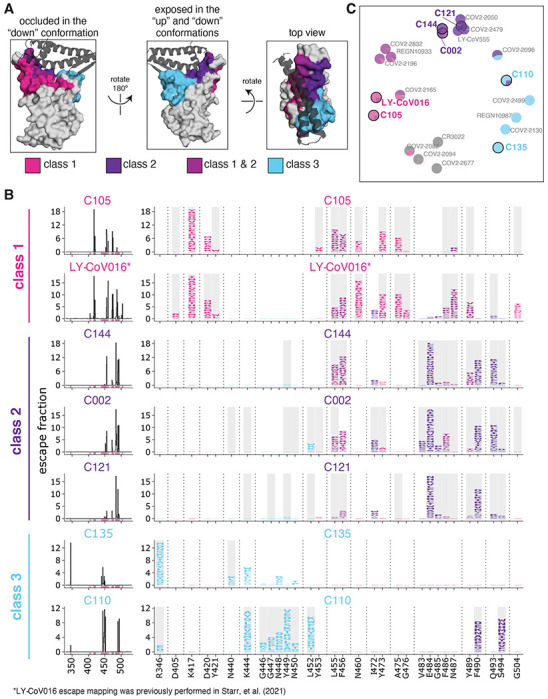
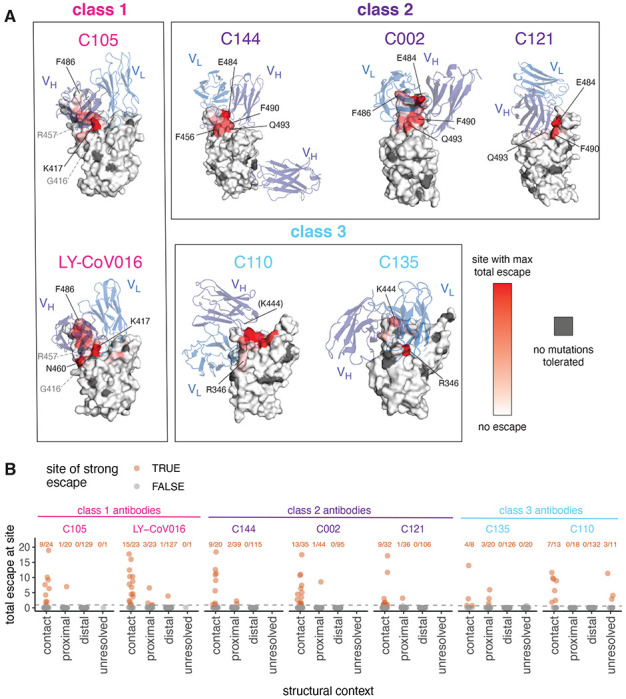
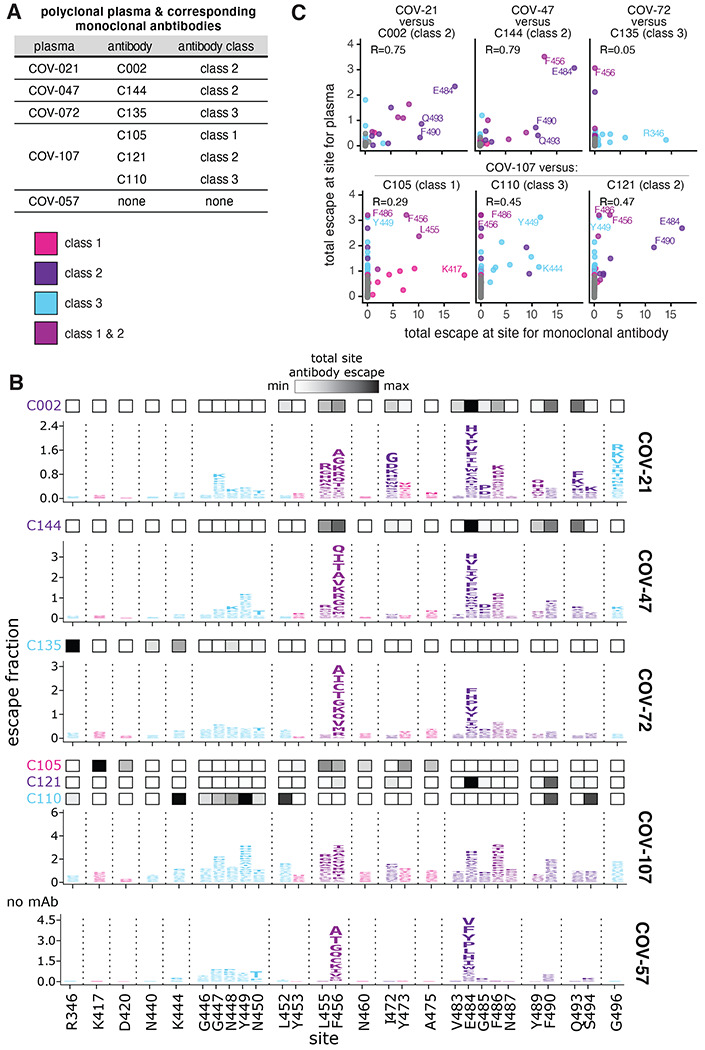
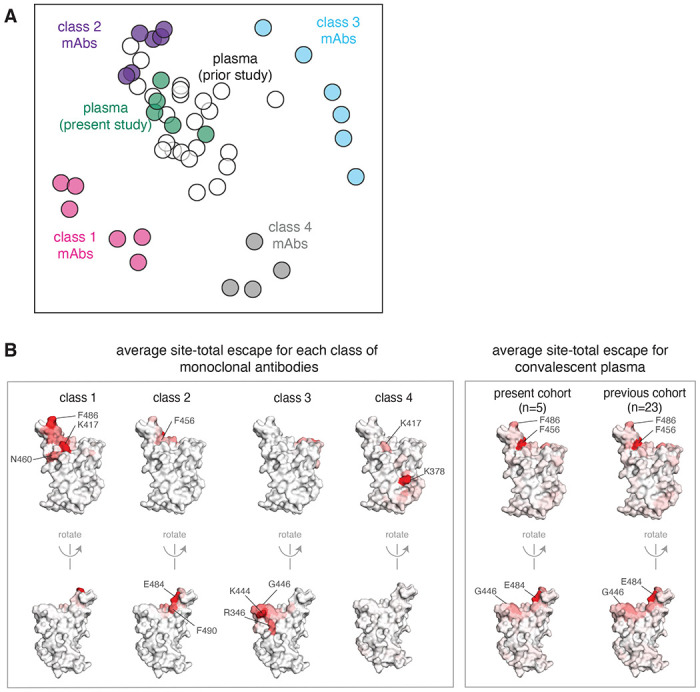
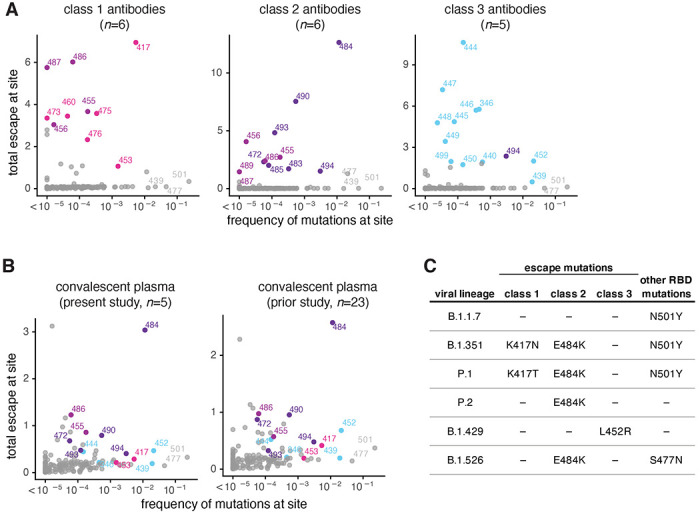
Monoclonal antibodies targeting a variety of epitopes have been isolated from individuals previously infected with SARS-CoV-2, but the relative contributions of these different antibody classes to the polyclonal response remains unclear. Here we use a yeast-display system to map all mutations to the viral spike receptor-binding domain (RBD) that escape binding by representatives of three potently neutralizing classes of anti-RBD antibodies with high-resolution structures. We compare the antibody-escape maps to similar maps for convalescent polyclonal plasmas, including plasmas from individuals from whom some of the antibodies were isolated. While the binding of polyclonal plasma antibodies are affected by mutations across multiple RBD epitopes, the plasma-escape maps most resemble those of a single class of antibodies that target an epitope on the RBD that includes site E484. Therefore, although the human immune system can produce antibodies that target diverse RBD epitopes, in practice the polyclonal response to infection is skewed towards a single class of antibodies targeting an epitope that is already undergoing rapid evolution.
Overview
The claims and statistics of this paper haven’t been checked yet.
Run the check — free, no account needed. It reads the open-access text and checks the sources it cites.
Integrity signals
Registry
Cites
Statistics
Figures
Verification
Claims the paper makes
The claims and statistics of this paper haven’t been checked yet.
Run the check — free, no account needed. It reads the open-access text and checks the sources it cites.
Claims other papers make about this one
Each is checked against this paper’s own text: does it say what the citing paper says it does?
The source backs part of the claim, not all of it — or backs it for a different population, condition or comparison.
In the citing paper
“Mutations at F486 are associated with a reduction in neutralizing activity by class 1 (and some class 2) neutralizing antibodies and by polyclonal sera9–11.”
From Emergence of SARS-CoV-2 Omicron lineages BA.4 and BA.5 in South Africa (2022) · cites this paper as [9]
Experimental — accuracy not yet measuredIn the citing paper
“mutations at this position have been associated with a reduction in neutralization by monoclonal antibodies (particularly class 2 antibodies) and polyclonal sera9–11.”
From Emergence of SARS-CoV-2 Omicron lineages BA.4 and BA.5 in South Africa (2022) · cites this paper as [9]
Self-check
Percentages, sums and reported differences re-computed from the paper’s own numbers.
The self-check needs the paper’s full text.
Citations
Cites
MAFFT Multiple Sequence Alignment Software Version 7: Improvements in Performance and Usability
Katoh, K., & Standley, D. M. (2013) · Molecular Biology and Evolution · doi:10.1093/molbev/mst010 · Cited by 46,209
Structure of the SARS-CoV-2 spike receptor-binding domain bound to the ACE2 receptor
Lan, J., Ge, J., Yu, J., Shan, S., Zhou, H., Fan, S., Zhang, Q., Shi, X., Wang, Q., Zhang, L., et al. (2020) · Nature · doi:10.1038/s41586-020-2180-5 · Cited by 5,983
Letko, M., Marzi, A., & Munster, V. (2020) · Nature Microbiology · doi:10.1038/s41564-020-0688-y · Cited by 3,109
Detection of a SARS-CoV-2 variant of concern in South Africa
Tegally, H., Wilkinson, E., Giovanetti, M., Iranzadeh, A., Fonseca, V., Giandhari, J., Doolabh, D., Pillay, S., San, E. J., Msomi, N., et al. (2021) · Nature · doi:10.1038/s41586-021-03402-9 · Cited by 2,510
Antibody Resistance of SARS-CoV-2 Variants B.1.351 and B.1.1.7
Wang, P., Nair, M. S., Liu, L., Iketani, S., Luo, Y., Guo, Y., Wang, M., Yu, J., Zhang, B., Kwong, P. D., et al. (2021) · doi:10.1101/2021.01.25.428137 · Cited by 2,328
Antibody resistance of SARS-CoV-2 variants B.1.351 and B.1.1.7
Wang, P., Nair, M. S., Liu, L., Iketani, S., Luo, Y., Guo, Y., Wang, M., Yu, J., Zhang, B., Kwong, P. D., et al. (2021) · Nature · doi:10.1038/s41586-021-03398-2 · Cited by 2,312
Bio3d: an R package for the comparative analysis of protein structures
Grant, B. J., Rodrigues, A. P. C., ElSawy, K. M., McCammon, J. A., & Caves, L. S. D. (2006) · Bioinformatics · doi:10.1093/bioinformatics/btl461 · Cited by 2,005
Starr, T. N., Greaney, A. J., Hilton, S. K., Ellis, D., Crawford, K. H. D., Dingens, A. S., Navarro, M. J., Bowen, J. E., Tortorici, M. A., Walls, A. C., et al. (2020) · Cell · doi:10.1016/j.cell.2020.08.012 · Cited by 1,956
Self-citationData, disease and diplomacy: GISAID's innovative contribution to global health
Elbe, S., & Buckland‐Merrett, G. (2017) · Global Challenges · doi:10.1002/gch2.1018 · Cited by 1,928
Mapping the Antigenic and Genetic Evolution of Influenza Virus
Smith, D. J., Lapedes, A. S., de Jong, J. C., Bestebroer, T. M., Rimmelzwaan, G. F., Osterhaus, A. D. M. E., & Fouchier, R. A. M. (2004) · Science · doi:10.1126/science.1097211 · Cited by 1,868
Research works printed but not linked: 1
- Chen, R. E. et al. Resistance of SARS-CoV-2 variants to neutralization by monoclonal and serum-derived polyclonal antibodies. Nat. Med. https://doi.org/10.1038/s41591-021-01294-w (2021). · DOI · Paper page
Cited by
Sorted by citations
Items 301–400 of 444
Why do some coronaviruses become pandemic threats when others do not?
Rice, B. L., Lessler, J., McKee, C., & Metcalf, C. J. E. (2022) · PLoS Biology · doi:10.1371/journal.pbio.3001652 · Cited by 4
Early detection and improved genomic surveillance of SARS-CoV-2 variants from deep sequencing data
Ramazzotti, D., Maspero, D., Angaroni, F., Spinelli, S., Antoniotti, M., Piazza, R., & Graudenzi, A. (2022) · iScience · doi:10.1016/j.isci.2022.104487 · Cited by 4
Li, K., Huntwork, R. H. C., Horn, G. Q., Abraha, M., Hastie, K. M., Li, H., Rayaprolu, V., Olmedillas, E., Feeney, E., Cronin, K. D., et al. (2023) · Journal of Virology · doi:10.1128/jvi.01070-23 · Cited by 4
“Class I and class II antibodies predominantly form stabilizing contacts with K417 and E484, respectively (20, 46, 47).”
BackgroundLilleri, D., Cassaniti, I., Bergami, F., Percivalle, E., Gabanti, E., Sammartino, J. C., Ferrari, A., Adzasehoun, K. M. G., Zavaglio, F., Zelini, P., et al. (2021) · Research Square · doi:10.21203/rs.3.rs-396284/v1 · Cited by 5
Schmidt, H., Schick, L., Podlech, J., Renzaho, A., Lieb, B., Diederich, S., Hankeln, T., Plachter, B., & Kriege, O. (2025) · npj Genomic Medicine · doi:10.1038/s41525-025-00463-x · Cited by 3
mRNA delivery of mosaic-8 pan-sarbecovirus RBD vaccines elicits distinct antibody epitope signatures
Cohen, A. A., Keeffe, J. R., Manasyan, L., Madireddy, I., Fils, A.-C. I. P., Dam, K.-M. A., Stober, H. E., Hills, R. A., Moon, W. J., Lin, P. J. C., et al. (2026) · Cell Reports · doi:10.1016/j.celrep.2026.117335 · Cited by 4
Evaluating SARS-CoV-2 antibody resilience via prediction and design of escape viral variants
Huot, M., Rosenbaum, P., Planchais, C., Mouquet, H., Monasson, R., & Cocco, S. (2026) · Cell Systems · doi:10.1016/j.cels.2026.101673 · Cited by 4
Alshahrani, M., Parikh, V., Foley, B., Raisinghani, N., & Verkhivker, G. M. (2025) · International Journal of Molecular Sciences · doi:10.3390/ijms26041507 · Cited by 3
Pitsillou, E., El‐Osta, A., Hung, A., & Karagiannis, T. C. (2025) · Biomolecules · doi:10.3390/biom15020301 · Cited by 3
“The E484K and E484A mutations have been reported to enable SARS-CoV-2 variants to escape most class 1 and 2 antibodies targeting the ACE2 binding site [19,75,76].”
A Bacterial Cell-Based Assay To Study SARS-CoV-2 Protein-Protein Interactions
Springstein, B. L., Deighan, P., Grabe, G. J., & Hochschild, A. (2021) · mBio · doi:10.1128/mbio.02936-21 · Cited by 4
SPEAR: Systematic ProtEin AnnotatoR
Crown, M. R., Teruel, N., Najmanovich, R., & Bashton, M. (2022) · Bioinformatics · doi:10.1093/bioinformatics/btac391 · Cited by 3
Chen, C., Saville, J. W., Martí, M. M., Schäfer, A., Cheng, M. H., Mannar, D., Zhu, X. Q., Berezuk, A., Banerjee, A., Sobolewski, M. D., et al. (2022) · iScience · doi:10.1016/j.isci.2022.104798 · Cited by 3
Ratswohl, C., García, C. V., Ahmad, A., Gonschior, H., Lebedin, M. Y., Silvis, C. E., Spatt, L., Gerhard, C., Lehmann, M., Sander, L. E., et al. (2023) · European Journal of Immunology · doi:10.1002/eji.202350408 · Cited by 3
“…SARS-CoV-2 vaccine candidates, previously reported deep mutational scanning data of the SARS-CoV-2 RBD complex were used to define a variant feasibility score [20–23] using Python (Python Software Foundation) including libraries pandas [60], numpy [61], matplotlib [62], and Adjust text [63].”
BackgroundMethodCoelho, G. M., Cataneo, A. H. D., Raboni, S. M., Nogueira, M. B., de Paula, C. B. V., Almeida, A. C., Rogerio, V. Z., Zanchin, N. I. T., de Noronha, L., Zanluca, C., et al. (2023) · Journal of Medical Virology · doi:10.1002/jmv.29111 · Cited by 3
Wilson, P. C., Changrob, S., Fu, Y., Guthmiller, J. J., Halfmann, P., Li, L., Stamper, C. T., Dugan, H. L., Accola, M. A., Rehrauer, W. M., et al. (2021) · Research Square · doi:10.21203/rs.3.rs-678247/v1 · Cited by 3
Leal, L., Pich, J., Ferrer, L., Nava, J., Martí‐Lluch, R., Esteban, I., Pradenas, E., Regué, D. R., Prenafeta, A., Escobar, K., et al. (2022) · medRxiv · doi:10.1101/2022.08.09.22278560 · Cited by 3
An Atlas of Adaptive Evolution in Endemic Human VirusesPreprint
Kistler, K., & Bedford, T. (2023) · bioRxiv · doi:10.1101/2023.05.19.541367 · Cited by 1
“escape mutations in seasonal influenza viruses [52, 49, 25, 9], coronavirus 229E [13] and SARS-CoV-2 [51, 29, 27, 15].”
BackgroundDreyer, F. A., Schneider, C., Kovaltsuk, A., Cutting, D., Byrne, M. J., Nissley, D. A., Wahome, N., Kenlay, H., Marks, C., Errington, D., et al. (2024) · bioRxiv (Cold Spring Harbor Laboratory) · doi:10.1101/2024.10.03.616038 · Cited by 3
Ghosal, K., & Adhikari, A. (2025) · Aerobiology · doi:10.3390/aerobiology3030007 · Cited by 2
“Notable SARS-CoV-2 mutations such as E484K and N501Y significantly reduce antibody binding to the RBD [57].”
Enhanced Sampling Reveals Metastable Conformations Driving K417N-Mediated Class I Antibody Escape
Pan, X., Tadokoro, T., Onodera, T., Kita, S., Takahashi, Y., Maenaka, K., & Dokainish, H. M. (2025) · Journal of Chemical Information and Modeling · doi:10.1021/acs.jcim.5c01396 · Cited by 2
Alshahrani, M., Gatlin, W., Ludwick, M., Turano, L., Foley, B., & Verkhivker, G. M. (2026) · International Journal of Molecular Sciences · doi:10.3390/ijms27094025 · Cited by 4
“We note that ∆∆ G values in the range of 1–2 kcal/mol correspond to 5–30-fold reductions in binding affinity—a magnitude consistently shown by experimental deep mutational scanning to be sufficient for antibody escape [41,42].”
Kwon, H. J., Zhang, J., Kosikova, M., Tang, W., Ortega‐Rodriguez, U., Peng, H., Meseda, C. A., Pedro, C. L., Schmeisser, F., Lu, J., et al. (2023) · Journal of Medical Virology · doi:10.1002/jmv.28673 · Cited by 2
“(A) Representative BLI sensorgrams of individual mAbs binding to immobilized RBD.”
BackgroundInfluentialEsman, A. S., Васильевич, Д. Д., Хафизов, К. Ф., Kotov, I. A., Викторович, Р. Г., Golubeva, A., Gasanov, G. A., Korabelnikova, M. I., Turashev, A. D., Cherkashin, E., et al. (2023) · Genes · doi:10.3390/genes14061218 · Cited by 2
Santos, J. A. A., & Duay, S. S. (2024) · Biophysical Chemistry · doi:10.1016/j.bpc.2024.107387 · Cited by 2
Shelton, P. M. M., & Kapoor, T. M. (2021) · Nature Chemical Biology · doi:10.1038/s41589-021-00897-1 · Cited by 2
Rossotti, M. A., van Faassen, H., Tran, A., Sheff, J. G., Sandhu, J. K., Duque, D., Hewitt, M., Wen, S., Bavananthasivam, R., Beitari, S., et al. (2021) · bioRxiv (Cold Spring Harbor Laboratory) · doi:10.1101/2021.12.20.473401 · Cited by 2
“For RBD-specific VHHs, potency increases (IC50 decreases) of 2 – 100-fold were 228 observed; only one VHH (18) was unaffected with reformatting (IC50 range: 2.”
BackgroundBhadane, R. N., & Salo‐Ahen, O. M. H. (2022) · bioRxiv (Cold Spring Harbor Laboratory) · doi:10.1101/2022.03.07.483402 · Cited by 2
Cotten, M. L., & Phan, M. V. T. (2022) · bioRxiv (Cold Spring Harbor Laboratory) · doi:10.1101/2022.07.30.502143 · Cited by 2
Karim, F., Bernstein, M. P., Jule, Z., Lustig, G., Upton, J., Ganga, Y., Khan, K., Reedoy, K., Mazibuko, M., Govender, K., et al. (2023) · medRxiv · doi:10.1101/2023.08.18.23293746 · Cited by 2
Ketaren, N. E., Mast, F. D., Fridy, P. C., Olivier, J. P., Sanyal, T., Šali, A., Chait, B. T., Rout, M. P., & Aitchison, J. D. (2023) · eLife · doi:10.7554/elife.89423.1 · Cited by 2
Learning novel SARS-CoV-2 lineages from wastewater sequencing dataPreprint
Ellmen, I., Overton, A. K., Knapp, J. J., Nash, D., Ho, H., Hungwe, Y. C., Prasla, S., Nissimov, J. I., & Charles, T. C. (2024) · Research Square · doi:10.21203/rs.3.rs-4159693/v1 · Cited by 2
A bivalent form of a RBD-specific synthetic antibody effectively neutralizes SARS-CoV-2 variants
Kim, D., Kim, U., Park, I. H., Ryu, B., Yoo, Y., Cha, J. S., Yoon, G., Kim, S.-H., Oh, H., Seo, J.-Y., et al. (2023) · Antiviral Research · doi:10.1016/j.antiviral.2023.105738 · Cited by 1
Ye, Q., Wang, H., Xu, F., Zhang, S., Zhang, S., Yang, Z., & Zhang, L. (2024) · International Journal of Molecular Sciences · doi:10.3390/ijms25094662 · Cited by 1
“Unlike DNA viruses, exhibit higher error rates during replication and possess less efficient Among the structural proteins, the S protein, particularly its RBD, is the primary focus of current research due to its role in immune evasion [37–39]. error-correcting mechanisms [31].”
BackgroundKaushik, R. K., Kumar, N., & Launey, T. (2024) · Livestock diseases and management · doi:10.1007/978-981-99-9195-2_13 · Cited by 1
Mahmoud, Y., Hathout, A., Amen, R. A., Desouky, S., Shady, R. M., & Fahmy, H. M. (2023) · Reviews in Medical Microbiology · doi:10.1097/mrm.0000000000000386 · Cited by 1
Zhang, E., Luo, S., Xu, X., Wang, Q., Liu, J., Gao, P., & Duan, L. (2025) · International Journal of Biological Macromolecules · doi:10.1016/j.ijbiomac.2025.141417 · Cited by 1
Deep Mutational Scanning in Immunology: Techniques and Applications
Shao, C., Jia, S., Li, Y., & Li, J. (2025) · Pathogens · doi:10.3390/pathogens14101027 · Cited by 1
Huang, Y., Ou, Z., Xue, X., Zhou, H., & Xiao, K. (2025) · Journal of Microbiological Methods · doi:10.1016/j.mimet.2025.107379 · Cited by 1
mRNA-delivered neutralizing antibodies confer protection against SARS-CoV-2 in animal models
Hazell, N. C., Reyna, R. A., Adam, A., Bonam, S. R., Bei, J., Kumar, N., Nguyen, T., Plante, J. A., Wu, T., Walker, D. H., et al. (2026) · Journal of Virology · doi:10.1128/jvi.01897-25 · Cited by 3
Oriented Multivalent Display Drives Consistent Serum Immunodominance to the Ebola Virus Glycoprotein
Zheng, C., Rubio, A. A., Vasquez, S., Pham, D. M., Pan, Z., Barnes, C. O., & Kim, P. S. (2026) · ACS Central Science · doi:10.1021/acscentsci.5c01886 · Cited by 1
Self-citationEpitope-focused discovery of SARS-CoV-2 antibodies that potently neutralize Omicron variants
Zost, S. J., Suryadevara, N., Williamson, L. E., Scheaffer, S. M., Binshtein, E., Buchman, C. D., Johnson, N. V., Catanzaro, N., Ravera, S., Chapman, N. S., et al. (2026) · Nature Microbiology · doi:10.1038/s41564-026-02282-x · Cited by 3
Marcos-Villar, L., Perdiguero, B., Sin, L., Álvarez, E., Flores, S., Casasnovas, J. M., Pons, T., Sorzano, C. Ó. S., del Hoyo, D., Lapuhs, P., et al. (2026) · Frontiers in Immunology · doi:10.3389/fimmu.2026.1787877 · Cited by 1
“Particular emphasis was placed on conserved regions within the Spike RBD corresponding to antigenic clusters targeted by bNAbs, as de fi ned by structural and antibody escape-mapping studies (16 – 18 , 28 ).”
Sheffield, T., Bruneau, R. C., Won, S., Sale, K. L., Harmon, B., & Pham, L. T. M. (2026) · PLoS Computational Biology · doi:10.1371/journal.pcbi.1014394 · Cited by 1
HLA class I escape drives the evolution of SARS-CoV-2 in human populations
Riumina, E. D., Alekseeva, E. I., Klink, G. V., Feigin, S. E., Vinogradova, I., Ivanova, N., Dianov, D., Zornikova, K. V., Davydova, V. D., Васильевна, Б. А., et al. (2026) · Proceedings of the National Academy of Sciences · doi:10.1073/pnas.2619192123 · Cited by 1
Quantitatively Visualizing Bipartite Datasets
Einav, T., Khoo, Y., & Singer, A. (2023) · Physical Review X · doi:10.1103/physrevx.13.021002 · Cited by 1
“Unlike many previous efforts that either exclusively visualized the viruses or the antibodies [25,26] or required data to be normalized [27], we embed both types of entries into a shared space that directly corresponds to experimental measurements.”
ResultMammalian Antigen Display for Pandemic Countermeasures
Quezada, A., Annapareddy, A., Javanmardi, K., Cooper, J., & Finkelstein, I. J. (2024) · Methods in molecular biology · doi:10.1007/978-1-0716-3666-4_12 · Cited by 1
Wouters, C., Sachithanandham, J., Akin, E., Pieterse, L., Fall, A., Truong, T., Bard, J. D., Yee, R., Sullivan, D. J., Mostafa, H. H., et al. (2024) · Viruses · doi:10.3390/v16091436 · Cited by 2
Jana, I. D., Kanjo, K., Roy, S., Bhasin, M., Bhattacharya, S., Banerjee, I., Jana, S., Chatterjee, A., Chakraborty, A., Chakraborty, S. K., et al. (2025) · Journal of Virology · doi:10.1128/jvi.00051-25 · Cited by 1
“A major fraction (11/26) of the epitope residues identified in the present study belong to a recently identified epitope (46, 47, 95), rarely seen in the repertoire of antibodies from convalescent sera (42–45).”
A SARS-CoV-2-ellenes antitestekkel végzett terápia helye a COVID–19 kezelésében
Fábián, Á. (2021) · Orvosi Hetilap · doi:10.1556/650.2021.32414 · Cited by 1
A study protocol to prepare an RBD protein for vaccine against COVID-19
Jahangir, Z. S., & Marnik, A. H. (2022) · F1000Research · doi:10.12688/f1000research.54738.3 · Cited by 1
Multilocus adaptation to vaccinationPreprint
McLeod, D. V., & Gandon, S. (2021) · bioRxiv (Cold Spring Harbor Laboratory) · doi:10.1101/2021.06.01.446592 · Cited by 1
Miller, N. L., Clark, T., Raman, R., & Sasisekharan, R. (2021) · bioRxiv (Cold Spring Harbor Laboratory) · doi:10.1101/2021.06.07.446560 · Cited by 1
Cele, S., Karim, F., Lustig, G., San, J. E., Hermanus, T., Wilkinson, E., Snyman, J., Bernstein, M. P., Khan, K., Hwa, S.-H., et al. (2021) · SSRN Electronic Journal · doi:10.2139/ssrn.3934612 · Cited by 1
Adaptive ratchets and the evolution of molecular complexityPreprint
Röschinger, T., Morán-Tovar, R., Pompei, S., & Lässig, M. (2021) · bioRxiv (Cold Spring Harbor Laboratory) · doi:10.1101/2021.11.18.469165 · Cited by 1
Laroche, A., Delgado, M. L. O., Cuniasse, P., DuBois, S. G., Sierocki, R., Gallais, F., Debroas, S., Bellanger, L., Simon, S., Maillère, B., et al. (2021) · bioRxiv (Cold Spring Harbor Laboratory) · doi:10.1101/2021.12.07.471597 · Cited by 1
Viral population genomics reveals host and infectivity impact on SARS-CoV-2 adaptive landscapePreprint
Gayvert, K. M., Copin, R., McKay, S., Setliff, I., Lim, W. K., Baum, A., Kyratsous, C. A., & Atwal, G. S. (2021) · bioRxiv (Cold Spring Harbor Laboratory) · doi:10.1101/2021.12.30.474516 · Cited by 1
Design of immunogens for eliciting antibody responses that may protect against SARS-CoV-2 variantsPreprint
Wang, E. J. D., & Chakraborty, A. K. (2022) · bioRxiv (Cold Spring Harbor Laboratory) · doi:10.1101/2022.01.24.477469 · Cited by 1
Weidenbacher, P. A. B., Waltari, E., Kobara, I. D. L. R., Bell, B. N., Pak, J. E., & Kim, P. S. (2022) · bioRxiv (Cold Spring Harbor Laboratory) · doi:10.1101/2022.01.24.477625 · Cited by 1
Chen, C., Saville, J. W., Martí, M. M., Schäfer, A., Cheng, M. H., Mannar, D., Zhu, X. Q., Berezuk, A., Banerjee, A., Sobolewski, M. D., et al. (2022) · bioRxiv (Cold Spring Harbor Laboratory) · doi:10.1101/2022.02.18.481058 · Cited by 1
Castelán-Sánchez, H. G., Delaye, L., Inward, R. P. D., Dellicour, S., Gutiérrez, B., de la Viña, N. M., Pybus, O. G., de Anda‐Jáuregui, G., Guzmán, P., Flores-Garrido, M., et al. (2022) · Research Square · doi:10.21203/rs.3.rs-1831627/v1 · Cited by 1
Ketaren, N. E., Mast, F. D., Fridy, P. C., Olivier, J. P., Sanyal, T., Sali, A., Chait, B. T., Rout, M. P., & Aitchison, J. D. (2023) · doi:10.1101/2023.07.14.549041 · Cited by 1
Zeng, X., Zhang, L., Ning, Z., Qiu, Y., Dong, R., Li, X., Lv, L., Xu, H., Wang, Y., & Ma, B. (2023) · bioRxiv (Cold Spring Harbor Laboratory) · doi:10.1101/2023.09.15.557978 · Cited by 1
“Current Research progress in China and abroad Early studies have focused on discovering mutational roles and effects through high-throughput sequencing of RBDs [4, 5, 6].”
BackgroundMethodFan, C., Cohen, A. A., Dam, K.-M. A., Rorick, A. V., Fils, A.-C. I. P., Yang, Z., Gnanapragasam, P. N. P., Segovia, L. N., Huey‐Tubman, K. E., Moon, W. J., et al. (2025) · bioRxiv (Cold Spring Harbor Laboratory) · doi:10.1101/2025.08.18.670983 · Cited by 1
Fan, C., Cohen, A. A., Dam, K.-M. A., Rorick, A. V., Fils, A.-C. I. P., Yang, Z., Gnanapragasam, P. N. P., Segovia, L. N., Huey‐Tubman, K. E., Moon, W. J., et al. (2025) · eLife · doi:10.7554/elife.108959 · Cited by 1
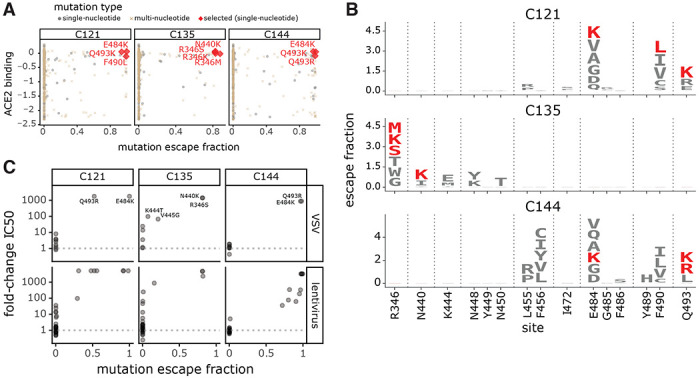
“Escape fractions for each RBD mutation range from 0 (no cells with this mutation are sorted into the serum Ab escape bin) to 1 (all cells with this mutation are sorted into the serum Ab escape bin) ( Greaney et al., 2021b ).”
A bacteria-based assay to study SARS-CoV-2 protein-protein interactionsPreprint
Springstein, B. L., Deighan, P., Grabe, G., & Hochschild, A. (2021) · bioRxiv · doi:10.1101/2021.10.07.463611
Khatri, B. S., & Burt, A. (2021) · bioRxiv (Cold Spring Harbor Laboratory) · doi:10.1101/2021.12.23.473701
Verkhivker, G. M., Agajanian, S., Kassab, R., & Krishnan, K. (2021) · bioRxiv (Cold Spring Harbor Laboratory) · doi:10.1101/2021.12.09.471953
Felbinger, N. R., Trudil, D., Loomis, L. D., Ascione, R., Siragusa, G. R., Haba, S., Rastogi, S., Mucci, A., Claycomb, M., Snowberger, S., et al. (2022) · bioRxiv (Cold Spring Harbor Laboratory) · doi:10.1101/2022.04.13.487697
Rochman, N. D., Faure, G., Wolf, Y. I., Freddolino, P. L., Zhang, F., & Koonin, E. V. (2021) · SSRN Electronic Journal · doi:10.2139/ssrn.3945930
Online Predictor Using Machine Learning to Predict Novel Coronavirus and Other Pathogenic Viruses
Sarkar, J. P., Saha, I., Ghosh, N., Maity, D., & Plewczyński, D. (2022) · ACS Omega · doi:10.1021/acsomega.2c00215
A study protocol to prepare an RBD protein for vaccine against COVID-19
Jahangir, Z. S., & Marnik, A. H. (2021) · F1000Research · doi:10.12688/f1000research.54738.2 · Cited by 1
Gruber, C. C., Parigger, L., Krassnigg, A., Schopper, T., Singh, A., Tappler, K., Köchl, K., Hetmann, M., Gruber, K. F., & Steinkellner, G. (2022) · Research Square · doi:10.21203/rs.3.rs-1858067/v1
Kang, G. (2022) · Journal of Medical Evidence · doi:10.4103/jme.jme_80_22
Evasion of Neutralizing Antibody Response by the SARS-CoC-2 BA.2.75 VariantPreprint
Qu, P., Evans, J. P., Zheng, Y.-M., Carlin, C., Saif, L. J., Oltz, E. M., Xu, K. Y., Gumina, R. J., & Liu, S. (2022) · SSRN Electronic Journal · doi:10.2139/ssrn.4191910
Verkhivker, G. M., Agajanian, S., Kassab, R., & Krishnan, K. (2022) · bioRxiv (Cold Spring Harbor Laboratory) · doi:10.1101/2022.09.05.506698
Parigger, L., Krassnigg, A., Schopper, T., Singh, A., Tappler, K., Köchl, K., Hetmann, M., Gruber, K. F., Steinkellner, G., & Gruber, C. C. (2022) · Research Square · doi:10.21203/rs.3.rs-1858067/v2
Likelihood of COVID-19 reinfection in an urban community cohort in Massachusetts
Casey, S. M., Legler, A., Hanchate, A. D., & Perkins, R. B. (2022) · Dialogues in Health · doi:10.1016/j.dialog.2022.100057 · Cited by 1
Chaisawasd, P., & Ittisoponpisan, S. (2022) · ScienceAsia · doi:10.2306/scienceasia1513-1874.2022.138
Pillay, A., Yeola, A., Tea, F., Denkova, M., Houston, S., Burrell, R., Merheb, V., Lee, F. X. Z., Moran, L., Jadhav, A. D., et al. (2022) · Research Square · doi:10.21203/rs.3.rs-2262275/v1
The role of the DE and EF loop of BKPyV VP1 in the serological cross-reactivity between subtypes
Hejtmánková, A., Caisová, H., Tomanová, T., & Španielová, H. (2022) · Virus Research · doi:10.1016/j.virusres.2022.199031
de Campos‐Mata, L., Trinité, B., Modrego, A., Vaquero, S. T., Pradenas, E., Melero, N. R., Carlero, D., Marfil, S., Pons-Grífols, A., Bueno-Carrasco, M. T., et al. (2023) · bioRxiv (Cold Spring Harbor Laboratory) · doi:10.1101/2023.01.20.524748
López-Morales, J., Vanella, R., Utzinger, T., Schittny, V., Hirsiger, J. R., Osthoff, M. F., Berger, C. T., Guri, Y., & Nash, M. A. (2023) · medRxiv · doi:10.1101/2023.02.17.23286074
Essabbar, A., Mazouri, S. E., & Azeddine, I. (2023) · Research Square · doi:10.21203/rs.3.rs-2736612/v1
Zhu, H., Wang, Z., Zhao, C., Li, C., Liu, S., Ding, J., He, C., Liu, J., Dong, B., Yang, Z., et al. (2023) · doi:10.22541/au.168355317.70344784/v1
Self-citationChronic Shedding of a SARS-CoV-2 Alpha Variant Lineage Q.3/Q.4 in WastewaterPreprint
Conway, M. J., Yang, H., Revord, L. A., Ward, A. S., Abel, J. D., Williams, M. R., Uzarski, R. L., & Alm, E. W. (2023) · medRxiv · doi:10.1101/2023.07.26.23293191
“E848V also reduced ACE2 binding (Greaney et al., 2021b).”
BackgroundEssabbar, A., Mazouri, S. E., & Ibrahimi, A. (2023) · Research Square · doi:10.21203/rs.3.rs-2736612/v2
Ketaren, N. E., Mast, F. D., Fridy, P. C., Olivier, J. P., Sanyal, T., Sali, A., Chait, B. T., Rout, M. P., & Aitchison, J. D. (2024) · doi:10.7554/elife.89423.2
COVID-19 Vaccine development and distribution
Excler, J., Privor-Dumm, L. A., & Kim, J. H. (2024) · Elsevier eBooks · doi:10.1016/b978-0-323-99967-0.00233-7
Engineering a SARS-CoV-2 vaccine targeting the RBD cryptic-face via immunofocusingPreprint
Bruun, T. U. J., Do, J., Weidenbacher, P. A. B., & Kim, P. S. (2024) · bioRxiv (Cold Spring Harbor Laboratory) · doi:10.1101/2024.06.05.597541
S-gene analysis: RT-PCR and Sanger sequencing applied to SARS-CoV-2 virus
Ishige, T. (2024) · Elsevier eBooks · doi:10.1016/b978-0-323-95646-8.00024-x
Evaluation of laboratory tests for COVID-19 in South Africa.
Samsunder, N. (2023) · ResearchSpace (University of KwaZulu-Natal) · doi:10.29086/10413/23146
Backstage Heroes—Yeast in COVID-19 Research
Grabiński, W., Karachitos, A., & Kicińska, A. (2024) · International Journal of Molecular Sciences · doi:10.3390/ijms252312661 · Cited by 1
Trifonova, A., Yosifova, A., Syarov, A., Velichkov, A., Pasev, M., Takov, S., Madarzhieva, K., Angelov, K., Vazharova, R., & Terzieva, V. I. (2025) · Clinical Immunology Communications · doi:10.1016/j.clicom.2025.02.001
Dissecting serum polyclonal antibody escape to SARS-CoV-2 variants by deep mutational learning
Shlesinger, D., Sadílek, V., Minot, M., Stamkopoulos, E. T., Bikias, T., Kuhn, R., Agrafiotis, A., Taft, J. M., Yermanos, A., & Reddy, S. T. (2025) · bioRxiv · doi:10.1016/j.crmeth.2026.101417 · Cited by 1
“8,17 Additionally calculating and mapping a compact chemical switch score, summarizing the propensity for property-altering versus property-preserving 439 440 441 442 443 444 445 446 447 448 449 450 451 452 0 453454455456457458459460461462463464465466467468469470471472473474475476477478 (legend…”
Epitope-driven polyfunctional divergence of SARS-CoV-2 RBD antibodies
Rosenbaum, P., Planchais, C., Bruel, T., Beretta, M., Staropoli, I., Bolland, W., Guivel‐Benhassine, F., Planas, D., French COVID Cohort Study Group, CORSER Study Group, et al. (2026) · iScience · doi:10.1016/j.isci.2026.117345
Insights from deep mutational scanning in the context of an emerging pathogen
Call, M. J., Call, M. E., & Wu, X. (2025) · Biochemical Society Transactions · doi:10.1042/bst20253033
“As the pandemic progressed, repeating these screens on the background of newly observed RBD sequences mapped the immune response and the positions that evolved under immune pressure [29,30].”
Environmental drivers of low vaccine responsiveness in a lab-to-wild rodent model
Babayan, S. A., Venkatesan, S., Hall, J. L., Smith, E., Sweeny, A. R., & Pedersen, A. B. (2026) · PLoS Pathogens · doi:10.1371/journal.ppat.1013647
Modeling the Mutational Effects on Biochemical Phenotypes of SARS-CoV-2 Using Molecular Fields
Wang, B., & Xi, Z. (2025) · Biomolecules · doi:10.3390/biom15111538
“For the antibody combination, the experimental data used by the escape calculator were drawn from previously published deep mutational scanning studies against a panel of 33 neutralizing antibodies [25,46–50].”
Tracking the opening of spike crowns on the surface of coronavirusesPreprint
Wu, D. (2025) · bioRxiv (Cold Spring Harbor Laboratory) · doi:10.1101/2025.11.02.686173
Metadata
- Authors
- Greaney, A. J., Starr, T. N., Barnes, C. O., Weisblum, Y., Schmidt, F., Caskey, M., Gaebler, C., Cho, A., Agudelo, M., Finkin, S., Wang, Z., Poston, D., Muecksch, F., Hatziioannou, T., Bieniasz, P. D., Robbiani, D. F., Nussenzweig, M. C., Bjorkman, P. J., & Bloom, J. D.
- Affiliations
- University of Washington (US)
- Howard Hughes Medical Institute (US)
- California Institute of Technology (US)
- Rockefeller University (US)
- Institute for Research in Biomedicine (CH)
- Corresponding author
- Bloom, Jesse D.
- ORCID
- Greaney, Allison J.
- Starr, Tyler N.
- Barnes, Christopher O.
- Weisblum, Yiska
- Schmidt, Fabian
- Caskey, Marina
- Gaebler, Christian
- Cho, Alice
- Agudelo, Marianna
- Finkin, Shlomo
- Wang, Zijun
- Poston, Daniel
- Muecksch, Frauke
- Hatziioannou, Theodora
- Bieniasz, Paul D.
- Robbiani, Davide F.
- Nussenzweig, Michel C.
- Bjorkman, Pamela J.
- Bloom, Jesse D.
- Venue
- Nature Communications
- Published
- 2021-07-07
- Volume
- 12
- Issue
- 1
- Pages
- 4196-4196
- ISSN
- 2041-1723 (ISSN-L)
- PMC
- PMC7987015
- OpenAlex
- W3179259355
- Cited by
- 433
- References
- 64
- Citations by year
- 2026: 34 · 2025: 39 · 2024: 56 · 2023: 83 · 2022: 157 · 2021: 64
- FWCI
- 29.43
- Type
- journal article
- Language
- en
- Open access
- gold
- doi.org
- Locations
- Nature Communications (publishedVersion, cc-by)
- bioRxiv (Cold Spring Harbor Laboratory) (acceptedVersion, cc-by)
- PubMed Central (publishedVersion, cc-by)
- PubMed (publishedVersion)
- PubMed Central (submittedVersion, cc-by)
- CaltechAUTHORS (California Institute of Technology) (submittedVersion, cc-by)
- RePEc: Research Papers in Economics (submittedVersion)
- DOAJ (DOAJ: Directory of Open Access Journals) (submittedVersion, cc-by-sa)
- Funders
- Howard Hughes Medical Institute
- Burroughs Wellcome Fund
- Bill and Melinda Gates Foundation (INV-004949)
- Damon Runyon Cancer Research Foundation (DRG-2381-19)
- Washington Research Foundation
- Fred Hutchinson Cancer Research Center
- George Mason University
- California Institute of Technology
- University of Washington
- National Institutes of Health (1s10od028685-01, P01-AI138398-S1, AI111825)
- Beckman Institute, California Institute of Technology
- National Institute of Allergy and Infectious Diseases (U01AI151698, P01 AI138398-S1, R01AI127893, T32AI083203, U19AI111825, R01AI141707, AI151698, F30AI157898)
- Office of Research Infrastructure Programs, National Institutes of Health (S10OD028685)
- Topics
- Health Sciences › Medicine › Infectious Diseases › SARS-CoV-2 and COVID-19 Research
- Life Sciences › Biochemistry, Genetics and Molecular Biology › Molecular Biology › vaccines and immunoinformatics approaches
- Life Sciences › Immunology and Microbiology › Immunology › Monoclonal and Polyclonal Antibodies Research
- Keywords
- SARS-CoV-2, spike protein receptor-binding domain, antibody escape mutations, neutralizing antibodies, monoclonal antibodies, convalescent plasma, antibody-antigen binding, epitope evolution
About these checks
Registry, retraction, Cites and statistics results are computed, not judged, with one exception: a printed reference that no index lists is read once by a model before it counts as a citation error. Claims are extracted by a model and kept only when their quote appears verbatim in the text; each cited source is then checked, with a model’s help, for whether it says what the claim relies on. Those verdicts can be wrong — read the claim’s quote and the cited source before relying on one.
Statistics and arithmetic are recomputed, not judged.
Confidence bands are shown only for fields calibrated on our annotated test set. None is calibrated yet, so no band is shown.
What counts as a claim ›How we measure confidence ›How we check this ›
Are you an author, or do you see a problem with this page? Request a review
