

The DOI matches its Crossref record; 97 of the 97 references it cites were found in a registry or an index.
Tau activates microglia via the PQBP1-cGAS-STING pathway to promote brain inflammation
Open accessAbstract
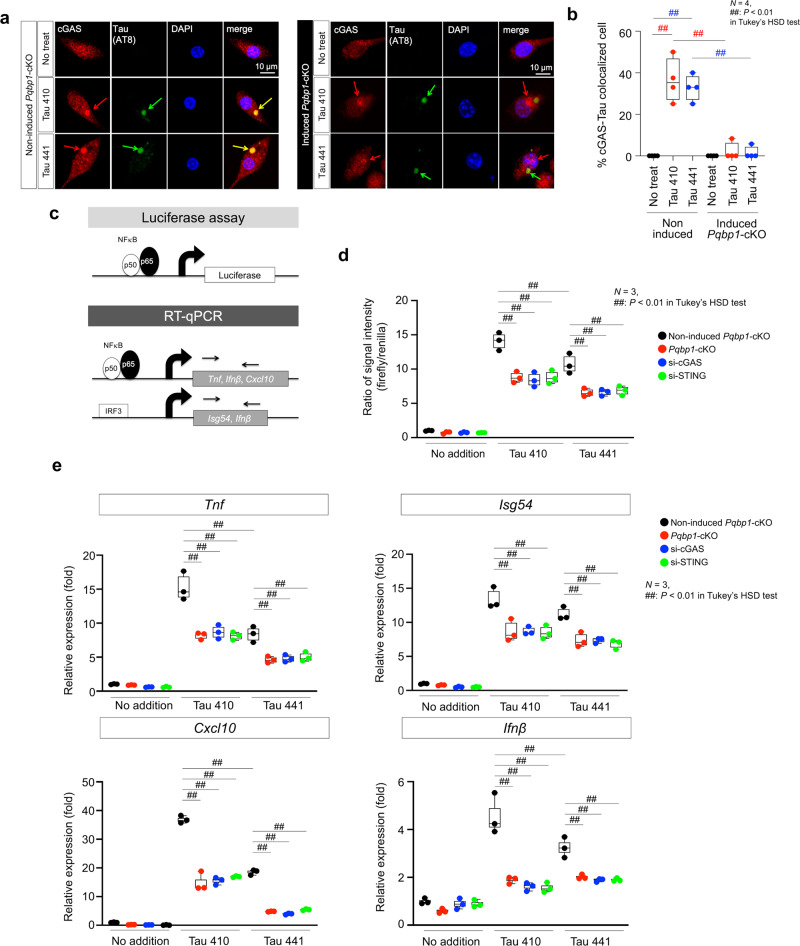
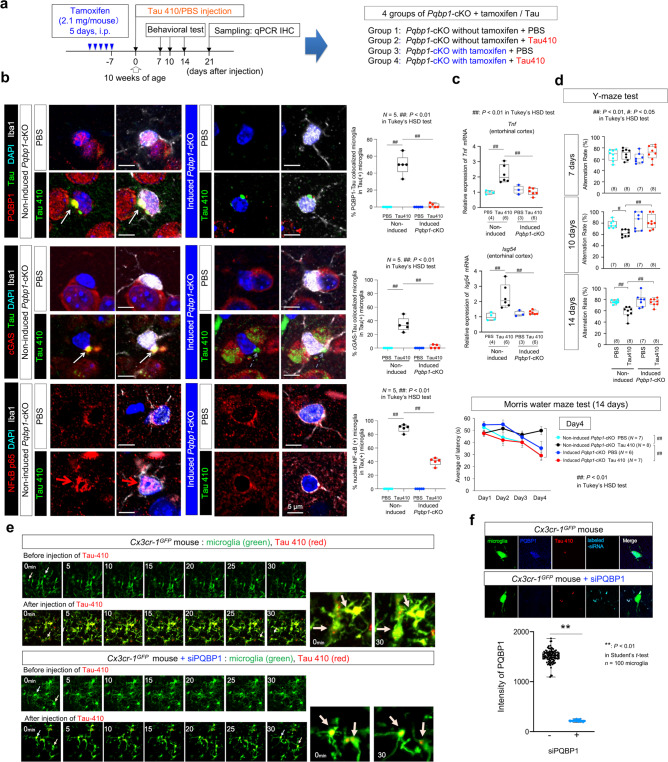
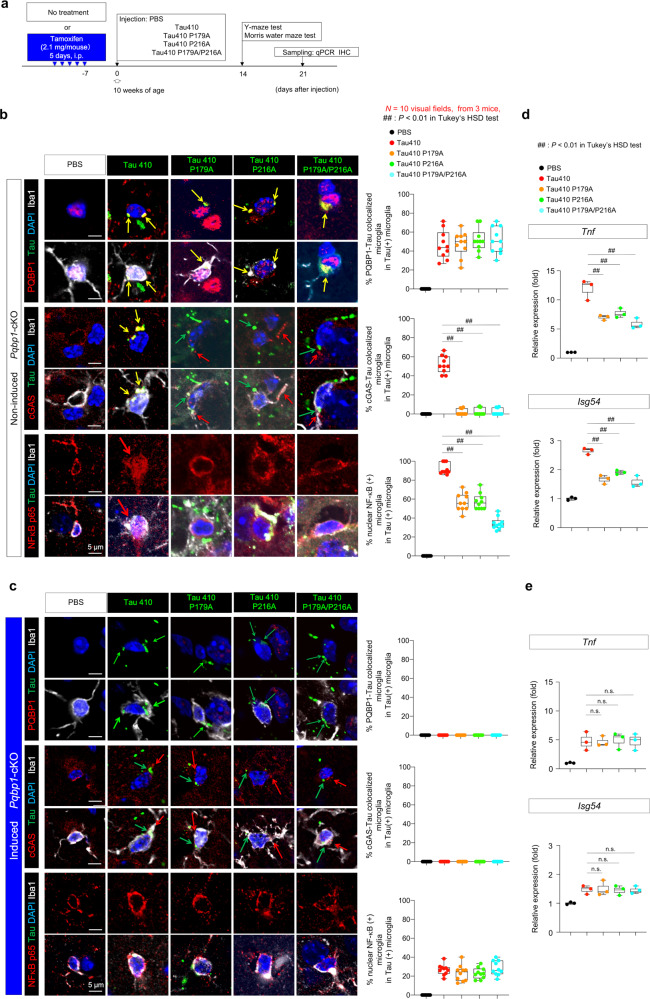
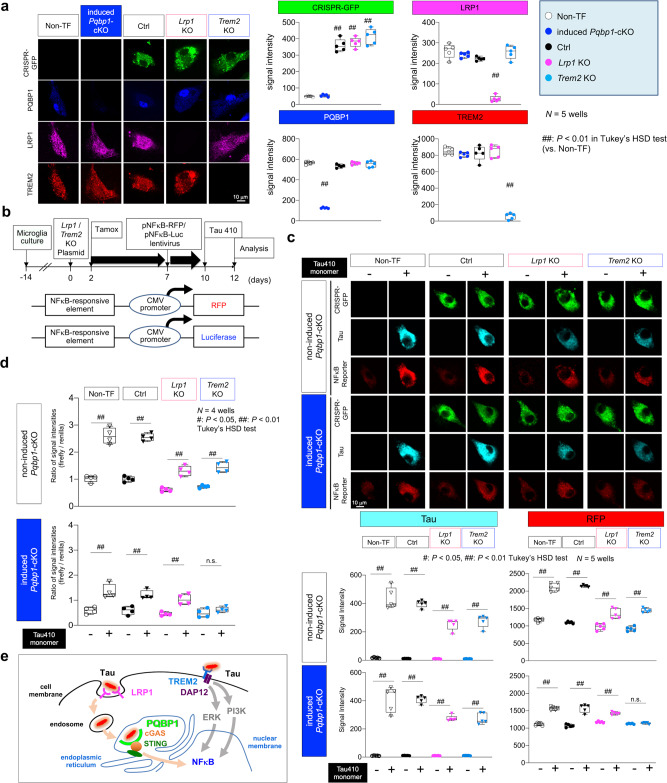
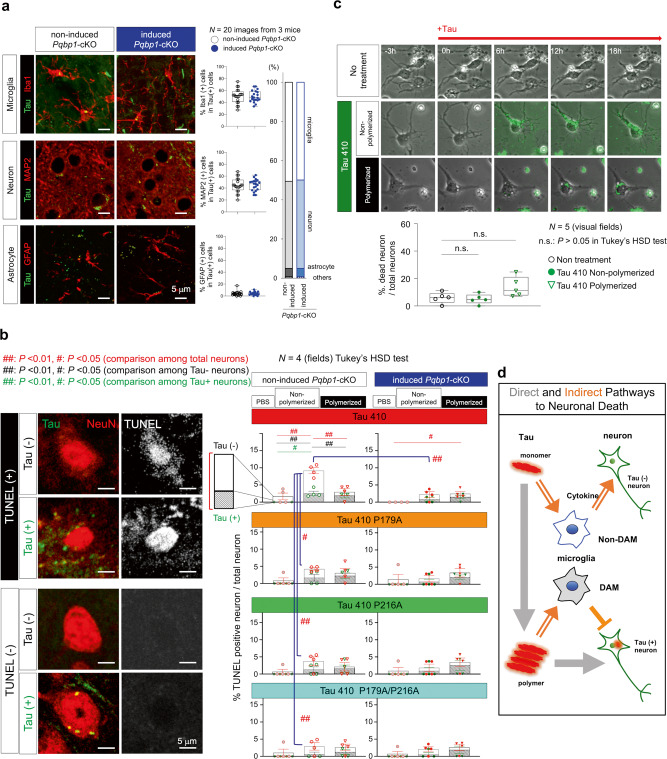
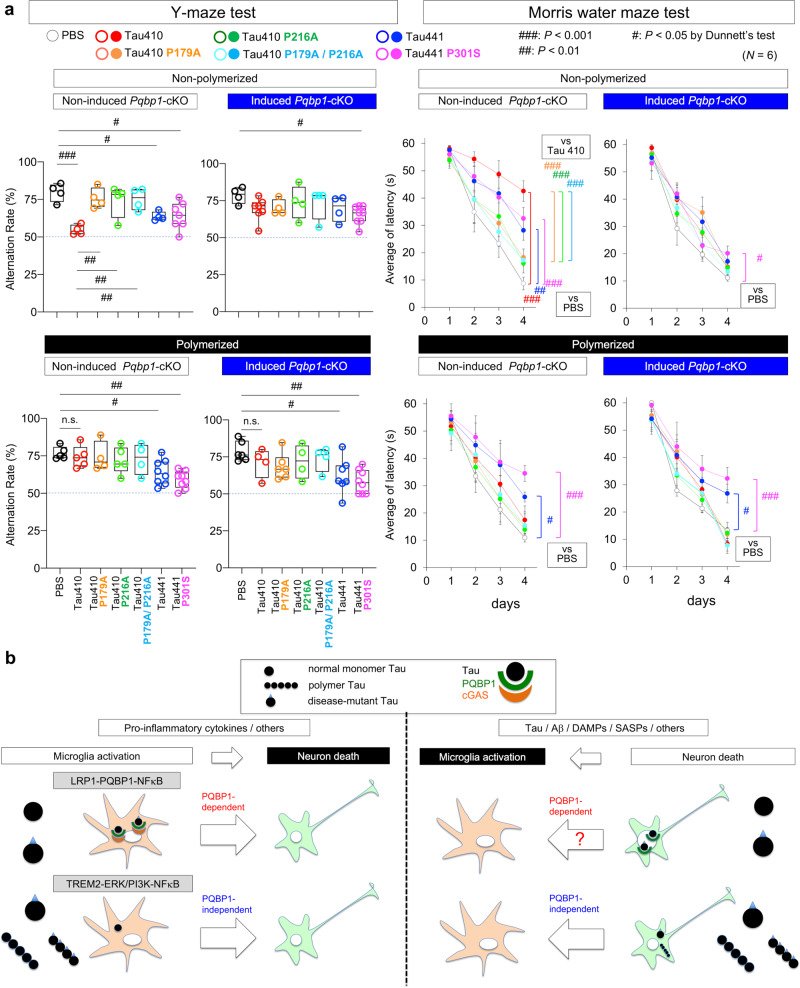
Brain inflammation generally accompanies and accelerates neurodegeneration. Here we report a microglial mechanism in which polyglutamine binding protein 1 (PQBP1) senses extrinsic tau 3R/4R proteins by direct interaction and triggers an innate immune response by activating a cyclic GMP-AMP synthase (cGAS)-Stimulator of interferon genes (STING) pathway. Tamoxifen-inducible and microglia-specific depletion of PQBP1 in primary culture in vitro and mouse brain in vivo shows that PQBP1 is essential for sensing-tau to induce nuclear translocation of nuclear factor κB (NFκB), NFκB-dependent transcription of inflammation genes, brain inflammation in vivo, and eventually mouse cognitive impairment. Collectively, PQBP1 is an intracellular receptor in the cGAS-STING pathway not only for cDNA of human immunodeficiency virus (HIV) but also for the transmissible neurodegenerative disease protein tau. This study characterises a mechanism of brain inflammation that is common to virus infection and neurodegenerative disorders.
Overview
The claims and statistics of this paper haven’t been checked yet.
Run the check — free, no account needed. It reads the open-access text and checks the sources it cites.
Integrity signals
Registry
Cites
Statistics
Figures
Verification
Claims the paper makes
The claims and statistics of this paper haven’t been checked yet.
Run the check — free, no account needed. It reads the open-access text and checks the sources it cites.
Claims other papers make about this one
Each is checked against this paper’s own text: does it say what the citing paper says it does?
The cited source says what the claim attributes to it.
In the citing paper
“Jin et al. reported an interesting finding that AD pathogenic protein tau can bind to polyglutamine binding protein 1 (PQBP1) and trigger inflammation in the CNS by activating cGAS-STING pathway.405”
From Role of neuroinflammation in neurodegeneration development (2023) · cites this paper as [405]
The cited source says what the claim attributes to it.
In the citing paper
“While it is currently unknown whether tau-induced retrotransposons form eccDNA, recent work from Gan's group (Udeochu et al. 2023) suggests that the cGAS-STING pathway is robustly activated in brains of tau transgenic mice, consistent with previous work in primary microglia treated with tau aggregates (Jin et al. 2021).”
From The Role of Retrotransposons and Endogenous Retroviruses in Age-Dependent Neurodegenerative Disorders (2024) · cites this paper as Jin et al. 2021
In the citing paper
“Numerous studies have reported that misfolded proteins and protein aggregates, including tau,136–139 Aβ,138,140 α-synuclein,141–144 mutant huntingtin,145 TDP-43,132,146 superoxide dismutase 1 (SOD1),147–149 and fused in sarcoma (FUS)150 induce microglial activation and neuroinflammation.”
From Microbiota–gut–brain axis and its therapeutic applications in neurodegenerative diseases (2024) · cites this paper as [136]
In the citing paper
“In addition, several studies have shown that tau seeds taken up by microglia can activate microglia, further exacerbating tau propagation and pathology [186, 192, 193].”
From Tau and neuroinflammation in Alzheimer’s disease: interplay mechanisms and clinical translation (2023) · cites this paper as [192]
In the citing paper
“Jin et al. reported that microglia uptake exogenous monomeric tau in parallel via two surface receptors, LRP1 and TREM2, and then induce nuclear factor NF-κB activation in microglia through two different pathways, LRP1/polyglutamine binding protein 1 (PQBP1)/cyclic GMP–AMP synthase (cGAS)/Stimulator of interferon genes (STING) and TREM2/extracellular signal-regulated kinase (ERK)/Phosphoinositide”
From Tau and neuroinflammation in Alzheimer’s disease: interplay mechanisms and clinical translation (2023) · cites this paper as [192]
Self-check
Percentages, sums and reported differences re-computed from the paper’s own numbers.
The self-check needs the paper’s full text.
Citations
Cites
Amyloid oligomers exacerbate tau pathology in a mouse model of tauopathy
Selenica, M.-L. B., Brownlow, M., Jimenez, J. P., Lee, D. C., Pena, G., Dickey, C. A., Gordon, M. N., & Morgan, D. (2013) · Neurodegenerative Diseases · doi:10.1159/000337230 · Cited by 10,359
Alzheimer's Disease: Genes, Proteins, and Therapy
Selkoe, D. J. (2001) · Physiological Reviews · doi:10.1152/physrev.2001.81.2.741 · Cited by 6,063
A Unique Microglia Type Associated with Restricting Development of Alzheimer’s Disease
Keren-Shaul, H., Spinrad, A., Weiner, A., Matcovitch-Natan, O., Dvir-Szternfeld, R., Ulland, T. K., David, E., Baruch, K., Lara-Astaiso, D., Toth, B., et al. (2017) · Cell · doi:10.1016/j.cell.2017.05.018 · Cited by 5,493
Release of chromatin protein HMGB1 by necrotic cells triggers inflammation
Scaffidi, P., Misteli, T., & Bianchi, M. E. (2002) · Nature · doi:10.1038/nature00858 · Cited by 4,221 · cited 1×
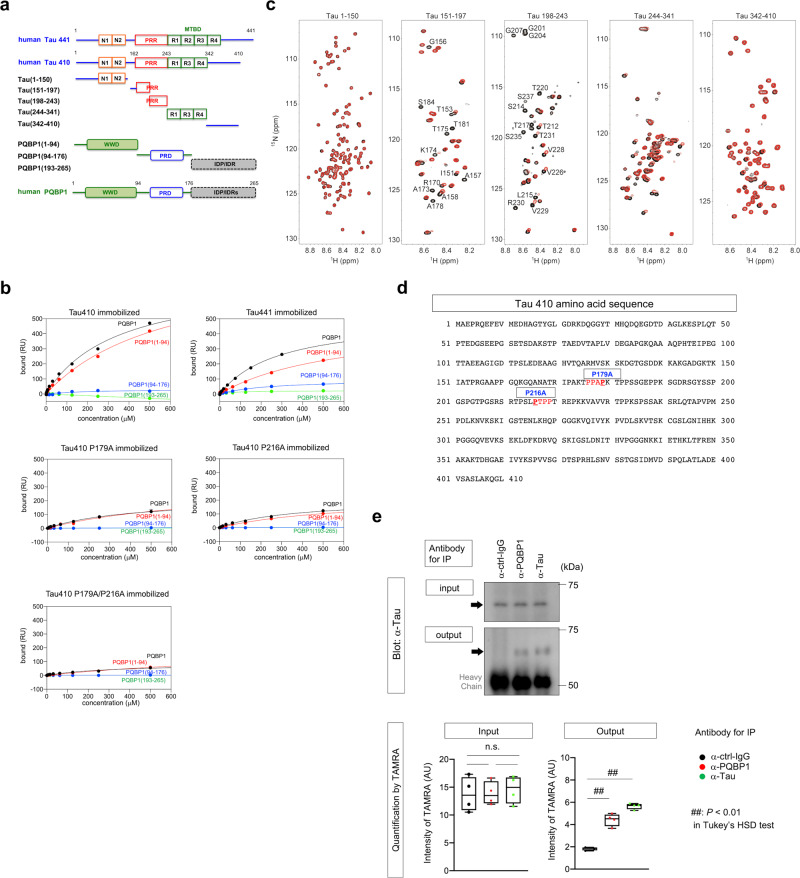
“1a) and analyzed the interaction of these fragments with PQBP1(1-94) (Fig.”
BackgroundMechanisms underlying inflammation in neurodegeneration
Glass, C. K., Saijo, K., Winner, B., Marchetto, M. C., & Gage, F. H. (2010) · Cell · doi:10.1016/j.cell.2010.02.016 · Cited by 3,580
Association of missense and 5′-splice-site mutations in tau with the inherited dementia FTDP-17
Hutton, M., Lendon, C. L., Rizzu, P., Baker, M., Froelich, S., Houlden, H., Pickering-Brown, S., Chakraverty, S., Isaacs, A., Grover, A., et al. (1998) · Nature · doi:10.1038/31508 · Cited by 3,498
TREM2 Variants in Alzheimer's Disease
Guerreiro, R., Wojtas, A., Bras, J., Carrasquillo, M., Rogaeva, E., Majounie, E., Cruchaga, C., Sassi, C., Kauwe, J. S. K., Younkin, S., et al. (2013) · New England Journal of Medicine · doi:10.1056/nejmoa1211851 · Cited by 3,020
Variant of TREM2 Associated with the Risk of Alzheimer's Disease
Jonsson, T., Stefansson, H., Steinberg, S., Jonsdottir, I., Jonsson, P. V., Snaedal, J., Bjornsson, S., Huttenlocher, J., Levey, A. I., Lah, J. J., et al. (2013) · New England Journal of Medicine · doi:10.1056/nejmoa1211103 · Cited by 2,558
Regulation and function of the cGAS–STING pathway of cytosolic DNA sensing
Chen, Q., Sun, L., & Chen, Z. J. (2016) · Nature Immunology · doi:10.1038/ni.3558 · Cited by 2,333
Immune attack: the role of inflammation in Alzheimer disease
Heppner, F. L., Ransohoff, R. M., & Becher, B. (2015) · Nature Reviews Neuroscience · doi:10.1038/nrn3880 · Cited by 2,134
TREM2 Lipid Sensing Sustains the Microglial Response in an Alzheimer’s Disease Model
Wang, Y., Cella, M., Mallinson, K., Ulrich, J. D., Young, K. L., Robinette, M. L., Gilfillan, S., Krishnan, G. M., Sudhakar, S., Zinselmeyer, B. H., et al. (2015) · Cell · doi:10.1016/j.cell.2015.01.049 · Cited by 1,736
Depletion of microglia and inhibition of exosome synthesis halt tau propagation
Asai, H., Ikezu, S., Tsunoda, S., Medalla, M., Luebke, J., Haydar, T., Wolozin, B., Butovsky, O., Kügler, S., & Ikezu, T. (2015) · Nature Neuroscience · doi:10.1038/nn.4132 · Cited by 1,591
Pathways of clathrin-independent endocytosis
Mayor, S., & Pagano, R. E. (2007) · Nature Reviews Molecular Cell Biology · doi:10.1038/nrm2216 · Cited by 1,556
DNA sensing by the cGAS–STING pathway in health and disease
Motwani, M., Pesiridis, S., & Fitzgerald, K. A. (2019) · Nature Reviews Genetics · doi:10.1038/s41576-019-0151-1 · Cited by 1,467
The ESCRT machinery in endosomal sorting of ubiquitylated membrane proteins
Raiborg, C., & Stenmark, H. (2009) · Nature · doi:10.1038/nature07961 · Cited by 1,359
Middle East respiratory syndrome
Zumla, A. I., Hui, D. S. C., & Perlman, S. M. (2015) · The Lancet · doi:10.1016/s0140-6736(15)60454-8 · Cited by 1,306
Inflammation in Neurodegenerative Disease—A Double-Edged Sword
Wyss-Coray, T., & Mucke, L. (2002) · Neuron · doi:10.1016/s0896-6273(02)00794-8 · Cited by 1,235
Knoops, K., Kikkert, M., van den Worm, S. H. E., Zevenhoven-Dobbe, J. C., van der Meer, Y., Koster, A. J., Mommaas, A. M., & Snijder, E. J. (2008) · PLoS Biology · doi:10.1371/journal.pbio.0060226 · Cited by 1,033
Distinct Tau Prion Strains Propagate in Cells and Mice and Define Different Tauopathies
Sanders, D. W., Kaufman, S. K., DeVos, S. L., Sharma, A. M., Mirbaha, H., Li, A., Barker, S. J., Foley, A. C., Thorpe, J. R., Serpell, L. C., et al. (2014) · Neuron · doi:10.1016/j.neuron.2014.04.047 · Cited by 986
Immunobiology of the TAM receptors
Lemke, G., & Rothlin, C. V. (2008) · Nature reviews. Immunology · doi:10.1038/nri2303 · Cited by 893
ALS‐associated fused in sarcoma (FUS) mutations disrupt Transportin‐mediated nuclear import
Dormann, D., Rodde, R., Edbauer, D., Bentmann, E., Fischer, I., Hruscha, A., Than, M. E., Mackenzie, I. R. A., Capell, A., Schmid, B., et al. (2010) · The EMBO Journal · doi:10.1038/emboj.2010.143 · Cited by 836
Spreading of pathology in neurodegenerative diseases: a focus on human studies
Brettschneider, J., Tredici, K. D., Lee, V. M.-Y., & Trojanowski, J. Q. (2015) · Nature Reviews Neuroscience · doi:10.1038/nrn3887 · Cited by 790
The Physiology, Pathology, and Potential Therapeutic Applications of the TREM2 Signaling Pathway
Deczkowska, A., Weiner, A., & Amit, I. (2020) · Cell · doi:10.1016/j.cell.2020.05.003 · Cited by 648
LRP1 is a master regulator of tau uptake and spread
Rauch, J. N., Luna, G., Guzman, E., Audouard, M., Challis, C., Sibih, Y. E., Leshuk, C., Hernandez, I., Wegmann, S., Hyman, B. T., et al. (2020) · Nature · doi:10.1038/s41586-020-2156-5 · Cited by 541
Middle East Respiratory Syndrome
Arabi, Y. M., Balkhy, H. H., Hayden, F. G., Bouchama, A., Luke, T., Baillie, J. K., Al-Omari, A., Hajeer, A. H., Senga, M., Denison, M. R., et al. (2017) · New England Journal of Medicine · doi:10.1056/nejmsr1408795 · Cited by 518
Peripheral Neuron Survival and Outgrowth on Graphene
Convertino, D., Luin, S., Marchetti, L., & Coletti, C. (2018) · Frontiers in Neuroscience · doi:10.3389/fnins.2018.00001 · Cited by 516
Alzheimer brain-derived tau oligomers propagate pathology from endogenous tau
Lasagna-Reeves, C. A., Castillo-Carranza, D. L., Sengupta, U., Guerrero-Munoz, M. J., Kiritoshi, T., Neugebauer, V., Jackson, G. R., & Kayed, R. (2012) · Scientific Reports · doi:10.1038/srep00700 · Cited by 502
Middle East respiratory syndrome
Memish, Z. A., Perlman, S. M., Kerkhove, M. D. V., & Zumla, A. I. (2020) · The Lancet · doi:10.1016/s0140-6736(19)33221-0 · Cited by 495
New insights into the role of TREM2 in Alzheimer’s disease
Gratuze, M., Leyns, C. E. G., & Holtzman, D. M. (2018) · Molecular Neurodegeneration · doi:10.1186/s13024-018-0298-9 · Cited by 489
Frontotemporal Dementia and Corticobasal Degeneration in a Family with a P301S Mutation in Tau
Bugiani, O., Murrell, J. R., Giaccone, G., Hasegawa, M., Ghigo, G., Tabaton, M., Morbin, M., Primavera, A., Carella, F., Solaro, C., et al. (1999) · Journal of Neuropathology and Experimental Neurology · doi:10.1097/00005072-199906000-00011 · Cited by 450
Prion-like behaviour and tau-dependent cytotoxicity of pyroglutamylated amyloid-β
Nussbaum, J. M., Schilling, S., Cynis, H., Silva, A., Swanson, E., Wangsanut, T., Tayler, K., Wiltgen, B., Hatami, A., Rönicke, R., et al. (2012) · Nature · doi:10.1038/nature11060 · Cited by 427
Neuroinflammation: Microglia and T Cells Get Ready to Tango
Schetters, S. T. T., Gómez‐Nicola, D., García-Vallejo, J. J., & van Kooyk, Y. (2018) · Frontiers in Immunology · doi:10.3389/fimmu.2017.01905 · Cited by 400
Sensing of HSV-1 by the cGAS-STING pathway in microglia orchestrates antiviral defence in the CNS
Reinert, L. S., Lopušná, K., Winther, H., Sun, C., Thomsen, M. K., Nandakumar, R., Mogensen, T. H., Meyer, M., Vægter, C., Nyengaard, J. R., et al. (2016) · Nature Communications · doi:10.1038/ncomms13348 · Cited by 397
What is the evidence that tau pathology spreads through prion-like propagation?
Mudher, A., Colin, M., Dujardin, S., Medina, M., Dewachter, I., Alavi Naini, S. M., Mandelkow, E.-M., Mandelkow, E., Buée, L., Goedert, M., et al. (2017) · Acta Neuropathologica Communications · doi:10.1186/s40478-017-0488-7 · Cited by 384
Soluble TREM2 induces inflammatory responses and enhances microglial survival
Zhong, L., Chen, X., Wang, T., Wang, Z., Liao, C., Wang, Z., Huang, R., Wang, D., Li, X., Wu, L., et al. (2017) · The Journal of Experimental Medicine · doi:10.1084/jem.20160844 · Cited by 368
TREM2 function impedes tau seeding in neuritic plaques
Leyns, C. E. G., Gratuze, M., Narasimhan, S., Jain, N., Koscal, L. J., Jiang, H., Manis, M., Colonna, M., Lee, V. M. Y., Ulrich, J. D., et al. (2019) · Nature Neuroscience · doi:10.1038/s41593-019-0433-0 · Cited by 332
Kim, D.-G., Krenz, A., Toussaint, L. E., Maurer, K. J., Robinson, S.-A., Yan, A., Torres, L., & Bynoe, M. S. (2016) · Journal of Neuroinflammation · doi:10.1186/s12974-015-0467-5 · Cited by 330
G3BP1 promotes DNA binding and activation of cGAS
Liu, Z.-S., Cai, H., Xue, W., Wang, M., Xia, T., Li, W.-J., Xing, J., Zhao, M., Huang, Y.-J., Chen, D., et al. (2018) · Nature Immunology · doi:10.1038/s41590-018-0262-4 · Cited by 310
Microglial TREM2/DAP12 signaling: a double-edged sword in neural diseases
Konishi, H., & Kiyama, H. (2018) · Frontiers in Cellular Neuroscience · doi:10.3389/fncel.2018.00206 · Cited by 300
Trem2 restrains the enhancement of tau accumulation and neurodegeneration by β-amyloid pathology
Lee, S.-H., Meilandt, W. J., Xie, L., Gandham, V. D., Ngu, H., Barck, K. H., Rezzonico, M. G., Imperio, J., Lalehzadeh, G., Huntley, M. A., et al. (2021) · Neuron · doi:10.1016/j.neuron.2021.02.010 · Cited by 300
Bemiller, S. M., McCray, T. J., Allan, K., Formica, S. V., Xu, G., Wilson, G., Kokiko-Cochran, O. N., Crish, S. D., Lasagna-Reeves, C. A., Ransohoff, R. M., et al. (2017) · Molecular Neurodegeneration · doi:10.1186/s13024-017-0216-6 · Cited by 299
LDL receptor‐related protein: a multiligand receptor for lipoprotein and proteinase catabolism
Strickland, D. K., Kounnas, M. Z., & Argraves, W. S. (1995) · The FASEB Journal · doi:10.1096/fasebj.9.10.7615159 · Cited by 268
STARD3/STARD3NL and VAP make a novel molecular tether between late endosomes and the ER
Alpy, F., Rousseau, A., Schwab, Y., Legueux, F., Stoll, I., Wendling, C., Spiegelhalter, C., Kessler, P., Mathelin, C., Rio, M., et al. (2013) · Journal of Cell Science · doi:10.1242/jcs.139295 · Cited by 266
Cellular senescence and Alzheimer disease: the egg and the chicken scenario
Saez-Atienzar, S., & Masliah, E. (2020) · Nature Reviews Neuroscience · doi:10.1038/s41583-020-0325-z · Cited by 257
Zhang, J., Li, X., Ren, Y., Zhao, Y., Xing, A., Jiang, C., Chen, Y., & An, L. (2018) · Frontiers in Cellular Neuroscience · doi:10.3389/fncel.2018.00001 · Cited by 255
Morchikh, M., Cribier, A., Raffel, R., Amraoui, S., Cau, J., Séverac, D., Dubois, E., Schwartz, O., Bennasser, Y., & Benkirane, M. (2017) · Molecular Cell · doi:10.1016/j.molcel.2017.06.020 · Cited by 239
Danger-associated molecular patterns in Alzheimer’s disease
Venegas, C., & Heneka, M. T. (2017) · Journal of Leukocyte Biology · doi:10.1189/jlb.3mr0416-204r · Cited by 236
Huntington's disease is a four-repeat tauopathy with tau nuclear rods
Fernández-Nogales, M., Cabrera, J. R., Santos-Galindo, M., Hoozemans, J. J. M., Ferrer, I., Rozemuller, A. J. M., Hernández, F., Avila, J., & Lucas, J. J. (2014) · Nature Medicine · doi:10.1038/nm.3617 · Cited by 231
PQBP1 Is a Proximal Sensor of the cGAS-Dependent Innate Response to HIV-1
Yoh, S. M., Schneider, M., Seifried, J., Soonthornvacharin, S., Akleh, R. E., Olivieri, K. C., Jesus, P. D. D., Ruan, C., de Castro, E., Ruiz, P. A., et al. (2015) · Cell · doi:10.1016/j.cell.2015.04.050 · Cited by 209
ER–endosome contact sites: molecular compositions and functions
Raiborg, C., Wenzel, E. M., & Stenmark, H. (2015) · The EMBO Journal · doi:10.15252/embj.201591481 · Cited by 202
Interaction between mutant ataxin-1 and PQBP-1 affects transcription and cell death.
Okazawa, H., Rich, T., Chang, A., Lin, X., Waragai, M., Kajikawa, M., Enokido, Y., Komuro, A., Kato, S., Shibata, M., et al. (2002) · Neuron · doi:10.1016/s0896-6273(02)00697-9 · Cited by 196
Self-citationWaragai, M. (1999) · Human Molecular Genetics · doi:10.1093/hmg/8.6.977 · Cited by 180
Mutations in the polyglutamine binding protein 1 gene cause X-linked mental retardation
Kalscheuer, V. M., Freude, K., Musante, L., Jensen, L. R., Yntema, H. G., Gécz, J., Sefiani, A., Hoffmann, K., Moser, B. A., Haas, S. A., et al. (2003) · Nature Genetics · doi:10.1038/ng1264 · Cited by 172
Fujita, K., Motoki, K., Tagawa, K., Chen, X., Hama, H., Nakajima, K., Homma, H., Tamura, T., Watanabe, H., Katsuno, M., et al. (2016) · Scientific Reports · doi:10.1038/srep31895 · Cited by 160
Self-citationMutant Huntingtin Promotes the Fibrillogenesis of Wild-type Huntingtin
Busch, A., Engemann, S., Lurz, R., Okazawa, H., Lehrach, H., & Wanker, E. E. (2003) · Journal of Biological Chemistry · doi:10.1074/jbc.m303354200 · Cited by 134
Self-citationCross-Tissue Regulatory Gene Networks in Coronary Artery Disease
Talukdar, H. A., Asl, H. F., Jain, R. K., Ermel, R., Ruusalepp, A., Franzén, O., Kidd, B. A., Readhead, B., Giannarelli, C., Kovacic, J. C., et al. (2016) · Cell Systems · doi:10.1016/j.cels.2016.02.002 · Cited by 134
ZCCHC3 is a co-sensor of cGAS for dsDNA recognition in innate immune response
Lian, H., Wei, J., Zang, R., Ye, W., Yang, Q., Zhang, X., Chen, Y.-D., Fu, Y.-Z., Hu, M., Lei, C., et al. (2018) · Nature Communications · doi:10.1038/s41467-018-05559-w · Cited by 132
LRP1 modulates the microglial immune response via regulation of JNK and NF‐ΚB signaling pathways
Yang, L., Liu, C.-C., Zheng, H., Kanekiyo, T., Atagi, Y., Jia, L., Wang, D., N’songo, A., Can, D., Xu, H., et al. (2016) · Journal of Neuroinflammation · doi:10.1186/s12974-016-0772-7 · Cited by 129
Linking hnRNP Function to ALS and FTD Pathology
Purice, M. D., & Taylor, J. P. (2018) · Frontiers in Neuroscience · doi:10.3389/fnins.2018.00326 · Cited by 128
Rifampicin is a candidate preventive medicine against amyloid-β and tau oligomers
Umeda, T., Ono, K., Sakai, A., Yamashita, M., Mizuguchi, M., Klein, W. L., Yamada, M., Mori, H., & Tomiyama, T. (2016) · Brain · doi:10.1093/brain/aww042 · Cited by 124
Self-citationLipoprotein lipase maintains microglial innate immunity in obesity.
Gao, Y., Vidal-Itriago, A., Kalsbeek, M. J., Layritz, C., García-Cáceres, C., Tom, R. Z., Eichmann, T. O., Vaz, F. M., Houtkooper, R. H., van der Wel, N., et al. (2017) · Cell Reports · doi:10.1016/j.celrep.2017.09.008 · Cited by 123
Middle East Respiratory Syndrome
Shalhoub, S., Memish, Z. A., & Arabi, Y. M. (2023) · Elsevier eBooks · doi:10.1016/b978-0-323-54841-0.00004-4 · Cited by 113
Hexokinases link DJ-1 to the PINK1/parkin pathway
Hauser, D. N., Mamais, A., Conti, M. M., Primiani, C. T., Kumaran, R., Dillman, A., Langston, R. G., Beilina, A. G., Garcia, J. H., Díaz‐Ruiz, A., et al. (2017) · Molecular Neurodegeneration · doi:10.1186/s13024-017-0212-x · Cited by 112
Renpenning syndrome comes into focus
Stevenson, R. E., Bennett, C. W., Abidi, F., Kleefstra, T., Porteous, M. E., Simensen, R. J., Lubs, H. A., Hamel, B. C. J., & Schwartz, C. E. (2005) · American Journal of Medical Genetics Part A · doi:10.1002/ajmg.a.30664 · Cited by 98
Direct observation of dual-step twinning nucleation in hexagonal close-packed crystals
He, Y., Li, B., Wang, C., & Mao, S. X. (2020) · Nature Communications · doi:10.1038/s41467-020-16351-0 · Cited by 97
Clark, I. A., & Vissel, B. (2015) · British Journal of Pharmacology · doi:10.1111/bph.13181 · Cited by 84
Waragai, M., Junn, E., Kajikawa, M., Takeuchi, S., Kanazawa, I., Shibata, M. S., Mouradian, M. M., & Okazawa, H. (2000) · Biochemical and Biophysical Research Communications · doi:10.1006/bbrc.2000.2992 · Cited by 81
Self-citationLenski, C., Abidi, F., Meindl, A., Gibson, A., Platzer, M., Kooy, R. F., Lubs, H. A., Stevenson, R. E., Ramser, J., & Schwartz, C. E. (2004) · The American Journal of Human Genetics · doi:10.1086/383205 · Cited by 80
Toonen, L. J. A., Overzier, M., Evers, M. M., León, L. G., van der Zeeuw, S. A. J., Mei, H., Kiełbasa, S. M., Goeman, J. J., Hettne, K. M., Magnússon, Ó. Þ., et al. (2018) · Molecular Neurodegeneration · doi:10.1186/s13024-018-0261-9 · Cited by 80
Zhang, Y., Lindblom, T. H., Chang, A., Sudol, M., Sluder, A. E., & Golemis, E. A. (2000) · Gene · doi:10.1016/s0378-1119(00)00372-3 · Cited by 79
Ershov, A. V., & Bazan, N. G. (2000) · Journal of Neuroscience Research · doi:10.1002/(sici)1097-4547(20000501)60:3 · Cited by 74
Wang, Q., Moore, M. J., Adelmant, G., Marto, J. A., & Silver, P. A. (2013) · Genes & Development · doi:10.1101/gad.212308.112 · Cited by 71
STARD3 or STARD3NL and VAP form a novel molecular tether between late endosomes and the ER
Alpy, F., Rousseau, A., Schwab, Y., Legueux, F., Stoll, I., Wendling, C., Spiegelhalter, C., Kessler, P., Mathelin, C., Rio, M. C., et al. (2013) · UCL Discovery (University College London) · Cited by 68
Golabi-Ito-Hall syndrome results from a missense mutation in the WW domain of the PQBP1 gene
Lubs, H. A., Abidi, F. E., Echeverri, R., Holloway, L., Meindl, A., Stevenson, R. E., & Schwartz, C. E. (2006) · Journal of Medical Genetics · doi:10.1136/jmg.2005.037556 · Cited by 67
Jiang, W., St-Pierre, S., Roy, P., Morley, B. J., Hao, J., & Simard, A. R. (2016) · The Journal of Immunology · doi:10.4049/jimmunol.1501613 · Cited by 66
The intellectual disability gene PQBP1 rescues Alzheimer’s disease pathology
Tanaka, H., Kondo, K., Chen, X., Homma, H., Tagawa, K., Kerever, A., Aoki, S., Saito, T., Saido, T. C., Muramatsu, S., et al. (2018) · Molecular Psychiatry · doi:10.1038/s41380-018-0253-8 · Cited by 64
Self-citationThe effects of insulin on the inflammatory activity of BV2 microglia
Brabazon, F., Bermudez, S., Shaughness, M., Khayrullina, G., & Byrnes, K. R. (2018) · PLoS ONE · doi:10.1371/journal.pone.0201878 · Cited by 63
Assessment of the Genetic Architecture of Alzheimer’s Disease Risk in Rate of Memory Decline
Del-Aguila, J. L., Fernández, M. V., Schindler, S., Ibanez, L., Deming, Y., Ma, S., Saef, B., Black, K., Budde, J., Norton, J., et al. (2018) · Journal of Alzheimer’s Disease · doi:10.3233/jad-170834 · Cited by 60
Tapia, V., Nicolaescu, E., McDonald, C. B., Musi, V., Oka, T., Inayoshi, Y., Satteson, A. C., Mazack, V., Humbert, J. E., Gaffney, C. J., et al. (2010) · Journal of Biological Chemistry · doi:10.1074/jbc.m109.084525 · Cited by 59
SIPP1, a novel pre-mRNA splicing factor and interactor of protein phosphatase-1
Llorian, M., Beullens, M., Andrés, I., Ortiz, J.-M., & Bollen, M. (2004) · Biochemical Journal · doi:10.1042/bj20030950 · Cited by 58
Gong, H., Dong, W., Rostad, S. W., Marcovina, S. M., Albers, J. J., Brunzell, J. D., & Vuletic, S. (2013) · Journal of Histochemistry & Cytochemistry · doi:10.1369/0022155413505601 · Cited by 51
Polar Amino Acid-Rich Sequences Bind to Polyglutamine Tracts
Imafuku, I., Waragai, M., Takeuchi, S., Kanazawa, I., Kawabata, M., Mouradian, M. M., & Okazawa, H. (1998) · Biochemical and Biophysical Research Communications · doi:10.1006/bbrc.1998.9725 · Cited by 48
Self-citationBrifault, C., Kwon, H., Campana, W. M., & Gonias, S. L. (2019) · Glia · doi:10.1002/glia.23599 · Cited by 47
Ito, H., Shiwaku, H., Yoshida, C., Homma, H., Luo, H., Chen, X., Fujita, K., Musante, L., Fischer, U., Frints, S. G. M., et al. (2014) · Molecular Psychiatry · doi:10.1038/mp.2014.69 · Cited by 46
Self-citationMutations in the PQBP1 gene prevent its interaction with the spliceosomal protein U5–15kD
Mizuguchi, M., Obita, T., Serita, T., Kojima, R., Nabeshima, Y., & Okazawa, H. (2014) · Nature Communications · doi:10.1038/ncomms4822 · Cited by 39
Self-citationMolecular insights into the WW domain of the Golabi‐Ito‐Hall syndrome protein PQBP1
Sudol, M., McDonald, C. B., & Farooq, A. (2012) · FEBS Letters · doi:10.1016/j.febslet.2012.03.041 · Cited by 34
Polyglutamine tract binding protein-1 is an intrinsically unstructured protein
Takahashi, M., Mizuguchi, M., Shinoda, H., Aizawa, T., Demura, M., Okazawa, H., & Kawano, K. (2009) · Biochimica et Biophysica Acta (BBA) - Proteins and Proteomics · doi:10.1016/j.bbapap.2009.03.001 · Cited by 31
Self-citationThe splicing factor PQBP1 regulates mesodermal and neural development through FGF signaling
Iwasaki, Y., & Thomsen, G. H. (2014) · Development · doi:10.1242/dev.106658 · Cited by 29
PQBP-1 (Np/PQ): a polyglutamine tract-binding and nuclear inclusion-forming protein
Okazawa, H., Sudol, M., & Rich, T. (2001) · Brain Research Bulletin · doi:10.1016/s0361-9230(01)00579-2 · Cited by 27
Self-citationOkazawa, H. (2017) · Neurochemistry International · doi:10.1016/j.neuint.2017.06.005 · Cited by 26
Self-citationSingh, M., Toribio, J.-A. L. M. L., Scott, A. B., Groves, P. J., Barnes, B., Glass, K., Moloney, B., Black, A., & Hernández‐Jover, M. (2018) · PLoS ONE · doi:10.1371/journal.pone.0193730 · Cited by 26
Solution Model of the Intrinsically Disordered Polyglutamine Tract-Binding Protein-1
Rees, M., Gorba, C., de Chiara, C., Bui, T. T. T., Garcia‐Maya, M., Drake, A. F., Okazawa, H., Pastore, A., Svergun, D. I., & Chen, Y. W. (2012) · Biophysical Journal · doi:10.1016/j.bpj.2012.02.047 · Cited by 24
Self-citationIkeuchi, Y., de la Torre-Ubieta, L., Matsuda, T., Steen, H., Okazawa, H., & Bonni, A. (2013) · Cell Reports · doi:10.1016/j.celrep.2013.07.042 · Cited by 24
Self-citationPucheta-Martínez, E., D’Amelio, N., Lelli, M., Martinez-Torrecuadrada, J. L., Sudol, M., Saladino, G., & Gervasio, F. L. (2016) · Scientific Reports · doi:10.1038/srep30293 · Cited by 16
Allosteric modulation of the binding affinity between PQBP 1 and the spliceosomal protein U5‐15kD
Mizuguchi, M., Obita, T., Kajiyama, A., Kozakai, Y., Nakai, T., Nabeshima, Y., & Okazawa, H. (2016) · FEBS Letters · doi:10.1002/1873-3468.12256 · Cited by 10
Self-citationRahman, S. K., Okazawa, H., & Chen, Y. W. (2019) · Journal of Structural Biology · doi:10.1016/j.jsb.2019.04.003 · Cited by 9
Self-citationA receptor that lets dementia-associated tau proteins into neurons
Deinhardt, K. (2020) · Nature · doi:10.1038/d41586-020-00874-z · Cited by 4
Cited by
Sorted by citations
Role of neuroinflammation in neurodegeneration development
Zhang, W., Xiao, D., Mao, Q., & Xia, H. (2023) · Signal Transduction and Targeted Therapy · doi:10.1038/s41392-023-01486-5 · Cited by 1,668
“reported an interesting finding that AD pathogenic protein tau can bind to polyglutamine binding protein 1 (PQBP1) and trigger inflammation in the CNS by activating cGASSTING pathway.(405) Recently, Xie et al.”
BackgroundMicrobiota–gut–brain axis and its therapeutic applications in neurodegenerative diseases
Loh, J. S., Mak, W. Q., Tan, L. K. S., Ng, C. X., Chan, H. H., Yeow, S. H., Foo, J. B., Ong, Y. S., How, C. W., & Khaw, K. Y. (2024) · Signal Transduction and Targeted Therapy · doi:10.1038/s41392-024-01743-1 · Cited by 1,193
Neuroinflammation in Alzheimer disease
Heneka, M. T., van der Flier, W. M., Jessen, F., Hoozemanns, J., Thal, D. R., Boche, D., Brosseron, F., Teunissen, C., Zetterberg, H., Jacobs, A. H., et al. (2025) · Nature Reviews Immunology · doi:10.1038/s41577-024-01104-7 · Cited by 638
Tau and neuroinflammation in Alzheimer’s disease: interplay mechanisms and clinical translation
Chen, Y., & Yu, Y. (2023) · Journal of Neuroinflammation · doi:10.1186/s12974-023-02853-3 · Cited by 516
Role of the cGAS–STING pathway in systemic and organ-specific diseases
Skopelja‐Gardner, S., An, J., & Elkon, K. B. (2022) · Nature Reviews Nephrology · doi:10.1038/s41581-022-00589-6 · Cited by 318
Metadata
- Authors
- Jin, M., Shiwaku, H., Tanaka, H., Obita, T., Ohuchi, S., Yoshioka, Y., Jin, X., Kondo, K., Fujita, K., Homma, H., Nakajima, K., Mizuguchi, M., & Okazawa, H.
- Affiliations
- Tokyo Medical and Dental University (JP)
- University of Toyama (JP)
- Soka University (JP)
- Corresponding author
- Okazawa, Hitoshi
- ORCID
- Venue
- Nature Communications
- Published
- 2021-11-15
- Volume
- 12
- Issue
- 1
- Pages
- 6565-6565
- ISSN
- 2041-1723 (ISSN-L)
- PMC
- PMC8592984
- OpenAlex
- W3214109787
- Cited by
- 223
- References
- 97
- Citations by year
- 2026: 43 · 2025: 49 · 2024: 66 · 2023: 37 · 2022: 28
- FWCI
- 13.21
- Type
- journal article
- Language
- en
- Open access
- gold
- doi.org
- Locations
- Nature Communications (publishedVersion, cc-by)
- PubMed Central (publishedVersion, cc-by)
- PubMed (publishedVersion)
- RePEc: Research Papers in Economics (submittedVersion)
- DOAJ (DOAJ: Directory of Open Access Journals) (submittedVersion, cc-by-sa)
- Funders
- MEXT | Japan Society for the Promotion of Science (16H02655, 19H01042)
- Ministry of Education, Culture, Sports, Science and Technology (22110001, 22110002)
- Topics
- Life Sciences › Neuroscience › Neurology › Neuroinflammation and Neurodegeneration Mechanisms
- Life Sciences › Neuroscience › Cellular and Molecular Neuroscience › Alzheimer's disease research and treatments
- Life Sciences › Immunology and Microbiology › Immunology › interferon and immune responses
- Keywords
- tau protein, microglia, PQBP1, cGAS-STING pathway, neuroinflammation, neurodegeneration, NF-κB, innate immune response, HIV, cognitive impairment, intracellular receptors
- MeSH terms
- STING Protein, Cyclic Guanosine Monophosphate-Adenosine Monophosphate Synthase, Animals, Brain, DNA-Binding Proteins, Encephalitis, Female, HIV, Humans, Immunity, Innate, Male, Membrane Glycoproteins, Membrane Proteins, Mice, Inbred C57BL, Nucleotidyltransferases, Tamoxifen, NF-kappa B, Microglia, Mice, Knockout, Neurodegenerative Diseases, Mice
About these checks
Registry, retraction, Cites and statistics results are computed, not judged, with one exception: a printed reference that no index lists is read once by a model before it counts as a citation error. Claims are extracted by a model and kept only when their quote appears verbatim in the text; each cited source is then checked, with a model’s help, for whether it says what the claim relies on. Those verdicts can be wrong — read the claim’s quote and the cited source before relying on one.
Statistics and arithmetic are recomputed, not judged.
Confidence bands are shown only for fields calibrated on our annotated test set. None is calibrated yet, so no band is shown.
What counts as a claim ›How we measure confidence ›How we check this ›
Are you an author, or do you see a problem with this page? Request a review
