

Forward and reverse genetic dissection of morphogenesis identifies filament-competent Candida auris strains
Open accessPublished version of a preprint
The DOI matches its Crossref record; 81 of the 81 references it cites were found in a registry or an index.
Abstract
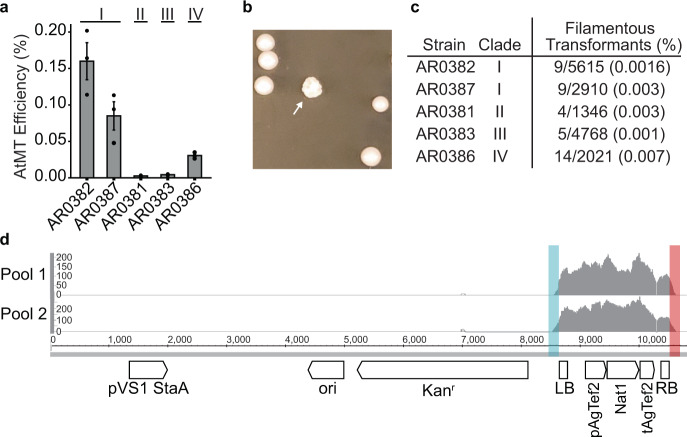
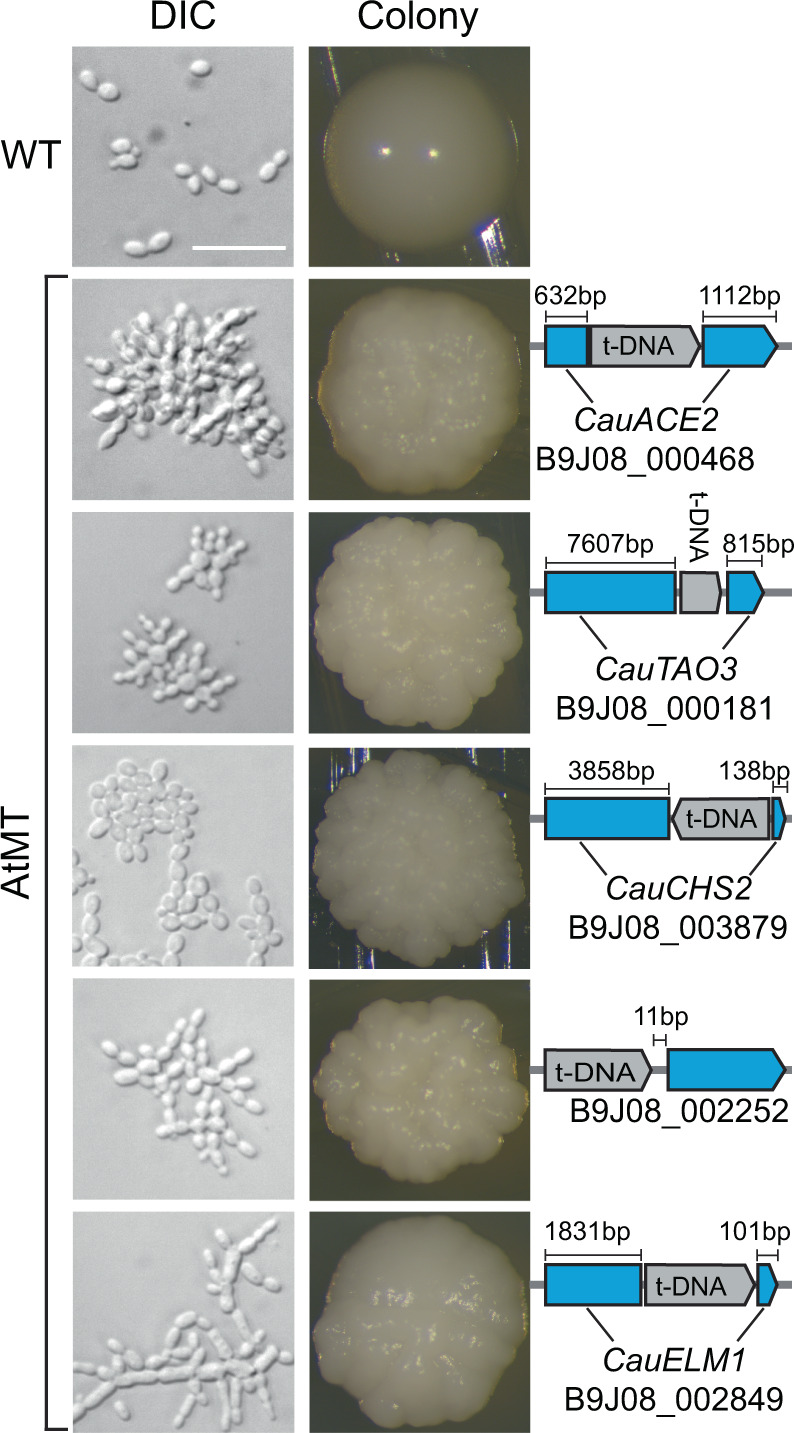
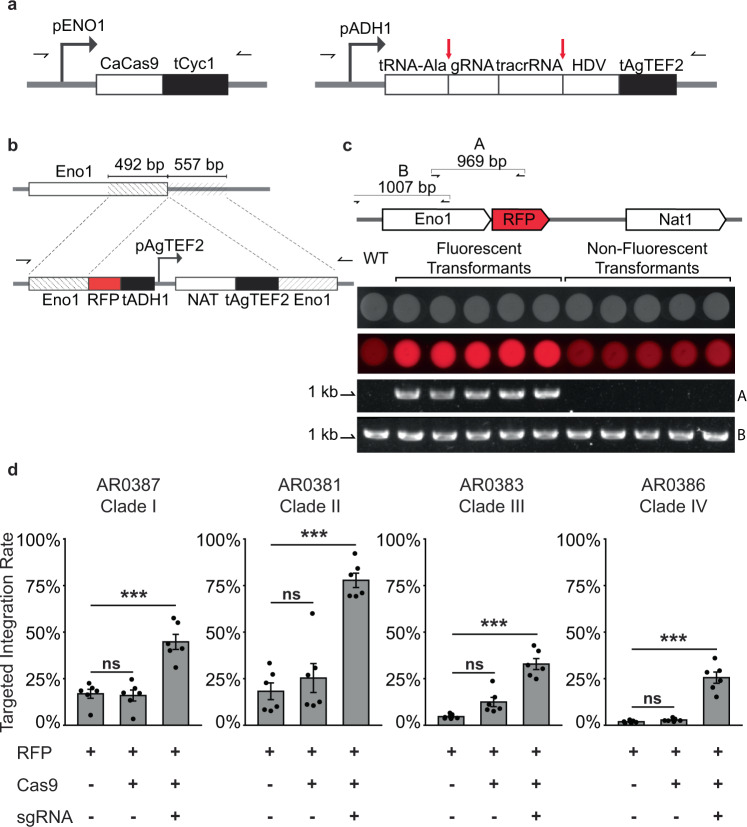
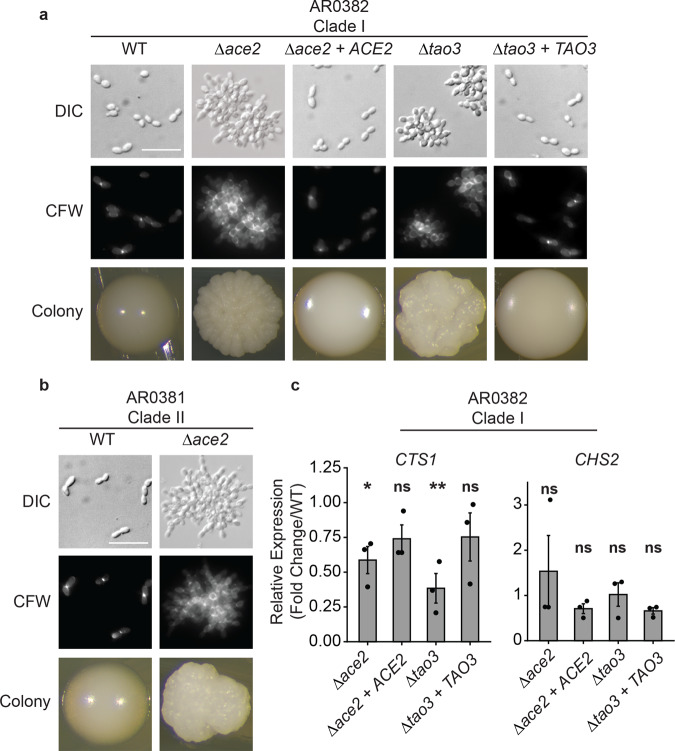
Candida auris is an emerging healthcare-associated pathogen of global concern. Recent reports have identified C. auris isolates that grow in cellular aggregates or filaments, often without a clear genetic explanation. To investigate the regulation of C. auris morphogenesis, we applied an Agrobacterium -mediated transformation system to all four C. auris clades. We identified aggregating mutants associated with disruption of chitin regulation, while disruption of ELM1 produced a polarized, filamentous growth morphology. We developed a transiently expressed Cas9 and sgRNA system for C. auris that significantly increased targeted transformation efficiency across the four C. auris clades. Using this system, we confirmed the roles of C. auris morphogenesis regulators. Morphogenic mutants showed dysregulated chitinase expression, attenuated virulence, and altered antifungal susceptibility. Our findings provide insights into the genetic regulation of aggregating and filamentous morphogenesis in C. auris . Furthermore, the genetic tools described here will allow for efficient manipulation of the C. auris genome.
Overview
The claims and statistics of this paper haven’t been checked yet.
Free: it reads the open-access text and checks the first 5 claims that cite a source we can check. Create a free account to check every claim.
Integrity signals
Registry
Cites
Statistics
Figures
Verification
Claims the paper makes
The claims and statistics of this paper haven’t been checked yet.
Free: it reads the open-access text and checks the first 5 claims that cite a source we can check. Create a free account to check every claim.
Claims other papers make about this one
Each is checked against this paper’s own text: does it say what the citing paper says it does?
The source backs part of the claim, not all of it — or backs it for a different population, condition or comparison.
In the citing paper
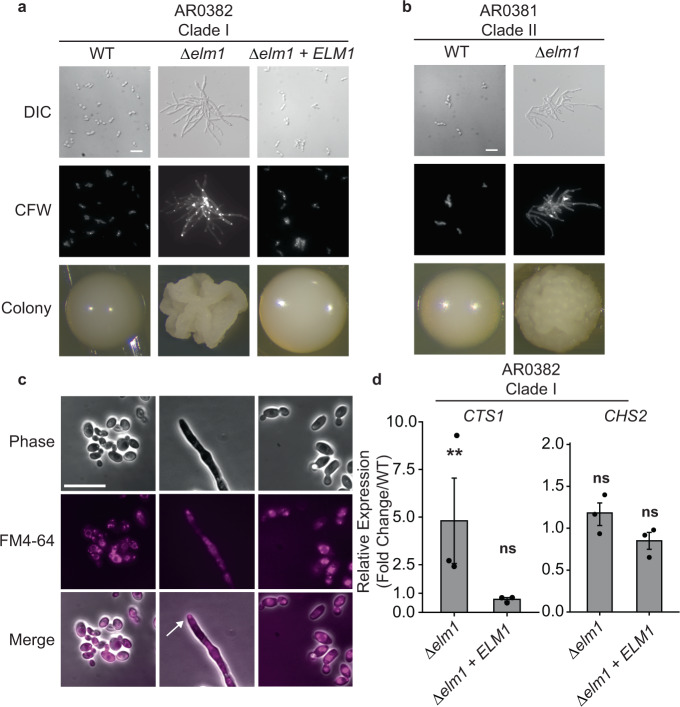
“As expected, we identified that WT C. auris AR0387 strain exists as a typical round-shaped yeast form, whereas deletion of ELM1 gene (Δelm1) resulted in an elongated, filamentous morphology which is consistent with previous findings (Fig. 1A) (8).”
From Yeast and filamentous Candida auris stimulate distinct immune responses in the skin (2024) · cites this paper as [8]
Experimental — accuracy not yet measuredThe source backs part of the claim, not all of it — or backs it for a different population, condition or comparison.
In the citing paper
“Clinical isolates of C. auris can exhibit different morphotypes such as filamentous, pseudohyphal, and yeast forms (8–14).”
From Yeast and filamentous Candida auris stimulate distinct immune responses in the skin (2024) · cites this paper as [8]
Experimental — accuracy not yet measuredThe source backs part of the claim, not all of it — or backs it for a different population, condition or comparison.
In the citing paper
“Clinical isolates of C. auris can exhibit different morphotypes, such as yeast, filamentous, and aggregative forms (9–13).”
From Cell aggregation mediated by ACE2 deletion in Candida auris modulates fungal colonization and host immune responses in the skin (2024) · cites this paper as [9]
Experimental — accuracy not yet measuredThe source backs part of the claim, not all of it — or backs it for a different population, condition or comparison.
In the citing paper
“The ACE2 deletion in the C. auris AR0387 strain results in a multicellular aggregative phenotype consistent with previous findings (Fig. 1A) (9).”
From Cell aggregation mediated by ACE2 deletion in Candida auris modulates fungal colonization and host immune responses in the skin (2024) · cites this paper as [9]
Experimental — accuracy not yet measuredThe source backs part of the claim, not all of it — or backs it for a different population, condition or comparison.
In the citing paper
“ACE2 is a zinc finger transcription factor expressed during the G2 phase and controls the expression of chitinase CTS1, which is required for septal degradation and cell separation (9).”
From Cell aggregation mediated by ACE2 deletion in Candida auris modulates fungal colonization and host immune responses in the skin (2024) · cites this paper as [9]
Experimental — accuracy not yet measured
9 more claims about this paper
Create a free account to see every claim other papers make about this one.
Self-check
Percentages, sums and reported differences re-computed from the paper’s own numbers.
The self-check needs the paper’s full text.
Citations
Cites
Fiji: an open-source platform for biological-image analysis
Schindelin, J., Arganda-Carreras, I., Frise, E., Kaynig, V., Longair, M., Pietzsch, T., Preibisch, S., Rueden, C., Saalfeld, S., Schmid, B., et al. (2012) · Nature Methods · doi:10.1038/nmeth.2019 · Cited by 66,890 · cited 1×
“Fluorescent images were visualized using Fiji Software (72).”
Fast and accurate short read alignment with Burrows-Wheeler transform
Li, H., & Durbin, R. (2009) · Bioinformatics · doi:10.1093/bioinformatics/btp324 · Cited by 58,607
Robinson, J. T., Thorvaldsdóttir, H., Winckler, W., Guttman, M., Lander, E. S., Getz, G., & Mesirov, J. P. (2011) · Nature Biotechnology · doi:10.1038/nbt.1754 · Cited by 15,390
The EMBL-EBI search and sequence analysis tools APIs in 2019
Madeira, F., Park, Y. M., Lee, J., Buso, N., Gur, T., Madhusoodanan, N., Basutkar, P., Tivey, A. R. N., Potter, S. C., Finn, R. D., et al. (2019) · Nucleic Acids Research · doi:10.1093/nar/gkz268 · Cited by 4,167 · cited 1×
“The extracted sequences for each pool were aligned using Clustal Omega 560 multiple sequence alignment (71) to identify consensus sequences for all independent 561 insertion events within each pool.”
The Galaxy platform for accessible, reproducible and collaborative biomedical analyses: 2018 update
Afgan, E., Baker, D., Batut, B., van den Beek, M., Bouvier, D., Čech, M., Chilton, J., Clements, D., Coraor, N., Grüning, B. A., et al. (2018) · Nucleic Acids Research · doi:10.1093/nar/gky379 · Cited by 3,662
Construction of improved M13 vectors using oligodeoxynucleotide-directed mutagenesis
Norrander, J., Kempe, T., & Messing, J. (1983) · Gene · doi:10.1016/0378-1119(83)90040-9 · Cited by 2,497 · cited 2×
“444 pTO135: A cassette for expression of Cas9 was maintained in the pUC19 cloning 445 vector backbone (63).”
NewAgrobacterium helper plasmids for gene transfer to plants
Hood, E. E., Gelvin, S. B., Melchers, L. S., & Hoekema, A. (1993) · Transgenic Research · doi:10.1007/bf01977351 · Cited by 1,413 · cited 1×
“tumefaciens strain EHA 105 (62) using a Bio-Rad 442 MicroPulser Electroporator.”
Satoh, K., Makimura, K., Hasumi, Y., Nishiyama, Y., Uchida, K., & Yamaguchi, H. (2009) · Microbiology and Immunology · doi:10.1111/j.1348-0421.2008.00083.x · Cited by 1,381
De Cleene, M., & De Ley, J. (1976) · The Botanical Review · doi:10.1007/bf02860827 · Cited by 682 · cited 1×
“tumefaciens is a plant pathogen that causes crown gall in dicotyledonous plants 106 through genetic transformation (22).”
Trans-kingdom T-DNA transfer from Agrobacterium tumefaciens to Saccharomyces cerevisiae.
Bundock, P., den Dulk-Ras, A., Beijersbergen, A., & Hooykaas, P. J. (1995) · The EMBO Journal · doi:10.1002/j.1460-2075.1995.tb07323.x · Cited by 653 · cited 2×
“15 in liquid Induction Medium (IM) 510 supplemented with 100 μM Acetosyringone 3’,5’-dimethoxy-4-hydroxyacetophenone 511 (AS) (27) and incubated at room temperature for 6 h with constant shaking.”
Cited by
Candida auris Genetics and Emergence
Chowdhary, A., Jain, K., & Chauhan, N. (2023) · Annual Review of Microbiology · doi:10.1146/annurev-micro-032521-015858 · Cited by 158
A Candida auris –specific adhesin, Scf1 , governs surface association, colonization, and virulence
Santana, D. J., Anku, J. A. E., Zhao, G., Zarnowski, R., Johnson, C. J., Hautau, H., Visser, N. D., Ibrahim, A. S., Andes, D., Nett, J. E., et al. (2023) · Science · doi:10.1126/science.adf8972 · Cited by 149
Self-citationWang, F., Han, R., & Chen, S. (2023) · Clinical Microbiology Reviews · doi:10.1128/cmr.00051-22 · Cited by 153
“auris, the developed tools for insertional mutant library building were useful (329).”
BackgroundBing, J., Guan, Z., Zheng, T., Zhang, Z., Fan, S., Ennis, C. L., Nobile, C. J., & Huang, G. (2023) · PLOS Pathogens · doi:10.1371/journal.ppat.1011239 · Cited by 84
Rapid evolution of an adaptive multicellular morphology of Candida auris during systemic infection
Bing, J., Guan, Z., Zheng, T., Ennis, C. L., Nobile, C. J., Chen, C., Chu, H., & Huang, G. (2024) · Nature Communications · doi:10.1038/s41467-024-46786-8 · Cited by 74
“Another striking feature of C. auris is its ability to form multi-cellular aggregates 25,30 – 32 .”
InfluentialOne population, multiple lifestyles: Commensalism and pathogenesis in the human mycobiome
Proctor, D. M., Drummond, R. A., Lionakis, M. S., & Segre, J. A. (2023) · Cell Host & Microbe · doi:10.1016/j.chom.2023.02.010 · Cited by 68
Mechanisms of pathogenicity for the emerging fungus Candida auris
Horton, M. V., Holt, A. M., & Nett, J. E. (2023) · PLOS Pathogens · doi:10.1371/journal.ppat.1011843 · Cited by 67
The many faces of Candida auris: Phenotypic and strain variation in an emerging pathogen
Santana, D. J., Zhao, G., & O’Meara, T. R. (2024) · PLOS Pathogens · doi:10.1371/journal.ppat.1012011 · Cited by 62
Self-citationComprehensive Overview of Candida auris : An Emerging Multidrug-Resistant Fungal Pathogen
Kim, J.-S., Cha, H., & Bahn, Y. (2024) · Journal of Microbiology and Biotechnology · doi:10.4014/jmb.2404.04040 · Cited by 63
“Forward genetic screens through the use of Agrobacterium tumefaciens -mediated transformation (AtMT) have proven successful in C. auris [30] (Fig.”
MethodWeerasinghe, H., Simm, C., Djajawi, T. M., Tedja, I., Lo, T. L., Simpson, D. S., Shasha, D., Mizrahi, N., Olivier, F. A. B., Speir, M., et al. (2023) · Cell Reports · doi:10.1016/j.celrep.2023.112522 · Cited by 47
Candida auris undergoes adhesin-dependent and -independent cellular aggregation
Pelletier, C., Shaw, S., Alsayegh, S., Brown, A. J. P., & Lorenz, A. (2024) · PLOS Pathogens · doi:10.1371/journal.ppat.1012076 · Cited by 44
Biofilm-Associated Candidiasis: Pathogenesis, Prevalence, Challenges and Therapeutic Options
Amann, V., Kissmann, A., Firacative, C., & Rosenau, F. (2025) · Pharmaceuticals · doi:10.3390/ph18040460 · Cited by 48
Gut fungal mycobiome: A significant factor of tumor occurrence and development
Li, F., Gao, Y., Cheng, W., Su, L., & Yang, R. (2023) · Cancer Letters · doi:10.1016/j.canlet.2023.216302 · Cited by 37
Zhao, G., Lyu, J., Veniaminova, N. A., Zarnowski, R., Mattos, E., Johnson, C. J., Quintanilla, D., Hautau, H., Hold, L. A., Xu, B., et al. (2025) · Nature Communications · doi:10.1038/s41467-025-60876-1 · Cited by 42
“To do this, we generated 1595 insertional mutants in the high-adherent Chi-cago4 Clade IV strain background using our previously published Agrobacterium -mediated insertional mutagenesis approach 43 .”
InfluentialSelf-citationMalavia-Jones, D., Farrer, R. A., Stappers, M. H. T., Edmondson, M. B., Borman, A. M., Johnson, E. M., Lipke, P. N., & Gow, N. A. R. (2023) · The Cell Surface · doi:10.1016/j.tcsw.2023.100110 · Cited by 29
Candida auris —macrophage cellular interactions and transcriptional response
Miramón, P., Pountain, A. W., & Lorenz, M. C. (2023) · Infection and Immunity · doi:10.1128/iai.00274-23 · Cited by 29
“B11221 (AR0383) ENO1-RFP-SAT1 Clinical isolate – CDC (68)”
BackgroundMethodInfluentialSkin and hard surface disinfection against Candida auris – What we know today
Omardien, S., & Teska, P. J. (2024) · Frontiers in Medicine · doi:10.3389/fmed.2024.1312929 · Cited by 38
Collateral sensitivity counteracts the evolution of antifungal drug resistance in Candida auris
Carolus, H., Sofras, D., Boccarella, G., Jacobs, S., Biriukov, V. V., Goossens, L., Chen, A., Vantyghem, I., Verbeeck, T., Pierson, S., et al. (2024) · Nature Microbiology · doi:10.1038/s41564-024-01811-w · Cited by 31
“We propose that CauNEUT might be valuable for other applications such as CRISPR or fluorescent tagging, to avoid integrating genetic cassettes into potentially important loci 46–49 .”
Gervais, N. C., Bella, A. A. L., Wensing, L. F., Sharma, J., Acquaviva, V., Best, M. A., López, R. O. C., Fogal, M., Uthayakumar, D., Chavez, A., et al. (2022) · G3 Genes Genomes Genetics · doi:10.1093/g3journal/jkac301 · Cited by 31
Ware, A., Johnston, W., Delaney, C., Butcher, M. C., Ramage, G., Price, L., Butcher, J. P., & Kean, R. (2025) · Apmis · doi:10.1111/apm.70022 · Cited by 27
Bravo-Chaucanés, C. P., Vargas‐Casanova, Y., Chitiva, L. C., Ceballos-Garzón, A., Costa, G. M., & Parra‐Giraldo, C. M. (2022) · Journal of Fungi · doi:10.3390/jof8080784 · Cited by 26
Ume6-dependent pathways of morphogenesis and biofilm formation in Candida auris
Louvet, M., Li, J., Brandalise, D., Bachmann, D., Sala de Oyanguren, F., Labes, D., Jacquier, N., Genoud, C., Mucciolo, A., Coste, A. T., et al. (2024) · Microbiology Spectrum · doi:10.1128/spectrum.01531-24 · Cited by 25
“Using a mutagenesis system, Santana et al. identified aggregating mutants with defects in daughter cell separation resulting from disruption of genes involved in cell wall homeostasis, such as chitinase regulators ( ACE2 , TAO3 ) or chitin synthase ( CHS2 ) (52).”
Genomics insights of candidiasis: mechanisms of pathogenicity and drug resistance
Huang, X., Dong, Q., Zhou, Q., Fang, S., Xu, Y., Hu, L., Chen, J., Li, X. Y., Qin, H., Mu, D., et al. (2025) · Frontiers in Microbiology · doi:10.3389/fmicb.2025.1531543 · Cited by 24
Pezzotti, G., Kobara, M., Nakaya, T., Imamura, H., Asai, T., Miyamoto, N., Adachi, T., Yamamoto, T., Kanamura, N., Ohgitani, E., et al. (2022) · Frontiers in Microbiology · doi:10.3389/fmicb.2022.896359 · Cited by 20
“, 2018) or in genetically manipulated morphogenic mutants (Santana and O’Meara, 2021).”
BackgroundCha, H., Won, D., & Bahn, Y.-S. (2025) · mBio · doi:10.1128/mbio.02475-23 · Cited by 19
“Furthermore, Agrobacterium tumefaciens -mediated transforma tion, an insertional mutagenesis approach, provides an efficient method for genetic manipulation without requiring prior genetic engineering to introduce the transposon machinery (31).”
Innate immune response to Candida auris
Holt, A. M., & Nett, J. E. (2024) · Current Opinion in Microbiology · doi:10.1016/j.mib.2024.102510 · Cited by 18
Robbins, N., & Cowen, L. E. (2025) · Current Biology · doi:10.1016/j.cub.2025.01.063 · Cited by 22
Superior Conjugative Plasmids Delivered by Bacteria to Diverse Fungi
Cochrane, R. R., Shrestha, A., de Almeida, M. M. S., Agyare-Tabbi, M. R., Brumwell, S. L., Hamadache, S., Meaney, J. S., Nucifora, D. P., Say, H., Sharma, J., et al. (2022) · BioDesign Research · doi:10.34133/2022/9802168 · Cited by 19
Chow, E. W. L., Song, Y., Chen, J., Xu, X., Wang, J., Chen, K., Gao, J., & Wang, Y. (2023) · mBio · doi:10.1128/mbio.02688-23 · Cited by 22
Candida auris skin tropism and antifungal resistance are mediated by carbonic anhydrase Nce103
Phan-Canh, T., Coman, C., Lackner, M., Troppmair, N., Müller, C., Cerbu, D., Seiser, S., Penninger, P., Tsymala, I., Khunweeraphong, N., et al. (2025) · Nature Microbiology · doi:10.1038/s41564-025-02189-z · Cited by 16
“NCE103 null mutants were constructed using a CRISPR–Cas9 sys-tem kindly provided by the O’Meara lab 33 .”
InfluentialDeng, Y., Xu, M., Li, S., Bing, J., Zheng, Q., Huang, G., Liao, W., Pan, W., & Tao, L. (2024) · PLOS Pathogens · doi:10.1371/journal.ppat.1012362 · Cited by 16
Mutations in TAC1B drive increased CDR1 and MDR1 expression and azole resistance in Candida auris
Barker, K. S., Santana, D. J., Zhang, Q. H., Peters, T. L., Rybak, J. M., Morschhäuser, J., Cuomo, C. A., & Rogers, P. D. (2025) · Antimicrobial Agents and Chemotherapy · doi:10.1128/aac.00300-25 · Cited by 22
“Construction of AR0387-OE-CDR1 was performed as previously described (22).”
Self-citationYeast and filamentous Candida auris stimulate distinct immune responses in the skin
Bryak, G., Cox, A., Lionakis, M. S., & Thangamani, S. (2024) · mSphere · doi:10.1128/msphere.00055-24 · Cited by 14
“ELM1 is a regulator of C. auris morphology, where disruption of this gene results in filamentation (8).”
BackgroundMethodInfluentialCandida auris : host interactions, antifungal drug resistance, and diagnostics
Chowdhary, A., Lionakis, M. S., & Chauhan, N. (2025) · Microbiology and Molecular Biology Reviews · doi:10.1128/mmbr.00187-22 · Cited by 22
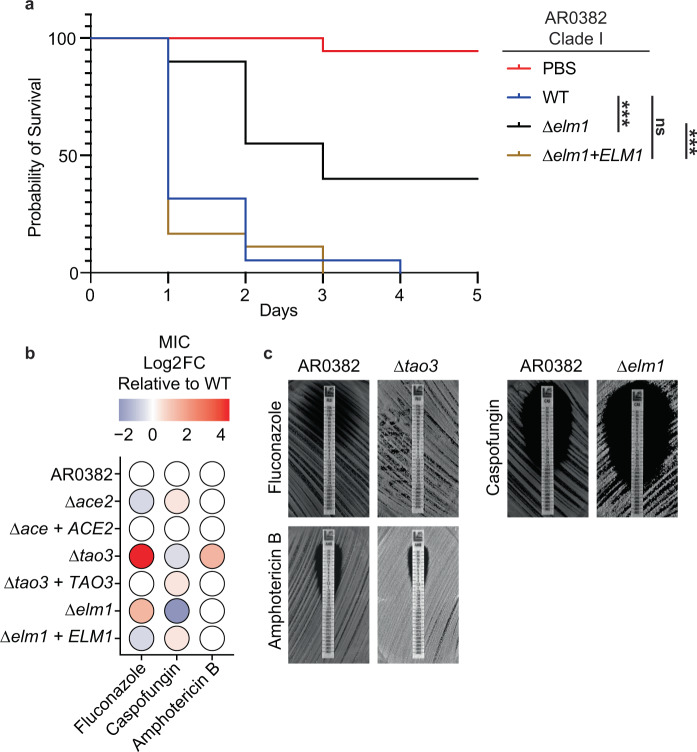
“In contrast, the tao3 Δ mutant showed no defect in virulence in the same model (101).”
InfluentialBalakumar, A., Cox, A., & Thangamani, S. (2024) · mSphere · doi:10.1128/msphere.00734-24 · Cited by 13
“Clinical isolates of C. auris can exhibit different morphotypes, such as yeast, fila mentous, and aggregative forms (9–13).”
InfluentialTools and techniques to identify, study, and control Candida auris
Carty, J., Chowdhary, A., Bernstein, D. A., & Thangamani, S. (2023) · PLoS Pathogens · doi:10.1371/journal.ppat.1011698 · Cited by 16
Advanced genetic techniques in fungal pathogen research
Ross, R. L., & Santiago-Tirado, F. H. (2024) · mSphere · doi:10.1128/msphere.00643-23 · Cited by 14
“The O’Meara group revolutionized this field in 2021 when they developed tools and approaches for the efficient implementation of both reverse and forward genetics in this fungus (22, 25).”
BackgroundMethodBayona, J. V. M., Cancino‐Muñoz, I., García, C. S., Tormo, N., Serrano, M. D. R. G., Ferrer‐Gómez, C., García, M. M. M., Gónzález‐Candelas, F., & Gimeno-Cardona, C. (2024) · Mycoses · doi:10.1111/myc.13776 · Cited by 11
“32 The crude mortality rate for candidaemia cases in our setting (32.6”
InfluentialWu, Y., Zou, Y., Dai, Y., Lu, H., Zhang, W., Chang, W., Wang, Y., Nie, Z., Wang, Y., & Jiang, X. (2025) · PLOS Pathogens · doi:10.1371/journal.ppat.1013220 · Cited by 10
“In C. auris , the functional loss of Ace2, Eng1, and Iqg1 each independently results in the formation of multicellular aggregates [25,39].”
Vertebrate and invertebrate animal infection models of Candida auris pathogenicity
Martinez, M., Garsin, D. A., & Lorenz, M. C. (2024) · Current Opinion in Microbiology · doi:10.1016/j.mib.2024.102506 · Cited by 8
Gene dosage of PDR16 modulates azole susceptibility in Candida auris
Phan-Canh, T., Bitencourt, T., & Kuchler, K. (2025) · Microbiology Spectrum · doi:10.1128/spectrum.02659-24 · Cited by 7
Sofras, D., Carolus, H., Subotić, A., Romero, C. L., Ennis, C. L., Cuypers, L., Lagrou, K., Hernday, A. D., Nobile, C. J., Rybak, J. M., et al. (2025) · Scientific Reports · doi:10.1038/s41598-025-19115-2 · Cited by 8
“Santana et al. used two transient expression cassettes to perform CRISPR in C. auris with reportedly high success rates, but we did not include their system in this study due to the obligatory introduction of a selection marker in the vicinity of the desired genetic alteration 50 .”
Peri, K. V. R., Yuan, L., Faria‐Oliveira, F., Persson, K. O., Alalam, H., Olsson, L., Larsbrink, J., Kerkhoven, E. J., & Geijer, C. (2024) · Applied and Environmental Microbiology · doi:10.1128/aem.01135-24 · Cited by 9
Metzner, K., O’Meara, M. J., Halligan, B. S., Wotring, J. W., Sexton, J. Z., & O’Meara, T. R. (2023) · Antimicrobial Agents and Chemotherapy · doi:10.1128/aac.00503-23 · Cited by 8
Self-citationPathogenicity and virulence of Candida auris
Phan-Canh, T., Seiser, S., Chauhan, M., Kuchler, K., Chauhan, N., & Elbe‐Bürger, A. (2026) · Virulence · doi:10.1080/21505594.2026.2707827 · Cited by 7
“Genetic ablation of chitin biosynthesis regulators ( ACE2 , TAO3 / CAS4 ), chitin synthase ( CHS1/CHS2 ), the cytoskeletal polarity protein ( BNI1 ) or the GTPase activator ( LRG1 ) enhances C. auris aggregation (Figure 2) [99,118].”
InfluentialPhenotypic and genetic features of a novel clinically isolated rough morphotype Candida auris
Tian, S., Bing, J., Chu, Y., Li, H., Wang, Q., Cheng, S., Chen, J., & Shang, H. (2023) · Frontiers in Microbiology · doi:10.3389/fmicb.2023.1174878 · Cited by 6
“auris resulted in constitutively aggregating cells with individual cells connected at septa, suggestive of a failure of budding daughter cells to separate from the mother cells (Santana and O’Meara, 2021).”
BackgroundBarker, K. S., Zhang, Q., Peters, T. L., Rybak, J. M., Morschhäuser, J., Cuomo, C. A., & Rogers, P. D. (2025) · Clinical Microbiology and Infection · doi:10.1016/j.cmi.2025.10.009 · Cited by 7
The emerging pathogen Candida auris: host interactions and disease drivers
Sanya, D. R. A., Arevalo, A. V., Onésime, D., & Nobile, C. J. (2026) · Journal of Biomedical Science · doi:10.1186/s12929-026-01230-5 · Cited by 6
“Agrobacterium -mediated transformation and CRISPR-Cas9 systems have enabled targeted mutagenesis, uncovering key roles for ACE2 , TAO3 , and ELM1 in morphogenesis, virulence, and antifungal susceptibility [99].”
Drug Resistance and Evolvability in an Emerging Human Fungal Pathogen
Billmyre, R. B. (2022) · mBio · doi:10.1128/mbio.01876-22 · Cited by 5
“auris continue to improve (23), exploring these candidates will reveal interesting aspects of drug resistance in C.”
BackgroundEsquivel, B. D., Santos, A. R., Rybak, J. M., Santana, D. J., Rogers, P. D., & White, T. C. (2026) · mBio · doi:10.1128/mbio.03957-25 · Cited by 5
Self-citationNew tools for the new bug Candida auris
Lorenz, A., & Papon, N. (2022) · Trends in Microbiology · doi:10.1016/j.tim.2022.01.010 · Cited by 4
Host–Candida auris interactions in the skin
Thangamani, S., Balakumar, A., Datta, A., Bryak, G., & Lionakis, M. S. (2026) · PLOS Pathogens · doi:10.1371/journal.ppat.1014075 · Cited by 6
“Clinical isolates of C. auris exhibit distinct morphologies, including yeast, aggregative, and filamentous [104–108].”
Narayanan, A., Shaji, A. A., Pullepu, D., Bhattacharya, J., & Sanyal, K. (2025) · ACS Infectious Diseases · doi:10.1021/acsinfecdis.5c00081 · Cited by 3
C. elegans as a tractable infection model for the emerging fungal pathogen Candida auris
Martinez, M., Cruz, M. R., Garsin, D. A., & Lorenz, M. C. (2026) · Microbiology Spectrum · doi:10.1128/spectrum.03156-25 · Cited by 3
Understanding pathogen emergence through the lens of Candida auris
O’Meara, T. R. (2024) · Nature Microbiology · doi:10.1038/s41564-024-01700-2 · Cited by 2
Self-citationPhagocytic podosomes enable efficient uptake of Candida auris by primary human macrophages
Sopelniak, K., Batlouni, R., Sun, Q., Cervero, P., & Linder, S. (2026) · Cell Reports · doi:10.1016/j.celrep.2026.117167 · Cited by 3
Multi-resistant Candida Species: A Global Public Health Problem: A Systematic Review
Vital, E. L., & Carnovale, S. I. (2023) · SCT Proceedings in Interdisciplinary Insights and Innovations. · doi:10.56294/piii2023162 · Cited by 2
Zhao, G., Lyu, J., Veniaminova, N. A., Zarnowski, R., Mattos, E., Johnson, C. J., Quintanilla, D., Hautau, H., Hold, L. A., Xu, B., et al. (2025) · doi:10.1101/2025.02.13.637978 · Cited by 2
Self-citationCytochrome bc1 Catalytic Subunit Rip1 Modulates Antifungal Tolerance in Candida auris
Phan-Canh, T., Lackner, M., Chauhan, M., Zenz, L.-M., Chauhan, N., & Kuchler, K. (2026) · ACS Infectious Diseases · doi:10.1021/acsinfecdis.5c01058 · Cited by 1
Negi, P., Verma, N., Rishi, P., Multani, K., Sharma, M., Kumari, S., & Raj, K. (2026) · Archives of Microbiology · doi:10.1007/s00203-026-04864-z · Cited by 1
Ramírez-Zavala, B., Krüger, I., Schwanfelder, S., Lackner, J., Krüger, T., Kniemeyer, O., & Morschhäuser, J. (2026) · PLoS Genetics · doi:10.1371/journal.pgen.1012118 · Cited by 2
Going fishing: how to get what you want from a fungal genetic screen
O’Meara, T. R. (2024) · mSphere · doi:10.1128/msphere.00638-23 · Cited by 1
“Any reads that partially map to the insert are those that cover the insert boundaries; these can be collected and mapped to identify the insertion sites (7, 28).”
BackgroundMethodInfluentialSelf-citationDetermann, B. F., Fu, J., & Wickes, B. L. (2024) · Journal of Fungi · doi:10.3390/jof10070477 · Cited by 1
Hernández-Rodríguez, Y., Bullard, A. M., Busch, R. J., Marshall, A., & Vargas-Muñiz, J. M. (2024) · Microbiology Spectrum · doi:10.1128/spectrum.02430-24 · Cited by 1
Recent Advances in High-Throughput Genetics in Fungi
Lyon, J. W., & Billmyre, R. B. (2024) · The mycota · doi:10.1007/978-3-031-75666-5_4 · Cited by 1
The 27th Annual Midwest Microbial Pathogenesis Conference in the Age of COVID
Hammer, N. D., & Waters, C. M. (2022) · Journal of Bacteriology · doi:10.1128/jb.00136-22
“Finally, Darian Santana, a graduate student in Teresa O’Meara’s lab at the University of Michigan concluded the session with the first trainee invited talk by explaining a new genetic toolset that revealed regulators of Candida aurismorphogenesis (7).”
BackgroundConstruction of a drug sensitised Candida auris strainPreprint
Hassan, M., Furner-Pardoe, J., Chen, Y., Mason, A. J., Rahman, K. M., Sutton, J. M., Hind, C. K., & Panaretou, B. (2024) · bioRxiv (Cold Spring Harbor Laboratory) · doi:10.1101/2024.12.28.630619
Effective Strategies for Translating CRISPR-dCas Systems to Diverse Microbes
Gervais, N. C., Hendriks, A., & Shapiro, R. S. (2025) · ACS Synthetic Biology · doi:10.1021/acssynbio.5c00537 · Cited by 1
The Rise of Candida auris: A Global Health Threat
Warrier, A. R., & Moses, S. S. (2025) · Infectious diseases · doi:10.5772/intechopen.1012838 · Cited by 1
Deep homology and design of proteasome chaperone proteins in Candidozyma auris
Rapala, J. R., Siddiq, M. A., Wittkopp, P. J., O’Meara, M. J., & O’Meara, T. R. (2026) · Nature Communications · doi:10.1038/s41467-026-71206-4
Self-citationLiu, L. L., Niu, T., Zhang, T., Tan, D., Duan, X., & Li, X. (2026) · Microbiological Research · doi:10.1016/j.micres.2026.128542
Pangenome and genome-scale essentiality in the emerging fungal pathogen Candidozyma aurisPreprint
Hale, J. J., Larkin, A., Rapala, J. R., Hurto, R. L., Zhao, G., Elson, B. E., Freddolino, L., Snitkin, E. S., & O’Meara, T. R. (2026) · bioRxiv (Cold Spring Harbor Laboratory) · doi:10.64898/2026.05.12.724661 · Cited by 1
“In contrast, genes we have previously experimentally determined to be non-essential, like ALS4112 ( B9J08_04866 ), do not deviate from a random distribution of inserts ( Figure 4F, Supplemental Figure 4 ) 9,19 .”
Self-citationCandidozyma auris utilizes transferrin, but not heme-bound iron for in vivo virulencePreprint
Arekar, T., Katikaneni, D. S., Acharya, T., Horst, K., Zhao, G., Garcia, G., Hernalsteen, S., Weber, C. K., Gour, A., Punshnon, T., et al. (2026) · bioRxiv (Cold Spring Harbor Laboratory) · doi:10.64898/2026.06.09.731159
“Mouse primary endothelial cells were cocultured with C. auris AR0382-RFP on glass coverslips as described above.”
InfluentialSelf-citationInsights on molecular drivers of phenotypic plasticity in Candidozyma auris
Solanki, S., Singh, B., Mathur, K., Asif, S., Francis, A., Gangwar, G., Thakur, A. S., & Puria, R. (2026) · World Journal of Microbiology and Biotechnology · doi:10.1007/s11274-026-05085-8
“…protein kinase known to play roles in various cellular functions such as cytokinesis, morphogenesis, and drug resistance in Saccharomyces cerevisiae (Ito et al. 2020 ), acts as a conserved regulator of filamen - tous growth across clades in the pathogenic fungus C. auris (Santana and O’Meara 2021).”
Zainal, M., Ibrahim, M. J., Sarmin, N. ‘. M., Ismail, S., Cirillo, N., Dashper, S. G., & Arzmi, M. H. (2026) · Biofouling · doi:10.1080/08927014.2026.2688203
“Unlike previous studies that primarily characterised filamentation, morphogenesis, or transcriptomic heterogeneity in isolated phenotypic states (Fan et al. 2021; Jenull et al. 2021; Phan-Canh et al. 2025; Santana and O’Meara 2021).”
Micafungin exposure drives multidrug resistance in Clavispora lusitaniaePreprint
Wash, E., Scott, N. E., Metzner, K., Zhou, X., Dasilva, D., de Sá, N. P., Usmani, S. A., Sa, N. F. V. D., Poeta, M. D., & Selmecki, A. M. (2026) · bioRxiv (Cold Spring Harbor Laboratory) · doi:10.64898/2026.06.29.735437
The role of HIL1 in strain-level adhesion and immune recognition in Debaryomyces hansenii
Newhall, K. P., Bezerra, A. V. D. S., Goddard, J. M., McNeer, S. K., Mittal, A., Gutzmann, D. J., Swamy, S., Karuvannur, M., Espenschied, S. T., Zhou, J. Y., et al. (2026) · mBio · doi:10.1128/mbio.01107-26 · Cited by 2
Phan-Canh, T., Elbe‐Bürger, A., & Kuchler, K. (2026) · Trends in Microbiology · doi:10.1016/j.tim.2026.08.011
Holt, A. M., Horton, M. V., Johnson, C. J., Żarnowski, R., Vang, P. C., Dean, M., Kaas, A., Andes, B. D., Jones, R., Lowman, D. W., et al. (2026) · mBio · doi:10.1128/mbio.01701-26
“Mutant strains were generated using homologous recombination as previously described (13, 44, 59, 60).”
Soni, A., Vrzoňová, R., Paulovičová, L., Bzducha‐Wróbel, A., & Farkaš, P. (2026) · International Journal of Biological Macromolecules · doi:10.1016/j.ijbiomac.2026.154672
Lazreg, I., Ghazawi, A., Dakalbab, S., Ismail, H., Aly, M. A. A., Haddad, O., Dhaheri, F. A. A., & Soliman, S. S. M. (2026) · Infection · doi:10.1007/s15010-026-03017-0
Metadata
- Authors
- Santana, D. J., & O’Meara, T. R.
- Affiliations
- University of Michigan (US)
- Corresponding author
- O’Meara, Teresa R.
- Venue
- Nature Communications
- Published
- 2021-12-10
- Volume
- 12
- Issue
- 1
- Pages
- 7197-7197
- ISSN
- 2041-1723 (ISSN-L)
- PMC
- PMC8664941
- OpenAlex
- W4225337568
- Semantic Scholar
- a4e1b0aaad9eecfa5af23faa43030c0ac47989c3
- Cited by
- 91
- References
- 81
- Citations by year
- 2026: 21 · 2025: 21 · 2024: 24 · 2023: 18 · 2022: 7
- FWCI
- 3.83
- Type
- journal article
- Language
- en
- Update notices
- correction (2022-02-23)
- Open access
- gold
- doi.org
- Licence
- cc-by
- creativecommons.org/licenses/by/4.0 (tdm)
- creativecommons.org/licenses/by/4.0 (vor)
- Locations
- Nature Communications (publishedVersion, cc-by)
- bioRxiv (Cold Spring Harbor Laboratory) (acceptedVersion, cc-by-nc)
- PubMed Central (publishedVersion, cc-by)
- PubMed (publishedVersion)
- RePEc: Research Papers in Economics (submittedVersion)
- DOAJ (DOAJ: Directory of Open Access Journals) (submittedVersion, cc-by-sa)
- Funders
- U.S. Department of Health & Human Services | NIH | National Institute of Allergy and Infectious Diseases (T32AI007528, KAI137299)
- Topics
- Life Sciences › Biochemistry, Genetics and Molecular Biology › Molecular Biology › Fungal and yeast genetics research
- Health Sciences › Medicine › Infectious Diseases › Antifungal resistance and susceptibility
- Life Sciences › Immunology and Microbiology › Microbiology › Yeasts and Rust Fungi Studies
- Keywords
- Candida auris, morphogenesis, filamentous growth, cell aggregates, chitinase, Agrobacterium-mediated transformation, CRISPR/Cas9, forward and reverse genetics, virulence, antifungal susceptibility, clades
- MeSH terms
- Candida auris, Animals, Antifungal Agents, Candidiasis, Disease Models, Animal, Fungal Proteins, Morphogenesis, Moths, Mutation, Protein Kinases, Virulence, Fluconazole, Gene Expression Regulation, Fungal, Drug Resistance, Fungal, Reverse Genetics, CRISPR-Cas Systems
About these checks
Registry, retraction, Cites and statistics results are computed, not judged, with one exception: a printed reference that no index lists is read once by a model before it counts as a citation error. Claims are extracted by a model and kept only when their quote appears verbatim in the text; each cited source is then checked, with a model’s help, for whether it says what the claim relies on. Those verdicts can be wrong — read the claim’s quote and the cited source before relying on one.
Statistics and arithmetic are recomputed, not judged.
Confidence bands are shown only for fields calibrated on our annotated test set. None is calibrated yet, so no band is shown.
What counts as a claim ›How we measure confidence ›How we check this ›
Are you an author, or do you see a problem with this page? Request a review
Data sources
Bibliographic data: Semantic Scholar, OpenAlex, Crossref.
Contains information from the Semantic Scholar Academic Graph Datasets, made available under the ODC Attribution License (ODC-BY 1.0).
Semantic Scholar’s data is described in: Kinney, R., et al. (2023). The Semantic Scholar Open Data Platform. arXiv:2301.10140.
