

Forward and reverse genetic dissection of morphogenesis identifies filament-competent Candida auris strains
Open accessPublished version of a preprint
The DOI matches its Crossref record; 81 of the 81 references it cites were found in a registry or an index.
Abstract
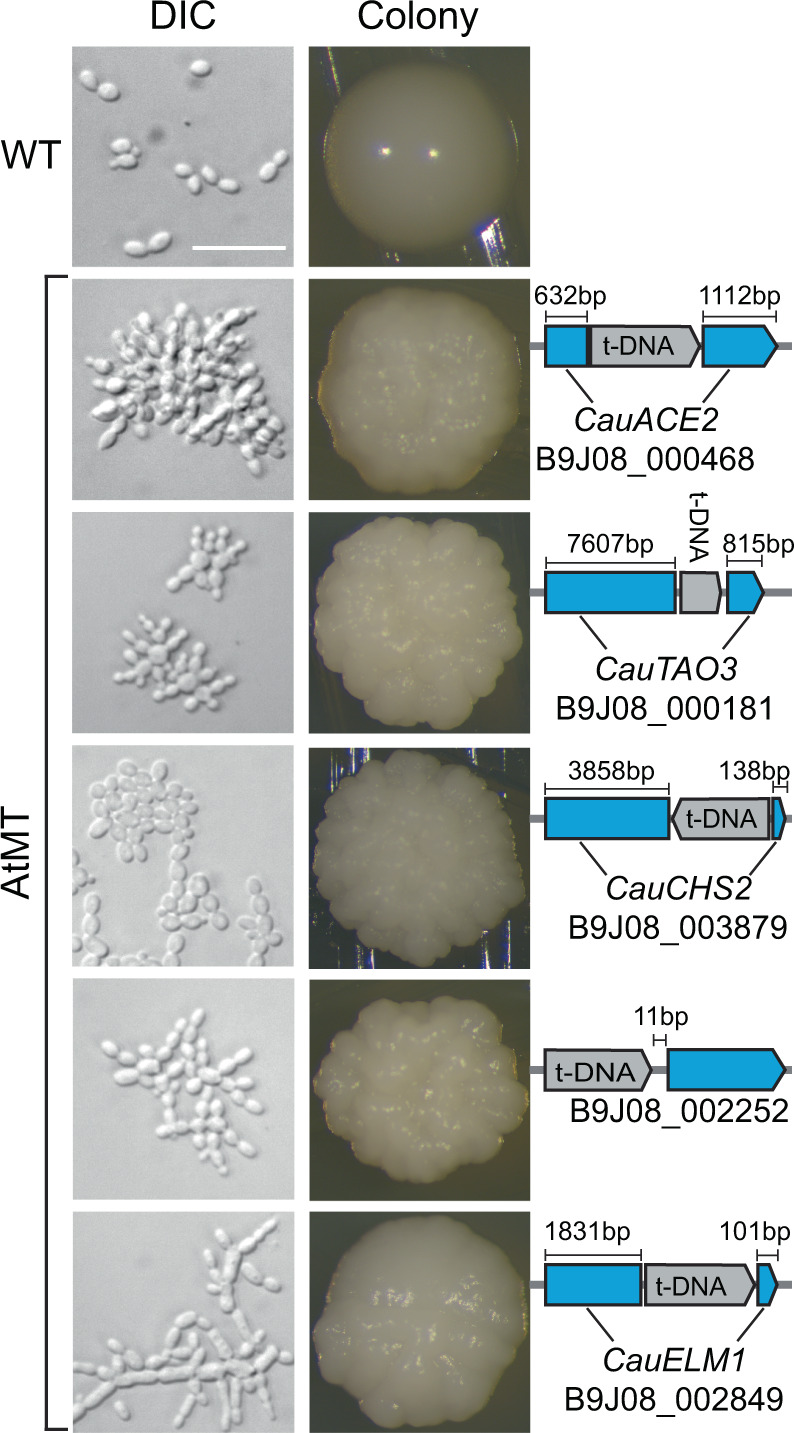
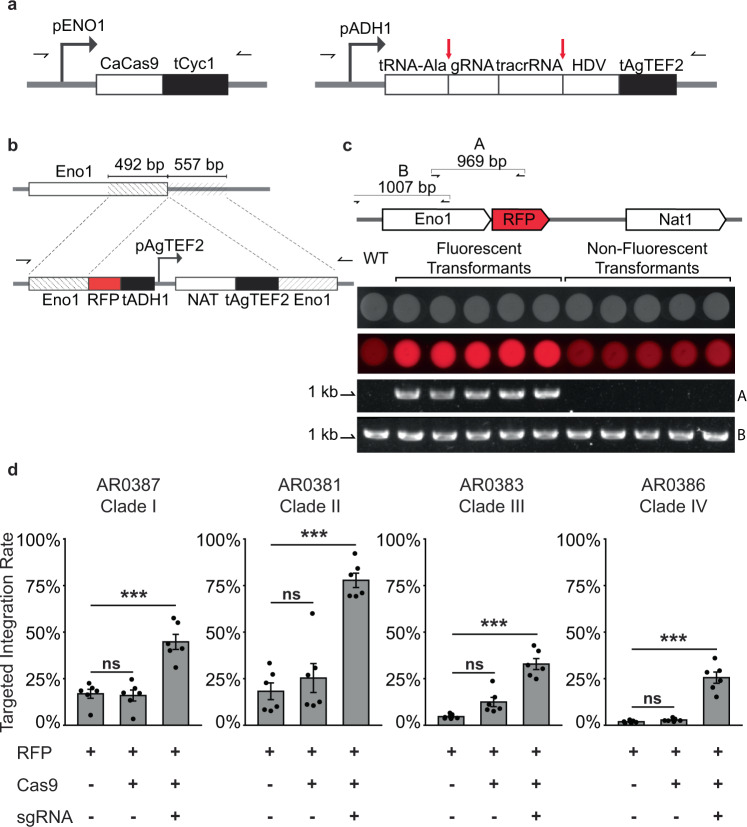
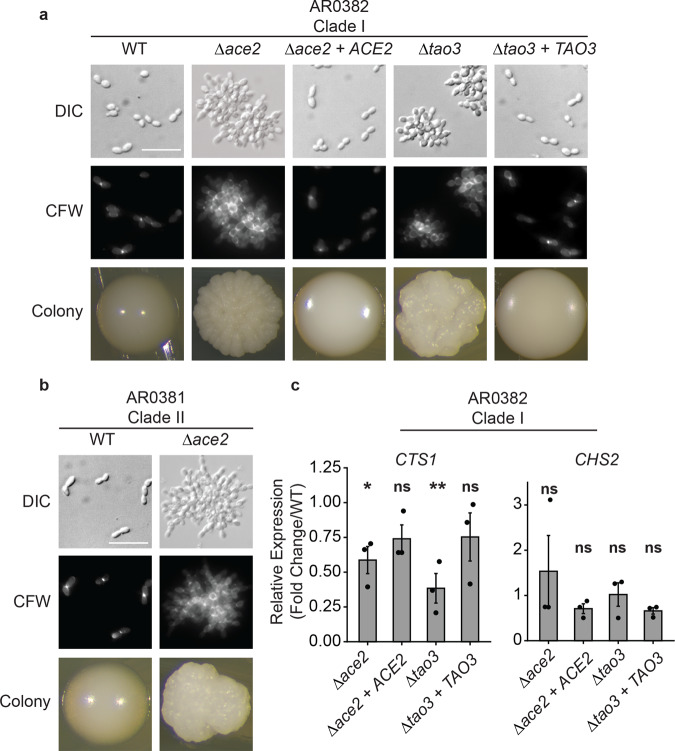
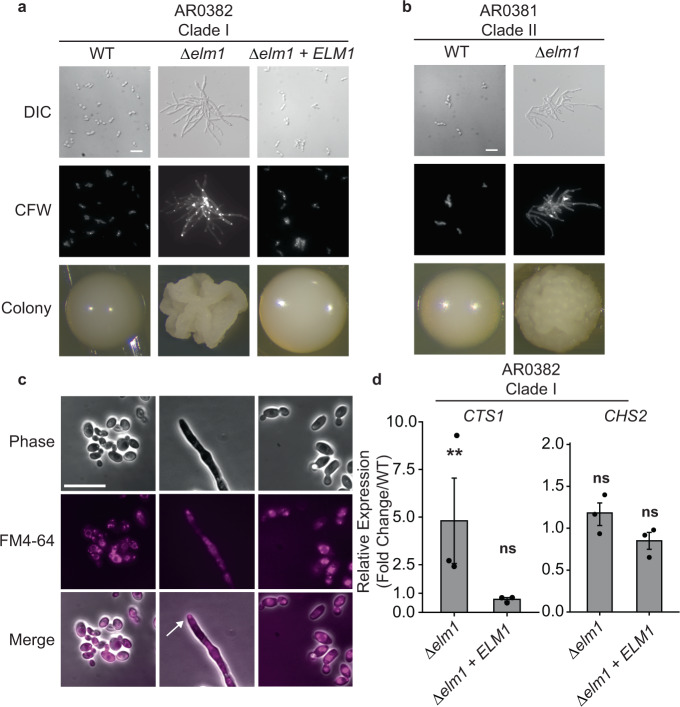
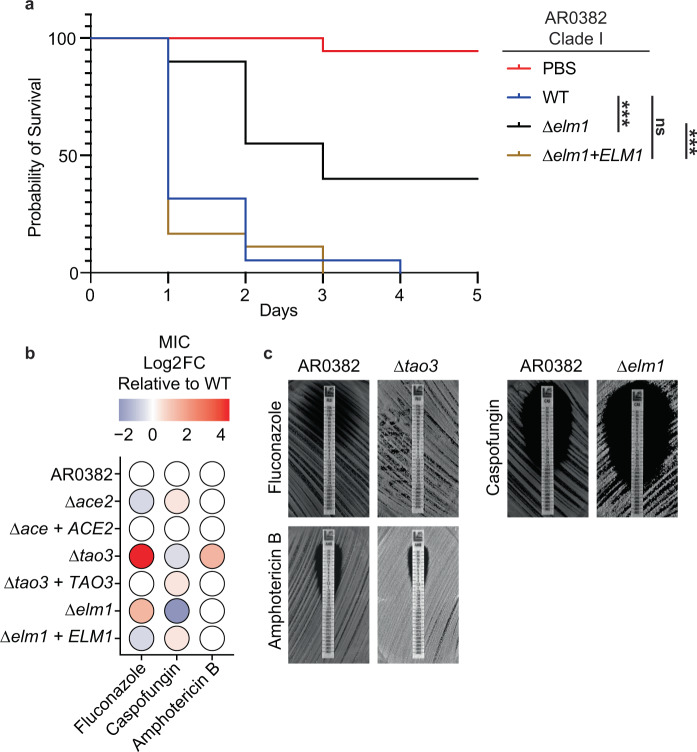
Candida auris is an emerging healthcare-associated pathogen of global concern. Recent reports have identified C. auris isolates that grow in cellular aggregates or filaments, often without a clear genetic explanation. To investigate the regulation of C. auris morphogenesis, we applied an Agrobacterium -mediated transformation system to all four C. auris clades. We identified aggregating mutants associated with disruption of chitin regulation, while disruption of ELM1 produced a polarized, filamentous growth morphology. We developed a transiently expressed Cas9 and sgRNA system for C. auris that significantly increased targeted transformation efficiency across the four C. auris clades. Using this system, we confirmed the roles of C. auris morphogenesis regulators. Morphogenic mutants showed dysregulated chitinase expression, attenuated virulence, and altered antifungal susceptibility. Our findings provide insights into the genetic regulation of aggregating and filamentous morphogenesis in C. auris . Furthermore, the genetic tools described here will allow for efficient manipulation of the C. auris genome.
Overview
The claims and statistics of this paper haven’t been checked yet.
Free: it reads the open-access text and checks the first 5 claims that cite a source we can check. Create a free account to check every claim.
Integrity signals
Registry
Cites
Statistics
Figures
Verification
Claims the paper makes
The claims and statistics of this paper haven’t been checked yet.
Free: it reads the open-access text and checks the first 5 claims that cite a source we can check. Create a free account to check every claim.
Claims other papers make about this one
Each is checked against this paper’s own text: does it say what the citing paper says it does?
The source backs part of the claim, not all of it — or backs it for a different population, condition or comparison.
In the citing paper
“As expected, we identified that WT C. auris AR0387 strain exists as a typical round-shaped yeast form, whereas deletion of ELM1 gene (Δelm1) resulted in an elongated, filamentous morphology which is consistent with previous findings (Fig. 1A) (8).”
From Yeast and filamentous Candida auris stimulate distinct immune responses in the skin (2024) · cites this paper as [8]
Experimental — accuracy not yet measuredThe source backs part of the claim, not all of it — or backs it for a different population, condition or comparison.
In the citing paper
“Clinical isolates of C. auris can exhibit different morphotypes such as filamentous, pseudohyphal, and yeast forms (8–14).”
From Yeast and filamentous Candida auris stimulate distinct immune responses in the skin (2024) · cites this paper as [8]
Experimental — accuracy not yet measuredThe source backs part of the claim, not all of it — or backs it for a different population, condition or comparison.
In the citing paper
“Clinical isolates of C. auris can exhibit different morphotypes, such as yeast, filamentous, and aggregative forms (9–13).”
From Cell aggregation mediated by ACE2 deletion in Candida auris modulates fungal colonization and host immune responses in the skin (2024) · cites this paper as [9]
Experimental — accuracy not yet measuredThe source backs part of the claim, not all of it — or backs it for a different population, condition or comparison.
In the citing paper
“The ACE2 deletion in the C. auris AR0387 strain results in a multicellular aggregative phenotype consistent with previous findings (Fig. 1A) (9).”
From Cell aggregation mediated by ACE2 deletion in Candida auris modulates fungal colonization and host immune responses in the skin (2024) · cites this paper as [9]
Experimental — accuracy not yet measuredThe source backs part of the claim, not all of it — or backs it for a different population, condition or comparison.
In the citing paper
“ACE2 is a zinc finger transcription factor expressed during the G2 phase and controls the expression of chitinase CTS1, which is required for septal degradation and cell separation (9).”
From Cell aggregation mediated by ACE2 deletion in Candida auris modulates fungal colonization and host immune responses in the skin (2024) · cites this paper as [9]
Experimental — accuracy not yet measured
9 more claims about this paper
Create a free account to see every claim other papers make about this one.
Self-check
Percentages, sums and reported differences re-computed from the paper’s own numbers.
The self-check needs the paper’s full text.
Citations
Cites
Fiji: an open-source platform for biological-image analysis
Schindelin, J., Arganda-Carreras, I., Frise, E., Kaynig, V., Longair, M., Pietzsch, T., Preibisch, S., Rueden, C., Saalfeld, S., Schmid, B., et al. (2012) · Nature Methods · doi:10.1038/nmeth.2019 · Cited by 66,890 · cited 1×
“Fluorescent images were visualized using Fiji Software (72).”
Fast and accurate short read alignment with Burrows-Wheeler transform
Li, H., & Durbin, R. (2009) · Bioinformatics · doi:10.1093/bioinformatics/btp324 · Cited by 58,607
Robinson, J. T., Thorvaldsdóttir, H., Winckler, W., Guttman, M., Lander, E. S., Getz, G., & Mesirov, J. P. (2011) · Nature Biotechnology · doi:10.1038/nbt.1754 · Cited by 15,390
The EMBL-EBI search and sequence analysis tools APIs in 2019
Madeira, F., Park, Y. M., Lee, J., Buso, N., Gur, T., Madhusoodanan, N., Basutkar, P., Tivey, A. R. N., Potter, S. C., Finn, R. D., et al. (2019) · Nucleic Acids Research · doi:10.1093/nar/gkz268 · Cited by 4,167 · cited 1×
“The extracted sequences for each pool were aligned using Clustal Omega 560 multiple sequence alignment (71) to identify consensus sequences for all independent 561 insertion events within each pool.”
The Galaxy platform for accessible, reproducible and collaborative biomedical analyses: 2018 update
Afgan, E., Baker, D., Batut, B., van den Beek, M., Bouvier, D., Čech, M., Chilton, J., Clements, D., Coraor, N., Grüning, B. A., et al. (2018) · Nucleic Acids Research · doi:10.1093/nar/gky379 · Cited by 3,662
Construction of improved M13 vectors using oligodeoxynucleotide-directed mutagenesis
Norrander, J., Kempe, T., & Messing, J. (1983) · Gene · doi:10.1016/0378-1119(83)90040-9 · Cited by 2,497 · cited 2×
“444 pTO135: A cassette for expression of Cas9 was maintained in the pUC19 cloning 445 vector backbone (63).”
NewAgrobacterium helper plasmids for gene transfer to plants
Hood, E. E., Gelvin, S. B., Melchers, L. S., & Hoekema, A. (1993) · Transgenic Research · doi:10.1007/bf01977351 · Cited by 1,413 · cited 1×
“tumefaciens strain EHA 105 (62) using a Bio-Rad 442 MicroPulser Electroporator.”
Satoh, K., Makimura, K., Hasumi, Y., Nishiyama, Y., Uchida, K., & Yamaguchi, H. (2009) · Microbiology and Immunology · doi:10.1111/j.1348-0421.2008.00083.x · Cited by 1,381
De Cleene, M., & De Ley, J. (1976) · The Botanical Review · doi:10.1007/bf02860827 · Cited by 682 · cited 1×
“tumefaciens is a plant pathogen that causes crown gall in dicotyledonous plants 106 through genetic transformation (22).”
Trans-kingdom T-DNA transfer from Agrobacterium tumefaciens to Saccharomyces cerevisiae.
Bundock, P., den Dulk-Ras, A., Beijersbergen, A., & Hooykaas, P. J. (1995) · The EMBO Journal · doi:10.1002/j.1460-2075.1995.tb07323.x · Cited by 653 · cited 2×
“15 in liquid Induction Medium (IM) 510 supplemented with 100 μM Acetosyringone 3’,5’-dimethoxy-4-hydroxyacetophenone 511 (AS) (27) and incubated at room temperature for 6 h with constant shaking.”
Chitinase is required for cell separation during growth of Saccharomyces cerevisiae.
Kuranda, M. J., & Robbins, P. W. (1991) · Journal of Biological Chemistry · doi:10.1016/s0021-9258(18)55057-2 · Cited by 591 · cited 1×
“albicans, in which chitin degradation in the primary septum is 352 mediated by the ACE2-regulated ScCts1 or CaCht3 proteins (34, 47).”
Bleach gel: A simple agarose gel for analyzing RNA quality
Aranda, P. S., LaJoie, D. M., & Jorcyk, C. L. (2012) · ELECTROPHORESIS · doi:10.1002/elps.201100335 · Cited by 572
Gao, Y., & Zhao, Y. (2014) · Journal of Integrative Plant Biology · doi:10.1111/jipb.12152 · Cited by 562 · cited 1×
“With this design, we anticipated cleavage at the 3’ end of 225 the tRNA sequence by endogenous RNase A and self-catalyzed cleavage at the 5’ end 226 of the HDV ribozyme (31, 32).”
Agrobacterium-mediated transformation as a tool for functional genomics in fungi
Michielse, C. B., Hooykaas, P. J. J., van den Hondel, C. A. M. J. J., & Ram, A. F. J. (2005) · Current Genetics · doi:10.1007/s00294-005-0578-0 · Cited by 515
On the emergence of Candida auris: climate change, azoles, swamps, and birds
Casadevall, A., Kontoyiannis, D. P., & Robert, V. (2019) · mBio · doi:10.1128/mbio.01397-19 · Cited by 515
Chow, N. A., Muñoz, J. F., Gade, L., Berkow, E., Li, X., Welsh, R. M., Forsberg, K., Lockhart, S. R., Adam, R., Alanio, A., et al. (2020) · doi:10.1101/2020.01.06.896548 · Cited by 463
A Phenotypic Profile of the Candida albicans Regulatory Network
Homann, O. R., Dea, J., Noble, S. M., & Johnson, A. D. (2009) · PLoS Genetics · doi:10.1371/journal.pgen.1000783 · Cited by 444
Biofilm-Forming Capability of Highly Virulent, Multidrug-Resistant Candida auris
Sherry, L., Ramage, G., Kean, R., Borman, A., Johnson, E. M., Richardson, M. D., & Rautemaa-Richardson, R. (2017) · Emerging Infectious Diseases · doi:10.3201/eid2302.161320 · Cited by 420 · cited 1×
“Aggregating isolates exhibit reduced biomass in biofilm 82 formation and lower virulence in Galleria mellonella infection models compared to non83 aggregating counterparts (12, 16).”
Cowen, L. E., Singh, S. D., Köhler, J. R., Collins, C., Zaas, A. K., Schell, W. A., Aziz, H., Mylonakis, E., Perfect, J. R., Whitesell, L., et al. (2009) · Proceedings of the National Academy of Sciences · doi:10.1073/pnas.0813394106 · Cited by 413 · cited 1×
“The CaNAT1 438 cassette was excised at the SacI and SalI restriction sites from pLC49 (61) and ligated 439 between the SacI and SalI restriction sites of pPZP-NEO1, replacing the neomycin 440 resistance cassette with CaNAT1 to form pTO128 (pPZP-NATca).”
FungiDB: An Integrated Bioinformatic Resource for Fungi and Oomycetes
Basenko, E. Y., Pulman, J. A., Shanmugasundram, A., Harb, O. S., Crouch, K., Starns, D., Warrenfeltz, S., Aurrecoechea, C., Stoeckert, C. J., Kissinger, J. C., et al. (2018) · Journal of Fungi · doi:10.3390/jof4010039 · Cited by 374
Potential Fifth Clade of Candida auris, Iran, 2018
Chow, N. A., de Groot, T., Badali, H., Abastabar, M., Chiller, T. M., & Meis, J. F. (2019) · Emerging Infectious Diseases · doi:10.3201/eid2509.190686 · Cited by 356 · cited 1×
“auris is characterized by the 64 seemingly simultaneous emergence of four distinct genetic clades, differing on the scale 65 of hundreds of thousands of single nucleotide polymorphisms (SNPs), with a potential 66 fifth clade recently identified (3, 4).”
Borman, A. M., Szekely, A., & Johnson, E. M. (2016) · mSphere · doi:10.1128/msphere.00189-16 · Cited by 333 · cited 1×
“Aggregating isolates exhibit reduced biomass in biofilm 82 formation and lower virulence in Galleria mellonella infection models compared to non83 aggregating counterparts (12, 16).”
Methods for using Galleria mellonella as a model host to study fungal pathogenesis
Fuchs, B. B., O’Brien, E., El Khoury, J. B., & Mylonakis, E. (2010) · Virulence · doi:10.4161/viru.1.6.12985 · Cited by 308
Elm1p Is One of Three Upstream Kinases for the Saccharomyces cerevisiae SNF1 Complex
Sutherland, C. M., Hawley, S. A., McCartney, R. R., Leech, A., Stark, M. J. R., Schmidt, M. C., & Hardie, D. G. (2003) · Current Biology · doi:10.1016/s0960-9822(03)00459-7 · Cited by 282 · cited 3×
“This phenotype is associated with pseudohyphal growth with a cell morphology distinct from that demonstrated by ΔScelm1 (57).”
InfluentialCandida albicans Gene Deletion with a Transient CRISPR-Cas9 System
Min, K., Ichikawa, Y., Woolford, C. A., & Mitchell, A. P. (2016) · mSphere · doi:10.1128/msphere.00130-16 · Cited by 247 · cited 2×
“In 95 Candida albicans, transformation with linearized gene cassettes encoding Cas9 and 96 sgRNA promote homozygous gene deletion; these cassettes cannot be detected in the 97 genome of transformants, suggesting they are transiently expressed and not stably 98 integrated (19).”
Novel gene functions required for melanization of the human pathogen Cryptococcus neoformans
Walton, F. J., Idnurm, A., & Heitman, J. (2005) · Molecular Microbiology · doi:10.1111/j.1365-2958.2005.04779.x · Cited by 228 · cited 1×
“pTO128: An Agrobacterium Ti-plamid was constructed to include the CaNAT1 437 nourseothricin resistance cassette (59) in the pPZP-NEO1 backbone (60).”
Nelson, B., Kurischko, C., Horecka, J., Mody, M., Nair, P., Pratt, L., Zougman, A., McBroom, L. D. B., Hughes, T. R., Boone, C., et al. (2003) · Molecular Biology of the Cell · doi:10.1091/mbc.e03-01-0018 · Cited by 223
Environmental Isolation of Candida auris from the Coastal Wetlands of Andaman Islands, India
Arora, P., Singh, P., Wang, Y., Yadav, A., Pawar, K., Singh, A., Padmavati, G., Xu, J., & Chowdhary, A. (2021) · mBio · doi:10.1128/mbio.03181-20 · Cited by 223
Mutations in TAC1B : a Novel Genetic Determinant of Clinical Fluconazole Resistance in Candida auris
Rybak, J. M., Muñoz, J. F., Barker, K. S., Parker, J. E., Esquivel, B. D., Berkow, E. L., Lockhart, S. R., Gade, L., Palmer, G. E., White, T. C., et al. (2020) · mBio · doi:10.1128/mbio.00365-20 · Cited by 202
Schmidt, M., Bowers, B., Varma, A., Roh, D.-H., & Cabib, E. (2002) · Journal of Cell Science · doi:10.1242/jcs.115.2.293 · Cited by 199
The first isolate of Candida auris in China: clinical and biological aspects
Wang, X., Bing, J., Zheng, Q., Zhang, F., Liu, J., Yue, H., Tao, L., Du, H., Wang, Y., Wang, H., et al. (2018) · Emerging Microbes & Infections · doi:10.1038/s41426-018-0095-0 · Cited by 191 · cited 1×
“Growth in high salt concentrations 77 induces cell elongation (9).”
Assigning a function to a conserved group of proteins: the tRNA 3'-processing enzymes
Schiffer, S. (2002) · The EMBO Journal · doi:10.1093/emboj/21.11.2769 · Cited by 185 · cited 1×
“With this design, we anticipated cleavage at the 3’ end of 225 the tRNA sequence by endogenous RNase A and self-catalyzed cleavage at the 5’ end 226 of the HDV ribozyme (31, 32).”
Yue, H., Bing, J., Zheng, Q., Zhang, Y., Hu, T., Du, H., Wang, H., & Huang, G. (2018) · Emerging Microbes & Infections · doi:10.1038/s41426-018-0187-x · Cited by 176
The Candida albicans CaACE2 gene affects morphogenesis, adherence and virulence
Kelly, M. T., MacCallum, D. M., Clancy, S. D., Odds, F. C., Brown, A. J. P., & Butler, G. (2004) · Molecular Microbiology · doi:10.1111/j.1365-2958.2004.04185.x · Cited by 175 · cited 1×
“albicans, in which chitin degradation in the primary septum is 352 mediated by the ACE2-regulated ScCts1 or CaCht3 proteins (34, 47).”
Munro, C. A., Winter, K., Buchan, A., Henry, K., Becker, J. M., Brown, A. J. P., Bulawa, C. E., & Gow, N. A. R. (2001) · Molecular Microbiology · doi:10.1046/j.1365-2958.2001.02347.x · Cited by 162
Huang, X., Hurabielle, C., Drummond, R. A., Bouladoux, N., Desai, J. V., Sim, C. K., Belkaid, Y., Lionakis, M. S., & Segre, J. A. (2021) · Cell Host & Microbe · doi:10.1016/j.chom.2020.12.002 · Cited by 159 · cited 1×
“Individual isolates exhibit significant heterogeneity 67 both within and between clades in murine models of infection and colonization (5, 6).”
Shen, J., Guo, W., & Köhler, J. R. (2005) · Infection and Immunity · doi:10.1128/iai.73.2.1239-1242.2005 · Cited by 155 · cited 1×
“pTO128: An Agrobacterium Ti-plamid was constructed to include the CaNAT1 437 nourseothricin resistance cassette (59) in the pPZP-NEO1 backbone (60).”
Abrogation of Triazole Resistance upon Deletion of CDR1 in a Clinical Isolate of Candida auris
Rybak, J. M., Doorley, L. A., Nishimoto, A. T., Barker, K. S., Palmer, G. E., & Rogers, P. D. (2019) · Antimicrobial Agents and Chemotherapy · doi:10.1128/aac.00057-19 · Cited by 141 · cited 2×
“auris 335 (18, 43), will promote improved accessibility to mechanistic understanding of the genetic 336 machinery in C.”
Fan, Y., & Lin, X. (2018) · Genetics · doi:10.1534/genetics.117.300656 · Cited by 136 · cited 1×
“A similar transiently expressed CRISPR-Cas9 system promotes 99 targeted genetic manipulation in Cryptococcus neoformans (20).”
Kim, S. H., Iyer, K. R., Pardeshi, L., Muñoz, J. F., Robbins, N., Cuomo, C. A., Wong, K. H., & Cowen, L. E. (2019) · mBio · doi:10.1128/mbio.02529-18 · Cited by 136 · cited 3×
“209 auris (7)personal communication, Sang Hu Kim).”
Use of RNA-Protein Complexes for Genome Editing in Non- albicans Candida Species
Grahl, N., Demers, E. G., Crocker, A. W., & Hogan, D. A. (2017) · mSphere · doi:10.1128/msphere.00218-17 · Cited by 133 · cited 2×
“auris was performed as described previously, with minor 576 modifications (17).”
Chakrabarti, A., & Sood, P. (2021) · Journal of Medical Microbiology · doi:10.1099/jmm.0.001318 · Cited by 133 · cited 1×
“Introduction 61 Since its 2009 isolation from the ear canal of a patient in Japan, the emerging 62 fungal pathogen Candida auris has caused infections and outbreaks in at least 44 63 countries on 6 continents (2).”
Szekely, A., Borman, A. M., & Johnson, E. M. (2019) · Journal of Clinical Microbiology · doi:10.1128/jcm.02055-18 · Cited by 125
Agrobacterium: From Biology to Biotechnology
Tzfira, T., & Citovsky, V. (2007) · Springer eBooks · doi:10.1007/978-0-387-72290-0 · Cited by 120
The Spitzenkörper: a choreographer of fungal growth and morphogenesis
Riquelme, M., & Sánchez‐León, E. (2014) · Current Opinion in Microbiology · doi:10.1016/j.mib.2014.04.003 · Cited by 115
The Elm1 Kinase Functions in a Mitotic Signaling Network in Budding Yeast
Sreenivasan, A., & Kellogg, D. (1999) · Molecular and Cellular Biology · doi:10.1128/mcb.19.12.7983 · Cited by 114 · cited 2×
“cerevisiae strains 279 with mutations in ELM1 exhibit similar polarized, elongated growth phenotypes (36).”
Forgács, L., Borman, A. M., Prépost, E., Tóth, Z., Kardos, G., Kovács, R., Szekely, A., Nagy, F., Kovacs, I., & Majoros, L. (2020) · Emerging Microbes & Infections · doi:10.1080/22221751.2020.1771218 · Cited by 107
Molecular cloning and characterization of chitinase genes from Candida albicans.
McCreath, K. J., Specht, C. A., & Robbins, P. W. (1995) · Proceedings of the National Academy of Sciences · doi:10.1073/pnas.92.7.2544 · Cited by 101
Bravo Ruiz, G., Ross, Z. K., Gow, N. A. R., & Lorenz, A. (2020) · mSphere · doi:10.1128/msphere.00151-20 · Cited by 101
Dünkler, A., Walther, A., Specht, C. A., & Wendland, J. (2005) · Fungal Genetics and Biology · doi:10.1016/j.fgb.2005.08.001 · Cited by 98
Du, L.-L., & Novick, P. (2002) · Molecular Biology of the Cell · doi:10.1091/mbc.01-07-0365 · Cited by 96
Oud, B., Guadalupe-Medina, V., Nijkamp, J. F., de Ridder, D., Pronk, J. T., van Maris, A. J. A., & Daran, J.-M. (2013) · Proceedings of the National Academy of Sciences · doi:10.1073/pnas.1305949110 · Cited by 95 · cited 1×
“cerevisiae in a bioreactor resulted in 354 multicellular, fast-sedimenting strains that were associated with mutations in ACE2 (33).”
Selvaggini, S., Munro, C. A., Paschoud, S., Sanglard, D., & Gow, N. A. R. (2004) · Microbiology · doi:10.1099/mic.0.26661-0 · Cited by 93
Ng, H., & Dean, N. (2017) · mSphere · doi:10.1128/msphere.00385-16 · Cited by 93 · cited 2×
“albicans when using 211 different promoters to drive the transcription of the sgRNA (30).”
Short, B., Brown, J., Delaney, C., Sherry, L., Williams, C., Ramage, G., & Kean, R. (2019) · Journal of Hospital Infection · doi:10.1016/j.jhin.2019.06.006 · Cited by 87
Lutgring, J. D., Machado, M.-J., Benahmed, F. H., Conville, P., Shawar, R. M., Patel, J., & Brown, A. C. (2018) · Journal of Clinical Microbiology · doi:10.1128/jcm.01415-17 · Cited by 85
LncRNA DINOR is a virulence factor and global regulator of stress responses in Candida auris
Gao, J., Chow, E. W. L., Wang, H., Xu, X., Cai, C., Song, Y., Wang, J., & Wang, Y. (2021) · Nature Microbiology · doi:10.1038/s41564-021-00915-x · Cited by 81
Candida auris Phenotypic Heterogeneity Determines Pathogenicity In Vitro
Brown, J. L., Delaney, C., Short, B., Butcher, M. C., McKloud, E., Williams, C., Kean, R., & Ramage, G. (2020) · mSphere · doi:10.1128/msphere.00371-20 · Cited by 76
King, L., & Butler, G. (1998) · Current Genetics · doi:10.1007/s002940050384 · Cited by 74 · cited 2×
“Disruption of ScTAO3 or downstream ScACE2 results in cell aggregates and a 342 failure of daughter cells to separate from mother cells during budding (38, 44, 45).”
Role of the RAM Network in Cell Polarity and Hyphal Morphogenesis in Candida albicans
Song, Y., Cheon, S. A., Lee, K. E., Lee, S.-Y., Lee, B.-K., Oh, D.-B., Kang, H. A., & Kim, J.-Y. (2008) · Molecular Biology of the Cell · doi:10.1091/mbc.e08-03-0272 · Cited by 69
McClelland, C. M., Chang, Y. C., & Kwon-Chung, K. J. (2005) · Fungal Genetics and Biology · doi:10.1016/j.fgb.2005.07.003 · Cited by 67 · cited 2×
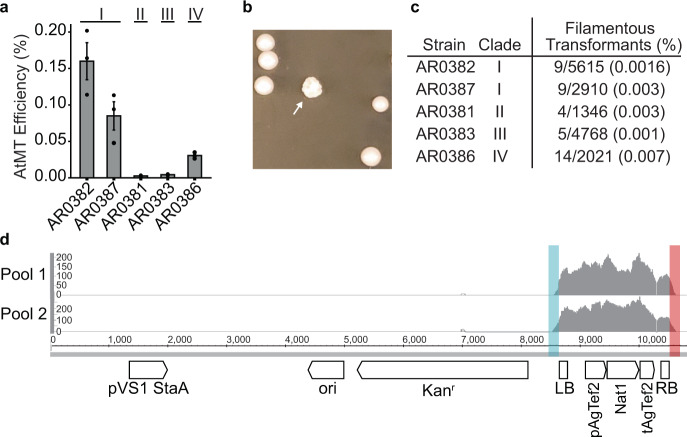
“144 Because previous reports suggest that AtMT transformation efficiency in fungi varies 145 with alterations in co-culture and incubation parameters (26), we monitored the 146 transformation efficiency of C.”
The RAM network in pathogenic fungi
Saputo, S., Chabrier-Rosello, Y., Luca, F. C., Kumar, A., & Krysan, D. J. (2012) · Eukaryotic Cell · doi:10.1128/ec.00044-12 · Cited by 65
Mayr, E.-M., Ramírez-Zavala, B., Krüger, I., & Morschhäuser, J. (2020) · mSphere · doi:10.1128/msphere.00279-20 · Cited by 55
Filamentous growth is a general feature of Candida auris clinical isolates
Fan, S., Yue, H., Zheng, Q., Bing, J., Tian, S., Chen, J., Ennis, C. L., Nobile, C. J., Huang, G., & Du, H. (2021) · Medical Mycology · doi:10.1093/mmy/myaa116 · Cited by 55 · cited 1×
“auris cells following 79 murine infection (10, 11).”
Park, D., Park, S. H., Ban, Y. W., Kim, Y. S., Park, K.-C., Kim, N., Kim, J., & Choi, I. (2017) · BMC Biotechnology · doi:10.1186/s12896-017-0386-x · Cited by 51
Veri, A. O., Miao, Z., Shapiro, R. S., Tebbji, F., O’Meara, T. R., Kim, S. H., Colazo, J., Tan, K., Vyas, V. K., Whiteway, M., et al. (2018) · PLoS Genetics · doi:10.1371/journal.pgen.1007270 · Cited by 51
Self-citationAgrobacterium-Mediated Transformation of Yeast and Fungi
Hooykaas, P. J. J., van Heusden, G. P. H., Niu, X., Roushan, M. R., Soltani, J., Zhang, X., & van der Zaal, B. J. (2018) · Current topics in microbiology and immunology · doi:10.1007/82_2018_90 · Cited by 49
O’Meara, T. R., O’Meara, M. J., Polvi, E. J., Pourhaghighi, M. R., Liston, S. D., Lin, Z.-Y., Veri, A. O., Emili, A., Gingras, A.-C., & Cowen, L. E. (2019) · PLoS Biology · doi:10.1371/journal.pbio.3000358 · Cited by 49 · cited 1×
“To form pTO137, the RFP construct 467 was PCR amplified from pLC1047 (65) using primers oTO124-oTO125; a terminator 468 sequence consisting of 933 bp downstream of the C.”
Self-citationRapid mapping of insertional mutations to probe cell wall regulation in Cryptococcus neoformans
Esher, S. K., Granek, J. A., & Alspaugh, J. A. (2015) · Fungal Genetics and Biology · doi:10.1016/j.fgb.2015.06.003 · Cited by 39 · cited 1×
“AtMT was performed as previously described with minor modifications (67).”
The Detection and Analysis of Chitinase Activity from the Yeast Form of Candida albicans
BARRETT-BEE, K., & HAMILTON, M. (1984) · Microbiology · doi:10.1099/00221287-130-7-1857 · Cited by 39 · cited 1×
“Cell wall chitin remodeling during 319 growth and cell separation involves parallel expression of both chitinase and chitin 320 synthase activities (42).”
On the Origin of Candida auris: Ancestor, Environmental Stresses, and Antiseptics
Sharma, M., & Chakrabarti, A. (2020) · mBio · doi:10.1128/mbio.02102-20 · Cited by 35
Agrobacterium-Mediated Transformation of Non-Plant Organisms
Soltani, J., van Heusden, G. P. H., & Hooykaas, P. J. J. (2007) · Springer eBooks · doi:10.1007/978-0-387-72290-0_18 · Cited by 33
Kim, S. H., Iyer, K. R., Pardeshi, L., Muñoz, J. F., Robbins, N., Cuomo, C. A., Wong, K. H., & Cowen, L. E. (2019) · mBio · doi:10.1128/mbio.00346-19 · Cited by 28
Koehler, C. M., & Myers, A. M. (1997) · FEBS Letters · doi:10.1016/s0014-5793(97)00401-8 · Cited by 26 · cited 1×
“cerevisiae has been long understood, its role in 394 pathogenic fungi is largely unexplored (36, 56).”
Greig, J. A., Sudbery, I. M., Richardson, J. P., Naglik, J. R., Wang, Y., & Sudbery, P. E. (2015) · PLOS Pathogens · doi:10.1371/journal.ppat.1004630 · Cited by 25 · cited 1×
“auris in a Tao3-dependent 388 manner (54, 55).”
Calderón-Noreña, D., González‐Novo, A., Orellana‐Muñoz, S., Gutiérrez-Escribano, P., Arnáiz‐Pita, Y., Dueñas‐Santero, E., Suárez, M. B., Bougnoux, M., del Rey, F., Sherlock, G., et al. (2015) · PLoS Genetics · doi:10.1371/journal.pgen.1005152 · Cited by 23
DeORFanizing Candida albicans Genes using Coexpression
O’Meara, T. R., & O’Meara, M. J. (2021) · mSphere · doi:10.1128/msphere.01245-20 · Cited by 20 · cited 1×
“albicans ortholog C7_00260C using the CalCEN Co-expression network (29).”
Self-citationWakade, R. S., Ristow, L. C., Stamnes, M. A., Kumar, A., & Krysan, D. J. (2020) · mBio · doi:10.1128/mbio.01900-20 · Cited by 20 · cited 1×
“auris in a Tao3-dependent 388 manner (54, 55).”
Mondeel, T. D. G. A., Holland, P., Nielsen, J., & Barberis, M. (2019) · Nucleic Acids Research · doi:10.1093/nar/gkz603 · Cited by 16 · cited 1×
“cerevisiae, suggesting Fkh2 may act as a 384 regulatory hub governing the contrasting chitin synthase and chitinase activities during 385 cell separation (53).”
An effective and rapid method for RNA preparation from non-conventional yeast species
Lee, D. W., Hong, C. P., & Kang, H. A. (2019) · Analytical Biochemistry · doi:10.1016/j.ab.2019.113408 · Cited by 15
Roles of Elm1 in antifungal susceptibility and virulence in Candida glabrata
Ito, Y., Miyazaki, T., Tanaka, Y., Suematsu, T., Nakayama, H., Morita, A., Hirayama, T., Tashiro, M., Takazono, T., Saijo, T., et al. (2020) · Scientific Reports · doi:10.1038/s41598-020-66620-7 · Cited by 9 · cited 1×
“glabrata, which exhibited decreased 408 expression of CgCTS1 compared to wild type (37).”
Cited by
Candida auris Genetics and Emergence
Chowdhary, A., Jain, K., & Chauhan, N. (2023) · Annual Review of Microbiology · doi:10.1146/annurev-micro-032521-015858 · Cited by 158
A Candida auris –specific adhesin, Scf1 , governs surface association, colonization, and virulence
Santana, D. J., Anku, J. A. E., Zhao, G., Zarnowski, R., Johnson, C. J., Hautau, H., Visser, N. D., Ibrahim, A. S., Andes, D., Nett, J. E., et al. (2023) · Science · doi:10.1126/science.adf8972 · Cited by 149
Self-citationWang, F., Han, R., & Chen, S. (2023) · Clinical Microbiology Reviews · doi:10.1128/cmr.00051-22 · Cited by 153
“auris, the developed tools for insertional mutant library building were useful (329).”
BackgroundBing, J., Guan, Z., Zheng, T., Zhang, Z., Fan, S., Ennis, C. L., Nobile, C. J., & Huang, G. (2023) · PLOS Pathogens · doi:10.1371/journal.ppat.1011239 · Cited by 84
Rapid evolution of an adaptive multicellular morphology of Candida auris during systemic infection
Bing, J., Guan, Z., Zheng, T., Ennis, C. L., Nobile, C. J., Chen, C., Chu, H., & Huang, G. (2024) · Nature Communications · doi:10.1038/s41467-024-46786-8 · Cited by 74
“Another striking feature of C. auris is its ability to form multi-cellular aggregates 25,30 – 32 .”
Influential
Metadata
- Authors
- Santana, D. J., & O’Meara, T. R.
- Affiliations
- University of Michigan (US)
- Corresponding author
- O’Meara, Teresa R.
- Venue
- Nature Communications
- Published
- 2021-12-10
- Volume
- 12
- Issue
- 1
- Pages
- 7197-7197
- ISSN
- 2041-1723 (ISSN-L)
- PMC
- PMC8664941
- OpenAlex
- W4225337568
- Cited by
- 91
- References
- 81
- Citations by year
- 2026: 21 · 2025: 21 · 2024: 24 · 2023: 18 · 2022: 7
- FWCI
- 3.83
- Type
- journal article
- Language
- en
- Update notices
- correction (2022-02-23)
- Open access
- gold
- doi.org
- Licence
- cc-by
- creativecommons.org/licenses/by/4.0 (tdm)
- creativecommons.org/licenses/by/4.0 (vor)
- Locations
- Nature Communications (publishedVersion, cc-by)
- bioRxiv (Cold Spring Harbor Laboratory) (acceptedVersion, cc-by-nc)
- PubMed Central (publishedVersion, cc-by)
- PubMed (publishedVersion)
- RePEc: Research Papers in Economics (submittedVersion)
- DOAJ (DOAJ: Directory of Open Access Journals) (submittedVersion, cc-by-sa)
- Funders
- U.S. Department of Health & Human Services | NIH | National Institute of Allergy and Infectious Diseases (T32AI007528, KAI137299)
- Topics
- Life Sciences › Biochemistry, Genetics and Molecular Biology › Molecular Biology › Fungal and yeast genetics research
- Health Sciences › Medicine › Infectious Diseases › Antifungal resistance and susceptibility
- Life Sciences › Immunology and Microbiology › Microbiology › Yeasts and Rust Fungi Studies
- Keywords
- Candida auris, morphogenesis, filamentous growth, cell aggregates, chitinase, Agrobacterium-mediated transformation, CRISPR/Cas9, forward and reverse genetics, virulence, antifungal susceptibility, clades
- MeSH terms
- Candida auris, Animals, Antifungal Agents, Candidiasis, Disease Models, Animal, Fungal Proteins, Morphogenesis, Moths, Mutation, Protein Kinases, Virulence, Fluconazole, Gene Expression Regulation, Fungal, Drug Resistance, Fungal, Reverse Genetics, CRISPR-Cas Systems
About these checks
Registry, retraction, Cites and statistics results are computed, not judged, with one exception: a printed reference that no index lists is read once by a model before it counts as a citation error. Claims are extracted by a model and kept only when their quote appears verbatim in the text; each cited source is then checked, with a model’s help, for whether it says what the claim relies on. Those verdicts can be wrong — read the claim’s quote and the cited source before relying on one.
Statistics and arithmetic are recomputed, not judged.
Confidence bands are shown only for fields calibrated on our annotated test set. None is calibrated yet, so no band is shown.
What counts as a claim ›How we measure confidence ›How we check this ›
Are you an author, or do you see a problem with this page? Request a review
Data sources
Bibliographic data: Semantic Scholar, OpenAlex, Crossref.
Contains information from the Semantic Scholar Academic Graph Datasets, made available under the ODC Attribution License (ODC-BY 1.0).
Semantic Scholar’s data is described in: Kinney, R., et al. (2023). The Semantic Scholar Open Data Platform. arXiv:2301.10140.
