

Defining molecular glues with a dual-nanobody cannabidiol sensor
Open accessThe DOI matches its Crossref record; 58 of the 59 references it cites were found in a registry or an index; 15 of the 40 sources its claims cite were checked for support.
Abstract
“Molecular glue” (MG) is a term coined to describe the mechanism of action of the plant hormone auxin and subsequently used to characterize synthetic small molecule protein degraders exemplified by immune-modulatory imide drugs (IMiDs). Prospective development of MGs, however, has been hampered by its elusive definition and thermodynamic characteristics. Here, we report the crystal structure of a dual-nanobody cannabidiol-sensing system, in which the ligand promotes protein-protein interaction in a manner analogous to auxin. Through quantitative analyses, we draw close parallels among the dual-nanobody cannabidiol sensor, the auxin perception complex, and the IMiDs-bound CRL4 CRBN E3, which can bind and ubiquitinate “neo-substrates”. All three systems, including the recruitment of IKZF1 and CK1α to CRBN, are characterized by the lack of ligand binding activity in at least one protein partner and an under-appreciated preexisting low micromolar affinity between the two proteinaceous subunits that is enhanced by the ligand to reach the nanomolar range. These two unifying features define MGs as a special class of proximity inducers distinct from bifunctional compounds and can be used as criteria to guide target selection for future rational discovery of MGs.
Overview
CoChat Summary
TL;DR
The paper reports the 2.0 Å crystal structure of a dual-nanobody cannabidiol sensor and uses quantitative biophysics to compare it with auxin and IMiD systems. It proposes that molecular glues are defined by no detectable ligand affinity to at least one protein partner plus a preexisting low-micromolar affinity between the two protein partners that the ligand enhances to the nanomolar range.
Key findings
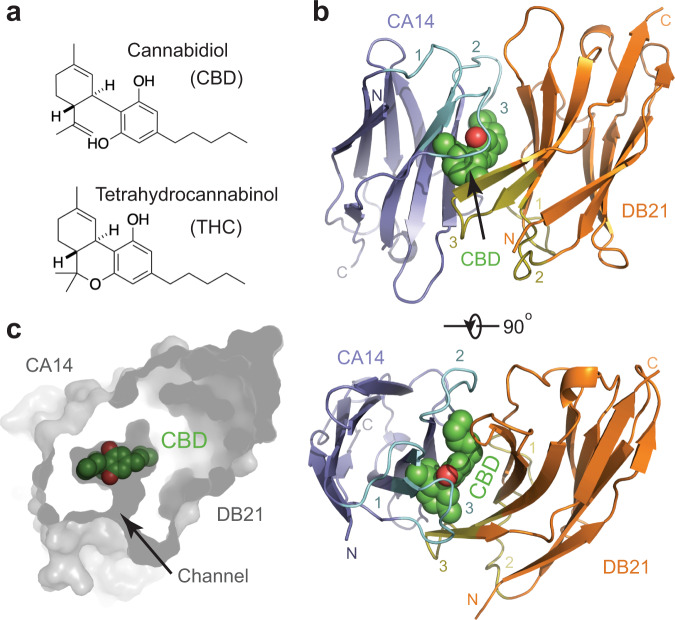
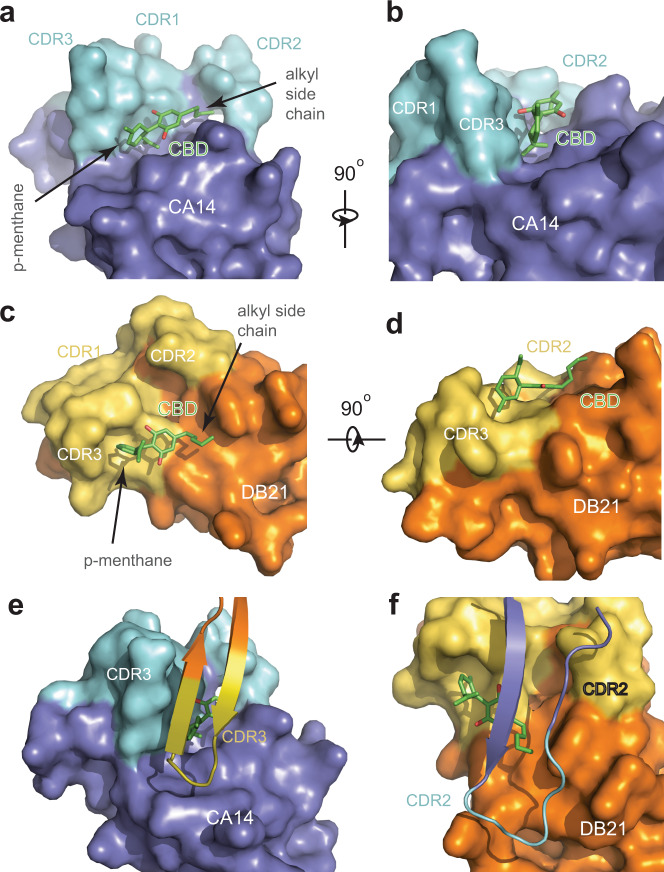
- The CA14-CBD-DB21 ternary complex was determined at 2.0 Å; CBD is buried at the nanobody interface, the complex buries ~1400 Ų with about two-thirds contributed by protein–protein interactions, and the channel is too narrow for CBD to enter or escape without nanobody dissociation.
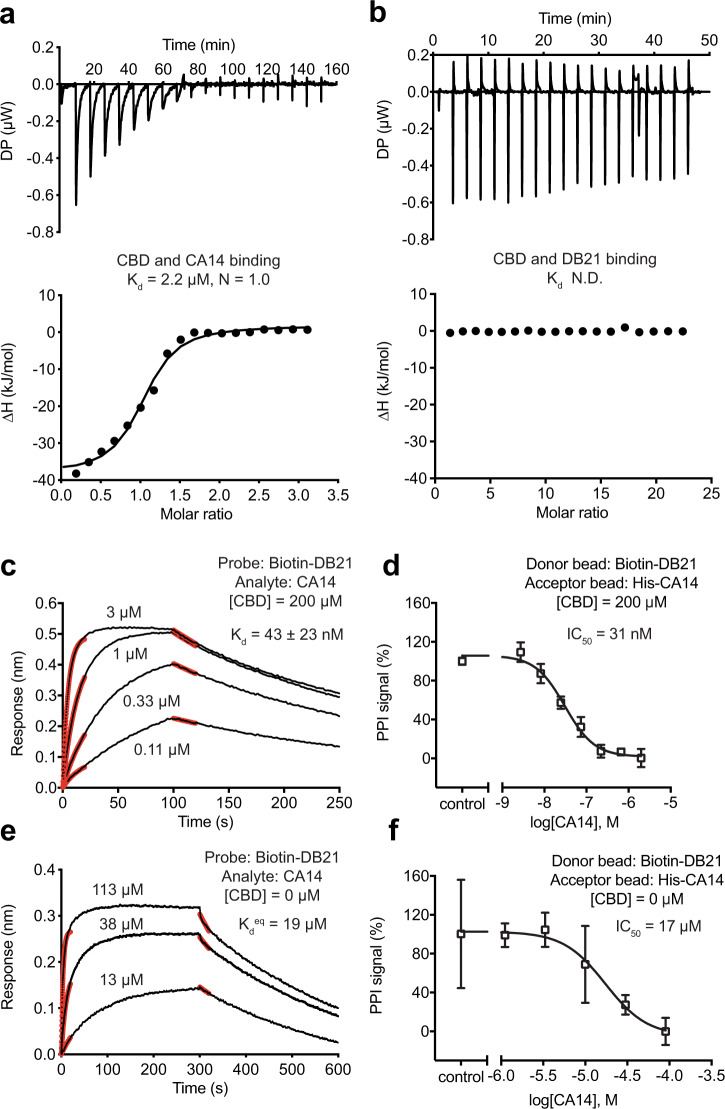
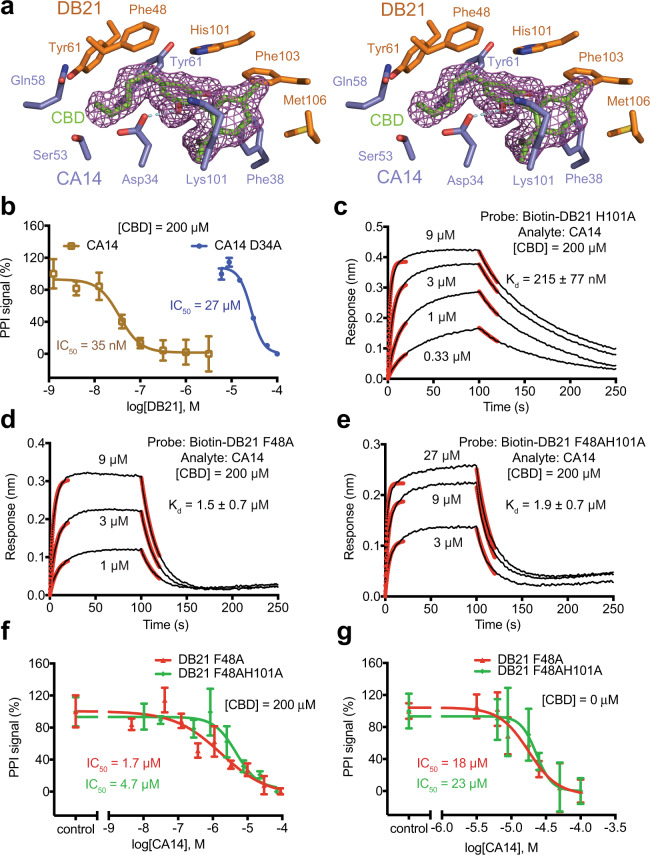
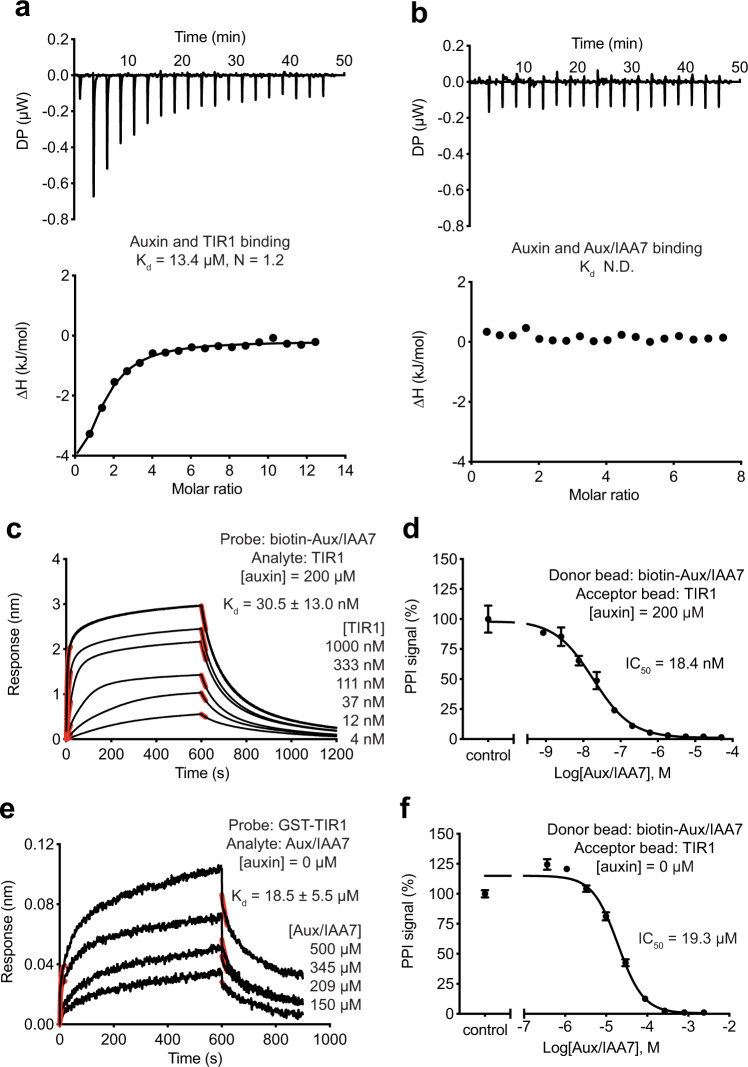
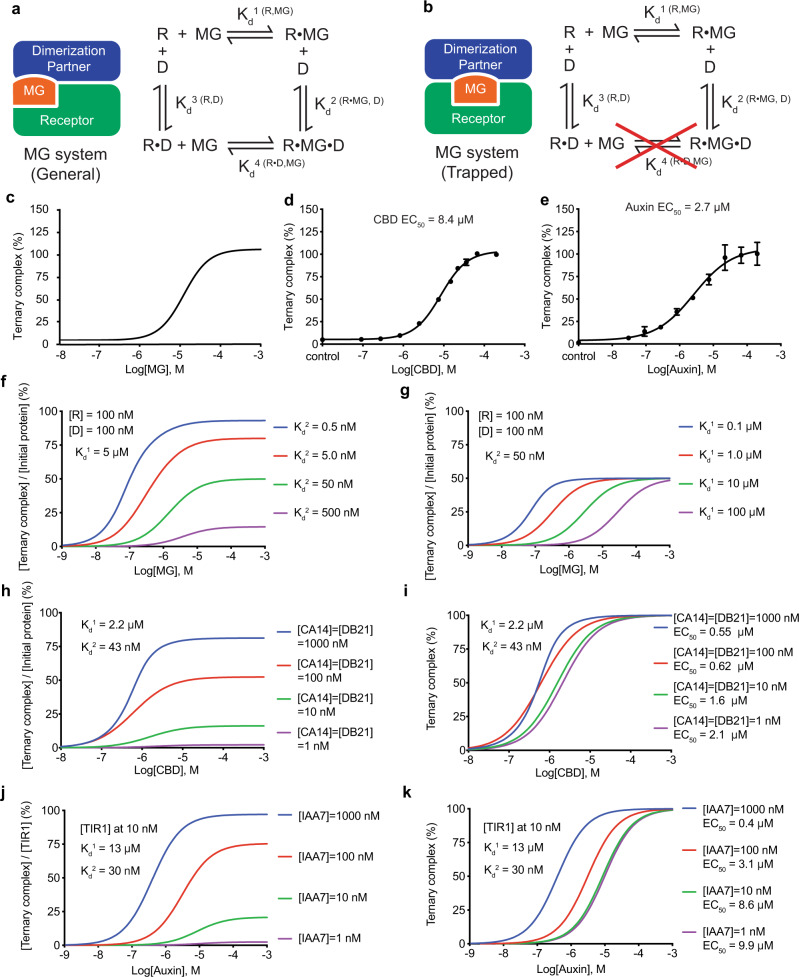
- In the CBD sensor, CA14 binds CBD with 2.2 μM affinity, DB21 shows no detectable CBD affinity, DB21 binds CBD-bound CA14 with Kd 43 nM, and ligand-free CA14-DB21 has ~20 μM affinity; CBD enhances the interaction ~450-fold. D34A in CA14 disables the response, while DB21 F48A/H101A mutations reduce enhancement to ~10-fold.
- In the auxin system, TIR1 binds auxin with 13.4 μM affinity, Aux/IAA7 shows no detectable auxin affinity, TIR1-IAA7 affinity is 30.5 nM with auxin versus ~18–20 μM without auxin, giving ~600-fold enhancement.
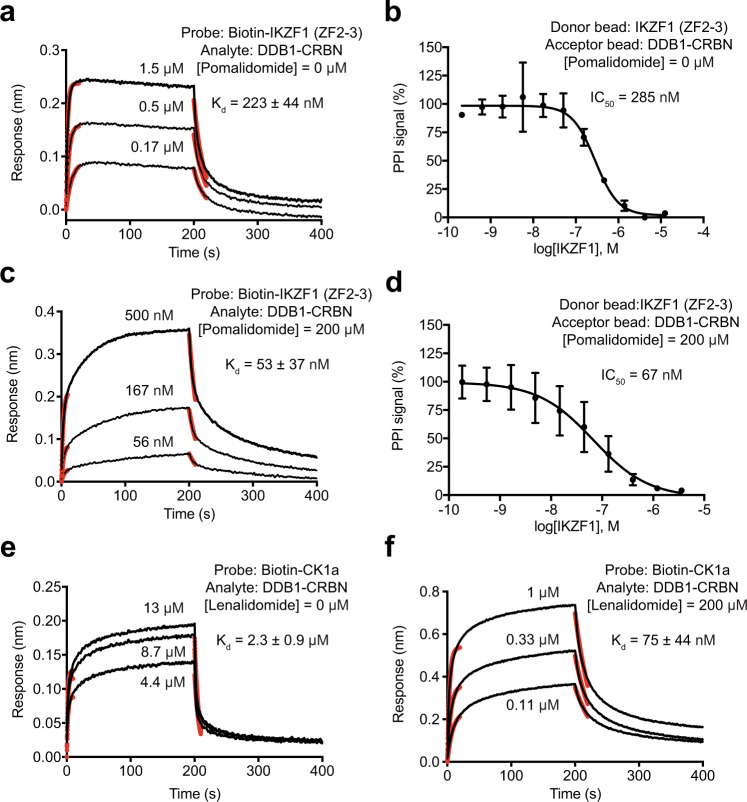
- For IMiDs, DDB1–CRBN has intrinsic affinity for IKZF1 at 200–300 nM, increased by pomalidomide to 50–70 nM, and for CK1α at 2.3 μM, increased by lenalidomide to 75 nM. The paper defines MGs by lack of detectable affinity to at least one partner plus quantifiable intrinsic protein–protein affinity, with positive cooperativity and a sigmoid dose-response lacking a hook effect.
Methods
- Crystallized the CA14-CBD-DB21 ternary complex, collected X-ray data at 2.0 Å, and solved the structure by molecular replacement; nanobodies were expressed in E. coli periplasm, purified, and assembled with CBD.
- Measured ligand binding by ITC and protein–protein affinities by BLI and AlphaScreen competition assays in the absence or presence of saturating MG; performed structure-guided mutagenesis of CA14 D34 and DB21 F48/H101.
- Built a three-body equilibrium model for topologically trapped MGs, simulated dose-response curves using Kd1, Kd2, and protein concentrations, and validated predictions with AlphaScreen CBD and auxin dose-response experiments.
Limitations
- Stated: CA14 remained refractory to crystallization, so the contribution of the CBD-DB21 interface was assessed by mutagenesis rather than direct apo/binary CA14 structures; the paper also notes the open question of what affinity range is amenable to diffusible MG compounds.
- Evident: The proposed MG definition is derived from a small set of systems—an engineered CBD sensor, auxin, and IMiDs—and from in vitro binding assays; generalizability to all molecular glues and cellular contexts is not established by this study.
Model-written summary. Check it against the paper before relying on it.
Integrity signals
Registry
Cites
Statistics
Figures
Verification
Claims the paper makes
6 Valid · 1 Not valid · 8 Not checked · 74 Own results and interpretations
At least one cited source doesn’t support this claim or points to a different paper, and none confirmed it — see the verdicts below.
In the paper
“Even higher cooperativity is achieved by the rationally developed NRX-252114 compound, which is capable of enhancing the binding between β-TrCP and a hypophosphorylated β-catenin degron (pSer33/Ala37) peptide by 680-folds38.”
§ Defining molecular glues with a dual-nanobody cannabidiol sensor > Results > Cooperativity of MGs
What the sources say
- Disputedcites [38] Simonetta KR Prospective discovery of small molecule enhancers of an E3 ligase-substrate interaction Nat. Commun. 2019 10 1402 30926793 PMC6441019 sourceExperimental — accuracy not yet measured
For the exact peptide named in the claim (monophosphorylated pSer33/S37A, i.e. 'hypophosphorylated β-catenin degron pSer33/Ala37'), the Results section 'Optimized enhancers have improved potency and cooperativity' states NRX-252114 enhances β-TrCP binding with >1500-fold cooperativity, explicitly a lower limit because the assay bottoms out (Fig. 3 legend, same section). The only ~500–700-scale figure in our copy is for a different peptide — the fully unphosphorylated Ser33/Ser37 degron, enhanced from >100 µM to 180 nM (>500-fold) in 'Enhancers potentiate unphosphorylated β-catenin ubiquitylation'. No 680-fold value appears anywhere in our copy (searched: '680-fold cooperativity NRX-252114', 'NRX-252114 cooperativity fold enhancement pSer33/S37A'), so the magnitude attributed here conflicts with the paper's reported value. (LLM, conf=0.70)
Checked by a reasoning model — may be wrong.
plainstates a cause- Asserted: passes — The authors put it forward as true.
- Checkable: passes — It can be checked against evidence.
- Load-bearing: passes — The paper’s conclusions depend on it.
- Based: passes — The paper gives a reason why it holds.
- Disputed
The cited sources support only part of this claim — read each source’s verdict below.
In the paper
“a panel of CDK12 inhibitors have been shown to act as MGs to enable a neo-morphic interaction between CDK12 and DDB1, inducing CRL4-catalyzed Cyclin K ubiquitination and degradation27–29.”
§ Defining molecular glues with a dual-nanobody cannabidiol sensor > Introduction
What the sources say
- Supportedcites [27] Lv, L. et al. Discovery of a molecular glue promoting CDK12-DDB1 interaction to trigger cyclin K degradation. Elife10.7554/eLife.59994 (2020). PMC7462607 32804079 source
The Introduction states that HQ461 recruits DDB1 to CDK12, enabling the DDB1-CUL4-RBX1 ligase to polyubiquitinate and degrade Cyclin K. The Discussion reports that two other studies found CDK12 inhibitors with the same mechanism, supporting the claim about multiple compounds. The paper does not suggest that all CDK12 inhibitors act this way. (LLM, conf=0.91)
- Supportedcites [28] Mayor-Ruiz C Rational discovery of molecular glue degraders via scalable chemical profiling Nat. Chem. Biol. 2020 16 1199 1207 32747809 PMC7116640 source
The Results section, “Identification of structurally distinct cyclin K degraders,” reports that dCeMM2/3/4 inhibit CDK12/13 activity. The Discussion states that these compounds promote CDK12:cyclin K binding to a DDB1:CUL4B complex, leading to cyclin K ubiquitination and degradation. The paper specifies CRL4B, a more precise designation than the claim’s CRL4. (LLM, conf=0.91)
- Partly supportedcites [29] Słabicki M The CDK inhibitor CR8 acts as a molecular glue degrader that depletes cyclin K Nature 2020 585 293 297 32494016 PMC7486275 sourceExperimental — accuracy not yet measured
The “CR8 directs CDK12 to CRL4 core component” section shows that CR8 promotes CDK12–DDB1 binding, CUL4A–RBX1–DDB1-mediated cyclin K ubiquitination, and cyclin K degradation. The “CR8 phenylpyridine confers glue activity” section reports that other tested inhibitors also promoted binding and some ubiquitination, but DRF053, roscovitine, and flavopiridol did not induce cyclin K degradation in cells. Thus, this paper does not support degradation by the panel as a whole. (LLM, conf=0.90)
boostedstates a cause- Asserted: passes — The authors put it forward as true.
- Checkable: passes — It can be checked against evidence.
- Load-bearing: passes — The paper’s conclusions depend on it.
- Based: passes — The paper gives a reason why it holds.
- Supported
The cited sources support only part of this claim — read each source’s verdict below.
In the paper
“Without a ligand-binding pocket, classic neo-substrates of IMiDs-bound CRBN, such as IKZF1 and CK1α, are not expected to have an affinity towards the compounds12,15.”
§ Defining molecular glues with a dual-nanobody cannabidiol sensor > Results > Intrinsic affinity between CRBN and neo-substrates
What the sources say
- Partly supportedcites [12] Sievers, Q. L. et al. Defining the human C2H2 zinc finger degrome targeted by thalidomide analogs through CRBN. Science10.1126/science.aat0572 (2018). PMC6326779 30385546 sourceExperimental — accuracy not yet measured
Our copy supplies the framing but not the attributed conclusion. The Introduction states that thalidomide analogs bind CRBN and 'alter its substrate selectivity to recruit, ubiquitinate and degrade seemingly unrelated proteins including Ikaros (IKZF1), Aiolos (IKZF3), Casein kinase 1 alpha (CK1α) and GSPT1', and that 'Transcription factors have remained challenging drug targets due to the absence of druggable active sites (14)' — the latter a general point about TFs credited to another reference, and the Discussion speaks of targeting 'undruggable' transcription factors. What the paper never says is that IKZF1 or CK1α lack a ligand-binding pocket and therefore have no affinity for the compounds themselves; no binary drug–substrate binding is measured or asserted, and CK1α appears only as a comparison for β-hairpin packing against pomalidomide (Structures section, citing ref. 6). Indeed the Structures and Discussion sections report direct side-chain contacts between the compound and the substrate ('IKZF1 Q146 forms the only side chain interaction with the compound'; 'direct contacts between thalidomide analogs and the ZF provide additional layers of specificity'), so the pocket-absence/no-affinity claim as applied to CK1α and as an explicit inference is not supported by this source. (LLM, conf=0.70)
- Not checked yetcites [15] Petzold G Fischer ES Thomä NH Structural basis of lenalidomide-induced CK1α degradation by the CRL4(CRBN) ubiquitin ligase Nature 2016 532 127 130 26909574 source
hedged- Asserted: passes — The authors put it forward as true.
- Checkable: passes — It can be checked against evidence.
- Load-bearing: passes — The paper’s conclusions depend on it.
- Based: passes — The paper gives a reason why it holds.
- Partly supported
The cited sources support only part of this claim — read each source’s verdict below.
In the paper
“Moreover, their weak interactions are echoed by the low μM affinities recently reported for the DCAF15-RBM39 and DDB1-CDK12-Cyclin K interacting partners22,29 as well as the bipartite degron of JAZ1 that docks to the F-box protein COI1 via an α-helix next to the binding pocket of jasmonate-isoleucine, another MG plant hormone45.”
§ Defining molecular glues with a dual-nanobody cannabidiol sensor > Discussion
What the sources say
- Not checked yetcites [22] Du X Structural basis and kinetic pathway of RBM39 recruitment to DCAF15 by a sulfonamide molecular glue E7820 Structure 2019 27 1625 1633.e1623 31693911 source
- Partly supportedcites [29] Słabicki M The CDK inhibitor CR8 acts as a molecular glue degrader that depletes cyclin K Nature 2020 585 293 297 32494016 PMC7486275 sourceExperimental — accuracy not yet measured
In 'CR8 directs CDK12 to CRL4 core component' our copy does describe the DDB1–CDK12–cyclin K partnership as a weak interaction ('weak CDK12-cycK-DDB1 interaction was still detectable in the absence of the compound in vitro'), which supports the citing sentence's framing of weak MG protein-partner contacts. However, the affinity it quantifies for this complex is sub-micromolar, not low micromolar: 'CR8 stimulated binding between CDK12-cycK and DDB1 in the range of 100–500 nM depending on the experimental setup (Fig. 2c, Extended Data Fig. 4)', tightened 500- to 1000-fold by the compound per ITC. The related values in 'CR8 phenylpyridine confers glue activity' and 'CDK12-DDB1 interface imparts selectivity' are only expressed as relative decreases (two-fold for DRF053, three-fold for roscovitine, lower affinity for CDK13), and no low-μM Kd/Ki for DDB1–CDK12–cycK is stated anywhere in our copy, so the specific magnitude attributed here is not supported by this source. (LLM, conf=0.72)
- Partly supportedcites [45] Sheard LB Jasmonate perception by inositol-phosphate-potentiated COI1-JAZ co-receptor Nature 2010 468 400 405 20927106 PMC2988090 sourceExperimental — accuracy not yet measured
The structural part of the attribution is in our copy: 'Structural roles of the bipartite JAZ degron' describes the JAZ1 degron as bipartite (loop plus α-helix) with the conserved C-terminal α-helix binding the top surface of the COI1 LRR domain adjacent to the ligand-binding site, and suggests it 'may provide a low affinity anchor for docking the JAZ protein on COI1'. However, no low-micromolar Kd for the JAZ1–COI1 interaction is reported anywhere in our copy: the quantitative affinities given are nM Kd values for 3H-coronatine binding to the COI1–JAZ6/COI1–JAZ1 co-receptor (68 nM and 48 nM, 'COI1-JAZ complex as a JA co-receptor') and µM Ki values for the JA-Ile isomers competing at that site (1.8 µM and 18 µM), i.e. ligand affinities, not a measured protein–protein affinity. So the 'low µM affinity reported for JAZ1-COI1' element attributed to this source is unsupported, and the paper's own language for the helix is a hedged qualitative 'low affinity anchor' rather than a reported micromolar value. (LLM, conf=0.75)
plainstates an association- Asserted: passes — The authors put it forward as true.
- Checkable: passes — It can be checked against evidence.
- Load-bearing: passes — The paper’s conclusions depend on it.
- Based: passes — The paper gives a reason why it holds.
Every source the paper cites for this claim was checked and supports it.
In the paper
“the thermodynamic cycle for ternary complex formation mediated by such compounds is distinct from that of bifunctional proximity inducers, which has been previously described36.”
§ Defining molecular glues with a dual-nanobody cannabidiol sensor > Results > A mathematical model for the auxin-like MG system
What the sources say
- Supportedcites [36] Douglass EF Miller CJ Sparer G Shapiro H Spiegel DA A comprehensive mathematical model for three-body binding equilibria. J. Am. Chem. Soc. 2013 135 6092 6099 23544844 PMC3717292 source
The citation is attached to the statement that the bifunctional proximity-inducer equilibrium has been described previously, not to the citing authors’ comparison with MGs. The source’s References note 7 defines its model as a linear A–B–C complex formed through a bridging species B, and Results and Discussion (Non-cooperative Equilibria) describes the A–B and B–C binding interactions. Page numbers are unavailable in our copy. (LLM, conf=0.88)
plain- Asserted: passes — The authors put it forward as true.
- Checkable: passes — It can be checked against evidence.
- Load-bearing: passes — The paper’s conclusions depend on it.
- Based: passes — The paper gives a reason why it holds.
- Supported
49 more claims
Create a free account to see all 89 claims and to verify the 25 references still open.
- It may state two separate claims as one. 17
- Probably not a substantial claim. 18
- The quote only partly states this claim. 1
Claims other papers make about this one
Each is checked against this paper’s own text: does it say what the citing paper says it does?
The source backs part of the claim, not all of it — or backs it for a different population, condition or comparison.
In the citing paper
“Furthermore, the large interface area involves extensive interactions between CRBN-MG and KAT2A, providing measurable affinity of KAT2A-CRBN in the absence of MG (54) and resembling the molecular recognition seen in immunoglobulin (Ig) binding to antigens.”
From Degron-independent recruitment of KAT2A expands the target space of CRBN molecular glues (2026) · cites this paper as [54]
Experimental — accuracy not yet measuredThe source backs part of the claim, not all of it — or backs it for a different population, condition or comparison.
In the citing paper
“It has been suggested that baseline compatibility between the POI and the E3 is a necessary requirement for the formation of a ternary complex.61,239”
From Advancing Targeted Protein Degradation via Multiomics Profiling and Artificial Intelligence (2023) · cites this paper as [61]
Experimental — accuracy not yet measuredThe cited source says what the claim attributes to it.
In the citing paper
“Interestingly, recent evidence suggests that MGDs depend on a certain baseline affinity between E3 and POI in the absence of the respective small molecule.61”
From Advancing Targeted Protein Degradation via Multiomics Profiling and Artificial Intelligence (2023) · cites this paper as [61]
The cited source says what the claim attributes to it.
In the citing paper
“Recently, the Zheng lab postulated that most, if not all, MGs act on proteins that already have a basal propensity to interact with each other, thus also differentiating this pharmacology from bifunctional molecules like PROTACs.77”
From Chasing molecular glue degraders: screening approaches (2022) · cites this paper as [77]
In the citing paper
“However, recent studies have scaled-down these numbers to more realistic prospects: exhaustive thermodynamic characterization of prototypical MGs outlined that a minimum level of intrinsic affinity between E3 and target may be required.77”
From Chasing molecular glue degraders: screening approaches (2022) · cites this paper as [77]
Self-check
Percentages, sums and reported differences re-computed from the paper’s own numbers.
Each contradiction between two passages listed here was confirmed by an independent check.
Rated major: it would touch a result — a value a result rests on, reported and recomputed p-values on opposite sides of the significance level, two passages that conflict with no sign which is right, or a cited work retracted before this paper was published.
In the paper
§ Defining molecular glues with a dual-nanobody cannabidiol sensor > Abstract
“All three systems, including the recruitment of IKZF1 and CK1α to CRBN, are characterized by the lack of ligand binding activity in at least one protein partner and an under-appreciated preexisting low micromolar affinity between the two proteinaceous subunits that is enhanced by the ligand to reach the nanomolar range.”
§ Defining molecular glues with a dual-nanobody cannabidiol sensor > Results > Intrinsic affinity between CRBN and neo-substrates
“IKZF1 displayed a robust affinity at 200–300 nM toward CRBN in complex with full-length DDB1, as measured in both BLI and AlphaScreen competition assays (Fig. 6a, b).”
Citations
Cites
[20] Processing of X-ray diffraction data collected in oscillation mode
Otwinowski, Z., & Minor, W. (1997) · Methods in Enzymology · doi:10.1016/s0076-6879(97)76066-x · Cited by 33,475
Features and development of Coot
Emsley, P., Lohkamp, B., Scott, W. G., & Cowtan, K. (2010) · Acta Crystallographica Section D Biological Crystallography · doi:10.1107/s0907444910007493 · Cited by 29,915
The Phyre2 web portal for protein modeling, prediction and analysis
Kelley, L. A., Mezulis, S., Yates, C. M., Wass, M. N., & Sternberg, M. J. E. (2015) · Nature Protocols · doi:10.1038/nprot.2015.053 · Cited by 9,652
Liebschner, D., Afonine, P. V., Baker, M. L., Bunkóczi, G., Chen, V. B., Croll, T. I., Hintze, B., Hung, L.-W., Jain, S., McCoy, A. J., et al. (2019) · Acta Crystallographica Section D Structural Biology · doi:10.1107/s2059798319011471 · Cited by 7,953
LigPlot+: Multiple Ligand–Protein Interaction Diagrams for Drug Discovery
Laskowski, R. A., & Swindells, M. B. (2011) · Journal of Chemical Information and Modeling · doi:10.1021/ci200227u · Cited by 6,471
Sakamoto, K. M., Kim, K. B., Kumagai, A., Mercurio, F., Crews, C. M., & Deshaies, R. J. (2001) · Proceedings of the National Academy of Sciences · doi:10.1073/pnas.141230798 · Cited by 2,609
Identification of a Primary Target of Thalidomide Teratogenicity
Ito, T., Ando, H., Suzuki, T., Ogura, T., Hotta, K., Imamura, Y., Yamaguchi, Y., & Handa, H. (2010) · Science · doi:10.1126/science.1177319 · Cited by 2,136
The mechanism of action of cyclosporin A and FK506
Schreiber, S. L., & Crabtree, G. R. (1992) · Immunology Today · doi:10.1016/0167-5699(92)90111-j · Cited by 2,127
The F-box protein TIR1 is an auxin receptor
Dharmasiri, N., Dharmasiri, S., & Estelle, M. (2005) · Nature · doi:10.1038/nature03543 · Cited by 2,083
Lenalidomide Causes Selective Degradation of IKZF1 and IKZF3 in Multiple Myeloma Cells
Krönke, J., Udeshi, N. D., Narla, A., Grauman, P., Hurst, S. N., McConkey, M., Svinkina, T., Heckl, D., Comer, E., Li, X., et al. (2014) · Science · doi:10.1126/science.1244851 · Cited by 1,879
Mechanism of auxin perception by the TIR1 ubiquitin ligase
Tan, X., Calderon-Villalobos, L. I. A., Sharon, M., Zheng, C., Robinson, C. V., Estelle, M., & Zheng, N. (2007) · Nature · doi:10.1038/nature05731 · Cited by 1,688
Self-citationThe Myeloma Drug Lenalidomide Promotes the Cereblon-Dependent Destruction of Ikaros Proteins
Lu, G., Middleton, R. E., Sun, H., Naniong, M., Ott, C. J., Mitsiades, C. S., Wong, K.-K., Bradner, J. E., & Kaelin, W. G. (2014) · Science · doi:10.1126/science.1244917 · Cited by 1,583
Jasmonate perception by inositol-phosphate-potentiated COI1–JAZ co-receptor
Sheard, L. B., Tan, X., Mao, H., Withers, J., Ben-Nissan, G., Hinds, T. R., Kobayashi, Y., Hsu, F.-F., Sharon, M., Browse, J., et al. (2010) · Nature · doi:10.1038/nature09430 · Cited by 1,497
Self-citationStructural basis of PROTAC cooperative recognition for selective protein degradation
Gadd, M. S., Testa, A., Lucas, X., Chan, K.-H., Chen, W., Lamont, D. J., Zengerle, M., & Ciulli, A. (2017) · Nature Chemical Biology · doi:10.1038/nchembio.2329 · Cited by 1,242
Structure of the DDB1–CRBN E3 ubiquitin ligase in complex with thalidomide
Fischer, E. S., Böhm, K., Lydeard, J. R., Yang, H., Stadler, M. B., Cavadini, S., Nagel, J., Serluca, F., Acker, V., Lingaraju, G. M., et al. (2014) · Nature · doi:10.1038/nature13527 · Cited by 1,141
Small molecules, big targets: drug discovery faces the protein–protein interaction challenge
Scott, D. E., Bayly, A. R., Abell, C., & Skidmore, J. (2016) · Nature Reviews Drug Discovery · doi:10.1038/nrd.2016.29 · Cited by 1,137
Allosteric inhibition of SHP2 phosphatase inhibits cancers driven by receptor tyrosine kinases
Chen, Y.-N. P., LaMarche, M. J., Chan, H. M., Fekkes, P., Garcia-Fortanet, J., Acker, M. G., Antonakos, B., Chen, C. H.-T., Chen, Z., Cooke, V. G., et al. (2016) · Nature · doi:10.1038/nature18621 · Cited by 925
Lenalidomide induces ubiquitination and degradation of CK1α in del(5q) MDS
Krönke, J., Fink, E. C., Hollenbach, P. W., MacBeth, K. J., Hurst, S. N., Udeshi, N. D., Chamberlain, P. P., Mani, D. R., Man, H. W., Gandhi, A. K., et al. (2015) · Nature · doi:10.1038/nature14610 · Cited by 863
Non-psychotropic plant cannabinoids: new therapeutic opportunities from an ancient herb
Izzo, A. A., Borrelli, F., Capasso, R., Di Marzo, V., & Mechoulam, R. (2009) · Trends in Pharmacological Sciences · doi:10.1016/j.tips.2009.07.006 · Cited by 820
Anticancer sulfonamides target splicing by inducing RBM39 degradation via recruitment to DCAF15
Han, T., Goralski, M., Gaskill, N., Capota, E., Kim, J., Ting, T. C., Xie, Y., Williams, N. S., & Nijhawan, D. (2017) · Science · doi:10.1126/science.aal3755 · Cited by 762
A novel cereblon modulator recruits GSPT1 to the CRL4CRBN ubiquitin ligase
Matyskiela, M. E., Lu, G., Ito, T., Pagarigan, B., Lu, C.-C., Miller, K., Fang, W., Wang, N.-Y., Nguyen, D., Houston, J., et al. (2016) · Nature · doi:10.1038/nature18611 · Cited by 701
Structural basis of lenalidomide-induced CK1α degradation by the CRL4CRBN ubiquitin ligase
Petzold, G., Fischer, E. S., & Thomä, N. H. (2016) · Nature · doi:10.1038/nature16979 · Cited by 620
Schreiber, S. L. (2021) · Cell · doi:10.1016/j.cell.2020.12.020 · Cited by 598
Defining the human C2H2 zinc finger degrome targeted by thalidomide analogs through CRBN
Sievers, Q. L., Petzold, G., Bunker, R. D., Renneville, A., Słabicki, M., Liddicoat, B. J., Abdulrahman, W., Mikkelsen, T., Ebert, B. L., & Thomä, N. H. (2018) · Science · doi:10.1126/science.aat0572 · Cited by 537
Donovan, K. A., An, J., Nowak, R. P., Yuan, J. C., Fink, E. C., Berry, B. C., Ebert, B. L., & Fischer, E. S. (2018) · eLife · doi:10.7554/elife.38430 · Cited by 509
PROTACs: An Emerging Therapeutic Modality in Precision Medicine
Nalawansha, D. A., & Crews, C. M. (2020) · Cell Chemical Biology · doi:10.1016/j.chembiol.2020.07.020 · Cited by 490
Chemically induced proximity in biology and medicine
Stanton, B. Z., Chory, E. J., & Crabtree, G. R. (2018) · Science · doi:10.1126/science.aao5902 · Cited by 475
A Comprehensive Mathematical Model for Three-Body Binding Equilibria
Douglass, E. F., Miller, C. J., Sparer, G., Shapiro, H., & Spiegel, D. A. (2013) · Journal of the American Chemical Society · doi:10.1021/ja311795d · Cited by 472
The CDK inhibitor CR8 acts as a molecular glue degrader that depletes cyclin K
Słabicki, M., Kozicka, Z., Petzold, G., Li, Y.-D., Manojkumar, M., Bunker, R. D., Donovan, K. A., Sievers, Q. L., Koeppel, J., Suchyta, D., et al. (2020) · Nature · doi:10.1038/s41586-020-2374-x · Cited by 433
Selective degradation of splicing factor CAPERα by anticancer sulfonamides
Uehara, T., Minoshima, Y., Sagane, K., Sugi, N. H., Mitsuhashi, K. O., Yamamoto, N., Kamiyama, H., Takahashi, K., Kotake, Y., Uesugi, M., et al. (2017) · Nature Chemical Biology · doi:10.1038/nchembio.2363 · Cited by 396
Rational discovery of molecular glue degraders via scalable chemical profiling
Mayor-Ruiz, C., Bauer, S., Brand, M., Kozicka, Z., Siklos, M., Imrichova, H., Kaltheuner, I. H., Hahn, E., Seiler, K., Koren, A., et al. (2020) · Nature Chemical Biology · doi:10.1038/s41589-020-0594-x · Cited by 369
SALL4 mediates teratogenicity as a thalidomide-dependent cereblon substrate
Matyskiela, M. E., Couto, S., Zheng, X., Lu, G., Hui, J., Stamp, K., Drew, C., Ren, Y., Wang, M., Carpenter, A., et al. (2018) · Nature Chemical Biology · doi:10.1038/s41589-018-0129-x · Cited by 338
Modulators of 14-3-3 Protein–Protein Interactions
Stevers, L. M., Sijbesma, E., Botta, M., MacKintosh, C., Obsil, T., Landrieu, I., Cau, Y., Wilson, A. J., Karawajczyk, A., Eickhoff, J., et al. (2018) · Journal of Medicinal Chemistry · doi:10.1021/acs.jmedchem.7b00574 · Cited by 279
Small-molecule-induced polymerization triggers degradation of BCL6
Słabicki, M., Yoon, H., Koeppel, J., Nitsch, L., Roy Burman, S. S., Di Genua, C., Donovan, K. A., Sperling, A. S., Hunkeler, M., Tsai, J. M., et al. (2020) · Nature · doi:10.1038/s41586-020-2925-1 · Cited by 270
Molecular Glue: Kinase Anchoring and Scaffold Proteins
Faux, M. C., & Scott, J. D. (1996) · Cell · doi:10.1016/s0092-8674(00)81075-2 · Cited by 267
Structural basis of indisulam-mediated RBM39 recruitment to DCAF15 E3 ligase complex
Bussiere, D. E., Xie, L., Srinivas, H., Shu, W., Burke, A., Be, C., Zhao, J., Godbole, A., King, D., Karki, R. G., et al. (2020) · Nature Chemical Biology · doi:10.1038/s41589-019-0411-6 · Cited by 257
Structural complementarity facilitates E7820-mediated degradation of RBM39 by DCAF15
Faust, T. B., Yoon, H., Nowak, R. P., Donovan, K. A., Li, Z., Cai, Q., Eleuteri, N. A., Zhang, T., Gray, N. S., & Fischer, E. S. (2020) · Nature Chemical Biology · doi:10.1038/s41589-019-0378-3 · Cited by 218
Prospective discovery of small molecule enhancers of an E3 ligase-substrate interaction
Simonetta, K. R., Taygerly, J., Boyle, K., Basham, S. E., Padovani, C., Lou, Y., Cummins, T. J., Yung, S. L., von Soly, S. K., Kayser, F., et al. (2019) · Nature Communications · doi:10.1038/s41467-019-09358-9 · Cited by 217
Discovery of a molecular glue promoting CDK12-DDB1 interaction to trigger cyclin K degradation
Lv, L., Chen, P., Cao, L., Li, Y., Zeng, Z., Cui, Y., Wu, Q., Li, J., Wang, J.-H., Dong, M.-Q., et al. (2020) · eLife · doi:10.7554/elife.59994 · Cited by 215
Zhu, Y. X., Braggio, E., Shi, C.-X., Kortuem, K. M., Bruins, L. A., Schmidt, J. E., Chang, X.-B., Langlais, P., Luo, M., Jedlowski, P., et al. (2014) · Blood · doi:10.1182/blood-2014-02-557819 · Cited by 213
A Small Molecule Targeting Mutagenic Translesion Synthesis Improves Chemotherapy
Wojtaszek, J. L., Chatterjee, N., Najeeb, J., Ramos, A., Lee, M., Bian, K., Xue, J. Y., Fenton, B. A., Park, H., Li, D., et al. (2019) · Cell · doi:10.1016/j.cell.2019.05.028 · Cited by 194
Structure of the nucleotide exchange factor eIF2B reveals mechanism of memory-enhancing molecule
Tsai, J. C., Miller-Vedam, L. E., Anand, A. A., Jaishankar, P., Nguyen, H. C., Renslo, A. R., Frost, A., & Walter, P. (2018) · Science · doi:10.1126/science.aaq0939 · Cited by 192
Crystal Structure of a Catalytic Antibody with a Serine Protease Active Site
Zhou, G. W., Guo, J., Huang, W., Fletterick, R. J., & Scanlan, T. S. (1994) · Science · doi:10.1126/science.8066444 · Cited by 182
Du, X., Volkov, O. A., Czerwinski, R. M., Tan, H., Huerta, C., Morton, E. R., Rizzi, J. P., Wehn, P. M., Xu, R., Nijhawan, D., et al. (2019) · Structure · doi:10.1016/j.str.2019.10.005 · Cited by 181
Auxin Perception--Structural Insights
Calderon-Villalobos, L. I., Tan, X., Zheng, N., & Estelle, M. (2010) · Cold Spring Harbor Perspectives in Biology · doi:10.1101/cshperspect.a005546 · Cited by 177
Self-citationSelective PP2A enhancement through biased heterotrimer stabilization
Leonard, D., Huang, W., Izadmehr, S., O’Connor, C. M., Wiredja, D. D., Wang, Z., Zaware, N., Chen, Y., Schlatzer, D. M., Kiselar, J., et al. (2020) · Cell · doi:10.1016/j.cell.2020.03.038 · Cited by 176
Routes to Catalysis: Structure of a Catalytic Antibody and Comparison with Its Natural Counterpart
Haynes, M. R., Stura, E. A., Hilvert, D., & Wilson, L. A. (1994) · Science · doi:10.1126/science.8303271 · Cited by 176
THE STRUCTURAL BASIS OF ANTIGEN-ANTIBODY RECOGNITION
Mariuzza, R. A., Phillips, S. E. V., & Poljak, R. J. (1987) · Annual Review of Biophysics and Biophysical Chemistry · doi:10.1146/annurev.bb.16.060187.001035 · Cited by 162
Structural basis of a small molecule targeting RNA for a specific splicing correction
Campagne, S., Boigner, S., Rüdisser, S., Moursy, A., Gillioz, L., Knörlein, A., Hall, J., Ratni, H., Cléry, A., & Allain, F. H.-T. (2019) · Nature Chemical Biology · doi:10.1038/s41589-019-0384-5 · Cited by 162
Aryl Sulfonamides Degrade RBM39 and RBM23 by Recruitment to CRL4-DCAF15
Ting, T. C., Goralski, M., Klein, K., Wang, B., Kim, J., Xie, Y., & Nijhawan, D. (2019) · Cell Reports · doi:10.1016/j.celrep.2019.09.079 · Cited by 123
Crystal structure of the SALL4-pomalidomide-cereblon-DDB1 complex
Matyskiela, M. E., Clayton, T., Zheng, X., Mayne, C., Tran, E., Carpenter, A., Pagarigan, B., McDonald, J., Rolfe, M., Hamann, L. G., et al. (2020) · Nature Structural & Molecular Biology · doi:10.1038/s41594-020-0405-9 · Cited by 103
Bifunctional chemical probes inducing protein–protein interactions
Maniaci, C., & Ciulli, A. (2019) · Current Opinion in Chemical Biology · doi:10.1016/j.cbpa.2019.07.003 · Cited by 100
Structural bases of IMiD selectivity that emerges by 5-hydroxythalidomide
Furihata, H., Yamanaka, S., Honda, T., Miyauchi, Y., Asano, A., Shibata, N., Tanokura, M., Sawasaki, T., & Miyakawa, T. (2020) · Nature Communications · doi:10.1038/s41467-020-18488-4 · Cited by 89
Kang, S., Davidsen, K., Gomez-Castillo, L., Jiang, H., Fu, X., Li, Z., Liang, Y. T., Jahn, M., Moussa, M., DiMaio, F., et al. (2019) · Journal of the American Chemical Society · doi:10.1021/jacs.9b03522 · Cited by 70
Self-citationHuman von Willebrand factor: The molecular glue of platelet plugs
Titani, K., & Walsh, K. A. (1988) · Trends in Biochemical Sciences · doi:10.1016/0968-0004(88)90048-5 · Cited by 45
Matyskiela, M. E., Zhu, J., Baughman, J. M., Clayton, T., Slade, M., Wong, H. K., Danga, K., Zheng, X., Labow, M., LeBrun, L., et al. (2020) · ACS Chemical Biology · doi:10.1021/acschembio.0c00674 · Cited by 44
Shen, C., Nayak, A., Neitzel, L. R., Adams, A. A., Silver-Isenstadt, M., Sawyer, L. M., Benchabane, H., Wang, H., Bunnag, N., Li, B., et al. (2021) · Nature Communications · doi:10.1038/s41467-021-25634-z · Cited by 43
Structural complementarity facilitates E7820-mediated degradation of RBM39 by DCAF15Preprint
Faust, T. B., Yoon, H., Nowak, R. P., et al. (2019) · bioRxiv (Cold Spring Harbor Laboratory) · doi:10.1101/738534 · Cited by 25
Cited by
Targeted protein degradation for cancer therapy
Hinterndorfer, M., Spiteri, V. A., Ciulli, A., & Winter, G. E. (2025) · Nature Reviews Cancer · doi:10.1038/s41568-025-00817-8 · Cited by 210
“60,61,95).”
Molecular Glues: The Adhesive Connecting Targeted Protein Degradation to the Clinic
Sasso, J. M., Tenchov, R., Wang, D., Johnson, L. S., Wang, X., & Zhou, Q. A. (2023) · Biochemistry · doi:10.1021/acs.biochem.2c00245 · Cited by 246
Targeted protein degradation via intramolecular bivalent glues
Hsia, O., Hinterndorfer, M., Cowan, A. D., Iso, K., Ishida, T., Sundaramoorthy, R., Nakasone, M. A., Imrichova, H., Schätz, C., Rukavina, A., et al. (2024) · Nature · doi:10.1038/s41586-024-07089-6 · Cited by 222
“This reinforces the emerging concept that molecular glue degraders often stabilize pre-existing, albeit functionally inconsequential E3–target interactions 41,45,46 and suggests that these affinities may be essential for (intra)-molecular glue degraders.”
BackgroundProximity-Based Modalities for Biology and Medicine
Liu, X., & Ciulli, A. (2023) · ACS Central Science · doi:10.1021/acscentsci.3c00395 · Cited by 196
Molecular glues for protein-protein interactions: Progressing toward a new dream
Konstantinidou, M., & Arkin, M. R. (2024) · Cell Chemical Biology · doi:10.1016/j.chembiol.2024.04.002 · Cited by 187
Metadata
- Authors
- Cao, S., Kang, S., Mao, H., Yao, J., Gu, L., & Zheng, N.
- Affiliations
- Howard Hughes Medical Institute (US)
- University of Washington (US)
- Corresponding author
- Zheng, Ning
- Venue
- Nature Communications
- Published
- 2022-02-10
- Volume
- 13
- Issue
- 1
- Pages
- 815-815
- ISSN
- 2041-1723 (ISSN-L)
- PMC
- PMC8831599
- OpenAlex
- W4211187930
- Cited by
- 125
- References
- 59
- Citations by year
- 2026: 25 · 2025: 40 · 2024: 28 · 2023: 21 · 2022: 11
- FWCI
- 8.16
- Type
- journal article
- Language
- en
- Open access
- gold
- doi.org
- Licence
- cc-by
- creativecommons.org/licenses/by/4.0 (tdm)
- creativecommons.org/licenses/by/4.0 (vor)
- Locations
- Nature Communications (publishedVersion, cc-by)
- PubMed Central (publishedVersion, cc-by)
- PubMed (publishedVersion)
- RePEc: Research Papers in Economics (submittedVersion)
- DOAJ (DOAJ: Directory of Open Access Journals) (submittedVersion, cc-by-sa)
- Funders
- Howard Hughes Medical Institute
- U.S. Department of Health & Human Services | National Institutes of Health (1R35GM128918, R21DA051555, R21DA051194)
- University of Washington Innovation Award
- Topics
- Life Sciences › Biochemistry, Genetics and Molecular Biology › Molecular Biology › Protein Degradation and Inhibitors
- Life Sciences › Biochemistry, Genetics and Molecular Biology › Molecular Biology › Biochemical and Structural Characterization
- Life Sciences › Biochemistry, Genetics and Molecular Biology › Molecular Biology › Advanced biosensing and bioanalysis techniques
- Keywords
- molecular glues, cannabidiol, auxin perception, protein-protein interaction, cereblon, CRL4 E3 ubiquitin ligase, IKZF1, CK1α, protein degraders, crystal structure
- MeSH terms
- Lenalidomide, Adhesives, Cannabidiol, Indoleacetic Acids, Models, Molecular, Protein Binding, Substrate Specificity, Casein Kinase Ialpha, Nanostructures, Ikaros Transcription Factor, Ubiquitination
About these checks
Registry, retraction, Cites and statistics results are computed, not judged, with one exception: a printed reference that no index lists is read once by a model before it counts as a citation error. Claims are extracted by a model and kept only when their quote appears verbatim in the text; each cited source is then checked, with a model’s help, for whether it says what the claim relies on. Those verdicts can be wrong — read the claim’s quote and the cited source before relying on one.
The claim verdicts this report counts are experimental: their accuracy is not yet measured.
A language model drew the claims from the paper on 2026-10-05, under version 3 of the claim definition (model deepseek-v4.1-flash, prompt extract-v3).
A second model labelled each claim on 2026-10-05 (model jev-1.13-20260917, definition revision gold-guideline-v0.2).
Cited sources are checked with a language model’s help (qwen3.8-omni-flash and gpt-6-sol).
Statistics and arithmetic are recomputed, not judged.
Confidence bands are shown only for fields calibrated on our annotated test set. None is calibrated yet, so no band is shown.
What counts as a claim ›How we measure confidence ›How we check this ›
Are you an author, or do you see a problem with this page? Request a review
Data sources
Bibliographic data: Semantic Scholar, OpenAlex, Crossref.
Contains information from the Semantic Scholar Academic Graph Datasets, made available under the ODC Attribution License (ODC-BY 1.0).
Semantic Scholar’s data is described in: Kinney, R., et al. (2023). The Semantic Scholar Open Data Platform. arXiv:2301.10140.
