

The DOI matches its Crossref record; 115 of the 117 references it cites were found in a registry or an index; 22 of the 29 sources its claims cite were checked for support.
Combinatorial optimization of mRNA structure, stability, and translation for RNA-based therapeutics
Open accessPublished version of a preprint
Abstract
Therapeutic mRNAs and vaccines are being developed for a broad range of human diseases, including COVID-19. However, their optimization is hindered by mRNA instability and inefficient protein expression. Here, we describe design principles that overcome these barriers. We develop a new RNA sequencing-based platform called PERSIST-seq to systematically delineate in-cell mRNA stability, ribosome load, as well as in-solution stability of a library of diverse mRNAs. We find that, surprisingly, in-cell stability is a greater driver of protein output than high ribosome load. We further introduce a method called In-line-seq, applied to thousands of diverse RNAs, that reveals sequence and structure-based rules for mitigating hydrolytic degradation. Our findings show that "superfolder" mRNAs can be designed to improve both stability and expression that are further enhanced through pseudouridine nucleoside modification. Together, our study demonstrates simultaneous improvement of mRNA stability and protein expression and provides a computational-experimental platform for the enhancement of mRNA medicines.
Overview
AI snapshot
Written from the paper’s full text.
TL;DR
The paper develops PERSIST-seq and In-line-seq to systematically optimize therapeutic mRNA stability, structure, and translation. It finds that in-cell mRNA stability is a greater driver of total protein output than high ribosome load, and that structure-optimized CDSs plus pseudouridine modification can improve both in-solution stability and protein expression.
Key findings
- In a 233-mRNA library, PERSIST-seq showed in-cell half-lives ranging from <5 h to >15 h; a model integrating ribosome load and in-cell stability predicted measured luciferase activity with r = 0.71, supporting in-cell stability as the dominant predictor of total protein output.
- In-solution stability was driven mainly by mRNA length and structure: the shortest MEV-encoding mRNAs had half-lives of 3.4 ± 0.6 h, while the longest eGFP-encoding mRNAs had half-lives of 1.1 ± 0.08 h; the ratio 3.0 ± 0.7 matched the inverse length ratio 958 nt/250 nt = 3.8.
- In-line-seq on 3,030 RNA fragments (2,165 after filtering) yielded DegScore, which predicted Nluc CDS in-solution half-lives with Pearson R = −0.63, p < 0.0001, outperforming dGMFE (R = −0.53) and summed unpaired probability (R = −0.60).
- Pseudouridine (ψ) or m1ψ substitution suppressed in-line hydrolysis and gave 1.2–2.7-fold stabilization for longer Nluc mRNAs; a RiboTree/LinearDesign/DegScore-optimized mRNA had t1/2 = 2.4 relative to Nluc start and 1.7-fold higher protein expression, and after 2 h accelerated degradation most ψ-modified optimized mRNA remained functional while the starting mRNA gave negligible activity.
Methods
- PERSIST-seq: pooled full-length IVT mRNA library of 233 constructs with varied 5′ UTRs, 3′ UTRs, and CDSs, barcoded and transfected into HEK293T cells; polysome sucrose-gradient fractionation and time-course sampling measured ribosome load, in-cell stability, and in-solution stability by barcode sequencing.
- In-line-seq: Eterna “Roll-your-own-structure” challenge generated 68-nt RNAs; 3,030 fragments were profiled by single-nucleotide-resolution in-line hydrolysis and SHAPE, then DegScore was trained as a windowed ridge regression model and validated against independent PERSIST-seq in-solution half-lives.
- Follow-up one-by-one assays used luciferase activity after transfection, capillary electrophoresis for in-solution half-lives, SHAPE/DMS chemical mapping, and ψ or m1ψ substitutions; design algorithms included LinearDesign, GC-rich codon sampling, RiboTree, and Eterna participant designs.
Limitations
- Stated: experiments were limited to HEK293T cells, so optimal UTRs are likely cell-type dependent; the study focused on naked, non-formulated mRNAs, and formulated mRNA libraries may reveal additional effects; DegScore was trained on unmodified nucleotides and does not account for ψ stabilization; blinding and randomization were not used.
- Evident from the text: the main pooled library contained 233 constructs, with some design rules derived from Eterna-designed subsets and accelerated degradation conditions (pH 10 with Mg2+), and the protein-output model assumes first-order translation and decay kinetics with negligible Nluc protein degradation.
Model-written summary. Check it against the paper before relying on it.
Integrity signals
Registry
Cites
Statistics
Figures
Verification
Claims the paper makes
93 Own result · 38 Own interpretation · 15 Own method · 8 No basis given · 5 Couldn’t confirm · 3 Partly supported · 2 Supported so far · 1 Supported · 1 Not supported · 1 No full text of the sources · accuracy not yet measured
At least one cited source doesn’t support this claim or points to a different paper, and none confirmed it — see the verdicts below.
In the paper
“Thus, independent of the nucleotide identity 5’ of the U, this bond is a hotspot for in-line nucleophilic attack63,65.”
§ Combinatorial optimization of mRNA structure, stability, and translation for RNA-based therapeutics > RESULTS > Eterna-guided In-line-seq yields additional design principles and DegScore predictor
What the sources say
- Disputedcites [63] Kaukinen, U., Lyytikäinen, S., Mikkola, S. & Lönnberg, H. The reactivity of phosphodiester bonds within linear single-stranded oligoribonucleotides is strongly dependent on the base sequence. Nucleic Acids Res. 30, 468–474 (2002). sourceExperimental — accuracy not yet measured
The Results (page unavailable) report that cleavage of the studied 5′-UpA-3′ bond varies strongly with the surrounding sequence; in one sequence, no reaction was detected in three months. The Discussion (page unavailable) explicitly rejects the idea that this bond is inherently prone to cleavage. The paper studies a bond following U, rather than establishing that a bond leading to 3′ U is a hotspot independent of the preceding nucleotide. (LLM, conf=0.82)
Checked by a reasoning model — may be wrong.
- Could not verifycites [65] Seetin, M. G., Kladwang, W., Bida, J. P. & Das, R. Massively parallel RNA chemical mapping with a reduced bias MAP-seq protocol. Methods Mol. Biol. 1086, 95–117 (2014). sourceExperimental — accuracy not yet measured
The Introduction (page unavailable) discusses chemical probing and nucleotide reactivity, and the References list a work on in-line probing. Neither passage addresses whether the bond leading to a 3′ U is a hotspot for in-line nucleophilic attack regardless of the 5′ nucleotide; searches for that mechanism and sequence preference found no supporting passage in our copy. (LLM, conf=0.73)
plaindirect- Asserted: passes — The authors put it forward as true.
- Checkable: passes — It can be checked against evidence.
- Load-bearing: passes — The paper’s conclusions depend on it.
- Based: passes — The paper gives a reason why it holds.
- Disputed
The sources with a verdict support this claim; the rest weren’t checked yet, have no full text we could read, or their verdicts aren’t rated yet.
In the paper
“Most surprising, in contrast to previous reports47–49, we found 5’ UTRs that are highly structured, such as the dengue virus (DEN2), can support efficient translation.”
§ Combinatorial optimization of mRNA structure, stability, and translation for RNA-based therapeutics > RESULTS > High dynamic range of translation driven by UTRs
What the sources say
- Supportedcites [47] Zhang, H. et al. LinearDesign: efficient algorithms for optimized mRNA sequence design. Preprint at https://arxiv.org/abs/2004.10177 (2020). source
The citation is attached to “previous reports,” not to the citing authors’ finding about DEN2. In §1.10 (page unavailable), the source says studies have shown reduced protein expression when the 5′-end leader region has more secondary structure; its Results likewise note a potential negative effect on translation efficiency. It does not report the DEN2 finding, but that finding is presented as the citing authors’ own. (LLM, conf=0.91)
- Not checked — no full text of the sourcecites [48] Ding, Y. et al. In vivo genome-wide profiling of RNA secondary structure reveals novel regulatory features. Nature 505, 696–700 (2014). source
- Supportedcites [49] Shah, P., Ding, Y., Niemczyk, M., Kudla, G. & Plotkin, J. B. Rate-limiting steps in yeast protein translation. Cell 153, 1589–1601 (2013). source
The citation is attached to “previous reports,” not to the citing authors’ finding about dengue virus. In Results > Initiation Probabilities of Endogenous Genes (page unavailable), Shah et al. report that strong 5′ mRNA structure reduces translation initiation in yeast. The paper does not report the DEN2 finding, but it supports the prior view the citing sentence contrasts with it. (LLM, conf=0.88)
plaindirect- Asserted: passes — The authors put it forward as true.
- Checkable: passes — It can be checked against evidence.
- Load-bearing: passes — The paper’s conclusions depend on it.
- Based: passes — The paper gives a reason why it holds.
- Supported
Every source the paper cites for this claim was checked and supports it.
In the paper
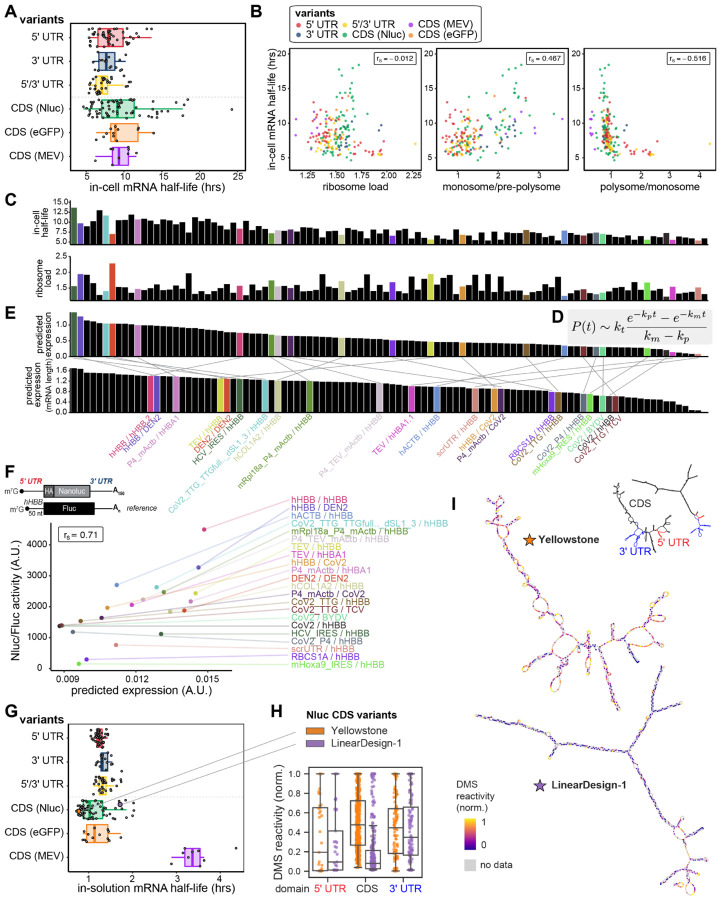
“The strongest prediction of previous theoretical modeling7 was that length changes should drive the most variation in in-solution stability, and PERSIST-seq data across different different CDS types confirmed the effect of CDS length on RNA stability, (Fig. 2G).”
§ Combinatorial optimization of mRNA structure, stability, and translation for RNA-based therapeutics > RESULTS > mRNA length and structure drive in-solution mRNA stability
What the sources say
- Supportedcites [7] Wayment-Steele, H. K. et al. Theoretical basis for stabilizing messenger RNA through secondary structure design. Nucleic Acids Res. 49, 10604–10617 (2021). source
Citation 7 is attached to the previous theoretical modeling, not to the citing authors’ PERSIST-seq result in Fig. 2G. In Results, “A biophysical model for RNA degradation” (page unavailable), the source predicts that longer RNAs degrade faster in proportion to their length. The PERSIST-seq confirmation is not a finding attributed to this source by the citation placement. (LLM, conf=0.90)
plaindirect- Asserted: passes — The authors put it forward as true.
- Checkable: passes — It can be checked against evidence.
- Load-bearing: passes — The paper’s conclusions depend on it.
- Based: passes — The paper gives a reason why it holds.
- The authors state this as an assumption: The high pH buffer containing Mg2+ mimics the high effective pH and positively charged environment that can arise in lipid nanoparticles, protamine, and other formulations for mRNA therapeutics.
- Supported
The cited sources that could be checked couldn’t confirm or dispute this claim.
In the paper
“Chemical structure mapping showed that the long-lived LinearDesign-1 was significantly more highly structured than Yellowstone, as assessed by dimethyl sulfate (DMS) and selective 2’-hydroxyl acylation with primer extension (SHAPE) reactivities59,60 (Fig. 2H, Fig. S3) and structure models guided by these data (Fig. 2I).”
§ Combinatorial optimization of mRNA structure, stability, and translation for RNA-based therapeutics > RESULTS > mRNA length and structure drive in-solution mRNA stability
What the sources say
- Could not verifycites [59] Leonhardt, C. et al. Single-cell mRNA transfection studies: delivery, kinetics and statistics by numbers. Nanomedicine 10, 679–688 (2014). sourceExperimental — accuracy not yet measured
The Single-cell mRNA expression kinetics and Discussion passages describe eGFP expression after mRNA and pDNA transfection, not a comparison of LinearDesign-1 with Yellowstone. Searches for those names and for DMS and SHAPE structure mapping found no passage addressing the claimed result. (LLM, conf=0.76)
- Could not verifycites [60] Wang, H. et al. Diversity of putative archaeal RNA viruses in metagenomic datasets of a yellowstone acidic hot spring. Springerplus 4, 189 (2015). sourceExperimental — accuracy not yet measured
The Methods describe metagenomic sequence assembly, and the Results compare archaeal RNA-virus sequences from a Yellowstone hot spring; no page numbers are available in our copy. Searches for LinearDesign-1, DMS, SHAPE, and chemical structure mapping found no passage addressing the claimed structural comparison. (LLM, conf=0.77)
plaincorrelational- Asserted: passes — The authors put it forward as true.
- Checkable: passes — It can be checked against evidence.
- Load-bearing: passes — The paper’s conclusions depend on it.
- Based: passes — The paper gives a reason why it holds.
- The authors state this as an assumption: The high pH buffer containing Mg2+ mimics the high effective pH and positively charged environment that can arise in lipid nanoparticles, protamine, and other formulations for mRNA therapeutics.
- Could not verify
The cited sources that could be checked couldn’t confirm or dispute this claim.
In the paper
“kp is set to 0 since Nluc protein has negligible degradation as measured by luciferase activity in transiently Nluc-expressing HEK293 cells for at least 6 hours after cycloheximide treatment, which allows assessment of protein degradation in the absence of further translation91.”
§ Combinatorial optimization of mRNA structure, stability, and translation for RNA-based therapeutics > METHODS > Amplicon sequencing data analysis
What the sources say
- Could not verifycites [91] Martin, M. Cutadapt removes adapter sequences from high-throughput sequencing reads. EMBnet J. 17, 10 (2011). sourceExperimental — accuracy not yet measured
The Introduction and Algorithm sections describe adapter trimming in sequencing reads, not protein degradation experiments. Searches for Nluc, HEK293, luciferase activity, and cycloheximide found no passage addressing the claimed six-hour stability. (LLM, conf=0.78)
plain- Asserted: passes — The authors put it forward as true.
- Checkable: passes — It can be checked against evidence.
- Load-bearing: passes — The paper’s conclusions depend on it.
- Based: passes — The paper gives a reason why it holds.
- Could not verify
The cited sources that could be checked couldn’t confirm or dispute this claim.
In the paper
“This effect may derive from overcrowding of ribosomes on mRNA coding regions due to rapid initiation, which can induce sterical ribosome collisions that have recently been found to lead to translation-dependent mRNA decay78,79.”
§ Combinatorial optimization of mRNA structure, stability, and translation for RNA-based therapeutics > DISCUSSION
What the sources say
- Not checked — no full text of the sourcecites [78] Yoffe, A. M. et al. Predicting the sizes of large RNA molecules. Proc. Natl Acad. Sci. USA 105, 16153–16158 (2008). source
- Could not verifycites [79] Polack, F. P. et al. Safety and efficacy of the BNT162b2 mRNA Covid-19 vaccine. N. Engl. J. Med. 383, 2603–2615 (2020). sourceExperimental — accuracy not yet measured
The Methods and Discussion describe BNT162b2 vaccine efficacy and safety, not how translation efficiency affects mRNA stability. Searches for ribosome collisions, rapid initiation, and translation-dependent mRNA decay found no passage addressing the claimed mechanism. (LLM, conf=0.76)
hedgedconditional- Asserted: passes — The authors put it forward as true.
- Checkable: passes — It can be checked against evidence.
- Load-bearing: passes — The paper’s conclusions depend on it.
- Based: passes — The paper gives a reason why it holds.
The sources with a verdict support this claim; the rest weren’t checked yet, have no full text we could read, or their verdicts aren’t rated yet.
In the paper
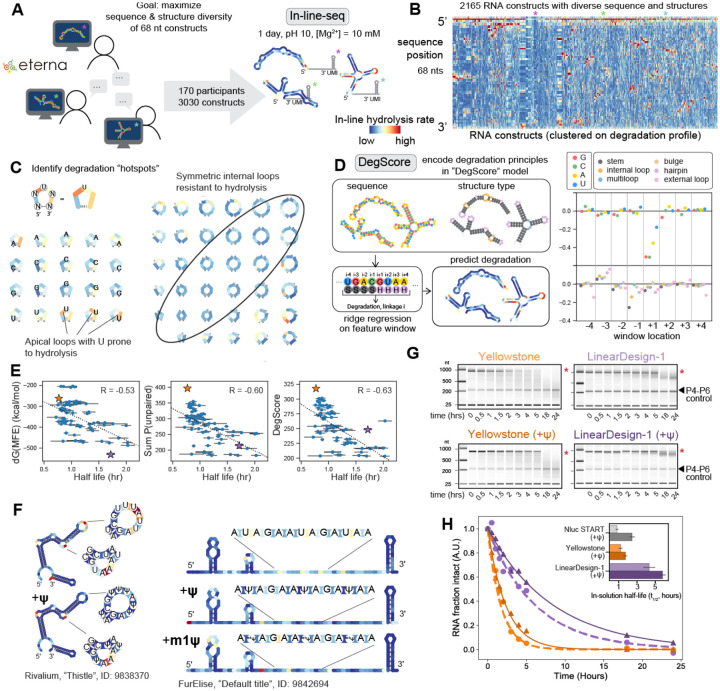
“In particular, we obtained single-nucleotide-resolution measurements of 3030 RNA fragments using In-line-seq, a version of a low-bias ligation and reverse transcription protocol (MAP-seq)64 adapted here for in-line hydrolysis profiles65 (Fig. 3B).”
§ Combinatorial optimization of mRNA structure, stability, and translation for RNA-based therapeutics > RESULTS > Eterna-guided In-line-seq yields additional design principles and DegScore predictor
What the sources say
- Not checked — no full text of the sourcecites [64] Mikkola, S., Kaukinen, U. & Lönnberg, H. The effect of secondary structure on cleavage of the phosphodiester bonds of RNA. Cell Biochem. Biophys. 34, 95–119 (2001). source
- Supportedcites [65] Seetin, M. G., Kladwang, W., Bida, J. P. & Das, R. Massively parallel RNA chemical mapping with a reduced bias MAP-seq protocol. Methods Mol. Biol. 1086, 95–117 (2014). source
The Introduction identifies MAP-seq as a reduced-bias protocol and describes reverse transcription followed by near-quantitative ligation of an Illumina adapter. Citation 64 supports the description of MAP-seq; the 3030-fragment measurement is presented as the citing authors’ own result, and the in-line hydrolysis adaptation is attributed elsewhere. (LLM, conf=0.92)
plain- Asserted: passes — The authors put it forward as true.
- Checkable: passes — It can be checked against evidence.
- Load-bearing: passes — The paper’s conclusions depend on it.
- Based: passes — The paper gives a reason why it holds.
A result the paper reports from its own data — it cites no other source for it, so there is none to check. The quote shows it is in the paper.
In the paper
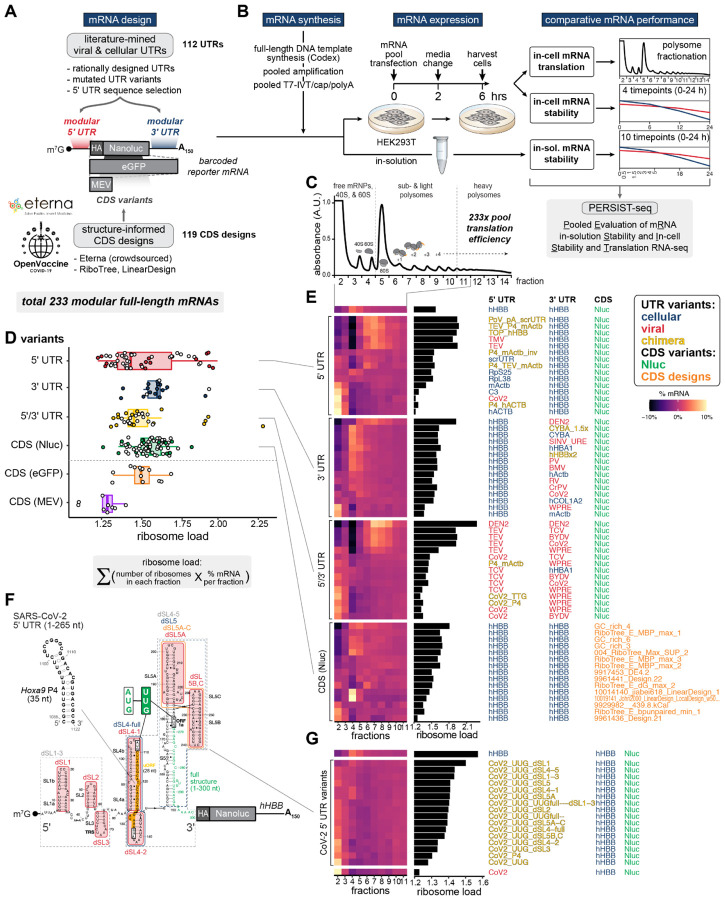
“112 of these mRNAs contained varied 5’ and/or 3’ UTRs (Fig. 1A).”
§ Combinatorial optimization of mRNA structure, stability, and translation for RNA-based therapeutics > RESULTS > A combinatorial library for systematic discovery of mRNA design rules
plain- Asserted: passes — The authors put it forward as true.
- Checkable: passes — It can be checked against evidence.
- Load-bearing: unclear — It is unclear whether the paper’s conclusions depend on it.
- Based: passes — The paper gives a reason why it holds.
A result the paper reports from its own data — it cites no other source for it, so there is none to check. The quote shows it is in the paper.
In the paper
“Moreover, the chimeric fusion of the hHBB 5’ UTR with elements such as the TEV or 5’ TOP sequence in the same 5’ UTR increased polysome loading.”
§ Combinatorial optimization of mRNA structure, stability, and translation for RNA-based therapeutics > RESULTS > High dynamic range of translation driven by UTRs
plaindirect- Asserted: passes — The authors put it forward as true.
- Checkable: passes — It can be checked against evidence.
- Load-bearing: passes — The paper’s conclusions depend on it.
- Based: passes — The paper gives a reason why it holds.
A result the paper reports from its own data — it cites no other source for it, so there is none to check. The quote shows it is in the paper.
In the paper
“Overall, the mRNA designs with highest ribosome load were observed across 5’ UTRs of cellular as well as viral origins (Fig. 1E, Table S1).”
§ Combinatorial optimization of mRNA structure, stability, and translation for RNA-based therapeutics > RESULTS > High dynamic range of translation driven by UTRs
plaincorrelational- Asserted: passes — The authors put it forward as true.
- Checkable: passes — It can be checked against evidence.
- Load-bearing: passes — The paper’s conclusions depend on it.
- Based: passes — The paper gives a reason why it holds.
- It may state two separate claims as one. 22
- Probably not a substantial claim. 15
- The quote only partly states this claim. 1
The cited sources support only part of this claim — read each source’s verdict below.
In the paper
“mRNA vaccines still suffer from decreased efficacy due to poor RNA stability in solution and in vivo and to limited expression of the payload mRNA; these are all pivotal issues that need to be carefully optimized for preclinical and clinical applications3–6.”
§ Combinatorial optimization of mRNA structure, stability, and translation for RNA-based therapeutics > INTRODUCTION
What the sources say
- Partly supportedcites [3] Sahin, U., Karikó, K. & Türeci, Ö. mRNA-based therapeutics-developing a new class of drugs. Nat. Rev. Drug Discov. 13, 759–780 (2014). sourceExperimental — accuracy not yet measured
The sections on improving mRNA delivery and on translation and stability describe extracellular degradation, intracellular stability, and achieving sufficient expression of the encoded protein as challenges. But Box 4 says RNA is stable in RNase-free environments, while the Conclusions say mRNA instability has been efficiently addressed. The paper therefore does not support a blanket claim that poor stability in solution and in vivo still reduces vaccine efficacy. (LLM, conf=0.88)
- Partly supportedcites [4] Jackson, N. A. C., Kester, K. E., Casimiro, D., Gurunathan, S. & DeRosa, F. The promise of mRNA vaccines: a biotech and industrial perspective. npj Vaccines 5, 11 (2020). sourceExperimental — accuracy not yet measured
The “State-of-the-art” section says mRNA is susceptible to degradation during delivery and that construct quality affects expression. “Perspective #1” links improved stability and expression to greater antigen production and potential potency. The cited paper does not specifically establish poor stability in solution as a cause of decreased vaccine efficacy. (LLM, conf=0.84)
- Not checked — no full text of the sourcecites [5] Weng, Y. et al. The challenge and prospect of mRNA therapeutics landscape. Biotechnol. Adv. 40, 107534 (2020). source
- Partly supportedcites [6] Crommelin, D. J. A., Anchordoquy, T. J., Volkin, D. B., Jiskoot, W. & Mastrobattista, E. Addressing the cold reality of mRNA vaccine stability. J. Pharm. Sci. 110, 997–1001 (2021). sourceExperimental — accuracy not yet measured
The Historical Perspective section (page unavailable) says mRNA degradation can reduce vaccine potency by slowing translation and limiting antigen expression; it also discusses degradation in solution. The Concluding Considerations section (page unavailable) links in vivo delivery and antigen production to immunogenicity, but our copy does not establish poor RNA stability in vivo as a cause of decreased vaccine efficacy. (LLM, conf=0.82)
plaindirect- Asserted: passes — The authors put it forward as true.
- Checkable: passes — It can be checked against evidence.
- Load-bearing: passes — The paper’s conclusions depend on it.
- Based: passes — The paper gives a reason why it holds.
It may state two separate claims as one.
- Partly supported
The cited sources support only part of this claim — read each source’s verdict below.
In the paper
“In particular, RNA is inherently unstable due its 2’-hydroxyl group, and degradation of the mRNA in solution by in-line nucleophilic attack, potentially aggravated by formulations, poses a major challenge6.”
§ Combinatorial optimization of mRNA structure, stability, and translation for RNA-based therapeutics > DISCUSSION
What the sources say
- Partly supportedcites [6] Crommelin, D. J. A., Anchordoquy, T. J., Volkin, D. B., Jiskoot, W. & Mastrobattista, E. Addressing the cold reality of mRNA vaccine stability. J. Pharm. Sci. 110, 997–1001 (2021). sourceExperimental — accuracy not yet measured
The Historical Perspective section (page not provided) describes mRNA degradation in solution, including phosphodiester-bond hydrolysis, and says cationic lipid formulations may increase cleavage rates. The Concluding Considerations section treats stability as a major formulation challenge. Our copy does not identify the 2′-hydroxyl group or in-line nucleophilic attack as the mechanism, so those specific parts are not supported. (LLM, conf=0.86)
plaindirect- Asserted: passes — The authors put it forward as true.
- Checkable: passes — It can be checked against evidence.
- Load-bearing: passes — The paper’s conclusions depend on it.
- Based: passes — The paper gives a reason why it holds.
It may state two separate claims as one.
- Partly supported
The cited sources support only part of this claim — read each source’s verdict below.
In the paper
“In particular, we focused on ψ and m1ψ, since these substitutions for U have been widely adopted for mRNA therapeutics and vaccines due to improved in-cell translation and to better control of innate immune responses2,3,8,67 through avoidance of recognition by cellular toll-like receptors (TLR7 and TLR8)68, RIG‑I, and PKR69–71.”
§ Combinatorial optimization of mRNA structure, stability, and translation for RNA-based therapeutics > RESULTS > Pseudouridine stabilizes RNA in solution
What the sources say
- Partly supportedcites [2] Pardi, N., Hogan, M. J., Porter, F. W. & Weissman, D. mRNA vaccines - a new era in vaccinology. Nat. Rev. Drug Discov. 17, 261–279 (2018). sourceExperimental — accuracy not yet measured
The 'Modulation of immunogenicity' section (page unavailable) says pseudouridine and 1-methylpseudouridine reduce innate immune sensing and that nucleoside-modified mRNA improves translation. It links these advances to interest in vaccines and protein-replacement therapies, but does not establish that both substitutions were widely adopted for those uses; the vaccine section describes the platform as novel. (LLM, conf=0.86)
- Partly supportedcites [3] Sahin, U., Karikó, K. & Türeci, Ö. mRNA-based therapeutics-developing a new class of drugs. Nat. Rev. Drug Discov. 13, 759–780 (2014). sourceExperimental — accuracy not yet measured
Box 1 reports that pseudouridine-modified mRNA can improve translation and reduce innate immune activation, including activation of TLR7 and TLR8. It does not identify m1ψ or establish that both substitutions were widely adopted for mRNA therapeutics and vaccines. No page number is available in our copy. (LLM, conf=0.87)
- Partly supportedcites [8] Mauger, D. M. et al. mRNA structure regulates protein expression through changes in functional half-life. Proc. Natl Acad. Sci. USA 116, 24075–24083 (2019). sourceExperimental — accuracy not yet measured
The Methods (mRNA Preparation) identify Ψ and m1Ψ as substitutions for U. The Results (RNA Sequence and Nucleotide Modifications Combine to Determine Protein Expression) report increased cell expression with m1Ψ and describe m1Ψ as having reduced immunogenicity. They do not establish improved translation for Ψ or widespread adoption of both substitutions in therapeutics and vaccines. The TLR, RIG-I, and PKR mechanism is attached to other citations in the citing sentence. (LLM, conf=0.85)
- Could not verifycites [67] Lorenz, R. et al. ViennaRNA Package 2.0. Algorithms Mol. Biol. 6, 26 (2011). sourceExperimental — accuracy not yet measured
The Background section discusses computational RNA folding and RNA–RNA interactions, not the use of ψ or m1ψ in mRNA therapeutics or vaccines. Searches for those substitutions, in-cell translation, and innate immune receptors found no passage addressing the attributed claim. (LLM, conf=0.76)
- Could not verifycites [68] Diedenhofen, B. & Musch, J. cocor: a comprehensive solution for the statistical comparison of correlations. PLoS ONE 10, e0121945 (2015). sourceExperimental — accuracy not yet measured
The Introduction and Code Examples discuss statistical tests for comparing correlations, not mRNA therapeutics or vaccines. The supplied passages do not address ψ or m1ψ substitutions, translation, or innate immune responses, so our copy provides no evidence for the attributed claim. (LLM, conf=0.78)
- Partly supportedcites [69] Karikó, K. et al. Incorporation of pseudouridine into mRNA yields superior nonimmunogenic vector with increased translational capacity and biological stability. Mol. Ther. 16, 1833–1840 (2008). sourceExperimental — accuracy not yet measured
The Results section reports that Ψ-containing mRNA translated more efficiently than unmodified mRNA in cultured cells, and the Discussion reports diminished immunogenicity in vivo and potential therapeutic and vaccine uses. The paper does not establish that Ψ or m1ψ had been widely adopted, and it does not report results for m1ψ. No page numbers are available in our copy. (LLM, conf=0.88)
- Not checked — no full text of the sourcecites [70] Karikó, K., Buckstein, M., Ni, H. & Weissman, D. Suppression of RNA recognition by Toll-like receptors: the impact of nucleoside modification and the evolutionary origin of RNA. Immunity 23, 165–175 (2005). source
- Not checked — no full text of the sourcecites [71] Hornung, V. et al. 5′-Triphosphate RNA is the ligand for RIG-I. Science 314, 994–997 (2006). source
plaindirect- Asserted: passes — The authors put it forward as true.
- Checkable: passes — It can be checked against evidence.
- Load-bearing: passes — The paper’s conclusions depend on it.
- Based: passes — The paper gives a reason why it holds.
It may state two separate claims as one.
- Partly supported
The cited sources that could be checked couldn’t confirm or dispute this claim.
In the paper
“While ψ and derivatives have been reported to stabilize mRNAs against decay in cells67, the effects of these modifications on mRNA stability in solution have not been reported.”
§ Combinatorial optimization of mRNA structure, stability, and translation for RNA-based therapeutics > RESULTS > Pseudouridine stabilizes RNA in solution
What the sources say
- Could not verifycites [67] Lorenz, R. et al. ViennaRNA Package 2.0. Algorithms Mol. Biol. 6, 26 (2011). sourceExperimental — accuracy not yet measured
The Background section on RNA–RNA interactions discusses structure prediction and binding energies, not whether pseudouridine (ψ) or its derivatives protect mRNA from decay in cells. Searches for pseudouridine, modified nucleotides, and cellular mRNA decay found no passage addressing that claim; references to RNA stability concern secondary structure. (LLM, conf=0.76)
plaindirect- Asserted: passes — The authors put it forward as true.
- Checkable: passes — It can be checked against evidence.
- Load-bearing: fails — The paper’s conclusions may not depend on it.
- Based: passes — The paper gives a reason why it holds.
Probably not a substantial claim. The paper’s conclusions may not depend on it.
- Could not verify
The cited sources that could be checked couldn’t confirm or dispute this claim.
In the paper
“such non-formulated mRNAs also appear optimal for certain applications including personalized cancer mRNA vaccines81”
§ Combinatorial optimization of mRNA structure, stability, and translation for RNA-based therapeutics > DISCUSSION
What the sources say
- Could not verifycites [81] Hu, B., Guo, H., Zhou, P. & Shi, Z.-L. Characteristics of SARS-CoV-2 and COVID-19. Nat. Rev. Microbiol. 19, 141–154 (2020). sourceExperimental — accuracy not yet measured
The Vaccines section discusses lipid nanoparticle-formulated mRNA vaccines against SARS-CoV-2, not non-formulated mRNAs or personalized cancer vaccines. Searches for those terms found no passage addressing whether non-formulated mRNAs are optimal for that application. (LLM, conf=0.76)
hedgedcorrelational- Asserted: passes — The authors put it forward as true.
- Checkable: passes — It can be checked against evidence.
- Load-bearing: fails — The paper’s conclusions may not depend on it.
- Based: passes — The paper gives a reason why it holds.
Probably not a substantial claim. The paper’s conclusions may not depend on it.
- Could not verify
A result the paper reports from its own data — it cites no other source for it, so there is none to check. The quote shows it is in the paper.
In the paper
“Nucleotide-resolution data on thousands of small, structured model RNAs from the Eterna platform revealed novel design rules for reducing solution hydrolysis and enabled development of a regression model termed DegScore that enables in silico RNA sequence optimization for enhanced in-solution stability.”
§ Combinatorial optimization of mRNA structure, stability, and translation for RNA-based therapeutics > INTRODUCTION
plaindirect- Asserted: passes — The authors put it forward as true.
- Checkable: passes — It can be checked against evidence.
- Load-bearing: passes — The paper’s conclusions depend on it.
- Based: passes — The paper gives a reason why it holds.
It may state two separate claims as one.
A result the paper reports from its own data — it cites no other source for it, so there is none to check. The quote shows it is in the paper.
In the paper
“Deleting the full 5’ half (dSL1–3) or the 3’ half (dSL4–5) of the 5’ UTR overall increased ribosome load.”
§ Combinatorial optimization of mRNA structure, stability, and translation for RNA-based therapeutics > RESULTS > High dynamic range of translation driven by UTRs
plaindirect- Asserted: passes — The authors put it forward as true.
- Checkable: passes — It can be checked against evidence.
- Load-bearing: passes — The paper’s conclusions depend on it.
- Based: passes — The paper gives a reason why it holds.
It may state two separate claims as one.
A result the paper reports from its own data — it cites no other source for it, so there is none to check. The quote shows it is in the paper.
In the paper
“These effects included significant depletion of 5’ UTRs that contain out-of-frame AUG start codons relative to the main ORF and enrichments of short stem-loop motifs promoting translation (Fig. S2F).”
§ Combinatorial optimization of mRNA structure, stability, and translation for RNA-based therapeutics > RESULTS > High dynamic range of translation driven by UTRs
plaincorrelational- Asserted: passes — The authors put it forward as true.
- Checkable: passes — It can be checked against evidence.
- Load-bearing: passes — The paper’s conclusions depend on it.
- Based: passes — The paper gives a reason why it holds.
It may state two separate claims as one.
A result the paper reports from its own data — it cites no other source for it, so there is none to check. The quote shows it is in the paper.
In the paper
“The dengue virus 5’ and 3’ UTRs both individually increase ribosome loading, and combining them into one mRNA resulted in an additive effect (Fig. 1E, Table S1).”
§ Combinatorial optimization of mRNA structure, stability, and translation for RNA-based therapeutics > RESULTS > High dynamic range of translation driven by UTRs
plaindirect- Asserted: passes — The authors put it forward as true.
- Checkable: passes — It can be checked against evidence.
- Load-bearing: passes — The paper’s conclusions depend on it.
- Based: passes — The paper gives a reason why it holds.
It may state two separate claims as one.
A result the paper reports from its own data — it cites no other source for it, so there is none to check. The quote shows it is in the paper.
In the paper
“Indeed, the ratio of these half-lives, 3.0±0.7, matched within error the inverse ratio of the lengths of the mRNA regions captured by RT-PCR (958 nt/250 nt = 3.8), supporting theoretical predictions of length effects.”
§ Combinatorial optimization of mRNA structure, stability, and translation for RNA-based therapeutics > RESULTS > mRNA length and structure drive in-solution mRNA stability
plaincorrelational- Asserted: passes — The authors put it forward as true.
- Checkable: passes — It can be checked against evidence.
- Load-bearing: passes — The paper’s conclusions depend on it.
- Based: passes — The paper gives a reason why it holds.
It may state two separate claims as one.
- The authors state this as an assumption: The high pH buffer containing Mg2+ mimics the high effective pH and positively charged environment that can arise in lipid nanoparticles, protamine, and other formulations for mRNA therapeutics.
A result the paper reports from its own data — it cites no other source for it, so there is none to check. The quote shows it is in the paper.
In the paper
“Overall, we observed a wide range of UTR-dependent translation efficiencies in PERSIST-seq which could be further fine-tuned with specific UTR sequence or CDS structure alterations.”
§ Combinatorial optimization of mRNA structure, stability, and translation for RNA-based therapeutics > DISCUSSION
hedgedconditional- Asserted: passes — The authors put it forward as true.
- Checkable: passes — It can be checked against evidence.
- Load-bearing: passes — The paper’s conclusions depend on it.
- Based: passes — The paper gives a reason why it holds.
It may state two separate claims as one.
A result the paper reports from its own data — it cites no other source for it, so there is none to check. The quote shows it is in the paper.
In the paper
“For Nluc-encoding mRNAs, CDS variants were similar in ribosome load or showed a shift towards being less loaded with ribosomes.”
§ Combinatorial optimization of mRNA structure, stability, and translation for RNA-based therapeutics > RESULTS > High dynamic range of translation driven by UTRs
plain- Asserted: passes — The authors put it forward as true.
- Checkable: passes — It can be checked against evidence.
- Load-bearing: unclear — It is unclear whether the paper’s conclusions depend on it.
- Based: passes — The paper gives a reason why it holds.
It may state two separate claims as one.
A result the paper reports from its own data — it cites no other source for it, so there is none to check. The quote shows it is in the paper.
In the paper
“These distinct approaches to normalizing the data gave the same results within estimated error (see below).”
§ Combinatorial optimization of mRNA structure, stability, and translation for RNA-based therapeutics > METHODS > Measurement of in-solution mRNA stability by capillary electrophoresis
hedged- Asserted: passes — The authors put it forward as true.
- Checkable: passes — It can be checked against evidence.
- Load-bearing: fails — The paper’s conclusions may not depend on it.
- Based: passes — The paper gives a reason why it holds.
Probably not a substantial claim. The paper’s conclusions may not depend on it.
- The authors state this as an assumption: The majority of the other RNA in the lane were degradation products from the mRNA of interest.
A result the paper reports from its own data — it cites no other source for it, so there is none to check. The quote shows it is in the paper.
In the paper
“Of these coefficients, G and C were the most favorable (least hydrolysis) to have 3’ of the linkage, followed by A, and a 3’ U was most detrimental to degradation, matching our prior observations.”
§ Combinatorial optimization of mRNA structure, stability, and translation for RNA-based therapeutics > RESULTS > Eterna-guided In-line-seq yields additional design principles and DegScore predictor
plaindirect- Asserted: passes — The authors put it forward as true.
- Checkable: passes — It can be checked against evidence.
- Load-bearing: passes — The paper’s conclusions depend on it.
- Based: passes — The paper gives a reason why it holds.
It may state two separate claims as one.
A conclusion the paper draws from its own results — it cites no other source for it, so there is none to check. The quote shows it is in the paper.
In the paper
“Together, our study demonstrates simultaneous improvement of mRNA stability and protein expression and provides a computational-experimental platform for the enhancement of mRNA medicines.”
§ Combinatorial optimization of mRNA structure, stability, and translation for RNA-based therapeutics > Abstract
boosteddirect- Asserted: passes — The authors put it forward as true.
- Checkable: passes — It can be checked against evidence.
- Load-bearing: passes — The paper’s conclusions depend on it.
- Based: passes — The paper gives a reason why it holds.
It may state two separate claims as one.
A conclusion the paper draws from its own results — it cites no other source for it, so there is none to check. The quote shows it is in the paper.
In the paper
“Our findings show that “superfolder” mRNAs can be designed to improve both stability and expression that are further enhanced through pseudouridine nucleoside modification.”
§ Combinatorial optimization of mRNA structure, stability, and translation for RNA-based therapeutics > Abstract
plaindirect- Asserted: passes — The authors put it forward as true.
- Checkable: passes — It can be checked against evidence.
- Load-bearing: passes — The paper’s conclusions depend on it.
- Based: passes — The paper gives a reason why it holds.
It may state two separate claims as one.
What the paper did — it cites no source for this, so there is none to check. The quote shows it is in the paper.
In the paper
“Normalization was performed using two different methods used to cross-validate.”
§ Combinatorial optimization of mRNA structure, stability, and translation for RNA-based therapeutics > METHODS > Measurement of in-solution mRNA stability by capillary electrophoresis
plain- Asserted: passes — The authors put it forward as true.
- Checkable: passes — It can be checked against evidence.
- Load-bearing: fails — The paper’s conclusions may not depend on it.
- Based: passes — The paper gives a reason why it holds.
Probably not a substantial claim. The paper’s conclusions may not depend on it.
- The authors state this as an assumption: The majority of the other RNA in the lane were degradation products from the mRNA of interest.
A conclusion the paper draws from its own results — it cites no other source for it, so there is none to check. The quote shows it is in the paper.
In the paper
“This is the first massively parallel methodology and large-scale data set applying in-line probing to RNA.”
§ Combinatorial optimization of mRNA structure, stability, and translation for RNA-based therapeutics > RESULTS > Eterna-guided In-line-seq yields additional design principles and DegScore predictor
plain- Asserted: passes — The authors put it forward as true.
- Checkable: passes — It can be checked against evidence.
- Load-bearing: passes — The paper’s conclusions depend on it.
- Based: passes — The paper gives a reason why it holds.
It may state two separate claims as one.
What the paper did — it cites no source for this, so there is none to check. The quote shows it is in the paper.
In the paper
“Because this assay relies on accumulation of luciferase in the cytosol, any signal peptides sequences (Table S1) were removed from the CDS for templates and mRNA for these transfection and luciferase activity experiments.”
§ Combinatorial optimization of mRNA structure, stability, and translation for RNA-based therapeutics > METHODS > Luciferase activity assay after mRNA transfection
plaindirect- Asserted: passes — The authors put it forward as true.
- Checkable: passes — It can be checked against evidence.
- Load-bearing: passes — The paper’s conclusions depend on it.
- Based: passes — The paper gives a reason why it holds.
Probably not a substantial claim.
- Rests on an assumption: The luciferase assay relies on accumulation of luciferase in the cytosol.
What the paper did — it cites no source for this, so there is none to check. The quote shows it is in the paper.
In the paper
“The count matrix was log transformed and normalized column-wise using a linear fit on the dilution series of spike-in constructs in each sample.”
§ Combinatorial optimization of mRNA structure, stability, and translation for RNA-based therapeutics > METHODS > Amplicon sequencing data analysis
plain- Asserted: passes — The authors put it forward as true.
- Checkable: passes — It can be checked against evidence.
- Load-bearing: passes — The paper’s conclusions depend on it.
- Based: passes — The paper gives a reason why it holds.
Probably not a substantial claim.
What the paper did — it cites no source for this, so there is none to check. The quote shows it is in the paper.
In the paper
“Blinding and randomization were not used in any of the experiments.”
§ Combinatorial optimization of mRNA structure, stability, and translation for RNA-based therapeutics > METHODS > Quantification and Statistical Procedures
plain- Asserted: passes — The authors put it forward as true.
- Checkable: passes — It can be checked against evidence.
- Load-bearing: fails — The paper’s conclusions may not depend on it.
- Based: passes — The paper gives a reason why it holds.
Probably not a substantial claim. The paper’s conclusions may not depend on it.
What the paper did — it cites no source for this, so there is none to check. The quote shows it is in the paper.
In the paper
“Amplification of the full-length cDNA product was verified on an agarose gel stained with SYBRSafe (Invitrogen).”
§ Combinatorial optimization of mRNA structure, stability, and translation for RNA-based therapeutics > METHODS > SHAPE and DMS chemical mapping of full-length mRNAs
plain- Asserted: passes — The authors put it forward as true.
- Checkable: passes — It can be checked against evidence.
- Load-bearing: fails — The paper’s conclusions may not depend on it.
- Based: passes — The paper gives a reason why it holds.
Probably not a substantial claim. The paper’s conclusions may not depend on it.
What the paper did — it cites no source for this, so there is none to check. The quote shows it is in the paper.
In the paper
“In all cases, multiple independent experiments were performed on different days to verify the reproducibility of experimental findings.”
§ Combinatorial optimization of mRNA structure, stability, and translation for RNA-based therapeutics > METHODS > Quantification and Statistical Procedures
plain- Asserted: passes — The authors put it forward as true.
- Checkable: passes — It can be checked against evidence.
- Load-bearing: fails — The paper’s conclusions may not depend on it.
- Based: passes — The paper gives a reason why it holds.
Probably not a substantial claim. The paper’s conclusions may not depend on it.
In the paper
“For analysis of sequence and structure motifs, sequences were filtered for low experimental noise and to ensure that the structure predicted in ViennaRNA66 matched the structure inferred through SHAPE mapping data collected at the same time (see Methods); these filters resulted in 2165 sequences and corresponding secondary structures.”
§ Combinatorial optimization of mRNA structure, stability, and translation for RNA-based therapeutics > RESULTS > Eterna-guided In-line-seq yields additional design principles and DegScore predictor
What the sources say
- Not checked — no full text of the sourcecites [66] Regulski, E. E. & Breaker, R. R. In-line probing analysis of riboswitches. Methods Mol. Biol. 419, 53–67 (2008). source
plaindirect- Asserted: passes — The authors put it forward as true.
- Checkable: passes — It can be checked against evidence.
- Load-bearing: passes — The paper’s conclusions depend on it.
- Based: passes — The paper gives a reason why it holds.
Probably not a substantial claim. It may state two separate claims as one.
A conclusion the paper draws from its own results — it cites no other source for it, so there is none to check. The quote shows it is in the paper.
In the paper
“Our study presents advances in tackling both of these challenges, building on two new high-throughput technologies.”
§ Combinatorial optimization of mRNA structure, stability, and translation for RNA-based therapeutics > DISCUSSION
plain- Asserted: passes — The authors put it forward as true.
- Checkable: passes — It can be checked against evidence.
- Load-bearing: passes — The paper’s conclusions depend on it.
- Based: passes — The paper gives a reason why it holds.
It may state two separate claims as one.
- Rests on an assumption: Once delivered into patient cells, the candidate mRNA must outcompete other cytoplasmic mRNAs for the translation machinery and avoid the cellular mRNA degradation machinery to express maximum amounts of the desired encoded protein.
A conclusion the paper draws from its own results — it cites no other source for it, so there is none to check. The quote shows it is in the paper.
In the paper
“Taken together with our results above, these PERSIST-seq measurements indicate that structured CDS regions and a wide variety of 5’ UTR elements from cellular and viral origins can sustain or even improve in-cell translation efficiency compared to reference mRNA sequences.”
§ Combinatorial optimization of mRNA structure, stability, and translation for RNA-based therapeutics > RESULTS > High dynamic range of translation driven by UTRs
hedgedconditional- Asserted: passes — The authors put it forward as true.
- Checkable: passes — It can be checked against evidence.
- Load-bearing: passes — The paper’s conclusions depend on it.
- Based: passes — The paper gives a reason why it holds.
It may state two separate claims as one.
A conclusion the paper draws from its own results — it cites no other source for it, so there is none to check. The quote shows it is in the paper.
In the paper
“for applications with very short mRNAs (as are in use for multi-epitope cancer vaccines, and represented in our MEV sequences80) or much longer mRNAs (as are needed for antigens like the SARS-CoV-2 Spike protein), the best UTRs and the sweet spot for optimal translation efficiency may be different.”
§ Combinatorial optimization of mRNA structure, stability, and translation for RNA-based therapeutics > DISCUSSION
hedgedconditional- Asserted: passes — The authors put it forward as true.
- Checkable: passes — It can be checked against evidence.
- Load-bearing: fails — The paper’s conclusions may not depend on it.
- Based: passes — The paper gives a reason why it holds.
Probably not a substantial claim. The paper’s conclusions may not depend on it.
A conclusion the paper draws from its own results — it cites no other source for it, so there is none to check. The quote shows it is in the paper.
In the paper
“Synthesis of mRNAs with modifications – already in wide use for mitigating innate immune response and translational shutdown by mRNA therapeutics67,68,74,75 – is therefore a simple method to achieve significantly greater in-solution stability while sustaining protein expression.”
§ Combinatorial optimization of mRNA structure, stability, and translation for RNA-based therapeutics > DISCUSSION
plaindirect- Asserted: passes — The authors put it forward as true.
- Checkable: passes — It can be checked against evidence.
- Load-bearing: passes — The paper’s conclusions depend on it.
- Based: passes — The paper gives a reason why it holds.
It may state two separate claims as one.
What the paper did — it cites no source for this, so there is none to check. The quote shows it is in the paper.
In the paper
“DegScore was trained on degradation from unmodified nucleotides that does not account for our observed stabilization via ψ”
§ Combinatorial optimization of mRNA structure, stability, and translation for RNA-based therapeutics > DISCUSSION
plain- Asserted: passes — The authors put it forward as true.
- Checkable: passes — It can be checked against evidence.
- Load-bearing: passes — The paper’s conclusions depend on it.
- Based: passes — The paper gives a reason why it holds.
It may state two separate claims as one.
What the paper did — it cites no source for this, so there is none to check. The quote shows it is in the paper.
In the paper
“our experiments were limited to HEK293T as model human cells”
§ Combinatorial optimization of mRNA structure, stability, and translation for RNA-based therapeutics > DISCUSSION
plain- Asserted: passes — The authors put it forward as true.
- Checkable: passes — It can be checked against evidence.
- Load-bearing: passes — The paper’s conclusions depend on it.
- Based: passes — The paper gives a reason why it holds.
Probably not a substantial claim.
A conclusion the paper draws from its own results — it cites no other source for it, so there is none to check. The quote shows it is in the paper.
In the paper
“the best UTRs for high protein output are likely to be cell-type dependent and therefore will vary from application to application”
§ Combinatorial optimization of mRNA structure, stability, and translation for RNA-based therapeutics > DISCUSSION
hedgedcorrelational- Asserted: passes — The authors put it forward as true.
- Checkable: passes — It can be checked against evidence.
- Load-bearing: passes — The paper’s conclusions depend on it.
- Based: passes — The paper gives a reason why it holds.
It may state two separate claims as one.
A conclusion the paper draws from its own results — it cites no other source for it, so there is none to check. The quote shows it is in the paper.
In the paper
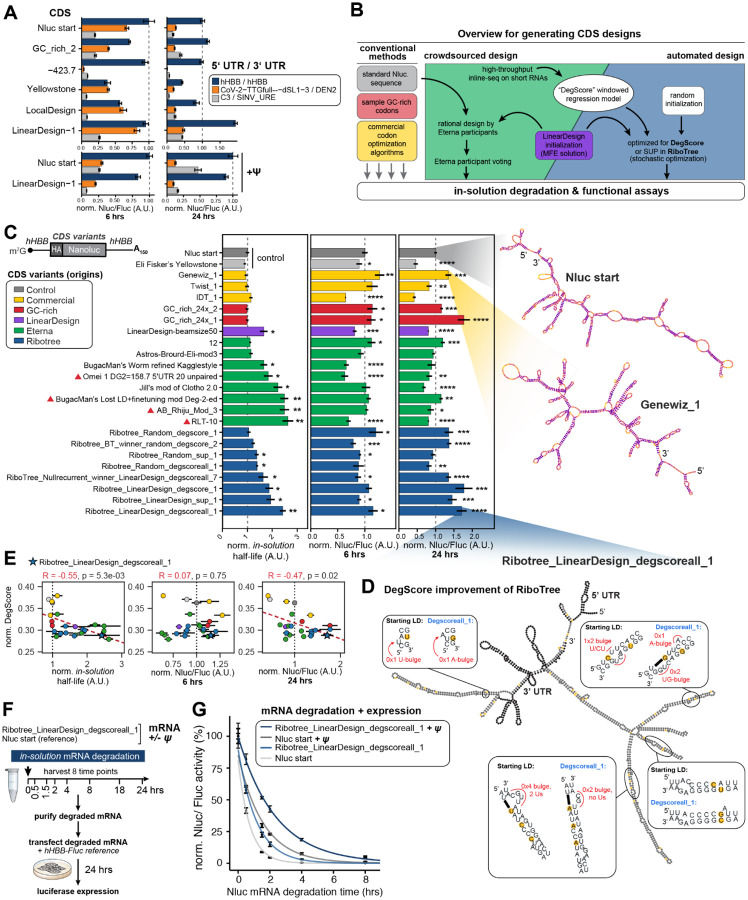
“These results validate and demonstrate a modular and flexible platform that is applicable to potentially any protein target of choice and can accelerate the design of overall improved mRNA therapeutics solutions.”
§ Combinatorial optimization of mRNA structure, stability, and translation for RNA-based therapeutics > RESULTS > Integration of all design rules leads to mRNAs with both high in-solution stability and high protein output
boosteddirect- Asserted: passes — The authors put it forward as true.
- Checkable: passes — It can be checked against evidence.
- Load-bearing: passes — The paper’s conclusions depend on it.
- Based: passes — The paper gives a reason why it holds.
It may state two separate claims as one.
What the paper did — it cites no source for this, so there is none to check. The quote shows it is in the paper.
In the paper
“Subsequently, RNA was purified using Ampure beads + 40% polyethylene glycol 8000 (7:3) and checked again by PAGE-Urea-TBE gel and visualized by SYBR Gold.”
§ Combinatorial optimization of mRNA structure, stability, and translation for RNA-based therapeutics > METHODS > In cell and in-solution RNA degradation time courses
plain- Asserted: passes — The authors put it forward as true.
- Checkable: passes — It can be checked against evidence.
- Load-bearing: fails — The paper’s conclusions may not depend on it.
- Based: passes — The paper gives a reason why it holds.
Probably not a substantial claim. The paper’s conclusions may not depend on it.
What the paper did — it cites no source for this, so there is none to check. The quote shows it is in the paper.
In the paper
“The integrity of each sample was checked by loading 5 μL of total RNA alongside a spike-in control (P4P62HP, 50 ng) onto a PAGE-Urea-TBE gel and visualized by SYBR Gold (Thermo Fisher).”
§ Combinatorial optimization of mRNA structure, stability, and translation for RNA-based therapeutics > METHODS > In cell and in-solution RNA degradation time courses
plain- Asserted: passes — The authors put it forward as true.
- Checkable: passes — It can be checked against evidence.
- Load-bearing: passes — The paper’s conclusions depend on it.
- Based: passes — The paper gives a reason why it holds.
Probably not a substantial claim.
What the paper did — it cites no source for this, so there is none to check. The quote shows it is in the paper.
In the paper
“Each experiment was performed a minimum of three independent times.”
§ Combinatorial optimization of mRNA structure, stability, and translation for RNA-based therapeutics > METHODS > Luciferase activity assay after mRNA transfection
plain- Asserted: passes — The authors put it forward as true.
- Checkable: passes — It can be checked against evidence.
- Load-bearing: passes — The paper’s conclusions depend on it.
- Based: passes — The paper gives a reason why it holds.
Probably not a substantial claim. The quote only partly states this claim.
A conclusion the paper draws from its own results — it cites no other source for it, so there is none to check. The quote shows it is in the paper.
In the paper
“These observations suggest that resistance to RNA hydrolysis, as predicted by DegScore and quantified by in-solution half-life, is important for longer protein expression, but that other RNA sequence and structural features govern protein expression at shorter timescales.”
§ Combinatorial optimization of mRNA structure, stability, and translation for RNA-based therapeutics > RESULTS > Integration of all design rules leads to mRNAs with both high in-solution stability and high protein output
hedgeddirect- Asserted: passes — The authors put it forward as true.
- Checkable: passes — It can be checked against evidence.
- Load-bearing: passes — The paper’s conclusions depend on it.
- Based: passes — The paper gives a reason why it holds.
It may state two separate claims as one.
The authors state this as an assumption.
Nucleotides that are not base paired in structure are uniformly prone to hydrolytic degradation.
“the assumption that nucleotides that are not base paired in structure would be uniformly prone to hydrolytic degradation7.”
The authors state this as an assumption.
Translation follows first-order kinetics and mRNA and protein decay are exponential.
“assuming first-order rate of translation and exponential decay for mRNAs and for proteins.”
The authors state this as an assumption.
The high pH buffer containing Mg2+ mimics the high effective pH and positively charged environment that can arise in lipid nanoparticles, protamine, and other formulations for mRNA therapeutics.
“To mimic the high effective pH and positively charged environment that can arise in lipid nanoparticles, protamine, and other formulations for mRNA therapeutics6, we used a high pH buffer containing Mg2+ to accelerate degradation (10 mM MgCl2, 50 mM Na-CHES, pH 10.0, 24 °C); conditions without Mg2+ or at lower pH lead to similar conclusions on relative stabilities across RNA variants (see below).”
The paper relies on this without support.
The effects of ψ modifications on mRNA stability in solution have not been reported.
“While ψ and derivatives have been reported to stabilize mRNAs against decay in cells67, the effects of these modifications on mRNA stability in solution have not been reported.”
The paper relies on this without support.
High mRNA structure adversely impacts the cellular translational apparatus.
“the expectation that high mRNA structure should adversely impact the cellular translational apparatus.”
The paper relies on this without support.
Once delivered into patient cells, the candidate mRNA must outcompete other cytoplasmic mRNAs for the translation machinery and avoid the cellular mRNA degradation machinery to express maximum amounts of the desired encoded protein.
“Moreover, once delivered into patient cells, the candidate mRNA must outcompete other cytoplasmic mRNAs for the translation machinery and avoid the cellular mRNA degradation machinery to express maximum amounts of the desired encoded protein.”
The authors state this as an assumption.
mRNA translation and mRNA/protein decay follow first-order kinetics.
“To calculated the expected protein levels assuming first order kinetics of mRNA translation and mRNA/protein decay, the following differential equations are used:”
The paper relies on this without support.
The luciferase assay relies on accumulation of luciferase in the cytosol.
“Because this assay relies on accumulation of luciferase in the cytosol, any signal peptides sequences (Table S1) were removed from the CDS for templates and mRNA for these transfection and luciferase activity experiments.”
The authors state this as an assumption.
The majority of the other RNA in the lane were degradation products from the mRNA of interest.
“assuming that the majority of the other RNA in the lane were degradation products from the mRNA of interest”
Claims other papers make about this one
Each is checked against this paper’s own text: does it say what the citing paper says it does?
The source backs part of the claim, not all of it — or backs it for a different population, condition or comparison.
In the citing paper
“which is also consistent with a recent study29 in which LinearDesign-generated sequences with three different UTRs exhibited stronger in vitro protein expression over all benchmark sequences”
From Algorithm for optimized mRNA design improves stability and immunogenicity (2023) · cites this paper as [29]
Experimental — accuracy not yet measuredThe source backs part of the claim, not all of it — or backs it for a different population, condition or comparison.
In the citing paper
“This evidence suggests that LinearDesign is likely to remain effective independent of the choice of UTRs, which is also consistent with a recent study29 in which LinearDesign-generated sequences with three different UTRs exhibited stronger in vitro protein expression over all benchmark sequences”
From Algorithm for optimized mRNA design improves stability and immunogenicity (2023) · cites this paper as [29]
Experimental — accuracy not yet measuredThe source backs part of the claim, not all of it — or backs it for a different population, condition or comparison.
In the citing paper
“LinearDesign had a central role in their work as the starting point of their optimizations (see figure 4b of their paper), followed by fine-tunings by both human players and a Monte Carlo tree search algorithm.”
From Algorithm for optimized mRNA design improves stability and immunogenicity (2023) · cites this paper as [29]
Experimental — accuracy not yet measuredThe source backs part of the claim, not all of it — or backs it for a different population, condition or comparison.
In the citing paper
“LinearDesign-generated sequences showed strong stability and protein expression results with different UTRs (figures 2g and 4a of their paper), independently confirming our in vitro experiments.”
From Algorithm for optimized mRNA design improves stability and immunogenicity (2023) · cites this paper as [29]
Experimental — accuracy not yet measuredThe cited source says what the claim attributes to it.
In the citing paper
“However, they did not perform any in vivo validations.”
From Algorithm for optimized mRNA design improves stability and immunogenicity (2023) · cites this paper as [29]
The cited source says what the claim attributes to it.
In the citing paper
“Another recent work29 optimized mRNA designs and screened them via an experimental platform.”
From Algorithm for optimized mRNA design improves stability and immunogenicity (2023) · cites this paper as [29]
Self-check
Percentages, sums and reported differences re-computed from the paper’s own numbers.
Each contradiction between two passages listed here was confirmed by an independent check.
Rated minor: it would not touch a result — a value no result rests on, a p-value that stays on the same side of the significance level, or a conflict that is clerical, resolved elsewhere in the paper, or outside its own findings.
In the paper
§ Combinatorial optimization of mRNA structure, stability, and translation for RNA-based therapeutics > METHODS > Sucrose gradient fractionation analysis
“cells were washed, trypsinized and harvested using PBS, trypsin, and culture media containing 100 g/mL cycloheximide.”
§ Combinatorial optimization of mRNA structure, stability, and translation for RNA-based therapeutics > METHODS > Sucrose gradient fractionation analysis
“Cell culture media was replaced with cycloheximide (MilliporeSigma, C7698–1G) containing media at 100ug/mL.”
Rated minor: it would not touch a result — a value no result rests on, a p-value that stays on the same side of the significance level, or a conflict that is clerical, resolved elsewhere in the paper, or outside its own findings.
In the paper
§ Combinatorial optimization of mRNA structure, stability, and translation for RNA-based therapeutics > METHODS > Measurement of in-solution mRNA stability by capillary electrophoresis
“Fi=Ae−τ/t Where Fi is an array of fraction intact values across multiple time points, A is the amplitude of the exponential decay function, τ is the time constant, and t is an array of time points in hours.”
§ Combinatorial optimization of mRNA structure, stability, and translation for RNA-based therapeutics > METHODS > Measurement of in-solution mRNA stability by capillary electrophoresis
“FractionIntacti=NormalizedAreaiNormalizedArea0hours”
Rated minor: it would not touch a result — a value no result rests on, a p-value that stays on the same side of the significance level, or a conflict that is clerical, resolved elsewhere in the paper, or outside its own findings.
In the paper
§ Combinatorial optimization of mRNA structure, stability, and translation for RNA-based therapeutics > METHODS > Quantitative RT-PCR (RT-qPCR) Analysis
“0.5 mg of RNA was converted to cDNA using iScript Supermix (Bio-Rad, 1708840).”
§ Combinatorial optimization of mRNA structure, stability, and translation for RNA-based therapeutics > METHODS > Quantitative RT-PCR (RT-qPCR) Analysis
“cDNA was synthesized from 100–200 ng of total RNA using iScript Supermix (Bio-Rad, 1708840) containing random hexamer primers”
Citations
Cites
Fast gapped-read alignment with Bowtie 2
Langmead, B., & Salzberg, S. L. (2012) · Nature Methods · doi:10.1038/nmeth.1923 · Cited by 56,400
Cutadapt removes adapter sequences from high-throughput sequencing reads
Martin, M. (2011) · EMBnet.journal · doi:10.14806/ej.17.1.200 · Cited by 33,889
Safety and Efficacy of the BNT162b2 mRNA Covid-19 Vaccine
Polack, F. P., Thomas, S. J., Kitchin, N., Absalon, J., Gurtman, A., Lockhart, S., Perez, J. L., Pérez Marc, G., Moreira, E. D., Zerbini, C., et al. (2020) · New England Journal of Medicine · doi:10.1056/nejmoa2034577 · Cited by 14,592
Self-citationEfficacy and Safety of the mRNA-1273 SARS-CoV-2 Vaccine
Baden, L. R., El Sahly, H. M., Essink, B., Kotloff, K., Frey, S., Novak, R., Diemert, D., Spector, S. A., Rouphael, N., Creech, C. B., et al. (2021) · New England Journal of Medicine · doi:10.1056/nejmoa2035389 · Cited by 10,119
Global quantification of mammalian gene expression control
Schwanhäusser, B., Busse, D., Li, N., Dittmar, G., Schuchhardt, J., Wolf, J., Chen, W., & Selbach, M. (2011) · Nature · doi:10.1038/nature10098 · Cited by 6,566
Characteristics of SARS-CoV-2 and COVID-19
Hu, B., Guo, H., Zhou, P., & Shi, Z.-L. (2021) · Nature Reviews Microbiology · doi:10.1038/s41579-020-00459-7 · Cited by 5,291
Lorenz, R., Bernhart, S. H., Höner zu Siederdissen, C., Tafer, H., Flamm, C., Stadler, P. F., & Hofacker, I. L. (2011) · Algorithms for Molecular Biology · doi:10.1186/1748-7188-6-26 · Cited by 5,098
An analysis of 5'-noncoding sequences from 699 vertebrate messenger RNAs
Kozak, M. (1987) · Nucleic Acids Research · doi:10.1093/nar/15.20.8125 · Cited by 5,090
mRNA vaccines — a new era in vaccinology
Pardi, N., Hogan, M. J., Porter, F. W., & Weissman, D. (2018) · Nature Reviews Drug Discovery · doi:10.1038/nrd.2017.243 · Cited by 4,667
Sharp, P. M., & Li, W.-H. (1987) · Nucleic Acids Research · doi:10.1093/nar/15.3.1281 · Cited by 3,992
Cited by
Sorted by citations
Items 201–300 of 409
RNA‐Based Therapeutics: Cutting‐Edge Advances in Clinical Research
Ferreira, D., & Rodrigues, L. R. (2025) · Advanced Therapeutics · doi:10.1002/adtp.202500082 · Cited by 7
Sun, C., Wang, J., & Hu, X. (2025) · Pest Management Science · doi:10.1002/ps.70138 · Cited by 6
Unconventional codon usage bias mediates mRNA translational dynamics in macrophages
Luo, S., Wang, Q., Chen, A., Huang, L., Liu, Y., Zong, X., & Mao, Y. (2025) · PLoS Biology · doi:10.1371/journal.pbio.3003403 · Cited by 6
Quantifying RNA Degradation with Single-Molecule Nanopore Sensing
Earle, M. K., Alawami, M. F., Alexii, R., Brauburger, S., Keyser, U. F., & Platnich, C. M. (2025) · Analytical Chemistry · doi:10.1021/acs.analchem.5c03019 · Cited by 6
mRNA-engineered CRISPR-Cas epigenetic editors enable durable and efficient gene silencing in vivo
Xu, C., Zeng, C., Wang, M., Wei, X., Song, M., Liu, X., Wang, W., Chen, Q., Ji, X., Luo, P., et al. (2025) · The Innovation · doi:10.1016/j.xinn.2025.101151 · Cited by 5
Accelerate the Highly Efficient Development of mRNA Vaccines Through Advanced Computational Methods
Gu, R., Si, D., Lei, D., Xie, X., Li, Y., & Wen, H. (2026) · MedComm · doi:10.1002/mco2.70612 · Cited by 6
The stability landscape of mRNA vaccines: challenges and mitigation strategies
Zhong, L., Tao, L., Zhai, Z., Liao, L., Shi, C., Yao, S., & Liu, X. (2026) · Vaccine · doi:10.1016/j.vaccine.2026.128515 · Cited by 6
A modular vaccine platform for optimized lipid nanoparticle mRNA immunogenicity
Fang, Z., Monteiro, V. S., Oh, C., Janabi, K. A., Romero, L., Ahsan, N., Yang, L., Peng, L., DiMaio, D., Lucas, C. G. D. O., et al. (2025) · Nature Biomedical Engineering · doi:10.1038/s41551-025-01478-6 · Cited by 6
Modern vaccine strategies for emerging zoonotic viruses
Ahmed, A., Safdar, M., Sardar, S., Yousaf, S., Farooq, F., Raza, A., Shahid, M., Malik, K. A., & Afzal, S. (2022) · Expert Review of Vaccines · doi:10.1080/14760584.2022.2148660 · Cited by 6
Liver fibrosis pathologies and potentials of RNA based therapeutics modalities
Diwan, R., Gaytan, S. L., Bhatt, H. N., Pena‐Zacarias, J., & Nurunnabi, M. (2024) · Drug Delivery and Translational Research · doi:10.1007/s13346-024-01551-8 · Cited by 6
Incorporating mRNA therapeutics into biological treatments of hematologic malignancies
Hunia, J., Tomasik, J., Czerwik, N., Pezeshki, P. S., & Nowis, D. (2025) · Frontiers in Immunology · doi:10.3389/fimmu.2025.1680071 · Cited by 6
Recent advances in engineering approaches for delivery of mRNA-based therapeutics
Prinindya, K. N. N., Ashraf, G. M., Uddin, S., Mahdi, E., & Hasan, A. (2025) · Biomaterials Advances · doi:10.1016/j.bioadv.2025.214667 · Cited by 6
Dong, J., Chen, J., Mu, J., Fan, Y., Wang, J., Zhang, Q. W., Zhang, L., Zhou, Z., & Sun, M. (2026) · Acta Pharmaceutica Sinica B · doi:10.1016/j.apsb.2025.12.047 · Cited by 6
Wang, X., Zhou, Z., Yu, S., Tan, Y.-L., Shi, Y.-Z., & Tan, Z.-J. (2025) · Nucleic Acids Research · doi:10.1093/nar/gkaf1499 · Cited by 6
Engineered strategies for enhancing mRNA vaccine stability in delivery and storage
Cerav, E. N., Yao, Z., & Sun, B. (2026) · Nanoscale · doi:10.1039/d5nr05189d · Cited by 5
Therapeutic Prospects of Artificially Synthesized Circular RNA
Chen, H., Du, Y., Wang, Y., Zhang, X., Zhang, M., Liang, X., Zhao, Q., & Liu, M. (2026) · Wiley Interdisciplinary Reviews - RNA · doi:10.1002/wrna.70039 · Cited by 6
Truong, L. B., Li, S., Domkofski, C., Lin, J., Co, C., Halwasia, S., Kuefner, M., Hu, Y., Mao, H., Wang, T.-H., et al. (2026) · Molecular Therapy · doi:10.1016/j.ymthe.2026.04.028 · Cited by 5
NeoDesign: a computational tool for optimal selection of polyvalent neoantigen combinations
Yu, W., Yu, H., Zhao, J., Zhang, H., Ke, K., Hu, Z., & Huang, S. (2024) · Bioinformatics · doi:10.1093/bioinformatics/btae585 · Cited by 5
Gutman, T., & Tuller, T. (2024) · PLoS Computational Biology · doi:10.1371/journal.pcbi.1012685 · Cited by 5
Lipid nanoparticle mediated mRNA delivery in cancer immunotherapy
Asthana, G. S., Bhattacharjee, S., Kumar, J., Sayyed, S., Jindal, A., Kumar, P., Chinchane, A., Bhattacharyya, A., Jaiswal, R., Kulkarni, S., et al. (2025) · Advances in immunology · doi:10.1016/bs.ai.2025.02.001 · Cited by 5
Minimization of the E. coli ribosome, aided and optimized by community science
Tangpradabkul, T., Palo, M. Z., Townley, J., Hsu, K. B., Participants, E., Smaga, S., Das, R., & Schepartz, A. (2024) · Nucleic Acids Research · doi:10.1093/nar/gkad1254 · Cited by 5
Self-citationEngineering an Escherichia coli based in vivo mRNA manufacturing platform
Curry, E., Muir, G., Qu, J., Kis, Z., Hulley, M. E., & Brown, A. J. (2024) · Biotechnology and Bioengineering · doi:10.1002/bit.28684 · Cited by 5
Optimizing Nucleic Acid Delivery Systems through Barcode Technology
Park, S., Kim, M., & Lee, J. W. (2024) · ACS Synthetic Biology · doi:10.1021/acssynbio.3c00602 · Cited by 6
LNP-mRNA delivers TNF-α antibody to deep cartilage and protects against osteoarthritis
Li, B., Cui, L., Kong, K., Pang, Y., Chen, Y., Zhang, S., Wang, F., Zhou, T., Hua, Y., Mi, C., et al. (2024) · Chemical Engineering Journal · doi:10.1016/j.cej.2024.156723 · Cited by 5
Deep learning models for predicting RNA degradation via dual crowdsourcingPreprint
Wayment-Steele, H. K., Kladwang, W., Watkins, A. M., Kim, D. S., Tunguz, B., Reade, W., Demkin, M., Romano, J., Wellington-Oguri, R., Nicol, J. J., et al. (2021) · PubMed · doi:10.48550/arxiv.2110.07531 · Cited by 5
Self-citationA Historical Overview on mRNA Vaccine Development
Verbeke, R., Cheng, M. H. Y., & Cullis, P. R. (2024) · Wiley eBooks · doi:10.1002/9783527838394.ch1 · Cited by 5
Dai, N., Zhou, T., Tang, W. Y., Mathews, D. H., & Huang, L. (2025) · Bioinformatics · doi:10.1093/bioinformatics/btaf245 · Cited by 4
Differentiated SH-SY5Y cells exhibit neuronal features but lack synaptic maturity
Leuenberger, J., Ott, G., Nevian, T., Zuber, B., & Rostami, I. (2026) · Cell Death Discovery · doi:10.1038/s41420-026-03094-y · Cited by 4
RNA vaccines for cancer: revolutionizing immunization strategies
Huang, D., Zhang, J., Zeng, X., Zhang, Y., & Song, E. (2025) · Trends in cancer · doi:10.1016/j.trecan.2025.09.003 · Cited by 4
Replacing Helper Lipids With Cationic Lipids Enhances mRNA Lipid Nanoparticles Stability in Solution
Chen, R., Xu, L., Zhang, N., Yu, H., Wang, X., Zhai, J., Whelan, F., Elliott, P., & Zhao, C. (2025) · Advanced Science · doi:10.1002/advs.202511637 · Cited by 4
Hanninger, E.-M. F., Peters, K. J., Gerber, L., Barratclough, A., Betty, E. L., Palmer, E. I., Horvath, S., & Stockin, K. A. (2025) · Ecology and Evolution · doi:10.1002/ece3.72424 · Cited by 5
Elgohary, M., Webb, A. L. J., Ward, J. C., Murthy, A., Hutchinson, J., Button, J., Thom, G., Newton, P., Hammarvid, E., Baran, A. D., et al. (2025) · Journal of Chromatography A · doi:10.1016/j.chroma.2025.466625 · Cited by 4
Chemical engineering strategies to enhance mRNA–LNP stability for therapeutic applications
Zhang, Z., Ong, Y., Yang, B., Fan, B., Yang, Y. Y., & Ni, Q. (2026) · Biomaterials Science · doi:10.1039/d5bm01635e · Cited by 5
Dahm, G. C., Pieper, M., Schepers, H., & Rentmeister, A. (2026) · ChemMedChem · doi:10.1002/cmdc.202500826 · Cited by 6
Cross-species gene redesign leveraging ortholog information and generative modeling
Akiyama, M., Tashiro, M., Huang, Y., Uehara, M., Kanzaki, T., Itaya, M., Kataoka, M., Miyamoto, K., & Sakakibara, Y. (2026) · Nature Communications · doi:10.1038/s41467-026-69966-0 · Cited by 4
Targeted cytosolic delivery of mRNA immunotherapeutics: From vaccine delivery to protein replacement
Chelan, E. M., Parhizkar, A., Nemati, M., Kiani, J., Almassian, B., Ghasemi, H., Zarebkohan, A., & Pourseif, M. M. (2026) · Biomedicine & Pharmacotherapy · doi:10.1016/j.biopha.2026.119181 · Cited by 4
Deep learning-guided dual-fitness evolution of T7 RNA polymerase for enhanced stability and activity
Jiang, F., Kang, L., Li, M., Zhong, B., Chen, X., Wu, B., Li, M., Yu, Y., & Hong, L. (2026) · Nucleic Acids Research · doi:10.1093/nar/gkag259 · Cited by 4
Introduction to RNA Vaccines Post COVID-19
Kramps, T. (2024) · Methods in molecular biology · doi:10.1007/978-1-0716-3770-8_1 · Cited by 4
Using peptide barcodes for simultaneous profiling of protein expression from mRNA
Kumano, S., Tanaka, K., Akahori, R., Yanagiya, A., & Nojima, A. (2024) · Rapid Communications in Mass Spectrometry · doi:10.1002/rcm.9867 · Cited by 4
Parikesit, A. A., Ansori, A. N. M., & Kharisma, V. D. (2024) · Biosaintifika Journal of Biology & Biology Education · doi:10.15294/biosaintifika.v16i3.3685 · Cited by 4
Zhang, B., Zuo, Y., Dai, Z., Zhu, S., Liu, X., & Deng, Z. (2025) · IEEE Journal of Biomedical and Health Informatics · doi:10.1109/jbhi.2025.3537284 · Cited by 4
Zhang, J., Li, C., Liu, Y., Liao, R., He, D., Xu, L., Chen, T., Xiao, Q., Luo, M., Chen, Y., et al. (2025) · Molecular Therapy · doi:10.1016/j.ymthe.2025.05.024 · Cited by 4
Generative modeling for RNA splicing prediction and designPreprint
Wu, D., Maus, N., Jha, A., Yang, K., Wales-McGrath, B. D., Jewell, S., Tangiyan, A., Choi, P. S., Gardner, J. R., & Barash, Y. (2025) · eLife · doi:10.7554/elife.106043.2 · Cited by 4
Machine learning-based analysis of the impact of 5′ untranslated region on protein expression
Wang, L., Liu, S., Huang, J.-X., Zhu, H., Li, S., Li, Y., Chen, S., Han, J., Zhu, Y., Wu, J., et al. (2025) · Nucleic Acids Research · doi:10.1093/nar/gkaf861 · Cited by 3
Self-citationAntropov, D. N., Markov, O. V., Dome, A. S., Puchkov, P. A., Shmendel, E. V., Gladkikh, D. V., Golyshev, V. M., Matveeva, A. M., Maslov, M. A., & Stepanov, G. A. (2025) · Vavilov Journal of Genetics and Breeding · doi:10.18699/vjgb-25-81 · Cited by 3
Wang, B., Xiao, J., Wang, J., Zhang, W., Jin, Y., Jiang, Y., Chen, Y., He, Z., Lei, A., Lu, C., et al. (2025) · Microbiology Spectrum · doi:10.1128/spectrum.01438-25 · Cited by 3
Circular RNA encoding relaxin-2 as a potential therapy for liver fibrosis
Zhong, J., Zhang, Z., Xiao, L., Wang, C., Yang, Y., Zhang, Q., & Wang, Z. (2025) · Molecular Therapy — Nucleic Acids · doi:10.1016/j.omtn.2025.102807 · Cited by 3
Yoon, S., Cho, H.-G., Lee, J., Ha, S., Lee, S., Lee, Y., Cho, Y., Ha, D., Oh, A., Lee, S., et al. (2026) · Molecular Therapy · doi:10.1016/j.ymthe.2025.12.060 · Cited by 4
Strategies to Improve the Stability and Translation of Therapeutic mRNAs
Gao, B., He, S., & Sun, Q. (2026) · Annual Review of Chemical and Biomolecular Engineering · doi:10.1146/annurev-chembioeng-100724-084241 · Cited by 3
Nievergelt, P. P., Berliat, F., McAuley, K. E., Dorgan, C. R., van Well, R. M., Thorn, A., & Spingler, B. (2024) · ChemMedChem · doi:10.1002/cmdc.202300600 · Cited by 3
Generative modeling for RNA splicing prediction and design
Wu, D., Maus, N., Jha, A., Yang, K., Wales-McGrath, B. D., Jewell, S., Tangiyan, A., Choi, P. S., Gardner, J. R., & Barash, Y. (2026) · eLife · doi:10.7554/elife.106043.3 · Cited by 3
Improving the Efficacy of Cancer mRNA Vaccines
Kirtane, A. R., & Traverso, G. (2025) · The Cancer Journal · doi:10.1097/ppo.0000000000000764 · Cited by 3
Pioneering next-generation mRNA therapeutics through molecular engineering and delivery optimization
Qi, L., Li, Z., Feng, Z., Liu, J., & Chen, X. S. (2025) · Materials Today · doi:10.1016/j.mattod.2025.08.023 · Cited by 3
Chupradit, K., Sornsuwan, K., Saiprayong, K., Wattanapanitch, M., & Tayapiwatana, C. (2022) · International Journal of Molecular Sciences · doi:10.3390/ijms232315049 · Cited by 3
Nomura, K., Onda, K., Murase, H., Hashiya, F., Ono, Y., Terai, G., Oka, N., Asai, K., Suzuki, D., Takahashi, N., et al. (2024) · RSC Chemical Biology · doi:10.1039/d3cb00212h · Cited by 3
Discovery and development of COVID-19 vaccines and therapeutics: nonclinical perspectives
Khan, N. A., Sathish, J. G., & Rohde, C. M. (2024) · The Journal of Toxicological Sciences · doi:10.2131/jts.49.79 · Cited by 3
Weak-cooperative binding of a long single-stranded DNA chain on a surface
Nava, G., Carzaniga, T., Casiraghi, L., Bot, E., Zanchetta, G., Damin, F., Chiari, M., Weber, G., Bellini, T., Mollica, L., et al. (2024) · Nucleic Acids Research · doi:10.1093/nar/gkae576 · Cited by 3
StructmRNA a BERT based model with dual level and conditional masking for mRNA representation
Nahali, S., Safari, L., Khanteymoori, A., & Huang, J. X. (2024) · Scientific Reports · doi:10.1038/s41598-024-77172-5 · Cited by 4
Generative modeling for RNA splicing predictions and designPreprint
Wu, D., Maus, N., Jha, A., Yang, K., Wales-McGrath, B. D., Jewell, S., Tangiyan, A., Choi, P. S., Gardner, J. R., & Barash, Y. (2025) · eLife · doi:10.7554/elife.106043.1 · Cited by 4
A Unified Framework for Model-Informed and Agentic RNA DesignPreprint
Riley, A. T., Vlasity, M., Becicka, W. M., Huang, J., Pang, S., Wong, W. W., Grinstaff, M. W., & Green, A. A. (2025) · bioRxiv (Cold Spring Harbor Laboratory) · doi:10.1101/2025.06.17.659751 · Cited by 3
mRNABench: A curated benchmark for mature mRNA property and function predictionPreprint
Shi, R., Dalal, T., Fradkin, P., Koyyalagunta, D., Chhabria, S., Jung, A., Tam, C. L., Ceyhan, D., Lin, J., Laverty, K. U., et al. (2025) · bioRxiv (Cold Spring Harbor Laboratory) · doi:10.1101/2025.07.05.662870 · Cited by 4
Defining the methanogenic SECIS element in vivo by targeted mutagenesis
Peiter, N., Einert, A., Just, P., Jannasch, F., Najdovska, M., & Rother, M. (2025) · RNA Biology · doi:10.1080/15476286.2025.2472448 · Cited by 2
Opportunities in Therapeutic mRNA Stabilization: Sequence, Structure, Adjuvants and Vectors
Choe, J. A., Burger, J. C., Jones, J., Panjla, A., & Murphy, W. L. (2025) · Advanced Therapeutics · doi:10.1002/adtp.202400537 · Cited by 3
Impact of codon optimization on vip3Aa11 gene expression and insecticidal efficacy in maize
Li, S., Wen, N., Lv, W., Zhang, M., Wang, Y., & Lang, Z. (2025) · Frontiers in Plant Science · doi:10.3389/fpls.2025.1579465 · Cited by 2
Luo, D., Zhang, Z., Guo, J., Zhang, J., Huang, A. C. C., Cao, Q., Zheng, J., Yuan, Y., Wang, D., & Cao, Y. (2025) · Advanced Science · doi:10.1002/advs.202502387 · Cited by 2
Jarand, C. W., Deng, Z., Brader, M. L., & Reed, W. F. (2026) · ACS Omega · doi:10.1021/acsomega.5c10266 · Cited by 2
Epigenetic editing balances TCR suppression and persistence in CAR T cells
Schönberg, P. Y., Muñoz-Ovalle, Á., Saleh, H. A., Crespo, E., Kuhnert, R., Michen, S., Loureiro, L. R., Temme, A., Feldmann, A., & Buchholz, F. (2026) · Molecular Therapy Advances · doi:10.1016/j.omta.2026.201712 · Cited by 2
Qiao, N., Chen, J., Liu, Y., Chen, Z. J., & Chen, S. J. (2026) · MedScience · doi:10.1007/s11684-026-1210-6 · Cited by 3
Tunable Lipid Coatings Enable Cytoplasmic siRNA Delivery by DNA Origami
Hendrickx, P. B. M., Rieux, A. D., & Bastings, M. M. C. (2026) · ACS Applied Materials & Interfaces · doi:10.1021/acsami.6c03188 · Cited by 2
Szvetnik, A., & Tubak, V. (2024) · Biomedicines · doi:10.3390/biomedicines12030646 · Cited by 2
An Elite Archive-Assisted Multi-Objective Evolutionary Algorithm for mRNA Design
Hong, W., Chen, C., Zhu, Z., & Tang, K. (2024) · IEEE Congress on Evolutionary Computation (CEC) · doi:10.1109/cec60901.2024.10611972 · Cited by 2
mRNA Fragmentation Pattern Detected by SHAPE
Feng, S., Chen, T., Zhang, Y., & Lu, C. (2024) · Current Issues in Molecular Biology · doi:10.3390/cimb46090610 · Cited by 2
AntigenBoost: enhanced mRNA-based antigen expression through rational amino acid substitution
Gao, Y., Zhu, S., Li, H., Hao, X., Chen, W., Pan, D., & Qian, Z. (2024) · Briefings in Bioinformatics · doi:10.1093/bib/bbae468 · Cited by 2
The Possible Mechanistic Basis of Individual Susceptibility to Spike Protein Injury
Halma, M. T. J., Vottero, P., Thorp, J. A., Peers, T., Tuszyński, J. A., & Marik, P. E. (2025) · Advances in Virology · doi:10.1155/av/7990876 · Cited by 2
Beyond the injection site: identifying the cellular targets of mRNA vaccines
Fertig, T. E., Peteu, V. E., Marta, D. S., & Gherghiceanu, M. (2024) · Journal of Cell Identity · doi:10.47570/joci.2024.004 · Cited by 2
Nucleic acid therapy for metabolic-related diseases
Guo, J. R., Lü, Z., Zhao, R., Li, B.-K., & Zhang, X. (2024) · Chinese Chemical Letters · doi:10.1016/j.cclet.2024.109875 · Cited by 2
Modified or Unmodified mRNA Vaccines? – The Biochemistry of Pseudouridine and mRNA Pseudouridylation
Morais, P., & Yu, Y. (2024) · Wiley eBooks · doi:10.1002/9783527838394.ch3 · Cited by 2
Generative modeling for RNA splicing prediction and designPreprint
Wu, D., Maus, N., Jha, A., Yang, K., Wales-McGrath, B. D., Jewell, S., Tangiyan, A., Choi, P. S., Gardner, J. R., & Barash, Y. (2025) · eLife · doi:10.7554/elife.106043 · Cited by 3
Application of the iPLUS non-coding sequence in improving biopharmaceuticals production
Reis-Claro, I., Silva, M. I., Moutinho, A., Garcia, B. C., Pereira‐Castro, I., & Moreira, A. (2024) · Frontiers in Bioengineering and Biotechnology · doi:10.3389/fbioe.2024.1355957 · Cited by 1
Tailoring mRNA lipid nanoparticles for antifungal vaccines
Li, Y., Meagher, R. B., & Lin, X. (2025) · PLoS Pathogens · doi:10.1371/journal.ppat.1013091 · Cited by 1
Ju, Y.-R., Cho, L.-S., & Lu, C. L. (2025) · IEEE Transactions on Computational Biology and Bioinformatics · doi:10.1109/tcbbio.2025.3596771 · Cited by 1
mRNA-based immunotherapy platform targeting endometrial cancer
Freyberg, M., Dierks, M., Naß, N., George, C., Geffken, M., Ignatov, A., Kalinski, T., & Ignatova, Z. (2025) · Journal of Translational Medicine · doi:10.1186/s12967-025-07497-w · Cited by 2
Wu, S., Guyot, R., Zekri, Y., Jiang, W., & Flamant, F. (2025) · Scientific Reports · doi:10.1038/s41598-025-29970-8 · Cited by 1
Kumano, S., Tanaka, K., Kawakami, S., Yamamoto, M., Akahori, R., & Nojima, A. (2025) · Analytical Chemistry · doi:10.1021/acs.analchem.5c02991 · Cited by 1
A gold nanostars-based electrochemical biosensor for sensitive detection of RNA pseudouridine
Huang, L., Cheng, X., Cao, H., Dong, S., Weng, X., Wang, H., Li, Y., & Wang, F. (2026) · Sensors and Actuators B Chemical · doi:10.1016/j.snb.2026.139450 · Cited by 1
Bo, Y., Liu, B., Huang, S., Liu, Y., Deng, L., Zhang, D., & Zhang, J. (2026) · Briefings in Bioinformatics · doi:10.1093/bib/bbag047 · Cited by 1
Fairlamb, M. S., Kumru, O. S., Hickey, J. M., Elbaz, N. M., Bevernaegie, R., Straeten, A. V., Vandekerckhove, K., Ingham, D. J., Neuenswander, S. A., Douglas, J. T., et al. (2026) · Journal of Pharmaceutical Sciences · doi:10.1016/j.xphs.2026.104199 · Cited by 1
Tsachaki, M., Peltret, M., Laplace, T. B., Vaxelaire-Hily, E., Mosbaoui, F., Aillerie, C., Schmid, A., Galea, A., Contarin, F., Duarte, L., et al. (2026) · New Biotechnology · doi:10.1016/j.nbt.2026.03.008 · Cited by 1
Controlling In Vitro mRNA Polyadenylation by Monitoring Poly(A) Polymerase Consumption of ATP
Skok, J., Tiwari, P. M., Seravalli, T. V., Lebar, S., Budihna, A. F., Celjar, A. M., Megušar, P., Povh, M., Mencin, N., Bawage, S. S., et al. (2026) · International Journal of Molecular Sciences · doi:10.3390/ijms27072928 · Cited by 1
Shen, Y., Dong, Q., Ding, Y., & Zhang, H. (2026) · RNA Biology · doi:10.1080/15476286.2026.2664959 · Cited by 1
Zhang, Q., Niu, D., Jia, Y., Lu, L., Qu, C., Qu, C., Sun, Z., Li, S., Liu, Z., Lv, J., et al. (2026) · PLoS Pathogens · doi:10.1371/journal.ppat.1013741 · Cited by 1
Fu, Q., Zhou, Y., Cai, Q., An, W., Li, R., Liao, L., & Chen, Z. (2026) · IEEE Journal of Solid-State Circuits · doi:10.1109/jssc.2026.3696716 · Cited by 1
RNA design: update on computational frameworks and programs for inverse RNA folding
Mukherjee, S., Zakh, R., Churkin, A., & Barash, D. (2026) · Briefings in Bioinformatics · doi:10.1093/bib/bbag327 · Cited by 1
Recent progress in the rational design of mRNA vaccines
Guo, Z., Fu, J., Ran, L., Bao, N., Wang, Y., Dong, H., Yang, X., & Jin, Y. (2026) · Molecular Therapy · doi:10.1016/j.ymthe.2026.07.020 · Cited by 1
Qin, P., Qin, Q., Hao, Y., Liu, M., Li, Y., Liu, Y., Jiang, Z., Ma, T., Wang, W., Hou, Y., et al. (2026) · Nature Biotechnology · doi:10.1038/s41587-026-03224-y · Cited by 1
Nanoplatform-Based Delivery Systems for Enhanced Stability and Efficacy of Nucleic Acid Vaccines
Mohebbi, S., Ghanbari, M., & Baesi, K. (2025) · Journal of Medical Microbiology and Infectious Diseases · doi:10.61882/jommid.13.2.88 · Cited by 1
Innovations in mRNA-Based Nanoparticle for the Treatment of Ocular Disorders: A Comprehensive Review
Sharma, K. K., Durgapal, S., Tyagi, S. J., Varshney, P. K., & Kumar, G. (2025) · Current Pharmaceutical Design · doi:10.2174/0113816128391408250804231522 · Cited by 1
Jilo, D. D., Abebe, B. K., Wang, J., Guo, J., Liu, H., Liang, Q., Li, A., & Zan, L. (2025) · Molecular Biotechnology · doi:10.1007/s12033-025-01514-5 · Cited by 1
Brain-Inspired Chaotic Graph Backpropagation for Combinatorial Optimization
Tao, P., Aihara, K., & Chen, L. (2026) · IEEE Transactions on Neural Networks and Learning Systems · doi:10.1109/tnnls.2025.3650570 · Cited by 1
“More” Artificial mRNAs: Beyond the Art of Nature
Cui, Y., Fukui, M., Ohno, H., & Saito, H. (2026) · Advanced Science · doi:10.1002/advs.202521523 · Cited by 1
Metadata
- Authors
- Leppek, K., Byeon, G. W., Kladwang, W., Wayment-Steele, H. K., Kerr, C. H., Xu, A. F., Kim, D. S., Topkar, V. V., Choe, C., Rothschild, D., Tiu, G. C., Wellington-Oguri, R., Fujii, K., Sharma, E., Watkins, A. M., Nicol, J. J., Romano, J., Tunguz, B., Diaz, F., Cai, H., Guo, P., Wu, J., Meng, F., Shi, S., Participants, E., Dormitzer, P. R., Solórzano, A., Barna, M., & Das, R.
- Affiliations
- Stanford University (US)
- Eterna Massive Open Laboratory (US)
- Nvidia (United States) (US)
- Pfizer (United States) (US)
- Corresponding author
- Barna, Maria
- Das, Rhiju
- ORCID
- Leppek, Kathrin
- Byeon, Gun Woo
- Kladwang, Wipapat
- Wayment-Steele, Hannah K.
- Kerr, Craig H.
- Xu, Adele F.
- Kim, Do Soon
- Topkar, Ved V.
- Choe, Christian
- Rothschild, Daphna
- Tiu, Gerald C.
- Wellington-Oguri, Roger
- Fujii, Kotaro
- Sharma, Eesha
- Watkins, Andrew M.
- Romano, Jonathan
- Cai, Hui
- Guo, Pengbo
- Wu, Jiewei
- Meng, Fanyu
- Participants, Eterna
- Dormitzer, Philip R.
- Solórzano, Alicia
- Barna, Maria
- Das, Rhiju
- Venue
- Nature Communications
- Published
- 2022-03-22
- Volume
- 13
- Issue
- 1
- Pages
- 1536-1536
- ISSN
- 2041-1723 (ISSN-L)
- PMC
- PMC8020971
- OpenAlex
- W4220991830
- Cited by
- 399
- References
- 117
- Citations by year
- 2026: 88 · 2025: 127 · 2024: 99 · 2023: 53 · 2022: 23
- FWCI
- 24.66
- Type
- journal article
- Language
- en
- Open access
- gold
- doi.org
- Locations
- Nature Communications (publishedVersion, cc-by)
- bioRxiv (Cold Spring Harbor Laboratory) (acceptedVersion, cc-by-nc)
- PubMed Central (publishedVersion, cc-by)
- PubMed (publishedVersion)
- PubMed Central (submittedVersion, cc-by-nc)
- RePEc: Research Papers in Economics (submittedVersion)
- DOAJ (DOAJ: Directory of Open Access Journals) (submittedVersion)
- Funders
- National Science Foundation
- Damon Runyon Cancer Research Foundation (DRG-2237-15)
- Pfizer
- Oregon State University
- Baidu
- National Institutes of Health
- University of California, San Francisco
- Stanford Bio-X
- Chemistry, Engineering and Medicine for Human Health, Stanford University
- Canadian Institutes of Health Research
- National Cancer Institute (R21CA219847)
- National Institute of General Medical Sciences (R35GM122579)
- Eunice Kennedy Shriver National Institute of Child Health and Human Development (F30HD100123, R01HD086634)
- Topics
- Life Sciences › Biochemistry, Genetics and Molecular Biology › Molecular Biology › RNA and protein synthesis mechanisms
- Life Sciences › Biochemistry, Genetics and Molecular Biology › Molecular Biology › RNA Interference and Gene Delivery
- Life Sciences › Biochemistry, Genetics and Molecular Biology › Molecular Biology › RNA Research and Splicing
- Keywords
- mRNA stability, mRNA structure, mRNA vaccines, RNA therapeutics, protein expression, hydrolytic degradation, pseudouridine modification, mRNA design, COVID-19 vaccines
About these checks
Registry, retraction, Cites and statistics results are computed, not judged, with one exception: a printed reference that no index lists is read once by a model before it counts as a citation error. Claims are extracted by a model and kept only when their quote appears verbatim in the text; each cited source is then checked, with a model’s help, for whether it says what the claim relies on. Those verdicts can be wrong — read the claim’s quote and the cited source before relying on one.
A language model drew the claims from the paper on 2026-11-05, under version 3 of the claim definition (model deepseek-v4.1-flash, prompt extract-v3).
A second model labelled each claim on 2026-11-05 (model jev-1.13-20260917, definition revision gold-guideline-v0.2).
Cited sources are checked with a language model’s help (gpt-6-sol).
Statistics and arithmetic are recomputed, not judged.
Confidence bands are shown only for fields calibrated on our annotated test set. None is calibrated yet, so no band is shown.
What counts as a claim ›How we measure confidence ›How we check this ›
Are you an author, or do you see a problem with this page? Request a review
