

The DOI matches its Crossref record; 73 of the 73 references it cites were found in a registry or an index.
From interaction networks to interfaces, scanning intrinsically disordered regions using AlphaFold2
Open accessPublished version of a preprint
Abstract
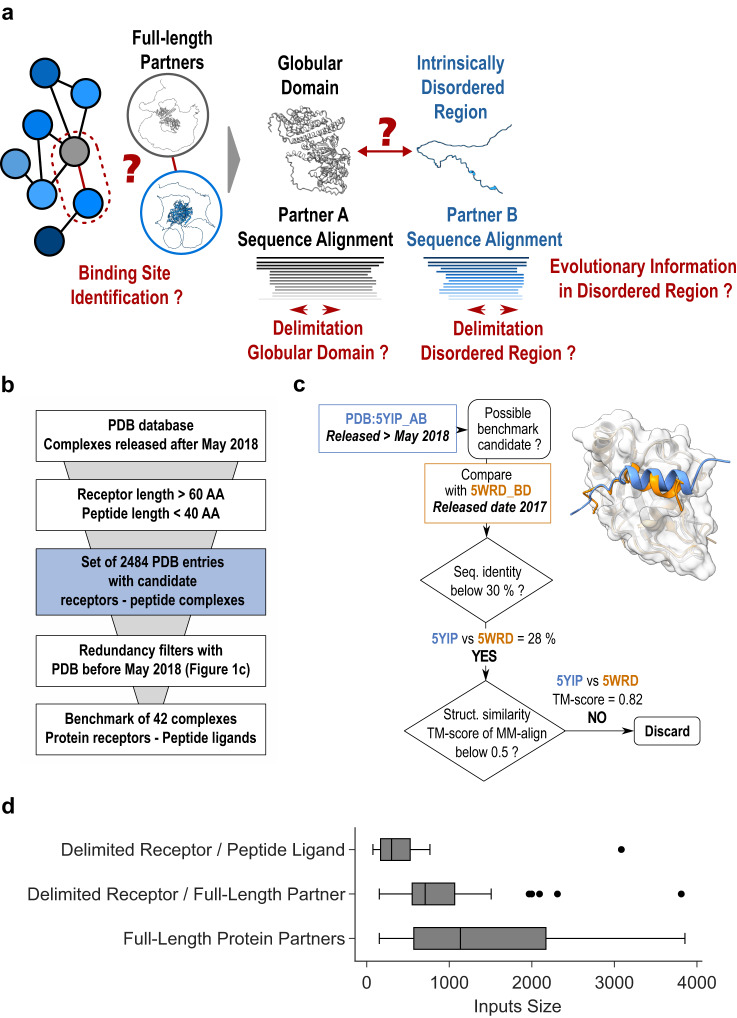
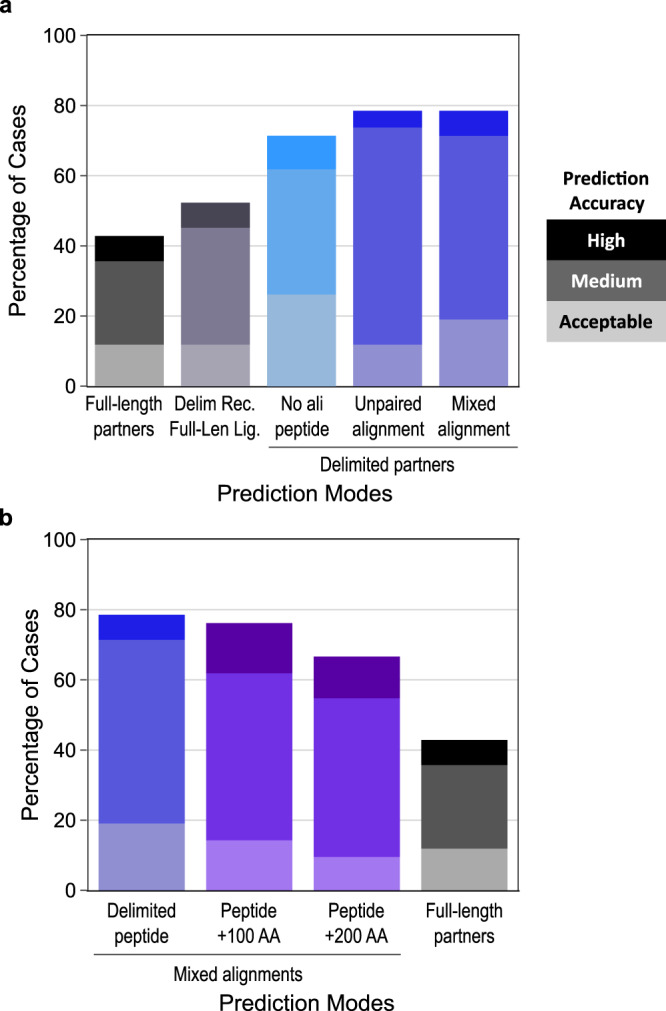
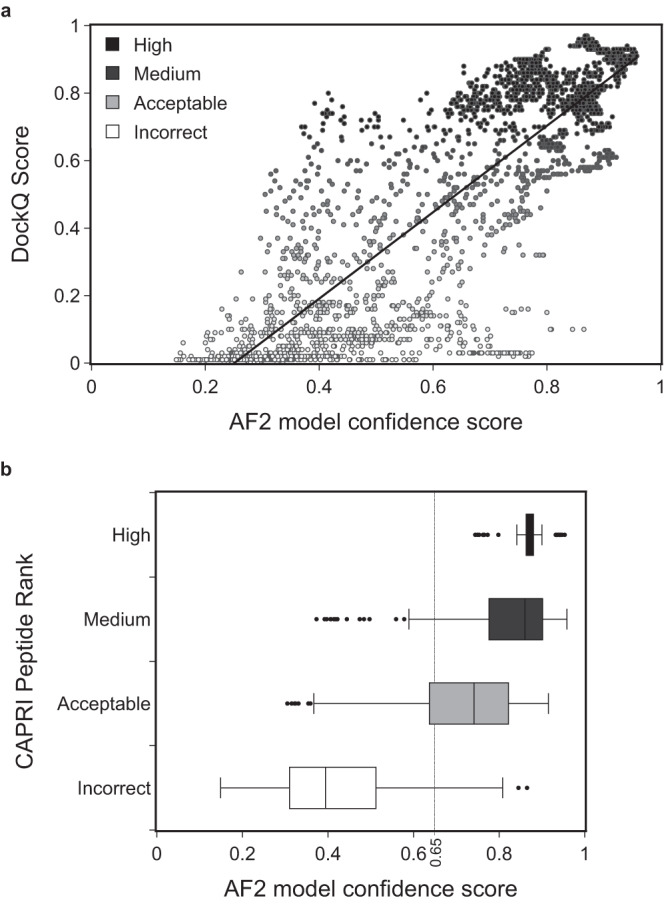
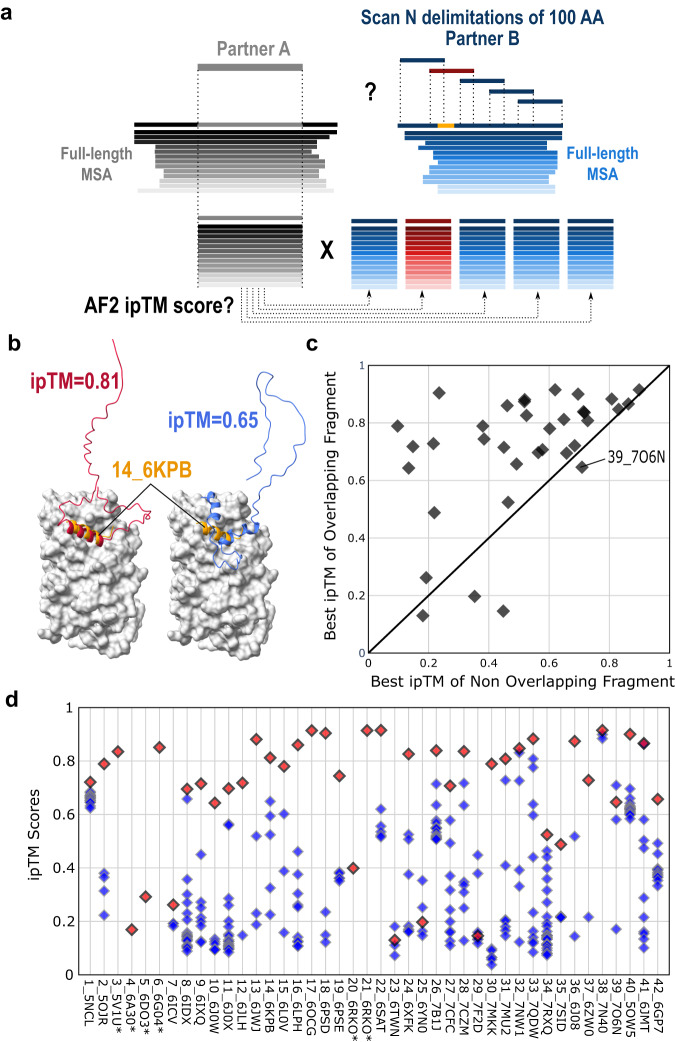
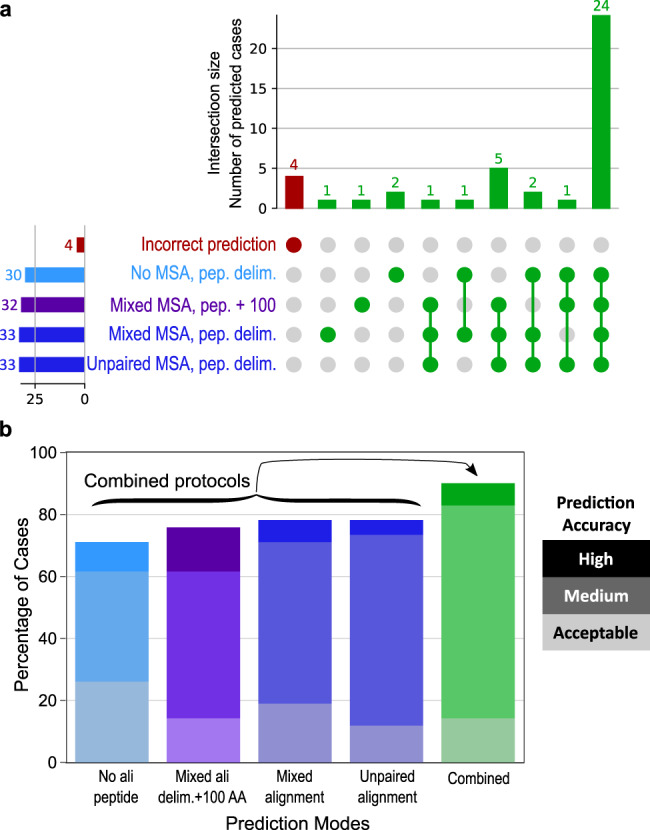
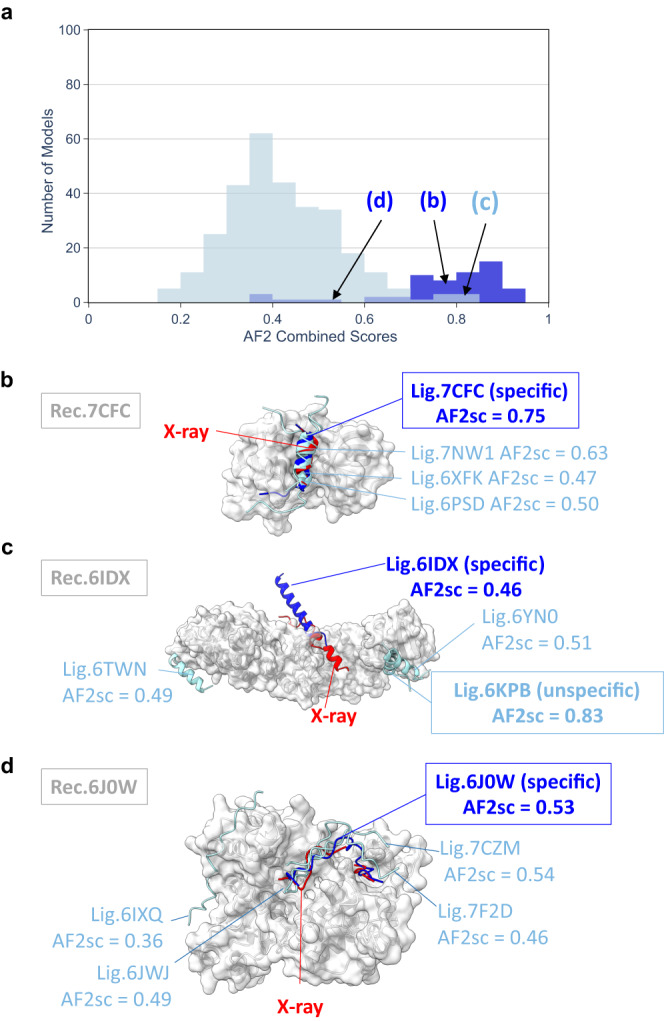
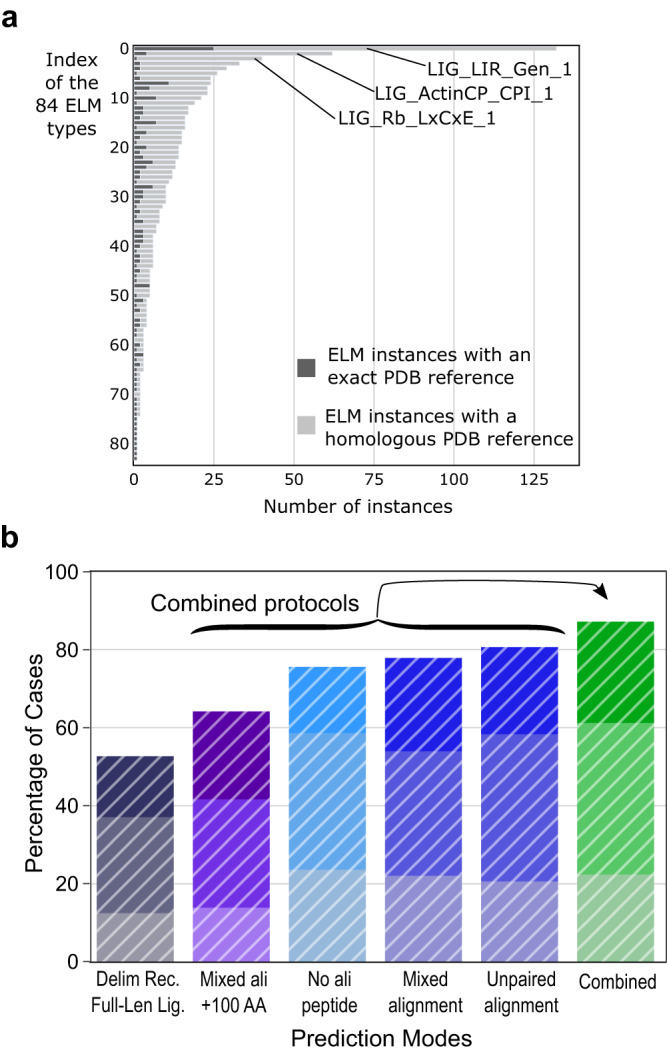
The revolution brought about by AlphaFold2 opens promising perspectives to unravel the complexity of protein-protein interaction networks. The analysis of interaction networks obtained from proteomics experiments does not systematically provide the delimitations of the interaction regions. This is of particular concern in the case of interactions mediated by intrinsically disordered regions, in which the interaction site is generally small. Using a dataset of protein-peptide complexes involving intrinsically disordered regions that are non-redundant with the structures used in AlphaFold2 training, we show that when using the full sequences of the proteins, AlphaFold2-Multimer only achieves 40% success rate in identifying the correct site and structure of the interface. By delineating the interaction region into fragments of decreasing size and combining different strategies for integrating evolutionary information, we manage to raise this success rate up to 90%. We obtain similar success rates using a much larger dataset of protein complexes taken from the ELM database. Beyond the correct identification of the interaction site, our study also explores specificity issues. We show the advantages and limitations of using the AlphaFold2 confidence score to discriminate between alternative binding partners, a task that can be particularly challenging in the case of small interaction motifs.
Overview
The claims and statistics of this paper haven’t been checked yet.
Run the check — free, no account needed. It reads the open-access text and checks the sources it cites.
Integrity signals
Registry
Cites
Statistics
Figures
Verification
Claims the paper makes
The claims and statistics of this paper haven’t been checked yet.
Run the check — free, no account needed. It reads the open-access text and checks the sources it cites.
Claims other papers make about this one
Each is checked against this paper’s own text: does it say what the citing paper says it does?
The check wasn’t confident either way, so it gives no verdict — never disputed.
In the citing paper
“Together with the extensive interface between the CTF18 complex and POLE173, these interactions would position the catalytic, N-terminal domain of Pol ε adjacent to CMG’s rear exit channel”
From Predictomes, a classifier-curated database of AlphaFold-modeled protein-protein interactions (2025) · cites this paper as [73]
Experimental — accuracy not yet measured
Self-check
Percentages, sums and reported differences re-computed from the paper’s own numbers.
The self-check needs the paper’s full text.
Citations
Cites
Gapped BLAST and PSI-BLAST: a new generation of protein database search programs
Altschul, S. (1997) · Nucleic Acids Research · doi:10.1093/nar/25.17.3389 · Cited by 73,302
MAFFT Multiple Sequence Alignment Software Version 7: Improvements in Performance and Usability
Katoh, K., & Standley, D. M. (2013) · Molecular Biology and Evolution · doi:10.1093/molbev/mst010 · Cited by 46,209
Highly accurate protein structure prediction with AlphaFold
Jumper, J., Evans, R., Pritzel, A., Green, T., Figurnov, M., Ronneberger, O., Tunyasuvunakool, K., Bates, R., Žídek, A., Potapenko, A., et al. (2021) · Nature · doi:10.1038/s41586-021-03819-2 · Cited by 43,764
UCSF ChimeraX : Structure visualization for researchers, educators, and developers
Pettersen, E. F., Goddard, T. D., Huang, C. C., Meng, E. C., Couch, G. S., Croll, T. I., Morris, J. H., & Ferrin, T. E. (2020) · Protein Science · doi:10.1002/pro.3943 · Cited by 9,521
ColabFold - Making protein folding accessible to all
Mirdita, M., Schütze, K., Moriwaki, Y., Heo, L., Ovchinnikov, S., & Steinegger, M. (2021) · doi:10.1101/2021.08.15.456425 · Cited by 9,391
Varadi, M., Anyango, S., Deshpande, M., Nair, S., Natassia, C., Yordanova, G., Yuan, D., Stroe, O., Wood, G., Laydon, A., et al. (2022) · Nucleic Acids Research · doi:10.1093/nar/gkab1061 · Cited by 7,850
UniProt: the Universal Protein Knowledgebase in 2023
The UniProt Consortium, Bateman, A., Martin, M.-J., Orchard, S., Magrane, M., Ahmad, S., Alpi, E., Bowler-Barnett, E. H., Britto, R., Bye-A-Jee, H., et al. (2023) · Nucleic Acids Research · doi:10.1093/nar/gkac1052 · Cited by 7,210
Accurate prediction of protein structures and interactions using a 3-track network
Baek, M., DiMaio, F., Anishchenko, I., Dauparas, J., Ovchinnikov, S., Lee, G. R., Wang, J., Cong, Q., Kinch, L. N., Schaeffer, R. D., et al. (2021) · doi:10.1101/2021.06.14.448402 · Cited by 5,549
MMseqs2 enables sensitive protein sequence searching for the analysis of massive data sets
Steinegger, M., & Söding, J. (2017) · Nature Biotechnology · doi:10.1038/nbt.3988 · Cited by 4,840
Highly accurate protein structure prediction for the human proteome
Tunyasuvunakool, K., Adler, J., Wu, Z., Green, T., Zielinski, M., Žídek, A., Bridgland, A., Cowie, A., Meyer, C., Laydon, A., et al. (2021) · Nature · doi:10.1038/s41586-021-03828-1 · Cited by 3,025 · cited 1×
“AlphaFold2 structure predictions for the entire human proteome 16 hinted that low prediction quality could pinpoint regions likelytobeintrinsicallydisordered.”
Research works printed but not linked: 1
- Evans R., et al. Protein complex prediction with AlphaFold-Multimer. bioRxiv, https://www.biorxiv.org/content/10.1101/2021.10.04.463034v2 (2022). · DOI
Cited by
Sorted by citations
Systematic identification of conditionally folded intrinsically disordered regions by AlphaFold2
Alderson, T. R., Pritišanac, I., Kolarić, Đ., Moses, A. M., & Forman-Kay, J. D. (2023) · Proceedings of the National Academy of Sciences · doi:10.1073/pnas.2304302120 · Cited by 240
ELM—the Eukaryotic Linear Motif resource—2024 update
Kumar, M., Michael, S., Alvarado-Valverde, J., Zeke, A., Lázár, T., Glavina, J., Nagy‐Kanta, E., Donagh, J. M., Kálmán, Z. E., Pascarelli, S., et al. (2023) · Nucleic Acids Research · doi:10.1093/nar/gkad1058 · Cited by 185
Systematic discovery of protein interaction interfaces using AlphaFold and experimental validation
Lee, C. Y., Hubrich, D., Varga, J. K., Schäfer, C., Welzel, M., Schumbera, E., Đokić, M., Strom, J. M., Schönfeld, J., Geist, J. L., et al. (2023) · doi:10.1101/2023.08.07.552219 · Cited by 105
Omidi, A., Møller, M. H., Malhis, N., Bui, J. M., & Gsponer, J. A. (2024) · Proceedings of the National Academy of Sciences · doi:10.1073/pnas.2406407121 · Cited by 109
Systematic discovery of protein interaction interfaces using AlphaFold and experimental validation
Lee, C. Y., Hubrich, D., Varga, J. K., Schäfer, C., Welzel, M., Schumbera, E., Djokic, M., Strom, J. M., Schönfeld, J., Geist, J. L., et al. (2024) · Molecular Systems Biology · doi:10.1038/s44320-023-00005-6 · Cited by 105
Predictomes, a classifier-curated database of AlphaFold-modeled protein-protein interactions
Schmid, E. W., & Walter, J. C. (2025) · Molecular Cell · doi:10.1016/j.molcel.2025.01.034 · Cited by 120
“Some of these can probably be eliminated by folding pairs in all 5 models, increased sampling 74 , or segmenting proteins 75,76 .”
Rēs ipSAE loquuntur : What’s wrong with AlphaFold’s ipTM score and how to fix itPreprint
Dunbrack, R. L. (2025) · bioRxiv (Cold Spring Harbor Laboratory) · doi:10.1101/2025.02.10.637595 · Cited by 98
actifpTM: a refined confidence metric of AlphaFold2 predictions involving flexible regions
Varga, J. K., Ovchinnikov, S., & Schueler‐Furman, O. (2025) · Bioinformatics · doi:10.1093/bioinformatics/btaf107 · Cited by 56
Modeling protein–ligand interactions for drug discovery in the era of deep learning
Wang, Y. X., Li, Y., Chen, J., & Lai, L. (2025) · Chemical Society Reviews · doi:10.1039/d5cs00415b · Cited by 53
A Perspective on the Prospective Use of AI in Protein Structure Prediction
Versini, R., Sritharan, S., Fas, B. A., Tubiana, T., Aimeur, S., Henri, J., Erard, M., Nüße, O., Andréani, J., Baaden, M., et al. (2023) · Journal of Chemical Information and Modeling · doi:10.1021/acs.jcim.3c01361 · Cited by 34
Orand, T., & Jensen, M. R. (2024) · Current Opinion in Structural Biology · doi:10.1016/j.sbi.2024.102958 · Cited by 34
Rizuan, A., Shenoy, J., Mohanty, P., dos Passos, P. M., Ortiz, J. F. M., Bai, L., Viswanathan, R., Zaborowksy, J., Wang, S., Johnson, V., et al. (2025) · Nature Communications · doi:10.1038/s41467-025-65546-w · Cited by 33
Machine learning methods to study sequence–ensemble–function relationships in disordered proteins
von Bülow, S., Tesei, G., & Lindorff‐Larsen, K. (2025) · Current Opinion in Structural Biology · doi:10.1016/j.sbi.2025.103028 · Cited by 27
Coskuner‐Weber, O. (2024) · International Journal of Biological Macromolecules · doi:10.1016/j.ijbiomac.2024.133813 · Cited by 26
Bias in, bias out – AlphaFold-Multimer and the structural complexity of protein interfaces
Strom, J. M., & Luck, K. (2025) · Current Opinion in Structural Biology · doi:10.1016/j.sbi.2025.103002 · Cited by 23
Protein–peptide docking with a rational and accurate diffusion generative model
Zhao, H., Zhang, O., Jiang, D., Wu, Z., Du, H., Wang, X., Zhao, Y., Huang, Y., Ge, J., Hou, T., et al. (2025) · Nature Machine Intelligence · doi:10.1038/s42256-025-01077-9 · Cited by 25
Structural study of UFL1‐UFC1 interaction uncovers the role of UFL1 N‐terminal helix in ufmylation
Banerjee, S., Varga, J. K., Kumar, M., Zoltsman, G., Rotem‐Bamberger, S., Cohen‐Kfir, E., Isupov, M. N., Rosenzweig, R., Schueler‐Furman, O., & Wiener, R. (2023) · EMBO Reports · doi:10.15252/embr.202356920 · Cited by 20
Dapkūnas, J., Timinskas, A., Olechnovič, K., Tomkuvienė, M., & Venclovas, Č. (2024) · Nucleic Acids Research · doi:10.1093/nar/gkae278 · Cited by 23
Generation of protein dynamics by machine learning
Janson, G., & Feig, M. (2025) · Current Opinion in Structural Biology · doi:10.1016/j.sbi.2025.103115 · Cited by 21
Assessing scoring metrics for AlphaFold2 and AlphaFold3 protein complex predictions
Genz, L. R., Nair, S., Nagar, N., & Topf, M. (2025) · Protein Science · doi:10.1002/pro.70327 · Cited by 17
Ge, J., Jiang, D., Sun, H., Kang, Y., Pan, P., Deng, Y., Hsieh, C., & Hou, T. (2024) · Cell Reports Physical Science · doi:10.1016/j.xcrp.2024.101980 · Cited by 17
Deep learning in GPCR drug discovery: benchmarking the path to accurate peptide binding
Dijkhof, L. R. H., Rönkkö, T., von Vegesack, H. C., Lenzing, J., & Hauser, A. S. (2025) · Briefings in Bioinformatics · doi:10.1093/bib/bbaf186 · Cited by 16
High-throughput discovery of inhibitory protein fragments with AlphaFold
Savinov, A., Swanson, S., Keating, A. E., & Li, G.-W. (2025) · Proceedings of the National Academy of Sciences · doi:10.1073/pnas.2322412122 · Cited by 18
Fu, R., Jordan, P., Engels, Z., Weihs, J. A., Mürle, J., Chi, H., de Lara, S. B., Helm, B., Klöhn, M., Hu, J., et al. (2025) · Nature Communications · doi:10.1038/s41467-025-61071-y · Cited by 12
The physics-AI dialogue in drug design
Vargas-Rosales, P. A., & Caflisch, A. (2025) · RSC Medicinal Chemistry · doi:10.1039/d4md00869c · Cited by 15
Training bias and sequence alignments shape protein–peptide docking by AlphaFold and related methods
Guan, L., & Keating, A. E. (2025) · Protein Science · doi:10.1002/pro.70331 · Cited by 18
Fick, A., Fick, J. L. M., Swart, V., & van den Berg, N. (2025) · The Plant Journal · doi:10.1111/tpj.70169 · Cited by 16
Raisinghani, N., Parikh, V., Foley, B., & Verkhivker, G. M. (2024) · International Journal of Molecular Sciences · doi:10.3390/ijms252312968 · Cited by 10
A CDK1 phospho-switch reprograms TRAIP to unload replisomes in mitosis
Can, G., Shyian, M., Krishnamoorthy, A., Ahmed, S., Lim, Y., Wu, A., Pavani, R., Zaher, M. S., Nussenzweig, A., Räschle, M., et al. (2026) · Science · doi:10.1126/science.aeh1834 · Cited by 13
Raisinghani, N., Alshahrani, M., Gupta, G., & Verkhivker, G. M. (2024) · International Journal of Molecular Sciences · doi:10.3390/ijms251810082 · Cited by 7
Mehnert, A.-K., Stegmaier, S., Alvarez, C. R., Toprak, E., Magalhães, V. G., Siebenkotten, C., Hu, J., Costa, A. L., Kirrmaier, D., Knop, M., et al. (2025) · PLoS Pathogens · doi:10.1371/journal.ppat.1013516 · Cited by 11
When can AlphaFold predict the oligomeric states of proteins?
Lin, Y., Wallis, C., & Corry, B. (2026) · Protein Science · doi:10.1002/pro.70686 · Cited by 8
Structural model of a bacterial focal adhesion complex
Cambillau, C., & Mignot, T. (2025) · Communications Biology · doi:10.1038/s42003-025-07550-w · Cited by 8
Intrinsically Disordered Regions Define Unique Protein Interaction Networks in CHD Family Remodelers
Tabar, M. S., Parsania, C., Giardina, C., Feng, Y., Wong, A. C. H., Metierre, C., Nagarajah, R., Dhungel, B. P., Rasko, J. E. J., & Bailey, C. G. (2025) · The FASEB Journal · doi:10.1096/fj.202402808rr · Cited by 7
PPIscreenML: Structure-based screening for protein-protein interactions using AlphaFoldPreprint
Mischley, V., Maier, J., Chen, J., & Karanicolas, J. (2024) · eLife · doi:10.7554/elife.98179.1 · Cited by 7
Roy, M., Sanchez, A., Guérois, R., Senoussi, I., Cerana, A., Sgrignani, J., Cavalli, A., Rinaldi, A., & Ćejka, P. (2025) · Nature Communications · doi:10.1038/s41467-025-59470-2 · Cited by 5
Majila, K., Ullanat, V., & Viswanath, S. (2026) · Cell Systems · doi:10.1016/j.cels.2025.101486 · Cited by 8
Peptidomimetics design and characterization: Bridging experimental and computer-based approaches
Romagnoli, A., Rexha, J., Perta, N., Cristofano, S. D., Borgognoni, N., Venturini, G., Pignotti, F., Raimondo, D., Borsello, T., & Marino, D. D. (2024) · Progress in molecular biology and translational science · doi:10.1016/bs.pmbts.2024.07.002 · Cited by 9
Intrinsic Disorder and Other Malleable Arsenals of Evolved Protein Multifunctionality
Aftab, A., Sil, S., Nath, S., Basu, A., & Basu, S. (2024) · Journal of Molecular Evolution · doi:10.1007/s00239-024-10196-7 · Cited by 7
How AlphaFold and related models predict protein-peptide complex structuresPreprint
Guan, L., & Keating, A. (2025) · bioRxiv · doi:10.1101/2025.06.18.660495 · Cited by 7
Assessing scoring metrics for AlphaFold2 and AlphaFold3 protein complex predictions
Genz, L. R., Nair, S., Nagar, N., & Topf, M. (2025) · doi:10.1101/2025.04.16.648930 · Cited by 5
NHSL3 controls single and collective cell migration through two distinct mechanisms
Novikov, N. M., Gao, J., Fokin, A. I., Rocques, N., Chiappetta, G., Rysenkova, K. D., Zea, D. J., Polesskaya, A., Vinh, J., Guérois, R., et al. (2025) · Nature Communications · doi:10.1038/s41467-024-55647-3 · Cited by 5
Self-citationSELEX identifies high-affinity RNA targets for chromatin-binding proteins PARP1 and MeCP2
Melikishvili, M., Silva, K. D., Chandler, D. P., Cassidy, R. N., Andreeva, K., Dhahri, H., Rouchka, E. C., & Fondufe‐Mittendorf, Y. N. (2025) · iScience · doi:10.1016/j.isci.2025.113299 · Cited by 5
Stratmann, D., Moroy, G., Tufféry, P., & Murail, S. (2025) · Journal of Chemical Theory and Computation · doi:10.1021/acs.jctc.5c00950 · Cited by 5
Liotta, L. A., Conrads, T. P., Howard, M. A., Araujo, R. P., & Petricoin, E. (2025) · Nature Reviews Methods Primers · doi:10.1038/s43586-025-00453-4 · Cited by 5
Roy, A. S., Tsay, K., Borbat, P. P., DeStefano, A. J., Han, S., Srivastava, M., & Freed, J. H. (2026) · Journal of the American Chemical Society · doi:10.1021/jacs.5c16298 · Cited by 5
Destabilizing Interactions in Human Telomeric G-Quadruplex Multimers
Bertini, L., Trapella, M., Mostarac, D., Libera, V., Petrillo, C., Michele, C. D., Comez, L., & Paciaroni, A. (2025) · The Journal of Physical Chemistry Letters · doi:10.1021/acs.jpclett.5c01100 · Cited by 4
Geist, J. L., Lee, C. Y., Strom, J. M., Naveja, J. J., & Luck, K. (2024) · Bioinformatics · doi:10.1093/bioinformatics/btae482 · Cited by 4
AlphaCRV: a pipeline for identifying accurate binder topologies in mass-modeling with AlphaFold
Guzmán-Vega, F. J., & Arold, S. T. (2024) · Bioinformatics Advances · doi:10.1093/bioadv/vbae131 · Cited by 4
Najafi, N. N., Karbassian, R., Hajihassani, H., & Irani, M. A. (2025) · Journal of Molecular Modeling · doi:10.1007/s00894-025-06392-x · Cited by 4
Büttiker, P., Boukherissa, A., Weissenberger, S., Ptáček, R., Anders, M., Raboch, J., & Stefano, G. B. (2024) · Cellular and Molecular Neurobiology · doi:10.1007/s10571-024-01509-x · Cited by 7
Lalit, F., & Jose, A. M. (2025) · Nucleic Acids Research · doi:10.1093/nar/gkae1246 · Cited by 3
A large C-terminal Rad52 segment acts as a chaperone to Form and Stabilize Rad51 Filaments
Ma, É., Lakhal, F., Litsardaki, E., Ruault, M., Audin, M., Levrier, N., Navarro, E., Garnier, M., Maloisel, L., Dépagne, J., et al. (2025) · Nature Communications · doi:10.1038/s41467-025-60664-x · Cited by 3
Mokhtari, O., Grudinin, S., Karami, Y., & Khakzad, H. (2025) · Cell Systems · doi:10.1016/j.cels.2025.101454 · Cited by 4
PPI-ID: Streamlining protein-protein interaction prediction through domain and SLiM mapping
Goodwin, H. V., & Atkinson, N. S. (2025) · PLoS Computational Biology · doi:10.1371/journal.pcbi.1013062 · Cited by 3
Fick, A., Fick, J. L. M., Swart, V., & van den Berg, N. (2024) · bioRxiv (Cold Spring Harbor Laboratory) · doi:10.1101/2024.07.26.605369 · Cited by 3
Heling, L. W. H. J., van der Veen, J., Rofe, A. P., West, E., Jiménez-Panizo, A., Alegre‐Martí, A., Sheikhhassani, V., Ng, J., Schmidt, T., Estébanez‐Perpiñá, E., et al. (2025) · Molecular and Cellular Endocrinology · doi:10.1016/j.mce.2025.112634 · Cited by 2
A simple workflow to identify novel small linear motif (SLiM)-mediated interactions with AlphaFold
Veinstein, M., Janssens, V., Iorga, B. I., Helaers, R., Michiels, T., & Sorgeloos, F. (2025) · Briefings in Bioinformatics · doi:10.1093/bib/bbaf501 · Cited by 3
Ellenbroek, B. D., Tirtosentono, A. S. S., & Pomplun, S. J. (2025) · ChemMedChem · doi:10.1002/cmdc.202500740 · Cited by 2
The composition and structure of the outer kinetochore KMN complex is conserved across kingdoms
Singh, D. K., Walkemeier, B., Nayini, A., Leene, J. V., Durand, S., Jaeger, G. D., Guérois, R., & Mercier, R. (2025) · Communications Biology · doi:10.1038/s42003-025-09120-6 · Cited by 2
AlphaFold opens the doors to deorphanizing secreted proteins
Viswanath, S. (2024) · Cell Systems · doi:10.1016/j.cels.2024.10.010 · Cited by 2
Lizcano-Perret, B., Wavreil, F., Veinstein, M., Duflos, C., Milcamps, R., Sorgeloos, F., & Michiels, T. (2025) · Journal of Virology · doi:10.1128/jvi.01275-25 · Cited by 2
Non-covalent SUMO interactions with ligases and effectors: SUMO-interacting motifs and beyond
Mishra, A., Cisse, E. H., & Suskiewicz, M. J. (2025) · Essays in Biochemistry · doi:10.1042/ebc20253039 · Cited by 2
Mehnert, A.-K., Stegmaier, S., Ramírez, C. D., Magalhães, V. G., Siebenkotten, C., Hu, J., Costa, A. L., Kirrmaier, D., Knop, M., Wu, X., et al. (2025) · bioRxiv (Cold Spring Harbor Laboratory) · doi:10.1101/2025.02.03.636239 · Cited by 2
AlphaFold-driven discovery of ORP-PIP interactions using new generation confidence scoresPreprint
Dall’Armellina, F., Urbé, S., & Rigden, D. J. (2025) · bioRxiv (Cold Spring Harbor Laboratory) · doi:10.1101/2025.09.09.675126 · Cited by 2
Semi-supervised segmentation of RNA 3D structures using density-based clustering
Le, Q. K., Angel, É., Tahi, F., & Postic, G. (2025) · Computational and Structural Biotechnology Journal · doi:10.1016/j.csbj.2025.08.037 · Cited by 3
A Survey of Predicted Protein–Protein Interactions Involving Disordered Regions in Humans
Pei, J., Zhang, J. J., & Cong, Q. (2026) · Journal of Molecular Biology · doi:10.1016/j.jmb.2026.169636 · Cited by 1
Dall’Armellina, F., Urbé, S., & Rigden, D. J. (2026) · Protein Science · doi:10.1002/pro.70572 · Cited by 4
Novello, G., Dodaro, A., Strascia, C. C., Menin, S., Sturlese, M., Salmaso, V., & Moro, S. (2026) · Journal of Chemical Information and Modeling · doi:10.1021/acs.jcim.5c03135 · Cited by 1
Toward Quantitative Domain–Motif Interactomes: State of the Art, Challenges, and Perspectives
Alvarado-Valverde, J., & Luck, K. (2026) · Annual Review of Biomedical Data Science · doi:10.1146/annurev-biodatasci-092624-110614 · Cited by 1
Walker, D. R., Fujimura, G., Vanegas, J. M., & Barbar, E. J. (2025) · Frontiers in Molecular Biosciences · doi:10.3389/fmolb.2025.1531793 · Cited by 1
Raisinghani, N., Alshahrani, M., Gupta, G., Tian, H., Xiao, S., Tao, P., & Verkhivker, G. M. (2024) · bioRxiv (Cold Spring Harbor Laboratory) · doi:10.1101/2024.05.17.594786 · Cited by 1
A Deep Learning Method for Predicting Interactions for Intrinsically Disordered Regions of ProteinsPreprint
Majila, K., Ullanat, V., & Viswanath, S. (2025) · SSRN Electronic Journal · doi:10.2139/ssrn.5133412 · Cited by 1
Morati, F., Pavlova, E., Budida, A., Fornander, S., Persson, E., Sundaramoorthy, J., Guérois, R., & Westerlund, F. (2025) · bioRxiv (Cold Spring Harbor Laboratory) · doi:10.64898/2025.12.16.694593 · Cited by 1
Buzuk, A., Khan, O., Kang, S., Yim, L., Vajda, S., & Perlstein, D. L. (2026) · bioRxiv · doi:10.64898/2026.04.06.716496 · Cited by 1
Systematic Evaluation of AlphaFold2 and OpenFold3 on Protein–Peptide ComplexesPreprint
Fayetörbay, R., Timuçin, A. C., & Timuçin, E. (2026) · bioRxiv (Cold Spring Harbor Laboratory) · doi:10.64898/2026.04.21.720042 · Cited by 1
Mischley, V., Maier, J., Chen, J., et al. (2024) · eLife · doi:10.7554/elife.98179.1.sa1
Mischley, V., Maier, J., Chen, J., et al. (2024) · eLife · doi:10.7554/elife.98179.1.sa0
Mischley, V., Maier, J., Chen, J., et al. (2024) · eLife · doi:10.7554/elife.98179.1.sa2
Raisinghani, N., Parikh, V., Foley, B., & Verkhivker, G. M. (2024) · bioRxiv (Cold Spring Harbor Laboratory) · doi:10.1101/2024.11.04.621947
Ma, É., Lakhal, F., Litsardaki, E., Ruault, M., Audin, M., Levrier, N., Navarro, E., Garnier, M., Maloisel, L., Dépagne, J., et al. (2024) · bioRxiv (Cold Spring Harbor Laboratory) · doi:10.1101/2024.12.05.627070
Bressanelli, S., Fieulaine, S., & Tubiana, T. (2025) · Virology · doi:10.1016/j.virol.2025.110546
Variant characterization in the intrinsically disordered human proteome
Hubrich, D., Alvarado-Valverde, J., Lee, C. Y., Djokic, M., Welzel, M., Hintz, K., Strom, J. M., & Luck, K. (2026) · Nature Structural & Molecular Biology · doi:10.1038/s41594-026-01846-z
Kálmán, Z. E., Lázár, T., Dobson, L., & Pancsa, R. (2025) · Biomolecules · doi:10.3390/biom15121641
Ven, A. L., Vanhuele, S., Ganier, O., Houy, A., Kahn, A., Rodrigues, M. J., Stern, M., Guérois, R., & Silveira, A. B. (2026) · bioRxiv (Cold Spring Harbor Laboratory) · doi:10.64898/2026.01.16.698129
Roles of NHSL3 in cell migration
Александрович, Н. Н. (2024) · theses.fr (ABES) · doi:10.70675/a2d323c6z46abz4e5aza2adz5f43b09382bb
Functional flexibility in bacterial hub proteins is driven by proteome expansion
Paradžik, M., Prekpalaj, S., & Paradžik, T. (2026) · Scientific Reports · doi:10.1038/s41598-026-52986-7
ZATT/ZNF451 promotes release of stalled TOP2 cleavage complexesPreprint
Leng, X., Zarantonello, A., Gadi, S. A., Kakulidis, E. S., Fey, P., Ingham, A., Hendriks, I. A., Minocha, S., Colding-Christensen, C. S., Kristensen, S. M., et al. (2026) · bioRxiv (Cold Spring Harbor Laboratory) · doi:10.64898/2026.07.14.738426
Marien, J., Sritharan, S., Caviglia, B., Versini, R., Auclair, L., Barraud, P., Tisné, C., Reguei, A., Murail, S., Leclerc, F., et al. (2026) · bioRxiv (Cold Spring Harbor Laboratory) · doi:10.64898/2026.07.24.740587
Ven, A. L., Vanhuele, S., Ganier, O., Houy, A., Kahn, A., Rodrigues, M. J., Stern, M., Guérois, R., & Silveira, A. B. (2026) · Nucleic Acids Research · doi:10.1093/nar/gkag771
Wang, Z., Sun, L., Li, Y., Yang, F., & Chang, Y. (2026) · Journal of Pharmaceutical Analysis · doi:10.1016/j.jpha.2026.101754 · Cited by 1
Zhang, C., Wang, W., Zhu, R., Cao, S., Xu, Y., Ning, Z., Wu, Y., Guo, J., & Duan, H. (2026) · Briefings in Bioinformatics · doi:10.1093/bib/bbag505
Atoom, A. M., Rizaev, J., Polatova, D., Patel, P. N., Jamuna, K. V., Maharana, L., Bainsal, N., & Singhal, D. (2026) · Cancer Treatment and Research Communications · doi:10.1016/j.ctarc.2026.101448
Artificial Intelligence for Therapeutic Peptide Discovery and Development
Ventura, S. (2026) · Biomolecules · doi:10.3390/biom16101445
Gardner, T. P., Anastasia, P., Lee, C., Marcotte, E. M., & Wallingford, J. B. (2026) · bioRxiv (Cold Spring Harbor Laboratory) · doi:10.64898/2026.10.05.756796
Metadata
- Authors
- Bret, H., Gao, J., Zea, D. J., Andreani, J., & Guerois, R.
- Affiliations
- Centre National de la Recherche Scientifique (FR)
- Venue
- Nature Communications
- Published
- 2024-01-18
- Volume
- 15
- Issue
- 1
- Pages
- 597-597
- ISSN
- 2041-1723 (ISSN-L)
- PMC
- PMC10796318
- OpenAlex
- W4390986414
- Cited by
- 103
- References
- 71
- Citations by year
- 2026: 24 · 2025: 45 · 2024: 29
- FWCI
- 13.34
- Type
- journal article
- Language
- en
- Open access
- gold
- doi.org
- Locations
- Nature Communications (publishedVersion, cc-by)
- bioRxiv (Cold Spring Harbor Laboratory) (acceptedVersion, cc-by-nc-nd)
- PubMed Central (publishedVersion, cc-by)
- PubMed (publishedVersion)
- HAL (submittedVersion, cc-by)
- RePEc: Research Papers in Economics (submittedVersion)
- DOAJ (DOAJ: Directory of Open Access Journals) (submittedVersion, cc-by-sa)
- Funders
- Agence Nationale de la Recherche (ANR-18-CE45-0005)
- Topics
- Life Sciences › Biochemistry, Genetics and Molecular Biology › Molecular Biology › Protein Structure and Dynamics
- Life Sciences › Biochemistry, Genetics and Molecular Biology › Molecular Biology › Machine Learning in Bioinformatics
- Life Sciences › Biochemistry, Genetics and Molecular Biology › Structural Biology › Enzyme Structure and Function
- Keywords
- intrinsically disordered regions, protein-protein interfaces, interaction site prediction, AlphaFold2, AlphaFold2-Multimer, protein-peptide complex, protein complexes, evolutionary information, interaction networks
- MeSH terms
- Biological Evolution, Protein Binding, Proteins, Protein Interaction Maps, Intrinsically Disordered Proteins
About these checks
Registry, retraction, Cites and statistics results are computed, not judged, with one exception: a printed reference that no index lists is read once by a model before it counts as a citation error. Claims are extracted by a model and kept only when their quote appears verbatim in the text; each cited source is then checked, with a model’s help, for whether it says what the claim relies on. Those verdicts can be wrong — read the claim’s quote and the cited source before relying on one.
Statistics and arithmetic are recomputed, not judged.
Confidence bands are shown only for fields calibrated on our annotated test set. None is calibrated yet, so no band is shown.
What counts as a claim ›How we measure confidence ›How we check this ›
Are you an author, or do you see a problem with this page? Request a review
