

The DOI matches its Crossref record; 73 of the 73 references it cites were found in a registry or an index.
From interaction networks to interfaces, scanning intrinsically disordered regions using AlphaFold2
Open accessPublished version of a preprint
Abstract
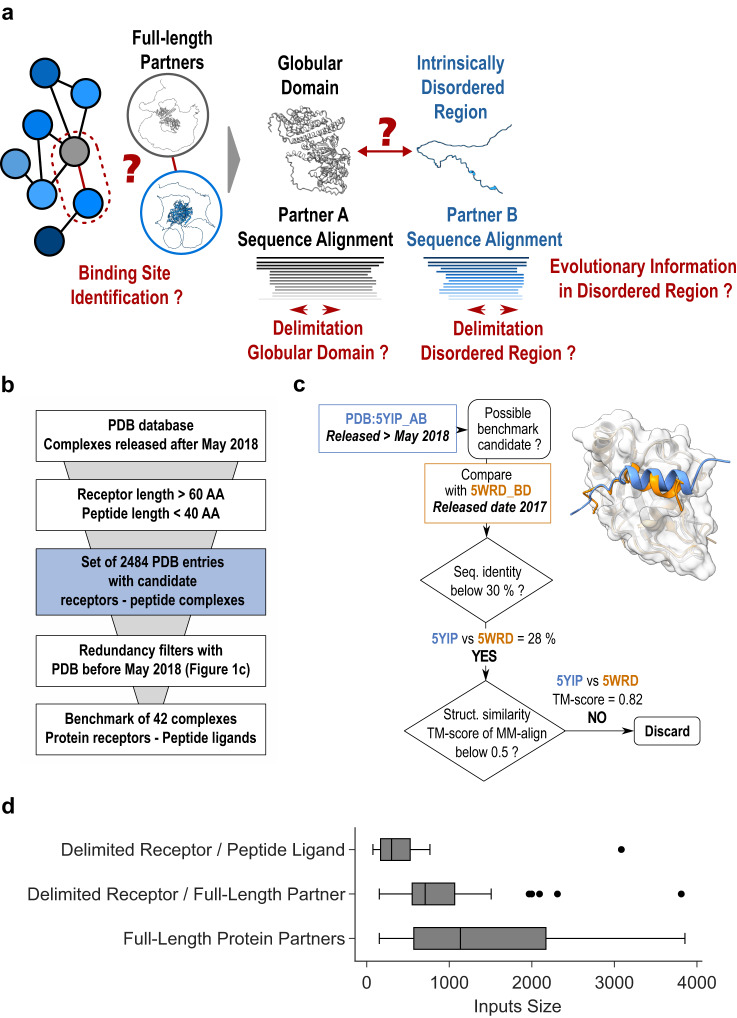
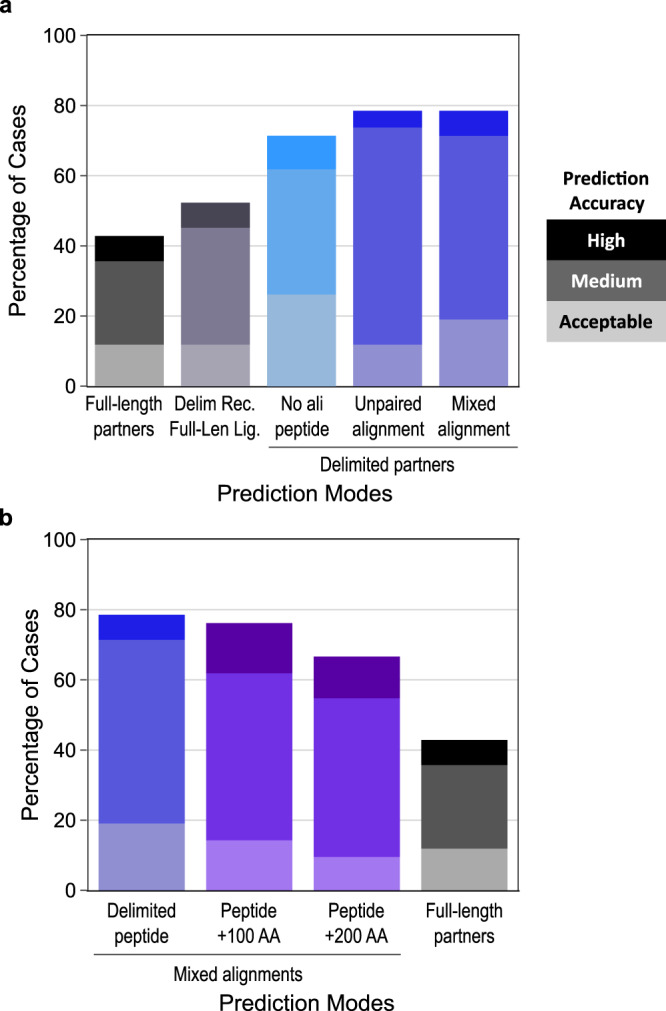
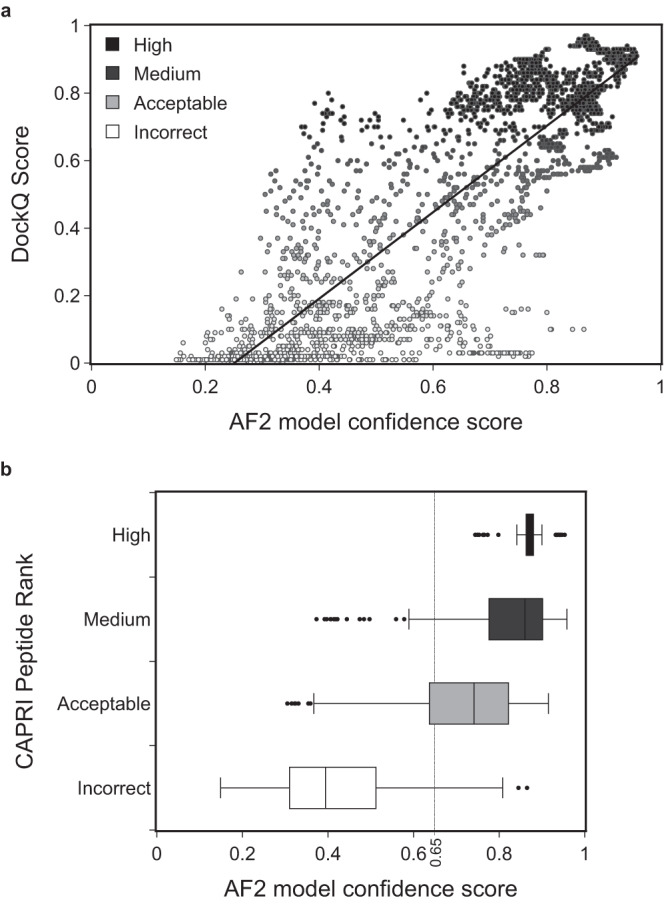
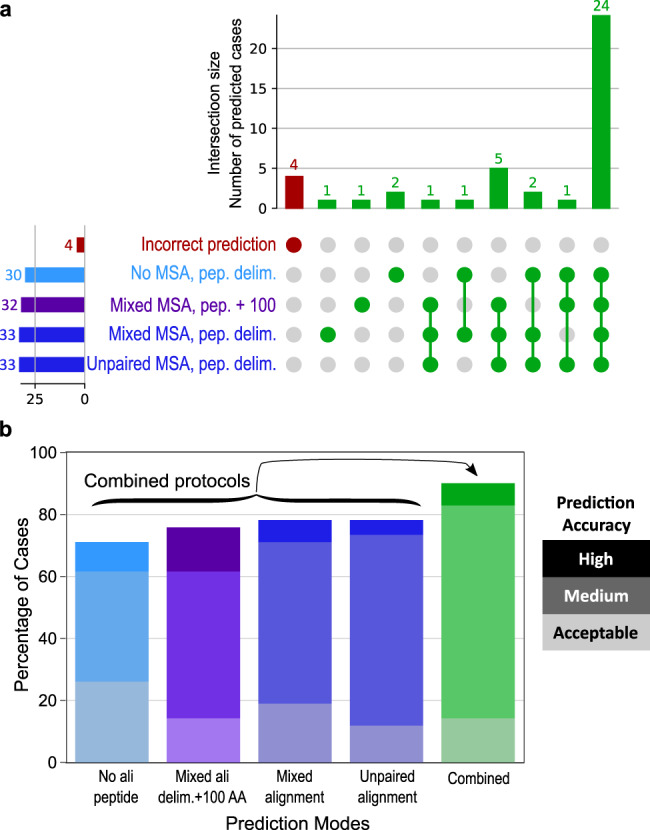
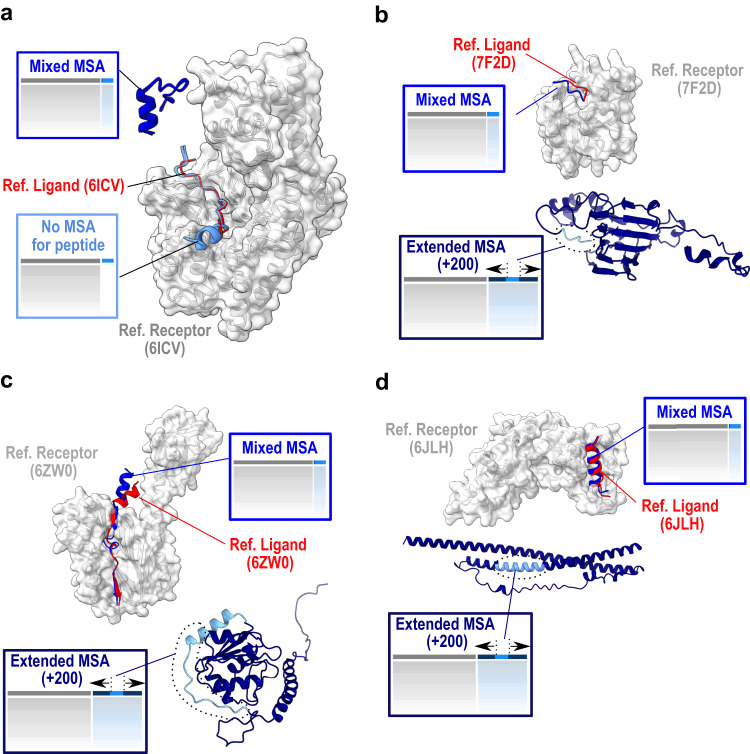
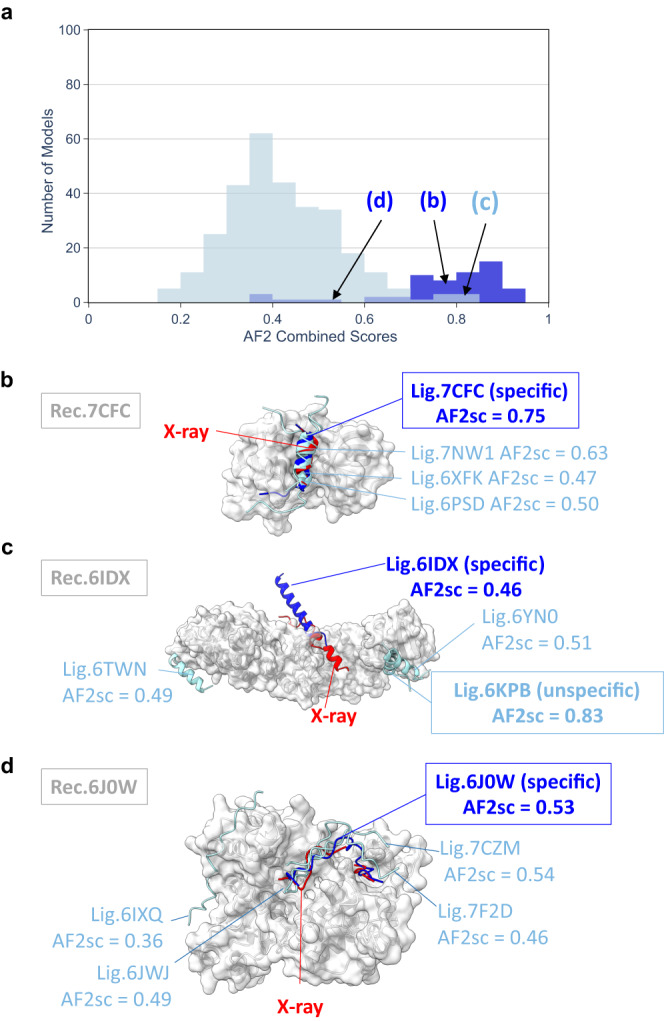
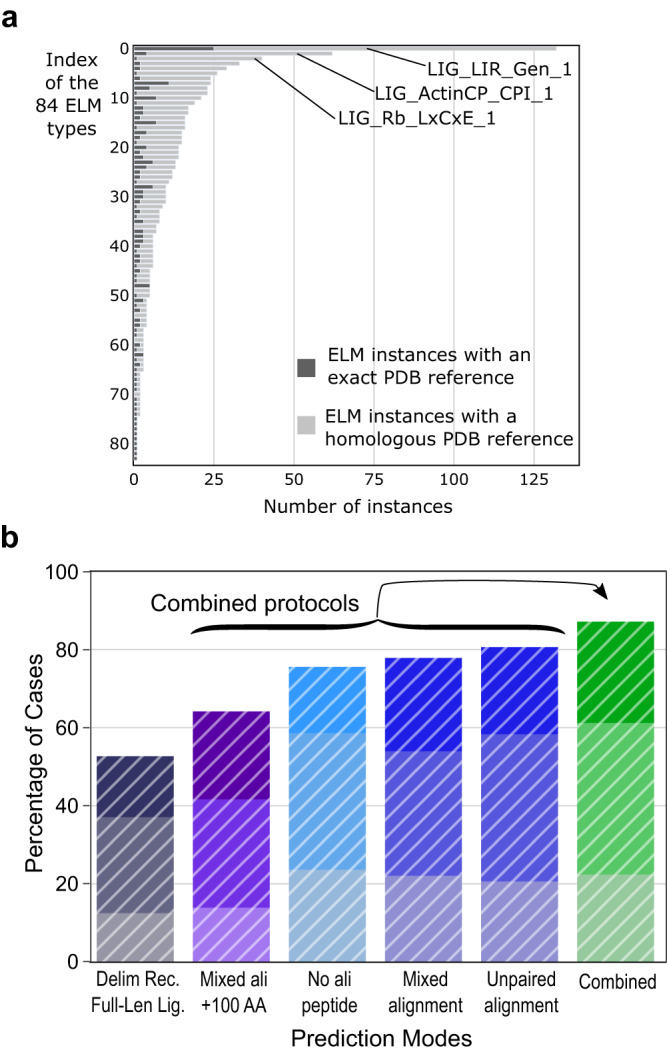
The revolution brought about by AlphaFold2 opens promising perspectives to unravel the complexity of protein-protein interaction networks. The analysis of interaction networks obtained from proteomics experiments does not systematically provide the delimitations of the interaction regions. This is of particular concern in the case of interactions mediated by intrinsically disordered regions, in which the interaction site is generally small. Using a dataset of protein-peptide complexes involving intrinsically disordered regions that are non-redundant with the structures used in AlphaFold2 training, we show that when using the full sequences of the proteins, AlphaFold2-Multimer only achieves 40% success rate in identifying the correct site and structure of the interface. By delineating the interaction region into fragments of decreasing size and combining different strategies for integrating evolutionary information, we manage to raise this success rate up to 90%. We obtain similar success rates using a much larger dataset of protein complexes taken from the ELM database. Beyond the correct identification of the interaction site, our study also explores specificity issues. We show the advantages and limitations of using the AlphaFold2 confidence score to discriminate between alternative binding partners, a task that can be particularly challenging in the case of small interaction motifs.
Overview
The claims and statistics of this paper haven’t been checked yet.
Run the check — free, no account needed. It reads the open-access text and checks the sources it cites.
Integrity signals
Registry
Cites
Statistics
Figures
Verification
Claims the paper makes
The claims and statistics of this paper haven’t been checked yet.
Run the check — free, no account needed. It reads the open-access text and checks the sources it cites.
Claims other papers make about this one
Each is checked against this paper’s own text: does it say what the citing paper says it does?
The check wasn’t confident either way, so it gives no verdict — never disputed.
In the citing paper
“Together with the extensive interface between the CTF18 complex and POLE173, these interactions would position the catalytic, N-terminal domain of Pol ε adjacent to CMG’s rear exit channel”
From Predictomes, a classifier-curated database of AlphaFold-modeled protein-protein interactions (2025) · cites this paper as [73]
Experimental — accuracy not yet measured
Self-check
Percentages, sums and reported differences re-computed from the paper’s own numbers.
The self-check needs the paper’s full text.
Citations
Cites
Gapped BLAST and PSI-BLAST: a new generation of protein database search programs
Altschul, S. (1997) · Nucleic Acids Research · doi:10.1093/nar/25.17.3389 · Cited by 73,302
MAFFT Multiple Sequence Alignment Software Version 7: Improvements in Performance and Usability
Katoh, K., & Standley, D. M. (2013) · Molecular Biology and Evolution · doi:10.1093/molbev/mst010 · Cited by 46,209
Highly accurate protein structure prediction with AlphaFold
Jumper, J., Evans, R., Pritzel, A., Green, T., Figurnov, M., Ronneberger, O., Tunyasuvunakool, K., Bates, R., Žídek, A., Potapenko, A., et al. (2021) · Nature · doi:10.1038/s41586-021-03819-2 · Cited by 43,764
UCSF ChimeraX : Structure visualization for researchers, educators, and developers
Pettersen, E. F., Goddard, T. D., Huang, C. C., Meng, E. C., Couch, G. S., Croll, T. I., Morris, J. H., & Ferrin, T. E. (2020) · Protein Science · doi:10.1002/pro.3943 · Cited by 9,521
ColabFold - Making protein folding accessible to all
Mirdita, M., Schütze, K., Moriwaki, Y., Heo, L., Ovchinnikov, S., & Steinegger, M. (2021) · doi:10.1101/2021.08.15.456425 · Cited by 9,391
Varadi, M., Anyango, S., Deshpande, M., Nair, S., Natassia, C., Yordanova, G., Yuan, D., Stroe, O., Wood, G., Laydon, A., et al. (2022) · Nucleic Acids Research · doi:10.1093/nar/gkab1061 · Cited by 7,850
UniProt: the Universal Protein Knowledgebase in 2023
The UniProt Consortium, Bateman, A., Martin, M.-J., Orchard, S., Magrane, M., Ahmad, S., Alpi, E., Bowler-Barnett, E. H., Britto, R., Bye-A-Jee, H., et al. (2023) · Nucleic Acids Research · doi:10.1093/nar/gkac1052 · Cited by 7,210
Accurate prediction of protein structures and interactions using a 3-track network
Baek, M., DiMaio, F., Anishchenko, I., Dauparas, J., Ovchinnikov, S., Lee, G. R., Wang, J., Cong, Q., Kinch, L. N., Schaeffer, R. D., et al. (2021) · doi:10.1101/2021.06.14.448402 · Cited by 5,549
MMseqs2 enables sensitive protein sequence searching for the analysis of massive data sets
Steinegger, M., & Söding, J. (2017) · Nature Biotechnology · doi:10.1038/nbt.3988 · Cited by 4,840
Highly accurate protein structure prediction for the human proteome
Tunyasuvunakool, K., Adler, J., Wu, Z., Green, T., Zielinski, M., Žídek, A., Bridgland, A., Cowie, A., Meyer, C., Laydon, A., et al. (2021) · Nature · doi:10.1038/s41586-021-03828-1 · Cited by 3,025 · cited 1×
“AlphaFold2 structure predictions for the entire human proteome 16 hinted that low prediction quality could pinpoint regions likelytobeintrinsicallydisordered.”
UpSet: Visualization of Intersecting Sets
Lex, A., Gehlenborg, N., Strobelt, H., Vuillemot, R., & Pfister, H. (2014) · IEEE Transactions on Visualization and Computer Graphics · doi:10.1109/tvcg.2014.2346248 · Cited by 2,340
Harnessing protein folding neural networks for peptide–protein docking
Tsaban, T., Varga, J. K., Avraham, O., Ben-Aharon, Z., Khramushin, A., & Schueler-Furman, O. (2022) · Nature Communications · doi:10.1038/s41467-021-27838-9 · Cited by 1,205
HH-suite3 for fast remote homology detection and deep protein annotation
Steinegger, M., Meier, M., Mirdita, M., Vöhringer, H., Haunsberger, S. J., & Söding, J. (2019) · BMC Bioinformatics · doi:10.1186/s12859-019-3019-7 · Cited by 1,145
Improved prediction of protein-protein interactions using AlphaFold2
Bryant, P., Pozzati, G., & Elofsson, A. (2021) · doi:10.1101/2021.09.15.460468 · Cited by 1,022
Burley, S. K., Bhikadiya, C., Bi, C., Bittrich, S., Chao, H., Chen, L., Craig, P., Crichlow, G. V., Dalenberg, K., Duarte, J. M., et al. (2022) · Nucleic Acids Research · doi:10.1093/nar/gkac1077 · Cited by 926
A structural biology community assessment of AlphaFold2 applications
Akdel, M., Pires, D. E. V., Pardo, E. P., Jänes, J., Zalevsky, A. O., Mészáros, B., Bryant, P., Good, L. L., Laskowski, R. A., Pozzati, G., et al. (2022) · Nature Structural & Molecular Biology · doi:10.1038/s41594-022-00849-w · Cited by 675 · cited 1×
“The capacity of AF2 to perform well with small disordered regions binding a structured domain was established on different datasets 18,41,45 built from the structures available in the PDB 52 .”
AlphaFold and Implications for Intrinsically Disordered Proteins
Ruff, K. M., & Pappu, R. V. (2021) · Journal of Molecular Biology · doi:10.1016/j.jmb.2021.167208 · Cited by 635
Erdős, G., Pajkos, M., & Dosztányi, Z. (2021) · Nucleic Acids Res. · doi:10.1093/nar/gkab408 · Cited by 560
Panorama of ancient metazoan macromolecular complexes
Wan, C., Borgeson, B., Phanse, S., Tu, F., Drew, K., Clark, G., Xiong, X., Kagan, O., Kwan, J., Bezginov, A., et al. (2015) · Nature · doi:10.1038/nature14877 · Cited by 546
Computed structures of core eukaryotic protein complexes
Humphreys, I. R., Pei, J., Baek, M., Krishnakumar, A., Anishchenko, I., Ovchinnikov, S., Zhang, J., Ness, T. J., Banjade, S., Bagde, S. R., et al. (2021) · Science · doi:10.1126/science.abm4805 · Cited by 542
Roey, K. V., Uyar, B., Weatheritt, R. J., Dinkel, H., Seiler, M., Budd, A., Gibson, T. J., & Davey, N. E. (2014) · Chemical Reviews · doi:10.1021/cr400585q · Cited by 513
Sampling alternative conformational states of transporters and receptors with AlphaFold2
del Alamo, D., Sala, D., Mchaourab, H. S., & Meiler, J. (2022) · eLife · doi:10.7554/elife.75751 · Cited by 511
DockQ: A Quality Measure for Protein-Protein Docking Models
Basu, S., & Wallner, B. (2016) · PLOS ONE · doi:10.1371/journal.pone.0161879 · Cited by 460
Benchmarking AlphaFold for protein complex modeling reveals accuracy determinants
Yin, R., Feng, B. Y., Varshney, A., & Pierce, B. G. (2022) · Protein Science · doi:10.1002/pro.4379 · Cited by 335
Benchmarking AlphaFold for protein complex modeling reveals accuracy determinants
Yin, R., Feng, B. Y., Varshney, A., & Pierce, B. G. (2021) · doi:10.1101/2021.10.23.465575 · Cited by 335
Protein-peptide docking: opportunities and challenges
Ciemny, M., Kurcinski, M., Kamel, K., Kolinski, A., Alam, N., Schueler-Furman, O., & Kmiecik, S. (2018) · Drug Discovery Today · doi:10.1016/j.drudis.2018.05.006 · Cited by 306
State-of-the-Art Estimation of Protein Model Accuracy Using AlphaFold
Roney, J. P., & Ovchinnikov, S. (2022) · Physical Review Letters · doi:10.1103/physrevlett.129.238101 · Cited by 281
Towards a structurally resolved human protein interaction network
Burke, D. F., Bryant, P., Barrio-Hernandez, I., Memon, D., Pozzati, G., Shenoy, A., Zhu, W., Dunham, A. S., Albanese, P., Keller, A., et al. (2023) · Nature Structural & Molecular Biology · doi:10.1038/s41594-022-00910-8 · Cited by 269
SPEACH_AF: Sampling protein ensembles and conformational heterogeneity with Alphafold2
Stein, R. A., & Mchaourab, H. S. (2022) · PLOS Computational Biology · doi:10.1371/journal.pcbi.1010483 · Cited by 258
The Eukaryotic Linear Motif resource: 2022 release
Kumar, M., Michael, S., Alvarado-Valverde, J., Mészáros, B., Sámano‐Sánchez, H., Zeke, A., Dobson, L., Lázár, T., Örd, M., Nagpal, A., et al. (2021) · Nucleic Acids Research · doi:10.1093/nar/gkab975 · Cited by 255
AF2Complex predicts direct physical interactions in multimeric proteins with deep learning
Gao, M., Nakajima An, D., Parks, J. M., & Skolnick, J. (2022) · Nature Communications · doi:10.1038/s41467-022-29394-2 · Cited by 252
Systematic identification of conditionally folded intrinsically disordered regions by AlphaFold2
Alderson, T. R., Pritišanac, I., Kolarić, Đ., Moses, A. M., & Forman-Kay, J. D. (2023) · Proceedings of the National Academy of Sciences · doi:10.1073/pnas.2304302120 · Cited by 240
Modeling protein–protein and protein–peptide complexes: CAPRI 6th edition
Lensink, M. F., Velankar, S., & Wodak, S. J. (2017) · Proteins Structure Function and Bioinformatics · doi:10.1002/prot.25215 · Cited by 222 · cited 3×
“…color) or High (dark color) quality according to the CAPRI criteria for protein-peptide complexes 49 . a Success rates using (from left to right):full-length partners with a mixed alignment generation mode (gray grades), delimited receptor with…”
InfluentialMukherjee, S., & Zhang, Y. (2009) · Nucleic Acids Research · doi:10.1093/nar/gkp318 · Cited by 183
Modeling conformational states of proteins with AlphaFold
Sala, D., Engelberger, F., Mchaourab, H. S., & Meiler, J. (2023) · Current Opinion in Structural Biology · doi:10.1016/j.sbi.2023.102645 · Cited by 182
AlphaFold2: A Role for Disordered Protein/Region Prediction?
Wilson, C. J., Choy, W.-Y., & Karttunen, M. (2022) · International Journal of Molecular Sciences · doi:10.3390/ijms23094591 · Cited by 173
High-resolution global peptide-protein docking using fragments-based PIPER-FlexPepDock
Alam, N., Goldstein, O., Xia, B., Porter, K. A., Kozakov, D., & Schueler‐Furman, O. (2017) · PLoS Computational Biology · doi:10.1371/journal.pcbi.1005905 · Cited by 171
AFsample: improving multimer prediction with AlphaFold using massive sampling
Wallner, B. (2023) · Bioinformatics · doi:10.1093/bioinformatics/btad573 · Cited by 164
Improving peptide-protein docking with AlphaFold-Multimer using forced sampling
Johansson-Åkhe, I., & Wallner, B. (2022) · Frontiers in Bioinformatics · doi:10.3389/fbinf.2022.959160 · Cited by 162
AlphaPulldown—a python package for protein–protein interaction screens using AlphaFold-Multimer
Yu, D., Chojnowski, G., Rosenthal, M., & Kosinski, J. (2023) · Bioinformatics · doi:10.1093/bioinformatics/btac749 · Cited by 162
Protein complexes in cells by AI‐assisted structural proteomics
(2023) · doi:10.15252/msb.202311544 · Cited by 147
Peptide-binding specificity prediction using fine-tuned protein structure prediction networks
Motmaen, A., Dauparas, J., Baek, M., Abedi, M. H., Baker, D., & Bradley, P. (2023) · Proceedings of the National Academy of Sciences · doi:10.1073/pnas.2216697120 · Cited by 124
Intrinsic Disorder, Protein–Protein Interactions, and Disease
Uversky, V. N. (2017) · Advances in protein chemistry and structural biology · doi:10.1016/bs.apcsb.2017.06.005 · Cited by 120
In silico protein interaction screening uncovers DONSON’s role in replication initiation
Lim, Y., Tamayo-Orrego, L., Schmid, E., Tarnauskaite, Z., Kochenova, O. V., Gruar, R., Muramatsu, S., Lynch, L., Schlie, A. V., Carroll, P. L., et al. (2023) · Science · doi:10.1126/science.adi3448 · Cited by 112
Systematic discovery of protein interaction interfaces using AlphaFold and experimental validation
Lee, C. Y., Hubrich, D., Varga, J. K., Schäfer, C., Welzel, M., Schumbera, E., Đokić, M., Strom, J. M., Schönfeld, J., Geist, J. L., et al. (2023) · doi:10.1101/2023.08.07.552219 · Cited by 105
Systematic discovery of protein interaction interfaces using AlphaFold and experimental validation
Lee, C. Y., Hubrich, D., Varga, J. K., Schäfer, C., Welzel, M., Schumbera, E., Djokic, M., Strom, J. M., Schönfeld, J., Geist, J. L., et al. (2024) · Molecular Systems Biology · doi:10.1038/s44320-023-00005-6 · Cited by 105 · cited 3×
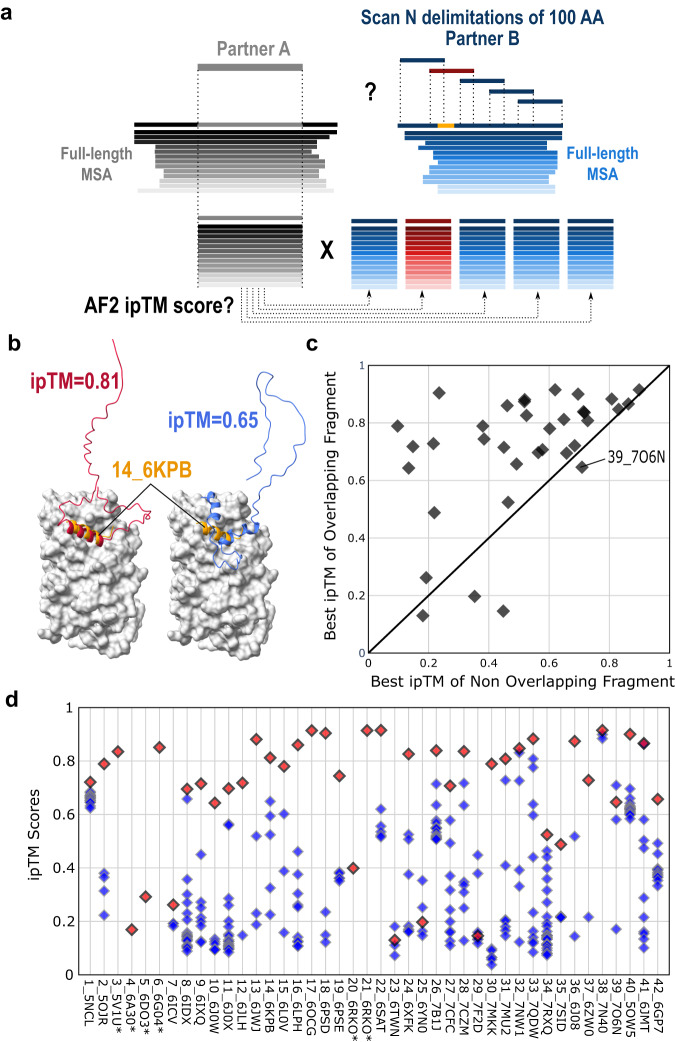
“AF2sc values indicate the best AF2 con fi dencescore values obtained foreach complex. correctly delineate and cut the intrinsically disordered regions have also proven useful in increasing the success rate of predictions 46 .”
InfluentialRanking Peptide Binders by Affinity with AlphaFold**
Chang, L., & Perez, A. (2023) · Angewandte Chemie International Edition · doi:10.1002/anie.202213362 · Cited by 100
Uyar, B., Weatheritt, R. J., Dinkel, H., Davey, N. E., & Gibson, T. J. (2014) · Molecular BioSystems · doi:10.1039/c4mb00290c · Cited by 90
Mapping, modeling, and characterization of protein–protein interactions on a proteomic scale
Cafarelli, T. M., Desbuleux, A., Wang, Y., Choi, S. G., Ridder, D. D., & Vidal, M. (2017) · Current Opinion in Structural Biology · doi:10.1016/j.sbi.2017.05.003 · Cited by 75
Jehl, P., Manguy, J., Shields, D. C., Higgins, D. G., & Davey, N. E. (2016) · Nucleic Acids Research · doi:10.1093/nar/gkw265 · Cited by 71
Improved Docking of Protein Models by a Combination of Alphafold2 and ClusPro
Ghani, U., Desta, I., Jindal, A., Khan, O., Jones, G., Hashemi, N., Kotelnikov, S., Padhorny, D., Vajda, S., & Kozakov, D. (2021) · doi:10.1101/2021.09.07.459290 · Cited by 68
The Role of Structural Disorder in the Rewiring of Protein Interactions through Evolution
Mosca, R., Pache, R. A., & Aloy, P. (2012) · Molecular & Cellular Proteomics · doi:10.1074/mcp.m111.014969 · Cited by 63
Gibson, T. J., Dinkel, H., Roey, K. V., & Diella, F. (2015) · Cell Communication and Signaling · doi:10.1186/s12964-015-0121-y · Cited by 62
Exploring protein-protein interactions at the proteome level
Elhabashy, H., Merino, F., Alva, V., Kohlbacher, O., & Lupas, A. N. (2022) · Structure · doi:10.1016/j.str.2022.02.004 · Cited by 57
Chainsaw: protein domain segmentation with fully convolutional neural networks
Wells, J., Hawkins-Hooker, A., Bordin, N., Sillitoe, I., Paige, B., & Orengo, C. (2023) · doi:10.1101/2023.07.19.549732 · Cited by 53
Chainsaw: protein domain segmentation with fully convolutional neural networks
Wells, J., Hawkins-Hooker, A., Bordin, N., Sillitoe, I., Paige, B., & Orengo, C. (2024) · Bioinformatics · doi:10.1093/bioinformatics/btae296 · Cited by 53
Dapkūnas, J., Timinskas, A., Olechnovič, K., Margelevičius, M., Dičiūnas, R., & Venclovas, Č. (2016) · Bioinformatics · doi:10.1093/bioinformatics/btw756 · Cited by 50
Modeling Peptide–Protein Interactions
London, N., Raveh, B., & Schueler‐Furman, O. (2011) · Methods in molecular biology · doi:10.1007/978-1-61779-588-6_17 · Cited by 45
Shanker, S., & Sanner, M. F. (2023) · Journal of Chemical Information and Modeling · doi:10.1021/acs.jcim.3c00602 · Cited by 45
Structural and mechanistic insights into secretagogin-mediated exocytosis
Qin, J., Liu, Q., Liu, Z., Pan, Y.-Z., Sifuentes-Dominguez, L., Stepien, K. P., Wang, Y., Tu, Y., Tan, S., Wang, Y., et al. (2020) · Proceedings of the National Academy of Sciences · doi:10.1073/pnas.1919698117 · Cited by 35
Modeling Peptide-Protein Interactions
(2017) · Methods in molecular biology · doi:10.1007/978-1-4939-6798-8 · Cited by 35
EvoBind: in silico directed evolution of peptide binders with AlphaFoldPreprint
Bryant, P., & Elofsson, A. (2022) · bioRxiv (Cold Spring Harbor Laboratory) · doi:10.1101/2022.07.23.501214 · Cited by 33
Interactome evolution: insights from genome-wide analyses of protein–protein interactions
Ghadie, M. A., Coulombe‐Huntington, J., & Xia, Y. (2017) · Current Opinion in Structural Biology · doi:10.1016/j.sbi.2017.10.012 · Cited by 32
Structural prediction of protein interactions and docking using conservation and coevolution
Andréani, J., Quignot, C., & Guérois, R. (2020) · Wiley Interdisciplinary Reviews Computational Molecular Science · doi:10.1002/wcms.1470 · Cited by 23
What AlphaFold tells us about cohesin’s retention on and release from chromosomes
Nasmyth, K. A., Lee, B.-G., Roig, M. B., & Löwe, J. (2023) · eLife · doi:10.7554/elife.88656.4 · Cited by 21
Where protein structure and cell diversity meet
Holguin-Cruz, J. A., Foster, L. J., & Gsponer, J. A. (2022) · Trends in Cell Biology · doi:10.1016/j.tcb.2022.04.004 · Cited by 20
Si, Y., & Yan, C. (2022) · Briefings in Bioinformatics · doi:10.1093/bib/bbac208 · Cited by 20
Soft disorder modulates the assembly path of protein complexes
Seoane, B., & Carbone, A. (2022) · PLOS Computational Biology · doi:10.1371/journal.pcbi.1010713 · Cited by 15
Chasing coevolutionary signals in intrinsically disordered proteins complexes
Iserte, J., Lázár, T., Tosatto, S. C. E., Tompa, P., & Marino‐Buslje, C. (2020) · Scientific Reports · doi:10.1038/s41598-020-74791-6 · Cited by 13
What AlphaFold tells us about cohesin’s retention on and release from chromosomes
Nasmyth, K. A., Lee, B.-G., Roig, M. B., & Löwe, J. (2023) · eLife · doi:10.7554/elife.88656 · Cited by 12
InterPepScore: a deep learning score for improving the FlexPepDock refinement protocol
Johansson-Åkhe, I., & Wallner, B. (2022) · Bioinformatics · doi:10.1093/bioinformatics/btac325 · Cited by 6
Bret, H., Gao, J., Zea, D. J., Andréani, J., & Guérois, R. (2023) · Zenodo (CERN European Organization for Nuclear Research) · doi:10.5281/zenodo.7838023 · Cited by 1
Self-citationAndreani, J., GUEROIS, R., & Bret, H. (2023) · Zenodo (CERN European Organization for Nuclear Research) · doi:10.5281/zenodo.10213747 · Cited by 1
Self-citation
Research works printed but not linked: 1
- Evans R., et al. Protein complex prediction with AlphaFold-Multimer. bioRxiv, https://www.biorxiv.org/content/10.1101/2021.10.04.463034v2 (2022). · DOI
Cited by
Sorted by citations
Systematic identification of conditionally folded intrinsically disordered regions by AlphaFold2
Alderson, T. R., Pritišanac, I., Kolarić, Đ., Moses, A. M., & Forman-Kay, J. D. (2023) · Proceedings of the National Academy of Sciences · doi:10.1073/pnas.2304302120 · Cited by 240
ELM—the Eukaryotic Linear Motif resource—2024 update
Kumar, M., Michael, S., Alvarado-Valverde, J., Zeke, A., Lázár, T., Glavina, J., Nagy‐Kanta, E., Donagh, J. M., Kálmán, Z. E., Pascarelli, S., et al. (2023) · Nucleic Acids Research · doi:10.1093/nar/gkad1058 · Cited by 185
Systematic discovery of protein interaction interfaces using AlphaFold and experimental validation
Lee, C. Y., Hubrich, D., Varga, J. K., Schäfer, C., Welzel, M., Schumbera, E., Đokić, M., Strom, J. M., Schönfeld, J., Geist, J. L., et al. (2023) · doi:10.1101/2023.08.07.552219 · Cited by 105
Omidi, A., Møller, M. H., Malhis, N., Bui, J. M., & Gsponer, J. A. (2024) · Proceedings of the National Academy of Sciences · doi:10.1073/pnas.2406407121 · Cited by 109
Systematic discovery of protein interaction interfaces using AlphaFold and experimental validation
Lee, C. Y., Hubrich, D., Varga, J. K., Schäfer, C., Welzel, M., Schumbera, E., Djokic, M., Strom, J. M., Schönfeld, J., Geist, J. L., et al. (2024) · Molecular Systems Biology · doi:10.1038/s44320-023-00005-6 · Cited by 105
Metadata
- Authors
- Bret, H., Gao, J., Zea, D. J., Andreani, J., & Guerois, R.
- Affiliations
- Centre National de la Recherche Scientifique (FR)
- Venue
- Nature Communications
- Published
- 2024-01-18
- Volume
- 15
- Issue
- 1
- Pages
- 597-597
- ISSN
- 2041-1723 (ISSN-L)
- PMC
- PMC10796318
- OpenAlex
- W4390986414
- Cited by
- 103
- References
- 71
- Citations by year
- 2026: 24 · 2025: 45 · 2024: 29
- FWCI
- 13.34
- Type
- journal article
- Language
- en
- Open access
- gold
- doi.org
- Locations
- Nature Communications (publishedVersion, cc-by)
- bioRxiv (Cold Spring Harbor Laboratory) (acceptedVersion, cc-by-nc-nd)
- PubMed Central (publishedVersion, cc-by)
- PubMed (publishedVersion)
- HAL (submittedVersion, cc-by)
- RePEc: Research Papers in Economics (submittedVersion)
- DOAJ (DOAJ: Directory of Open Access Journals) (submittedVersion, cc-by-sa)
- Funders
- Agence Nationale de la Recherche (ANR-18-CE45-0005)
- Topics
- Life Sciences › Biochemistry, Genetics and Molecular Biology › Molecular Biology › Protein Structure and Dynamics
- Life Sciences › Biochemistry, Genetics and Molecular Biology › Molecular Biology › Machine Learning in Bioinformatics
- Life Sciences › Biochemistry, Genetics and Molecular Biology › Structural Biology › Enzyme Structure and Function
- Keywords
- intrinsically disordered regions, protein-protein interfaces, interaction site prediction, AlphaFold2, AlphaFold2-Multimer, protein-peptide complex, protein complexes, evolutionary information, interaction networks
- MeSH terms
- Biological Evolution, Protein Binding, Proteins, Protein Interaction Maps, Intrinsically Disordered Proteins
About these checks
Registry, retraction, Cites and statistics results are computed, not judged, with one exception: a printed reference that no index lists is read once by a model before it counts as a citation error. Claims are extracted by a model and kept only when their quote appears verbatim in the text; each cited source is then checked, with a model’s help, for whether it says what the claim relies on. Those verdicts can be wrong — read the claim’s quote and the cited source before relying on one.
Statistics and arithmetic are recomputed, not judged.
Confidence bands are shown only for fields calibrated on our annotated test set. None is calibrated yet, so no band is shown.
What counts as a claim ›How we measure confidence ›How we check this ›
Are you an author, or do you see a problem with this page? Request a review
