

Roadmapping the next generation of silicon photonics
Open accessThe DOI matches its Crossref record; 163 of the 166 references it cites were found in a registry or an index; 31 of the 197 sources its claims cite were checked for support.
Abstract
Silicon photonics has developed into a mainstream technology driven by advances in optical communications. The current generation has led to a proliferation of integrated photonic devices from thousands to millions-mainly in the form of communication transceivers for data centers. Products in many exciting applications, such as sensing and computing, are around the corner. What will it take to increase the proliferation of silicon photonics from millions to billions of units shipped? What will the next generation of silicon photonics look like? What are the common threads in the integration and fabrication bottlenecks that silicon photonic applications face, and which emerging technologies can solve them? This perspective article is an attempt to answer such questions. We chart the generational trends in silicon photonics technology, drawing parallels from the generational definitions of CMOS technology. We identify the crucial challenges that must be solved to make giant strides in CMOS-foundry-compatible devices, circuits, integration, and packaging. We identify challenges critical to the next generation of systems and applications-in communication, signal processing, and sensing. By identifying and summarizing such challenges and opportunities, we aim to stimulate further research on devices, circuits, and systems for the silicon photonics ecosystem.
Overview
CoChat Summary
## TL;DR
This perspective paper roadmaps the next generation of silicon photonics, arguing that the field is moving from medium-scale integration into large-scale integration and will need major advances in modulators, lasers, phase shifters, packaging, and photonics-electronics co-integration. It identifies application-specific bottlenecks across communications, sensing, computing, and other systems, and frames the next decade as one of ecosystem maturation and technology diversification.
## Key findings
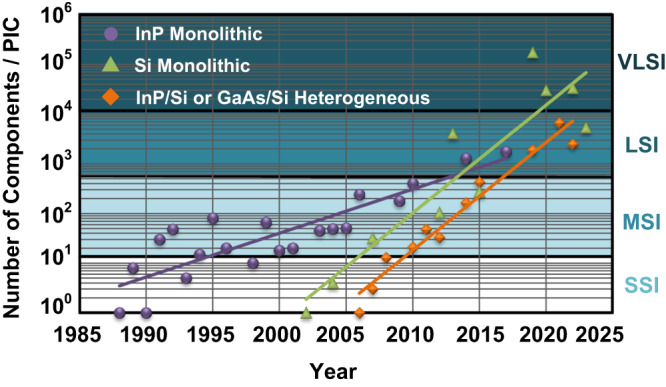
- The paper defines silicon photonics generations from SSI to MSI to LSI and notes that silicon photonics is now entering LSI, targeted at 500-to-10,000 components per chip; it also says VLSI (>10,000 components) prototypes have already been demonstrated.
- For communications, the paper says IMDD transceivers need modulators with lower efficiency figure-of-merit and “-3 dB E/O BW” toward 100 GHz, while lasers need higher wall-plug efficiency; it states that the WPE of most C/L/O band lasers is only about 10%.
- For phase shifters, the paper argues that thermo-optic heaters are available in all foundries but consume considerable power and cause thermal crosstalk, while NOEMS phase shifters are described as compact, <1 V drive, low-power, and with negligible IL.
- The summary forecasts that within the next decade, foundries will likely support integrated lasers with WPE exceeding 20%, multi-wavelength and tunable lasers, and coupling losses improving so that typical fiber-to-PIC IL drops to <0.5 dB.
## Methods
- This is a perspective/roadmap article, not an experimental study; it synthesizes prior literature and industry practice to chart trends and bottlenecks in silicon photonics.
- The paper organizes the discussion into technology, systems, and applications perspectives, and uses generational framing analogous to CMOS process evolution.
- Its analysis is mainly qualitative and comparative, weighing integration schemes, device mechanisms, packaging options, and application requirements against PPA, bandwidth, loss, power, and manufacturability constraints.
## Limitations
- The paper itself states that it is “an attempt” to answer roadmap questions and to stimulate further research, so it is not presenting new primary experimental data.
- It explicitly says it limits the application discussion to PIC/EIC technology factors and excludes economic, regulatory, market, chemistry, biomarkers, quantum advantage, and other non-technical factors.
- Evident from the text: many claims are forward-looking and conditional (“we expect,” “likely,” “promising”), so the roadmap’s conclusions are not validated by a single empirical dataset.
Model-written summary. Check it against the paper before relying on it.
Integrity signals
Registry
Cites
Statistics
Figures
Verification
Claims the paper makes
24 Valid · 57 Not valid · 87 Not checked · 142 Own results and interpretations
Every source the paper cites for this claim was checked and supports it.
In the paper
“For MRMs, which are very compact, the loss due to α becomes less critical50”
§ Roadmapping the next generation of silicon photonics > Silicon photonics: technology perspective > E/O modulation
What the sources say
- Supportedcites [50] Sun J A 128 Gb/s PAM4 silicon microring modulator with integrated thermo-optic resonance tuning J. Light. Technol. 2019 37 110 115 10.1109/JLT.2018.2878327 source
Section II (Microring Modulator Design) says that loss from increased doping is much more tolerable for an MRM because of its small size. Section III adds that waveguide loss does not directly determine MRM insertion loss. These passages support the claim that this loss is less critical for compact MRMs. (LLM, conf=0.93)
plain- Asserted: passes — The authors put it forward as true.
- Checkable: passes — It can be checked against evidence.
- Load-bearing: unclear — It is unclear whether the paper’s conclusions depend on it.
- Based: passes — The paper gives a reason why it holds.
- Supported
The cited sources support only part of this claim — read each source’s verdict below.
In the paper
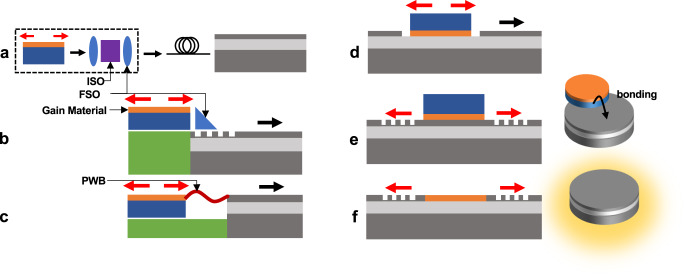
“Using computer vision and automation, PWBs can be fabricated in polymer photoresist through two-photon absorption between two coupling sites allowing up to 30 μm of offset.”
§ Roadmapping the next generation of silicon photonics > Silicon photonics: technology perspective
What the sources say
- Partly supportedcites [47] Blaicher M Hybrid multi-chip assembly of optical communication engines by in situ 3D nano-lithography Light Sci. Appl. 2020 9 71 10.1038/s41377-020-0272-5 32351695 PMC7184737 sourceExperimental — accuracy not yet measured
The Materials and methods > Fabrication section describes automated PWB fabrication using two-photon lithography in liquid photoresist, with software that locates coupling interfaces. The Results and discussion > Scalability and stability of photonic wire bonds section describes bridges between waveguide ends, but our copy does not establish the claimed tolerance of up to 30 µm of offset; its nearby measurements concern connection time and bridge pitch. (LLM, conf=0.86)
plainstates a cause- Asserted: passes — The authors put it forward as true.
- Checkable: passes — It can be checked against evidence.
- Load-bearing: unclear — It is unclear whether the paper’s conclusions depend on it.
- Based: passes — The paper gives a reason why it holds.
- Partly supported
Every source the paper cites for this claim was checked and supports it.
In the paper
“Passive alignment packaging techniques, such as photonic wire bonding (PWB)47, offer an attractive potential alternative.”
§ Roadmapping the next generation of silicon photonics > Silicon photonics: technology perspective
What the sources say
- Supportedcites [47] Blaicher M Hybrid multi-chip assembly of optical communication engines by in situ 3D nano-lithography Light Sci. Appl. 2020 9 71 10.1038/s41377-020-0272-5 32351695 PMC7184737 source
In Results and discussion, under “Hybrid multi-chip integration by photonic wire bonding” (page unavailable), the paper describes PWB as a way to connect chips and fibres after coarse pick-and-place positioning, without high-precision chip alignment. This supports its use as an attractive potential alternative in packaging. (LLM, conf=0.90)
plain- Asserted: passes — The authors put it forward as true.
- Checkable: passes — It can be checked against evidence.
- Load-bearing: unclear — It is unclear whether the paper’s conclusions depend on it.
- Based: passes — The paper gives a reason why it holds.
- Supported
The sources with a verdict support this claim; the rest weren’t checked yet, have no full text we could read, or their verdicts aren’t rated yet.
In the paper
“Even VLSI (>10,000 components) prototypes have now been demonstrated30,32,34.”
§ Roadmapping the next generation of silicon photonics > The generational roadmap
What the sources say
- Supportedcites [30] Zhang X Kwon K Henriksson J Luo J Wu MC A large-scale microelectromechanical-systems-based silicon photonics lidar Nature 2022 603 253 258 10.1038/s41586-022-04415-8 35264759 PMC8907073 source
The Main section reports an experimentally demonstrated LiDAR with a monolithically integrated 128 × 128-element array. The Conclusions and discussions section specifies that a 128 × 96 subarray was wire bonded and tested—12,288 elements, exceeding the claim’s 10,000-component threshold. (LLM, conf=0.93)
- Not checked — no full text of the sourcecites [32] Poulton CV Coherent lidar with an 8,192-element optical phased array and driving laser IEEE J. Sel. Top. quantum Electron. 2022 28 1 8 10.1109/JSTQE.2022.3187707 source
- Supportedcites [34] Seok TJ Kwon K Henriksson J Luo J Wu MC Wafer-scale silicon photonic switches beyond die size limit Optica 2019 6 490 494 10.1364/OPTICA.6.000490 source
Section I (Wafer Arrangement Information) states the fabricated 6-inch wafer carries 160x160, 240x240 and 320x320 switch fabrics, and Section II.1 (Switch Block) shows each fabric is built from 80x80 arrays of individual MEMS switch unit cells, so even the smallest demonstrated prototype contains ~25,600 switch cells — well over the 10,000-component threshold the claim attributes to it. Our copy never uses the electronics term 'VLSI'; that label is the citing authors' framing, but the substantive point (a >10,000-component photonic prototype demonstrated) is stated by the source's own fabrication and scale figures. (LLM, conf=0.80)
boosted- Asserted: passes — The authors put it forward as true.
- Checkable: passes — It can be checked against evidence.
- Load-bearing: unclear — It is unclear whether the paper’s conclusions depend on it.
- Based: passes — The paper gives a reason why it holds.
- Supported
The cited sources support only part of this claim — read each source’s verdict below.
In the paper
“All modulators suffer from a tradeoff between FoMefficiency and E/O BW49–51.”
§ Roadmapping the next generation of silicon photonics > Silicon photonics: technology perspective > E/O modulation
What the sources say
- Partly supportedcites [49] Taghavi I Polymer modulators in silicon photonics: review and projections Nanophotonics 2022 11 3855 3871 10.1515/nanoph-2022-0141 PMC11502111 39635181 sourceExperimental — accuracy not yet measured
The Figure 2 caption in “Modulator comparison > Modulation efficiency” describes a trade-off among modulator figures of merit and plots inverse modulation efficiency against bandwidth. It does not establish the stronger claim that every modulator necessarily suffers an efficiency–E/O bandwidth trade-off. (LLM, conf=0.82)
- Partly supportedcites [50] Sun J A 128 Gb/s PAM4 silicon microring modulator with integrated thermo-optic resonance tuning J. Light. Technol. 2019 37 110 115 10.1109/JLT.2018.2878327 sourceExperimental — accuracy not yet measured
The Microring Modulator Design section describes a design tradeoff: heavier doping increases optical bandwidth but reduces modulation amplitude, while improving EO phase efficiency. The High Speed Characterization section also discusses tradeoffs at different bandwidths. These passages concern silicon microring modulators and do not establish that all modulators suffer a tradeoff specifically between efficiency FoM and E/O bandwidth; page numbers were not available in our copy. (LLM, conf=0.83)
- Not checked — no full text of the sourcecites [51] Yu H Trade-off between optical modulation amplitude and modulation bandwidth of silicon micro-ring modulators Opt. Express 2014 22 15178 15189 10.1364/OE.22.015178 24977610 source
plainstates an association- Asserted: passes — The authors put it forward as true.
- Checkable: passes — It can be checked against evidence.
- Load-bearing: unclear — It is unclear whether the paper’s conclusions depend on it.
- Based: passes — The paper gives a reason why it holds.
- Partly supported
75 more claims · 9 with their cited sources checked
Create a free account to see all 310 claims and to verify the 51 references still open.
- It may state two separate claims as one. 136
- Probably not a substantial claim. 165
- The quote only partly states this claim. 1
Claims other papers make about this one
Each is checked against this paper’s own text: does it say what the citing paper says it does?
In the citing paper
“Additionally, the combination of silicon-based PhC cavities and silicon-based PhC waveguides plays a crucial role in integrated photonics. These integrated components bring forth a multitude of benefits, such as their compact size, impressive, high-Q and excellent light confinement properties [29][30][31].”
From Design and Fabrication of High-Quality Two-Dimensional Silicon-Based Photonic Crystal Optical Cavity with Integrated Waveguides (2024) · cites this paper as [31]
Citations
Cites
Integrated lithium niobate electro-optic modulators operating at CMOS-compatible voltages
Wang, C., Zhang, M., Chen, X., Bertrand, M., Shams-Ansari, A., Chandrasekhar, S., Winzer, P., & Lončar, M. (2018) · Nature · doi:10.1038/s41586-018-0551-y · Cited by 2,593
Photonics for artificial intelligence and neuromorphic computing
Shastri, B. J., Tait, A. N., Ferreira de Lima, T., Pernice, W. H. P., Bhaskaran, H., Wright, C. D., & Prucnal, P. R. (2021) · Nature Photonics · doi:10.1038/s41566-020-00754-y · Cited by 1,756
Self-citationA high-speed silicon optical modulator based on a metal–oxide–semiconductor capacitor
Liu, A., Jones, R., Liao, L., Samara-Rubio, D., Rubin, D., Cohen, O., Nicolaescu, R., & Paniccia, M. (2004) · Nature · doi:10.1038/nature02310 · Cited by 1,554
Programmable photonic circuits
Bogaerts, W., Pérez, D., Capmany, J., Miller, D. A. B., Poon, J., Englund, D., Morichetti, F., & Melloni, A. (2020) · Nature · doi:10.1038/s41586-020-2764-0 · Cited by 1,368
Self-citationElectrically pumped hybrid AlGaInAs-silicon evanescent laser
Fang, A. W., Park, H., Cohen, O., Jones, R., Paniccia, M. J., & Bowers, J. E. (2006) · Optics Express · doi:10.1364/oe.14.009203 · Cited by 1,244
Self-citationMassively parallel coherent laser ranging using a soliton microcomb
Riemensberger, J., Lukashchuk, A., Karpov, M., Weng, W., Lucas, E., Liu, J., & Kippenberg, T. J. (2020) · Nature · doi:10.1038/s41586-020-2239-3 · Cited by 726 · cited 1×
“For 1D OPAs or FPAs, multi-wavelength lasers can relax wavelength tuning [28].”
BackgroundRecent Advances and Trends in Advanced Packaging
Lau, J. H. (2022) · IEEE Transactions on Components, Packaging and Manufacturing Technology · doi:10.1109/tcpmt.2022.3144461 · Cited by 718 · cited 1×
“The former is a widely deployed technology, while the latter has yet to make the leap from research to product to replace DSP functionality.”
BackgroundAn on-chip photonic deep neural network for image classification
Ashtiani, F., Geers, A. J., & Aflatouni, F. (2022) · Nature · doi:10.1038/s41586-022-04714-0 · Cited by 699
Integrated optical frequency comb technologies
Chang, L., Liu, S., & Bowers, J. E. (2022) · Nature Photonics · doi:10.1038/s41566-021-00945-1 · Cited by 659 · cited 1×
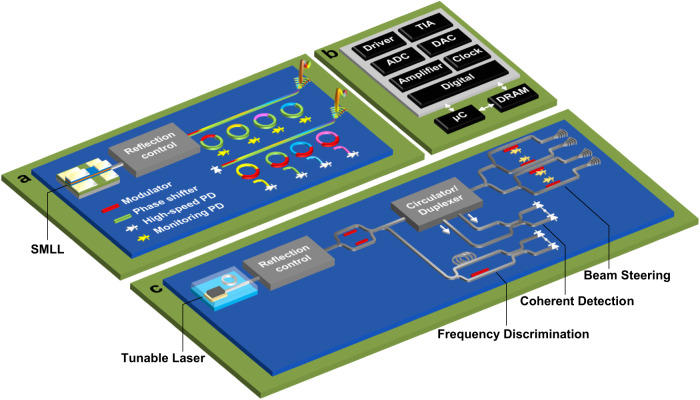
“Comb lasers [110] such as passive semiconductor mode-locked lasers (SMLLs) [111] are being actively pursued by various research groups.”
BackgroundSelf-citationPerspective on the future of silicon photonics and electronics
Margalit, N., Xiang, C., Bowers, S. M., Bjorlin, A., Blum, R., & Bowers, J. E. (2021) · Applied Physics Letters · doi:10.1063/5.0050117 · Cited by 641 · cited 3×
“1 maps the evolution of silicon photonics [1, 2].”
BackgroundSelf-citation
Research works printed but not linked: 2
- Dobbelaere, P. D. Silicon photonics transceivers for hyperscale datacenters: deployment and roadmap. In 2016 European Conference on Optical Communication (2016).
- Eschenbaum, C. et al. Thermally stable Silicon-Organic Hybrid (SOH) Mach-Zehnder Modulator for 140 GBd PAM4 transmission with sub-1 V drive signals. In 2022 European Conference on Optical Communication (ECOC), 1–4 (2022).
Cited by
Items 401–500 of 829
Silicon-photonic optomechanical magnetometer
Gotardo, F., Carey, B. J., Bawden, N., Harris, G. I., Greenall, H., Romero, E., Bulla, D. A. P., Bennett, J. S., Foster, S. B., & Bowen, W. P. (2026) · Optica · doi:10.1364/optica.587082 · Cited by 3
Earth-observing photonic integrated circuit (EPIC) science instrumentation
Ádámkovics, M., & Kowalczyk, T. C. (2024) · Infrared Remote Sensing and Instrumentation · doi:10.1117/12.3028831 · Cited by 1
Pan, M., Wang, B., Lin, S., & Yu, S. (2025) · Optics Express · doi:10.1364/oe.574588 · Cited by 1
Wan, Y., Ruan, Z., Cao, H. B., Wang, L., Zhou, W., & Wang, J. (2025) · Photonics Research · doi:10.1364/prj.566323 · Cited by 2
In-Plane III–V Nanowire Diode Array Grown on SOI for Si Nanophotonics
Chen, J., Lei, Z. K., Ren, Z., Zhao, Y., Han, Y., & Yu, S. (2026) · ACS Photonics · doi:10.1021/acsphotonics.5c01942 · Cited by 2
High Current Nanosecond Laser Drivers for Lidar
Lidow, A., de Rooij, M., Glaser, J., et al. (2024) · doi:10.1002/9781394286980.ch13 · Cited by 1
Optical two-tone time transfer
Roslund, J., Kowligy, A. S., Fujita, J., Ledbetter, M. P., Rakholia, A., Boyd, M. M., Abo-Shaeer, J. R., & Cingöz, A. (2025) · Physical Review Applied · doi:10.1103/9w7h-zzyd · Cited by 10
Optical Alignment Optimization for High Throughput Testing of Photonic Integrated Circuits
Jansen, R., Pustakhod, D., Combee, B., Leijtens, X. J. M., Williams, K. A., & Latkowski, S. (2024) · International Conference on Transparent Optical Networks · doi:10.1109/icton62926.2024.10647549 · Cited by 1
On-chip electrically reconfigurable diffractive element and metalens with phase change material
Wang, C., Lv, X., Zhao, T., Feng, S., He, Q., & Miao, X. (2026) · Applied Physics Letters · doi:10.1063/5.0303243 · Cited by 1
Beyond silicon: a roadmap for overcoming the five challenges (5Cs) in molecular computing
Ciupa, A. (2025) · Journal of Materials Chemistry C · doi:10.1039/d5tc02170g · Cited by 2
Wang, M., Liu, Z., Xin, Y., Sun, X., Wu, Y., & Zhang, D. (2026) · Optics Express · doi:10.1364/oe.597439 · Cited by 1
Akhter, M. E., Moosa, I. M., Rahman, L. T., Islam, M. A., Islam, S., & Ali, K. (2025) · IEEE Journal of Selected Topics in Quantum Electronics · doi:10.1109/jstqe.2025.3535573 · Cited by 2
Liu, H., Wang, J., Wang, K., Hong, R., Zhang, W., Tao, C., Wang, Q., Lin, H. M., Han, Z., & Zhang, D. (2024) · Optical Materials · doi:10.1016/j.optmat.2024.116453 · Cited by 1
Maximum Shannon capacity of photonic structures
(2026) · doi:10.1038/s44310-025-00104-2 · Cited by 1
Peng, H., Quan, Z., Zhang, L., Zhuang, Y., Feng, Y., Liu, R., Du, J., Zhao, W., & Wang, J. (2026) · Optical Fiber Communication Conference · doi:10.1364/ofc.2026.th3f.7 · Cited by 1
Design of a thermally robust O-band heterogeneous laser for CPO: enabling >160 mW output at 380 K
Ren, X., Wang, C., Hong, B., Cai, H., & Chu, W. (2026) · Journal of the Optical Society of America B · doi:10.1364/josab.590973 · Cited by 1
150 Gbaud high-efficiency O-band silicon microring modulator
Zhou, Z., Sun, Z., Wan, H., Tian, Q., Yuan, Y., He, J., Hu, C., Hu, H., Liu, J., Dai, S., et al. (2026) · Optics Express · doi:10.1364/oe.591496 · Cited by 1
Zheng, Z., Chang, Y.-J., Cheng, L., Tseng, T., & Schlichtmann, U. (2025) · Asia and South Pacific Design Automation Conference (ASP-DAC) · doi:10.1145/3658617.3697783 · Cited by 1
Advances of high-speed GaN-based laser diodes for emerging applications
Gu, Z., Yang, Z., Du, F., Fan, D., Xiao, B., Hu, J. B., Jia, H., Wang, S. Y., Pan, Y., Zhang, J., et al. (2026) · Progress in Quantum Electronics · doi:10.1016/j.pquantelec.2026.100633 · Cited by 1
Alomar, A. S. (2025) · IEEE Journal of Quantum Electronics · doi:10.1109/jqe.2025.3597529 · Cited by 1
Silicon Photonic Test-Point Selection by Integrating Design Parameters with Hypergraph Partitioning
Schlitt, L. M., Agnihotri, P., Kalla, P., & Blair, S. (2025) · IEEE International Test Conference (ITC) · doi:10.1109/itc58126.2025.00033 · Cited by 3
Off-axis RF-sputtered barium titanate thin films for next-generation electro-optic devices
Sumon, M. S. I., Lazareno, K., Carpenter, D. A., Ghosh, A., Sankar, S., Faruque, I. I., Dwivedi, S. P., Nelson, R. L., Brown, D. P., Stenger, V. E., et al. (2025) · Journal of Physics Materials · doi:10.1088/2515-7639/ae0ef0 · Cited by 2
Single-photon emitters and spin–photon interfaces in silicon
Sandholzer, K., Berkman, I. R., Deák, P., Errando-Herranz, C., Filippatos, P., Gali, Á., Gritsch, A., & Reiserer, A. (2026) · Applied Physics Reviews · doi:10.1063/5.0326694 · Cited by 9
Layout-Aware and Fabrication-Tolerant Deep Photonic Networks
Vit, A. D., Görgülü, K., Amiri, A. N., Danis, B. S., Rzayev, U., Dasdemir, A. O., Mağden, A., & Magden, E. S. (2025) · Journal of Lightwave Technology · doi:10.1109/jlt.2025.3621420 · Cited by 6
Wang, X., Yang, F., Shen, R., Zhao, Y., Wang, X., Hu, F., Cai, H., & Chu, W. (2026) · ACS Photonics · doi:10.1021/acsphotonics.6c00297 · Cited by 1
300mm IIIV on SOI laser integration process, fabrication and prototyping
Charbonnier, B., Bellemin-Comte, A., Adelmini, L., Mathieu, V., Stigliani, M., Castan, C., Philip, P.-E., Hebras, D., Hartmann, J., Ribaud, K., et al. (2025) · IEEE Silicon Photonics Conference (SiPhotonics) · doi:10.1109/siphotonics64386.2025.10985732 · Cited by 1
The emerging applications of silicon photonics
Ranno, L., Tan, Y. Z., Coleto, A. G., To, V. H. N., Tian, S., Sun, Y., Xu, Z., Chae, S. H., Martin‐Monier, L., Huang, Z., et al. (2025) · Newton · doi:10.1016/j.newton.2025.100357 · Cited by 2
Zheng, Z., Li, M., Tseng, T., & Schlichtmann, U. (2025) · Journal of Optical Communications and Networking · doi:10.1364/jocn.559568 · Cited by 1
Ge, Q., Wang, J., Zhai, H., Liu, S., Chen, Y., Mao, K., Liu, C., Bai, Y., Liu, H., Huang, Y., et al. (2024) · Optical and Quantum Electronics · doi:10.1007/s11082-024-07578-y · Cited by 1
Slow-light enhanced silicon photonic crystal phase tuner actuated by electrostatic comb drives
Poulsen, B., & Sabarinathan, J. (2025) · Optics Express · doi:10.1364/oe.544493 · Cited by 1
Volumetric photonic integration enabled by femtosecond laser 3D printing
Zhao, M., Hu, Z., Jin, C., Wang, L., Liu, X., Tian, Z., & Chen, Q. (2026) · Applied Physics Reviews · doi:10.1063/5.0321199 · Cited by 1
Non-volatile programmable directional couplers for high-integration and low-loss photonic computing
Tian, Y., Zhang, H., Xuan, L., Xiong, G., Hao, X., Liao, C., Feixiang, L., Xu, H., Song, B., & Li, Q. (2026) · Photonics Research · doi:10.1364/prj.582627 · Cited by 3
Han, C., Yang, Q., Qin, J., Wang, M., Yi, Z., Li, M., Tian, Y. W., 越曙晗, Wei, X., Zj, W., et al. (2026) · National Science Review · doi:10.1093/nsr/nwag335 · Cited by 2
Self-citationNeuromorphic Photonic On-chip Computing
(2024) · doi:10.20944/preprints202410.1758.v1 · Cited by 1
Research progress in integrated optics for optical coherence tomography
Song, Q., Zhang, D., Ding, Z., & Li, G. (2026) · Intelligent Opto-Electronics · doi:10.67704/ioe.2026.250009 · Cited by 1
Accurate Modeling of Directional Couplers With Oxide Cladding: Bridging Simulation and Experiment
Warshavsky, Y., Drori, Y., Piasetzky, Y., Rotem, A., Shapiro, O., Oz, Y., & Suchowski, H. (2025) · Journal of Lightwave Technology · doi:10.1109/jlt.2025.3571608 · Cited by 3
Gao, Z., Zhang, L., Zhang, C., Yu, Q., Huang, C., Xiao, J., Wu, S., & Yao, S. (2025) · Optics Express · doi:10.1364/oe.568631 · Cited by 1
Demonstration of Interferometric Properties of Unbalanced Mach-Zehnder Interferometer
Ndamati, I. T., Olayemi, O. S., & Madu, A. D. (2024) · Journal of Engineering Research and Reports · doi:10.9734/jerr/2024/v26i21078 · Cited by 1
He, M., Thiele, M., Shetewy, A. E., Lienig, J., & Jamshidi, K. (2025) · Asia Communications and Photonics Conference · doi:10.1109/acp66871.2025.11350884 · Cited by 2
Monolithic Integration of ScAlN Modulators on Silicon‐On‐Insulator Platform
Wang, S., Li, B., Zhou, L., Leong, V., Li, N., Luo, X., & Zhu, D. (2025) · Laser & Photonics Review · doi:10.1002/lpor.202502672 · Cited by 1
Wang, J., Zhu, L., Niu, B., Zuo, Y., Zhou, D., Zhu, R., Xu, H., Wang, H., Zhu, W., Jiang, X., et al. (2024) · Optics & Laser Technology · doi:10.1016/j.optlastec.2024.112131 · Cited by 4
Jia, X., Xu, B., 罗, J. 劼. L., Liu, N., Wang, Y., Zheng, B., Xu, W., & Liu, K. (2025) · Chinese Physics B · doi:10.1088/1674-1056/adc7f7 · Cited by 2
Trach, J., Butler, C., Dolanjski, M., Meldrum, A., & Veinot, J. G. C. (2026) · Nanoscale · doi:10.1039/d5nr04768d · Cited by 1
On-chip resonance peak extraction in evanescent field silicon photonic biosensors
Panda, S., Al-Qadasi, M., Mukherjee, A., Grist, S. M., Lis, M., Cheung, K. C., Chrostowski, L., & Shekhar, S. (2024) · Optics Express · doi:10.1364/oe.545801 · Cited by 1
Self-citationInnovative Photonics Technologies for Renewable Energy Systems in Industry 5.0
Phogat, P., Rawat, S., Rawat, K., Shreya, Jha, R., & Singh, S. (2025) · Advances in optics and optoelectronics · doi:10.1007/978-981-96-7594-4_9 · Cited by 1
PCB-integrated flexo-printed optical networks structures
(2025) · doi:10.1117/12.3041905 · Cited by 1
Impact of ion implantation on μ-RCLEDs performance for visible-light communication
Chiang, W.-H., Chen, J.-W., Yang, P.-A., Lo, S.-J., Hsu, Y.-C., Chou, H.-Y., Singh, A. K., Kung, P.-K., Liu, P., Horng, R., et al. (2026) · Materials Today Advances · doi:10.1016/j.mtadv.2026.100692 · Cited by 1
On-chip ultracompact broadband reflector and high- Q Fabry-Pérot cavity based on inverse design
Si, L.-C., Qin, H., Huang, C., et al. (2026) · Optics Express · doi:10.1364/oe.611221
Spin-photon qubits for scalable quantum network
Islam, M. S., Singh, K., Zhao, Y., Singh, N., & Qarony, W. (2026) · Light Science & Applications · doi:10.1038/s41377-026-02345-y · Cited by 6
Two-dimensional materials for future photonic integration
Hu, Z., Fu, Q., Wang, J., Mingxin, 张. Z., Chen, J., Zhang, Y., Lin, T., Yang, M., Lu, J., & Ni, Z. (2026) · Photonics Insights · doi:10.3788/pi.2026.r12
Xu, G., Guo, Q., Jing, Y., Song, T., & Lai, Y. (2026) · Physical Review Applied · doi:10.1103/7fxd-ntk8
Dasgupta, A., Garner, S., Chowdhury, A. K. M. Z., Hirokawa, T., Vaddi, R., Popielarski, B., Singh, J., Bian, Y., Eaton, K., Cho, J. K., et al. (2026) · IEEE Electronic Components and Technology Conference (ECTC) · doi:10.1109/ectc51846.2026.00107
Dynamic matrix multiplications in memory with photonics and phase-change materials
Cardoso, R. (2024) · theses.fr (ABES) · doi:10.70675/1d6092f1z2c59z4af2z8518z2c4c0a578d32
Narang, G., Bommana, A. R., & Chakrabarty, K. (2026) · ACM Transactions on Design Automation of Electronic Systems · doi:10.1145/3831707 · Cited by 1
Huabao, 尚. S., Deren, 杨. Y., & Dongsheng, 李. L. (2025) · Acta Optica Sinica (Online) · doi:10.3788/aosol250452
FMCW LiDAR Demonstration on an Integrated Silicon Photonic Chip
Cheng, Y., Guo, Q., Yao, R., Pan, W., Du, X., & Ji, C. (2024) · Optoelectronics Global Conference · doi:10.1109/ogc62429.2024.10738781
Rapid Prototyping Bridging Research and Industry in Silicon Photonics
Rani, J. (2025) · IGI Global eBooks · doi:10.4018/979-8-3373-0533-2.ch013
Bin, 王. W., Senyu, 张. Z., Xuan, 吴. W., Yan, R., & Weifeng, 张. Z. (2026) · Acta Optica Sinica (Online) · doi:10.3788/aosol260528
Zhao, S., Zhao, J., Jiao, W., Chen, J., & Shi, Y. (2026) · Optics Letters · doi:10.1364/ol.605916
Chang, Y.-H., Lin, Y.-Z., LIN, Y.-H., et al. (2026) · Optics Express · doi:10.1364/oe.604457
Shi, Y., Huang, Q., Zhang, Q. H., Zhang, X., Zhou, S., Wang, X., Yang, J., & Yu, H. (2026) · Journal of Lightwave Technology · doi:10.1109/jlt.2026.3704415 · Cited by 1
High Finesse Transversely-Coupled Fabry-Pérot Resonators on CMOS-Compatible SiN
Tang, H. R., Morin, T. J., Li, M., Camponeschi, F., Guo, J., & Bowers, J. E. (2025) · IEEE Photonics Technology Letters · doi:10.1109/lpt.2025.3591711
Self-citationDesign of High-Power Heterogeneously Integrated III-V-on-Silicon Distributed Feedback Lasers
Ge, Q., Wang, J., Liu, S., Zhai, H., Huang, Y., & Ren, X. (2024) · International Conference on Optical Communications and Networks (ICOCN) · doi:10.1109/icocn63276.2024.10648509
Lin, R. R., Zhang, Y., Yang, Y., Dong, S., Xu, H., Shen, D., Gao, C., Liang, Z., Tong, J., Gu, E., et al. (2026) · Nature Communications · doi:10.1038/s41467-026-74151-4
Fano-Like Resonances in Coupled Sagnac Interferometers Formed by a Self-Coupled Waveguide
Arianfard, H., Weiss, T. F., Yang, Y., Bader, J., Castelletto, S., & Peruzzo, A. (2026) · Journal of Lightwave Technology · doi:10.1109/jlt.2026.3664857 · Cited by 1
Self-configuring universal multichannel and multidimensional integrated photonic processing engine
Chen, Z., Zhou, W., Chen, H., Lu, K., Tian, W., Cui, Y., Yin, Y., Zhang, M., Pan, X., Hu, J., et al. (2026) · Optica · doi:10.1364/optica.608118
Onodera, H., Shiraki, H., & Matsuhashi, K. (2026) · Cell Reports Sustainability · doi:10.1016/j.crsus.2026.100823 · Cited by 2
S+C+L-bands 90° hybrid on silicon
Hu, Y., Wang, Z., Yang, G., Yu, L., Guo, J., & Dai, D. (2025) · Asia Communications and Photonics Conference · doi:10.1109/acp66871.2025.11350541
PN Junction Optimization for High-Speed Silicon Photonic Modulators
Hamouda, M., Mankarious, C., El-Dahshan, A., Fathy, A., El-Fiky, E. A., & Khalil, D. A. M. (2025) · Photonics · doi:10.3390/photonics12111079 · Cited by 3
Candidate electro-optic molecular crystals for future optoelectronic integration
Sunami, K., Horiuchi, S., Sonoda, Y., Fujiki, N., Higashino, T., Atsumi, Y., Ishibashi, S., & Tsutsumi, J. (2026) · Materials Horizons · doi:10.1039/d6mh00613b
Das, R., Liu, P., Stadler, B. J. H., Corbett, B., & Ghosh, S. K. (2026) · Optics Express · doi:10.1364/oe.607675
Sofla, S. S., Swaminathan, M., Chang, G., et al. (2026) · 2022 IEEE 72nd Electronic Components and Technology Conference (ECTC) · doi:10.1109/ectc51846.2026.00170
Broadband and High-Density Interposer based on Ultrafast Laser Inscribed Waveguides
Ross‐Adams, A., Withford, M. J., & Gross, S. (2025) · Conference on Lasers and Electro-Optics Europe & European Quantum Electronics Conference (CLEO/Europe-EQEC) · doi:10.1109/cleo/europe-eqec65582.2025.11111595
Feng, F., Zhang, Z., Huo, D., Li, X., Lin, Q., Zhao, X., Hou, G., Daoxin Dai, A., Somekh, M. G., & Yuan, X. (2026) · Light Science & Applications · doi:10.1038/s41377-026-02366-7
Hinum-Wagner, J. W., Hörmann, S. M., Tuttner, K., Pölzl, B., Kager-Bleyer, M., Gruber, D., Kraft, J., & Bergmann, A. (2026) · Optics Continuum · doi:10.1364/optcon.592670
Single-molecule detection by silicon-based photonic integrated circuits chip
Li, D., Pan, C., Huang, Q., Li, X., Zou, Y., Lv, P., Zheng, X., Kerman, S., Hu, C., & Chen, C. (2024) · Chinese Journal of Chemical Physics · doi:10.1063/1674-0068/cjcp2404051
A Bitcoin Research Agenda: 100 Critical Information Gaps for Policy and Practice, 2024 editionPreprint
Rudd, M. A. (2025) · SSRN Electronic Journal · doi:10.2139/ssrn.5359261 · Cited by 3
Su, Q., Hu, X., Wei, F., et al. (2026) · Optics Express · doi:10.1364/oe.583573 · Cited by 1
Metadata
- Authors
- Shekhar, S., Bogaerts, W., Chrostowski, L., Bowers, J. E., Hochberg, M., Soref, R., & Shastri, B. J.
- Affiliations
- University of British Columbia (CA)
- Ghent University (BE)
- University of California, Santa Barbara (US)
- University of Massachusetts Boston (US)
- Queen's University (CA)
- Corresponding author
- Shekhar, Sudip
- Shastri, Bhavin J.
- Venue
- Nature Communications
- Published
- 2024-01-25
- Volume
- 15
- Issue
- 1
- Pages
- 751-751
- ISSN
- 2041-1723 (ISSN-L)
- PMC
- PMC10811194
- OpenAlex
- W4391232091
- Semantic Scholar
- 9630d918ef3cde06f39f7f333c8737e46032a504
- Cited by
- 878
- References
- 166
- Citations by year
- 2026: 328 · 2025: 392 · 2024: 153
- FWCI
- 19.74
- Type
- journal article
- Language
- en
- Open access
- gold
- doi.org
- Licence
- cc-by
- creativecommons.org/licenses/by/4.0 (tdm)
- creativecommons.org/licenses/by/4.0 (vor)
- Locations
- Nature Communications (publishedVersion, cc-by)
- PubMed Central (publishedVersion, cc-by)
- PubMed (publishedVersion)
- Ghent University Academic Bibliography (Ghent University) (publishedVersion)
- arXiv (Cornell University) (submittedVersion)
- Ghent University Academic Bibliography (Ghent University) (submittedVersion, cc-by)
- eScholarship (California Digital Library) (submittedVersion)
- RePEc: Research Papers in Economics (submittedVersion)
- DOAJ (DOAJ: Directory of Open Access Journals) (submittedVersion, cc-by-sa)
- Figshare (submittedVersion, cc-by)
- arXiv (Cornell University)
- Funders
- Defense Advanced Research Projects Agency
- Natural Sciences and Engineering Research Council of Canada
- Topics
- Physical Sciences › Engineering › Electrical and Electronic Engineering › Photonic and Optical Devices
- Physical Sciences › Engineering › Electrical and Electronic Engineering › Semiconductor Lasers and Optical Devices
- Physical Sciences › Engineering › Electrical and Electronic Engineering › Advanced Photonic Communication Systems
- Keywords
- silicon photonics, photonic integration, photonic packaging, data center interconnects, optical signal processing, photonic sensing, photonic circuits, technology roadmap
About these checks
Registry, retraction, Cites and statistics results are computed, not judged, with one exception: a printed reference that no index lists is read once by a model before it counts as a citation error. Claims are extracted by a model and kept only when their quote appears verbatim in the text; each cited source is then checked, with a model’s help, for whether it says what the claim relies on. Those verdicts can be wrong — read the claim’s quote and the cited source before relying on one.
The claim verdicts this report counts are experimental: their accuracy is not yet measured.
A language model drew the claims from the paper on 2026-10-10, under version 3 of the claim definition (model deepseek-v4.1-flash, prompt extract-v3).
A second model labelled each claim on 2026-10-10 (model jev-1.13-20260917, definition revision gold-guideline-v0.2).
Cited sources are checked with a language model’s help (gpt-6-sol and qwen3.8-omni-flash).
Statistics and arithmetic are recomputed, not judged.
Confidence bands are shown only for fields calibrated on our annotated test set. None is calibrated yet, so no band is shown.
What counts as a claim ›How we measure confidence ›How we check this ›
Are you an author, or do you see a problem with this page? Request a review
Data sources
Bibliographic data: Semantic Scholar, OpenAlex, Crossref.
Contains information from the Semantic Scholar Academic Graph Datasets, made available under the ODC Attribution License (ODC-BY 1.0).
Semantic Scholar’s data is described in: Kinney, R., et al. (2023). The Semantic Scholar Open Data Platform. arXiv:2301.10140.
