

Hardware implementation of memristor-based artificial neural networks
Open accessThe DOI matches its Crossref record; 272 of the 290 references it cites were found in a registry or an index, and 3 are not checked yet; 94 of the 273 sources its claims cite were checked for support.
Abstract
Artificial Intelligence (AI) is currently experiencing a bloom driven by deep learning (DL) techniques, which rely on networks of connected simple computing units operating in parallel. The low communication bandwidth between memory and processing units in conventional von Neumann machines does not support the requirements of emerging applications that rely extensively on large sets of data. More recent computing paradigms, such as high parallelization and near-memory computing, help alleviate the data communication bottleneck to some extent, but paradigm- shifting concepts are required. Memristors, a novel beyond-complementary metal-oxide-semiconductor (CMOS) technology, are a promising choice for memory devices due to their unique intrinsic device-level properties, enabling both storing and computing with a small, massively-parallel footprint at low power. Theoretically, this directly translates to a major boost in energy efficiency and computational throughput, but various practical challenges remain. In this work we review the latest efforts for achieving hardware-based memristive artificial neural networks (ANNs), describing with detail the working principia of each block and the different design alternatives with their own advantages and disadvantages, as well as the tools required for accurate estimation of performance metrics. Ultimately, we aim to provide a comprehensive protocol of the materials and methods involved in memristive neural networks to those aiming to start working in this field and the experts looking for a holistic approach.
Verified 2026-11-22 · 3 references not checked yet
Overview
CoChat Summary
TL;DR
This paper is a review and practical protocol for hardware implementation of memristor-based artificial neural networks, with a focus on image-classification systems. It walks through the full stack from input encoding and crossbar VMM to training, peripheral circuits, simulation, and chip integration, while emphasizing device/circuit non-idealities and design trade-offs.
Key findings
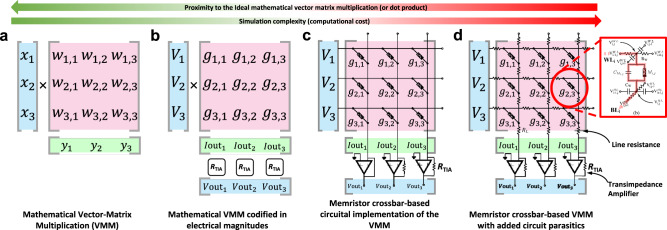
- Memristor crossbars are presented as the core hardware for vector-matrix multiplication, since VMM/MAC is the most demanding ANN operation and can be parallelized in crossbar arrays.
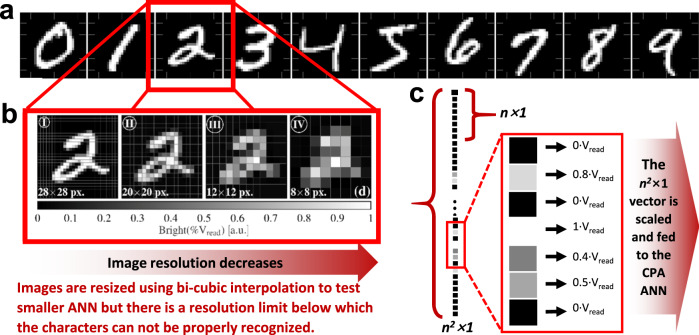
- For MNIST-style benchmarking, the paper uses a 60,000-image training set and 10,000-image test set; in the worked example, images are downsized from 28 × 28 to 8 × 8 and an ANN with one 64 × 10 single-layer perceptron is trained.
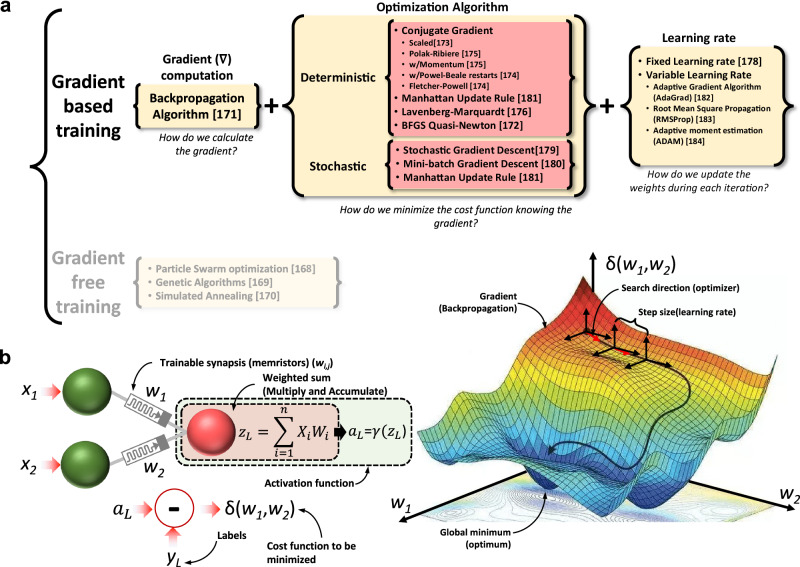
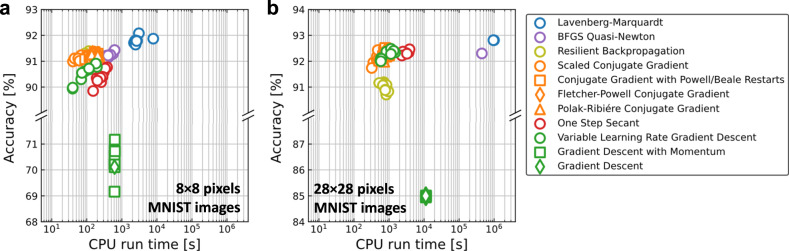
- In the example training study on 100 images, Scaled Conjugate Gradient and Levenberg–Marquardt achieved the highest accuracy, but Scaled Conjugate Gradient was chosen because it was faster.
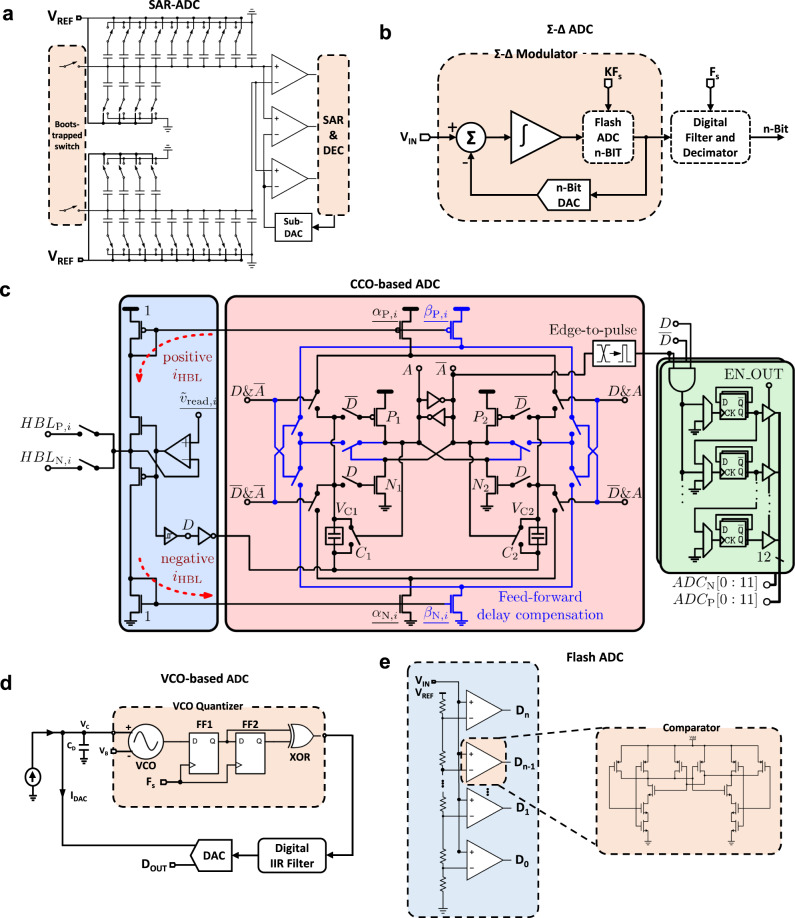
- The paper states that ADCs are often the largest and most power-hungry circuit block in memristive neural networks, consuming up to 70–90% of on-chip area and up to 80–88% of energy.
Methods
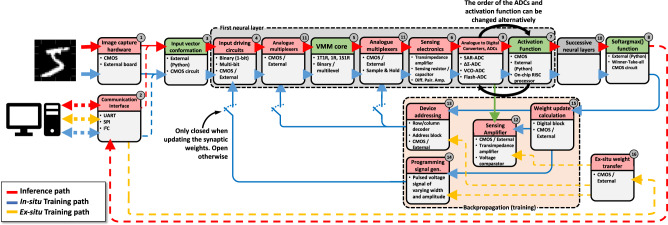
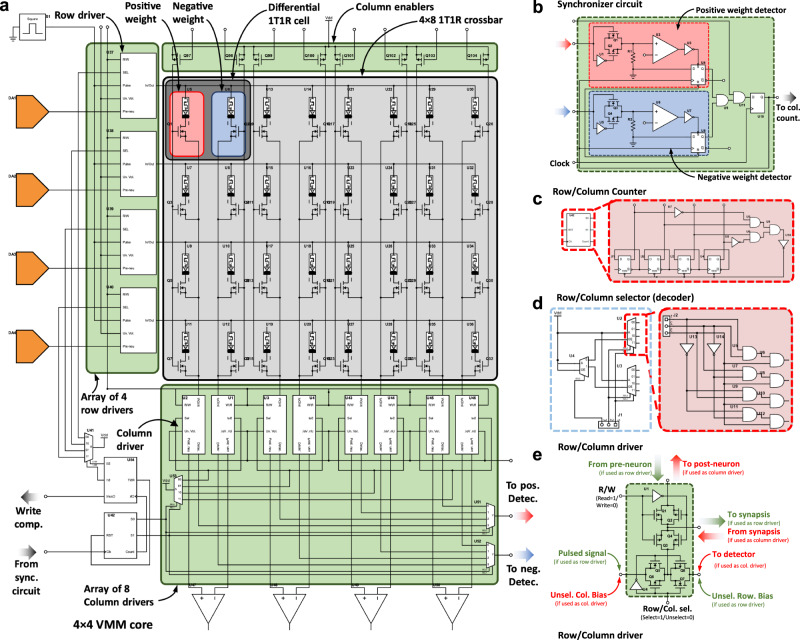
- Review/protocol article: synthesizes prior work on memristive ANN hardware and organizes the system into blocks (image capture, input driving, VMM core, sensing, activation, softargmax, ADCs, and training/update).
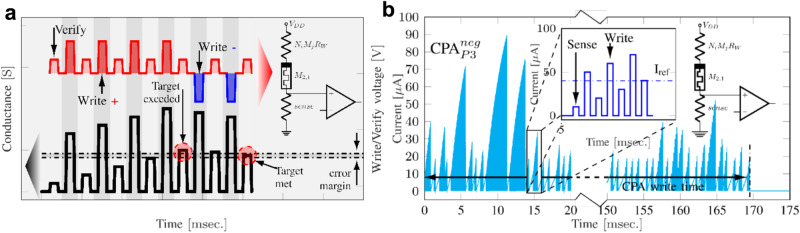
- Worked example: a single-layer perceptron for MNIST image classification; MATLAB is used to train the software model and generate a SPICE netlist, and SPICE simulation is used to evaluate the hybrid CMOS/memristor circuit during inference and write-verify programming.
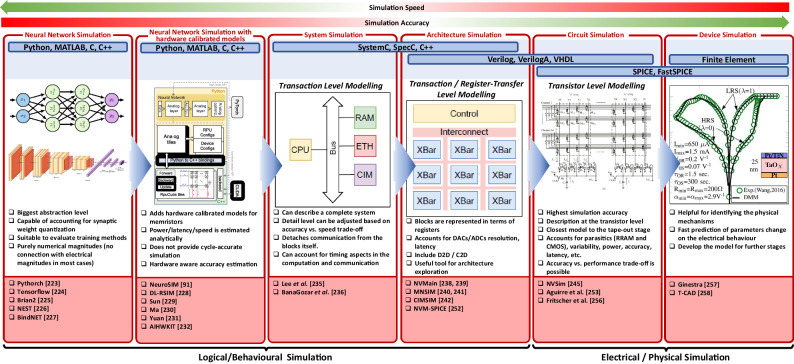
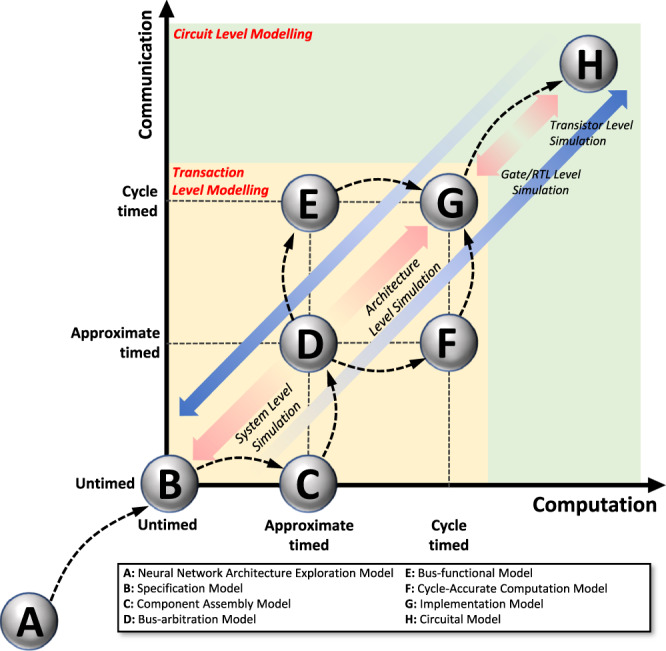
- Analysis emphasis: compares ex situ vs in situ training, discusses conductance mapping to memristors, and surveys simulation abstraction levels from neural-network-level tools to circuit/SPICE-level models.
Limitations
- Stated in the paper: many published studies are not true full-hardware implementations; some only characterize a few devices or rely on software ANN simulations, so reported performance can be weakly connected to fabricated hardware.
- Stated in the paper: full on-chip memristive ANN implementation is limited by peripheral circuit overhead, ADC/DAC trade-offs, device non-idealities, and the difficulty of integrating memristor stacks with CMOS.
- Evident from the text: the paper is not an experimental validation of a new memristor ANN chip; it is primarily a review plus a simulation-based worked example, so its conclusions about performance are illustrative rather than a direct new hardware result.
Model-written summary. Check it against the paper before relying on it.
Integrity signals
Registry
Cites
Statistics
Figures
Verification
Claims the paper makes
47 Valid · 14 Not valid · 58 Not checked · 121 Own results and interpretations
At least one cited source doesn’t support this claim or points to a different paper, and none confirmed it — see the verdicts below.
In the paper
“ADCs with at least 8-bit resolution are necessary to achieve high (>90%) classification accuracy in a ResNET50-1.5 ANN used to classify the ImageNET157 database”
§ Hardware implementation of memristor-based artificial neural networks > Structure of memristor-based ANNs > Analogue to digital converters (Block 9)
What the sources say
- Disputedcites [157] Xiao TP On the Accuracy of Analog Neural Network Inference Accelerators [Feature],” IEEE Circuits Syst. Mag. 2022 22 26 48 10.1109/MCAS.2022.3214409 sourceExperimental — accuracy not yet measured
Section 6.3 (p. 12) says high accuracy is maintained with a 7-bit ADC, contrary to the claim that at least 8 bits are necessary. Table 2 in Section 4.3 (p. 7) reports 76.466% ImageNet top-1 accuracy for ResNet50-v1.5, not over 90%. (LLM, conf=0.93)
Checked by a reasoning model — may be wrong.
plainstates a cause- Asserted: passes — The authors put it forward as true.
- Checkable: passes — It can be checked against evidence.
- Load-bearing: unclear — It is unclear whether the paper’s conclusions depend on it.
- Based: passes — The paper gives a reason why it holds.
- Disputed
Some cited sources support this claim and some don’t — read each source’s verdict below.
In the paper
“the usual practice reported in the literature for this kind of training has been the use of the so-called Manhattan Update Rule105,194, or the Stochastic Gradient Descent54.”
§ Hardware implementation of memristor-based artificial neural networks > Structure of memristor-based ANNs > ANN training and synaptic weight update (Blocks 2, 11-15)
What the sources say
- Supportedcites [105] Prezioso M “Training and operation of an integrated neuromorphic network based on metal-oxide memristors,” Nature 2015 521 61 64 10.1038/nature14441 25951284 source
The Pattern Classification Experiment (p. 5) explicitly says the network was trained in situ using the Manhattan Update rule. This supports the Manhattan-rule example for which this paper is cited; the separate stochastic-gradient-descent citation is not being judged here. (LLM, conf=0.93)
- Disputedcites [194] Yao, P. et al., “Face classification using electronic synapses,” Nat. Commun., 8, May, 1–8, 10.1038/ncomms15199.2017, PMC5437298 28497781 sourceExperimental — accuracy not yet measured
The citation to this paper is attached to the Stochastic Gradient Descent part of the sentence. In “RRAM-based neuromorphic network” (page unavailable), the paper calls its two weight-update rules the delta rule and the Manhattan rule; Figure 2’s caption explicitly says the demonstration uses a batch learning model, not stochastic gradient descent. (LLM, conf=0.83)
Checked by a reasoning model — may be wrong.
- Could not verifycites [54] Li C “Efficient and self-adaptive in-situ learning in multilayer memristor neural networks,” Nat. Commun. 2018 9 1 8 29921923 PMC6008303 sourceExperimental — accuracy not yet measured
The Methods section describes ray-tracing simulations of bird-of-paradise feathers, not training memristor-based neural networks. Searches for the Manhattan Update Rule and stochastic gradient descent found no passage in our copy addressing either method as a usual training practice. (LLM, conf=0.78)
plain- Asserted: passes — The authors put it forward as true.
- Checkable: passes — It can be checked against evidence.
- Load-bearing: unclear — It is unclear whether the paper’s conclusions depend on it.
- Based: passes — The paper gives a reason why it holds.
- Supported
The cited sources support only part of this claim — read each source’s verdict below.
In the paper
“So far, several groups and companies have claimed the realization of hybrid CMOS/memristor implementations of ANNs53–61, —from now on, memristive ANNs— with performance that is superior to that of fully-CMOS counterparts.”
§ Hardware implementation of memristor-based artificial neural networks > Introduction
What the sources say
- Not checked — no full text of the sourcecites [53] Ishii, M. et al., “On-Chip Trainable 1.4M 6T2R PCM synaptic array with 1.6K Stochastic LIF neurons for spiking RBM,” Technical Digest - International Electron Devices Meeting, IEDM, 2019- 310–313, 2019, 10.1109/IEDM19573.2019.8993466. source
- Could not verifycites [54] Li C “Efficient and self-adaptive in-situ learning in multilayer memristor neural networks,” Nat. Commun. 2018 9 1 8 29921923 PMC6008303 sourceExperimental — accuracy not yet measured
The Results section discusses super-black feather microstructure, and the Introduction discusses structural absorption of light; neither addresses artificial neural networks. Searches for hybrid CMOS/memristor implementations and performance relative to fully-CMOS systems found no relevant passage in our copy. (LLM, conf=0.78)
- Not checked — no full text of the sourcecites [55] Yao P “Fully hardware-implemented memristor convolutional neural network,” Nature 2020 577 641 646 10.1038/s41586-020-1942-4 31996818 source
- Not checked — no full text of the sourcecites [56] Correll, J. M. et al., “An 8-bit 20.7 TOPS/W Multi-Level Cell ReRAM-based Compute Engine,” in 2022 IEEE Symposium on VLSI Technology and Circuits (VLSI Technology and Circuits), IEEE, 264–265. 10.1109/VLSITechnologyandCir46769.2022.9830490.2022, source
- Not checked — no full text of the sourcecites [57] Cai, F. et al., “A fully integrated reprogrammable memristor-CMOS system for efficient multiply-accumulate operations,” Nat Electron, 2, no. July, 290–299, [Online]. Available: 10.1038/s41928-019-0270-x 2019. source
- Not checked — no full text of the sourcecites [58] Hung, J.-M., “An 8-Mb DC-Current-Free Binary-to-8b Precision ReRAM Nonvolatile Computing-in-Memory Macro using Time-Space-Readout with 1286.4-21.6TOPS/W for Edge-AI Devices,” in 2022 IEEE International Solid- State Circuits Conference (ISSCC), IEEE, 1–3. 10.1109/ISSCC42614.2022.9731715.2022, source
- Not checked — no full text of the sourcecites [59] Xue, C.-X., “15.4 A 22nm 2Mb ReRAM Compute-in-Memory Macro with 121-28TOPS/W for Multibit MAC Computing for Tiny AI Edge Devices,” in 2020 IEEE International Solid- State Circuits Conference - (ISSCC), IEEE, 2020, 244–246. source
- Partly supportedcites [60] Wan W “A compute-in-memory chip based on resistive random-access memory,” Nature 2022 608 504 512 10.1038/s41586-022-04992-8 35978128 PMC9385482 sourceExperimental — accuracy not yet measured
The Main section describes NeuRRAM as an RRAM chip integrated with CMOS circuits and reports hardware-measured AI inference, supporting its use as an example of a hybrid implementation. The reported performance gains are against earlier RRAM compute-in-memory chips (Efficient voltage-mode neuron circuit), not fully-CMOS counterparts. The Methods section projects higher efficiency than edge inference accelerators only after scaling NeuRRAM from 130 nm to 7 nm; it does not establish the claimed superiority for the realized chip. (LLM, conf=0.84)
- Partly supportedcites [61] Yin S Sun X Yu S Seo JS “High-throughput in-memory computing for binary deep neural networks with monolithically integrated RRAM and 90-nm CMOS,” IEEE Trans. Electron. Dev. 2020 67 4185 4192 10.1109/TED.2020.3015178 sourceExperimental — accuracy not yet measured
The paper demonstrates a binary neural-network chip that integrates RRAM with 90-nm CMOS (p. 1), and its Results report a density advantage over SRAM-based in-memory computing (p. 6). But its quantified throughput and energy-delay improvements are compared with another CMOS chip containing embedded RRAM, not a fully-CMOS counterpart (Supplementary Figure 7, p. 32). It therefore supports the hybrid implementation, but not the claimed overall performance comparison with fully-CMOS ANNs. (LLM, conf=0.86)
plainstates an association- Asserted: passes — The authors put it forward as true.
- Checkable: passes — It can be checked against evidence.
- Load-bearing: unclear — It is unclear whether the paper’s conclusions depend on it.
- Based: passes — The paper gives a reason why it holds.
Every source the paper cites for this claim was checked and supports it.
In the paper
“Moreover, the switching time can be as short as 85 ps42.”
§ Hardware implementation of memristor-based artificial neural networks > Introduction
What the sources say
- Supportedcites [42] Choi BJ “High-speed and low-energy nitride memristors,” Adv. Funct. Mater. 2016 26 5290 5296 10.1002/adfm.201600680 source
The Results and Discussion state that an AlN memristor switched both off and on in 85 ps. The Conclusions also report a measured ultrafast switching time of 85 ps in AlN memristors. (LLM, conf=0.95)
plain- Asserted: passes — The authors put it forward as true.
- Checkable: passes — It can be checked against evidence.
- Load-bearing: unclear — It is unclear whether the paper’s conclusions depend on it.
- Based: passes — The paper gives a reason why it holds.
- Supported
The cited sources support only part of this claim — read each source’s verdict below.
In the paper
“For instance, given the MNIST dataset in which images have a resolution of 28 × 28 pixels one option is to implement the synaptic layer using multiple crossbars to fit the 784 inputs (e.g., 13 64 × 64 or 4 256 × 256 crossbars would be needed93).”
§ Hardware implementation of memristor-based artificial neural networks > Structure of memristor-based ANNs > Image capture hardware (block 1) and input vector conformation (block 3)
What the sources say
- Partly supportedcites [93] Kim H Mahmoodi MR Nili H Strukov DB “4K-memristor analog-grade passive crossbar circuit,” Nat. Commun. 2021 12 1 11 10.1038/s41467-021-25455-0 34465783 PMC8408216 sourceExperimental — accuracy not yet measured
The Results section (“Modeling of advanced systems”; page unavailable) supports splitting a 784-input MNIST classifier layer across multiple crossbar blocks. It does not give the claimed examples of 13 64 × 64 or 4 256 × 256 crossbars: its modeled implementation uses differential-pair weights and maps a 785 × 64 layer to 24 64 × 64 and two 17 × 64 blocks. (LLM, conf=0.88)
hedged- Asserted: passes — The authors put it forward as true.
- Checkable: passes — It can be checked against evidence.
- Load-bearing: unclear — It is unclear whether the paper’s conclusions depend on it.
- Based: passes — The paper gives a reason why it holds.
- Partly supported
88 more claims · 22 with their cited sources checked
Create a free account to see all 240 claims and to verify the 11 references still open.
- Probably not a substantial claim. 79
- It may state two separate claims as one. 91
- The quote only partly states this claim. 1
Citations
Cites
Deep Residual Learning for Image Recognition
He, K., Zhang, X., Ren, S., & Sun, J. (2016) · 2016 IEEE Conference on Computer Vision and Pattern Recognition (CVPR) · doi:10.1109/cvpr.2016.90 · Cited by 235,474 · cited 1×
“For benchmarking a device or a chip, it is essential to evaluate the accuracy of standard deep neural network models like VGG 89 and ResNet 90 on CIFAR and ImageNet dataset by utilizing architecture-levelsimulationandrealistichardwarestatistics 91,92 .”
Very Deep Convolutional Networks for Large-Scale Image Recognition
Simonyan, K., & Zisserman, A. (2014) · arXiv · doi:10.48550/arxiv.1409.1556 · Cited by 114,148 · cited 1×
“For benchmarking a device or a chip, it is essential to evaluate the accuracy of standard deep neural network models like VGG 89 and ResNet 90 on CIFAR and ImageNet dataset by utilizing architecture-levelsimulationandrealistichardwarestatistics 91,92 .”
Adam: A Method for Stochastic Optimization
Kingma, D. P., & Ba, J. (2014) · arXiv · doi:10.48550/arxiv.1412.6980 · Cited by 98,946 · cited 2×
“…employed 165 , and for stochastic evaluation of the loss function using a mini-batch of images diverse methods have been employed, including Adaptive Gradient Algorithm (or AdaGrad) 182 , Root Mean Square Propagation (or RMSProp) 183 , Adaptive Moment Estimation (or Adam) 184 and Adadelta 185 .”
ImageNet: A large-scale hierarchical image database
Deng, J., Dong, W., Socher, R., Li, L.-J., Li, K., & Fei-Fei, L. (2009) · 2009 IEEE Conference on Computer Vision and Pattern Recognition · doi:10.1109/cvpr.2009.5206848 · Cited by 65,333 · cited 1×
“…86 ; 2) CIFAR (Canadian Institute for Advanced Research),whichcontains60,000colorimagesdividedinto10classes for CIFAR-10 and 100 classes for CIFAR-100 87 ; 3) ImageNet, one of the largest image datasets, which consists of over 1.2 million labelled from 1000 classes for the ImageNet competition 88 .”
InfluentialKennedy, J., & Eberhart, R. (2002) · Proceedings of ICNN'95 - International Conference on Neural Networks · doi:10.1109/icnn.1995.488968 · Cited by 58,192 · cited 1×
“Gradient-free methods such as the Particle Swarm optimization 168 , Genetic Algorithms 169 and Simulated Annealing 170 algorithms are more demanding from a computational point of view, andhence,theyarerarelyemployedforANNtraining,bywhichtheylie beyond the scope of this article.”
Optimization by Simulated Annealing
Kirkpatrick, S., Gelatt, C. D., & Vecchi, M. P. (1983) · Science · doi:10.1126/science.220.4598.671 · Cited by 45,134
Learning representations by back-propagating errors
Rumelhart, D. E., Hinton, G. E., & Williams, R. J. (1986) · Nature · doi:10.1038/323533a0 · Cited by 31,892 · cited 1×
“In most ANNs, the gradient of the loss function is normally computed by the backpropagation algorithm 171 .”
An Algorithm for Least-Squares Estimation of Nonlinear Parameters
Marquardt, D. W. (1963) · Journal of the Society for Industrial and Applied Mathematics · doi:10.1137/0111030 · Cited by 30,728 · cited 6×
“…evaluation, common optimization algorithms are the following: (i) Gradient Descent 165 (the simplest one and closest to the previous (cid:129) Manha(cid:3)an UpdateRule [181] (cid:129) Lavenberg-Marquardt[176] (cid:129) BFGS Quasi-Newton[172] Howdo we updatethe weightsduringeachitera(cid:2)on?”
InfluentialStrukov, D. B., Snider, G. S., Stewart, D. R., & Williams, R. S. (2008) · Nature · doi:10.1038/nature06932 · Cited by 11,828
(2017) · Cited by 11,625
Research works printed but not linked: 3
- “Microchips that mimic the human brain could make AI far more energy efficient | Science | AAAS.” Accessed: May 15, 2023. [Online]. Available: https://www.science.org/content/article/microchips-mimic-human-brain-could-make-ai-far-more-energy-efficient
- Hu, M. et al., “Dot-product engine for neuromorphic computing,” in DAC ’16: Proceedings of the 53rd Annual Design Automation Conference, New York, NY, USA: Association for Computing Machinery, 1–6. 10.1145/2897937.2898010.2016, · doi:10.1145/2897937.2898010.2016
- Ielmini, D. and Waser, R. Resistive Switching. Weinheim, Germany: Wiley-VCH Verlag GmbH & Co. KGaA, 2016.
Cited by
The growing memristor industry
Lanza, M., Pazos, S., Aguirre, F., Sebastian, A., Le Gallo, M., Alam, S. M., Ikegawa, S., Yang, J. J., Vianello, E., Chang, M.-F., et al. (2025) · Nature · doi:10.1038/s41586-025-08733-5 · Cited by 177
“…in purely passive, high-density 1R crossbar arrays 119 that can be self-rectifying 120 , but these alternatives are not demonstrated in commercial platforms, have limited size (64 × 64 memristors 119 ) and always require system-level mitigation of sneak-path currents 24 , adding complexity.”
Self-citationWeilenmann, C., Ziogas, A. N., Zellweger, T., Portner, K., Mladenović, M., Kaniselvan, M., Moraitis, T., Luisier, M., & Emboras, A. (2024) · Nature Communications · doi:10.1038/s41467-024-51093-3 · Cited by 148
“Although such investigations would certainly lead to increased energy consumption 59 , we believe that the memristor advantage is large enough (two orders of magnitude) to persist even under more realistic conditions.”
Synaptic and neural behaviours in a standard silicon transistor
Pazos, S. M., Zhu, K., Villena, M. A., Alharbi, O., Zheng, W., Shen, Y., Yuan, Y. J., Ping, Y., & Lanza, M. (2025) · Nature · doi:10.1038/s41586-025-08742-4 · Cited by 150
“…over a wide range of bursting frequencies and input stimuli (Supplementary Note 6), accommodate external reset signals (through bulk bias control pulsing) or operate as a two-, three-or four-terminal neuron in different neural network architectures 45 (Supplementary Note 6 and Supplementary Fig.”
Self-citationTwo-Dimensional Materials for Brain-Inspired Computing Hardware
Hadke, S. S., Kang, M., Sangwan, V. K., & Hersam, M. C. (2025) · Chemical Reviews · doi:10.1021/acs.chemrev.4c00631 · Cited by 112
Solution-processed memristors: performance and reliability
Pazos, S. M., Xu, X., Guo, T., Zhu, K., Alshareef, H. N., & Lanza, M. (2024) · Nature Reviews Materials · doi:10.1038/s41578-024-00661-6 · Cited by 111
“…would be the size of the crossbar array used for the neural network simulation based on the sizes of the memris-tors demonstrated — and note that this excludes all the peripheral circuitry such as digital-to-analog or analog-to-digital converters, transimpedance amplifiers and comparators 120 .”
Self-citationHan, J., Deng, W., Hu, F., Han, S. H., Wang, Z., Fu, Z., Zhou, H., He, Y., Gou, J., & Wang, J. (2025) · Advanced Functional Materials · doi:10.1002/adfm.202423360 · Cited by 86
Wang, C., Luo, D., Deng, Q., & Yang, G. (2024) · Chaos Solitons & Fractals · doi:10.1016/j.chaos.2024.115471 · Cited by 66
Strategic Development of Memristors for Neuromorphic Systems: Low‐Power and Reconfigurable Operation
Lee, J. W., Han, J., Kang, B., Hong, Y. J., Lee, S., & Jeon, I. (2025) · Advanced Materials · doi:10.1002/adma.202413916 · Cited by 81
Ran, H., Ren, Z., Li, J., Sun, B. T., Wang, T., Gu, D., Wang, W., Hu, X., Dong, Z., Song, Q., et al. (2024) · Advanced Functional Materials · doi:10.1002/adfm.202418113 · Cited by 63
Self-citationYu, F., 苏, D. 丹. S., He, S., 吴, Y. 亦. W., Zhang, S., & Yin, H. (2025) · Chinese Physics B · doi:10.1088/1674-1056/adb8bb · Cited by 56
Yang, D., Meng, W., Wang, Z., Yu, T., Li, C., Zhang, Q., Zhang, Z., Li, H., Lin, Y., Xue, F., et al. (2025) · Nature Communications · doi:10.1038/s41467-025-65691-2 · Cited by 58
Collective dynamics of adaptive memristor synapse-cascaded neural networks based on energy flow
Zhang, S., Wang, C., Zhang, H., & Lin, H. (2024) · Chaos Solitons & Fractals · doi:10.1016/j.chaos.2024.115191 · Cited by 56
Solid‐State Oxide‐Ion Synaptic Transistor for Neuromorphic Computing
Langner, P., Chiabrera, F. M., Alayo, N., Nizet, P., Morrone, L., Bozal‐Ginesta, C., Morata, À., & Tarancón, A. (2024) · Advanced Materials · doi:10.1002/adma.202415743 · Cited by 50
Yang, J., Tang, X.-G., Gu, X., Sun, Q., Tang, Z., Li, W., & Jiang, Y. (2025) · Nano-Micro Letters · doi:10.1007/s40820-025-01891-1 · Cited by 59
“Research by Aguirre et al. [134] shows that asymmetric or nonlinear conductance updates can degrade training accuracy and hinder convergence.”
Self-citationKumar, A., Bhardwaj, K., Singh, S. P., Lee, Y., Lee, S., Kumar, M., & Sharma, S. K. (2024) · InfoMat · doi:10.1002/inf2.12644 · Cited by 41
Pazos, S. M., Shen, Y., Zhang, H., et al. (2024) · Nature Electronics · doi:10.1038/s41928-024-01192-2 · Cited by 35
“This behaviour has also been consistently observed for alternative electrode materials and tested for compatibility with integration processes, such as Pt and Ti (Supplementary Note 1 and Supplementary Fig.”
InfluentialSelf-citationZhang, G., Fan, X., Wang, J., Wang, Z., Zhang, Z., Li, P., Ma, Y., Huang, K., Yu, B., Wan, Q., et al. (2025) · Nature Communications · doi:10.1038/s41467-025-60970-4 · Cited by 64
Neural architecture search for in-memory computing-based deep learning accelerators
Krestinskaya, O., Fouda, M. E., Benmeziane, H., Maghraoui, K. E., Sebastian, A., Lu, W. D., Lanza, M., Li, H. H., Kurdahi, F. J., Fahmy, S. A., et al. (2024) · Nature Reviews Electrical Engineering · doi:10.1038/s44287-024-00052-7 · Cited by 47
Self-citationNeuromorphic ionic computing in droplet interface synapses
Li, Z., Myers, S. K., Xiao, J., Li, Y., Noy, N. F., Leuski, A., & Noy, A. (2025) · Science Advances · doi:10.1126/sciadv.adv6603 · Cited by 52
PIM GPT a hybrid process in memory accelerator for autoregressive transformers
Wu, Y., Wang, Z., & Lu, W. D. (2024) · npj Unconventional Computing · doi:10.1038/s44335-024-00004-2 · Cited by 45
Self-citationAlimisis, V., Papathanasiou, A., Georgakilas, E., Eleftheriou, N. P., & Sotiriadis, P. P. (2024) · AEU - International Journal of Electronics and Communications · doi:10.1016/j.aeue.2024.155467 · Cited by 40
Ji, X., Chen, Y., Wang, J., Zhou, G., Lai, C. S., & Dong, Z. (2024) · IEEE Internet of Things Journal · doi:10.1109/jiot.2024.3448350 · Cited by 37
“…high-energy efficiency and low latency remains challenging: 1) the existing neuromorphic computing systems almost based on metal-oxide memristors [21], highly stable, and eco-friendly memristors and memristor crossbar arrays should be developed; 2) recent studies have focused on time-domain…”
Rapid learning with phase-change memory-based in-memory computing through learning-to-learn
Ortner, T., Petschenig, H., Vasilopoulos, A., Renner, R., Brglez, Š., Limbacher, T., Piñero-Fuentes, E., Linares-Barranco, A., Pantazi, A., & Legenstein, R. A. (2025) · Nature Communications · doi:10.1038/s41467-025-56345-4 · Cited by 46
Plane coexistence behaviors for Hopfield neural network with two-memristor-interconnected neurons
Li, F., Qin, W., Xi, M., Bai, L., & Bao, B. (2024) · Neural Networks · doi:10.1016/j.neunet.2024.107049 · Cited by 32
Localized Conduction Channels in Memristors
Woo, K. S., Williams, R. S., & Kumar, S. (2024) · Chemical Reviews · doi:10.1021/acs.chemrev.4c00454 · Cited by 33
Yue, W., Wu, K., Li, Z., Zhou, J., Wang, Z., Zhang, T., Yang, Y., Ye, L., Wu, Y., Bu, W., et al. (2025) · Nature Communications · doi:10.1038/s41467-025-56412-w · Cited by 42
“ReRAM ’ s unique characteristics – non-volatility, high density, and low-cost fabrication – have propelled ReRAM-based CIM to the forefront of promising AIoT computing solutions 13 – 16 .”
Self-citationDeng, Q., Zhao, T., Zhang, J., Yue, W., Li, L., Li, S., Zhu, L., Sun, Y., Pan, Y., Zheng, T., et al. (2024) · ACS Nano · doi:10.1021/acsnano.4c08345 · Cited by 28
Self-citationAn Analysis of Components and Enhancement Strategies for Advancing Memristive Neural Networks
Park, H., Han, J., Yim, S., Shin, D. H., Park, T. W., Woo, K. S., Lee, S. H., Cho, J. M., Kim, H. W., Park, T., et al. (2025) · Advanced Materials · doi:10.1002/adma.202412549 · Cited by 27
Mechanical Properties Analysis of Flexible Memristors for Neuromorphic Computing
Zhu, Z., Shui, J., Wang, T., & Meng, J. (2025) · Nano-Micro Letters · doi:10.1007/s40820-025-01825-x · Cited by 37
“Finally, the applications of the flexible memristors in neuromorphic computing are discussed deeply [22, 27, 31, 42, 46, 49, 50, 79, 81, 87, 88, 91, 109–115], addressing current challenges and proposing potential directions for future development [26, 37, 101, 105, 116–121].”
Self-citationMortise-tenon–shaped memristors for scientific computing
Dang, W., Shen, Y., Wei, W., Pan, C., Chen, F., Ruan, G.-J., Luo, Y., Guo, Y., Tan, Q., Shi, J., et al. (2025) · Science Advances · doi:10.1126/sciadv.adu3309 · Cited by 26
“The emerging in-memory computing technology enables highly parallel information processing directly within the memory, making it an ideal hardware platform for implementing MVM ( 13 – 21 ).”
Multifunctional Artificial Electric Synapse of MoSe2-Based Memristor toward Neuromorphic Application
Li, Y., Sun, H., Yue, L., Yang, F., Dong, X., Chen, J., Chen, J., Zhang, X., Zhao, Y., Chen, K., et al. (2025) · The Journal of Physical Chemistry Letters · doi:10.1021/acs.jpclett.4c03353 · Cited by 24
Recent Advances in Optoelectronic Synaptic Devices for Neuromorphic Computing
Jang, H.-S., Ju, S., Lee, S., Choi, J., Byun, U., Min, K., Rasheed, M., & Kim, S. (2025) · Biomimetics · doi:10.3390/biomimetics10090584 · Cited by 29
“However, the majority of memristors are purely electronic devices that rely on electrical input and output, which presents several fundamental limitations [15–17].”
A Memristor-Based Neural Network Circuit With Classical Conditioning and Fear Generalization
Gao, S., Shi, F., Xu, X., Chen, J., Iu, H. H.-C., Cao, Y., Qin, L., & Mou, J. (2026) · IEEE Transactions on Consumer Electronics · doi:10.1109/tce.2026.3663359 · Cited by 25
“Although neural networks implemented using software are well developed and commercially available, the software approach leads to a reduction in the inherent parallelism of neural networks limiting their further expansion [6].”
An, J., Zhang, N., Tan, F., Zhao, X., Chang, C., Lanza, M., & Li, S. (2024) · Small · doi:10.1002/smll.202403103 · Cited by 24
Self-citationThermally Oxidized Memristor and 1T1R Integration for Selector Function and Low‐Power Memory
Pan, Z., Zhang, J., Liu, X., Zhao, L., Ma, J., Luo, C., Sun, Y., Dan, Z., Gao, W., Lu, X., et al. (2024) · Advanced Science · doi:10.1002/advs.202401915 · Cited by 25
Li, X., Gao, B., Qin, Q., Yao, P., Li, J., Zhao, H., Liu, C., Zhang, Q., Hao, Z., Li, Y., et al. (2025) · Nature Electronics · doi:10.1038/s41928-025-01390-6 · Cited by 33
Self-citation2D Van Der Waals Ferroelectric Materials and Devices for Neuromorphic Computing
Wen, Z., Chen, J., Zhang, Q., Wang, G., Wang, X., Yang, F., Liu, F., Luo, X. D., & Liu, F. (2025) · Small · doi:10.1002/smll.202412761 · Cited by 27
An, Y., Kim, D., Park, Y. R., Eo, J. S., Kim, M., Kim, D., Kim, H. B., Lee, B., & Wang, G. (2025) · Nano Energy · doi:10.1016/j.nanoen.2025.110999 · Cited by 23
Self-powered artificial vibrissal system with anemotaxis behavior
Qi, M., Ren, Y., Sun, T., Xu, R., Lv, Z., Zhou, Y., & Han, S. (2025) · Science Advances · doi:10.1126/sciadv.adt3068 · Cited by 22
Choi, S., Bezugam, S. S., Bhattacharya, T., Kwon, D., & Strukov, D. B. (2025) · Nature Communications · doi:10.1038/s41467-025-63831-2 · Cited by 44
Wang, X., Ye, S., Cui, B., Li, Y.-C., Wei, Y., Xiao, Y., Liu, J., Huang, Z.-Y., Wu, Y., Wen, Y., et al. (2025) · Nano Energy · doi:10.1016/j.nanoen.2025.111011 · Cited by 24
Tsuchiya, T., Nishioka, D., Namiki, W., & Terabe, K. (2024) · Advanced Electronic Materials · doi:10.1002/aelm.202400625 · Cited by 21
Yang, Q., Hu, J. Q., Li, H., Du, Q., Feng, S., Yang, D. F., Zhang, Y., & Shen, J. (2025) · Advanced Science · doi:10.1002/advs.202413662 · Cited by 20
A review of MXene memristors and their applications
Hota, M. K., Pazos, S. M., Lanza, M., & Alshareef, H. N. (2025) · Materials Science and Engineering R Reports · doi:10.1016/j.mser.2025.100983 · Cited by 24
Self-citationZhou, Z., Wang, L., Liu, G., Li, Y., Guan, Z., Zhang, Z., Li, P., Pei, Y., Zhao, J., Sun, J., et al. (2025) · Light Science & Applications · doi:10.1038/s41377-025-01928-5 · Cited by 24
Self-citationGuo, P., Zhang, J., & Huang, J. D. (2025) · Journal of Semiconductors · doi:10.1088/1674-4926/24120017 · Cited by 24
Saeedi, N., Baharvand, D., Shirini, K., & Gharehveran, S. S. (2025) · The Journal of Supercomputing · doi:10.1007/s11227-025-07505-2 · Cited by 22
Real-time signal processing enabled by fused networks on a memristor-based system on a chip
Wang, Z., Song, W., Wang, T., Wang, Z., Xu, Y., Rao, M., Cai, F., Yin, W., Chen, M. S., Ge, N., et al. (2025) · Science Advances · doi:10.1126/sciadv.adv3436 · Cited by 26
Self-citationMemristor-based adaptive analog-to-digital conversion for efficient and accurate compute-in-memory
Hong, H., Du, Z., Jiang, M., Mao, R., Ren, Y., Li, F., Mao, W., Peng, M., Zhang, W., Liu, Z., et al. (2025) · Nature Communications · doi:10.1038/s41467-025-65233-w · Cited by 41
“…quantization generally offers hardware-friendly implementation with low energy and area overhead but suffers from signi fi cant precision loss 2 , while adaptive approaches based on cumulative distribution function 31 and Lloyd-Max algorithm 32 – 34 achieve higher accuracy through dynamic…”
Byun, Y., Kim, G., Kim, S., & Kim, S. (2025) · Nano Energy · doi:10.1016/j.nanoen.2025.111261 · Cited by 20
Shi, F., Xu, X., Chen, J., et al. (2025) · Nonlinear Dynamics · doi:10.1007/s11071-025-11468-7 · Cited by 17
Grandhi, G. K., Viswanath, N. S. M., Righetto, M., Domenici, S., Mokurala, K., Moroni, M., Pecoraro, A., Muñoz‐García, A. B., Pavone, M., Malavasi, L., et al. (2026) · Journal of Materials Chemistry A · doi:10.1039/d5ta06180f · Cited by 22
Density functional theory and molecular dynamics simulations for resistive switching research
Villena, M. A., Kaya, O., Schwingenschlögl, U., Roche, S., & Lanza, M. (2024) · Materials Science and Engineering R Reports · doi:10.1016/j.mser.2024.100825 · Cited by 21
Self-citationReview of memristor based neuromorphic computation: opportunities, challenges and applications
Shekinah Archita, S., & Ravi, V. K. K. (2024) · Engineering Research Express · doi:10.1088/2631-8695/ad6662 · Cited by 25
A 2D MoS 2 ‐Based Active‐Matrix Photosensor Array for Neuromorphic Vision
Chen, Y., Wang, R., Zhang, S., Chen, F., Tang, Y., Ren, S., Li, D., Wang, Y., Ren, H., Liu, G., et al. (2025) · Advanced Functional Materials · doi:10.1002/adfm.202507954 · Cited by 21
Li, Y., Li, Y., Sun, H., et al. (2024) · The Journal of Physical Chemistry Letters · doi:10.1021/acs.jpclett.4c01980 · Cited by 16
Cheng, X., Huang, Z., Yu, Y. M., Bai, L., Sun, M., Han, Z., Zhang, R., & Li, S. (2025) · Scientific Data · doi:10.1038/s41597-025-05065-x · Cited by 18
“Furthermore, for multi-modal sensing-communication datasets, i.e., DeepSense 6G and ViWi, the former requires expensive measurement devices with limited flexibility, while the latter has simple simulation scenarios with low rendering effect.”
Self-citationMukherjee, S., Ganaie, M. M., Chatterjee, A., Kumar, A., Sahu, S., Saliba, M., & Kumar, M. (2025) · Small · doi:10.1002/smll.202505032 · Cited by 17
Neuromorphic Computing with Memcapacitors: Advancements, Challenges, and Future Directions
AbuHamra, N., Khan, M. U., Hassan, E., Al‐Qutayri, M., & Mohammad, B. S. (2025) · Advanced Electronic Materials · doi:10.1002/aelm.202500250 · Cited by 21
Wang, Z., Lin, J., Zhu, Y., Sun, R., Lin, Q., Hu, X., Sun, J., Jiang, Y., You, K., Fu, H., et al. (2026) · Nature Communications · doi:10.1038/s41467-025-67316-0 · Cited by 30
Enhancing Assistive Technologies With Neuromorphic Computing
Chandra, G. V. S. A., Ananthakumar, B., & Raghavan, R. (2024) · Advances in computational intelligence and robotics book series · doi:10.4018/979-8-3693-6303-4.ch009 · Cited by 15
Maldonado, D., Baroni, A., Aldana, S., Reddy, K. D. S., Pechmann, S., Wenger, C., Roldán, J. B., & Pérez, E. (2024) · Nanoscale · doi:10.1039/d4nr02975e · Cited by 19
Self-citationAir-stable double halide perovskite Cs 2 CuBiBr 6 : synthesis and memristor application
Betal, A., Chetia, A., Saikia, D., et al. (2025) · Physical Chemistry Chemical Physics · doi:10.1039/d4cp04639k · Cited by 14
Zhang, H., Li, L., Guo, A., Li, J., Li, Y., Li, W., Yi, M., & Xie, L. X. (2025) · ACS Applied Electronic Materials · doi:10.1021/acsaelm.4c02278 · Cited by 14
Advancements in gallium-oxide-based memristors
Zhang, S., Zhang, F., Sun, T., Peng, Y. H., Chen, Z., Liu, X., Guo, D., Wang, X., & Li, H. (2025) · Journal of Alloys and Compounds · doi:10.1016/j.jallcom.2025.181365 · Cited by 14
Nonlinear resonance and circuit implement of a neuron driven by memristive current
Wang, B., Guo, Y., Jia, J., & Ma, J. (2025) · The European Physical Journal Plus · doi:10.1140/epjp/s13360-025-06683-5 · Cited by 16
Large-scale crossbar arrays based on three-terminal MoS2 memtransistors
Schranghamer, T. F., Pannone, A., Kumar, J. M., Baiju, D. K. T., Chen, C., Knight, T. V. M., Tadekawa, S., Haines, E., Ordoñez, R. C., Hayashi, C. K., et al. (2025) · Nature Communications · doi:10.1038/s41467-025-64536-2 · Cited by 27
“…only exacerbated as datasets become more complex, necessitating additional processing through methods such as con-fi dence scoring 16 – 18 and recursive feedback mechanisms 19 – 21 at the software level or crossbar redundancy 22,23 and hybrid analog-digital approaches 24 – 26 at the hardware level.”
Zhang, G., Fan, X., Wang, Z., Li, P., Zhang, Z., Yu, B., Gao, D., Loke, D. K., Zhong, S., Wan, Q., et al. (2026) · Nano-Micro Letters · doi:10.1007/s40820-025-02035-1 · Cited by 20
“When dealing with large-scale image recognition tasks, memristor-based hardware can be more easily scaled to larger network structures, thus breaking through the bottleneck of the traditional algorithm ANN that is difficult to scale with limited hardware resources [118].”
Dynamic Control of Weight-Update Linearity in Magneto-Ionic Synapses
Bernard, G., Cottart, K., Syskaki, M., Porée, V., Resta, A., Nicolaou, A., Durnez, A., Ono, S., Mora-Hernández, A., Langer, J., et al. (2025) · Nano Letters · doi:10.1021/acs.nanolett.4c05247 · Cited by 16
TiO x -Based Implantable Memristor for Biomedical Engineering
Yang, C., Wang, H., Cao, Z., Wang, K., Zhou, G., Hou, W., Zhao, Y., & Sun, B. T. (2025) · ACS Applied Materials & Interfaces · doi:10.1021/acsami.4c17297 · Cited by 16
Revealing switching statistics and artificial synaptic properties of Bi2S3 memristor
Terdalkar, P., Kumbhar, D. D., Pawar, S. D., Nirmal, K. A., Kim, T. G., Mukherjee, S., Khot, K. V., & Dongale, T. D. (2025) · Solid-State Electronics · doi:10.1016/j.sse.2025.109076 · Cited by 15
Lightweight error-tolerant edge detection using memristor-enabled stochastic computing
Song, L., Liu, P., Pei, J., Yang, L., Liu, S., Wang, S., Ng, L. W. T., Hasan, T., Pun, K., Gao, S., et al. (2025) · Nature Communications · doi:10.1038/s41467-025-59872-2 · Cited by 24
Hou, X., Zhang, W., Duan, S., Jin, T., Geng, X., Lin, M., Cai, Y., Mao, J., Luo, Y., Zhu, J., et al. (2025) · Nature Communications · doi:10.1038/s41467-025-64579-5 · Cited by 21
Technology Roadmap of Bioinspired Computing Hardware
Wang, S., Li, Z., Pei, M., Ren, Q., Deng, M., Kah-Wee, A., Ascoli, A., Banerjee, S., Bonnin, M., van de Burgt, Y., et al. (2026) · ACS Nano · doi:10.1021/acsnano.5c17087 · Cited by 20
Self-citationDynamics of memristive Liu system and its DSP implementation
Tayyab, M., Sun, K., Yao, Z., et al. (2024) · Physica Scripta · doi:10.1088/1402-4896/ad62a1 · Cited by 13
Drosophila Visual System Inspired Ambipolar OFET for Motion Detection
Xie, T., Leng, Y., Sun, T., Zhu, S., Cai, H., Han, P., Zhang, Y., Qin, J., Xu, R., Yi, Z., et al. (2024) · Advanced Functional Materials · doi:10.1002/adfm.202415457 · Cited by 15
Firing Patterns and Synchronicity of Locally Active Memristor-Based Neuromorphic Circuits
Chen, M., Zhang, Y., Wu, H., & Xu, Q. (2025) · IEEE Transactions on Circuits and Systems I Regular Papers · doi:10.1109/tcsi.2025.3564662 · Cited by 16
“Emulating neural circuits at hardware level underpins efficient artificial intelligent applications [7], [8] and thus has been one of the latest research spots.”
Yang, D.-P., Yan, K., Jun, L., Tang, X., Zhong, R., Tang, Z., & Zhang, T. (2025) · Optics & Laser Technology · doi:10.1016/j.optlastec.2025.113491 · Cited by 13
Halide Perovskites for Neuromorphic Sensing and Computing
Kim, S. J., Lee, H. J., Nam, G. B., Kim, J., & Jang, H. W. (2025) · ACS Applied Materials & Interfaces · doi:10.1021/acsami.5c11432 · Cited by 17
AI-powered semiconductor wafer fabrication: A manufacturing paradigm shift
He, G., Huang, Q., Li, X., Libo, Z. H. O. U., Yang, M., Luo, Y., Wiercigroch, M., & Huang, H. (2025) · International Journal of Machine Tools and Manufacture · doi:10.1016/j.ijmachtools.2025.104345 · Cited by 19
Variability in HfO 2 -based memristors described with a new bidimensional statistical technique
Acal, C., Maldonado, D., Cantudo, A., González, M. B., Jiménez-Molinos, F., Campabadal, F., & Roldán, J. B. (2024) · Nanoscale · doi:10.1039/d4nr01237b · Cited by 12
Self-citationDong, Z., Qian, L., Li, Q., Liu, Z., Guo, J., Wang, L., Wu, S., Xiong, R., Liu, Y., & He, C. (2025) · Applied Surface Science · doi:10.1016/j.apsusc.2025.162295 · Cited by 12
Aziza, H. (2025) · Electronics · doi:10.3390/electronics14061125 · Cited by 12
Digital Light Processing 3D Printing Technology in Biomedical Engineering: A Review
Chang, X., Liu, J., & Lü, J. (2025) · Macromolecular Bioscience · doi:10.1002/mabi.202500101 · Cited by 14
Actor–critic networks with analogue memristors mimicking reward-based learning
Portner, K., Zellweger, T., Martinelli, F., Bégon‐Lours, L., Bragaglia, V., Weilenmann, C., Jubin, D., Falcone, D. F., Hermann, F., Hrynkevych, O., et al. (2025) · Nature Machine Intelligence · doi:10.1038/s42256-025-01149-w · Cited by 21
“Analogue-to-digital digital-to-analogue converters are typically the main contributors to the energy consumption of memristor-based systems 99 .”
Ferroelectric NAND for efficient hardware bayesian neural networks
Song, M. S., Koo, R., Kim, J., Han, C., Yim, J., Ko, J., Yoo, S., Choe, D., Kim, S., Shin, W., et al. (2025) · Nature Communications · doi:10.1038/s41467-025-61980-y · Cited by 27
Chen, L., Saleh, S., Tavormina, F., Mario, L. D., Li, J., Xie, Z., Masciocchi, N., Brabec, C. J., Koldehofe, B., & Loi, M. A. (2025) · Advanced Materials · doi:10.1002/adma.202414430 · Cited by 13
Kaith, P., Farooq, F., & Bera, A. (2025) · Advanced Functional Materials · doi:10.1002/adfm.202510156 · Cited by 10
Artificial intelligence‐driven anticancer peptide discovery
Wu, J., Ji, S., Sahibzada, K. I., Lou, M., An, F., Li, W., Guo, J., Zhang, T., Zhang, X., Chou, Y., et al. (2025) · iMetaOmics. · doi:10.1002/imo2.70063 · Cited by 11
“…the number of hidden layers and neurons per layer determines model complexity; activation functions like Sigmoid, ReLU, and Tanh introduce nonlinear characteristics; and the learning rate controls the training step size, which should be set appropriately to balance stability and efficiency [52].”
Hybrid CMOS-Memristor synapse circuits for implementing Ca ion-based plasticity model
Lim, J. G., Park, S.-B., Lee, S. M., Jeong, Y., Kim, J., Lee, S., Park, J., Hwang, G. W., Lee, K.-S., Park, S., et al. (2024) · Scientific Reports · doi:10.1038/s41598-024-68359-x · Cited by 16
Dual in-memory computing of matrix-vector multiplication for accelerating neural networks
Wang, S., & Sun, Z. (2024) · Device · doi:10.1016/j.device.2024.100546 · Cited by 12
Nanoelectronics-enabled reservoir computing hardware for real-time robotic controls
Chen, M., An, X., Ki, S. J., Liu, X., Sekhon, N., Boyarov, A., Acharya, A., Tawil, J., Bederman, M., & Liang, X. (2025) · Science Advances · doi:10.1126/sciadv.adu2663 · Cited by 19
“NVMs, with long-term memory of resistance change, have been widely used as the synaptic nodes of the ANNs dedicated to the tasks involving complex matrix calculation, such as pattern recognition, classification, regression, and function approximation ( 4 , 10 – 12 ).”
Li, P., Feng, X., Iu, H. H., Zhou, S., & Zhang, H. (2025) · IEEE Internet of Things Journal · doi:10.1109/jiot.2025.3555444 · Cited by 12
Hafnia-based ferroelectric computer vision system with artificial synaptic array
Park, E. C., Kim, J., Ko, J., Shin, W., Nguyen, M.-C., Song, M. S., Kwon, K.-R., Koo, R.-H., & Kwon, D. (2025) · Nano Energy · doi:10.1016/j.nanoen.2025.110877 · Cited by 10
Neuromorphic chips for biomedical engineering
Wang, K., Ren, S., Jia, Y., Yan, X., Wang, L., & Fan, Y. (2025) · Mechanobiology in Medicine · doi:10.1016/j.mbm.2025.100133 · Cited by 12
“22,23 By simulating the operation principle of biological neural networks, these devices have successfully broken through the inherent limitations of traditional computer architectures in handling complex parallel tasks, and have demonstrated higher energy-ef fi ciency ratios and lower power…”
Self-citationTerahertz field effect in a two-dimensional semiconductor
Hiraoka, T., Nestler, S., Zhang, W., Rossel, S., Hafez, H. A., Fabretti, S., Schlörb, H., Thomas, A., & Turchinovich, D. (2025) · Nature Communications · doi:10.1038/s41467-025-60588-6 · Cited by 13
“…of our hybrid 3D-2D nanoantenna structures could be sub-picosecond activation of 2D photodetectors and optical modulators 4,17 , memristor networks 49 , direct THz control over the phase transitions including quantum phases in moiré systems 8,16,20,29 , ultrafast manipulation of neutral and…”
Hussein, S. Y. S. H., & Ho, P. W. C. (2025) · Engineering Research Express · doi:10.1088/2631-8695/adfbbb · Cited by 12
Kim, D.-E., Ra, Y., Lee, Y. M., Chabungbam, A. S., Hong, C.-S., Kim, M., Lee, H., Choi, D., & Park, H. (2025) · Nano Energy · doi:10.1016/j.nanoen.2025.111497 · Cited by 13
Neuromorphic Computing: Cutting-Edge Advances and Future Directions
Kamble, G. U., Patil, C. S., Alman, V. V., Kundale, S. S., & Kim, J. H. (2024) · Artificial intelligence · doi:10.5772/intechopen.1006712 · Cited by 13
On the time series analysis of resistive switching devices
Thorat, P. S., Kumbhar, D. D., Oval, R. D., Kumar, S., Awale, M., Ramanathan, T. V., Khot, A. C., Kim, T. G., Dongale, T. D., & Sutar, S. S. (2024) · Microelectronic Engineering · doi:10.1016/j.mee.2024.112306 · Cited by 11
Metadata
- Authors
- Aguirre, F., Sebastian, A., Le Gallo, M., Song, W., Wang, T., Yang, J. J., Lu, W., Chang, M.-F., Ielmini, D., Yang, Y., Mehonic, A., Kenyon, A., Villena, M. A., Roldán, J. B., Wu, Y., Hsu, H.-H., Raghavan, N., Suñé, J., Miranda, E., Eltawil, A., Setti, G., Smagulova, K., Salama, K. N., Krestinskaya, O., Yan, X., Ang, K.-W., Jain, S., Li, S., Alharbi, O., Pazos, S., & Lanza, M.
- Affiliations
- Universitat Autònoma de Barcelona (ES)
- IBM Research - Zurich (CH)
- University of Southern California (US)
- University of Michigan (US)
- National Tsing Hua University (TW)
- Consorzio Nazionale Interuniversitario per la Nanoelettronica (IT)
- Peking University (CN)
- University College London (GB)
- King Abdullah University of Science and Technology (SA)
- Universidad de Granada (ES)
- Singapore University of Technology and Design (SG)
- Hebei University (CN)
- National University of Singapore (SG)
- Corresponding author
- Lanza, Mario
- ORCID
- Aguirre, Fernando
- Sebastian, Abu
- Le Gallo, Manuel
- Song, Wenhao
- Wang, Tong
- Yang, J. Joshua
- Lu, Wei
- Chang, Meng-Fan
- Ielmini, Daniele
- Yang, Yuchao
- Mehonic, Adnan
- Kenyon, Anthony
- Villena, Marco A.
- Roldán, Juan B.
- Wu, Yuting
- Hsu, Hung-Hsi
- Raghavan, Nagarajan
- Suñé, Jordi
- Miranda, Enrique
- Eltawil, Ahmed
- Setti, Gianluca
- Smagulova, Kamilya
- Salama, Khaled N.
- Krestinskaya, Olga
- Yan, Xiaobing
- Ang, Kah-Wee
- Li, Sifan
- Alharbi, Osamah
- Pazos, Sebastian
- Lanza, Mario
- Venue
- Nature Communications
- Published
- 2024-03-04
- Volume
- 15
- Issue
- 1
- Pages
- 1974-1974
- ISSN
- 2041-1723 (ISSN-L)
- PMC
- PMC10912231
- OpenAlex
- W4392367648
- Cited by
- 564
- References
- 282
- Citations by year
- 2026: 246 · 2025: 247 · 2024: 71
- FWCI
- 11.53
- Type
- journal article
- Language
- en
- Open access
- gold
- doi.org
- Licence
- cc-by
- creativecommons.org/licenses/by/4.0 (tdm)
- creativecommons.org/licenses/by/4.0 (vor)
- Locations
- Nature Communications (publishedVersion, cc-by)
- PubMed Central (publishedVersion, cc-by)
- PubMed (publishedVersion)
- PORTO@Iris (submittedVersion, cc-by)
- National University of Singapore (submittedVersion, cc-by-nc-nd)
- RePEc: Research Papers in Economics (submittedVersion)
- DOAJ (DOAJ: Directory of Open Access Journals) (submittedVersion)
- UCL Discovery (University College London) (submittedVersion)
- Virtual Community of Pathological Anatomy (University of Castilla La Mancha) (submittedVersion)
- Greater South Information System
- Funders
- King Abdullah University of Science and Technology
- Universitat Autònoma de Barcelona
- Topics
- Physical Sciences › Engineering › Electrical and Electronic Engineering › Advanced Memory and Neural Computing
- Physical Sciences › Computer Science › Artificial Intelligence › Neural Networks and Applications
- Physical Sciences › Engineering › Electrical and Electronic Engineering › Ferroelectric and Negative Capacitance Devices
- Keywords
- memristors, hardware implementation, in-memory computing, neuromorphic hardware, energy efficiency, deep learning hardware, beyond-CMOS computing, performance estimation
About these checks
Registry, retraction, Cites and statistics results are computed, not judged, with one exception: a printed reference that no index lists is read once by a model before it counts as a citation error. Claims are extracted by a model and kept only when their quote appears verbatim in the text; each cited source is then checked, with a model’s help, for whether it says what the claim relies on. Those verdicts can be wrong — read the claim’s quote and the cited source before relying on one.
The claim verdicts this report counts are experimental: their accuracy is not yet measured.
A language model drew the claims from the paper on 2026-09-29, under version 3 of the claim definition (model deepseek-v4.1-flash, prompt extract-v3).
A second model labelled each claim on 2026-09-29 (model jev-1.13-20260917, definition revision gold-guideline-v0.2).
Cited sources are checked with a language model’s help (gpt-6-sol).
Statistics and arithmetic are recomputed, not judged.
Confidence bands are shown only for fields calibrated on our annotated test set. None is calibrated yet, so no band is shown.
What counts as a claim ›How we measure confidence ›How we check this ›
Are you an author, or do you see a problem with this page? Request a review
Data sources
Bibliographic data: Semantic Scholar, OpenAlex, Crossref.
Contains information from the Semantic Scholar Academic Graph Datasets, made available under the ODC Attribution License (ODC-BY 1.0).
Semantic Scholar’s data is described in: Kinney, R., et al. (2023). The Semantic Scholar Open Data Platform. arXiv:2301.10140.
