

Hardware implementation of memristor-based artificial neural networks
Open accessThe DOI matches its Crossref record; 272 of the 290 references it cites were found in a registry or an index, and 3 are not checked yet; 94 of the 273 sources its claims cite were checked for support.
Abstract
Artificial Intelligence (AI) is currently experiencing a bloom driven by deep learning (DL) techniques, which rely on networks of connected simple computing units operating in parallel. The low communication bandwidth between memory and processing units in conventional von Neumann machines does not support the requirements of emerging applications that rely extensively on large sets of data. More recent computing paradigms, such as high parallelization and near-memory computing, help alleviate the data communication bottleneck to some extent, but paradigm- shifting concepts are required. Memristors, a novel beyond-complementary metal-oxide-semiconductor (CMOS) technology, are a promising choice for memory devices due to their unique intrinsic device-level properties, enabling both storing and computing with a small, massively-parallel footprint at low power. Theoretically, this directly translates to a major boost in energy efficiency and computational throughput, but various practical challenges remain. In this work we review the latest efforts for achieving hardware-based memristive artificial neural networks (ANNs), describing with detail the working principia of each block and the different design alternatives with their own advantages and disadvantages, as well as the tools required for accurate estimation of performance metrics. Ultimately, we aim to provide a comprehensive protocol of the materials and methods involved in memristive neural networks to those aiming to start working in this field and the experts looking for a holistic approach.
Verified 2026-11-22 · 3 references not checked yet
Overview
CoChat Summary
TL;DR
This paper is a review and practical protocol for hardware implementation of memristor-based artificial neural networks, with a focus on image-classification systems. It walks through the full stack from input encoding and crossbar VMM to training, peripheral circuits, simulation, and chip integration, while emphasizing device/circuit non-idealities and design trade-offs.
Key findings
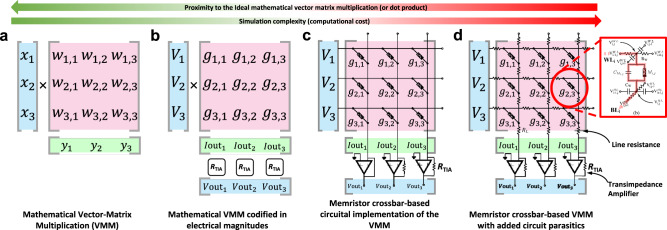
- Memristor crossbars are presented as the core hardware for vector-matrix multiplication, since VMM/MAC is the most demanding ANN operation and can be parallelized in crossbar arrays.
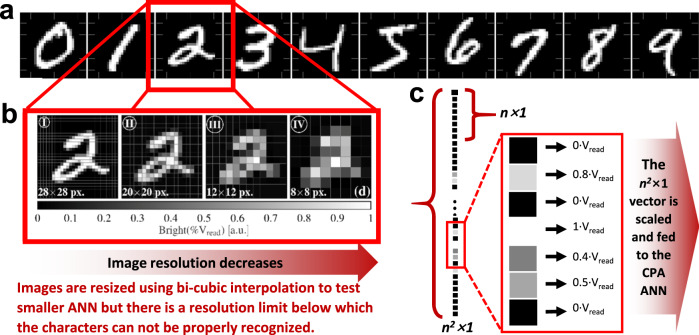
- For MNIST-style benchmarking, the paper uses a 60,000-image training set and 10,000-image test set; in the worked example, images are downsized from 28 × 28 to 8 × 8 and an ANN with one 64 × 10 single-layer perceptron is trained.
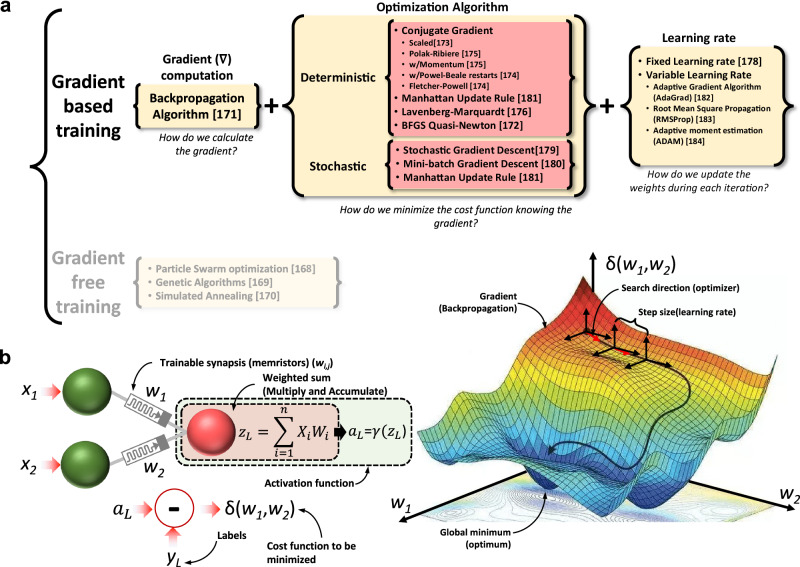
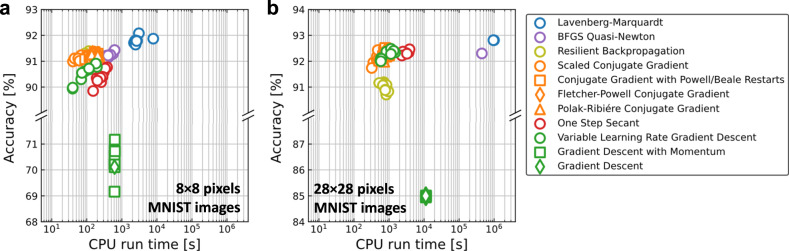
- In the example training study on 100 images, Scaled Conjugate Gradient and Levenberg–Marquardt achieved the highest accuracy, but Scaled Conjugate Gradient was chosen because it was faster.
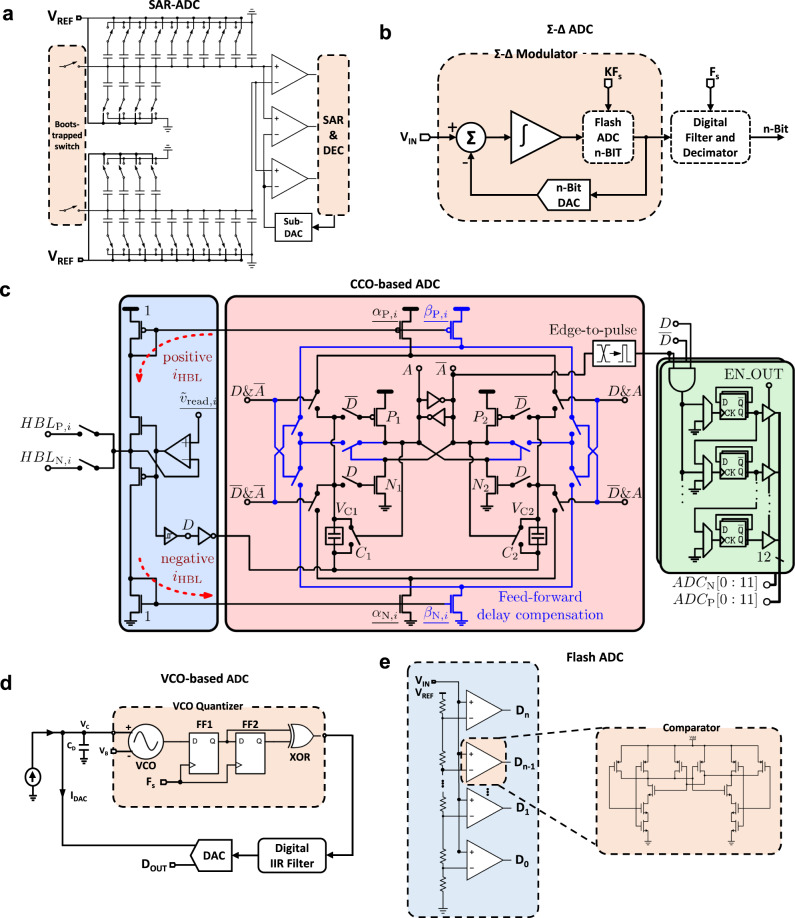
- The paper states that ADCs are often the largest and most power-hungry circuit block in memristive neural networks, consuming up to 70–90% of on-chip area and up to 80–88% of energy.
Methods
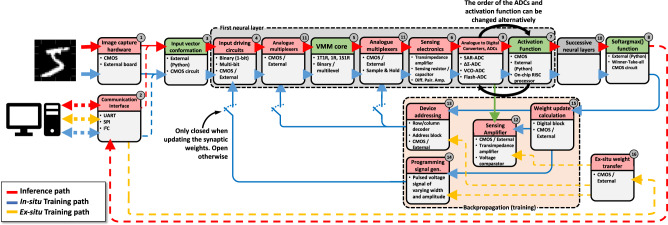
- Review/protocol article: synthesizes prior work on memristive ANN hardware and organizes the system into blocks (image capture, input driving, VMM core, sensing, activation, softargmax, ADCs, and training/update).
- Worked example: a single-layer perceptron for MNIST image classification; MATLAB is used to train the software model and generate a SPICE netlist, and SPICE simulation is used to evaluate the hybrid CMOS/memristor circuit during inference and write-verify programming.
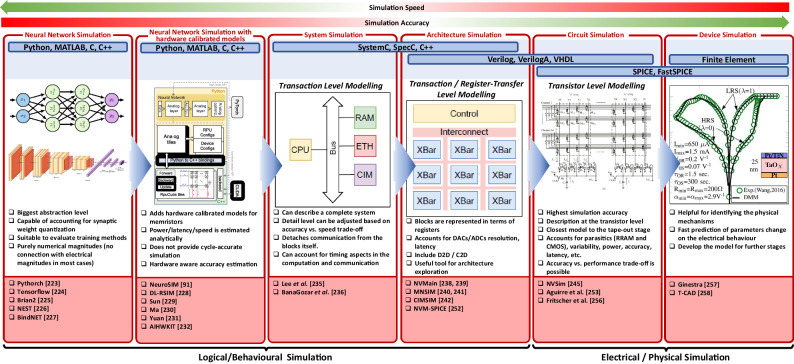
- Analysis emphasis: compares ex situ vs in situ training, discusses conductance mapping to memristors, and surveys simulation abstraction levels from neural-network-level tools to circuit/SPICE-level models.
Limitations
- Stated in the paper: many published studies are not true full-hardware implementations; some only characterize a few devices or rely on software ANN simulations, so reported performance can be weakly connected to fabricated hardware.
- Stated in the paper: full on-chip memristive ANN implementation is limited by peripheral circuit overhead, ADC/DAC trade-offs, device non-idealities, and the difficulty of integrating memristor stacks with CMOS.
- Evident from the text: the paper is not an experimental validation of a new memristor ANN chip; it is primarily a review plus a simulation-based worked example, so its conclusions about performance are illustrative rather than a direct new hardware result.
Model-written summary. Check it against the paper before relying on it.
Integrity signals
Registry
Cites
Statistics
Figures
Verification
Claims the paper makes
47 Valid · 14 Not valid · 58 Not checked · 121 Own results and interpretations
At least one cited source doesn’t support this claim or points to a different paper, and none confirmed it — see the verdicts below.
In the paper
“ADCs with at least 8-bit resolution are necessary to achieve high (>90%) classification accuracy in a ResNET50-1.5 ANN used to classify the ImageNET157 database”
§ Hardware implementation of memristor-based artificial neural networks > Structure of memristor-based ANNs > Analogue to digital converters (Block 9)
What the sources say
- Disputedcites [157] Xiao TP On the Accuracy of Analog Neural Network Inference Accelerators [Feature],” IEEE Circuits Syst. Mag. 2022 22 26 48 10.1109/MCAS.2022.3214409 sourceExperimental — accuracy not yet measured
Section 6.3 (p. 12) says high accuracy is maintained with a 7-bit ADC, contrary to the claim that at least 8 bits are necessary. Table 2 in Section 4.3 (p. 7) reports 76.466% ImageNet top-1 accuracy for ResNet50-v1.5, not over 90%. (LLM, conf=0.93)
Checked by a reasoning model — may be wrong.
plainstates a cause- Asserted: passes — The authors put it forward as true.
- Checkable: passes — It can be checked against evidence.
- Load-bearing: unclear — It is unclear whether the paper’s conclusions depend on it.
- Based: passes — The paper gives a reason why it holds.
- Disputed
Some cited sources support this claim and some don’t — read each source’s verdict below.
In the paper
“the usual practice reported in the literature for this kind of training has been the use of the so-called Manhattan Update Rule105,194, or the Stochastic Gradient Descent54.”
§ Hardware implementation of memristor-based artificial neural networks > Structure of memristor-based ANNs > ANN training and synaptic weight update (Blocks 2, 11-15)
What the sources say
- Supportedcites [105] Prezioso M “Training and operation of an integrated neuromorphic network based on metal-oxide memristors,” Nature 2015 521 61 64 10.1038/nature14441 25951284 source
The Pattern Classification Experiment (p. 5) explicitly says the network was trained in situ using the Manhattan Update rule. This supports the Manhattan-rule example for which this paper is cited; the separate stochastic-gradient-descent citation is not being judged here. (LLM, conf=0.93)
- Disputedcites [194] Yao, P. et al., “Face classification using electronic synapses,” Nat. Commun., 8, May, 1–8, 10.1038/ncomms15199.2017, PMC5437298 28497781 sourceExperimental — accuracy not yet measured
The citation to this paper is attached to the Stochastic Gradient Descent part of the sentence. In “RRAM-based neuromorphic network” (page unavailable), the paper calls its two weight-update rules the delta rule and the Manhattan rule; Figure 2’s caption explicitly says the demonstration uses a batch learning model, not stochastic gradient descent. (LLM, conf=0.83)
Checked by a reasoning model — may be wrong.
- Could not verifycites [54] Li C “Efficient and self-adaptive in-situ learning in multilayer memristor neural networks,” Nat. Commun. 2018 9 1 8 29921923 PMC6008303 sourceExperimental — accuracy not yet measured
The Methods section describes ray-tracing simulations of bird-of-paradise feathers, not training memristor-based neural networks. Searches for the Manhattan Update Rule and stochastic gradient descent found no passage in our copy addressing either method as a usual training practice. (LLM, conf=0.78)
plain- Asserted: passes — The authors put it forward as true.
- Checkable: passes — It can be checked against evidence.
- Load-bearing: unclear — It is unclear whether the paper’s conclusions depend on it.
- Based: passes — The paper gives a reason why it holds.
- Supported
The cited sources support only part of this claim — read each source’s verdict below.
In the paper
“So far, several groups and companies have claimed the realization of hybrid CMOS/memristor implementations of ANNs53–61, —from now on, memristive ANNs— with performance that is superior to that of fully-CMOS counterparts.”
§ Hardware implementation of memristor-based artificial neural networks > Introduction
What the sources say
- Not checked — no full text of the sourcecites [53] Ishii, M. et al., “On-Chip Trainable 1.4M 6T2R PCM synaptic array with 1.6K Stochastic LIF neurons for spiking RBM,” Technical Digest - International Electron Devices Meeting, IEDM, 2019- 310–313, 2019, 10.1109/IEDM19573.2019.8993466. source
- Could not verifycites [54] Li C “Efficient and self-adaptive in-situ learning in multilayer memristor neural networks,” Nat. Commun. 2018 9 1 8 29921923 PMC6008303 sourceExperimental — accuracy not yet measured
The Results section discusses super-black feather microstructure, and the Introduction discusses structural absorption of light; neither addresses artificial neural networks. Searches for hybrid CMOS/memristor implementations and performance relative to fully-CMOS systems found no relevant passage in our copy. (LLM, conf=0.78)
- Not checked — no full text of the sourcecites [55] Yao P “Fully hardware-implemented memristor convolutional neural network,” Nature 2020 577 641 646 10.1038/s41586-020-1942-4 31996818 source
- Not checked — no full text of the sourcecites [56] Correll, J. M. et al., “An 8-bit 20.7 TOPS/W Multi-Level Cell ReRAM-based Compute Engine,” in 2022 IEEE Symposium on VLSI Technology and Circuits (VLSI Technology and Circuits), IEEE, 264–265. 10.1109/VLSITechnologyandCir46769.2022.9830490.2022, source
- Not checked — no full text of the sourcecites [57] Cai, F. et al., “A fully integrated reprogrammable memristor-CMOS system for efficient multiply-accumulate operations,” Nat Electron, 2, no. July, 290–299, [Online]. Available: 10.1038/s41928-019-0270-x 2019. source
- Not checked — no full text of the sourcecites [58] Hung, J.-M., “An 8-Mb DC-Current-Free Binary-to-8b Precision ReRAM Nonvolatile Computing-in-Memory Macro using Time-Space-Readout with 1286.4-21.6TOPS/W for Edge-AI Devices,” in 2022 IEEE International Solid- State Circuits Conference (ISSCC), IEEE, 1–3. 10.1109/ISSCC42614.2022.9731715.2022, source
- Not checked — no full text of the sourcecites [59] Xue, C.-X., “15.4 A 22nm 2Mb ReRAM Compute-in-Memory Macro with 121-28TOPS/W for Multibit MAC Computing for Tiny AI Edge Devices,” in 2020 IEEE International Solid- State Circuits Conference - (ISSCC), IEEE, 2020, 244–246. source
- Partly supportedcites [60] Wan W “A compute-in-memory chip based on resistive random-access memory,” Nature 2022 608 504 512 10.1038/s41586-022-04992-8 35978128 PMC9385482 sourceExperimental — accuracy not yet measured
The Main section describes NeuRRAM as an RRAM chip integrated with CMOS circuits and reports hardware-measured AI inference, supporting its use as an example of a hybrid implementation. The reported performance gains are against earlier RRAM compute-in-memory chips (Efficient voltage-mode neuron circuit), not fully-CMOS counterparts. The Methods section projects higher efficiency than edge inference accelerators only after scaling NeuRRAM from 130 nm to 7 nm; it does not establish the claimed superiority for the realized chip. (LLM, conf=0.84)
- Partly supportedcites [61] Yin S Sun X Yu S Seo JS “High-throughput in-memory computing for binary deep neural networks with monolithically integrated RRAM and 90-nm CMOS,” IEEE Trans. Electron. Dev. 2020 67 4185 4192 10.1109/TED.2020.3015178 sourceExperimental — accuracy not yet measured
The paper demonstrates a binary neural-network chip that integrates RRAM with 90-nm CMOS (p. 1), and its Results report a density advantage over SRAM-based in-memory computing (p. 6). But its quantified throughput and energy-delay improvements are compared with another CMOS chip containing embedded RRAM, not a fully-CMOS counterpart (Supplementary Figure 7, p. 32). It therefore supports the hybrid implementation, but not the claimed overall performance comparison with fully-CMOS ANNs. (LLM, conf=0.86)
plainstates an association- Asserted: passes — The authors put it forward as true.
- Checkable: passes — It can be checked against evidence.
- Load-bearing: unclear — It is unclear whether the paper’s conclusions depend on it.
- Based: passes — The paper gives a reason why it holds.
Every source the paper cites for this claim was checked and supports it.
In the paper
“Moreover, the switching time can be as short as 85 ps42.”
§ Hardware implementation of memristor-based artificial neural networks > Introduction
What the sources say
- Supportedcites [42] Choi BJ “High-speed and low-energy nitride memristors,” Adv. Funct. Mater. 2016 26 5290 5296 10.1002/adfm.201600680 source
The Results and Discussion state that an AlN memristor switched both off and on in 85 ps. The Conclusions also report a measured ultrafast switching time of 85 ps in AlN memristors. (LLM, conf=0.95)
plain- Asserted: passes — The authors put it forward as true.
- Checkable: passes — It can be checked against evidence.
- Load-bearing: unclear — It is unclear whether the paper’s conclusions depend on it.
- Based: passes — The paper gives a reason why it holds.
- Supported
The cited sources support only part of this claim — read each source’s verdict below.
In the paper
“For instance, given the MNIST dataset in which images have a resolution of 28 × 28 pixels one option is to implement the synaptic layer using multiple crossbars to fit the 784 inputs (e.g., 13 64 × 64 or 4 256 × 256 crossbars would be needed93).”
§ Hardware implementation of memristor-based artificial neural networks > Structure of memristor-based ANNs > Image capture hardware (block 1) and input vector conformation (block 3)
What the sources say
- Partly supportedcites [93] Kim H Mahmoodi MR Nili H Strukov DB “4K-memristor analog-grade passive crossbar circuit,” Nat. Commun. 2021 12 1 11 10.1038/s41467-021-25455-0 34465783 PMC8408216 sourceExperimental — accuracy not yet measured
The Results section (“Modeling of advanced systems”; page unavailable) supports splitting a 784-input MNIST classifier layer across multiple crossbar blocks. It does not give the claimed examples of 13 64 × 64 or 4 256 × 256 crossbars: its modeled implementation uses differential-pair weights and maps a 785 × 64 layer to 24 64 × 64 and two 17 × 64 blocks. (LLM, conf=0.88)
hedged- Asserted: passes — The authors put it forward as true.
- Checkable: passes — It can be checked against evidence.
- Load-bearing: unclear — It is unclear whether the paper’s conclusions depend on it.
- Based: passes — The paper gives a reason why it holds.
- Partly supported
88 more claims · 22 with their cited sources checked
Create a free account to see all 240 claims and to verify the 11 references still open.
- Probably not a substantial claim. 79
- It may state two separate claims as one. 91
- The quote only partly states this claim. 1
Citations
Cites
Deep Residual Learning for Image Recognition
He, K., Zhang, X., Ren, S., & Sun, J. (2016) · 2016 IEEE Conference on Computer Vision and Pattern Recognition (CVPR) · doi:10.1109/cvpr.2016.90 · Cited by 235,474 · cited 1×
“For benchmarking a device or a chip, it is essential to evaluate the accuracy of standard deep neural network models like VGG 89 and ResNet 90 on CIFAR and ImageNet dataset by utilizing architecture-levelsimulationandrealistichardwarestatistics 91,92 .”
Very Deep Convolutional Networks for Large-Scale Image Recognition
Simonyan, K., & Zisserman, A. (2014) · arXiv · doi:10.48550/arxiv.1409.1556 · Cited by 114,148 · cited 1×
“For benchmarking a device or a chip, it is essential to evaluate the accuracy of standard deep neural network models like VGG 89 and ResNet 90 on CIFAR and ImageNet dataset by utilizing architecture-levelsimulationandrealistichardwarestatistics 91,92 .”
Adam: A Method for Stochastic Optimization
Kingma, D. P., & Ba, J. (2014) · arXiv · doi:10.48550/arxiv.1412.6980 · Cited by 98,946 · cited 2×
“…employed 165 , and for stochastic evaluation of the loss function using a mini-batch of images diverse methods have been employed, including Adaptive Gradient Algorithm (or AdaGrad) 182 , Root Mean Square Propagation (or RMSProp) 183 , Adaptive Moment Estimation (or Adam) 184 and Adadelta 185 .”
ImageNet: A large-scale hierarchical image database
Deng, J., Dong, W., Socher, R., Li, L.-J., Li, K., & Fei-Fei, L. (2009) · 2009 IEEE Conference on Computer Vision and Pattern Recognition · doi:10.1109/cvpr.2009.5206848 · Cited by 65,333 · cited 1×
“…86 ; 2) CIFAR (Canadian Institute for Advanced Research),whichcontains60,000colorimagesdividedinto10classes for CIFAR-10 and 100 classes for CIFAR-100 87 ; 3) ImageNet, one of the largest image datasets, which consists of over 1.2 million labelled from 1000 classes for the ImageNet competition 88 .”
InfluentialKennedy, J., & Eberhart, R. (2002) · Proceedings of ICNN'95 - International Conference on Neural Networks · doi:10.1109/icnn.1995.488968 · Cited by 58,192 · cited 1×
“Gradient-free methods such as the Particle Swarm optimization 168 , Genetic Algorithms 169 and Simulated Annealing 170 algorithms are more demanding from a computational point of view, andhence,theyarerarelyemployedforANNtraining,bywhichtheylie beyond the scope of this article.”
Optimization by Simulated Annealing
Kirkpatrick, S., Gelatt, C. D., & Vecchi, M. P. (1983) · Science · doi:10.1126/science.220.4598.671 · Cited by 45,134
Learning representations by back-propagating errors
Rumelhart, D. E., Hinton, G. E., & Williams, R. J. (1986) · Nature · doi:10.1038/323533a0 · Cited by 31,892 · cited 1×
“In most ANNs, the gradient of the loss function is normally computed by the backpropagation algorithm 171 .”
An Algorithm for Least-Squares Estimation of Nonlinear Parameters
Marquardt, D. W. (1963) · Journal of the Society for Industrial and Applied Mathematics · doi:10.1137/0111030 · Cited by 30,728 · cited 6×
“…evaluation, common optimization algorithms are the following: (i) Gradient Descent 165 (the simplest one and closest to the previous (cid:129) Manha(cid:3)an UpdateRule [181] (cid:129) Lavenberg-Marquardt[176] (cid:129) BFGS Quasi-Newton[172] Howdo we updatethe weightsduringeachitera(cid:2)on?”
InfluentialStrukov, D. B., Snider, G. S., Stewart, D. R., & Williams, R. S. (2008) · Nature · doi:10.1038/nature06932 · Cited by 11,828
(2017) · Cited by 11,625
Research works printed but not linked: 3
- “Microchips that mimic the human brain could make AI far more energy efficient | Science | AAAS.” Accessed: May 15, 2023. [Online]. Available: https://www.science.org/content/article/microchips-mimic-human-brain-could-make-ai-far-more-energy-efficient
- Hu, M. et al., “Dot-product engine for neuromorphic computing,” in DAC ’16: Proceedings of the 53rd Annual Design Automation Conference, New York, NY, USA: Association for Computing Machinery, 1–6. 10.1145/2897937.2898010.2016, · doi:10.1145/2897937.2898010.2016
- Ielmini, D. and Waser, R. Resistive Switching. Weinheim, Germany: Wiley-VCH Verlag GmbH & Co. KGaA, 2016.
Cited by
Items 101–200 of 498
Adiba, A., Meitei, P. N., & Ahmad, T. (2025) · Scientific Reports · doi:10.1038/s41598-025-88549-5 · Cited by 9
Electrically programmable organic in-display neuromorphic computing
Dai, S., Wang, D., Liu, X., Cui, B., Tian, X., Liu, D., Hu, H., Guo, P., Sun, T., Zhang, J., et al. (2025) · National Science Review · doi:10.1093/nsr/nwaf224 · Cited by 10
Emerging memory devices for neuromorphic computing in the Internet of Medical Things
Cao, T., Shen, C., Wang, D., Zhao, H.-N., Tan, R., Zhou, Z., Li, H., Li, B., Zhao, M., & Huang, H. (2025) · Cell Reports Physical Science · doi:10.1016/j.xcrp.2025.102735 · Cited by 15
Adaptive Sub-Nanometer Control of a Piezoelectric Positioning Platform
Meng, S., Jiang, J., Ju, Q., et al. (2025) · IEEE Transactions on Automation Science and Engineering · doi:10.1109/tase.2025.3615572 · Cited by 8
“The Particle Swarm Optimization (PSO) algorithm was employed for parameter identification [30], [31].”
Neuromorphic pathways for transforming AI hardware
Harivignesh, S., Bhat, N., & Goswami, S. (2025) · Nature Electronics · doi:10.1038/s41928-025-01432-z · Cited by 10
AI-enabled flexible electronic systems via near-sensor and in-sensor computing
Xu, Z., Xie, E., Hou, C., Bai, Y., He, W., Liu, X., Zhang, F., & Huang, Y. (2026) · npj Flexible Electronics · doi:10.1038/s41528-026-00544-6 · Cited by 16
Introduction to memristors and neuromorphic systems
Chen, X., Hwang, C. S., van de Burgt, Y., et al. (2024) · Materials Horizons · doi:10.1039/d4mh90052a · Cited by 8
Passive LiNbO₃ Memristor With Multilevel States for Neuromorphic Computing
Xie, Q., Pan, X., Wang, Y., Luo, W., Zhao, Z., Tong, J., Yang, X., Shuai, Y., Wu, C., & Zhang, W. (2024) · IEEE Transactions on Electron Devices · doi:10.1109/ted.2024.3450437 · Cited by 8
“W ITH the development of artificial intelligence, data increased dramatically and traditional von Neumann architecture suffered from von Neumann bottleneck due to the separation of storage and computation [1], [2], [3].”
MethodZang, H., Huang, L., Gao, F., et al. (2025) · Chaos Solitons & Fractals · doi:10.1016/j.chaos.2025.117415 · Cited by 8
Cryogenic Analog 1T-ReRAM with Enhanced Dynamic Range and Suppressed Noise for Cold Neural Networks
Ram, M. S., Lombardo, D., Zaccaria, E., Falcone, D. F., Stecconi, T., Porta, A. L., Sousa, M., Reidt, S., Ferraris, A., Zota, C. B., et al. (2024) · Technical digest - International Electron Devices Meeting/Technical digest · doi:10.1109/iedm50854.2024.10873313 · Cited by 7
AI-driven model for optimized pulse programming of memristive devices
Spetzler, B., Fritscher, M., Park, S., Kim, N., Wenger, C., & Ziegler, M. (2025) · APL Machine Learning · doi:10.1063/5.0251113 · Cited by 9
Maldonado, D., Acal, C., Ortiz, H., Aguilera, A. M., Ruiz‐Castro, J. E., Cantudo, A., Baroni, A., Reddy, K. D. S., Pechmann, S., Uhlmann, M., et al. (2025) · Materials Science in Semiconductor Processing · doi:10.1016/j.mssp.2025.109668 · Cited by 11
Self-citationAdvancements in Fluidic Ionic Devices: Implications for Neuromorphic Integrated Circuit Design
Lv, H., Liu, R., & Zhang, Y. (2025) · ACS Sensors · doi:10.1021/acssensors.5c01063 · Cited by 10
Deep learning software stacks for analogue in-memory computing-based accelerators
Lammie, C., Benmeziane, H., Simon, W., Ferro, E., Vasilopoulos, A., Büchel, J., Gallo, M. L., Boybat, I., & Sebastian, A. (2025) · Nature Reviews Electrical Engineering · doi:10.1038/s44287-025-00187-1 · Cited by 11
Self-citationAn Electronically Adjustable Floating Memcapacitor Emulator Circuit Using CDBA
Gursul, S., Taşkıran, Z. G. Ç., & Hamamcı, S. E. (2025) · Applied Sciences · doi:10.3390/app15137506 · Cited by 8
Ultra‐High Mobility Atomically‐Ordered InGaZnO Transistors Through Atomic Layer Deposition
Kim, Y.-S., Kim, H. W., Hwang, T., Ahn, J., Cho, S. B., & Park, J. (2025) · Advanced Electronic Materials · doi:10.1002/aelm.202500137 · Cited by 12
Reconfigurable artificial neuron and synapse enabled through a single alloyed memristor
Passerini, E., Lewerenz, M., Schneuwly, A., Olalla, N. J., Fischer, M., Gisler, R., Aguinsky, L. F., Emboras, A., Fedoryshyn, Y. M., Luisier, M., et al. (2025) · Scientific Reports · doi:10.1038/s41598-025-15251-x · Cited by 11
“Neuromorphic computing is a new discipline investigating such new paradigms 3 .”
RF-Based UAV Detection and Classification Using ANN Models
Mohaidat, T., Niloy, S. I., Khan, M. R. K., et al. (2025) · IEEE International Conference on Computing and Machine Intelligence (ICMI) · doi:10.1109/icmi65310.2025.11141171 · Cited by 7
Threshold switching in vertically aligned MoS2/SiOx heterostructures based on silver ion migration
Lee, J., Ahmad, R. W., Cruces, S., Braun, D., Völkel, L., Ran, K., Maroufidis, V. A., Mayer, J., Menzel, S., Daus, A., et al. (2025) · npj 2D Materials and Applications · doi:10.1038/s41699-025-00614-9 · Cited by 11
From commercial to emerging memory: Device and circuit perspectives for neuromorphic computing
Koo, R., Park, S., Ko, J., Im, J., & Lee, J. (2025) · Device · doi:10.1016/j.device.2025.100942 · Cited by 14
Bradicich, A., Allemang, C., Addamane, S., House, S. D., Chen, A., Yoo, J., Bussmann, E., Smyth, C. M., Maksymovych, P., Checa, M., et al. (2025) · Applied Physics Reviews · doi:10.1063/5.0283106 · Cited by 9
Achieving high precision in analog in-memory computing systems
Mannocci, P., Larelli, G., Bonomi, M., & Ielmini, D. (2026) · npj Unconventional Computing · doi:10.1038/s44335-025-00044-2 · Cited by 15
Self-citationQiao, X., Liu, Z., Sun, J., Yan, X., Jia, X., Jiao, J., Liu, X., Ni, Y., Ding, X., Sun, J., et al. (2026) · Advanced Materials · doi:10.1002/adma.202517373 · Cited by 13
“…often requires adaptive programming schemes, such as progressively increasing pulse width or amplitude combined with verify-read operations, or the use of pre-calibrated lookup tables to map desired conductance changes, which inevitably increase operational complexity and energy consumption [249].”
Self-citationA Faithful and Compact Diffusive Memristor Model
Wang, T., Zhao, R., Xu, Y., Zhuo, Y., Williams, R. S., & Yang, J. J. (2024) · IEEE transactions on circuits and systems for artificial intelligence. · doi:10.1109/tcasai.2024.3484370 · Cited by 11
“M EMRISTORS with simple structure, low power consumption, and capability of analog computation have garnered signi fi cant attention in recent years [1], [2], [3], [4].”
Self-citationMemristive Artificial Synapses Based on Brownmillerite for Endurable Weight Modulation
Lee, Y. J., Choi, E. S., Baek, J. H., Yang, J., Kim, J., Kim, J. Y., Kim, B., Shin, D., Park, S. H., Im, I. H., et al. (2024) · Small · doi:10.1002/smll.202405749 · Cited by 9
Self-citationDifferentiable Distribution Model of Stochastic Volatile Memristor-Based Neuron
Chen, A., Hu, J., Ma, H., Jiang, Y., & Yu, B. (2025) · IEEE Transactions on Electron Devices · doi:10.1109/ted.2025.3538660 · Cited by 7
“However, numerous works on fabricating large-scale nonvolatile memristors for synapse arrays [11] have been reported, while volatile memristor neurons are less focused.”
Jeong, S. Y., Jung, J., Seo, H. K., Jeong, J., Lee, J. H., Kim, G. H., & Yang, M. (2024) · Results in Engineering · doi:10.1016/j.rineng.2024.102906 · Cited by 7
Cantudo, A., Jiménez-Molinos, F., Ruiz, P. Q., López, A., Villena, M. A., González, M. B., Campabadal, F., & Roldán, J. B. (2025) · Chaos Solitons & Fractals · doi:10.1016/j.chaos.2025.116352 · Cited by 6
Self-citationElectrical/light-modulated kesterite synaptic memristor for potential near-infrared vision imaging
Lan, J., Cai, Z., Dong, X., et al. (2025) · Journal of Alloys and Compounds · doi:10.1016/j.jallcom.2025.180469 · Cited by 6
Hsin, T., Lin, C., Wang, P., Yang, C., & Pai, C. (2025) · Advanced Science · doi:10.1002/advs.202417735 · Cited by 9
Variability analysis in memristors based on electrodeposited prussian blue
de Avila, L. B., Cantudo, A., Villena, M. A., Maldonado, D., Araujo, F. A., Müller, C. K., & Roldán, J. B. (2025) · Microelectronic Engineering · doi:10.1016/j.mee.2025.112376 · Cited by 11
Self-citationIliasov, A. I., Emelyanov, A. V., Rylkov, V. V., Matsukatova, A. N., Kukueva, E. V., Kuchumov, I. D., Форш, П. А., Ситников, А. В., Demin, V. A., Kashkarov, P. K., et al. (2025) · Journal of Physics D Applied Physics · doi:10.1088/1361-6463/adfdf5 · Cited by 7
Multisensory integration through high-efficiency neuromorphic hardware
Yi, Z., Xie, Y., Lv, Z., Zhai, Y., Zheng, M.-L., Yang, J., Du, Y., Ma, X., Zhou, Y., Wang, X., et al. (2025) · Nano Research · doi:10.26599/nr.2025.94908066 · Cited by 7
Self-citationThe Achilles’ heel of memristive technologies
Lanza, M., Pazos, S. M., & Aguirre, F. L. (2025) · Nature Reviews Electrical Engineering · doi:10.1038/s44287-025-00207-0 · Cited by 6
“PyTorch and TensorFlow are optimized for fast execution of large systems but do not account for the intricate physical behaviours of memristive devices 3 .”
Self-citationJang, J., & Gi, S.-G. (2025) · Advanced Materials Technologies · doi:10.1002/admt.202500588 · Cited by 13
Rajagopal, S., Pham, V., Parastesh, F., Rajagopal, K., & Jafari, S. (2025) · Journal of Low Power Electronics and Applications · doi:10.3390/jlpea15040062 · Cited by 6
“Among these, the memristor has emerged as one of the most promising components for constructing brain-inspired analog systems [19,20].”
Sen, K., Dey, S., Ganguly, A., & Rajak, P. (2026) · Aquaculture · doi:10.1016/j.aquaculture.2025.743602 · Cited by 10
Hidden dynamical transitions and firing patterns in a memristive Wilson circuit
Xu, Q., Wang, M., Wang, N., Wu, H., Lin, Y., & Chen, M. (2025) · Chaos Solitons & Fractals · doi:10.1016/j.chaos.2025.117823 · Cited by 7
Photonically linked three-dimensional neural networks based on memristive blinking neurons
Zhou, Y., Fang, Y., Gisler, R., Ren, H., Fu, H., Ma, Z., Huang, Y., Xu, R., Bouhélier, A., Leuthold, J., et al. (2026) · Nature Electronics · doi:10.1038/s41928-025-01529-5 · Cited by 10
“These systems also face trade-offs between energy consumption, speed and accuracy due to parasitic capacitance and excess electrical noise 28 .”
Ding, J., Zhu, Y., Yin, W., He, D., Wan, F., & Tu, G. (2026) · Fractal and Fractional · doi:10.3390/fractalfract10040216 · Cited by 6
Strategies of high-accuracy memristor-based analogue computing in memory for artificial intelligence
Jiang, Z., Zhao, H., Tang, J., Lu, Y., Qin, Q., Wang, Z., Hu, R., Yu, R., He, Y., Zhang, J., et al. (2026) · Nature Materials · doi:10.1038/s41563-026-02600-y · Cited by 12
“Whereas previous research studies and reviews 4,17,18 have investigated the device innovations, crossbar architectures or hardware–algorithm co-optimization strategies, they rarely scrutinize the accuracy–overhead trade-off that is inherent to these solutions.”
A Self-Powered Multimodal Sen-Memory System
Wang, X., Zhao, X., Li, Z., Ye, T., Wang, Z., Lin, Y., Xu, H., & Liu, Y. (2024) · IEEE Electron Device Letters · doi:10.1109/led.2024.3400949 · Cited by 7
“Visual system based on ANN is promising to process the visual information like the cortex in human brain [19], [20], [21], [22], [23].”
MethodMemory technology enabling future computing systems
Fantini, P. (2025) · APL Machine Learning · doi:10.1063/5.0253063 · Cited by 9
Chen, K., Li, Z., & Yin, Y. (2024) · Communications in Nonlinear Science and Numerical Simulation · doi:10.1016/j.cnsns.2024.108564 · Cited by 9
Implementation of ultra-low-power neural networks on quantized and pruned RRAM crossbar arrays
Kim, H., Hong, K., Kim, S., Choi, W. Y., & Kim, M.-H. (2025) · Materials Horizons · doi:10.1039/d5mh00086f · Cited by 8
Brain‐Inspired Polymer Dendrite Networks for Morphology‐Dependent Computing Hardware
Scholaert, C., Coffinier, Y., Pecqueur, S., & Alibart, F. (2025) · Advanced Science · doi:10.1002/advs.202502291 · Cited by 10
Recent progress in neuromorphic computing based on spin–orbit torque devices
Liang, Q., Huang, Y., Tan, Y., Tang, Y., & Xie, X. (2025) · Journal of Physics D Applied Physics · doi:10.1088/1361-6463/ae1241 · Cited by 7
Keremane, K. S., Gorthy, A., Zheng, L., Ravi, C. C., Wu, H., Zheng, J., Yennawar, N. H., Priya, S., Jha, R., & Poudel, B. (2026) · Advanced Functional Materials · doi:10.1002/adfm.202530539 · Cited by 7
Device‐Level Implementation of Reservoir Computing With Memristors
Park, S., Kim, H., & Jang, H. W. (2026) · Advanced Intelligent Systems · doi:10.1002/aisy.202500843 · Cited by 9
“The strategies toward accurate weight control can also be approached in terms of weight programming algorithms [201].”
Demonstration of 4-quadrant analog in-memory matrix multiplication in a single modulation
Gallo, M. L., Hrynkevych, O., Kersting, B., Karunaratne, G., Vasilopoulos, A., Khaddam-Aljameh, R., Sarwat, S. G., & Sebastian, A. (2024) · npj Unconventional Computing · doi:10.1038/s44335-024-00010-4 · Cited by 7
“Different resistive memorydevicetechnologiescanbeusedforAIMC 1 – 3 ,suchasphase-change memory (PCM) 4 – 6 , resistive random-access memory (RRAM) 7 – 9 , magne-toresistive random-access memory 10,11 and ferroelectric fi eld-effect transistors 12 .”
Self-citationResistive Memory in 2T1R Architecture Based on Si MOSFETs and Nanocomposite Memristors
Surazhevsky, I. A., Chernoglazov, K. Y., Alyaev, I. V., et al. (2024) · Nanobiotechnology Reports · doi:10.1134/s2635167624601657 · Cited by 5
Zhu, C., Guo, T., Zhang, H., Jiang, J., Lin, Z., Wei, X. Y., Wang, L., Liu, X., Li, X., Yu, X., et al. (2025) · Journal of Materials Chemistry C · doi:10.1039/d5tc01522g · Cited by 4
Pr1–xCaxMnO3-Based Memristive Heterostructures: Basic Mechanisms and Applications
Buczek, M., Moos, Z., Gutsche, A., Menzel, S., & Dittmann, R. (2025) · Chemical Reviews · doi:10.1021/acs.chemrev.4c00813 · Cited by 12
High-Linearity Ta2O5 Memristor and Its Application in Gaussian Convolution Image Denoising
Wang, Y., Wang, H., Guo, D., An, Z., Zheng, J., Huang, R., Bi, A., Jiang, J., & Wang, S. (2024) · ACS Applied Materials & Interfaces · doi:10.1021/acsami.4c09056 · Cited by 6
Low power memristor circuit with electronically Tunable
Saydam, F., & Kaçar, F. (2025) · AEU - International Journal of Electronics and Communications · doi:10.1016/j.aeue.2025.155746 · Cited by 6
High-Robustness, Compact Bi2O2Se-Based NIR Retinal Sensor for Bionic Vision Systems
Wang, Z., Liu, C., Xiao, J., Zhao, Z., Zhang, J., Wang, S., Liu, C., Shi, T., Li, H., & Yan, X. (2025) · ACS Photonics · doi:10.1021/acsphotonics.4c02322 · Cited by 5
Self-citationFlexible fabrication of aligned multi-nanowire circuits for on-chip prototyping
Flodgren, V., Das, A., Sestoft, J. E., Löfström, N., Alcer, D., Jeddi, H., Borgström, M. T., Pettersson, H., Nygård, J., & Mikkelsen, A. (2025) · Microelectronic Engineering · doi:10.1016/j.mee.2025.112363 · Cited by 6
Kollias, P., Cottier, R., Miracle, J. T., et al. (2025) · Journal of Applied Physics · doi:10.1063/5.0268554 · Cited by 4
Memristive In‐Memory Object Detection with 128 Mb C‐Doped Ge 2 Sb 2 Te 5 PCM Chip
Xie, C., Li, Y., Yan, L., Song, S., Chen, H., Qi, R., Li, X., Zhu, Y., Yu, L., Yan, B., et al. (2025) · Advanced Science · doi:10.1002/advs.202505678 · Cited by 5
Self-citationInterstitial Ag+ Engineering Enables Superior Resistive Switching in Quasi-2D Halide Perovskites
Qin, H., Wang, Z., Li, Q. B., Lin, J., Lu, D., Huang, Y., Gao, W., Wang, H., & Bi, C. (2025) · Nanomaterials · doi:10.3390/nano15161267 · Cited by 6
“Among these, memristors based on resistive switching mechanisms have attracted intense interest as non-volatile memory elements [2], offering advantages such as structural simplicity, nanoscale footprint, ultralow power consumption, and seamless CMOS compatibility [3–5].”
Update Disturbance‐Resilient Analog ReRAM Crossbar Arrays for In‐Memory Deep Learning Accelerators
Choi, W., Stecconi, T., Falcone, D. F., Galetta, M., Clerico, V., Zaccaria, E., Ram, M. S., Porta, A. L., Horst, F., Jubin, D., et al. (2025) · Advanced Science · doi:10.1002/advs.202504578 · Cited by 9
Lee, J., Choi, H., Lee, J., Moon, J., Jang, T., Yu, B., Kim, S. Y., Cho, J., Han, S., Kim, H., et al. (2025) · Advanced Materials · doi:10.1002/adma.202515140 · Cited by 4
Organic Thin‐Film Transistors for Neuromorphic Computing
McCarthy, L., Jacob, M. V., & Azghadi, M. R. (2026) · Advanced Electronic Materials · doi:10.1002/aelm.202500440 · Cited by 5
“[ 128, 173 ].”
Li-based NbOx self-rectifying memristor crossbar arrays for precisely reversible weight programming
Son, J.-K., Kim, H., Son, K., Shin, Y.-S., Dae-Hee, H., & Lee, H. (2026) · Nano Energy · doi:10.1016/j.nanoen.2026.111869 · Cited by 5
He, L., Li, X., Liu, J., Zhang, Y., Song, N., Xu, T., & Ding, P. (2026) · Chemical Engineering Journal · doi:10.1016/j.cej.2026.176979 · Cited by 4
Understanding Transistor Aging Impact on the Behavior of RRAM Cells
Shadmehri, S. H. H., Chakraborty, S., Copetti, T., et al. (2024) · IFIP/IEEE International Conference on Very Large Scale Integration · doi:10.1109/vlsi-soc62099.2024.10767807 · Cited by 4
“Data movements are very costly in terms of delay and power consumption, leading to a severe loss of performance and energy efficiency [1].”
Joint VMD and PSSVM optimization algorithm for seizure prediction based on ECG signals
Chen, Y., Wu, D., Wei, K., Gong, C., Lin, Y.-C., Wang, D., Cao, J., & Xu, Y. (2025) · Biomedical Signal Processing and Control · doi:10.1016/j.bspc.2024.107478 · Cited by 4
Lele, A. S., Zhang, B., Khwa, W.-S., & Chang, M. (2025) · Nano Letters · doi:10.1021/acs.nanolett.4c05299 · Cited by 5
Self-citationImpact of internal noise on convolutional neural networks
Kolesnikov, I. D., & Игоревна, С. Н. (2025) · Chaos An Interdisciplinary Journal of Nonlinear Science · doi:10.1063/5.0275670 · Cited by 5
Non-volatile resistive switching characteristics in Cu 2− x S-based memristor
Lee, S., Byeon, J., Park, S., et al. (2025) · Nanoscale · doi:10.1039/d5nr02524a · Cited by 4
Jurj, S. L., Nouri, S. B., & Strutwolf, J. (2024) · Applied Sciences · doi:10.3390/app14135752 · Cited by 5
Efficient Implementation of Spiking Neural Networks for Inference Using Ex-Situ Training
Jurj, S. L. (2024) · IEEE Access · doi:10.1109/access.2024.3462606 · Cited by 4
“After training, the learned synaptic weights are translated into parameters suitable for the neuromorphic hardware, such as conductance values in memristive devices or threshold settings in silicon neurons [23].”
MethodPisarchik, A. N., Gerasimova, S. A., Lebedeva, A., Levanova, T. A., Malkov, A., Mikhaylov, A. N., & Smirnov, L. A. (2024) · Regenerative medicine reports . · doi:10.4103/regenmed.regenmed-d-24-00012 · Cited by 15
Bisht, B. P., Toutam, V., & Dhakate, S. R. (2025) · ACS Applied Electronic Materials · doi:10.1021/acsaelm.4c01774 · Cited by 4
Shekinah Archita, S., & Ravi, V. K. K. (2025) · Physica Scripta · doi:10.1088/1402-4896/adae42 · Cited by 5
Multi‐Diseases Detection with Memristive System on Chip
Wang, Z., Yang, D. W., Liu, Z., Yan, E., Sun, H., Ge, N., Hu, M., & Wu, W. (2025) · Advanced Intelligent Systems · doi:10.1002/aisy.202400736 · Cited by 5
“Memristor-based neural networks overcome the Von-Neumann bottleneck inherent in traditional digital computing systems by co-locating data storage and computation, thus eliminating the need for frequent data transfers 32 .”
Learning Task-Based Trainable Neuromorphic ADCs via Power-Aware Distillation
Vol, T., Danial, L., & Shlezinger, N. (2025) · IEEE Transactions on Signal Processing · doi:10.1109/tsp.2025.3546458 · Cited by 7
“Memristors are considered as an enabler technology for realizing neuromorphic computing [8], [9], [10] and were recently shown to support implementation of innovative ADC architectures [6], [11], [12], [13].”
The logarithmic memristor-based Bayesian machine
Turck, C., Harabi, K.-E., Pontlevy, A., Ballet, T., Hirtzlin, T., Vianello, E., Laurent, R., Droulez, J., Bessìère, P., Bocquet, M., et al. (2025) · Communications Engineering · doi:10.1038/s44172-025-00360-2 · Cited by 9
Rethinking 1T1R architecture and OxRAM stack for memristive neural network inference in-memory
Lopez, J. M., Barraud, S., Cooper, D., Jannaud, A., Grenier, A., Souhaité, A., Pedini, J.-M., Comboroure, C., Gharbi, A., Boulard, F., et al. (2025) · Frontiers in Nanotechnology · doi:10.3389/fnano.2025.1549547 · Cited by 4
Seo, H. K., Jeong, J., Jung, J., et al. (2025) · Nanoscale · doi:10.1039/d4nr05012f · Cited by 4
A capacitance-coupled Ga2O3 memristor
Moore, A., Li, L., Shao, H., et al. (2025) · AIP Advances · doi:10.1063/5.0260023 · Cited by 4
Towards Efficient IMC Accelerator Design Through Joint Hardware-Workload Co-optimization
Krestinskaya, O., Fouda, M. E., Eltawil, A. M., & Salama, K. N. (2025) · IEEE International Symposium on Circuits and Systems proceedings · doi:10.1109/iscas56072.2025.11043504 · Cited by 5
Self-citationKang, J., Lee, S., Kim, T.-Y., Hu, S., Lee, S., Lee, K., Park, J., Kim, I. H., Hwang, G. W., Kim, S., et al. (2025) · Small · doi:10.1002/smll.202505708 · Cited by 5
Skin-conformal electronics for intelligent gesture recognition
Lee, I., Shin, H., Cho, H., Choi, J.-G., Wang, G., & Park, S. (2025) · Nature Reviews Electrical Engineering · doi:10.1038/s44287-025-00215-0 · Cited by 11
“Although current Si-based systems provide a more sophisticated, scalable and integrable solution for machine-learning applications, they are constrained by a high manufacturing cost, a non-flexible form factor, energy consumption and area efficiency 122 .”
Unraveling the defect-induced resistance mechanism of MoS2 memristors at the atomic scale
Zhang, Y., Sang, S., Ge, Y., Chai, X., & Liu, Y. (2025) · Applied Surface Science · doi:10.1016/j.apsusc.2025.164614 · Cited by 5
A memristive synaptic circuit and optimization algorithm for synaptic control
Günakın, S., & Taşkıran, Z. G. Ç. (2025) · Cognitive Neurodynamics · doi:10.1007/s11571-025-10265-7 · Cited by 4
“Crossbar array structures are frequently preferred in neuromorphic applications due to their ability to perform matrix–vector multiplication directly on hardware, enable parallel processing, and store synaptic weights in memory (Chi et al. 2016; Alam et al. 2022; Aguirre et al. 2024).”
Gao, K.-K., Sun, B., Yan, W., Yang, B., Cao, Z.-L., Cui, Y., Wang, M.-N., Luo, S.-H., Chen, X.-L., & Shao, J.-Y. (2025) · Materials Today Chemistry · doi:10.1016/j.mtchem.2025.102841 · Cited by 4
Halide Perovskite Memristor Crossbar Arrays for Low Voltage in Memory Computing
Kim, H. (2025) · Advanced Materials Interfaces · doi:10.1002/admi.202500729 · Cited by 5
New Challenges for the Semiconductor Ecosystem
Wyon, C., & de Voorde, M. H. V. (2025) · IEEE electron devices reviews. · doi:10.1109/edr.2025.3638339 · Cited by 6
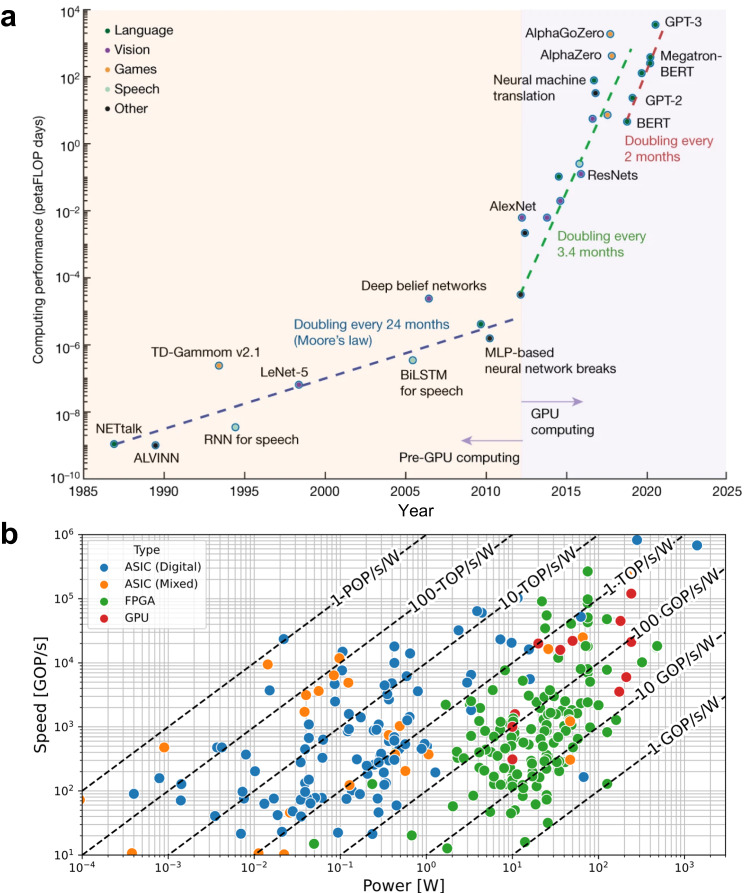
“Speed in GOps/s versus the power consumption of NMC and IMC accelerators compared to some digital AI devices (GPU and ASIC) -- data from [63], [86], [87], [88], [89], [90], [91], [92], [93], [94], [95], [96], [97], [98], [99], [100], [101], [102], [103], [104].”
InfluentialXie, X., Yan, D., Feng, Y., & Dai, X. (2025) · Physica Scripta · doi:10.1088/1402-4896/ae2e4b · Cited by 4
Qiu, G., Jin, C., Li, R., Liu, W., Xu, Y., Shi, X., Yang, J., & Sun, J. (2026) · Applied Physics Letters · doi:10.1063/5.0306146 · Cited by 3
Self-citationWen, Z., Zhang, Q., Chen, J., Yang, T., Yang, F., Wang, X., Liu, Q., Luo, X., Lin, P., Deng, L.-J., et al. (2026) · Nature Communications · doi:10.1038/s41467-026-69592-w · Cited by 7
“To ensure that negative weight coef fi cients can be encoded while expanding the number of effective weights (i.e., device-encoded discrete weights), the differential-pair approach is adopted 14 .”
Li, Q., Li, H., Sun, T., Jiang, M., Leng, Y., Lv, Z.-Y., Zhou, Y., Zhou, Y., Wong, W., & Su-Ting, H. (2026) · Nature Communications · doi:10.1038/s41467-026-69805-2 · Cited by 6
“13b) reveals an atomic-scale thickness (6 – 10nm) demonstrates the SAM material fi lm achieves an ultrathin and uniform coverage, which provided critical support for carriermodulation.”
Communication-aware in-memory wireless neural networks
Yang, Z.-Z., Wang, C., Zhao, Y., Ruan, G.-J., Yangdong, X.-J., Yang, Y., Pan, C., Cheng, B., Liang, S.-J., & Miao, F. (2026) · Nature Electronics · doi:10.1038/s41928-026-01577-5 · Cited by 5
Self-citationChatterjee, A., Ganaie, M. M., Mukherjee, S., Kumar, A., Sahu, S., Saliba, M., & Kumar, M. (2026) · Applied Physics Letters · doi:10.1063/5.0306155 · Cited by 4
Artificial Intelligence for Bioinspired Nanofluidic Iontronics
Guo, Z., Ling, Y., Ouyang, Y., Hou, Y., Tong, J., & Hou, X. (2026) · Nano Letters · doi:10.1021/acs.nanolett.6c00390 · Cited by 4
Giacomo, S. D., Ronchi, M., Amadori, M., Borghi, G., Carminati, M., & Fiorini, C. E. (2025) · IEEE Transactions on Radiation and Plasma Medical Sciences · doi:10.1109/trpms.2025.3530774 · Cited by 4
“Investigation on emerging memory technologies and devices for cross-point operations is the focus of many researches that include resistive switching RAM (RRAM, also known as memristors) [4], [5], [6], [7], [8], phase-change memory (PCM) [9], [10], [11], and ferroelectric capacitors [12], [13].”
Wang, H., Liu, H., Fang, Z., Tang, Y., Lin, R., Wang, S., & Yan, X. (2025) · Chemical Engineering Journal · doi:10.1016/j.cej.2025.163914 · Cited by 3
Self-citationFlexible switching devices with dynamic anchoring of Ag/Ag+ coupling for reservoir computing
Liu, X., Pan, J., Li, W., et al. (2025) · Journal of Energy Chemistry · doi:10.1016/j.jechem.2025.06.015 · Cited by 3
Nikolaev, S., Iliasov, A., Ichetkin, D. V., Emelyanov, A. V., Shabanov, S. Y., Sitnikov, A. V., Demin, V. A., Granovsky, A. B., & Rylkov, V. (2025) · Nanobiotechnology Reports · doi:10.1134/s263516762460250x · Cited by 2
Metadata
- Authors
- Aguirre, F., Sebastian, A., Le Gallo, M., Song, W., Wang, T., Yang, J. J., Lu, W., Chang, M.-F., Ielmini, D., Yang, Y., Mehonic, A., Kenyon, A., Villena, M. A., Roldán, J. B., Wu, Y., Hsu, H.-H., Raghavan, N., Suñé, J., Miranda, E., Eltawil, A., Setti, G., Smagulova, K., Salama, K. N., Krestinskaya, O., Yan, X., Ang, K.-W., Jain, S., Li, S., Alharbi, O., Pazos, S., & Lanza, M.
- Affiliations
- Universitat Autònoma de Barcelona (ES)
- IBM Research - Zurich (CH)
- University of Southern California (US)
- University of Michigan (US)
- National Tsing Hua University (TW)
- Consorzio Nazionale Interuniversitario per la Nanoelettronica (IT)
- Peking University (CN)
- University College London (GB)
- King Abdullah University of Science and Technology (SA)
- Universidad de Granada (ES)
- Singapore University of Technology and Design (SG)
- Hebei University (CN)
- National University of Singapore (SG)
- Corresponding author
- Lanza, Mario
- ORCID
- Aguirre, Fernando
- Sebastian, Abu
- Le Gallo, Manuel
- Song, Wenhao
- Wang, Tong
- Yang, J. Joshua
- Lu, Wei
- Chang, Meng-Fan
- Ielmini, Daniele
- Yang, Yuchao
- Mehonic, Adnan
- Kenyon, Anthony
- Villena, Marco A.
- Roldán, Juan B.
- Wu, Yuting
- Hsu, Hung-Hsi
- Raghavan, Nagarajan
- Suñé, Jordi
- Miranda, Enrique
- Eltawil, Ahmed
- Setti, Gianluca
- Smagulova, Kamilya
- Salama, Khaled N.
- Krestinskaya, Olga
- Yan, Xiaobing
- Ang, Kah-Wee
- Li, Sifan
- Alharbi, Osamah
- Pazos, Sebastian
- Lanza, Mario
- Venue
- Nature Communications
- Published
- 2024-03-04
- Volume
- 15
- Issue
- 1
- Pages
- 1974-1974
- ISSN
- 2041-1723 (ISSN-L)
- PMC
- PMC10912231
- OpenAlex
- W4392367648
- Cited by
- 564
- References
- 282
- Citations by year
- 2026: 246 · 2025: 247 · 2024: 71
- FWCI
- 11.53
- Type
- journal article
- Language
- en
- Open access
- gold
- doi.org
- Licence
- cc-by
- creativecommons.org/licenses/by/4.0 (tdm)
- creativecommons.org/licenses/by/4.0 (vor)
- Locations
- Nature Communications (publishedVersion, cc-by)
- PubMed Central (publishedVersion, cc-by)
- PubMed (publishedVersion)
- PORTO@Iris (submittedVersion, cc-by)
- National University of Singapore (submittedVersion, cc-by-nc-nd)
- RePEc: Research Papers in Economics (submittedVersion)
- DOAJ (DOAJ: Directory of Open Access Journals) (submittedVersion)
- UCL Discovery (University College London) (submittedVersion)
- Virtual Community of Pathological Anatomy (University of Castilla La Mancha) (submittedVersion)
- Greater South Information System
- Funders
- King Abdullah University of Science and Technology
- Universitat Autònoma de Barcelona
- Topics
- Physical Sciences › Engineering › Electrical and Electronic Engineering › Advanced Memory and Neural Computing
- Physical Sciences › Computer Science › Artificial Intelligence › Neural Networks and Applications
- Physical Sciences › Engineering › Electrical and Electronic Engineering › Ferroelectric and Negative Capacitance Devices
- Keywords
- memristors, hardware implementation, in-memory computing, neuromorphic hardware, energy efficiency, deep learning hardware, beyond-CMOS computing, performance estimation
About these checks
Registry, retraction, Cites and statistics results are computed, not judged, with one exception: a printed reference that no index lists is read once by a model before it counts as a citation error. Claims are extracted by a model and kept only when their quote appears verbatim in the text; each cited source is then checked, with a model’s help, for whether it says what the claim relies on. Those verdicts can be wrong — read the claim’s quote and the cited source before relying on one.
The claim verdicts this report counts are experimental: their accuracy is not yet measured.
A language model drew the claims from the paper on 2026-09-29, under version 3 of the claim definition (model deepseek-v4.1-flash, prompt extract-v3).
A second model labelled each claim on 2026-09-29 (model jev-1.13-20260917, definition revision gold-guideline-v0.2).
Cited sources are checked with a language model’s help (gpt-6-sol).
Statistics and arithmetic are recomputed, not judged.
Confidence bands are shown only for fields calibrated on our annotated test set. None is calibrated yet, so no band is shown.
What counts as a claim ›How we measure confidence ›How we check this ›
Are you an author, or do you see a problem with this page? Request a review
Data sources
Bibliographic data: Semantic Scholar, OpenAlex, Crossref.
Contains information from the Semantic Scholar Academic Graph Datasets, made available under the ODC Attribution License (ODC-BY 1.0).
Semantic Scholar’s data is described in: Kinney, R., et al. (2023). The Semantic Scholar Open Data Platform. arXiv:2301.10140.
