

Hardware implementation of memristor-based artificial neural networks
Open accessThe DOI matches its Crossref record; 272 of the 290 references it cites were found in a registry or an index, and 3 are not checked yet; 94 of the 273 sources its claims cite were checked for support.
Abstract
Artificial Intelligence (AI) is currently experiencing a bloom driven by deep learning (DL) techniques, which rely on networks of connected simple computing units operating in parallel. The low communication bandwidth between memory and processing units in conventional von Neumann machines does not support the requirements of emerging applications that rely extensively on large sets of data. More recent computing paradigms, such as high parallelization and near-memory computing, help alleviate the data communication bottleneck to some extent, but paradigm- shifting concepts are required. Memristors, a novel beyond-complementary metal-oxide-semiconductor (CMOS) technology, are a promising choice for memory devices due to their unique intrinsic device-level properties, enabling both storing and computing with a small, massively-parallel footprint at low power. Theoretically, this directly translates to a major boost in energy efficiency and computational throughput, but various practical challenges remain. In this work we review the latest efforts for achieving hardware-based memristive artificial neural networks (ANNs), describing with detail the working principia of each block and the different design alternatives with their own advantages and disadvantages, as well as the tools required for accurate estimation of performance metrics. Ultimately, we aim to provide a comprehensive protocol of the materials and methods involved in memristive neural networks to those aiming to start working in this field and the experts looking for a holistic approach.
Verified 2026-11-22 · 3 references not checked yet
Overview
CoChat Summary
TL;DR
This paper is a review and practical protocol for hardware implementation of memristor-based artificial neural networks, with a focus on image-classification systems. It walks through the full stack from input encoding and crossbar VMM to training, peripheral circuits, simulation, and chip integration, while emphasizing device/circuit non-idealities and design trade-offs.
Key findings
- Memristor crossbars are presented as the core hardware for vector-matrix multiplication, since VMM/MAC is the most demanding ANN operation and can be parallelized in crossbar arrays.
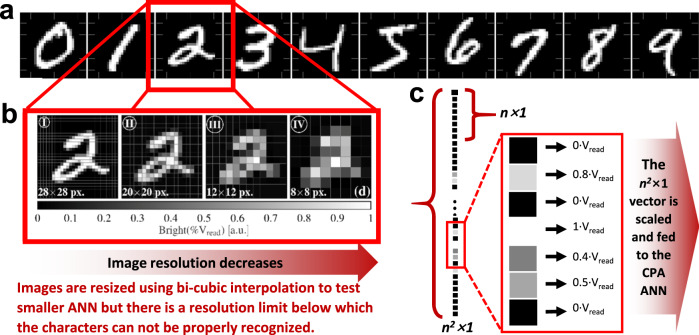
- For MNIST-style benchmarking, the paper uses a 60,000-image training set and 10,000-image test set; in the worked example, images are downsized from 28 × 28 to 8 × 8 and an ANN with one 64 × 10 single-layer perceptron is trained.
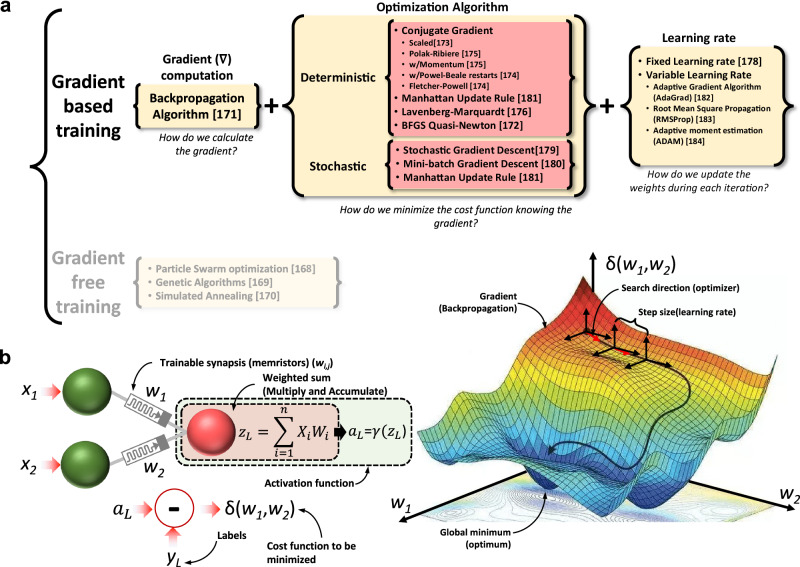
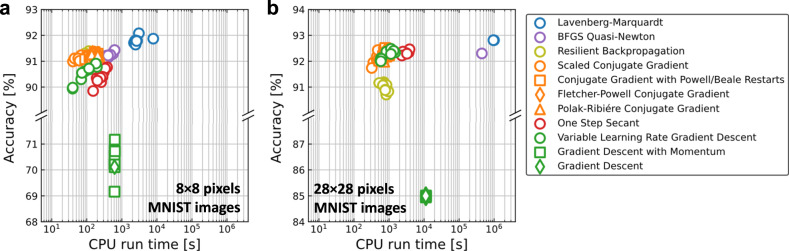
- In the example training study on 100 images, Scaled Conjugate Gradient and Levenberg–Marquardt achieved the highest accuracy, but Scaled Conjugate Gradient was chosen because it was faster.
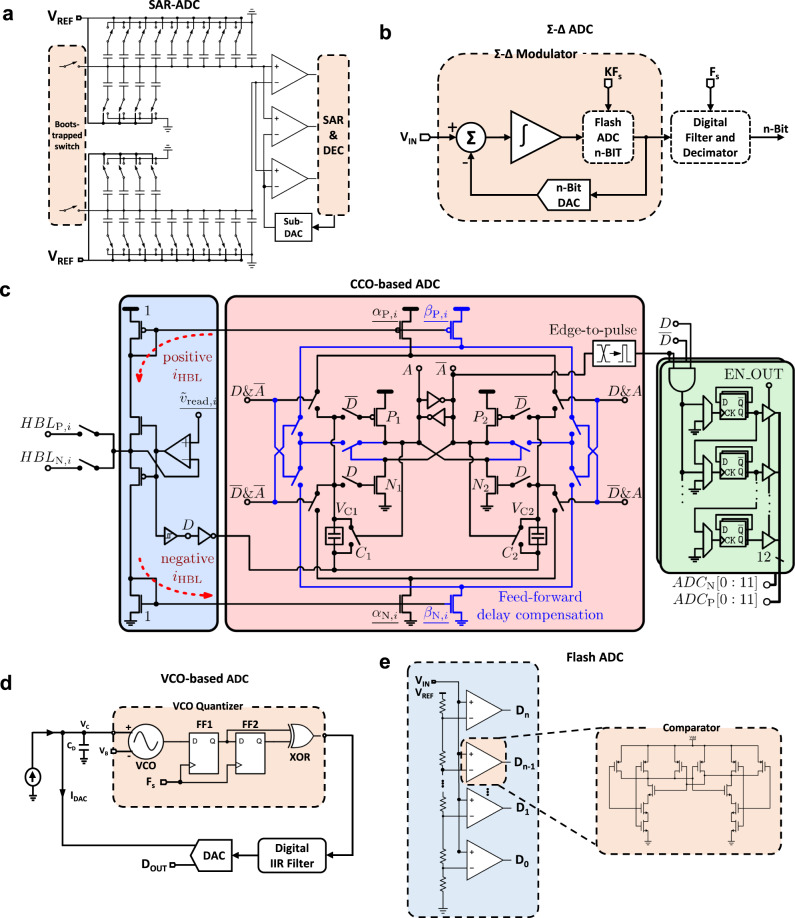
- The paper states that ADCs are often the largest and most power-hungry circuit block in memristive neural networks, consuming up to 70–90% of on-chip area and up to 80–88% of energy.
Methods
- Review/protocol article: synthesizes prior work on memristive ANN hardware and organizes the system into blocks (image capture, input driving, VMM core, sensing, activation, softargmax, ADCs, and training/update).
- Worked example: a single-layer perceptron for MNIST image classification; MATLAB is used to train the software model and generate a SPICE netlist, and SPICE simulation is used to evaluate the hybrid CMOS/memristor circuit during inference and write-verify programming.
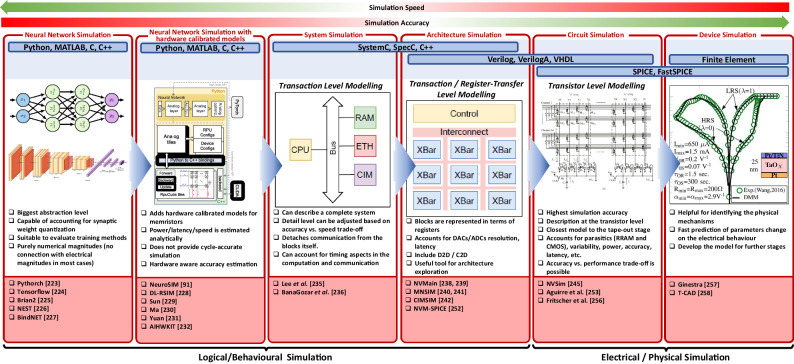
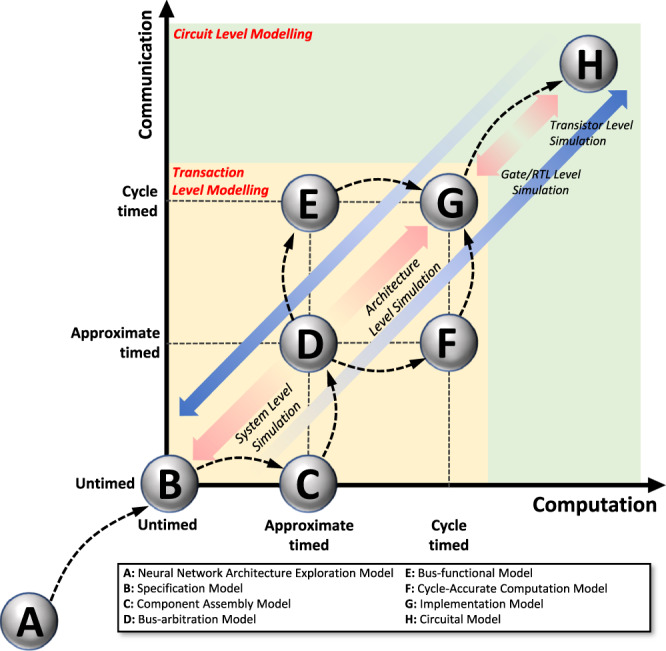
- Analysis emphasis: compares ex situ vs in situ training, discusses conductance mapping to memristors, and surveys simulation abstraction levels from neural-network-level tools to circuit/SPICE-level models.
Limitations
- Stated in the paper: many published studies are not true full-hardware implementations; some only characterize a few devices or rely on software ANN simulations, so reported performance can be weakly connected to fabricated hardware.
- Stated in the paper: full on-chip memristive ANN implementation is limited by peripheral circuit overhead, ADC/DAC trade-offs, device non-idealities, and the difficulty of integrating memristor stacks with CMOS.
- Evident from the text: the paper is not an experimental validation of a new memristor ANN chip; it is primarily a review plus a simulation-based worked example, so its conclusions about performance are illustrative rather than a direct new hardware result.
Model-written summary. Check it against the paper before relying on it.
Integrity signals
Registry
Cites
Statistics
Figures
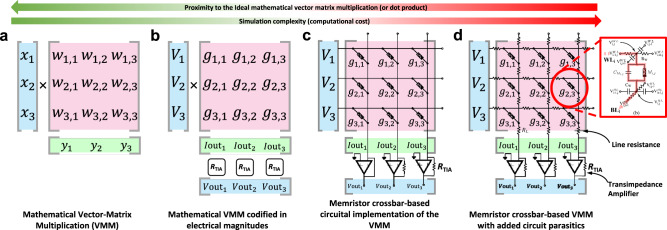
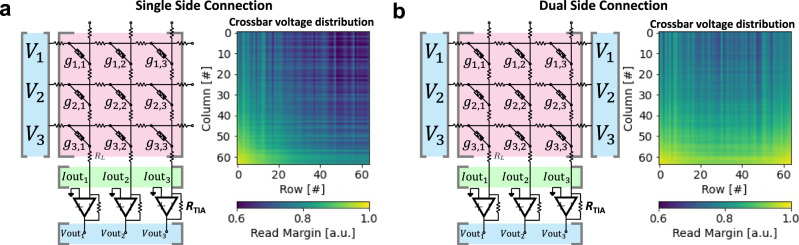
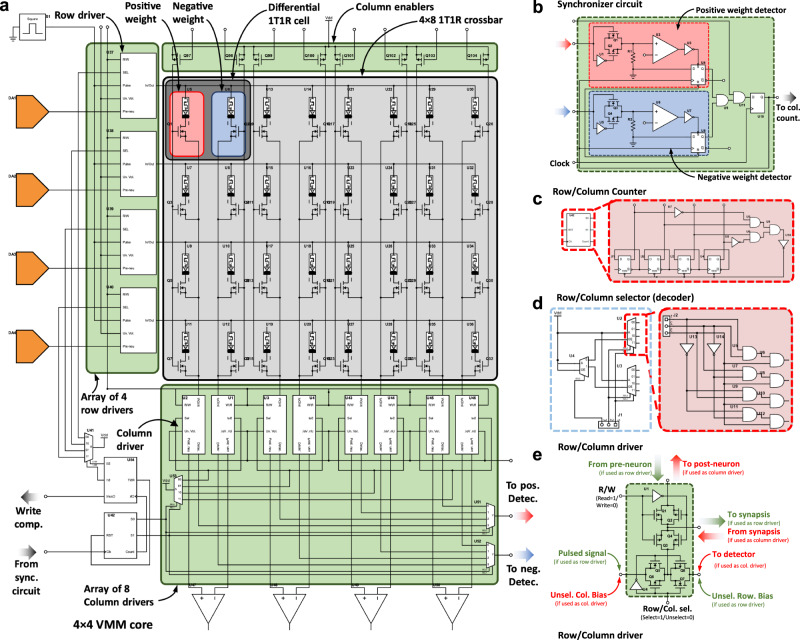
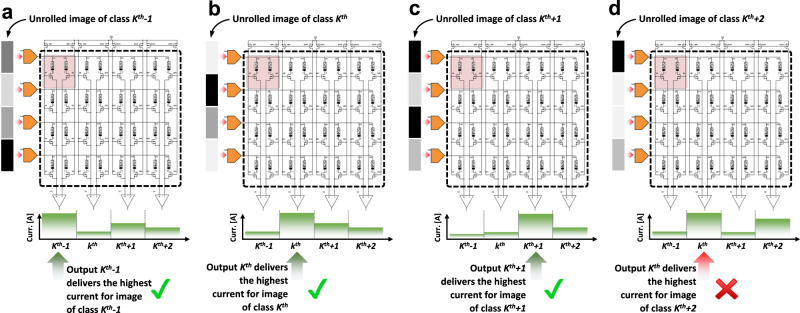
Verification
Claims the paper makes
47 Valid · 14 Not valid · 58 Not checked · 121 Own results and interpretations
At least one cited source doesn’t support this claim or points to a different paper, and none confirmed it — see the verdicts below.
In the paper
“ADCs with at least 8-bit resolution are necessary to achieve high (>90%) classification accuracy in a ResNET50-1.5 ANN used to classify the ImageNET157 database”
§ Hardware implementation of memristor-based artificial neural networks > Structure of memristor-based ANNs > Analogue to digital converters (Block 9)
What the sources say
- Disputedcites [157] Xiao TP On the Accuracy of Analog Neural Network Inference Accelerators [Feature],” IEEE Circuits Syst. Mag. 2022 22 26 48 10.1109/MCAS.2022.3214409 sourceExperimental — accuracy not yet measured
Section 6.3 (p. 12) says high accuracy is maintained with a 7-bit ADC, contrary to the claim that at least 8 bits are necessary. Table 2 in Section 4.3 (p. 7) reports 76.466% ImageNet top-1 accuracy for ResNet50-v1.5, not over 90%. (LLM, conf=0.93)
Checked by a reasoning model — may be wrong.
plainstates a cause- Asserted: passes — The authors put it forward as true.
- Checkable: passes — It can be checked against evidence.
- Load-bearing: unclear — It is unclear whether the paper’s conclusions depend on it.
- Based: passes — The paper gives a reason why it holds.
- Disputed
Some cited sources support this claim and some don’t — read each source’s verdict below.
In the paper
“the usual practice reported in the literature for this kind of training has been the use of the so-called Manhattan Update Rule105,194, or the Stochastic Gradient Descent54.”
§ Hardware implementation of memristor-based artificial neural networks > Structure of memristor-based ANNs > ANN training and synaptic weight update (Blocks 2, 11-15)
What the sources say
- Supportedcites [105] Prezioso M “Training and operation of an integrated neuromorphic network based on metal-oxide memristors,” Nature 2015 521 61 64 10.1038/nature14441 25951284 source
The Pattern Classification Experiment (p. 5) explicitly says the network was trained in situ using the Manhattan Update rule. This supports the Manhattan-rule example for which this paper is cited; the separate stochastic-gradient-descent citation is not being judged here. (LLM, conf=0.93)
- Disputedcites [194] Yao, P. et al., “Face classification using electronic synapses,” Nat. Commun., 8, May, 1–8, 10.1038/ncomms15199.2017, PMC5437298 28497781 sourceExperimental — accuracy not yet measured
The citation to this paper is attached to the Stochastic Gradient Descent part of the sentence. In “RRAM-based neuromorphic network” (page unavailable), the paper calls its two weight-update rules the delta rule and the Manhattan rule; Figure 2’s caption explicitly says the demonstration uses a batch learning model, not stochastic gradient descent. (LLM, conf=0.83)
Checked by a reasoning model — may be wrong.
- Could not verifycites [54] Li C “Efficient and self-adaptive in-situ learning in multilayer memristor neural networks,” Nat. Commun. 2018 9 1 8 29921923 PMC6008303 sourceExperimental — accuracy not yet measured
The Methods section describes ray-tracing simulations of bird-of-paradise feathers, not training memristor-based neural networks. Searches for the Manhattan Update Rule and stochastic gradient descent found no passage in our copy addressing either method as a usual training practice. (LLM, conf=0.78)
plain- Asserted: passes — The authors put it forward as true.
- Checkable: passes — It can be checked against evidence.
- Load-bearing: unclear — It is unclear whether the paper’s conclusions depend on it.
- Based: passes — The paper gives a reason why it holds.
- Supported
The cited sources support only part of this claim — read each source’s verdict below.
In the paper
“So far, several groups and companies have claimed the realization of hybrid CMOS/memristor implementations of ANNs53–61, —from now on, memristive ANNs— with performance that is superior to that of fully-CMOS counterparts.”
§ Hardware implementation of memristor-based artificial neural networks > Introduction
What the sources say
- Not checked — no full text of the sourcecites [53] Ishii, M. et al., “On-Chip Trainable 1.4M 6T2R PCM synaptic array with 1.6K Stochastic LIF neurons for spiking RBM,” Technical Digest - International Electron Devices Meeting, IEDM, 2019- 310–313, 2019, 10.1109/IEDM19573.2019.8993466. source
- Could not verifycites [54] Li C “Efficient and self-adaptive in-situ learning in multilayer memristor neural networks,” Nat. Commun. 2018 9 1 8 29921923 PMC6008303 sourceExperimental — accuracy not yet measured
The Results section discusses super-black feather microstructure, and the Introduction discusses structural absorption of light; neither addresses artificial neural networks. Searches for hybrid CMOS/memristor implementations and performance relative to fully-CMOS systems found no relevant passage in our copy. (LLM, conf=0.78)
- Not checked — no full text of the sourcecites [55] Yao P “Fully hardware-implemented memristor convolutional neural network,” Nature 2020 577 641 646 10.1038/s41586-020-1942-4 31996818 source
- Not checked — no full text of the sourcecites [56] Correll, J. M. et al., “An 8-bit 20.7 TOPS/W Multi-Level Cell ReRAM-based Compute Engine,” in 2022 IEEE Symposium on VLSI Technology and Circuits (VLSI Technology and Circuits), IEEE, 264–265. 10.1109/VLSITechnologyandCir46769.2022.9830490.2022, source
- Not checked — no full text of the sourcecites [57] Cai, F. et al., “A fully integrated reprogrammable memristor-CMOS system for efficient multiply-accumulate operations,” Nat Electron, 2, no. July, 290–299, [Online]. Available: 10.1038/s41928-019-0270-x 2019. source
- Not checked — no full text of the sourcecites [58] Hung, J.-M., “An 8-Mb DC-Current-Free Binary-to-8b Precision ReRAM Nonvolatile Computing-in-Memory Macro using Time-Space-Readout with 1286.4-21.6TOPS/W for Edge-AI Devices,” in 2022 IEEE International Solid- State Circuits Conference (ISSCC), IEEE, 1–3. 10.1109/ISSCC42614.2022.9731715.2022, source
- Not checked — no full text of the sourcecites [59] Xue, C.-X., “15.4 A 22nm 2Mb ReRAM Compute-in-Memory Macro with 121-28TOPS/W for Multibit MAC Computing for Tiny AI Edge Devices,” in 2020 IEEE International Solid- State Circuits Conference - (ISSCC), IEEE, 2020, 244–246. source
- Partly supportedcites [60] Wan W “A compute-in-memory chip based on resistive random-access memory,” Nature 2022 608 504 512 10.1038/s41586-022-04992-8 35978128 PMC9385482 sourceExperimental — accuracy not yet measured
The Main section describes NeuRRAM as an RRAM chip integrated with CMOS circuits and reports hardware-measured AI inference, supporting its use as an example of a hybrid implementation. The reported performance gains are against earlier RRAM compute-in-memory chips (Efficient voltage-mode neuron circuit), not fully-CMOS counterparts. The Methods section projects higher efficiency than edge inference accelerators only after scaling NeuRRAM from 130 nm to 7 nm; it does not establish the claimed superiority for the realized chip. (LLM, conf=0.84)
- Partly supportedcites [61] Yin S Sun X Yu S Seo JS “High-throughput in-memory computing for binary deep neural networks with monolithically integrated RRAM and 90-nm CMOS,” IEEE Trans. Electron. Dev. 2020 67 4185 4192 10.1109/TED.2020.3015178 sourceExperimental — accuracy not yet measured
The paper demonstrates a binary neural-network chip that integrates RRAM with 90-nm CMOS (p. 1), and its Results report a density advantage over SRAM-based in-memory computing (p. 6). But its quantified throughput and energy-delay improvements are compared with another CMOS chip containing embedded RRAM, not a fully-CMOS counterpart (Supplementary Figure 7, p. 32). It therefore supports the hybrid implementation, but not the claimed overall performance comparison with fully-CMOS ANNs. (LLM, conf=0.86)
plainstates an association- Asserted: passes — The authors put it forward as true.
- Checkable: passes — It can be checked against evidence.
- Load-bearing: unclear — It is unclear whether the paper’s conclusions depend on it.
- Based: passes — The paper gives a reason why it holds.
Every source the paper cites for this claim was checked and supports it.
In the paper
“Moreover, the switching time can be as short as 85 ps42.”
§ Hardware implementation of memristor-based artificial neural networks > Introduction
What the sources say
- Supportedcites [42] Choi BJ “High-speed and low-energy nitride memristors,” Adv. Funct. Mater. 2016 26 5290 5296 10.1002/adfm.201600680 source
The Results and Discussion state that an AlN memristor switched both off and on in 85 ps. The Conclusions also report a measured ultrafast switching time of 85 ps in AlN memristors. (LLM, conf=0.95)
plain- Asserted: passes — The authors put it forward as true.
- Checkable: passes — It can be checked against evidence.
- Load-bearing: unclear — It is unclear whether the paper’s conclusions depend on it.
- Based: passes — The paper gives a reason why it holds.
- Supported
The cited sources support only part of this claim — read each source’s verdict below.
In the paper
“For instance, given the MNIST dataset in which images have a resolution of 28 × 28 pixels one option is to implement the synaptic layer using multiple crossbars to fit the 784 inputs (e.g., 13 64 × 64 or 4 256 × 256 crossbars would be needed93).”
§ Hardware implementation of memristor-based artificial neural networks > Structure of memristor-based ANNs > Image capture hardware (block 1) and input vector conformation (block 3)
What the sources say
- Partly supportedcites [93] Kim H Mahmoodi MR Nili H Strukov DB “4K-memristor analog-grade passive crossbar circuit,” Nat. Commun. 2021 12 1 11 10.1038/s41467-021-25455-0 34465783 PMC8408216 sourceExperimental — accuracy not yet measured
The Results section (“Modeling of advanced systems”; page unavailable) supports splitting a 784-input MNIST classifier layer across multiple crossbar blocks. It does not give the claimed examples of 13 64 × 64 or 4 256 × 256 crossbars: its modeled implementation uses differential-pair weights and maps a 785 × 64 layer to 24 64 × 64 and two 17 × 64 blocks. (LLM, conf=0.88)
hedged- Asserted: passes — The authors put it forward as true.
- Checkable: passes — It can be checked against evidence.
- Load-bearing: unclear — It is unclear whether the paper’s conclusions depend on it.
- Based: passes — The paper gives a reason why it holds.
- Partly supported
88 more claims · 22 with their cited sources checked
Create a free account to see all 240 claims and to verify the 11 references still open.
- Probably not a substantial claim. 79
- It may state two separate claims as one. 91
- The quote only partly states this claim. 1
Citations
Cites
Deep Residual Learning for Image Recognition
He, K., Zhang, X., Ren, S., & Sun, J. (2016) · 2016 IEEE Conference on Computer Vision and Pattern Recognition (CVPR) · doi:10.1109/cvpr.2016.90 · Cited by 235,474 · cited 1×
“For benchmarking a device or a chip, it is essential to evaluate the accuracy of standard deep neural network models like VGG 89 and ResNet 90 on CIFAR and ImageNet dataset by utilizing architecture-levelsimulationandrealistichardwarestatistics 91,92 .”
Very Deep Convolutional Networks for Large-Scale Image Recognition
Simonyan, K., & Zisserman, A. (2014) · arXiv · doi:10.48550/arxiv.1409.1556 · Cited by 114,148 · cited 1×
“For benchmarking a device or a chip, it is essential to evaluate the accuracy of standard deep neural network models like VGG 89 and ResNet 90 on CIFAR and ImageNet dataset by utilizing architecture-levelsimulationandrealistichardwarestatistics 91,92 .”
Adam: A Method for Stochastic Optimization
Kingma, D. P., & Ba, J. (2014) · arXiv · doi:10.48550/arxiv.1412.6980 · Cited by 98,946 · cited 2×
“…employed 165 , and for stochastic evaluation of the loss function using a mini-batch of images diverse methods have been employed, including Adaptive Gradient Algorithm (or AdaGrad) 182 , Root Mean Square Propagation (or RMSProp) 183 , Adaptive Moment Estimation (or Adam) 184 and Adadelta 185 .”
ImageNet: A large-scale hierarchical image database
Deng, J., Dong, W., Socher, R., Li, L.-J., Li, K., & Fei-Fei, L. (2009) · 2009 IEEE Conference on Computer Vision and Pattern Recognition · doi:10.1109/cvpr.2009.5206848 · Cited by 65,333 · cited 1×
“…86 ; 2) CIFAR (Canadian Institute for Advanced Research),whichcontains60,000colorimagesdividedinto10classes for CIFAR-10 and 100 classes for CIFAR-100 87 ; 3) ImageNet, one of the largest image datasets, which consists of over 1.2 million labelled from 1000 classes for the ImageNet competition 88 .”
InfluentialKennedy, J., & Eberhart, R. (2002) · Proceedings of ICNN'95 - International Conference on Neural Networks · doi:10.1109/icnn.1995.488968 · Cited by 58,192 · cited 1×
“Gradient-free methods such as the Particle Swarm optimization 168 , Genetic Algorithms 169 and Simulated Annealing 170 algorithms are more demanding from a computational point of view, andhence,theyarerarelyemployedforANNtraining,bywhichtheylie beyond the scope of this article.”
Optimization by Simulated Annealing
Kirkpatrick, S., Gelatt, C. D., & Vecchi, M. P. (1983) · Science · doi:10.1126/science.220.4598.671 · Cited by 45,134
Learning representations by back-propagating errors
Rumelhart, D. E., Hinton, G. E., & Williams, R. J. (1986) · Nature · doi:10.1038/323533a0 · Cited by 31,892 · cited 1×
“In most ANNs, the gradient of the loss function is normally computed by the backpropagation algorithm 171 .”
An Algorithm for Least-Squares Estimation of Nonlinear Parameters
Marquardt, D. W. (1963) · Journal of the Society for Industrial and Applied Mathematics · doi:10.1137/0111030 · Cited by 30,728 · cited 6×
“…evaluation, common optimization algorithms are the following: (i) Gradient Descent 165 (the simplest one and closest to the previous (cid:129) Manha(cid:3)an UpdateRule [181] (cid:129) Lavenberg-Marquardt[176] (cid:129) BFGS Quasi-Newton[172] Howdo we updatethe weightsduringeachitera(cid:2)on?”
InfluentialStrukov, D. B., Snider, G. S., Stewart, D. R., & Williams, R. S. (2008) · Nature · doi:10.1038/nature06932 · Cited by 11,828
(2017) · Cited by 11,625
Research works printed but not linked: 3
- “Microchips that mimic the human brain could make AI far more energy efficient | Science | AAAS.” Accessed: May 15, 2023. [Online]. Available: https://www.science.org/content/article/microchips-mimic-human-brain-could-make-ai-far-more-energy-efficient
- Hu, M. et al., “Dot-product engine for neuromorphic computing,” in DAC ’16: Proceedings of the 53rd Annual Design Automation Conference, New York, NY, USA: Association for Computing Machinery, 1–6. 10.1145/2897937.2898010.2016, · doi:10.1145/2897937.2898010.2016
- Ielmini, D. and Waser, R. Resistive Switching. Weinheim, Germany: Wiley-VCH Verlag GmbH & Co. KGaA, 2016.
Cited by
Items 301–400 of 498
Hyperplane tree-based data mining with a multi-functional memristive crossbar array
Cheong, S., Shin, D. H., Lee, S. H., Jang, Y. H., Han, J., Shim, S. K., Han, J., Ghenzi, N., & Hwang, C. S. (2024) · Materials Horizons · doi:10.1039/d4mh00942h · Cited by 3
Wang, K., Lü, J., Xiang, Z., Shi, M., Wu, L., Yan, F., & Jiang, R. (2024) · Advanced Physics Research · doi:10.1002/apxr.202400047 · Cited by 1
4DoF Rat-SLAM with Memristive Spiking Neural Networks for UAVs Navigation System
Pirozzo, B. M., Roark, G. Y., Ruschetti, C. R., Villar, S. A., Paula, M. D., & Acosta, G. G. (2025) · Drones and autonomous vehicles/Drones and Autonomous Vehicles · doi:10.70322/dav.2025.10004 · Cited by 2
Electrical characterization of the alleged bio-memristor Physarum polycephalum
Schmidt, M. R., Seyfried, G., Reutina, U., Seskir, Z. C., & Miranda, E. R. (2025) · MRS Advances · doi:10.1557/s43580-025-01198-8 · Cited by 2
Self-citationLv, H.-L., & Zhang, Y. (2025) · The Physics of Fluids · doi:10.1063/5.0281901 · Cited by 1
Composite Behavior of Nanopore Array Large Memristors
Reistroffer, I., Tolbert, J., Osterberg, J. A., & Wang, P. (2025) · Micromachines · doi:10.3390/mi16080882 · Cited by 1
“Brain-inspired neuromorphic computing is promising to address the growing energy and capacity problems of current digital computing techniques [1] by developing hardware-based neural networks [2].”
ViT-LCA: A Neuromorphic Approach for Vision Transformers
Takaghaj, S. M. (2025) · IEEE International Conference on Artificial Intelligence Circuits and Systems (AICAS) · doi:10.1109/aicas64808.2025.11173130 · Cited by 3
“Additionally, by utilizing crossbar arrays and memristores [8]–[10] to store multi-bit quantities as conductance values, neuromorphic computing is particularly well-suited for efficiently evaluating matrix-vector-multiplications, which are fundamental to deep learning algorithms.”
ReFFT: An Energy-Efficient RRAM-Based FFT Accelerator
Wen, J., Baroni, A., Uhlmann, M., Pérez, E., Wenger, C., & Krstic, M. D. (2025) · IEEE Transactions on Computer-Aided Design of Integrated Circuits and Systems · doi:10.1109/tcad.2025.3627146 · Cited by 1
“Silicon prototypes have already demonstrated the performance and energy advantages of RRAM-based DNN accelerators [10], [11].”
Energy-Efficient Supervised Learning With a Binary Stochastic Forward-Forward Algorithm
Jaiswal, R., Datta, S., & Makin, J. G. (2025) · IEEE Transactions on Artificial Intelligence · doi:10.1109/tai.2025.3645750 · Cited by 2
“Furthermore, although the forward pass can be computed efficiently in analog hardware [14], [15], [16], [17], storage in memory requires a digital representation, and analog-to-digital conversion dominates the silicon area and power consumption in these methods [15], [17].”
Scalable Thermodynamic Second-order OptimizationPreprint
Donatella, K., Duffield, S., Melanson, D., Aifer, M., Klett, P., Salegame, R., Belateche, Z., Crooks, G. E., Martinez, A., & Coles, P. J. (2025) · Qeios · doi:10.32388/i4kth3 · Cited by 1
Yu, X., Li, Y., Song, H., Lu, R., Gou, K., & Jiang, J. (2025) · Chip · doi:10.1016/j.chip.2025.100165 · Cited by 1
Dual In-Memory Computing of Matrix-Vector MultiplicationPreprint
Wang, S., & Sun, Z. (2024) · SSRN Electronic Journal · doi:10.2139/ssrn.4821734
Automated Detection of Malaria-Infected Cells Using Convolutional Neural Networks
Khan, S. (2024) · International Journal for Research in Applied Science and Engineering Technology · doi:10.22214/ijraset.2024.63816
Ramos, I., Sotero-Esteva, J. O., Bansal, V., Barrionuevo, D., Bezares, F. J., Fasoli, E., Licurse, M. W., Oyola, R., Pinto, N. J., Santana, J. A. C., et al. (2024) · MRS Advances · doi:10.1557/s43580-024-00939-5
Cantudo, A., Jiménez-Molinos, F., Ruiz, P. Q., Lopez, A., Villena, M. A., González, M. B., Campabadal, F., & Roldán, J. B. (2024) · SSRN Electronic Journal · doi:10.2139/ssrn.5067255
Self-citationA flexible multi-standard I/O interface for chip-to-chip links in 65 nm CMOS
Ilmberger, J., Fiedler, N., Grübl, A., & Schemmel, J. (2024) · IEEE Asia Pacific Conference on Circuits and Systems (APCCAS) · doi:10.1109/apccas62602.2024.10808294 · Cited by 2
Rate Coding With 3D Memristor Crossbar
Pallathuvalappil, S., & James, A. P. (2025) · IEEE transactions on circuits and systems for artificial intelligence. · doi:10.1109/tcasai.2025.3532406
“Compared to the current summation in the circuit equivalent of other neural network models [11], SNN has improved energy efficiency and tolerance to device variability.”
Circuit-based New Type-II Nonlinear Memristor for Neuromorphic Applications
Sanyal, M., Mandal, S., & Das, P. (2024) · 2024 12th International Conference on Internet of Everything, Microwave, Embedded, Communication and Networks (IEMECON) · doi:10.1109/iemecon62401.2024.10846011
“VMM is performed in a conventional Von Neumann computing system by executing each multiplication and summation operation one after the other, thereby requiring time [20].”
InfluentialResearch on Weight Update Modulation of Memflash for Adaptive Circuits
Zhou, J., Ye, M., Zhang, X., Huang, L., & Zheng, C. (2024) · doi:10.1109/iccs62517.2024.10846021
“This non-volatile characteristic allows memristors to retain their resistance values even after power loss, thereby storing the weight values of the matrix at each node of the memristor array [5] .”
Research on Artificial Neural Network Inference Accuracy Control for HfO 2 Thin-Film Memristors
Luo, W. (2024) · International Symposium on Integrated Circuit Design and Integrated Systems (ICDIS) · doi:10.1145/3702191.3702195
Silas, K. L. T., Djimeli-Tsajio, A., Talla, B. F., Jean-Pierre, L. T., & Ejuh, G. W. (2025) · Journal of Electrical and Electronic Engineering · doi:10.11648/j.jeee.20251301.17
Ultrastable One-Piece Pressure-Sensitive Memristor Based on Carbon Quantum Dots on BiFeO3
Qin, Y., & Zhu, X. (2025) · ACS Applied Nano Materials · doi:10.1021/acsanm.5c00168 · Cited by 1
Hu, Y. (2025) · Frontiers in Nanotechnology · doi:10.3389/fnano.2025.1583483
A review on footsteps of a revolution in electronics: Spin memristors
AL-EDRESI, A., Aydın, G., Abboubi, M. E., Kazan, S., Candan, İ., & San, S. E. (2025) · Materials Today Physics · doi:10.1016/j.mtphys.2025.101760 · Cited by 1
A Versatile Hardware Solution for Generating Power Law Noise With Tunable Long-Term Dependency
Yuan, X., Luo, Y., Chai, Z., et al. (2025) · IEEE Electron Device Letters · doi:10.1109/led.2025.3577161
“For some other applications, such as the hardware neural networks, might require a higher frequency range at ∼ GHz level [31].”
Lee, B. G., Lee, J., Seo, J. M., et al. (2025) · IEEE Transactions on Electron Devices · doi:10.1109/ted.2025.3576811
“…systems with resistive switching (RS) characteristics are expected to be applied to next-generation biological neural systems due to their high integration [10], low power consumption [11], simple structure [12], high endurance characteristics [13], and nonvolatile characteristics [13], [14], [15].”
Resistive switching and variability in ITO/ZnO/AZO memristors
Navarrete-Astorga, E., Cantudo, A., & Roldán, J. B. (2025) · Spanish Conference on Electron Devices · doi:10.1109/cde66381.2025.11038897
“…memory; neuromorphic computing is also a field of application where memristors play a vital role in the implementation of crossbar arrays [7-10], for an in-memory computing approach that will reduce operation time and power consumption in training and inference tasks of hardware neural…”
Self-citationArtificial neurons made of active matter memristors
Liu, J., Mazza, M. G., Li, Y., Marchesoni, F., & Savel'ev, S. E. (2025) · Soft Matter · doi:10.1039/d5sm00402k · Cited by 1
Reliable leakage-enabled memristor model for large-scale circuits
Rabiee, M. M., Gholipour, M., & TaheriNejad, N. (2025) · Journal of Computational Electronics · doi:10.1007/s10825-025-02377-4
Bioinspired Fully On‐Chip Learning Implemented on Memristive Neural Networks
Wen, Z., Wang, G., Luo, X. D., Liang, L., Yang, F., Wang, X., Zhang, Q., Chen, J., Liu, Q., & Liu, F. (2025) · Advanced Intelligent Systems · doi:10.1002/aisy.202500071
Model-Based Write Algorithm for Memristive Crossbar Arrays
Schroedter, R., Demirkol, A. Ş., Messaris, I., Bruchatz, C., Mgeladze, E., Slesazeck, S., Mikolajick, T., & Tetzlaff, R. (2025) · International Conference on Modern Circuits and Systems Technologies · doi:10.1109/mocast65744.2025.11083963
“By harnessing Ohm’s and Kirchhoff’s laws to execute matrix-vector multiplication in-memory, these arrays hold the potential to revolutionize data processing efficiency, particularly in artificial intelligence [1].”
Memristor-Based Long Short-Term Memory Network for Accelerated Edge Intelligence
Borah, S. S., Sundaravadivel, P., Fletcher, R. S., & Reddy, K. N. (2024) · IEEE International Symposium on Smart Electronic Systems (iSES) · doi:10.1109/ises63344.2024.00052
Ma, M., Jiang, W., Liu, J., Du, L., Ma, Z., & Du, Y. (2025) · Integrated Circuits and Systems · doi:10.23919/ics.2025.3597876
Behavioral SPICE model for memristive crosspoint arrays operating in the nonlinear transport regime
Pérez, X., Picos, R., Suñé, J., & Miranda, E. A. (2025) · Solid-State Electronics · doi:10.1016/j.sse.2025.109214
Self-citationAdversarial Robustness and Transferability on Stochastic Resistive Accelerators
Smagulova, K., Fouda, M. E., & Eltawil, A. M. (2025) · International Conference on Machine Intelligence and Smart Innovation (ICMISI) · doi:10.1109/icmisi65108.2025.11115660 · Cited by 1
“In such architecture, the traditional deterministic weight of DNN can be mapped to an NVM device [2], [3].”
Self-citationMemristor-Based Circuit Optimized Gate Recurrent Unit for Wind Power Prediction
Wang, Y., Song, Y., Chen, Y., et al. (2025) · IEEE Transactions on Circuits and Systems I Regular Papers · doi:10.1109/tcsi.2025.3602022
“Sub-sequently, the memristor-based physical device is implemented in experiments at Hewlett-Packard laboratory [18], [19], [20].”
Memristor-Based Circuit Demonstration of Hybrid Gated Recurrent Unit for Edge Computing
Pu, X., Qi, H., Liu, G., & Zhang, Z. (2025) · IEEE Transactions on Nanotechnology · doi:10.1109/tnano.2025.3614198
“Furthermore, the intermediate analog outputs must be converted into digital signals for transmission between modules, which introduces additional complexity and energy consumption [17].”
Schmidt, M. R., Seyfried, G., Reutina, U., Seskir, Z. C., & Miranda, E. R. (2025) · Frontiers in Soft Matter · doi:10.3389/frsfm.2025.1588404 · Cited by 1
Self-citationDynamic Analysis and Exponential Synchronization Control of Star-Shaped Memristive Neural Networks
Chen, J., Liu, F., Zhao, J., et al. (2025) · Chinese Control Conference (CCC) · doi:10.23919/ccc64809.2025.11178594
“The advantages of memristor, such as nanoscale size, ultra-fast low latency, non-volatility, low power consumption and high energy efficiency [5], make memristor-based neural networks exhibit more excellent performance in the current era of nanoscale high-density integrated circuits [6].”
Life cycle assessment of digital memories: The memristor’s environmental footprint
Benito, N., Pérez‐Martínez, J. C., Roldán, J. B., Lao, Á., Urbina, A., & Serrano‐Luján, L. (2025) · Sustainable Computing Informatics and Systems · doi:10.1016/j.suscom.2025.101229
Self-citationHybrid memory to empower edge AI
Shang, D., & Luo, Q. (2025) · Nature Electronics · doi:10.1038/s41928-025-01483-2
The Impact of Internal Noise on Deep and Spiking Neural Networks
Игоревна, С. Н., Maksimov, D., & Kolesnikov, I. D. (2025) · Scientific School Dynamics of Complex Networks and their Applications (DCNA) · doi:10.1109/dcna67486.2025.11199933
“In this paradigm, neurons and connections between them are implemented directly in hardware at the physical level, enabling substantial improvements in both processing speed and energy efficiency [5], [6].”
Ultra-Fast CV-ECRAM-Based Analog PIM with Dynamic Retention Compensation Techniques
Kim, S., Byun, J., Min, J. G., Son, J., Kim, J., Lee, Y., & Kim, S. (2025) · doi:10.1109/esserc66193.2025.11214069 · Cited by 1
Takaghaj, S. M. (2025) · International Joint Conference on Neural Networks (IJCNN) · doi:10.1109/ijcnn64981.2025.11229386
“Neuromorphic systems can efficiently execute Vector-Matrix Multiplication (VMM) operations, also known as Multiply-and-Accumulate (MAC) operations, by leveraging a crossbar array of memory elements [42], which are fundamental to deep learning algorithms.”
Li, Y., Zhang, Y., Wang, X., Zhao, Z., Xing, G., Liu, L., Dong, F., Guo, Z., Gao, X., & Xing, G. (2025) · Journal of Applied Physics · doi:10.1063/5.0293805 · Cited by 2
SAGE: Saliency-Aware Grouping for Efficient Mapping of LLMs on Analog Compute-in-Memory
Hou, Y. T., Liu, Z., Gagnon, G., Tsai, H.-Y. S., Maghraoui, K. E., Burr, G. W., & Liu, L. (2025) · doi:10.1109/iccad66269.2025.11240907 · Cited by 1
“By storing weights as physical quantities (e.g., conductance or capacitance) and performing matrix-vector multiplications (MVMs) directly within memory arrays, ACIM architectures significantly reduce data movement and improve energy efficiency [1].”
Modulation of resistive switching behavior in BaSnO₃-based memristors
Duan, Z., Sun, P., Ma, S., Bu, Y., & Hao, Y. (2025) · Chemical Engineering Journal · doi:10.1016/j.cej.2025.171112 · Cited by 1
On-Chip Row Pruning for One-Hot Encoded Snns in Memristive Dot Product Engines
Tushar, S. N. B., Buchanan, G., Sabrin, T., Das, H., & Rose, G. S. (2025) · IEEE International Midwest Symposium on Circuits and Systems (MWSCAS) · doi:10.1109/mwscas53549.2025.11244319
“The synapse in the MDPE is typically 1T1R (1 transistor, 1 Resistive RAM) [1], [3], [9], [13], although 0T1R, 2T1R and 3T1R configurations can also be utilized [2], [3], [11].”
Wang, C., Zhang, Y., Liu, W., & Gao, S. S. (2025) · SiPS ... design and implementation - IEEE Workshop on Signal Processing Systems · doi:10.1109/sips66314.2025.11261269
“…required for the differential memristor pair, the weight W is decomposed into two non-negative matrices W + and W − , defined element-wise as [20]: Then, the resistance matrices R + and R − to be mapped to the crossbar array are calculated by employing the linear transformation [20]: where R…”
Cost-efficient Processing-in-Memory Architecture with Training-free and Universal Error Compensation
Yun, M., Min, J. G., Oh, S., Choi, J., Lee, J., Je, M., & Lee, Y. (2025) · International Symposium on Low Power Electronics and Design (ISLPED) · doi:10.1109/islped65674.2025.11261781 · Cited by 1
“For the end-to-end DNN inference, extra operations such as accumulating partial sums, adding bias values, and performing activation functions are difficult to map onto NVM arrays [29].”
InfluentialRobustness of Memristor Neural Networks to Stuck-at Faults: A Two-Layer MNIST Case Study
Aziza, H., Castellani-Coulié, K., & Rahajandraibe, W. (2025) · IEEE International Conference on Electronics, Circuits and Systems (ICECS) · doi:10.1109/icecs66544.2025.11270727 · Cited by 1
“3. first derived from the software weight matrix through a linear transformation [12], targeting the hardware-compatible range of 11.5 kΩ to 40.4 kΩ.”
InfluentialNeuromorphic Computing With Emerging Memories
Zhao, R., & Yang, J. J. (2025) · Computer · doi:10.1109/mc.2025.3615214
Self-citationEffects of Different Conductance Mechanisms and Temperature on Memristive Neural Networks
Ghadge, A., Kumar, A., & Bag, M. (2025) · physica status solidi (a) · doi:10.1002/pssa.202500536
“In this architecture, memristors are positioned at each intersection of horizontal and vertical conductive lines, forming a dense matrix of physica status solidi (a), 2026 programmable synaptic weights [17, 63].”
Sakemi, Y., Awano, H., & Morie, T. (2025) · IEICE Transactions on Fundamentals of Electronics Communications and Computer Sciences · doi:10.1587/transfun.2025gci0001 · Cited by 2
Learning dynamics in memristor-based equilibrium propagation
Döll, M., Müller, A., & Ulmann, B. (2026) · International Journal of Parallel Emergent and Distributed Systems · doi:10.1080/17445760.2026.2616770
“Since then, memristors have gained significant attention for their potential in hardware acceleration of artificial neural networks, offering efficient, low-power alternatives to conventional computing architectures [12].”
InfluentialNeurosynaptic Core Prototype for Memristor Crossbar Arrays Diagnostics
Alyaev, I. V., Surazhevsky, I. A., Ichyotkin, D. V., Rylkov, V. V., & Demin, V. A. (2025) · Electronics · doi:10.3390/electronics14244965 · Cited by 1
“The first is the current-to-voltage converter module, implemented using a well-established transimpedance amplifier approach [21,22].”
A Floating-Ground Logarithmic Mathematical Memristor Model and Its Emulator
Yuan, X., Li, T., Wang, C., Su, K., Li, Z., Guo, F., Zhu, K., & Xi, X. (2025) · 2025 International Conference on Advanced Semiconductor Devices and Integration Technology (ASDIT) · doi:10.1109/asdit66826.2025.11291036
“Due to their unique electrical properties, they offer significant potential for applications in resistive memory, artificial neural networks [3-4], and artificial intelligence.”
All-Optically Controlled Terahertz Memristor for Multidimensional Neuromorphic ComputingPreprint
Lai, W., Lan, S., Liang, X., et al. (2025) · SSRN Electronic Journal · doi:10.2139/ssrn.5887966
RRAM-Based Spectral-Domain Convolution Accelerator for Reliable and Energy-Efficient CNN Inference
Wen, J., Baroni, A., Wenger, C., Krstic, M. D., & Poehls, L. M. B. (2025) · IEEE Transactions on Very Large Scale Integration (VLSI) Systems · doi:10.1109/tvlsi.2025.3644141 · Cited by 2
“While this approach has been widely studied [11], [12], [13], the design and evaluation of RRAM-based CNN accelerators operating in the spectral domain remain largely unexplored.”
INVESTIGATION OF OPTICAL AND ELECTRICAL PROPERTIES OF TITANIUM OXYNITRIDE FILMS
Makhabayeva, A. T., Chirkova, L. V., Гученко, С. А., et al. (2025) · Eurasian Physical Technical Journal · doi:10.31489/2025n4/24-30
ASMA: An Anisotropy Scaling Memristor-Based Accelerator for LLM Inference
Xiong, Z., Yang, X., Zhang, Y., Zhou, Y., Yang, J., Tao, Y., Miao, X., & He, Y. (2025) · IEEE International Conference on Computer Design: VLSI in Computers and Processors (ICCD) · doi:10.1109/iccd65941.2025.00086
“Memristor-based Computing-in-Memory (CIM) is a promising solution, performing matrix-vector multiplications (MVMs) directly within memory arrays to reduce data movement [4]–[6].”
InfluentialSelf-citationStochastic Gradient Adjustment: Single-Pulse In-Memory Training on Phase-Change Memory Chips
Zhenhao, J. I. A. O., Xiaogang, C. H. E. N., Tao, H. O. N. G., Li, S., Xi, L. I., Chengcai, T. U., Dai, W., & Zhitang, S. O. N. G. (2026) · IEICE Transactions on Fundamentals of Electronics Communications and Computer Sciences · doi:10.1587/transfun.2025eal2094
Self-citationMinding the gap between artificial and biological computing paradigms for biologically loyal AI
Kirkpatrick, K. (2026) · Frontiers in Systems Neuroscience · doi:10.3389/fnsys.2025.1695493
“There are new devices that implement the architecture of certain ANNs in other types of hardware, such as memristive devices, that have relatively deterministic and static structures and remaining challenges that may result in lower precision (Aguirre et al., 2024).”
Karpagam, P., S.Arulanandan, Pandi, V. S., Al-Safarini, M. Y., Satyavati, Y. A., & Dinesh, M. (2025) · International Conference on Computing, Communication and Automation · doi:10.1109/iccca66364.2025.11325436 · Cited by 1
Noh, Y., & Smolyanitsky, A. (2026) · Small · doi:10.1002/smll.202511663
Thermodynamic natural gradient descent
Donatella, K., Duffield, S., Aifer, M., Melanson, D., Crooks, G. E., & Coles, P. J. (2026) · npj Unconventional Computing · doi:10.1038/s44335-025-00049-x · Cited by 10
“This is in contrast to many proposals to accelerate the inference workload of AI models with analog computing, where the model is hardwired into the hardware, and users are unable to change the model architecture as they seamlessly would by using their preferred software tools 10 – 13 .”
Preparation of S-doped PdSe 2 nano-film electrodes and their photoelectrochemical properties
shi, Z., Zhao, X., Jian, W., Guo, S., Liu, D., & Zhu, Z. (2026) · RSC Applied Interfaces · doi:10.1039/d6lf00272b
All-optically controlled terahertz memristor for multidimensional neuromorphic computing
Lai, W., Lan, S., Liang, X., Gan, Y., Huang, R., Liao, C., Li, H., Amini, A., & Cheng, C. (2026) · Optics & Laser Technology · doi:10.1016/j.optlastec.2026.114807
Maity, S., Mandal, A., Pradhan, P., Ghosh, A., Topwal, D., Patra, B. K., & Som, T. (2026) · Small Science · doi:10.1002/smsc.202500424 · Cited by 1
“[1] These challenges have sparked an urgent need for innovative devices and systems that offer energy-ef fi cient, high-density data storage and parallel computing.”
Study on the Working Mechanism of Improved Memristor-CMOS-Based Logic Gates
Yan, H., Lv, T., & Li, M. (2025) · IEEE International Conference on Data Science and Computer Application (ICDSCA) · doi:10.1109/icdsca67083.2025.11350117
“Owing to these unique properties, memristors have found widespread applications in diverse fields, including artificial neural networks [9–10], integrated circuits [11], computing-in-memory architectures [12], and chaotic systems [13].”
Zihuan, 焦. J., Linjun, 李. L., & Jialin, 李. L. (2026) · Chinese Journal of Lasers · doi:10.3788/cjl251245 · Cited by 1
Device Endurance-Aware Adaptive Layer Selection for DNN Training on IMC-Based 2.5-D Systems
Neethu, K., Banerjee, A., James, R. K., Jose, J., & Mandal, S. K. (2026) · IEEE Transactions on Computer-Aided Design of Integrated Circuits and Systems · doi:10.1109/tcad.2026.3660195
“The movement of atoms by the electrical field during switching and the ion position decides the resistance value each cell holds [16], [43].”
Obernberger, S., González, Y., Sarkissian, A., Schindler, C., & Ruediger, A. P. (2026) · Advanced Electronic Materials · doi:10.2139/ssrn.6250359
Anand, A. Y., Thomas, A., Dayal, G., et al. (2026) · SSRN Electronic Journal · doi:10.2139/ssrn.6257410
Thriving in-memory computing and neuromorphic applications of ferroelectric-based devices
Wang, X., Songjian, K., Ning, Z.-Y., Zhang, W., & Jiang, A. (2026) · Science China Materials · doi:10.1007/s40843-025-3874-1 · Cited by 1
“However, implementing the synaptic plasticity required for neuromorphic devices with CMOS components entails prohi-bitively large area consumption [11–13].”
Count2Multiply: Reliable In-Memory High-Radix Counting
de Lima, J. P. C., Morris, B. F., Khan, A. A., Castrillón, J., & Jones, A. K. (2026) · IEEE International Symposium on High-Performance Computer Architecture (HPCA) · doi:10.1109/hpca68181.2026.11408436 · Cited by 11
“Consequently, there is a growing trend towards compute-in-memory (CIM) solutions [2]–[4].”
Joint Hardware-Workload Co-Optimization for In-Memory Computing Accelerators
Krestinskaya, O., Fouda, M. E., Eltawil, A. M., & Salama, K. N. (2026) · IEEE Access · doi:10.1109/access.2026.3671360 · Cited by 2
“Since in-memory computing (IMC) accelerators are often fine-tuned specifically for neural network applications, software-hardware co-design is essential for achieving optimal performance [14], [15].”
Self-citationTunable synaptic plasticity in bilayer V2O5/SiO2 ReRAM crossbar array for brain inspired computing
Singh, V. P., Singh, C. P., Sundaram, G., Lee, H., Lim, N., Kong, J., Kwon, S., Jeon, J., & Singh, V. P. (2026) · Ceramics International · doi:10.1016/j.ceramint.2026.02.394
秦, P. 鹏. Q., Liu, T., Wan, Q., et al. (2026) · Chinese Physics B · doi:10.1088/1674-1056/ae4f72
Li, D., Zhang, S., Ge, L., et al. (2026) · ACS Applied Electronic Materials · doi:10.1021/acsaelm.5c02660
Panthi, Y. R., Pandey, A., Slobodová, N., et al. (2025) · doi:10.3390/proceedings2026136108
Quantum-enhanced phonological rhyme detection in poetry: A parameter-efficient hybrid CRNN-VQC modelPreprint
Rezaei, A., Bastanfard, A., & Harifi, S. (2026) · Research Square · doi:10.21203/rs.3.rs-8534644/v1
Recent research of possible strategies on data-intensive processing
Liu, S., Lin, Z., Zhang, Y., et al. (2026) · The Innovation Materials · doi:10.59717/j.xinn-mater.2026.100201
Fabrication of Stochastic Ni@PVP Nanowire Networks for Memristive Platforms
Lemos, C., Dias, C., Costa, R. S., & Ventura, J. (2026) · Polymers · doi:10.3390/polym18060746
“Neuromorphic computing has emerged as a promising alternative to conventional von Neumann architectures, in which the physical separation between memory and processing units leads to massive power consumption in large-scale systems [1,2].”
Thickness-dependent resistive switching in engineered TiN/Ti/HfO2/W memristors
Lopez, A. H., González, M. B., Cantudo, A., Saludes-Tapia, M., Ríos, P., Jiménez-Molinos, F., Roldan, J., & Villena, M. A. (2026) · Micro and Nanostructures · doi:10.1016/j.micrna.2026.208658 · Cited by 1
Self-citationNikolaev, S. N., Nikolaev, G. S., Sitnikov, A. V., et al. (2025) · Russian Microelectronics · doi:10.1134/s1063739725601122
Model‐Based Time‐Modulated Write Algorithm for 1R Analog Memristive Crossbar Arrays
Schroedter, R., Demirkol, A. Ş., Messaris, I., Bruchatz, C., Mgeladze, E., Slesazeck, S., Mikolajick, T., & Tetzlaff, R. (2026) · Advanced Electronic Materials · doi:10.1002/aelm.202500777
Prakasam, S., Sekar, K., Munimathan, A., et al. (2026) · SSRN Electronic Journal · doi:10.2139/ssrn.6511605
Exploring Heteroatomic Layer Structures to Enhance Switching Dynamics of Sub-2 nm Memristors
Goul, R. W., Marshall, A. D., Dodson, B., Adetoye, B. O., Tabassum, A., Sakidja, R., Peelaers, H., & Wu, J. Z. (2026) · ACS Applied Electronic Materials · doi:10.1021/acsaelm.6c00507
Mimicry of Biological Neurons in an Array of MoS 2 Field Effect Transistors with Ionic Liquid Gates
Shultz, A., Alzahrani, S., Goul, R. W., Zaborski, G., Johnson, C., Liu, F., Sadeghi, S. M., Berrie, C. L., & Wu, J. Z. (2026) · ACS Applied Electronic Materials · doi:10.1021/acsaelm.6c00261 · Cited by 1
Multiple spiking functionalities in annealing-optimized Ag/Hf0.5Zr0.5O2-based memristive neurons
Zhidkov, N., Permiakova, O., Zenkevich, A. V., & Khanas, A. (2026) · Applied Physics Letters · doi:10.1063/5.0338595 · Cited by 1
“Memristors are among the most promising microelectronic circuit elements for the implementation of both electronic synapses [3] and neurons [4].”
Martinez, J. P., Bhattacharjee, N., He, Y., Galderisi, G., Sapui, B., Mannaa, S., O’Connor, I., Sessi, V., Javorka, P., Mikolajick, T., et al. (2026) · Advanced Electronic Materials · doi:10.1002/aelm.202500864 · Cited by 1
Optimization Trade-Offs in Memristor-Based Crossbar Arrays for MAC Acceleration
Aziza, H., Xun, H., Fieback, M., Taouil, M., & Hamdioui, S. (2026) · Electronics · doi:10.3390/electronics15081710
Xu, J., & Sun, Y. (2026) · ChemElectroChem · doi:10.1002/celc.70208 · Cited by 1
Research Progress on Memristors for Compute‐In‐Memory Architectures
Shang, Y., Lin, X., Che, X., Wang, Y., Ma, H. F., Zhao, J., Zuo, C., Yang, S., Gao, H., Li, Y., et al. (2026) · International Journal of Intelligent Systems · doi:10.1155/int/8837606
Lei, T., Mao, J., Hu, Y., & Wong, M. (2026) · IEEE Journal on Emerging and Selected Topics in Circuits and Systems · doi:10.1109/jetcas.2026.3688129
“Hitherto many ANNs are constructed of discretely packaged sub-systems [11] of synaptic arrays and o ff -chip TIAs [12], [13], [14], leading to bulky designs and signal-transmission latency.”
Jityaev, I. L., Kartel, M. S., Jityaeva, Y. Y., et al. (2026) · International Youth Conference on Radio Electronics, Electrical and Power Engineering (REEPE) · doi:10.1109/reepe69046.2026.11481322
“It has enabled the creation of massively parallel analog neural networks that transcend the limitations of digital CMOS implementations, demonstrating order-of-magnitude improvements in energy efficiency for such tasks as pattern recognition and sparse coding [8], [9].”
Alkawaz, A. N., Al-Obaidi, A., ALSHAMI, M., Badr, H. M., & Humaidi, A. J. (2026) · Engineering Research Express · doi:10.1088/2631-8695/ae6759
Hamza, S. A., Ali, M., Ahmed, I., Ijaz, U., Kim, T., & Kim, H. (2026) · Materials Today Nano · doi:10.1016/j.mtnano.2026.100835 · Cited by 2
Reflections on the past decade of neuromorphic computing
Goswami, S. (2026) · Nature Reviews Materials · doi:10.1038/s41578-026-00924-4
“Such architectures offer a potential route to alleviating the ‘memory wall’ or von Neumann bottleneck, the growing energy and latency costs associated with moving data between processors and memory 9 .”
Metadata
- Authors
- Aguirre, F., Sebastian, A., Le Gallo, M., Song, W., Wang, T., Yang, J. J., Lu, W., Chang, M.-F., Ielmini, D., Yang, Y., Mehonic, A., Kenyon, A., Villena, M. A., Roldán, J. B., Wu, Y., Hsu, H.-H., Raghavan, N., Suñé, J., Miranda, E., Eltawil, A., Setti, G., Smagulova, K., Salama, K. N., Krestinskaya, O., Yan, X., Ang, K.-W., Jain, S., Li, S., Alharbi, O., Pazos, S., & Lanza, M.
- Affiliations
- Universitat Autònoma de Barcelona (ES)
- IBM Research - Zurich (CH)
- University of Southern California (US)
- University of Michigan (US)
- National Tsing Hua University (TW)
- Consorzio Nazionale Interuniversitario per la Nanoelettronica (IT)
- Peking University (CN)
- University College London (GB)
- King Abdullah University of Science and Technology (SA)
- Universidad de Granada (ES)
- Singapore University of Technology and Design (SG)
- Hebei University (CN)
- National University of Singapore (SG)
- Corresponding author
- Lanza, Mario
- ORCID
- Aguirre, Fernando
- Sebastian, Abu
- Le Gallo, Manuel
- Song, Wenhao
- Wang, Tong
- Yang, J. Joshua
- Lu, Wei
- Chang, Meng-Fan
- Ielmini, Daniele
- Yang, Yuchao
- Mehonic, Adnan
- Kenyon, Anthony
- Villena, Marco A.
- Roldán, Juan B.
- Wu, Yuting
- Hsu, Hung-Hsi
- Raghavan, Nagarajan
- Suñé, Jordi
- Miranda, Enrique
- Eltawil, Ahmed
- Setti, Gianluca
- Smagulova, Kamilya
- Salama, Khaled N.
- Krestinskaya, Olga
- Yan, Xiaobing
- Ang, Kah-Wee
- Li, Sifan
- Alharbi, Osamah
- Pazos, Sebastian
- Lanza, Mario
- Venue
- Nature Communications
- Published
- 2024-03-04
- Volume
- 15
- Issue
- 1
- Pages
- 1974-1974
- ISSN
- 2041-1723 (ISSN-L)
- PMC
- PMC10912231
- OpenAlex
- W4392367648
- Cited by
- 564
- References
- 282
- Citations by year
- 2026: 246 · 2025: 247 · 2024: 71
- FWCI
- 11.53
- Type
- journal article
- Language
- en
- Open access
- gold
- doi.org
- Licence
- cc-by
- creativecommons.org/licenses/by/4.0 (tdm)
- creativecommons.org/licenses/by/4.0 (vor)
- Locations
- Nature Communications (publishedVersion, cc-by)
- PubMed Central (publishedVersion, cc-by)
- PubMed (publishedVersion)
- PORTO@Iris (submittedVersion, cc-by)
- National University of Singapore (submittedVersion, cc-by-nc-nd)
- RePEc: Research Papers in Economics (submittedVersion)
- DOAJ (DOAJ: Directory of Open Access Journals) (submittedVersion)
- UCL Discovery (University College London) (submittedVersion)
- Virtual Community of Pathological Anatomy (University of Castilla La Mancha) (submittedVersion)
- Greater South Information System
- Funders
- King Abdullah University of Science and Technology
- Universitat Autònoma de Barcelona
- Topics
- Physical Sciences › Engineering › Electrical and Electronic Engineering › Advanced Memory and Neural Computing
- Physical Sciences › Computer Science › Artificial Intelligence › Neural Networks and Applications
- Physical Sciences › Engineering › Electrical and Electronic Engineering › Ferroelectric and Negative Capacitance Devices
- Keywords
- memristors, hardware implementation, in-memory computing, neuromorphic hardware, energy efficiency, deep learning hardware, beyond-CMOS computing, performance estimation
About these checks
Registry, retraction, Cites and statistics results are computed, not judged, with one exception: a printed reference that no index lists is read once by a model before it counts as a citation error. Claims are extracted by a model and kept only when their quote appears verbatim in the text; each cited source is then checked, with a model’s help, for whether it says what the claim relies on. Those verdicts can be wrong — read the claim’s quote and the cited source before relying on one.
The claim verdicts this report counts are experimental: their accuracy is not yet measured.
A language model drew the claims from the paper on 2026-09-29, under version 3 of the claim definition (model deepseek-v4.1-flash, prompt extract-v3).
A second model labelled each claim on 2026-09-29 (model jev-1.13-20260917, definition revision gold-guideline-v0.2).
Cited sources are checked with a language model’s help (gpt-6-sol).
Statistics and arithmetic are recomputed, not judged.
Confidence bands are shown only for fields calibrated on our annotated test set. None is calibrated yet, so no band is shown.
What counts as a claim ›How we measure confidence ›How we check this ›
Are you an author, or do you see a problem with this page? Request a review
Data sources
Bibliographic data: Semantic Scholar, OpenAlex, Crossref.
Contains information from the Semantic Scholar Academic Graph Datasets, made available under the ODC Attribution License (ODC-BY 1.0).
Semantic Scholar’s data is described in: Kinney, R., et al. (2023). The Semantic Scholar Open Data Platform. arXiv:2301.10140.
