

An adeno-associated virus variant enabling efficient ocular-directed gene delivery across species
Open accessThe DOI matches its Crossref record; 93 of the 93 references it cites were found in a registry or an index; 9 of the 41 sources its claims cite were checked for support.
Abstract
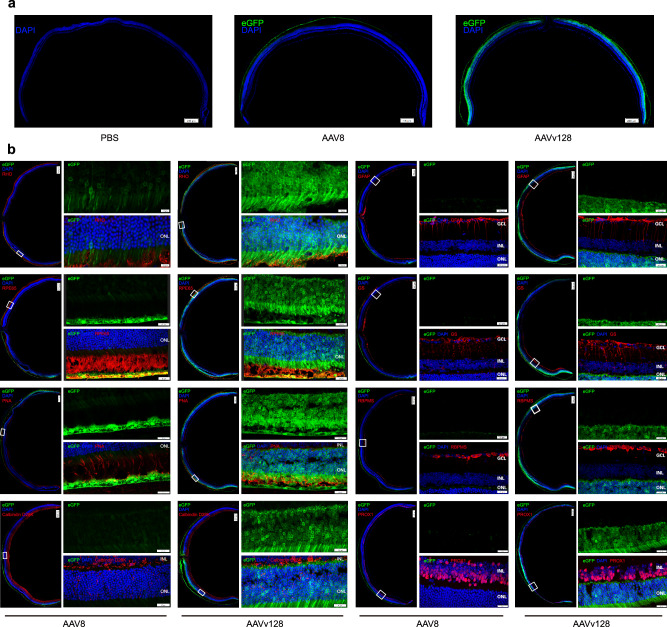
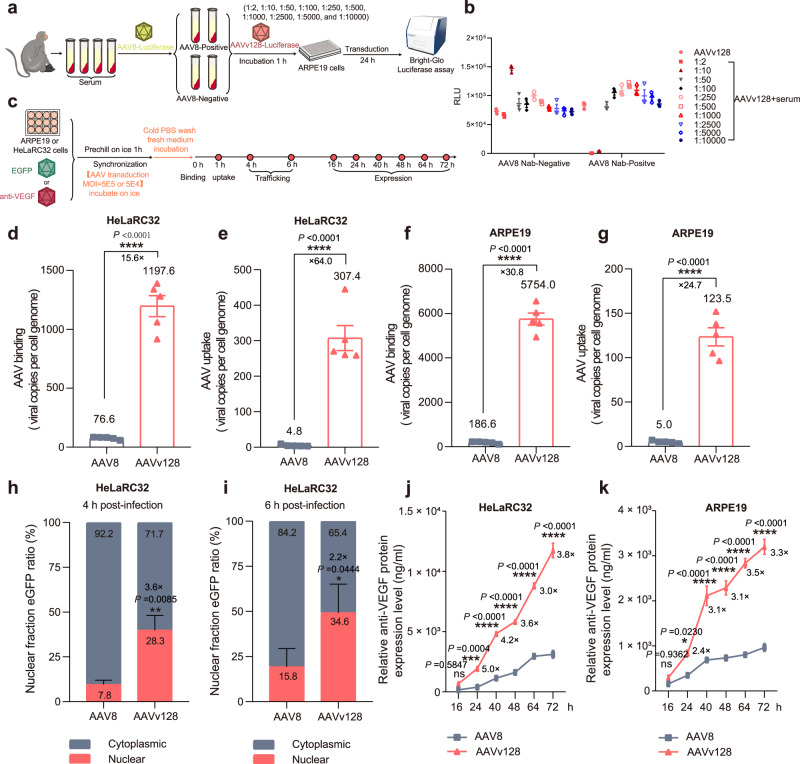
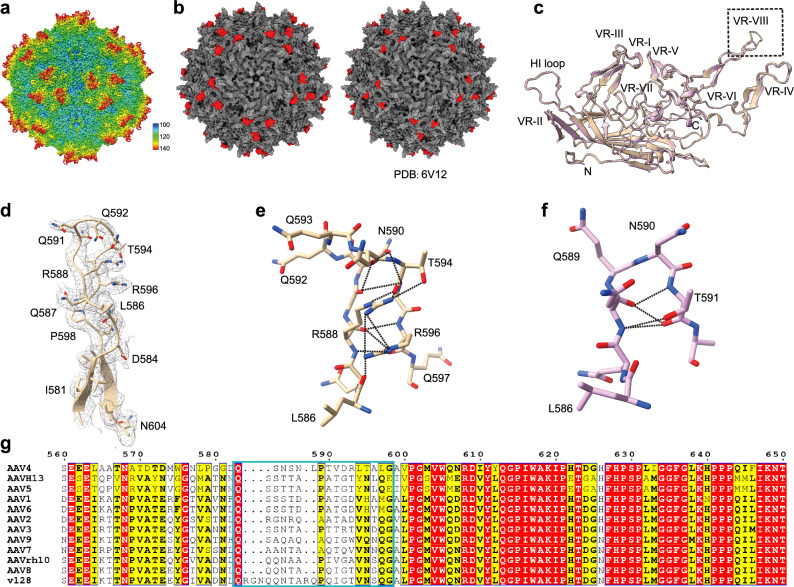
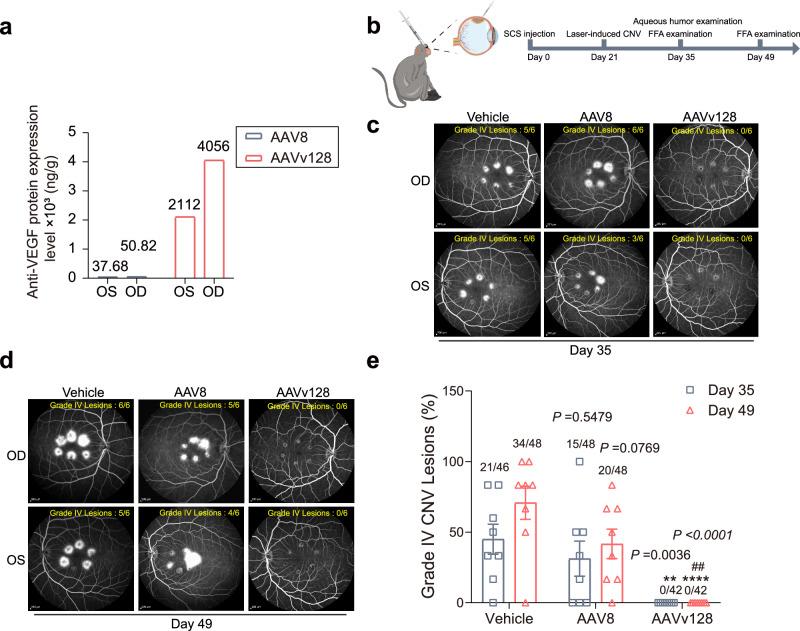
Recombinant adeno-associated viruses (rAAVs) have emerged as promising gene therapy vectors due to their proven efficacy and safety in clinical applications. In non-human primates (NHPs), rAAVs are administered via suprachoroidal injection at a higher dose. However, high doses of rAAVs tend to increase additional safety risks. Here, we present a novel AAV capsid (AAVv128), which exhibits significantly enhanced transduction efficiency for photoreceptors and retinal pigment epithelial (RPE) cells, along with a broader distribution across the layers of retinal tissues in different animal models (mice, rabbits, and NHPs) following intraocular injection. Notably, the suprachoroidal delivery of AAVv128-anti-VEGF vector completely suppresses the Grade IV lesions in a laser-induced choroidal neovascularization (CNV) NHP model for neovascular age-related macular degeneration (nAMD). Furthermore, cryo-EM analysis at 2.1 Å resolution reveals that the critical residues of AAVv128 exhibit a more robust advantage in AAV binding, the nuclear uptake and endosome escaping. Collectively, our findings highlight the potential of AAVv128 as a next generation ocular gene therapy vector, particularly using the suprachoroidal delivery route.
Overview
CoChat Summary
TL;DR
AAVv128, an AAV8-derived capsid engineered by rational design, shows enhanced retinal transduction across mice, rabbits, and non-human primates and suppresses Grade IV lesions in a laser-induced CNV NHP model when delivering anti-VEGF via suprachoroidal injection. Cryo-EM at 2.1 Å links its VP3 VIII loop changes to improved binding, cellular uptake, and nuclear entry.
Key findings
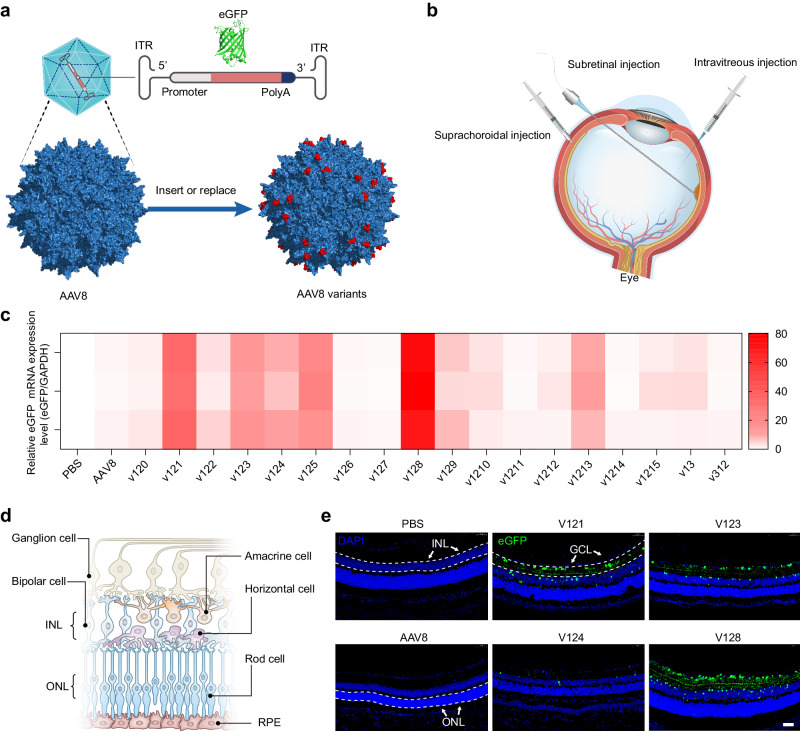
- After intravitreal injection in mice, AAVv128 produced the highest eGFP mRNA among tested variants, 75-fold higher than AAV8 (6 × 10⁸ vg/eye, n = 3).
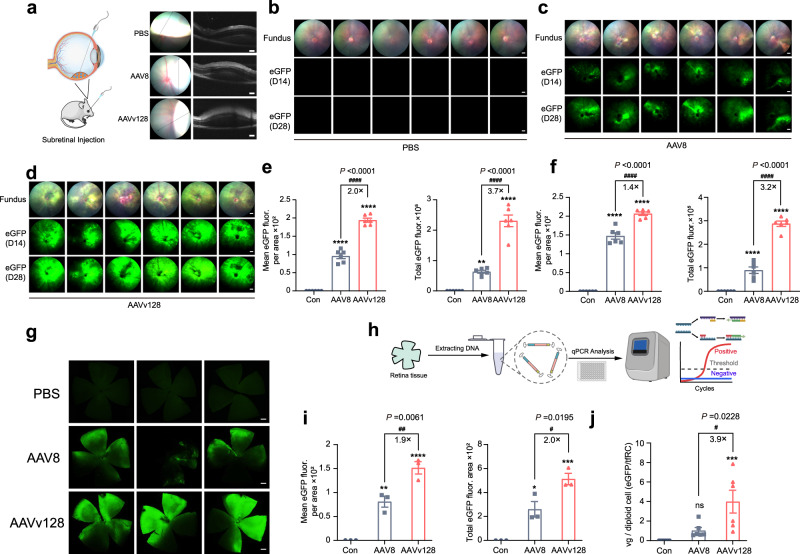
- After subretinal injection in mice, AAVv128 showed 2-fold higher mean pixel intensity per area at Day 14 and 1.4-fold at Day 28, and 3.7-fold higher total pixel intensity at Day 14 and 3.2-fold at Day 28 versus AAV8; vector genome copies were 3.7-fold higher and relative eGFP copies/cell 3.9-fold higher.
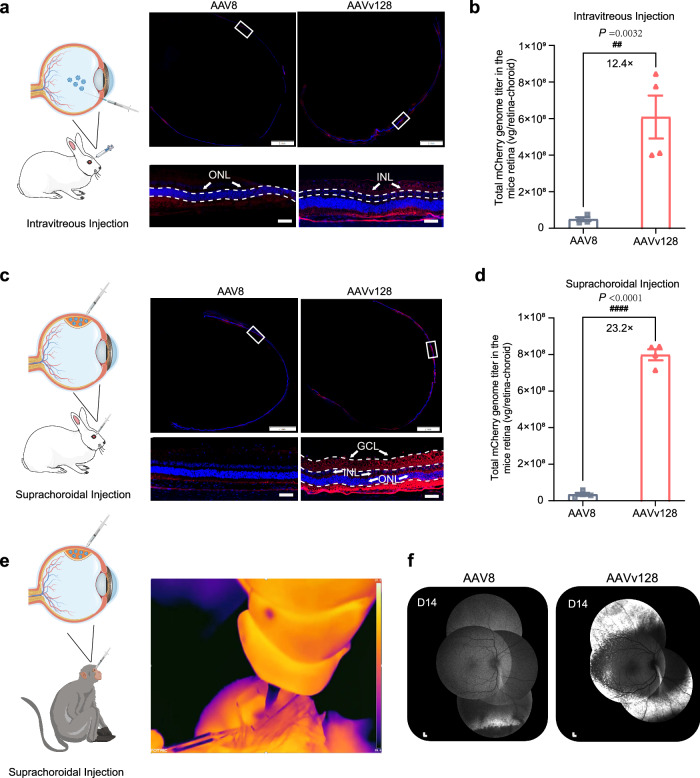
- In rabbits, AAVv128 vector genome abundance was 12.4-fold higher than AAV8 after intravitreal injection and 23.2-fold higher after suprachoroidal injection. In NHP suprachoroidal delivery, AAVv128 increased eGFP fluorescence in peripheral fundus.
- In the laser-induced CNV NHP model, AAVv128-anti-VEGF via suprachoroidal injection yielded 0% Grade IV lesions at 35 and 49 days, versus 43.75% and 70.83% for vehicle and 31.25% and 41.67% for AAV8; retinal anti-VEGF levels were 2112 ng/g (OS) and 4056 ng/g (OD) for AAVv128 versus 39.12 ng/g and 52.8 ng/g for AAV8.
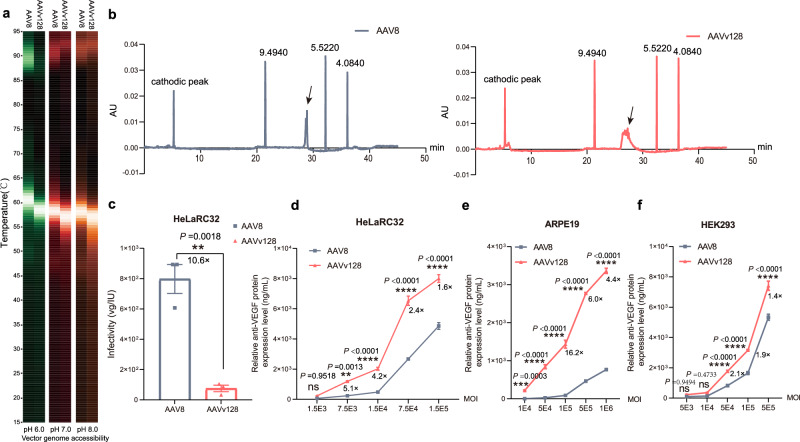
- AAVv128 had pI 7.6930 versus AAV8 6.8590, infectivity 75.0 ± 37.5 vg/IU versus 797.7 ± 165.1 vg/IU, and a 2.1 Å cryo-EM structure showing a more positively charged VP3 VIII loop with additional hydrogen-bond interactions.
Methods
- Rational design used AAV8 capsid as scaffold, replacing Q588–A592 or N263–T274 in VP3 VIII or VP3 VI variable regions with 18 peptides of 5–14 amino acids; vectors packaged eGFP, mCherry, or anti-VEGF cassettes flanked by AAV2 ITRs and were produced by HEK293T triple transfection.
- Animal testing used C57BL/6J mice, New Zealand White rabbits, and cynomolgus monkeys; routes included intravitreal, subretinal, and suprachoroidal injection, with a laser-induced CNV NHP model for nAMD efficacy.
- Main analyses included qRT-PCR/qPCR, ELISA, OCT/fundoscopy/FFA/SLO, immunofluorescence, DSF, cIEF, TCID50/qPCR infectivity, neutralizing antibody assays, AAV binding/uptake/nuclear fractionation assays, cryo-EM at 2.1 Å, and two-sided t-tests or one-way ANOVA.
Limitations
- Stated limitations: Not stated in the paper.
- Evident from the text: NHP anti-VEGF expression in Fig. 8a used n = 1 per group, while FFA efficacy used n = 8; some NHP transduction imaging also used n = 1.
- Evident from the text: no human data are reported, so clinical translatability remains untested; the cryo-EM map resolved only residues 218–743, with VP1u and VP2 domains unresolved.
Model-written summary. Check it against the paper before relying on it.
Integrity signals
Registry
Cites
Statistics
Figures
Verification
Claims the paper makes
4 Valid · 1 Not valid · 22 Not checked · 101 Own results and interpretations
At least one cited source doesn’t support this claim or points to a different paper, and none confirmed it — see the verdicts below.
In the paper
“It has been reported that a higher rAAV dose leads to a higher incidence of intraocular inflammation29.”
§ An adeno-associated virus variant enabling efficient ocular-directed gene delivery across species > Introduction
What the sources say
- Disputedcites [29] Bouquet C Immune response and intraocular inflammation in patients with leber hereditary optic neuropathy treated with intravitreal injection of recombinant adeno-associated virus 2 carrying the ND4 gene: a secondary analysis of a phase 1/2 clinical trial JAMA Ophthalmol. 2019 137 399 406 10.1001/jamaophthalmol.2018.6902 30730541 PMC6459107 sourceExperimental — accuracy not yet measured
The Discussion states that ocular inflammation could not be predicted from the viral dose administered, contrary to the claimed increase in incidence at higher doses. The Assessment of Ocular Inflammation section also reports inflammation across dose levels, without finding a dose association for its intensity. (LLM, conf=0.88)
Checked by a reasoning model — may be wrong.
plainstates a cause- Asserted: passes — The authors put it forward as true.
- Checkable: passes — It can be checked against evidence.
- Load-bearing: passes — The paper’s conclusions depend on it.
- Based: passes — The paper gives a reason why it holds.
- Disputed
Every source the paper cites for this claim was checked and supports it.
In the paper
“In a study, it was observed that the administration of a lower dose of AAV8 (7×10¹¹ vg/eye, rhesus 01) did not result in any detectable expression at any time points.”
§ An adeno-associated virus variant enabling efficient ocular-directed gene delivery across species > Discussion
What the sources say
- Supportedcites [33] Yiu G Suprachoroidal and Subretinal Injections of AAV Using Transscleral Microneedles for Retinal Gene Delivery in Nonhuman Primates Mol. Ther. Methods Clin. Dev. 2020 16 179 191 10.1016/j.omtm.2020.01.002 32055646 PMC7005511 source
The “Suprachoroidal AAV8 Transduction Is Diffuse, Peripheral, and Circumferential” section (p. 3) identifies rhesus 01 as receiving the lower AAV8 dose of 7×10¹¹ vg/eye and states that it showed no detectable expression at any time point. (LLM, conf=0.94)
plainSingle case- Asserted: passes — The authors put it forward as true.
- Checkable: passes — It can be checked against evidence.
- Load-bearing: passes — The paper’s conclusions depend on it.
- Based: passes — The paper gives a reason why it holds.
- Supported
Every source the paper cites for this claim was checked and supports it.
In the paper
“In fact, the transduction efficiency of AAV8 in photoreceptors and RPE was found to be superior to that of AAV260.”
§ An adeno-associated virus variant enabling efficient ocular-directed gene delivery across species > Discussion
What the sources say
- Supportedcites [60] Vandenberghe LH Dosage thresholds for AAV2 and AAV8 photoreceptor gene therapy in monkey Sci. Transl. Med. 2011 3 88ra54 10.1126/scitranslmed.3002103 21697530 PMC5027886 source
The Results section 'Quantitative assessment of transduction' states that at the 10^10 genome copy dose AAV2 and AAV8 target 30% and 70%, respectively, of RPE and photoreceptor cells, and that AAV8 consistently gave higher GFP expression than AAV2 at that dose, with AAV2 needing a 10-fold higher dose to match it. The Results 'Retinal cell tropism and AAV serotype' passage (p. preceding Fig. 2 discussion) states directly that both serotypes transduce RPE efficiently at low doses while 'At higher doses, AAV8 is more efficient than AAV2 at transducing photoreceptor cells,' and the DISCUSSION adds that AAV8 RPE transduction at 10^9 gc equals AAV2 at a 10-fold higher dose. The only qualifier the citing sentence drops is that AAV2 can reach comparable levels at ~10-fold higher dose, which does not contradict superiority at matched dose. (LLM, conf=0.85)
plainstates an association- Asserted: passes — The authors put it forward as true.
- Checkable: passes — It can be checked against evidence.
- Load-bearing: unclear — It is unclear whether the paper’s conclusions depend on it.
- Based: passes — The paper gives a reason why it holds.
- Supported
A result the paper reports from its own data — it cites no other source for it, so there is none to check. The quote shows it is in the paper.
In the paper
“Notably, AAVv128 demonstrated the highest mRNA expression, with a level that was 75-fold higher than that of AAV8 (Supplementary Table 3).”
§ An adeno-associated virus variant enabling efficient ocular-directed gene delivery across species > Results > Rational engineering and screening of AAV8-based capsid variants
boostedstates an associationn = 3- Asserted: passes — The authors put it forward as true.
- Checkable: passes — It can be checked against evidence.
- Load-bearing: passes — The paper’s conclusions depend on it.
- Based: passes — The paper gives a reason why it holds.
A result the paper reports from its own data — it cites no other source for it, so there is none to check. The quote shows it is in the paper.
In the paper
“NHPs eyes treated by suprachoroidal injection of the AAV8 and AAVv128 capsid confers detectable eGFP expression at days 14 post-injection (3.5×10¹² vg/eye, 100 μL volume, n = 1).”
§ An adeno-associated virus variant enabling efficient ocular-directed gene delivery across species > Results > AAVv128 outperforms AAV8 in intravitreal and suprachoroidal gene deliveries to rabbits and suprachoroidal gene delivery to NHPs
plainstates a causeSingle case- Asserted: passes — The authors put it forward as true.
- Checkable: passes — It can be checked against evidence.
- Load-bearing: passes — The paper’s conclusions depend on it.
- Based: passes — The paper gives a reason why it holds.
56 more claims
Create a free account to see all 128 claims and to verify the 32 references still open.
- Probably not a substantial claim. 29
- It may state two separate claims as one. 45
- The quote only partly states this claim. 2
Claims other papers make about this one
Each is checked against this paper’s own text: does it say what the citing paper says it does?
The source backs part of the claim, not all of it — or backs it for a different population, condition or comparison.
In the citing paper
“AAVv128 exhibits an enhanced rate and area of transduction of the RPE and retina across several routes of vector delivery (subretinal, intravitreal and suprachoroidal) and animal models.”
From Gene Therapy-Associated Uveitis (GTAU): Understanding and mitigating the adverse immune response in retinal gene therapy (2025) · cites this paper as Luo et al., 2024
Experimental — accuracy not yet measured
Self-check
Percentages, sums and reported differences re-computed from the paper’s own numbers.
Each contradiction between two passages listed here was confirmed by an independent check.
Rated minor: it would not touch a result — a value no result rests on, a p-value that stays on the same side of the significance level, or a conflict that is clerical, resolved elsewhere in the paper, or outside its own findings.
In the paper
§ An adeno-associated virus variant enabling efficient ocular-directed gene delivery across species > Methods > The thermal stability of rAAV vector was determined by differential scanning fluorimetry (DSF) analysis using Uncle
“rAAV samples (titer: 5×10¹² vg/mL) were adjusted to different pH levels ranging from pH 7 to pH 4.”
§ An adeno-associated virus variant enabling efficient ocular-directed gene delivery across species > Results > The thermal stability of AAVv128 is comparable to AAV8 and shows stronger cell transduction in vitro
“At pH 8.0, AAVv128 demonstrated peak signals at approximately 56.8 °C, while the peak DNA accessibility for AAV8 occurred at around 58.2 °C (Fig. 4a).”
Rated minor: it would not touch a result — a value no result rests on, a p-value that stays on the same side of the significance level, or a conflict that is clerical, resolved elsewhere in the paper, or outside its own findings.
In the paper
§ An adeno-associated virus variant enabling efficient ocular-directed gene delivery across species > Results > Suprachoroidal injection of AAVv128 vector can prevent nAMD by Laser-induced CNV and produces more robust transduction and inhibition of VEGF in NHP retinal tissues
“at 35-days and 49-days (14-days and 28-days post Laser-induced CNV model)”
§ An adeno-associated virus variant enabling efficient ocular-directed gene delivery across species > Results > Suprachoroidal injection of AAVv128 vector can prevent nAMD by Laser-induced CNV and produces more robust transduction and inhibition of VEGF in NHP retinal tissues
“AAVv128-anti-VEGF vector was injected into suprachoroidal space at Day 0, and six laser spots were applied around the macula of each eye using laser at 28-days”
Citations
Cites
UCSF Chimera—A visualization system for exploratory research and analysis
Pettersen, E. F., Goddard, T. D., Huang, C. C., Couch, G. S., Greenblatt, D. M., Meng, E. C., & Ferrin, T. E. (2004) · Journal of Computational Chemistry · doi:10.1002/jcc.20084 · Cited by 45,828
Features and development of Coot
Emsley, P., Lohkamp, B., Scott, W. G., & Cowtan, K. (2010) · Acta Crystallographica Section D Biological Crystallography · doi:10.1107/s0907444910007493 · Cited by 29,915
cryoSPARC: algorithms for rapid unsupervised cryo-EM structure determination
Punjani, A., Rubinstein, J. L., Fleet, D. J., & Brubaker, M. A. (2017) · Nature Methods · doi:10.1038/nmeth.4169 · Cited by 11,626
UCSF ChimeraX: Meeting modern challenges in visualization and analysis
Goddard, T. D., Huang, C. C., Meng, E. C., Pettersen, E. F., Couch, G. S., Morris, J. H., & Ferrin, T. E. (2018) · Protein Science · doi:10.1002/pro.3235 · Cited by 5,267
Adeno-associated virus vector as a platform for gene therapy delivery
Wang, D., Tai, P. W. L., & Gao, G. (2019) · Nature Reviews Drug Discovery · doi:10.1038/s41573-019-0012-9 · Cited by 2,444
Age-related macular degeneration
Mitchell, P., Liew, G., Gopinath, B., & Wong, T. Y. (2018) · The Lancet · doi:10.1016/s0140-6736(18)31550-2 · Cited by 1,511
Analysis of AAV Serotypes 1–9 Mediated Gene Expression and Tropism in Mice After Systemic Injection
Zincarelli, C., Soltys, S., Rengo, G., & Rabinowitz, J. E. (2008) · Molecular Therapy · doi:10.1038/mt.2008.76 · Cited by 1,490
Dunbar, C. E., High, K. A., Joung, J. K., Kohn, D. B., Ozawa, K., & Sadelain, M. (2018) · Science · doi:10.1126/science.aan4672 · Cited by 1,410
Engineering adeno-associated virus vectors for gene therapy
Li, C., & Samulski, R. J. (2020) · Nature Reviews Genetics · doi:10.1038/s41576-019-0205-4 · Cited by 1,175
Current clinical applications of in vivo gene therapy with AAVs
Mendell, J. R., Al-Zaidy, S. A., Rodino-Klapac, L. R., Goodspeed, K., Gray, S. J., Kay, C. N., Boye, S. L., Boye, S. E., George, L. A., Salabarria, S., et al. (2021) · Molecular Therapy · doi:10.1016/j.ymthe.2020.12.007 · Cited by 743
Dalkara, D., Byrne, L. C., Klimczak, R. R., Visel, M., Yin, L., Merigan, W. H., Flannery, J. G., & Schaffer, D. V. (2013) · Science Translational Medicine · doi:10.1126/scitranslmed.3005708 · Cited by 734
Schmidt-Erfurth, U., Chong, V., Loewenstein, A., Larsen, M., Souied, E., Schlingemann, R., Eldem, B., Monés, J., Richard, G., & Bandello, F. (2014) · British Journal of Ophthalmology · doi:10.1136/bjophthalmol-2014-305702 · Cited by 639
Directed evolution of adeno-associated virus yields enhanced gene delivery vectors
Maheshri, N., Koerber, J. T., Kaspar, B. K., & Schaffer, D. V. (2006) · Nature Biotechnology · doi:10.1038/nbt1182 · Cited by 538
Ylä-Herttuala, S. (2012) · Molecular Therapy · doi:10.1038/mt.2012.194 · Cited by 463
Akache, B., Grimm, D., Pandey, K., Yant, S. R., Xu, H., & Kay, M. A. (2006) · Journal of Virology · doi:10.1128/jvi.00878-06 · Cited by 430 · cited 1×
“These amino acids also played a role in inter-acting with the laminin receptor (LamR) 44 .”
Comprehensive AAV capsid fitness landscape reveals a viral gene and enables machine-guided design
Ogden, P. J., Kelsic, E. D., Sinai, S., & Church, G. M. (2019) · Science · doi:10.1126/science.aaw2900 · Cited by 356
Keeler, A. M., & Flotte, T. R. (2019) · Annual Review of Virology · doi:10.1146/annurev-virology-092818-015530 · Cited by 322
In Silico Reconstruction of the Viral Evolutionary Lineage Yields a Potent Gene Therapy Vector
Zinn, E., Pacouret, S., Khaychuk, V., Turunen, H. T., Carvalho, L. S., Andres-Mateos, E., Shah, S., Shelke, R., Maurer, A. C., Plovie, E., et al. (2015) · Cell Reports · doi:10.1016/j.celrep.2015.07.019 · Cited by 310
Deep diversification of an AAV capsid protein by machine learning
Bryant, D. H., Bashir, A., Sinai, S., Jain, N. K., Ogden, P. J., Riley, P. F., Church, G. M., Colwell, L. J., & Kelsic, E. D. (2021) · Nature Biotechnology · doi:10.1038/s41587-020-00793-4 · Cited by 300
Hastie, E., & Samulski, R. J. (2015) · Human Gene Therapy · doi:10.1089/hum.2015.025 · Cited by 280
Patel, S. G., Sayers, E. J., He, L., Narayan, R., Williams, T. L., Mills, E. M., Allemann, R. K., Luk, L. Y. P., Jones, A. T., & Tsai, Y.-H. (2019) · Scientific Reports · doi:10.1038/s41598-019-42456-8 · Cited by 276
Pegaptanib Sodium for Neovascular Age-Related Macular Degeneration
D’Amico, D. J. (2006) · Ophthalmology · doi:10.1016/j.ophtha.2006.02.027 · Cited by 260
Periocular routes for retinal drug delivery
Raghava, S., Hammond, M., & Kompella, U. B. (2004) · Expert Opinion on Drug Delivery · doi:10.1517/17425247.1.1.99 · Cited by 257
Dosage thresholds for AAV2 and AAV8 photoreceptor gene therapy in monkey
Vandenberghe, L. H., Bell, P., Maguire, A. M., Cearley, C. N., Xiao, R., Calcedo, R., Wang, L., Castle, M. J., Maguire, A. C., Grant, R., et al. (2011) · Science Translational Medicine · doi:10.1126/scitranslmed.3002103 · Cited by 242 · cited 9×
“In an attempt to assess translatability of the strong retina tropism of AAVv128 from murine to large animals, we used the mCherry trans-gene to perform a comprehensive comparison of three capsids, namely AAV8, AAV2.”
InfluentialStructural insight into the unique properties of adeno-associated virus serotype 9
DiMattia, M. A., Nam, H.-J., Van Vliet, K., Mitchell, M., Bennett, A., Gurda, B. L., McKenna, R., Olson, N. H., Sinkovits, R. S., Potter, M., et al. (2012) · Journal of Virology · doi:10.1128/jvi.07232-11 · Cited by 219 · cited 2×
“Toconstructthese capsid variants, we designed a set of 18 peptides, ranging from 5 to 14 amino acids in length, based on the known structural biology and cellular receptorology of AAV8 35 – 42 (Supplementary Table 1).”
Intravitreal injection of AAV2 transduces macaque inner retina
Yin, L., Greenberg, K., Hunter, J. J., Dalkara, D., Kolstad, K. D., Masella, B. D., Wolfe, R., Visel, M., Stone, D., Libby, R. T., et al. (2011) · Investigative Opthalmology & Visual Science · doi:10.1167/iovs.10-6250 · Cited by 212 · cited 1×
“For example, AAV2 or AAV2 variants are often used to for intravitreal injection 62 – 64 , while AAV8 is commonly used for sub-retinal injection 65,66 .”
A myocardium tropic adeno-associated virus (AAV) evolved by DNA shuffling and in vivo selection
Yang, L., Jiang, J., Drouin, L. M., Agbandje-Mckenna, M., Chen, C., Qiao, C., Pu, D., Hu, X., Wang, D.-Z., Li, J., et al. (2009) · Proceedings of the National Academy of Sciences · doi:10.1073/pnas.0813207106 · Cited by 210
Self-citationHeparin binding directs activation of T cells against adeno-associated virus serotype 2 capsid
Vandenberghe, L. H., Wang, L., Somanathan, S., Zhi, Y., Figueredo, J., Calcedo, R., Sanmiguel, J., Desai, R. A., Chen, C. S., Johnston, J., et al. (2006) · Nature Medicine · doi:10.1038/nm1445 · Cited by 208 · cited 1×
“However, the VP3 VIII variable region of AAV8isnotinvolvedinHSPGrecognitionbythecellsurfacereceptor 57 .”
Ocular Drug Delivery to the Retina: Current Innovations and Future Perspectives
Kim, H. M., & Woo, S. J. (2021) · Pharmaceutics · doi:10.3390/pharmaceutics13010108 · Cited by 198 · cited 1×
“In the fi eld of ophthalmology, different routes of administration, such as subconjunctival, intravitreal, suprachoroidal and subretinal injections, are commonly used to treat various diseases 61 .”
Twenty-Five Years of Structural Parvovirology
Mietzsch, M., Pénzes, J. J., & Agbandje-McKenna, M. (2019) · Viruses · doi:10.3390/v11040362 · Cited by 197 · cited 1×
“Source data are provided as a Source Data fi le. https://doi.org/10.1038/s41467-024-48221-4 Nature Communications| (2024) 15:3780 antigenicity controlling residues 54 .”
InfluentialDNA Shuffling of Adeno-associated Virus Yields Functionally Diverse Viral Progeny
Koerber, J. T., Jang, J.-H., & Schaffer, D. V. (2008) · Molecular Therapy · doi:10.1038/mt.2008.167 · Cited by 181
Long-term efficacy and safety of eladocagene exuparvovec in patients with AADC deficiency
Tai, C.-H., Lee, N.-C., Chien, Y.-H., Byrne, B. J., Muramatsu, S.-I., Tseng, S.-H., & Hwu, W.-L. (2022) · Molecular Therapy · doi:10.1016/j.ymthe.2021.11.005 · Cited by 162
Paulk, N. K., Pekrun, K., Zhu, E., Nygaard, S., Li, B., Xu, J., Chu, K., Leborgne, C., Dane, A. P., Haft, A., et al. (2018) · Molecular Therapy · doi:10.1016/j.ymthe.2017.09.021 · Cited by 161
Self-citationYiu, G., Chung, S. H., Mollhoff, I. N., Nguyen, U. T., Thomasy, S. M., Yoo, J., Taraborelli, D., & Noronha, G. (2020) · Molecular Therapy - Methods & Clinical Development · doi:10.1016/j.omtm.2020.01.002 · Cited by 153 · cited 5×
“However, when a higher dose of 7×10 12 vg/eye (rhesus 02) was injected, scatteredareasofpunctateeGFP fl uorescencewereobservedbilaterally inthe peripheralfundus 33 .”
InfluentialVandenberghe, L. H., Xiao, R., Lock, M., Lin, J., Korn, M., & Wilson, J. M. (2010) · Human Gene Therapy · doi:10.1089/hum.2010.107 · Cited by 151
AAV8-vectored suprachoroidal gene transfer produces widespread ocular transgene expression
Ding, K., Shen, J., Hafiz, Z., Hackett, S. F., Silva, R. L. E., Khan, M., Lorenc, V. E., Chen, D., Chadha, R., Zhang, M., et al. (2019) · Journal of Clinical Investigation · doi:10.1172/jci129085 · Cited by 141 · cited 1×
“Subconjunctival injection often utilize AAV8 and AAV6 for gene delivery 67 , and AAV8 is considered a reliable choice for suprachoroidal injections 33,68,69 .”
Horowitz, E. D., Rahman, K. S., Bower, B. D., Dismuke, D. J., Falvo, M. R., Griffith, J. D., Harvey, S. C., & Asokan, A. (2013) · Journal of Virology · doi:10.1128/jvi.03017-12 · Cited by 139 · cited 18×
“RNA quality and quantity were assessed using a DeNovix DS-11FXSeriesofSpectrophotometers/Fluorometers(DeNovix)and25 μ L of RNA was then reverse transcribed to cDNA by using High Capacity cDNAreversetranscriptasekit(Thermo,#4368814).”
InfluentialLi, E., Donati, S., Lindsley, K. B., Krzystolik, M. G., & Virgili, G. (2020) · Cochrane Database of Systematic Reviews · doi:10.1002/14651858.cd012208.pub2 · Cited by 139
RiboTag: Ribosomal Tagging Strategy to Analyze Cell‐Type‐Specific mRNA Expression In Vivo
Sanz, E., Bean, J. C., Carey, D. P., Quintana, A., & McKnight, G. S. (2019) · Current Protocols in Neuroscience · doi:10.1002/cpns.77 · Cited by 124 · cited 1×
“The eGFP mRNA expression levels in AAV8 and AAV8 variants after intravitreal injection in mice were assessed by qRT-PCR 83,84 .”
Meliani, A., Leborgne, C., Triffault, S., Jeanson-Leh, L., Veron, P., & Mingozzi, F. (2015) · Human Gene Therapy Methods · doi:10.1089/hgtb.2015.037 · Cited by 114 · cited 1×
“Neutralizing antibody (Nab) assays were performed on cynomolgus monkey sera using a cell-based AAV-CBA-luciferase or AAV-CBA-eGFP transduction inhibition assay 88,89 .”
Nguyen, T. N. T., Sha, S., Hong, M. S., Maloney, A. J., Barone, P. W., Neufeld, C., Wolfrum, J., Springs, S. L., Sinskey, A. J., & Braatz, R. D. (2021) · Molecular Therapy - Methods & Clinical Development · doi:10.1016/j.omtm.2021.04.006 · Cited by 107 · cited 1×
“To generate recombinant AAV8 and AAV8 variants, a triple-plasmid transfection approach was employed 76,77 .”
Lerch, T. F., Xie, Q., & Chapman, M. S. (2010) · Virology · doi:10.1016/j.virol.2010.03.027 · Cited by 106
Bouquet, C., Vignal Clermont, C., Galy, A., Fitoussi, S., Blouin, L., Munk, M. R., Valero, S., Meunier, S., Katz, B., Sahel, J. A., et al. (2019) · JAMA Ophthalmology · doi:10.1001/jamaophthalmol.2018.6902 · Cited by 104
Adams, P. D., Baker, D., Brunger, A. T., Das, R., DiMaio, F., Read, R. J., Richardson, D. C., Richardson, J. S., & Terwilliger, T. C. (2013) · Annual Review of Biophysics · doi:10.1146/annurev-biophys-083012-130253 · Cited by 98
Mapping a Neutralizing Epitope onto the Capsid of Adeno-Associated Virus Serotype 8
Gurda, B. L., Raupp, C., Popa-Wagner, R., Naumer, M., Olson, N. H., Ng, R., McKenna, R., Baker, T. S., Kleinschmidt, J. A., & Agbandje-McKenna, M. (2012) · Journal of Virology · doi:10.1128/jvi.00218-12 · Cited by 93 · cited 1×
“TheAAV8variantsweregeneratedthroughrational design strategies, incorporating knowledge about AAV structure and immunologytoenhancetheirpropertiesandfunctionalities 36,40,78,79 .”
Complications of intravitreal injections: 2022
Patel, D., Patel, S. N., Chaudhary, V., & Garg, S. J. (2022) · Current Opinion in Ophthalmology · doi:10.1097/icu.0000000000000850 · Cited by 92
Valoctocogene Roxaparvovec: First Approval
Blair, H. A. (2022) · Drugs · doi:10.1007/s40265-022-01788-y · Cited by 92
Etranacogene Dezaparvovec: First Approval
Heo, Y. (2023) · Drugs · doi:10.1007/s40265-023-01845-0 · Cited by 92
Introducing Genes into Mammalian Cells: Viral Vectors
Sena-Esteves, M., & Gao, G. (2020) · Cold Spring Harbor Protocols · doi:10.1101/pdb.top095513 · Cited by 90 · cited 1×
“To generate recombinant AAV8 and AAV8 variants, a triple-plasmid transfection approach was employed 76,77 .”
Structure of AAV-DJ, a Retargeted Gene Therapy Vector: Cryo-Electron Microscopy at 4.5 Å Resolution
Lerch, T. F., O'Donnell, J. K., Meyer, N. L., Xie, Q., Taylor, K. A., Stagg, S. M., & Chapman, M. S. (2012) · Structure · doi:10.1016/j.str.2012.05.004 · Cited by 89
Drug Targeting Strategies Based on Charge Dependent Uptake of Nanoparticles into Cancer Cells
Saadat, M., Zahednezhad, F., Zakeri-Milani, P., Reza Heidari, H., Shahbazi-Mojarrad, J., & Valizadeh, H. (2019) · Journal of Pharmacy & Pharmaceutical Sciences · doi:10.18433/jpps30318 · Cited by 88 · cited 1×
“Furthermore, we acknowledged the importance of positively charged amino acids in enhancing cell binding and facilitating immune evasion post-cell entry 45 – 47 .”
Gonzalez, T. J., Simon, K. E., Blondel, L. O., Fanous, M. M., Roger, A. L., Maysonet, M. S., Devlin, G. W., Smith, T. J., Oh, D. K., Havlik, L. P., et al. (2022) · Nature Communications · doi:10.1038/s41467-022-33745-4 · Cited by 85 · cited 1×
“A goodcapsid variant possesses immensecommercialvalue and holds promising prospects for application 13,51 .”
Characterization of AAV vector particle stability at the single-capsid level
Bernaud, J., Rossi, A., Fis, A., Gardette, L., Aillot, L., Büning, H., Castelnovo, M., Salvetti, A., & Faivre-Moskalenko, C. (2018) · Journal of Biological Physics · doi:10.1007/s10867-018-9488-5 · Cited by 83 · cited 1×
“The thermal stability of rAAV vector was determined by differential scanning fl uorimetry (DSF) analysis using Uncle Thermal denaturation of rAAV involves genome ejection and capsid disruption 85 .”
Becker, J., Fakhiri, J., & Grimm, D. (2022) · Pathogens · doi:10.3390/pathogens11070756 · Cited by 79 · cited 1×
“Rational design approaches, based on knowledge about potential receptor interactions, have been employedtocreatecapsidvariantswithdesiredfeaturesandtoreduce the size of the AAV capsidvariants library 59 .”
The suprachoroidal space: from potential space to a space with potential
Moisseiev, E., Loewenstein, A., & Yiu, G. (2016) · Clinical Ophthalmology · doi:10.2147/opth.s89784 · Cited by 76
Comparative Analysis of the Capsid Structures of AAVrh.10, AAVrh.39, and AAV8
Mietzsch, M., Barnes, C., Hull, J. A., Chipman, P. R., Xie, J., Bhattacharya, N., Sousa, D. R., McKENNA, R. V., Gao, G., & Agbandje‐McKenna, M. (2019) · Journal of Virology · doi:10.1128/jvi.01769-19 · Cited by 71 · cited 1×
“TheAAV8variantsweregeneratedthroughrational design strategies, incorporating knowledge about AAV structure and immunologytoenhancetheirpropertiesandfunctionalities 36,40,78,79 .”
Structure–function analysis of receptor-binding in adeno-associated virus serotype 6 (AAV-6)
Xie, Q., Lerch, T. F., Meyer, N. L., & Chapman, M. S. (2011) · Virology · doi:10.1016/j.virol.2011.08.011 · Cited by 70 · cited 2×
“Toconstructthese capsid variants, we designed a set of 18 peptides, ranging from 5 to 14 amino acids in length, based on the known structural biology and cellular receptorology of AAV8 35 – 42 (Supplementary Table 1).”
Development of an inducible anti-VEGF rAAV gene therapy strategy for the treatment of wet AMD
Reid, C. A., Nettesheim, E. R., Connor, T. B., & Lipinski, D. M. (2018) · Scientific Reports · doi:10.1038/s41598-018-29726-7 · Cited by 65
Direct Comparison of Administration Routes for AAV8-mediated Ocular Gene Therapy
Igarashi, T., Miyake, K., Asakawa, N., Miyake, N., Shimada, T., & Takahashi, H. (2013) · Current Eye Research · doi:10.3109/02713683.2013.779720 · Cited by 64 · cited 2×
“AAV8 has been shown to effectively infect photoreceptors and RPE when administrated via subretinal injection 34 .”
AAV capsid design: A Goldilocks challenge
Zolotukhin, S., & Vandenberghe, L. H. (2022) · Trends in Molecular Medicine · doi:10.1016/j.molmed.2022.01.003 · Cited by 64 · cited 1×
“However, there have been concerns regarding the speci fi city, potency, and off-target effects of some fi rst-generation AAV products 58 .”
Hsu, H.-L., Brown, A., Loveland, A. B., Lotun, A., Xu, M., Luo, L., Xu, G., Li, J., Ren, L., Su, Q., et al. (2020) · Nature Communications · doi:10.1038/s41467-020-17047-1 · Cited by 63 · cited 1×
“The peak fl uorescence observed is an indirect measure of the maximal accessibility of the encapsidated genomes to the dye solution 1 .”
Self-citationHan, I. C., Cheng, J. L., Burnight, E. R., Ralston, C. L., Fick, J. L., Thomsen, G. J., Tovar, E. F., Russell, S. R., Sohn, E. H., Mullins, R. F., et al. (2020) · Human Gene Therapy · doi:10.1089/hum.2020.043 · Cited by 60 · cited 1×
“It was shown that supra-choroidal delivery of AAV8 in Sprague-Dawley rats mainly resulted a larger average transduction diameter and an abundance of transduced cells within the outer nuclear layer (ONL) 72 .”
Carbone, L. (2012) · PubMed Central · Cited by 60
Havlik, L. P., Simon, K. E., Smith, J. K., Klinc, K. A., Tse, L. V., Oh, D. K., Fanous, M. M., Meganck, R. M., Mietzsch, M., Kleinschmidt, J., et al. (2020) · Journal of Virology · doi:10.1128/jvi.00976-20 · Cited by 58 · cited 1×
“TheAAV8variantsweregeneratedthroughrational design strategies, incorporating knowledge about AAV structure and immunologytoenhancetheirpropertiesandfunctionalities 36,40,78,79 .”
Host immune responses after suprachoroidal delivery of AAV8 in nonhuman primate eyes
Chung, S. H., Mollhoff, I. N., Mishra, A., Sin, T.-N., Ngo, T., Ciulla, T., Sieving, P., Thomasy, S. M., & Yiu, G. (2021) · Human Gene Therapy · doi:10.1089/hum.2020.281 · Cited by 57 · cited 1×
“Subconjunctival injection often utilize AAV8 and AAV6 for gene delivery 67 , and AAV8 is considered a reliable choice for suprachoroidal injections 33,68,69 .”
Li, Y., Busoy, J. M. F., Zaman, B. A. A., Tan, Q. S. W., Tan, G. S. W., Barathi, V. A., Cheung, N., Wei, J., Hunziker, W., Hong, W., et al. (2018) · Experimental Eye Research · doi:10.1016/j.exer.2018.05.027 · Cited by 52
AAV8-antiVEGFfab Ocular Gene Transfer for Neovascular Age-Related Macular Degeneration
Liu, Y., Fortmann, S. D., Shen, J., Wielechowski, E., Tretiakova, A., Yoo, S., Kozarsky, K., Wang, J., Wilson, J. M., & Campochiaro, P. A. (2018) · Molecular Therapy · doi:10.1016/j.ymthe.2017.12.002 · Cited by 51 · cited 1×
“For example, AAV2 or AAV2 variants are often used to for intravitreal injection 62 – 64 , while AAV8 is commonly used for sub-retinal injection 65,66 .”
Nguyen, G. N., George, L. A., Siner, J. I., Davidson, R. J., Zander, C. B., Zheng, X. L., Arruda, V. R., Camire, R. M., & Sabatino, D. E. (2017) · Journal of Thrombosis and Haemostasis · doi:10.1111/jth.13543 · Cited by 50
Serotype survey of AAV gene delivery via subconjunctival injection in mice
Song, L., Llanga, T., Conatser, L. M., Zaric, V., Gilger, B. C., & Hirsch, M. L. (2018) · Gene Therapy · doi:10.1038/s41434-018-0035-6 · Cited by 50 · cited 1×
“Subconjunctival injection often utilize AAV8 and AAV6 for gene delivery 67 , and AAV8 is considered a reliable choice for suprachoroidal injections 33,68,69 .”
Gruntman, A. M., Su, L., Su, Q., Gao, G., Mueller, C., & Flotte, T. R. (2015) · Human Gene Therapy Methods · doi:10.1089/hgtb.2015.040 · Cited by 46 · cited 2×
“The stability of a capsid variant is crucial for its commercial value and application prospects 53 .”
An update on the pharmacotherapy of neovascular age-related macular degeneration
Freund, K. B., Mrejen, S., & Gallego-Pinazo, R. (2013) · Expert Opinion on Pharmacotherapy · doi:10.1517/14656566.2013.787410 · Cited by 44
Hammadi, S., Tzoumas, N., Ferrara, M., Meschede, I. P., Lo, K., Harris, C., Lako, M., & Steel, D. H. (2023) · Journal of Clinical Medicine · doi:10.3390/jcm12082870 · Cited by 44 · cited 1×
“This could be due to the structural differences between species that result in different transduction cell types, including Bruch ’ s membrane (BrM) thickness, the thickness or number of cells within the retinal layers 73,74 .”
Combined Rod and Cone Transduction by Adeno-Associated Virus 2/8
Manfredi, A., Marrocco, E., Puppo, A., Cesi, G., Sommella, A., Della Corte, M., Rossi, S., Giunti, M., Craft, C. M., Bacci, M. L., et al. (2013) · Human Gene Therapy · doi:10.1089/hum.2013.154 · Cited by 43 · cited 3×
“The injection was performed under an Opmi 1 FR pro surgical microscope (Carl Zeiss) 82 .”
InfluentialMedical and Surgical Applications for the Suprachoroidal Space
Emami-Naeini, P., & Yiu, G. (2019) · International Ophthalmology Clinics · doi:10.1097/iio.0000000000000251 · Cited by 41 · cited 1×
“Additionally, it was reported that suprachoroidal delivery of AAV in monkey might have a greater tendencytodistributecircumferentiallyalongtheperipheryratherthan posteriorly toward the macula 70,71 .”
Adeno-Associated Virus (AAV) - Based Gene Therapies for Retinal Diseases: Where are We?
Ail, D., Malki, H., Zin, E. A., & Dalkara, D. (2023) · The Application of Clinical Genetics · doi:10.2147/tacg.s383453 · Cited by 40 · cited 2×
“A goodcapsid variant possesses immensecommercialvalue and holds promising prospects for application 13,51 .”
Rationally designed AAV2 and AAVrh8R capsids provide improved transduction in the retina and brain
Sullivan, J. A., Stanek, L. M., Lukason, M. J., Bu, J., Osmond, S. R., Barry, E. A., O’Riordan, C. R., Shihabuddin, L. S., Cheng, S. H., & Scaria, A. (2018) · Gene Therapy · doi:10.1038/s41434-018-0017-8 · Cited by 37 · cited 1×
“The VP3 VIII variableregionofAAV2hasbeenshowntoassistAAV2inenteringcells by recognizing the heparan sulfate proteoglycan (HSPG) site on the cell surface receptor 43,55,56 .”
Tessier, J., Chadeuf, G., Nony, P., Avet-Loiseau, H., Moullier, P., & Salvetti, A. (2001) · Journal of Virology · doi:10.1128/jvi.75.1.375-383.2001 · Cited by 35 · cited 1×
“After an incubation period of 18-24hours, the cells were infected with human adenovirus 5 (Ad5, ATCC, #VR-1516 TM ) at the saturating con-centrationof8×10 6 vgperwell 86 .”
Li, T., Gao, T., Chen, H., Pekker, P., Menyhárt, A., & Guttman, A. (2020) · Current Molecular Medicine · doi:10.2174/1566524020666200915105456 · Cited by 33
The Ultrastructure of Bruch's Membrane: II. Eyes With a Tapetum
NAKAIZUMI, Y. (1964) · Archives of Ophthalmology · doi:10.1001/archopht.1964.00970020388017 · Cited by 32 · cited 1×
“This could be due to the structural differences between species that result in different transduction cell types, including Bruch ’ s membrane (BrM) thickness, the thickness or number of cells within the retinal layers 73,74 .”
Silveria, M., Large, E. E., Zane, G. M., White, T., & Chapman, M. S. (2020) · Viruses · doi:10.3390/v12111326 · Cited by 32
The Ocular Gene Delivery Landscape
Sahu, B., Chug, I., & Khanna, H. (2021) · Biomolecules · doi:10.3390/biom11081135 · Cited by 28
Rashnonejad, A., Chermahini, G. A., Li, S., Ozkinay, F., & Gao, G. (2016) · Molecular Biotechnology · doi:10.1007/s12033-015-9899-5 · Cited by 25 · cited 1×
“All transgenes were driven by the CMV early enhancer/chicken β actin (CBA) ubiquitous promoter 80 .”
Vandamme, C., Xicluna, R., Hesnard, L., Devaux, M., Jaulin, N., Guilbaud, M., Le Duff, J., Couzinié, C., Moullier, P., Saulquin, X., et al. (2020) · Frontiers in Immunology · doi:10.3389/fimmu.2019.03110 · Cited by 23 · cited 1×
“TheAAV8variantsweregeneratedthroughrational design strategies, incorporating knowledge about AAV structure and immunologytoenhancetheirpropertiesandfunctionalities 36,40,78,79 .”
Gorbatyuk, O. S., Warrington, K. H., Gorbatyuk, M. S., Zolotukhin, I., Lewin, A. S., & Muzyczka, N. (2019) · Virus Research · doi:10.1016/j.virusres.2019.197771 · Cited by 18 · cited 1×
“The VP3 VIII variableregionofAAV2hasbeenshowntoassistAAV2inenteringcells by recognizing the heparan sulfate proteoglycan (HSPG) site on the cell surface receptor 43,55,56 .”
Crosson, S. M., Bennett, A., Fajardo, D., Peterson, J. J., Zhang, H., Li, W., Leahy, M. T., Jennings, C. K., Boyd, R. F., Boye, S. L., et al. (2021) · Journal of Virology · doi:10.1128/jvi.02440-20 · Cited by 16
Structural characterization of an envelope-associated adeno-associated virus type 2 capsid
Hull, J. A., Mietzsch, M., Chipman, P. R., Strugatsky, D., & McKENNA, R. V. (2021) · Virology · doi:10.1016/j.virol.2021.09.010 · Cited by 14
Ross, M., Obolensky, A., Averbukh, E., Desrosiers, M., Ezra-Elia, R., Honig, H., Yamin, E., Rosov, A., Dvir, H., Gootwine, E., et al. (2022) · Gene Therapy · doi:10.1038/s41434-021-00306-1 · Cited by 13
Kelly, R. L., Bemelmans, A., Joséphine, C., Brouillet, E., McKernan, D. P., & Dowd, E. (2022) · Molecules · doi:10.3390/molecules27020507 · Cited by 13 · cited 1×
“The eGFP mRNA expression levels in AAV8 and AAV8 variants after intravitreal injection in mice were assessed by qRT-PCR 83,84 .”
Day, T. P., Byrne, L. C., Flannery, J. G., & Schaffer, D. V. (2017) · Methods in molecular biology · doi:10.1007/978-1-4939-7522-8_17 · Cited by 12 · cited 1×
“Neutralizing antibody (Nab) assays were performed on cynomolgus monkey sera using a cell-based AAV-CBA-luciferase or AAV-CBA-eGFP transduction inhibition assay 88,89 .”
Allegrini, D., Pece, A., Montesano, G., & Dimastrogiovanni, A. F. (2016) · Clinical ophthalmology · doi:10.2147/opth.s106096 · Cited by 11
Xiong, W., & Cepko, C. (2016) · Advances in Experimental Medicine and Biology · doi:10.1007/978-3-319-17121-0_67 · Cited by 9 · cited 1×
“For example, AAV2 or AAV2 variants are often used to for intravitreal injection 62 – 64 , while AAV8 is commonly used for sub-retinal injection 65,66 .”
Lussi, C., de Martin, E., & Schweizer, M. (2021) · Viruses · doi:10.3390/v13081581 · Cited by 7
Anti-VEGF AAV2 injections: The fewer the better
Byrne, L. C. (2017) · Science Translational Medicine · doi:10.1126/scitranslmed.aan4921 · Cited by 2 · cited 1×
“For example, AAV2 or AAV2 variants are often used to for intravitreal injection 62 – 64 , while AAV8 is commonly used for sub-retinal injection 65,66 .”
Cited by
Wang, J.-H., Zhan, W., Gallagher, T. L., & Gao, G. (2024) · Molecular Therapy · doi:10.1016/j.ymthe.2024.10.017 · Cited by 54
Adeno-associated virus therapies: Pioneering solutions for human genetic diseases
Liu, D., Tian, L., Liu, L., Che, X., Li, X., Liu, C., & Wu, G. (2024) · Cytokine & Growth Factor Reviews · doi:10.1016/j.cytogfr.2024.09.003 · Cited by 32
Purdy, R., John, M., Bray, A., Clare, A. J., Copland, D. A., Chan, Y. K., Henderson, R. H., Nerinckx, F., Leroy, B. P., Yang, P., et al. (2025) · Progress in Retinal and Eye Research · doi:10.1016/j.preteyeres.2025.101354 · Cited by 24
“AAVv128 is an additional capsid variant, discovered by rational design (Luo et al., 2024).”
What’s New in Ocular Drug Delivery: Advances in Suprachoroidal Injection since 2023
Wu, K. Y., Gao, A., Giunta, M., & Tran, S. D. (2024) · Pharmaceuticals · doi:10.3390/ph17081007 · Cited by 30
“However, non-viral gene therapies can result in variable expression and have variable risks of immunogenic responses.”
BackgroundCorydon, T. J., & Bek, T. (2024) · Progress in Retinal and Eye Research · doi:10.1016/j.preteyeres.2024.101323 · Cited by 20
Metadata
- Authors
- Luo, S., Jiang, H., Li, Q., Qin, Y., Yang, S., Li, J., Xu, L., Gou, Y., Zhang, Y., Liu, F., Ke, X., Zheng, Q., & Sun, X.
- Affiliations
- Sichuan University (CN)
- Guangzhou Laboratory (CN)
- Corresponding author
- Ke, Xiao
- Zheng, Qiang
- Sun, Xun
- ORCID
- Venue
- Nature Communications
- Published
- 2024-05-06
- Volume
- 15
- Issue
- 1
- Pages
- 3780-3780
- ISSN
- 2041-1723 (ISSN-L)
- PMC
- PMC11074261
- OpenAlex
- W4396673495
- Semantic Scholar
- 8064e5b2b777e0cc8c156f7b4a02b55831bae6ca
- Cited by
- 39
- References
- 93
- Citations by year
- 2026: 11 · 2025: 18 · 2024: 10
- FWCI
- 10.35
- Type
- journal article
- Language
- en
- Open access
- gold
- doi.org
- Licence
- cc-by
- creativecommons.org/licenses/by/4.0 (tdm)
- creativecommons.org/licenses/by/4.0 (vor)
- Locations
- Nature Communications (publishedVersion, cc-by)
- PubMed Central (publishedVersion, cc-by)
- PubMed (publishedVersion)
- RePEc: Research Papers in Economics (submittedVersion)
- DOAJ (DOAJ: Directory of Open Access Journals) (submittedVersion, cc-by-sa)
- Funders
- the Fundamental Research Funds for the Central Universities
- Topics
- Life Sciences › Biochemistry, Genetics and Molecular Biology › Genetics › Virus-based gene therapy research
- Health Sciences › Medicine › Ophthalmology › Retinal Development and Disorders
- Life Sciences › Biochemistry, Genetics and Molecular Biology › Molecular Biology › RNA Interference and Gene Delivery
- Keywords
- adeno-associated virus, ocular gene delivery, suprachoroidal injection, retinal transduction, photoreceptors, retinal pigment epithelium, choroidal neovascularization, neovascular age-related macular degeneration, anti-VEGF therapy, non-human primates, cryo-EM structure, endosomal escape, nuclear uptake, retinal gene therapy
- MeSH terms
- Dependovirus, Animals, Disease Models, Animal, Genetic Vectors, Humans, Macular Degeneration, Male, Mice, Inbred C57BL, Rabbits, Retina, Transduction, Genetic, Genetic Therapy, Gene Transfer Techniques, Choroidal Neovascularization, Capsid Proteins, Vascular Endothelial Growth Factor A, Mice, Retinal Pigment Epithelium, HEK293 Cells
About these checks
Registry, retraction, Cites and statistics results are computed, not judged, with one exception: a printed reference that no index lists is read once by a model before it counts as a citation error. Claims are extracted by a model and kept only when their quote appears verbatim in the text; each cited source is then checked, with a model’s help, for whether it says what the claim relies on. Those verdicts can be wrong — read the claim’s quote and the cited source before relying on one.
The claim verdicts this report counts are experimental: their accuracy is not yet measured.
A language model drew the claims from the paper on 2026-10-04, under version 3 of the claim definition (model deepseek-v4.1-flash, prompt extract-v3).
A second model labelled each claim on 2026-10-04 (model jev-1.13-20260917, definition revision gold-guideline-v0.2).
Cited sources are checked with a language model’s help (gpt-6-sol and qwen3.8-omni-flash).
Statistics and arithmetic are recomputed, not judged.
Confidence bands are shown only for fields calibrated on our annotated test set. None is calibrated yet, so no band is shown.
What counts as a claim ›How we measure confidence ›How we check this ›
Are you an author, or do you see a problem with this page? Request a review
Data sources
Bibliographic data: Semantic Scholar, OpenAlex, Crossref.
Contains information from the Semantic Scholar Academic Graph Datasets, made available under the ODC Attribution License (ODC-BY 1.0).
Semantic Scholar’s data is described in: Kinney, R., et al. (2023). The Semantic Scholar Open Data Platform. arXiv:2301.10140.
