

Combined inhibition of KRASG12C and mTORC1 kinase is synergistic in non-small cell lung cancer
Open accessThe DOI matches its Crossref record; 49 of the 51 references it cites were found in a registry or an index; 37 of the 46 sources its claims cite were checked for support.
Abstract
Current KRAS G12C (OFF) inhibitors that target inactive GDP-bound KRAS G12C cause responses in less than half of patients and these responses are not durable. A class of RAS G12C (ON) inhibitors that targets active GTP-bound KRAS G12C blocks ERK signaling more potently than the inactive-state inhibitors. Sensitivity to either class of agents is strongly correlated with inhibition of mTORC1 activity. We have previously shown that PI3K/mTOR and ERK-signaling pathways converge on key cellular processes and that inhibition of both pathways is required for inhibition of these processes and for significant antitumor activity. We find here that the combination of a KRAS G12C inhibitor with a selective mTORC1 kinase inhibitor causes synergistic inhibition of Cyclin D1 expression and cap-dependent translation. Moreover, BIM upregulation by KRAS G12C inhibition and inhibition of MCL-1 expression by the mTORC1 inhibitor are both required to induce significant cell death. In vivo, this combination causes deep, durable tumor regressions and is well tolerated. This study suggests that the ERK and PI3K/mTOR pathways each mitigate the effects of inhibition of the other and that combinatorial inhibition is a potential strategy for treating KRAS G12C -dependent lung cancer.
Overview
CoChat Summary
TL;DR
Combining active-state KRASG12C inhibitors with selective mTORC1 kinase inhibitors synergistically blocks Cyclin D1 expression, cap-dependent translation, and anti-apoptotic MCL-1 while inducing BIM, causing cell death and durable tumor regressions in KRASG12C NSCLC models. The study supports clinical evaluation of KRASG12C plus mTORC1 inhibition in KRASG12C-mutant lung cancer.
Key findings
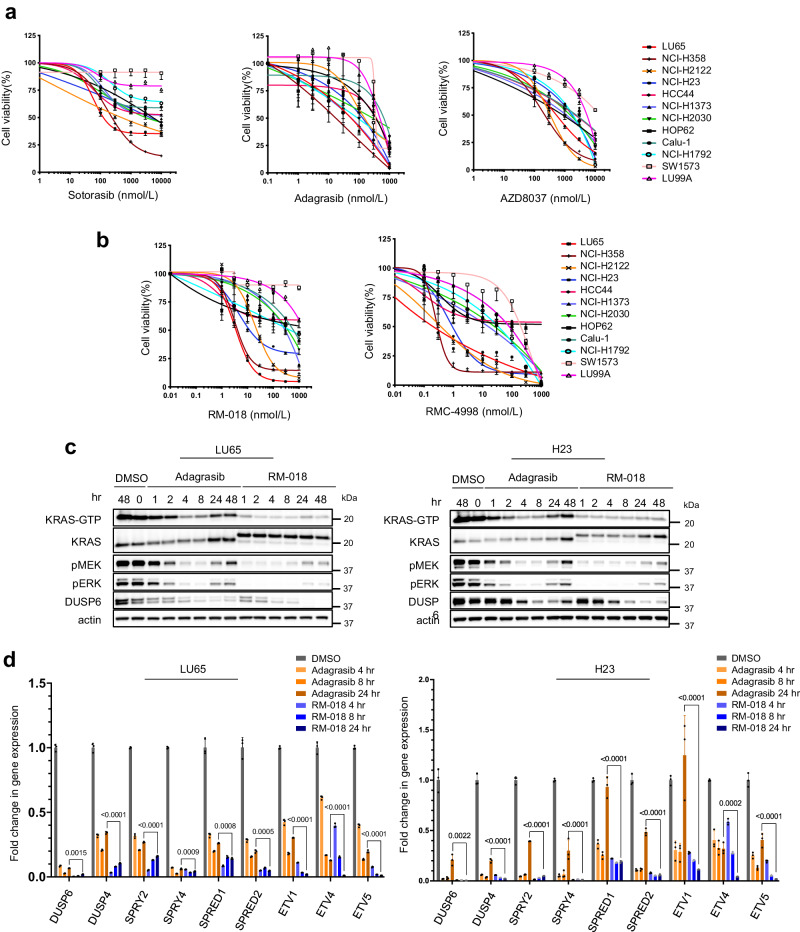
- Active-state KRASG12C inhibitors RM-018 and RMC-4998 inhibited ERK output more potently and durably than inactive-state inhibitors; H358, LU65, and H2122 were most sensitive to RM-018 with IC50 values more than 10-fold lower than adagrasib, and RMC-4998 had IC50 values approximately 10-fold lower than RM-018. In H23, adagrasib-treated cells showed rebound in 8/9 ERK-regulated mRNAs at 24 h versus 3/9 with RM-018; in LU65, 7 mRNAs remained below 10% of baseline at 24 h with RM-018 versus 2 with adagrasib.
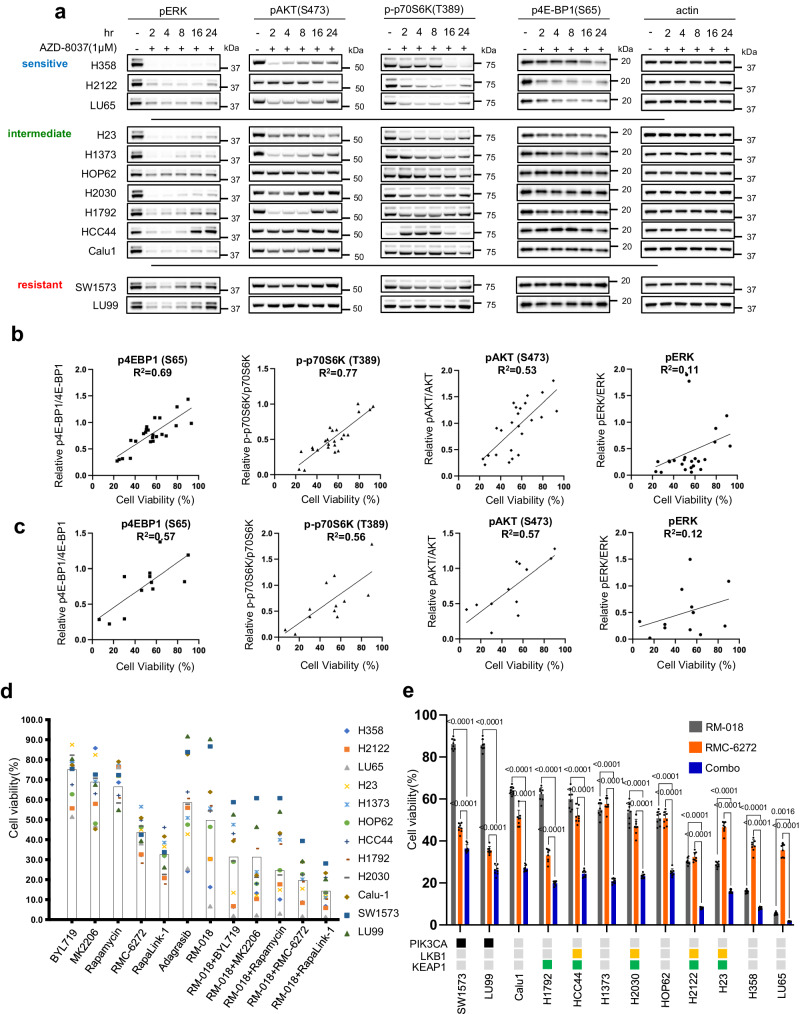
- Sensitivity to KRASG12C inhibition correlated with PI3K/mTOR pathway inhibition: inhibition of cell growth by sotorasib and AZD8037 correlated with pAKT S473, p-p70S6K T389, and p4E-BP1 S65 with R² values of 0.53–0.77, whereas pERK inhibition was not significantly correlated (R² = 0.11).
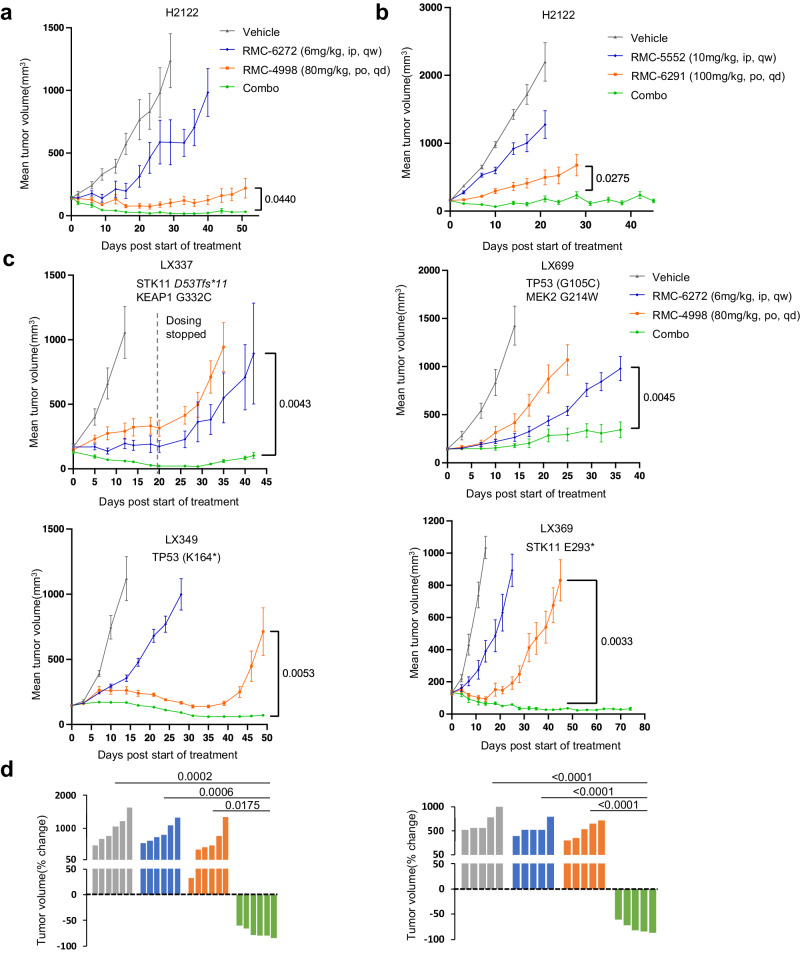
- RM-018 plus the mTORC1-selective bi-steric inhibitor RMC-6272 caused greater than 80% average growth reduction across KRASG12C NSCLC cell lines and significantly reduced viability versus either agent alone in every model tested. In vivo, RMC-4998 plus RMC-6272 caused almost complete regression in H2122 xenografts over 50 days, minimal residual tumors by day 70 in H2030, and dramatic durable shrinkage in 3 of 4 PDX models, with no significant body weight loss or hyperglycemia.
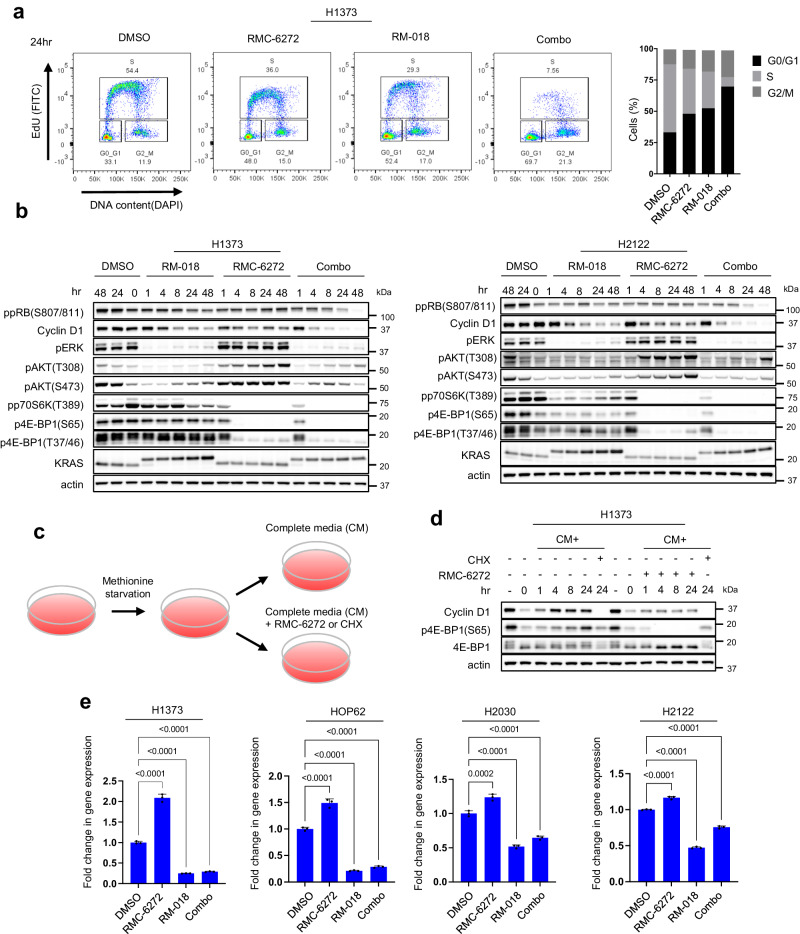
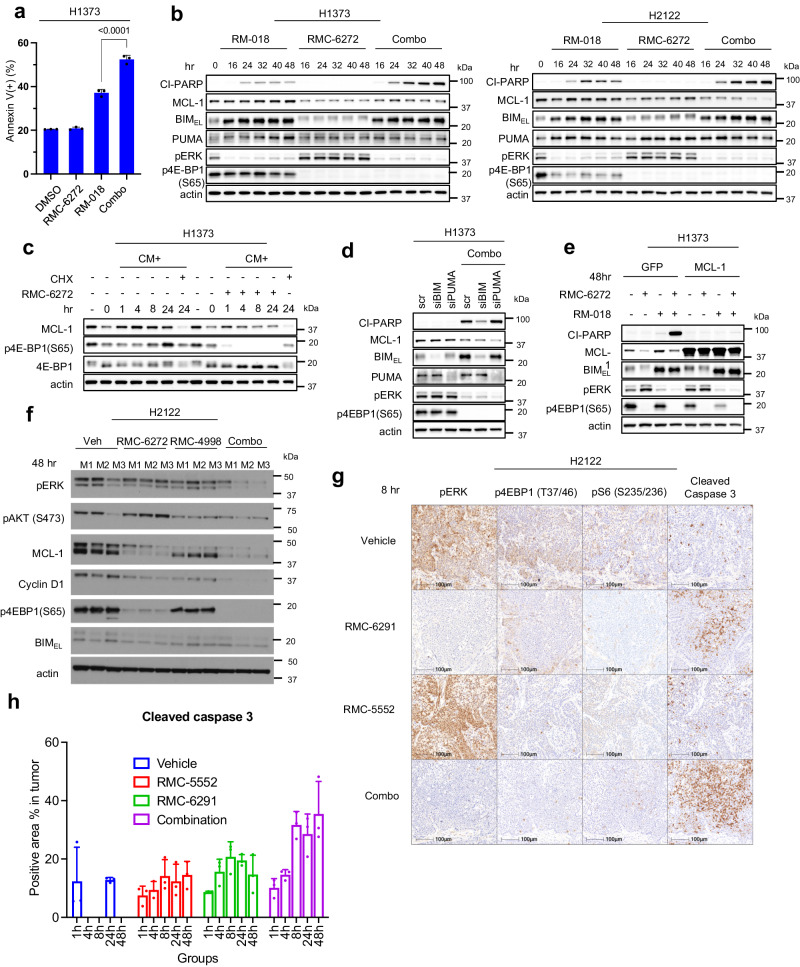
- Mechanistically, the combination increased G0/G1 cells by 110% versus ~50% for each single agent, induced 3–4-fold more cell death than controls, blocked Cyclin D1 at transcriptional and translational levels, and required BIM induction plus MCL-1 reduction for apoptosis.
Methods
- Preclinical study using a panel of KRASG12C-mutant NSCLC cell lines and KRASG12S/EGFR-mutant controls; assays included CellTiter-Glo viability, immunoblotting, qPCR, RAS-GTP pulldown, m7GTP cap-binding, siRNA knockdown, MCL-1 overexpression, EdU-DAPI flow cytometry, annexin V/PI, and caspase 3/7 activity.
- In vivo studies used H2122 and H2030 cell-line-derived xenografts and four KRASG12C-mutant lung PDX models in athymic or NSG mice; treatments included RMC-4998 80 mg/kg daily oral gavage, RMC-6272 6 mg/kg weekly intraperitoneal, RMC-6291 100 mg/kg daily oral gavage, and RMC-5552 10 mg/kg weekly intraperitoneal, with tumor volumes measured by calipers.
- Statistical analysis used two-sided t tests or one-way ANOVA with post-hoc tests; viability data were n = 8 replicates, qPCR/flow data n = 3, and xenograft/PDX cohorts generally n = 5–8 mice per group.
Limitations
- The paper states that the mechanistic basis for differential PI3K/mTOR sensitivity is not clear, that further questions remain about molecular determinants of RAS dependency of PI3K/mTOR signaling, and that the role of coexistent genetic mutations and complexity of survival/translation regulation need more investigation. It also notes that LX699, which harbored an uncharacterized MEK2 G214W mutation, did not regress with the combination and may represent a resistance mechanism.
- Evident from the text: all findings are preclinical, using cell lines, xenografts, and PDX models, with no human clinical efficacy or safety data; several in vivo cohorts are small (n = 5–8 mice), and the study relies on tool compounds and investigational agents rather than approved therapies.
Model-written summary. Check it against the paper before relying on it.
Integrity signals
Registry
Cites
Statistics
Figures
Verification
Claims the paper makes
19 Valid · 1 Not valid · 5 Not checked · 136 Own results and interpretations
At least one cited source doesn’t support this claim or points to a different paper, and none confirmed it — see the verdicts below.
In the paper
“Similarly, cap-dependent translation is necessary for the transformed phenotype and we have shown previously that dephosphorylation of PTEN, which inhibits cap-dependent translation, is necessary for combined therapy to work48.”
§ Combined inhibition of KRASG12C and mTORC1 kinase is synergistic in non-small cell lung cancer > Discussion
What the sources say
- Disputedcites [48] Mukherjee R Regulation of PTEN translation by PI3K signaling maintains pathway homeostasis Mol. Cell 2021 81 708 723.e5 10.1016/j.molcel.2021.01.033 33606974 PMC8384339 sourceExperimental — accuracy not yet measured
In Results (‘mTOR controls PTEN expression’; page not available), the paper says dephosphorylated 4E-BP1—not PTEN—inhibits cap-dependent translation and reduces PTEN expression. In Results (‘Inhibition of PTEN translation by PI3K inhibitors’; page not available), it reports that reduced PTEN translation makes tumor cells less sensitive to combined PI3K-inhibitor treatment, contrary to the claim that this process is necessary for treatment to work. (LLM, conf=0.90)
Checked by a reasoning model — may be wrong.
boostedstates a cause- Asserted: passes — The authors put it forward as true.
- Checkable: passes — It can be checked against evidence.
- Load-bearing: passes — The paper’s conclusions depend on it.
- Based: passes — The paper gives a reason why it holds.
- Disputed
The cited sources support only part of this claim — read each source’s verdict below.
In the paper
“Nevertheless, these data are consistent with our previous findings that inhibition of the growth of tumors in which ERK and PI3K/mTOR signaling are dysregulated requires inhibition of both pathways15,24.”
§ Combined inhibition of KRASG12C and mTORC1 kinase is synergistic in non-small cell lung cancer > Discussion
What the sources say
- Supportedcites [15] She QB 4E-BP1 is a key effector of the oncogenic activation of the AKT and ERK signaling pathways that integrates their function in tumors Cancer Cell 2010 18 39 51 10.1016/j.ccr.2010.05.023 20609351 PMC3286650 source
The Results section states that tumors with coexistent KRAS/MEK/ERK and PI3K/AKT pathway mutations are not dependent on either pathway alone but are sensitive to combined inhibition. Its in vivo results likewise report that inhibiting both pathways, rather than either alone, suppressed tumor-growth-related signaling in models with concurrent KRAS and PIK3CA mutations. The cited paper thus supports the claim for tumors with co-activation of both pathways. (LLM, conf=0.92)
- Partly supportedcites [24] Halilovic E PIK3CA mutation uncouples tumor growth and cyclin D1 regulation from MEK/ERK and mutant KRAS signaling Cancer Res. 2010 70 6804 6814 10.1158/0008-5472.CAN-10-0409 20699365 PMC3178450 sourceExperimental — accuracy not yet measured
The Results section reports that combined MEK and AKT inhibition profoundly suppressed growth of KRAS/PIK3CA-mutant tumor xenografts, whereas either inhibitor alone had no significant effect. The claim extends this finding to tumors with dysregulated ERK and PI3K/mTOR signaling generally; this paper's reported result is narrower and concerns PI3K/AKT signaling, not specifically mTOR. Page numbers are not provided in our copy. (LLM, conf=0.86)
plainstates a cause- Asserted: passes — The authors put it forward as true.
- Checkable: passes — It can be checked against evidence.
- Load-bearing: passes — The paper’s conclusions depend on it.
- Based: passes — The paper gives a reason why it holds.
- Supported
The sources with a verdict support this claim; the rest weren’t checked yet, have no full text we could read, or their verdicts aren’t rated yet.
In the paper
“Inhibition of either PI3K/mTOR or ERK signaling often relieves feedback inhibition of the other and causes its activation46,47.”
§ Combined inhibition of KRASG12C and mTORC1 kinase is synergistic in non-small cell lung cancer > Discussion
What the sources say
- Not checked — no full text of the sourcecites [46] Carracedo A Inhibition of mTORC1 leads to MAPK pathway activation through a PI3K-dependent feedback loop in human cancer J. Clin. Investig. 2008 118 3065 3074 18725988 PMC2518073 source
- Supportedcites [47] Turke AB MEK inhibition leads to PI3K/AKT activation by relieving a negative feedback on ERBB receptors Cancer Res. 2012 72 3228 3237 10.1158/0008-5472.CAN-11-3747 22552284 PMC3515079 source
The Introduction says PI3K and AKT inhibitors relieve negative feedback on receptors, leading to partial reactivation of MEK/ERK signaling. The Abstract and Discussion report the reverse direction: MEK inhibition relieves inhibitory feedback and activates PI3K/AKT in ERBB-driven cancer models. (LLM, conf=0.90)
plainstates a cause- Asserted: passes — The authors put it forward as true.
- Checkable: passes — It can be checked against evidence.
- Load-bearing: passes — The paper’s conclusions depend on it.
- Based: passes — The paper gives a reason why it holds.
Every source the paper cites for this claim was checked and supports it.
In the paper
“These data are consistent with our previous findings that 4E-BP1 is a convergent target of PI3K/AKT/mTOR and RAF/MEK/ERK pathways and integrates their function at the level of regulation of cap-dependent translation15.”
§ Combined inhibition of KRASG12C and mTORC1 kinase is synergistic in non-small cell lung cancer > Discussion
What the sources say
- Supportedcites [15] She QB 4E-BP1 is a key effector of the oncogenic activation of the AKT and ERK signaling pathways that integrates their function in tumors Cancer Cell 2010 18 39 51 10.1016/j.ccr.2010.05.023 20609351 PMC3286650 source
The Results section, “4E-BP1 Integrates the Effects of AKT and ERK Signaling on Translation and Survival,” identifies 4E-BP1 as the key integrator of ERK and PI3K/AKT effects on cap-dependent translation in tumor cells. The Discussion also describes it as a downstream target of both pathways. (LLM, conf=0.94)
plainstates a cause- Asserted: passes — The authors put it forward as true.
- Checkable: passes — It can be checked against evidence.
- Load-bearing: passes — The paper’s conclusions depend on it.
- Based: passes — The paper gives a reason why it holds.
- Supported
The cited sources support only part of this claim — read each source’s verdict below.
In the paper
“Multiple mechanisms of acquired resistance have been identified, which largely converge on re-activation of the RAS pathway or alternatively activate parallel signaling pathways such as the PI3K/mTOR pathway10–14.”
§ Combined inhibition of KRASG12C and mTORC1 kinase is synergistic in non-small cell lung cancer > Introduction
What the sources say
- Partly supportedcites [10] Awad MM Acquired resistance to KRAS G12C inhibition in cancer N. Engl. J. Med. 2021 384 2382 2393 10.1056/NEJMoa2105281 34161704 PMC8864540 sourceExperimental — accuracy not yet measured
The Discussion (page not provided) identifies diverse acquired resistance mechanisms, including KRAS alterations and changes that activate RTK–RAS signaling. The Results (page not provided) also list PTEN loss among bypass mechanisms, but the copy does not establish activation of a parallel PI3K/mTOR pathway as an acquired resistance mechanism. The clinical findings specifically concern adagrasib, rather than KRASG12C inhibitors generally. (LLM, conf=0.84)
- Partly supportedcites [11] Xue JY Rapid non-uniform adaptation to conformation-specific KRAS(G12C) inhibition Nature 2020 577 421 425 10.1038/s41586-019-1884-x 31915379 PMC7308074 sourceExperimental — accuracy not yet measured
The paper’s Abstract (page unavailable) reports rapid adaptation to KRASG12C inhibition involving reactivation of KRAS-GTP and downstream signaling. It does not establish acquired resistance or identify PI3K/mTOR activation as an alternative mechanism; its discussion of PI3K concerns resistance to PI3K inhibitors, not KRASG12C inhibitors. (LLM, conf=0.85)
- Partly supportedcites [12] Yaeger R Mechanisms of acquired resistance to BRAF V600E inhibition in colon cancers converge on RAF dimerization and are sensitive to its inhibition Cancer Res. 2017 77 6513 6523 10.1158/0008-5472.CAN-17-0768 28951457 PMC5712250 sourceExperimental — accuracy not yet measured
The Results (page not supplied) identify several acquired resistance alterations in the RAS/RAF pathway, supporting the pathway-reactivation part of the claim. But this paper studies resistance to BRAF V600E–targeted treatment in colorectal cancer, not KRAS G12C inhibitors, and the cited passages do not establish PI3K/mTOR activation as an alternative mechanism. (LLM, conf=0.88)
- Partly supportedcites [13] Tanaka N Clinical acquired resistance to krasg12c inhibition through a novel kras switch-ii pocket mutation and polyclonal alterations converging on ras–mapk reactivation Cancer Discov. 2021 11 1913 1922 10.1158/2159-8290.CD-21-0365 33824136 PMC8338755 sourceExperimental — accuracy not yet measured
The Results and Discussion (page not provided) describe ten acquired-resistance alterations in one patient, all converging on RAS–MAPK reactivation. The paper does not report PI3K/mTOR activation as an alternative acquired-resistance mechanism, and its single-patient findings do not establish the broader distribution of mechanisms implied by the sentence. (LLM, conf=0.90)
- Partly supportedcites [14] Zhao Y Diverse alterations associated with resistance to KRAS(G12C) inhibition Nature 2021 599 679 683 10.1038/s41586-021-04065-2 34759319 PMC8887821 sourceExperimental — accuracy not yet measured
The Abstract reports multiple treatment-emergent alterations and shows that secondary RAS mutations can bypass KRAS(G12C) inhibition by reactivating ERK signaling. It describes resistance as heterogeneous and the RAS/BRAF mechanism as occurring in a subset; it does not establish that mechanisms largely converge on RAS reactivation or identify PI3K/mTOR activation as an alternative resistance pathway (pages not provided). (LLM, conf=0.85)
plainstates a cause- Asserted: passes — The authors put it forward as true.
- Checkable: passes — It can be checked against evidence.
- Load-bearing: passes — The paper’s conclusions depend on it.
- Based: passes — The paper gives a reason why it holds.
- Partly supported
71 more claims · 4 with their cited sources checked
Create a free account to see all 161 claims and to verify the 3 references still open.
- Probably not a substantial claim. 18
- It may state two separate claims as one. 73
- The quote only partly states this claim. 1
Citations
Cites
mTOR Inhibition Induces Upstream Receptor Tyrosine Kinase Signaling and Activates Akt
O'Reilly, K. E., Rojo, F., She, Q.-B., Solit, D., Mills, G. B., Smith, D., Lane, H., Hofmann, F., Hicklin, D. J., Ludwig, D. L., et al. (2006) · Cancer Research · doi:10.1158/0008-5472.can-05-2925 · Cited by 2,561 · cited 1×
“We observed minimal body weight lossinanimalswiththiscombinationtreatment,andnohyperglycemia which has been a previous on-target adverse effect of PI3K/mTOR pathway inhibitors that target mTORC2 45 .”
BackgroundSelf-citationMolecular mechanisms of mTOR-mediated translational control
Ma, X. M., & Blenis, J. (2009) · Nature Reviews Molecular Cell Biology · doi:10.1038/nrm2672 · Cited by 2,558 · cited 1×
“Complex assembly is inhibited by binding of 4E-BP1 to eIF4E, whereas phosphorylation of 4E-BP1 by mTORC1 releases eIF4E and allows cap-dependent translation to proceed 32 .”
BackgroundK-Ras(G12C) inhibitors allosterically control GTP affinity and effector interactions
Ostrem, J. M., Peters, U., Sos, M. L., Wells, J. A., & Shokat, K. M. (2013) · Nature · doi:10.1038/nature12796 · Cited by 2,557
The Clinical KRAS(G12C) Inhibitor AMG 510 Drives Anti-Tumour Immunity
Canon, J., Rex, K., Saiki, A. Y., Mohr, C., Cooke, K., Bagal, D., Gaida, K., Holt, T., Knutson, C. G., Koppada, N., et al. (2019) · Nature · doi:10.1038/s41586-019-1694-1 · Cited by 2,277
Sotorasib for Lung Cancers with KRAS p.G12C Mutation
Skoulidis, F., Li, B. T., Dy, G. K., Price, T. J., Falchook, G. S., Wolf, J., Italiano, A., Schuler, M., Borghaei, H., Barlesi, F., et al. (2021) · New England Journal of Medicine · doi:10.1056/nejmoa2103695 · Cited by 1,849 · cited 1×
“The overall response rate of inactive-state KRAS G12C inhibitors sotor-asib and adagrasib in patients with KRAS G12C mutant NSCLC is 37-43%, a major advance albeit with signi fi cant room for improvement 7,8 .”
BackgroundThe Ras-ERK and PI3K-mTOR pathways: cross-talk and compensation
Mendoza, M. C., Er, E. E., & Blenis, J. (2011) · Trends in Biochemical Sciences · doi:10.1016/j.tibs.2011.03.006 · Cited by 1,817
Carracedo, A., Ma, L., Teruya-Feldstein, J., Rojo, F., Salmena, L., Alimonti, A., Egia, A., Sasaki, A. T., Thomas, G., Kozma, S. C., et al. (2008) · Journal of Clinical Investigation · doi:10.1172/jci34739 · Cited by 1,381 · cited 1×
“Inhibition of either PI3K/mTOR or ERK signaling often relieves feedback inhibition of the other and causes its activation 46,47 .”
BackgroundEngelman, J. A., Chen, L., Tan, X., Crosby, K., Guimaraes, A. R., Upadhyay, R., Maira, M., McNamara, K., Perera, S. A., Song, Y., et al. (2008) · Nature Medicine · doi:10.1038/nm.1890 · Cited by 1,330
Hallin, J., Engstrom, L. D., Hargis, L., Calinisan, A., Aranda, R., Briere, D. M., Sudhakar, N., Bowcut, V., Baer, B. R., Ballard, J. A., et al. (2020) · Cancer Discovery · doi:10.1158/2159-8290.cd-19-1167 · Cited by 1,304
Phosphorylation and Functional Inactivation of TSC2 by Erk
Ma, L., Chen, Z., Erdjument-Bromage, H., Tempst, P., & Pandolfi, P. P. (2005) · Cell · doi:10.1016/j.cell.2005.02.031 · Cited by 1,268
Acquired Resistance to KRAS G12C Inhibition in Cancer
Awad, M. M., Liu, S., Rybkin, I. I., Arbour, K. C., Dilly, J., Zhu, V. W., Johnson, M. L., Heist, R. S., Patil, T., Riely, G. J., et al. (2021) · New England Journal of Medicine · doi:10.1056/nejmoa2105281 · Cited by 1,247
The Frequency of Ras Mutations in Cancer
Prior, I. A., Hood, F. E., & Hartley, J. L. (2020) · Cancer Research · doi:10.1158/0008-5472.can-19-3682 · Cited by 1,130
Adagrasib in Non–Small-Cell Lung Cancer Harboring a KRAS G12C Mutation
Jänne, P. A., Riely, G. J., Gadgeel, S. M., Heist, R. S., Ou, S.-H. I., Pacheco, J. M., Johnson, M. L., Sabari, J. K., Leventakos, K., Yau, E., et al. (2022) · New England Journal of Medicine · doi:10.1056/nejmoa2204619 · Cited by 1,061
Discovery of a Covalent Inhibitor of KRAS G12C (AMG 510) for the Treatment of Solid Tumors
Lanman, B. A., Allen, J. R., Allen, J. G., Amegadzie, A. K., Ashton, K. S., Booker, S. K., Chen, J. J., Chen, N., Frohn, M. J., Goodman, G., et al. (2020) · Journal of Medicinal Chemistry · doi:10.1021/acs.jmedchem.9b01180 · Cited by 765 · cited 1×
“The effects of pharmacologic inhibition of KRAS G12C in NSCLC lines were fi rst studied with three inactive-state KRAS G12C inhibitors, sotorasib 16 , adagrasib 17 , and AZD8037 18 .”
BackgroundRAS Interaction with PI3K: More Than Just Another Effector Pathway
Castellano, E., & Downward, J. (2011) · Genes & Cancer · doi:10.1177/1947601911408079 · Cited by 762
S6K1- and ßTRCP-Mediated Degradation of PDCD4 Promotes Protein Translation and Cell Growth
Dorrello, N. V., Peschiaroli, A., Guardavaccaro, D., Colburn, N. H., Sherman, N. E., & Pagano, M. (2006) · Science · doi:10.1126/science.1130276 · Cited by 731
Mechanisms of Action of Bcl-2 Family Proteins
Shamas-Din, A., Kale, J., Leber, B., & Andrews, D. W. (2013) · Cold Spring Harbor Perspectives in Biology · doi:10.1101/cshperspect.a008714 · Cited by 705 · cited 1×
“Binding of the BH3 domain-only proteins such as BIM, PUMA, and BID to BCL2 family members like MCL-1 inhibits the anti-apoptotic effects of the latter and induces apoptosis 26 .”
BackgroundAllele-specific inhibitors inactivate mutant KRAS G12C by a trapping mechanism
Lito, P., Solomon, M., Li, L.-S., Hansen, R., & Rosen, N. (2016) · Science · doi:10.1126/science.aad6204 · Cited by 691
Self-citationFell, J. B., Fischer, J. P., Baer, B. R., Blake, J. F., Bouhana, K., Briere, D. M., Brown, K. D., Burgess, L. E., Burns, A. C., Burkard, M. R., et al. (2020) · Journal of Medicinal Chemistry · doi:10.1021/acs.jmedchem.9b02052 · Cited by 653
Pratilas, C. A., Taylor, B. S., Ye, Q., Viale, A., Sander, C., Solit, D. B., & Rosen, N. (2009) · Proceedings of the National Academy of Sciences · doi:10.1073/pnas.0900780106 · Cited by 614
Self-citationFrequency and Distinctive Spectrum of KRAS Mutations in Never Smokers with Lung Adenocarcinoma
Riely, G. J., Kris, M. G., Rosenbaum, D., Marks, J., Li, A., Chitale, D. A., Nafa, K., Riedel, E. R., Hsu, M., Pao, W., et al. (2008) · Clinical Cancer Research · doi:10.1158/1078-0432.ccr-08-0646 · Cited by 578
Rapid non-uniform adaptation to conformation-specific KRAS(G12C) inhibition
Xue, J. Y., Zhao, Y., Aronowitz, J., Mai, T. T., Vides, A., Qeriqi, B., Kim, D., Li, C., de Stanchina, E., Mazutis, L., et al. (2020) · Nature · doi:10.1038/s41586-019-1884-x · Cited by 543
Tanaka, N., Lin, J. J., Li, C., Ryan, M. B., Zhang, J., Kiedrowski, L. A., Michel, A. G., Syed, M. U., Fella, K. A., Sakhi, M., et al. (2021) · Cancer Discovery · doi:10.1158/2159-8290.cd-21-0365 · Cited by 527 · cited 1×
“To this end, we utilized a class of active-state RAS G12C inhibitors which includes the preclinical tool compounds RM-018 and RMC-4998, the latter being more potent and exhibiting oral bioavailability in vivo 13,19 .”
MethodOvercoming mTOR resistance mutations with a new-generation mTOR inhibitor
Rodrik-Outmezguine, V. S., Okaniwa, M., Yao, Z., Novotny, C. J., McWhirter, C., Banaji, A., Won, H., Wong, W., Berger, M., de Stanchina, E., et al. (2016) · Nature · doi:10.1038/nature17963 · Cited by 479
Self-citationDiverse alterations associated with resistance to KRAS(G12C) inhibition
Zhao, Y., Murciano-Goroff, Y. R., Xue, J. Y., Ang, A., Lucas, J., Mai, T. T., Da Cruz Paula, A. F., Saiki, A. Y., Mohn, D., Achanta, P., et al. (2021) · Nature · doi:10.1038/s41586-021-04065-2 · Cited by 479 · cited 2×
“…G12C inhibition and identi fi ed causal mutations and non-genetic mechanisms including RTK activation and epithelial-to-mesenchymal transition 11 – 14, 35 , the mechanisms underlying differential sensitivity to KRAS We, therefore, tested whether inhibitors of individual components of the PI3K…”
BackgroundShe, Q.-B., Halilovic, E., Ye, Q., Zhen, W., Shirasawa, S., Sasazuki, T., Solit, D. B., & Rosen, N. (2010) · Cancer Cell · doi:10.1016/j.ccr.2010.05.023 · Cited by 400
Self-citationMEK Inhibition Leads to PI3K/AKT Activation by Relieving a Negative Feedback on ERBB Receptors
Turke, A. B., Song, Y., Costa, C., Cook, R., Arteaga, C. L., Asara, J. M., & Engelman, J. A. (2012) · Cancer Research · doi:10.1158/0008-5472.can-11-3747 · Cited by 368 · cited 1×
“Inhibition of either PI3K/mTOR or ERK signaling often relieves feedback inhibition of the other and causes its activation 46,47 .”
BackgroundElkabets, M., Vora, S., Juric, D., Morse, N., Mino-Kenudson, M., Muranen, T., Tao, J., Campos, A. B., Rodon, J., Ibrahim, Y. H., et al. (2013) · Science Translational Medicine · doi:10.1126/scitranslmed.3005747 · Cited by 332
Self-citationTargeting KRAS in non-small-cell lung cancer: recent progress and new approaches
Reck, M., Carbone, D. P., Garassino, M., & Barlesi, F. (2021) · Annals of Oncology · doi:10.1016/j.annonc.2021.06.001 · Cited by 326
Crystal structure of human KRAS G12C covalently bound to a phthalazine inhibitor: 6pgo
Mohr, C. (2019) · Worldwide Protein Data Bank · doi:10.2210/pdb6pgo/pdb · Cited by 314
mTORC1 promotes survival through translational control of Mcl-1
Mills, J. R., Hippo, Y., Robert, F., Chen, S. M. H., Malina, A., Lin, C.-J., Trojahn, U., Wendel, H.-G., Charest, A., Bronson, R. T., et al. (2008) · Proceedings of the National Academy of Sciences · doi:10.1073/pnas.0804821105 · Cited by 285 · cited 1×
“MCL-1 translation has previously been shown to be mTOR dependent 27,28 .”
BackgroundChemical remodeling of a cellular chaperone to target the active state of mutant KRAS
Schulze, C. J., Seamon, K. J., Zhao, Y., Yang, Y. C., Cregg, J., Kim, D., Tomlinson, A., Choy, T. J., Wang, Z., Sang, B., et al. (2023) · Science · doi:10.1126/science.adg9652 · Cited by 264 · cited 3×
“By contrast, RM-018 and RMC-4998 directly bind to GTP-bound KRAS G12C which results in more rapid and sustained inhibition 19 .”
BackgroundMethodSelf-citationAdachi, Y., Ito, K., Hayashi, Y., Kimura, R., Tan, T. Z., Yamaguchi, R., & Ebi, H. (2020) · Clinical Cancer Research · doi:10.1158/1078-0432.ccr-20-2077 · Cited by 249 · cited 1×
“…inhibition and identi fi ed causal mutations and non-genetic mechanisms including RTK activation and epithelial-to-mesenchymal transition 11 – 14, 35 , the mechanisms underlying differential sensitivity to KRAS We, therefore, tested whether inhibitors of individual components of the PI3K pathway…”
BackgroundSelf-citationMultisite Phosphorylation Regulates Bim Stability and Apoptotic Activity
Hübner, A., Barrett, T., Flavell, R. A., & Davis, R. J. (2008) · Molecular Cell · doi:10.1016/j.molcel.2008.03.025 · Cited by 228 · cited 1×
“Inhibition of ERK-dependent phosphorylation of BIM stabilizes the latter and accounts for increased expression of the protein 29 .”
BackgroundMarissen, W. E., & Lloyd, R. E. (1998) · Molecular and Cellular Biology · doi:10.1128/mcb.18.12.7565 · Cited by 198 · cited 1×
“We observed the expression of total eIF4G was reduced by the combination in H1373 whereas KRAS G12C inhibition is suf fi cient in H2122. eIF4G has caspase sites and can be cleaved by caspase-3 during apoptosis 34 .”
BackgroundAverous, J., Fonseca, B. D., & Proud, C. G. (2008) · Oncogene · doi:10.1038/sj.onc.1210715 · Cited by 194
Halilovic, E., She, Q.-B., Ye, Q., Pagliarini, R., Sellers, W. R., Solit, D. B., & Rosen, N. (2010) · Cancer Research · doi:10.1158/0008-5472.can-10-0409 · Cited by 168
Self-citationTORC1 Suppression Predicts Responsiveness to RAF and MEK Inhibition in BRAF- Mutant Melanoma
Corcoran, R. B., Rothenberg, S. M., Hata, A. N., Faber, A. C., Piris, A., Nazarian, R. M., Brown, R. D., Godfrey, J. T., Winokur, D., Walsh, J., et al. (2013) · Science Translational Medicine · doi:10.1126/scitranslmed.3005753 · Cited by 140
Toward the mechanism of eIF4F-mediated ribosomal attachment to mammalian capped mRNAs
Kumar, P., Hellen, C. U. T., & Pestova, T. V. (2016) · Genes & Development · doi:10.1101/gad.282418.116 · Cited by 139 · cited 1×
“…to inhibit 4E-BP1 phosphorylation and that dephosphorylation of 4E-BP1 is required for the anti-tumor activity of the combination 15 . eIF4E recognizes the mRNA m7GTP 5 ′ cap structure and assembles the eIF4F translation initiation complex which also includes the proteins eIF4A and eIF4G 31 .”
BackgroundRegulation of PTEN translation by PI3K signaling maintains pathway homeostasis
Mukherjee, R., Vanaja, K. G., Boyer, J. A., Gadal, S., Solomon, H., Chandarlapaty, S., Levchenko, A., & Rosen, N. (2021) · Molecular Cell · doi:10.1016/j.molcel.2021.01.033 · Cited by 135 · cited 1×
“Similarly, cap-dependent translation is necessary for the transformed phenotype and we have shown pre-viouslythatdephosphorylationofPTEN,whichinhibitscap-dependent translation, is necessary for combined therapy to work 48 .”
BackgroundSelf-citationSchram, A. M., Gandhi, L., Mita, M. M., Damstrup, L., Campana, F., Hidalgo, M., Grande, E., Hyman, D. M., & Heist, R. S. (2018) · British Journal of Cancer · doi:10.1038/s41416-018-0322-4 · Cited by 96
Yaeger, R., Yao, Z., Hyman, D. M., Hechtman, J. F., Vakiani, E., Zhao, H., Su, W., Wang, L., Joelson, A., Cercek, A., et al. (2017) · Cancer Research · doi:10.1158/0008-5472.can-17-0768 · Cited by 94
Self-citationKettle, J. G., Bagal, S. K., Bickerton, S., Bodnarchuk, M. S., Breed, J., Carbajo, R. J., Cassar, D. J., Chakraborty, A., Cosulich, S., Cumming, I., et al. (2020) · Journal of Medicinal Chemistry · doi:10.1021/acs.jmedchem.9b01720 · Cited by 82 · cited 9×
“Tofacilitatecomparison,cell lines with less than 50% viable cells compared to control at 1 µ M AZD8037 were categorized assensitive, whereas those for which more than 75% were viable were categorized as resistant and those in between were categorized as intermediate (Fig.”
BackgroundInfluentialSelf-citationSelective inhibitors of mTORC1 activate 4EBP1 and suppress tumor growth
Lee, B. J., Boyer, J. A., Burnett, G. L., Thottumkara, A. P., Tibrewal, N., Wilson, S. L., Hsieh, T., Marquez, A., Lorenzana, E. G., Evans, J. W., et al. (2021) · Nature Chemical Biology · doi:10.1038/s41589-021-00813-7 · Cited by 82
Self-citationBurnett, G. L., Yang, Y. C., Aggen, J. B., Pitzen, J., Gliedt, M. K., Semko, C. M., Marquez, A., Evans, J. W., Wang, G., Won, W. S., et al. (2023) · Journal of Medicinal Chemistry · doi:10.1021/acs.jmedchem.2c01658 · Cited by 72 · cited 2×
“The selective bi-steric mTORC1 inhibitors retain antitumor activity but do not cause hyperglycemia in preclinical models 23 .”
BackgroundSelf-citationPirazzoli, V., Nebhan, C., Song, X., Wurtz, A., Walther, Z., Cai, G., Zhao, Z., Jia, P., de Stanchina, E., Shapiro, E. M., et al. (2014) · Cell Reports · doi:10.1016/j.celrep.2014.04.014 · Cited by 71
Wang, B., Zhang, W., Zhang, G., Kwong, L., Lu, H., Tan, J., Sadek, N., Xiao, M., Zhang, J., Labrie, M., et al. (2021) · Oncogene · doi:10.1038/s41388-021-01911-5 · Cited by 66
Anderson, G. R., Wardell, S. E., Cakir, M., Crawford, L., Leeds, J. C., Nussbaum, D. P., Shankar, P. S., Soderquist, R. S., Stein, E. M., Tingley, J. P., et al. (2016) · Science Translational Medicine · doi:10.1126/scitranslmed.aae0348 · Cited by 53
Phosphorylation alters Bim‐mediated Mcl‐1 stabilization and priming
Conage‐Pough, J. E., & Boise, L. H. (2018) · The FEBS Journal · doi:10.1111/febs.14505 · Cited by 32 · cited 1×
“As a possible mechanism for this observation, it has been previously reported that phosphorylated BIM binds to and stabilizes MCL-1 30 .”
Background
Cited by
RAS signaling in carcinogenesis, cancer therapy and resistance mechanisms
Yang, X., & Wu, H. K. (2024) · Journal of Hematology & Oncology · doi:10.1186/s13045-024-01631-9 · Cited by 146
Molecular principles underlying aggressive cancers
Nussinov, R., Yavuz, B. R., & Jang, H. (2025) · Signal Transduction and Targeted Therapy · doi:10.1038/s41392-025-02129-7 · Cited by 100
Targeting the KRAS Oncogene for Patients with Metastatic Colorectal Cancer
Miao, R., Yu, J. B., & Kim, R. D. (2025) · Cancers · doi:10.3390/cancers17091512 · Cited by 21
“Combination strategies with ICI or adoptive T-cell therapies may further enhance their therapeutic potential in mCRC (Table 4).”
eIF4F-mediated dysregulation of mRNA translation in cancer
Amiri, M., Mahmood, N., Tahmasebi, S., & Sonenberg, N. (2025) · RNA · doi:10.1261/rna.080340.124 · Cited by 18
Shin, H. Y., Hwang, S., Jeong, J. H., Shin, S. C., Oh, Y., Kim, J. H., Hwang, I., Kim, E. E., Choo, H., & Song, E. J. (2025) · Pharmacological Research · doi:10.1016/j.phrs.2025.107722 · Cited by 13
Metadata
- Authors
- Kitai, H., Choi, P. H., Yang, Y. C., Boyer, J. A., Whaley, A., Pancholi, P., Thant, C., Reiter, J., Chen, K., Markov, V., Taniguchi, H., Yamaguchi, R., Ebi, H., Evans, J., Jiang, J., Lee, B., Wildes, D., de Stanchina, E., Smith, J. A. M., Singh, M., & Rosen, N.
- Affiliations
- Memorial Sloan Kettering Cancer Center (US)
- Revolution Medicines (United States) (US)
- Aichi Cancer Center (JP)
- Corresponding author
- Singh, Mallika
- Rosen, Neal
- ORCID
- Venue
- Nature Communications
- Published
- 2024-07-19
- Volume
- 15
- Issue
- 1
- Pages
- 6076-6076
- ISSN
- 2041-1723 (ISSN-L)
- PMC
- PMC11258147
- OpenAlex
- W4400839787
- Cited by
- 41
- References
- 51
- Citations by year
- 2026: 19 · 2025: 16 · 2024: 6
- FWCI
- 5.56
- Type
- journal article
- Language
- en
- Open access
- gold
- doi.org
- Licence
- cc-by
- creativecommons.org/licenses/by/4.0 (tdm)
- creativecommons.org/licenses/by/4.0 (vor)
- Locations
- Nature Communications (publishedVersion, cc-by)
- PubMed Central (publishedVersion, cc-by)
- PubMed (publishedVersion)
- RePEc: Research Papers in Economics (submittedVersion)
- DOAJ (DOAJ: Directory of Open Access Journals) (submittedVersion)
- Funders
- U.S. Department of Health & Human Services | NIH | National Cancer Institute (CA210085)
- Topics
- Life Sciences › Biochemistry, Genetics and Molecular Biology › Molecular Biology › PI3K/AKT/mTOR signaling in cancer
- Life Sciences › Biochemistry, Genetics and Molecular Biology › Molecular Biology › Protein Kinase Regulation and GTPase Signaling
- Health Sciences › Medicine › Pulmonary and Respiratory Medicine › Lung Cancer Treatments and Mutations
- Keywords
- KRAS G12C inhibitors, mTORC1 inhibition, non-small cell lung cancer, combination therapy, ERK signaling, PI3K/mTOR pathway, cyclin D1, cap-dependent translation, building information modeling, Mcl-1, apoptosis, tumor regression
- MeSH terms
- Bcl-2-Like Protein 11, Mechanistic Target of Rapamycin Complex 1, Animals, Carcinoma, Non-Small-Cell Lung, Drug Synergism, Female, Humans, Lung Neoplasms, Signal Transduction, Proto-Oncogene Proteins p21(ras), Cyclin D1, Xenograft Model Antitumor Assays, Cell Line, Tumor, Protein Kinase Inhibitors, Mice, TOR Serine-Threonine Kinases, Myeloid Cell Leukemia Sequence 1 Protein
About these checks
Registry, retraction, Cites and statistics results are computed, not judged, with one exception: a printed reference that no index lists is read once by a model before it counts as a citation error. Claims are extracted by a model and kept only when their quote appears verbatim in the text; each cited source is then checked, with a model’s help, for whether it says what the claim relies on. Those verdicts can be wrong — read the claim’s quote and the cited source before relying on one.
The claim verdicts this report counts are experimental: their accuracy is not yet measured.
A language model drew the claims from the paper on 2026-10-10, under version 3 of the claim definition (model deepseek-v4.1-flash, prompt extract-v3).
A second model labelled each claim on 2026-10-10 (model jev-1.13-20260917, definition revision gold-guideline-v0.2).
Cited sources are checked with a language model’s help (gpt-6-sol).
Statistics and arithmetic are recomputed, not judged.
Confidence bands are shown only for fields calibrated on our annotated test set. None is calibrated yet, so no band is shown.
What counts as a claim ›How we measure confidence ›How we check this ›
Are you an author, or do you see a problem with this page? Request a review
Data sources
Bibliographic data: Semantic Scholar, OpenAlex, Crossref.
Contains information from the Semantic Scholar Academic Graph Datasets, made available under the ODC Attribution License (ODC-BY 1.0).
Semantic Scholar’s data is described in: Kinney, R., et al. (2023). The Semantic Scholar Open Data Platform. arXiv:2301.10140.
