

Investigating the neuronal role of the proteasomal ATPase subunit gene PSMC5 in neurodevelopmental proteasomopathies
Open accessThe DOI matches its Crossref record; 71 of the 71 references it cites were found in a registry or an index; 20 of the 26 sources its claims cite were checked for support.
Abstract
Neurodevelopmental proteasomopathies are a group of disorders caused by variants in proteasome subunit genes, that disrupt protein homeostasis and brain development through poorly characterized mechanisms. Here, we report 26 distinct variants in PSMC5 , encoding the AAA⁺ ATPase subunit PSMC5/RPT6, in individuals with syndromic neurodevelopmental conditions. Combining genetic, multi-omics and biochemical approaches across cellular models and Drosophila , we unveil the essential role of proteasomes in sustaining key cellular processes. Loss of PSMC5/RPT6 function impairs proteasome activity, leading to protein aggregation, disruption of mitochondrial homeostasis, and dysregulation of lipid metabolism and immune signaling. It also compromises synaptic balance, neuritogenesis, and neural progenitor cell stemness, causing deficits in higher-order functions, including learning and locomotion. Pharmacological targeting of integrated stress response kinases reveals a mechanistic link between proteotoxic stress and spontaneous type I interferon activation. These findings expand our understanding of proteasome-dependent quality control in neurodevelopment and suggest potential therapeutic strategies for neurodevelopmental proteasomopathies.
Overview
CoChat Summary
TL;DR
This study identifies 26 distinct PSMC5 variants in 44 individuals with syndromic neurodevelopmental conditions and shows that loss of PSMC5/RPT6 function impairs proteasome activity, proteostasis, mitochondrial and lipid homeostasis, immune signaling, synaptic balance, and neural progenitor differentiation. Multi-model functional work links proteotoxic stress to type I interferon activation via the integrated stress response and suggests PKR, GCN2, and JAK inhibition as potential therapeutic targets.
Key findings
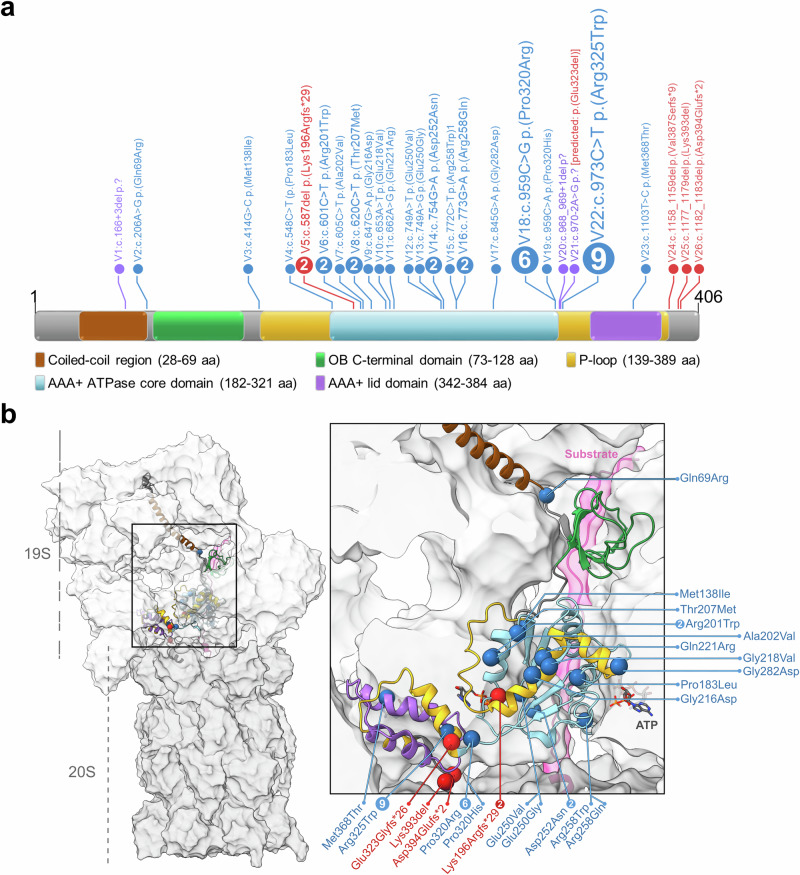
- In 44 affected individuals, 26 distinct PSMC5 variants were found, mostly missense (19/26) and within the AAA-ATPase domain (16/26); 33 cases were de novo, and ACMG/AMP simulation suggested pathogenicity for 25/26 variants. Recurrent variants included c.959C>G p.(Pro320Arg) in 6/44 and c.973C>T p.(Arg325Trp) in 9/44.
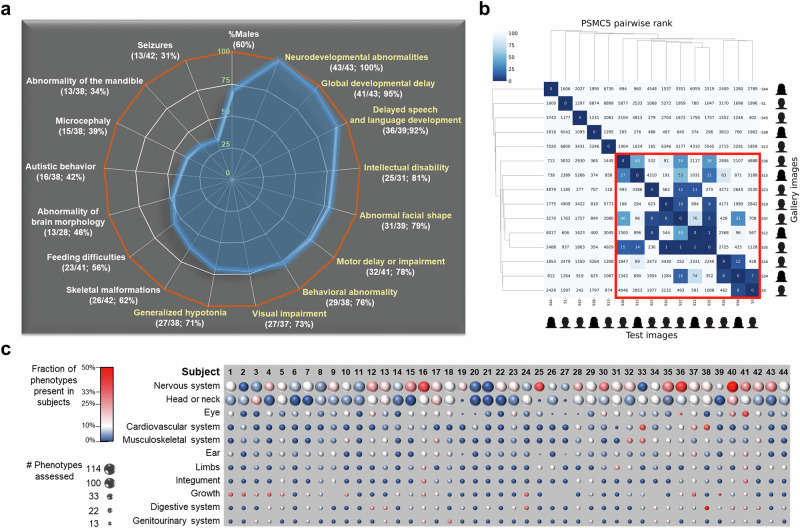
- Clinical features included global developmental delay in 42/44 (95%), speech absence/delay in 36/39 (92%), intellectual disability in 26/32 (81%), motor delay/impairment in 32/41 (78%), abnormal behavior in 30/39 (77%), seizures in 14/43 (33%), and abnormal facial shape in 32/40 (80%).
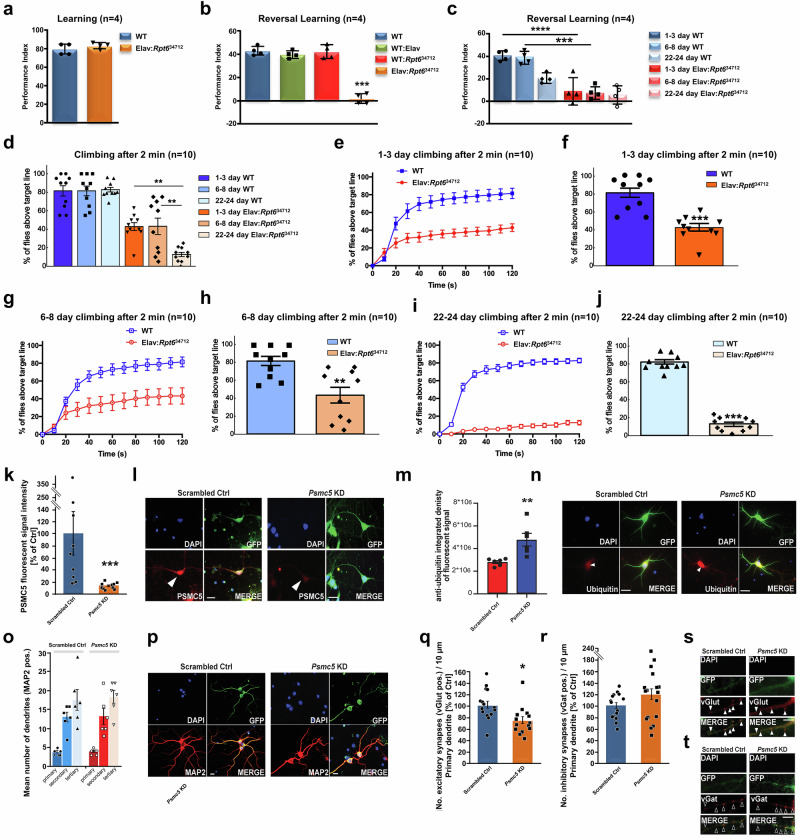
- Psmc5 knockdown in rat hippocampal neurons reduced PSMC5 protein to 12.71% ± 1.61% versus 100% ± 36.76% in controls, increased ubiquitin accumulation, and reduced vGlut⁺ excitatory puncta (control 1.2 ± 0.1 vs KD 0.8 ± 0.1; p = 0.0045) while vGat⁺ puncta remained stable. Drosophila Rpt6 knockdown impaired reversal learning (KD 1.5 ± 2 vs WT 43 ± 1.9; p < 0.0001) and caused age-dependent climbing decline.
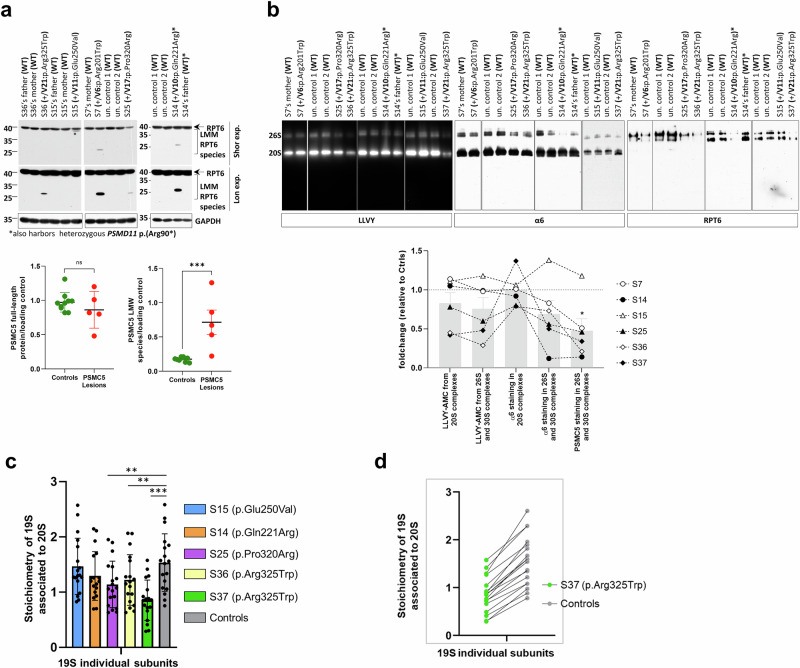
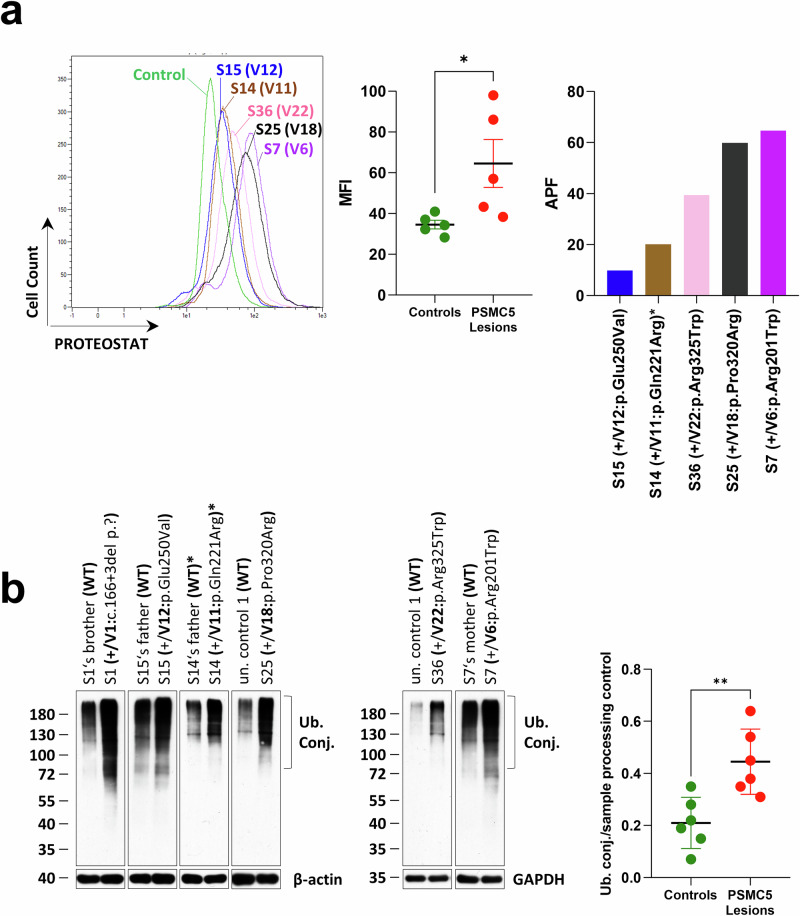
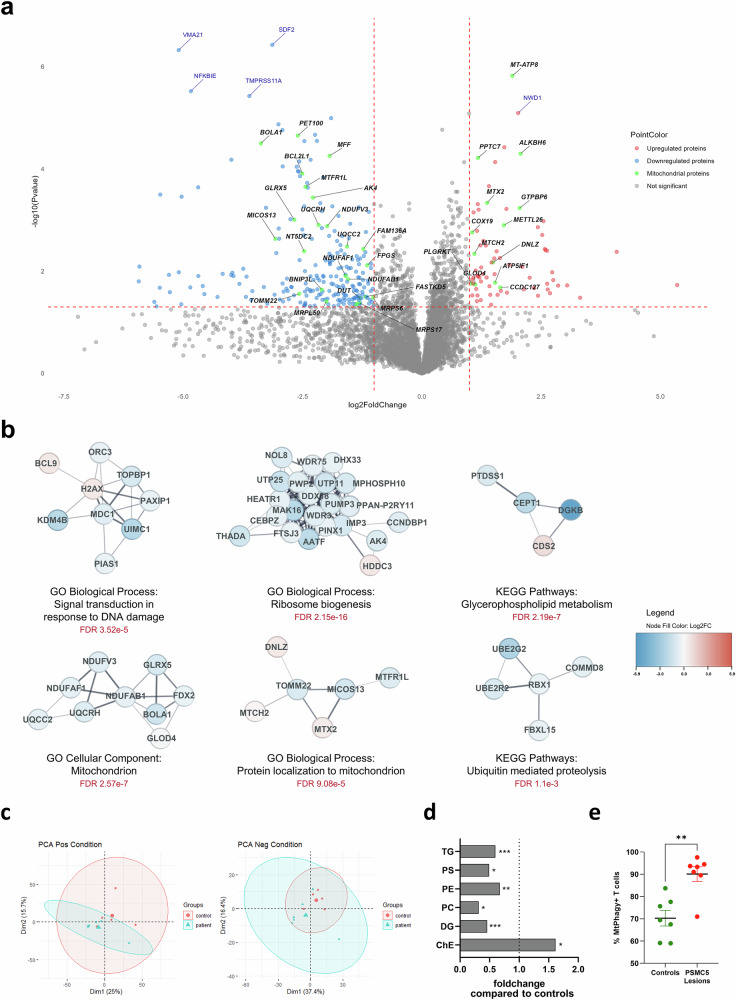
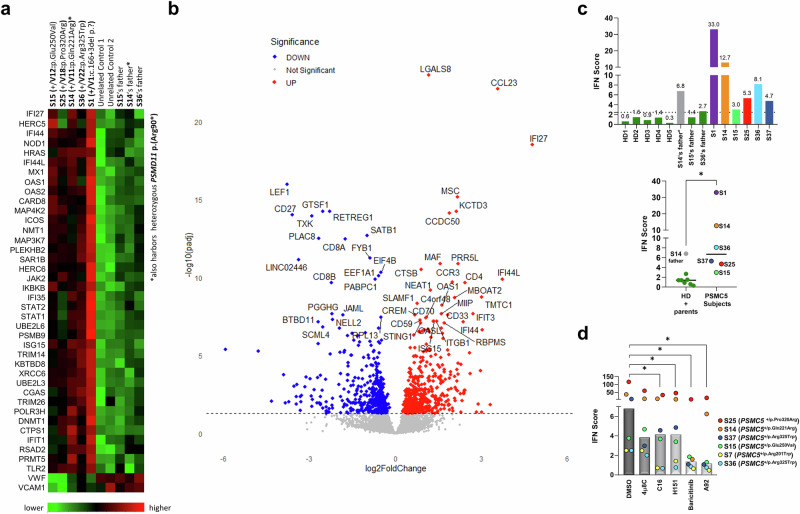
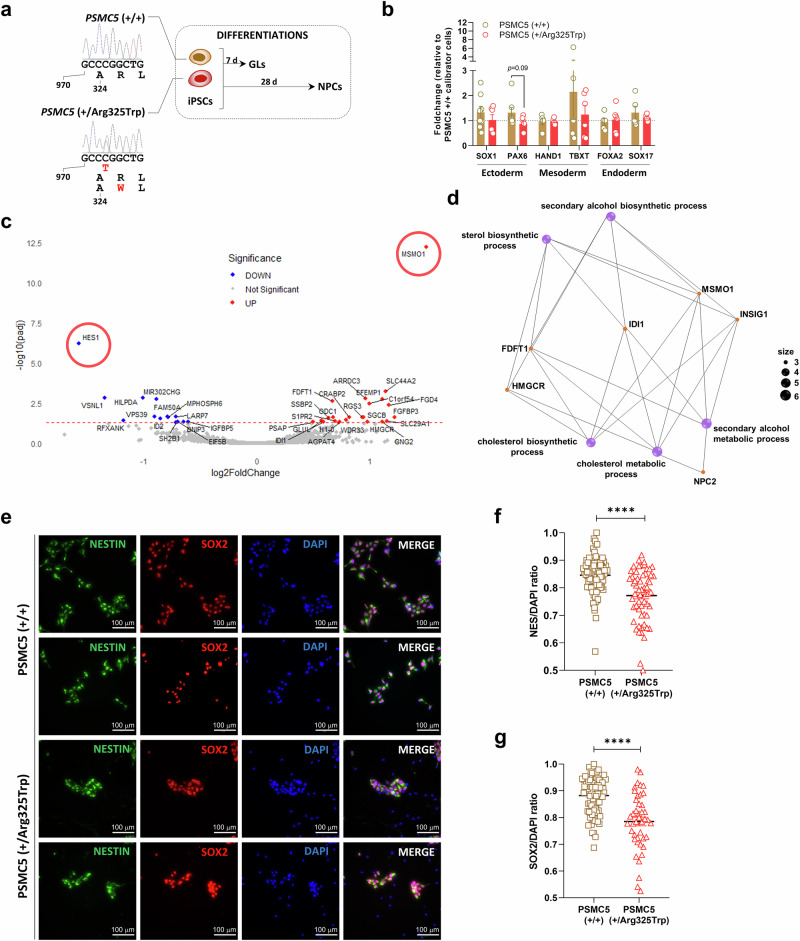
- Patient T cells showed increased aggresome formation (MFI 64.53 ± 11.77 vs control 34.58 ± 2.148; p = 0.0159), high-molecular-weight ubiquitin accumulation, altered mitochondrial and lipid metabolism, and a type I IFN signature; PKR inhibitor C16, STING inhibitor H-151, GCN2 inhibitor A92, and JAK inhibitor baricitinib reduced IFN scores, whereas IRE1 inhibitor 4µ8C did not. iPSC-derived NPCs with p.(Arg325Trp) had 10% fewer SOX2⁺ and 7% fewer Nestin⁺ cells than wild-type.
Methods
- Genetic and clinical study of 44 affected individuals and available relatives, with genome/exome sequencing, clinical phenotyping, 3D structural mapping of variants, and GestaltMatcher facial analysis.
- Functional models included Drosophila Rpt6 knockdown for olfactory, reversal, and climbing assays; rat hippocampal neuron Psmc5 shRNA knockdown; mouse hippocampal neuron overexpression of selected PSMC5 variants; patient-derived T cells for proteomics, lipidomics, Native-PAGE, flow cytometry, and IFN assays; and CRISPR/Cas9-edited iPSCs differentiated into germ layers and neural progenitor cells.
- Analyses used t-tests, Mann-Whitney U tests, one-way ANOVA with Tukey or Dunnett’s post hoc tests, Wilcoxon tests, mass spectrometry, transcriptomics, and lipidomics, with statistical thresholds reported per experiment.
Limitations
- The paper states that no statistical method was used to predetermine sample size, no data were excluded except proteomics outliers with high missing values, experiments were not randomized, and investigators were not blinded to allocation during experiments and outcome assessment.
- The authors note limited follow-up on clinical progression, difficulty drawing a clear genotype-phenotype correlation because of important phenotypic variability, and in vivo/in vitro discrepancies for some variants.
- Evident from the text: functional assays often used small numbers of subjects, images, neurons, or biological replicates, and not all 26 variants were tested in every cellular or animal assay.
Model-written summary. Check it against the paper before relying on it.
Integrity signals
Registry
Cites
Statistics
Figures
Verification
Claims the paper makes
12 Valid · 0 Not valid · 3 Not checked · 98 Own results and interpretations
The cited sources support only part of this claim — read each source’s verdict below.
In the paper
“As an ATPase, PSMC5 serves as a neuronal sensor that dynamically adjusts proteasome activity and localization to spines in response to protein turnover requirements through phosphorylation by CAMKIIα15,16.”
§ Investigating the neuronal role of the proteasomal ATPase subunit gene PSMC5 in neurodevelopmental proteasomopathies > Introduction
What the sources say
- Not checked — no full text of the sourcecites [15] Bingol, B. et al. Autophosphorylated CaMKIIalpha acts as a scaffold to recruit proteasomes to dendritic spines. Cell 140, 567–578 (2010). 20178748 source
- Partly supportedcites [16] Jarome, T. J., Ferrara, N. C., Kwapis, J. L. & Helmstetter, F. J. CaMKII regulates proteasome phosphorylation and activity and promotes memory destabilization following retrieval. Neurobiol. Learn. Mem. 128, 103–109 (2016). 26779588 PMC4754128 sourceExperimental — accuracy not yet measured
Results §3.2 reports that CaMKII inhibition prevented retrieval-induced increases in proteasome activity and Rpt6 phosphorylation in the amygdala. The paper does not establish that PSMC5 acts as a neuronal sensor, adjusts activity according to protein-turnover requirements, or controls proteasome localization to spines; it also does not specify CaMKIIα as the kinase responsible in that experiment. Page numbers were not available in our copy. (LLM, conf=0.85)
plainstates a cause- Asserted: passes — The authors put it forward as true.
- Checkable: passes — It can be checked against evidence.
- Load-bearing: unclear — It is unclear whether the paper’s conclusions depend on it.
- Based: passes — The paper gives a reason why it holds.
The cited sources support only part of this claim — read each source’s verdict below.
In the paper
“Genetic investigations have further unveiled that loss-of-function variants in proteasome genes contribute to the onset and progression of a unique class of neurodevelopmental disorders (NDDs), specifically referred to as the neurodevelopmental proteasomopathies (NDPs)8 or proteasome associated neurodevelopmental disorders.”
§ Investigating the neuronal role of the proteasomal ATPase subunit gene PSMC5 in neurodevelopmental proteasomopathies > Introduction
What the sources say
- Partly supportedcites [8] Cuinat, S. et al. Understanding neurodevelopmental proteasomopathies as new rare disease entities: a review of current concepts, molecular biomarkers, and perspectives. Genes Dis. 11, 101130 (2024). 39220754 PMC11364055 sourceExperimental — accuracy not yet measured
The Neurodevelopmental proteasomopathies section describes an NDD caused by loss-of-function variants in PSMD12, supporting the claim that such variants can cause NDPs. The Molecular pathogenesis section says the mechanisms remain poorly understood and does not establish that the variants contribute to disease progression over time. (LLM, conf=0.84)
plainstates a cause- Asserted: passes — The authors put it forward as true.
- Checkable: passes — It can be checked against evidence.
- Load-bearing: passes — The paper’s conclusions depend on it.
- Based: passes — The paper gives a reason why it holds.
- Partly supported
Every source the paper cites for this claim was checked and supports it.
In the paper
“Nonetheless, facial analysis with GestaltMatcher17 suggested a recognizable facial gestalt among PSMC5 subjects.”
§ Investigating the neuronal role of the proteasomal ATPase subunit gene PSMC5 in neurodevelopmental proteasomopathies > Results > Subjects with PSMC5 variants present a similar facial gestalt
What the sources say
- Supportedcites [17] Hsieh, T. C. et al. GestaltMatcher facilitates rare disease matching using facial phenotype descriptors. Nat. Genet. 54, 349–357 (2022). 35145301 PMC9272356 source
The citation is attached to GestaltMatcher, identifying the facial-analysis method used by the citing authors. The source describes GestaltMatcher in the Abstract and explains in the Overview (page unavailable) that it uses facial descriptors and their distances to cluster patients and delineate phenotypes. The observation about PSMC5 subjects is the citing authors’ result, not a result attributed to this source. (LLM, conf=0.91)
hedgedstates an associationn = 15- Asserted: passes — The authors put it forward as true.
- Checkable: passes — It can be checked against evidence.
- Load-bearing: passes — The paper’s conclusions depend on it.
- Based: passes — The paper gives a reason why it holds.
- Supported
Every source the paper cites for this claim was checked and supports it.
In the paper
“However, Rpt6 KD caused significant defect in the ability to acquire novel association after initial training—a different behavior paradigm known as reversal learning (Tukey, p < 0.0001; N = 4; Fig. 3b), which is similar to what we previously reported in proteasome subunit gene PSMC3 KD models11.”
§ Investigating the neuronal role of the proteasomal ATPase subunit gene PSMC5 in neurodevelopmental proteasomopathies > Results > Psmc5 knockdown (KD) impairs fly reversal learning and alters proteostasis as well as excitatory/inhibitory balance of rat hippocampal neurons
What the sources say
- Supportedcites [11] Ebstein, F. et al. PSMC3 proteasome subunit variants are associated with neurodevelopmental delay and type I interferon production. Sci. Transl. Med. 15, eabo3189 (2023). 37256937 PMC10506367 source
The cited paper’s section on silencing the PSMC3 Drosophila ortholog Rpt5 reports that flies learned the initial odor–shock association normally but performed significantly worse when the association was reversed (Fig. 2C). This supports the cited comparison to a PSMC3 knockdown model; the Rpt6 result and its statistics are the citing authors’ own findings, not attributed to this source. (LLM, conf=0.94)
plainstates a causen = 4- Asserted: passes — The authors put it forward as true.
- Checkable: passes — It can be checked against evidence.
- Load-bearing: passes — The paper’s conclusions depend on it.
- Based: passes — The paper gives a reason why it holds.
- Rests on an assumption not shown here.
- Supported
The cited sources support only part of this claim — read each source’s verdict below.
In the paper
“Cells harboring PSMC5 variants exhibit characteristics reminiscent of senescent or neurodegenerative cells, including impaired mitophagy47, type I IFN response48, abnormal apolipoproteins and/or cholesterol levels49,50, cognitive inflexibility51,52, impaired neuritogenesis53,54, and an imbalanced E/I ratio55,56.”
§ Investigating the neuronal role of the proteasomal ATPase subunit gene PSMC5 in neurodevelopmental proteasomopathies > Discussion
What the sources say
- Partly supportedcites [47] Chen, G., Kroemer, G. & Kepp, O. Mitophagy: an emerging role in aging and age-associated diseases. Front. Cell Dev. Biol. 8, 200 (2020). 32274386 PMC7113588 sourceExperimental — accuracy not yet measured
The BNIP3 and NIX-dependent mitophagy section reports impaired mitophagy in neurodegenerative disorders, supporting the comparison attached to citation 47. It does not address PSMC5 variants or establish that cells harboring them have impaired mitophagy. No page number is available in our copy. (LLM, conf=0.85)
- Supportedcites [48] Baruch, K. et al. Aging. Aging-induced type I interferon response at the choroid plexus negatively affects brain function. Science 346, 89–93 (2014). 25147279 PMC4869326 source
The cited paper supports the type I IFN response as an aging-associated characteristic: its Abstract reports an IFN-I-dependent expression profile in the choroid plexus of aged mice and humans. Citation 48 is attached to that characteristic, not to a claim that this paper studied PSMC5 variants. (LLM, conf=0.91)
- Supportedcites [49] Ma, C., Li, J., Bao, Z., Ruan, Q. & Yu, Z. Serum levels of ApoA1 and ApoA2 are associated with cognitive status in older men. Biomed. Res. Int. 2015, 481621 (2015). 26682220 PMC4670907 source
Citation 49 supports the apolipoprotein and cholesterol component of the comparison, not the other listed characteristics or the citing authors’ PSMC5-cell findings. In Results §3.2, the paper reports differences in ApoA2, ApoC2, and HDL-C across cognitive-status groups; the Discussion §4 also links ApoA1 and ApoA2 levels to cognitive impairment in older men. The evidence concerns serum levels in people, rather than measurements in cells. (LLM, conf=0.87)
- Supportedcites [50] de Chaves, E. P. & Narayanaswami, V. Apolipoprotein E and cholesterol in aging and disease in the brain. Future Lipido 3, 505–530 (2008). PMC2600507 19649144 source
Citation 49/50 is attached to the apolipoprotein and cholesterol part of the sentence, not to the findings about PSMC5 variants. The sections “Cholesterol in normal aging,” “ApoE in normal aging,” and “Cholesterol & ApoE in AD” describe changes in these levels during aging and neurodegenerative disease. (LLM, conf=0.88)
plainstates an association- Asserted: passes — The authors put it forward as true.
- Checkable: passes — It can be checked against evidence.
- Load-bearing: passes — The paper’s conclusions depend on it.
- Based: passes — The paper gives a reason why it holds.
- Partly supported
63 more claims
Create a free account to see all 113 claims and every source verdict.
- It may state two separate claims as one. 23
- Probably not a substantial claim. 25
- Not yet classified. 1
- The quote only partly states this claim. 2
Self-check
Percentages, sums and reported differences re-computed from the paper’s own numbers.
Each contradiction between two passages listed here was confirmed by an independent check.
Rated major: it would touch a result — a value a result rests on, reported and recomputed p-values on opposite sides of the significance level, two passages that conflict with no sign which is right, or a cited work retracted before this paper was published.
In the paper
§ Investigating the neuronal role of the proteasomal ATPase subunit gene PSMC5 in neurodevelopmental proteasomopathies > Results > PSMC5 variants profoundly disrupt protein homeostasis and lipid metabolism, and activate mitophagy in T cells from NDD subjects
“Percentages of mitophagy-positive cells were significantly increased in patients (**p = 0.002, two-tailed Mann-Whitney U test).”
§ Investigating the neuronal role of the proteasomal ATPase subunit gene PSMC5 in neurodevelopmental proteasomopathies > Results > PSMC5 variants profoundly disrupt protein homeostasis and lipid metabolism, and activate mitophagy in T cells from NDD subjects
“controls (90.09 ± 3.330, n = 7) and patients (70.29 ± 3.525, n = 7)”
Rated minor: it would not touch a result — a value no result rests on, a p-value that stays on the same side of the significance level, or a conflict that is clerical, resolved elsewhere in the paper, or outside its own findings.
In the paper
§ Investigating the neuronal role of the proteasomal ATPase subunit gene PSMC5 in neurodevelopmental proteasomopathies > Results > The recurrent PSMC5 heterozygous variant c.973C>T p.(Arg325Trp) perturbs the differentiation of induced pluripotent stem cells (iPSCs) into neural progenitor cells
“Fig. 9 PSMC5 variant c.973C>T p.(Arg325Trp) impairs iPSC differentiation into germ layers and neural progenitors.”
§ Investigating the neuronal role of the proteasomal ATPase subunit gene PSMC5 in neurodevelopmental proteasomopathies > Discussion
“the variant p.(Arg325Trp) does not impair the generation of the three germ layers (Fig. 9b)”
Rated minor: it would not touch a result — a value no result rests on, a p-value that stays on the same side of the significance level, or a conflict that is clerical, resolved elsewhere in the paper, or outside its own findings.
In the paper
§ Investigating the neuronal role of the proteasomal ATPase subunit gene PSMC5 in neurodevelopmental proteasomopathies > Results > PSMC5 variants profoundly disrupt protein homeostasis and lipid metabolism, and activate mitophagy in T cells from NDD subjects
“T cells expanded from PBMCs of NDD subjects (S7, S14, S15, S25, S36; n = 5)”
§ Investigating the neuronal role of the proteasomal ATPase subunit gene PSMC5 in neurodevelopmental proteasomopathies > Results > PSMC5 variants profoundly disrupt protein homeostasis and lipid metabolism, and activate mitophagy in T cells from NDD subjects
“Left panel: representative histogram overlay comparing the six patient samples to a healthy control.”
Rated minor: it would not touch a result — a value no result rests on, a p-value that stays on the same side of the significance level, or a conflict that is clerical, resolved elsewhere in the paper, or outside its own findings.
In the paper
§ Investigating the neuronal role of the proteasomal ATPase subunit gene PSMC5 in neurodevelopmental proteasomopathies > Methods > Proteomics of T cells (second set of analyses)
“Lysates/eluates from protein samples of 13 individuals”
§ Investigating the neuronal role of the proteasomal ATPase subunit gene PSMC5 in neurodevelopmental proteasomopathies > Methods > Proteomics of T cells (second set of analyses)
“(n = 11; 5 patients; 6 healthy controls)”
Rated minor: it would not touch a result — a value no result rests on, a p-value that stays on the same side of the significance level, or a conflict that is clerical, resolved elsewhere in the paper, or outside its own findings.
In the paper
§ Investigating the neuronal role of the proteasomal ATPase subunit gene PSMC5 in neurodevelopmental proteasomopathies > Results > The recurrent PSMC5 heterozygous variant c.973C>T p.(Arg325Trp) perturbs the differentiation of induced pluripotent stem cells (iPSCs) into neural progenitor cells
“their three isogenic WT controls PSMC5(+/p.Arg325Trp)”
§ Investigating the neuronal role of the proteasomal ATPase subunit gene PSMC5 in neurodevelopmental proteasomopathies > Results > The recurrent PSMC5 heterozygous variant c.973C>T p.(Arg325Trp) perturbs the differentiation of induced pluripotent stem cells (iPSCs) into neural progenitor cells
“Differentiation of PSMC5(+/+) and PSMC5(+/p.Arg325Trp) iPSCs into the three germ layers”
Citations
Cites
Lipid extraction by methyl-tert-butyl ether for high-throughput lipidomics
Matyash, V., Liebisch, G., Kurzchalia, T. V., Shevchenko, A., & Schwudke, D. (2008) · Journal of Lipid Research · doi:10.1194/jlr.d700041-jlr200 · Cited by 2,598
Rath, S., Sharma, R., Gupta, R., Ast, T., Chan, C., Durham, T. J., Goodman, R. P., Grabarek, Z., Haas, M. E., Hung, W. H. W., et al. (2021) · Nucleic Acids Research · doi:10.1093/nar/gkaa1011 · Cited by 1,888 · cited 1×
“0 inventory 69 .”
The proteostasis network and its decline in ageing
Hipp, M. S., Kasturi, P., & Hartl, F. U. (2019) · Nature Reviews Molecular Cell Biology · doi:10.1038/s41580-019-0101-y · Cited by 1,642 · cited 2×
“Neuronal synaptic plasticity relies on continuous proteome renewal, necessitating robust translation at ribosomes and concurrent break-down of defective ribosomal products 2,4 .”
Classical conditioning and retention in normal and mutantDrosophila melanogaster
Tully, T., & Quinn, W. G. (1985) · Journal of Comparative Physiology A · doi:10.1007/bf01350033 · Cited by 1,183
Activity level controls postsynaptic composition and signaling via the ubiquitin-proteasome system
Ehlers, M. D. (2003) · Nature Neuroscience · doi:10.1038/nn1013 · Cited by 977 · cited 1×
“Effective protein clearance by the proteasome is crucial for various neuronal processes, including synaptic remodeling, cell migration, neurotransmitter release, long-term potentiation, long-term depression, and memory formation 5,6 .”
The proteasome: overview of structure and functions
TANAKA, K. (2009) · Proceedings of the Japan Academy, Series B · doi:10.2183/pjab.85.12 · Cited by 862 · cited 1×
“2a and Supplementary Table 2) and underlines previous fi ndings in mice and plants 23,24 .”
Cognitive and behavioural flexibility: Neural mechanisms and clinical considerations
Uddin, L. Q. (2021) · Nature Reviews Neuroscience · doi:10.1038/s41583-021-00428-w · Cited by 698
Evidence for 28 genetic disorders discovered by combining healthcare and research data
Kaplanis, J., Samocha, K. E., Wiel, L., Zhang, Z., Arvai, K. J., Eberhardt, R. Y., Gallone, G., Lelieveld, S. H., Martin, H. C., McRae, J. F., et al. (2020) · Nature · doi:10.1038/s41586-020-2832-5 · Cited by 615 · cited 1×
“The pivotal role of PSMC5 in early human developmental processes had been strongly suggested by a signi fi cant enrichment of de novo variants in individuals with developmental disorders in a large international cohort study 22 .”
Self-citationAging-induced type I interferon response at the choroid plexus negatively affects brain function
Baruch, K., Deczkowska, A., David, E., Castellano, J. M., Miller, O., Kertser, A., Berkutzki, T., Barnett-Itzhaki, Z., Bezalel, D., Wyss-Coray, T., et al. (2014) · Science · doi:10.1126/science.1252945 · Cited by 615
Ubiquitin, the proteasome and protein degradation in neuronal function and dysfunction
Tai, H.-C., & Schuman, E. M. (2008) · Nature Reviews Neuroscience · doi:10.1038/nrn2499 · Cited by 532 · cited 4×
“Effective protein clearance by the proteasome is crucial for various neuronal processes, including synaptic remodeling, cell migration, neurotransmitter release, long-term potentiation, long-term depression, and memory formation 5,6 .”
InfluentialGao, R., & Penzes, P. (2015) · Current Molecular Medicine · doi:10.2174/1566524015666150303003028 · Cited by 516 · cited 1×
“Similar imbalances in E/I ratio are associated with impaired decision-making 31 , Alzheimer ’ s disease 32 or cognitive de fi cits in conditions like ASD and schizophrenia 33 .”
Oscillatory Control of Factors Determining Multipotency and Fate in Mouse Neural Progenitors
Imayoshi, I., Isomura, A., Harima, Y., Kawaguchi, K., Kori, H., Miyachi, H., Fujiwara, T., Ishidate, F., & Kageyama, R. (2013) · Science · doi:10.1126/science.1242366 · Cited by 513
Regulation of proteasome assembly and activity in health and disease
Rousseau, A., & Bertolotti, A. (2018) · Nature Reviews Molecular Cell Biology · doi:10.1038/s41580-018-0040-z · Cited by 510 · cited 4×
“AttheveryheartoftheUPSis the 26S proteasome, a large multi-subunitprotease consisting ofa 20S coreparticleanda19Sregulatoryparticle,comprisingalidandabase 3 .”
InfluentialIncreased proteasome activity in human embryonic stem cells is regulated by PSMD11
Vilchez, D., Boyer, L., Morantte, I., Lutz, M., Merkwirth, C., Joyce, D., Spencer, B., Page, L., Masliah, E., Berggren, W. T., et al. (2012) · Nature · doi:10.1038/nature11468 · Cited by 388
Mitophagy: An Emerging Role in Aging and Age-Associated Diseases
Chen, G., Kroemer, G., & Kepp, O. (2020) · Frontiers in Cell and Developmental Biology · doi:10.3389/fcell.2020.00200 · Cited by 359 · cited 1×
“Cellsharboring PSMC5 variantsexhibitcharacteristicsreminiscent of senescent or neurodegenerative cells, including impaired mitophagy 47 , type I IFN response 48 , abnormal apolipoproteins and/or cholesterol levels 49,50 , cognitive in fl exibility 51,52 , impaired neuritogenesis 53,54 , and an…”
The Mechanistic Links Between Proteasome Activity, Aging and Agerelated Diseases
Saez, I., & Vilchez, D. (2014) · Current Genomics · doi:10.2174/138920291501140306113344 · Cited by 325
Frankenfield, A. M., Ni, J., Ahmed, M., & Hao, L. (2022) · Journal of Proteome Research · doi:10.1021/acs.jproteome.2c00145 · Cited by 321
Proline: an efficient and user-friendly software suite for large-scale proteomics
Bouyssié, D., Hesse, A.-M., Mouton-Barbosa, E., Rompais, M., Macron, C., Carapito, C., Gonzalez de Peredo, A., Couté, Y., Dupierris, V., Burel, A., et al. (2020) · Bioinformatics · doi:10.1093/bioinformatics/btaa118 · Cited by 300
Autophosphorylated CaMKIIα Acts as a Scaffold to Recruit Proteasomes to Dendritic Spines
Bingol, B., Wang, C.-F., Arnott, D., Cheng, D., Peng, J., & Sheng, M. (2010) · Cell · doi:10.1016/j.cell.2010.01.024 · Cited by 268
Regulated protein turnover: snapshots of the proteasome in action
Bhattacharyya, S., Yu, H., Mim, C., & Matouschek, A. (2014) · Nature Reviews Molecular Cell Biology · doi:10.1038/nrm3741 · Cited by 240 · cited 3×
“Theseoligopeptidescanbefurtherhydrolyzedintoamino acids by peptidases, enabling ef fi cient amino acid recycling within the cellular protein synthesis machinery 1,3 .”
GestaltMatcher facilitates rare disease matching using facial phenotype descriptors
Hsieh, T.-C., Bar-Haim, A., Moosa, S., Ehmke, N., Gripp, K. W., Pantel, J. T., Danyel, M., Mensah, M. A., Horn, D., Rosnev, S., et al. (2022) · Nature Genetics · doi:10.1038/s41588-021-01010-x · Cited by 233
Self-citationQuantitative Analysis of Climbing Defects in a Drosophila Model of Neurodegenerative Disorders
Madabattula, S. T., Strautman, J. C., Bysice, A. M., O’Sullivan, J., Androschuk, A., Rosenfelt, C. S., Doucet, K., Rouleau, G. A., & Bolduc, F. V. (2015) · Journal of Visualized Experiments · doi:10.3791/52741 · Cited by 180 · cited 8×
“Drosophila strains and crosses .”
InfluentialSelf-citationTelomere Shortening in Neural Stem Cells Disrupts Neuronal Differentiation and Neuritogenesis
Ferrón, S. R., Marqués-Torrejón, M. Á., Mira, H., Flores, I., Taylor, K., Blasco, M. A., & Fariñas, I. (2009) · The Journal of Neuroscience · doi:10.1523/jneurosci.3836-09.2009 · Cited by 179 · cited 1×
“…of senescent or neurodegenerative cells, including impaired mitophagy 47 , type I IFN response 48 , abnormal apolipoproteins and/or cholesterol levels 49,50 , cognitive in fl exibility 51,52 , impaired neuritogenesis 53,54 , and an imbalanced E/I ratio 55,56 .”
Apolipoprotein E and cholesterol in aging and disease in the brain
de Chaves, E. P., Narayanaswami, V., Christoffersen, C., & Nielsen, L. B. (2008) · Future Lipidology · doi:10.2217/17460875.3.5.505 · Cited by 164 · cited 1×
“…of senescent or neurodegenerative cells, including impaired mitophagy 47 , type I IFN response 48 , abnormal apolipoproteins and/or cholesterol levels 49,50 , cognitive in fl exibility 51,52 , impaired neuritogenesis 53,54 , and an imbalanced E/I ratio 55,56 .”
Activity-dependent growth of new dendritic spines is regulated by the proteasome
Hamilton, A. M., Oh, W. C., Vega-Ramirez, H., Stein, I. S., Hell, J. W., Patrick, G. N., & Zito, K. (2012) · Neuron · doi:10.1016/j.neuron.2012.04.031 · Cited by 164
Harris, S. S., Wolf, F., De Strooper, B., & Busche, M. A. (2020) · Neuron · doi:10.1016/j.neuron.2020.06.005 · Cited by 161 · cited 2×
“The most striking shared feature is however a decline in proteasomal activity, accompanied by the formation of aggresomes 32,57 , which is negatively correlated with lifespan in human multipotent cells 58 and in Drosophila 59 .”
Fabre, B., Lambour, T., Garrigues, L., Ducoux-Petit, M., Amalric, F., Monsarrat, B., Burlet-Schiltz, O., & Bousquet-Dubouch, M.-P. (2014) · Journal of Proteome Research · doi:10.1021/pr500193k · Cited by 148
Self-citationCANDLE Syndrome As a Paradigm of Proteasome-Related Autoinflammation
Torrelo, A. (2017) · Frontiers in Immunology · doi:10.3389/fimmu.2017.00927 · Cited by 131
Jarome, T. J., Ferrara, N. C., Kwapis, J. L., & Helmstetter, F. J. (2016) · Neurobiology of Learning and Memory · doi:10.1016/j.nlm.2016.01.001 · Cited by 112 · cited 1×
“As anATPase, PSMC5 serves asa neuronalsensor that dynamically adjustsproteasomeactivity and localizationtospines in response to protein turnover requirements through phosphorylation by CAMKII α 15,16 .”
Effects of Altered Excitation-Inhibition Balance on Decision Making in a Cortical Circuit Model
Lam, N. H., Borduqui, T., Hallak, J., Roque, A., Anticevic, A., Krystal, J. H., Wang, X.-J., & Murray, J. D. (2022) · The Journal of Neuroscience · doi:10.1523/jneurosci.1371-20.2021 · Cited by 109
Cholesterol imbalance and neurotransmission defects in neurodegeneration
Shin, K. C., Moussa, H. Y. A., & Park, Y. (2024) · Experimental & Molecular Medicine · doi:10.1038/s12276-024-01273-4 · Cited by 97 · cited 1×
“Similar fi ndings have been observed in neuropsychiatric and neurodegenerative diseases, where cholesterol imbalance can impair neuronal structure and function 45,46 .”
van Nifterick, A. M., Mulder, D., Duineveld, D. J., Diachenko, M., Scheltens, P., Stam, C. J., van Kesteren, R. E., Linkenkaer-Hansen, K., Hillebrand, A., & Gouw, A. A. (2023) · Scientific Reports · doi:10.1038/s41598-023-33973-8 · Cited by 83 · cited 1×
“…of senescent or neurodegenerative cells, including impaired mitophagy 47 , type I IFN response 48 , abnormal apolipoproteins and/or cholesterol levels 49,50 , cognitive in fl exibility 51,52 , impaired neuritogenesis 53,54 , and an imbalanced E/I ratio 55,56 .”
AUTS2 Gene: Keys to Understanding the Pathogenesis of Neurodevelopmental Disorders
Hori, K., Shimaoka, K., & Hoshino, M. (2021) · Cells · doi:10.3390/cells11010011 · Cited by 73
Mao, D., Reuter, C. M., Ruzhnikov, M. R. Z., Beck, A. E., Farrow, E., Emrick, L., Rosenfeld, J. A., Mackenzie, K. M., Robak, L. A., Wheeler, M. T., et al. (2020) · The American Journal of Human Genetics · doi:10.1016/j.ajhg.2020.02.016 · Cited by 70
Self-citationOchi, S., Imaizumi, Y., Shimojo, H., Miyachi, H., & Kageyama, R. (2020) · Development · doi:10.1242/dev.182204 · Cited by 69 · cited 1×
“HES1 acts as a transcriptional repressor important for the determination of neural progenitor cell proliferation and fate 28,29 .”
Impaired cholesterol metabolism, neurons, and neuropsychiatric disorders
Cheon, S. Y. (2023) · Experimental Neurobiology · doi:10.5607/en23010 · Cited by 67 · cited 1×
“Similar fi ndings have been observed in neuropsychiatric and neurodegenerative diseases, where cholesterol imbalance can impair neuronal structure and function 45,46 .”
Kröll‐Hermi, A., Ebstein, F., Stoetzel, C., Geoffroy, V., Schaefer, E., Scheidecker, S., Bär, S., Takamiya, M., Kawakami, K., Zieba, B. A., et al. (2020) · EMBO Molecular Medicine · doi:10.15252/emmm.201911861 · Cited by 65
Davidson, S., Yu, C.-H., Steiner, A., Ebstein, F., Baker, P. J., Jarur-Chamy, V., Hrovat Schaale, K., Laohamonthonkul, P., Kong, K., Calleja, D. J., et al. (2022) · Science Immunology · doi:10.1126/sciimmunol.abi6763 · Cited by 64 · cited 1×
“Moreover, GCN2 regulates neurogenesis, inhibits neuritogenesis, and in fl uences behavioral control and memory 43 , while PKR is involved in neurodegenerative diseases, including Alzheimer ’ s 44 and dysregulated type I IFN-signaling 11,21 .”
Self-citationRoffé, M., Hajj, G. N. M., Azevedo, H. F., Alves, V. S., & Castilho, B. A. (2013) · Journal of Biological Chemistry · doi:10.1074/jbc.m113.461970 · Cited by 59 · cited 1×
“Moreover, GCN2 regulates neurogenesis, inhibits neuritogenesis, and in fl uences behavioral control and memory 43 , while PKR is involved in neurodegenerative diseases, including Alzheimer ’ s 44 and dysregulated type I IFN-signaling 11,21 .”
Prefrontal cortical GABAergic signaling and impaired behavioral flexibility in aged F344 rats
Beas, B. S., McQuail, J. A., Bañuelos, C., Setlow, B., & Bizon, J. L. (2017) · Neuroscience · doi:10.1016/j.neuroscience.2016.02.014 · Cited by 55
Goldbach‐Mansky, R. T., Alehashemi, S., & de Jesus, A. A. (2024) · Nature Reviews Rheumatology · doi:10.1038/s41584-024-01184-8 · Cited by 54
Lee, K.-H., Minami, A., Marshall, R. S., Book, A. J., Farmer, L. M., Walker, J. M., & Vierstra, R. D. (2011) · The Plant Cell · doi:10.1105/tpc.111.089482 · Cited by 54
Conejero-Goldberg, C., Hyde, T. M., Chen, S., Dreses-Werringloer, U., Herman, M. M., Kleinman, J. E., Davies, P., & Goldberg, T. E. (2011) · Molecular Psychiatry · doi:10.1038/mp.2010.57 · Cited by 53 · cited 1×
“…the phosphorylated form of Psmc5/Rpt6 has been proposed asamarkerformonitoringproteasomalactivityintheagingratbrain 36 , and the decreased expression of PSMC5 as a potential biomarker for the onset or development of Parkinson ’ s disease, Lewy body dementia or Alzheimer ’ s disease 60 – 62 .”
An abundance of free regulatory (19 S ) proteasome particles regulates neuronal synapses
Sun, C., Desch, K., Nassim-Assir, B., Giandomenico, S. L., Nemcova, P., Langer, J. D., & Schuman, E. M. (2023) · Science · doi:10.1126/science.adf2018 · Cited by 51
Bogetofte, H., Ryan, B. J., Jensen, P., Schmidt, S. I., Vergoossen, D. L. E., Barnkob, M. B., Kiani, L. N., Chughtai, U., Heon-Roberts, R., Caiazza, M. C., et al. (2023) · Cell Reports · doi:10.1016/j.celrep.2023.112180 · Cited by 47
Serum Levels of ApoA1 and ApoA2 Are Associated with Cognitive Status in Older Men
Ma, C., Li, J., Bao, Z., Ruan, Q., & Yu, Z. (2015) · BioMed Research International · doi:10.1155/2015/481621 · Cited by 46 · cited 1×
“…of senescent or neurodegenerative cells, including impaired mitophagy 47 , type I IFN response 48 , abnormal apolipoproteins and/or cholesterol levels 49,50 , cognitive in fl exibility 51,52 , impaired neuritogenesis 53,54 , and an imbalanced E/I ratio 55,56 .”
Identification of a quality-control factor that monitors failures during proteasome assembly
Zavodszky, E., Peak-Chew, S.-Y., Juszkiewicz, S., Narvaez, A. J., & Hegde, R. S. (2021) · Science · doi:10.1126/science.abc6500 · Cited by 45
Ansar, M., Ebstein, F., Özkoç, H., Paracha, S. A., Iwaszkiewicz, J., Gesemann, M., Zoete, V., Ranza, E., Santoni, F. A., Sarwar, M. T., et al. (2020) · Human Molecular Genetics · doi:10.1093/hmg/ddaa032 · Cited by 44
Chaumette, T., Cinotti, R., Mollé, A., Solomon, P., Castain, L., Fourgeux, C., McWilliam, H. E. G., Misme-Aucouturier, B., Broquet, A. H., Jacqueline, C., et al. (2022) · American Journal of Respiratory and Critical Care Medicine · doi:10.1164/rccm.202110-2324oc · Cited by 39
Self-citationThe needs of a synapse—How local organelles serve synaptic proteostasis
Grochowska, K. M., Andres‐Alonso, M., Karpova, A., & Kreutz, M. R. (2022) · The EMBO Journal · doi:10.15252/embj.2021110057 · Cited by 38
The proteasome complex and the maintenance of pluripotency: sustain the fate by mopping up?
Schröter, F., & Adjaye, J. (2014) · Stem Cell Research & Therapy · doi:10.1186/scrt413 · Cited by 38
Cognitive flexibility in adulthood and advanced age: Evidence of internal and external validity
Richard’s, M. M., Krzemien, D., Vido, V., Vernucci, S., Zamora, E. V., Comesaña, A., Coni, A. G., & Introzzi, I. M. (2019) · Applied Neuropsychology Adult · doi:10.1080/23279095.2019.1652176 · Cited by 38
Papendorf, J. J., Ebstein, F., Alehashemi, S., Piotto, D. G. P., Kozlova, A., Terreri, M. T., Shcherbina, A., Rastegar, A., Rodrigues, M., Pereira, R., et al. (2023) · Frontiers in Immunology · doi:10.3389/fimmu.2023.1190104 · Cited by 38
Self-citationEbstein, F., Küry, S., Most, V., Rosenfelt, C., Scott-Boyer, M.-P., van Woerden, G. M., Besnard, T., Papendorf, J. J., Studencka-Turski, M., Wang, T., et al. (2023) · Science Translational Medicine · doi:10.1126/scitranslmed.abo3189 · Cited by 36
Self-citationThe Potential Role of Protein Kinase R as a Regulator of Age-Related Neurodegeneration
Martínez, N. W., Gómez, F. E., & Matus, S. (2021) · Frontiers in Aging Neuroscience · doi:10.3389/fnagi.2021.638208 · Cited by 33
Dulka, B. N., Trask, S., & Helmstetter, F. J. (2021) · Frontiers in Aging Neuroscience · doi:10.3389/fnagi.2021.656944 · Cited by 30
Dysregulation of the (immuno)proteasome pathway in malformations of cortical development
van Scheppingen, J., Broekaart, D. W. M., Scholl, T., Zuidberg, M. R. J., Anink, J. J., Spliet, W. G., van Rijen, P. C., Czech, T., Hainfellner, J. A., Feucht, M., et al. (2016) · Journal of Neuroinflammation · doi:10.1186/s12974-016-0662-z · Cited by 28 · cited 1×
“Similar observations have been made in brain tissues from individuals with neurodegenerative disorders 6 and schizophrenia 7 .”
Ameliorating replicative senescence of human bone marrow stromal cells by PSMB5 overexpression
Lu, L., Song, H., Wei, J.-L., Liu, X., Song, W.-H., Yan, B.-Y., Yang, G.-J., Li, A., & Yang, W. (2014) · Biochemical and Biophysical Research Communications · doi:10.1016/j.bbrc.2013.12.113 · Cited by 27 · cited 1×
“The most striking shared feature is however a decline in proteasomal activity, accompanied by the formation of aggresomes 32,57 , which is negatively correlated with lifespan in human multipotent cells 58 and in Drosophila 59 .”
Multilayered regulation of proteome stoichiometry
Ishikawa, K. (2021) · Current Genetics · doi:10.1007/s00294-021-01205-z · Cited by 25
Stankiewicz-Isidor syndrome: expanding the clinical and molecular phenotype
Isidor, B., Ebstein, F., Hurst, A., Vincent, M., Bader, I., Rudy, N. L., Cogne, B., Mayr, J., Brehm, A., Bupp, C., et al. (2022) · Genetics in Medicine · doi:10.1016/j.gim.2021.09.005 · Cited by 24 · cited 2×
“Revealing major overlapsinthemolecularpathogenesisofNDDstemmingfrom PSMC5 , PSMC3 , PSMD11 and PSMD12 variants 10 – 12 , these fi ndings not only enhance our understanding of the mechanisms underlying NDPs, but also lay the foundation for improved diagnostic procedures and potential therapeutic…”
Self-citationAlghamdi, A. A., Vallortigara, J., Howlett, D. R., Broadstock, M., Hortobágyi, T., Ballard, C. G., Thomas, A. J., O'Brien, J. T., Aarsland, D., Attems, J., et al. (2017) · Journal of Alzheimer s Disease · doi:10.3233/jad-160946 · Cited by 24
Ghosh, I., Liu, C. S., Swardfager, W., Lanctôt, K. L., & Anderson, N. D. (2021) · Molecular and Cellular Neuroscience · doi:10.1016/j.mcn.2021.103683 · Cited by 21
Zemoura, K., & Benke, D. (2014) · Journal of Biological Chemistry · doi:10.1074/jbc.m113.541987 · Cited by 20 · cited 4×
“Each affected individual was clinically evaluated, and written consent for use with the GestaltMatcher tool was secured for subjects S1, S3, S10, S12, S13, S15, S16, S23, S34-38, S40, and S44.”
InfluentialKüry, S., Besnard, T., Ebstein, F., Khan, T. N., Gambin, T., Douglas, J., Bacino, C. A., Craigen, W. J., Sanders, S. J., Lehmann, A., et al. (2017) · The American Journal of Human Genetics · doi:10.1016/j.ajhg.2017.03.003 · Cited by 19
Self-citationComprehensive analysis of core genes and key pathways in Parkinson's disease.
Yuan, Q., Zhang, S., Li, J., Xiao, J., Li, X., Yang, H. J., Lu, D., & Wang, Y. (2020) · PubMed · Cited by 15
PSMC5, a 19S Proteasomal ATPase, Regulates Cocaine Action in the Nucleus Accumbens
Ohnishi, Y. H., Ohnishi, Y. N., Nakamura, T., Ohno, M., Kennedy, P., Ohkawa, Y., Nishi, A., Neve, R. L., Tsuzuki, T., & Nestler, E. J. (2015) · PLoS ONE · doi:10.1371/journal.pone.0126710 · Cited by 12 · cited 1×
“These fi ndings align with observations from the paralogous gene Rpt5(PSMC3) in fl ies 11 or in rodents showing the involvement of Psmc5 in behavioral plasticity 36,37 , through regulation of chromatin remodeling and gene expression in the nucleus accumbens.”
Deb, W., Rosenfelt, C., Vignard, V., Papendorf, J. J., Möller, S., Wendlandt, M., Studencka-Turski, M., Cogné, B., Besnard, T., Ruffier, L., et al. (2024) · The American Journal of Human Genetics · doi:10.1016/j.ajhg.2024.05.016 · Cited by 11 · cited 3×
“Revealing major overlapsinthemolecularpathogenesisofNDDstemmingfrom PSMC5 , PSMC3 , PSMD11 and PSMD12 variants 10 – 12 , these fi ndings not only enhance our understanding of the mechanisms underlying NDPs, but also lay the foundation for improved diagnostic procedures and potential therapeutic…”
Self-citationCuinat, S., Bézieau, S., Deb, W., Mercier, S., Vignard, V., Isidor, B., Küry, S., & Ebstein, F. (2024) · Genes & Diseases · doi:10.1016/j.gendis.2023.101130 · Cited by 10
Self-citationP196: GestaltMatcher Database: A FAIR database for medical imaging data of rare diseases
Lesmann, H., Moosa, S., Pantel, T., et al. (2023) · Genetics in Medicine Open · doi:10.1016/j.gimo.2023.100225 · Cited by 8
Self-citationVelentzas, A. D., Katarachia, S. A., Sagioglou, N. E., Tsioka, M. M., Anagnostopoulos, A. K., Mpakou, V., Theotoki, E. I., Giannopoulou, A. F., Keramaris, K. E., Papassideri, I. S., et al. (2020) · Scientific Reports · doi:10.1038/s41598-020-62510-0 · Cited by 6 · cited 8×
“Drosophila strains and crosses .”
InfluentialConejero‐Goldberg, C., Hyde, T. M., Chen, S., et al. (2010) · Alzheimer s & Dementia · doi:10.1016/j.jalz.2010.05.619 · Cited by 2
Cited by
Insights on suicidality and autism; and more
Adams, J. U. (2025) · The Transmitter · doi:10.53053/vvwt8912
Molecular mechanisms in rare proteasomopathies
Möller, S., Alvarez, F. L., Thiel, F. G., Wendlandt, M., & Krüger, E. (2026) · EULAR Rheumatology Open · doi:10.1016/j.ero.2025.12.005
Self-citationType I Interferonopathies: Fifteen Years On, From Concept to Therapeutic Perspectives
Ünal, D., Melki, I., & Frémond, M. (2026) · Current Rheumatology Reports · doi:10.1007/s11926-026-01228-w · Cited by 2
Metadata
- Authors
- Küry, S., Stanton, J. E., van Woerden, G. M., Bosc-Rosati, A., Hsieh, T.-C., Bray, L., Oloudé, M., Rosenfelt, C., Scott-Boyer, M. P., Most, V., Wang, T., Papendorf, J. J., de Konink, C., Deb, W., Vignard, V., Studencka-Turski, M., Besnard, T., Hajdukowicz, A. M., Thiel, F. G., Wolfgramm, S., Florenceau, L., Cuinat, S., Marsac, S., Verrès, Y., Dangoumau, A., Poirier, L., Wentzensen, I. M., Tuttle, A., Forster, C., Striesow, J., Golnik, R., Ortiz, D., Jenkins, L., Rosenfeld, J. A., Ziegler, A., Houdayer, C., Bonneau, D., Torti, E., Begtrup, A., Monaghan, K. G., Mullegama, S. V., Volker-Touw, C. M. L. N., van Gassen, K. L. I., Oegema, R., de Pagter, M. S., Steindl, K., Rauch, A., Ivanovski, I., McDonald, K., Boothe, E., Dauber, A., Baker, J., Fabie, N. A. V., Bernier, R. A., Turner, T. N., Srivastava, S., Dies, K. A., Swanson, L. C., Costin, C., Abdulrazak, A., Jobling, R. K., Pappas, J., Rabin, R., Niyazov, D., Chun-Hui Tsai, A., Kovak, K., Beck, D. B., Malicdan, M. C. V., Adams, D. R., Wolfe, L., Ganetzky, R. D., Muraresku, C. C., Babikyan, D., Sedláček, Z., Hančárová, M., Timberlake, A. T., Saif, H. A., Nestler, B., King, K., Hajianpour, M., Costain, G., Prendergast, D., Li, C., Geneviève, D., Vitobello, A., Sorlin, A., Philippe, C., Harel, T., Toker, O., Sabir, A., Lim, D., Hamilton, M. J., Bryson, L. J., Cleary, E., Weber, S., Hoffman, T. L., Cueto-González, A. M., Tizzano, E. F., Gómez-Andrés, D., Codina-Solà, M., Ververi, A., Pavlidou, E., Lambropoulos, A., Garganis, K., Rio, M., Levy, J., Langas, S. J., McRae, A. M., Lessard, M. K., D’Agostino, M. D., De Bie, I., Wegler, M., Abou Jamra, R., Kamphausen, S. B., Bothe, V., Potocki, L., Olinger, E., Sznajer, Y., Wiame, E., Thompson, M. L., Schroeder, M. C., Gooch, C., Smith, R. A., Pandya, A., Busch, L. M., Völker, U., Hammer, E., Wende, K., Cogné, B., Isidor, B., Meiler, J., Ripoll, C., Bigou, S., Laumonnier, F., Hildebrand, P. W., Eichler, E. E., McWalter, K., Krawitz, P. M., Roux-Dalvai, F., Elgersma, Y., Marcoux, J., Bousquet, M.-P., Droit, A., Poschmann, J., Grabrucker, A. M., Bolduc, F. V., Bézieau, S., Ebstein, F., & Krüger, E.
- Affiliations
- Centre National de la Recherche Scientifique (FR)
- University of Limerick (IE)
- Institut de Pharmacologie et de Biologie Structurale (FR)
- University of Bonn (DE)
- Inserm (FR)
- University of Alberta (CA)
- Leipzig University (DE)
- Peking University (CN)
- Universitätsmedizin Greifswald (DE)
- Centre Hospitalier Universitaire de Nantes (FR)
- Université de Tours (FR)
- Loyola University Chicago (US)
- Leibniz Institute for Plasma Science and Technology (DE)
- University of Pittsburgh (US)
- Baylor College of Medicine (US)
- Centre Hospitalier Universitaire de Toulouse (FR)
- Centre Hospitalier Universitaire d'Angers (FR)
- Utrecht University (NL)
- University of Zurich (CH)
- University of Louisville (US)
- University of Mississippi Medical Center (US)
- Children's National (US)
- Children's Minnesota (US)
- University of Washington (US)
- Washington University in St. Louis (US)
- Boston Children's Hospital (US)
- Akron Children's Hospital (US)
- West Virginia University (US)
- Hospital for Sick Children (CA)
- NYU Langone Health (US)
- New York University (US)
- Duke University (US)
- Oregon Health & Science University (US)
- National Institutes of Health (US)
- Children's Hospital of Philadelphia (US)
- Center of Medical Genetics and Primary Health Care (AM)
- Charles University (CZ)
- Virginia Commonwealth University (US)
- Albany Medical College (US)
- University of Toronto (CA)
- McMaster University (CA)
- Hebrew University of Jerusalem (IL)
- Birmingham Women’s and Children’s NHS Foundation Trust (GB)
- Queen Elizabeth University Hospital (GB)
- Western General Hospital (GB)
- Sorbonne Université (FR)
- Kaiser Permanente (US)
- Vall d'Hebron Institut de Recerca (ES)
- Papageorgiou General Hospital (GR)
- University Hospital of Ioannina (GR)
- St. Luke's Hospital (GR)
- Hôpital Necker-Enfants Malades (FR)
- Northwestern University (US)
- Lurie Children's Hospital (US)
- McGill University Health Centre (CA)
- University Hospital Leipzig (DE)
- University Hospital Magdeburg (DE)
- Cliniques Universitaires Saint-Luc (BE)
- University of North Carolina at Chapel Hill (US)
- Vanderbilt University (US)
- Humboldt-Universität zu Berlin (DE)
- Howard Hughes Medical Institute (US)
- Erasmus MC (NL)
- Université Laval (CA)
- Corresponding author
- Küry, Sébastien
- Ebstein, Frédéric
- Krüger, Elke
- ORCID
- Küry, Sébastien
- Stanton, Janelle E.
- van Woerden, Geeske M.
- Bosc-Rosati, Amélie
- Hsieh, Tzung-Chien
- Bray, Lise
- Oloudé, Marielle
- Rosenfelt, Cory
- Most, Victoria
- Wang, Tianyun
- Deb, Wallid
- Vignard, Virginie
- Besnard, Thomas
- Thiel, Franziska G.
- Wolfgramm, Sophie
- Florenceau, Laëtitia
- Cuinat, Silvestre
- Verrès, Yann
- Dangoumau, Audrey
- Poirier, Léa
- Wentzensen, Ingrid M.
- Tuttle, Annabelle
- Striesow, Johanna
- Golnik, Richard
- Rosenfeld, Jill A.
- Ziegler, Alban
- Houdayer, Clara
- Bonneau, Dominique
- Torti, Erin
- Begtrup, Amber
- Monaghan, Kristin G.
- Mullegama, Sureni V.
- Oegema, Renske
- Steindl, Katharina
- Rauch, Anita
- Ivanovski, Ivan
- Boothe, Emily
- Dauber, Andrew
- Bernier, Raphael A.
- Turner, Tychele N.
- Srivastava, Siddharth
- Dies, Kira A.
- Abdulrazak, Alali
- Jobling, Rebekah K.
- Pappas, John
- Rabin, Rachel
- Niyazov, Dmitriy
- Beck, David B.
- Malicdan, May Christine V.
- Adams, David R.
- Wolfe, Lynne
- Ganetzky, Rebecca D.
- Muraresku, Colleen C.
- Babikyan, Davit
- Sedláček, Zdeněk
- Hančárová, Miroslava
- Timberlake, Andrew T.
- Hajianpour, MJ
- Costain, Gregory
- Li, Chumei
- Geneviève, David
- Vitobello, Antonio
- Sorlin, Arthur
- Philippe, Christophe
- Harel, Tamar
- Toker, Ori
- Sabir, Ataf
- Lim, Derek
- Hamilton, Mark J.
- Bryson, Lisa J.
- Cleary, Elaine
- Weber, Sacha
- Hoffman, Trevor L.
- Cueto-González, Anna M.
- Tizzano, Eduardo F.
- Gómez-Andrés, David
- Ververi, Athina
- Pavlidou, Efterpi
- Lambropoulos, Alexandros
- Garganis, Kyriakos
- Rio, Marlène
- Levy, Jonathan
- Langas, Sarah J.
- McRae, Anne M.
- Wegler, Meret
- Abou Jamra, Rami
- Kamphausen, Susanne B.
- Bothe, Viktoria
- Potocki, Lorraine
- Olinger, Eric
- Sznajer, Yves
- Thompson, Michelle L.
- Schroeder, Molly C.
- Gooch, Catherine
- Pandya, Arti
- Busch, Larissa M.
- Völker, Uwe
- Hammer, Elke
- Wende, Kristian
- Cogné, Benjamin
- Isidor, Bertrand
- Meiler, Jens
- Bigou, Stéphanie
- Laumonnier, Frédéric
- Hildebrand, Peter W.
- Eichler, Evan E.
- McWalter, Kirsty
- Krawitz, Peter M.
- Roux-Dalvai, Florence
- Elgersma, Ype
- Marcoux, Julien
- Bousquet, Marie-Pierre
- Droit, Arnaud
- Poschmann, Jeremie
- Grabrucker, Andreas M.
- Bézieau, Stéphane
- Ebstein, Frédéric
- Krüger, Elke
- Venue
- Nature Communications
- Published
- 2025-11-26
- Volume
- 16
- Issue
- 1
- Pages
- 10545-10545
- ISSN
- 2041-1723 (ISSN-L)
- PMC
- PMC12658096
- OpenAlex
- W4416719051
- Cited by
- 3
- References
- 70
- Citations by year
- 2026: 2 · 2025: 1
- FWCI
- 0.90
- Type
- journal article
- Language
- en
- Open access
- gold
- doi.org
- Licence
- cc-by
- creativecommons.org/licenses/by/4.0 (tdm)
- creativecommons.org/licenses/by/4.0 (vor)
- Locations
- Nature Communications (publishedVersion, cc-by)
- PubMed (publishedVersion)
- EUR Research Repository (Erasmus University Rotterdam) (publishedVersion, cc-by)
- University of Birmingham Research Portal (University of Birmingham) (acceptedVersion, other-oa)
- HAL (submittedVersion, cc-by)
- Digital Commons-TMC (Texas Medical Center) (submittedVersion)
- DOAJ (DOAJ: Directory of Open Access Journals) (submittedVersion, cc-by-sa)
- Utrecht University Repository (Utrecht University) (submittedVersion, other-oa)
- Zurich Open Repository and Archive (University of Zurich) (submittedVersion, cc-by)
- Zurich Open Repository and Archive (University of Zurich)
- Funders
- U.S. Department of Health and Human Services (R01MH101221, K23NS119666)
- European Commission (ANR-10-IAIHU-06, HICF-1009-003, HORIZON2020, 825575)
- European Cooperation in Science and Technology (ProteoCure CA20113)
- Deutsche Forschungsgemeinschaft (SPP2453, 825575, 3HP-HP-FPA ERN-01-2016/739516, CA20113, SPP 2453 KR1915/11-1, RTG PRO 2719)
- Agence Nationale de la Recherche (ANR-10-IAIHU06, 10-IAIHU-06, ANR-21-CE17-0005, ANR-10, ANR-22-RAR4-0001)
- Institut National de la Santé et de la Recherche Médicale (ANR-10-IAIHU-06)
- National Natural Science Foundation of China (82201314)
- AXA Research Fund
- Bundesministerium für Bildung und Forschung (03Z22DN12)
- Centre Hospitalier Universitaire de Nantes (PROG/09/72-03, RC22_0020)
- National Institutes of Health (-0001, ANR-10-IAIHU-06)
- Fundamental Research Funds for the Central Universities (BMU2022RCZX038)
- National Institute of Mental Health (R01MH101221, R01MH126933)
- National Institute of Neurological Disorders and Stroke (K23NS119666)
- Topics
- Life Sciences › Biochemistry, Genetics and Molecular Biology › Molecular Biology › Ubiquitin and proteasome pathways
- Life Sciences › Biochemistry, Genetics and Molecular Biology › Genetics › Genetics and Neurodevelopmental Disorders
- Life Sciences › Neuroscience › Cellular and Molecular Neuroscience › Genetic Neurodegenerative Diseases
- Keywords
- Rpt6, proteasome, AAA+ ATPase, proteostasis, protein aggregation, mitochondrial homeostasis, lipid metabolism, immune signaling, synaptic function, neurite outgrowth, integrated stress response, type I interferon, proteotoxic stress, Drosophila model
- MeSH terms
- ATPases Associated with Diverse Cellular Activities, Adenosine Triphosphatases, Animals, Child, Drosophila melanogaster, Female, Humans, Male, Mitochondria, Neurons, Drosophila Proteins, Proteasome Endopeptidase Complex, Neurodevelopmental Disorders
About these checks
Registry, retraction, Cites and statistics results are computed, not judged, with one exception: a printed reference that no index lists is read once by a model before it counts as a citation error. Claims are extracted by a model and kept only when their quote appears verbatim in the text; each cited source is then checked, with a model’s help, for whether it says what the claim relies on. Those verdicts can be wrong — read the claim’s quote and the cited source before relying on one.
The claim verdicts this report counts are experimental: their accuracy is not yet measured.
A language model drew the claims from the paper on 2026-09-30, under version 3 of the claim definition (model deepseek-v4.1-flash, prompt extract-v3).
A second model labelled each claim on 2026-09-30 (model jev-1.13-20260917, definition revision gold-guideline-v0.2).
Cited sources are checked with a language model’s help (gpt-6-sol).
Statistics and arithmetic are recomputed, not judged.
Confidence bands are shown only for fields calibrated on our annotated test set. None is calibrated yet, so no band is shown.
What counts as a claim ›How we measure confidence ›How we check this ›
Are you an author, or do you see a problem with this page? Request a review
Data sources
Bibliographic data: Semantic Scholar, OpenAlex, Crossref.
Contains information from the Semantic Scholar Academic Graph Datasets, made available under the ODC Attribution License (ODC-BY 1.0).
Semantic Scholar’s data is described in: Kinney, R., et al. (2023). The Semantic Scholar Open Data Platform. arXiv:2301.10140.
