

Inhaled LTI-03 for idiopathic pulmonary fibrosis: a randomized dose escalation study
Open accessThe DOI matches its Crossref record; 47 of the 47 references it cites were found in a registry or an index; 33 of the 48 sources its claims cite were checked for support.
Abstract
Phase 1b randomized placebo-controlled dose-escalation study in IPF showing inhaled LTI-03 was well tolerated over 14 days with exploratory biomarker reductions supporting further evaluation.
Overview
CoChat Summary
TL;DR
This Phase 1b randomized, double-blind, placebo-controlled dose-escalation study found inhaled LTI-03 was well tolerated in 24 participants with IPF over 14 days, with no treatment discontinuations and no severe TEAEs. Exploratory biomarker analyses suggested reductions in several profibrotic markers in deep bronchial brushings, especially at 10 mg/day, supporting further study.
Key findings
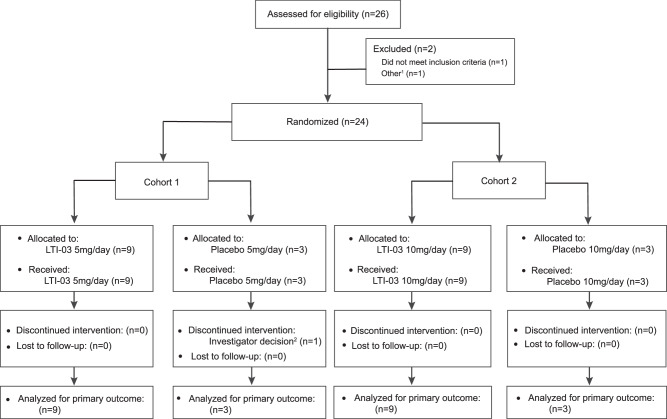
- 24 participants with IPF were randomized 3:1 to LTI-03 5 mg/day (N = 9), LTI-03 10 mg/day (N = 9), or placebo (N = 6) for 14 days; all completed the study.
- TEAEs occurred in 66.7% of the 5 mg/day group, 77.8% of the 10 mg/day group, and 50% of placebo; there were no fatalities, no TEAEs leading to discontinuation, and no Grade 3 or higher TEAEs.
- In deep bronchial brushing samples, LTI-03 significantly reduced COL1A1, CXCL7, GAL-7, IL-11, and TSLP versus placebo; in the abstract, reported p-values were IL-11 p = 0.0406 and 0.044, TSLP p = 0.0256 and 0.0128, COL1A1 p = 0.0248, CXCL7 p = 0.0248, and GAL-7 p = 0.0332.
- Systemic plasma concentrations were below the limit of quantification at all post-dose time points, while BALF concentrations were quantifiable in 5 participants (3 at 5 mg/day; 2 at 10 mg/day), suggesting lung delivery with minimal systemic exposure.
Methods
- Phase 1b, randomized, double-blind, placebo-controlled, dose-escalation trial at 6 sites in the US, UK, Germany, and Australia (NCT05954988).
- Eligible participants were ≥40 years old with IPF diagnosed within 3 years, FVC percent predicted ≥40%, DLCO 30%–80%, and FEV1/FVC ≥0.7; 24 participants were enrolled between June 2023 and October 2024.
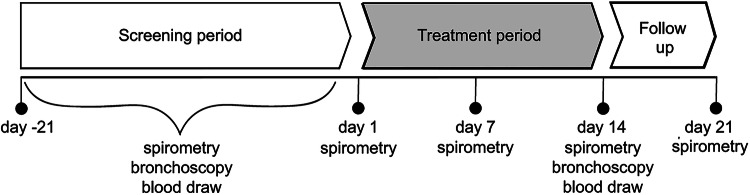
- Participants were randomized 3:1 within 2 sequential cohorts (n = 12 per cohort) to inhaled LTI-03 or placebo, self-administered BID for 14 days; the primary endpoint was TEAE incidence, with exploratory PK and biomarker analyses using bronchoscopy-derived samples and one-tailed Mann-Whitney U tests for prespecified biomarker hypotheses.
Limitations
- Stated by the paper: small sample size (n = 24) and short treatment duration (14 days); the authors state that no conclusion about effects on disease progression can be derived, and that larger, longer studies in patients receiving antifibrotic therapy are needed.
- Evident from the text: exploratory biomarker analyses relied on small subgroup sample sizes and pooled placebo samples, with some missing samples and some results below detection limits; this limits precision and generalizability.
- Evident from the text: no secondary endpoints were specified, and the study was not designed to assess functional efficacy or long-term clinical outcomes.
Model-written summary. Check it against the paper before relying on it.
Integrity signals
Registry
Cites
Statistics
Figures
Verification
Claims the paper makes
20 Valid · 0 Not valid · 6 Not checked · 61 Own results and interpretations
The cited sources support only part of this claim — read each source’s verdict below.
In the paper
“Cav-1 expression in pulmonary fibroblasts and alveolar epithelial cells is decreased in transgenic and rodent bleomycin models of lung injury and in the lungs of patients with IPF10–12.”
§ Inhaled LTI-03 for idiopathic pulmonary fibrosis: a randomized dose escalation study > Introduction
What the sources say
- Partly supportedcites [10] Sanders, Y. Y. et al. Epigenetic regulation of caveolin-1 gene expression in lung fibroblasts. Am. J. Respir. Cell Mol. Biol. 56, 50–61 (2017). 27560128 PMC5248956 sourceExperimental — accuracy not yet measured
The Results report decreased Cav-1 in isolated lung fibroblasts and whole-lung samples after bleomycin injury in mice; the Discussion reports decreased expression in most fibroblasts from patients with IPF. Our copy does not establish the decrease in alveolar epithelial cells or in a transgenic lung-injury model. It also reports IPF fibroblast findings rather than a measurement across patients’ whole lungs. (LLM, conf=0.88)
- Partly supportedcites [11] Nagaraja, M. R. et al. p53 Expression in lung fibroblasts is linked to mitigation of fibrotic lung remodeling. Am. J. Pathol. 188, 2207–2222 (2018). 30253845 PMC6168957 sourceExperimental — accuracy not yet measured
The Discussion and Figure 2 caption report reduced Cav1 in lung fibroblasts from patients with IPF and mice with bleomycin-induced fibrosis (page not specified in our copy). The Discussion instead describes increased Cav1 expression in injured alveolar epithelial cells; our copy does not establish the claimed decrease in those cells or in a transgenic injury model. (LLM, conf=0.89)
- Partly supportedcites [12] Tian, Y. et al. Quantitative proteomic characterization of lung tissue in idiopathic pulmonary fibrosis. Clin. Proteom. 16, 6 (2019). PMC6364390 30774578 sourceExperimental — accuracy not yet measured
The Results section (Validation of differentially expressed proteins; page not provided) reports that CAV1 staining in alveolar epithelial cells was strong in control lungs but almost absent in IPF lungs. Our copy does not establish decreased CAV1 in pulmonary fibroblasts or in transgenic or rodent bleomycin lung-injury models. (LLM, conf=0.88)
plainstates an association- Asserted: passes — The authors put it forward as true.
- Checkable: passes — It can be checked against evidence.
- Load-bearing: passes — The paper’s conclusions depend on it.
- Based: passes — The paper gives a reason why it holds.
- Partly supported
Every source the paper cites for this claim was checked and supports it.
In the paper
“Levels of TSLP are significantly elevated in BALF43 and lung tissue from patients with IPF44”
§ Inhaled LTI-03 for idiopathic pulmonary fibrosis: a randomized dose escalation study > Discussion
What the sources say
- Supportedcites [43] Lee, J. U. et al. Upregulation of interleukin-33 and thymic stromal lymphopoietin levels in the lungs of idiopathic pulmonary fibrosis. BMC Pulm. Med. 17, 39 (2017). 28202030 PMC5312598 source
Citation 44 is attached to the lung-tissue portion of the sentence, not the BALF portion. The Background states that TSLP and its receptor are highly upregulated in IPF lung, supporting the attributed lung-tissue finding. (LLM, conf=0.87)
- Supportedcites [44] Datta, A. et al. Evidence for a functional thymic stromal lymphopoietin signaling axis in fibrotic lung disease. J. Immunol. 191, 4867–4879 (2013). 24081992 PMC3836180 source
Citation 44 is attached to the lung-tissue finding, not the BALF finding (citation 43). In Results, “TSLP and TSLPR expression in idiopathic pulmonary fibrosis (IPF),” IPF lung biopsies showed strong TSLP immunoreactivity, while control lung showed weak immunoreactivity; the Discussion describes TSLP as highly upregulated in IPF. (LLM, conf=0.90)
plainstates an association- Asserted: passes — The authors put it forward as true.
- Checkable: passes — It can be checked against evidence.
- Load-bearing: unclear — It is unclear whether the paper’s conclusions depend on it.
- Based: passes — The paper gives a reason why it holds.
- Supported
Every source the paper cites for this claim was checked and supports it.
In the paper
“In IPF, TSLP may promote fibrogenesis by activating fibroblasts and recruiting immune cells to sites of epithelial injury44.”
§ Inhaled LTI-03 for idiopathic pulmonary fibrosis: a randomized dose escalation study > Discussion
What the sources say
- Supportedcites [44] Datta, A. et al. Evidence for a functional thymic stromal lymphopoietin signaling axis in fibrotic lung disease. J. Immunol. 191, 4867–4879 (2013). 24081992 PMC3836180 source
The Results report TSLP and TSLPR upregulation in IPF lung tissue and show that TSLP-exposed fibroblasts release CCL2 and promote monocyte chemotaxis. The Discussion describes recruitment of immune cells to sites of injury and proposes that these interactions may create a local pro-fibrotic environment, matching the claim’s tentative wording. Our copy provides section labels but no page numbers for these passages. (LLM, conf=0.90)
hedgedstates a possible cause- Asserted: passes — The authors put it forward as true.
- Checkable: passes — It can be checked against evidence.
- Load-bearing: unclear — It is unclear whether the paper’s conclusions depend on it.
- Based: passes — The paper gives a reason why it holds.
- Supported
The cited sources support only part of this claim — read each source’s verdict below.
In the paper
“Caveolin-1 protein (Cav-1) is a structural protein that plays a critical role in regulating lung repair and cellular movement by restoring pathways that both promote epithelial health and halt fibrosis in the lung7–9.”
§ Inhaled LTI-03 for idiopathic pulmonary fibrosis: a randomized dose escalation study > Introduction
What the sources say
- Partly supportedcites [7] Wang, X. M. et al. Caveolin-1: a critical regulator of lung fibrosis in idiopathic pulmonary fibrosis. J. Exp. Med. 203, 2895–2906 (2006). 17178917 PMC1850940 sourceExperimental — accuracy not yet measured
The introductory passage describes cav-1 as a scaffolding protein, and the Results report that increasing cav-1 suppresses TGF-β1–induced extracellular-matrix production in pulmonary fibroblasts. The paper supports an antifibrotic role, but the cited passages do not establish that cav-1 regulates cellular movement or restores pathways promoting epithelial health and lung repair. Page numbers are unavailable in our copy. (LLM, conf=0.86)
- Not checked — no full text of the sourcecites [8] Kulshrestha, R. et al. Caveolin-1 as a critical component in the pathogenesis of lung fibrosis of different etiology: Evidences and mechanisms. Exp. Mol. Pathol. 111, 104315 (2019). 31629729 source
- Partly supportedcites [9] Fan, J., Zheng, S., Wang, M. & Yuan, X. The critical roles of caveolin-1 in lung diseases. Front Pharm. 15, 1417834 (2024). PMC11458383 39380904 sourceExperimental — accuracy not yet measured
The Introduction describes Cav-1 as a structural component of caveolae involved in cell migration. Section 4.5 (Pulmonary fibrosis) reports that Cav-1-derived peptides inhibit alveolar epithelial-cell apoptosis and attenuate experimental fibrosis, but it attributes restoration of p53 expression specifically to CSP7; it does not say Cav-1 itself restores pathways that halt lung fibrosis. (LLM, conf=0.86)
plainstates a cause- Asserted: passes — The authors put it forward as true.
- Checkable: passes — It can be checked against evidence.
- Load-bearing: passes — The paper’s conclusions depend on it.
- Based: passes — The paper gives a reason why it holds.
- Partly supported
Every source the paper cites for this claim was checked and supports it.
In the paper
“Immunohistochemical analyses of IPF lung tissue have shown intense GAL-7 expression localized to the alveolar and bronchiolar epithelium and alveolar septum12.”
§ Inhaled LTI-03 for idiopathic pulmonary fibrosis: a randomized dose escalation study > Discussion
What the sources say
- Supportedcites [12] Tian, Y. et al. Quantitative proteomic characterization of lung tissue in idiopathic pulmonary fibrosis. Clin. Proteom. 16, 6 (2019). PMC6364390 30774578 source
The Discussion reports intense galectin-7 staining in the alveolar and bronchiolar epithelium and alveolar septum of IPF lungs, matching the claim. It also notes staining in interstitial spaces; no page number is provided in our copy. (LLM, conf=0.95)
plain- Asserted: passes — The authors put it forward as true.
- Checkable: passes — It can be checked against evidence.
- Load-bearing: unclear — It is unclear whether the paper’s conclusions depend on it.
- Based: passes — The paper gives a reason why it holds.
- Supported
40 more claims · 3 with their cited sources checked
Create a free account to see all 87 claims and every source verdict.
- It may state two separate claims as one. 29
- Probably not a substantial claim. 20
Citations
Cites
Miller, M. R., Hankinson, J., Brusasco, V., Burgos, F., Casaburi, R., Coates, A., Crapo, R., Enright, P., van der Grinten, C. P. M., Gustafsson, P., et al. (2005) · European Respiratory Journal · doi:10.1183/09031936.05.00034805 · Cited by 15,627
Diagnosis of Idiopathic Pulmonary Fibrosis. An Official ATS/ERS/JRS/ALAT Clinical Practice Guideline
Raghu, G., Remy-Jardin, M., Myers, J. L., Richeldi, L., Ryerson, C. J., Lederer, D. J., Behr, J., Cottin, V., Danoff, S. K., Morell, F., et al. (2018) · American Journal of Respiratory and Critical Care Medicine · doi:10.1164/rccm.201807-1255st · Cited by 4,103
Lederer, D. J., & Martinez, F. J. (2018) · New England Journal of Medicine · doi:10.1056/nejmra1705751 · Cited by 2,056
Martinez, F. J., Collard, H. R., Pardo, A., Raghu, G., Richeldi, L., Selman, M., Swigris, J. J., Taniguchi, H., & Wells, A. U. (2017) · Nature Reviews Disease Primers · doi:10.1038/nrdp.2017.74 · Cited by 1,388
Birring, S. S. (2003) · Thorax · doi:10.1136/thorax.58.4.339 · Cited by 1,062 · cited 5×
“Safety and tolerability assessments were performed through treat-ment and follow-up and included evaluation of TEAEs, concomitant medications, physical examinations, vital signs, 12-lead ECGs, clinical laboratory assessments, spirometry, and cough symptoms using the validated LCQ 22 and a cough VAS.”
InfluentialInhaled Treprostinil in Pulmonary Hypertension Due to Interstitial Lung Disease
Waxman, A., Restrepo-Jaramillo, R., Thenappan, T., Ravichandran, A., Engel, P., Bajwa, A., Allen, R., Feldman, J., Argula, R., Smith, P., et al. (2021) · New England Journal of Medicine · doi:10.1056/nejmoa2008470 · Cited by 666 · cited 1×
“In line with previous reports on inhaled drugs in IPF 31 , cough was also the most frequently reported TEAE for 44% of participants receiving LTI-03, as compared to the 33% receiving placebo, and the only study drug-related TEAE experienced by more than 1 participant.”
Idiopathic pulmonary fibrosis: pathogenesis and management
Sgalla, G., Iovene, B., Calvello, M., Ori, M., Varone, F., & Richeldi, L. (2018) · Respiratory Research · doi:10.1186/s12931-018-0730-2 · Cited by 573
Caveolin-1: a critical regulator of lung fibrosis in idiopathic pulmonary fibrosis
Wang, X. M., Zhang, Y., Kim, H. P., Zhou, Z., Feghali-Bostwick, C. A., Liu, F., Ifedigbo, E., Xu, X., Oury, T. D., Kaminski, N., et al. (2006) · The Journal of Experimental Medicine · doi:10.1084/jem.20061536 · Cited by 397
Idiopathic Pulmonary Fibrosis: An Update on Pathogenesis
Mei, Q., Liu, Z., Zuo, H., Yang, Z., & Qu, J. (2022) · Frontiers in Pharmacology · doi:10.3389/fphar.2021.797292 · Cited by 360
Interleukin-11 is a therapeutic target in idiopathic pulmonary fibrosis
Ng, B., Dong, J., D’Agostino, G., Viswanathan, S., Widjaja, A. A., Lim, W.-W., Ko, N. S. J., Tan, J., Chothani, S. P., Huang, B., et al. (2019) · Science Translational Medicine · doi:10.1126/scitranslmed.aaw1237 · Cited by 314 · cited 1×
“IL-11 is a key driver of myo fi broblast activation and differentiation in IPF 41 , and is currently the focus of an ongoing clinical study in IPF with an investigational monoclonal antibody (ClinicalTrials.gov: NCT07036523).”
Nerandomilast in Patients with Idiopathic Pulmonary Fibrosis.
Richeldi, L., Azuma, A., Cottin, V., Kreuter, M., Maher, T. M., Martinez, F. J., Oldham, J. M., Valenzuela, C., Clerisme-Beaty, E., Gordat, M., et al. (2025) · New England Journal of Medicine · doi:10.1056/nejmoa2414108 · Cited by 297
Role of thymic stromal lymphopoietin in allergy and beyond
Ebina-Shibuya, R., & Leonard, W. J. (2023) · Nature Reviews Immunology · doi:10.1038/s41577-022-00735-y · Cited by 289 · cited 1×
“TSLP is an alarmin cytokine that is released following epithelium damage and promotes type 2 in fl ammation and fi brosis, driving pathological processes such as mucus hypersecretion and airway remodeling 42 .”
Guenther, A., Krauss, E., Tello, S., Wagner, J., Paul, B., Kuhn, S., Maurer, O., Heinemann, S., Costabel, U., Barbero, M. A. N., et al. (2018) · Respiratory Research · doi:10.1186/s12931-018-0845-5 · Cited by 268 · cited 1×
“Coughing is a hallmark of IPF and represents one of the key symptoms of IPF patients in larger cohorts 30 .”
Hohmann, M. S., Habiel, D. M., Coelho, A. L., Verri, W. A., & Hogaboam, C. M. (2019) · American Journal of Respiratory Cell and Molecular Biology · doi:10.1165/rcmb.2017-0289oc · Cited by 202 · cited 1×
“Augmentation of endogenous Cav-1 levels and supplementation of exogenous caveolin scaffolding domain (CSD) peptide have been shown to suppress lung fi brosis 7,10,11,13,14 .”
Self-citationRole of caveolin-1 in fibrotic diseases
Gvaramia, D., Blaauboer, M. E., Hanemaaijer, R., & Everts, V. (2013) · Matrix Biology · doi:10.1016/j.matbio.2013.03.005 · Cited by 111
Raghu, G., Richeldi, L., Jagerschmidt, A., Martin, V., Subramaniam, A., Ozoux, M.-L., Esperet, C. A., & Soubrane, C. (2018) · Chest · doi:10.1016/j.chest.2018.08.1083 · Cited by 95
Caveolin-1–derived peptide limits development of pulmonary fibrosis
Marudamuthu, A. S., Bhandary, Y. P., Fan, L., Radhakrishnan, V., MacKenzie, B., Maier, E., Shetty, S. K., Nagaraja, M. R., Gopu, V., Tiwari, N., et al. (2019) · Science Translational Medicine · doi:10.1126/scitranslmed.aat2848 · Cited by 86 · cited 4×
“In multiple animal models of fi brosis, LTI-03 has repeatedlydemonstrated signi fi cant attenuation of pro fi brotic factors and pathways as well as supportive effects on alveolar epithelial cell maintenance and homeostasis 17,20 .”
InfluentialSelf-citationAdegunsoye, A., Alqalyoobi, S., Linderholm, A., Bowman, W. S., Lee, C. T., Pugashetti, J. V., Sarma, N., Ma, S.-F., Haczku, A., Sperling, A., et al. (2020) · Chest · doi:10.1016/j.chest.2020.04.066 · Cited by 82 · cited 1×
“While not statistically signi fi cant, these reductions may be clinically relevant, as increased circulating SP-D levels are signi fi cantly linked to decline in lung function and are responsive to standard of care 33,34 .”
Quantitative proteomic characterization of lung tissue in idiopathic pulmonary fibrosis
Tian, Y., Li, H., Gao, Y., Liu, C., Qiu, T., Wu, H., Cao, M., Zhang, Y., Ding, H., Chen, J., et al. (2019) · Clinical Proteomics · doi:10.1186/s12014-019-9226-4 · Cited by 74 · cited 2×
“Immunohistochemical analyses of IPF lung tissue have shown intense GAL-7 expression localized to the alveolar and bronchiolar epithelium and alveolar septum 12 .”
Lee, J.-U., Chang, H. S., Lee, H. J., Jung, C. A., Bae, D. J., Song, H. J., Park, J. S., Uh, S.-T., Kim, Y. H., Seo, K.-H., et al. (2017) · BMC Pulmonary Medicine · doi:10.1186/s12890-017-0380-z · Cited by 73 · cited 7×
“This is consistent with results from aged male mice challenged with bleomycin, in which BALF levels of IL-11 were reduced with LTI-03 treatment 17 .”
InfluentialEvidence for a Functional Thymic Stromal Lymphopoietin Signaling Axis in Fibrotic Lung Disease
Datta, A., Alexander, R., Sulikowski, M. G., Nicholson, A. G., Maher, T. M., Scotton, C. J., & Chambers, R. C. (2013) · The Journal of Immunology · doi:10.4049/jimmunol.1300588 · Cited by 73
Lee, J., Arisi, I., Puxeddu, E., Mramba, L. K., Amicosante, M., Swaisgood, C. M., Pallante, M., Brantly, M. L., Sköld, C. M., & Saltini, C. (2018) · PLOS ONE · doi:10.1371/journal.pone.0194803 · Cited by 69 · cited 1×
“CXCL7 levels were elevated in bronchoalveolar lavage fl uid (BALF) from patients with IPF compared with healthy controls 39 .”
Takehara, K., Koga, Y., Hachisu, Y., Utsugi, M., Sawada, Y., Saito, Y., Yoshimi, S., Yatomi, M., Shin, Y., Wakamatsu, I., et al. (2022) · Cells · doi:10.3390/cells11010143 · Cited by 64
Belhassen, M., Dalon, F., Nolin, M., & Van Ganse, E. (2021) · Respiratory Research · doi:10.1186/s12931-021-01714-y · Cited by 38 · cited 1×
“Additionally,nintedanibandpirfenidonemaybe poorly tolerated due to gastrointestinal or cutaneous side effects, leading to frequent discontinuation 5,6 .”
Epigenetic Regulation of Caveolin-1 Gene Expression in Lung Fibroblasts
Sanders, Y. Y., Liu, H., Scruggs, A. M., Duncan, S. R., Huang, S. K., & Thannickal, V. J. (2017) · American Journal of Respiratory Cell and Molecular Biology · doi:10.1165/rcmb.2016-0034oc · Cited by 38 · cited 2×
“Augmentation of endogenous Cav-1 levels and supplementation of exogenous caveolin scaffolding domain (CSD) peptide have been shown to suppress lung fi brosis 7,10,11,13,14 .”
p53 Expression in Lung Fibroblasts Is Linked to Mitigation of Fibrotic Lung Remodeling
Nagaraja, M. R., Tiwari, N., Shetty, S. K., Marudamuthu, A. S., Fan, L., Ostrom, R. S., Fu, J., Gopu, V., Radhakrishnan, V., Idell, S., et al. (2018) · The American Journal of Pathology · doi:10.1016/j.ajpath.2018.07.005 · Cited by 37 · cited 1×
“Augmentation of endogenous Cav-1 levels and supplementation of exogenous caveolin scaffolding domain (CSD) peptide have been shown to suppress lung fi brosis 7,10,11,13,14 .”
Pirfenidone Clinical Study Group in Japan, Ikeda, K., Chiba, H., Nishikiori, H., Azuma, A., Kondoh, Y., Ogura, T., Taguchi, Y., Ebina, M., Sakaguchi, H., et al. (2020) · Respiratory Research · doi:10.1186/s12931-020-01582-y · Cited by 36 · cited 1×
“…decreases described in standard of care IPF drug trials after longer treatment durations, notably the CAPACITY study of pir-fenidone (5% at 12 weeks) 35 and the INMARK study of nintedanib (4% at 12 weeks) 36,37 which may indicate the potential for LTI-03 to slow the rate of lung function decline.”
Caveolin-1: A Promising Therapeutic Target for Diverse Diseases
Gokani, S., & Bhatt, L. K. (2021) · Current Molecular Pharmacology · doi:10.2174/1874467214666211130155902 · Cited by 34
Zhang, Y., MacKenzie, B., Koleng, J. J., Maier, E., Warnken, Z. N., & Williams, R. O. (2020) · Molecular Pharmaceutics · doi:10.1021/acs.molpharmaceut.9b01085 · Cited by 27 · cited 1×
“Micro-nized, excipient-free LTI-03 demonstrated excellent stability, and importantly, the ability to achieve deep lung deposition 21 .”
Self-citationLung Deposition and Pharmacokinetics of Nebulized Cyclosporine in Lung Transplant Patients
Corcoran, T. E., Niven, R., Verret, W., Dilly, S., & Johnson, B. A. (2014) · Journal of Aerosol Medicine and Pulmonary Drug Delivery · doi:10.1089/jamp.2013.1042 · Cited by 25 · cited 1×
“Undetectable plasma levels of LTI-03, a hydrophobic peptide, are consistent with the PK behavior of other inhaled hydrophobic compounds, such as inhaled cyclosporine formulations, which exhibit rapidandsustainedlungabsorptionwithminimalsystemicexposure 32 .”
Caveolin-1-Related Intervention for Fibrotic Lung Diseases
Shetty, S., & Idell, S. (2023) · Cells · doi:10.3390/cells12040554 · Cited by 21
The critical roles of caveolin-1 in lung diseases
Fan, J., Zheng, S., Wang, M., & Yuan, X. (2024) · Frontiers in Pharmacology · doi:10.3389/fphar.2024.1417834 · Cited by 21
Caveolin-1 Signaling in Lung Fibrosis
Tourkina, E., & Hoffman, S. (2012) · The Open Rheumatology Journal · doi:10.2174/1874312901206010116 · Cited by 20 · cited 1×
“Our exploratory biomarker strategy was based on the pathobiology of Cav-1 in the context of fi brosis 7,23 – 26 ; IPF pathogenesis 27,28 , and importantly, pharmacodynamic data for LTI-03 from a variety of transla-tionalmodels 17 – 19 .”
Kulshrestha, R., Singh, H., Pandey, A., Mehta, A., Bhardwaj, S., & Jaggi, A. S. (2019) · Experimental and Molecular Pathology · doi:10.1016/j.yexmp.2019.104315 · Cited by 19
Espíndola, M. S., Habiel, D. M., Coelho, A. L., Parimon, T., Chen, P., Mikels, A. J., & Hogaboam, C. M. (2023) · Fibrosis · doi:10.35534/fibrosis.2023.10007 · Cited by 18
Self-citationHe, X., Ji, J., Zheng, D., Luo, Z., Luo, L., & Guo, L. (2025) · Frontiers in Immunology · doi:10.3389/fimmu.2025.1450798 · Cited by 15
Identification and validation of chemokine system-related genes in idiopathic pulmonary fibrosis
Zhao, T., Wu, X., Zhao, X., Yao, K., Li, X., & Ni, J. (2023) · Frontiers in Immunology · doi:10.3389/fimmu.2023.1159856 · Cited by 15
Caveolin-1 scaffolding domain peptide abrogates autophagy dysregulation in pulmonary fibrosis
Venkatesan, S., Fan, L., Tang, H., Konduru, N. V., & Shetty, S. (2022) · Scientific Reports · doi:10.1038/s41598-022-14832-4 · Cited by 11
Caveolin-1-Derived Peptide Reduces ER Stress and Enhances Gelatinolytic Activity in IPF Fibroblasts
Komatsu, S., Fan, L., Idell, S., Shetty, S., & Ikebe, M. (2022) · International Journal of Molecular Sciences · doi:10.3390/ijms23063316 · Cited by 10 · cited 1×
“…oligopeptide consisting of seven natural L-amino acids of the CSD. LTI-03 has been shown to exert strong anti fi brotic and epithelial supportive effects in experimental animal models of lung fi brosis 15 – 17 , in human IPF precision cut lung slices 18 , and in human IPF alveolar organoids 19 .”
Circulating biomarkers and progression of idiopathic pulmonary fibrosis: data from the INMARK trial
Maher, T. M., Jenkins, R. G., Cottin, V., Nishioka, Y., Noth, I., Selman, M., Song, J. W., Ittrich, C., Diefenbach, C., Stowasser, S., et al. (2024) · ERJ Open Research · doi:10.1183/23120541.00335-2023 · Cited by 7
Effects of nintedanib on circulating biomarkers of idiopathic pulmonary fibrosis
Jenkins, R. G., Cottin, V., Nishioka, Y., Noth, I., White, E. S., Ittrich, C., Diefenbach, C., Rohr, K. B., Selman, M., & Maher, T. M. (2024) · ERJ Open Research · doi:10.1183/23120541.00558-2023 · Cited by 6 · cited 1×
“…decreases described in standard of care IPF drug trials after longer treatment durations, notably the CAPACITY study of pir-fenidone (5% at 12 weeks) 35 and the INMARK study of nintedanib (4% at 12 weeks) 36,37 which may indicate the potential for LTI-03 to slow the rate of lung function decline.”
Fan, L., Shetty, R. S., Dao, H. M., Balnadupete, A., Somasundram, B., Bhagavath, A. K., Kongara, A., Tang, H., Citrin, D. E., Williams, R. O., et al. (2025) · American Journal of Physiology-Lung Cellular and Molecular Physiology · doi:10.1152/ajplung.00295.2024 · Cited by 3 · cited 2×
“Augmentation of endogenous Cav-1 levels and supplementation of exogenous caveolin scaffolding domain (CSD) peptide have been shown to suppress lung fi brosis 7,10,11,13,14 .”
LTI-03 peptide demonstrates anti-fibrotic activity in ex vivo lung slices from patients with IPF
MacKenzie, B., Mahavadi, P., Pinho Jannini-Sa, Y. A., Creyns, B., Coelho, A. L., Espindola, M., Ruppert, C., Windsor, B., Aigner, C., Hogaboam, C. M., et al. (2025) · iScience · doi:10.1016/j.isci.2025.113437 · Cited by 2 · cited 3×
“These phar-macologicaleffectswerealsodemonstratedinIPFanddonorprecision cut lung slices (PCLS) 18 , which contain all diseased lung cell types, as well as in both lung epithelial cell organoid cultures 19 and fi broblasts sourced from end-stage IPF patients 20 .”
Self-citationPost-Bronchoscopy Infections: A Literature Review
Permatasari, T. W., & Karuniawati, A. (2024) · Journal of Clinical Microbiology and Infectious Diseases · doi:10.51559/jcmid.v4i2.61 · Cited by 1
Sa, Y. A. P. J. D., Coelho, A. L., Mackenzie, B., & Hogaboam, C. M. (2025) · American Journal of Respiratory and Critical Care Medicine · doi:10.1164/ajrccm.2025.211.abstracts.a4691 · Cited by 1 · cited 3×
“These phar-macologicaleffectswerealsodemonstratedinIPFanddonorprecision cut lung slices (PCLS) 18 , which contain all diseased lung cell types, as well as in both lung epithelial cell organoid cultures 19 and fi broblasts sourced from end-stage IPF patients 20 .”
Self-citationMackenzie, B., Maier, E., Creyns, B., Coelho, A. L., Windsor, B., & Hogaboam, C. M. (2022) · A107. MECHANISMS OF FIBROSIS/FIBROBLAST BIOLOGY · doi:10.1164/ajrccm-conference.2022.205.1_meetingabstracts.a2307
Self-citationSchafer, P., Rassa, J., Seyda, A., Hersey, S., Eisinger, D., Melin, J., Bencher, R., Neighbors, M., Mouded, M., Turner, S., et al. (2024) · Idiopathic interstitial pneumonias · doi:10.1183/13993003.congress-2024.pa4257
Research works printed but not linked: 1
- Romano, J., Kromrey, J. D., Coraggio, J. & Skowronek, J. Appropriate statistics for ordinal level data: should we really be using t-test and Cohen’s d for evaluating group differences on the NSSE and other surveys? In Proceedings of the Annual meeting of the Florida Association of Institutional Research, Cocoa Beach, FL, 1-3 February (2006).
Cited by
Lee, J. W., Skibba, M. E., Tang, T., Noh, H., Brasier, A. R., & Hong, S. (2026) · Pharmaceutics · doi:10.3390/pharmaceutics18020168 · Cited by 9
“LTI-03, an inhaled caveolin-1-derived peptide clinical candidate, is being advanced as a dry-powder formulation for IPF, with emerging nonclinical and early clinical data supporting antifibrotic activity and acceptable tolerability when delivered directly to the distal lung [118,119].”
Metadata
- Authors
- Molyneaux, P. L., Hirani, N. A., Chia, C. C. K., Kulkarni, T., Zaman, T., Kaner, R. J., Coelho, A. L., Jannini-Sa, Y. A. P., Windsor, B., Kruger, S., Christensen, D. J., Shoemaker, S. A., Hogaboam, C. M., MacKenzie, B., & Günther, A.
- Affiliations
- Royal Brompton Hospital (GB)
- Launceston General Hospital (AU)
- University of Alabama at Birmingham (US)
- Cedars-Sinai Medical Center (US)
- Weill Cornell Medicine (US)
- Duke University (US)
- Justus-Liebig-Universität Gießen (DE)
- Corresponding author
- Günther, Andreas
- ORCID
- Venue
- Nature Communications
- Published
- 2026-07-31
- Volume
- 17
- Issue
- 1
- ISSN
- 2041-1723 (ISSN-L)
- PMC
- PMC13427755
- OpenAlex
- W4415677408
- Semantic Scholar
- e3e7726997a74bf3877368eefbac820b91942e08
- Cited by
- 1
- References
- 36
- Citations by year
- 2026: 1
- FWCI
- 4.70
- Type
- journal article
- Language
- en
- Open access
- gold
- doi.org
- Licence
- cc-by
- creativecommons.org/licenses/by/4.0 (tdm)
- creativecommons.org/licenses/by/4.0 (vor)
- Locations
- Nature Communications (publishedVersion, cc-by)
- medRxiv (acceptedVersion)
- PubMed (publishedVersion)
- PubMed Central (publishedVersion, cc-by)
- DOAJ (DOAJ: Directory of Open Access Journals) (submittedVersion)
- Funders
- Rein Therapeutics, Inc.
- Topics
- Health Sciences › Medicine › Pulmonary and Respiratory Medicine › Interstitial Lung Diseases and Idiopathic Pulmonary Fibrosis
- Health Sciences › Medicine › Pulmonary and Respiratory Medicine › Occupational and environmental lung diseases
- Health Sciences › Medicine › Pulmonary and Respiratory Medicine › Chronic Obstructive Pulmonary Disease (COPD) Research
- Keywords
- idiopathic pulmonary fibrosis, inhaled medications, interleukin-11, thymic stromal lymphopoietin, CCL7, galectin-7, bronchial brushings, treatment-emergent adverse events, pharmacokinetics, interstitial lung disease
About these checks
Registry, retraction, Cites and statistics results are computed, not judged, with one exception: a printed reference that no index lists is read once by a model before it counts as a citation error. Claims are extracted by a model and kept only when their quote appears verbatim in the text; each cited source is then checked, with a model’s help, for whether it says what the claim relies on. Those verdicts can be wrong — read the claim’s quote and the cited source before relying on one.
The claim verdicts this report counts are experimental: their accuracy is not yet measured.
A language model drew the claims from the paper on 2026-10-10, under version 3 of the claim definition (model deepseek-v4.1-flash, prompt extract-v3).
A second model labelled each claim on 2026-10-10 (model jev-1.13-20260917, definition revision gold-guideline-v0.2).
Cited sources are checked with a language model’s help (gpt-6-sol).
Statistics and arithmetic are recomputed, not judged.
Confidence bands are shown only for fields calibrated on our annotated test set. None is calibrated yet, so no band is shown.
What counts as a claim ›How we measure confidence ›How we check this ›
Are you an author, or do you see a problem with this page? Request a review
Data sources
Bibliographic data: Semantic Scholar, OpenAlex, Crossref.
Contains information from the Semantic Scholar Academic Graph Datasets, made available under the ODC Attribution License (ODC-BY 1.0).
Semantic Scholar’s data is described in: Kinney, R., et al. (2023). The Semantic Scholar Open Data Platform. arXiv:2301.10140.
