

Health benefits of late-onset metformin treatment every other week in mice
Open accessThe DOI matches its Crossref record; 74 of the 74 references it cites were found in a registry or an index.
Abstract
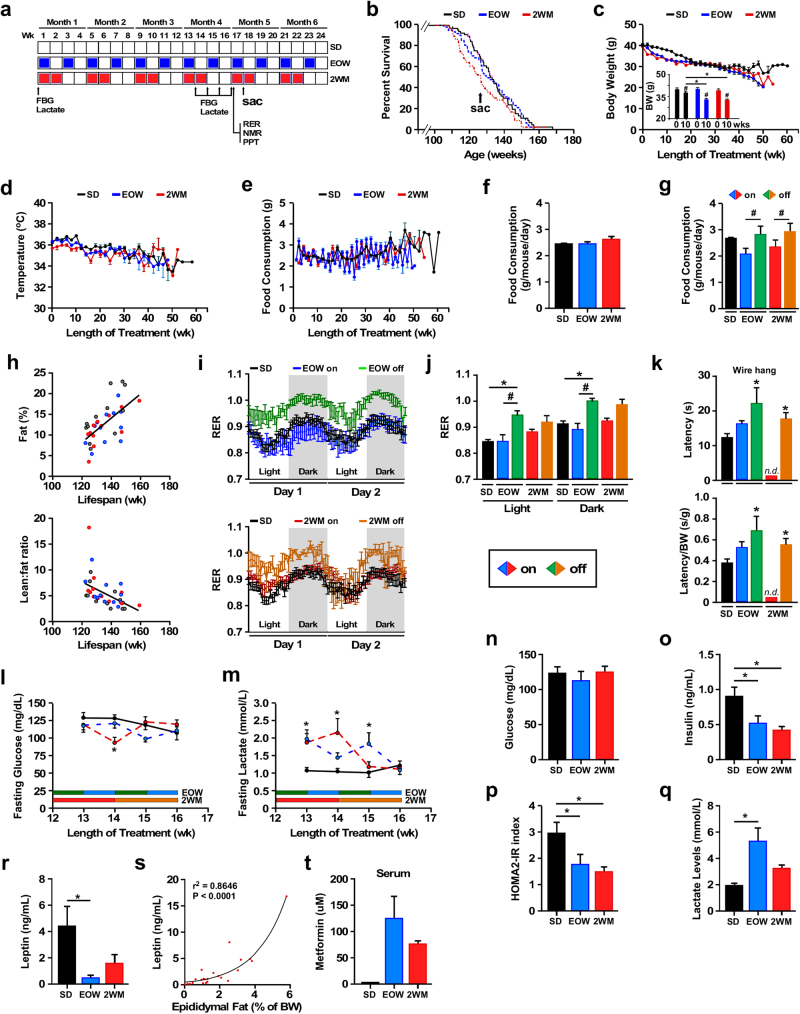
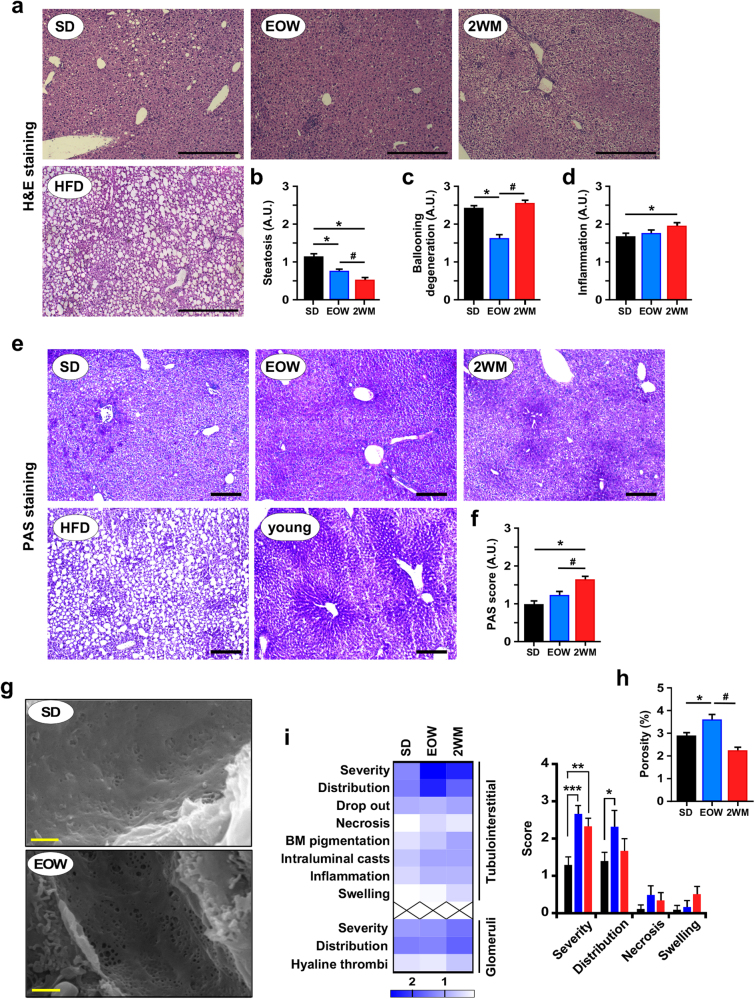
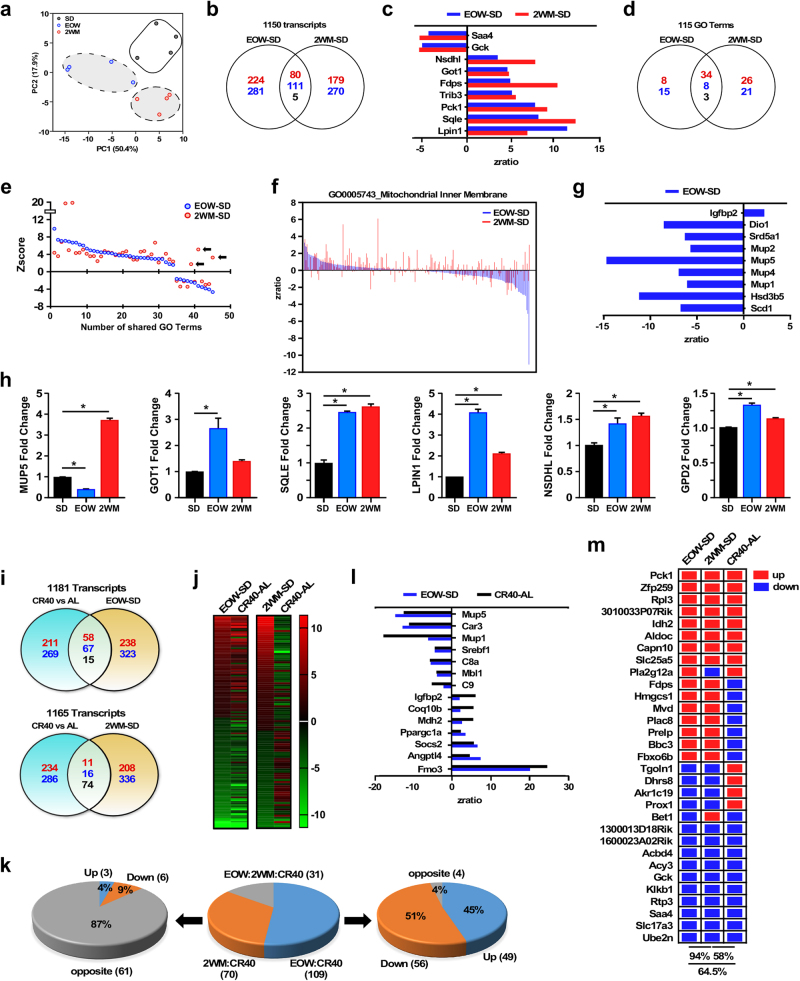
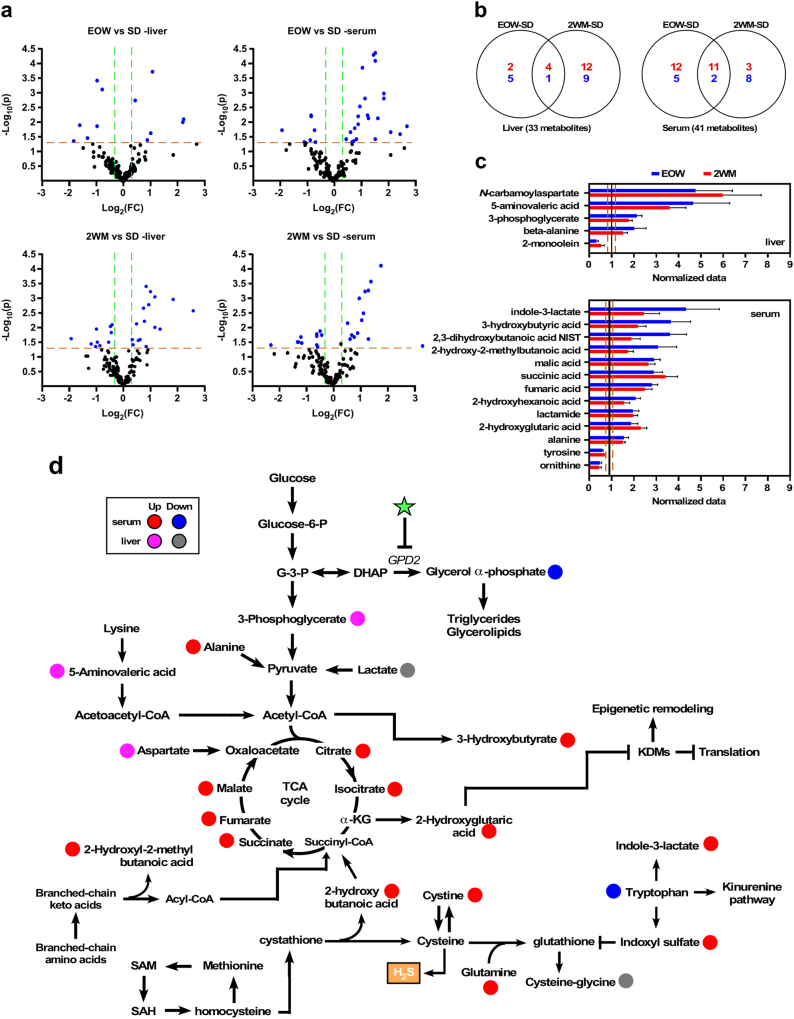
Chronic 1% metformin treatment is nephrotoxic in mice, but this dose may nonetheless confer health benefits if given intermittently rather than continuously. Here, we examined the effects of 1% metformin given every-other week (EOW) or two consecutive weeks per month (2WM) on survival of 2-year-old male mice fed standard chow. EOW and 2WM mice had comparable life span compared with control mice. A significant reduction in body weight within the first few weeks of metformin treatment was observed without impact on food consumption and energy expenditure. Moreover, there were differences in the action of metformin on metabolic markers between the EOW and 2WM groups, with EOW metformin conferring greater benefits. Age-associated kidney lesions became more pronounced with metformin, although without pathological consequences. In the liver, metformin treatment led to an overall reduction in steatosis and was accompanied by distinct transcriptomic and metabolomic signatures in response to EOW versus 2WM regimens. Thus, the absence of adverse outcomes associated with chronic, intermittent use of 1% metformin in old mice has clinical translatability into the biology of aging in humans.
Overview
The claims and statistics of this paper haven’t been checked yet.
Free: it reads the open-access text and checks the first 5 claims that cite a source we can check. Create a free account to check every claim.
Integrity signals
Registry
Cites
Statistics
Figures
Verification
Claims the paper makes
The claims and statistics of this paper haven’t been checked yet.
Free: it reads the open-access text and checks the first 5 claims that cite a source we can check. Create a free account to check every claim.
Claims other papers make about this one
Each is checked against this paper’s own text: does it say what the citing paper says it does?
In the citing paper
“Intermittent metformin treatment, when initiated in mice, even later in life and administered every other week, has also shown to provide health benefits such as a reduction in hepatic steatosis through regulation of the liver transcriptome and metabolome”
From Benefits of Metformin in Attenuating the Hallmarks of Aging (2020) · cites this paper as Alfaras et al. 2017
In the citing paper
“For instance, as discussed in the next section, despite activating AMPK, metformin has not reproducibly been shown to enhance lifespan in rodents and notably less, or not effective in older animals, including C. elegans (66, 72, 74, 75, 77, 78).”
From A Critical Review of the Evidence That Metformin Is a Putative Anti-Aging Drug That Enhances Healthspan and Extends Lifespan (2021) · cites this paper as [75]
Self-check
Percentages, sums and reported differences re-computed from the paper’s own numbers.
The self-check needs the paper’s full text.
Citations
Cites
López-Otín, C., Blasco, M. A., Partridge, L., Serrano, M., & Kroemer, G. (2013) · Cell · doi:10.1016/j.cell.2013.05.039 · Cited by 14,982
Dose translation from animal to human studies revisited.
Reagan‐Shaw, S., Nihal, M., & Ahmad, N. (2008) · The FASEB Journal · doi:10.1096/fj.07-9574lsf · Cited by 6,524
Rapamycin fed late in life extends lifespan in genetically heterogeneous mice
Harrison, D. E., Strong, R., Sharp, Z. D., Nelson, J. F., Astle, C. M., Flurkey, K., Nadon, N. L., Wilkinson, J. E., Frenkel, K., Carter, C. S., et al. (2009) · Nature · doi:10.1038/nature08221 · Cited by 3,766 · cited 1×
“In contrast, inhibition of mTOR activity with concurrent activation of AMPK by rapamycin prolongs lifespan even when given in old mice.(66) Therefore, metformin and rapalogs may exert cooperative effects at the level of the energy-sensing AMPK and diminished expenditure of cellular energy required for protein translat…”
OWEN, M. R., DORAN, E., & HALESTRAP, A. P. (2000) · Biochemical Journal · doi:10.1042/bj3480607 · Cited by 2,157
Metformin improves healthspan and lifespan in mice
Martin-Montalvo, A., Mercken, E. M., Mitchell, S. J., Palacios, H. H., Mote, P. L., Scheibye-Knudsen, M., Gomes, A. P., Ward, T. M., Minor, R. K., Blouin, M.-J., et al. (2013) · Nature Communications · doi:10.1038/ncomms3192 · Cited by 1,445 · cited 10×
“Metformin is a calorie restriction (CR) mimetic, with several of its metabolic actions, particularly those related to glucose metabolism, resembling to some extent those of CR.2,3,20,21 Our previous study showed that diet supplementation with a low dose of metformin (0.1% w/w) improves healthspan and extends lifespan…”
InfluentialSelf-citationEl-Mir, M.-Y., Nogueira, V., Fontaine, E., Avéret, N., Rigoulet, M., & Leverve, X. (2000) · Journal of Biological Chemistry · doi:10.1074/jbc.275.1.223 · Cited by 1,399
Metformin suppresses gluconeogenesis by inhibiting mitochondrial glycerophosphate dehydrogenase
Madiraju, A. K., Erion, D. M., Rahimi, Y., Zhang, X.-M., Braddock, D. T., Albright, R. A., Prigaro, B. J., Wood, J. L., Bhanot, S., MacDonald, M. J., et al. (2014) · Nature · doi:10.1038/nature13270 · Cited by 1,284 · cited 2×
“The primary target of metformin appears to be the mitochondrion through inhibition of complex I of the respiratory chain(7,8) and mitochondrial glycerol-3-phosphate dehydrogenase.(9) The ensuing perturbations in cellular energy status and redox homeostasis result in activation of the energy sensor AMP-activated protei…”
mTOR Complex 1 Regulates Lipin 1 Localization to Control the SREBP Pathway
Peterson, T. R., Sengupta, S. S., Harris, T. E., Carmack, A. E., Kang, S. A., Balderas, E., Guertin, D. A., Madden, K. L., Carpenter, A. E., Finck, B. N., et al. (2011) · Cell · doi:10.1016/j.cell.2011.06.034 · Cited by 1,229
Foretz, M., Hébrard, S., Leclerc, J., Zarrinpashneh, E., Soty, M., Mithieux, G., Sakamoto, K., Andreelli, F., & Viollet, B. (2010) · Journal of Clinical Investigation · doi:10.1172/jci40671 · Cited by 1,181 · cited 1×
“The anti-gluconeogenic action of metformin is preserved in liverspecific AMPK knockout mice.(13) Moreover, this biguanide confers protection against certain cancers by inhibiting mTOR/p70S6K activity in an AMPK-independent manner,(15) and reduces the tumorigenicity of induced pluripotent stem cells while maintaining t…”
Analysis of Microarray Data Using Z Score Transformation
Cheadle, C., Vawter, M. P., Freed, W. J., & Becker, K. G. (2003) · The Journal of Molecular Diagnostics · doi:10.1016/s1525-1578(10)60455-2 · Cited by 1,146 · cited 1×
“Microarray analysis Raw data were subjected to Z-normalization, as described elsewhere.(72,73) PCA was performed on the normalized Z-scores of all of the detectable probes in the samples using DIANE 6.”
The role of hepatic lipids in hepatic insulin resistance and type 2 diabetes
Perry, R. J., Samuel, V. T., Petersen, K. F., & Shulman, G. I. (2014) · Nature · doi:10.1038/nature13478 · Cited by 1,136 · cited 1×
“S1f), consistent with a possible improvement in insulin sensitivity.(25) Hydrogen sulfide production mediates multiple benefits normally associated with stress resistance and longevity.”
Metformin as a tool to target aging
Barzilai, N., Crandall, J. P., Kritchevsky, S. B., & Espeland, M. A. (2016) · Cell Metabolism · doi:10.1016/j.cmet.2016.05.011 · Cited by 1,096 · cited 1×
“A second clinical study, which is known as the “Targeting Aging with Metformin” study, aims at assessing the potential of a pharmacological intervention in delaying ageassociated diseases beyond metformin’s isolated impact on diabetes.(22) A similar paradigm is currently being tested in the pilot study known as “Metfo…”
Cellular senescence drives age-dependent hepatic steatosis
Ogrodnik, M., Miwa, S., Tchkonia, T., Tiniakos, D., Wilson, C. L., Lahat, A., Day, C. P., Burt, A., Palmer, A., Anstee, Q. M., et al. (2017) · Nature Communications · doi:10.1038/ncomms15691 · Cited by 1,044 · cited 1×
“A recent study reported that the age-dependent increase in hepatic steatosis relates to cellular senescence.(52) The ability of metformin to decrease cellular senescence and lower the abundance of inflammatory cytokines in several senescence models(41) is in agreement with our findings that showed significant reductio…”
Metformin retards aging in C. elegans by altering microbial folate and methionine metabolism
Cabreiro, F., Au, C., Leung, K.-Y., Vergara-Irigaray, N., Cochemé, H. M., Noori, T., Weinkove, D., Schuster, E., Greene, N. D. E., & Gems, D. (2013) · Cell · doi:10.1016/j.cell.2013.02.035 · Cited by 967
Metformin, independent of AMPK, inhibits mTORC1 in a rag GTPase-dependent manner
Kalender, A., Selvaraj, A., Kim, S. Y., Gulati, P., Brûlé, S., Viollet, B., Kemp, B. E., Bardeesy, N., Dennis, P., Schlager, J. J., et al. (2010) · Cell Metabolism · doi:10.1016/j.cmet.2010.03.014 · Cited by 889
PAGE: Parametric Analysis of Gene Set Enrichment
Kim, S.-Y., & Volsky, D. J. (2005) · BMC Bioinformatics · doi:10.1186/1471-2105-6-144 · Cited by 779
Metformin and the gastrointestinal tract
McCreight, L. J., Bailey, C. J., & Pearson, E. R. (2016) · Diabetologia · doi:10.1007/s00125-015-3844-9 · Cited by 733 · cited 1×
“Taken as a whole, these findings offer a promising use of metformin in combatting ailments of aging, although gastrointestinal intolerance, lactic acidosis, and kidney failure have contributed to the adverse side-effects associated with metformin use.(56) Based on our results, it should be emphasized the importance of…”
Onken, B., & Driscoll, M. (2010) · PLoS ONE · doi:10.1371/journal.pone.0008758 · Cited by 671 · cited 4×
“0.05 compared to mice on metformin (Kruskal–Wallis with Dunn’s post hoc test) npj Aging and Mechanisms of Disease (2017) 16 Published in partnership with the Japanese Society of Anti-Aging Medicine EOW was comparable to our recently published data in male mice maintained on 40% CR.32 The hepatic production of MUPs is…”
InfluentialEffects of metformin and other biguanides on oxidative phosphorylation in mitochondria
Bridges, H. R., Jones, A. J. Y., Pollak, M. N., & Hirst, J. (2014) · Biochemical Journal · doi:10.1042/bj20140620 · Cited by 661
Metformin-associated lactic acidosis: current perspectives on causes and risk
DeFronzo, R., Fleming, G. A., Chen, K., & Bicsak, T. A. (2016) · Metabolism · doi:10.1016/j.metabol.2015.10.014 · Cited by 658 · cited 1×
“Increase in plasma lactate levels is common in response to metformin due to inhibition of hepatic mitochondrial respiration.(24) Here, fasting plasma lactate concentrations significantly increased when mice were exposed to metformin before returning to basal levels during the off-periods (Fig.”
Endogenous hydrogen sulfide production is essential for dietary restriction benefits
Hine, C., Harputlugil, E., Zhang, Y., Ruckenstuhl, C., Lee, B. C., Brace, L., Longchamp, A., Treviño-Villarreal, J. H., Mejia, P., Ozaki, C. K., et al. (2015) · Cell · doi:10.1016/j.cell.2014.11.048 · Cited by 558 · cited 2×
“Hydrogen sulfide production mediates multiple benefits normally associated with stress resistance and longevity.(26) Here, there was a near significant increase in hepatic production of hydrogen sulfide in EOW mice, compared to SD livers (P = 0.”
Self-citationLipin 1 is an inducible amplifier of the hepatic PGC-1α/PPARα regulatory pathway
Finck, B. N., Gropler, M. C., Chen, Z., Leone, T. C., Croce, M. A., Harris, T. E., Lawrence, J. C., & Kelly, D. P. (2006) · Cell Metabolism · doi:10.1016/j.cmet.2006.08.005 · Cited by 554 · cited 1×
“Lpin1 encodes for lipin-1 protein, which acts as a nuclear transcriptional coactivator for the PGC1α/PPARα heterocomplex linked to fatty acid βoxidation.(29) Parametric analysis of gene set enrichment enabled the identification of significantly altered genes within 115 GO Terms, 23 of which were uniquely present in th…”
Kim, I. H., Kisseleva, T., & Brenner, D. A. (2015) · Current Opinion in Gastroenterology · doi:10.1097/mog.0000000000000176 · Cited by 497
Effects of Sex, Strain, and Energy Intake on Hallmarks of Aging in Mice
Mitchell, S. J., Madrigal-Matute, J., Scheibye-Knudsen, M., Fang, E., Aon, M., González-Reyes, J. A., Cortassa, S., Kaushik, S., Gonzalez-Freire, M., Patel, B., et al. (2016) · Cell Metabolism · doi:10.1016/j.cmet.2016.05.027 · Cited by 451 · cited 8×
“Metformin is a calorie restriction (CR) mimetic, with several of its metabolic actions, particularly those related to glucose metabolism, resembling to some extent those of CR.2,3,20,21 Our previous study showed that diet supplementation with a low dose of metformin (0.1% w/w) improves healthspan and extends lifespan…”
InfluentialSelf-citationMetformin Activates a Duodenal Ampk-Dependent Pathway to Lower Hepatic Glucose Production in Rats
Duca, F. A., Côté, C. D., Rasmussen, B. A., Zadeh-Tahmasebi, M., Rutter, G. A., Filippi, B. M., & Lam, T. K. T. (2015) · Nature Medicine · doi:10.1038/nm.3787 · Cited by 402
Strong, R., Miller, R. A., Antebi, A., Astle, C. M., Bogue, M., Denzel, M. S., Fernandez, E., Flurkey, K., Hamilton, K. L., Lamming, D. W., et al. (2016) · Aging Cell · doi:10.1111/acel.12496 · Cited by 362
Metformin promotes lifespan through mitohormesis via the peroxiredoxin PRDX-2
De Haes, W., Frooninckx, L., Van Assche, R., Smolders, A., Depuydt, G., Billen, J., Braeckman, B. P., Schoofs, L., & Temmerman, L. (2014) · Proceedings of the National Academy of Sciences · doi:10.1073/pnas.1321776111 · Cited by 355
Yu, M., Kim, Y. J., & Kang, D.-H. (2011) · Clinical Journal of the American Society of Nephrology · doi:10.2215/cjn.05340610 · Cited by 314 · cited 2×
“2i) with associated perturbation in glutathione biosynthesis and increased oxidative stress.(70) Indeed, under metabolic stress conditions and with aging, the antioxidant defense system weakens and gives rise to a system-wide increase in pro-oxidative biomarker levels.”
Reduced Expression of MYC Increases Longevity and Enhances Healthspan
Hofmann, J. W., Zhao, X., De Cecco, M., Peterson, A. L., Pagliaroli, L., Manivannan, J., Hubbard, G. B., Ikeno, Y., Zhang, Y., Feng, B., et al. (2015) · Cell · doi:10.1016/j.cell.2014.12.016 · Cited by 293 · cited 1×
“Increase in nutrient availability promotes KDM4A-mediated ribosome biogenesis for the translation of RNA into protein,(64) a very costly energy-consuming process that reduces life expectancy.(65) It is possible that the inability of metformin to extend mouse lifespan when treatment was started late in life stemmed par…”
Anisimov, V. N., Berstein, L. M., Popovich, I. G., Zabezhinski, M. A., Egormin, P. A., Piskunova, T. S., Semenchenko, A. V., Tyndyk, M. L., Yurova, M. N., Kovalenko, I. G., et al. (2011) · Aging · doi:10.18632/aging.100273 · Cited by 285 · cited 4×
“0.05 compared to mice on metformin (Kruskal–Wallis with Dunn’s post hoc test) npj Aging and Mechanisms of Disease (2017) 16 Published in partnership with the Japanese Society of Anti-Aging Medicine EOW was comparable to our recently published data in male mice maintained on 40% CR.32 The hepatic production of MUPs is…”
InfluentialBailey, C. J., Wilcock, C., & Scarpello, J. H. B. (2008) · Diabetologia · doi:10.1007/s00125-008-1053-5 · Cited by 275
Xu, A., Lam, M. C., Chan, K. W., Wang, Y., Zhang, J., Hoo, R. L. C., Xu, J. Y., Chen, B., Chow, W.-S., Tso, A. W. K., et al. (2005) · Proceedings of the National Academy of Sciences · doi:10.1073/pnas.0408452102 · Cited by 269 · cited 2×
“Like metformin, long-term CR and exercise increase plasma ANGPTL4 levels in humans(58) whereas decreased expression of Angptl4 has been associated with type 2 diabetes.(57) Lipin-1 plays a central role in mTORC1-dependent regulation of lipogenesis by SREBP1(59) and we found that Lpin1 mRNA levels were significantly up…”
Vazquez-Martin, A., Oliveras-Ferraros, C., & Menendez, J. A. (2009) · Cell Cycle · doi:10.4161/cc.8.1.7499 · Cited by 250
Metformin Targets Central Carbon Metabolism and Reveals Mitochondrial Requirements in Human Cancers
Liu, X., Romero, I. L., Litchfield, L. M., Lengyel, E., & Locasale, J. W. (2016) · Cell Metabolism · doi:10.1016/j.cmet.2016.09.005 · Cited by 236
An Ancient, Unified Mechanism for Metformin Growth Inhibition in C. Elegans and Cancer
Wu, L., Zhou, B., Oshiro-Rapley, N., Li, M., Paulo, J. A., Webster, C. M., Mou, F., Kacergis, M. C., Talkowski, M. E., Carr, C. E., et al. (2016) · Cell · doi:10.1016/j.cell.2016.11.055 · Cited by 227
Circulating palmitoleic acid and risk of metabolic abnormalities and new-onset diabetes
Mozaffarian, D., Cao, H., King, I. B., Lemaitre, R. N., Song, X., Siscovick, D. S., & Hotamisligil, G. S. (2010) · The American Journal of Clinical Nutrition · doi:10.3945/ajcn.110.003970 · Cited by 219 · cited 1×
“A study on the relationship between palmitoleic acid and metabolic risk revealed that circulating palmitoleate is positively associated with greater adiposity, higher triglycerides, and greater insulin resistance in humans.(71) Herein, EOW livers had significant reduction in palmitoleic acid, which is consistent with…”
Metformin‐mediated increase in DICER1 regulates microRNA expression and cellular senescence
Noren Hooten, N., Martin‐Montalvo, A., Dluzen, D. F., Zhang, Y., Bernier, M., Zonderman, A. B., Becker, K. G., Gorospe, M., Cabo, R., & Evans, M. K. (2016) · Aging Cell · doi:10.1111/acel.12469 · Cited by 196 · cited 1×
“neuronal-mediated gut–brain–liver pathway,(37) reduction in the rate of small intestinal glucose absorption to enhance postprandrial secretion of glucagon-like peptide-1,(38) targeting of central carbon metabolism,(39) anti-cancer protection,(40) and the regulation of microRNA expression and cellular senescence.(41) T…”
Self-citationThe oncometabolite 2-hydroxyglutarate activates the mTOR signalling pathway
Carbonneau, M., M. Gagné, L., Lalonde, M.-E., Germain, M.-A., Motorina, A., Guiot, M.-C., Secco, B., Vincent, E. E., Tumber, A., Hulea, L., et al. (2016) · Nature Communications · doi:10.1038/ncomms12700 · Cited by 180 · cited 1×
“2-Hydroxyglutarate is a known activator of mTOR through inhibition by the ternary complex between mTOR and the KDM4A-DEPTOR complex.(61) KDM4A is an α-ketoglutarate-dependent enzyme of the Jumonji family of lysine demethylases that was recently found to act as a key regulator in the metabolic switch between mitochondr…”
Kersten, S., Lichtenstein, L., Steenbergen, E., Mudde, K., Hendriks, H. F. J., Hesselink, M. K., Schrauwen, P., & Müller, M. (2009) · Arteriosclerosis, Thrombosis, and Vascular Biology · doi:10.1161/atvbaha.108.182147 · Cited by 178
Metformin: A Hopeful Promise in Aging Research
Novelle, M. G., Ali, A., Diéguez, C., Bernier, M., & de Cabo, R. (2016) · Cold Spring Harbor Perspectives in Medicine · doi:10.1101/cshperspect.a025932 · Cited by 178
Self-citationTubular Injury in a Rat Model of Type 2 Diabetes Is Prevented by Metformin
Takiyama, Y., Harumi, T., Watanabe, J., Fujita, Y., Honjo, J., Shimizu, N., Makino, Y., & Haneda, M. (2011) · Diabetes · doi:10.2337/db10-0655 · Cited by 169
Tryptophan metabolism: entering the field of aging and age-related pathologies
van der Goot, A. T., & Nollen, E. A. A. (2013) · Trends in Molecular Medicine · doi:10.1016/j.molmed.2013.02.007 · Cited by 161 · cited 1×
“Tryptophan has been recently identified as a putative biomarker for type 2 diabetes risk(67) and reduction in its intake appear to elicit beneficial health and lifespan effects.(68) In earlier studies, tryptophan degradation into kynurenine intermediates and production of 3-indoxyl sulfate and related indoles such as…”
Cell nonautonomous activation of flavin-containing monooxygenase promotes longevity and health span
Leiser, S. F., Miller, H., Rossner, R., Fletcher, M., Leonard, A., Primitivo, M., Rintala, N., Ramos, F. J., Miller, D. L., & Kaeberlein, M. (2015) · Science · doi:10.1126/science.aac9257 · Cited by 159
Identification of MUP1 as a Regulator for Glucose and Lipid Metabolism in Mice
Zhou, Y., Jiang, L., & Rui, L. (2009) · Journal of Biological Chemistry · doi:10.1074/jbc.m900754200 · Cited by 155 · cited 1×
“Major urinary protein (MUP) 1 regulates energy expenditure by restricting glucose production and lipogenesis though direct inhibition of hepatic gene expression in dietinduced obese mice.(31) Here, large reduction in Mup5, Mup4, Mup1, and Mup2 levels was observed in EOW than in 2WM and SD livers (Fig.”
Metformin Supplementation and Life Span in Fischer-344 Rats
Smith, D. L., Elam, C. F., Mattison, J. A., Lane, M. A., Roth, G. S., Ingram, D. K., & Allison, D. B. (2010) · The Journals of Gerontology Series A: Biological Sciences and Medical Sciences · doi:10.1093/gerona/glq033 · Cited by 153 · cited 4×
“0.05 compared to mice on metformin (Kruskal–Wallis with Dunn’s post hoc test) npj Aging and Mechanisms of Disease (2017) 16 Published in partnership with the Japanese Society of Anti-Aging Medicine EOW was comparable to our recently published data in male mice maintained on 40% CR.32 The hepatic production of MUPs is…”
InfluentialReduced Circulating Insulin Enhances Insulin Sensitivity in Old Mice and Extends Lifespan
Templeman, N. M., Flibotte, S., Chik, J. H. L., Sinha, S., Lim, G. E., Foster, L. J., Nislow, C., & Johnson, J. D. (2017) · Cell Reports · doi:10.1016/j.celrep.2017.06.048 · Cited by 148 · cited 1×
“This metformin protocol also reduced fasting plasma glucose and improved insulin sensitivity without translating into lifespan extension, even though limiting basal insulin levels in old mice has been recently reported to exert a positive effect on lifespan.(42) We observed lower circulating leptin levels in the metfo…”
AMPK orchestrates an elaborate cascade protecting tissue from fibrosis and aging
Jiang, S., Li, T. X., Yang, Z. P., Yi, W., Di, S., Sun, Y., Wang, D., & Yang, Y. (2017) · Ageing Research Reviews · doi:10.1016/j.arr.2017.07.001 · Cited by 141 · cited 1×
“Aging predisposes the liver to chronic lowgrade inflammation and oxidative damage that can contribute to the development of fibrosis and non-alcoholic fatty liver disease, which can evolve into non-alcoholic steatohepatitis in the absence of diet-induced obesity and type 2 diabetes.(50,51) A recent study reported that…”
Aging promotes the development of diet-induced murine steatohepatitis but not steatosis
Fontana, L., Zhao, E., Amir, M., Dong, H., Tanaka, K., & Czaja, M. J. (2013) · Hepatology · doi:10.1002/hep.26099 · Cited by 127 · cited 1×
“Aging predisposes the liver to chronic lowgrade inflammation and oxidative damage that can contribute to the development of fibrosis and non-alcoholic fatty liver disease, which can evolve into non-alcoholic steatohepatitis in the absence of diet-induced obesity and type 2 diabetes.(50,51) A recent study reported that…”
Chen, S. C., Brooks, R., Houskeeper, J., Bremner, S. K., Dunlop, J., Viollet, B., Logan, P. J., Salt, I. P., Ahmed, S. F., & Yarwood, S. J. (2017) · Molecular and Cellular Endocrinology · doi:10.1016/j.mce.2016.11.011 · Cited by 127
Differential, multihormonal regulation of the mouse major urinary protein gene family in the liver.
Knopf, J. L., Gallagher, J. F., & Held, W. A. (1983) · Molecular and Cellular Biology · doi:10.1128/mcb.3.12.2232 · Cited by 126 · cited 1×
“The hepatic production of MUPs is increased by a number of hormones, including testosterone, thyroxine, and growth hormone (GH).(33) As shown in Fig.”
Microarray analysis of hepatic gene expression identifies new genes involved in steatotic liver
Guillén, N., Navarro, M. Á., Arnal, C., Noone, E., Arbonés-Mainar, J. M., Acín, S., Surra, J. C., Muniesa, P., Roche, H. M., & Osada, J. (2009) · Physiological Genomics · doi:10.1152/physiolgenomics.90339.2008 · Cited by 125
SCFFbxo22-KDM4A targets methylated p53 for degradation and regulates senescence
Johmura, Y., Sun, J., Kitagawa, K., Nakanishi, K., Kuno, T., Naiki-Ito, A., Sawada, Y., Miyamoto, T., Okabe, A., Aburatani, H., et al. (2016) · Nature Communications · doi:10.1038/ncomms10574 · Cited by 118 · cited 1×
“KDM4A is an α-ketoglutarate-dependent enzyme of the Jumonji family of lysine demethylases that was recently found to act as a key regulator in the metabolic switch between mitochondrial oxidation and glycolysis,(62) and to regulate senescence by targeting methylated p53 for degradation.(63) Increase in nutrient availa…”
Tryptophan Predicts the Risk for Future Type 2 Diabetes
Chen, T., Zheng, X., Ma, X., Bao, Y., Ni, Y., Hu, C., Rajani, C., Huang, F., Zhao, A., Jia, W., et al. (2016) · PLOS ONE · doi:10.1371/journal.pone.0162192 · Cited by 113
Pénicaud, L., Hitier, Y., Ferré, P., & Girard, J. (1989) · Biochemical Journal · doi:10.1042/bj2620881 · Cited by 105
Wang, L., Hung, C.-L., Chen, Y.-R., Yang, J. C., Wang, J., Campbell, M., Izumiya, Y., Chen, H.-W., Wang, W., Ann, D. K., et al. (2016) · Cell Reports · doi:10.1016/j.celrep.2016.08.018 · Cited by 101
Non-high-density lipoprotein cholesterol: current status as cardiovascular marker
Verbeek, R., Hovingh, G. K., & Boekholdt, S. M. (2015) · Current Opinion in Lipidology · doi:10.1097/mol.0000000000000237 · Cited by 97 · cited 1×
“Noteworthingly, increases in lipoprotein cholesterol concentrations are associated with coronary atherosclerosis and shortened lifespan.(60) Divergence between EOW and 2WM liver transcriptome was observed, notably with regard to GO Terms associated with mitochondrial inner membrane and mitochondrion, which could indic…”
The anorexigenic effects of metformin involve increases in hypothalamic leptin receptor expression
Aubert, G., Mansuy‐Aubert, V., Voirol, M., Pellerin, L., & Pralong, F. P. (2010) · Metabolism · doi:10.1016/j.metabol.2010.02.007 · Cited by 95 · cited 1×
“We observed lower circulating leptin levels in the metformin-treated mice than in SD controls despite similar lean-to-fat ratio, supporting the idea that this drug is acting as a leptin sensitizer by increasing hepatic and hypothalamic leptin receptor expression.(43,44) The rapid weight loss early in the metformin tre…”
Menendez, J. A., Cufí, S., Oliveras-Ferraros, C., Martin-Castillo, B., Joven, J., Vellon, L., & Vazquez-Martin, A. (2011) · Aging · doi:10.18632/aging.100407 · Cited by 85 · cited 1×
“Impaired cellular senescence and accumulation of DNA damage contribute to aging(17) and metformin has been shown to trigger an immune-mediated clearance of senescent cells by activating an ATM-dependent DNA damage response.(18) The ability of metformin to lower the incidence of diabetes-associated cardiovascular event…”
Syrosingopine sensitizes cancer cells to killing by metformin
Benjamin, D., Colombi, M., Hindupur, S. K., Betz, C., Lane, H. A., El-Shemerly, M. Y. M., Lu, M., Quagliata, L., Terracciano, L., Moes, S., et al. (2016) · Science Advances · doi:10.1126/sciadv.1601756 · Cited by 82
Mohamad, M., Mitchell, S. J., Wu, L. E., White, M. Y., Cordwell, S. J., Mach, J., Solon‐Biet, S. M., Boyer, D., Nines, D., Das, A., et al. (2016) · Aging Cell · doi:10.1111/acel.12481 · Cited by 77 · cited 2×
“Despite the limitation of the study, several positive outcomes were observed in the liver of EOW mice, notably by histology and SEM, including improvement in the age-related changes in the porosity of the liver sieve.(28,48) The integrity of the liver sieve is essential for the maintenance of insulin, glucose, and lip…”
Self-citationMetformin reduces the rate of small intestinal glucose absorption in type 2 diabetes
Wu, T., Xie, C., Wu, H., Jones, K. L., Horowitz, M., & Rayner, C. K. (2017) · Diabetes, Obesity and Metabolism · doi:10.1111/dom.12812 · Cited by 75
Neyrinck, A., Taminiau, B., Walgrave, H., Daube, G., Cani, P., Bindels, L., & Delzenne, N. (2017) · Nutrients · doi:10.3390/nu9060633 · Cited by 75
Dietary macronutrients and the aging liver sinusoidal endothelial cell
Cogger, V. C., Mohamad, M., Solon-Biet, S. M., Senior, A. M., Warren, A., O'Reilly, J. N., Tung, B. T., Svistounov, D., McMahon, A. C., Fraser, R., et al. (2016) · American Journal of Physiology-Heart and Circulatory Physiology · doi:10.1152/ajpheart.00949.2015 · Cited by 66
Self-citationMetformin stimulates IGFBP-2 gene expression through PPARalpha in diabetic states
Kang, H. S., Cho, H., Lee, J., Oh, G. T., Koo, S., Park, B., Lee, I., Choi, H., Song, D., & Im, S. (2016) · Scientific Reports · doi:10.1038/srep23665 · Cited by 63
Metformin limits the tumourigenicity of iPS cells without affecting their pluripotency
Vazquez-Martin, A., Cufi, S., Lopez-Bonet, E., Corominas-Faja, B., Oliveras-Ferraros, C., Martin-Castillo, B., & Menendez, J. A. (2012) · Scientific Reports · doi:10.1038/srep00964 · Cited by 60 · cited 1×
“Moreover, this biguanide confers protection against certain cancers by inhibiting mTOR/p70S6K activity in an AMPK-independent manner,(15) and reduces the tumorigenicity of induced pluripotent stem cells while maintaining their pluripotency.(16) Impaired cellular senescence and accumulation of DNA damage contribute to…”
Metformin increases hepatic leptin receptor and decreases steatosis in mice
Tang, X., Li, J., Xiang, W., Cui, Y., Xie, B., Wang, X., Xu, Z., & Gan, L. (2016) · Journal of Endocrinology · doi:10.1530/joe-16-0142 · Cited by 58 · cited 1×
“We observed lower circulating leptin levels in the metformin-treated mice than in SD controls despite similar lean-to-fat ratio, supporting the idea that this drug is acting as a leptin sensitizer by increasing hepatic and hypothalamic leptin receptor expression.(43,44) The rapid weight loss early in the metformin tre…”
Caloric restriction reduces age-related pseudocapillarization of the hepatic sinusoid
Jamieson, H. A., Hilmer, S. N., Cogger, V. C., Warren, A., Cheluvappa, R., Abernethy, D. R., Everitt, A. V., Fraser, R., de Cabo, R., & Couteur, D. G. L. (2007) · Experimental Gerontology · doi:10.1016/j.exger.2006.11.004 · Cited by 52 · cited 1×
“Despite the limitation of the study, several positive outcomes were observed in the liver of EOW mice, notably by histology and SEM, including improvement in the age-related changes in the porosity of the liver sieve.(28,48) The integrity of the liver sieve is essential for the maintenance of insulin, glucose, and lip…”
Self-citationSalifou, K., Ray, S., Verrier, L., Aguirrebengoa, M., Trouche, D., Panov, K. I., & Vandromme, M. (2016) · Nature Communications · doi:10.1038/ncomms10174 · Cited by 50
Mulligan, J. D., Gonzalez, A. A., Kumar, R., Davis, A. J., & Saupe, K. W. (2005) · The Journals of Gerontology Series A: Biological Sciences and Medical Sciences · doi:10.1093/gerona/60.1.21 · Cited by 48 · cited 1×
“There are alterations in hepatic AMPK activity during normal aging in mice.(47) It follows that major impact on hepatic lipid and glucose metabolism and energy production is expected when comparing young and old animals.”
Schommers, P., Thurau, A., Bultmann-Mellin, I., Guschlbauer, M., Klatt, A. R., Rozman, J., Klingenspor, M., de Angelis, M. H., Alber, J., Gründemann, D., et al. (2017) · Molecular Metabolism · doi:10.1016/j.molmet.2017.05.002 · Cited by 45 · cited 2×
“Even though metformin has been shown to inhibit hepatic glucose production, a recent study using oral administration of glucose-1-(13)C in mice on high-fat diet reports on the increased conversion of labeled glucose to lactate3-(13)C in the intestinal wall due to inhibition of complex I of the mitochondrial respirator…”
Lee, J. S., Ward, W. O., Ren, H., Vallanat, B., Darlington, G. J., Han, E.-S., Laguna, J. C., DeFord, J. H., Papaconstantinou, J., Selman, C., et al. (2012) · Mechanisms of Ageing and Development · doi:10.1016/j.mad.2012.05.006 · Cited by 44 · cited 1×
“Microarray analysis Raw data were subjected to Z-normalization, as described elsewhere.(72,73) PCA was performed on the normalized Z-scores of all of the detectable probes in the samples using DIANE 6.”
Barisione, C., Ghigliotti, G., Canepa, M., Balbi, M., Brunelli, C., & Ameri, P. (2015) · Current Drug Targets · doi:10.2174/1389450116666141230114500 · Cited by 26 · cited 1×
“In earlier studies, tryptophan degradation into kynurenine intermediates and production of 3-indoxyl sulfate and related indoles such as indole-3-lactate have been found to elicit proinflammatory and adverse events on the cardiovascular and renal systems.(69,70) Our metabolomics analysis revealed significant elevation…”
Regulation of IGFBP-2 expression during fasting
Kang, H. S., Kim, M., Kim, S.-J., Lee, J., Kim, Y.-D., Seo, Y., Bae, J., Oh, G.-T., Song, D., Ahn, Y., et al. (2015) · Biochemical Journal · doi:10.1042/bj20141248 · Cited by 21
The effect of aging on the immunohistochemistry of apolipoprotein E in the liver
Hilmer, S. N., Warren, A., Cogger, V. C., Fraser, R., McLean, A. J., SULLIVAN, D. R., & Couteur, D. G. L. (2003) · Experimental Gerontology · doi:10.1016/j.exger.2003.09.016 · Cited by 13
Self-citation
Cited by
Benefits of Metformin in Attenuating the Hallmarks of Aging
Kulkarni, A. S., Gubbi, S., & Barzilai, N. (2020) · Cell Metabolism · doi:10.1016/j.cmet.2020.04.001 · Cited by 766
“also shown to provide health benefits such as a reduction in hepatic steatosis through regulation of the liver transcriptome and metabolome (Alfaras et al. 2017).”
BackgroundMohammed, I., Hollenberg, M. D., Ding, H., & Triggle, C. R. (2021) · Frontiers in Endocrinology · doi:10.3389/fendo.2021.718942 · Cited by 278
“(75) • Intermittent [either every other week (EOW) or two weeks out of 4”
BackgroundMetformin: Is it a drug for all reasons and diseases?
Triggle, C. R., Mohammed, I., Bshesh, K., Marei, I., Ye, K., Ding, H., MacDonald, R., Hollenberg, M. D., & Hill, M. A. (2022) · Metabolism · doi:10.1016/j.metabol.2022.155223 · Cited by 275
Wahl, D., Solon-Biet, S. M., Cogger, V. C., Fontana, L., Simpson, S. J., Le Couteur, D. G., & Ribeiro, R. V. (2019) · Neurobiology of Disease · doi:10.1016/j.nbd.2019.104481 · Cited by 144
Self-citationA toolbox for the longitudinal assessment of healthspan in aging mice
Bellantuono, I., de Cabo, R., Ehninger, D., Di Germanio, C., Lawrie, A., Miller, J., Mitchell, S. J., Navas-Enamorado, I., Potter, P. K., Tchkonia, T., et al. (2020) · Nature Protocols · doi:10.1038/s41596-019-0256-1 · Cited by 145
Self-citation
Metadata
- Authors
- Alfaras, I., Mitchell, S. J., Mora, H., Lugo, D. R., Warren, A., Navas-Enamorado, I., Hoffmann, V., Hine, C., Mitchell, J. R., Le Couteur, D. G., Cogger, V. C., Bernier, M., & de Cabo, R.
- Affiliations
- National Institutes of Health (US)
- Anzac Research Institute (AU)
- Harvard University (US)
- The University of Sydney (AU)
- Corresponding author
- Bernier, Michel
- ORCID
- Venue
- npj Aging and Mechanisms of Disease
- Published
- 2017-11-20
- Volume
- 3
- Issue
- 1
- Pages
- 16-16
- ISSN
- 2056-3973 (ISSN-L)
- PMC
- PMC5696465
- OpenAlex
- W2769721119
- Cited by
- 68
- References
- 74
- Citations by year
- 2026: 3 · 2025: 5 · 2024: 12 · 2023: 6 · 2022: 5 · 2021: 15 · 2020: 12 · 2019: 8 · 2018: 2
- FWCI
- 2.46
- Type
- journal article
- Language
- en
- Open access
- gold
- doi.org
- Licence
- cc-by
- creativecommons.org/licenses/by/4.0 (tdm)
- creativecommons.org/licenses/by/4.0 (vor)
- Locations
- npj Aging and Mechanisms of Disease (publishedVersion, cc-by)
- Europe PMC (PubMed Central) (publishedVersion, cc-by)
- PubMed Central (publishedVersion, cc-by)
- PubMed (publishedVersion)
- Digital Access to Scholarship at Harvard (DASH) (Harvard University) (submittedVersion, cc-by)
- DOAJ (DOAJ: Directory of Open Access Journals) (submittedVersion, cc-by-sa)
- Funders
- National Institutes of Health
- National Institute on Aging
- Topics
- Life Sciences › Biochemistry, Genetics and Molecular Biology › Molecular Biology › Metabolism, Diabetes, and Cancer
- Life Sciences › Biochemistry, Genetics and Molecular Biology › Aging › Genetics, Aging, and Longevity in Model Organisms
- Health Sciences › Medicine › Physiology (medical) › Dietary Effects on Health
- Keywords
- metformin, intermittent dosing, aging, longevity, nephrotoxicity, hepatic steatosis, weight loss, energy expenditure
About these checks
Registry, retraction, Cites and statistics results are computed, not judged, with one exception: a printed reference that no index lists is read once by a model before it counts as a citation error. Claims are extracted by a model and kept only when their quote appears verbatim in the text; each cited source is then checked, with a model’s help, for whether it says what the claim relies on. Those verdicts can be wrong — read the claim’s quote and the cited source before relying on one.
Statistics and arithmetic are recomputed, not judged.
Confidence bands are shown only for fields calibrated on our annotated test set. None is calibrated yet, so no band is shown.
What counts as a claim ›How we measure confidence ›How we check this ›
Are you an author, or do you see a problem with this page? Request a review
Data sources
Bibliographic data: Semantic Scholar, OpenAlex, Crossref.
Contains information from the Semantic Scholar Academic Graph Datasets, made available under the ODC Attribution License (ODC-BY 1.0).
Semantic Scholar’s data is described in: Kinney, R., et al. (2023). The Semantic Scholar Open Data Platform. arXiv:2301.10140.
