

Isolation of an archaeon at the prokaryote–eukaryote interface
Open accessPublished version of a preprint
The DOI matches its Crossref record; 97 of the 97 references it cites were found in a registry or an index.
Abstract
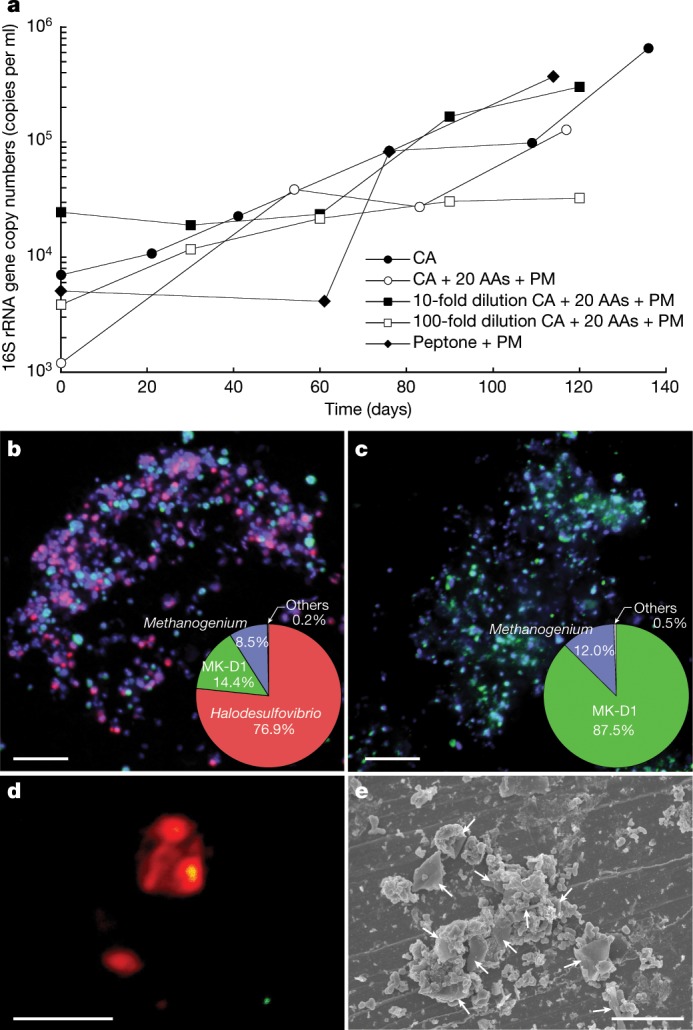
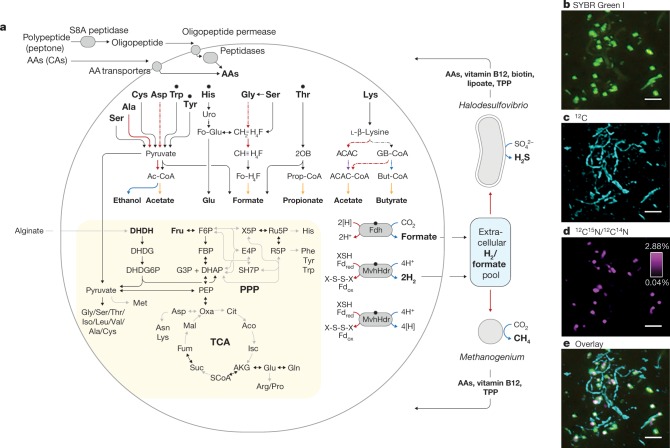
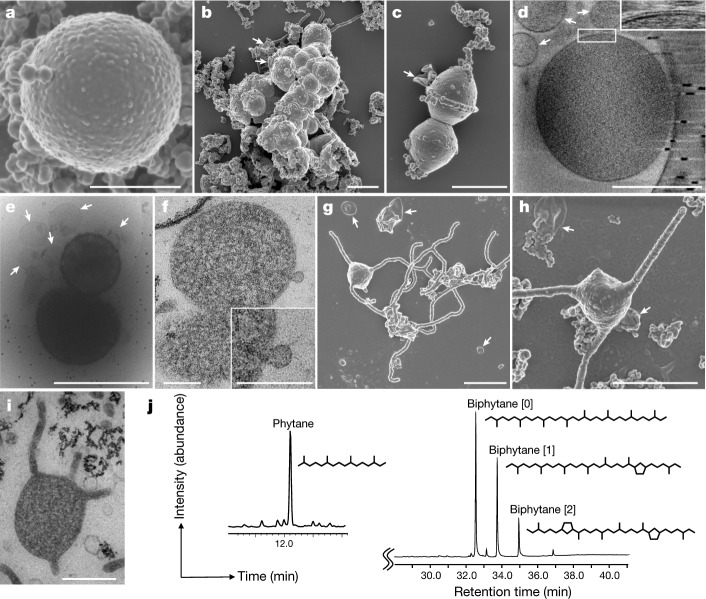
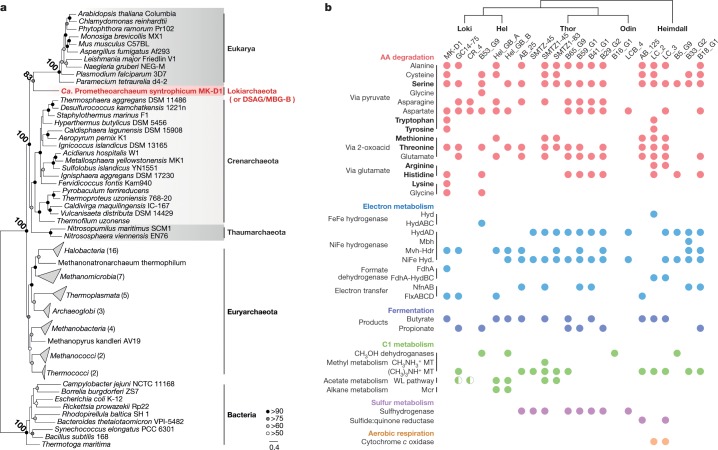
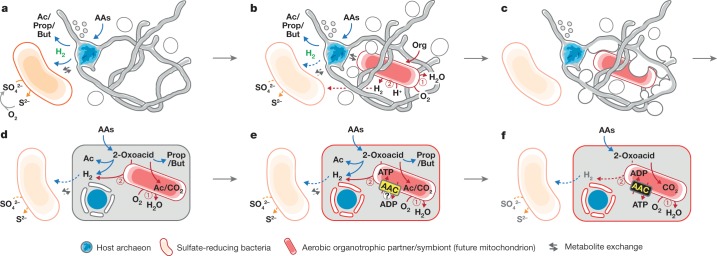
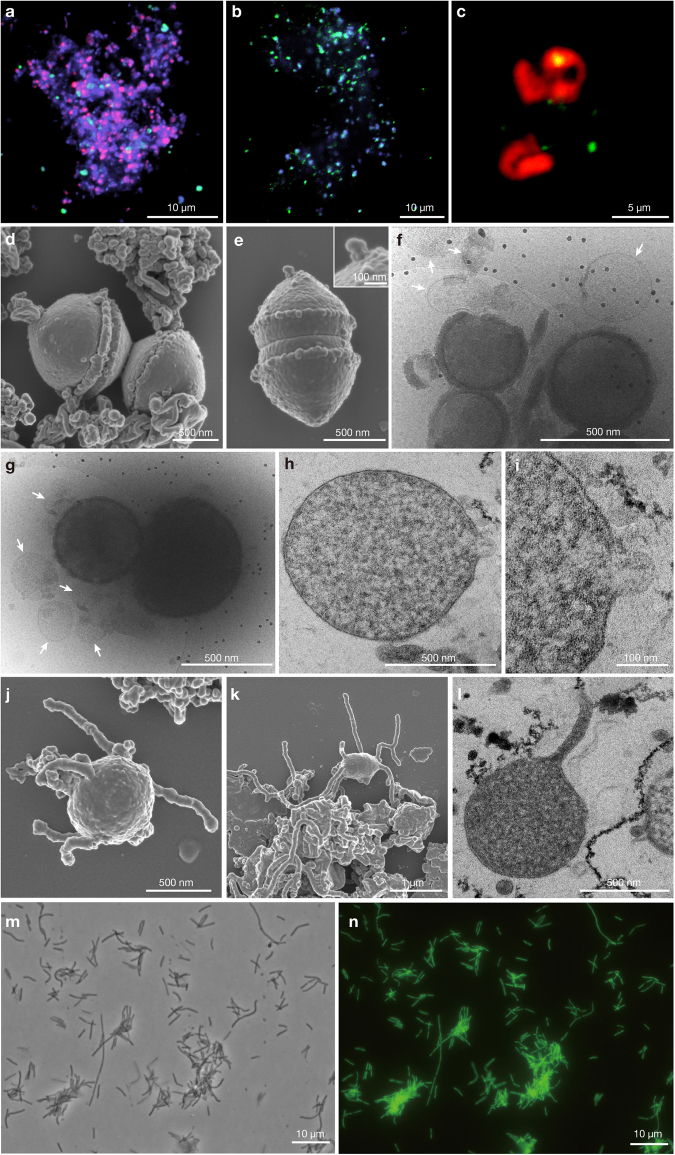
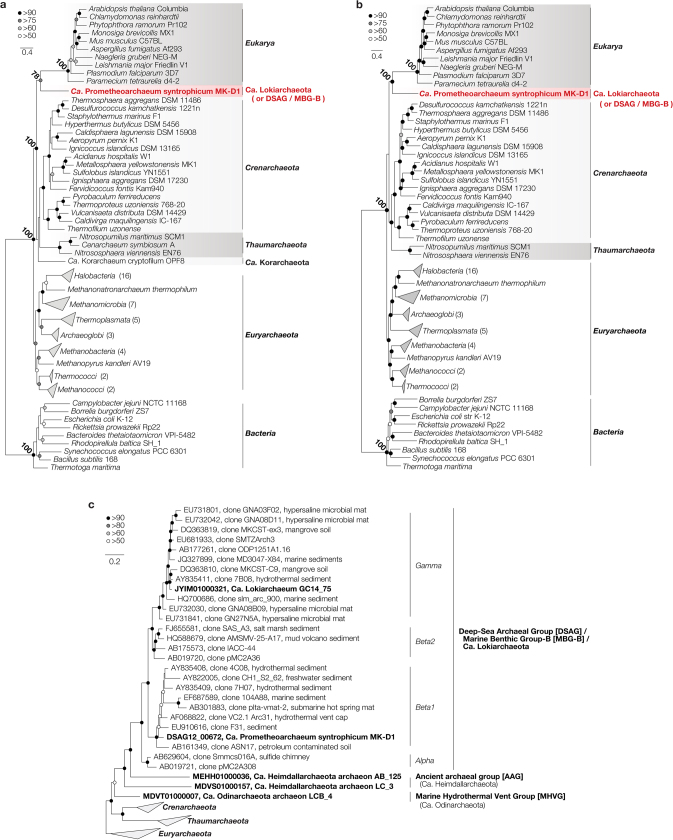
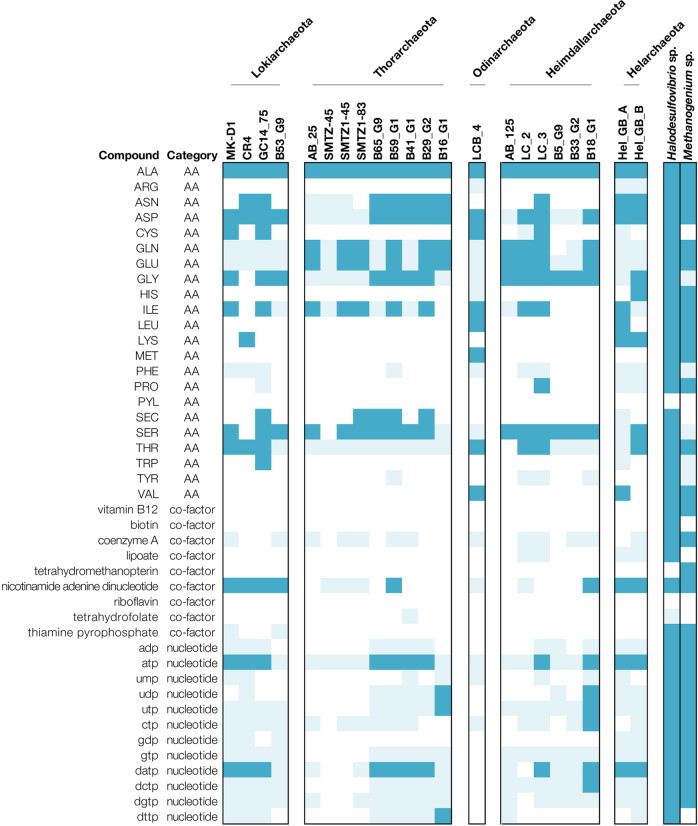
The origin of eukaryotes remains unclear 1-4. Current data suggest that eukaryotes may have emerged from an archaeal lineage known as 'Asgard' archaea 5,6. Despite the eukaryote-like genomic features that are found in these archaea, the evolutionary transition from archaea to eukaryotes remains unclear, owing to the lack of cultured representatives and corresponding physiological insights. Here we report the decade-long isolation of an Asgard archaeon related to Lokiarchaeota from deep marine sediment. The archaeon-'Candidatus Prometheoarchaeum syntrophicum' strain MK-D1-is an anaerobic, extremely slow-growing, small coccus (around 550 nm in diameter) that degrades amino acids through syntrophy. Although eukaryote-like intracellular complexes have been proposed for Asgard archaea 6, the isolate has no visible organelle-like structure. Instead, Ca. P. syntrophicum is morphologically complex and has unique protrusions that are long and often branching. On the basis of the available data obtained from cultivation and genomics, and reasoned interpretations of the existing literature, we propose a hypothetical model for eukaryogenesis, termed the entangle-engulf-endogenize (also known as E 3) model.
Overview
The claims and statistics of this paper haven’t been checked yet.
Free: it reads the open-access text and checks the first 5 claims that cite a source we can check. Create a free account to check every claim.
Integrity signals
Registry
Cites
Statistics
Figures
Verification
Claims the paper makes
The claims and statistics of this paper haven’t been checked yet.
Free: it reads the open-access text and checks the first 5 claims that cite a source we can check. Create a free account to check every claim.
Claims other papers make about this one
Each is checked against this paper’s own text: does it say what the citing paper says it does?
The source backs part of the claim, not all of it — or backs it for a different population, condition or comparison.
In the citing paper
“Furthermore, ATP synthase evolution supports scenarios on eukaryotic origins from an asgardarchaeal host3,4,13,14 and alphaproteobacterial symbiont107,108”
From ATP synthase evolution on a cross-braced dated tree of life (2023) · cites this paper as [14]
Experimental — accuracy not yet measured
Self-check
Percentages, sums and reported differences re-computed from the paper’s own numbers.
The self-check needs the paper’s full text.
Citations
Cites
Trimmomatic: a flexible trimmer for Illumina sequence data
Bolger, A. M., Lohse, M., & Usadel, B. (2014) · Bioinformatics · doi:10.1093/bioinformatics/btu170 · Cited by 65,548
MAFFT Multiple Sequence Alignment Software Version 7: Improvements in Performance and Usability
Katoh, K., & Standley, D. M. (2013) · Molecular Biology and Evolution · doi:10.1093/molbev/mst010 · Cited by 46,209
MUSCLE: multiple sequence alignment with high accuracy and high throughput
Edgar, R. C. (2004) · Nucleic Acids Research · doi:10.1093/nar/gkh340 · Cited by 44,662
The SILVA ribosomal RNA gene database project: improved data processing and web-based tools
Quast, C., Pruesse, E., Yilmaz, P., Gerken, J., Schweer, T., Yarza, P., Peplies, J., & Glöckner, F. O. (2012) · Nucleic Acids Research · doi:10.1093/nar/gks1219 · Cited by 33,055
RAxML version 8: a tool for phylogenetic analysis and post-analysis of large phylogenies
Stamatakis, A. (2014) · Bioinformatics · doi:10.1093/bioinformatics/btu033 · Cited by 32,291
MrBayes 3.2: Efficient Bayesian Phylogenetic Inference and Model Choice Across a Large Model Space
Ronquist, F., Teslenko, M., van der Mark, P., Ayres, D. L., Darling, A., Höhna, S., Larget, B., Liu, L., Suchard, M. A., & Huelsenbeck, J. P. (2012) · Systematic Biology · doi:10.1093/sysbio/sys029 · Cited by 27,843
SPAdes: A New Genome Assembly Algorithm and Its Applications to Single-Cell Sequencing
Bankevich, A., Nurk, S., Antipov, D., Gurevich, A. A., Dvorkin, M., Kulikov, A. S., Lesin, V. M., Nikolenko, S. I., Pham, S., Prjibelski, A. D., et al. (2012) · Journal of Computational Biology · doi:10.1089/cmb.2012.0021 · Cited by 25,987
BLAST+: architecture and applications
Camacho, C., Coulouris, G., Avagyan, V., Ma, N., Papadopoulos, J., Bealer, K., & Madden, T. L. (2009) · BMC Bioinformatics · doi:10.1186/1471-2105-10-421 · Cited by 22,074
Prokka: rapid prokaryotic genome annotation
Seemann, T. (2014) · Bioinformatics · doi:10.1093/bioinformatics/btu153 · Cited by 18,818
Guindon, S., Dufayard, J.-F., Lefort, V., Anisimova, M., Hordijk, W., & Gascuel, O. (2010) · Systematic Biology · doi:10.1093/sysbio/syq010 · Cited by 18,376
Research works printed but not linked: 1
- Chikaraishi, Y. et al. Instrumental Optimization for Compound-specific Nitrogen Isotope Analysis of Amino Acids by Gas Chromatography/Combustion/Isotope Ratio Mass Spectrometry in Earth, Life and Isotopes (eds Ohkouchi, N. et al.) 367–386 (Kyoto Univ. Press, 2010). 20658677
Cited by
Items 401–500 of 773
New approaches for archaeal genome-guided cultivation
Wang, Y., Kamagata, Y., Li, M., Han, F., Wang, F., & Xiao, X. (2021) · Science China Earth Sciences · doi:10.1007/s11430-020-9793-5 · Cited by 7
Self-citationEtten, J. V., Keddis, R., Lisa, J. A., & Rauschenbach, I. (2022) · Journal of Microbiology and Biology Education · doi:10.1128/jmbe.00142-21 · Cited by 8
The bacterial origin of mitochondria: Incorrect phylogenies and the importance of metabolic traits
Esposti, M. D. (2023) · International review of cytology · doi:10.1016/bs.ircmb.2022.11.001 · Cited by 7
Astrobiology: resolution of the statistical Drake equation by Maccone's lognormal method in 50 steps
Mieli, E., Valli, A. M. F., & Maccone, C. (2023) · International Journal of Astrobiology · doi:10.1017/s1473550423000113 · Cited by 7
Genesis of ectosymbiotic features based on commensalistic syntrophy
Krishnan, N., Csiszár, V., Móri, T. F., & Garay, J. (2024) · Scientific Reports · doi:10.1038/s41598-023-47211-8 · Cited by 8
“One commonly proposed ecological dependence between species is syntrophy, i.e., one species living off the metabolic products of another species 8, 9, 12, 13, 16, 17 .”
BackgroundEvidence for archaeal metabolism of D-amino acids in the deep marine sediments
Yu, Y., Liu, N.-H., Teng, Z., Chen, Y., Wang, P., Zhang, Y., Fu, H., Chen, X., & Zhang, Y. (2024) · The Science of The Total Environment · doi:10.1016/j.scitotenv.2024.174723 · Cited by 8
Intercompatibility of eukaryotic and Asgard archaea ribosome-translocon machineries
Carilo, I., Senju, Y., Yokoyama, T., & Robinson, R. C. (2024) · Journal of Biological Chemistry · doi:10.1016/j.jbc.2024.107673 · Cited by 7
Ternák, G., Berényi, K., Kun, S., Szigeti, N., Décsi, T., Sütő, G., & Wittmann, I. (2021) · Scientific Reports · doi:10.1038/s41598-021-96301-y · Cited by 7
Urm1, not quite a ubiquitin-like modifier?
Kaduhr, L., Brachmann, C., Ravichandran, K. E., West, J. D., Glatt, S., & Schaffrath, R. (2021) · Microbial Cell · doi:10.15698/mic2021.11.763 · Cited by 7
“With Urm1 counterparts being identified in archaea [6, 15, 16], their distribution across the domains of life suggests that Urm1-like modifiers may represent evolutionary intermediates for present-day members of the UbF protein family in”
BackgroundIs an archaeon the ancestor of eukaryotes?
Spang, A. (2023) · Environmental Microbiology · doi:10.1111/1462-2920.16323 · Cited by 8
An overview of experimental simulations of microbial activity in early Earth
Zhao, M., Zhao, Y., Lin, W., & Xiao, K. (2023) · Frontiers in Microbiology · doi:10.3389/fmicb.2022.1052831 · Cited by 8
Debating Eukaryogenesis—Part 2: How Anachronistic Reasoning Can Lure Us into Inventing Intermediates
Speijer, D. (2020) · BioEssays · doi:10.1002/bies.201900153 · Cited by 7
Genomic and transcriptomic dissection of Theionarchaea in marine ecosystem
Cai, M., Duan, C., Zhang, X., Pan, J., Liu, Y., Zhang, C., & Li, M. (2021) · Science China Life Sciences · doi:10.1007/s11427-021-1996-x · Cited by 8
Inturi, R., Lara, S., Derweesh, M., & Celestine, N. (2022) · Advanced Biology · doi:10.1002/adbi.202101323 · Cited by 7
Complex eukaryotic-like actin regulation systems from Asgard archaeaPreprint
Akıl, C., Tran, L. T., Orhant‐Prioux, M., Baskaran, Y., Manser, E. J., Blanchoin, L., & Robinson, R. C. (2019) · bioRxiv (Cold Spring Harbor Laboratory) · doi:10.1101/768580 · Cited by 7
Expanded Archaeal Genomes Shed New Light on the Evolution of Isoprenoid Biosynthesis
Zhu, P., Hou, J., Xiong, Y., Xie, R., Wang, Y., & Wang, F. (2024) · Microorganisms · doi:10.3390/microorganisms12040707 · Cited by 6
“…the sole MVA pathway for diverse strictly anaerobic archaea, including the isolated Asgard archaeon Candidatus Prometheoarchaeum syntrophicum MK-D1 [59], thus supporting a plausible early presence of the haloarchaea-type MVA pathway in the domain Archaea, probably not much later than the…”
BackgroundHuang, B., Xiao, Y., & Zhang, Y. (2024) · The ISME Journal · doi:10.1093/ismejo/wrae111 · Cited by 6
“Horizontal gene transfer (HGT) events have been previously reported between Asgard archaea and Euryarchaeota , which are two evolutionarily disparate clades but may live in similar conditions or in symbiosis (such as certain Lokiarchaeia and euryarchaeal methanogens) [59, 60].”
Diversity and environmental distribution of Asgard archaea in shallow saline sediments
Hager, K., Luo, Z., Díez, M. M., Ponce-Toledo, R. I., Baur, P. A., Dahlke, S., Andrei, A., Bulzu, P., Ghai, R., Urich, T., et al. (2025) · Frontiers in Microbiology · doi:10.3389/fmicb.2025.1549128 · Cited by 7
Culturing the uncultured anaerobes from the perspective of microbial growth curves
Wu, K., Ma, S., Li, J., Sousa, D. Z., & Cheng, L. (2025) · Trends in Microbiology · doi:10.1016/j.tim.2025.06.006 · Cited by 7
Microbial communities of halite deposits and other hypersaline environments
Thompson, T. P., Megaw, J., Kelly, S. A., Hopps, J., & Gilmore, B. (2022) · Advances in applied microbiology · doi:10.1016/bs.aambs.2022.06.001 · Cited by 6
Membrane fusion and fission during eukaryogenesis
Romero, H., Aguilar, P. S., Graña, M., Langleib, M., Gudiño, V., & Podbilewicz, B. (2024) · Current Opinion in Cell Biology · doi:10.1016/j.ceb.2023.102321 · Cited by 8
How mitochondrial cristae illuminate the important role of oxygen during eukaryogenesis
Speijer, D. (2024) · BioEssays · doi:10.1002/bies.202300193 · Cited by 6
Kobayashi, K., Nauny, P., Takano, Y., Honma, C., Kurizuka, T., Ishikawa, Y., Yogosawa, S., Obayashi, Y., Kaneko, T., Kebukawa, Y., et al. (2022) · International Journal of Astrobiology · doi:10.1017/s1473550422000325 · Cited by 7
“Even in the recently discovered common ancestor of prokaryotes and eukaryotes, ATP is considered to be an essential compound for energy acquisition and homoeostasis (Spang et al., 2015; Imachi et al., 2020).”
BackgroundSelf-citationSokolskyi, T., & DasSarma, S. (2023) · International Journal of Astrobiology · doi:10.1017/s1473550423000095 · Cited by 7
A brief history of metal recruitment in protozoan predation
Yu, Y., Li, Y., Ren, K., Hao, X., Fru, E. C., Rønn, R., Rivera, W. L., Becker, K., Feng, R., Yang, J., et al. (2023) · Trends in Microbiology · doi:10.1016/j.tim.2023.11.008 · Cited by 6
Lai, D., Hedlund, B. P., Xie, W., Liu, J., Phelps, T. J., Zhang, C., & Wang, P. (2020) · Frontiers in Microbiology · doi:10.3389/fmicb.2020.572017 · Cited by 6
“…one of the “Asgard archaea,” showed less connection to other archaeal groups although they were present in high abundance, which is apparently contradictory to the syntrophic nature of the only lab-cultivated member of the group, ‘Candidatus Prometheoarchaeum syntrophicum’ (Imachi et al., 2020).”
BackgroundInfluentialTamarit, D., Teakel, S. L., Marama, M., Aragão, D., Gerdes, S., Forwood, J. K., Ettema, T. J. G., & Cahill, M. A. (2021) · bioRxiv (Cold Spring Harbor Laboratory) · doi:10.1101/2021.11.17.468889 · Cited by 6
Eukaryotes inherited inositol lipids from bacteria: implications for the models of eukaryogenesis
Esposti, M. D. (2023) · FEBS Letters · doi:10.1002/1873-3468.14708 · Cited by 5
“The identity of one of such microbes emerged recently, first from metagenomic data [5,11] and then after successful cultivation of slow-growing anaerobic prokaryotes [6,12,13].”
InfluentialArchaeal DNA replication initiation: bridging LUCA's legacy and modern mechanisms
Dulermo, R. (2025) · Frontiers in Microbiology · doi:10.3389/fmicb.2025.1561973 · Cited by 5
“Positioned evolutionarily between bacteria and eukaryotes (Dombrowski et al., 2021; Imachi et al., 2020), archaea offer a unique vantage point for understanding the mechanisms that drive cellular life.”
Hypothesis that ancestral eukaryotes sexually proliferated without kinetochores or mitosis
Akiyoshi, B. (2025) · Journal of Cell Science · doi:10.1242/jcs.263843 · Cited by 5
A Sea of Microbes: What’s So Special about Marine Microbiology
Stal, L. J. (2022) · The microbiomes of humans, animals, plants, and the environment · doi:10.1007/978-3-030-90383-1_1 · Cited by 8
Quantitative microbial ecology: Future challenges and opportunities
Orsi, W. D. (2022) · Environmental Microbiology · doi:10.1111/1462-2920.16204 · Cited by 5
Tracking of Ubiquitin Signaling through 3.5 Billion Years of Combinatorial Conjugation
Kaminskaya, A. N., Evpak, A. S., Belogurov, A. A., & Kudriaeva, A. A. (2024) · International Journal of Molecular Sciences · doi:10.3390/ijms25168671 · Cited by 6
“The Archaeon Candidatus Prometheoarchaeum syntrophicum , the most closely related cultured archaeal organism to Eukaryotes, is believed to possess the ubiquitin-to-substrate conjugation system most similar to that observed in Eukaryotes [111].”
BackgroundKumari, J., Uthaman, A., Bose, S., Kundu, A., Sharma, V., Dutta, S., Dhar, A., Roy, S., Srinivasan, R., Pande, S., et al. (2025) · The EMBO Journal · doi:10.1038/s44318-025-00529-7 · Cited by 6
“However, recent studies on the isolation and the culture of members of Lokiarchaeota (Imachi et al, 2020; Rodrigues-Oliveira et al, 2023) and of Hodarchaeales (proposed to be FECA ’ s (First Eukaryotic Common Ancestor) closest relative) (Eme et al, 2023; preprint: Imachi et al, 2025) have opened new avenues for unders…”
Rook, G. A. W. (2021) · Advances in environmental microbiology · doi:10.1007/978-3-030-63512-1_18 · Cited by 5
Towards unraveling the origins of eukaryotic nuclear genome organization
van Hooff, J. J. E. (2023) · Trends in Cell Biology · doi:10.1016/j.tcb.2023.07.008 · Cited by 5
Chapter 5: Major Biological Innovations in the History of Life on Earth
Bozdag, G. O., Szeinbaum, N., Conlin, P. L., Chen, I. K., Fos, S. M., Garcia, A. K., Penev, P. I., Schaible, G. A., & Trubl, G. (2024) · Astrobiology · doi:10.1089/ast.2021.0119 · Cited by 5
“To date, only one strain of Asgard archaea (belonging to the Lokiarchaeota phylum) has been successfully cultured (Imachi et al., 2020).”
Eukaryotic cellular intricacies shape mitochondrial proteomic complexity
Hammond, M., Dorrell, R. G., Speijer, D., & Lukeš, J. (2022) · BioEssays · doi:10.1002/bies.202100258 · Cited by 5
“It is clear that mitochondria were present in the Last Eukaryotic Common Ancestor (LECA), originating from the endosymbiosis of an early-branching alpha-proteobacterium with an archaeon (related to the Asgard-like group of extant Archaea), eventually transitioning to a stable organelle [22].”
BackgroundHighlight: Unraveling the Origins of LUCA and LECA on the Tree of Life
McGrath, C. (2022) · Genome Biology and Evolution · doi:10.1093/gbe/evac072 · Cited by 5
Sex in protists: A new perspective on the reproduction mechanisms of trypanosomatids
da Silva, V. S., & Machado, C. R. (2022) · Genetics and Molecular Biology · doi:10.1590/1678-4685-gmb-2022-0065 · Cited by 5
Methane Cycle in a Littoral Site of a Temperate Freshwater Lake
Kallistova, A. Y., Koval’, D. D., Kadnikov, V. V., Toshchakov, S. V., Yusupov, S. K., Izotova, A. O., Vinogradova, E. N., Zekker, I., & Пименов, Н. В. (2023) · Microbiology · doi:10.1134/s0026261722602901 · Cited by 5
“Among members of the phylum Ca. “Lokiarchaeota,” the sequences were revealed, which exhibited 94% similarity to members of the candidate species Ca. “Prometheoarchaeum syntrophicum” (CP042905), an anaerobic, amino acid-degrading syntroph (Imachi et al., 2020).”
BackgroundMaréchal, É. (2024) · Methods in molecular biology · doi:10.1007/978-1-0716-3726-5_1 · Cited by 5
Brown, H. J., Shinde, V. D., Bosi, L., & Duggin, I. G. (2025) · Current Opinion in Cell Biology · doi:10.1016/j.ceb.2025.102557 · Cited by 4
Dzul, E. R., Loron, C., Agić, H., Donaldson, S., Knoll, P., & McMahon, S. (2025) · Journal of Paleontology · doi:10.1017/jpa.2025.10119 · Cited by 4
“Some examples of prokaryotes with long filamentous branching protrusions are known from the Planctomycetes – Verrucomicro-bia – Chlamydiae (PVC) bacteria and from a species of Asgard archaeon (Imachi et al., 2020).”
Yang, Y., Liang, S., Liu, J., Fu, X., Wu, P., Li, H., Ni, J., She, Q., Krupovìč, M., & Shen, Y. (2025) · EMBO Reports · doi:10.1038/s44319-025-00650-y · Cited by 4
“In addition to sharing a common origin of information processing machineries with Eukarya, archaea of the Asgardarchaeota and TACK superphylum encode many proteins that were initially thought to be speci fi c to eukaryotes (Imachi et al, 2020; Liu et al, 2021c).”
AlphaFold2: A versatile tool to predict the appearance of functional adaptations in evolution
Ponlachantra, K., Suginta, W., Robinson, R. C., & Kitaoku, Y. (2022) · BioEssays · doi:10.1002/bies.202200119 · Cited by 4
“[50] Thus, AF2 failed to reproduce the open conformation of Heim-dall (Hod) profilin determined by NMR (Supporting Information Figure S4H).”
BackgroundWhy is the sky blue? A new question for political science
Rocafort, V. A. (2024) · Sustainability Science · doi:10.1007/s11625-024-01479-5 · Cited by 4
“From the primordial endosymbiosis between an archaeon phagocytosing an aerobic bacterium, which became our mitochondria (Eme et al. 2017; Imachi et al. 2020; Williams et al. 2020), to our current symbiotic alliance with trillions of bacteria in our bodies (Sender et al. 2016), it no longer seems…”
Li, W., Rekadwad, B. N., Jiao, J., & Salam, N. (2024) · Springer eBooks · doi:10.1007/978-981-99-5720-0_11 · Cited by 7
Bateman, A. (2020) · Biology Direct · doi:10.1186/s13062-020-00260-9 · Cited by 5
“Based on its properties, the discoverers propose a model for eukaryogenesis of “entangle–engulf–endogenize” (or E(3)) [59].”
Tree of Motility—History of Motility Systems in the Tree of Life—
Miyata, M. (2020) · Seibutsu Butsuri · doi:10.2142/biophys.60.231 · Cited by 4
Red Algal Extremophiles: Novel Genes and Paradigms
Etten, J. V. (2020) · Microscopy Today · doi:10.1017/s1551929520001534 · Cited by 5
Prokaryotic Basis of Eukaryotic Eco-Evo Development
Berlanga, M., Viñas, M., & Guerrero, R. (2021) · Springer eBooks · doi:10.1007/978-3-030-77595-7_13 · Cited by 4
Origin of eukaryotes: What can be learned from the first successfully isolated Asgard archaeon
Albers, S., Ashmore, J. F., Pollard, T. D., Spang, A., & Zhou, J. Z. (2022) · Faculty Reviews · doi:10.12703/r-01-000005 · Cited by 5
Rook, G. A. W. (2022) · Progress in inflammation research · doi:10.1007/978-3-030-91051-8_2 · Cited by 4
Acid digestion and symbiont: Proton sharing at the origin of mitochondriogenesis?
Mencía, M. (2022) · BioEssays · doi:10.1002/bies.202200136 · Cited by 5
“[5] Along the eukaryotic evolutionary path, similar protrusions in a related host organism could have served to capture the prey by entanglement (E3 model).”
BackgroundBendia, A. G., Nakamura, F. M., Butarelli, A. C. D. A., Kmit, M. C. P., Ramos, R. B., Signori, C. N., Lourenço, R. A., de Mahiques, M. M., Sumida, P. Y. G., & Pellizari, V. H. (2022) · Ocean and Coastal Research · doi:10.1590/2675-2824070.22134agb · Cited by 4
Deviating from the norm: Nuclear organisation in trypanosomes
Field, M. C. (2023) · Current Opinion in Cell Biology · doi:10.1016/j.ceb.2023.102234 · Cited by 4
Scientists glimpse oddball microbe that could help explain rise of complex life
Lambert, J. M. (2019) · Nature · doi:10.1038/d41586-019-02430-w · Cited by 4
Hedlund, B. P., Zhang, C., Wang, F., Rinke, C., & Martin, W. F. (2022) · Frontiers in Microbiology · doi:10.3389/fmicb.2021.827229 · Cited by 4
“, 2021) and the isolation of co-cultures of the microscopically characterized obligate symbiotic archeaon Candidatus Prometheoarchaeum syntrophicum (Imachi et al., 2020) has led to exciting insights into the role of the Archaea in eukaryogenesis.”
BackgroundInfluentialUnique viruses that infect Archaea related to eukaryotesPreprint
Rambo, I. M., Anda, V. D., Langwig, M. V., & Baker, B. J. (2021) · Research Square · doi:10.1101/2021.07.29.454249 · Cited by 4
Schechter, M. S., Trigodet, F., Veseli, I., Miller, S. E., Klein, M. L., Sever, M., Maignien, L., Delmont, T. O., Light, S. H., & Eren, A. M. (2025) · bioRxiv (Cold Spring Harbor Laboratory) · doi:10.1101/2025.01.15.633187 · Cited by 5
“…differs across taxa as a function of genome recovery methodology: while cultivation efforts often struggle to capture slow-growing organisms (Imachi et al. 2020) or those that depend on others for survival (He et al. 2015), genome-resolved metagenomics often struggle to reconstruct genomes…”
Active virus-host system in a Lokiarchaeon culturePreprint
Maslać, N., Ponce-Toledo, R. I., Rodrigues-Oliveira, T., Alarcón-Schumacher, T., Homola, M., Luo, Z., White, M. F., Schur, F. K. M., Erdmann, S., & Schleper, C. (2026) · bioRxiv (Cold Spring Harbor Laboratory) · doi:10.64898/2026.02.13.705702 · Cited by 4
Qiu, J., Tao, H., Li, H., Liu, X., Liu, R., Nawaz, M. N., Wang, X., & Ma, L. (2025) · BMC Genomics · doi:10.1186/s12864-025-11875-5 · Cited by 4
“Some researchers have engineered and operated a methane-fed, continuous-flow bioreactor system for over 2,000 days to enrich archaea from deep-marine methane-seep sediments [11].”
The archaeal roots of eukaryotic life
Anda, V. D., Appler, K. E., Aguilar-Pine, E., Aitolo, G. L., Halverson, G. P., & Baker, B. J. (2026) · Proceedings of the National Academy of Sciences · doi:10.1073/pnas.2516062123 · Cited by 4
Why selection for mitochondrial quality drives the evolution of sexes
Lane, N. J., & Pomiankowski, A. (2026) · Philosophical Transactions of the Royal Society B Biological Sciences · doi:10.1098/rstb.2025.0076 · Cited by 4
False negatives in the search for extraterrestrial life
ten Kate, I. L., Baqué, M., Debaille, V., Grenfell, J. L., Khawaja, N., Klenner, F., Lara, Y. J., McMahon, S., Malaterre, C., Moore, K., et al. (2026) · Nature Astronomy · doi:10.1038/s41550-026-02863-0 · Cited by 3
“For instance, slow-growing communities 33 refute the assumption that life would quickly colonize a whole planetary surface or every possible niche and therefore would not be present in small numbers.”
Untangling Irregular Actin Cytoskeleton Architectures in Tomograms of the Cell with Struwwel Tracer
Sazzed, S., Scheible, P., He, J. J., & Wriggers, W. R. (2023) · International Journal of Molecular Sciences · doi:10.3390/ijms242417183 · Cited by 3
“The cryo-ET by Pilhofer’s lab at ETH Zurich supports an emerging hypothesis that extensive cytoskeletal actin structures arose first in the Asgard Archaea, before the appearance of the first eukaryotes on Earth, and could, therefore, have contributed to the emergence of complex organisms [3].”
BackgroundDomínguez‐Espinosa, M. E., Cruz‐Salomón, A., Ramírez, J. A., Hernández‐Méndez, J. M. E., & Santiago‐Martínez, M. G. (2023) · Frontiers in Sustainable Food Systems · doi:10.3389/fsufs.2023.1244691 · Cited by 5
Biran, A., Dingjan, T., & Futerman, A. H. (2024) · Current topics in membranes · doi:10.1016/bs.ctm.2024.06.001 · Cited by 3
Advancing archaeal research through FAIR resource and data sharing, and inclusive community building
Ithurbide, S., Buan, N. R., & Schulze, S. (2025) · Communications Biology · doi:10.1038/s42003-025-07962-8 · Cited by 3
“…the number of sequenced archaeal species is rapidly increasing, especially through metagenomic analyses, cultivating new species remains a major obstacle, sometimes requiring long-term efforts from multiple research groups such as the recently cultivated members of the Asgard phyla 31,38 .”
The Evolution and Implications of the Inosine tRNA Modification
van der Gulik, P. T. S., & Hoff, W. D. (2025) · Journal of Molecular Biology · doi:10.1016/j.jmb.2025.169187 · Cited by 3
“These updated insights into the taxonomic distribution of A-to-I editing at tRNA position 34 can be combined with current insights into the evolution of the major branches in the tree of life [29–33].”
Sussfeld, D., Lannes, R., Corel, E., Bernard, G., Martin, P., Bapteste, E., Pelletier, E., & Lopez, P. (2025) · Environmental Microbiome · doi:10.1186/s40793-025-00697-3 · Cited by 3
“…of microbial adaptations and interactions in numerous environments [9–12] to the characterisation of multiple novel major taxonomic groups [13–17] – most notably CPR bacteria [13, 18, 19], DPANN archaea [18, 20, 21] and Asgard archaea [22–24], profoundly reshaping the structure of the Tree of Life.”
Importance of Prokaryotes for the Origin of Eukaryotes and the Global Environment at 2.4-2.0 Ga
Takeyama, N., TAKAHASHI, Y., Nagata, S., Sawaki, Y., Sato, T., Maruyama, S., & Kanai, A. (2020) · Journal of Geography (Chigaku Zasshi) · doi:10.5026/jgeography.129.899 · Cited by 3
A Novel Medium for Cultivation of “Desulforudis audaxviator”
Lukina, A. P., & Karnachuk, O. V. (2021) · Microbiology · doi:10.1134/s0026261721030073 · Cited by 3
Progress and Challenges in Studying the Ecophysiology of Archaea
Adam, P. S., Bornemann, T. L. V., & Probst, A. J. (2022) · Methods in molecular biology · doi:10.1007/978-1-0716-2445-6_32 · Cited by 3
Organellogenesis: Host proteins control symbiont cell divisions
Husník, F. (2023) · Current Biology · doi:10.1016/j.cub.2022.11.028 · Cited by 3
Cultivating the unseen: Lessons from James Tiedje
Kamagata, Y. (2023) · mLife · doi:10.1002/mlf2.12083 · Cited by 3
“Studies on syntrophy culminated in the discovery and isolation of archaeon whose ancestor might have been the closest relative to eukaryotes 48 .”
BackgroundSelf-citationMetabolic Constraints and Dependencies Between “Uncultivable” Fungi and Their Hosts
Rahimlou, S., Quandt, C. A., & James, T. Y. (2024) · The mycota · doi:10.1007/978-3-031-41648-4_2 · Cited by 7
The contours of evolution: In defence of Darwin's tree of life paradigm
van der Gulik, P. T. S., Hoff, W. D., & Speijer, D. (2024) · BioEssays · doi:10.1002/bies.202400012 · Cited by 3
Li, Y., Chen, C., Liu, X., Li, M., Yan, G., Zhou, H., Wang, H., He, X., He, X., Qiu, J., et al. (2026) · Nature Communications · doi:10.1101/2025.01.16.633305 · Cited by 3
Alaguthevar, R., Pawale, A. V., Murugesan, B., Khan, A., Rhim, J., & Chelladurai, D. (2025) · Microbial Pathogenesis · doi:10.1016/j.micpath.2025.107718 · Cited by 3
NMR resonance assignment and dynamics of profilin from Heimdallarchaeota
Haq, S. R., Survery, S., Hurtig, F., Lindås, A., & Celestine, N. (2020) · Scientific Reports · doi:10.1038/s41598-020-72550-1 · Cited by 3
Zachar, I. (2022) · Nature Ecology & Evolution · doi:10.1038/s41559-022-01839-3 · Cited by 3
Distances Between Extension Spaces of Phylogenetic Trees
Cabrera, M. A. V., & Willis, A. D. (2025) · IEEE Transactions on Computational Biology and Bioinformatics · doi:10.1109/tcbbio.2025.3526422 · Cited by 2
“Alternatively, dense and complete spaces with intrinsic metrics (e.g., the BHV metric space [13] and Wald space [14]), offer distances that account for both branch length and topological differences.”
A Tubules-First Model for the Origin of Eukaryotic Membrane Traffic
Thattai, M. (2026) · Annual Review of Biophysics · doi:10.1146/annurev-biophys-021424-013933 · Cited by 2
Onyśk, A., Steczkiewicz, K., Radkiewicz, M., Link‐Lenczowski, P., Surowiecki, P., Sztompka, K., Grabińska, K. A., Nowak, J., & Surmacz, L. (2025) · FEBS Journal · doi:10.1111/febs.70237 · Cited by 2
“Importantly, the first cultivated Lokiarchaeota with a single-subunit CPT shares an ecological niche with Methanogenium sp . that possess heteromeric CPT [23].”
Forterre, P. (2025) · mLife · doi:10.1002/mlf2.70030 · Cited by 2
“Moreover, the metagenome ‐ assembled genomes (MAGs) of Asgard archaea and the fi rst two cultivated Asgard archaea 32,33 encode a bunch of proteins that are very similar to their eukaryotic homologues and are absent or rare in other Archaea.”
De novo synthesis of peroxisomes: how they are born
Sugiura, A. (2025) · The Journal of Biochemistry · doi:10.1093/jb/mvaf048 · Cited by 2
Wu, Q., Feng, J., Huang, Y., Zhong, S. Y., Li, C., & Zhang, S. (2025) · Frontiers in Microbiology · doi:10.3389/fmicb.2025.1687453 · Cited by 2
Smith, J. (2026) · Nature Microbiology · doi:10.1038/s41564-025-02218-x · Cited by 2
Eukaryogenesis: Did an Oxidative Crucible Result in Misleading Bioinformatic Analyses?
Speijer, D. (2026) · BioEssays · doi:10.1002/bies.70115 · Cited by 2
“…have been cultivated; they need other prokaryotes in their cultivation media (they form part of complicated syntrophic networks), but have no discernible organelle-like internal structure , although forming striking extru-sions possibly optimizing metabolite exchange [12, 13]; see also Figure 1.”
Promethearchaeota Persistence in Marine Sediments Frozen for Over 100 kyr
Liang, R., Vishnivetskaya, T. A., Avcı, B., Rivkina, E., & Lloyd, K. G. (2026) · Environmental Microbiology · doi:10.1111/1462-2920.70277 · Cited by 2
Mitoredox shifts in mitochondrial dysfunction
Moos, W. H., Faller, D. V., Glavas, I. P., Kanara, I., Kodukula, K., Pernokas, J., Pernokas, M., Pinkert, C. A., Powers, W. R., Sampani, K., et al. (2026) · Free Radical Biology and Medicine · doi:10.1016/j.freeradbiomed.2026.05.307 · Cited by 3
Bacterial lipid synthesizing enzymes PlsY and PlsC utilize both stereo-forms of glycerol-phosphate
Rieche, P., Hoekzema, M., Gan, S., Berrelkamp, G., Ezissi, A. W., Exterkate, M., & Driessen, A. J. M. (2026) · EMBO Reports · doi:10.1038/s44319-026-00827-z · Cited by 3
“Initial lipidomic analysis of the only cultures representative of Asgard Lokiarchaeota presented proof only of archaeal phospholipids (Imachi et al, 2020), but the lipid chemical processing and analysis method used might have overlooked bacterial ester-bonded phospholipids.”
Host-initiated microbial association leads to stable ectosymbiosis in an ecological model
Krishnan, N., Zachar, I., Kun, Á., Gokhale, C. S., & Garay, J. (2026) · PLoS Computational Biology · doi:10.1371/journal.pcbi.1014699 · Cited by 2
“This idea is prevalent in many forms [19–23, 26, 31, 33– 35 ,37], despite the fact that no A particularly relevant hypothesis to discuss here is the inside-out origin of eukaryotes [31,88], also consistent with the entangle-engulf-endogenize hypothesis [19].”
InfluentialL'Icosaèdre - Ce qui s'étage, se lit, résonne (Échelle · Perception · Résonance).
Sorel, E. (2026) · PhilPapers (PhilPapers Foundation) · doi:10.5281/zenodo.23250209 · Cited by 2
Genetic diversity of 16S rRNA and mcrA genes from methanogenic archaeas
Xavier, K. V. M., Souza, E. S. E., Santos, E. D. A., & Diniz, M. C. (2020) · Acta Scientiarum Biological Sciences · doi:10.4025/actascibiolsci.v42i1.49877 · Cited by 2
Pinevich, A. V. (2020) · Biosystems · doi:10.1016/j.biosystems.2020.104178 · Cited by 2
Fan, X., Ji, M., Li, M., Sun, K., Tian, Z., Gao, R., Liu, Y., Liao, G., & Hu, C. (2022) · Plant and Soil · doi:10.1007/s11104-022-05620-0 · Cited by 2
Methods to Study the Biogenesis of Mitoribosomal Proteins in Yeast
Bertgen, L., Flohr, T., & Herrmann, J. M. (2023) · Methods in molecular biology · doi:10.1007/978-1-0716-3171-3_10 · Cited by 2
Metadata
- Authors
- Imachi, H., Nobu, M. K., Nakahara, N., Morono, Y., Ogawara, M., Takaki, Y., Takano, Y., Uematsu, K., Ikuta, T., Ito, M., Matsui, Y., Miyazaki, M., Murata, K., Saito, Y., Sakai, S., Song, C., Tasumi, E., Yamanaka, Y., Yamaguchi, T., Kamagata, Y., Tamaki, H., & Takai, K.
- Affiliations
- Japan Agency for Marine-Earth Science and Technology (JP)
- National Institute of Advanced Industrial Science and Technology (JP)
- Marine Works Japan Ltd. (Japan) (JP)
- National Institute for Physiological Sciences (JP)
- Nagaoka University of Technology (JP)
- Corresponding author
- Imachi, Hiroyuki
- Nobu, Masaru K.
- ORCID
- Venue
- Nature
- Published
- 2020-01-15
- Volume
- 577
- Issue
- 7791
- Pages
- 519-525
- ISSN
- 0028-0836 (ISSN-L)
- 1476-4687
- PMC
- PMC7015854
- OpenAlex
- W2999376388
- Semantic Scholar
- ca5317ffc225685e3a40aed38069ed97c2151db3
- Cited by
- 624
- References
- 96
- Citations by year
- 2026: 56 · 2025: 82 · 2024: 89 · 2023: 81 · 2022: 109 · 2021: 101 · 2020: 105
- FWCI
- 33.18
- Type
- journal article
- Language
- en
- Open access
- green
- www.ncbi.nlm.nih.gov
- Licence
- cc-by
- www.springernature.com/gp/researchers/text-and-data-mining (tdm)
- www.springernature.com/gp/researchers/text-and-data-mining (vor)
- Locations
- Nature (publishedVersion)
- Europe PMC (PubMed Central) (publishedVersion, cc-by)
- PubMed Central (publishedVersion, cc-by)
- PubMed (publishedVersion)
- Zenodo (CERN European Organization for Nuclear Research) (submittedVersion)
- Funders
- Japan Society for the Promotion of Science (18K18795, 20H02019, 16H06280, 18H03367, 18H02426, 18H04468, 19H01005, 16H04083, 18H05295)
- Topics
- Life Sciences › Agricultural and Biological Sciences › Ecology, Evolution, Behavior and Systematics › Protist diversity and phylogeny
- Physical Sciences › Physics and Astronomy › Astronomy and Astrophysics › Origins and Evolution of Life
- Physical Sciences › Environmental Science › Ecology › Microbial Community Ecology and Physiology
- Keywords
- Asgard archaea, Lokiarchaeota, eukaryotic origin, syntrophy, amino acid catabolism
- MeSH terms
- Amino Acids, Archaea, Eukaryotic Cells, Lipids, Models, Biological, Phylogeny, Prokaryotic Cells, Symbiosis, Geologic Sediments, Evolution, Molecular, Genome, Archaeal
About these checks
Registry, retraction, Cites and statistics results are computed, not judged, with one exception: a printed reference that no index lists is read once by a model before it counts as a citation error. Claims are extracted by a model and kept only when their quote appears verbatim in the text; each cited source is then checked, with a model’s help, for whether it says what the claim relies on. Those verdicts can be wrong — read the claim’s quote and the cited source before relying on one.
Statistics and arithmetic are recomputed, not judged.
Confidence bands are shown only for fields calibrated on our annotated test set. None is calibrated yet, so no band is shown.
What counts as a claim ›How we measure confidence ›How we check this ›
Are you an author, or do you see a problem with this page? Request a review
Data sources
Bibliographic data: Semantic Scholar, OpenAlex, Crossref.
Contains information from the Semantic Scholar Academic Graph Datasets, made available under the ODC Attribution License (ODC-BY 1.0).
Semantic Scholar’s data is described in: Kinney, R., et al. (2023). The Semantic Scholar Open Data Platform. arXiv:2301.10140.
