

Isolation of an archaeon at the prokaryote–eukaryote interface
Open accessPublished version of a preprint
The DOI matches its Crossref record; 97 of the 97 references it cites were found in a registry or an index.
Abstract
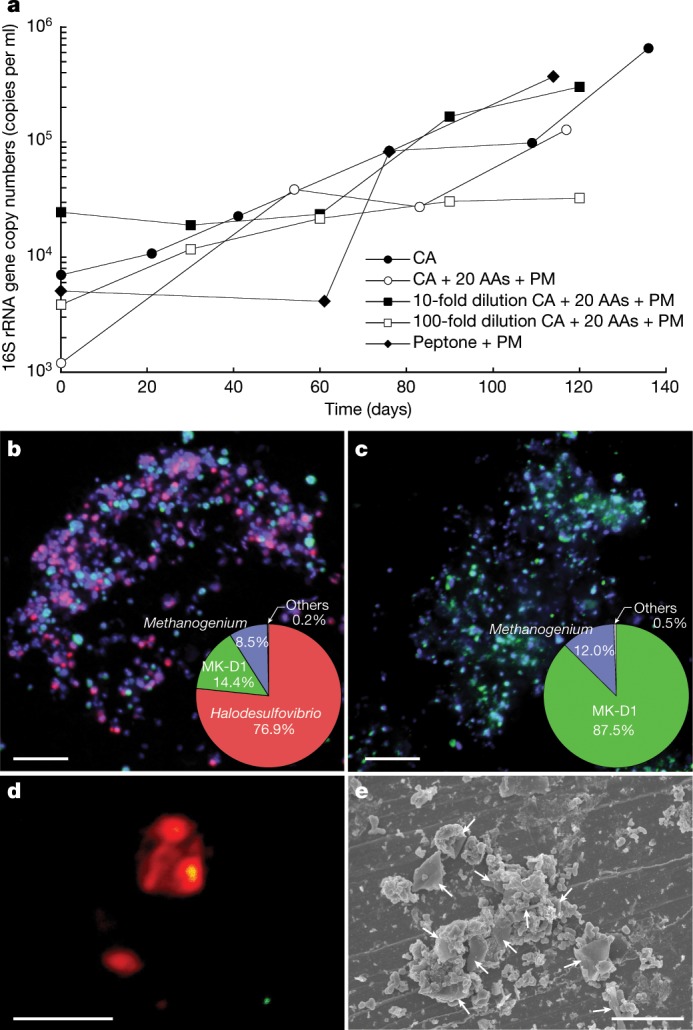
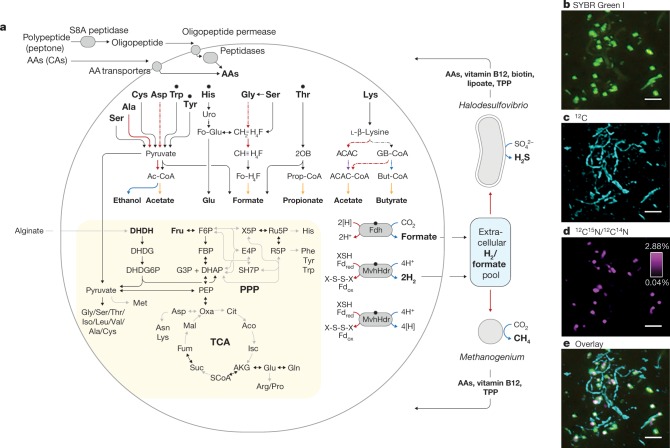
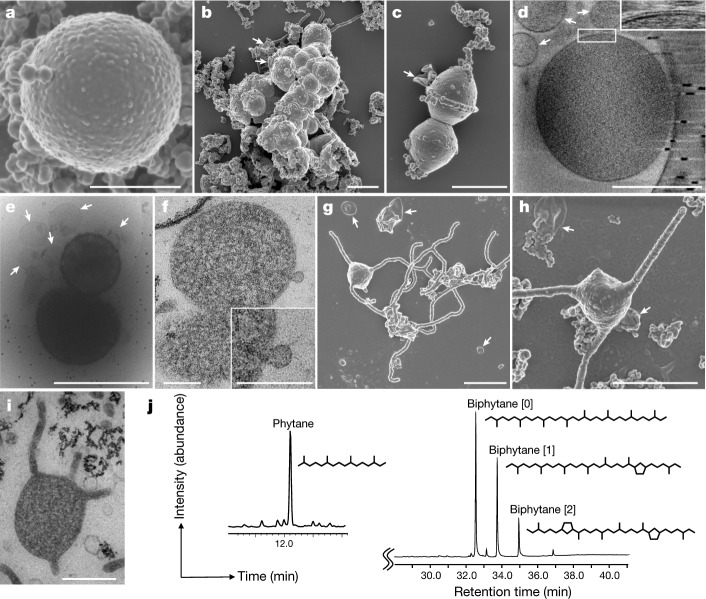
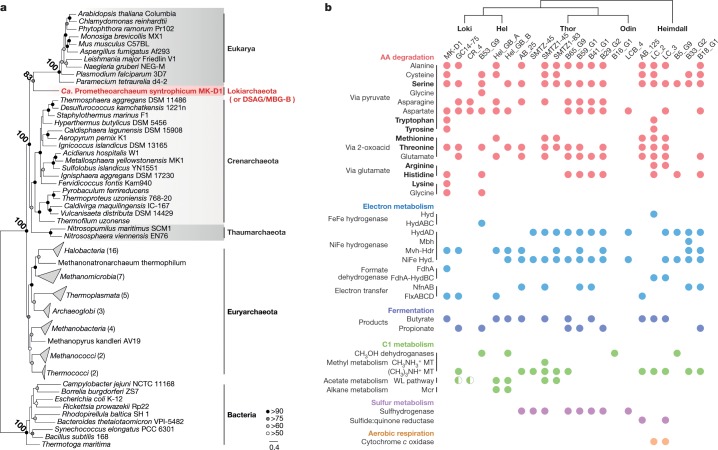
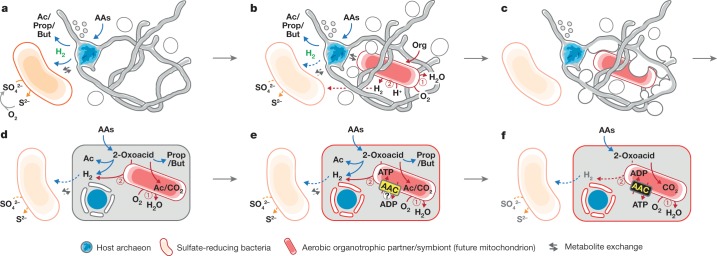
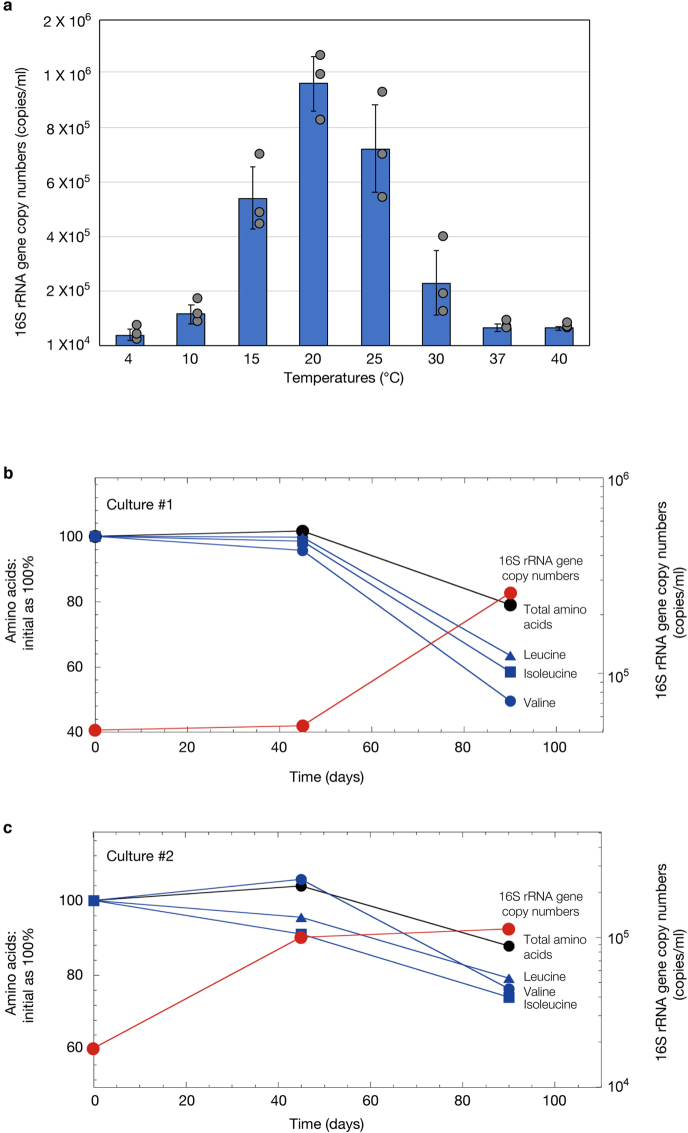
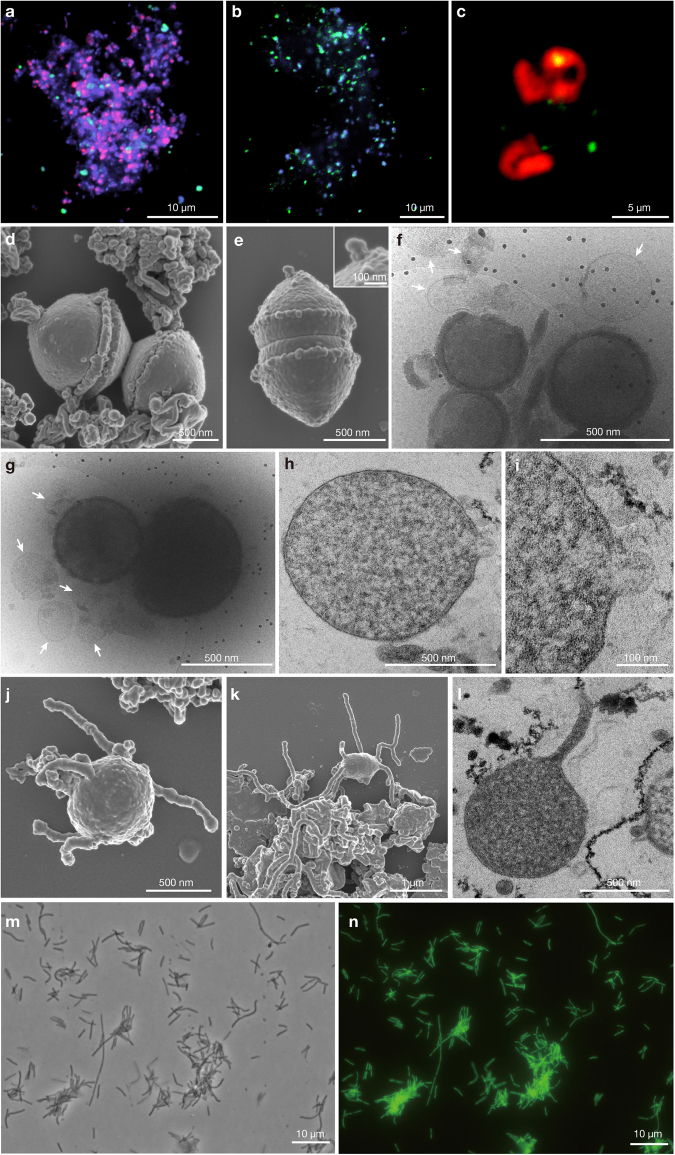
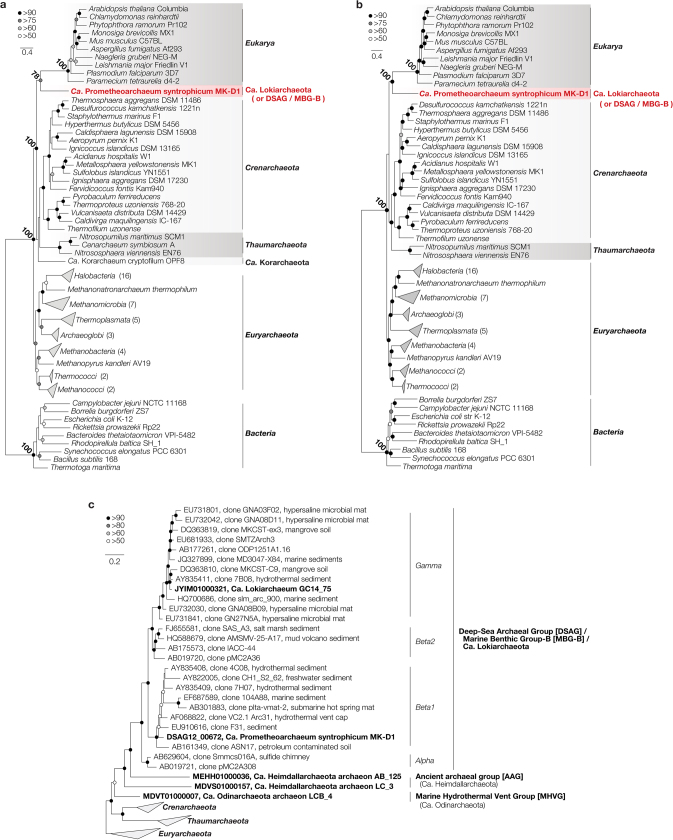
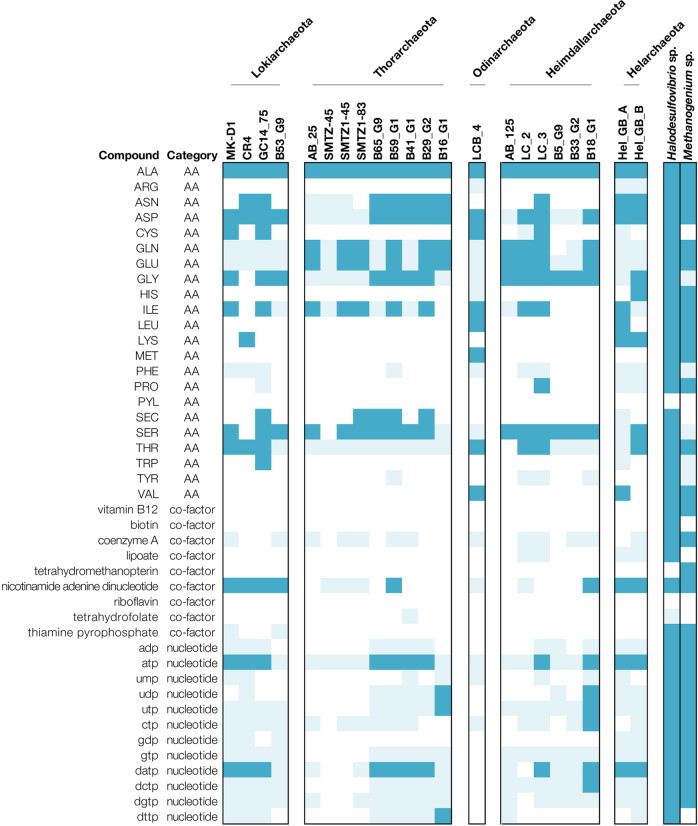
The origin of eukaryotes remains unclear 1-4. Current data suggest that eukaryotes may have emerged from an archaeal lineage known as 'Asgard' archaea 5,6. Despite the eukaryote-like genomic features that are found in these archaea, the evolutionary transition from archaea to eukaryotes remains unclear, owing to the lack of cultured representatives and corresponding physiological insights. Here we report the decade-long isolation of an Asgard archaeon related to Lokiarchaeota from deep marine sediment. The archaeon-'Candidatus Prometheoarchaeum syntrophicum' strain MK-D1-is an anaerobic, extremely slow-growing, small coccus (around 550 nm in diameter) that degrades amino acids through syntrophy. Although eukaryote-like intracellular complexes have been proposed for Asgard archaea 6, the isolate has no visible organelle-like structure. Instead, Ca. P. syntrophicum is morphologically complex and has unique protrusions that are long and often branching. On the basis of the available data obtained from cultivation and genomics, and reasoned interpretations of the existing literature, we propose a hypothetical model for eukaryogenesis, termed the entangle-engulf-endogenize (also known as E 3) model.
Overview
The claims and statistics of this paper haven’t been checked yet.
Free: it reads the open-access text and checks the first 5 claims that cite a source we can check. Create a free account to check every claim.
Integrity signals
Registry
Cites
Statistics
Figures
Verification
Claims the paper makes
The claims and statistics of this paper haven’t been checked yet.
Free: it reads the open-access text and checks the first 5 claims that cite a source we can check. Create a free account to check every claim.
Claims other papers make about this one
Each is checked against this paper’s own text: does it say what the citing paper says it does?
The source backs part of the claim, not all of it — or backs it for a different population, condition or comparison.
In the citing paper
“Furthermore, ATP synthase evolution supports scenarios on eukaryotic origins from an asgardarchaeal host3,4,13,14 and alphaproteobacterial symbiont107,108”
From ATP synthase evolution on a cross-braced dated tree of life (2023) · cites this paper as [14]
Experimental — accuracy not yet measured
Self-check
Percentages, sums and reported differences re-computed from the paper’s own numbers.
The self-check needs the paper’s full text.
Citations
Cites
Trimmomatic: a flexible trimmer for Illumina sequence data
Bolger, A. M., Lohse, M., & Usadel, B. (2014) · Bioinformatics · doi:10.1093/bioinformatics/btu170 · Cited by 65,548
MAFFT Multiple Sequence Alignment Software Version 7: Improvements in Performance and Usability
Katoh, K., & Standley, D. M. (2013) · Molecular Biology and Evolution · doi:10.1093/molbev/mst010 · Cited by 46,209
MUSCLE: multiple sequence alignment with high accuracy and high throughput
Edgar, R. C. (2004) · Nucleic Acids Research · doi:10.1093/nar/gkh340 · Cited by 44,662
The SILVA ribosomal RNA gene database project: improved data processing and web-based tools
Quast, C., Pruesse, E., Yilmaz, P., Gerken, J., Schweer, T., Yarza, P., Peplies, J., & Glöckner, F. O. (2012) · Nucleic Acids Research · doi:10.1093/nar/gks1219 · Cited by 33,055
RAxML version 8: a tool for phylogenetic analysis and post-analysis of large phylogenies
Stamatakis, A. (2014) · Bioinformatics · doi:10.1093/bioinformatics/btu033 · Cited by 32,291
MrBayes 3.2: Efficient Bayesian Phylogenetic Inference and Model Choice Across a Large Model Space
Ronquist, F., Teslenko, M., van der Mark, P., Ayres, D. L., Darling, A., Höhna, S., Larget, B., Liu, L., Suchard, M. A., & Huelsenbeck, J. P. (2012) · Systematic Biology · doi:10.1093/sysbio/sys029 · Cited by 27,843
SPAdes: A New Genome Assembly Algorithm and Its Applications to Single-Cell Sequencing
Bankevich, A., Nurk, S., Antipov, D., Gurevich, A. A., Dvorkin, M., Kulikov, A. S., Lesin, V. M., Nikolenko, S. I., Pham, S., Prjibelski, A. D., et al. (2012) · Journal of Computational Biology · doi:10.1089/cmb.2012.0021 · Cited by 25,987
BLAST+: architecture and applications
Camacho, C., Coulouris, G., Avagyan, V., Ma, N., Papadopoulos, J., Bealer, K., & Madden, T. L. (2009) · BMC Bioinformatics · doi:10.1186/1471-2105-10-421 · Cited by 22,074
Prokka: rapid prokaryotic genome annotation
Seemann, T. (2014) · Bioinformatics · doi:10.1093/bioinformatics/btu153 · Cited by 18,818
Guindon, S., Dufayard, J.-F., Lefort, V., Anisimova, M., Hordijk, W., & Gascuel, O. (2010) · Systematic Biology · doi:10.1093/sysbio/syq010 · Cited by 18,376
Research works printed but not linked: 1
- Chikaraishi, Y. et al. Instrumental Optimization for Compound-specific Nitrogen Isotope Analysis of Amino Acids by Gas Chromatography/Combustion/Isotope Ratio Mass Spectrometry in Earth, Life and Isotopes (eds Ohkouchi, N. et al.) 367–386 (Kyoto Univ. Press, 2010). 20658677
Cited by
Items 101–200 of 773
Haloferax volcanii —a model archaeon for studying DNA replication and repair
Pérez-Arnaiz, P., Dattani, A., Smith, V., & Allers, T. (2020) · Open Biology · doi:10.1098/rsob.200293 · Cited by 52
Crystal structure of schizorhodopsin reveals mechanism of inward proton pumping
Higuchi, A., Shihoya, W., Konno, M., Ikuta, T., Kandori, H., Inoue, K., & Nureki, O. (2021) · Proceedings of the National Academy of Sciences · doi:10.1073/pnas.2016328118 · Cited by 52
Self-citationDiversity, metabolism and cultivation of archaea in mangrove ecosystems
Zhang, C., Chen, Y., Sun, Y., Pan, J., Cai, M., & Li, M. (2020) · Marine Life Science & Technology · doi:10.1007/s42995-020-00081-9 · Cited by 48
Origine symbiotique de la cellule eucaryote
López‐García, P., & Moreira, D. (2023) · Comptes Rendus Biologies · doi:10.5802/crbiol.118 · Cited by 49
Multiple approaches of cellular metabolism define the bacterial ancestry of mitochondria
Esposti, M. D., Geiger, O., Sánchez‐Flores, A., & Esposti, M. D. (2023) · Science Advances · doi:10.1126/sciadv.adh0066 · Cited by 48
Yang, M., Liu, N., Wang, B., Li, Y., Li, W., Shi, X., Yue, X., & Liu, C. (2023) · Water Research · doi:10.1016/j.watres.2023.121062 · Cited by 49
Multi-scale architecture of archaeal chromosomes
Takemata, N., & Bell, S. D. (2021) · Molecular Cell · doi:10.1016/j.molcel.2020.12.001 · Cited by 45
Virus-induced cell gigantism and asymmetric cell division in archaea
Liu, J., Cvirkaitė‐Krupovič, V., Baquero, D. P., Yang, Y., Zhang, Q., Shen, Y., & Krupovìč, M. (2021) · Proceedings of the National Academy of Sciences · doi:10.1073/pnas.2022578118 · Cited by 49
“However, most extant archaea, and in particular, the postulated archaeal ancestor of eukaryotes (61), have small cell size.”
BackgroundNon-negligible roles of archaea in coastal carbon biogeochemical cycling
Zhang, X., Zhang, C., Liu, Y., Zhang, R., & Li, M. (2022) · Trends in Microbiology · doi:10.1016/j.tim.2022.11.008 · Cited by 47
Du, H., Pan, J., Zou, D., Huang, Y., Liu, Y., & Li, M. (2022) · Microbiome · doi:10.1186/s40168-022-01421-w · Cited by 50
“These results agree with the finding that most of the studied Asgard archaea lack the genes for synthesizing arginine and valine, as well as the hypothesis that Asgard archaea are capable of degrading amino acids provided by other microbes, such as aspartate and glutamate [11].”
BackgroundResultInfluentialDefining eukaryotes to dissect eukaryogenesis
Donoghue, P. C. J., Kay, C., Spang, A., Szöllősi, G. J., Nenarokova, A., Moody, E. R. R., Pisani, D., & Williams, T. A. (2023) · Current Biology · doi:10.1016/j.cub.2023.07.048 · Cited by 49
Archaea: The Final Frontier of Chromatin
Laursen, S. P., Bowerman, S., & Luger, K. (2020) · Journal of Molecular Biology · doi:10.1016/j.jmb.2020.166791 · Cited by 50
Ten Years of Collaborative Progress in the Quest for Orthologs
Linard, B., Ebersberger, I., McGlynn, S. E., Glover, N., Mochizuki, T., Patricio, M., Lecompte, O., Nevers, Y., Thomas, P. D., Gabaldón, T., et al. (2021) · Molecular Biology and Evolution · doi:10.1093/molbev/msab098 · Cited by 45
“By using new statistics such as Jaccard Index (Jaccard 1901) and Gini Coefficient (Gini 1921) based on gene counts, Ensembl Compara can ensure that the amount of changes the database undergoes between releases falls within the expected range.”
MethodDiscovery of archaeal fusexins homologous to eukaryotic HAP2/GCS1 gamete fusion proteins
(2022) · doi:10.1038/s41467-022-31564-1 · Cited by 45
Exploring halophilic environments as a source of new antibiotics
Thompson, T., & Gilmore, B. (2023) · Critical reviews in microbiology · doi:10.1080/1040841x.2023.2197491 · Cited by 32
“…evolving one, most recently, a superphylum Asgard was proposed whose members include Lokiarchaeota and Thorarchaeota (Zaremba-Niedzwiedzka et al. 2017), with the eventual cultivation of an Asgard archaeon Candidatus Prometheoarchaeum syntrophicum after 12 years of growth (Imachi et al. 2020).”
BackgroundBuilding genomes to understand biology
Coradini, A. L. V., Hull, C. B., & Ehrenreich, I. M. (2020) · Nature Communications · doi:10.1038/s41467-020-19753-2 · Cited by 48
Zhang, S., Hama, Y., & Mizushima, N. (2021) · Journal of Cell Science · doi:10.1242/jcs.233742 · Cited by 51
Evidence for a Syncytial Origin of Eukaryotes from Ancestral State Reconstruction
Skejo, J., Garg, S. G., Gould, S. B., Hendriksen, M., Tria, F. D. K., Bremer, N., Franjević, D., Blackstone, N. W., & Martin, W. F. (2021) · Genome Biology and Evolution · doi:10.1093/gbe/evab096 · Cited by 47
Eukaryotes’ closest relatives are internally simple syntrophic peptidotrophic archaea
Imachi, H., Nobu, M. K., Ishii, S., Hashiguchi, H., Hirakata, Y., Hosogi, N., Ikuta, T., Isaji, Y., Miyata, M., Miyazaki, M., et al. (2026) · Nature · doi:10.1101/2025.02.26.640444 · Cited by 48
“Based on these observations, a variety of features have been proposed for FECA, including complex internal cell structure 3,5,9,21,22,27 .”
InfluentialSelf-citationRetrograde signals from endosymbiotic organelles: a common control principle in eukaryotic cells
Pfannschmidt, T., Terry, M. J., Aken, O. V., & Quirós, P. M. (2020) · Philosophical Transactions of the Royal Society B Biological Sciences · doi:10.1098/rstb.2019.0396 · Cited by 45
Gene Duplications Trace Mitochondria to the Onset of Eukaryote Complexity
Tria, F. D. K., Brueckner, J., Skejo, J., Xavier, J. C., Kapust, N., Knopp, M. R., Wimmer, J. L. E., Nagies, F. S. P., Zimorski, V., Gould, S. B., et al. (2021) · Genome Biology and Evolution · doi:10.1093/gbe/evab055 · Cited by 46
Sahonero‐Canavesi, D. X., Siliakus, M. F., Asbun, A. A., Koenen, M., von Meijenfeldt, F. A. B., Boeren, S. A., Bale, N. J., Engelmann, J. C., Fiege, K., van Schijndel, L. S., et al. (2022) · Science Advances · doi:10.1126/sciadv.abq8652 · Cited by 53
“…of the Ger in genomes of members of the Euryarchaeota (classes Metha-nosarcinales and Methanomicrobiales), of DPANN archaea (Ca. Woesearchaeota, Pacearchaeota), the Asgard group [Ca. Lokiarch-aeota, including Candidatus Prometheoarchaeum syntrophicum ( 36 )], and the Ca. Heimdallarchaeota (Fig.”
Archaeal Origins of Eukaryotic Cell and Nucleus
Baluška, F., & Lyons, S. L. (2021) · Biosystems · doi:10.1016/j.biosystems.2021.104375 · Cited by 45
Coevolution of Eukaryote-like Vps4 and ESCRT-III Subunits in the Asgard Archaea
Lu, Z., Fu, T., Li, T., Liu, Y., Zhang, S., Li, J., Dai, J., Koonin, E. V., Li, G., Chu, H., et al. (2020) · mBio · doi:10.1128/mbio.00417-20 · Cited by 46
“The latter capability is critical for the “Entangle-Engulf-Enslave model” of eukaryogenesis (22).”
Thorup, C., Petro, C., Bøggild, A., Ebsen, T. S., Brokjær, S., Nielsen, L. P., Schramm, A., & Bjerg, J. J. (2021) · Systematic and Applied Microbiology · doi:10.1016/j.syapm.2021.126236 · Cited by 49
Physiological limits to life in anoxic subseafloor sediment
Orsi, W. D., Schink, B., Buckel, W., & Martin, W. F. (2020) · FEMS Microbiology Reviews · doi:10.1093/femsre/fuaa004 · Cited by 44
Akıl, C., Ali, S., Tran, L. T., Gaillard, J., Li, W., Hayashida, K., Hirose, M., Kato, T., Oshima, A., Fujishima, K., et al. (2022) · Science Advances · doi:10.1126/sciadv.abm2225 · Cited by 42
Microtubules in Asgard archaea
Wollweber, F., Xu, J., Ponce-Toledo, R. I., Marxer, F., Rodrigues-Oliveira, T., Pössnecker, A., Luo, Z., Malit, J. J. L., Kokhanovska, A., Wieczorek, M., et al. (2025) · Cell · doi:10.1016/j.cell.2025.02.027 · Cited by 43
“55,56 Notably, some PVC bacteria show surprising eukaryotic characteristics absent from characterized Asgard archaea, 10,57 which has led to hypotheses on their involvement in eukaryogenesis.”
A spectrum of verticality across genes
Nagies, F. S. P., Brueckner, J., Tria, F. D. K., & Martin, W. F. (2020) · PLoS Genetics · doi:10.1371/journal.pgen.1009200 · Cited by 42
“For orientation, in Fig 1 we have labelled along the ordinate the genes in current use for phylogenetic studies of archaeal lineages and their relationship to the host that acquired the mitochondrion at eukaryote origin [45].”
BackgroundInfluentialThe proteasome: friend and foe of mitochondrial biogenesis
Krämer, L., Groh, C., & Herrmann, J. M. (2020) · FEBS Letters · doi:10.1002/1873-3468.14010 · Cited by 43
Kowallik, K. V., & Martin, W. F. (2021) · Biosystems · doi:10.1016/j.biosystems.2020.104281 · Cited by 37
Farag, I., Zhao, R., & Biddle, J. F. (2021) · Applied and Environmental Microbiology · doi:10.1128/aem.02584-20 · Cited by 44
Aravind, L., Iyer, L. M., & Burroughs, A. M. (2022) · Annual Review of Biomedical Data Science · doi:10.1146/annurev-biodatasci-122220-101119 · Cited by 38
Secondary production and priming reshape the organic matter composition in marine sediments
Zhu, Q., Yin, X., Taubner, H., Wendt, J., Friedrich, M. W., Elvert, M., Hinrichs, K., & Middelburg, J. J. (2024) · Science Advances · doi:10.1126/sciadv.adm8096 · Cited by 42
“Previous studies have also shown that Bathyarchaeota and Lokiarchaeota can metabolize various organic molecules based on their physiology and genomes ( 43 , 46 , 47 ).”
Illuminating the coevolution of photosynthesis and Bacteria
Nishihara, A., Tsukatani, Y., Azai, C., & Nobu, M. K. (2024) · Proceedings of the National Academy of Sciences · doi:10.1073/pnas.2322120121 · Cited by 42
Self-citationCultured Asgard Archaea Shed Light on Eukaryogenesis
López‐García, P., & Moreira, D. (2020) · Cell · doi:10.1016/j.cell.2020.03.058 · Cited by 43
Long-read metagenomics paves the way toward a complete microbial tree of life
Albertsen, M. (2023) · Nature Methods · doi:10.1038/s41592-022-01726-6 · Cited by 58
Asgard archaea modulate potential methanogenesis substrates in wetland soil
Valentin-Alvarado, L. E., Appler, K. E., Anda, V. D., Schoelmerich, M. C., West-Roberts, J. A., Kivenson, V., Crits‐Christoph, A., Ly, L., Sachdeva, R., Greening, C., et al. (2024) · Nature Communications · doi:10.1038/s41467-024-49872-z · Cited by 44
“Speci fi cally, the genomes are predicted to encode trimethylamine methyltransferase (MttB-like,COG5598 superfamily), unde fi ned corrinoid protein(MtbC-like), and putative glycine cleavage system H ( gcvH ) (Supplementary Data 9).”
Takemura, M. (2020) · Frontiers in Microbiology · doi:10.3389/fmicb.2020.571831 · Cited by 41
Subgroup level differences of physiological activities in marine Lokiarchaeota
Yin, X., Cai, M., Liu, Y., Zhou, G., Richter‐Heitmann, T., Aromokeye, D. A., Kulkarni, A. C., Nimzyk, R., Cullhed, H., Zhou, Z., et al. (2020) · The ISME Journal · doi:10.1038/s41396-020-00818-5 · Cited by 39
Okawa, F., Hama, Y., Zhang, S., Morishita, H., Yamamoto, H., Levine, T. P., & Mizushima, N. (2021) · Journal of Cell Science · doi:10.1242/jcs.255877 · Cited by 35
Energetics and evolution of anaerobic microbial eukaryotes
Muñoz-Gómez, S. A. (2023) · Nature Microbiology · doi:10.1038/s41564-022-01299-2 · Cited by 39
Rawat, M., & Maupin-furlow, J. A. (2020) · Antioxidants · doi:10.3390/antiox9050381 · Cited by 39
“BSH has not been detected in archaea but Asgard archaea have only recently been cultivated [138], and the presence of BshA and BshC homologs suggests that archaea may be capable of synthesizing BSH.”
BackgroundThe origin and evolution of methanogenesis and Archaea are intertwined
Mei, R., Kaneko, M., Imachi, H., & Nobu, M. K. (2023) · PNAS Nexus · doi:10.1093/pnasnexus/pgad023 · Cited by 37
Self-citationMikhailovsky, G. E., & Gordon, R. (2021) · Biosystems · doi:10.1016/j.biosystems.2021.104415 · Cited by 39
Challenges and Approaches of Culturing the Unculturable Archaea
Rafiq, M., Hassan, N., Rehman, M., Hayat, M., Nadeem, G., Hassan, F., Iqbal, N., Ali, H., Zada, S., Kang, Y., et al. (2023) · Biology · doi:10.3390/biology12121499 · Cited by 40
Supersized Ribosomal RNA Expansion Segments in Asgard Archaea
Penev, P. I., Fakhretaha-Aval, S., Patel, V. J., Cannone, J. J., Gutell, R. R., Petrov, A. S., Williams, L. D., & Glass, J. B. (2020) · Genome Biology and Evolution · doi:10.1093/gbe/evaa170 · Cited by 38
Extracellular membrane vesicles and nanotubes in Archaea
Liu, J., Soler, N., Gorlas, A., Cvirkaitė‐Krupovič, V., Krupovìč, M., & Forterre, P. (2021) · microLife · doi:10.1093/femsml/uqab007 · Cited by 39
“Finally, very long tubular structures similar to those observed in Thermococcales have been occasionally observed to be associated with cells of the first cultivated Asgard archaeon, Prometheoarchaeum synthrophicum (Imachi et al. 2020).”
BackgroundInfluentialOxygen metabolism in descendants of the archaeal-eukaryotic ancestor
Appler, K. E., Lingford, J. P., Gong, X., Panagiotou, K., Leão, P., Langwig, M. V., Greening, C., Ettema, T. J. G., De Anda, V., & Baker, B. J. (2026) · Nature · doi:10.1038/s41586-026-10128-z · Cited by 36
Oxygen metabolism in descendants of the archaeal-eukaryotic ancestor
Appler, K. E., Lingford, J. P., Gong, X., Panagiotou, K., Leão, P., Langwig, M., Greening, C., Ettema, T. J. G., De Anda, V., & Baker, B. J. (2024) · doi:10.1101/2024.07.04.601786 · Cited by 36
“…measured oxygen conditions 35–37 Heimdallarchaeia contain actin homologs are very similar to those in Lokiarchaeales, which produce protrusions, this may increase surface-to-volume ratio to access terminal electron acceptors and initial compartmentalization for concentrated proton gradients 10,18 .”
Diversity of the Tryptophanase Gene and Its Evolutionary Implications in Living Organisms
Boya, B. R., Kumar, P., Lee, J., & Lee, J. (2021) · Microorganisms · doi:10.3390/microorganisms9102156 · Cited by 36
Ecological features and global distribution of Asgard archaea
Cai, M., Richter‐Heitmann, T., Yin, X., Huang, W.-C., Yang, Y., Zhang, C., Duan, C., Pan, J., Liu, Y., Liu, Y., et al. (2020) · The Science of The Total Environment · doi:10.1016/j.scitotenv.2020.143581 · Cited by 40
Evolutionary diversification of the autophagy-related ubiquitin-like conjugation systems
Zhang, S., Yazaki, E., Sakamoto, H., Yamamoto, H., & Mizushima, N. (2022) · Autophagy · doi:10.1080/15548627.2022.2059168 · Cited by 37
“As our dataset covered most eukaryotic clades, we used homologs from Asgard, an archaeal group from which eukaryotes are hypothesized to have emerged [18,20], as the outgroup.”
MethodImpact of the Dimethyl Sulfoxide Reductase Superfamily on the Evolution of Biogeochemical Cycles
Wells, M., Kim, M., Akob, D. M., Basu, P., & Stolz, J. F. (2023) · Microbiology Spectrum · doi:10.1128/spectrum.04145-22 · Cited by 36
“This robust evidence for HGT events between these Archaea and organisms of Firmicutes and Desulfobacterota is consistent with the current model that posits that the first syntrophic association between these organisms and anaerobic Bacteria, such as sulfur-reducing bacteria, was stimulated by the need of Asgard Archae…”
BackgroundResultChlamydial contribution to anaerobic metabolism during eukaryotic evolution
Stairs, C. W., Dharamshi, J. E., Tamarit, D., Eme, L., Jørgensen, S. L., Spang, A., & Ettema, T. J. G. (2020) · Science Advances · doi:10.1126/sciadv.abb7258 · Cited by 36
“Asgard archaea are predicted to have distinct metabolic features, with several members likely dependent on syntrophic in teractions for growth based on H2 exchange (3, 4).”
BackgroundLoron, C., Halverson, G. P., Rainbird, R. H., Skulski, T., Turner, E. C., & Javaux, E. (2021) · Journal of Paleontology · doi:10.1017/jpa.2021.45 · Cited by 36
Řezanka, T., Kyselová, L., & Murphy, D. J. (2023) · Progress in Lipid Research · doi:10.1016/j.plipres.2023.101237 · Cited by 36
RetractedInferring the Deep Past from Molecular Data
Williams, T. A., Schrempf, D., Szöllősi, G. J., Cox, C. J., Foster, P. G., & Embley, T. M. (2021) · Genome Biology and Evolution · doi:10.1093/gbe/evab067 · Cited by 31
Devos, D. P. (2021) · Molecular Biology and Evolution · doi:10.1093/molbev/msab186 · Cited by 35
“Archaea, and Asgard in particular, are small (Imachi et al. 2020), which is not compatible with the enlarged size required to engulf the ancestor of the mitochondria (Hampl et al.”
BackgroundInfluentialSpatial separation of ribosomes and DNA in Asgard archaeal cells
Avcı, B., Brandt, J., Nachmias, D., Elia, N., Albertsen, M., Ettema, T. J. G., Schramm, A., & Kjeldsen, K. U. (2021) · The ISME Journal · doi:10.1038/s41396-021-01098-3 · Cited by 34
Baluška, F., Miller, W. B., & Reber, A. S. (2023) · The MIT Press eBooks · doi:10.7551/mitpress/14642.003.0006 · Cited by 36
Deep-sea microbial genetic resources: new frontiers for bioprospecting
Zhang, C., Peng, Y., Liu, X., Wang, J., & Dong, X. (2024) · Trends in Microbiology · doi:10.1016/j.tim.2024.01.002 · Cited by 33
Extremophiles in a changing world
Cowan, D. A., Albers, S., Antranikian, G., Atomi, H., Averhoff, B., Basen, M., Driessen, A. J. M., Jebbar, M., Kelman, Z., Kerou, M., et al. (2024) · Extremophiles · doi:10.1007/s00792-024-01341-7 · Cited by 37
“The physiological reason for this remains unexplored, but the trait has been observed in syntrophic interactions involving methanogens in various ecosystems, and is therefore probably of ecophysiological significance (e.g. Imachi et al. 2020).”
BackgroundDated gene duplications elucidate the evolutionary assembly of eukaryotes
Kay, C., Spang, A., Szöllősi, G. J., Pisani, D., Williams, T. A., & Donoghue, P. C. J. (2025) · Nature · doi:10.1038/s41586-025-09808-z · Cited by 41
“Cultivated representatives of extant Asgard archaea 15 have protrusions from the cell body, potentially as a means to engage in metabolic exchange with other cells 25 , and specific homologues to eukaryotic cytoskeletal proteins have been identified and characterized 15 .”
InfluentialDemko, A. M., Patin, N., & Jensen, P. R. (2021) · Environmental Microbiology · doi:10.1111/1462-2920.15798 · Cited by 36
Potential for mercury methylation by Asgard archaea in mangrove sediments
Zhang, C., Liu, Y., Cha, G., Liu, Y., Zhou, X., Lu, Z., Pan, J., Cai, M., & Li, M. (2023) · The ISME Journal · doi:10.1038/s41396-023-01360-w · Cited by 33
Untapped talents: insight into the ecological significance of methanotrophs and its prospects
Fenibo, E. O., Selvarajan, R., Wang, H., Wang, Y., & Abia, A. L. K. (2023) · The Science of The Total Environment · doi:10.1016/j.scitotenv.2023.166145 · Cited by 39
Unique H2-utilizing lithotrophy in serpentinite-hosted systems
Nobu, M. K., Nakai, R., Tamazawa, S., Mori, H., Toyoda, A., Ijiri, A., Suzuki, S., Kurokawa, K., Kamagata, Y., & Tamaki, H. (2023) · The ISME Journal · doi:10.1038/s41396-022-01197-9 · Cited by 32
Self-citationEukaryotes Are a Holophyletic Group of Polyphyletic Origin
Skejo, J., & Franjević, D. (2020) · Frontiers in Microbiology · doi:10.3389/fmicb.2020.01380 · Cited by 32
Host association and intracellularity evolved multiple times independently in the Rickettsiales
Castelli, M., Nardi, T., Gammuto, L., Bellinzona, G., Sabaneyeva, E. V., Potekhin, A. A., Serra, V., Petroni, G., & Sassera, D. (2024) · Nature Communications · doi:10.1038/s41467-024-45351-7 · Cited by 34
“As in other cases 75 , these may provide additional and otherwise unpredictable insights on the lifestyle of present-day organisms, and represent the basis for re fi ning existing hypotheses and inferring novel ones on Rickettsiales evolution.”
The ever-changing tree of life
Hug, L. A. (2024) · Nature Microbiology · doi:10.1038/s41564-024-01768-w · Cited by 34
Rojas-Pirela, M., Andrade-Alviárez, D., Rojas, V., Marcos, M., Salete-Granado, D., Chacón-Arnaude, M., Pérez-Nieto, M. Á., Kemmerling, U., Concepción, J. L., Michels, P. A. M., et al. (2025) · Open Biology · doi:10.1098/rsob.240239 · Cited by 32
Zhao, R., & Biddle, J. F. (2021) · ISME Communications · doi:10.1038/s43705-021-00027-x · Cited by 33
The Microbiome of Coastal Sediments
Underwood, G. J. C., Dumbrell, A. J., McGenity, T. J., McKew, B. A., & Whitby, C. B. (2022) · The microbiomes of humans, animals, plants, and the environment · doi:10.1007/978-3-030-90383-1_12 · Cited by 44
Speijer, D., Hammond, M., & Lukeš, J. (2020) · mBio · doi:10.1128/mbio.00955-20 · Cited by 33
“mentioned from the outset, we and many others posit that the eukaryotes started with the unlikely merger of an archaeon and a bacterium in an instance of symbiogenesis (8, 9, 12, 16, 55, 56).”
BackgroundMicrobiome Aggregated Traits and Assembly Are More Sensitive to Soil Management than Diversity
Neal, A. L., Hughes, D., Clark, I. M., Jansson, J. K., & Hirsch, P. R. (2021) · mSystems · doi:10.1128/msystems.01056-20 · Cited by 36
“Methanogenium in the original cocultures (23).”
Asgard archaea reveal the conserved principles of ESCRT-III membrane remodeling
Souza, D. P., Espadas, J., Chaaban, S., Moody, E. R. R., Hatano, T., Balasubramanian, M., Williams, T. A., Roux, A., & Baum, B. (2025) · Science Advances · doi:10.1126/sciadv.ads5255 · Cited by 30
“This is because it is only recently that the first members of the Asgard archaea (Lokiarchaeota) were identified and grown in culture ( 69 , 70 ).”
Wang, W., Tao, J., Liu, H., Li, P., Chen, S., Wang, P., & Zhang, C. (2020) · AMB Express · doi:10.1186/s13568-020-0950-y · Cited by 30
Exploring Marine Planktonic Archaea: Then and Now
DeLong, E. F. (2021) · Frontiers in Microbiology · doi:10.3389/fmicb.2020.616086 · Cited by 30
Souza, D. P., Espadas, J., Chaaban, S., Moody, E. R. R., Hatano, T., Balasubramanian, M., Williams, T. A., Roux, A., & Baum, B. (2024) · doi:10.1101/2024.07.01.601590 · Cited by 30
Specific Features of RNA Polymerases I and III: Structure and Assembly
Turowski, T. W., & Boguta, M. (2021) · Frontiers in Molecular Biosciences · doi:10.3389/fmolb.2021.680090 · Cited by 30
Catabolic protein degradation in marine sediments confined to distinct archaea
Yin, X., Zhou, G., Cai, M., Zhu, Q., Richter‐Heitmann, T., Aromokeye, D. A., Liu, Y., Nimzyk, R., Zheng, Q., Tang, X., et al. (2022) · The ISME Journal · doi:10.1038/s41396-022-01210-1 · Cited by 36
“To identify active protein-degrading archaea, we applied RNA-SIP using combination of (13)C-labeled and unlabeled protein/bicarbonate, and antibiotics to suppress the canonical dominance of bacteria in enrichments [4, 25] (Table S1).”
BackgroundMethodShi, W., Zhang, B., Li, M., Liu, K., Jiao, J., & Tian, C. F. (2022) · Nucleic Acids Research · doi:10.1093/nar/gkac664 · Cited by 29
“Among test fragments harboring motif b of the same length (21 bp), the highest binding affinity by MucR1 was observed for the one carrying motif b 8 (AT% = 85%), followed by the other fragments carrying motif b 5, motif b 6, motif b 7, motif b 1(2), motif b 3, or motif b 4 (AT% = 54–77%; Supplementary Figure S5 and Su…”
BackgroundYang, Y., Liu, J., Fu, X., Zhou, F., Zhang, S., Zhang, X., Huang, Q., Krupovìč, M., She, Q., Ni, J., et al. (2023) · Nucleic Acids Research · doi:10.1093/nar/gkad006 · Cited by 30
Frameworks for Interpreting the Early Fossil Record of Eukaryotes
Porter, S. M., & Riedman, L. A. (2023) · Annual Review of Microbiology · doi:10.1146/annurev-micro-032421-113254 · Cited by 31
Lloyd, K. G. (2020) · Environmental Microbiology Reports · doi:10.1111/1758-2229.12892 · Cited by 29
Cezanne, A., Foo, S., Kuo, Y.-W., & Baum, B. (2024) · Annual Review of Cell and Developmental Biology · doi:10.1146/annurev-cellbio-111822-120242 · Cited by 22
“The only two Asgard archaeal species cultivated to date also appear to lack a complete S-layer (Imachi et al. 2020, Rodrigues-Oliveira et al. 2023), implying that its role in cell shape control and division may be less important than it is in other archaea.”
The Last Universal Common Ancestor of Ribosome-Encoding Organisms: Portrait of LUCA
Forterre, P. (2024) · Journal of Molecular Evolution · doi:10.1007/s00239-024-10186-9 · Cited by 35
“…with the probable co-evolution of Asgard and proto-Eukarya in similar environments, favoring HGT. Notably, the first two Asgard successfully cultivated (Imachi et al. 2020; Rodri-gues-Oliveira et al. 2023) live in symbiotic relationships with other organisms (in that case archaeal methanogens).”
The Asgard archaeal ESCRT-III system forms helical filaments and remodels eukaryotic-like membranes
Melnikov, N., Junglas, B., Halbi, G., Nachmias, D., Zerbib, E., Gueta, N., Upcher, A., Zalk, R., Sachse, C., Bernheim‐Groswasser, A., et al. (2025) · The EMBO Journal · doi:10.1038/s44318-024-00346-4 · Cited by 29
The search for microbial dark matter
Dance, A. (2020) · Nature · doi:10.1038/d41586-020-01684-z · Cited by 28
Science depends on nomenclature, but nomenclature is not science
Lloyd, K. G., & Tahon, G. (2022) · Nature Reviews Microbiology · doi:10.1038/s41579-022-00684-2 · Cited by 28
Microbial Interaction is Among the Key Factors for Isolation of Previous Uncultured Microbes
Yan, C., Owen, J. S., Seo, E.-Y., Jung, D., & He, S. (2023) · The Journal of Microbiology · doi:10.1007/s12275-023-00063-3 · Cited by 29
Kornmann, B. (2020) · Biological Chemistry · doi:10.1515/hsz-2020-0102 · Cited by 29
On the origin of the nucleus: a hypothesis
Baum, B., & Spang, A. (2023) · Microbiology and Molecular Biology Reviews · doi:10.1128/mmbr.00186-21 · Cited by 31
“This only became possible in 2020, once a representative of the Lokiarchaeia— Candidatus Prometheoarchaeum syntrophicum (159)—had been cultivated.”
BackgroundInfluentialHu, H., Natarajan, V. P., & Wang, F. (2021) · Marine Life Science & Technology · doi:10.1007/s42995-021-00092-0 · Cited by 27
Grand Challenges in Coevolution
Medina, M., Baker, D. M., Baltrus, D. A., Bennett, G. M., Cardini, U., Correa, A. M. S., Degnan, S. M., Christa, G., Kim, E., Li, J., et al. (2022) · Frontiers in Ecology and Evolution · doi:10.3389/fevo.2021.618251 · Cited by 31
Diene, S. M., Pontarotti, P., Azza, S., Armstrong, N., Pinault, L., Chabrière, É., Colson, P., Rolain, J., & Raoult, D. (2023) · Cells · doi:10.3390/cells12131752 · Cited by 29
The Asgard archaeal origins of Arf family GTPases involved in eukaryotic organelle dynamics
Vargová, R., Chevreau, R., Alves, M., Courbin, C., Terry, K., Legrand, P., Eliáš, M., Ménétrey, J., Dacks, J. B., & Jackson, C. L. (2025) · Nature Microbiology · doi:10.1038/s41564-024-01904-6 · Cited by 28
“A cultivated Asgardarchaeota species has been shown to have typical archaeal lipids, with methylated hydrophobic chains 42 .”
InfluentialHeimdallarchaea encodes profilin with eukaryotic-like actin regulation and polyproline binding
Survery, S., Hurtig, F., Haq, S. R., Eriksson, J., Guy, L., Rosengren, K. J., Lindås, A., & Celestine, N. (2021) · Communications Biology · doi:10.1038/s42003-021-02543-x · Cited by 29
Archaeal Communities: The Microbial Phylogenomic Frontier
Medina-Chávez, N. O., & Travisano, M. (2022) · Frontiers in Genetics · doi:10.3389/fgene.2021.693193 · Cited by 30
“Prometheoarchaeum doubling time has been estimated at around 14–25 days (Imachi et al., 2020).”
BackgroundInfluential
Metadata
- Authors
- Imachi, H., Nobu, M. K., Nakahara, N., Morono, Y., Ogawara, M., Takaki, Y., Takano, Y., Uematsu, K., Ikuta, T., Ito, M., Matsui, Y., Miyazaki, M., Murata, K., Saito, Y., Sakai, S., Song, C., Tasumi, E., Yamanaka, Y., Yamaguchi, T., Kamagata, Y., Tamaki, H., & Takai, K.
- Affiliations
- Japan Agency for Marine-Earth Science and Technology (JP)
- National Institute of Advanced Industrial Science and Technology (JP)
- Marine Works Japan Ltd. (Japan) (JP)
- National Institute for Physiological Sciences (JP)
- Nagaoka University of Technology (JP)
- Corresponding author
- Imachi, Hiroyuki
- Nobu, Masaru K.
- ORCID
- Venue
- Nature
- Published
- 2020-01-15
- Volume
- 577
- Issue
- 7791
- Pages
- 519-525
- ISSN
- 0028-0836 (ISSN-L)
- 1476-4687
- PMC
- PMC7015854
- OpenAlex
- W2999376388
- Semantic Scholar
- ca5317ffc225685e3a40aed38069ed97c2151db3
- Cited by
- 624
- References
- 96
- Citations by year
- 2026: 56 · 2025: 82 · 2024: 89 · 2023: 81 · 2022: 109 · 2021: 101 · 2020: 105
- FWCI
- 33.18
- Type
- journal article
- Language
- en
- Open access
- green
- www.ncbi.nlm.nih.gov
- Licence
- cc-by
- www.springernature.com/gp/researchers/text-and-data-mining (tdm)
- www.springernature.com/gp/researchers/text-and-data-mining (vor)
- Locations
- Nature (publishedVersion)
- Europe PMC (PubMed Central) (publishedVersion, cc-by)
- PubMed Central (publishedVersion, cc-by)
- PubMed (publishedVersion)
- Zenodo (CERN European Organization for Nuclear Research) (submittedVersion)
- Funders
- Japan Society for the Promotion of Science (18K18795, 20H02019, 16H06280, 18H03367, 18H02426, 18H04468, 19H01005, 16H04083, 18H05295)
- Topics
- Life Sciences › Agricultural and Biological Sciences › Ecology, Evolution, Behavior and Systematics › Protist diversity and phylogeny
- Physical Sciences › Physics and Astronomy › Astronomy and Astrophysics › Origins and Evolution of Life
- Physical Sciences › Environmental Science › Ecology › Microbial Community Ecology and Physiology
- Keywords
- Asgard archaea, Lokiarchaeota, eukaryotic origin, syntrophy, amino acid catabolism
- MeSH terms
- Amino Acids, Archaea, Eukaryotic Cells, Lipids, Models, Biological, Phylogeny, Prokaryotic Cells, Symbiosis, Geologic Sediments, Evolution, Molecular, Genome, Archaeal
About these checks
Registry, retraction, Cites and statistics results are computed, not judged, with one exception: a printed reference that no index lists is read once by a model before it counts as a citation error. Claims are extracted by a model and kept only when their quote appears verbatim in the text; each cited source is then checked, with a model’s help, for whether it says what the claim relies on. Those verdicts can be wrong — read the claim’s quote and the cited source before relying on one.
Statistics and arithmetic are recomputed, not judged.
Confidence bands are shown only for fields calibrated on our annotated test set. None is calibrated yet, so no band is shown.
What counts as a claim ›How we measure confidence ›How we check this ›
Are you an author, or do you see a problem with this page? Request a review
Data sources
Bibliographic data: Semantic Scholar, OpenAlex, Crossref.
Contains information from the Semantic Scholar Academic Graph Datasets, made available under the ODC Attribution License (ODC-BY 1.0).
Semantic Scholar’s data is described in: Kinney, R., et al. (2023). The Semantic Scholar Open Data Platform. arXiv:2301.10140.
