

Massive haplotypes underlie ecotypic differentiation in sunflowers
Open accessPublished version of a preprint
The DOI matches its Crossref record; 94 of the 94 references it cites were found in a registry or an index.
Abstract
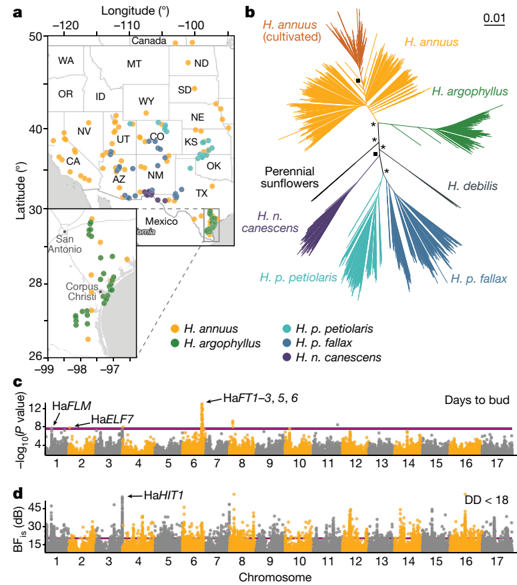
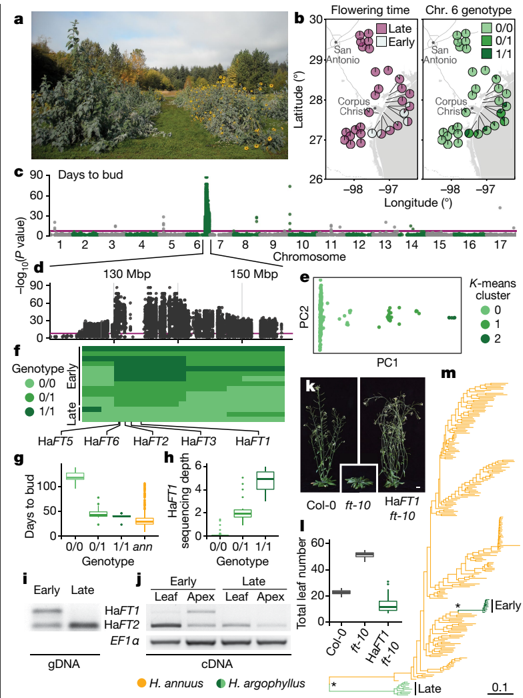
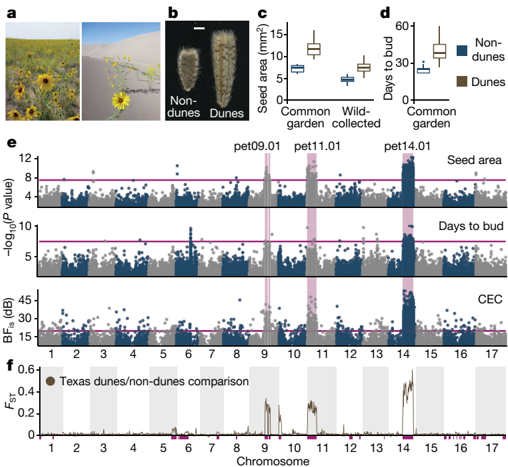
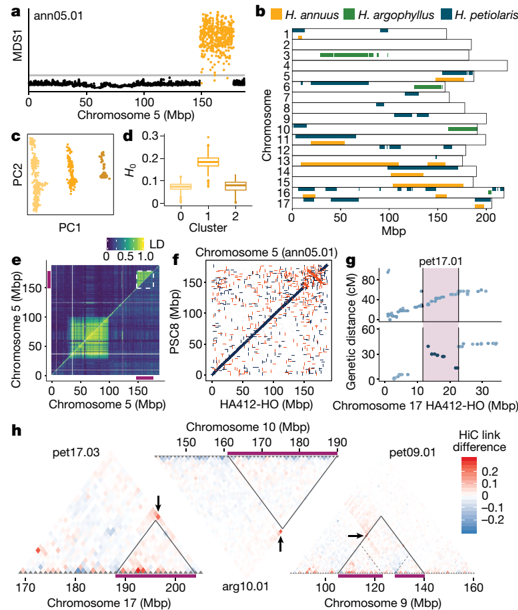
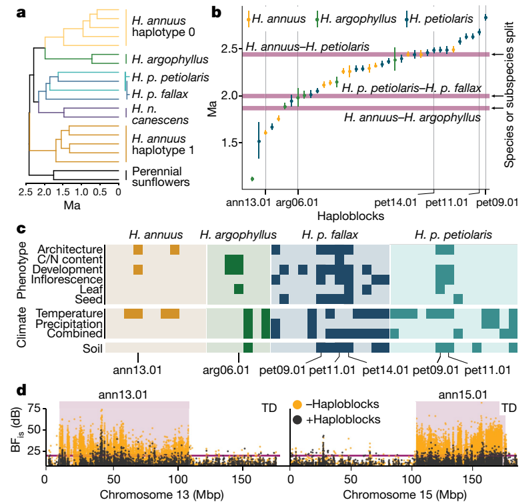
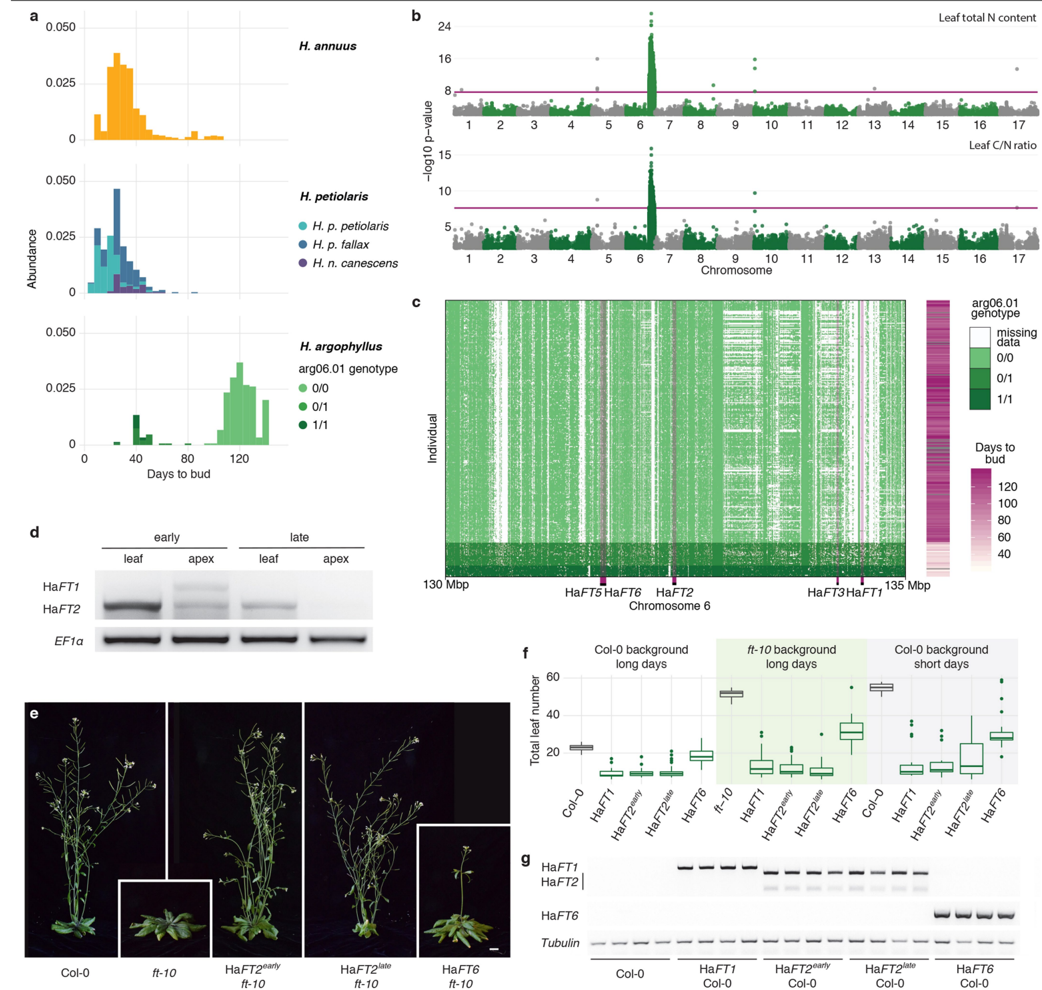
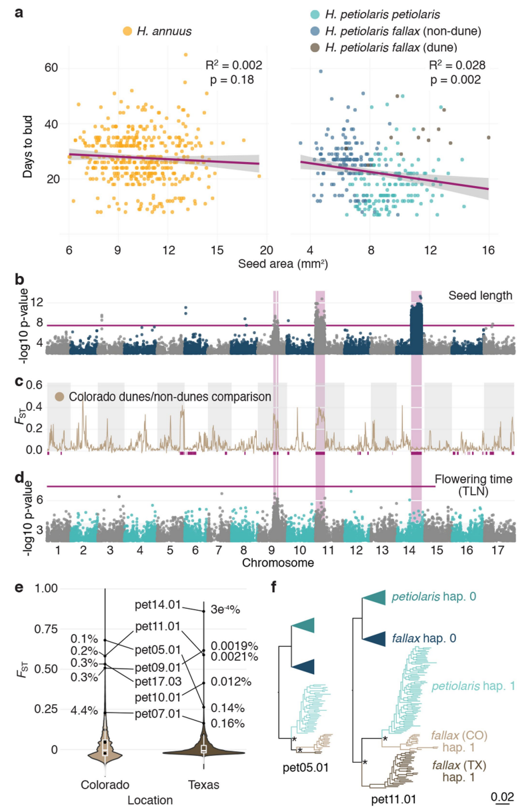
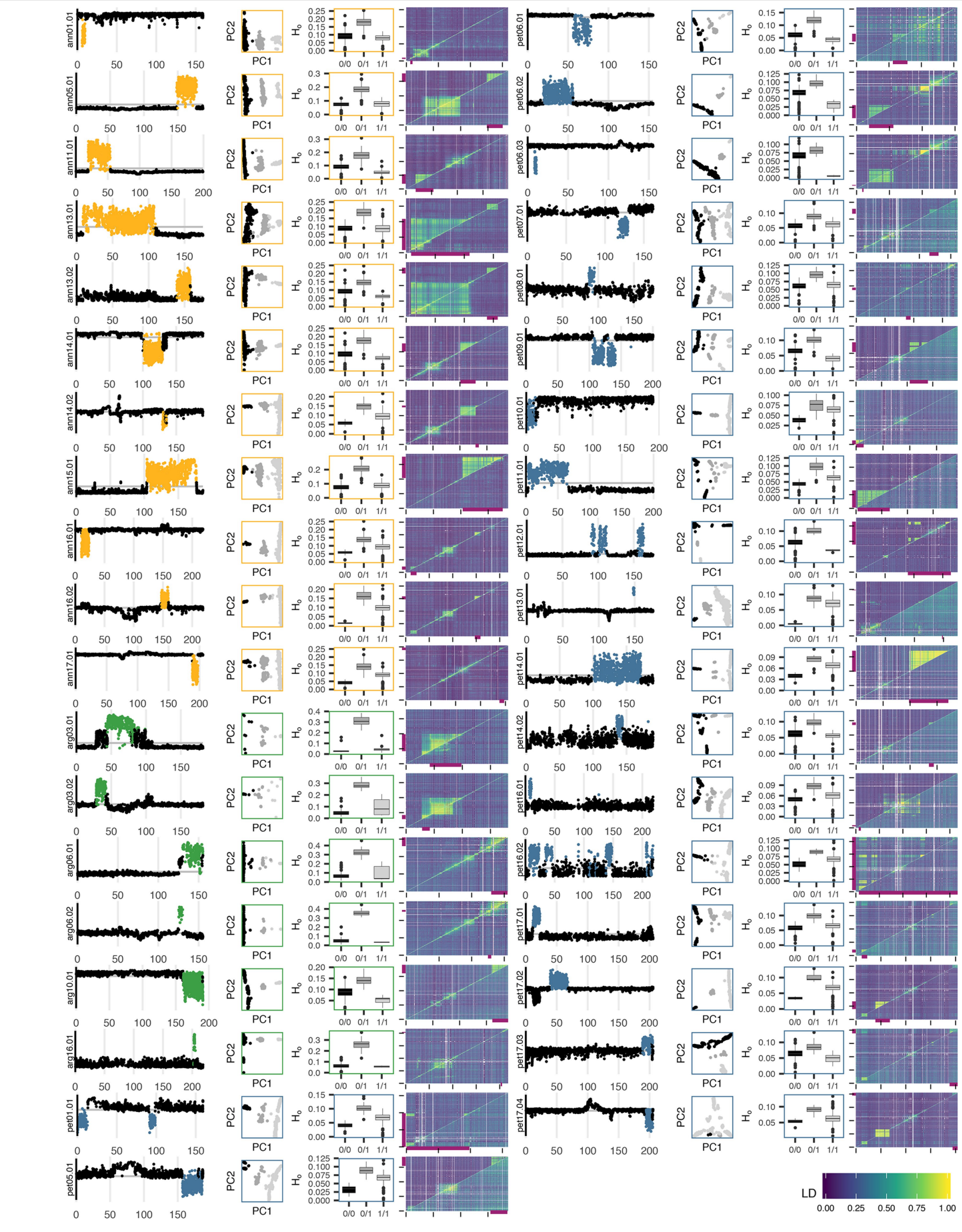
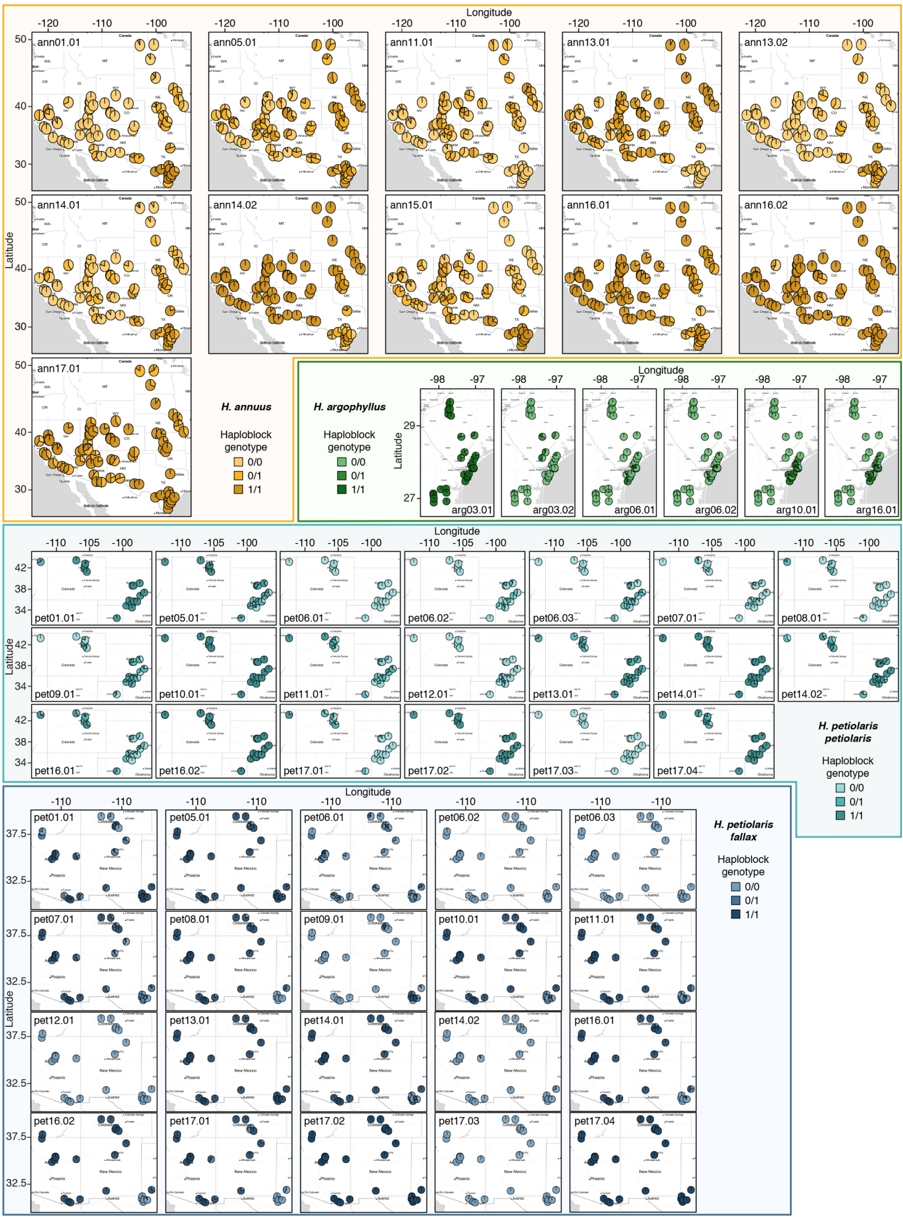
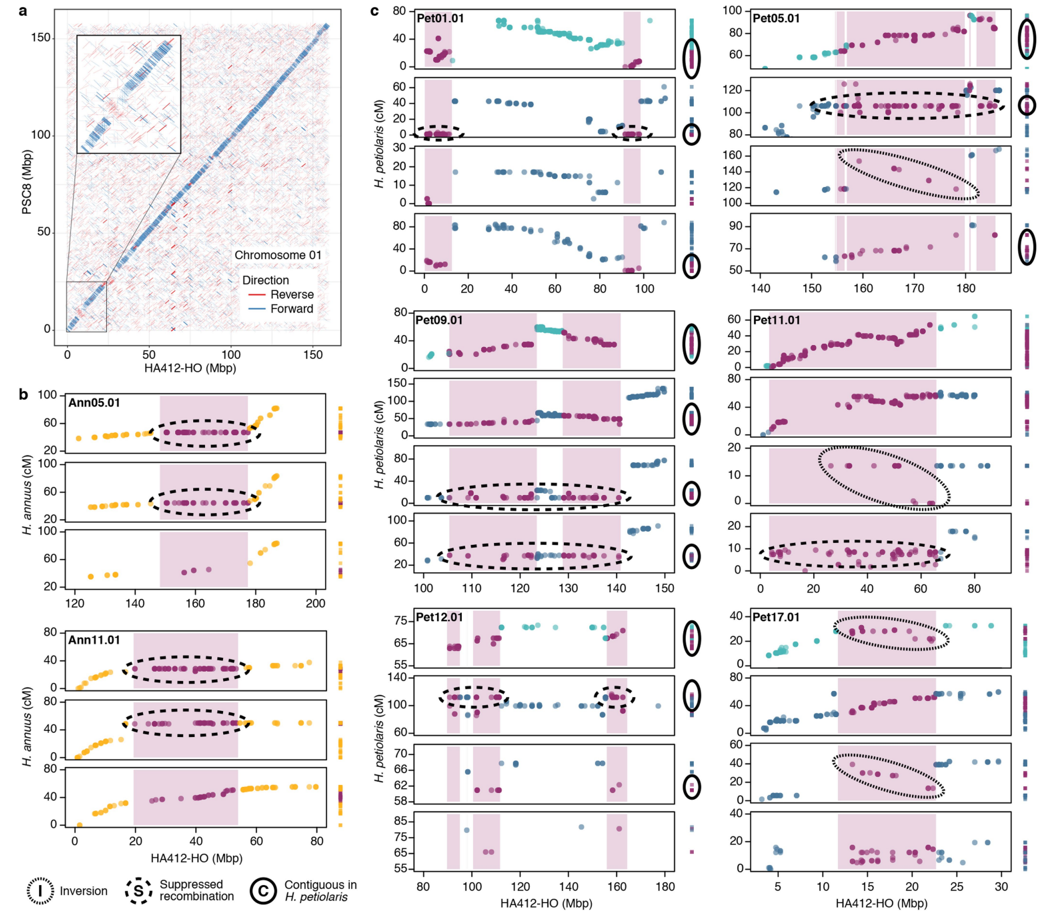
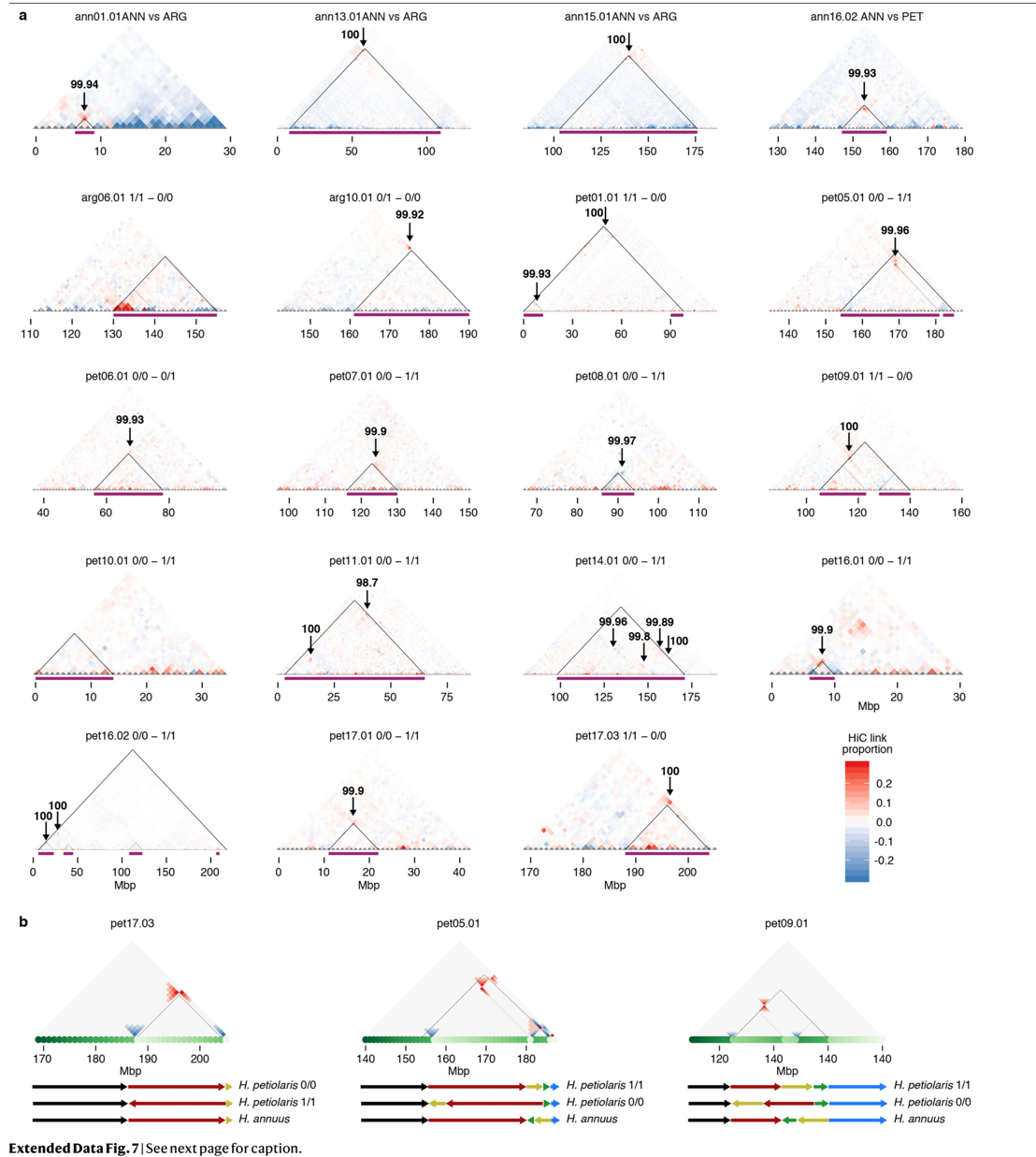
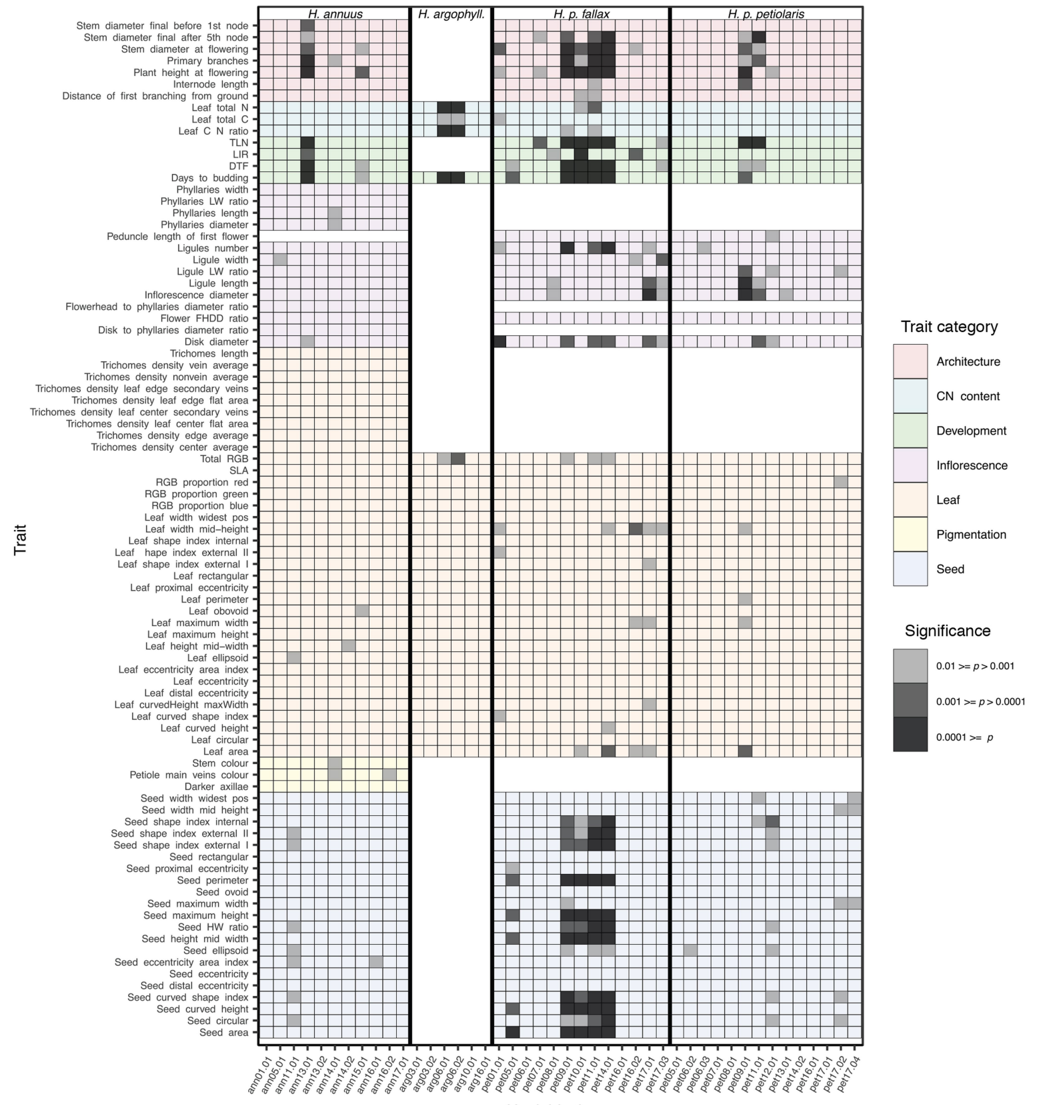
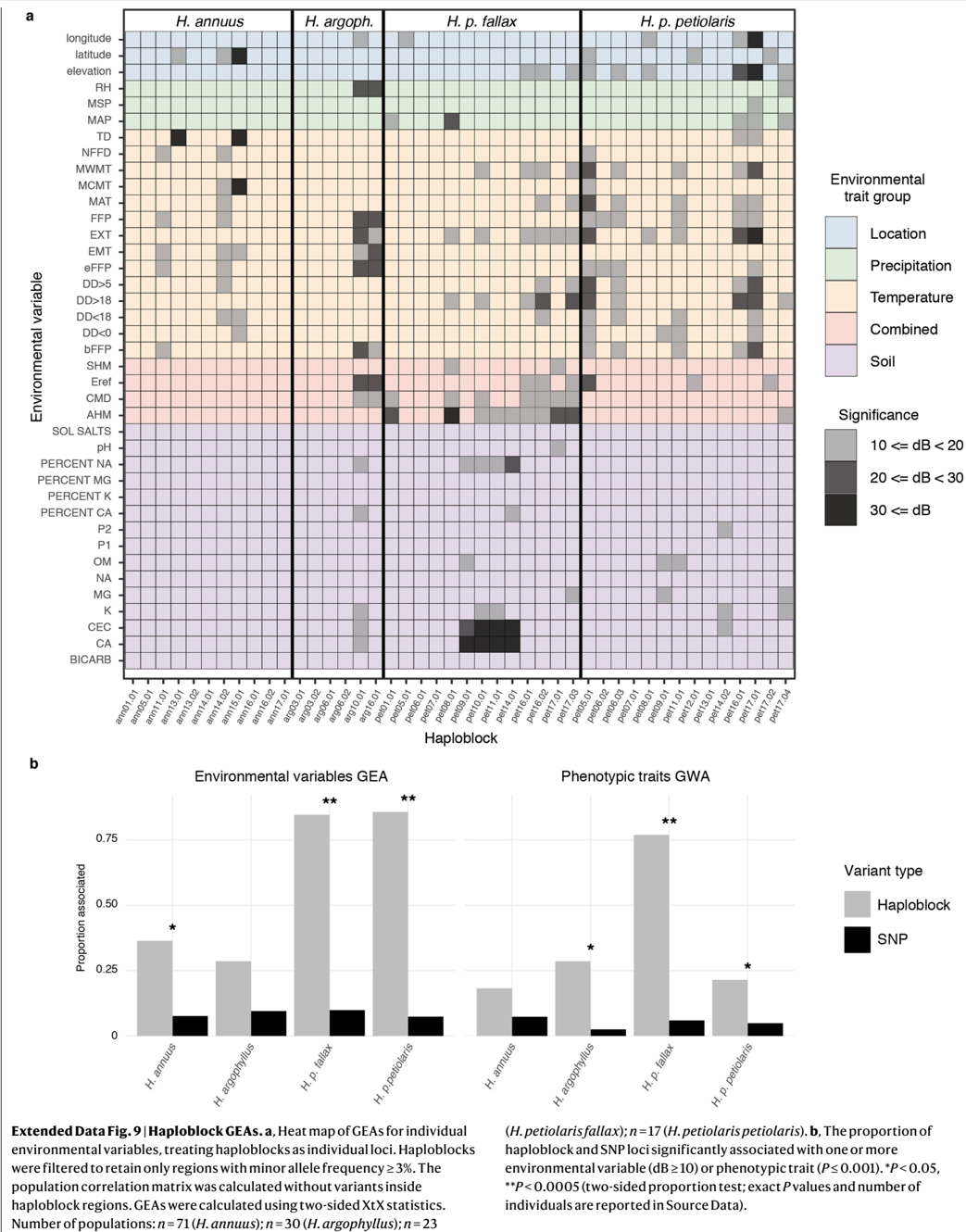
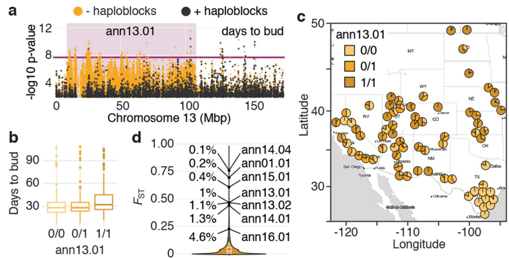
Species often include multiple ecotypes that are adapted to different environments1. However, it is unclear how ecotypes arise and how their distinctive combinations of adaptive alleles are maintained despite hybridization with non-adapted populations2–4. Here, by resequencing 1,506 wild sunflowers from 3 species (Helianthus annuus, Helianthus petiolaris and Helianthus argophyllus), we identify 37 large (1–100 Mbp in size), non-recombining haplotype blocks that are associated with numerous ecologically relevant traits, as well as soil and climate characteristics. Limited recombination in these haplotype blocks keeps adaptive alleles together, and these regions differentiate sunflower ecotypes. For example, haplotype blocks control a 77-day difference in flowering between ecotypes of the silverleaf sunflower H. argophyllus (probably through deletion of a homologue of FLOWERING LOCUS T (FT)), and are associated with seed size, flowering time and soil fertility in dune-adapted sunflowers. These haplotypes are highly divergent, frequently associated with structural variants and often appear to represent introgressions from other—possibly now-extinct—congeners. These results highlight a pervasive role of structural variation in ecotypic adaptation. Resequencing analyses of three species of wild sunflower identify large non-recombining haplotype blocks that correlate with ecologically relevant traits, soil and climate characteristics, and that differentiate species ecotypes.
Overview
The claims and statistics of this paper haven’t been checked yet.
Free: it reads the open-access text and checks the first 5 claims that cite a source we can check. Create a free account to check every claim.
Integrity signals
Registry
Cites
Statistics
Figures
Verification
Claims the paper makes
The claims and statistics of this paper haven’t been checked yet.
Free: it reads the open-access text and checks the first 5 claims that cite a source we can check. Create a free account to check every claim.
Claims other papers make about this one
Each is checked against this paper’s own text: does it say what the citing paper says it does?
The source backs part of the claim, not all of it — or backs it for a different population, condition or comparison.
In the citing paper
“An apparent example of the latter comes from sunflower, where hemizygosity or complete loss of a homolog of FLOWERING LOCUS T underlies a shift in flowering time between sympatric ecotypes of the silverleaf sunflower (Todesco et al., 2020).”
From Genomics of plant speciation (2023) · cites this paper as Todesco et al., 2020
Experimental — accuracy not yet measuredThe source backs part of the claim, not all of it — or backs it for a different population, condition or comparison.
In the citing paper
“As well, introgression is reduced for genes or genomic regions underlying RI (Barb et al., 2014; Kenney and Sweigart, 2016; Todesco et al., 2020).”
From Genomics of plant speciation (2023) · cites this paper as Todesco et al., 2020
Experimental — accuracy not yet measuredThe source backs part of the claim, not all of it — or backs it for a different population, condition or comparison.
In the citing paper
“Other examples come from studies of adaptive introgression or homoploid hybrid speciation (see Speciation with gene flow, introgression, and hybrid speciation), in which alleles or SVs critical to RI have been identified in parental populations (Nevado et al., 2020; Todesco et al., 2020; Wang et al., 2021b).”
From Genomics of plant speciation (2023) · cites this paper as Todesco et al., 2020
Experimental — accuracy not yet measuredThe source backs part of the claim, not all of it — or backs it for a different population, condition or comparison.
In the citing paper
“Examples include the origin of dune sunflower ecotypes in the southwestern US, in which traits associated with dune adaptation and RI map to inversions, which are old and pre-date ecotype divergence (Ostevik et al., 2016; Huang and Rieseberg, 2020; Todesco et al., 2020).”
From Genomics of plant speciation (2023) · cites this paper as Todesco et al., 2020
Experimental — accuracy not yet measuredThe cited source says what the claim attributes to it.
In the citing paper
“genomic studies have shown that when adaptation and speciation have progressed, chromosomal inversions or other recombination cold spots become crucially important in settings characterized by gene flow (e.g., Todesco et al., 2020)”
From Genomics of plant speciation (2023) · cites this paper as Todesco et al., 2020
1 more claim about this paper
Create a free account to see every claim other papers make about this one.
Self-check
Percentages, sums and reported differences re-computed from the paper’s own numbers.
The self-check needs the paper’s full text.
Citations
Cites
Fiji: an open-source platform for biological-image analysis
Schindelin, J., Arganda-Carreras, I., Frise, E., Kaynig, V., Longair, M., Pietzsch, T., Preibisch, S., Rueden, C., Saalfeld, S., Schmid, B., et al. (2012) · Nature Methods · doi:10.1038/nmeth.2019 · Cited by 66,890
Trimmomatic: a flexible trimmer for Illumina sequence data
Bolger, A. M., Lohse, M., & Usadel, B. (2014) · Bioinformatics · doi:10.1093/bioinformatics/btu170 · Cited by 65,548
NIH Image to ImageJ: 25 years of image analysis
Schneider, C. A., Rasband, W. S., & Eliceiri, K. W. (2012) · Nature Methods · doi:10.1038/nmeth.2089 · Cited by 64,638
The Sequence Alignment/Map format and SAMtools
Li, H., Handsaker, B., Wysoker, A., Fennell, T., Ruan, J., Homer, N., Marth, G., Abecasis, G., Durbin, R., & 1000 Genome Project Data Processing Subgroup (2009) · Bioinformatics · doi:10.1093/bioinformatics/btp352 · Cited by 62,041
IQ-TREE: A Fast and Effective Stochastic Algorithm for Estimating Maximum-Likelihood Phylogenies
Nguyen, L.-T., Schmidt, H. A., von Haeseler, A., & Minh, B. Q. (2015) · Molecular Biology and Evolution · doi:10.1093/molbev/msu300 · Cited by 26,046
ModelFinder: fast model selection for accurate phylogenetic estimates
Kalyaanamoorthy, S., Minh, B. Q., Wong, T. K. F., von Haeseler, A., & Jermiin, L. S. (2017) · Nature Methods · doi:10.1038/nmeth.4285 · Cited by 18,449
The variant call format and VCFtools
Danecek, P., Auton, A., Abecasis, G., Albers, C. A., Banks, E., DePristo, M. A., Handsaker, R. E., Lunter, G., Marth, G. T., Sherry, S. T., et al. (2011) · Bioinformatics · doi:10.1093/bioinformatics/btr330 · Cited by 16,200
Algorithm AS 136: A K-Means Clustering Algorithm
Hartigan, J. A., & Wong, M. A. (1979) · Applied Statistics · doi:10.2307/2346830 · Cited by 14,523
Heinz, S., Benner, C., Spann, N., Bertolino, E., Lin, Y. C., Laslo, P., Cheng, J. X., Murre, C., Singh, H., & Glass, C. K. (2010) · Molecular Cell · doi:10.1016/j.molcel.2010.05.004 · Cited by 13,382
Rapid isolation of high molecular weight plant DNA
Murray, M. G., & Thompson, W. F. (1980) · Nucleic Acids Research · doi:10.1093/nar/8.19.4321 · Cited by 12,098
Research works printed but not linked: 1
- 43. Heiser, C. B. Three new annual sunflowers (Helianthus) from the southwestern United States. Rhodora 60, 272-283 (1958).
Cited by
Items 201–300 of 517
Uncovering the Genetic Architecture of Replicated Adaptation
James, M. E., Allsopp, R. N., Groh, J. S., Kaur, A., Wilkinson, M. J., & Ortíz-Barrientos, D. (2021) · Molecular Ecology · doi:10.1111/mec.17134 · Cited by 14
Multiple chromosomal inversions modulate continuous local adaptation along a steep thermal cline
Akopyan, M., Jacobs, A., Rick, J. A., Wilder, A. P., Baumann, Z., Conover, D. O., Baumann, H., & Therkildsen, N. O. (2026) · Science · doi:10.1126/science.ady6774 · Cited by 13
Integrating very high resolution environmental proxies in genotype–environment association studies
Guillaume, A. S., Leempoel, K., Rogivue, A., Gugerli, F., Parisod, C., & Joost, S. (2024) · Evolutionary Applications · doi:10.1111/eva.13737 · Cited by 13
“…in populations with the environmental conditions that they experience (Rellstab et al., 2015), these methods successfully identified putative genes involved in local adaptation across various plant and animal species (e.g., Bogaerts-Márquez et al., 2021; Selmoni et al., 2021; Todesco et al., 2020).”
McNellie, J. P., May, W. E., Rieseberg, L. H., & Hulke, B. S. (2024) · Theoretical and Applied Genetics · doi:10.1007/s00122-024-04672-3 · Cited by 13
“The SAM panel was previously re-sequenced at a 10 × average depth and aligned to the HA 412HOv2 reference genome (Hübner et al. 2019; Todesco et al. 2020).”
Self-citationNachtigall, P. G., Nystrom, G. S., Broussard, E. M., Wray, K. P., Junqueira-de-Azevedo, I. L. M., Parkinson, C. L., Margres, M. J., & Rokyta, D. R. (2025) · Molecular Biology and Evolution · doi:10.1093/molbev/msaf058 · Cited by 14
“…and recombination rates, they are also known to contribute to adaptation (Tigano et al. 2018; Vickrey et al. 2018; Catanach et al. 2019; Faria et al. 2019; Todesco et al. 2020; Weissensteiner et al. 2020; Hämälä et al. 2021; Hager et al. 2022; Saitou et al. 2022; Shi et al. 2023; Li et al. 2024b).”
Small Populations and Genetic Drift
Allendorf, F. W., Funk, W. C., Aitken, S. N., Byrne, M. M., & Luikart, G. (2022) · Oxford University Press eBooks · doi:10.1093/oso/9780198856566.003.0006 · Cited by 15
Jiang, M., Ning, W., Wu, S., Wang, X., Zhu, K., Li, A., Li, Y., Cheng, S., & Song, B. (2022) · Briefings in Bioinformatics · doi:10.1093/bib/bbac210 · Cited by 13
“Even for reads longer than 100 bp, incorrect or multiple mapping is also an inevitable problem in polyploidy or repetitive genomes, so special attention should be given to the interpretation of the results [47, 57].”
BackgroundJiang, N., Li, Z., Dai, Y., Liu, Z., Han, X., Li, Y., Li, Y., Xiong, H., Xu, J., Zhang, G., et al. (2022) · Molecular Ecology Resources · doi:10.1111/1755-0998.13718 · Cited by 16
“Similarly, introgression among sunflower subspe - cies may have produced genetic adaptation to xeric environments (Todesco et al., 2020).”
Liang, M., Cao, S., Deng, T., Du, L., Li, K., An, B., Du, Y., Xu, L., Zhang, L., Gao, X., et al. (2023) · Briefings in Bioinformatics · doi:10.1093/bib/bbad043 · Cited by 14
The role of recombination landscape in species hybridisation and speciation
Wong, E. L. Y., & Filatov, D. A. (2023) · Frontiers in Plant Science · doi:10.3389/fpls.2023.1223148 · Cited by 15
“…with studies examining both collinear genomes (Butlin, 2005; Feder et al., 2012a, b), and genomes with rearrangements in form of structural variants and chromosomal inversions (e.g. Roesti et al., 2014; Twyford and Friedman, 2015; Moyers et al., 2018; Todesco et al., 2020; Fuentes et al., 2022b).”
BackgroundKreiner, J. M., Hnatovska, S., Stinchcombe, J. R., & Wright, S. (2023) · PLoS Genetics · doi:10.1371/journal.pgen.1010865 · Cited by 14
Chromosome evolution and the genetic basis of agronomically important traits in greater yamPreprint
Bredeson, J. V., Lyons, J. B., Oniyinde, I. O., Okereke, N. R., Kolade, O. A., Nnabue, I., Nwadili, C. O., Hřibová, E., Parker, M. T., Nwogha, J. S., et al. (2021) · bioRxiv (Cold Spring Harbor Laboratory) · doi:10.1101/2021.04.14.439117 · Cited by 14
The hidden structural variability in avian genomesPreprint
Peona, V., Blom, M. P. K., Frankl‐Vilches, C., Milá, B., Ashari, H., Thébaud, C., Benz, B. W., Christidis, L., Gahr, M. L., Irestedt, M., et al. (2022) · bioRxiv (Cold Spring Harbor Laboratory) · doi:10.1101/2021.12.31.473444 · Cited by 13
HeliantHOME, a public and centralized database of phenotypic sunflower data
Bercovich, N., Genze, N., Todesco, M., Owens, G. L., Légaré, J., Huang, K., Rieseberg, L. H., & Grimm, D. G. (2022) · Scientific Data · doi:10.1038/s41597-022-01842-0 · Cited by 13
“All the data provided here have been previously published and/or is currently public 6 .”
BackgroundInfluentialSelf-citationStructural variation discovery in wheat using PacBio high‐fidelity sequencing
Zhang, Z., Zhang, J., Kang, L., Qiu, X., Xu, S., Xu, J. Q., Guo, Y., Niu, Z., Niu, B., Bi, A., et al. (2024) · The Plant Journal · doi:10.1111/tpj.17011 · Cited by 16
Complex Genomic Landscape of Inversion Polymorphism in Europe's Most Destructive Forest Pest
Mykhailenko, A., Zieliński, P., Bednarz, A., Schlyter, F., Andersson, M. N., Antunes, B., Borowski, Z., Krokene, P., Melin, M., Morales-García, J., et al. (2024) · Genome Biology and Evolution · doi:10.1093/gbe/evae263 · Cited by 13
“…previously thought (Lewin et al. 2024), accumulating genomic data suggests that such rearrangements are also common at the intraspecific level (Faria, Chaube, et al. 2019; Faria, Johannesson, et al. 2019; Todesco et al. 2020; Harringmeyer and Hoekstra 2022; Porubsky et al. 2022; Reeve et al. 2023).”
Repeatable Selection on Large Ancestry Blocks in an Avian Hybrid Zone
Blain, S. A., Justen, H. C., Langdon, Q. K., & Delmore, K. E. (2025) · Molecular Biology and Evolution · doi:10.1093/molbev/msaf044 · Cited by 13
“Incompatibilities can evolve via divergent selection acting on large genomic blocks formed by selection on multiple loci with high genetic linkage (Todesco et al. 2020).”
Blois, L., de Miguel, M., Bert, P., Girollet, N., Ollat, N., Rubio, B., Segura, V., Voss‐Fels, K. P., Schmid, J., & Marguerit, E. (2023) · Evolutionary Applications · doi:10.1111/eva.13566 · Cited by 12
“• Cool night index (CI, Tonietto & Carbonneau, 2004) is the mean daily minimum air temperature in September.”
BackgroundInfluentialRIDGE , a tool tailored to detect gene flow barriers across species pairs
Burban, E., Tenaillon, M. I., & Glémin, S. (2024) · Molecular Ecology Resources · doi:10.1111/1755-0998.13944 · Cited by 12
Combined genome and transcriptome analysis of elite fiber quality in Gossypium barbadense
Song, X., Zhu, G., Su, X., Yu, Y., Duan, Y., Wang, H., Shang, X., Xu, H., Chen, Q., & Guo, W. (2024) · PLANT PHYSIOLOGY · doi:10.1093/plphys/kiae175 · Cited by 12
Colicchio, J. M., Hamm, L. N., Verdonk, H., Kooyers, N. J., & Blackman, B. K. (2021) · Molecular Ecology · doi:10.1111/mec.16087 · Cited by 12
“…and among M. guttatus populations in this region (Colicchio et al., 2020; Flagel et al., 2019; Lee et al., 2016; Lowry & Willis, 2010) and the patterns commonly observed for chromosomal inversions by this approach in other systems (Huang et al., 2020; Perrier et al.,2020; Todesco et al., 2020).”
BackgroundAberrant RNA splicing due to genetic incompatibilities in sunflower hybrids
Smith, C. C. R., Rieseberg, L. H., Hulke, B. S., & Kane, N. C. (2021) · Evolution · doi:10.1111/evo.14360 · Cited by 13
Self-citationVangestel, C., Swaegers, J., Corte, Z. D., Dekoninck, W., Gharbi, K., Gillespie, R. G., Vandekerckhove, M., Belleghem, S. M. V., & Hendrickx, F. (2024) · Science Advances · doi:10.1126/sciadv.adk7906 · Cited by 11
The recombination landscape of the barn owl, from families to populations
Topaloudis, A., Cumer, T., Lavanchy, E., Ducrest, A., Simon, C., Machado, A. P., Paposhvili, N., Roulin, A., & Goudet, J. (2024) · Genetics · doi:10.1093/genetics/iyae190 · Cited by 11
“2019; Todesco et al .”
Yamasaki, Y. Y., Toyoda, A., Kadota, M., Kuraku, S., & Kitano, J. (2025) · Molecular Ecology · doi:10.1111/mec.17814 · Cited by 11
“…Huang et al. 2020; Jones et al. 2012; Matschiner et al. 2022; McGaugh and Noor 2012; Michel et al. 2010; Le Moan et al. 2024; Nosil et al. 2023; Todesco et al. 2020), although other studies have found no evidence for elevated genetic divergence in the inversions compared with the level in the…”
Guidini, R., Jahani, M., Huang, K., Rieseberg, L. H., & Mathew, F. M. (2022) · Plant Disease · doi:10.1094/pdis-05-22-1209-re · Cited by 11
Self-citationPrapas, D., Scalone, R., Lee, J. S., Nurkowski, K. A., Bou‐assi, S., Rieseberg, L. H., Battlay, P., & Hodgins, K. A. (2022) · Evolutionary Applications · doi:10.1111/eva.13453 · Cited by 11
Self-citationMcCallum, Q., Askelson, K. K., Fogarty, F. F., Natola, L., Nikelski, E., Huang, A., & Irwin, D. E. (2024) · Journal of Evolutionary Biology · doi:10.1093/jeb/voae004 · Cited by 11
Nosil, P., Gompert, Z., & Funk, D. J. (2024) · Nature Communications · doi:10.1038/s41467-024-46294-9 · Cited by 11
Pospelova, M., Voss, K., Zamyatin, A., Watson, C. T., Koepfli, K., Bankevich, A., Pennell, M. W., & Safonova, Y. (2025) · Molecular Biology and Evolution · doi:10.1093/molbev/msaf152 · Cited by 11
“…to the emergence of highly diverged IG haplotypes are unknown, we hypothesize that introgression (Zhang et al. 2016), suppressed recombination (Todesco et al. 2020), closeness to centromeres (Barra and Fachinetti 2018), and/or elevated mutation rates (Xie et al. 2019) could play a role in…”
Mongue, A. J., & Kawahara, A. Y. (2022) · G3 Genes Genomes Genetics · doi:10.1093/g3journal/jkac047 · Cited by 11
“Second, as the name tobacco hornworm suggests, M. sexta is a pest of economically important crops, including tobacco (Nicotiana spp.), tomatoes, peppers, and generally other plants in the nightshade family, Solanaceae (Wagner 2005).”
BackgroundStahlhut, K. N., Dowell, J. A., Temme, A. A., Burke, J. M., Goolsby, E. W., & Mason, C. M. (2021) · Mycorrhiza · doi:10.1007/s00572-021-01050-5 · Cited by 13
“A list of genes within significant regions was compiled using the HA412-HO genome assembly v.2 (Temme et al. 2020; Todesco et al. 2020).”
BackgroundMethodInfluentialSelf-citationHübner, S., Sisou, D., Mandel, T., Todesco, M., Matzrafi, M., & Eizenberg, H. (2022) · Molecular Ecology · doi:10.1111/mec.16380 · Cited by 12
Self-citationPrezygotic barriers effectively limit hybridization in a rapid evolutionary radiation
Uckele, K. A., Vargas, O. M., & Kay, K. M. (2024) · New Phytologist · doi:10.1111/nph.20187 · Cited by 11
Shi, Y., Homola, J. J., Euclide, P. T., Isermann, D. A., Caroffino, D. C., McPhee, M. V., & Larson, W. A. (2022) · Evolutionary Applications · doi:10.1111/eva.13475 · Cited by 11
“…of divergence facilitating adaptation to a variety of heterogenous habitats is similar to what has been observed in species such as prairie sunflower (Helianthus petiolaris), where several genomic islands of divergence were found throughout the genome (Huang et al., 2020; Todesco et al., 2020).”
Goebl, A. M., Kane, N. C., Doak, D. F., Rieseberg, L. H., & Ostevik, K. L. (2022) · Molecular Ecology · doi:10.1111/mec.16785 · Cited by 12
“These putative inversions have been identified as highly differentiated between ecotypes and associated with traits and environmental features that differ between ecotypes (Huang et al., 2020; Todesco et al., 2020).”
BackgroundInfluentialSelf-citationDistinct patterns of inheritance shape life‐history traits in steelhead trout
Beulke, A. K., Abadía‐Cardoso, A., Pearse, D. E., Goetz, L. C., Thompson, N. F., Anderson, E. C., & Garza, J. C. (2023) · Molecular Ecology · doi:10.1111/mec.17182 · Cited by 10
“…studies of both plants and animals have found that life-history variation can be maintained in populations largely through one or several chromosomal inversions that create non-recombining haploblocks (Kirubakaran et al., 2016; Kunte et al., 2014; Pearse et al., 2019; Todesco et al., 2020).”
Backgroundde Lima, T. M., da Silva, S. F., Vilas, J. S., Júnior, W. L. S., Mayer, J. L. S., Ribeiro, R. V., & Pinheiro, F. (2024) · Plant Biology · doi:10.1111/plb.13684 · Cited by 10
Rapid evolution of recombination landscapes during the divergence of cichlid ecotypes in Lake Masoko
Talbi, M., Turner, G. F., & Malinsky, M. (2024) · Evolution · doi:10.1093/evolut/qpae169 · Cited by 10
Building beauty: Understanding how hormone signaling regulates petal patterning and morphogenesis
Salvi, E., & Moyroud, E. (2025) · The Plant Journal · doi:10.1111/tpj.70101 · Cited by 12
“…are often adapted to different pollination strategies and to environments with varying conditions of UV-B light irradiation, temperatures, and water availability (Ashworth et al., 2015; Dalrymple et al., 2020; Koski et al., 2020; Koski & Ashman, 2015; Koski & Ashman, 2016; Todesco et al., 2020).”
Genomic signatures of parallel alpine adaptation in recently evolved flightless insects
McCulloch, G. A., Guhlin, J. G., Dutoit, L., Harrop, T. W. R., Dearden, P. K., & Waters, J. M. (2021) · Molecular Ecology · doi:10.1111/mec.16204 · Cited by 10
“…such rapid adaptation may also be facilitated via selection on genes that are tightly linked in regions of low recombination (Gonzalez et al., 2019; Ortiz- Barrientos et al., 2016; Peichel & Marques, 2017; Roda et al., 2017; Todesco et al., 2020; Yeaman et al., 2016; Yeaman & Whitlock, 2011).”
BackgroundOwens, G. L., Caseys, C., Mitchell, N., Hübner, S., Whitney, K. D., & Rieseberg, L. H. (2025) · Molecular Biology and Evolution · doi:10.1093/molbev/msaf014 · Cited by 11
Self-citationLong, Z., Zhang, X., Yu, Y., Owens, G. L., Rennison, D. J., Palma‐Silva, C., Ortíz-Barrientos, D., & Rieseberg, L. H. (2026) · Plants People Planet · doi:10.1002/ppp3.70144 · Cited by 11
“This resulted in a 77-day advance in flowering due to the gain of a Flowering Locus T ( FT ) gene that had been lost in the main-land ecotype (Todesco et al., 2020).”
Self-citationRecombination suppression in plant adaptation and speciation
Zhang, X., Hu, Y., Huang, K., Wright, S., & Rieseberg, L. H. (2026) · New Phytologist · doi:10.1111/nph.71026 · Cited by 13
Self-citationWang, C., Ord, J., Yan, M., Cai, Y., Shao, H., Lin, L., Salojärvi, J., Liu, L., & Guo, W. (2026) · Genome biology · doi:10.1186/s13059-026-04079-x · Cited by 9
“Structural variants (SVs), including large haplotypic block inversions, are key drivers of rapid local adaptation in invasive species such as A. artemisiifolia [8] and Helianthus [9].”
Spear, M. M., Levi, S. J., Etterson, J. R., & Gross, B. L. (2023) · Molecular Ecology · doi:10.1111/mec.17112 · Cited by 9
Genomic signals of local adaptation in Picea crassifolia
Feng, S., Xi, E., Wan, W., & Ru, D. (2023) · BMC Plant Biology · doi:10.1186/s12870-023-04539-7 · Cited by 9
Postzygotic barriers persist despite ongoing introgression in hybridizing Mimulus species
Mantel, S. J., & Sweigart, A. L. (2024) · Molecular Ecology · doi:10.1111/mec.17261 · Cited by 10
“…(Huang & Rieseberg, 2020; Livingstone & Rieseberg, 2004; Noor, Grams, Bertucci, Almendarez, et al., 2001; Noor, Grams, Bertucci, & Reiland, 2001; Todesco et al., 2020), one reason being that, for species still connected by some degree of gene flow, inversions might prevent selection from…”
BackgroundExploring the patterns of evolution: Core thoughts and focus on the saltational model
Usai, G., Fambrini, M., Pugliesi, C., & Simoni, S. (2024) · Biosystems · doi:10.1016/j.biosystems.2024.105181 · Cited by 9
PNNGS, a multi-convolutional parallel neural network for genomic selection
Xie, Z., Weng, L., He, J., Feng, X., Xu, X., Ma, Y., Bai, P., & Kong, Q. (2024) · Frontiers in Plant Science · doi:10.3389/fpls.2024.1410596 · Cited by 9
“Marco Todesco et al. (2020) resequenced 1,506 wild sun fl ower strains from 3 species ( Helianthus annuus , Helianthus petiolaris and Helianthus argophyllus ).”
BackgroundOwens, G. L., Cai, Z., Bercovich, N., Todesco, M., Lee‐Yaw, J. A., & Rieseberg, L. H. (2025) · Proceedings of the National Academy of Sciences · doi:10.1073/pnas.2410943122 · Cited by 10
“We then explored the effect of chloroplast clade on 91 phenotypic traits, as measured in a common garden (53, 55).”
InfluentialSelf-citationSingle-gene FISH maps and major chromosomal rearrangements in Elymus sibiricus and E. nutans
Liu, B., Chen, J., Yang, Y., Shen, W., Guo, J., & Dou, Q. (2023) · BMC Plant Biology · doi:10.1186/s12870-023-04110-4 · Cited by 9
“Introgression hybridization with related species can introduce CRs with divergent blocks in the genome [27, 47, 48].”
BackgroundBackcrossing to different parents produced two distinct hybrid species
Wang, D., Sun, Y., Lei, W., Zhu, H., Wang, J., Bi, H., Feng, S., Liu, J., & Ru, D. (2023) · Heredity · doi:10.1038/s41437-023-00630-9 · Cited by 10
“In sunflowers, three homoploid hybrid species occurring in different extreme habitats were found to be derived from hybridization between two sunflower species (Rieseberg et al. 1997, 2003; Todesco et al. 2020).”
BackgroundBock, D. G., Baeckens, S., Kolbe, J. J., & Losos, J. B. (2023) · Molecular Ecology · doi:10.1111/mec.17075 · Cited by 9
“Indeed, the genomic regions we detected using the Lostruct scan did not form sharp peaks in MDS scores along chromosomes (Figure S6), as expected of inversions (e.g. Battlay et al., 2023; Harringmeyer & Hoekstra, 2022; Huang et al., 2020; Todesco et al., 2020).”
BackgroundMethodInfluentialWeissensteiner, M. H., Delmore, K. E., Peona, V., Ramos, J. S. L., Grégoire, A., Blas, J., Faivre, B., Pokrovsky, I. G., Wikelski, M. C., Partecke, J., et al. (2025) · Ecology and Evolution · doi:10.1002/ece3.70800 · Cited by 9
“Such a distinct pattern is indicative of an inversion segregating within a population (Huang et al. 2020; Ma and Amos 2012; Todesco et al. 2020), and when including individuals from the German and Russian populations, this pattern disappears (Figure S5C), suggesting that the inversion only…”
de Ronne, M., & Torkamaneh, D. (2025) · The Plant Genome · doi:10.1002/tpg2.70031 · Cited by 8
“Similarly, massive (i.e., 1–100 Mb) non-recombining HB associated with ecotypic differentiation were previously identified in sunflowers (Todesco et al., 2020).”
Speciation, endangerment and adaptation in limestone rocky environment of Urophysa (Ranunculaceae)
Xie, D.-F., Zhang, Y.-Y., Cai, J., Cheng, R.-Y., Wang, Y., Tan, J., Yu, Y., He, X., & Zhou, S.-D. (2025) · Acta Botanica Yunnanica · doi:10.1016/j.pld.2025.09.006 · Cited by 9
“Adaptation to such habitats often drives divergence among closely related lineages, with accumulated genetic variants ultimately triggering speciation (Todesco et al., 2020; Nosil et al., 2021; Geng et al., 2025).”
Genomic insights into alpine plant adaptation
Zhang, X., Deng, T., Wang, H., & Sun, H. (2025) · Acta Botanica Yunnanica · doi:10.1016/j.pld.2025.12.012 · Cited by 9
“Their role in environmental adaptation is increasingly recognized in evolutionary genomics, particularly in contexts where rapid shifts in phenotype can confer survival advantages (Todesco et al., 2020).”
Genetics and genomics of hybridization
Schumer, M. E., & Rieseberg, L. H. (2026) · Nature Reviews Genetics · doi:10.1038/s41576-026-00995-7 · Cited by 10
“If an adaptive trait or locus is lost in one lineage owing to demographic events or changing environments, it can be rein-troduced through hybridization 149,151 .”
Self-citationAllendorf, F. W., Funk, W. C., Aitken, S. N., Byrne, M. M., & Luikart, G. (2022) · Oxford University Press eBooks · doi:10.1093/oso/9780198856566.003.0020 · Cited by 9
Liu, D., Fei, Y., Peng, Y., Zhu, S., Lu, J., Luo, Y., Chen, Z., Jiang, Y., Wang, S., Tang, Y., et al. (2024) · Journal of Hazardous Materials · doi:10.1016/j.jhazmat.2024.135242 · Cited by 8
Comparative approaches to understanding speciation: a case study in Xantusia lizards
Singhal, S., Davis, H. R., Lemos‐Espinal, J. A., Fujita, M. K., & Leaché, A. D. (2024) · Evolutionary Journal of the Linnean Society · doi:10.1093/evolinnean/kzae024 · Cited by 8
Kess, T., Brachmann, M. K., & Boulding, E. G. (2020) · Journal of Evolutionary Biology · doi:10.1111/jeb.13724 · Cited by 8
“…- Size PC1 RDA1 - Size corrected shape PC3 RDA1 -Shape RW 1 Ridging Centroid RW 2 RW 2 - Size corrected Background colour Tesselation RW 3 RW 3 -Size corrected RW 1 - Size corrected Banding pattern Pattern colour haploblocks in Helianthus sunflower ecotypes (Todesco et al., 2020).”
BackgroundHybrid‐derived weedy rice maintains adaptive combinations of alleles associated with seed dormancy
Imaizumi, T., Kawahara, Y., & Auge, G. A. (2022) · Molecular Ecology · doi:10.1111/mec.16709 · Cited by 8
Genomic divergence and introgression between cryptic species of a widespread North American songbird
Askelson, K. K., Spellman, G. M., & Irwin, D. E. (2023) · Molecular Ecology · doi:10.1111/mec.17169 · Cited by 8
“…speciation, introgression can also spread adaptively advantageous variants (e.g. Oziolor et al., 2019 ; Pardo-Diaz et al., 2012 ; Stolle et al., 2022 ; Todesco et al., 2020 ) that can enhance the potential for subsequent local adaptation and speciation (Delmore et al., 2015 ; Irwin et al., 2016).”
BackgroundTemme, A. A., Kerr, K. L., Nolting, K. M., Dittmar, E. L., Masalia, R. R., Bucksch, A., Burke, J. M., & Donovan, L. A. (2024) · Journal of Experimental Botany · doi:10.1093/jxb/erae025 · Cited by 8
Self-citationHAPPE: A Tool for Population Haplotype Analysis and Visualization in Editable Excel Tables
Feng, C., Wang, X., Wu, S., Ning, W., Song, B., Yan, J.-B., & Cheng, S. (2022) · Frontiers in Plant Science · doi:10.3389/fpls.2022.927407 · Cited by 8
“Although some of the existing tools, such as VIVA (Tollefson et al., 2019), inPHAP (Jäger et al., 2014), and Haploscope (San Lucas et al., 2012), can efficiently produce heatmaps or plots showing the haplotypes in the genome, they rarely display the genotypes with details for each single SNP or any other values or inf…”
MethodTalukder, Z. I., Underwood, W. R., Misar, C. G., Seiler, G. J., Cai, X., Li, X., & Qi, L. (2022) · International Journal of Molecular Sciences · doi:10.3390/ijms23147727 · Cited by 8
“However, this is not the case with some of the more recent association mapping (AM) studies of Sclerotinia HR resistances conducted after the release of the sunflower reference genomes [36,41].”
ResultLarge chromosomal variants drive adaptation in sunflowers
Zhou, Y., & Gaut, B. S. (2020) · Nature Plants · doi:10.1038/s41477-020-0705-4 · Cited by 8
Hasson, H., Mangesh Dudhe, Y., Mandel, T., Warschefsky, E. J., Rieseberg, L. H., & Hübner, S. (2021) · bioRxiv (Cold Spring Harbor Laboratory) · doi:10.1101/2021.04.15.439933 · Cited by 8
Self-citationRen, Y., Yu, S., Sun, H., & Ma, X. (2025) · Molecular Ecology · doi:10.1111/mec.17747 · Cited by 8
“The straightforward way is to use common garden experiments to identify and confirm the functions of introgressed genes (Todesco et al. 2020).”
The Fire Ant Social Chromosome Exerts a Major Influence on Genome Regulation
Jones, B. M., Waugh, A. H., Catto, M. A., Kay, S., Glastad, K. M., Goodisman, M. A. D., Kocher, S. D., & Hunt, B. G. (2025) · Molecular Biology and Evolution · doi:10.1093/molbev/msaf112 · Cited by 7
“Supergenes have been documented across diverse eukaryotic taxa (Wellenreuther and Bernatchez 2018), and chromosomal inversion polymorphisms are pervasive in natural populations (Dobzhansky and Sturtevant 1938; Huang et al. 2014; Todesco et al. 2020; Harringmeyer and Hoekstra 2022).”
Yu, Y., Yang, J., Zhang, J., Rieseberg, L. H., & Zhao, J. (2024) · Plants · doi:10.3390/plants13182582 · Cited by 9
“Single-Nucleotide Polymorphism (SNP) variants were called with methods described by Todesco et al. [39], following these steps.”
MethodSelf-citationKreiner, J. M., Montgomery, J. S., Todesco, M., Bercovich, N., Gong, Y., Elphinstone, C., Tranel, P. J., Rieseberg, L. H., & Wright, S. (2025) · PLoS Biology · doi:10.1371/journal.pbio.3003254 · Cited by 7
Self-citationMeiotic Chromosomal Abnormality Detected in a Heterozygote of Elymus nutans
Liu, B., Tao, X., & Dou, Q. (2022) · Frontiers in Plant Science · doi:10.3389/fpls.2022.895437 · Cited by 7
“Most of the inversions identified in different ecotypes of sunflower are introgression chromosomal regions from related species (Todesco et al., 2020).”
BackgroundInfluentialMitogenomic Research of Silverleaf Sunflower (Helianthus argophyllus) and Its Interspecific Hybrids
Makarenko, M., Azarin, K., & Алексеевна, Г. В. (2023) · Current Issues in Molecular Biology · doi:10.3390/cimb45060308 · Cited by 7
“argophyllus, gene drift, introgression, and hybridization are often observed [4,5,52,53], indicating a relatively weak species divergence.”
BackgroundZhang, J., Schneller, N. M., Field, M. A., Chan, C. X., Miller, D. J., Strugnell, J. M., Riginos, C., Bay, L. K., & Cooke, I. (2024) · Molecular Ecology · doi:10.1111/mec.17468 · Cited by 7
“Although large polymorphic inversions have now been observed across a wide variety of taxa (Ayala et al., 2013 ; Fuentes-Pardo et al., 2023 ; Harringmeyer & Hoekstra, 2022; Mérot et al., 2021; Todesco et al., 2020), their role in corals, and more broadly in cni-darians, remains an open question.”
Mutation potentiates migration swamping in polygenic local adaptation
Sakamoto, T., Whiting, J. R., & Yeaman, S. (2024) · Genetics · doi:10.1093/genetics/iyae165 · Cited by 9
“In interesting cases, large-effect clusters form in a haplotype block with structural variations (Todesco et al .”
Self-citation36‐year study reveals stability of a wild wheat population across microhabitats
Dahan‐Meir, T., Ellis, T. J., Mafessoni, F., Sela, H., Rudich, O., Manisterski, J., Avivi‐Ragolsky, N., Raz, A., Feldman, M., Anikster, Y., et al. (2024) · Molecular Ecology · doi:10.1111/mec.17512 · Cited by 7
Population Genomics of Speciation and Adaptation in Sunflowers
Bock, D. G., Kantar, M. B., & Rieseberg, L. H. (2020) · Population genomics · doi:10.1007/13836_2020_85 · Cited by 7
Self-citationRody, H. V. S., Camargo, L. E. A., Creste, S., Sluys, M. V., Rieseberg, L. H., & Monteiro-Vitorello, C. B. (2021) · Frontiers in Plant Science · doi:10.3389/fpls.2021.707904 · Cited by 7
Self-citationEarley, A. M., Temme, A. A., Cotter, C. R., & Burke, J. M. (2022) · The Plant Journal · doi:10.1111/tpj.15900 · Cited by 7
“SNPs used in these analyses were called as described in H ¨ ubner et al. (2019) and reordered based on the improved HA412-HOv2 sun-flower genome assembly (Todesco et al., 2020).”
Self-citationJay, P., Véber, A., & Giraud, T. (2025) · bioRxiv (Cold Spring Harbor Laboratory) · doi:10.1101/2025.06.27.661902 · Cited by 7
Understanding genetic architecture overcomes tradeoffs between seed quality and insect resistance
White, J. R., McNellie, J. P., Keepers, K. G., Smart, B. C., Portlas, Z. M., Marcus, Z. E., Kane, N. C., Prasifka, J. R., & Hulke, B. S. (2025) · Theoretical and Applied Genetics · doi:10.1007/s00122-025-04941-9 · Cited by 6
“0 reference genome (Hübner et al. 2019; Todesco et al. 2020).”
InfluentialAncient alleles drive contemporary climate adaptation in an alpine plant
Fior, S., Luqman, H., Scharmann, M., Pålsson, A., de Jonge, J., Zoller, S., Zemp, N., Gargano, D., Wegmann, D., & Widmer, A. (2025) · Science · doi:10.1126/science.adp5717 · Cited by 6
loco-pipe: an automated pipeline for population genomics with low-coverage whole-genome sequencing
Zhou, Z. T., Owens, G. L., Larson, W. A., Lou, R. N., & Sudmant, P. H. (2024) · Bioinformatics Advances · doi:10.1093/bioadv/vbae098 · Cited by 7
“This approach can identify regions under selection or associated with structural variants and other genomic features (Li and Ralph 2019; Todesco et al. 2020; Harringmeyer and Hoekstra 2022).”
BackgroundSelf-citationHernández, F., Vercellino, R. B., Todesco, M., Bercovich, N., Alvarez, D., Brunet, J., Presotto, A., & Rieseberg, L. H. (2024) · Molecular Ecology · doi:10.1111/mec.17560 · Cited by 7
“…are associated with multiple adaptive traits and climate variables, and these haploblocks explain most of the genomic and phenotypic variation detected between the texanus (adapted to warmer and less continental climates) and non-texanus ecotypes (Todesco et al. 2020; Owens et al. 2021).”
InfluentialSelf-citationEcology Not Genetic Covariance Explains Correlated Trait Divergence During Speciation
de Carvalho, C. F., Planidin, N. P., Villoutreix, R., Soria‐Carrasco, V., Riesch, R., Feder, J. L., Parchman, T. L., Slate, J., Gompert, Z., & Nosil, P. (2025) · Molecular Ecology · doi:10.1111/mec.17818 · Cited by 6
“…including fish species other than stickleback (De-Kayne et al. 2022; Kautt et al. 2020; Reznick et al. 2001), mammals (Hager et al. 2022), molluscs (Koch et al. 2021), insects (Joron et al. 2011; Singer and McBride 2010) and plants (Lee et al. 2017; Lowry and Willis 2010; Todesco et al. 2020).”
The Molecular Basis of Adaptation to Climatic Factors and Range Change in Plants
Hancock, A. M., Portalier, S., Fulgione, A., Stetter, M. G., & de Meaux, J. (2025) · Annual Review of Ecology Evolution and Systematics · doi:10.1146/annurev-ecolsys-102723-053810 · Cited by 6
Meyer, L., Barry, P., Moan, A. L., Arbiol, C., Castilho, R., van der Lingen, C. D., Chlaïda, M., McKeown, N. J., Ernande, B., Bonhomme, F., et al. (2025) · Proceedings of the Royal Society B Biological Sciences · doi:10.1098/rspb.2025.1416 · Cited by 7
Effects of the neo‐X chromosome on genomic signatures of hybridization inRumex hastatulus
Beaudry, F. E. G., Rifkin, J. L., Peake, A. L., Kim, D., Jarvis‐Cross, M., Barrett, S. C. H., & Wright, S. (2022) · Molecular Ecology · doi:10.1111/mec.16496 · Cited by 7
A High-Quality Phased Genome Assembly of Stinging Nettle (Urtica dioica ssp. dioica)
Hirabayashi, K., Dumigan, C. R., Kučka, M., Percy, D. M., Guerriero, G., Cronk, Q., Deyholos, M. K., & Todesco, M. (2025) · Plants · doi:10.3390/plants14010124 · Cited by 7
Self-citationShan, B., Yu, G., Wang, L., Liu, Y., Yang, C., Liu, M., & Sun, D. (2023) · Biology · doi:10.3390/biology12010097 · Cited by 6
Sobitjonovich, A. M., Norov, T. M., Saha, S., Tseng, T., Reddy, K. R., Jenkins, J. N., Abdurakhmonov, I. Y., & Stelly, D. M. (2021) · Euphytica · doi:10.1007/s10681-021-02771-6 · Cited by 6
Powell, T. H. Q., Hood, G. R., Doellman, M. M., Deneen, P. M., Smith, J. J., Berlocher, S. H., & Feder, J. L. (2022) · Genes · doi:10.3390/genes13020275 · Cited by 6
“While such systems do not represent a true chronoseries of events in a single speciation trajectory [83], comparative approaches in these systems may still offer insight into how the origin of species unfolds [19,22,84].”
BackgroundAncestral reconstruction of sunflower karyotypes reveals non-random chromosomal evolutionPreprint
Ostevik, K. L., Samuk, K., & Rieseberg, L. H. (2019) · bioRxiv (Cold Spring Harbor Laboratory) · doi:10.1101/737155 · Cited by 6
Self-citationLiu, H.-S., Wang, W.-H., Song, Y.-F., Yang, Y., Zhang, D.-Y., Bai, W.-N., & Zhang, B.-W. (2025) · doi:10.1101/2025.03.10.642285 · Cited by 6
Liu, H.-S., Wang, W.-H., Song, Y.-F., Yang, Y., Zhang, D.-Y., Bai, W.-N., & Zhang, B.-W. (2025) · Current Biology · doi:10.1016/j.cub.2025.09.017 · Cited by 5
Allendorf, F. W., Funk, W. C., Aitken, S. N., Byrne, M. M., & Luikart, G. (2022) · Oxford University Press eBooks · doi:10.1093/oso/9780198856566.003.0019 · Cited by 6
Population genomic analysis unravels the evolutionary processes leading to budding speciation
Liu, X., Huang, L., Yang, Y., Li, Y.-Y., Ma, Z.-W., Wang, S., Qiu, L.-F., Liu, Q., & Zhang, J. (2025) · Journal of Integrative Plant Biology · doi:10.1111/jipb.13905 · Cited by 5
Metadata
- Authors
- Todesco, M., Owens, G. L., Bercovich, N., Légaré, J.-S., Soudi, S., Burge, D. O., Huang, K., Ostevik, K. L., Drummond, E. B. M., Imerovski, I., Lande, K., Pascual-Robles, M. A., Nanavati, M., Jahani, M., Cheung, W., Staton, S. E., Muños, S., Nielsen, R., Donovan, L. A., Burke, J. M., Yeaman, S., & Rieseberg, L. H.
- Affiliations
- University of British Columbia (CA)
- University of Calgary (CA)
- Centre National de la Recherche Scientifique (FR)
- University of California, Berkeley (US)
- University of Georgia (US)
- Corresponding author
- Bercovich, Natalia
- Rieseberg, Loren H.
- ORCID
- Venue
- Nature
- Published
- 2020-07-08
- Volume
- 584
- Issue
- 7822
- Pages
- 602-607
- ISSN
- 0028-0836 (ISSN-L)
- 1476-4687
- OpenAlex
- W3041530105
- Semantic Scholar
- 40d310f779c5d38d98a95569455c446bca0cfec3
- Cited by
- 513
- References
- 94
- Citations by year
- 2026: 60 · 2025: 85 · 2024: 80 · 2023: 93 · 2022: 98 · 2021: 65 · 2020: 28
- FWCI
- 46.03
- Type
- journal article
- Language
- en
- Open access
- hybrid
- doi.org
- Licence
- cc-by
- www.springer.com/tdm (tdm)
- www.springer.com/tdm (vor)
- Locations
- Nature (publishedVersion, cc-by)
- bioRxiv (Cold Spring Harbor Laboratory) (acceptedVersion)
- PubMed (publishedVersion)
- HAL (submittedVersion, cc-by-nc-nd)
- HAL (submittedVersion, other-oa)
- HAL (submittedVersion)
- RePEc: Research Papers in Economics (submittedVersion)
- eScholarship (California Digital Library) (submittedVersion, cc-by-nc-nd)
- Funders
- National Science Foundation (1444522)
- Genome Canada (LSARP2014-223SUN)
- Compute Canada
- Genome British Columbia (LSARP2014‐223SUN, 223SUN)
- Topics
- Life Sciences › Agricultural and Biological Sciences › Plant Science › Sunflower and Safflower Cultivation
- Life Sciences › Biochemistry, Genetics and Molecular Biology › Genetics › Chromosomal and Genetic Variations
- Life Sciences › Biochemistry, Genetics and Molecular Biology › Genetics › Genetic Mapping and Diversity in Plants and Animals
- Keywords
- ecotypic differentiation, sunflower, Helianthus petiolaris, Helianthus argophyllus, structural variants, introgression, flowering time, FLOWERING LOCUS T, seed size, soil fertility, adaptive alleles, hybridization
- MeSH terms
- Acclimatization, Alleles, Haplotypes, Helianthus, Phylogeny, Seeds, Flowers, Ecotype
About these checks
Registry, retraction, Cites and statistics results are computed, not judged, with one exception: a printed reference that no index lists is read once by a model before it counts as a citation error. Claims are extracted by a model and kept only when their quote appears verbatim in the text; each cited source is then checked, with a model’s help, for whether it says what the claim relies on. Those verdicts can be wrong — read the claim’s quote and the cited source before relying on one.
Statistics and arithmetic are recomputed, not judged.
Confidence bands are shown only for fields calibrated on our annotated test set. None is calibrated yet, so no band is shown.
What counts as a claim ›How we measure confidence ›How we check this ›
Are you an author, or do you see a problem with this page? Request a review
Data sources
Bibliographic data: Semantic Scholar, OpenAlex, Crossref.
Contains information from the Semantic Scholar Academic Graph Datasets, made available under the ODC Attribution License (ODC-BY 1.0).
Semantic Scholar’s data is described in: Kinney, R., et al. (2023). The Semantic Scholar Open Data Platform. arXiv:2301.10140.
