

Massive haplotypes underlie ecotypic differentiation in sunflowers
Open accessPublished version of a preprint
The DOI matches its Crossref record; 94 of the 94 references it cites were found in a registry or an index.
Abstract
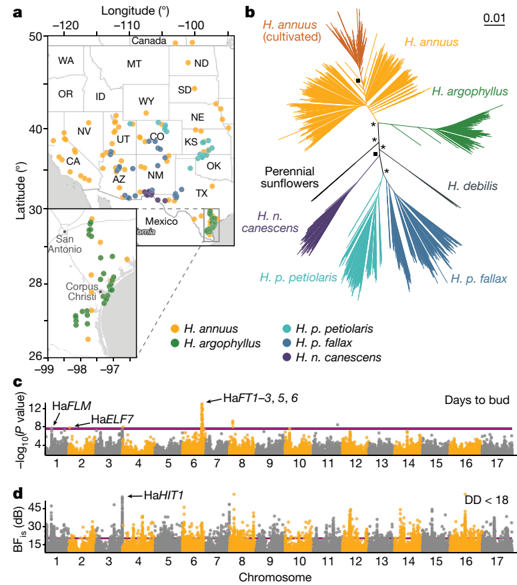
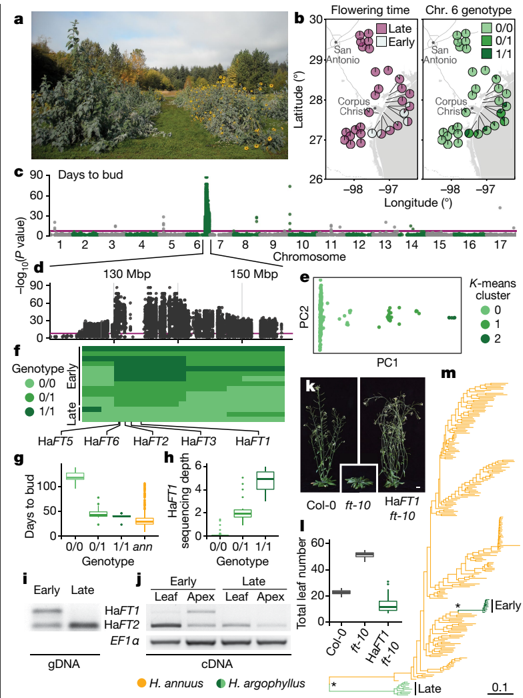
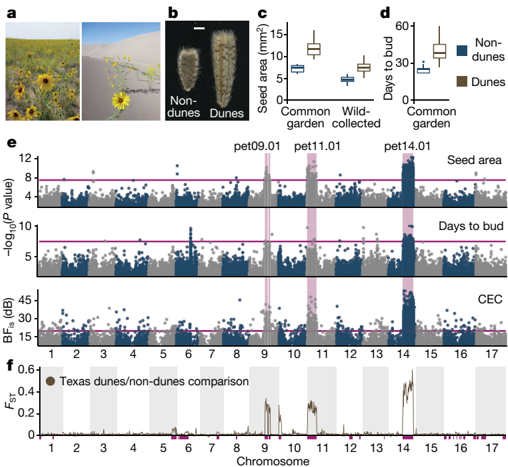
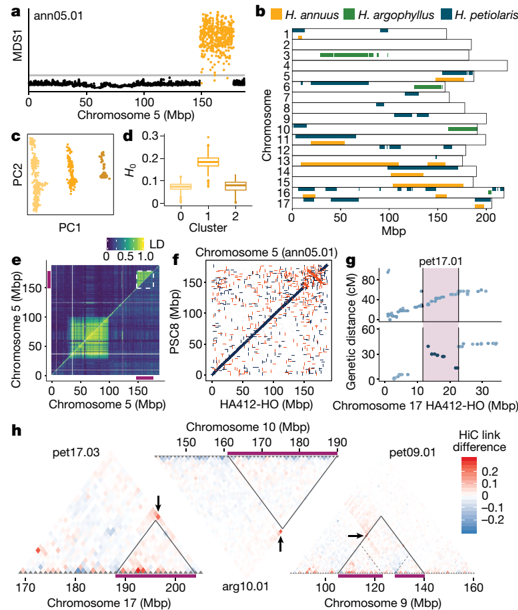
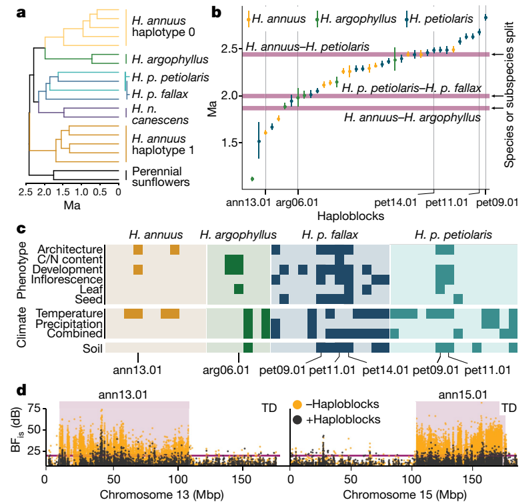
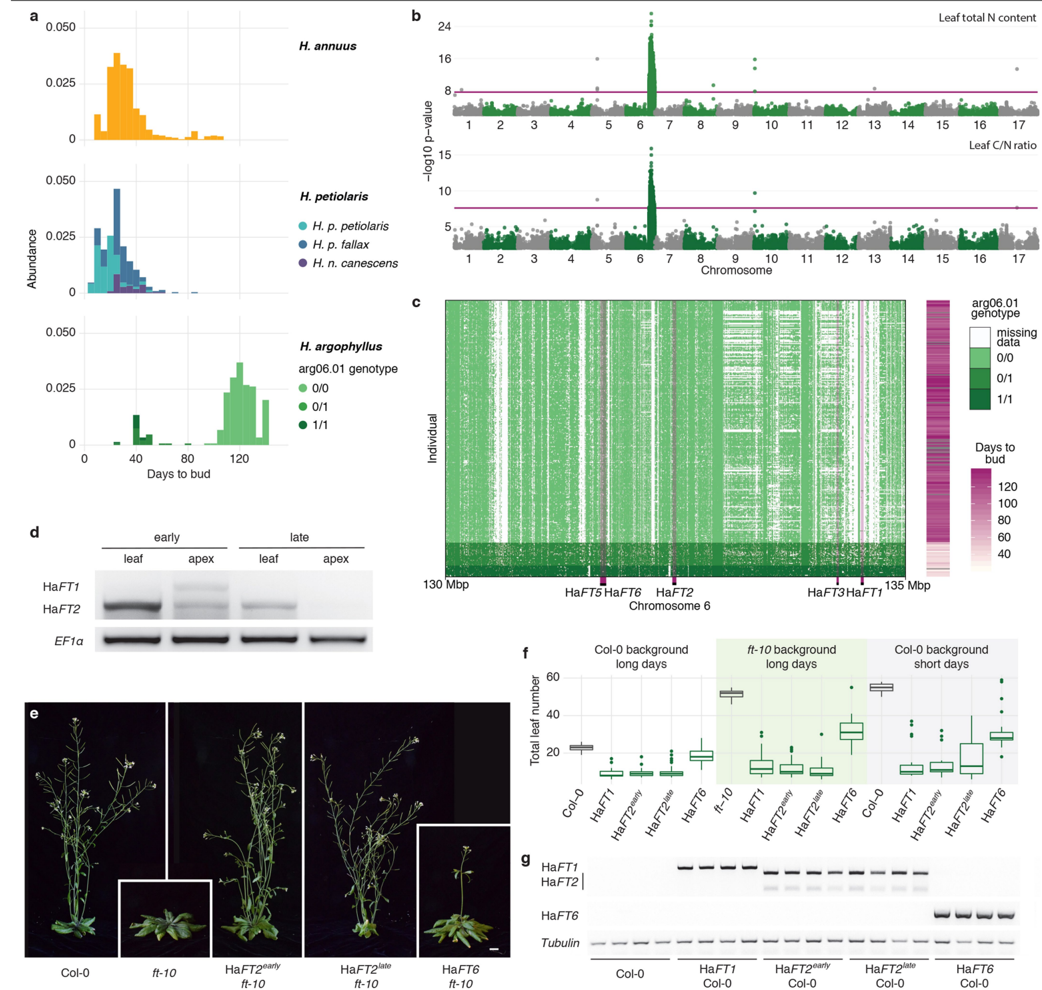
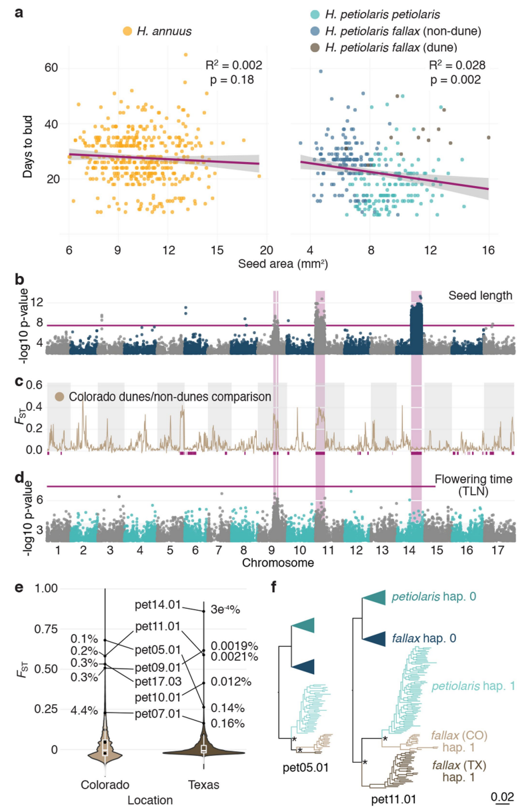
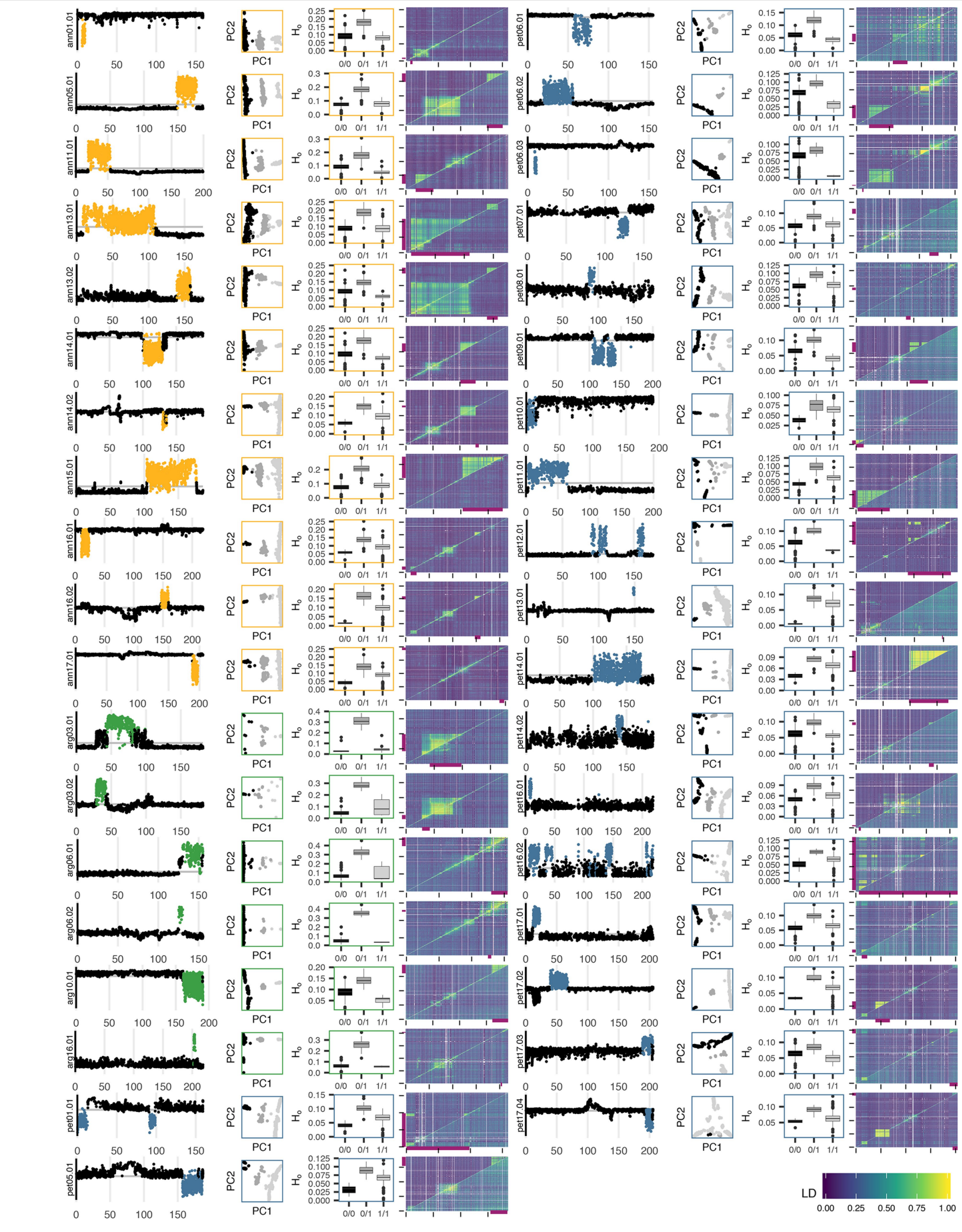
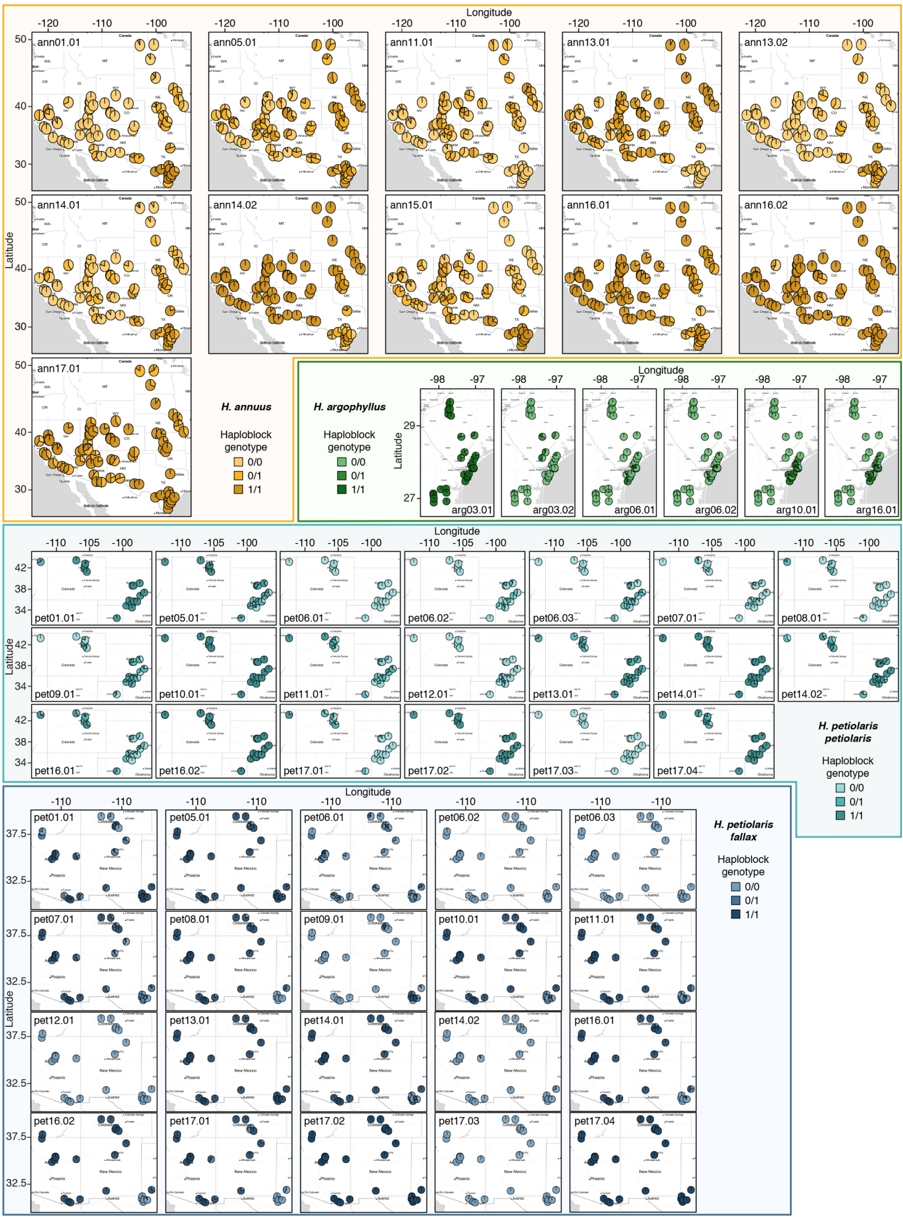
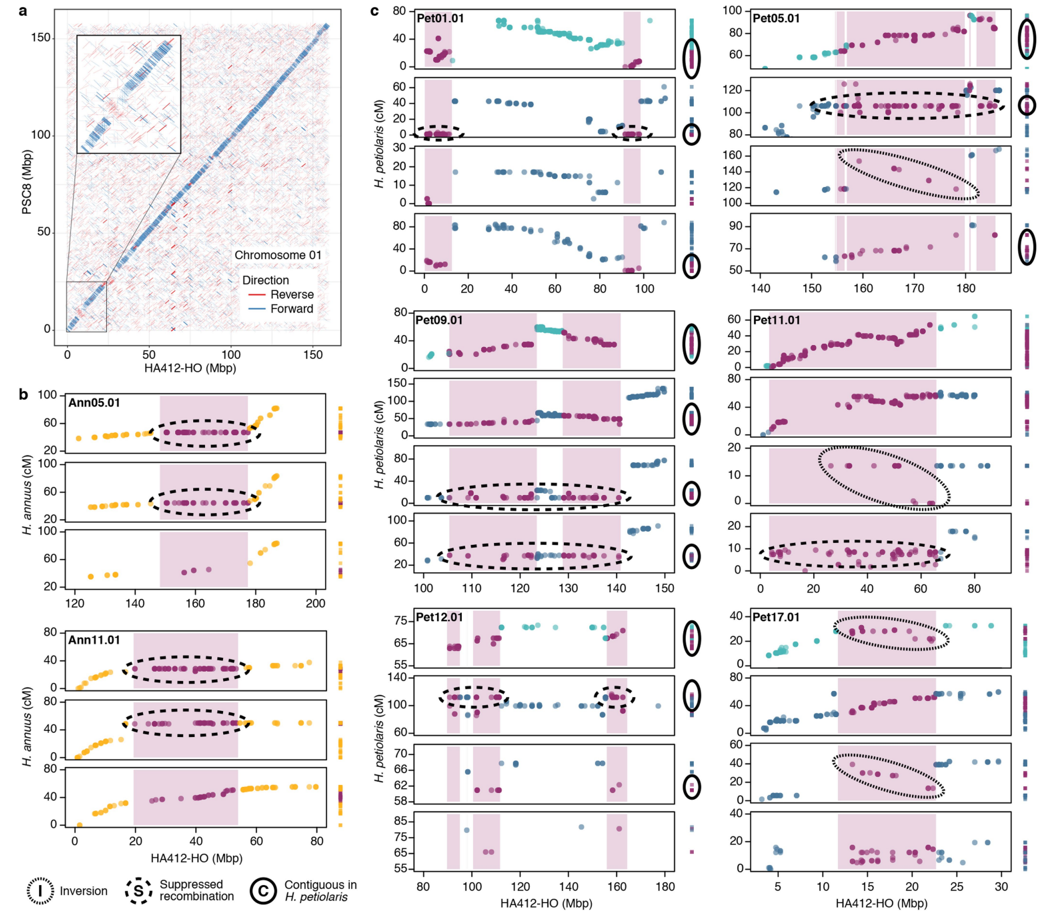
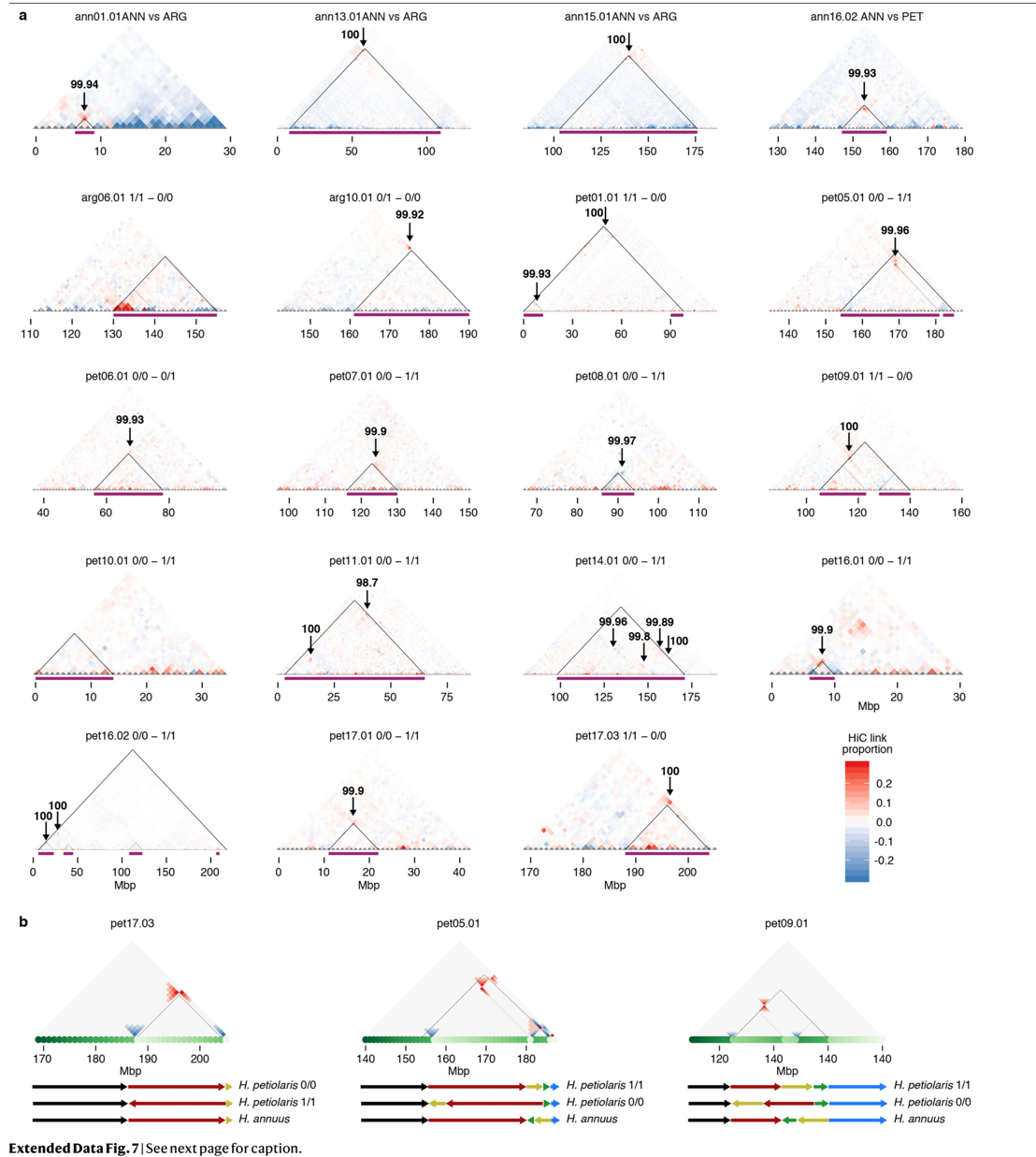
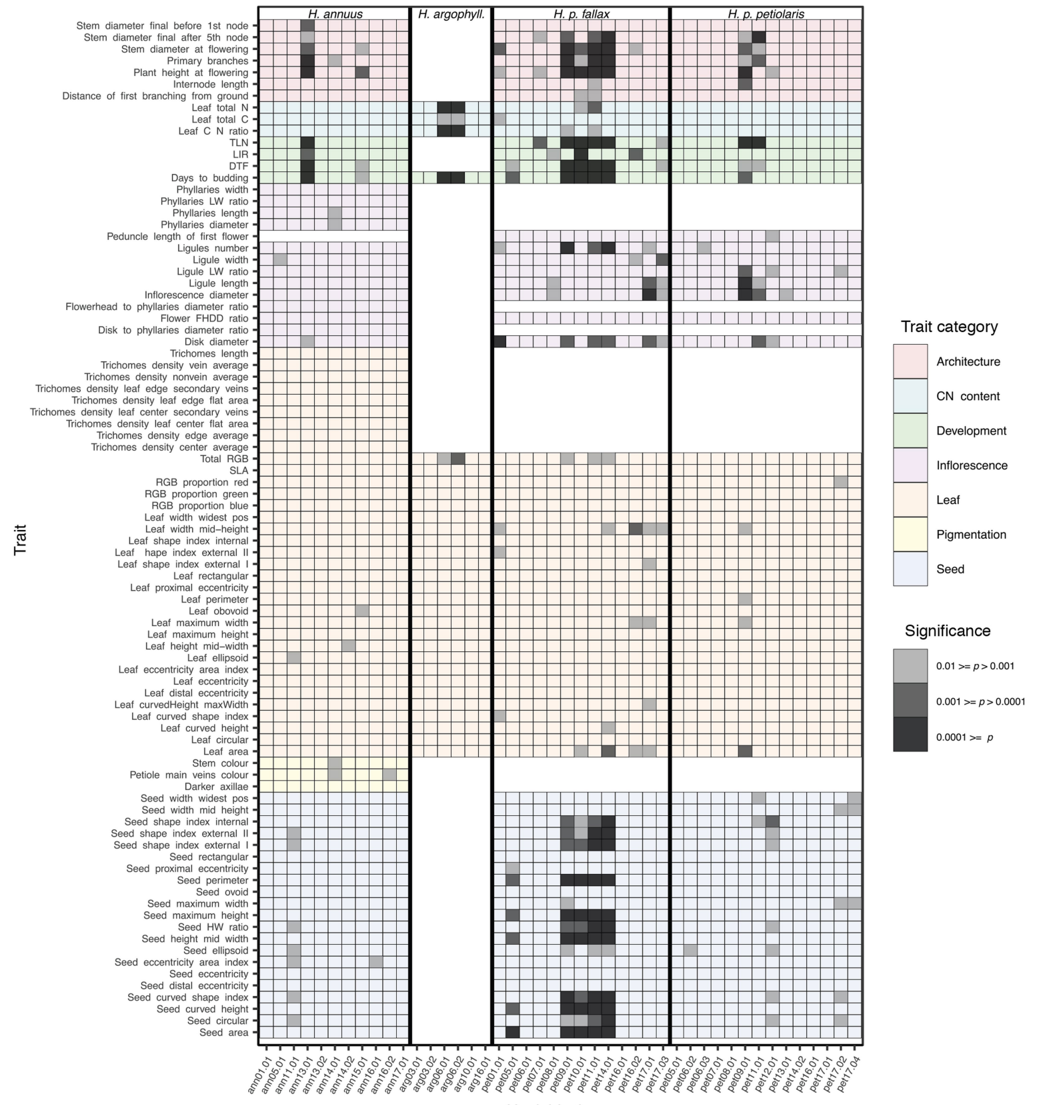
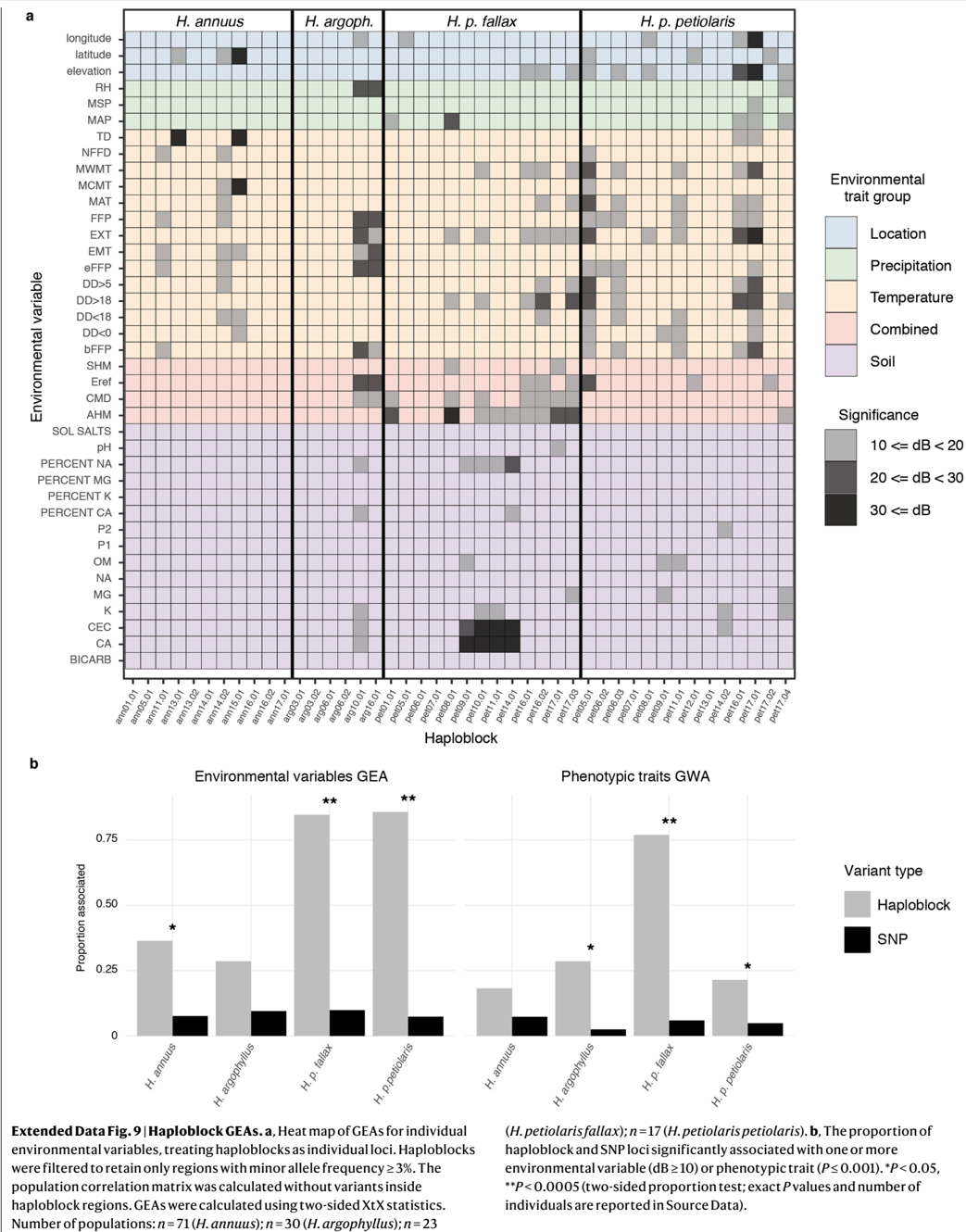
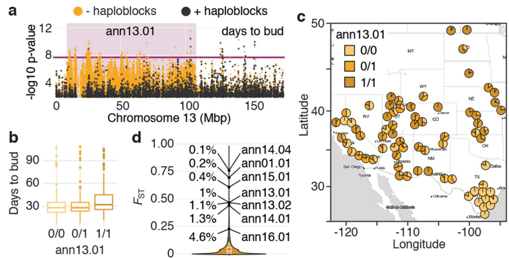
Species often include multiple ecotypes that are adapted to different environments1. However, it is unclear how ecotypes arise and how their distinctive combinations of adaptive alleles are maintained despite hybridization with non-adapted populations2–4. Here, by resequencing 1,506 wild sunflowers from 3 species (Helianthus annuus, Helianthus petiolaris and Helianthus argophyllus), we identify 37 large (1–100 Mbp in size), non-recombining haplotype blocks that are associated with numerous ecologically relevant traits, as well as soil and climate characteristics. Limited recombination in these haplotype blocks keeps adaptive alleles together, and these regions differentiate sunflower ecotypes. For example, haplotype blocks control a 77-day difference in flowering between ecotypes of the silverleaf sunflower H. argophyllus (probably through deletion of a homologue of FLOWERING LOCUS T (FT)), and are associated with seed size, flowering time and soil fertility in dune-adapted sunflowers. These haplotypes are highly divergent, frequently associated with structural variants and often appear to represent introgressions from other—possibly now-extinct—congeners. These results highlight a pervasive role of structural variation in ecotypic adaptation. Resequencing analyses of three species of wild sunflower identify large non-recombining haplotype blocks that correlate with ecologically relevant traits, soil and climate characteristics, and that differentiate species ecotypes.
Overview
The claims and statistics of this paper haven’t been checked yet.
Free: it reads the open-access text and checks the first 5 claims that cite a source we can check. Create a free account to check every claim.
Integrity signals
Registry
Cites
Statistics
Figures
Verification
Claims the paper makes
The claims and statistics of this paper haven’t been checked yet.
Free: it reads the open-access text and checks the first 5 claims that cite a source we can check. Create a free account to check every claim.
Claims other papers make about this one
Each is checked against this paper’s own text: does it say what the citing paper says it does?
The source backs part of the claim, not all of it — or backs it for a different population, condition or comparison.
In the citing paper
“An apparent example of the latter comes from sunflower, where hemizygosity or complete loss of a homolog of FLOWERING LOCUS T underlies a shift in flowering time between sympatric ecotypes of the silverleaf sunflower (Todesco et al., 2020).”
From Genomics of plant speciation (2023) · cites this paper as Todesco et al., 2020
Experimental — accuracy not yet measuredThe source backs part of the claim, not all of it — or backs it for a different population, condition or comparison.
In the citing paper
“As well, introgression is reduced for genes or genomic regions underlying RI (Barb et al., 2014; Kenney and Sweigart, 2016; Todesco et al., 2020).”
From Genomics of plant speciation (2023) · cites this paper as Todesco et al., 2020
Experimental — accuracy not yet measuredThe source backs part of the claim, not all of it — or backs it for a different population, condition or comparison.
In the citing paper
“Other examples come from studies of adaptive introgression or homoploid hybrid speciation (see Speciation with gene flow, introgression, and hybrid speciation), in which alleles or SVs critical to RI have been identified in parental populations (Nevado et al., 2020; Todesco et al., 2020; Wang et al., 2021b).”
From Genomics of plant speciation (2023) · cites this paper as Todesco et al., 2020
Experimental — accuracy not yet measuredThe source backs part of the claim, not all of it — or backs it for a different population, condition or comparison.
In the citing paper
“Examples include the origin of dune sunflower ecotypes in the southwestern US, in which traits associated with dune adaptation and RI map to inversions, which are old and pre-date ecotype divergence (Ostevik et al., 2016; Huang and Rieseberg, 2020; Todesco et al., 2020).”
From Genomics of plant speciation (2023) · cites this paper as Todesco et al., 2020
Experimental — accuracy not yet measuredThe cited source says what the claim attributes to it.
In the citing paper
“genomic studies have shown that when adaptation and speciation have progressed, chromosomal inversions or other recombination cold spots become crucially important in settings characterized by gene flow (e.g., Todesco et al., 2020)”
From Genomics of plant speciation (2023) · cites this paper as Todesco et al., 2020
1 more claim about this paper
Create a free account to see every claim other papers make about this one.
Self-check
Percentages, sums and reported differences re-computed from the paper’s own numbers.
The self-check needs the paper’s full text.
Citations
Cites
Fiji: an open-source platform for biological-image analysis
Schindelin, J., Arganda-Carreras, I., Frise, E., Kaynig, V., Longair, M., Pietzsch, T., Preibisch, S., Rueden, C., Saalfeld, S., Schmid, B., et al. (2012) · Nature Methods · doi:10.1038/nmeth.2019 · Cited by 66,890
Trimmomatic: a flexible trimmer for Illumina sequence data
Bolger, A. M., Lohse, M., & Usadel, B. (2014) · Bioinformatics · doi:10.1093/bioinformatics/btu170 · Cited by 65,548
NIH Image to ImageJ: 25 years of image analysis
Schneider, C. A., Rasband, W. S., & Eliceiri, K. W. (2012) · Nature Methods · doi:10.1038/nmeth.2089 · Cited by 64,638
The Sequence Alignment/Map format and SAMtools
Li, H., Handsaker, B., Wysoker, A., Fennell, T., Ruan, J., Homer, N., Marth, G., Abecasis, G., Durbin, R., & 1000 Genome Project Data Processing Subgroup (2009) · Bioinformatics · doi:10.1093/bioinformatics/btp352 · Cited by 62,041
IQ-TREE: A Fast and Effective Stochastic Algorithm for Estimating Maximum-Likelihood Phylogenies
Nguyen, L.-T., Schmidt, H. A., von Haeseler, A., & Minh, B. Q. (2015) · Molecular Biology and Evolution · doi:10.1093/molbev/msu300 · Cited by 26,046
ModelFinder: fast model selection for accurate phylogenetic estimates
Kalyaanamoorthy, S., Minh, B. Q., Wong, T. K. F., von Haeseler, A., & Jermiin, L. S. (2017) · Nature Methods · doi:10.1038/nmeth.4285 · Cited by 18,449
The variant call format and VCFtools
Danecek, P., Auton, A., Abecasis, G., Albers, C. A., Banks, E., DePristo, M. A., Handsaker, R. E., Lunter, G., Marth, G. T., Sherry, S. T., et al. (2011) · Bioinformatics · doi:10.1093/bioinformatics/btr330 · Cited by 16,200
Algorithm AS 136: A K-Means Clustering Algorithm
Hartigan, J. A., & Wong, M. A. (1979) · Applied Statistics · doi:10.2307/2346830 · Cited by 14,523
Heinz, S., Benner, C., Spann, N., Bertolino, E., Lin, Y. C., Laslo, P., Cheng, J. X., Murre, C., Singh, H., & Glass, C. K. (2010) · Molecular Cell · doi:10.1016/j.molcel.2010.05.004 · Cited by 13,382
Rapid isolation of high molecular weight plant DNA
Murray, M. G., & Thompson, W. F. (1980) · Nucleic Acids Research · doi:10.1093/nar/8.19.4321 · Cited by 12,098
Research works printed but not linked: 1
- 43. Heiser, C. B. Three new annual sunflowers (Helianthus) from the southwestern United States. Rhodora 60, 272-283 (1958).
Cited by
Items 301–400 of 517
Phylogeography of Arctic plants: where are we after 35 years, and where to go?
Brochmann, C., Elphinstone, C., Birkeland, S., Ikeda, H., Eidesen, P. B., Alsos, I. G., & Westergaard, K. B. (2025) · Plant Ecology & Diversity · doi:10.1080/17550874.2025.2571098 · Cited by 7
“…an intriguing role in adaptation as selection may favour rearrangements that group locally adapted alleles, preventing them from being brought apart by recombination (Kirkpatrick and Barton 2006; Huang and Rieseberg 2020; Todesco et al. 2020; Harringmeyer and Hoekstra 2022; Battlay et al. 2023).”
The value of structural variants to conservation genomics in the pangenome era
Pegan, T. M., Sivakumar, A., Burns, C. A., Lopez, K. A., Fang, B., Melendez, N. M., Bartel, L., & Edwards, S. V. (2025) · Journal of Heredity · doi:10.1093/jhered/esaf098 · Cited by 6
Goessen, R., Isabel, N., Wehenkel, C., Hernández‐Velasco, J., Mendoza‐Maya, E., Sáenz‐Romero, C., Blanco‐García, A., Bousquet, J., & Porth, I. M. (2025) · Molecular Ecology · doi:10.1111/mec.70193 · Cited by 5
“In several cases, these haplotype blocks were linked to large structural variations, in particular inversions, which provide a mechanism for suppressing recombination and thereby maintaining combinations of locally adapted alleles (Todesco et al. 2020).”
Convergence and parallelism in the evolution of plant metabolism
Scossa, F., Bulut, M., Naake, T., D’Auria, J. C., & Fernie, A. R. (2026) · Journal of Integrative Plant Biology · doi:10.1111/jipb.70236 · Cited by 7
“However, the availability of mutations and favorable envi - ronments can lead to rapid genetic diversi fi cation such as adaptive radiations (Todesco et al., 2020).”
Pericentromeric recombination suppression and the ‘large X effect’ in plants
Wong, E. L. Y., & Filatov, D. A. (2023) · Scientific Reports · doi:10.1038/s41598-023-48870-3 · Cited by 5
Tigano, A. (2020) · Molecular Ecology · doi:10.1111/mec.15665 · Cited by 5
Diversity and distribution of ligninolytic fungi
Skrede, I. (2021) · Advances in botanical research · doi:10.1016/bs.abr.2021.05.004 · Cited by 6
Brown, S. P., & Mandel, J. R. (2023) · Phytobiomes Journal · doi:10.1094/pbiomes-06-23-0049-r · Cited by 5
Plant sperm cell sequencing for genome phasing and determination of meiotic crossover points
Zhang, W., Tariq, A., Jia, X., Yan, J., Fernie, A. R., Usadel, B., & Wen, W. (2024) · Nature Protocols · doi:10.1038/s41596-024-01063-2 · Cited by 5
“Haplotype diversity analysis has shed light on the origin, domestication or adaption process of crop plants including tomato 7,8 , potato 9 , sweet potato 10 and sunflower 11 .”
The Distribution and Dispersal of Large Haploblocks in a Superspecies
Irwin, D. E., Bensch, S., Charlebois, C., David, G., Geraldes, A., Gupta, S. K., Harr, B., Holt, P., Irwin, J. H., Иваницкий, В. В., et al. (2025) · Molecular Ecology · doi:10.1111/mec.17731 · Cited by 6
“These can rise to intermediate frequencies and be maintained by forms of balancing selection, and may persist for millions of years, even persisting across species boundaries (Hager et al. 2022; Todesco et al. 2020).”
Hoff, S. N. K., Maurstad, M. F., Moan, A. L., Ravinet, M., Pampoulie, C., Vieweg, I., Collard, F., Moiseev, D. V., Bradbury, I., Tørresen, O. K., et al. (2024) · bioRxiv (Cold Spring Harbor Laboratory) · doi:10.1101/2024.06.28.597535 · Cited by 5
Zhang, X., Wang, Y., Chen, Y., Li, Y., Guo, K., Xu, J. H., Guan, P., Lan, T., Xin, M., Hu, Z., et al. (2024) · BMC Genomics · doi:10.1186/s12864-024-11000-y · Cited by 4
Wang, P., Li, Z., Liu, R., You, J., Tan, H., Li, J., Chen, X., You, C., Zhang, X., Pettolino, F. A., et al. (2025) · New Phytologist · doi:10.1111/nph.70265 · Cited by 4
“As a powerful method, genome-wide association study (GWAS) has been successfully and widely applied in the identifi-cation of trait-associated genetic loci (Wang et al ., 2017; Xiao et al ., 2017; Todesco et al ., 2020).”
Shao, L., Jin, S., Jiang, H., Pan, T., Rui, Z., Shi, X., Zhao, T., Si, Z., Guan, X., Hu, Y., et al. (2025) · Advanced Science · doi:10.1002/advs.202514381 · Cited by 7
Wooldridge, T. B., Kapp, J. D., Ford, S. M., Seligmann, W., Conwell, H. C., Tzadikario, T., Oppenheimer, J., Anderson, Z. G., Moan, A. L., Abadía‐Cardoso, A., et al. (2026) · Proceedings of the National Academy of Sciences · doi:10.1073/pnas.2600483123 · Cited by 4
Jiang, C., Yue, L., Jin, D., Zou, R., Wang, Y. P., Li, B., Du, X., Huang, X., Sun, Y., Wang, R., et al. (2026) · Proceedings of the National Academy of Sciences · doi:10.1073/pnas.2513080122 · Cited by 4
Branch, H. A. (2026) · American Journal of Botany · doi:10.1002/ajb2.70164 · Cited by 4
“First, through a large collaborative e ff ort, Todesco et al. (2020) were able to examine ecotype di ff erences of 1400 sun fl owers by measuring 16 traits (albeit many were similar iterations, i.e., nitrogen isotopes, carbon isotopes, C:N ratio, trichome length and densities of di ff erent areas, and…”
Ecotypic differences in drought‐coping ability in an endemic California oak
Poudel, S., Zavaleta, E. S., & McLaughlin, B. C. (2025) · Ecosphere · doi:10.1002/ecs2.70189 · Cited by 4
“…experiments also found that climatic selective pressures lead to distinct populations often referred to as “ ecotypes ” (Clausen et al., 1941; Turesson, 1922), and more recent studies have identified genetic bases for ecotypic differences (e.g., Milano et al., 2016; Todesco et al., 2020).”
Pichler, V., Sanou, A., Love, R. R., Caputo, B., Pombi, M., Toé, K. H., Guelbeogo, M. W., Sagnon, N., Ferguson, H. M., Ranson, H., et al. (2023) · Parasites & Vectors · doi:10.1186/s13071-023-06014-6 · Cited by 5
“Empirical evidence consistent with this hypothesis is mounting from diverse species of plants and animals, including the An. gambiae complex [8–14].”
BackgroundNikelski, E., Rubtsov, A. S., & Irwin, D. E. (2024) · Molecular Ecology · doi:10.1111/mec.17526 · Cited by 4
“An association between inversion regions and the genes responsible for reproductive barriers has been observed in some study systems (Ayala et al., 2013; Lowry & Willis, 2010; Todesco et al., 2020 ).”
Exciting times for evolutionary biology
(2024) · Nature Ecology & Evolution · doi:10.1038/s41559-024-02402-y · Cited by 4
Complex Genomic Structural Variation Underlies Climate Adaptation across Eucalyptus speciesPreprint
Zhuang, Z., Ferguson, S., Mackinnon, M. J., Burley, J., Murray, K., Borevitz, J., & Jones, A. (2025) · Research Square · doi:10.21203/rs.3.rs-9038046/v1 · Cited by 4
Evolution of an adaptive, inducible defensive trait in a model crustacean
Deng, Z., Xu, S., Li, D., Guo, Y., Neupane, S., Wang, L., Blair, D., Hu, W., Petrusek, A., & Yin, M. (2026) · Genome Research · doi:10.1101/gr.281631.125 · Cited by 4
Allendorf, F. W., Funk, W. C., Aitken, S. N., Byrne, M. M., & Luikart, G. (2022) · Oxford University Press eBooks · doi:10.1093/oso/9780198856566.003.0004 · Cited by 3
Hu, P., Yang, Z., Yang, M., Sheng, P., Huang, Z., Liu, S., Chen, Y., Cao, H., & Gao, X. (2025) · Frontiers in Marine Science · doi:10.3389/fmars.2025.1520773 · Cited by 3
Complex Patterns of Hitchhiking Mutation Load Among Stickleback Populations
Nickel, J. H., Laine, J., & Foote, A. D. (2026) · Genome Biology and Evolution · doi:10.1093/gbe/evag088 · Cited by 3
Deng, R., You, H., Ge, Q., Wu, J., Cheng, Z., Zhu, L., Yu, H., Chen, L., Shahid, M. Q., Lu, Z., et al. (2025) · Rice · doi:10.1186/s12284-025-00835-y · Cited by 3
“…have increasingly highlighted the significant role of structural variants (SVs) in speciation processes, including inversions, translocations, fissions/fusions, insertions/deletions, and duplications (Bowers et al. 2003; Fransz et al. 2016; Qin et al. 2021; Todesco et al. 2020; Yang et al. 2023).”
The genomics of discrete polymorphisms maintained by disruptive selection
Kitano, J., Kagawa, K., Tsuchimatsu, T., Yamaguchi, R., & Yamamichi, M. (2025) · Trends in Ecology & Evolution · doi:10.1016/j.tree.2025.08.003 · Cited by 4
Migratory jackpot individuals fuel rapid ecotype shifts in Galaxias fishes
Iwikau, A., Augspurger, J. M., Bailie, M. A., McCulloch, G. A., Darestani, M. M., King, T. M., Closs, G. P., Ingram, T., Lokman, P. M., Deagle, B. E., et al. (2026) · Nature Communications · doi:10.1038/s41467-026-74946-5 · Cited by 3
“Our fi ndings also highlight the signi fi cant role of modular genomicarchitectureinfuellingsuchcomplexecotypeshifts 18 .”
Gómez-Ramos, I., Sánchez-Villegas, R., Mohan, A. V., Lavergne, C., Cerca, J., Márquez‐Corro, J. I., Marques, A., Martín‐Bravo, S., Luceño, M., Lucek, K., et al. (2026) · Proceedings of the National Academy of Sciences · doi:10.1073/pnas.2604805123 · Cited by 5
Population-aware permutation-based significance thresholds for genome-wide association studies
John, M., Korte, A., Todesco, M., & Grimm, D. G. (2024) · Bioinformatics Advances · doi:10.1093/bioadv/vbae168 · Cited by 3
Self-citationBrachmann, M. K., Costa, A. P. B., Robertson, S., Smith, B. A., Donoghue, K., Pilakouta, N., Whitehead, M., Liu, X., Kristjánsson, B. K., Skúlason, S., et al. (2026) · Nature Communications · doi:10.1038/s41467-026-75785-0 · Cited by 4
“4C), show the characteristic population genomic structure of an inversion 20,93 .”
Springer, A., Kissmer, B., & Gompert, Z. (2025) · Molecular Ecology · doi:10.1111/mec.17809 · Cited by 3
“Many other recent studies have documented rapid or repeated adaptive evolution involving structural variation, suggesting this might be a general phenomenon (Todesco et al. 2020; Akopyan et al. 2022; Ma et al. 2024; Nosil et al. 2024; Battlay et al. 2025; Gompert et al. 2025).”
Majumder, S., & Mason, C. M. (2025) · Applications in Plant Sciences · doi:10.1002/aps3.70015 · Cited by 3
“Well ‐ studied as the progenitor of cultivated sun fl ower, the wild common sun fl ower occupies a substantial native range of least four million square kilometers and is known to exhibit broad diversity in phenotypes across this geographic expanse (Todesco et al., 2020, 2022; Bercovich et al., 2022).”
Ortiz, R. O. (2020) · Hereditas · doi:10.1186/s41065-020-00159-5 · Cited by 3
“blocks associated with many ecologically relevant traits, as soils and climates [12] supports ecotypic differentiation.”
BackgroundAllendorf, F. W., Funk, W. C., Aitken, S. N., Byrne, M. M., & Luikart, G. (2022) · Oxford University Press eBooks · doi:10.1093/oso/9780198856566.003.0009 · Cited by 3
Allendorf, F. W., Funk, W. C., Aitken, S. N., Byrne, M. M., & Luikart, G. (2022) · Oxford University Press eBooks · doi:10.1093/oso/9780198856566.003.0015 · Cited by 3
Random mating populations: Hardy–Weinberg Principle
Allendorf, F. W., Funk, W. C., Aitken, S. N., Byrne, M. M., & Luikart, G. (2022) · Oxford University Press eBooks · doi:10.1093/oso/9780198856566.003.0005 · Cited by 3
Genetic Variation in Natural Populations
Allendorf, F. W., Funk, W. C., Aitken, S. N., Byrne, M. M., & Luikart, G. (2022) · Oxford University Press eBooks · doi:10.1093/oso/9780198856566.003.0003 · Cited by 3
Dynamic properties of the pinyon pine syngameon
Whittemore, A. T., & Miller, R. E. (2023) · New Phytologist · doi:10.1111/nph.18707 · Cited by 3
Dowell, J. A., & Mason, C. M. (2023) · Applications in Plant Sciences · doi:10.1002/aps3.11558 · Cited by 3
“We identi fi ed a total of 687 SNPs among the carotenoid ‐ biosynthesis genes annotated in the sun fl ower genome (Todesco et al., 2020).”
BackgroundMethodInfluentialManthey, J. D., & Spellman, G. M. (2022) · Molecular Phylogenetics and Evolution · doi:10.1016/j.ympev.2024.108088 · Cited by 3
Fan, W., Sun, M., Zheng, Y., Song, S., Zhang, Z., & Bian, Y. (2024) · Planta · doi:10.1007/s00425-024-04514-y · Cited by 3
“…selection process that enhanced the adaption of plants to cultivation, meeting the needs of humans or animals, while simultaneously reducing their fitness to adapted environment challenges, such ass pests, fungi, diseases and sudden environmental changes (Todesco et al. 2020; Tourvas et al. 2023).”
Zapata, F., Cerca, J., McCarney, D., Henriquez, C. L., Tiamiyu, B. B., McCormack, J. E., Reckling, K. R., Chaves, J. A., & Rivas‐Torres, G. F. (2024) · Evolutionary Journal of the Linnean Society · doi:10.1093/evolinnean/kzae021 · Cited by 3
Dissecting the genetic architecture of sunflower disc diameter using genome‐wide association study
Delen, Y., Mural, R. V., Delen, S. P., Xu, G., Schnable, J. C., Dweikat, I., & Yang, J. (2024) · Plant Direct · doi:10.1002/pld3.70010 · Cited by 3
“…to some of those genotyped sunflower populations reported in other studies (Badouin et al., 2017; Chernova et al., 2021; Mandel et al., 2011; Todesco et al., 2020), genomic data of our population that we presented in this study will be a good source that can be extensively used by the…”
BackgroundAllendorf, F. W., Funk, W. C., Aitken, S. N., Byrne, M. M., & Luikart, G. (2022) · Oxford University Press eBooks · doi:10.1093/oso/9780198856566.003.0011 · Cited by 3
Rapid evolution of recombination landscapes during the divergence of cichlid ecotypes in Lake MasokoPreprint
Talbi, M., Turner, G. F., & Malinsky, M. (2024) · bioRxiv (Cold Spring Harbor Laboratory) · doi:10.1101/2024.03.20.585960 · Cited by 3
“…(Wellenreuther and Bernatchez 2018), often comprise considerable proportions of the genome, and have clear links to adaptation and diversification in both animals (Faria, Chaube, et al. 2019; Harringmeyer and Hoekstra 2022; Reeve et al. 2023) and plants (Todesco et al. 2020; Battlay et al. 2023).”
BackgroundInfluentialNot so selfish: transposable elements fuel adaptation to climate changePreprint
Potapenko, E. V., Schwartz, D., Mandel, T., Ashkenazy, N., Fuerst, D., Atsmon, G., Korol, A. B., Kantar, M. B., Bar‐Massada, A., & Hübner, S. (2024) · bioRxiv (Cold Spring Harbor Laboratory) · doi:10.1101/2024.09.02.610836 · Cited by 3
“Other modes of accelerated local adaptation are attributed to specific events of chromosomal modifications like inversions and deletions 13,14 , yet the association with gradual or fluctuating environmental change remains elusive.”
BackgroundLin, J., Sultana, Z., Heyda, C., Gieck, L., & Lin, J. (2025) · bioRxiv (Cold Spring Harbor Laboratory) · doi:10.1101/2025.04.21.649836 · Cited by 3
Structural variation in context: mechanisms, functions and selection regimes across the tree of life
Karageorgiou, C., Leffler, E. M., Dennis, M. Y., & Gökçümen, Ö. (2026) · Heredity · doi:10.1038/s41437-026-00832-x · Cited by 4
Bellagio, T., & Expósito‐Alonso, M. (2026) · Journal of Heredity · doi:10.1093/jhered/esag026 · Cited by 2
“3).”
Lv, R., Wang, Z., Wang, R., Wang, H., Chen, B., Luan, Y., & Liu, B. (2025) · Journal of Agricultural and Food Chemistry · doi:10.1021/acs.jafc.5c07415 · Cited by 2
Lehnert, S. J., Kess, T., Bentzen, P., Barson, N. J., Lien, S., Dempson, J. B., & Bradbury, I. (2025) · Molecular Ecology · doi:10.1111/mec.70107 · Cited by 2
“…technology are enabling the discovery of linked genomic architectures, such as large haplotype blocks and structural variants, that can contribute to adaptation (Huang et al. 2020; Mérot et al. 2020; Todesco et al. 2020; Harringmeyer and Hoekstra 2022; Rubin et al. 2022; Battlay et al. 2023).”
Six recommendations when applying genomic tools to invasion biology research
McGaughran, A., Rollins, L. A., & Dhami, M. K. (2025) · Biological Invasions · doi:10.1007/s10530-025-03718-x · Cited by 2
“…capture intraspecific variability in adaptive genomic features, such as copy number or presence/absence variation of genes (Gerdol et al. 2020) and structural variants (Li et al 2023), as well as distribution of rare single nucleotide or insertion-deletion (indels) variants (Todesco et al. 2020).”
Pike, B. R., Kozik, A., & Terán, W. F. V. (2025) · G3 Genes Genomes Genetics · doi:10.1093/g3journal/jkaf286 · Cited by 2
“In other species, such as corn (Fang et al. 2012) and sunflower (Todesco et al. 2020 ), massive haplotype blocks have been shown not to re-combine, which prevents the separation of alleles that may provide more selective advantage as a group.”
Nadachowska‐Brzyska, K., Maryańska‐Nadachowska, A., Kandasamy, D., Andersson, M. N., Nowak, Z., Zieliński, P., Rodriguez, M., & Babik, W. (2026) · G3 Genes Genomes Genetics · doi:10.1093/g3journal/jkag017 · Cited by 2
“As studies increasingly reveal the complexity of inversion polymorphism landscapes (Wellenreuther et al. 2019; Faria et al. 2019a; Todesco et al. 2020; Harringmeyer and Hoekstra 2022), detailed information on recombination rates is essential for advancing our understanding of recombination…”
Sunflower genetics and genomics: from fundamental evolutionary insights to crop improvement
Blackman, B. K., Burke, J. M., Nasti, R. A., Todesco, M., Wang, J., & Rieseberg, L. H. (2026) · Trends in Genetics · doi:10.1016/j.tig.2026.01.002 · Cited by 2
Self-citationSisou, D., Ziadna, H., Eizenberg-Weiss, M., Eizenberg, H., & Hübner, S. (2026) · Journal of Experimental Botany · doi:10.1093/jxb/erag141 · Cited by 2
“This platform facilitated the analysis of the sunflower association mapping (SAM) population which has been intensively genotyped and explored for biotic and abiotic stress resistance (Gao et al. 2019; Hübner et al. 2019; Mandel et al. 2013; Todesco et al. 2020).”
Genomic diversity and the domestication history of cotton ( Gossypium hirsutum )
Ning, W., Arick, M. A., Udall, J. A., Hsu, C.-Y., Abdala‐Roberts, L., Solís‐Rodríguez, U., Briones‐May, Y., Magbanua, Z. V., Pechanova, O., Bustos‐Segura, C., et al. (2026) · Proceedings of the National Academy of Sciences · doi:10.1073/pnas.2607107123 · Cited by 5
The identity crisis of speciation genomics
Cerca, J., & Stelkens, R. (2026) · Evolutionary Journal of the Linnean Society · doi:10.1093/evolinnean/kzag011 · Cited by 2
Zhang, Y., Wang, X., Xu, Y., Chen, C., Yao, J. J., Long, Q., Zhang, T., Su, Y., Yang, S., Ali, Z., et al. (2026) · PLANT PHYSIOLOGY · doi:10.1093/plphys/kiag330 · Cited by 2
“Recent breakthroughs in phased genomics have underscored that key agronomic traits are often governed by specific haplotype interactions (Brinton et al. 2020; Todesco et al. 2020; Walkowiak et al. 2020).”
Conservation Breeding and Restoration
Allendorf, F. W., Funk, W. C., Aitken, S. N., Byrne, M. M., & Luikart, G. (2022) · Oxford University Press eBooks · doi:10.1093/oso/9780198856566.003.0021 · Cited by 3
Predicting Gene Regulatory Interactions Using Natural Genetic Variation
John, M., Grimm, D. G., & Korte, A. (2023) · Methods in molecular biology · doi:10.1007/978-1-0716-3354-0_18 · Cited by 2
Effects of hybridization and gene flow on gene co-expression networks
Runghen, R., & Bolnick, D. I. (2025) · Genetics · doi:10.1093/genetics/iyaf057 · Cited by 2
A chromosome-level reference genome assembly for Gilbert’s skink Plestiodon gilberti
Richmond, J. Q., Escalona, M., Marimuthu, M. P. A., Nguyen, O., Sacco, S., Beraut, E., Toffelmier, E. M., Karin, B. R., Cooper, R. D., Fisher, R. N., et al. (2025) · Journal of Heredity · doi:10.1093/jhered/esaf040 · Cited by 2
“…exist to allow skink populations to adapt to changing conditions if species are unable to shift their ranges (Jones et al. 2012; Miller et al. 2019; Todesco et al. 2020; Roberts Kingman et al. 2021), or can inter-breeding between ecologically-differentiated populations of closely related species…”
Natola, L., & Irwin, D. E. (2025) · Journal of Evolutionary Biology · doi:10.1093/jeb/voaf096 · Cited by 2
Contemporary hybridization among Arabis floodplain species creates opportunities for adaptation
Rahnamae, N., Metzger, L., Hördemann, L., Korfmann, K., Khan, A. S., Özoglan, Y., Dent, C., Amar, S., Wijfjes, R. Y., Ali, T., et al. (2025) · New Phytologist · doi:10.1111/nph.70779 · Cited by 2
“This phenomenon, sometimes described as ‘demo-graphic swamping’, elevates the risk of extinction but may also select for allelic variations that reinforce species isolation (Hop-kins, 2013; Goulet et al ., 2017; Ma et al ., 2019; Brauer et al ., 2023).”
Allendorf, F. W., Funk, W. C., Aitken, S. N., Byrne, M. M., & Luikart, G. (2022) · Oxford University Press eBooks · doi:10.1093/oso/9780198856566.003.0008 · Cited by 2
Allendorf, F. W., Funk, W. C., Aitken, S. N., Byrne, M. M., & Luikart, G. (2022) · Oxford University Press eBooks · doi:10.1093/oso/9780198856566.003.0007 · Cited by 2
NGS Reads Dataset of Sunflower Interspecific Hybrids
Makarenko, M., & Алексеевна, Г. В. (2023) · Data · doi:10.3390/data8040067 · Cited by 2
Abbott, R. J. (2023) · Plant Ecology & Diversity · doi:10.1080/17550874.2023.2209786 · Cited by 2
“…plant species in recent years because genomic analyses can help reveal what genetic changes occur during local adaptation and ecotype formation (Todesco et al. 2020; VanWallendael et al. 2022; Wright et al. 2022), and also because such divergence can be an important step in speciation (Abbott…”
BackgroundMutation Effect Generalizability under Selection-DriftPreprint
Ribeiro, A. F. (2022) · arXiv (Cornell University) · doi:10.48550/arxiv.2209.13560 · Cited by 2
Rendón‐Anaya, M., Buinovskaja, G., Yu, L. M., & Ingvarsson, P. K. (2023) · bioRxiv (Cold Spring Harbor Laboratory) · doi:10.1101/2023.08.17.553676 · Cited by 2
Gene duplication dynamics and regulatory evolution shape the diversification of AsteraceaePreprint
Moore‐Pollard, E. R., Ellestad, P. A., Cliver, B. R., Baczyński, J., Pollard, M. D., Meharg, Z., Willoughby, A. C., Drewry, S. G., Harkess, A., Bonifacino, J. M., et al. (2025) · bioRxiv (Cold Spring Harbor Laboratory) · doi:10.1101/2025.10.29.685401 · Cited by 2
Self-citationRudman, S. M., Faber-Hammond, J. J., Sherman, R. E., Shahmohamadloo, R. S., Greenblum, S. I., MacMillan, H. A., Jeyasingh, P. D., & SCHMIDT, P. S. (2025) · bioRxiv (Cold Spring Harbor Laboratory) · doi:10.1101/2025.11.11.687836 · Cited by 2
“Continued investigations into the relationship between genetic linkage, the genomic architecture of adaptation (93, 94), and predictability, including predictions made across genomic backgrounds, will substantially advance our understanding of epistatic constraint (95) and the mechanistic genetic…”
Xie, D., Ye, P., Ma, Y., & Zhao, Z. (2026) · Genome Research · doi:10.1101/gr.280885.125 · Cited by 2
Beyond dichotomies in species and speciation
Feder, J. L., & Nosil, P. (2022) · National Science Review · doi:10.1093/nsr/nwad018 · Cited by 1
Dowell, J. A., Bowsher, A. W., Jamshad, A., Shah, R., Burke, J. M., Donovan, L. A., & Mason, C. M. (2024) · American Journal of Botany · doi:10.1002/ajb2.16420 · Cited by 2
Self-citationChen, J., Zhang, L., & Lu, J. J. (2025) · Scientia Sinica Vitae · doi:10.1360/ssv-2024-0311 · Cited by 1
Althaus, K. N., Nessen, K., Yost, J., Grossenbacher, D. L., & Ritter, M. K. (2025) · Madroño · doi:10.3120/0024-9637-72.2.a2 · Cited by 1
Pleiotropy and Facilitation of Local Adaptation in the Silverleaf Sunflower Helianthus argophyllus
Okinedo, U. E., & Moyers, B. T. (2026) · Genome Biology and Evolution · doi:10.1093/gbe/evag098 · Cited by 1
“…ragweed, Hämälä et al. (2020a) showed that loci under selection during range expansion exhibited pleiotropy, while in stickleback Rennison and Peichel (2022) showed that genomic regions under parallel ecotypic divergence contained more pleiotropic genes than non-parallel-divergent genomic regions.”
Halpin-McCormick, A., Thomson, R. C., Clarke, R. C., Neyhart, J., & Kantar, M. B. (2025) · Journal of Heredity · doi:10.1093/jhered/esaf048 · Cited by 1
Justen, H. C., Blain, S. A., & Delmore, K. E. (2025) · Nature Communications · doi:10.1038/s41467-025-63188-6 · Cited by 3
“C matrices as an additional approach to identify structural variants, following Todesco et al. 72 .”
Gawrońska, B., Marszałek, M., Kosiński, P., Zeyland, J., & Bednorz, L. (2025) · PLoS ONE · doi:10.1371/journal.pone.0332808 · Cited by 1
“Some researchers perceive ecotypic differentiation as the first step towards the formation of new species [25,118,119].”
Chimeric reference panels for genomic imputation
Zhou, M., James, M. E., Engelstädter, J., & Ortíz-Barrientos, D. (2025) · Genetics · doi:10.1093/genetics/iyaf212 · Cited by 1
“1.6 (Evans et al. 2016) for both the original dataset containing missing genotypes and the Retriever-imputed dataset, comparing these results with those reported by Todesco et al. (2020).”
InfluentialChromosomal Rearrangements Might Play a Central Role in Adaptation
Kissmer, B., & Gompert, Z. (2025) · Molecular Ecology · doi:10.1111/mec.70159 · Cited by 3
“Many ecologically important traits and adaptive polymorphisms have now been mapped to chromosomal rearrangements, especially inversions (e.g., Joron et al. 2011; Todesco et al. 2020; Akopyan et al. 2022; Nosil et al. 2023).”
Wang, K. O., Wang, Y., Tang, Z., Zhu, X., Gao, C., Zhou, J., Fu, S., & Bu, W. (2026) · Molecular Phylogenetics and Evolution · doi:10.1016/j.ympev.2025.108529 · Cited by 1
Stone, B. W., Williams, N. H., Depatie, T. H., Radford, Z. J., Mosley, A., & Wessinger, C. A. (2026) · Evolution · doi:10.1093/evolut/qpag199 · Cited by 1
Mehrem, S. L., den Ackerveken, G. F. J. M. V., & Snoek, B. L. (2026) · Euphytica · doi:10.1007/s10681-026-03700-1 · Cited by 1
“Investigating CWR provides valuable insights into the genetic mechanisms that underly domestication traits, as demonstrated in studies on various crops (Razifard et al. 2020; Todesco et al. 2020; Hardigan et al. 2017; Guo et al. 2020; Ren et al. 2021; Flint-Garcia et al. 2023).”
Wang, N., Tang, J., Hou, X., Quan, C., Mai, J., He, C., Chen, R., Tao, B., Gu, Y., Jia, D., et al. (2026) · Theoretical and Applied Genetics · doi:10.1007/s00122-026-05220-x · Cited by 1
Hitchhiking of deleterious mutations within chromosomal inversions
Nickel, J. H., & Foote, A. D. (2026) · Trends in Ecology & Evolution · doi:10.1016/j.tree.2026.04.011 · Cited by 1
Smith, S. M., Bhatta, U. K., Woodhouse, M. R., & Hufford, M. B. (2026) · Annual Review of Phytopathology · doi:10.1146/annurev-phyto-011325-102141 · Cited by 1
Shifting Balancing Selection Underlies an Inversion Cline in Eurasian Blackcap
Ishigohoka, J., & Liedvogel, M. (2026) · Ecology and Evolution · doi:10.1002/ece3.73749 · Cited by 1
“…inversion clines with divergent selection that underlies distinct phenotypic variation where one arrangement is nearly fixed in respective side of the cline with one predominant ecotype (Lundberg et al. 2017; Todesco et al. 2020; Huang et al. 2020; Hager et al. 2022; Sanchez-Donoso et al. 2022).”
Landis, J. B., Farmer, A. D., Garcia, L., McNair, R. J., Ruiz, M. F., Liu, Q., & Doyle, J. J. (2026) · Systematic Biology · doi:10.1093/sysbio/syag060 · Cited by 1
Evolution and domestication-trait associations of ultra-long centromere haplotypes in pepper plants
Hu, M., Chen, J., Huang, S., Teng, J., Chen, C., Cao, J., Cheng, J., Gaut, B. S., Chen, C., Zhu, Z., et al. (2026) · Nature Ecology & Evolution · doi:10.1038/s41559-026-03143-w · Cited by 1
“This resembles many polymorphic inversions in Drosophila 49 , sunflower 50 and many other taxa 51 , which maintain linked adaptive alleles and contribute to local adaptation, population differentiation and even speciation.”
Poikela, N., Snook, R. R., Kulmuni, J., & Ritchie, M. G. (2026) · PLoS Biology · doi:10.1371/journal.pbio.3004028 · Cited by 2
“Conversely, if strong positive selection outweighs the costs of maladaptive loci, the entire inverted region may be transferred as “adaptive cassette” from one species to another through introgression [46–49].”
Research progress in the population differentiation and geographical adaptation of cotton
Li, F. (2021) · Journal of Cotton Research · doi:10.1186/s42397-021-00095-3 · Cited by 1
“In plants, adaptability-related haplotypes have been identified in sunflower, located in genomic regions with high degrees of differentiation and accompanied by large-scale structural variation (Todesco et al. 2020).”
BackgroundAllendorf, F. W., Funk, W. C., Aitken, S. N., Byrne, M. M., & Luikart, G. (2022) · Oxford University Press eBooks · doi:10.1093/oso/9780198856566.003.0023 · Cited by 1
Allendorf, F. W., Funk, W. C., Aitken, S. N., Byrne, M. M., & Luikart, G. (2022) · Oxford University Press eBooks · doi:10.1093/oso/9780198856566.003.0014 · Cited by 1
Phenotypic Variation in Natural Populations
Allendorf, F. W., Funk, W. C., Aitken, S. N., Byrne, M. M., & Luikart, G. (2022) · Oxford University Press eBooks · doi:10.1093/oso/9780198856566.003.0002 · Cited by 2
Metadata
- Authors
- Todesco, M., Owens, G. L., Bercovich, N., Légaré, J.-S., Soudi, S., Burge, D. O., Huang, K., Ostevik, K. L., Drummond, E. B. M., Imerovski, I., Lande, K., Pascual-Robles, M. A., Nanavati, M., Jahani, M., Cheung, W., Staton, S. E., Muños, S., Nielsen, R., Donovan, L. A., Burke, J. M., Yeaman, S., & Rieseberg, L. H.
- Affiliations
- University of British Columbia (CA)
- University of Calgary (CA)
- Centre National de la Recherche Scientifique (FR)
- University of California, Berkeley (US)
- University of Georgia (US)
- Corresponding author
- Bercovich, Natalia
- Rieseberg, Loren H.
- ORCID
- Venue
- Nature
- Published
- 2020-07-08
- Volume
- 584
- Issue
- 7822
- Pages
- 602-607
- ISSN
- 0028-0836 (ISSN-L)
- 1476-4687
- OpenAlex
- W3041530105
- Semantic Scholar
- 40d310f779c5d38d98a95569455c446bca0cfec3
- Cited by
- 513
- References
- 94
- Citations by year
- 2026: 60 · 2025: 85 · 2024: 80 · 2023: 93 · 2022: 98 · 2021: 65 · 2020: 28
- FWCI
- 46.03
- Type
- journal article
- Language
- en
- Open access
- hybrid
- doi.org
- Licence
- cc-by
- www.springer.com/tdm (tdm)
- www.springer.com/tdm (vor)
- Locations
- Nature (publishedVersion, cc-by)
- bioRxiv (Cold Spring Harbor Laboratory) (acceptedVersion)
- PubMed (publishedVersion)
- HAL (submittedVersion, cc-by-nc-nd)
- HAL (submittedVersion, other-oa)
- HAL (submittedVersion)
- RePEc: Research Papers in Economics (submittedVersion)
- eScholarship (California Digital Library) (submittedVersion, cc-by-nc-nd)
- Funders
- National Science Foundation (1444522)
- Genome Canada (LSARP2014-223SUN)
- Compute Canada
- Genome British Columbia (LSARP2014‐223SUN, 223SUN)
- Topics
- Life Sciences › Agricultural and Biological Sciences › Plant Science › Sunflower and Safflower Cultivation
- Life Sciences › Biochemistry, Genetics and Molecular Biology › Genetics › Chromosomal and Genetic Variations
- Life Sciences › Biochemistry, Genetics and Molecular Biology › Genetics › Genetic Mapping and Diversity in Plants and Animals
- Keywords
- ecotypic differentiation, sunflower, Helianthus petiolaris, Helianthus argophyllus, structural variants, introgression, flowering time, FLOWERING LOCUS T, seed size, soil fertility, adaptive alleles, hybridization
- MeSH terms
- Acclimatization, Alleles, Haplotypes, Helianthus, Phylogeny, Seeds, Flowers, Ecotype
About these checks
Registry, retraction, Cites and statistics results are computed, not judged, with one exception: a printed reference that no index lists is read once by a model before it counts as a citation error. Claims are extracted by a model and kept only when their quote appears verbatim in the text; each cited source is then checked, with a model’s help, for whether it says what the claim relies on. Those verdicts can be wrong — read the claim’s quote and the cited source before relying on one.
Statistics and arithmetic are recomputed, not judged.
Confidence bands are shown only for fields calibrated on our annotated test set. None is calibrated yet, so no band is shown.
What counts as a claim ›How we measure confidence ›How we check this ›
Are you an author, or do you see a problem with this page? Request a review
Data sources
Bibliographic data: Semantic Scholar, OpenAlex, Crossref.
Contains information from the Semantic Scholar Academic Graph Datasets, made available under the ODC Attribution License (ODC-BY 1.0).
Semantic Scholar’s data is described in: Kinney, R., et al. (2023). The Semantic Scholar Open Data Platform. arXiv:2301.10140.
