

Massive haplotypes underlie ecotypic differentiation in sunflowers
Open accessPublished version of a preprint
The DOI matches its Crossref record; 94 of the 94 references it cites were found in a registry or an index.
Abstract
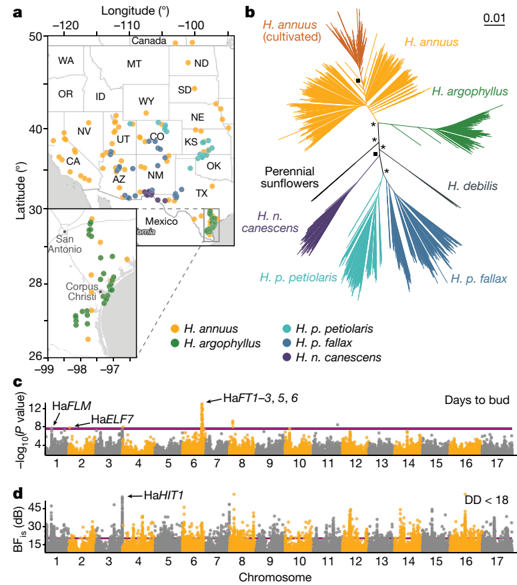
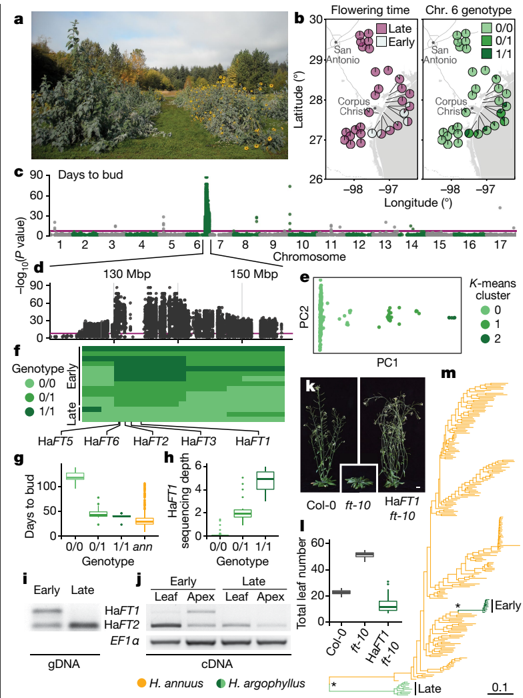
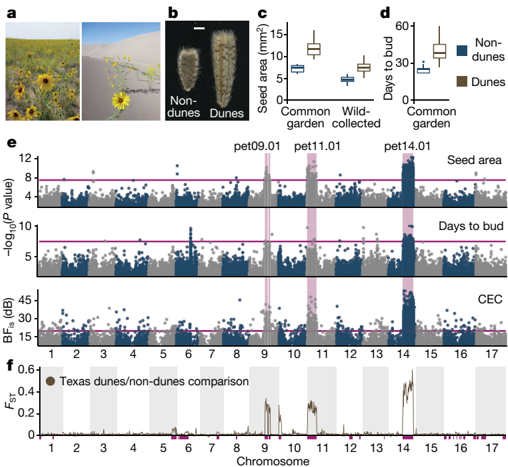
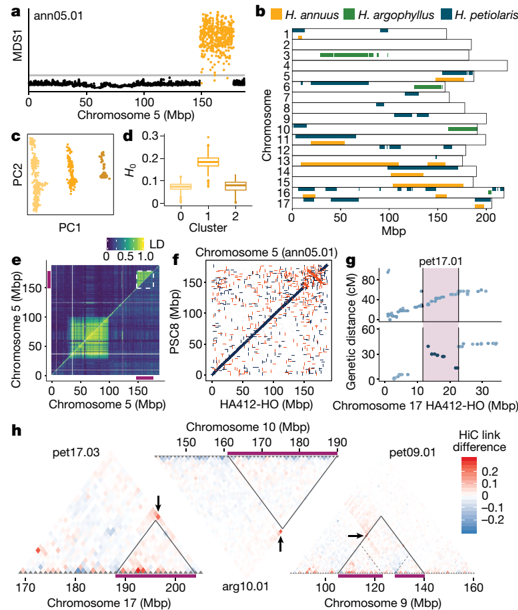
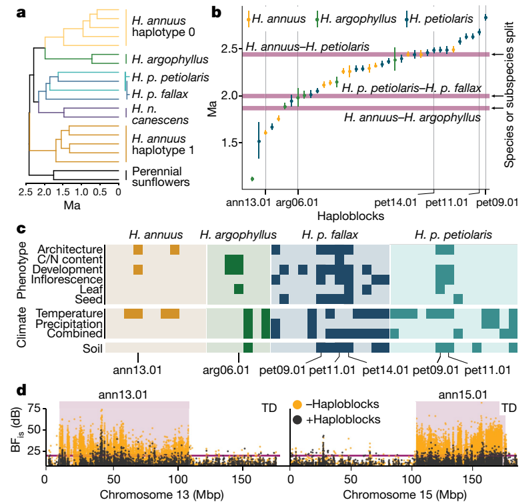
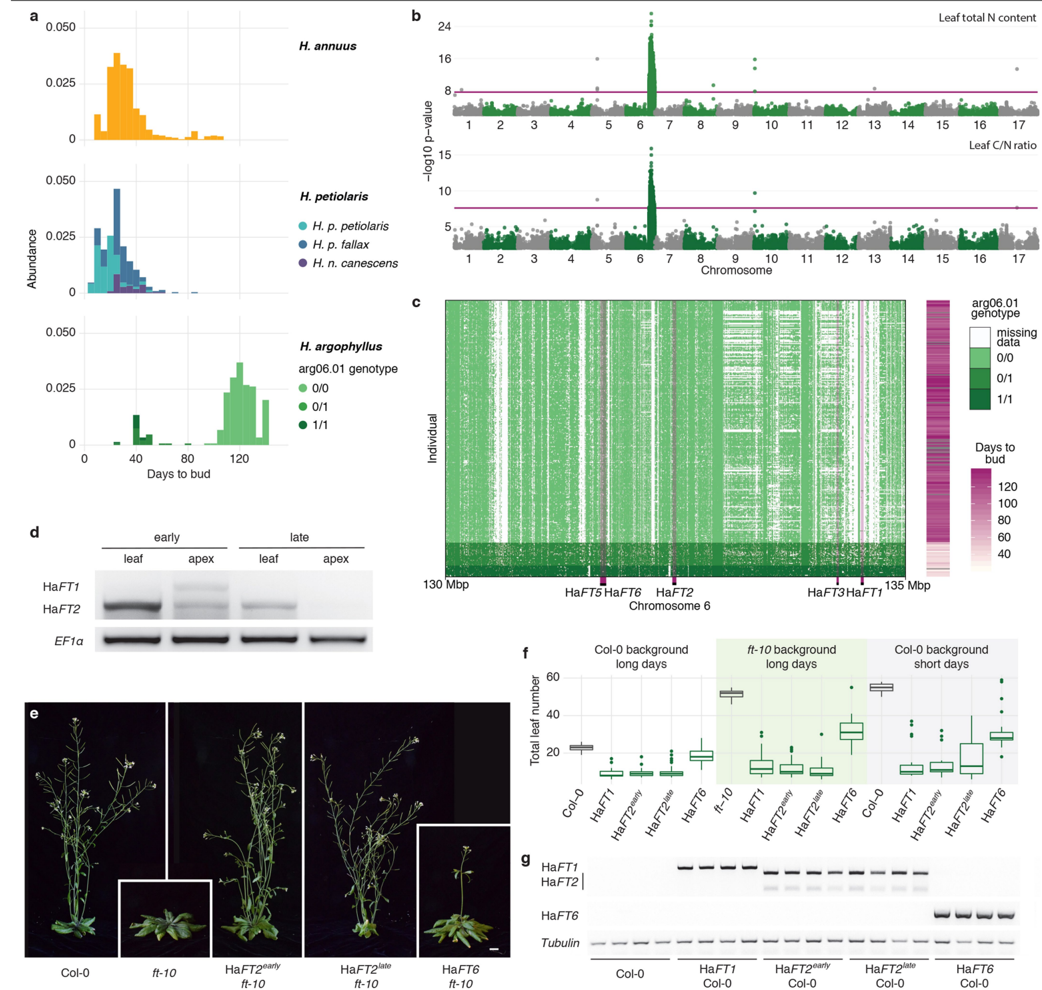
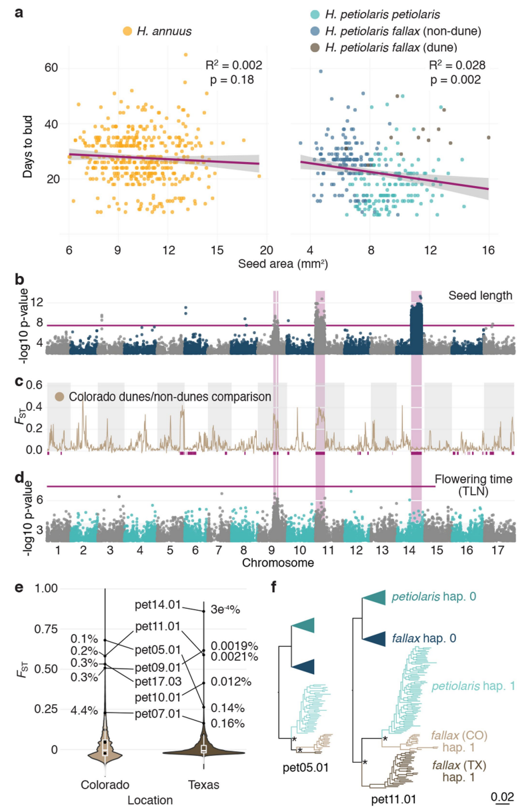
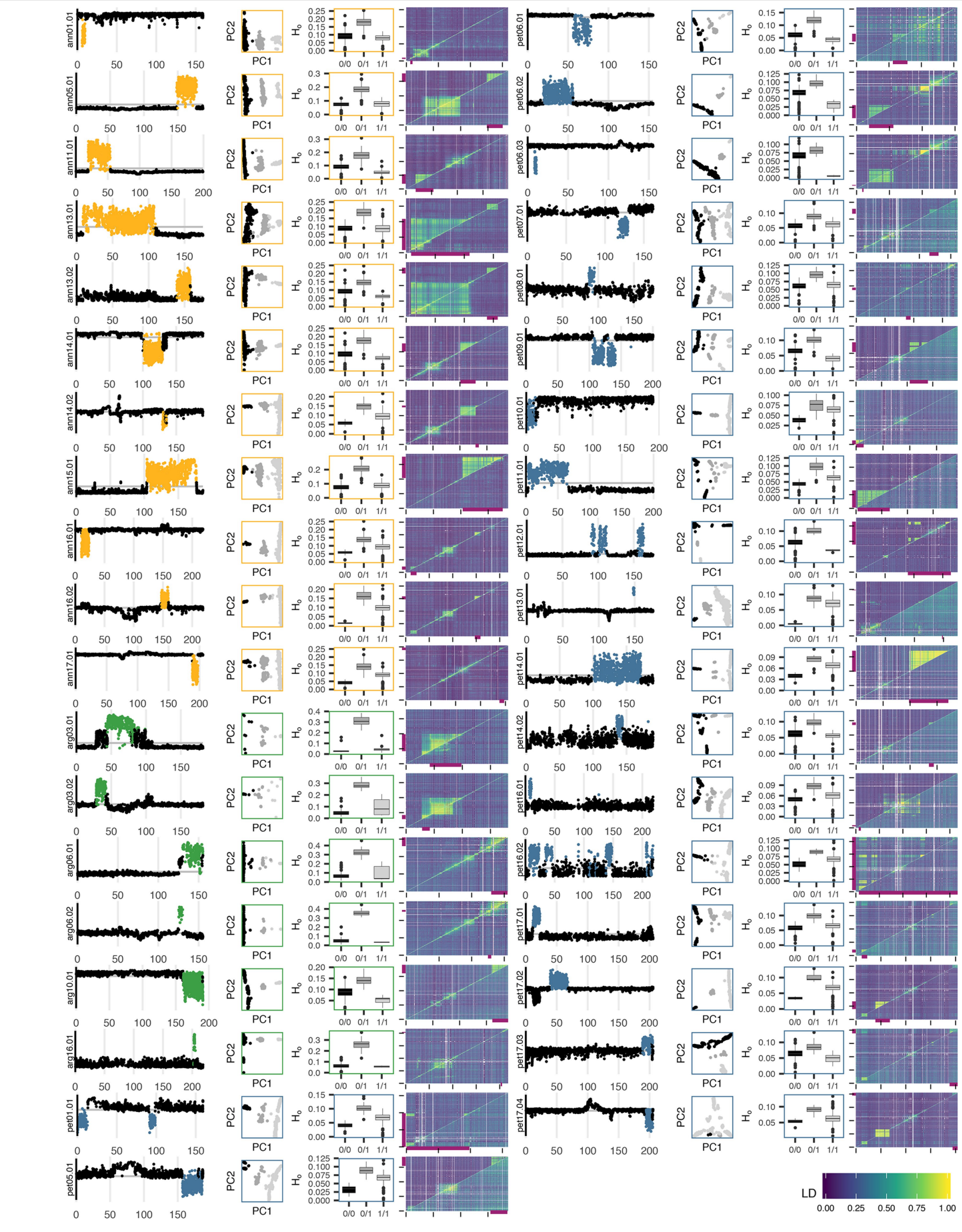
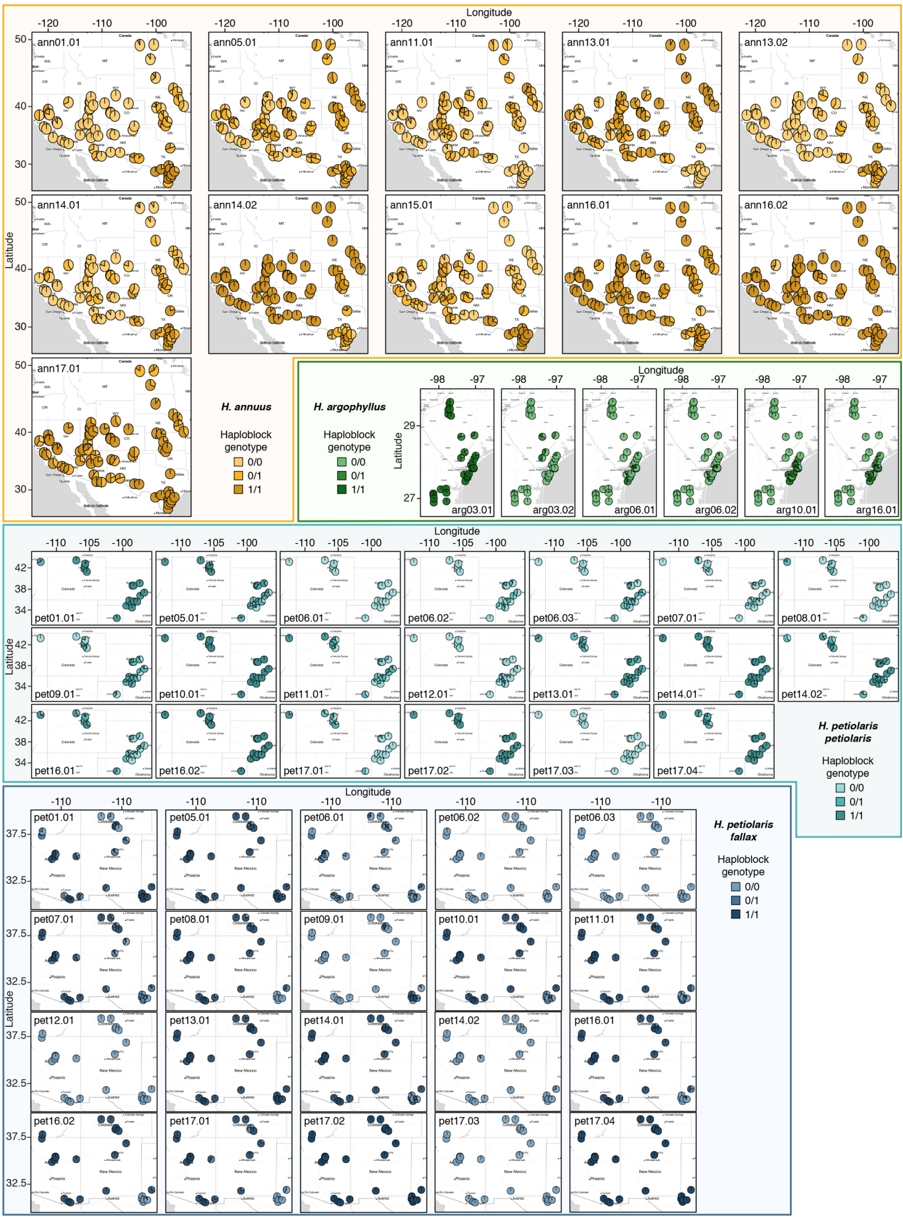
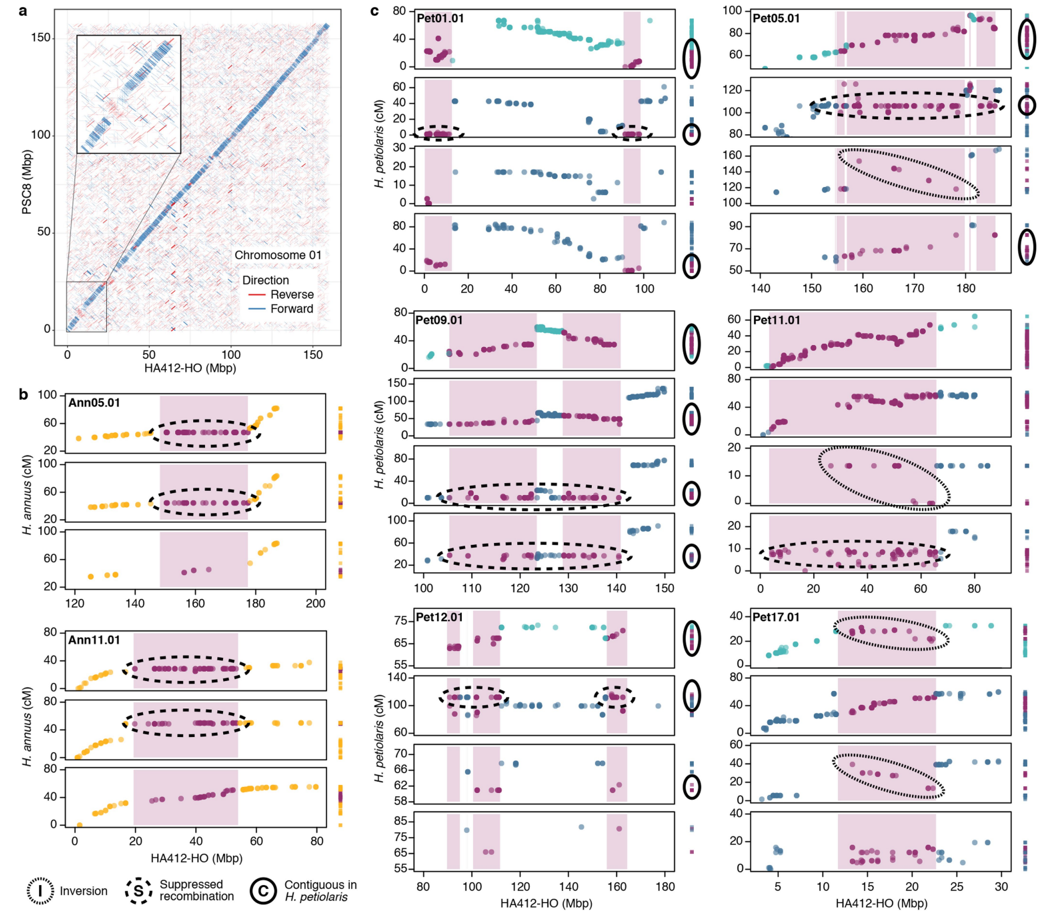
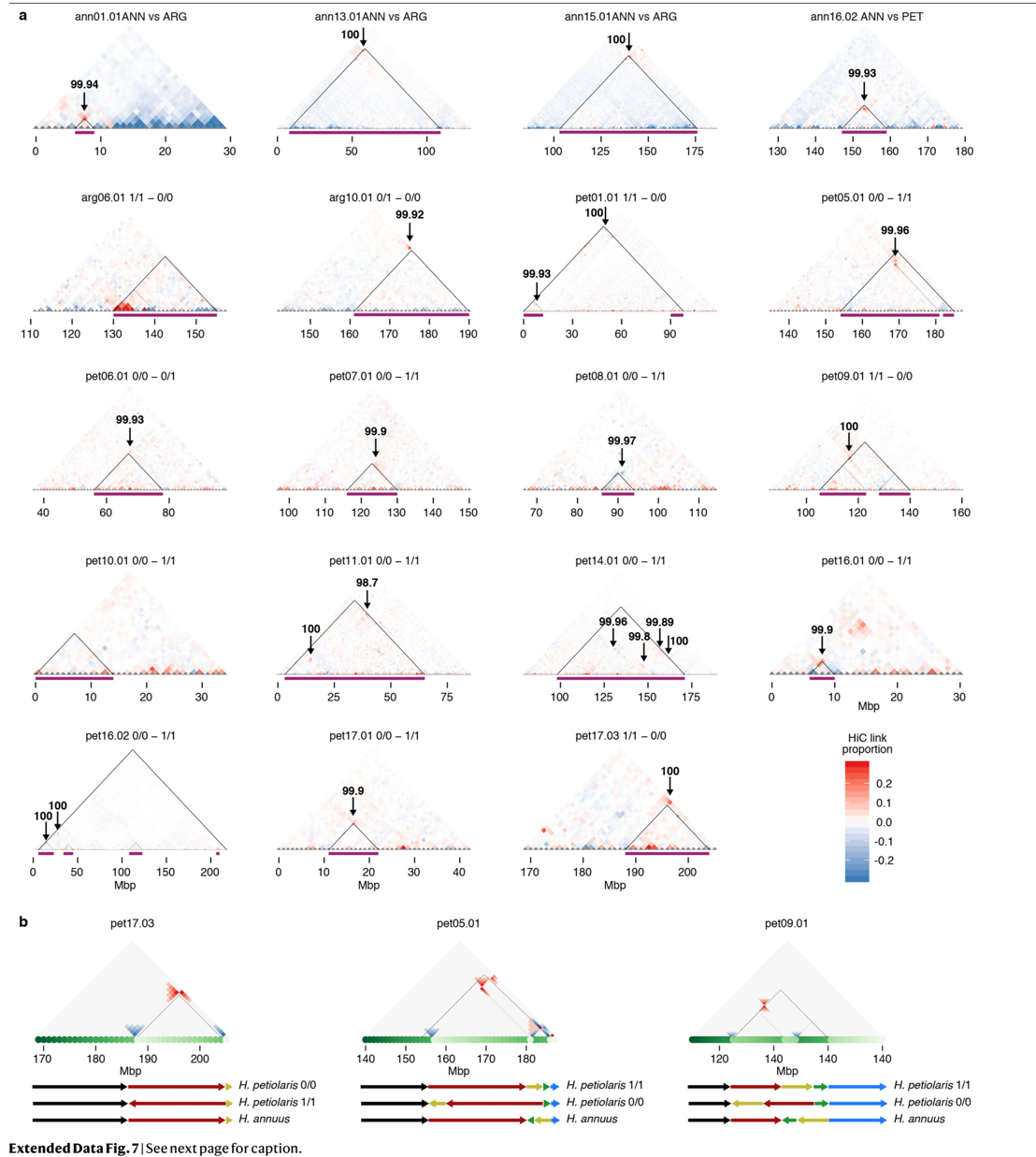
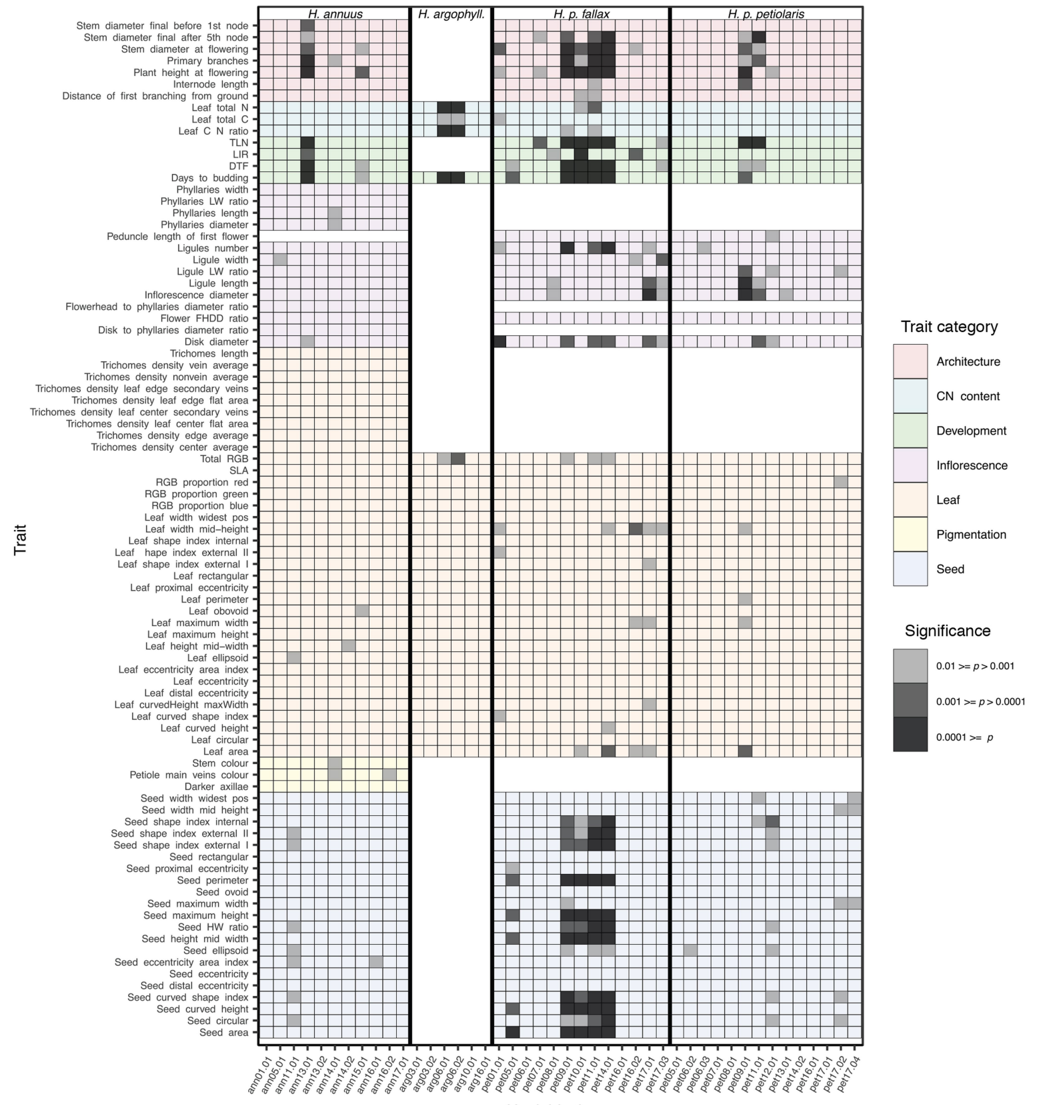
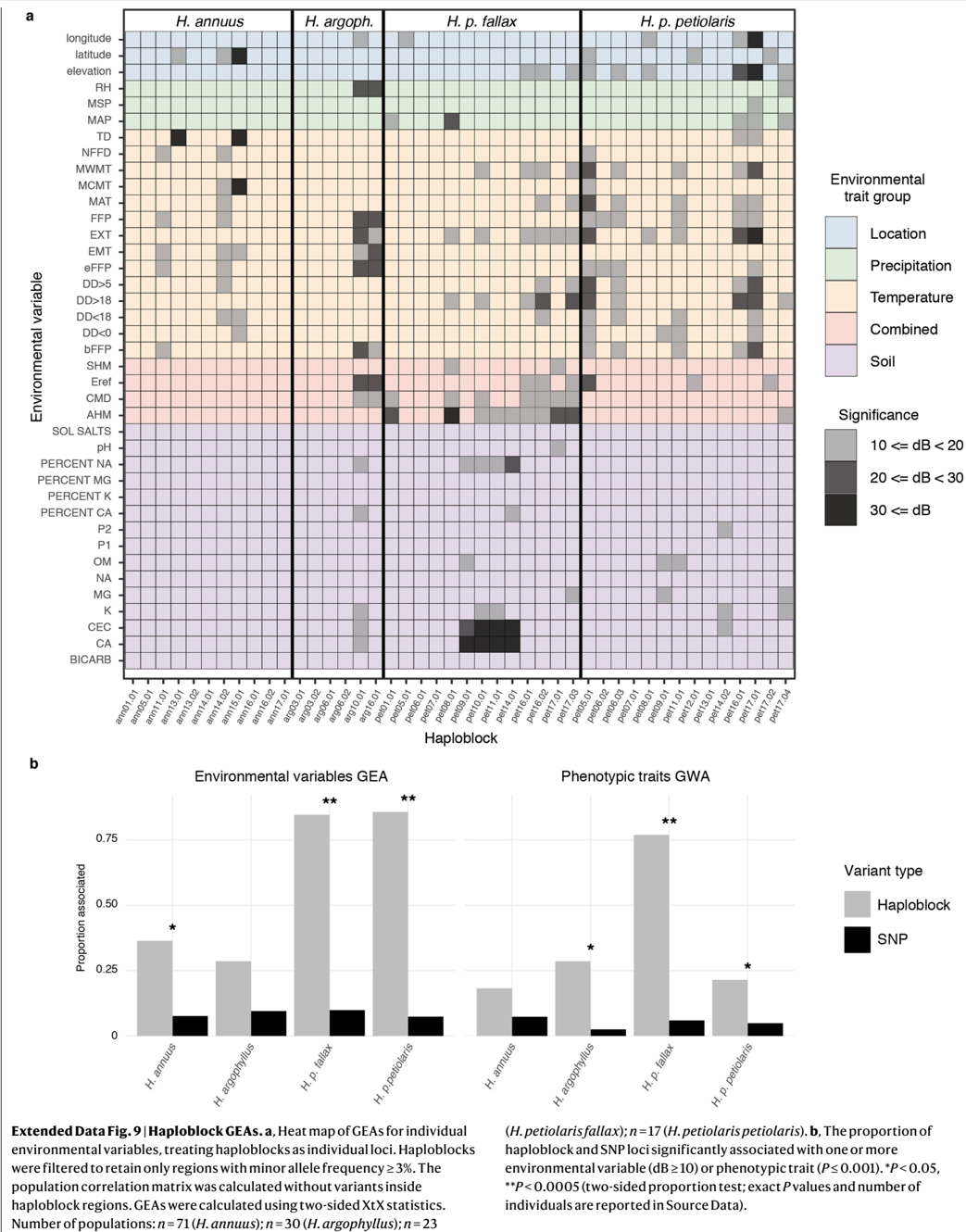
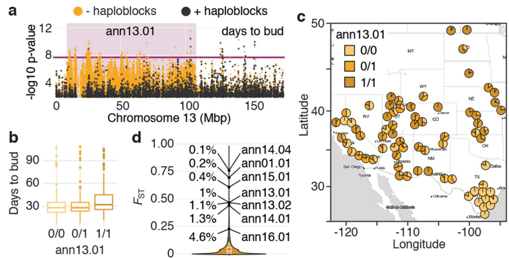
Species often include multiple ecotypes that are adapted to different environments1. However, it is unclear how ecotypes arise and how their distinctive combinations of adaptive alleles are maintained despite hybridization with non-adapted populations2–4. Here, by resequencing 1,506 wild sunflowers from 3 species (Helianthus annuus, Helianthus petiolaris and Helianthus argophyllus), we identify 37 large (1–100 Mbp in size), non-recombining haplotype blocks that are associated with numerous ecologically relevant traits, as well as soil and climate characteristics. Limited recombination in these haplotype blocks keeps adaptive alleles together, and these regions differentiate sunflower ecotypes. For example, haplotype blocks control a 77-day difference in flowering between ecotypes of the silverleaf sunflower H. argophyllus (probably through deletion of a homologue of FLOWERING LOCUS T (FT)), and are associated with seed size, flowering time and soil fertility in dune-adapted sunflowers. These haplotypes are highly divergent, frequently associated with structural variants and often appear to represent introgressions from other—possibly now-extinct—congeners. These results highlight a pervasive role of structural variation in ecotypic adaptation. Resequencing analyses of three species of wild sunflower identify large non-recombining haplotype blocks that correlate with ecologically relevant traits, soil and climate characteristics, and that differentiate species ecotypes.
Overview
The claims and statistics of this paper haven’t been checked yet.
Free: it reads the open-access text and checks the first 5 claims that cite a source we can check. Create a free account to check every claim.
Integrity signals
Registry
Cites
Statistics
Figures
Verification
Claims the paper makes
The claims and statistics of this paper haven’t been checked yet.
Free: it reads the open-access text and checks the first 5 claims that cite a source we can check. Create a free account to check every claim.
Claims other papers make about this one
Each is checked against this paper’s own text: does it say what the citing paper says it does?
The source backs part of the claim, not all of it — or backs it for a different population, condition or comparison.
In the citing paper
“An apparent example of the latter comes from sunflower, where hemizygosity or complete loss of a homolog of FLOWERING LOCUS T underlies a shift in flowering time between sympatric ecotypes of the silverleaf sunflower (Todesco et al., 2020).”
From Genomics of plant speciation (2023) · cites this paper as Todesco et al., 2020
Experimental — accuracy not yet measuredThe source backs part of the claim, not all of it — or backs it for a different population, condition or comparison.
In the citing paper
“As well, introgression is reduced for genes or genomic regions underlying RI (Barb et al., 2014; Kenney and Sweigart, 2016; Todesco et al., 2020).”
From Genomics of plant speciation (2023) · cites this paper as Todesco et al., 2020
Experimental — accuracy not yet measuredThe source backs part of the claim, not all of it — or backs it for a different population, condition or comparison.
In the citing paper
“Other examples come from studies of adaptive introgression or homoploid hybrid speciation (see Speciation with gene flow, introgression, and hybrid speciation), in which alleles or SVs critical to RI have been identified in parental populations (Nevado et al., 2020; Todesco et al., 2020; Wang et al., 2021b).”
From Genomics of plant speciation (2023) · cites this paper as Todesco et al., 2020
Experimental — accuracy not yet measuredThe source backs part of the claim, not all of it — or backs it for a different population, condition or comparison.
In the citing paper
“Examples include the origin of dune sunflower ecotypes in the southwestern US, in which traits associated with dune adaptation and RI map to inversions, which are old and pre-date ecotype divergence (Ostevik et al., 2016; Huang and Rieseberg, 2020; Todesco et al., 2020).”
From Genomics of plant speciation (2023) · cites this paper as Todesco et al., 2020
Experimental — accuracy not yet measuredThe cited source says what the claim attributes to it.
In the citing paper
“genomic studies have shown that when adaptation and speciation have progressed, chromosomal inversions or other recombination cold spots become crucially important in settings characterized by gene flow (e.g., Todesco et al., 2020)”
From Genomics of plant speciation (2023) · cites this paper as Todesco et al., 2020
1 more claim about this paper
Create a free account to see every claim other papers make about this one.
Self-check
Percentages, sums and reported differences re-computed from the paper’s own numbers.
The self-check needs the paper’s full text.
Citations
Cites
Fiji: an open-source platform for biological-image analysis
Schindelin, J., Arganda-Carreras, I., Frise, E., Kaynig, V., Longair, M., Pietzsch, T., Preibisch, S., Rueden, C., Saalfeld, S., Schmid, B., et al. (2012) · Nature Methods · doi:10.1038/nmeth.2019 · Cited by 66,890
Trimmomatic: a flexible trimmer for Illumina sequence data
Bolger, A. M., Lohse, M., & Usadel, B. (2014) · Bioinformatics · doi:10.1093/bioinformatics/btu170 · Cited by 65,548
NIH Image to ImageJ: 25 years of image analysis
Schneider, C. A., Rasband, W. S., & Eliceiri, K. W. (2012) · Nature Methods · doi:10.1038/nmeth.2089 · Cited by 64,638
The Sequence Alignment/Map format and SAMtools
Li, H., Handsaker, B., Wysoker, A., Fennell, T., Ruan, J., Homer, N., Marth, G., Abecasis, G., Durbin, R., & 1000 Genome Project Data Processing Subgroup (2009) · Bioinformatics · doi:10.1093/bioinformatics/btp352 · Cited by 62,041
IQ-TREE: A Fast and Effective Stochastic Algorithm for Estimating Maximum-Likelihood Phylogenies
Nguyen, L.-T., Schmidt, H. A., von Haeseler, A., & Minh, B. Q. (2015) · Molecular Biology and Evolution · doi:10.1093/molbev/msu300 · Cited by 26,046
ModelFinder: fast model selection for accurate phylogenetic estimates
Kalyaanamoorthy, S., Minh, B. Q., Wong, T. K. F., von Haeseler, A., & Jermiin, L. S. (2017) · Nature Methods · doi:10.1038/nmeth.4285 · Cited by 18,449
The variant call format and VCFtools
Danecek, P., Auton, A., Abecasis, G., Albers, C. A., Banks, E., DePristo, M. A., Handsaker, R. E., Lunter, G., Marth, G. T., Sherry, S. T., et al. (2011) · Bioinformatics · doi:10.1093/bioinformatics/btr330 · Cited by 16,200
Algorithm AS 136: A K-Means Clustering Algorithm
Hartigan, J. A., & Wong, M. A. (1979) · Applied Statistics · doi:10.2307/2346830 · Cited by 14,523
Heinz, S., Benner, C., Spann, N., Bertolino, E., Lin, Y. C., Laslo, P., Cheng, J. X., Murre, C., Singh, H., & Glass, C. K. (2010) · Molecular Cell · doi:10.1016/j.molcel.2010.05.004 · Cited by 13,382
Rapid isolation of high molecular weight plant DNA
Murray, M. G., & Thompson, W. F. (1980) · Nucleic Acids Research · doi:10.1093/nar/8.19.4321 · Cited by 12,098
Research works printed but not linked: 1
- 43. Heiser, C. B. Three new annual sunflowers (Helianthus) from the southwestern United States. Rhodora 60, 272-283 (1958).
Cited by
A roadmap for understanding the evolutionary significance of structural genomic variation
Mérot, C., Oomen, R. A., Tigano, A., & Wellenreuther, M. (2020) · Trends in Ecology & Evolution · doi:10.1016/j.tree.2020.03.002 · Cited by 357
“For balanced SVs (Figure 1), analyses can either focus on SNPs genotyped within the rearranged region [5], or consider the SV as an individual locus, with the latter being a more powerful approach to finding associations with phenotypic and environmental variation [46].”
BackgroundInfluentialThe genomic consequences of hybridization
Moran, B. M., Payne, C., Langdon, Q., Powell, D. L., Brandvain, Y., & Schumer, M. (2021) · eLife · doi:10.7554/elife.69016 · Cited by 311
Genomic mechanisms of climate adaptation in polyploid bioenergy switchgrass
Lovell, J. T., MacQueen, A. H., Mamidi, S., Bonnette, J., Jenkins, J., Napier, J. D., Sreedasyam, A., Healey, A., Session, A., Shu, S., et al. (2021) · Nature · doi:10.1038/s41586-020-03127-1 · Cited by 245
The evolutionary genomics of species’ responses to climate change
Aguirre-Liguori, J. A., Ramírez-Barahona, S., & Gaut, B. S. (2021) · Nature Ecology & Evolution · doi:10.1038/s41559-021-01526-9 · Cited by 201
Conservation and the Genomics of Populations
Allendorf, F. W., Funk, W. C., Aitken, S. N., Byrne, M., Luikart, G., & Antunes, A. (2022) · doi:10.1093/oso/9780198856566.001.0001 · Cited by 207
The genomic basis of geographic differentiation and fiber improvement in cultivated cotton
He, S., Sun, G., Geng, X., Gong, W., Dai, P., Jia, Y., Shi, W., Pan, Z., Wang, J., Wang, L., et al. (2021) · Nature Genetics · doi:10.1038/s41588-021-00844-9 · Cited by 181
Multiple chromosomal inversions contribute to adaptive divergence of a dune sunflower ecotype
Huang, K., Andrew, R. L., Owens, G. L., Ostevik, K. L., & Rieseberg, L. H. (2020) · Molecular Ecology · doi:10.1111/mec.15428 · Cited by 168
Self-citationCurrent status of structural variation studies in plants
Yuan, Y., Bayer, P. E., Batley, J., & Edwards, D. (2021) · Plant Biotechnology Journal · doi:10.1111/pbi.13646 · Cited by 163
Frequency, Origins, and Evolutionary Role of Chromosomal Inversions in Plants
Huang, K., & Rieseberg, L. H. (2020) · Frontiers in Plant Science · doi:10.3389/fpls.2020.00296 · Cited by 150
“petiolaris), larger seed size and tolerance to low nutrient soils were found to map to the same inversions (Huang et al., 2019; Todesco et al., 2019).”
BackgroundInfluentialSelf-citationBalancing selection maintains hyper-divergent haplotypes in Caenorhabditis elegans
Lee, D., Zdraljevic, S., Stevens, L., Wang, Y., Tanny, R. E., Crombie, T. A., Cook, D. E., Webster, A. K., Chirakar, R., Baugh, L. R., et al. (2021) · Nature Ecology & Evolution · doi:10.1038/s41559-021-01435-x · Cited by 154
“Introgression was recently shown to explain the existence of large, divergent haplotypes that underlie ecotypic adaptation in sunflowers 65 and characterized in other species 66 .”
Chromosomal inversion polymorphisms shape the genomic landscape of deer mice
Harringmeyer, O. S., & Hoekstra, H. E. (2022) · Nature Ecology & Evolution · doi:10.1038/s41559-022-01890-0 · Cited by 156
Harnessing Crop Wild Diversity for Climate Change Adaptation
Cortés, A. J., & López-Hernández, F. (2021) · Genes · doi:10.3390/genes12050783 · Cited by 165
Neutral and adaptive genetic diversity in plants: An overview
Chung, M. Y., Merilä, J., Li, J., Mao, K., López‐Pujol, J., Tsumura, Y., & Chung, M. G. (2023) · Frontiers in Ecology and Evolution · doi:10.3389/fevo.2023.1116814 · Cited by 163
Origins and evolution of extreme life span in Pacific Ocean rockfishes
Kolora, S. R. R., Owens, G. L., Vazquez, J. M., Stubbs, A., Chatla, K., Jainese, C., Seeto, K., McCrea, M., Sandel, M. W., Vianna, J. A., et al. (2021) · Science · doi:10.1126/science.abg5332 · Cited by 133
Self-citationGenotype–environment associations to reveal the molecular basis of environmental adaptation
Lasky, J. R., Josephs, E. B., & Morris, G. P. (2022) · The Plant Cell · doi:10.1093/plcell/koac267 · Cited by 150
Threespine Stickleback: A Model System For Evolutionary Genomics
Reid, K., Bell, M. A., & Veeramah, K. R. (2021) · Annual Review of Genomics and Human Genetics · doi:10.1146/annurev-genom-111720-081402 · Cited by 134
Hämälä, T., Wafula, E. K., Guiltinan, M. J., Ralph, P. E., dePamphilis, C. W., & Tiffin, P. (2021) · Proceedings of the National Academy of Sciences · doi:10.1073/pnas.2102914118 · Cited by 126
“Consistent with this expectation, SVs— particularly inversions—have been associated with locally beneficial phenotypes in multiple species, including Mimulus guttatus (24), Zea mays (25), Boechera stricta (26), and Helianthus annuus (27).”
BackgroundPlant genome resequencing and population genomics: Current status and future prospects
Song, B., Ning, W., Wei, D., Jiang, M., Zhu, K., Wang, X., Edwards, D., Odeny, D. A., & Cheng, S. (2023) · Molecular Plant · doi:10.1016/j.molp.2023.07.009 · Cited by 124
Multiple domestications of Asian rice
Jing, C., Zhang, F., Wang, X., Wang, M., Zhou, L., Cai, Z., Han, J., Geng, M., Yu, W., Jiao, Z., et al. (2023) · Nature Plants · doi:10.1038/s41477-023-01476-z · Cited by 122
Four chromosome scale genomes and a pan-genome annotation to accelerate pecan tree breeding
Lovell, J. T., Bentley, N., Bhattarai, G., Jenkins, J. W., Sreedasyam, A., Alarcón, Y., Bock, C. H., Boston, L. B., Carlson, J. W., Cervantes, K., et al. (2021) · Nature Communications · doi:10.1038/s41467-021-24328-w · Cited by 114
Jay, P., Tezenas, E., Véber, A., & Giraud, T. (2022) · PLoS Biology · doi:10.1371/journal.pbio.3001698 · Cited by 105
“Recent studies suggested that inversions may not be too rare and that inversion breakpoints may be widely distributed throughout the genome [51,69–71].”
RetractedWang, Z., Wang, W., Xie, X., Wang, Y., Yang, Z., Peng, H., Xin, M., Yao, Y., Hu, Z., Liu, J., et al. (2022) · Nature Communications · doi:10.1038/s41467-022-31581-0 · Cited by 111
Jin, S., Han, Z., Hu, Y., Si, Z., Dai, F., He, L., Cheng, Y., Li, Y., Zhao, T., Fang, L., et al. (2023) · Molecular Plant · doi:10.1016/j.molp.2023.02.004 · Cited by 98
Chromosome evolution and the genetic basis of agronomically important traits in greater yam
Bredeson, J. V., Lyons, J. B., Oniyinde, I. O., Okereke, N. R., Kolade, O. A., Nnabue, I., Nwadili, C. O., Hřibová, E., Parker, M. T., Nwogha, J. S., et al. (2022) · Nature Communications · doi:10.1038/s41467-022-29114-w · Cited by 108
Rapid adaptive radiation of Darwin’s finches depends on ancestral genetic modules
Rubin, C., Enbody, E. D., Dobreva, M. P., Abzhanov, A., Davis, B. W., Lamichhaney, S., Pettersson, M. E., Sendell‐Price, A. T., Sprehn, C. G., Valle, C. A., et al. (2022) · Science Advances · doi:10.1126/sciadv.abm5982 · Cited by 100
Mérot, C., Berdan, E. L., Cayuela, H., Djambazian, H. H. V., Ferchaud, A., Laporte, M., Normandeau, É., Ragoussis, J., Wellenreuther, M., & Bernatchez, L. (2021) · Molecular Biology and Evolution · doi:10.1093/molbev/msab143 · Cited by 96
Zhu, Y., Klasfeld, S., & Wagner, D. (2020) · Journal of Experimental Botany · doi:10.1093/jxb/eraa598 · Cited by 94
The changing face of genome assemblies: Guidance on achieving high‐quality reference genomes
Whibley, A. C., Kelley, J. L., & Narum, S. R. (2021) · Molecular Ecology Resources · doi:10.1111/1755-0998.13312 · Cited by 102
“…practices and quality control to maximise the utility of the assemblies, the community should also consider how best to curate these resources after release and explore effective ways to suggest amendments or log database errors, which can otherwise easily be propagated (Tørresen et al., 2019).”
BackgroundPangenome graphs and their applications in biodiversity genomics
Secomandi, S., Gallo, G. R., Rossi, R., Fernandes, C., Jarvis, E. D., Bonisoli‐Alquati, A., Gianfranceschi, L., & Formenti, G. (2025) · Nature Genetics · doi:10.1038/s41588-024-02029-6 · Cited by 99
“It should maximize genomic and biogeographic diversity structural variants (SVs) 30,31 , large (>50-bp) genomic rearrangements that underlie phenotype and fitness variation 30,31 and disproportionately contribute to local adaptation 32 and even speciation 33 .”
The next era of crop domestication starts now
Krug, A. S., Drummond, E. B. M., Tassel, D. L. V., & Warschefsky, E. J. (2023) · Proceedings of the National Academy of Sciences · doi:10.1073/pnas.2205769120 · Cited by 96
Self-citationThree problems in the genetics of speciation by selection
Schluter, D., & Rieseberg, L. H. (2022) · Proceedings of the National Academy of Sciences · doi:10.1073/pnas.2122153119 · Cited by 91
“ecotypes of the prairie sunflower (Helianthus petiolaris) (71).”
BackgroundInfluentialSelf-citationChristie, K., Fraser, L., & Lowry, D. B. (2022) · Evolution · doi:10.1111/evo.14565 · Cited by 90
“…that associated with hybrid viability and hybrid sterility, has been dubbed EVOLUTION OCTOBER 2022 2237 Darwin’s Corollary to Haldane’s Rule (Turelli and Moyle 2007; Brandvain et al. 2014b), referring to the idea that one direction of a cross (as opposed to the heterogametic sex as in…”
BackgroundInfluentialMolecular mechanisms of adaptive evolution in wild animals and plants
Hu, Y., Wang, X., Xu, Y., Yang, H., Tong, Z., Tian, R., Xu, S., Yu, L., Guo, Y., Shi, P., et al. (2023) · Science China Life Sciences · doi:10.1007/s11427-022-2233-x · Cited by 93
“SV may be a key driver of adaptive traits based on long-read sequencing techniques (e.g., Funk et al., 2021; Todesco et al., 2020).”
BackgroundBock, D. G., Cai, Z., Elphinstone, C., González-Segovia, E., Hirabayashi, K., Huang, K., Keais, G. L., Kim, A., Owens, G. L., & Rieseberg, L. H. (2023) · Plant Communications · doi:10.1016/j.xplc.2023.100599 · Cited by 84
“Another example comes from sunflower, in which introgression of a functional copy of a key regulator of flowering resulted in a 77-day advance in flowering time in silverleaf sunflower (Todesco et al., 2020).”
InfluentialSelf-citationLarge haploblocks underlie rapid adaptation in the invasive weed Ambrosia artemisiifolia
Battlay, P., Wilson, J., Bieker, V. C., Lee, C., Prapas, D., Petersen, B., Craig, S., van Boheemen, L. A., Scalone, R., Silva, N. P. D., et al. (2023) · Nature Communications · doi:10.1038/s41467-023-37303-4 · Cited by 91
“5Mbp windows) across each scaffold bearing a haploblock for all modern samples and for modern samples homozygous for the more common haploblock genotype using scripts from Todesco et al.(26).”
MethodSelf-citationHow Important Are Structural Variants for Speciation?
Zhang, L., Reifová, R., Halenková, Z., & Gompert, Z. (2021) · Genes · doi:10.3390/genes12071084 · Cited by 90
“Recent ev dence shows that large-scale st uctural variants, especially inversio s, ar as o iated with adaptiv tr it variation: including phenology in Rhagoletis fruit flies [3], mimetic wing patterns in Heliconius butterflies [28,29], cryptic coloration in Timema stick insects [30], the repeated evolution of distinct…”
BackgroundDomesticated cannabinoid synthases amid a wild mosaic cannabis pangenome
Lynch, R. C., Padgitt‐Cobb, L. K., Garfinkel, A. R., Knaus, B. J., Hartwick, N. T., Allsing, N. A., Aylward, A., Bentz, P. C., Carey, S. B., Mamerto, A., et al. (2025) · Nature · doi:10.1038/s41586-025-09065-0 · Cited by 86
“However, these were not obvious signals of complete differentiation or recombination suppression as has been shown in other species 48 .”
Complex evolution of novel red floral color inPetunia
Berardi, A. E., Esfeld, K., Jäggi, L., Mandel, T., Cannarozzi, G. M., & Kuhlemeier, C. J. (2021) · The Plant Cell · doi:10.1093/plcell/koab114 · Cited by 85
“At the same time, evidence for adaptation proceeding via few loci of large effect also abounds (Doebley, 2004; Hoekstra et al., 2006; Nadeau et al., 2016; Todesco et al., 2020).”
BackgroundThe Role of Hybridization in Species Formation and Persistence
Peñalba, J. V., Runemark, A., Meier, J. I., Singh, P., Wogan, G. O. U., Sánchez‐Guillén, R. A., Mallet, J., Rometsch, S. J., Menon, M., D, O. S. C., et al. (2024) · Cold Spring Harbor Perspectives in Biology · doi:10.1101/cshperspect.a041445 · Cited by 84
Crop adaptation to climate change: An evolutionary perspective
Gao, L., Kantar, M. B., Moxley, D. R., Ortíz-Barrientos, D., & Rieseberg, L. H. (2023) · Molecular Plant · doi:10.1016/j.molp.2023.07.011 · Cited by 87
Self-citationWidespread Recombination Suppression Facilitates Plant Sex Chromosome Evolution
Rifkin, J. L., Beaudry, F. E. G., Humphries, Z., Choudhury, B. I., Barrett, S. C. H., & Wright, S. (2020) · Molecular Biology and Evolution · doi:10.1093/molbev/msaa271 · Cited by 82
The genetic architecture of repeated local adaptation to climate in distantly related plants
Whiting, J. R., Booker, T. R., Rougeux, C., Lind, B. M., Singh, P., Lu, M., Huang, K., Whitlock, M. C., Aitken, S. N., Andrew, R. L., et al. (2024) · Nature Ecology & Evolution · doi:10.1038/s41559-024-02514-5 · Cited by 82
Self-citationEvolutionary genomics of oceanic island radiations
Cerca, J., Cotoras, D. D., Bieker, V. C., De‐Kayne, R., Vargas, P., Fernández‐Mazuecos, M., López‐Delgado, J., White, O. W., Stervander, M., Geneva, A. J., et al. (2023) · Trends in Ecology & Evolution · doi:10.1016/j.tree.2023.02.003 · Cited by 76
Self-citationWold, J., Koepfli, K., Galla, S. J., Eccles, D., Hogg, C. J., Lec, M. F. L., Guhlin, J. G., Santure, A. W., & Steeves, T. E. (2021) · Molecular Ecology · doi:10.1111/mec.16141 · Cited by 81
Cortés, A. J., López-Hernández, F., & Blair, M. W. (2022) · Frontiers in Genetics · doi:10.3389/fgene.2022.910386 · Cited by 77
Gene regulatory effects of a large chromosomal inversion in highland maize
Crow, T. M., Ta, J., Nojoomi, S., Aguilar-Rangel, M. R., Torres‐Rodríguez, J. V., Gates, D. J., Rellán‐Álvarez, R., Sawers, R. J. H., & Runcie, D. E. (2020) · PLoS Genetics · doi:10.1371/journal.pgen.1009213 · Cited by 73
Introgression among North American wild grapes (Vitis) fuels biotic and abiotic adaptation
Morales‐Cruz, A., Aguirre-Liguori, J. A., Zhou, Y., Minio, A., Riaz, S., Walker, A. M., Cantù, D., & Gaut, B. S. (2021) · Genome biology · doi:10.1186/s13059-021-02467-z · Cited by 72
Genetic basis and dual adaptive role of floral pigmentation in sunflowers
Todesco, M., Bercovich, N., Kim, A. S., Imerovski, I., Owens, G. L., Ruiz, Ó. D., Holalu, S. V., Madilao, L. L., Jahani, M., Légaré, J., et al. (2021) · eLife · doi:10.7554/elife.72072 · Cited by 70
“Raw short read sequencing data and SNP datasets have been previously described in (Todesco et al., 2020).”
BackgroundMethodInfluentialSelf-citationThe genomics of linkage drag in inbred lines of sunflower
Huang, K., Jahani, M., Gouzy, J., Legendre, A., Carrère, S., Lázaro-Guevara, J. M., González‐Segovia, E., Todesco, M., Mayjonade, B., Rodde, N., et al. (2023) · Proceedings of the National Academy of Sciences · doi:10.1073/pnas.2205783119 · Cited by 71
“We generated a dataset of 1,348,829 SNPs using published sequence data for 287 individuals in the SAM population (40, 45), as well as the aforementioned whole-genome sequences from landraces and five possible wild donor species (SI Appendix, Table S7), and determined the locations and source of introgressions in each…”
BackgroundMethodResultInfluentialSelf-citationHybridization: a ‘double-edged sword’ for Neotropical plant diversity
Schley, R., Twyford, A. D., & Pennington, R. T. (2021) · Botanical Journal of the Linnean Society · doi:10.1093/botlinnean/boab070 · Cited by 72
Implications of Large-Effect Loci for Conservation: A Review and Case Study with Pacific Salmon
Waples, R. S., Ford, M. J., Nichols, K. M., Kardos, M. D., Myers, J., Thompson, T. Q., Anderson, E. C., Koch, I. J., McKinney, G. J., Miller, M. R., et al. (2021) · Journal of Heredity · doi:10.1093/jhered/esab069 · Cited by 73
Mérot, C., Stenløkk, K., Venney, C. J., Laporte, M., Moser, M., Normandeau, É., Árnyasi, M., Kent, M., Rougeux, C., Flynn, J. M., et al. (2022) · Molecular Ecology · doi:10.1111/mec.16468 · Cited by 67
“First, the differentiation observed in SNPs and SVs is widespread along the genome and does not display the typical spatial clustering of differentiated regions observed between species pairs such as Littorina saxatilis (Morales et al., 2019) or Helianthus sp. (Todesco et al., 2020).”
BackgroundStructural Variants and Speciation: Multiple Processes at Play
Berdan, E. L., Aubier, T. G., Cozzolino, S., Faria, R., Feder, J. L., Giménez, M. D., Joron, M., Searle, J. B., & Mérot, C. (2023) · Cold Spring Harbor Perspectives in Biology · doi:10.1101/cshperspect.a041446 · Cited by 72
Oomen, R. A., Kuparinen, A. K., & Hutchings, J. A. (2020) · Journal of Heredity · doi:10.1093/jhered/esaa020 · Cited by 64
“Although this approach is likely too simplistic for some purposes, it has been shown to be more powerful for detecting genotype–environment associations with linked haploblocks compared to characterizing genotypes based on SNPs within the blocks (Todesco et al. 2020).”
MethodGenomic architecture of adaptive radiation and hybridization in Alpine whitefish
De‐Kayne, R., Selz, O. M., Marques, D. A., Frei, D., D, O. S. C., & Feulner, P. G. D. (2022) · Nature Communications · doi:10.1038/s41467-022-32181-8 · Cited by 65
Debaeke, P., Casadebaig, P., & Langlade, N. (2021) · OCL · doi:10.1051/ocl/2021016 · Cited by 62
He, M., He, Y., Zhang, K., Lu, X., Zhang, X., Gao, B., Fan, Y., Zhao, H., Jha, R., Huda, M. N., et al. (2022) · New Phytologist · doi:10.1111/nph.18306 · Cited by 63
How many genetic changes create new species?
Nosil, P., Feder, J. L., & Gompert, Z. (2021) · Science · doi:10.1126/science.abf6671 · Cited by 62
Extreme Y chromosome polymorphism corresponds to five male reproductive morphs of a freshwater fish
Sandkam, B. A., Almeida, P., Darolti, I., Furman, B. L. S., van der Bijl, W., Morris, J., Bourne, G. R., Breden, F. J., & Mank, J. E. (2021) · Nature Ecology & Evolution · doi:10.1038/s41559-021-01452-w · Cited by 60
Garcia, J. B. V., Mesa, J., Leon, J. G., Madriñán, S., & Cortés, A. J. (2020) · Frontiers in Ecology and Evolution · doi:10.3389/fevo.2020.565708 · Cited by 59
“, 2013) – local-scale adaptive variation (Huang et al., 2020; Todesco et al., 2020).”
Replicated Evolution in Plants
James, M. E., Brodribb, T. J., Wright, I. J., Rieseberg, L. H., & Ortíz-Barrientos, D. (2023) · Annual Review of Plant Biology · doi:10.1146/annurev-arplant-071221-090809 · Cited by 61
Self-citationBeyond the Standard GWAS—A Guide for Plant Biologists
Clauw, P., Ellis, T. J., Liu, H., & Sasaki, E. (2024) · Plant and Cell Physiology · doi:10.1093/pcp/pcae079 · Cited by 64
“Hidden haplotype structures can also be revealed by PCA of the SNP matrix in the region (e.g. Todesco et al. 2020; Sasaki et al. 2021) or the use of machine learning (Liu et al. 2024).”
Gene banks for wild and cultivated sunflower genetic resources
Terzić, S., Boniface, M., Marek, L. F., Alvarez, D., Baumann, K., Алексеевна, Г. В., Joiţa-Păcureanu, M., Sujatha, M., Valkova, D., Velasco, L., et al. (2020) · OCL · doi:10.1051/ocl/2020004 · Cited by 62
Self-citationRepeated genetic adaptation to altitude in two tropical butterflies
Montejo‐Kovacevich, G., Meier, J. I., Bacquet, C. N., Warren, I. A., Chan, Y. F., Kučka, M., Salazar, C. A., Rueda‐M, N., Montgomery, S. H., McMillan, W. O., et al. (2022) · Nature Communications · doi:10.1038/s41467-022-32316-x · Cited by 61
The WZA : A window‐based method for characterizing genotype–environment associations
Booker, T. R., Yeaman, S., Whiting, J. R., & Whitlock, M. C. (2023) · Molecular Ecology Resources · doi:10.1111/1755-0998.13768 · Cited by 59
Self-citationAdaptive introgression: how polyploidy reshapes gene flow landscapes
Schmickl, R., & Yant, L. J. (2021) · New Phytologist · doi:10.1111/nph.17204 · Cited by 53
Li, Q., Qiao, X., Li, L., Gu, C., Yin, H., Qi, K., Xie, Z., Yang, S. L., Zhao, Q., Wang, Z., et al. (2024) · Plant Communications · doi:10.1016/j.xplc.2024.101000 · Cited by 55
“…vast amounts of rese-quencing data are available in public databases, such as the 10k-level integrated rice resequencing database (Yu et al., 2023) and the 1001 Arabidopsis (Weigel and Mott, 2009), 1506 sunflower (Todesco et al., 2020), and 2898 soybean (Liu et al., 2020) resequencing datasets.”
Self-citationAkopyan, M., Tigano, A., Jacobs, A., Wilder, A. P., Baumann, H., & Therkildsen, N. O. (2022) · Molecular Ecology · doi:10.1111/mec.16472 · Cited by 51
“…of the genetic maps, we obtained 24 linkage groups, consistent both with the haploid number of M. menidia chromosomes inferred from karyotyping (Warkentine et al., 1987) and the number of putative chromosome clusters identified in both populations with Hi- C data (Tigano, Jacobs, et al., 2021).”
Advancing designer crops for climate resilience through an integrated genomics approach
Saad, N. S. M., Neik, T. X., Thomas, W. J. W., Amas, J. C., Cantila, A. Y., Craig, R. J., Edwards, D., & Batley, J. (2022) · Current Opinion in Plant Biology · doi:10.1016/j.pbi.2022.102220 · Cited by 59
Current status of community resources and priorities for weed genomics research
Montgomery, J. S., Morran, S., MacGregor, D. R., McElroy, J. S., Neve, P., Neto, C., Vila‐Aiub, M. M., Sandoval, M. V., Menéndez, A. I., Kreiner, J. M., et al. (2024) · Genome biology · doi:10.1186/s13059-024-03274-y · Cited by 50
“GEA approaches, in particular, have been widely used on landscape-wide resequencing collections to determine the genetic basis of climate adaptation (e.g., [27, 86, 87]), but have yet to be fully exploited to diagnose the genetic basis of the various aspects of weediness [88].”
BackgroundThe Earth BioGenome project: opportunities and challenges for plant genomics and conservation
Expósito‐Alonso, M., Drost, H., Burbano, H. A., & Weigel, D. (2019) · The Plant Journal · doi:10.1111/tpj.14631 · Cited by 50
Impact of whole-genome duplications on structural variant evolution in Cochlearia
Hämälä, T., Moore, C., Cowan, L., Carlile, M., Gopaulchan, D., Brandrud, M. K., Birkeland, S., Loose, M., Kolář, F., Koch, М. A., et al. (2024) · Nature Communications · doi:10.1038/s41467-024-49679-y · Cited by 51
Mutation Load in Sunflower Inversions Is Negatively Correlated with Inversion Heterozygosity
Huang, K., Ostevik, K. L., Elphinstone, C., Todesco, M., Bercovich, N., Owens, G. L., & Rieseberg, L. H. (2022) · Molecular Biology and Evolution · doi:10.1093/molbev/msac101 · Cited by 47
“This is approximately double the number SNPs included in our previous datasets, despite application of similar fi ltering standards (Todesco et al. 2020).”
InfluentialSelf-citationChasing the mechanisms of ecologically adaptive salinity tolerance
Busoms, S., Fischer, S., & Yant, L. J. (2023) · Plant Communications · doi:10.1016/j.xplc.2023.100571 · Cited by 44
“For example, haplotype blocks associated with seed size, flowering time, and soil fertility in dune-adapted sunflower species were found to be highly divergent and associated with structural variants (Todesco et al., 2020).”
BackgroundDispersal inference from population genetic variation using a convolutional neural network
Smith, C. C. R., Tittes, S. B., Ralph, P. L., & Kern, A. D. (2023) · Genetics · doi:10.1093/genetics/iyad068 · Cited by 49
Mérot, C. (2020) · Molecular Ecology · doi:10.1111/mec.15500 · Cited by 45
“…genome and enough individuals to capture variation and LD. Previous applications of indirect detection used whole-genome sequencing or SNP array genotyping (Faria et al., 2019; Li & Ralph, 2019; Todesco et al., 2019), but these can be expensive to develop or to perform on a large number of samples.”
BackgroundMethodTapping Diversity From the Wild: From Sampling to Implementation
Hübner, S., & Kantar, M. B. (2021) · Frontiers in Plant Science · doi:10.3389/fpls.2021.626565 · Cited by 44
Waters, J. M., & McCulloch, G. A. (2021) · Molecular Ecology · doi:10.1111/mec.16018 · Cited by 47
“…(killifish) Pollution tolerance Repeated sorting Reid et al. (2016) Helianthus argophyllus (sunflower) Flowering phenology Repeated sorting Todesco et al. (2020) Mallotus villosus (capelin fish) Spawning habitat Both Cayuela et al. (2020) Mimulus guttatus (monkeyflower) Flowering…”
BackgroundInfluentialCao, Y., Almeida‐Silva, F., Zhang, W., Ding, Y., Bai, D., Bai, W., Zhang, B.-W., de Peer, Y. V., & Zhang, D. (2023) · Molecular Biology and Evolution · doi:10.1093/molbev/msad121 · Cited by 42
“The accumulation of sufficient genetic variants eventually triggers the initiation of speciation (Kautt et al. 2020; Todesco et al. 2020; Nosil et al. 2021).”
Complex evolutionary processes maintain an ancient chromosomal inversion
Nosil, P., Soria‐Carrasco, V., Villoutreix, R., De‐la‐Mora, M., de Carvalho, C. F., Parchman, T. L., Feder, J. L., & Gompert, Z. (2023) · Proceedings of the National Academy of Sciences · doi:10.1073/pnas.2300673120 · Cited by 44
Meyer, L., Barry, P., Riquet, F., Foote, A. D., Sarkissian, C. S. I. D., da Cunha, R. L., Arbiol, C., Cerqueira, F., Desmarais, É., Bordes, A., et al. (2024) · Molecular Ecology · doi:10.1111/mec.17277 · Cited by 43
“…those investigating ecotype formation (e.g., Atlantic cod, Berg et al., 2016; rough periwinkles, Faria, Chaube, et al., 2019 ; deer mice, Harringmeyer & Hoekstra, 2022 ; seaweed flies, Mérot, Oomen, et al., 2020; sun-flowers, Todesco et al., 2020 ; monkeyflowers, Lowry & Willis, 2010 ).”
Fitness consequences of structural variation inferred from a House Finch pangenome
Fang, B., & Edwards, S. V. (2024) · Proceedings of the National Academy of Sciences · doi:10.1073/pnas.2409943121 · Cited by 43
Sacchi, B. M., Humphries, Z., Kružlicová, J., Bodláková, M., Pyne, C. B., Choudhury, B. I., Gong, Y., Bačovský, V., Hobza, R., Barrett, S. C. H., et al. (2024) · Molecular Biology and Evolution · doi:10.1093/molbev/msae074 · Cited by 43
Schraiber, J. G., Edge, M. D., & Pennell, M. (2024) · PLoS Biology · doi:10.1371/journal.pbio.3002847 · Cited by 42
Re-evaluating Homoploid Reticulate Evolution in Helianthus Sunflowers
Owens, G. L., Huang, K., Todesco, M., & Rieseberg, L. H. (2023) · Molecular Biology and Evolution · doi:10.1093/molbev/msad013 · Cited by 39
“Such inversions are frequent in Helianthus (Ostevik et al. 2020) and often appear to be ancient, pre-dating the species they are found in (Todesco et al. 2020).”
BackgroundMethodInfluentialSelf-citation‘Chimes of resilience’: what makes forest trees genetically resilient?
Kremer, A., Chen, J., & Lascoux, M. (2025) · New Phytologist · doi:10.1111/nph.70108 · Cited by 42
“Early results in crop species (Todesco et al ., 2020) are very encouraging, but the contribution of SV to adaptation and genetic resilience in forest trees remains under-studied.”
Adaptation repeatedly uses complex structural genomic variation
Gompert, Z., Feder, J. L., Parchman, T. L., Planidin, N. P., Whiting, F. J. H., & Nosil, P. (2025) · Science · doi:10.1126/science.adp3745 · Cited by 45
1206 genomes reveal origin and movement of Aedes aegypti driving increased dengue risk
Crawford, J. E., Balcazar, D., Redmond, S. N., Rose, N. H., Youd, H. A., Lucas, E. R., Ali, R. S. M., Al-Nazawi, A. M., Badolo, A., Chen, C., et al. (2025) · Science · doi:10.1126/science.ads3732 · Cited by 39
Bogaerts-Márquez, M., Guirao‐Rico, S., Gautier, M., & González, J. (2020) · Molecular Ecology · doi:10.1111/mec.15783 · Cited by 39
“The genetic basis of adaptative traits has been studied in several organisms, such as lactase persistence (Tishkoff et al., 2007) and skin colour in humans (Norton et al., 2007), and dark colour in the peppered moth Biston Betularia (Van't Hof et al., 2016) among many others.”
BackgroundSaid, M., Holušová, K., Farkas, A., Ivanizs, L., Gaál, E., Cápal, P., Abrouk, M., Martis, M. M., Kalapos, B., Bartoš, J., et al. (2021) · Frontiers in Plant Science · doi:10.3389/fpls.2021.689031 · Cited by 39
“The large non-recombining haplotype blocks were identified recently in sunflower and were associated with adaptive traits, such as seed size, flowering time, and soil fertility (Todesco et al., 2020).”
BackgroundCheng, H., Zhang, Z., Wen, J., Lenstra, J. A., Heller, R., Cai, Y., Guo, Y., Li, M., Li, R., Li, W., et al. (2023) · PLoS Genetics · doi:10.1371/journal.pgen.1010615 · Cited by 65
Unravelling inversions: Technological advances, challenges, and potential impact on crop breeding
Hu, H., Scheben, A., Wang, J., Li, F., Li, C., Edwards, D., & Zhao, J. (2023) · Plant Biotechnology Journal · doi:10.1111/pbi.14224 · Cited by 43
“Inversions play a pivotal role in driving genome evolution and are integral to the evolutionary processes of numerous species (Faria et al ., 2019b; Todesco et al ., 2020; Wellenreuther and Bernatchez, 2018).”
BackgroundHartmann, F. E. (2021) · New Phytologist · doi:10.1111/nph.17907 · Cited by 36
On the origin and structure of haplotype blocks
Shipilina, D., Pal, A., Stankowski, S., Chan, Y. F., & Barton, N. (2022) · Molecular Ecology · doi:10.1111/mec.16793 · Cited by 39
Reeve, J., Butlin, R. K., Koch, E. L., Stankowski, S., & Faria, R. (2023) · Molecular Ecology · doi:10.1111/mec.17160 · Cited by 37
Ma, L., Cao, L., Chen, J.-C., Tang, M.-Q., Song, W., Yang, F., Shen, X., Ren, Y., Yang, Q., Li, H., et al. (2024) · Molecular Biology and Evolution · doi:10.1093/molbev/msae044 · Cited by 37
“We considered the inverted region as an individual locus and associated its frequency with CT max values in geographical populations, which is a more powerful approach to finding associations with phenotypic and environmental variation (Mérot et al. 2020; Todesco et al. 2020).”
BackgroundMethodJay, P., Leroy, M., Poul, Y. L., Whibley, A. C., Arias, M., Chouteau, M., & Joron, M. (2022) · Philosophical Transactions of the Royal Society B Biological Sciences · doi:10.1098/rstb.2021.0193 · Cited by 40
Stuart, K. C., Edwards, R. J., Sherwin, W. B., & Rollins, L. A. (2023) · Molecular Biology and Evolution · doi:10.1093/molbev/msad046 · Cited by 39
“…of SVs that try to explain a phenotype difference between organisms (e.g. finding a large explanatory inversion to explain phenotypic differences: Todesco et al. 2020) need to be complimented with an understanding of the range of SV types and their frequencies over a diverse range of different…”
BackgroundFilippi, C. V., Merino, G. A., Montecchia, J. F., Aguirre, N. C., Rivarola, M., Naamati, G., Fass, M. I., Alvarez, D., Rienzo, J. D., Heinz, R. A., et al. (2020) · Genes · doi:10.3390/genes11030283 · Cited by 38
“[53] reported a large, non-recombining haplotype block in Chr 5 containing two large inversions.”
BackgroundTemme, A. A., Kerr, K. L., Masalia, R. R., Burke, J. M., & Donovan, L. A. (2020) · PLANT PHYSIOLOGY · doi:10.1104/pp.20.00873 · Cited by 33
Self-citation
Metadata
- Authors
- Todesco, M., Owens, G. L., Bercovich, N., Légaré, J.-S., Soudi, S., Burge, D. O., Huang, K., Ostevik, K. L., Drummond, E. B. M., Imerovski, I., Lande, K., Pascual-Robles, M. A., Nanavati, M., Jahani, M., Cheung, W., Staton, S. E., Muños, S., Nielsen, R., Donovan, L. A., Burke, J. M., Yeaman, S., & Rieseberg, L. H.
- Affiliations
- University of British Columbia (CA)
- University of Calgary (CA)
- Centre National de la Recherche Scientifique (FR)
- University of California, Berkeley (US)
- University of Georgia (US)
- Corresponding author
- Bercovich, Natalia
- Rieseberg, Loren H.
- ORCID
- Venue
- Nature
- Published
- 2020-07-08
- Volume
- 584
- Issue
- 7822
- Pages
- 602-607
- ISSN
- 0028-0836 (ISSN-L)
- 1476-4687
- OpenAlex
- W3041530105
- Semantic Scholar
- 40d310f779c5d38d98a95569455c446bca0cfec3
- Cited by
- 513
- References
- 94
- Citations by year
- 2026: 60 · 2025: 85 · 2024: 80 · 2023: 93 · 2022: 98 · 2021: 65 · 2020: 28
- FWCI
- 46.03
- Type
- journal article
- Language
- en
- Open access
- hybrid
- doi.org
- Licence
- cc-by
- www.springer.com/tdm (tdm)
- www.springer.com/tdm (vor)
- Locations
- Nature (publishedVersion, cc-by)
- bioRxiv (Cold Spring Harbor Laboratory) (acceptedVersion)
- PubMed (publishedVersion)
- HAL (submittedVersion, cc-by-nc-nd)
- HAL (submittedVersion, other-oa)
- HAL (submittedVersion)
- RePEc: Research Papers in Economics (submittedVersion)
- eScholarship (California Digital Library) (submittedVersion, cc-by-nc-nd)
- Funders
- National Science Foundation (1444522)
- Genome Canada (LSARP2014-223SUN)
- Compute Canada
- Genome British Columbia (LSARP2014‐223SUN, 223SUN)
- Topics
- Life Sciences › Agricultural and Biological Sciences › Plant Science › Sunflower and Safflower Cultivation
- Life Sciences › Biochemistry, Genetics and Molecular Biology › Genetics › Chromosomal and Genetic Variations
- Life Sciences › Biochemistry, Genetics and Molecular Biology › Genetics › Genetic Mapping and Diversity in Plants and Animals
- Keywords
- ecotypic differentiation, sunflower, Helianthus petiolaris, Helianthus argophyllus, structural variants, introgression, flowering time, FLOWERING LOCUS T, seed size, soil fertility, adaptive alleles, hybridization
- MeSH terms
- Acclimatization, Alleles, Haplotypes, Helianthus, Phylogeny, Seeds, Flowers, Ecotype
About these checks
Registry, retraction, Cites and statistics results are computed, not judged, with one exception: a printed reference that no index lists is read once by a model before it counts as a citation error. Claims are extracted by a model and kept only when their quote appears verbatim in the text; each cited source is then checked, with a model’s help, for whether it says what the claim relies on. Those verdicts can be wrong — read the claim’s quote and the cited source before relying on one.
Statistics and arithmetic are recomputed, not judged.
Confidence bands are shown only for fields calibrated on our annotated test set. None is calibrated yet, so no band is shown.
What counts as a claim ›How we measure confidence ›How we check this ›
Are you an author, or do you see a problem with this page? Request a review
Data sources
Bibliographic data: Semantic Scholar, OpenAlex, Crossref.
Contains information from the Semantic Scholar Academic Graph Datasets, made available under the ODC Attribution License (ODC-BY 1.0).
Semantic Scholar’s data is described in: Kinney, R., et al. (2023). The Semantic Scholar Open Data Platform. arXiv:2301.10140.
