

The DOI matches its Crossref record; 62 of the 62 references it cites were found in a registry or an index; none of the 19 sources its claims cite is checked for support yet.
Antibody resistance of SARS-CoV-2 variants B.1.351 and B.1.1.7
Open accessPublished version of a preprint
Abstract
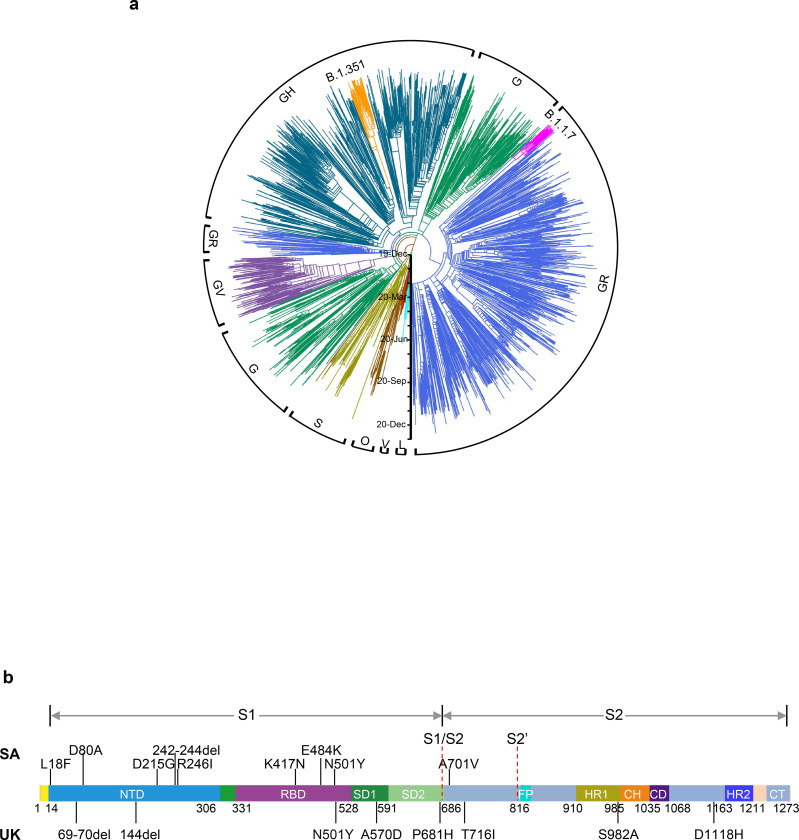
The COVID-19 pandemic has had widespread effects across the globe, and its causative agent, SARS-CoV-2, continues to spread. Effective interventions need to be developed to end this pandemic. Single and combination therapies with monoclonal antibodies have received emergency use authorization 1-3, and more treatments are under development 4-7. Furthermore, multiple vaccine constructs have shown promise 8, including two that have an approximately 95% protective efficacy against COVID-19 9,10. However, these interventions were directed against the initial SARS-CoV-2 virus that emerged in 2019. The recent detection of SARS-CoV-2 variants B.1.1.7 in the UK 11 and B.1.351 in South Africa 12 is of concern because of their purported ease of transmission and extensive mutations in the spike protein. Here we show that B.1.1.7 is refractory to neutralization by most monoclonal antibodies against the N-terminal domain of the spike protein and is relatively resistant to a few monoclonal antibodies against the receptor-binding domain. It is not more resistant to plasma from individuals who have recovered from COVID-19 or sera from individuals who have been vaccinated against SARS-CoV-2. The B.1.351 variant is not only refractory to neutralization by most monoclonal antibodies against the N-terminal domain but also by multiple individual monoclonal antibodies against the receptor-binding motif of the receptor-binding domain, which is mostly due to a mutation causing an E484K substitution. Moreover, compared to wild-type SARS-CoV-2, B.1.351 is markedly more resistant to neutralization by convalescent plasma (9.4-fold) and sera from individuals who have been vaccinated (10.3-12.4-fold). B.1.351 and emergent variants 13,14 with similar mutations in the spike protein present new challenges for monoclonal antibody therapies and threaten the protective efficacy of current vaccines.
Overview
Integrity signals
Registry
Cites
Statistics
Figures
Verification
Claims the paper makes
38 Own result · 11 Not checked yet · 11 Own method · 9 Own interpretation
A result the paper reports from its own data — it cites no other source for it, so there is none to check. The quote shows it is in the paper.
In the paper
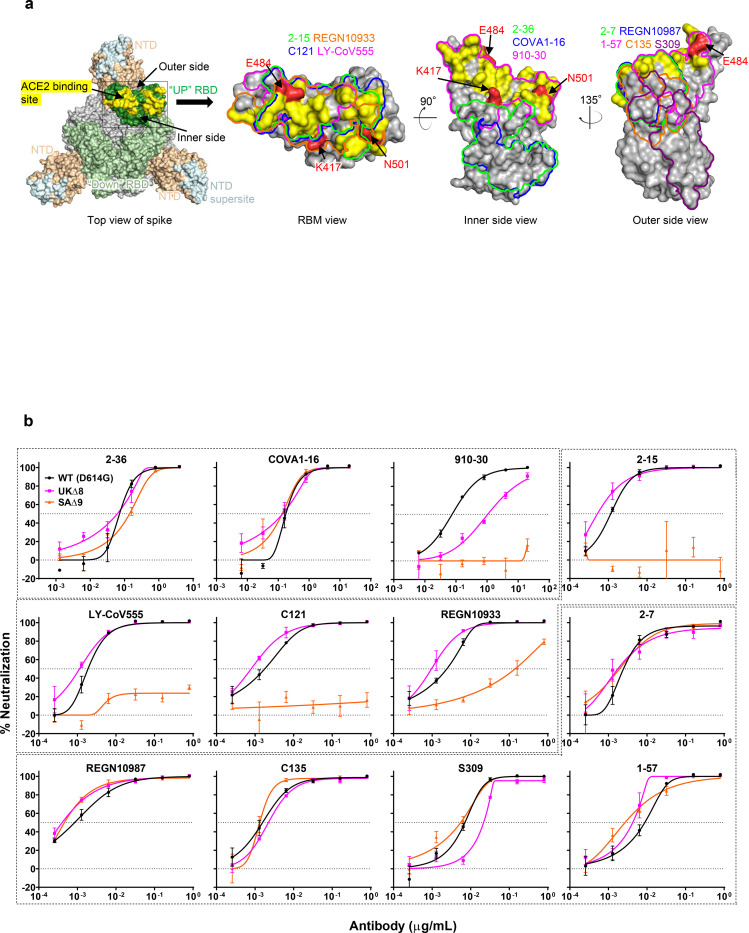
“Here we show that B.1.1.7 is refractory to neutralization by most monoclonal antibodies against the N-terminal domain of the spike protein and is relatively resistant to a few monoclonal antibodies against the receptor-binding domain.”
plaindirect- Asserted: passes — The authors put it forward as true.
- Checkable: passes — It can be checked against evidence.
- Load-bearing: passes — The paper’s conclusions depend on it.
- Based: passes — The paper gives a reason why it holds.
A result the paper reports from its own data — it cites no other source for it, so there is none to check. The quote shows it is in the paper.
In the paper
“351 is mediated by the E484K substitution; the complete loss of activity of 910-30 is mediated by the K417N substitution; and the marked reduction in activity of REGN10933 is mediated by K417N and E484K, as has previously been reported 28 .”
§ Antibody resistance of SARS-CoV-2 variants B.1.351 and B.1.1.7 > Monoclonal antibodies
plaindirect- Asserted: passes — The authors put it forward as true.
- Checkable: passes — It can be checked against evidence.
- Load-bearing: passes — The paper’s conclusions depend on it.
- Based: passes — The paper gives a reason why it holds.
A result the paper reports from its own data — it cites no other source for it, so there is none to check. The quote shows it is in the paper.
In the paper
“Here we show that B.1.1.7 is refractory to neutralization by most monoclonal antibodies against the N-terminal domain of the spike protein and is relatively resistant to a few monoclonal antibodies against the receptor-binding domain.”
plain- Asserted: passes — The authors put it forward as true.
- Checkable: passes — It can be checked against evidence.
- Load-bearing: passes — The paper’s conclusions depend on it.
- Based: passes — The paper gives a reason why it holds.
A result the paper reports from its own data — it cites no other source for it, so there is none to check. The quote shows it is in the paper.
In the paper
“Both B.1.1.7 and B.1.351are markedly resistant to neutralization by antibodies 5-24 and 4-8 20 , as well as by 4A8 29 , all of which target the antigenic supersite in the NTD 18 (Fig. 2b).”
§ Antibody resistance of SARS-CoV-2 variants B.1.351 and B.1.1.7 > Monoclonal antibodies
plaindirect- Asserted: passes — The authors put it forward as true.
- Checkable: passes — It can be checked against evidence.
- Load-bearing: passes — The paper’s conclusions depend on it.
- Based: passes — The paper gives a reason why it holds.
A result the paper reports from its own data — it cites no other source for it, so there is none to check. The quote shows it is in the paper.
In the paper
“For neutralization of B.1.351,however, the activities of 910-30, 2-15 20 , LY-CoV555 (bamlanivimab) 1,23 , C121 24 and REGN10933 (casirivimab) 2 are completely or markedly abolished.”
§ Antibody resistance of SARS-CoV-2 variants B.1.351 and B.1.1.7 > Monoclonal antibodies
plain- Asserted: passes — The authors put it forward as true.
- Checkable: passes — It can be checked against evidence.
- Load-bearing: passes — The paper’s conclusions depend on it.
- Based: passes — The paper gives a reason why it holds.
A result the paper reports from its own data — it cites no other source for it, so there is none to check. The quote shows it is in the paper.
In the paper
“The B.1.351variant is not only refractory to neutralization by most monoclonal antibodies against the N-terminal domain but also by multiple individual monoclonal antibodies against the receptor-binding motif of the receptor-binding domain, which is mostly due to a mutation causing an E484K”
plain- Asserted: passes — The authors put it forward as true.
- Checkable: passes — It can be checked against evidence.
- Load-bearing: passes — The paper’s conclusions depend on it.
- Based: passes — The paper gives a reason why it holds.
A result the paper reports from its own data — it cites no other source for it, so there is none to check. The quote shows it is in the paper.
In the paper
“We found that the resistance of B.1.1.7 to most NTD-directed monoclonal antibodies is largely conferred by ΔY144, whereas the resistance of B.1.351 is largely conferred by Δ242-Δ244 and/or R246I.”
§ Antibody resistance of SARS-CoV-2 variants B.1.351 and B.1.1.7 > Monoclonal antibodies
plaindirect- Asserted: passes — The authors put it forward as true.
- Checkable: passes — It can be checked against evidence.
- Load-bearing: passes — The paper’s conclusions depend on it.
- Based: passes — The paper gives a reason why it holds.
A result the paper reports from its own data — it cites no other source for it, so there is none to check. The quote shows it is in the paper.
In the paper
“The activity of CB6 is rendered inactive against B.1.351because of the K417N substitution.”
§ Antibody resistance of SARS-CoV-2 variants B.1.351 and B.1.1.7 > Extended Data
plaindirect- Asserted: passes — The authors put it forward as true.
- Checkable: passes — It can be checked against evidence.
- Load-bearing: passes — The paper’s conclusions depend on it.
- Based: passes — The paper gives a reason why it holds.
A result the paper reports from its own data — it cites no other source for it, so there is none to check. The quote shows it is in the paper.
In the paper
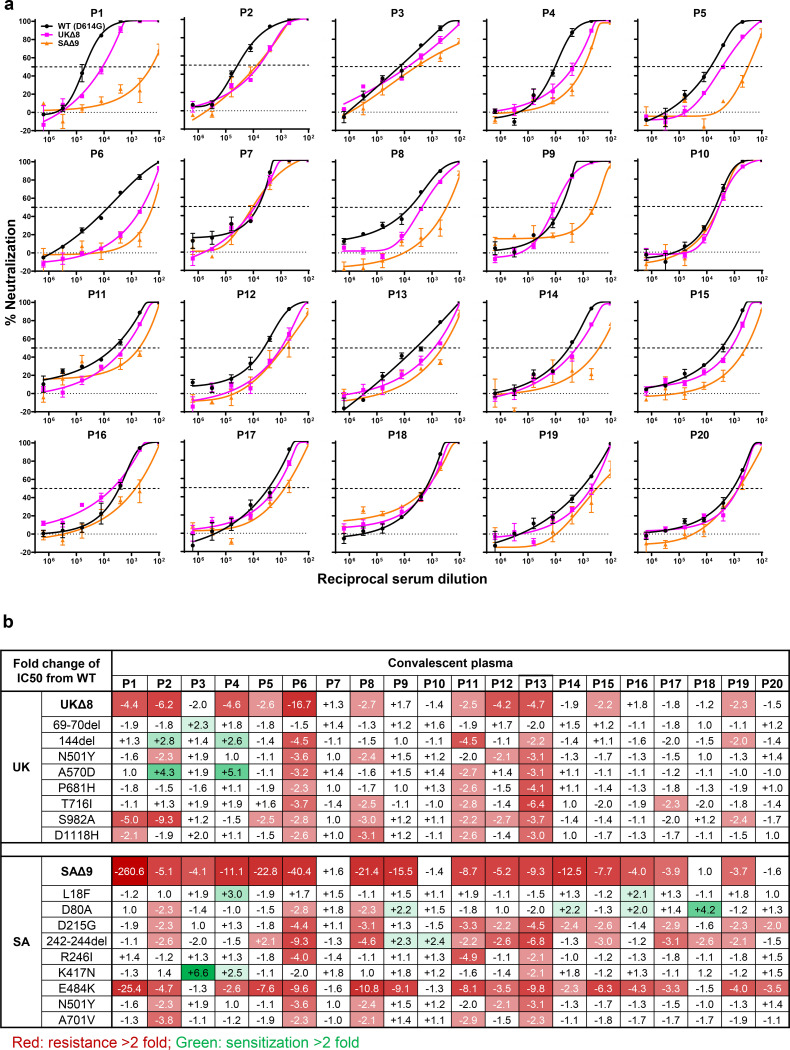
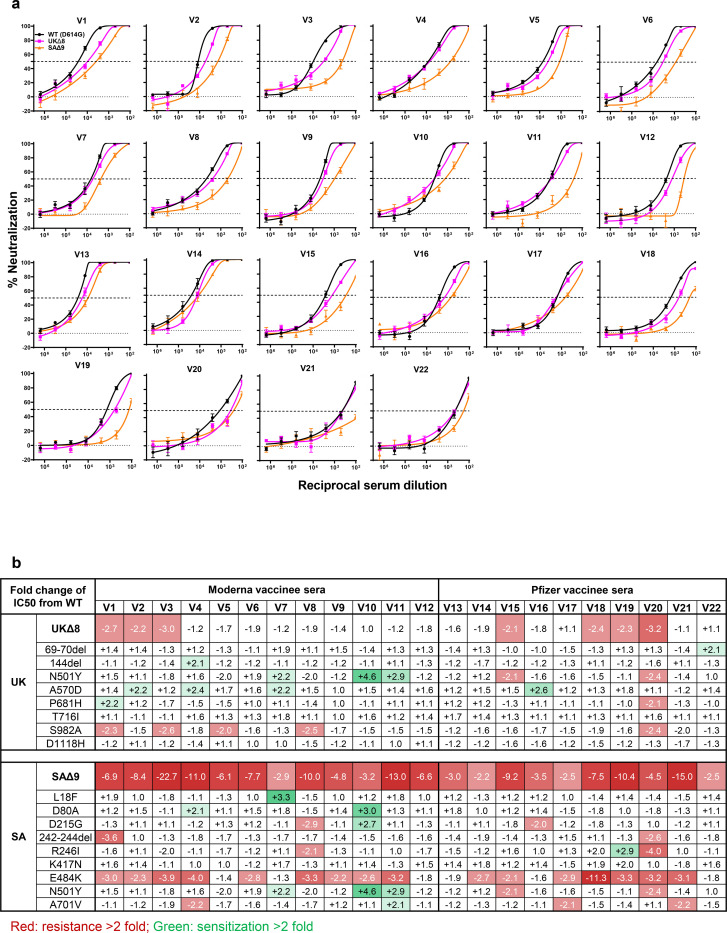
“Moreover, compared to wild-type SARS-CoV-2, B.1.351 is markedly more resistant to neutralization by convalescent plasma (9.4-fold) and sera from individuals who have been vaccinated (10.3-12.4-fold).”
plaindirect- Asserted: passes — The authors put it forward as true.
- Checkable: passes — It can be checked against evidence.
- Load-bearing: passes — The paper’s conclusions depend on it.
- Based: passes — The paper gives a reason why it holds.
A result the paper reports from its own data — it cites no other source for it, so there is none to check. The quote shows it is in the paper.
In the paper
“We found that the resistance of B.1.1.7 to most NTD-directed monoclonal antibodies is largely conferred by ΔY144, whereas the resistance of B.1.351 is largely conferred by Δ242-Δ244 and/or R246I.”
§ Antibody resistance of SARS-CoV-2 variants B.1.351 and B.1.1.7 > Monoclonal antibodies
plaindirect- Asserted: passes — The authors put it forward as true.
- Checkable: passes — It can be checked against evidence.
- Load-bearing: passes — The paper’s conclusions depend on it.
- Based: passes — The paper gives a reason why it holds.
- It may state two separate claims as one. 12
- Probably not a substantial claim. 12
A result the paper reports from its own data — it cites no other source for it, so there is none to check. The quote shows it is in the paper.
In the paper
“Eight samples show a decrease of more than 2.5-fold in neutralizing activity against B.1.1.7Δ8,in contrast to the results for neutralization of B.1.1.7.”
§ Antibody resistance of SARS-CoV-2 variants B.1.351 and B.1.1.7 > Convalescent plasma
plainn = 8- Asserted: passes — The authors put it forward as true.
- Checkable: passes — It can be checked against evidence.
- Load-bearing: passes — The paper’s conclusions depend on it.
- Based: passes — The paper gives a reason why it holds.
It may state two separate claims as one.
A result the paper reports from its own data — it cites no other source for it, so there is none to check. The quote shows it is in the paper.
In the paper
“Figure 3a shows that most (16 out of 20) plasma samples lost more than 2.5-fold neutralizing activity against B.1.351,while maintaining activity against B.1.1.7.”
§ Antibody resistance of SARS-CoV-2 variants B.1.351 and B.1.1.7 > Convalescent plasma
plainn = 20- Asserted: passes — The authors put it forward as true.
- Checkable: passes — It can be checked against evidence.
- Load-bearing: passes — The paper’s conclusions depend on it.
- Based: passes — The paper gives a reason why it holds.
It may state two separate claims as one.
A result the paper reports from its own data — it cites no other source for it, so there is none to check. The quote shows it is in the paper.
In the paper
“Brii-196 and COV2-2130 are essentially unaffected by the new variants; the activities of Brii-198 and COV2-2196 are diminished by 14.6-fold and 6.3-fold, respectively, against B.1.351but not against B.1.1.7.”
§ Antibody resistance of SARS-CoV-2 variants B.1.351 and B.1.1.7 > Extended Data
plaindirect- Asserted: passes — The authors put it forward as true.
- Checkable: passes — It can be checked against evidence.
- Load-bearing: passes — The paper’s conclusions depend on it.
- Based: passes — The paper gives a reason why it holds.
It may state two separate claims as one.
A result the paper reports from its own data — it cites no other source for it, so there is none to check. The quote shows it is in the paper.
In the paper
“Although S309 and the combination of Brii-196 and Brii-198 are not significantly impaired, their potencies are noticeably lower”
§ Antibody resistance of SARS-CoV-2 variants B.1.351 and B.1.1.7 > Extended Data
plain- Asserted: passes — The authors put it forward as true.
- Checkable: passes — It can be checked against evidence.
- Load-bearing: passes — The paper’s conclusions depend on it.
- Based: passes — The paper gives a reason why it holds.
It may state two separate claims as one.
A result the paper reports from its own data — it cites no other source for it, so there is none to check. The quote shows it is in the paper.
In the paper
“Although REGN10933 and REGN10987 and COV2-2196 and COV2-2130 are seemingly unaffected against variant pseudoviruses, there are noticeable decreases in their activity against the B.1.351authentic virus.”
§ Antibody resistance of SARS-CoV-2 variants B.1.351 and B.1.1.7 > Extended Data
hedgeddirect- Asserted: passes — The authors put it forward as true.
- Checkable: passes — It can be checked against evidence.
- Load-bearing: passes — The paper’s conclusions depend on it.
- Based: passes — The paper gives a reason why it holds.
It may state two separate claims as one.
None of the sources cited for this claim have been checked yet.
In the paper
“B.1.351and emergent variants 13,14 with similar mutations in the spike protein present new challenges for monoclonal antibody therapies and threaten the protective efficacy of current vaccines.”
What the sources say
- Not checked yetcites [13] Faria, N. R. et al. Genomic characterisation of an emergent SARS-CoV-2 lineage in Manaus: preliminary findings. Preprint at https://virological.org/t/genomic-characterisation-of-an-emergent-sars-cov-2-lineage-in-manaus-preliminary-findings/586 (2021).
- Not checked yetcites [14] Naveca, F. et al. Phylogenetic relationship of SARS-CoV-2 sequences from Amazonas with emerging Brazilian variants harboring mutations E484K and N501Y in the spike protein. Preprint at https://virological.org/t/phylogenetic-relationship-of-sars-cov-2-sequences-from-amazonas-with-emerging-brazilian-variants-harboring-mutations-e484k-and-n501y-in-the-spike-protein/585 (2021).
plaindirect- Asserted: passes — The authors put it forward as true.
- Checkable: passes — It can be checked against evidence.
- Load-bearing: passes — The paper’s conclusions depend on it.
- Based: passes — The paper gives a reason why it holds.
It may state two separate claims as one.
- Rests on an assumption: In vitro neutralization by monoclonal antibodies predicts clinical therapeutic efficacy.
- Rests on an assumption: In vitro neutralization by vaccinee sera predicts vaccine protective efficacy.
In the paper
“These discrepant results highlight a previous observation 20 that pseudovirus neutralization does not always faithfully”
§ Antibody resistance of SARS-CoV-2 variants B.1.351 and B.1.1.7 > Convalescent plasma
What the sources say
- Not checked yetcites [20] Liu, L. et al. Potent neutralizing antibodies against multiple epitopes on SARS-CoV-2 spike. Nature 584, 450–456 (2020). source
plain- Asserted: passes — The authors put it forward as true.
- Checkable: passes — It can be checked against evidence.
- Load-bearing: passes — The paper’s conclusions depend on it.
- Based: passes — The paper gives a reason why it holds.
Probably not a substantial claim.
What the paper did — it cites no source for this, so there is none to check. The quote shows it is in the paper.
In the paper
“All cell lines were obtained from authenticated vendors.”
§ Antibody resistance of SARS-CoV-2 variants B.1.351 and B.1.1.7 > Additional information
plain- Asserted: passes — The authors put it forward as true.
- Checkable: passes — It can be checked against evidence.
- Load-bearing: fails — The paper’s conclusions may not depend on it.
- Based: passes — The paper gives a reason why it holds.
Probably not a substantial claim. The paper’s conclusions may not depend on it.
What the paper did — it cites no source for this, so there is none to check. The quote shows it is in the paper.
In the paper
“The study protocol was approved by the CUIMC Institutional Review Board (IRB) and all participants provided written informed consent.”
§ Antibody resistance of SARS-CoV-2 variants B.1.351 and B.1.1.7 > Additional information
plain- Asserted: passes — The authors put it forward as true.
- Checkable: passes — It can be checked against evidence.
- Load-bearing: fails — The paper’s conclusions may not depend on it.
- Based: passes — The paper gives a reason why it holds.
Probably not a substantial claim. The paper’s conclusions may not depend on it. It may state two separate claims as one.
What the paper did — it cites no source for this, so there is none to check. The quote shows it is in the paper.
In the paper
“No statistical methods were used to predetermine sample size.”
§ Antibody resistance of SARS-CoV-2 variants B.1.351 and B.1.1.7 > Additional information
plain- Asserted: passes — The authors put it forward as true.
- Checkable: passes — It can be checked against evidence.
- Load-bearing: fails — The paper’s conclusions may not depend on it.
- Based: passes — The paper gives a reason why it holds.
Probably not a substantial claim. The paper’s conclusions may not depend on it.
What the paper did — it cites no source for this, so there is none to check. The quote shows it is in the paper.
In the paper
“Viability was measured and found to be >90%.”
§ Antibody resistance of SARS-CoV-2 variants B.1.351 and B.1.1.7 > Additional information
plain- Asserted: passes — The authors put it forward as true.
- Checkable: passes — It can be checked against evidence.
- Load-bearing: fails — The paper’s conclusions may not depend on it.
- Based: passes — The paper gives a reason why it holds.
Probably not a substantial claim. The paper’s conclusions may not depend on it.
What the paper did — it cites no source for this, so there is none to check. The quote shows it is in the paper.
In the paper
“The experiments were not randomized and the investigators were not blinded to allocation during experiments and outcome assessment.”
- Also stated in: § Additional information · plain
“Randomization is not relevant as this is an observational study.”
- Also stated in: § Additional information · plain
“The investigators were not blinded as this is an observational study.”
§ Antibody resistance of SARS-CoV-2 variants B.1.351 and B.1.1.7 > Additional information
plain- Asserted: passes — The authors put it forward as true.
- Checkable: passes — It can be checked against evidence.
- Load-bearing: fails — The paper’s conclusions may not depend on it.
- Based: passes — The paper gives a reason why it holds.
Probably not a substantial claim. The paper’s conclusions may not depend on it. It may state two separate claims as one.
- Also stated in: § Additional information · plain
A conclusion the paper draws from its own results — it cites no other source for it, so there is none to check. The quote shows it is in the paper.
In the paper
“If the rampant spread of the virus continues and more critical mutations accumulate, then we may be condemned to chasing after the evolving SARS-CoV-2 continually, as we have long done for influenza virus.”
§ Antibody resistance of SARS-CoV-2 variants B.1.351 and B.1.1.7 > Discussion
hedgedconditional- Asserted: passes — The authors put it forward as true.
- Checkable: fails — It may be too vague to check against evidence.
- Load-bearing: fails — The paper’s conclusions may not depend on it.
- Based: passes — The paper gives a reason why it holds.
Probably not a substantial claim. It may be too vague to check against evidence. The paper’s conclusions may not depend on it.
What the paper did — it cites no source for this, so there is none to check. The quote shows it is in the paper.
In the paper
“Mycoplasma is negative (Detected mycoplasma contamination using Mycoplasma PCR ELISA ,Sigma,catalog number is 11663925910)”
§ Antibody resistance of SARS-CoV-2 variants B.1.351 and B.1.1.7 > Additional information
plain- Asserted: passes — The authors put it forward as true.
- Checkable: passes — It can be checked against evidence.
- Load-bearing: fails — The paper’s conclusions may not depend on it.
- Based: passes — The paper gives a reason why it holds.
Probably not a substantial claim. The paper’s conclusions may not depend on it.
None of the sources cited for this claim have been checked yet.
In the paper
“As for the ramifications of our findings for the protective efficacy of current SARS-CoV-2 vaccines, the neutralizing activity of sera from vaccinated individuals against B.1.1.7 is largely intact and no adverse effects on current vaccines are expected (Fig. 4c), consistent with conclusions that were reached by other studies 34,40,41 .”
§ Antibody resistance of SARS-CoV-2 variants B.1.351 and B.1.1.7 > Discussion
What the sources say
- Not checked yetcites [34] Wu, K. et al. mRNA-1273 vaccine induces neutralizing antibodies against spike mutants from global SARS-CoV-2 variants. Preprint at https://doi.org/10.1101/2021.01.25.427948 (2021). source
- Not checked yetcites [40] Collier, D. et al. SARS-CoV-2 B.1.1.7 sensitivity to mRNA vaccine-elicited, convalescent and monoclonal antibodies. Preprint at https://doi.org/10.1101/2021.01.19.21249840 (2021). source
- Not checked yetcites [41] Muik, A. et al. Neutralization of SARS-CoV-2 lineage B.1.1.7 pseudovirus by BNT162b2 vaccine-elicited human sera. Science https://doi.org/10.1126/science.abg6105 (2021). source
plain- Asserted: passes — The authors put it forward as true.
- Checkable: passes — It can be checked against evidence.
- Load-bearing: passes — The paper’s conclusions depend on it.
- Based: passes — The paper gives a reason why it holds.
It may state two separate claims as one.
- Rests on an assumption: In vitro neutralization by vaccinee sera predicts vaccine protective efficacy.
What the paper did — it cites no source for this, so there is none to check. The quote shows it is in the paper.
In the paper
“Studies that were repeated are noted in figure captions and include all studies that demonstrated the key results reported in the manuscript.”
§ Antibody resistance of SARS-CoV-2 variants B.1.351 and B.1.1.7 > Additional information
plain- Asserted: passes — The authors put it forward as true.
- Checkable: passes — It can be checked against evidence.
- Load-bearing: fails — The paper’s conclusions may not depend on it.
- Based: passes — The paper gives a reason why it holds.
Probably not a substantial claim. The paper’s conclusions may not depend on it. It may state two separate claims as one.
What the paper did — it cites no source for this, so there is none to check. The quote shows it is in the paper.
In the paper
“No data were excluded from the analysis”
§ Antibody resistance of SARS-CoV-2 variants B.1.351 and B.1.1.7 > Additional information
plain- Asserted: passes — The authors put it forward as true.
- Checkable: passes — It can be checked against evidence.
- Load-bearing: fails — The paper’s conclusions may not depend on it.
- Based: passes — The paper gives a reason why it holds.
Probably not a substantial claim. The paper’s conclusions may not depend on it.
A conclusion the paper draws from its own results — it cites no other source for it, so there is none to check. The quote shows it is in the paper.
In the paper
“E484K causes not only steric clashes but also a charge change at antibody-binding sites, and thus abolishes binding by these RBM-directed monoclonal antibodies.”
§ Antibody resistance of SARS-CoV-2 variants B.1.351 and B.1.1.7 > Extended Data
plaindirect- Asserted: passes — The authors put it forward as true.
- Checkable: passes — It can be checked against evidence.
- Load-bearing: passes — The paper’s conclusions depend on it.
- Based: passes — The paper gives a reason why it holds.
It may state two separate claims as one.
What the paper did — it cites no source for this, so there is none to check. The quote shows it is in the paper.
In the paper
“Cytopathogenic effects of viral infection were visually scored for each well in a blinded manner by two independent observers.”
§ Antibody resistance of SARS-CoV-2 variants B.1.351 and B.1.1.7 > Additional information
plain- Asserted: passes — The authors put it forward as true.
- Checkable: passes — It can be checked against evidence.
- Load-bearing: fails — The paper’s conclusions may not depend on it.
- Based: passes — The paper gives a reason why it holds.
Probably not a substantial claim. The paper’s conclusions may not depend on it.
What the paper did — it cites no source for this, so there is none to check. The quote shows it is in the paper.
In the paper
“The sample size is appropriate within technical capability to compare the difference between groups”
§ Antibody resistance of SARS-CoV-2 variants B.1.351 and B.1.1.7 > Additional information
plain- Asserted: passes — The authors put it forward as true.
- Checkable: fails — It may be too vague to check against evidence.
- Load-bearing: fails — The paper’s conclusions may not depend on it.
- Based: fails — The paper may give no reason why it holds.
Probably not a substantial claim. It may be too vague to check against evidence. The paper’s conclusions may not depend on it. The paper may give no reason why it holds.
None of the sources cited for this claim have been checked yet.
In the paper
“A total of 18 mutant pseudoviruses were made as previously described 20,21 , and each was found to have a robust titre (Extended Data Fig. 1c) that was adequate for neutralization studies.”
§ Antibody resistance of SARS-CoV-2 variants B.1.351 and B.1.1.7 > Nature | Vol 593 | 6 May 2021 | 131
What the sources say
- Not checked yetcites [20] Liu, L. et al. Potent neutralizing antibodies against multiple epitopes on SARS-CoV-2 spike. Nature 584, 450–456 (2020). source
- Not checked yetcites [21] Wang, P. et al. SARS-CoV-2 neutralizing antibody responses are more robust in patients with severe disease. Emerg. Microbes Infect. 9, 2091–2093 (2020). source
plain- Asserted: passes — The authors put it forward as true.
- Checkable: passes — It can be checked against evidence.
- Load-bearing: passes — The paper’s conclusions depend on it.
- Based: passes — The paper gives a reason why it holds.
It may state two separate claims as one.
The paper relies on this without support.
In vitro neutralization by monoclonal antibodies predicts clinical therapeutic efficacy.
“These findings suggest that antibody treatment of this virus might need to be modified in localities in which B.1.351and related variants 13,14 are prevalent”
“Decisions on the use of these monoclonal antibodies will depend heavily on the local prevalence of B.1.351or variants with an E484K substitution”
The paper relies on this without support.
In vitro neutralization by vaccinee sera predicts vaccine protective efficacy.
“the neutralizing activity of sera from vaccinated individuals against B.1.1.7 is largely intact and no adverse effects on current vaccines are expected”
“threaten the protective efficacy of current vaccines”
The paper relies on this without support.
Reduced neutralization of a variant by antibodies in vitro reflects reduced antibody-mediated protection against that variant in vivo.
“Overall, the neutralizing activity against B.1.1.7 was essentially unchanged, but significantly lower against B.1.351(12.4-fold for the Moderna vaccine; 10.3-fold for the Pfizer vaccine).”
The paper relies on this without support.
The convalescent plasma samples and vaccinee sera studied are representative of convalescent patients and of vaccine recipients generally.
“B.1.351 is more resistant to neutralization by convalescent plasma from patients.”
“B.1.351 is more resistant to neutralization by sera from individuals vaccinated with the Moderna or Pfizer vaccine.”
Claims other papers make about this one
Each is checked against this paper’s own text: does it say what the citing paper says it does?
The source backs part of the claim, not all of it — or backs it for a different population, condition or comparison.
In the citing paper
“E484K has resulted in 3-fold to 10-fold reduced susceptibility to about 30% and >10-fold reduced susceptibility to about 10% of convalescent plasma samples”
From The biological and clinical significance of emerging SARS-CoV-2 variants (2021) · cites this paper as [121]
Experimental — accuracy not yet measuredThe source backs part of the claim, not all of it — or backs it for a different population, condition or comparison.
In the citing paper
“Some amino acid changes [Δ69/70, T95I, G142D, Δ145, K417N, T478K, N501Y, and P681H (T, Thr; I, Ile; G, Gly; D, Asp; K, Lys; N, Asn; Y, Tyr; P, Pro; H, His)] are shared mutations also found in the Alpha, Beta (B.1.351), Gamma (P.1), or Delta VOCs and were described to lead to increased transmissibility, as well as to a typically mild partial escape from vaccine-induced humoral immunity (7–10).”
From Neutralization of SARS-CoV-2 Omicron by BNT162b2 mRNA vaccine–elicited human sera (2022) · cites this paper as [7]
Experimental — accuracy not yet measuredThe cited source says what the claim attributes to it.
In the citing paper
“As previously reported, bamlanivimab and etesivimab did not neutralize the Beta variant 21 .”
From Reduced sensitivity of SARS-CoV-2 variant Delta to antibody neutralization (2021) · cites this paper as [21]
In the citing paper
“Several of the RBD mutations directly affect angiotensin-converting enzyme 2 (ACE2) receptor-binding affinity, which may affect infectivity, viral load, or transmissibility.11, 12, 13, 14”
From Impact of SARS-CoV-2 variants on the total CD4+ and CD8+ T cell reactivity in infected or vaccinated individuals (2021) · cites this paper as [14]
In the citing paper
“Conversely, vaccine efficacy against B.1.1.7 is maintained (Wang et al., 2021; Emary et al., 2021; Supasa et al., 2021).”
From Reduced neutralization of SARS-CoV-2 B.1.617 by vaccine and convalescent serum (2021) · cites this paper as Wang et al., 2021
In the citing paper
“The Moderna mRNA-1273 vaccine also induces neutralizing antibodies to SARS-CoV-2 variants with, however, a five-to ten-fold reduction in efficacy against the B.1.351S protein, when compared to pseudovirus bearing the D614G mutation 27,28 .”
From Sensitivity of infectious SARS-CoV-2 B.1.1.7 and B.1.351 variants to neutralizing antibodies (2021) · cites this paper as [27]
In the citing paper
“The Pfizer Cominarty (also termed BNT162b2) vaccine-elicited human sera neutralizes SARS-CoV-2 lineage B.1.1.7 pseudovirus, with slightly reduced titers in some vaccinees, when compared to the Wuhan reference strain 26,27 .”
From Sensitivity of infectious SARS-CoV-2 B.1.1.7 and B.1.351 variants to neutralizing antibodies (2021) · cites this paper as [27]
In the citing paper
“The Alpha variant is susceptible to neutralization by most neutralizing mAbs as well as by most plasma samples from previously infected persons 97,102,121,149,159,[203][204][205][206] (fIg.5).”
From The biological and clinical significance of emerging SARS-CoV-2 variants (2021) · cites this paper as [121]
In the citing paper
“The Alpha variant has displayed 3-fold to 10-fold reduced susceptibility to approximately 15% of plasma samples from recipients of an authorized mRNA vaccine 97,102,121,148,149,152,159,204,208,209 .”
From The biological and clinical significance of emerging SARS-CoV-2 variants (2021) · cites this paper as [121]
In the citing paper
“The Beta variant is associated with reduced susceptibility to many mAbs because E484K interferes with binding of several RBM class 1 and 2 mAbs and K417N interferes with the binding of several RBM class 1 mAbs 104,117,121,163,217 .”
From The biological and clinical significance of emerging SARS-CoV-2 variants (2021) · cites this paper as [121]
In the citing paper
“In multiple studies, B.1.351 was the most resistant to neutralization by convalescent or vaccinee sera, with 6- to 15-fold less neutralization activity for sera from individuals immunized with vaccines based on the virus strain first described in January 2020 (Wuhan-Hu-1, spike also called WA1) (2–9).”
From Durability of mRNA-1273 vaccine–induced antibodies against SARS-CoV-2 variants (2021) · cites this paper as [5]
In the citing paper
“Most of these prior studies have evaluated sera from vaccinated individuals at time points soon after the first or second dose and have had limited data on the durability of such responses.”
From Durability of mRNA-1273 vaccine–induced antibodies against SARS-CoV-2 variants (2021) · cites this paper as [5]
In the citing paper
“However, reduced sensitivity of SARS-CoV-2 variants to antibody and serum neutralization has been widely observed (18–21).”
From Deep learning guided optimization of human antibody against SARS-CoV-2 variants with broad neutralization (2022) · cites this paper as [21]
In the citing paper
“Beta [as a benchmark for partially reduced neutralization (7) without major impact on effectiveness (19, 20)]”
From Neutralization of SARS-CoV-2 Omicron by BNT162b2 mRNA vaccine–elicited human sera (2022) · cites this paper as [7]
In the citing paper
“Several SARS-CoV-2 variants of concern have emerged that display increased transmissibility or reduced in-vitro neutralisation by sera from people who are infected with the ancestral strain or immunised.2, 3, 4”
From Neutralising antibody titres as predictors of protection against SARS-CoV-2 variants and the impact of boosting: a meta-analysis (2022) · cites this paper as [2]
Citations
Cites
Safety and Efficacy of the BNT162b2 mRNA Covid-19 Vaccine
Polack, F. P., Thomas, S. J., Kitchin, N., Absalon, J., Gurtman, A., Lockhart, S., Perez, J. L., Pérez Marc, G., Moreira, E. D., Zerbini, C., et al. (2020) · New England Journal of Medicine · doi:10.1056/nejmoa2034577 · Cited by 14,592
Korber, B., Fischer, W. M., Gnanakaran, S., Yoon, H., Theiler, J., Abfalterer, W., Hengartner, N., Giorgi, E. E., Bhattacharya, T., Foley, B., et al. (2020) · Cell · doi:10.1016/j.cell.2020.06.043 · Cited by 4,281
Tegally, H., Wilkinson, E., Giovanetti, M., Iranzadeh, A., Fonseca, V., Giandhari, J., Doolabh, D., Pillay, S., San, E. J., Msomi, N., et al. (2020) · doi:10.1101/2020.12.21.20248640 · Cited by 2,535
Detection of a SARS-CoV-2 variant of concern in South Africa
Tegally, H., Wilkinson, E., Giovanetti, M., Iranzadeh, A., Fonseca, V., Giandhari, J., Doolabh, D., Pillay, S., San, E. J., Msomi, N., et al. (2021) · Nature · doi:10.1038/s41586-021-03402-9 · Cited by 2,510
SARS-CoV-2 vaccines in development
Krammer, F. (2020) · Nature · doi:10.1038/s41586-020-2798-3 · Cited by 2,098
Starr, T. N., Greaney, A. J., Hilton, S. K., Ellis, D., Crawford, K. H. D., Dingens, A. S., Navarro, M. J., Bowen, J. E., Tortorici, M. A., Walls, A. C., et al. (2020) · Cell · doi:10.1016/j.cell.2020.08.012 · Cited by 1,956
Cross-neutralization of SARS-CoV-2 by a human monoclonal SARS-CoV antibody
Pinto, D., Park, Y.-J., Beltramello, M., Walls, A. C., Tortorici, M. A., Bianchi, S., Jaconi, S., Culap, K., Zatta, F., De Marco, A., et al. (2020) · Nature · doi:10.1038/s41586-020-2349-y · Cited by 1,885
Convergent Antibody Responses to SARS-CoV-2 in Convalescent Individuals
Robbiani, D. F., Gaebler, C., Muecksch, F., Lorenzi, J. C. C., Wang, Z., Cho, A., Agudelo, M., Barnes, C. O., Gazumyan, A., Finkin, S., et al. (2020) · Nature · doi:10.1038/s41586-020-2456-9 · Cited by 1,853
Human neutralizing antibodies elicited by SARS-CoV-2 infection
Ju, B., Zhang, Q., Ge, J., Wang, R., Sun, J., Ge, X., Yu, J., Shan, S., Zhou, B., Song, S., et al. (2020) · Nature · doi:10.1038/s41586-020-2380-z · Cited by 1,667
Self-citationSafety and Immunogenicity of SARS-CoV-2 mRNA-1273 Vaccine in Older Adults
Anderson, E. J., Rouphael, N. G., Widge, A. T., Jackson, L. A., Roberts, P. C., Makhene, M., Chappell, J. D., Denison, M. R., Stevens, L. J., Pruijssers, A. J., et al. (2020) · New England Journal of Medicine · doi:10.1056/nejmoa2028436 · Cited by 1,523
Self-citation
Research works printed but not linked: 2
- Faria, N. R. et al. Genomic characterisation of an emergent SARS-CoV-2 lineage in Manaus: preliminary findings. Preprint at https://virological.org/t/genomic-characterisation-of-an-emergent-sars-cov-2-lineage-in-manaus-preliminary-findings/586 (2021).
- Naveca, F. et al. Phylogenetic relationship of SARS-CoV-2 sequences from Amazonas with emerging Brazilian variants harboring mutations E484K and N501Y in the spike protein. Preprint at https://virological.org/t/phylogenetic-relationship-of-sars-cov-2-sequences-from-amazonas-with-emerging-brazilian-variants-harboring-mutations-e484k-and-n501y-in-the-spike-protein/585 (2021).
Cited by
Sorted by citations
Items 801–900 of 1,015
Modak, C., Jha, A., Sharma, N., & Kumar, A. (2021) · International Journal of Biological Macromolecules · doi:10.1016/j.ijbiomac.2021.07.144 · Cited by 26
Exploring the immune evasion of SARS-CoV-2 variant harboring E484K by molecular dynamics simulations
Wu, L., Peng, C., Yang, Y., Shi, Y., Zhou, L., Xu, Z., & Zhu, W. (2021) · Briefings in Bioinformatics · doi:10.1093/bib/bbab383 · Cited by 26
Rajpal, V. R., Sharma, S., Kumar, A., Chand, S., Joshi, L., Chandra, A., Babbar, S., Goel, S., Raina, S. N., & Shiran, B. (2022) · Journal of Medical Virology · doi:10.1002/jmv.27749 · Cited by 26
Volkmann, A., Koopman, G., Mooij, P., Verschoor, E. J., Verstrepen, B. E., Bogers, W. M. J. M., Idorn, M., Paludan, S. R., Vang, S., Nielsen, M. A., et al. (2022) · Frontiers in Immunology · doi:10.3389/fimmu.2022.857440 · Cited by 27
Molecular Insights into the Differential Dynamics of SARS-CoV-2 Variants of Concern (VOC)
Mandal, N., Padhi, A. K., & Rath, S. L. (2021) · Journal of Molecular Graphics and Modelling · doi:10.1016/j.jmgm.2022.108194 · Cited by 28
Ouyang, W. O., Tan, T. J. C., Lei, R., Song, G., Kieffer, C., Andrabi, R., Matreyek, K. A., & Wu, N. C. (2022) · Science Advances · doi:10.1126/sciadv.add7221 · Cited by 27
Mallah, S. I., AlAwadhi, A. I., Jawad, J. S., Wasif, P., Alsaffar, B., Alalawi, E., Mohamed, A., Butler, A. E., Alalawi, B., Qayed, D., et al. (2023) · Vaccine · doi:10.1016/j.vaccine.2023.01.032 · Cited by 27
Lubin, J. H., Markosian, C., Balamurugan, D., Ma, M. T., Chen, C.-H., Liu, D., Pasqualini, R., Arap, W., Burley, S. K., & Khare, S. D. (2023) · JCI Insight · doi:10.1172/jci.insight.168296 · Cited by 26
Fang, L., Xu, J., Zhao, Y., Fan, J., Shen, J., Liu, W., & Cao, G. (2023) · Frontiers in Microbiology · doi:10.3389/fmicb.2023.1228128 · Cited by 26
Tran, H. T. T., Le, N. P. K., Gigl, M., Dawid, C., & Lamy, E. (2021) · Pharmaceuticals · doi:10.3390/ph14101055 · Cited by 28
A dimeric proteomimetic prevents SARS-CoV-2 infection by dimerizing the spike protein
Khatri, B., Pramanick, I., Malladi, S. K., Rajmani, R. S., Kumar, S., Ghosh, P., Sengupta, N., Rahisuddin, R., Kumar, N., Kumaran, S., et al. (2022) · Nature Chemical Biology · doi:10.1038/s41589-022-01060-0 · Cited by 27
Tada, T., Zhou, H., Dcosta, B. M., Samanovic, M. I., Cornelius, A. R., Herati, R. S., Mulligan, M. J., & Landau, N. R. (2021) · Cell Reports · doi:10.1016/j.celrep.2021.110237 · Cited by 25
Identification and Development of Therapeutics for COVID-19
Rando, H. M., Wellhausen, N., Ghosh, S., Lee, A. J., Dattoli, A. A., Hu, F., Byrd, J. B., Rafizadeh, D. N., Lordan, R., Qi, Y., et al. (2021) · mSystems · doi:10.1128/msystems.00233-21 · Cited by 25
Up State of the SARS-COV-2 Spike Homotrimer Favors an Increased Virulence for New Variants
Giron, C. C., Laaksonen, A., & da Silva, F. L. B. (2021) · Frontiers in Medical Technology · doi:10.3389/fmedt.2021.694347 · Cited by 25
Evolution, correlation, structural impact and dynamics of emerging SARS-CoV-2 variants
Spratt, A. N., Kannan, S. R., Woods, L. T., Weisman, G. A., Quinn, T. P., Lorson, C. L., Sönnerborg, A. B., Byrareddy, S. N., & Singh, K. D. (2021) · Computational and Structural Biotechnology Journal · doi:10.1016/j.csbj.2021.06.037 · Cited by 25
Factors Affecting the Antibody Immunogenicity of Vaccines against SARS-CoV-2: A Focused Review
Cheng, Z. J., Xue, M., Zheng, P., Lyu, J., Zhan, Z., Hu, H., Zhang, Y., Zhang, X. D., & Sun, B. (2021) · Vaccines · doi:10.3390/vaccines9080869 · Cited by 26
Effect of SARS-CoV-2 Mutations on the Efficacy of Antibody Therapy and Response to Vaccines
Yaqinuddin, A., Shafqat, A., Kashir, J., & AlKattan, K. M. (2021) · Vaccines · doi:10.3390/vaccines9080914 · Cited by 25
Kramer, K. J., Johnson, N. V., Shiakolas, A. R., Suryadevara, N., Periasamy, S., Raju, N., Williams, J. K., Wrapp, D., Zost, S. J., Walker, L. M., et al. (2021) · Cell Reports · doi:10.1016/j.celrep.2021.109784 · Cited by 25
Murugan, C., Ramamoorthy, S., Kuppuswamy, G. P., Murugan, R. K., Sivalingam, Y., & Sundaramurthy, A. (2021) · International Journal of Biological Macromolecules · doi:10.1016/j.ijbiomac.2021.10.144 · Cited by 28
Lin, W., Chen, I.-C., Chen, H., Lee, Y., & Wu, S. (2021) · Frontiers in Immunology · doi:10.3389/fimmu.2021.795741 · Cited by 26
Rapid test to assess the escape of SARS-CoV-2 variants of concern
Heggestad, J. T., Britton, R. J., Kinnamon, D., Wall, S. A., Joh, D. Y., Hucknall, A., Olson, L. B., Anderson, J. G., Mazur, A., Wolfe, C. R., et al. (2021) · Science Advances · doi:10.1126/sciadv.abl7682 · Cited by 25
Fratev, F. (2022) · Journal of Chemical Information and Modeling · doi:10.1021/acs.jcim.1c01243 · Cited by 25
Jonny, J., Putranto, T. A., Sitepu, E. C., & Irfon, R. (2022) · Expert Review of Vaccines · doi:10.1080/14760584.2022.2080658 · Cited by 25
Naturally occurring spike mutations influence the infectivity and immunogenicity of SARS-CoV-2
Peng, Q., Zhou, R., Liu, N., Wang, H., Xu, H., Zhao, M., Yang, D., Au, K., Huang, H., Liu, L., et al. (2022) · Cellular and Molecular Immunology · doi:10.1038/s41423-022-00924-8 · Cited by 26
Self-citationCOVID-19 Vaccines: An Updated Overview of Different Platforms
Kudlay, D. A., Svistunov, A. А., & Сатышев, О. В. (2022) · Bioengineering · doi:10.3390/bioengineering9110714 · Cited by 25
Torchia, J. A., Tavares, A. H., Carstensen, L. S., Chen, D. W., Huang, J., Xiao, T., Mukherjee, S., Reeves, P. M., Tu, H., Sluder, A. E., et al. (2022) · Science Advances · doi:10.1126/sciadv.abq6527 · Cited by 25
Lessons Learnt from COVID-19: Computational Strategies for Facing Present and Future Pandemics
Pavan, M., & Moro, S. (2023) · International Journal of Molecular Sciences · doi:10.3390/ijms24054401 · Cited by 25
Hu, Y., Zhu, Y., Yu, Y., Liu, N., Ju, X., Ding, Q., & He, Y. (2023) · Antiviral Research · doi:10.1016/j.antiviral.2023.105571 · Cited by 25
Rabaan, A. A., Al-Ahmed, S. H., Albayat, H., Alwarthan, S. M., Alhajri, M. M., Najim, M. A., Alshehail, B. M., Al-Adsani, W., Alghadeer, A., Abduljabbar, W. A., et al. (2023) · Medicina · doi:10.3390/medicina59030507 · Cited by 26
Mutations of SARS-CoV-2 and their impact on disease diagnosis and severity
Alquraan, L. T., Alzoubi, K. H., & Rababa'h, S. Y. (2023) · Informatics in Medicine Unlocked · doi:10.1016/j.imu.2023.101256 · Cited by 27
Gaynor, K. U., Vaysburd, M., Harman, M. A. J., Albecka, A., Jeffrey, P. D., Beswick, P., Papa, G., Chen, L., Mallery, D. L., McGuinness, B., et al. (2023) · Nature Communications · doi:10.1038/s41467-023-39158-1 · Cited by 27
An immunostimulatory glycolipid that blocks SARS-CoV-2, RSV, and influenza infections in vivo
Tsuji, M., Nair, M. S., Masuda, K., Castagna, C., Chong, Z., Darling, T. L., Seehra, K., Hwang, Y., Ribeiro, Á. L., Ferreira, G. M., et al. (2023) · Nature Communications · doi:10.1038/s41467-023-39738-1 · Cited by 25
Self-citationLamb, K. D., Luka, M. M., Saathoff, M., Orton, R. J., Phan, M. V. T., Cotten, M. L., Yuan, K., & Robertson, D. L. (2024) · PLoS Computational Biology · doi:10.1371/journal.pcbi.1011795 · Cited by 26
COVID-19 pandemic: the delta variant, T-cell responses, and the efficacy of developing vaccines
Biswas, B. K., Chattopadhyay, S., Hazra, S., Hansda, A. K., & Goswami, R. (2022) · Inflammation Research · doi:10.1007/s00011-022-01555-5 · Cited by 25
SARS-CoV-2 variants: A double-edged sword?
Jogalekar, M. P., Veerabathini, A., & Gangadaran, P. (2021) · Experimental Biology and Medicine · doi:10.1177/15353702211014146 · Cited by 24
Di, A., Cunha, F., Petrosillo, N., Beeching, N. J., Ergonul, O., Petersen, E., & Koopmans, M. (2021) · Clinical Microbiology and Infection · doi:10.1016/j.cmi.2021.03.011 · Cited by 24
Ferraz, M. V. F., Moreira, E. G., Coêlho, D. F., Wallau, G. L., & Lins, R. D. (2021) · Chemical Communications · doi:10.1039/d1cc01747k · Cited by 24
Peghin, M., Bouza, E., Fabris, M., Martino, M. D., Palese, A., Bontempo, G., Graziano, E., Gerussi, V., Bressan, V., Sartor, A., et al. (2021) · European Journal of Clinical Microbiology & Infectious Diseases · doi:10.1007/s10096-021-04335-x · Cited by 26
Remdesivir: A Closer Look at Its Effect in COVID-19 Pandemic
Taha, H. R., Keewan, N., Slati, F., & Al‐Sawalha, N. A. (2021) · Pharmacology · doi:10.1159/000518440 · Cited by 24
Highly sensitive scent-detection of COVID-19 patients in vivo by trained dogs
Vesga, Ó., Agudelo, M., Valencia-Jaramillo, A. F., Mira-Montoya, A., Ossa-Ospina, F., Ocampo, E., Ciuoderis, K. A., Perez‐Restrepo, L. S., Cardona, A., Aguilar, Y., et al. (2021) · PLoS ONE · doi:10.1371/journal.pone.0257474 · Cited by 24
Structure-guided antibody cocktail for prevention and treatment of COVID-19
Su, S.-C., Yang, T., Yu, P., Liang, K.-H., Wy, C., Yang, C.-W., Lin, H.-T., Wang, M.-J. S., Lu, R., Tso, H.-C., et al. (2021) · PLoS Pathogens · doi:10.1371/journal.ppat.1009704 · Cited by 24
Self-citationHuman inhalable antibody fragments neutralizing SARS-CoV-2 variants for COVID-19 therapy
Minenkova, O., Santapaola, D., Milazzo, F. M., Anastasi, A. M., Battistuzzi, G., Chiapparino, C., Rosi, A., Gritti, G., Borleri, G., Rambaldi, A., et al. (2022) · Molecular Therapy · doi:10.1016/j.ymthe.2022.02.013 · Cited by 24
Analysis of SARS-CoV-2 Genomes from West Java, Indonesia
Fibriani, A., Stephanie, R., Alfiantie, A. A., Siregar, A. L. F., Pradani, G. A. P., Yamahoki, N., Purba, W. S., Alamanda, C. N. C., Rahmawati, E., Rachman, R. W., et al. (2021) · Viruses · doi:10.3390/v13102097 · Cited by 24
Jodaylami, M. H., Djaïleb, A., Ricard, P., Lavallée, É., Cellier-Goetghebeur, S., Parker, M.-F., Coutu, J., Stuible, M., Gervais, C., Durocher, Y., et al. (2021) · Scientific Reports · doi:10.1038/s41598-021-00844-z · Cited by 28
Zhang, L., Poorbaugh, J., Dougan, M. L., Chen, P., Gottlieb, R., Huhn, G. D., Beasley, S., Daniels, M., Trinh, T. N. V., Crisp, M., et al. (2021) · Frontiers in Immunology · doi:10.3389/fimmu.2021.790469 · Cited by 25
Reduced neutralization of SARS-CoV-2 B.1.617 variant by convalescent and vaccinated sera
Hu, J., Wei, X., Jin, X., Peng, P., Xu, F.-L., Wu, K., Luo, F., Jin, A., Fang, L., Liu, B., et al. (2021) · Genes & Diseases · doi:10.1016/j.gendis.2021.11.007 · Cited by 25
Xiong, D., Zhang, X., Shi, M., Wang, N., He, P., Dong, Z., Zhong, J., Luo, J., Wang, Y., Yu, J., et al. (2022) · Microbiology Spectrum · doi:10.1128/spectrum.01438-21 · Cited by 24
Self-citationZhou, S., Zhang, R., Zhang, H.-W., Liu, Y., Wen, Y., Wang, J., Li, Y., You, Z.-W., Yin, X., Qiu, H. Y., et al. (2022) · Chemical Communications · doi:10.1039/d1cc06520c · Cited by 24
An overview of the ongoing challenges in SARS-CoV-2 global control
Shehata, A. A., Parvin, R., Nagy, A., Wang, Y., Azhar, T. M., Attia, Y. A., Azhar, E. I., Paul, A. K., & Rahmatullah, M. (2021) · German Journal of Microbiology · doi:10.51585/gjm.2021.2.0006 · Cited by 24
Altomare, C. G., Adelsberg, D. C., Carreño, J. M., Sapse, I. A., Amanat, F., Ellebedy, A. H., Simon, V. R., Krammer, F., & Bajic, G. (2022) · mBio · doi:10.1128/mbio.03580-21 · Cited by 24
Inducing broad-based immunity against viruses with pandemic potential
Sette, A., & Saphire, E. O. (2022) · Immunity · doi:10.1016/j.immuni.2022.04.010 · Cited by 25
Marra, A. R., Miraglia, J. L., Malheiros, D. T., Guozhang, Y., Teich, V., Victor, E. D. S., Pinho, J. R. R., Cypriano, A. S., Vieira, L. W., Polonio, M., et al. (2022) · Clinical Infectious Diseases · doi:10.1093/cid/ciac430 · Cited by 24
Pavan, M., Bassani, D., Sturlese, M., & Moro, S. (2022) · Journal of Enzyme Inhibition and Medicinal Chemistry · doi:10.1080/14756366.2022.2081847 · Cited by 24
Li, R., Mor, M., Ma, B., Clark, A. E., Alter, J., Werbner, M., Lee, J. C., Leibel, S. L., Carlin, A. F., Dessau, M., et al. (2022) · Communications Biology · doi:10.1038/s42003-022-03739-5 · Cited by 25
Lee, M., Kang, B., Lee, J., Lee, J., Jung, S. T., Son, C. Y., & Oh, S. S. (2022) · Science Advances · doi:10.1126/sciadv.abq6207 · Cited by 24
Brinkkemper, M., Veth, T. S., Brouwer, P. J. M., Turner, H. L., Poniman, M., Burger, J. A., Bouhuijs, J. H., Olijhoek, W., Bontjer, I., Snitselaar, J. L., et al. (2022) · iScience · doi:10.1016/j.isci.2022.105649 · Cited by 25
kumar, S., V, & Choudhary, M. (2023) · New Journal of Chemistry · doi:10.1039/d2nj05136b · Cited by 24
Research progress in spike mutations of SARS‐CoV‐2 variants and vaccine development
He, X., He, C., Hong, W., Yang, H. J., & Wei, X. (2023) · Medicinal Research Reviews · doi:10.1002/med.21941 · Cited by 25
Novel siRNA therapeutics demonstrate multi-variant efficacy against SARS-CoV-2
Bowden-Reid, E., Ledger, S., Zhang, Y., Giallonardo, F. D., Aggarwal, A., Stella, A. O., Akerman, A., Milogiannakis, V., Walker, G. J., Rawlinson, W. D., et al. (2023) · Antiviral Research · doi:10.1016/j.antiviral.2023.105677 · Cited by 24
Virtanen, J. M. E., Uusitalo, R., Korhonen, E. M., Aaltonen, K., Smura, T., Kuivanen, S. H., Pakkanen, S. H., Mero, S., Patjas, A., Riekkinen, M., et al. (2021) · Viruses · doi:10.3390/v13060996 · Cited by 25
COVID-19 patient serum less potently inhibits ACE2-RBD binding for various SARS-CoV-2 RBD mutants
Junker, D., Dulovic, A., Becker, M., Wagner, T. R., Kaiser, P. D., Traenkle, B., Kienzle, K., Bunk, S., Struemper, C., Haeberle, H. A., et al. (2022) · Scientific Reports · doi:10.1038/s41598-022-10987-2 · Cited by 25
Resistance of SARS-CoV-2 Delta variant to neutralization by BNT162b2-elicited antibodies in Asians
Wang, B., Goh, Y. S., Fong, S., Young, B. E., Ngoh, E. Z. X., Chavatte, J., Salleh, S. N. M., Yeo, N. K., Amrun, S. N., Hor, P. X., et al. (2021) · The Lancet Regional Health - Western Pacific · doi:10.1016/j.lanwpc.2021.100276 · Cited by 23
Structural review of SARS-CoV-2 antiviral targets
Cui, W., Duan, Y., Gao, Y., Wang, W., & Yang, H. (2024) · Structure · doi:10.1016/j.str.2024.08.005 · Cited by 24
Barghash, R. F., Gemmati, D., Awad, A. M., Elbakry, M. M. M., Tisato, V., Awad, K., & Singh, A. V. (2024) · Molecules · doi:10.3390/molecules29235564 · Cited by 24
Shen, L., Bard, J. D., Triche, T. J., Judkins, A. R., Biegel, J. A., & Gai, X. (2021) · Emerging Microbes & Infections · doi:10.1080/22221751.2021.1943540 · Cited by 23
Why are some coronavirus variants more infectious?
Mukherjee, R., & Satardekar, R. (2021) · Journal of Biosciences · doi:10.1007/s12038-021-00221-y · Cited by 23
Lagerborg, K. A., Normandin, E., Bauer, M. R., Adams, G. C., Figueroa, K., Loreth, C., Gladden, A. D., Shaw, B. M., Pearlman, L. R., Berenzy, D., et al. (2021) · Nature Microbiology · doi:10.1038/s41564-021-01019-2 · Cited by 23
Analysis of the Protective Efficacy of Approved COVID-19 Vaccines Against Various Mutants
Li, C., Guo, Y., Fang, Z., Zhang, H., Zhang, Y., & Chen, K. (2022) · Frontiers in Immunology · doi:10.3389/fimmu.2022.804945 · Cited by 23
Self-citationMa, H., Guo, Y., Tang, H., Tseng, C.-T. K., Wang, L., Zong, H., Wang, Z., He, Y., Chang, Y., Wang, S., et al. (2022) · Cell Discovery · doi:10.1038/s41421-022-00381-7 · Cited by 23
Self-citationSabbaghi, M., Miri, K., Kahi, R., & Namazinia, M. (2022) · BMC Emergency Medicine · doi:10.1186/s12873-022-00647-z · Cited by 23
Bi, W., Chen, G., & Dang, B. (2022) · Journal of Virology · doi:10.1128/jvi.00681-22 · Cited by 23
Zhou, J., Liu, Z., Zhang, G., Xu, W., Xing, L., Lu, L., Wang, Q., & Jiang, S. (2022) · Journal of Medical Virology · doi:10.1002/jmv.28172 · Cited by 24
Sharma, S., Vercruysse, T., Sánchez-Felipe, L., Kerstens, W., Rasulova, M., Bervoets, L., Keyzer, C. D., Abdelnabi, R., Foo, C. S.-Y., Lemmens, V., et al. (2022) · Nature Communications · doi:10.1038/s41467-022-34439-7 · Cited by 24
Stewart, E. L., Counoupas, C., Johansen, M. D., Nguyen, D. H., Miemczyk, S., Hansbro, N. G., Ferrell, K. C., Ashhurst, A. S., Alca, S., Ashley, C. L., et al. (2022) · Mucosal Immunology · doi:10.1038/s41385-022-00578-9 · Cited by 23
A Multivalent and Thermostable Nanobody Neutralizing SARS-CoV-2 Omicron (B.1.1.529)
Lu, Y., Li, Q., Fan, H., Liao, C., Zhang, J., Hu, H., Yi, H., Peng, Y., Lu, J., & Chen, Z. (2023) · International Journal of Nanomedicine · doi:10.2147/ijn.s387160 · Cited by 24
Lai, C.-Y., To, A., Wong, T. A. S., Lieberman, M. M., Clements, D. E., Senda, J. T., Ball, A. H., Pessaint, L., Andersen, H., Furuyama, W., et al. (2021) · Vaccine X · doi:10.1016/j.jvacx.2021.100126 · Cited by 24
Zhu, Y., Alvarez, F., Wolff, N., Méchaly, A., Brûlé, S., Neitthoffer, B., Etienne‐Manneville, S., Haouz, A., Boëda, B., & Caillet‐Saguy, C. (2022) · Frontiers in Microbiology · doi:10.3389/fmicb.2022.829094 · Cited by 23
Olmedillas, E., Mann, C. J., Peng, W., Wang, Y.-T., Díaz-Avalos, R., Bedinger, D., Valentine, K. M., Shafee, N., Schendel, S. L., Yuan, M., et al. (2021) · bioRxiv (Cold Spring Harbor Laboratory) · doi:10.1101/2021.05.06.441046 · Cited by 23
SARS-CoV-2: The Interplay Between Evolution and Host Immunity
Case, J. B., Jain, S., Suthar, M. S., & Diamond, M. (2024) · Annual Review of Immunology · doi:10.1146/annurev-immunol-083122-043054 · Cited by 26
COVID-19 clinical presentation, management, and epidemiology: a concise compendium
Maison, D. P., Tasissa, H., Deitchman, A. N., Peluso, M. J., Deng, Y., Miller, F. D., Henrich, T. J., & Gerschenson, M. (2025) · Frontiers in Public Health · doi:10.3389/fpubh.2025.1498445 · Cited by 26
Hu, G., Luo, X., Liao, J., Zou, C., Huang, Y., Geng, R., Zhao, Z., Shen, H., Cao, Y., Peng, O., et al. (2025) · Veterinary Quarterly · doi:10.1080/01652176.2025.2509506 · Cited by 23
Self-citationCOVID-19 vaccines in patients with cancer
Trapani, D., & Curigliano, G. (2021) · The Lancet Oncology · doi:10.1016/s1470-2045(21)00250-3 · Cited by 22
Furukawa, K., Tjan, L. H., Sutandhio, S., Kurahashi, Y., Iwata, S., Tohma, Y., Sano, S., Nakamura, S., Nishimura, M., Arii, J., et al. (2021) · Open Forum Infectious Diseases · doi:10.1093/ofid/ofab430 · Cited by 22
Yang, L., Tian, D., Han, J.-B., Fan, W., Zhang, Y., Li, Y., Sun, W., Wei, Y., Tian, X., Yu, D.-D., et al. (2021) · The Innovation · doi:10.1016/j.xinn.2021.100140 · Cited by 23
Early approval of COVID-19 vaccines: Pros and cons
Rahman, M. A., & Islam, M. S. (2021) · Human Vaccines & Immunotherapeutics · doi:10.1080/21645515.2021.1944742 · Cited by 24
Jiang, W., Wang, J., Jiao, S., Gu, C., Xu, W., Chen, B., Wang, R., Chen, H., Xie, Y., Wang, A., et al. (2021) · mAbs · doi:10.1080/19420862.2021.1953683 · Cited by 22
Self-citationHirotsu, Y., Amemiya, K., Sugiura, H., Shinohara, M., Takatori, M., Mochizuki, H., & Omata, M. (2021) · Frontiers in Immunology · doi:10.3389/fimmu.2021.722766 · Cited by 22
Pani, A., Cento, V., Vismara, C., Campisi, D., Ruscio, F. D., Romandini, A., Senatore, M., Schenardi, P. A., Gagliardi, O. M., Giroldi, S., et al. (2021) · Mayo Clinic Proceedings · doi:10.1016/j.mayocp.2021.08.013 · Cited by 22
Uncovering a conserved vulnerability site in SARS‐CoV‐2 by a human antibody
Li, T., Cai, H., Zhao, Y., Li, Y., Lai, Y., Yao, H., Liu, L. D., Sun, Z., van Vlissingen, M. F., Kuiken, T., et al. (2021) · EMBO Molecular Medicine · doi:10.15252/emmm.202114544 · Cited by 23
Self-citationCooper, M. H., Christensen, P. A., Salazar, E., Perez, K. K., Graviss, E. A., Nguyen, D. T., Musser, J. M., Huang, H. J., & Liebl, M. G. (2021) · Open Forum Infectious Diseases · doi:10.1093/ofid/ofab512 · Cited by 23
Liu, S., Huynh, T., Stauft, C. B., Wang, T. T., & Luan, B. (2021) · Journal of Chemical Information and Modeling · doi:10.1021/acs.jcim.1c01058 · Cited by 22
Kuo, C., Yang, T., Chien, Y.-C., Yu, P., Hsu, S. D., & Khoo, K. (2021) · Glycobiology · doi:10.1093/glycob/cwab102 · Cited by 23
Unbinding ligands from SARS-CoV-2 Mpro via umbrella sampling simulations
Tâm, N. M., Nguyen, T. H., Ngân, V. T., Tùng, N. T., & Ngô, S. T. (2022) · Royal Society Open Science · doi:10.1098/rsos.211480 · Cited by 22
Counoupas, C., Pino, P., Stella, A. O., Ashley, C. L., Lukeman, H., Bhattacharyya, N. D., Tada, T., Anchisi, S., Metayer, C., Martinis, J., et al. (2022) · Microbiology Spectrum · doi:10.1128/spectrum.01695-21 · Cited by 22
Structure-based dual affinity optimization of a SARS-CoV-1/2 cross-reactive single-domain antibody
Sulea, T. I., Baardsnes, J., Stuible, M., Rohani, N., Tran, A., Parat, M., Donates, Y. C., Duchesne, M., Plante, P., Kour, G., et al. (2022) · PLoS ONE · doi:10.1371/journal.pone.0266250 · Cited by 23
Cavani, M., Riofrío, W., & Arciniega, M. (2022) · Molecules · doi:10.3390/molecules27072370 · Cited by 23
Effect of ArtemiC in patients with COVID‐19: A Phase II prospective study
Hellou, E., Mohsin, J., Elemy, A., Hakim, F., Hellou, M. M., & Hamoud, S. (2022) · Journal of Cellular and Molecular Medicine · doi:10.1111/jcmm.17337 · Cited by 22
Xiong, D., Zhao, X., Luo, S., Cong, Y., Zhang, J. Z. H., & Duan, L. (2022) · The Journal of Physical Chemistry Letters · doi:10.1021/acs.jpclett.2c00912 · Cited by 23
A spatial vaccination strategy to reduce the risk of vaccine-resistant variants
Zhang, X., Lobinska, G., Feldman, M., Dekel, E., Nowak, M. A., Pilpel, Y., Pauzner, Y., Barzel, B., & Pauzner, A. (2022) · PLoS Computational Biology · doi:10.1371/journal.pcbi.1010391 · Cited by 22
Khatamzas, E., Antwerpen, M. H., Rehn, A., Graf, A., Hellmuth, J. C., Hollaus, A., Mohr, A., Gaitzsch, E., Weiglein, T., Georgi, E., et al. (2022) · Nature Communications · doi:10.1038/s41467-022-32772-5 · Cited by 22
Metadata
- Authors
- Wang, P., Nair, M. S., Liu, L., Iketani, S., Luo, Y., Guo, Y., Wang, M., Yu, J., Zhang, B., Kwong, P. D., Graham, B. S., Mascola, J. R., Chang, J. Y., Yin, M. T., Sobieszczyk, M., Kyratsous, C. A., Shapiro, L., Sheng, Z., Huang, Y., & Ho, D. D.
- Affiliations
- Aaron Diamond AIDS Research Center (US)
- National Institutes of Health (US)
- Regeneron (United States) (US)
- Corresponding author
- Huang, Yaoxing
- Ho, David D.
- ORCID
- Venue
- Nature
- Published
- 2021-03-08
- Volume
- 593
- Issue
- 7857
- Pages
- 130-135
- ISSN
- 0028-0836 (ISSN-L)
- 1476-4687
- PMC
- PMC7852232
- OpenAlex
- W3123551159
- Cited by
- 2,312
- References
- 51
- Citations by year
- 2026: 34 · 2025: 101 · 2024: 136 · 2023: 299 · 2022: 750 · 2021: 984
- FWCI
- 171.98
- Type
- journal article
- Language
- en
- Open access
- bronze
- doi.org
- Locations
- Nature (publishedVersion)
- bioRxiv (Cold Spring Harbor Laboratory) (acceptedVersion, cc-by-nc-nd)
- Research Square (acceptedVersion, cc-by)
- PubMed (publishedVersion)
- PubMed Central (submittedVersion, cc-by)
- PubMed Central (submittedVersion, cc-by-nc-nd)
- RePEc: Research Papers in Economics (submittedVersion)
- Funders
- Bill and Melinda Gates Foundation
- JPB Foundation
- Topics
- Health Sciences › Medicine › Infectious Diseases › SARS-CoV-2 and COVID-19 Research
- Life Sciences › Agricultural and Biological Sciences › Animal Science and Zoology › Animal Virus Infections Studies
- Life Sciences › Biochemistry, Genetics and Molecular Biology › Molecular Biology › vaccines and immunoinformatics approaches
- Keywords
- SARS-CoV-2, SARS-CoV-2 variants, Beta variant, Alpha variant, antibody resistance, neutralizing antibodies, monoclonal antibodies, spike protein mutations, N-terminal domain, receptor binding domain, convalescent plasma, vaccine efficacy
About these checks
Registry, retraction, Cites and statistics results are computed, not judged, with one exception: a printed reference that no index lists is read once by a model before it counts as a citation error. Claims are extracted by a model and kept only when their quote appears verbatim in the text; each cited source is then checked, with a model’s help, for whether it says what the claim relies on. Those verdicts can be wrong — read the claim’s quote and the cited source before relying on one.
A language model drew the claims from the paper on 2026-10-06, under version 3 of the claim definition (model deepseek-v4.1-flash, prompt extract-v3).
A second model labelled each claim on 2026-10-06 (model jev-1.13-20260917, definition revision gold-guideline-v0.2).
Statistics and arithmetic are recomputed, not judged.
Confidence bands are shown only for fields calibrated on our annotated test set. None is calibrated yet, so no band is shown.
What counts as a claim ›How we measure confidence ›How we check this ›
Are you an author, or do you see a problem with this page? Request a review
