

The DOI matches its Crossref record; 62 of the 62 references it cites were found in a registry or an index; none of the 19 sources its claims cite is checked for support yet.
Antibody resistance of SARS-CoV-2 variants B.1.351 and B.1.1.7
Open accessPublished version of a preprint
Abstract
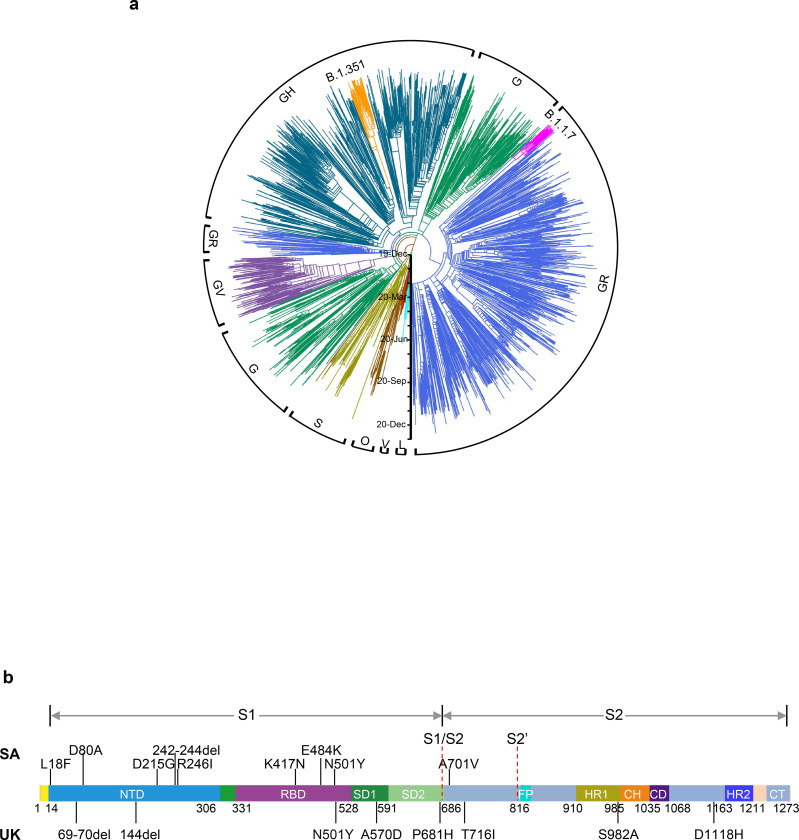
The COVID-19 pandemic has had widespread effects across the globe, and its causative agent, SARS-CoV-2, continues to spread. Effective interventions need to be developed to end this pandemic. Single and combination therapies with monoclonal antibodies have received emergency use authorization 1-3, and more treatments are under development 4-7. Furthermore, multiple vaccine constructs have shown promise 8, including two that have an approximately 95% protective efficacy against COVID-19 9,10. However, these interventions were directed against the initial SARS-CoV-2 virus that emerged in 2019. The recent detection of SARS-CoV-2 variants B.1.1.7 in the UK 11 and B.1.351 in South Africa 12 is of concern because of their purported ease of transmission and extensive mutations in the spike protein. Here we show that B.1.1.7 is refractory to neutralization by most monoclonal antibodies against the N-terminal domain of the spike protein and is relatively resistant to a few monoclonal antibodies against the receptor-binding domain. It is not more resistant to plasma from individuals who have recovered from COVID-19 or sera from individuals who have been vaccinated against SARS-CoV-2. The B.1.351 variant is not only refractory to neutralization by most monoclonal antibodies against the N-terminal domain but also by multiple individual monoclonal antibodies against the receptor-binding motif of the receptor-binding domain, which is mostly due to a mutation causing an E484K substitution. Moreover, compared to wild-type SARS-CoV-2, B.1.351 is markedly more resistant to neutralization by convalescent plasma (9.4-fold) and sera from individuals who have been vaccinated (10.3-12.4-fold). B.1.351 and emergent variants 13,14 with similar mutations in the spike protein present new challenges for monoclonal antibody therapies and threaten the protective efficacy of current vaccines.
Overview
Integrity signals
Registry
Cites
Statistics
Figures
Verification
Claims the paper makes
38 Own result · 11 Not checked yet · 11 Own method · 9 Own interpretation
A result the paper reports from its own data — it cites no other source for it, so there is none to check. The quote shows it is in the paper.
In the paper
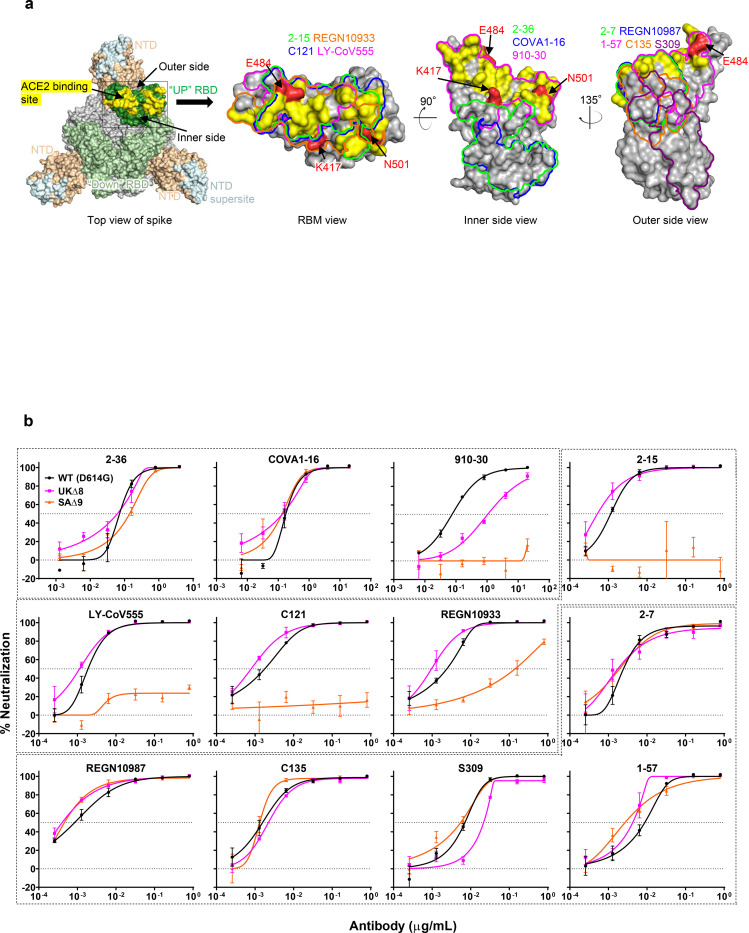
“Here we show that B.1.1.7 is refractory to neutralization by most monoclonal antibodies against the N-terminal domain of the spike protein and is relatively resistant to a few monoclonal antibodies against the receptor-binding domain.”
plaindirect- Asserted: passes — The authors put it forward as true.
- Checkable: passes — It can be checked against evidence.
- Load-bearing: passes — The paper’s conclusions depend on it.
- Based: passes — The paper gives a reason why it holds.
A result the paper reports from its own data — it cites no other source for it, so there is none to check. The quote shows it is in the paper.
In the paper
“351 is mediated by the E484K substitution; the complete loss of activity of 910-30 is mediated by the K417N substitution; and the marked reduction in activity of REGN10933 is mediated by K417N and E484K, as has previously been reported 28 .”
§ Antibody resistance of SARS-CoV-2 variants B.1.351 and B.1.1.7 > Monoclonal antibodies
plaindirect- Asserted: passes — The authors put it forward as true.
- Checkable: passes — It can be checked against evidence.
- Load-bearing: passes — The paper’s conclusions depend on it.
- Based: passes — The paper gives a reason why it holds.
A result the paper reports from its own data — it cites no other source for it, so there is none to check. The quote shows it is in the paper.
In the paper
“Here we show that B.1.1.7 is refractory to neutralization by most monoclonal antibodies against the N-terminal domain of the spike protein and is relatively resistant to a few monoclonal antibodies against the receptor-binding domain.”
plain- Asserted: passes — The authors put it forward as true.
- Checkable: passes — It can be checked against evidence.
- Load-bearing: passes — The paper’s conclusions depend on it.
- Based: passes — The paper gives a reason why it holds.
A result the paper reports from its own data — it cites no other source for it, so there is none to check. The quote shows it is in the paper.
In the paper
“Both B.1.1.7 and B.1.351are markedly resistant to neutralization by antibodies 5-24 and 4-8 20 , as well as by 4A8 29 , all of which target the antigenic supersite in the NTD 18 (Fig. 2b).”
§ Antibody resistance of SARS-CoV-2 variants B.1.351 and B.1.1.7 > Monoclonal antibodies
plaindirect- Asserted: passes — The authors put it forward as true.
- Checkable: passes — It can be checked against evidence.
- Load-bearing: passes — The paper’s conclusions depend on it.
- Based: passes — The paper gives a reason why it holds.
A result the paper reports from its own data — it cites no other source for it, so there is none to check. The quote shows it is in the paper.
In the paper
“For neutralization of B.1.351,however, the activities of 910-30, 2-15 20 , LY-CoV555 (bamlanivimab) 1,23 , C121 24 and REGN10933 (casirivimab) 2 are completely or markedly abolished.”
§ Antibody resistance of SARS-CoV-2 variants B.1.351 and B.1.1.7 > Monoclonal antibodies
plain- Asserted: passes — The authors put it forward as true.
- Checkable: passes — It can be checked against evidence.
- Load-bearing: passes — The paper’s conclusions depend on it.
- Based: passes — The paper gives a reason why it holds.
A result the paper reports from its own data — it cites no other source for it, so there is none to check. The quote shows it is in the paper.
In the paper
“The B.1.351variant is not only refractory to neutralization by most monoclonal antibodies against the N-terminal domain but also by multiple individual monoclonal antibodies against the receptor-binding motif of the receptor-binding domain, which is mostly due to a mutation causing an E484K”
plain- Asserted: passes — The authors put it forward as true.
- Checkable: passes — It can be checked against evidence.
- Load-bearing: passes — The paper’s conclusions depend on it.
- Based: passes — The paper gives a reason why it holds.
A result the paper reports from its own data — it cites no other source for it, so there is none to check. The quote shows it is in the paper.
In the paper
“We found that the resistance of B.1.1.7 to most NTD-directed monoclonal antibodies is largely conferred by ΔY144, whereas the resistance of B.1.351 is largely conferred by Δ242-Δ244 and/or R246I.”
§ Antibody resistance of SARS-CoV-2 variants B.1.351 and B.1.1.7 > Monoclonal antibodies
plaindirect- Asserted: passes — The authors put it forward as true.
- Checkable: passes — It can be checked against evidence.
- Load-bearing: passes — The paper’s conclusions depend on it.
- Based: passes — The paper gives a reason why it holds.
A result the paper reports from its own data — it cites no other source for it, so there is none to check. The quote shows it is in the paper.
In the paper
“The activity of CB6 is rendered inactive against B.1.351because of the K417N substitution.”
§ Antibody resistance of SARS-CoV-2 variants B.1.351 and B.1.1.7 > Extended Data
plaindirect- Asserted: passes — The authors put it forward as true.
- Checkable: passes — It can be checked against evidence.
- Load-bearing: passes — The paper’s conclusions depend on it.
- Based: passes — The paper gives a reason why it holds.
A result the paper reports from its own data — it cites no other source for it, so there is none to check. The quote shows it is in the paper.
In the paper
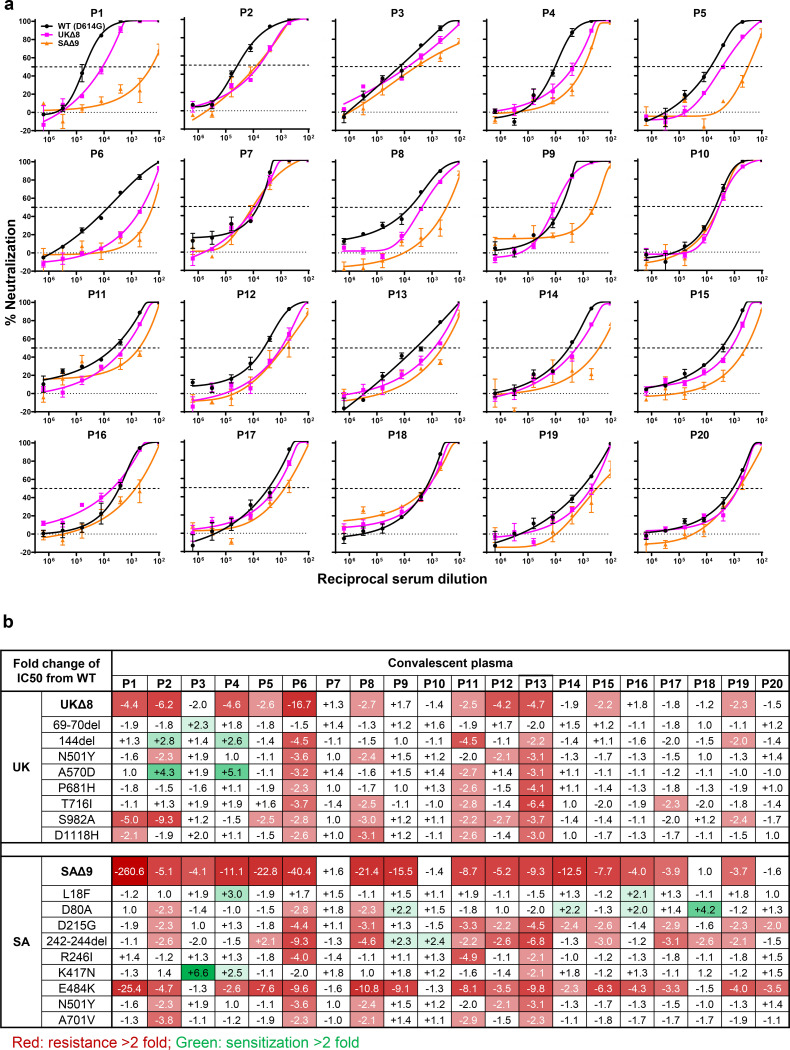
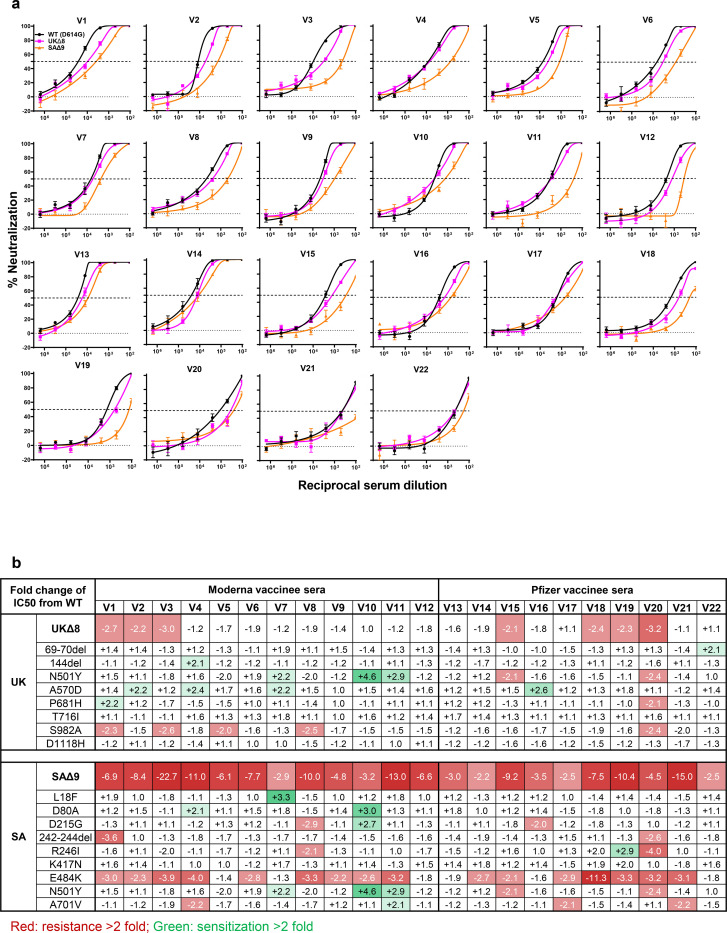
“Moreover, compared to wild-type SARS-CoV-2, B.1.351 is markedly more resistant to neutralization by convalescent plasma (9.4-fold) and sera from individuals who have been vaccinated (10.3-12.4-fold).”
plaindirect- Asserted: passes — The authors put it forward as true.
- Checkable: passes — It can be checked against evidence.
- Load-bearing: passes — The paper’s conclusions depend on it.
- Based: passes — The paper gives a reason why it holds.
A result the paper reports from its own data — it cites no other source for it, so there is none to check. The quote shows it is in the paper.
In the paper
“We found that the resistance of B.1.1.7 to most NTD-directed monoclonal antibodies is largely conferred by ΔY144, whereas the resistance of B.1.351 is largely conferred by Δ242-Δ244 and/or R246I.”
§ Antibody resistance of SARS-CoV-2 variants B.1.351 and B.1.1.7 > Monoclonal antibodies
plaindirect- Asserted: passes — The authors put it forward as true.
- Checkable: passes — It can be checked against evidence.
- Load-bearing: passes — The paper’s conclusions depend on it.
- Based: passes — The paper gives a reason why it holds.
- It may state two separate claims as one. 12
- Probably not a substantial claim. 12
A result the paper reports from its own data — it cites no other source for it, so there is none to check. The quote shows it is in the paper.
In the paper
“Eight samples show a decrease of more than 2.5-fold in neutralizing activity against B.1.1.7Δ8,in contrast to the results for neutralization of B.1.1.7.”
§ Antibody resistance of SARS-CoV-2 variants B.1.351 and B.1.1.7 > Convalescent plasma
plainn = 8- Asserted: passes — The authors put it forward as true.
- Checkable: passes — It can be checked against evidence.
- Load-bearing: passes — The paper’s conclusions depend on it.
- Based: passes — The paper gives a reason why it holds.
It may state two separate claims as one.
A result the paper reports from its own data — it cites no other source for it, so there is none to check. The quote shows it is in the paper.
In the paper
“Figure 3a shows that most (16 out of 20) plasma samples lost more than 2.5-fold neutralizing activity against B.1.351,while maintaining activity against B.1.1.7.”
§ Antibody resistance of SARS-CoV-2 variants B.1.351 and B.1.1.7 > Convalescent plasma
plainn = 20- Asserted: passes — The authors put it forward as true.
- Checkable: passes — It can be checked against evidence.
- Load-bearing: passes — The paper’s conclusions depend on it.
- Based: passes — The paper gives a reason why it holds.
It may state two separate claims as one.
A result the paper reports from its own data — it cites no other source for it, so there is none to check. The quote shows it is in the paper.
In the paper
“Brii-196 and COV2-2130 are essentially unaffected by the new variants; the activities of Brii-198 and COV2-2196 are diminished by 14.6-fold and 6.3-fold, respectively, against B.1.351but not against B.1.1.7.”
§ Antibody resistance of SARS-CoV-2 variants B.1.351 and B.1.1.7 > Extended Data
plaindirect- Asserted: passes — The authors put it forward as true.
- Checkable: passes — It can be checked against evidence.
- Load-bearing: passes — The paper’s conclusions depend on it.
- Based: passes — The paper gives a reason why it holds.
It may state two separate claims as one.
A result the paper reports from its own data — it cites no other source for it, so there is none to check. The quote shows it is in the paper.
In the paper
“Although S309 and the combination of Brii-196 and Brii-198 are not significantly impaired, their potencies are noticeably lower”
§ Antibody resistance of SARS-CoV-2 variants B.1.351 and B.1.1.7 > Extended Data
plain- Asserted: passes — The authors put it forward as true.
- Checkable: passes — It can be checked against evidence.
- Load-bearing: passes — The paper’s conclusions depend on it.
- Based: passes — The paper gives a reason why it holds.
It may state two separate claims as one.
A result the paper reports from its own data — it cites no other source for it, so there is none to check. The quote shows it is in the paper.
In the paper
“Although REGN10933 and REGN10987 and COV2-2196 and COV2-2130 are seemingly unaffected against variant pseudoviruses, there are noticeable decreases in their activity against the B.1.351authentic virus.”
§ Antibody resistance of SARS-CoV-2 variants B.1.351 and B.1.1.7 > Extended Data
hedgeddirect- Asserted: passes — The authors put it forward as true.
- Checkable: passes — It can be checked against evidence.
- Load-bearing: passes — The paper’s conclusions depend on it.
- Based: passes — The paper gives a reason why it holds.
It may state two separate claims as one.
None of the sources cited for this claim have been checked yet.
In the paper
“B.1.351and emergent variants 13,14 with similar mutations in the spike protein present new challenges for monoclonal antibody therapies and threaten the protective efficacy of current vaccines.”
What the sources say
- Not checked yetcites [13] Faria, N. R. et al. Genomic characterisation of an emergent SARS-CoV-2 lineage in Manaus: preliminary findings. Preprint at https://virological.org/t/genomic-characterisation-of-an-emergent-sars-cov-2-lineage-in-manaus-preliminary-findings/586 (2021).
- Not checked yetcites [14] Naveca, F. et al. Phylogenetic relationship of SARS-CoV-2 sequences from Amazonas with emerging Brazilian variants harboring mutations E484K and N501Y in the spike protein. Preprint at https://virological.org/t/phylogenetic-relationship-of-sars-cov-2-sequences-from-amazonas-with-emerging-brazilian-variants-harboring-mutations-e484k-and-n501y-in-the-spike-protein/585 (2021).
plaindirect- Asserted: passes — The authors put it forward as true.
- Checkable: passes — It can be checked against evidence.
- Load-bearing: passes — The paper’s conclusions depend on it.
- Based: passes — The paper gives a reason why it holds.
It may state two separate claims as one.
- Rests on an assumption: In vitro neutralization by monoclonal antibodies predicts clinical therapeutic efficacy.
- Rests on an assumption: In vitro neutralization by vaccinee sera predicts vaccine protective efficacy.
In the paper
“These discrepant results highlight a previous observation 20 that pseudovirus neutralization does not always faithfully”
§ Antibody resistance of SARS-CoV-2 variants B.1.351 and B.1.1.7 > Convalescent plasma
What the sources say
- Not checked yetcites [20] Liu, L. et al. Potent neutralizing antibodies against multiple epitopes on SARS-CoV-2 spike. Nature 584, 450–456 (2020). source
plain- Asserted: passes — The authors put it forward as true.
- Checkable: passes — It can be checked against evidence.
- Load-bearing: passes — The paper’s conclusions depend on it.
- Based: passes — The paper gives a reason why it holds.
Probably not a substantial claim.
What the paper did — it cites no source for this, so there is none to check. The quote shows it is in the paper.
In the paper
“All cell lines were obtained from authenticated vendors.”
§ Antibody resistance of SARS-CoV-2 variants B.1.351 and B.1.1.7 > Additional information
plain- Asserted: passes — The authors put it forward as true.
- Checkable: passes — It can be checked against evidence.
- Load-bearing: fails — The paper’s conclusions may not depend on it.
- Based: passes — The paper gives a reason why it holds.
Probably not a substantial claim. The paper’s conclusions may not depend on it.
What the paper did — it cites no source for this, so there is none to check. The quote shows it is in the paper.
In the paper
“The study protocol was approved by the CUIMC Institutional Review Board (IRB) and all participants provided written informed consent.”
§ Antibody resistance of SARS-CoV-2 variants B.1.351 and B.1.1.7 > Additional information
plain- Asserted: passes — The authors put it forward as true.
- Checkable: passes — It can be checked against evidence.
- Load-bearing: fails — The paper’s conclusions may not depend on it.
- Based: passes — The paper gives a reason why it holds.
Probably not a substantial claim. The paper’s conclusions may not depend on it. It may state two separate claims as one.
What the paper did — it cites no source for this, so there is none to check. The quote shows it is in the paper.
In the paper
“No statistical methods were used to predetermine sample size.”
§ Antibody resistance of SARS-CoV-2 variants B.1.351 and B.1.1.7 > Additional information
plain- Asserted: passes — The authors put it forward as true.
- Checkable: passes — It can be checked against evidence.
- Load-bearing: fails — The paper’s conclusions may not depend on it.
- Based: passes — The paper gives a reason why it holds.
Probably not a substantial claim. The paper’s conclusions may not depend on it.
What the paper did — it cites no source for this, so there is none to check. The quote shows it is in the paper.
In the paper
“Viability was measured and found to be >90%.”
§ Antibody resistance of SARS-CoV-2 variants B.1.351 and B.1.1.7 > Additional information
plain- Asserted: passes — The authors put it forward as true.
- Checkable: passes — It can be checked against evidence.
- Load-bearing: fails — The paper’s conclusions may not depend on it.
- Based: passes — The paper gives a reason why it holds.
Probably not a substantial claim. The paper’s conclusions may not depend on it.
What the paper did — it cites no source for this, so there is none to check. The quote shows it is in the paper.
In the paper
“The experiments were not randomized and the investigators were not blinded to allocation during experiments and outcome assessment.”
- Also stated in: § Additional information · plain
“Randomization is not relevant as this is an observational study.”
- Also stated in: § Additional information · plain
“The investigators were not blinded as this is an observational study.”
§ Antibody resistance of SARS-CoV-2 variants B.1.351 and B.1.1.7 > Additional information
plain- Asserted: passes — The authors put it forward as true.
- Checkable: passes — It can be checked against evidence.
- Load-bearing: fails — The paper’s conclusions may not depend on it.
- Based: passes — The paper gives a reason why it holds.
Probably not a substantial claim. The paper’s conclusions may not depend on it. It may state two separate claims as one.
- Also stated in: § Additional information · plain
A conclusion the paper draws from its own results — it cites no other source for it, so there is none to check. The quote shows it is in the paper.
In the paper
“If the rampant spread of the virus continues and more critical mutations accumulate, then we may be condemned to chasing after the evolving SARS-CoV-2 continually, as we have long done for influenza virus.”
§ Antibody resistance of SARS-CoV-2 variants B.1.351 and B.1.1.7 > Discussion
hedgedconditional- Asserted: passes — The authors put it forward as true.
- Checkable: fails — It may be too vague to check against evidence.
- Load-bearing: fails — The paper’s conclusions may not depend on it.
- Based: passes — The paper gives a reason why it holds.
Probably not a substantial claim. It may be too vague to check against evidence. The paper’s conclusions may not depend on it.
What the paper did — it cites no source for this, so there is none to check. The quote shows it is in the paper.
In the paper
“Mycoplasma is negative (Detected mycoplasma contamination using Mycoplasma PCR ELISA ,Sigma,catalog number is 11663925910)”
§ Antibody resistance of SARS-CoV-2 variants B.1.351 and B.1.1.7 > Additional information
plain- Asserted: passes — The authors put it forward as true.
- Checkable: passes — It can be checked against evidence.
- Load-bearing: fails — The paper’s conclusions may not depend on it.
- Based: passes — The paper gives a reason why it holds.
Probably not a substantial claim. The paper’s conclusions may not depend on it.
None of the sources cited for this claim have been checked yet.
In the paper
“As for the ramifications of our findings for the protective efficacy of current SARS-CoV-2 vaccines, the neutralizing activity of sera from vaccinated individuals against B.1.1.7 is largely intact and no adverse effects on current vaccines are expected (Fig. 4c), consistent with conclusions that were reached by other studies 34,40,41 .”
§ Antibody resistance of SARS-CoV-2 variants B.1.351 and B.1.1.7 > Discussion
What the sources say
- Not checked yetcites [34] Wu, K. et al. mRNA-1273 vaccine induces neutralizing antibodies against spike mutants from global SARS-CoV-2 variants. Preprint at https://doi.org/10.1101/2021.01.25.427948 (2021). source
- Not checked yetcites [40] Collier, D. et al. SARS-CoV-2 B.1.1.7 sensitivity to mRNA vaccine-elicited, convalescent and monoclonal antibodies. Preprint at https://doi.org/10.1101/2021.01.19.21249840 (2021). source
- Not checked yetcites [41] Muik, A. et al. Neutralization of SARS-CoV-2 lineage B.1.1.7 pseudovirus by BNT162b2 vaccine-elicited human sera. Science https://doi.org/10.1126/science.abg6105 (2021). source
plain- Asserted: passes — The authors put it forward as true.
- Checkable: passes — It can be checked against evidence.
- Load-bearing: passes — The paper’s conclusions depend on it.
- Based: passes — The paper gives a reason why it holds.
It may state two separate claims as one.
- Rests on an assumption: In vitro neutralization by vaccinee sera predicts vaccine protective efficacy.
What the paper did — it cites no source for this, so there is none to check. The quote shows it is in the paper.
In the paper
“Studies that were repeated are noted in figure captions and include all studies that demonstrated the key results reported in the manuscript.”
§ Antibody resistance of SARS-CoV-2 variants B.1.351 and B.1.1.7 > Additional information
plain- Asserted: passes — The authors put it forward as true.
- Checkable: passes — It can be checked against evidence.
- Load-bearing: fails — The paper’s conclusions may not depend on it.
- Based: passes — The paper gives a reason why it holds.
Probably not a substantial claim. The paper’s conclusions may not depend on it. It may state two separate claims as one.
What the paper did — it cites no source for this, so there is none to check. The quote shows it is in the paper.
In the paper
“No data were excluded from the analysis”
§ Antibody resistance of SARS-CoV-2 variants B.1.351 and B.1.1.7 > Additional information
plain- Asserted: passes — The authors put it forward as true.
- Checkable: passes — It can be checked against evidence.
- Load-bearing: fails — The paper’s conclusions may not depend on it.
- Based: passes — The paper gives a reason why it holds.
Probably not a substantial claim. The paper’s conclusions may not depend on it.
A conclusion the paper draws from its own results — it cites no other source for it, so there is none to check. The quote shows it is in the paper.
In the paper
“E484K causes not only steric clashes but also a charge change at antibody-binding sites, and thus abolishes binding by these RBM-directed monoclonal antibodies.”
§ Antibody resistance of SARS-CoV-2 variants B.1.351 and B.1.1.7 > Extended Data
plaindirect- Asserted: passes — The authors put it forward as true.
- Checkable: passes — It can be checked against evidence.
- Load-bearing: passes — The paper’s conclusions depend on it.
- Based: passes — The paper gives a reason why it holds.
It may state two separate claims as one.
What the paper did — it cites no source for this, so there is none to check. The quote shows it is in the paper.
In the paper
“Cytopathogenic effects of viral infection were visually scored for each well in a blinded manner by two independent observers.”
§ Antibody resistance of SARS-CoV-2 variants B.1.351 and B.1.1.7 > Additional information
plain- Asserted: passes — The authors put it forward as true.
- Checkable: passes — It can be checked against evidence.
- Load-bearing: fails — The paper’s conclusions may not depend on it.
- Based: passes — The paper gives a reason why it holds.
Probably not a substantial claim. The paper’s conclusions may not depend on it.
What the paper did — it cites no source for this, so there is none to check. The quote shows it is in the paper.
In the paper
“The sample size is appropriate within technical capability to compare the difference between groups”
§ Antibody resistance of SARS-CoV-2 variants B.1.351 and B.1.1.7 > Additional information
plain- Asserted: passes — The authors put it forward as true.
- Checkable: fails — It may be too vague to check against evidence.
- Load-bearing: fails — The paper’s conclusions may not depend on it.
- Based: fails — The paper may give no reason why it holds.
Probably not a substantial claim. It may be too vague to check against evidence. The paper’s conclusions may not depend on it. The paper may give no reason why it holds.
None of the sources cited for this claim have been checked yet.
In the paper
“A total of 18 mutant pseudoviruses were made as previously described 20,21 , and each was found to have a robust titre (Extended Data Fig. 1c) that was adequate for neutralization studies.”
§ Antibody resistance of SARS-CoV-2 variants B.1.351 and B.1.1.7 > Nature | Vol 593 | 6 May 2021 | 131
What the sources say
- Not checked yetcites [20] Liu, L. et al. Potent neutralizing antibodies against multiple epitopes on SARS-CoV-2 spike. Nature 584, 450–456 (2020). source
- Not checked yetcites [21] Wang, P. et al. SARS-CoV-2 neutralizing antibody responses are more robust in patients with severe disease. Emerg. Microbes Infect. 9, 2091–2093 (2020). source
plain- Asserted: passes — The authors put it forward as true.
- Checkable: passes — It can be checked against evidence.
- Load-bearing: passes — The paper’s conclusions depend on it.
- Based: passes — The paper gives a reason why it holds.
It may state two separate claims as one.
The paper relies on this without support.
In vitro neutralization by monoclonal antibodies predicts clinical therapeutic efficacy.
“These findings suggest that antibody treatment of this virus might need to be modified in localities in which B.1.351and related variants 13,14 are prevalent”
“Decisions on the use of these monoclonal antibodies will depend heavily on the local prevalence of B.1.351or variants with an E484K substitution”
The paper relies on this without support.
In vitro neutralization by vaccinee sera predicts vaccine protective efficacy.
“the neutralizing activity of sera from vaccinated individuals against B.1.1.7 is largely intact and no adverse effects on current vaccines are expected”
“threaten the protective efficacy of current vaccines”
The paper relies on this without support.
Reduced neutralization of a variant by antibodies in vitro reflects reduced antibody-mediated protection against that variant in vivo.
“Overall, the neutralizing activity against B.1.1.7 was essentially unchanged, but significantly lower against B.1.351(12.4-fold for the Moderna vaccine; 10.3-fold for the Pfizer vaccine).”
The paper relies on this without support.
The convalescent plasma samples and vaccinee sera studied are representative of convalescent patients and of vaccine recipients generally.
“B.1.351 is more resistant to neutralization by convalescent plasma from patients.”
“B.1.351 is more resistant to neutralization by sera from individuals vaccinated with the Moderna or Pfizer vaccine.”
Claims other papers make about this one
Each is checked against this paper’s own text: does it say what the citing paper says it does?
The cited source says what the claim attributes to it.
In the citing paper
“As previously reported, bamlanivimab and etesivimab did not neutralize the Beta variant 21 .”
From Reduced sensitivity of SARS-CoV-2 variant Delta to antibody neutralization (2021) · cites this paper as [21]
In the citing paper
“Several of the RBD mutations directly affect angiotensin-converting enzyme 2 (ACE2) receptor-binding affinity, which may affect infectivity, viral load, or transmissibility.11, 12, 13, 14”
From Impact of SARS-CoV-2 variants on the total CD4+ and CD8+ T cell reactivity in infected or vaccinated individuals (2021) · cites this paper as [14]
In the citing paper
“Conversely, vaccine efficacy against B.1.1.7 is maintained (Wang et al., 2021; Emary et al., 2021; Supasa et al., 2021).”
From Reduced neutralization of SARS-CoV-2 B.1.617 by vaccine and convalescent serum (2021) · cites this paper as Wang et al., 2021
In the citing paper
“The Moderna mRNA-1273 vaccine also induces neutralizing antibodies to SARS-CoV-2 variants with, however, a five-to ten-fold reduction in efficacy against the B.1.351S protein, when compared to pseudovirus bearing the D614G mutation 27,28 .”
From Sensitivity of infectious SARS-CoV-2 B.1.1.7 and B.1.351 variants to neutralizing antibodies (2021) · cites this paper as [27]
In the citing paper
“The Pfizer Cominarty (also termed BNT162b2) vaccine-elicited human sera neutralizes SARS-CoV-2 lineage B.1.1.7 pseudovirus, with slightly reduced titers in some vaccinees, when compared to the Wuhan reference strain 26,27 .”
From Sensitivity of infectious SARS-CoV-2 B.1.1.7 and B.1.351 variants to neutralizing antibodies (2021) · cites this paper as [27]
In the citing paper
“The Alpha variant is susceptible to neutralization by most neutralizing mAbs as well as by most plasma samples from previously infected persons 97,102,121,149,159,[203][204][205][206] (fIg.5).”
From The biological and clinical significance of emerging SARS-CoV-2 variants (2021) · cites this paper as [121]
In the citing paper
“E484K has resulted in 3-fold to 10-fold reduced susceptibility to about 30% and >10-fold reduced susceptibility to about 10% of convalescent plasma samples”
From The biological and clinical significance of emerging SARS-CoV-2 variants (2021) · cites this paper as [121]
In the citing paper
“The Alpha variant has displayed 3-fold to 10-fold reduced susceptibility to approximately 15% of plasma samples from recipients of an authorized mRNA vaccine 97,102,121,148,149,152,159,204,208,209 .”
From The biological and clinical significance of emerging SARS-CoV-2 variants (2021) · cites this paper as [121]
In the citing paper
“The Beta variant is associated with reduced susceptibility to many mAbs because E484K interferes with binding of several RBM class 1 and 2 mAbs and K417N interferes with the binding of several RBM class 1 mAbs 104,117,121,163,217 .”
From The biological and clinical significance of emerging SARS-CoV-2 variants (2021) · cites this paper as [121]
In the citing paper
“In multiple studies, B.1.351 was the most resistant to neutralization by convalescent or vaccinee sera, with 6- to 15-fold less neutralization activity for sera from individuals immunized with vaccines based on the virus strain first described in January 2020 (Wuhan-Hu-1, spike also called WA1) (2–9).”
From Durability of mRNA-1273 vaccine–induced antibodies against SARS-CoV-2 variants (2021) · cites this paper as [5]
In the citing paper
“Most of these prior studies have evaluated sera from vaccinated individuals at time points soon after the first or second dose and have had limited data on the durability of such responses.”
From Durability of mRNA-1273 vaccine–induced antibodies against SARS-CoV-2 variants (2021) · cites this paper as [5]
In the citing paper
“However, reduced sensitivity of SARS-CoV-2 variants to antibody and serum neutralization has been widely observed (18–21).”
From Deep learning guided optimization of human antibody against SARS-CoV-2 variants with broad neutralization (2022) · cites this paper as [21]
In the citing paper
“Beta [as a benchmark for partially reduced neutralization (7) without major impact on effectiveness (19, 20)]”
From Neutralization of SARS-CoV-2 Omicron by BNT162b2 mRNA vaccine–elicited human sera (2022) · cites this paper as [7]
In the citing paper
“Some amino acid changes [Δ69/70, T95I, G142D, Δ145, K417N, T478K, N501Y, and P681H (T, Thr; I, Ile; G, Gly; D, Asp; K, Lys; N, Asn; Y, Tyr; P, Pro; H, His)] are shared mutations also found in the Alpha, Beta (B.1.351), Gamma (P.1), or Delta VOCs and were described to lead to increased transmissibility, as well as to a typically mild partial escape from vaccine-induced humoral immunity (7–10).”
From Neutralization of SARS-CoV-2 Omicron by BNT162b2 mRNA vaccine–elicited human sera (2022) · cites this paper as [7]
In the citing paper
“Several SARS-CoV-2 variants of concern have emerged that display increased transmissibility or reduced in-vitro neutralisation by sera from people who are infected with the ancestral strain or immunised.2, 3, 4”
From Neutralising antibody titres as predictors of protection against SARS-CoV-2 variants and the impact of boosting: a meta-analysis (2022) · cites this paper as [2]
Citations
Cites
Safety and Efficacy of the BNT162b2 mRNA Covid-19 Vaccine
Polack, F. P., Thomas, S. J., Kitchin, N., Absalon, J., Gurtman, A., Lockhart, S., Perez, J. L., Pérez Marc, G., Moreira, E. D., Zerbini, C., et al. (2020) · New England Journal of Medicine · doi:10.1056/nejmoa2034577 · Cited by 14,592
Korber, B., Fischer, W. M., Gnanakaran, S., Yoon, H., Theiler, J., Abfalterer, W., Hengartner, N., Giorgi, E. E., Bhattacharya, T., Foley, B., et al. (2020) · Cell · doi:10.1016/j.cell.2020.06.043 · Cited by 4,281
Tegally, H., Wilkinson, E., Giovanetti, M., Iranzadeh, A., Fonseca, V., Giandhari, J., Doolabh, D., Pillay, S., San, E. J., Msomi, N., et al. (2020) · doi:10.1101/2020.12.21.20248640 · Cited by 2,535
Detection of a SARS-CoV-2 variant of concern in South Africa
Tegally, H., Wilkinson, E., Giovanetti, M., Iranzadeh, A., Fonseca, V., Giandhari, J., Doolabh, D., Pillay, S., San, E. J., Msomi, N., et al. (2021) · Nature · doi:10.1038/s41586-021-03402-9 · Cited by 2,510
SARS-CoV-2 vaccines in development
Krammer, F. (2020) · Nature · doi:10.1038/s41586-020-2798-3 · Cited by 2,098
Starr, T. N., Greaney, A. J., Hilton, S. K., Ellis, D., Crawford, K. H. D., Dingens, A. S., Navarro, M. J., Bowen, J. E., Tortorici, M. A., Walls, A. C., et al. (2020) · Cell · doi:10.1016/j.cell.2020.08.012 · Cited by 1,956
Cross-neutralization of SARS-CoV-2 by a human monoclonal SARS-CoV antibody
Pinto, D., Park, Y.-J., Beltramello, M., Walls, A. C., Tortorici, M. A., Bianchi, S., Jaconi, S., Culap, K., Zatta, F., De Marco, A., et al. (2020) · Nature · doi:10.1038/s41586-020-2349-y · Cited by 1,885
Convergent Antibody Responses to SARS-CoV-2 in Convalescent Individuals
Robbiani, D. F., Gaebler, C., Muecksch, F., Lorenzi, J. C. C., Wang, Z., Cho, A., Agudelo, M., Barnes, C. O., Gazumyan, A., Finkin, S., et al. (2020) · Nature · doi:10.1038/s41586-020-2456-9 · Cited by 1,853
Human neutralizing antibodies elicited by SARS-CoV-2 infection
Ju, B., Zhang, Q., Ge, J., Wang, R., Sun, J., Ge, X., Yu, J., Shan, S., Zhou, B., Song, S., et al. (2020) · Nature · doi:10.1038/s41586-020-2380-z · Cited by 1,667
Self-citationSafety and Immunogenicity of SARS-CoV-2 mRNA-1273 Vaccine in Older Adults
Anderson, E. J., Rouphael, N. G., Widge, A. T., Jackson, L. A., Roberts, P. C., Makhene, M., Chappell, J. D., Denison, M. R., Stevens, L. J., Pruijssers, A. J., et al. (2020) · New England Journal of Medicine · doi:10.1056/nejmoa2028436 · Cited by 1,523
Self-citation
Research works printed but not linked: 2
- Faria, N. R. et al. Genomic characterisation of an emergent SARS-CoV-2 lineage in Manaus: preliminary findings. Preprint at https://virological.org/t/genomic-characterisation-of-an-emergent-sars-cov-2-lineage-in-manaus-preliminary-findings/586 (2021).
- Naveca, F. et al. Phylogenetic relationship of SARS-CoV-2 sequences from Amazonas with emerging Brazilian variants harboring mutations E484K and N501Y in the spike protein. Preprint at https://virological.org/t/phylogenetic-relationship-of-sars-cov-2-sequences-from-amazonas-with-emerging-brazilian-variants-harboring-mutations-e484k-and-n501y-in-the-spike-protein/585 (2021).
Cited by
Sorted by citations
Items 201–300 of 1,015
O’Brien, M. P., Forleo-Neto, E., Sarkar, N., Isa, F., Hou, P., Chan, K.-C., Musser, B. J., Bar, K. J., Barnabas, R. V., Barouch, D. H., et al. (2022) · JAMA · doi:10.1001/jama.2021.24939 · Cited by 124
Self-citationArtemisia annua L. extracts inhibit the in vitro replication of SARS-CoV-2 and two of its variants
Nair, M. S., Huang, Y., Fidock, D. A., Polyak, S. J., Wagoner, J., Towler, M. J., & Weathers, P. J. (2021) · Journal of Ethnopharmacology · doi:10.1016/j.jep.2021.114016 · Cited by 122
Self-citationSerum sample neutralisation of BBIBP-CorV and ZF2001 vaccines to SARS-CoV-2 501Y.V2
Huang, B., Dai, L., Wang, H., Hu, Z., Yang, X., Tan, W., & Gao, G. F. (2021) · The Lancet Microbe · doi:10.1016/s2666-5247(21)00082-3 · Cited by 121
Gorman, M. J., Patel, N., Guebre‐Xabier, M., Zhu, A. L., Atyeo, C. G., Pullen, K. M., Loos, C., Goez-Gazi, Y., Carrion, R., Tian, J.-H., et al. (2021) · Cell Reports Medicine · doi:10.1016/j.xcrm.2021.100405 · Cited by 121
Does infection with or vaccination against SARS-CoV-2 lead to lasting immunity?
Milne, G., Hames, T., Scotton, C. J., Gent, N., Johnsen, A., Anderson, R. M., & Ward, T. (2021) · The Lancet Respiratory Medicine · doi:10.1016/s2213-2600(21)00407-0 · Cited by 123
Structural and antigenic variations in the spike protein of emerging SARS-CoV-2 variants
Mittal, A., Khattri, A., & Verma, V. (2022) · PLoS Pathogens · doi:10.1371/journal.ppat.1010260 · Cited by 124
SARS-CoV-2: Evolution and Emergence of New Viral Variants
Flores-Vega, V. R., Monroy-Molina, J. V., Jiménez-Hernández, L. E., Torres, A. G., Santos, J. I., & Rosales-Reyes, R. (2022) · Viruses · doi:10.3390/v14040653 · Cited by 127
Zabidi, N. Z., Liew, H. L., Farouk, I. A., Puniyamurti, A., Yip, A. J. W., Wijesinghe, V. N., Low, Z. Y., Tang, J. W.-T., Chow, V. T. K., & Lal, S. K. (2023) · Viruses · doi:10.3390/v15040944 · Cited by 129
Neutralizing Antibody Therapeutics for COVID-19
Hurt, A. C., & Wheatley, A. K. (2021) · Viruses · doi:10.3390/v13040628 · Cited by 121
Cho, H., Gonzales-Wartz, K. K., Huang, D., Yuan, M., Peterson, M., Liang, J. Y., Beutler, N., Torres, J. L., Cong, Y., Postnikova, E. N., et al. (2021) · Science Translational Medicine · doi:10.1126/scitranslmed.abj5413 · Cited by 123
Self-citationWaning immune responses against SARS-CoV-2 variants of concern among vaccinees in Hong Kong
Peng, Q., Zhou, R., Wang, Y., Zhao, M., Liu, N., Li, S., Huang, H., Yang, D., Au, K., Wang, H., et al. (2022) · EBioMedicine · doi:10.1016/j.ebiom.2022.103904 · Cited by 122
Singh, J., Samal, J., Kumar, V., Sharma, J., Agrawal, U., Ehtesham, N. Z., Sundar, D., Rahman, S. A., Hira, S., & Hasnain, S. E. (2021) · Viruses · doi:10.3390/v13030439 · Cited by 118
Huang, H.-Y., Liao, H.-Y., Chen, X., Wang, S.-W., Cheng, C.-W., Shahed-Al-Mahmud, M., Liu, Y.-M., Mohapatra, A., Chen, T.-H., Lo, J. M., et al. (2022) · Science Translational Medicine · doi:10.1126/scitranslmed.abm0899 · Cited by 124
Emerging SARS-CoV-2 Variants of Concern (VOCs): An Impending Global Crisis
Thye, A. Y.-K., Law, J. W., Pusparajah, P., Letchumanan, V., Chan, K., & Lee, L. (2021) · Biomedicines · doi:10.3390/biomedicines9101303 · Cited by 121
mRNA vaccines for COVID-19 and diverse diseases
Hussain, A., Yang, H., Zhang, M., Liu, Q., Alotaibi, G., Irfan, M. F., He, H., Chang, J. K., Liang, X., Weng, Y., et al. (2022) · Journal of Controlled Release · doi:10.1016/j.jconrel.2022.03.032 · Cited by 121
Self-citationLY-CoV1404 (bebtelovimab) potently neutralizes SARS-CoV-2 variantsPreprint
Westendorf, K., Žentelis, S., Wang, L., Foster, D., Vaillancourt, P., Wiggin, M., Lovett, E., van der Lee, R., Hendle, J., Pustilnik, A., et al. (2021) · bioRxiv (Cold Spring Harbor Laboratory) · doi:10.1101/2021.04.30.442182 · Cited by 118
Self-citationHunt, A. C., Case, J. B., Park, Y., Cao, L., Wu, K., Walls, A. C., Liu, Z., Bowen, J. E., Yeh, A. H.-W., Saini, S., et al. (2022) · Science Translational Medicine · doi:10.1126/scitranslmed.abn1252 · Cited by 121
Guo, Y., Han, J., Zhang, Y., He, J., Yu, W., Zhang, X., Wu, J., Zhang, S., Kong, Y., Guo, Y., et al. (2022) · Frontiers in Immunology · doi:10.3389/fimmu.2022.877101 · Cited by 118
Self-citationTherapeutic targets and interventional strategies in COVID-19: mechanisms and clinical studies
Zhou, Y., Xie, Y., Tang, L., Pu, D., Zhu, Y., Liu, J., & Ma, X. (2021) · Signal Transduction and Targeted Therapy · doi:10.1038/s41392-021-00733-x · Cited by 116
Zhang, S., Huang, W., Ren, L., Ju, X., Gong, M., Rao, J. Y., Sun, L., Li, P., Ding, Q., Wang, J., et al. (2021) · Cell Research · doi:10.1038/s41422-021-00581-y · Cited by 119
Tada, T., Dcosta, B. M., Samanovic-Golden, M., Herati, R. S., Cornelius, A., Mulligan, M. J., & Landau, N. R. (2021) · doi:10.1101/2021.02.05.430003 · Cited by 153
The Spike of Concern—The Novel Variants of SARS-CoV-2
Winger, A., & Caspari, T. (2021) · Viruses · doi:10.3390/v13061002 · Cited by 122
Chen, X., Chen, Z., Azman, A. S., Sun, R., Lu, W., Zheng, N., Zhou, J., Wu, Q., Deng, X., Zhao, Z., et al. (2022) · Clinical Infectious Diseases · doi:10.1093/cid/ciab646 · Cited by 113
Memory B cell repertoire for recognition of evolving SARS-CoV-2 spike
Tong, P., Gautam, A. K., Windsor, I. W., Travers, M. E., Chen, Y., Garcia, N., Whiteman, N. B., McKay, L. G. A., Storm, N., Malsick, L. E., et al. (2021) · Cell · doi:10.1016/j.cell.2021.07.025 · Cited by 115
Cavanaugh, A. M., Fortier, S., Lewis, P., Arora, V., Johnson, M., George, K., Tobias, J., Lunn, S. M., Miller, T., Thoroughman, D. A., et al. (2021) · MMWR Morbidity and Mortality Weekly Report · doi:10.15585/mmwr.mm7017e2 · Cited by 112
Zhang, Q., Ju, B., Ge, J., Chan, J. F., Cheng, L., Wang, R., Huang, W., Fang, M., Chen, P., Zhou, B., et al. (2021) · Nature Communications · doi:10.1038/s41467-021-24514-w · Cited by 114
Self-citationMutations of SARS-CoV-2 spike protein: Implications on immune evasion and vaccine-induced immunity
Mengist, H. M., Kombe, A. J. K., Mekonnen, D. S., Abebaw, A., Getachew, M., & Jin, T. (2021) · Seminars in Immunology · doi:10.1016/j.smim.2021.101533 · Cited by 115
Taft, J. M., Weber, C. R., Gao, B., Ehling, R. A., Han, J., Frei, L., Metcalfe, S. W., Overath, M. D., Yermanos, A., Kelton, W., et al. (2022) · Cell · doi:10.1016/j.cell.2022.08.024 · Cited by 119
Sievers, B. L., Chakraborty, S., Xue, Y., Gelbart, T., Gonzalez, J. C., Cassidy, A. G., Golan, Y., Prahl, M., Gaw, S. L., Arunachalam, P. S., et al. (2022) · Science Translational Medicine · doi:10.1126/scitranslmed.abn7842 · Cited by 111
Gushchin, V. А., Dolzhikova, I. V., Shchetinin, A. M., Odintsova, A. S., Siniavin, A. E., Nikiforova, M. A., Pochtovyi, A. A., Shidlovskaya, E. V., Kuznetsova, N. A., Burgasova, O., et al. (2021) · Vaccines · doi:10.3390/vaccines9070779 · Cited by 110
Yang, Y., Yang, M., Peng, Y., Liang, Y., Wei, J., Xing, L., Guo, L., Li, X., Li, J., Wang, J., et al. (2022) · Nature Microbiology · doi:10.1038/s41564-021-01051-2 · Cited by 111
COVID-19 Vaccines: Current Understanding on Immunogenicity, Safety, and Further Considerations
He, Q., Mao, Q., Zhang, J., Bian, L., Gao, F., Wang, J., Xu, M., & Liang, Z. (2021) · Frontiers in Immunology · doi:10.3389/fimmu.2021.669339 · Cited by 112
The COVID-19 pandemic: viral variants and vaccine efficacy
Ciotti, M., Ciccozzi, M., Pieri, M., & Bernardini, S. (2021) · Critical Reviews in Clinical Laboratory Sciences · doi:10.1080/10408363.2021.1979462 · Cited by 107
Liu, Z., Zhou, J., Xu, W., Deng, W., Wang, Y., Wang, M., Wang, Q., Hsieh, M. K., Dong, J., Wang, X., et al. (2022) · Cell Research · doi:10.1038/s41422-022-00612-2 · Cited by 113
Self-citationAndre, M., Lau, L. S., Pokharel, M. D., Ramelow, J., Owens, F., Souchak, J., Akkaoui, J., Ales, E., Brown, H. H., Shil, R. K., et al. (2023) · Biology · doi:10.3390/biology12091267 · Cited by 122
Droplet digital RT-PCR to detect SARS-CoV-2 signature mutations of variants of concern in wastewater
Heijnen, L., Elsinga, G., de Graaf, M., Molenkamp, R., Koopmans, M., & Medema, G. J. (2021) · The Science of The Total Environment · doi:10.1016/j.scitotenv.2021.149456 · Cited by 109
SARS-CoV-2 Omicron-neutralizing memory B cells are elicited by two doses of BNT162b2 mRNA vaccine
Kotaki, R., Adachi, Y., Moriyama, S., Onodera, T., Fukushi, S., Nagakura, T., Tonouchi, K., Terahara, K., Sun, L., Takano, T., et al. (2022) · Science Immunology · doi:10.1126/sciimmunol.abn8590 · Cited by 115
SARS-CoV-2 vaccines: a triumph of science and collaboration
Golob, J. L., Lugogo, N. L., Lauring, A. S., & Lok, A. S.-F. (2021) · JCI Insight · doi:10.1172/jci.insight.149187 · Cited by 113
The Emerging Concern and Interest SARS-CoV-2 Variants
Janik, E., Niemcewicz, M., Podogrocki, M., Majsterek, I., & Bijak, M. (2021) · Pathogens · doi:10.3390/pathogens10060633 · Cited by 113
Tao, K., Tzou, P. L., Nouhin, J., Bonilla, H. F., Jagannathan, P., & Shafer, R. W. (2021) · Clinical Microbiology Reviews · doi:10.1128/cmr.00109-21 · Cited by 109
Caniels, T. G., Bontjer, I., van der Straten, K., Poniman, M., Burger, J. A., Appelman, B., Lavell, A. H. A., Oomen, M., Godeke, G.-J., Valle, C., et al. (2021) · Science Advances · doi:10.1126/sciadv.abj5365 · Cited by 107
Keeton, R., Richardson, S. I., Moyo-Gwete, T., Hermanus, T., Tincho, M. B., Benede, N., Manamela, N. P., Baguma, R., Makhado, Z., Ngomti, A., et al. (2021) · Cell Host & Microbe · doi:10.1016/j.chom.2021.10.003 · Cited by 109
Chakraborty, C., Bhattacharya, M., & Dhama, K. (2023) · Vaccines · doi:10.3390/vaccines11030682 · Cited by 112
Riou, C., Keeton, R., Moyo-Gwete, T., Hermanus, T., Kgagudi, P., Baguma, R., Valley‐Omar, Z., Smith, M., Tegally, H., Doolabh, D., et al. (2022) · Science Translational Medicine · doi:10.1126/scitranslmed.abj6824 · Cited by 104
Cryo-EM structure of the SARS-CoV-2 Omicron spike
Cerutti, G., Guo, Y., Liu, L., Liu, L., Zhang, Z., Luo, Y., Huang, Y., Wang, H. H., Ho, D. D., Sheng, Z., et al. (2022) · Cell Reports · doi:10.1016/j.celrep.2022.110428 · Cited by 108
Self-citationReplication kinetics and infectivity of SARS-CoV-2 variants of concern in common cell culture models
Mautner, L., Hoyos, M., Dangel, A., Berger, C., Ehrhardt, A., & Baiker, A. E. (2022) · Virology Journal · doi:10.1186/s12985-022-01802-5 · Cited by 107
Comparing infectivity and virulence of emerging SARS-CoV-2 variants in Syrian hamsters
Abdelnabi, R., Boudewijns, R., Foo, C. S.-Y., Seldeslachts, L., Sánchez-Felipe, L., Zhang, X., Delang, L., Maes, P., Kaptein, S. J. F., Weynand, B., et al. (2021) · EBioMedicine · doi:10.1016/j.ebiom.2021.103403 · Cited by 103
Current status of therapeutic monoclonal antibodies against SARS-CoV-2
Kumar, S., Chandele, A., & Sharma, A. K. (2021) · PLoS Pathogens · doi:10.1371/journal.ppat.1009885 · Cited by 104
The real-life impact of vaccination on COVID-19 mortality in Europe and Israel
Jabłońska, K., Aballéa, S., & Toumi, M. (2021) · Public Health · doi:10.1016/j.puhe.2021.07.037 · Cited by 106
Tauzin, A., Gong, S. Y., Beaudoin-Bussières, G., Vézina, D., Gasser, R., Nault, L., Marchitto, L., Benlarbi, M., Chatterjee, D., Nayrac, M., et al. (2021) · Cell Host & Microbe · doi:10.1016/j.chom.2021.12.004 · Cited by 106
mRNA Covid-19 vaccines in pregnancy: A systematic review
Pratama, N. R., Wafa, I. A., Budi, D. S., Putra, M., Wardhana, M. P., & Wungu, C. D. K. (2022) · PLoS ONE · doi:10.1371/journal.pone.0261350 · Cited by 103
Sonnleitner, S. T., Prelog, M., Sonnleitner, S., Hinterbichler, E., Halbfurter, H., Kopecky, D. B. C., Almanzar, G., Koblmüller, S., Sturmbauer, C., Feist, L., et al. (2022) · Nature Communications · doi:10.1038/s41467-022-30163-4 · Cited by 107
Dupont, L., Snell, L. B., Graham, C., Seow, J., Merrick, B., Lechmere, T., Maguire, T. J. A., Hallett, S. R., Pickering, S., Charalampous, T., et al. (2021) · Nature Microbiology · doi:10.1038/s41564-021-00974-0 · Cited by 102
COVID-19 and the Vasculature: Current Aspects and Long-Term Consequences
Martínez-Salazar, B., Holwerda, M., Stüdle, C., Piragyte, I., Mercader, N., Engelhardt, B., Rieben, R., & Döring, Y. (2022) · Frontiers in Cell and Developmental Biology · doi:10.3389/fcell.2022.824851 · Cited by 106
van Gils, M. J., Lavell, A. H. A., van der Straten, K., Appelman, B., Bontjer, I., Poniman, M., Burger, J. A., Oomen, M., Bouhuijs, J. H., van Vught, L. A., et al. (2022) · PLoS Medicine · doi:10.1371/journal.pmed.1003991 · Cited by 104
Saito, A., Irie, T., Suzuki, R., Maemura, T., Nasser, H., Uriu, K., Kosugi, Y., Shirakawa, K., Sadamasu, K., Kimura, I., et al. (2021) · bioRxiv (Cold Spring Harbor Laboratory) · doi:10.1101/2021.06.17.448820 · Cited by 106
Partial resistance of SARS-CoV-2 Delta variants to vaccine-elicited antibodies and convalescent sera
Tada, T., Zhou, H., Dcosta, B. M., Samanovic, M. I., Mulligan, M. J., & Landau, N. R. (2021) · iScience · doi:10.1016/j.isci.2021.103341 · Cited by 101
“, 2021) spike proteins provides partial resistance to neutralizing antibodies in recovered individuals and antibodies elicitedby vaccination (Garcia-Beltran et al., 2021; Wang et al., 2021; Wibmer et al., 2021; Wu et al., 2021; Xie et al., 2021).”
InfluentialCOVID-19 Pandemic and Vaccines Update on Challenges and Resolutions
Khan, W. H., Hashmi, Z., Goel, A., Ahmad, R., Gupta, K., Khan, N., Alam, I., Ahmed, F., & Ansari, M. A. (2021) · Frontiers in Cellular and Infection Microbiology · doi:10.3389/fcimb.2021.690621 · Cited by 105
Variant SARS-CoV-2 mRNA vaccines confer broad neutralization as primary or booster series in mice
(2021) · doi:10.1016/j.vaccine.2021.11.001 · Cited by 101
Self-citationCross-reactive antibodies after SARS-CoV-2 infection and vaccination
Grobben, M., van der Straten, K., Brouwer, P. J. M., Brinkkemper, M., Maisonnasse, P., Dereuddre‐Bosquet, N., Appelman, B., Lavell, A. H. A., van Vught, L. A., Burger, J. A., et al. (2021) · eLife · doi:10.7554/elife.70330 · Cited by 103
The Biological Functions and Clinical Significance of SARS-CoV-2 Variants of Corcern
Akkız, H. (2022) · Frontiers in Medicine · doi:10.3389/fmed.2022.849217 · Cited by 102
Signatures in SARS-CoV-2 spike protein conferring escape to neutralizing antibodies
Alenquer, M., Ferreira, F., Lousa, D., Valério, M., Medina-Lopes, M., Bergman, M., Gonçalves, J., Demengeot, J., Leite, R. B., Lilue, J., et al. (2021) · PLoS Pathogens · doi:10.1371/journal.ppat.1009772 · Cited by 101
Markers of Polyfunctional SARS-CoV-2 Antibodies in Convalescent Plasma
Natarajan, H., Crowley, A. R., Butler, S. E., Xu, S., Weiner, J. A., Bloch, E. M., Littlefield, K. E., Wieland‐Alter, W., Connor, R. I., Wright, P. F., et al. (2021) · mBio · doi:10.1128/mbio.00765-21 · Cited by 99
Chen, E. C., Gilchuk, P., Zost, S. J., Suryadevara, N., Winkler, E. S., Cabel, C. R., Binshtein, E., Chen, R. E., Sutton, R. E., Rodriguez, J. L., et al. (2021) · Cell Reports · doi:10.1016/j.celrep.2021.109604 · Cited by 102
Geng, J., Chen, L., Yuan, Y., Wang, K., Wang, Y., Qin, C., Wu, G., Chen, R., Zhang, Z., Wei, D., et al. (2021) · Signal Transduction and Targeted Therapy · doi:10.1038/s41392-021-00760-8 · Cited by 102
Schäfer, A., Martinez, D. R., Won, J. J., Meganck, R. M., Moreira, F. R., Brown, A. J., Gully, K. L., Zweigart, M. R., Conrad, W. S., May, S. R., et al. (2022) · Science Translational Medicine · doi:10.1126/scitranslmed.abm3410 · Cited by 100
Population immunity predicts evolutionary trajectories of SARS-CoV-2
Meijers, M., Ruchnewitz, D., Eberhardt, J., Łuksza, M., & Lässig, M. (2023) · Cell · doi:10.1016/j.cell.2023.09.022 · Cited by 102
Thiruvengadam, R., Awasthi, A., Medigeshi, G., Bhattacharya, S., Mani, S., Sivasubbu, S., Shrivastava, T., Samal, S., Rathna Murugesan, D., Koundinya Desiraju, B., et al. (2022) · The Lancet Infectious Diseases · doi:10.1016/s1473-3099(21)00680-0 · Cited by 96
Liu, J., Bodnar, B. H., Meng, F., Khan, A. I., Wang, X., Luo, G. G., Saribas, S., Wang, T., Lohani, S. C., Wang, P., et al. (2021) · Cell & Bioscience · doi:10.1186/s13578-021-00680-8 · Cited by 97
Self-citationFratev, F. (2021) · Journal of Chemical Information and Modeling · doi:10.1021/acs.jcim.1c01242 · Cited by 95
RETRACTED: SARS-CoV-2 S2–targeted vaccination elicits broadly neutralizing antibodies
Ng, K. W., Faulkner, N., Finsterbusch, K., Wu, M., Harvey, R., Hussain, S., Greco, M., Liu, Y., Kjær, S., Swanton, C., et al. (2022) · Science Translational Medicine · doi:10.1126/scitranslmed.abn3715 · Cited by 100
RetractedSun, D., Sang, Z., Kim, Y. J., Xiang, Y., Cohen, T., Belford, A. K., Huet, A., Conway, J. F., Sun, J., Taylor, D. J., et al. (2021) · Nature Communications · doi:10.1038/s41467-021-24963-3 · Cited by 96
Kumar, V., Singh, J., Hasnain, S. E., & Sundar, D. (2021) · International Journal of Molecular Sciences · doi:10.3390/ijms22179131 · Cited by 96
SARS-CoV-2 mutations, vaccines, and immunity: implication of variants of concern
Noh, J. Y., Jeong, H. W., & Shin, E. (2021) · Signal Transduction and Targeted Therapy · doi:10.1038/s41392-021-00623-2 · Cited by 93
Radvák, P., Kwon, H., Košíková, M., Ortega‐Rodriguez, U., Xiang, R., Phue, J., Shen, R., Rozzelle, J., Kapoor, N., Rabara, T. R., et al. (2021) · Nature Communications · doi:10.1038/s41467-021-26803-w · Cited by 95
Public Perceptions and Acceptance of COVID-19 Booster Vaccination in China: A Cross-Sectional Study
Lai, X., Zhu, H., Wang, J., Huang, Y., Jing, R., Lyu, Y., Zhang, H., Feng, H., Guo, J., & Fang, H. (2021) · Vaccines · doi:10.3390/vaccines9121461 · Cited by 92
Self-citationMartin, D. P., Weaver, S., Tegally, H., San, E. J., Shank, S. D., Wilkinson, E., Lucaci, A. G., Giandhari, J., Naidoo, S., Pillay, Y., et al. (2021) · doi:10.1101/2021.02.23.21252268 · Cited by 291
Serum neutralising activity against SARS-CoV-2 variants elicited by CoronaVac
Chen, Y., Shen, H., Huang, R., Tong, X., & Wu, C. (2021) · The Lancet Infectious Diseases · doi:10.1016/s1473-3099(21)00287-5 · Cited by 92
B-cell and antibody responses to SARS-CoV-2: infection, vaccination, and hybrid immunity
Lapuente, D., Winkler, T., & Tenbusch, M. (2023) · Cellular and Molecular Immunology · doi:10.1038/s41423-023-01095-w · Cited by 101
Population impact of SARS-CoV-2 variants with enhanced transmissibility and/or partial immune escape
Bushman, M., Kahn, R. J., Taylor, B. P., Lipsitch, M., & Hanage, W. P. (2021) · Cell · doi:10.1016/j.cell.2021.11.026 · Cited by 93
COVID-19 vaccines adverse events: potential molecular mechanisms
Lamprinou, M., Sachinidis, A., Stamoula, Ε., Vavilis, T., & Papazisis, G. (2023) · Immunologic Research · doi:10.1007/s12026-023-09357-5 · Cited by 91
Infection and transmission of SARS‐CoV‐2 depend on heparan sulfate proteoglycans
Bermejo‐Jambrina, M., Eder, J., Kaptein, T. M., van Hamme, J. L., Helgers, L. C., Vlaming, K. E., Brouwer, P. J. M., Vlaar, A. P. J., van Baarle, F. L. F., Spaargaren, M., et al. (2021) · The EMBO Journal · doi:10.15252/embj.2020106765 · Cited by 88
Praet, J. T. V., Reynders, M., Bacquer, D. D., Viaene, L., Schoutteten, M., Caluwé, R., Doubel, P., Heylen, L., Bel, A. V. D., Vlem, B. V., et al. (2021) · Journal of the American Society of Nephrology · doi:10.1681/asn.2021070908 · Cited by 89
Alagöz, O., Sethi, A. K., Patterson, B. W., Churpek, M. M., Alhanaee, G., Scaria, E., & Safdar, N. (2021) · PLoS ONE · doi:10.1371/journal.pone.0254456 · Cited by 88
Neidleman, J. A., Luo, X., McGregor, M. M., Xie, G., Murray, V., Greene, W. C., Lee, S. A., & Roan, N. R. (2021) · eLife · doi:10.7554/elife.72619 · Cited by 89
Mannar, D., Saville, J. W., Zhu, X. Q., Srivastava, S. S., Berezuk, A., Zhou, S., Tuttle, K. S., Kim, A., Li, W., Dimitrov, D. S., et al. (2021) · Cell Reports · doi:10.1016/j.celrep.2021.110156 · Cited by 90
Ramírez, S., Fernandez-Antunez, C., Galli, A., Underwood, A. P., Pham, L. V., Ryberg, L. A., Feng, S., Pedersen, M. S., Mikkelsen, L. S., Belouzard, S., et al. (2021) · Antimicrobial Agents and Chemotherapy · doi:10.1128/aac.00097-21 · Cited by 89
Fenwick, C. W., Turelli, P., Pellaton, C., Farina, A., Campos, J., Raclot, C., Pojer, F., Cagno, V., Gonseth, S., D’Acremont, V., et al. (2021) · Science Translational Medicine · doi:10.1126/scitranslmed.abi8452 · Cited by 87
VanBlargan, L. A., Adams, L. J., Liu, Z., Chen, R. E., Gilchuk, P., Raju, S., Smith, B. K., Zhao, H., Case, J. B., Winkler, E. S., et al. (2021) · Immunity · doi:10.1016/j.immuni.2021.08.016 · Cited by 87
SARS-CoV-2 evolution on a dynamic immune landscape
Raharinirina, N. A., Gubela, N., Börnigen, D., Smith, M. R., Oh, D., Budt, M., Mache, C., Schillings, C., Fuchs, S., Dürrwald, R., et al. (2025) · Nature · doi:10.1038/s41586-024-08477-8 · Cited by 88
Protective activity of mRNA vaccines against ancestral and variant SARS-CoV-2 strains
Ying, B., Whitener, B., VanBlargan, L. A., Hassan, A. O., Shrihari, S., Liang, C.-Y., Karl, C. E., Mackin, S., Chen, R. E., Kafai, N. M., et al. (2022) · Science Translational Medicine · doi:10.1126/scitranslmed.abm3302 · Cited by 85
Quantitative SARS-CoV-2 Alpha Variant B.1.1.7 Tracking in Wastewater by Allele-Specific RT-qPCR
Lee, W. L., Imakaev, M., Armas, F., McElroy, K. A., Gu, X., Duvallet, C., Chandra, F., Chen, H., Leifels, M., Mendola, S., et al. (2021) · Environmental Science & Technology Letters · doi:10.1021/acs.estlett.1c00375 · Cited by 85
Detection and characterization of the SARS-CoV-2 lineage B.1.526 in New York
West, A. P., Wertheim, J. O., Wang, J. C., Vasylyeva, T. I., Havens, J. L., Chowdhury, M. A., Gonzalez, E., Fang, C. E., Lonardo, S. S. D., Hughes, S., et al. (2021) · Nature Communications · doi:10.1038/s41467-021-25168-4 · Cited by 134
Engineered ACE2 decoy mitigates lung injury and death induced by SARS-CoV-2 variants
Zhang, L., Dutta, S., Xiong, S., Chan, M. C., Chan, K. K., Fan, T. M., Bailey, K. L., Lindeblad, M. O., Cooper, L. M., Rong, L., et al. (2022) · Nature Chemical Biology · doi:10.1038/s41589-021-00965-6 · Cited by 87
A Global Picture: Therapeutic Perspectives for COVID-19
Chavda, V. P., Kapadia, C., Soni, S., Prajapati, R., Chauhan, S. C., Yallapu, M. M., & Apostolopoulos, V. (2022) · Immunotherapy · doi:10.2217/imt-2021-0168 · Cited by 88
Xiang, T., Liang, B., Fang, Y., Lu, S., Li, S., Wang, H., Li, H., Yang, X., Shěn, S., Zhu, B., et al. (2021) · Frontiers in Immunology · doi:10.3389/fimmu.2021.708523 · Cited by 84
Anand, U., Jakhmola, S., Indari, O., Jha, H. C., Chen, Z., Tripathi, V. S., & de la Lastra, J. M. P. (2021) · Frontiers in Immunology · doi:10.3389/fimmu.2021.658519 · Cited by 84
Sun, W., He, L., Zhang, H., Tian, X., Bai, Z., Sun, L., Yang, L., Jia, X., Bi, Y., Luo, T., et al. (2021) · Signal Transduction and Targeted Therapy · doi:10.1038/s41392-021-00750-w · Cited by 83
Wang, Y., Xu, C., Wang, Y., Qin, H., Zhang, C., Li, Z., Xu, S., Zuo, Q., Liu, C., Huang, Z. W., et al. (2021) · Nature Communications · doi:10.1038/s41467-021-27350-0 · Cited by 85
Metadata
- Authors
- Wang, P., Nair, M. S., Liu, L., Iketani, S., Luo, Y., Guo, Y., Wang, M., Yu, J., Zhang, B., Kwong, P. D., Graham, B. S., Mascola, J. R., Chang, J. Y., Yin, M. T., Sobieszczyk, M., Kyratsous, C. A., Shapiro, L., Sheng, Z., Huang, Y., & Ho, D. D.
- Affiliations
- Aaron Diamond AIDS Research Center (US)
- National Institutes of Health (US)
- Regeneron (United States) (US)
- Corresponding author
- Huang, Yaoxing
- Ho, David D.
- ORCID
- Venue
- Nature
- Published
- 2021-03-08
- Volume
- 593
- Issue
- 7857
- Pages
- 130-135
- ISSN
- 0028-0836 (ISSN-L)
- 1476-4687
- PMC
- PMC7852232
- OpenAlex
- W3123551159
- Cited by
- 2,312
- References
- 51
- Citations by year
- 2026: 34 · 2025: 101 · 2024: 136 · 2023: 299 · 2022: 750 · 2021: 984
- FWCI
- 171.98
- Type
- journal article
- Language
- en
- Open access
- bronze
- doi.org
- Locations
- Nature (publishedVersion)
- bioRxiv (Cold Spring Harbor Laboratory) (acceptedVersion, cc-by-nc-nd)
- Research Square (acceptedVersion, cc-by)
- PubMed (publishedVersion)
- PubMed Central (submittedVersion, cc-by)
- PubMed Central (submittedVersion, cc-by-nc-nd)
- RePEc: Research Papers in Economics (submittedVersion)
- Funders
- Bill and Melinda Gates Foundation
- JPB Foundation
- Topics
- Health Sciences › Medicine › Infectious Diseases › SARS-CoV-2 and COVID-19 Research
- Life Sciences › Agricultural and Biological Sciences › Animal Science and Zoology › Animal Virus Infections Studies
- Life Sciences › Biochemistry, Genetics and Molecular Biology › Molecular Biology › vaccines and immunoinformatics approaches
- Keywords
- SARS-CoV-2, SARS-CoV-2 variants, Beta variant, Alpha variant, antibody resistance, neutralizing antibodies, monoclonal antibodies, spike protein mutations, N-terminal domain, receptor binding domain, convalescent plasma, vaccine efficacy
About these checks
Registry, retraction, Cites and statistics results are computed, not judged, with one exception: a printed reference that no index lists is read once by a model before it counts as a citation error. Claims are extracted by a model and kept only when their quote appears verbatim in the text; each cited source is then checked, with a model’s help, for whether it says what the claim relies on. Those verdicts can be wrong — read the claim’s quote and the cited source before relying on one.
A language model drew the claims from the paper on 2026-10-06, under version 3 of the claim definition (model deepseek-v4.1-flash, prompt extract-v3).
A second model labelled each claim on 2026-10-06 (model jev-1.13-20260917, definition revision gold-guideline-v0.2).
Statistics and arithmetic are recomputed, not judged.
Confidence bands are shown only for fields calibrated on our annotated test set. None is calibrated yet, so no band is shown.
What counts as a claim ›How we measure confidence ›How we check this ›
Are you an author, or do you see a problem with this page? Request a review
