

Quantum logic with spin qubits crossing the surface code threshold
Open accessThe DOI matches its Crossref record; 62 of the 65 references it cites were found in a registry or an index.
Abstract
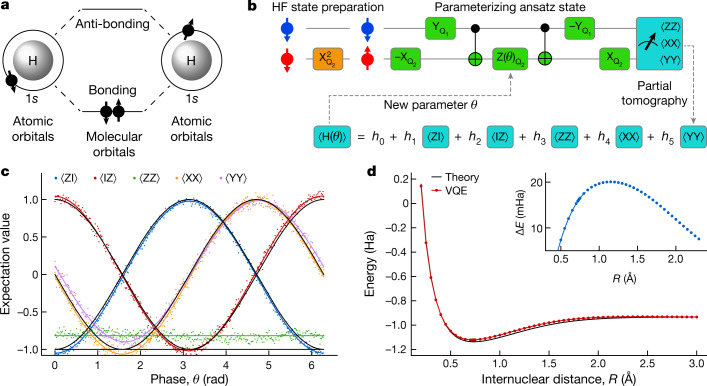
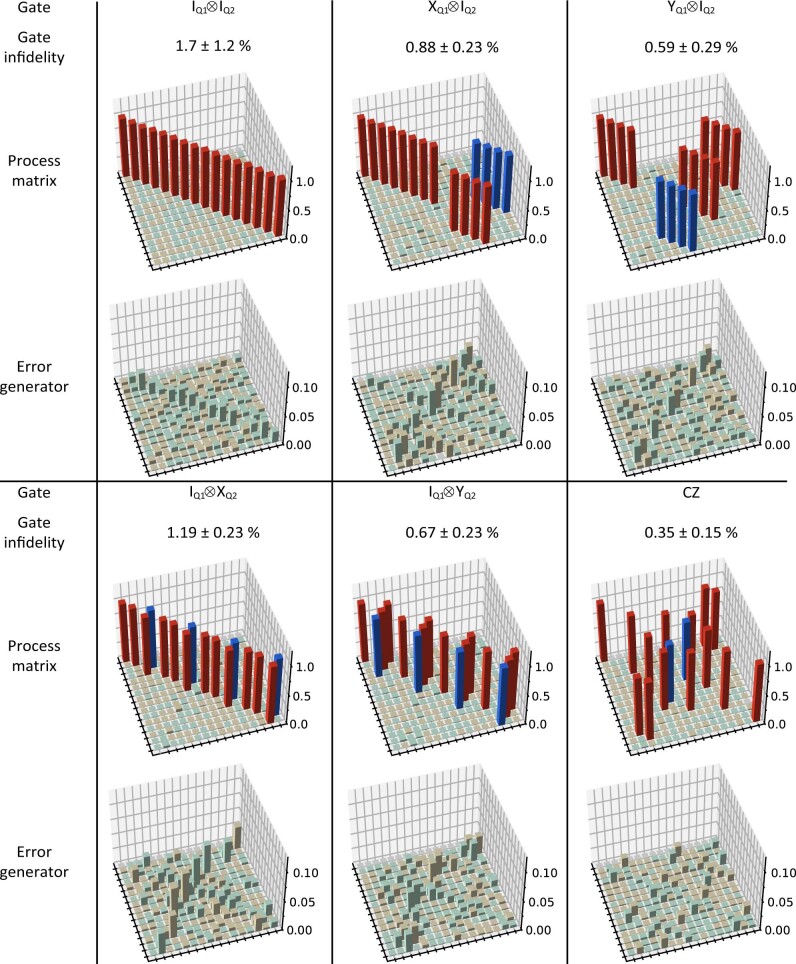
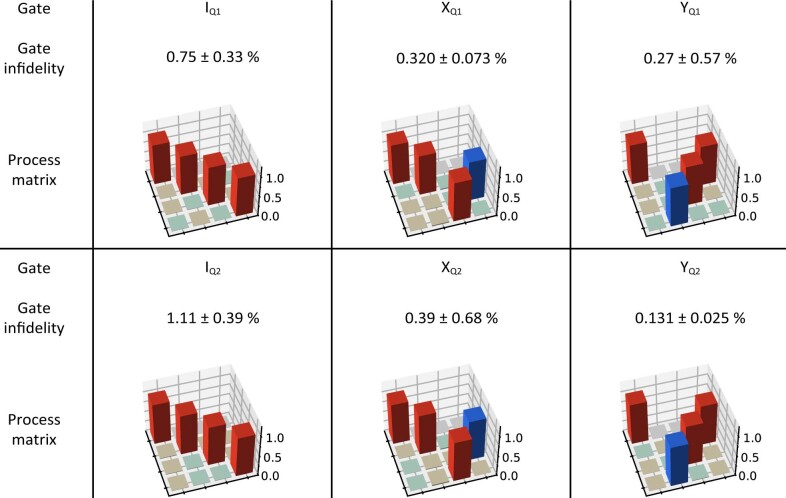
High-fidelity control of quantum bits is paramount for the reliable execution of quantum algorithms and for achieving fault tolerance—the ability to correct errors faster than they occur 1 . The central requirement for fault tolerance is expressed in terms of an error threshold. Whereas the actual threshold depends on many details, a common target is the approximately 1% error threshold of the well-known surface code 2,3 . Reaching two-qubit gate fidelities above 99% has been a long-standing major goal for semiconductor spin qubits. These qubits are promising for scaling, as they can leverage advanced semiconductor technology 4 . Here we report a spin-based quantum processor in silicon with single-qubit and two-qubit gate fidelities, all of which are above 99.5%, extracted from gate-set tomography. The average single-qubit gate fidelities remain above 99% when including crosstalk and idling errors on the neighbouring qubit. Using this high-fidelity gate set, we execute the demanding task of calculating molecular ground-state energies using a variational quantum eigensolver algorithm 5 . Having surpassed the 99% barrier for the two-qubit gate fidelity, semiconductor qubits are well positioned on the path to fault tolerance and to possible applications in the era of noisy intermediate-scale quantum devices.
Overview
The claims and statistics of this paper haven’t been checked yet.
Free: it reads the open-access text and checks the first 5 claims that cite a source we can check. Create a free account to check every claim.
Integrity signals
Registry
Cites
Statistics
Figures
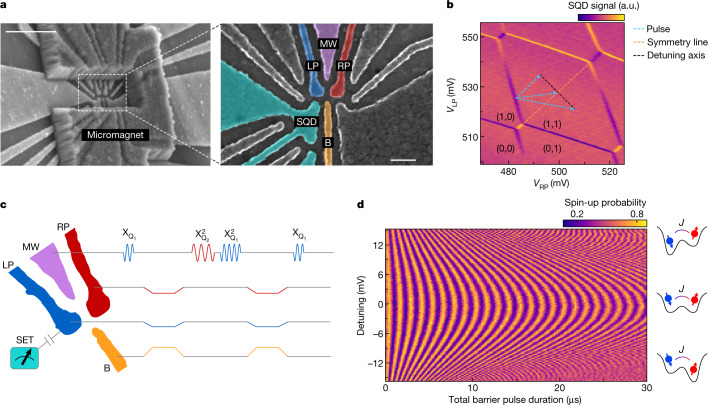
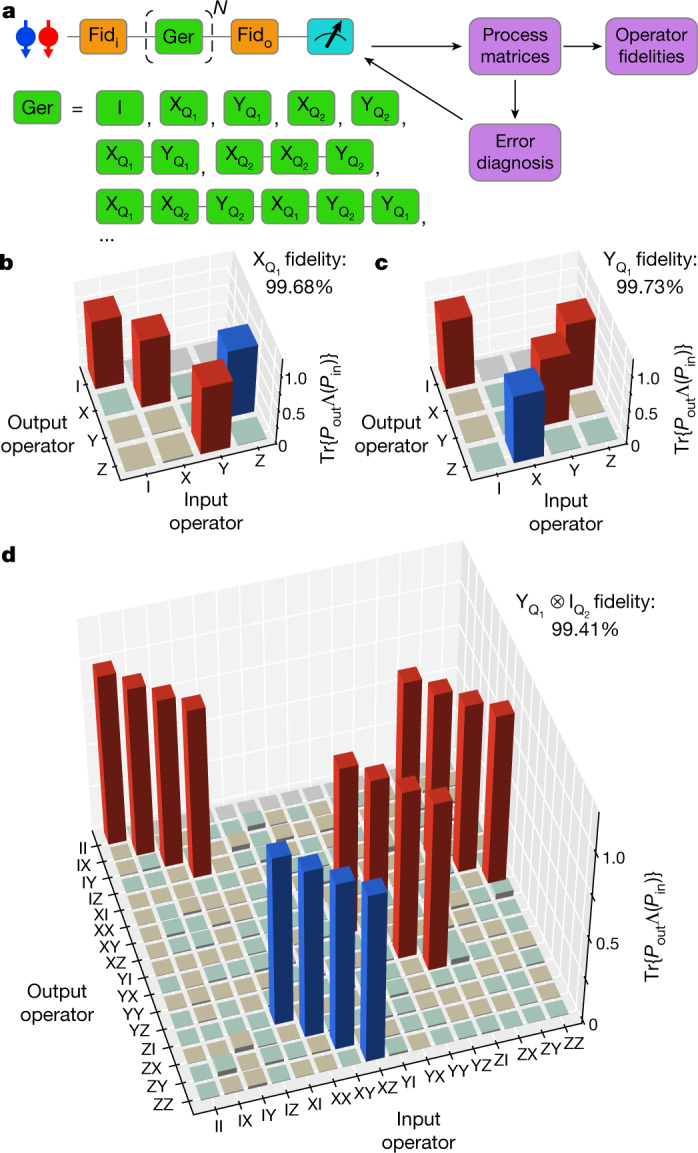
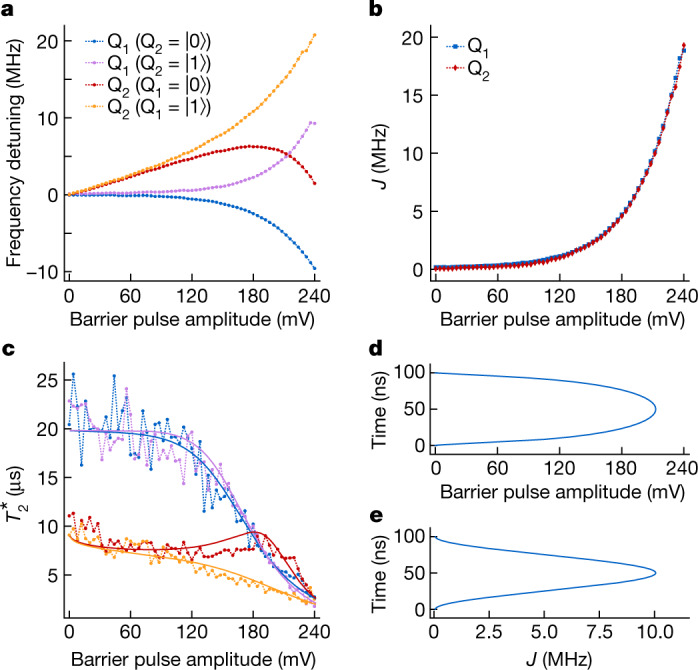
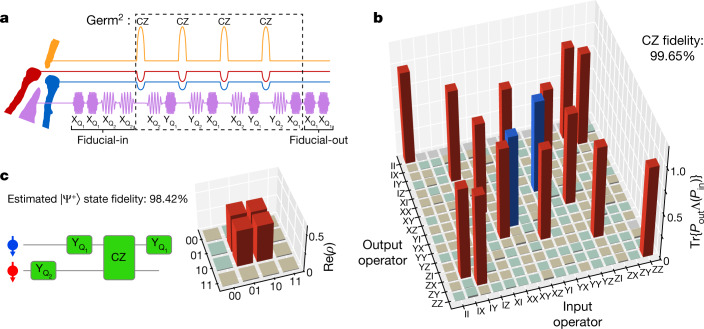
Verification
Claims the paper makes
The claims and statistics of this paper haven’t been checked yet.
Free: it reads the open-access text and checks the first 5 claims that cite a source we can check. Create a free account to check every claim.
Self-check
Percentages, sums and reported differences re-computed from the paper’s own numbers.
The self-check needs the paper’s full text.
Citations
Cites
Quantum Computation and Quantum Information
Nielsen, M. A., Chuang, I., & Grover, L. K. (2002) · American Journal of Physics · doi:10.1119/1.1463744 · Cited by 21,895
Quantum computation and quantum information
Law, J. (2001) · ACM SIGSOFT Software Engineering Notes · doi:10.1145/505482.505499 · Cited by 18,842
Quantum Computing in the NISQ era and beyond
Preskill, J. (2018) · Quantum · doi:10.22331/q-2018-08-06-79 · Cited by 8,830 · cited 1×
“The higher the accuracy, or fidelity, of the operations, the higher the likelihood that near-term applications for quantum computers come in reach [6].”
BackgroundQuantum computation with quantum dots
Loss, D., & DiVincenzo, D. P. (1998) · Physical Review A · doi:10.1103/physreva.57.120 · Cited by 6,840 · cited 2×
“The native two-qubit gate for spin qubits utilizes the exchange interaction [22, 23], originating from the wavefunction overlap of electrons in neighbouring dots.”
BackgroundCoherent Manipulation of Coupled Electron Spins in Semiconductor Quantum Dots
Petta, J. R., Johnson, A. C., Taylor, J. M., Laird, E. A., Yacoby, A., Lukin, M. D., Marcus, C. M., Hanson, M. P., & Gossard, A. C. (2005) · Science · doi:10.1126/science.1116955 · Cited by 3,183 · cited 1×
“The native two-qubit gate for spin qubits utilizes the exchange interaction [22, 23], originating from the wavefunction overlap of electrons in neighbouring dots.”
BackgroundSurface codes: Towards practical large-scale quantum computation
Fowler, A. G., Mariantoni, M., Martinis, J. M., & Cleland, A. N. (2012) · Physical Review A · doi:10.1103/physreva.86.032324 · Cited by 3,059 · cited 2×
“6% and 1%, under certain assumptions, albeit at the cost of a large redundancy in the number of physical qubits [2].”
BackgroundSingle-shot read-out of an individual electron spin in a quantum dot
Elzerman, J. M., Hanson, R., Willems van Beveren, L. H., Witkamp, B., Vandersypen, L. M. K., & Kouwenhoven, L. P. (2004) · Nature · doi:10.1038/nature02693 · Cited by 1,679
Self-citationQuantum computational chemistry
McArdle, S., Endo, S., Aspuru-Guzik, A., Benjamin, S. C., & Yuan, X. (2020) · Reviews of Modern Physics · doi:10.1103/revmodphys.92.015003 · Cited by 1,621 · cited 2×
“the Bravyi-Kitaev (BK) transformation [4].”
MethodLinear transformations which preserve trace and positive semidefiniteness of operators
Jamiołkowski, A. (1972) · Reports on Mathematical Physics · doi:10.1016/0034-4877(72)90011-0 · Cited by 1,512
NMR techniques for quantum control and computation
Vandersypen, L. M. K., & Chuang, I. L. (2005) · Reviews of Modern Physics · doi:10.1103/revmodphys.76.1037 · Cited by 1,217 · cited 1×
“Single-qubit X and Y gates are implemented by frequency-multiplexed microwave signals applied to gate MW, and virtual Z gates are implemented by a phase update of the reference frame [21].”
MethodSelf-citation
Research works printed but not linked: 1
- Xue X Benchmarking gate fidelities in a Si/SiGe two-qubit device Phys. Rev. X 2019 9 021011
Cited by
Items 201–300 of 577
SWAP Gate for Spin Qubits Based on Silicon Devices Integrated with a Micromagnet
Ni, M., Ma, R.-L., Kong, Z., Xue, X., Zhu, S.-K., Wang, C., Li, A.-R., Chu, N., Liao, W.-Z., Cao, G., et al. (2025) · Nano Letters · doi:10.1021/acs.nanolett.4c05540 · Cited by 22
Self-citationQuantum Dot-Based Frequency Multiplier
Oakes, G. A., Peri, L., Cochrane, L., Martins, F., Hutin, L., Bertrand, B., Vinet, M., Gomez-Saiz, A., Ford, C. J. B., Smith, C. G., et al. (2023) · PRX Quantum · doi:10.1103/prxquantum.4.020346 · Cited by 18
Single-electron pump in a quantum dot array for silicon quantum computers
Utsugi, T., Lee, N., Tsuchiya, R., Mine, T., Mizokuchi, R., Yoneda, J., Kodera, T., Saito, S., Hisamoto, D., & Mizuno, H. (2023) · Japanese Journal of Applied Physics · doi:10.35848/1347-4065/acac36 · Cited by 13
Coupled vertical double quantum dots at single-hole occupancy
Ivlev, A., Tidjani, H., Oosterhout, S. D., Sammak, A., Scappucci, G., & Veldhorst, M. (2024) · Applied Physics Letters · doi:10.1063/5.0198274 · Cited by 13
Self-citationA tri-linear quantum dot architecture for semiconductor spin qubits
Li, R., Levajac, V., Godfrin, C., Kubicek, S., Simion, G., Raes, B., Beyne, S., Fattal, I., Loenders, A., Roeck, W. D., et al. (2026) · Scientific Reports · doi:10.1038/s41598-026-42575-z · Cited by 21
Dephasing and error dynamics affecting a singlet-triplet qubit during coherent spin shuttling
Foster, N., Henshaw, J., Rudolph, M., Luhman, D. R., & Jock, R. (2025) · npj Quantum Information · doi:10.1038/s41534-025-00996-0 · Cited by 13
Optimal Control of a Cavity-Mediated i SWAP Gate between Silicon Spin Qubits
Young, S. M., Jacobson, N. T., & Petta, J. R. (2022) · Physical Review Applied · doi:10.1103/physrevapplied.18.064082 · Cited by 13
“[8] Xiao Xue, Maximilian Russ, Nodar Samkharadze, Brennan Undseth, Amir Sammak, Giordano Scappucci, and Lieven M.”
Flopping-mode electron dipole spin resonance in the strong-driving regime
Teske, J. D., Butt, F., Cerfontaine, P., Burkard, G., & Bluhm, H. (2023) · Physical review. B./Physical review. B · doi:10.1103/physrevb.107.035302 · Cited by 15
“In recent years, semiconductor qubits have developed tremendously with key results being fidelities above the error correction threshold [1, 2] and small-scale quantum processors [3, 4], see [5] for a recent review.”
BackgroundNakamura, S., Matsumaru, D., Yamahata, G., Oe, T., Chae, D.-H., Okazaki, Y., Takada, S., Maruyama, M., Fujiwara, A., & Kaneko, N. (2023) · Nano Letters · doi:10.1021/acs.nanolett.3c02858 · Cited by 13
Entangling gates on degenerate spin qubits dressed by a global field
Hansen, I., Seedhouse, A. E., Serrano, S., Nickl, A., Feng, M., Huang, J. Y., Tanttu, T., Stuyck, N. D., Lim, W. H., Hudson, F. E., et al. (2024) · Nature Communications · doi:10.1038/s41467-024-52010-4 · Cited by 19
Faster variational quantum algorithms with quantum kernel-based surrogate models
Smith, A. W. R., Paige, A. J., & Kim, M. S. (2023) · Quantum Science and Technology · doi:10.1088/2058-9565/aceb87 · Cited by 17
Abideen, Z. U., Choi, J., Yuwono, J. A., Lee, W., Murugappan, K., Kumar, P. V., Nisbet, D. R., Trần‐Phú, T., Yoon, M., & Tricoli, A. (2023) · ACS Applied Materials & Interfaces · doi:10.1021/acsami.3c12668 · Cited by 12
Quantum Interference and Coherent Population Trapping in a Double Quantum Dot
Zhou, Y. L., Leng, J., Wang, K., Gao, F., Xu, G., Liu, H., Ma, R.-L., Cao, G., Zhang, J., Guo, G., et al. (2024) · Nano Letters · doi:10.1021/acs.nanolett.4c01781 · Cited by 12
Operating Semiconductor Qubits without Individual Barrier Gates
Ivlev, A., Crielaard, D. R., Meyer, M., Lawrie, W. I. L., Hendrickx, N. W., Sammak, A., Matsumoto, Y., Vandersypen, L. M. K., Scappucci, G., Déprez, C., et al. (2025) · Physical Review X · doi:10.1103/xhq3-4jxz · Cited by 17
“To confirm this we simulate a four-level heavy hole system with the effective Hamiltonian [2–4] given by Here we assume J ( vB 23 ) = J 0 · 10 α vB 23 varies exponentially with the barrier voltage.”
Self-citationMeunier, T., Daval, N., Perruchot, F., & Vinet, M. (2025) · The European Physical Journal A · doi:10.1140/epja/s10050-025-01514-8 · Cited by 15
“Such a demonstration was used recently to reach 99.6% fidelity in 100 ns [40].”
InfluentialEfficient strategies for reducing sampling error in quantum Krylov subspace diagonalization
Lee, G., Choi, S., Huh, J., & Izmaylov, A. F. (2025) · Digital Discovery · doi:10.1039/d4dd00321g · Cited by 20
“The feasibility of EFTQC is further supported by decreasing hardware error rates that are approaching the threshold for the error correction [20–22] and an emergence of a small-scale demonstration of logical qubits [23].”
Robustness of electron charge shuttling: Architectures, pulses, charge defects, and noise thresholds
Jeon, M., Benjamin, S. C., & Fisher, A. J. (2025) · Physical review. B./Physical review. B · doi:10.1103/physrevb.111.195302 · Cited by 12
Quantum error detection in a silicon quantum processor
Zhang, C., Li, C., Tian, Z., Jiang, Y., Xu, F., Zhang, S., Wang, H., Zhang, Y.-N., Bai, X., Zhao, B., et al. (2026) · Nature Electronics · doi:10.1038/s41928-025-01557-1 · Cited by 20
Silicon qubits move a step closer to achieving error correction
Warren, A., & Economou, S. E. (2022) · Nature · doi:10.1038/d41586-022-00047-0 · Cited by 14
The Use of Exchange Coupled Atom Qubits as Atomic‐Scale Magnetic Field Sensors
Kranz, L., Gorman, S. K., Thorgrimsson, B., Monir, S., He, Y., Keith, D., Charde, K., Keizer, J. G., Rahman, R., & Simmons, M. Y. (2022) · Advanced Materials · doi:10.1002/adma.202201625 · Cited by 12
Genuine multipartite entanglement in a one-dimensional Bose-Hubbard model with frustrated hopping
Roy, S. S., Carl, L., & Hauke, P. (2022) · Physical review. B./Physical review. B · doi:10.1103/physrevb.106.195158 · Cited by 17
Vertical gate-defined double quantum dot in a strained germanium double quantum well
Tidjani, H., Tosato, A., Ivlev, A., Déprez, C., Oosterhout, S. D., Stehouwer, L. E. A., Sammak, A., Scappucci, G., & Veldhorst, M. (2023) · Physical Review Applied · doi:10.1103/physrevapplied.20.054035 · Cited by 12
Self-citationElectric Dipole Coupling of a Bilayer Graphene Quantum Dot to a High-Impedance Microwave Resonator
Ruckriegel, M. J., Gächter, L. M., Kealhofer, D., Panah, M. B., Tong, C., Adam, C., Masseroni, M., Duprez, H., Garreis, R., Watanabe, K., et al. (2024) · Nano Letters · doi:10.1021/acs.nanolett.4c01791 · Cited by 12
“The spin lifetime of up to 50 ms in these systems [32] is comparable to that of semi-conductor QD systems such as III-V [33–35], silicon-[36– 39] and germanium-[40] based heterostructures.”
Aldeghi, M., Allenspach, R., Vervelaki, A., Jetter, D., Bagani, K., Braakman, F., Poggio, M., & Salis, G. (2025) · Nano Letters · doi:10.1021/acs.nanolett.4c05037 · Cited by 12
28 Silicon-on-insulator for optically interfaced quantum emitters
Liu, Y., Rinner, S., Remmele, T., Ernst, O. C., Reiserer, A., & Boeck, T. (2022) · Journal of Crystal Growth · doi:10.1016/j.jcrysgro.2022.126733 · Cited by 12
Fast Universal Entangling Gate for Superconducting Quantum ComputersPreprint
AbuGhanem, M., Homid, A. H., Hendy, A. S., Obada, A. ‐. F., & Eleuch, H. (2024) · SSRN Electronic Journal · doi:10.2139/ssrn.4726035 · Cited by 14
Electrically driven spin resonance with bichromatic driving
György, Z., Pályi, A., & Széchenyi, G. (2022) · Physical review. B./Physical review. B · doi:10.1103/physrevb.106.155412 · Cited by 11
Acceptor-based qubit in silicon with tunable strain
Zhang, S., He, Y., & Huang, P. (2023) · Physical review. B./Physical review. B · doi:10.1103/physrevb.107.155301 · Cited by 13
Scalable parity architecture with a shuttling-based spin qubit processor
Ginzel, F., Fellner, M., Ertler, C., Schreiber, L. R., Bluhm, H., & Lechner, W. (2024) · Physical review. B./Physical review. B · doi:10.1103/physrevb.110.075302 · Cited by 17
“We decompose all two-qubit gates into gates which are well-tried and optimized [1, 6, 7].”
BackgroundMethodInfluentialM2CS: A microwave measurement and control system for large-scale superconducting quantum processors
Zhang, J., Sun, X., Guo, Z., Yuan, Y., Zhang, Y., Chu, J., Huang, W., Liang, Y., Qiu, J., 孙, D. 大. S., et al. (2024) · Chinese Physics B · doi:10.1088/1674-1056/ad8a49 · Cited by 15
Radiofrequency cascade readout of coupled spin qubits
Chittock-Wood, J. F., Leon, R. C. C., Fogarty, M. A., Murphy, T., von Horstig, F.-E., Patomäki, S. M., Oakes, G. A., Williams, J., Johnson, N., Jussot, J., et al. (2026) · Nature Electronics · doi:10.1038/s41928-026-01582-8 · Cited by 12
“This finding is in agreement with previous reports, which show that T echo2 , J is an order of magnitude shorter than the magnetic noise limit 22,50 (Supplementary Section 9).”
InfluentialEngineering Ge Profiles in Si/SiGe Heterostructures for Increased Valley Splitting
Stehouwer, L. E. A., Losert, M. P., Rigot, M., Esposti, D. D., Martí‐Sánchez, S., Rimbach-Russ, M., Arbiol, J., Friesen, M. G., & Scappucci, G. (2025) · Nano Letters · doi:10.1021/acs.nanolett.5c02848 · Cited by 17
Self-citationOperating two exchange-only qubits in parallel
Mądzik, M. T., Luthi, F., Guerreschi, G. G., Mohiyaddin, F. A., Borjans, F., Chadwick, J. D., Curry, M., Ziegler, J., Atanasov, S. E., Bavdaz, P. L., et al. (2025) · Nature · doi:10.1038/s41586-025-09767-5 · Cited by 39
Limits to Quantum Gate Fidelity from Near-Field Thermal and Vacuum Fluctuations
Sun, W., Bharadwaj, S., Yang, L., Hsueh, Y., Wang, Y., Jiao, D., Rahman, R., & Jacob, Z. (2023) · Physical Review Applied · doi:10.1103/physrevapplied.19.064038 · Cited by 12
Zhang, Y., Xu, S., Liu, J., Jin, W., Lefkidis, G., Hübner, W., & Li, C. (2023) · The Journal of Physical Chemistry Letters · doi:10.1021/acs.jpclett.3c01917 · Cited by 12
Compressed Gate Characterization for Quantum Devices with Time-Correlated Noise
Gullans, M. J., Caranti, M., Mills, A., & Petta, J. R. (2024) · PRX Quantum · doi:10.1103/prxquantum.5.010306 · Cited by 17
“8% [18–20].”
ResultBeSnake: A Routing Algorithm for Scalable Spin-Qubit Architectures
Paraskevopoulos, N., Almudéver, C. G., & Feld, S. (2024) · IEEE Transactions on Quantum Engineering · doi:10.1109/tqe.2024.3429451 · Cited by 13
“As for gate fidelities, they can achieve on average 99.9% fidelity for single-qubit gates and 99% for two-qubit gates [31], [32], [33].”
BackgroundInfluentialYannouleas, C., & Landman, U. (2022) · Physical review. B./Physical review. B · doi:10.1103/physrevb.106.195306 · Cited by 15
Flying Spin Qubits in Quantum Dot Arrays Driven by Spin-Orbit Interaction
Fernández-Fernández, D., Ban, Y., & Platero, G. (2024) · Quantum · doi:10.22331/q-2024-11-21-1533 · Cited by 15
“Due to the finite SOI, the particle can also tunnel to its neighboring dots with a spin-flip probability τ F,i . ity, opening the doors to new functionalities with applications in quantum computation, quantum information, and quantum simulation [14–19].”
Jnane, H., & Benjamin, S. C. (2025) · Physical Review Applied · doi:10.1103/rm43-nh9b · Cited by 14
Tracking spin qubit frequency variations over 912 days
Capannelli, K., Undseth, B., de Fuentes, I. F., Raymenants, E., Unseld, F. K., Pietx-Casas, O., Philips, S. G. J., Mądzik, M. T., Amitonov, S. V., Tryputen, L., et al. (2025) · npj Quantum Information · doi:10.1038/s41534-025-01134-6 · Cited by 14
Self-citationPulse shaping for ultra-fast adiabatic quantum gates
Polat, İ., Overwater, R. W. J., Rimbach-Russ, M., & Sebastiano, F. (2026) · npj Quantum Information · doi:10.1038/s41534-026-01245-8 · Cited by 12
“Published in partnership with The University of New South Wales https://doi.org/10.1038/s41534-026-01245-8 Pulse shaping for ultra-fast adiabatic quantum gates”
InfluentialOptical demonstration of quantum fault-tolerant threshold
Sun, K., Hao, Z.-Y., Wang, Y., Li, J.-K., Xu, X.-Y., Xu, J., Han, Y., Li, C., & Guo, G. (2022) · Light Science & Applications · doi:10.1038/s41377-022-00891-9 · Cited by 12
Near-Term Spin-Qubit Architecture Design via Multipartite Maximally Entangled States
Paraskevopoulos, N., Steinberg, M., Undseth, B., Sarkar, A., Vandersypen, L. M. K., Xue, X., & Feld, S. (2025) · PRX Quantum · doi:10.1103/prxquantum.6.020307 · Cited by 11
“Regarding gate fidelity, we assume an average of 99.99% for single-qubit gates and nearest-neighbor shuttles, 99.90% for two-qubit gates, and readout [141, 142, 144].”
InfluentialSelf-citationAn Operation Guide of Si-MOS Quantum Dots for Spin Qubits
Hu, R.-Z., Ma, R.-L., Ni, M., Zhang, X., Zhou, Y. L., Wang, K., Luo, G., Cao, G., Kong, Z., Wang, G., et al. (2021) · Nanomaterials · doi:10.3390/nano11102486 · Cited by 11
“9% [28,29], the two-qubit operation fidelities are above 99% as reported [30], the spin–photon coupling rates are more than 10 megahertz [31–33], and the qubit operation temperature is higher than 1 kelvin [34,35].”
BackgroundDevitalizing noise-driven instability of entangling logic in silicon devices with bias controls
Ryu, H., & Kang, J.-H. (2022) · Scientific Reports · doi:10.1038/s41598-022-19404-0 · Cited by 10
Elongated quantum dot as a distributed charge sensor
Patomäki, S. M., Williams, J., Berritta, F., Lainé, C., Fogarty, M. A., Leon, R. C. C., Jussot, J., Kubicek, S., Chatterjee, A., Govoreanu, B., et al. (2024) · Physical Review Applied · doi:10.1103/physrevapplied.21.054042 · Cited by 10
“These include the demonstration of high-fidelity one-and two-qubit gates on the same device [2–4], high-fidelity readout using rf single-electron transistors (SETs) [5], the demonstration of simple instances of quantum error correction [6] and the scale up to six-qubit devices in a linear arrangement…”
Improved Single-Shot Qubit Readout Using Twin rf-SET Charge Correlations
Serrano, S., Feng, M., Lim, W. H., Seedhouse, A. E., Tanttu, T., Gilbert, W., Escott, C. C., Abrosimov, N. V., Pohl, H.-J., Thewalt, M. L. W., et al. (2024) · PRX Quantum · doi:10.1103/prxquantum.5.010301 · Cited by 9
Zhang, C., Chan, G. X., Wang, X., & Xue, Z. (2022) · Physical Review A · doi:10.1103/physreva.106.032608 · Cited by 9
Toward Low‐Power Cryogenic Metal‐Oxide Semiconductor Field‐Effect Transistors
Knoch, J., Richstein, B., Han, Y., Frentzen, M., Schreiber, L. R., Klos, J., Raffauf, L., Wilck, N., König, D., & Zhao, Q. (2023) · physica status solidi (a) · doi:10.1002/pssa.202300069 · Cited by 9
Collective Microwave Response for Multiple Gate-Defined Double Quantum Dots
Lin, T. C., Gu, S., Xu, Y.-Q., Jiang, S.-L., Ye, S.-K., Wang, B., Li, H.-O., Guo, G., Zou, C., Hu, X., et al. (2023) · Nano Letters · doi:10.1021/acs.nanolett.3c00036 · Cited by 9
Detecting quantum critical points at finite temperature via quantum teleportation
Ribeiro, G. A. P., & Rigolin, G. (2023) · Physical Review A · doi:10.1103/physreva.107.052420 · Cited by 9
Quantum entanglement, teleportation, and randomness: Nobel Prize in Physics 2022
Fedorov, A. K., Kiktenko, E. O., Khabarova, K. Y., & Kolachevsky, N. (2023) · Physics-Uspekhi · doi:10.3367/ufnr.2023.06.039412 · Cited by 10
High temperature spin selectivity in a quantum dot qubit using reservoir spin accumulation
Jansen, R., & Yuasa, S. (2024) · npj Quantum Information · doi:10.1038/s41534-024-00815-y · Cited by 9
Submicrosecond high-fidelity dispersive readout of a spin qubit with squeezed photons
Kam, C., & Hu, X. (2024) · Physical Review A · doi:10.1103/physreva.109.l040402 · Cited by 10
Pursuing high-fidelity control of spin qubits in natural Si/SiGe quantum dot
Wang, N., Wang, S., Zhang, R.-Z., Kang, J., Lu, W.-L., Li, H.-O., Cao, G., Wang, B., & Guo, G. (2024) · Applied Physics Letters · doi:10.1063/5.0230605 · Cited by 10
“38,39 The single-qubit fidelities do not appear to be limited by the de-phasing time given the longer T Rabi 2 , but are likely limited by crosstalk induced by residual coupling 17,31 and systematic errors in control pulses 25 .”
BackgroundA 2 × 2 Quantum Dot Array in Silicon with Fully Tunable Pairwise Interdot Coupling
Lim, W. H., Tanttu, T., Youn, T., Huang, J. Y., Serrano, S., Dickie, A., Yianni, S. A., Hudson, F. E., Escott, C. C., Yang, C. H., et al. (2025) · Nano Letters · doi:10.1021/acs.nanolett.4c06264 · Cited by 9
“High-fidelity two-qubit gates were achieved shortly after integrating these gates into the devices [24, 25] and their implementation in 2D arrays have led to the first demonstrations of 2D spin qubit quantum processors [22].”
High-fidelity sub-microsecond single-shot electron spin readout above 3.5 K
Geng, H., Kiczynski, M., Timofeev, A., Osika, E. N., Keith, D., Rowlands, J., Kranz, L., Rahman, R., Chung, Y., Keizer, J. G., et al. (2025) · Nature Communications · doi:10.1038/s41467-025-58279-3 · Cited by 9
Spin–orbit interaction enabled high-fidelity two-qubit gates
Qi, J., Liu, Z.-H., & Xu, H. Q. (2023) · New Journal of Physics · doi:10.1088/1367-2630/ad19ab · Cited by 11
Challenges in advancing our understanding of atomic-like quantum systems: Theory and experiment
Gali, Á., Schleife, A., Heinrich, A. J., Laucht, A., Schuler, B., Chakraborty, C., Anderson, C. P., Déprez, C., McCallum, J. C., Bassett, L. C., et al. (2024) · MRS Bulletin · doi:10.1557/s43577-023-00659-5 · Cited by 9
Experimental Online Quantum Dots Charge Autotuning Using Neural Networks
Yon, V., Galaup, B., Rohrbacher, C., Rivard, J., Morel, A., Leclerc, D., Godfrin, C., Li, R., Kubicek, S., Greve, K. D., et al. (2025) · Nano Letters · doi:10.1021/acs.nanolett.4c04889 · Cited by 6
Performance of the spin qubit shuttling architecture for a surface code implementation
Yenilen, B., Sala, A., Bluhm, H., Müller, M., & Rispler, M. (2026) · Quantum · doi:10.22331/q-2026-09-30-2219 · Cited by 9
“…single-and two-qubit gates, the latter relying on the exchange interaction for state-dependent driving to implement entangling two-qubit gates [46, 68]; and shuttling lanes which are used to transport the electrons across the different elements of the SpinBus architecture, facilitating long-range…”
Variability of hole-spin qubits in planar germanium
Martinez, B., & Niquet, Y. (2025) · Physical Review Applied · doi:10.1103/mtky-93p1 · Cited by 8
“In the past few years, high-fidelity single-[10, 21–23] and two-qubit gates [21–23] have been demonstrated in these platforms, as well as spin shuttling [24–26] and spin-photon coupling [27–29], the basic ingredients for quantum links between two-dimensional arrays [4, 14, 18, 30, 31].”
Conveyor-mode electron shuttling through a T-junction in Si/SiGe
Beer, M., Xue, R., Deda, L., Trellenkamp, S., Tu, J., Surrey, P., Seidler, I., Bluhm, H., & Schreiber, L. R. (2026) · Nature Communications · doi:10.1038/s41467-026-78805-1 · Cited by 8
Robust spin-qubit control in a natural Si-MOS quantum dot using phase modulation
Kuno, T., Utsugi, T., Ramsay, A. J., Mertig, N., Lee, N., Yanagi, I., Mine, T., Kusuno, N., Mizokuchi, R., Nakajima, T., et al. (2026) · npj Quantum Information · doi:10.1038/s41534-026-01185-3 · Cited by 13
Resonant direct cnot in remote double quantum dot spin qubits
McMillan, S. R., & Burkard, G. (2023) · Physical review. B./Physical review. B · doi:10.1103/physrevb.108.125414 · Cited by 8
Progress of Gate‐Defined Semiconductor Spin Qubit: Host Materials and Device Geometries
Liu, Y., Guan, S., Luo, J., & Li, S. (2024) · Advanced Functional Materials · doi:10.1002/adfm.202304725 · Cited by 13
Detecting quantum critical points at finite temperature via quantum teleportation: Further models
Ribeiro, G. A. P., & Rigolin, G. (2024) · Physical Review A · doi:10.1103/physreva.109.012612 · Cited by 8
Control of threshold voltages in Si / Si 0.7 Ge 0.3 quantum devices via optical illumination
Wolfe, M. A., Coe, B., Edwards, J. S., Kovach, T. J., McJunkin, T., Harpt, B., Savage, D. E., Lagally, M. G., McDermott, R., Friesen, M. G., et al. (2024) · Physical Review Applied · doi:10.1103/physrevapplied.22.034044 · Cited by 8
“The latter is a significant source of dephasing for quantum-dot qubit operations [15–17], to the extent that sweet spots [18, 19], symmetric operating points [20–24], and other favorable points in the energy dispersion [25] are used to mitigate its effects.”
Tröger, J., Kersting, R., Hagenhoff, B., Bougeard, D., Abrosimov, N. V., Klos, J., Schreiber, L. R., & Bracht, H. A. (2025) · Journal of Applied Physics · doi:10.1063/5.0232252 · Cited by 8
13.5 An 18.5µW/qubit Cryo-CMOS Charge-Readout IC Demonstrating QAM Multiplexing for Spin Qubits
Schmidt, Q., Jadot, B., Martinez, B., Faurie, A., Meunier, T., Casanova, J.-B., Jehl, X., Thonnart, Y., & Badets, F. (2025) · Digest of technical papers/Digest of technical papers - IEEE International Solid-State Circuits Conference · doi:10.1109/isscc49661.2025.10904808 · Cited by 8
“Spin qubits are a promising candidate for large-scale fault-tolerant quantum computing due to 1μm² footprint per qubit, higher operating temperature (up to 1K [1]) and possible compatibility with industrial CMOS processes [2, 3].”
Compiling the surface code to crossbar spin qubit architectures
Pataki, D., & Pályi, A. (2025) · Physical review. B./Physical review. B · doi:10.1103/physrevb.111.115307 · Cited by 8
High-fidelity CNOT gate for spin qubits with asymmetric driving using virtual gates
Heinz, I., & Burkard, G. (2022) · Physical review. B./Physical review. B · doi:10.1103/physrevb.105.l121402 · Cited by 8
Guo, L.-J., Xu, H. L., Fang, Z.-Y., Chen, T., Wei, K., & Zhang, C. (2023) · Physical Review A · doi:10.1103/physreva.107.012604 · Cited by 9
Singlet-triplet-state readout in silicon metal-oxide-semiconductor double quantum dots
Ma, R.-L., Zhu, S.-K., Kong, Z., Sun, T., Ni, M., Zhou, Y.-C., Zhou, Y. L., Luo, G., Cao, G., Wang, G., et al. (2024) · Physical Review Applied · doi:10.1103/physrevapplied.21.034022 · Cited by 8
Prabowo, B., Dijkema, J., Xue, X., Sebastiano, F., Vandersypen, L. M. K., & Babaie, M. (2024) · IEEE Transactions on Quantum Engineering · doi:10.1109/tqe.2024.3385673 · Cited by 8
“Because of the short T 2* of ∼ 20 μ s [3], [4], [5], it is essential to reduce the readout, decode, and gate operation time to be below the sub-μ s range for the QEC cycle time to be significantly faster than the dephasing time.”
BackgroundSelf-citationWavelet correlation noise analysis for qubit operation variable time series
Seedhouse, A. E., Stuyck, N. D., Serrano, S., Gilbert, W., Huang, J. Y., Hudson, F. E., Itoh, K. M., Laucht, A., Lim, W. H., Yang, C. H., et al. (2025) · Scientific Reports · doi:10.1038/s41598-024-79553-2 · Cited by 8
Impact of disorder on the distribution of gate coupling strengths in a spin qubit devicePreprint
Kuppuswamy, S. R., Kerstens, H., Liu, C.-X., Wang, L., & Akhmerov, A. (2022) · arXiv (Cornell University) · doi:10.48550/arxiv.2208.02190 · Cited by 8
Two-Qubit Gate Set Tomography with Fewer CircuitsPreprint
Rudinger, K., Ostrove, C., Seritan, S., Grace, M., Nielsen, E., Blume-Kohout, R., & Young, K. C. (2023) · arXiv · doi:10.48550/arxiv.2307.15767 · Cited by 9
Robust quantum dots charge autotuning using neural network uncertainty
Yon, V., Galaup, B., Rohrbacher, C., Rivard, J., Godfrin, C., Li, R., Kubicek, S., Greve, K. D., Gaudreau, L., Dupont-Ferrier, E., et al. (2024) · Machine Learning Science and Technology · doi:10.1088/2632-2153/ad88d5 · Cited by 8
“This technology presents several advantages, such as high gate fidelities [5–9], long coherence times [10, 11], thermal robustness at temperatures greater than one kelvin [12] and compatibility with well-established metal-oxide-semiconductor (CMOS) technologies [13–15].”
Hole-spin qubits in germanium beyond the single-particle regime
Secchi, A., Forghieri, G., Bordone, P., Loss, D., Bosco, S., & Troiani, F. (2026) · Physical Review Applied · doi:10.1103/9w1z-8x7g · Cited by 7
Protocols to measure the non-Abelian Berry phase by pumping a spin qubit through a quantum-dot loop
Kolok, B., & Pályi, A. (2024) · Physical review. B./Physical review. B · doi:10.1103/physrevb.109.045438 · Cited by 7
Finite-temperature detection of quantum critical points via internal quantum teleportation
Ribeiro, G. A. P., & Rigolin, G. (2025) · Physical Review A · doi:10.1103/physreva.111.012404 · Cited by 7
Neural-network-designed three-qubit gates robust against charge noise and crosstalk in silicon
Kanaar, D. W., & Kestner, J. P. (2024) · Quantum Science and Technology · doi:10.1088/2058-9565/ad3d06 · Cited by 8
Visual explanations of machine learning model estimating charge states in quantum dots
Muto, Y., Nakaso, T., Shinozaki, M., Aizawa, T., Kitada, T., Nakajima, T., Delbecq, M. R., Yoneda, J., Takeda, K., Noiri, A., et al. (2024) · APL Machine Learning · doi:10.1063/5.0193621 · Cited by 8
“Basic operations such as single-qubit[1, 2] and two-qubit operations[3, 4] have been demonstrated, and quantum error correction has also been demonstrated[12] with improved operation fidelity[5–11].”
BackgroundNanosheet Transistors Produced in 300 mm Fabrication Platform for Quantum Computing
Rohrbacher, C., Leclerc, D., Rivard, J., Ritzenthaler, R., Lupien, C., Mertens, H. W., Horiguchi, N., & Dupont-Ferrier, E. (2025) · IEEE Electron Device Letters · doi:10.1109/led.2025.3556348 · Cited by 8
“S PIN qubit devices in CMOS are promising candidates to achieve scalable quantum computers as they have demonstrated several significant milestones including long coherence time [1], single and two-qubit gates beyond the error correction threshold [2], [3] and high-temperature operation [4], [5].”
Geometric two-qubit gates in silicon-based double quantum dots
Lu, Y.-Y., Wei, K., & Zhang, C. (2025) · Physical Review A · doi:10.1103/physreva.111.042609 · Cited by 8
Minimal state-preparation times for silicon spin qubits
Long, C. K., Mayhall, N. J., Economou, S. E., Barnes, E., Barnes, C. H. W., Martins, F., Arvidsson-Shukur, D. R. M., & Mertig, N. (2025) · npj Quantum Information · doi:10.1038/s41534-025-01027-8 · Cited by 10
“In addition, we calculate the METs for molecular ground-state preparation (dashed black line in center panels) for J max ¼ 10MHz — a commonvalueforrealizingCZ 28,30,32,35 orCNOT 47 gates.”
SpinHex: A low-crosstalk, spin-qubit architecture based on multielectron couplers
Otxoa, R. M., Martínez, J. E., Schnabl, P., del Moral, J. O., Mertig, N., Smith, C. G., & Martins, F. (2026) · Physical Review Research · doi:10.1103/t2ry-ll9n · Cited by 7
Digitally controlled conveyor-belt spin shuttling in silicon for large-scale quantum computation
Nagai, R., Takemoto, T., Wachi, Y., & Mizuno, H. (2025) · Physical Review Applied · doi:10.1103/ng22-2cgg · Cited by 8
A compact and versatile cryogenic probe station for quantum device testing
de Kruijf, M., Geyer, S., Berger, T., Mergenthaler, M., Braakman, F., Warburton, R. J., & Kuhlmann, A. V. (2023) · Review of Scientific Instruments · doi:10.1063/5.0139825 · Cited by 9
Superconducting TSV contact for cryoelectronic devices
Filippov, I. A., Anikanov, A., Rykov, A., Mumlyakov, A. M., Шибалов, М. В., Trofimov, I. V., Porokhov, N. V., Anufriev, Y., & Tarkhov, M. A. (2023) · Superconductor Science and Technology · doi:10.1088/1361-6668/ad1460 · Cited by 7
Analysis and 3D TCAD simulations of single-qubit control in an industrially-compatible FD-SOI device
Philippopoulos, P., Beaudoin, F., & Galy, P. (2024) · Solid-State Electronics · doi:10.1016/j.sse.2024.108883 · Cited by 12
Neul, M., Sprave, I. V., Diebel, L. K., Zinkl, L. G., Fuchs, F., Yamamoto, Y., Vedder, C., Bougeard, D., & Schreiber, L. R. (2024) · Physical Review Materials · doi:10.1103/physrevmaterials.8.043801 · Cited by 7
Recipes for the digital quantum simulation of lattice spin systems
Burkard, G. (2025) · SciPost Physics Core · doi:10.21468/scipostphyscore.8.1.030 · Cited by 7
“Experimental demonstrations of quantum simulation have been realized using superconducting circuits [7, 8], ion traps [9], and semiconductor spin qubits [10].”
Resource-efficient shadow tomography using equatorial stabilizer measurements
Park, G., Teo, Y. S., & Jeong, H. (2025) · Physical Review Research · doi:10.1103/9pbp-jzr9 · Cited by 9
“Spin-based quantum computation allows for more than 99.5% fidelity [61, 73].”
InfluentialFull Tunability and Quantum Coherent Dynamics of a Driven Multilevel System
Zhou, Y. L., Gu, S., Wang, K., Cao, G., Hu, X., Gong, M., Li, H.-O., & Guo, G. (2023) · Physical Review Applied · doi:10.1103/physrevapplied.19.044053 · Cited by 7
“1 (b) has been explored in a two-electron singlet-triplet (ST) system in a DQD [7, 8, 62, 63].”
BackgroundInfluentialPhoto-assisted spin transport in double quantum dots with spin–orbit interaction
Fernández-Fernández, D., Picó-Cortés, J., Liñán, S. V., & Platero, G. (2023) · Journal of Physics Materials · doi:10.1088/2515-7639/acd1b7 · Cited by 10
Kanaar, D. W., Güngördü, U., & Kestner, J. P. (2022) · Physical review. B./Physical review. B · doi:10.1103/physrevb.105.245308 · Cited by 9
Precision tomography of a three-qubit electron-nuclear quantum processor in siliconPreprint
Mądzik, M. T., & Asaad, S. (2021) · arXiv (Cornell University) · doi:10.6084/m9.figshare.c.5471706 · Cited by 7
Metadata
- Authors
- Xue, X., Russ, M., Samkharadze, N., Undseth, B., Sammak, A., Scappucci, G., & Vandersypen, L. M. K.
- Affiliations
- QuTech (NL)
- Netherlands Organisation for Applied Scientific Research (NL)
- Corresponding author
- Vandersypen, Lieven M. K.
- ORCID
- Venue
- Nature
- Published
- 2022-01-19
- Volume
- 601
- Issue
- 7893
- Pages
- 343-347
- ISSN
- 0028-0836 (ISSN-L)
- 1476-4687
- PMC
- PMC8770146
- OpenAlex
- W4206313080
- Semantic Scholar
- 7bcfa132bc89fec7035f0da0af7464cda3722bc4
- Cited by
- 524
- References
- 65
- Citations by year
- 2026: 69 · 2025: 131 · 2024: 124 · 2023: 110 · 2022: 82
- FWCI
- 45.93
- Type
- journal article
- Language
- en
- Open access
- hybrid
- doi.org
- Licence
- cc-by
- creativecommons.org/licenses/by/4.0 (tdm)
- creativecommons.org/licenses/by/4.0 (vor)
- Locations
- Nature (publishedVersion, cc-by)
- PubMed Central (publishedVersion, cc-by)
- PubMed (publishedVersion)
- arXiv (Cornell University) (submittedVersion)
- TNO Repository (submittedVersion)
- RePEc: Research Papers in Economics (submittedVersion)
- Research Repository (Delft University of Technology) (submittedVersion, cc-by)
- Data Archiving and Networked Services (DANS) (submittedVersion, other-oa)
- arXiv (Cornell University)
- Funders
- Army Research Office (W911NF‐17‐1‐0274, W911NF)
- Topics
- Physical Sciences › Physics and Astronomy › Condensed Matter Physics › Quantum and electron transport phenomena
- Physical Sciences › Computer Science › Artificial Intelligence › Quantum Computing Algorithms and Architecture
- Physical Sciences › Materials Science › Materials Chemistry › Diamond and Carbon-based Materials Research
- Keywords
- spin qubits, fault tolerance, two-qubit gate fidelity, single-qubit gate fidelity, gate set tomography, variational quantum eigensolver, crosstalk error, NISQ devices
About these checks
Registry, retraction, Cites and statistics results are computed, not judged, with one exception: a printed reference that no index lists is read once by a model before it counts as a citation error. Claims are extracted by a model and kept only when their quote appears verbatim in the text; each cited source is then checked, with a model’s help, for whether it says what the claim relies on. Those verdicts can be wrong — read the claim’s quote and the cited source before relying on one.
Statistics and arithmetic are recomputed, not judged.
Confidence bands are shown only for fields calibrated on our annotated test set. None is calibrated yet, so no band is shown.
What counts as a claim ›How we measure confidence ›How we check this ›
Are you an author, or do you see a problem with this page? Request a review
Data sources
Bibliographic data: Semantic Scholar, OpenAlex, Crossref.
Contains information from the Semantic Scholar Academic Graph Datasets, made available under the ODC Attribution License (ODC-BY 1.0).
Semantic Scholar’s data is described in: Kinney, R., et al. (2023). The Semantic Scholar Open Data Platform. arXiv:2301.10140.
