

Quantum logic with spin qubits crossing the surface code threshold
Open accessThe DOI matches its Crossref record; 62 of the 65 references it cites were found in a registry or an index.
Abstract
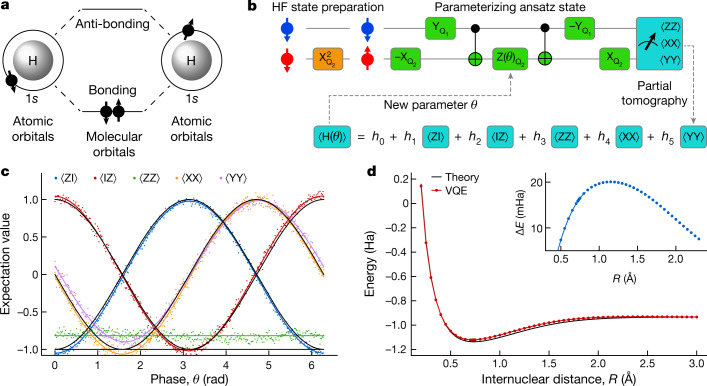
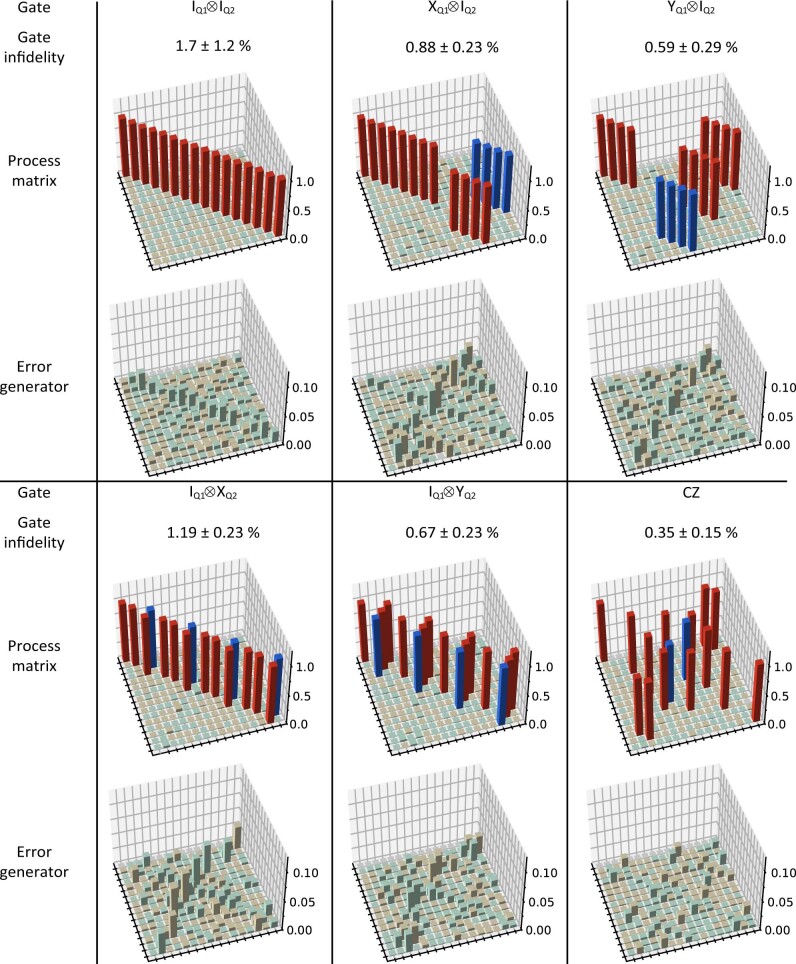
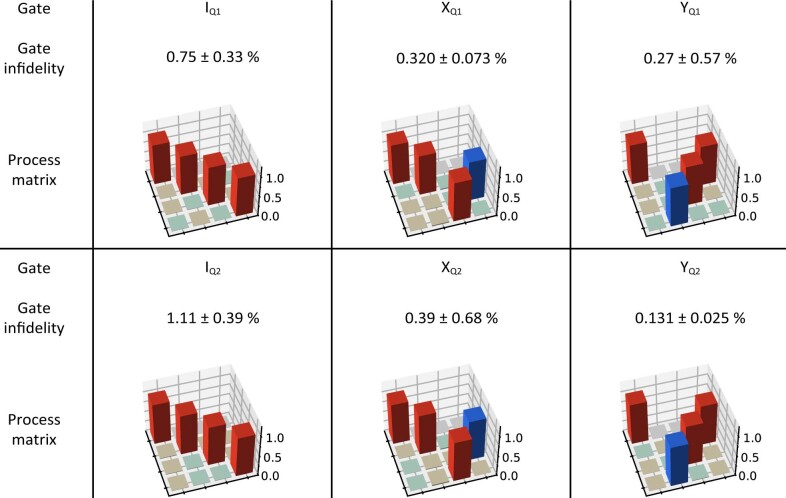
High-fidelity control of quantum bits is paramount for the reliable execution of quantum algorithms and for achieving fault tolerance—the ability to correct errors faster than they occur 1 . The central requirement for fault tolerance is expressed in terms of an error threshold. Whereas the actual threshold depends on many details, a common target is the approximately 1% error threshold of the well-known surface code 2,3 . Reaching two-qubit gate fidelities above 99% has been a long-standing major goal for semiconductor spin qubits. These qubits are promising for scaling, as they can leverage advanced semiconductor technology 4 . Here we report a spin-based quantum processor in silicon with single-qubit and two-qubit gate fidelities, all of which are above 99.5%, extracted from gate-set tomography. The average single-qubit gate fidelities remain above 99% when including crosstalk and idling errors on the neighbouring qubit. Using this high-fidelity gate set, we execute the demanding task of calculating molecular ground-state energies using a variational quantum eigensolver algorithm 5 . Having surpassed the 99% barrier for the two-qubit gate fidelity, semiconductor qubits are well positioned on the path to fault tolerance and to possible applications in the era of noisy intermediate-scale quantum devices.
Overview
The claims and statistics of this paper haven’t been checked yet.
Free: it reads the open-access text and checks the first 5 claims that cite a source we can check. Create a free account to check every claim.
Integrity signals
Registry
Cites
Statistics
Figures
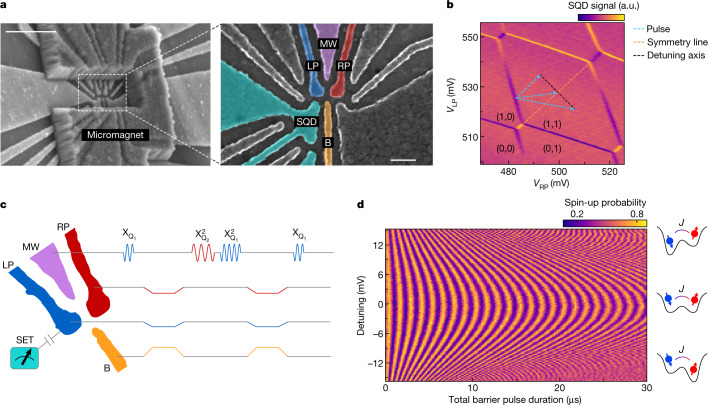
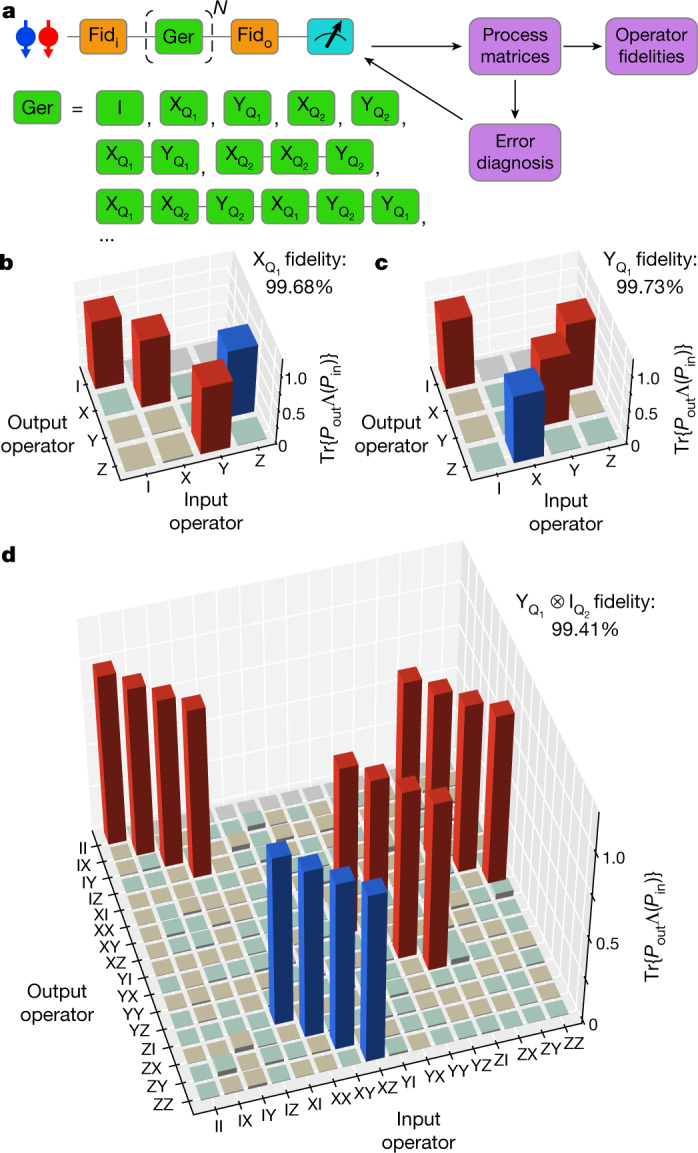
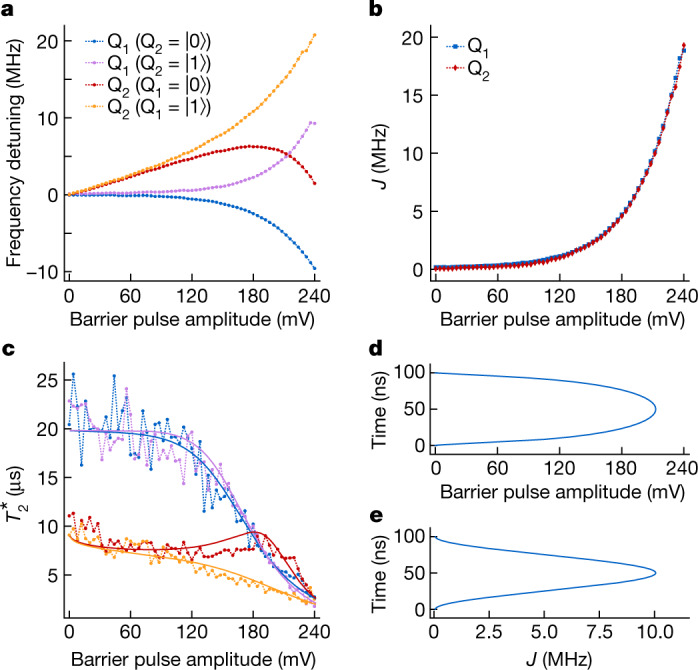
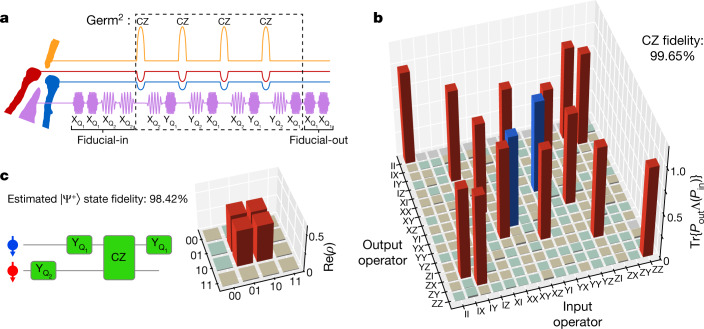
Verification
Claims the paper makes
The claims and statistics of this paper haven’t been checked yet.
Free: it reads the open-access text and checks the first 5 claims that cite a source we can check. Create a free account to check every claim.
Self-check
Percentages, sums and reported differences re-computed from the paper’s own numbers.
The self-check needs the paper’s full text.
Citations
Cites
Quantum Computation and Quantum Information
Nielsen, M. A., Chuang, I., & Grover, L. K. (2002) · American Journal of Physics · doi:10.1119/1.1463744 · Cited by 21,895
Quantum computation and quantum information
Law, J. (2001) · ACM SIGSOFT Software Engineering Notes · doi:10.1145/505482.505499 · Cited by 18,842
Quantum Computing in the NISQ era and beyond
Preskill, J. (2018) · Quantum · doi:10.22331/q-2018-08-06-79 · Cited by 8,830 · cited 1×
“The higher the accuracy, or fidelity, of the operations, the higher the likelihood that near-term applications for quantum computers come in reach [6].”
BackgroundQuantum computation with quantum dots
Loss, D., & DiVincenzo, D. P. (1998) · Physical Review A · doi:10.1103/physreva.57.120 · Cited by 6,840 · cited 2×
“The native two-qubit gate for spin qubits utilizes the exchange interaction [22, 23], originating from the wavefunction overlap of electrons in neighbouring dots.”
BackgroundCoherent Manipulation of Coupled Electron Spins in Semiconductor Quantum Dots
Petta, J. R., Johnson, A. C., Taylor, J. M., Laird, E. A., Yacoby, A., Lukin, M. D., Marcus, C. M., Hanson, M. P., & Gossard, A. C. (2005) · Science · doi:10.1126/science.1116955 · Cited by 3,183 · cited 1×
“The native two-qubit gate for spin qubits utilizes the exchange interaction [22, 23], originating from the wavefunction overlap of electrons in neighbouring dots.”
BackgroundSurface codes: Towards practical large-scale quantum computation
Fowler, A. G., Mariantoni, M., Martinis, J. M., & Cleland, A. N. (2012) · Physical Review A · doi:10.1103/physreva.86.032324 · Cited by 3,059 · cited 2×
“6% and 1%, under certain assumptions, albeit at the cost of a large redundancy in the number of physical qubits [2].”
BackgroundSingle-shot read-out of an individual electron spin in a quantum dot
Elzerman, J. M., Hanson, R., Willems van Beveren, L. H., Witkamp, B., Vandersypen, L. M. K., & Kouwenhoven, L. P. (2004) · Nature · doi:10.1038/nature02693 · Cited by 1,679
Self-citationQuantum computational chemistry
McArdle, S., Endo, S., Aspuru-Guzik, A., Benjamin, S. C., & Yuan, X. (2020) · Reviews of Modern Physics · doi:10.1103/revmodphys.92.015003 · Cited by 1,621 · cited 2×
“the Bravyi-Kitaev (BK) transformation [4].”
MethodLinear transformations which preserve trace and positive semidefiniteness of operators
Jamiołkowski, A. (1972) · Reports on Mathematical Physics · doi:10.1016/0034-4877(72)90011-0 · Cited by 1,512
NMR techniques for quantum control and computation
Vandersypen, L. M. K., & Chuang, I. L. (2005) · Reviews of Modern Physics · doi:10.1103/revmodphys.76.1037 · Cited by 1,217 · cited 1×
“Single-qubit X and Y gates are implemented by frequency-multiplexed microwave signals applied to gate MW, and virtual Z gates are implemented by a phase update of the reference frame [21].”
MethodSelf-citation
Research works printed but not linked: 1
- Xue X Benchmarking gate fidelities in a Si/SiGe two-qubit device Phys. Rev. X 2019 9 021011
Cited by
Items 301–400 of 577
Designing quantum error correction codes for practical spin qudit systems
Lim, S., & Ardavan, A. (2025) · Physical Review A · doi:10.1103/7q6l-d4qh · Cited by 9
“Some state-of-the-art experiments demonstrate control fidelities for single spin qubits and qudits around the three nines level [31, 32, 42], so this source of error is already experimentally significant.”
Coupling between a Si/SiGe Resonant Exchange Qubit and a High-Impedance Microwave Resonator
Jiang, S.-L., Jiang, T.-Y., Ye, S.-K., Cai, R., Hao, T.-Y., Xu, Y.-Q., Li, Z.-H., Kang, Y., Wang, B., Li, H.-O., et al. (2025) · Physical Review Letters · doi:10.1103/31wk-5yqp · Cited by 8
Precision high-speed quantum logic with holes on a natural silicon foundry platform
Vorreiter, I., Huang, J. Y., Liles, S. D., Hillier, J., Li, R., Raes, B., Kubicek, S., Jussot, J., Beyne, S., Godfrin, C., et al. (2026) · Nature Communications · doi:10.1038/s41467-026-76231-x · Cited by 10
Valley physics in the two-band k · p model for SiGe heterostructures and spin qubits
Salamone, T., Diaz, B. M., Li, J., Cvitkovich, L., & Niquet, Y. (2026) · Physical review. B./Physical review. B · doi:10.1103/vhwf-qbnc · Cited by 6
Fast readout of quantum dot spin qubits via Andreev spins
Anonymous, Laubscher, K., Vecchio, P. D., Chatterjee, A., Fatemi, V., & Bosco, S. (2026) · Physical Review Applied · doi:10.1103/qcch-2hhy · Cited by 7
Optimization of Si / Si -Ge heterostructures for large and robust valley splitting in silicon qubits
Anonymous, Ermoneit, L., Schreiber, L. R., Koprucki, T., & Kantner, M. (2026) · Physical Review Applied · doi:10.1103/pd5d-sddp · Cited by 6
Finite-temperature detection of quantum critical points: A comparative study
Ribeiro, G. A. P., & Rigolin, G. (2024) · Physical review. B./Physical review. B · doi:10.1103/physrevb.109.245122 · Cited by 6
Application of zero-noise-extrapolation-based quantum error mitigation to a silicon spin qubit
Sohn, H., Jung, J., Park, J., Jang, H., Stehouwer, L. E. A., Esposti, D. D., Scappucci, G., & Kim, D. (2025) · Physical Review A · doi:10.1103/925y-b4s1 · Cited by 7
Self-citationUniversal logical operations in a silicon quantum processor
Zhang, C., Xu, F., Zhang, S., Duan, M., Zhong, D., Bai, X., Wang, H., Huang, C., Deng, Y., Gao, M., et al. (2026) · Nature Nanotechnology · doi:10.1038/s41565-026-02140-1 · Cited by 12
“As FTQC becomes mainstream in quantum computing research, the [[4, 2, 2]] code has become increasingly prominent 31,37 .”
InfluentialPath-integral simulation of exchange interactions in CMOS spin qubits
Cifuentes, J. D., Mai, P. Y., Schlattner, F., Ercan, H. E., Feng, M., Escott, C. C., Dzurak, A. S., & Saraiva, A. (2023) · Physical review. B./Physical review. B · doi:10.1103/physrevb.108.155413 · Cited by 9
Quantum estimation and remote charge sensing with a hole-spin qubit in silicon
Forghieri, G., Secchi, A., Bertoni, A., Bordone, P., & Troiani, F. (2023) · Physical Review Research · doi:10.1103/physrevresearch.5.043159 · Cited by 6
“In recent years, high fidelities have been achieved in all fundamental primitive operations, including single-[5–7] and two-qubit gates [8, 9], state preparation [10] and readout [11–13].”
BackgroundLongitudinal coupling between electrically driven spin qubits and a resonator
Prem, S., Shen, P.-X., Wysokiński, M. M., & Trif, M. (2024) · Physical review. B./Physical review. B · doi:10.1103/physrevb.109.155304 · Cited by 6
Success probabilities in time-reversal-based hybrid quantum state transfer
Randles, K., & van Enk, S. J. (2024) · Physical Review A · doi:10.1103/physreva.110.012415 · Cited by 6
Towards scalable cryogenic quantum dot biasing using memristor-based DC sources
Mouny, P.-A., Dawant, R., Dufour, P., Valdenaire, M., Ecoffey, S., Pioro-Ladrière, M., Beilliard, Y., & Drouin, D. (2024) · Cryogenics · doi:10.1016/j.cryogenics.2024.103910 · Cited by 6
Sun, W., Bharadwaj, S., Zhou, R., Jiao, D., & Jacob, Z. (2024) · IEEE journal on multiscale and multiphysics computational techniques · doi:10.1109/jmmct.2024.3439531 · Cited by 6
“In quantum computing devices, nanofabricated metallic or superconducting gates and antennas are necessary for controlling semiconductor spin qubits [15], [16], [17], [18], [19], [20], [21].”
BackgroundHighly Tunable 2D Silicon Quantum Dot Array with Coupling beyond Nearest Neighbors
Wang, N., Kang, J., Lu, W.-L., Wang, S., Wang, Y.-J., Li, H.-O., Cao, G., Wang, B., & Guo, G. (2024) · Nano Letters · doi:10.1021/acs.nanolett.4c02345 · Cited by 10
Short two-qubit pulse sequences for exchange-only spin qubits in two-dimensional layouts
Chadwick, J. D., Guerreschi, G. G., Luthi, F., Mądzik, M. T., Mohiyaddin, F. A., Prabhu, P., Schmitz, A. T., Litteken, A., Premaratne, S., Bishop, N. C., et al. (2025) · Physical Review A · doi:10.1103/physreva.111.052616 · Cited by 8
Ivanova-Rohling, V. N., Rohling, N., & Burkard, G. (2025) · EPJ Quantum Technology · doi:10.1140/epjqt/s40507-025-00363-0 · Cited by 7
“Specifically, spin qubits are promising with respect to scaling due to their small size and synergy with silicon-based technology and due to recent advances in gate fidelity [6–8].”
Multi-qubit DC gates over an inhomogeneous array of quantum dots
Qi, J., Liu, Z., & Xu, H. Q. (2025) · New Journal of Physics · doi:10.1088/1367-2630/ae1635 · Cited by 7
“Over recent years, significant advancements in key performance indicators such as coherence lifetime, single-and two-qubit gate fidelity have been made [7–10].”
Dispersive readout of a silicon quantum device using an atomic force microscope-based rf gate sensor
Denisov, A. O., Fuchs, G., Oh, S. W., & Petta, J. R. (2023) · Applied Physics Letters · doi:10.1063/5.0158196 · Cited by 7
Peri, L., Oakes, G. A., Cochrane, L., Ford, C. J. B., & González-Zalba, M. F. (2024) · Quantum · doi:10.22331/q-2024-03-21-1294 · Cited by 16
“In conjunction, demonstrations of qubit control at the threshold for fault-tolerant computing [4–6], advanced manufacturing [7, 8], and integration with classical semiconductor electronics [9, 10] indicate that QDs are a compelling platform for quantum computation.”
BackgroundEstakhri, N. M., Warren, A., Economou, S. E., & Barnes, E. (2024) · Physical Review Research · doi:10.1103/physrevresearch.6.043029 · Cited by 7
Theory of silicon spin qubit relaxation in a synthetic spin-orbit field
Hosseinkhani, A., & Burkard, G. (2022) · Physical review. B./Physical review. B · doi:10.1103/physrevb.106.075415 · Cited by 6
Ma, H., Hsueh, Y., Monir, S., Jiang, Y., & Rahman, R. (2022) · Communications Physics · doi:10.1038/s42005-022-00948-6 · Cited by 6
New progress of silicon-based semiconductor quantum computation
Wang, N., Wang, B., & Guo, G. (2022) · Acta Physica Sinica · doi:10.7498/aps.71.20221900 · Cited by 6
Intrinsic noise of the single-electron box
Cochrane, L., Seshia, A. A., & González-Zalba, M. F. (2024) · Physical Review Applied · doi:10.1103/physrevapplied.21.064066 · Cited by 8
“They offer prospects to leverage industrial fabrication techniques [2, 3] and to be integrated with classical electronics [4] to scale up current demonstrations of few-qubit processors [5, 6].”
BackgroundRégent, F.-M. L. (2025) · arXiv (Cornell University) · doi:10.48550/arxiv.2507.03678 · Cited by 7
“The references are, in chronological order, for superconducting circuits [70–75], for neutral atoms [76–86], for trapped ions [12, 87–94], for semiconductor spins [95–97] and for NV center [98].”
Ultrafast spin transfer and spin logic gates in linear Ni substituted polyacene structures
Liang, X., Ma, S., Ma, B., Zhang, Y., Liu, J., Li, C., Lefkidis, G., Hübner, W., & Jin, W. (2024) · Physical review. B./Physical review. B · doi:10.1103/physrevb.109.064419 · Cited by 5
Modeling correlated-noise in silicon spin qubit device
Cheng, G., & Guo, J. H. (2025) · APL Quantum · doi:10.1063/5.0216833 · Cited by 5
Shortcuts to adiabatic transducers in a hybrid spin-superconducting system
Zhu, X., Zhu, L.-T., Guo, G., Tu, T., & Li, C.-F. (2025) · Physical Review A · doi:10.1103/physreva.111.012621 · Cited by 6
Formation of few-electron triple quantum dots in ZnO heterostructures
Baba, K., Noro, K., Kozuka, Y., Kumasaka, T., Shinozaki, M., Kawasaki, M., & Otsuka, T. (2025) · Scientific Reports · doi:10.1038/s41598-025-20567-9 · Cited by 6
Jha, N., Parakh, A., & Subramaniam, M. (2026) · Cryptologia · doi:10.1080/01611194.2025.2596885 · Cited by 7
“(This was proposed originally in [85, 86, 87, 88]) • Integration of reinforcement learning (RL) to optimize QEC parameters in real time, adapting to the error channels and imperfections in the system.”
Interplay of Zeeman splitting and tunnel coupling in coherent spin-qubit shuttling
Lin, S.-C., Steinacker, P., Feng, M., Dash, A., Serrano, S., Lim, W. H., Itoh, K. M., Hudson, F. E., Tanttu, T., Saraiva, A., et al. (2026) · Physical Review Applied · doi:10.1103/3d1t-pr7m · Cited by 5
“The exchange couplings are characterized by the oscillation of decoupled controlled-phase gates (DCZs) at the symmetry point in the (110) charge state at different barrier gate voltages V J 1 [6, 9].”
Fujiu, K., Nagayama, S., Nishio, S., Kawaguchi, H., & Satoh, T. (2026) · Physical Review A · doi:10.1103/7lm4-3bnh · Cited by 8
“This property makes them compatible with the two-dimensional solid-state qubit architectures such as superconducting qubits [9], and spin qubits [10].”
Charge-induced energy shift of a single-spin qubit under a magnetic field gradient
Kobayashi, T., Noiri, A., Nakajima, T., Takeda, K., Camenzind, L. C., Jin, I. K., Scappucci, G., & Tarucha, S. (2025) · Physical Review Applied · doi:10.1103/physrevapplied.23.054078 · Cited by 6
Self-citationParametric longitudinal coupling of a semiconductor charge qubit and an rf resonator
Champain, V., Zihlmann, S., Chessari, A., Bertrand, B., Niebojewski, H., Dumur, É., Jehl, X., Schmitt, V., Brun, B., Winkelmann, C. B., et al. (2025) · Physical Review Applied · doi:10.1103/physrevapplied.23.034067 · Cited by 5
“While fideli-ties above 99 % have been demonstrated for single and two qubit gates 1–3 , state preparation and measurement (SPAM) errors are still generally around 10 %.”
Mammola, A., Desjardins, M. M., & Schaeverbeke, Q. (2025) · Physical Review A · doi:10.1103/physreva.111.042621 · Cited by 5
Comparison of spin-qubit architectures for quantum error-correcting codes
Gutiérrez, M., Rojas-Arias, J. S., Obando, D., & Chang, C. Y. (2026) · Physical Review A · doi:10.1103/qlw3-xk2f · Cited by 5
Superconducting and Silicon-Based Semiconductor Quantum Computers: A review
Jia, Z.-L., Fu, Y., Cao, Z. X., Cheng, W., Zhao, Y., Dou, M., Duan, P., Kong, W., Cao, G., Li, H.-O., et al. (2022) · IEEE Nanotechnology Magazine · doi:10.1109/mnano.2022.3175394 · Cited by 5
Surface code for low-density qubit array
Tomaru, T., Yoshimura, C., & Mizuno, H. (2022) · Scientific Reports · doi:10.1038/s41598-022-17090-6 · Cited by 6
Tailoring potentials by simulation-aided design of gate layouts for spin-qubit applications
Seidler, I., Neul, M., Kammerloher, E., Künne, M., Schmidbauer, A., Diebel, L. K., Ludwig, A., Ritzmann, J., Wieck, A. D., Bougeard, D., et al. (2023) · Physical Review Applied · doi:10.1103/physrevapplied.20.044058 · Cited by 5
Zalivako, I. V., Gircha, A. I., Kiktenko, E. O., Nikolaeva, A. S., Drozhzhin, D. A., Borisenko, A. S., Korolkov, A. E., Semenin, N. V., Galstyan, K. P., Kamenskikh, P. A., et al. (2025) · Physical Review A · doi:10.1103/physreva.111.052436 · Cited by 5
“Various physical platforms for quantum computing, such as superconducting circuits [1, 5], semiconductor quantum dots [6– 8], photonic systems [2, 9], neutral atoms [10–13], and trapped ions [14–16], are currently under development.”
ArtA: automating Design Space Exploration of spin-qubit architectures
Paraskevopoulos, N., Hamel, D., Sarkar, A., Almudéver, C. G., & Feld, S. (2025) · Quantum Information Processing · doi:10.1007/s11128-025-04759-w · Cited by 9
“We took reference for our two-qubit gate (i.e.,”
Single shot latched readout of a quantum dot qubit using barrier gate pulsing
Park, S., Benson, J., Corrigan, J., Dodson, J. P., Coppersmith, S. N., Friesen, M. G., & Eriksson, M. A. (2025) · npj Quantum Information · doi:10.1038/s41534-025-01094-x · Cited by 5
Charge-Based Single-Shot Readout Systems in Quantum Computing [Feature]
Power, C., Staszewski, R. B., & Blokhina, E. (2024) · IEEE Circuits and Systems Magazine · doi:10.1109/mcas.2024.3401618 · Cited by 5
Singlet-Only Always-On Gapless Exchange Qubits with Baseband Control
Foulk, N. L., Hoffman, S., Laubscher, K., & Sarma, S. D. (2025) · Physical Review Letters · doi:10.1103/j1hn-k5m8 · Cited by 11
Hole Spin Resilient to Dipole-Induced Thermal Effects
Champain, V., Boschetto, G., Niebojewski, H., Bertrand, B., Mauro, L., Haab, C., Bassi, M., Schmitt, V., Jehl, X., Zihlmann, S., et al. (2026) · PRX Quantum · doi:10.1103/py6k-k5zr · Cited by 4
Electrical interconnects for silicon spin qubits
White, C. D., Sigillito, A. J., & Gullans, M. J. (2026) · Physical review. B./Physical review. B · doi:10.1103/tmpl-pjvw · Cited by 5
Valley splitting in Si/SiGe heterostructures from first principles
Cvitkovich, L., Salamone, T., Wilhelmer, C., Martínez, B., Grasser, T., & Niquet, Y. (2026) · Physical review. B./Physical review. B · doi:10.1103/frx3-41bz · Cited by 4
Disorder-independent hole-spin manipulation by hopping
Martínez, B., Sempere-Sanchis, A., Abadillo-Uriel, J. C., & Niquet, Y. (2026) · Physical Review Applied · doi:10.1103/qwgc-mwzn · Cited by 5
Choi, Y., & Adamczyk, A. J. (2022) · The Journal of Physical Chemistry A · doi:10.1021/acs.jpca.2c01050 · Cited by 4
Near-Minimal Gate Set Tomography Experiment Designs
Ostrove, C., Rudinger, K., Seritan, S., Young, K. C., & Blume-Kohout, R. (2023) · IEEE International Conference on Quantum Computing and Engineering (QCE) · doi:10.1109/qce57702.2023.00161 · Cited by 4
“perform characterization experiments that are substantially more expensive than even this [17], [3]).”
BackgroundLarge spin-shuttling oscillations enabling high-fidelity single-qubit gates
Pazhedath, A. M., David, A., Oberländer, M., Müller, M. M., Calarco, T., Bluhm, H., & Motzoi, F. (2025) · Physical Review Applied · doi:10.1103/4lky-413f · Cited by 7
Ultrafast switchable spin-orbit coupling for silicon spin qubits via spin valves
Cai, R., Li, F.-G., Wang, B., Li, H.-O., Cao, G., & Guo, G. (2025) · Physical Review Applied · doi:10.1103/physrevapplied.23.024048 · Cited by 4
“It has achieved significant successes in single-qubit 6,7 and two-qubit (CZ, CROT) gates 8-10 with fidelity exceeding 99%, making it a competitive route to realize the fault-tolerant quantum computing 11 .”
BackgroundLimitations of the g -tensor formalism of semiconductor spin qubits
György, Z., Pályi, A., & Széchenyi, G. (2025) · Physical review. B./Physical review. B · doi:10.1103/gq3h-76mx · Cited by 4
Synthesizing an optimal spin-qubit shuttling-bus architecture for the surface code
Escofet, P., Alarcón, E., Abadal, S., Semenov, A., Murphy, N., Blokhina, E., & Almudéver, C. G. (2026) · Physical Review A · doi:10.1103/4p4q-fm3y · Cited by 5
“…an especially attractive hardware platform for industrially scalable devices; they combine long coherence times [24], gate fidelities exceeding 99% [25–27], and compatibility with current semiconductor manufacturing processes, allowing for easier integration with classical control electronics [28].”
Readout Sweet Spots for Spin Qubits with Strong Spin-Orbit Interaction
Svastits, D., Hetényi, B., Széchenyi, G., Wootton, J. R., Loss, D., Bosco, S., & Pályi, A. (2026) · Physical Review Letters · doi:10.1103/4x97-np1f · Cited by 7
Theory of spin qubits and the path to scalability
McIntyre, Z. M., Sarkar, A., & Loss, D. (2026) · New Journal of Physics · doi:10.1088/1367-2630/ae973f · Cited by 6
Quantum computation by spin-parity measurements with encoded spin qubits
Brooks, M., & Tahan, C. (2023) · Physical review. B./Physical review. B · doi:10.1103/physrevb.108.035206 · Cited by 5
Semiconductor-Quantum-Dot Modulator for Cryogenic Operation of Quantum Circuitry
Hogg, M., House, M. G., Pakkiam, P., & Simmons, M. Y. (2023) · Physical Review Applied · doi:10.1103/physrevapplied.20.034066 · Cited by 4
Jansen, R., & Yuasa, S. (2024) · Physical Review Applied · doi:10.1103/physrevapplied.22.054049 · Cited by 4
Dynamic sweet spot of driven flopping-mode spin qubits in planar quantum dots
Hajati, Y., & Burkard, G. (2024) · Physical review. B./Physical review. B · doi:10.1103/physrevb.110.245301 · Cited by 4
Transpiling Quantum Assembly Language Circuits to a Qudit Form
Drozhzhin, D. A., Nikolaeva, A. S., Kiktenko, E. O., & Fedorov, A. K. (2024) · Entropy · doi:10.3390/e26121129 · Cited by 7
Using Light to Polarize and Detect Electron Spins in Silicon
Marie, X., Lagarde, D., Balocchi, A., Robert, C., Lombez, L., Renucci, P., Amand, T., & Cadiz, F. (2025) · Physical Review Letters · doi:10.1103/physrevlett.134.106902 · Cited by 4
“By demodulating the photodetector signal at a frequency 2 f using the lock-in amplifier, the resulting signal is proportional to ( I + − I - ), i.e. the PL circular polarization [2].”
BackgroundMethodDissipation and gate timing errors in SWAP operations of qubits
Foulk, N. L., Throckmorton, R. E., & Sarma, S. D. (2022) · Physical review. B./Physical review. B · doi:10.1103/physrevb.105.155411 · Cited by 4
Non-adiabatic quantum control of quantum dot arrays with fixed exchange using Cartan decomposition
Kanaar, D. W., Güngördü, U., & Kestner, J. P. (2022) · Philosophical Transactions of the Royal Society A Mathematical Physical and Engineering Sciences · doi:10.1098/rsta.2021.0275 · Cited by 4
“9% fidelities are routinely achieved in Si/SiO2 [1,2] and Si/SiGe heterostructures [3], and two-qubit gate fidelities nearing 99% for entangling neighbouring qubits via Heisenberg exchange interaction have recently been reported in [4].”
BackgroundHigh-fidelity quantum sensing of magnon excitations with a single electron spin in quantum dots
Zhu, L.-T., Tu, T., Guo, A.-L., & Li, C. (2022) · Chinese Physics B · doi:10.1088/1674-1056/ac8919 · Cited by 4
Dispersive cavity-mediated quantum gate between driven dot-donor nuclear spins
Mielke, J., & Burkard, G. (2023) · Physical review. B./Physical review. B · doi:10.1103/physrevb.107.155302 · Cited by 5
Ultrafast all-electrical universal nanoqubits
Perkins, D. T. S., & Ferreira, A. (2024) · Physical review. B./Physical review. B · doi:10.1103/physrevb.109.l041411 · Cited by 4
An iterative polygonal micromagnet design for spin–photon coupling on silicon
Yang, J.-C., Li, Z.-H., Wang, B., Li, H.-O., Cao, G., & Guo, G. (2023) · Applied Physics Letters · doi:10.1063/5.0135647 · Cited by 3
Fu, Q., Wu, J., & Wang, X. (2024) · Physical Review A · doi:10.1103/physreva.109.052628 · Cited by 4
Fast Virtual Gate Extraction For Silicon Quantum Dot Devices
Che, S., Oh, S., Qin, H., Liu, Y., Sigillito, A. J., & Li, G. (2024) · ACM/IEEE Design Automation Conference (DAC) · doi:10.1145/3649329.3655923 · Cited by 4
Variational quantum compiling for three-qubit-gate design in quantum dots
Zhou, Y., He, H., Pang, F., Lyu, H., Zhang, Y., & Chen, X. (2025) · Physical Review A · doi:10.1103/physreva.111.042616 · Cited by 3
Transition-Aware Decomposition of Single-Qudit Gates
Drozhzhin, D. A., Kiktenko, E. O., Fedorov, A. K., & Nikolaeva, A. S. (2025) · Entropy · doi:10.3390/e28010056 · Cited by 6
“…[7, 8], or programmable quantum simulation [9], and diverse physical platforms, such as superconducting circuits [10, 11], semiconductor quantum dots [12–14], optical systems [15, 16], neutral atoms [9, 17–19], and trapped ions [20–22], are under study on the way to useful quantum computers.”
Quantum optical neural networks using atom-cavity interactions to provide all-optical nonlinearity
Zhu, C., Wang, T., McMahon, P. L., & Soh, D. (2026) · Physica Scripta · doi:10.1088/1402-4896/ae8edc · Cited by 3
“However, quantum decoherence increases the complexity of designing reliable quantum gates [50, 51], particularly for two-qubit gates [52, 53], which has spurred efforts to develop fault-tolerant quantum gates through topological protection [54, 55] and error correction [56].”
Fabrication, characterization, and mechanical loading of Si/Si-Ge membranes for spin-qubit devices
Marcogliese, L., Sabapathy, O., Richter, R., Tu, J., Bougeard, D., & Schreiber, L. R. (2025) · Physical Review Applied · doi:10.1103/rw7k-pcvw · Cited by 3
Sarkar, A., & Loss, D. (2026) · Physical Review Research · doi:10.1103/rsnv-mnlw · Cited by 3
Effects of alloy disorder on strongly driven flopping mode qubits in Si/SiGe
Losert, M. P., Güngördü, U., Coppersmith, S. N., Friesen, M. G., & Tahan, C. (2026) · Physical review. B./Physical review. B · doi:10.1103/dv6w-fn24 · Cited by 3
Exact multivalley envelope function theory of valley splitting in Si/SiGe nanostructures
Ermoneit, L., Thayil, A., Koprucki, T., & Kantner, M. (2026) · Physical review. B./Physical review. B · doi:10.1103/md2x-s44y · Cited by 3
“Silicon-based spin qubits in strained Si/SiGe quantum dots (QDs) [1, 2] are a promising platform for scalable quantum processors, owing to their long coherence times [3, 4], compatibility with industrial fabrication [5–7], and potential for high-fidelity gate operations and readout [8–10].”
Park, J., Jang, H., Sohn, H., Song, Y., Stehouwer, L. E. A., Esposti, D. D., Scappucci, G., & Kim, D. (2026) · Nano Letters · doi:10.1021/acs.nanolett.6c00044 · Cited by 3
“4,9,25 In early device implementations, approaching the single-electron regime was a crucial objective, which prompted the fabrication of plunger gates with an appropriate width to ensure their energy controllability and sufficient coupling between quantum dots.”
Self-citationModeling the Impact of Device Imperfections on Electron Shuttling in SiMOS devices
Anonymous, Binder, C. W., Burkard, G., & Fisher, A. J. (2026) · PRX Quantum · doi:10.1103/hyfp-rmrr · Cited by 3
Mitigating residual exchange coupling in resonant singlet-triplet qubits
Anonymous, Torres-Leal, F., & Nichol, J. M. (2026) · Physical Review Applied · doi:10.1103/gjn5-kc41 · Cited by 3
“Recent experimental advances have demonstrated both single-and two-qubit gate fideli-ties exceeding 99% for single-spin-1 / 2 qubits [5, 24–26], reaching the threshold required for error correction using the surface code [27, 28].”
InfluentialConfinement Drives Valley Splitting above 4 K in Buried Silicon Quantum Wells
Esposti, D. D., Brann, E., Elsayed, A., Costa, D., Friesen, M. G., & Scappucci, G. (2026) · Nano Letters · doi:10.1021/acs.nanolett.6c04172 · Cited by 4
Self-citationSynergy between quantum computing and semiconductor technology
Verberk, R., Michalak, D. J., Versluis, R., Polinder, H., Samkharadze, N., Amitonov, S. V., Sammak, A., Tryputen, L., Brousse, D., & Hanfoug, R. (2022) · European Mask and Lithography Conference (EMLC) · doi:10.1117/12.2639994 · Cited by 4
Self-citationMicromagnet design for addressable fast spin manipulations in a 2 × 2 quantum dot array
Nakamura, S., Kiyama, H., & Oiwa, A. (2022) · Journal of Applied Physics · doi:10.1063/5.0088840 · Cited by 3
Measurement-based entanglement of semiconductor spin qubits
Delva, R. L., Mielke, J., Burkard, G., & Petta, J. R. (2024) · Physical review. B./Physical review. B · doi:10.1103/physrevb.110.035304 · Cited by 3
Entropy, entanglement, and susceptibility of three qubits near quantum criticality
Castorene, B., Peña, F. J., Norambuena, A., Ulloa, S. E., Araya, C., & Vargas, P. F. (2025) · Physical review. E · doi:10.1103/physreve.111.034118 · Cited by 3
Ryu, H., Cho, K. W., & Ryu, J. (2025) · RSC Advances · doi:10.1039/d5ra01109d · Cited by 3
Dressed basis sets for the modeling of exchange interactions in double quantum dots
Rodríguez, M. J., Rodríguez-Mena, E. A., Kalo, A. F., & Niquet, Y. (2025) · Physical review. B./Physical review. B · doi:10.1103/fc5b-5xbx · Cited by 6
Compact quantum dot models for analog microwave co-simulation
Peri, L., Gomez-Saiz, A., Ford, C. J. B., & Gonzalez-Zalba, M. F. (2025) · npj Quantum Information · doi:10.1038/s41534-025-01140-8 · Cited by 6
Jiang, D., Yu, D., Zheng, Z., Cao, X.-C., Lin, Q., & Liu, W. (2022) · Acta Physica Sinica · doi:10.7498/aps.71.20220596 · Cited by 3
Fast high-fidelity parity measurement of spin qubits in quantum dots using modulated pulses
Zhu, X., Tu, T., Guo, G., & Li, C. (2023) · Physical Review A · doi:10.1103/physreva.107.033708 · Cited by 3
Quantum gates with oscillating exchange interaction
Nguyen, D. Q. L., Heinz, I., & Burkard, G. (2023) · Quantum Science and Technology · doi:10.1088/2058-9565/acef54 · Cited by 4
An Assessment of U.S.-Allied Nations' Industrial Bases in Quantum Technology
Parker, E., Silberglitt, R., Gonzales, D., Sanchez, N., Lee, J. W., Rand, L., Schmid, J., Dortmans, P., & Eusebi, C. A. (2023) · RAND Corporation eBooks · doi:10.7249/rra2055-1 · Cited by 5
Throckmorton, R. E., & Sarma, S. D. (2024) · Physical review. B./Physical review. B · doi:10.1103/physrevb.109.075304 · Cited by 3
“Some of these experiments in particular have demonstrated two-qubit gate fidelities at or above 99%[10– 12], putting error correction techniques within reach in semiconductor-based electron spin qubits.”
BackgroundCorrecting on-chip distortion of control pulses with silicon spin qubits
Ni, M., Ma, R.-L., Kong, Z., 楚, N. 凝. C., Liao, W.-Z., Zhu, S.-K., Wang, C., 罗, G. 刚. L., Liu, D., 曹, G. 刚. C., et al. (2024) · Chinese Physics B · doi:10.1088/1674-1056/ad8db1 · Cited by 3
Charge-state estimation in quantum dots using a Bayesian approach
Shinozaki, M., Muto, Y., Kitada, T., & Otsuka, T. (2025) · Physical Review Applied · doi:10.1103/physrevapplied.23.034078 · Cited by 3
SMT-based Layout Synthesis for Silicon-based Quantum Computing with Crossbar Architecture
Huang, S.-T., Jiang, Y.-J., Fang, S., & Cheng, C. (2024) · doi:10.1145/3676536.3676819 · Cited by 3
“By fast electrical control, [4, 5] demonstrate the fidelities of a single-qubit gate and a two-qubit gate respectively achieve 99.8% and 99.5%.”
InfluentialMojaveri, B., & Ahmadi, Z. (2025) · Scientific Reports · doi:10.1038/s41598-025-96717-w · Cited by 3
“Additionally, they play a crucial role in modeling many of new miniaturized systems such as quantum heat engines 38 , quantum batteries 40–42 , quantum gates 43 and quantum transistors 39 , and are also current-front runners in the practical realization of solid-state quantum computation schemes.”
(2022) · Nature Electronics · doi:10.1038/s41928-022-00750-w · Cited by 3
Metadata
- Authors
- Xue, X., Russ, M., Samkharadze, N., Undseth, B., Sammak, A., Scappucci, G., & Vandersypen, L. M. K.
- Affiliations
- QuTech (NL)
- Netherlands Organisation for Applied Scientific Research (NL)
- Corresponding author
- Vandersypen, Lieven M. K.
- ORCID
- Venue
- Nature
- Published
- 2022-01-19
- Volume
- 601
- Issue
- 7893
- Pages
- 343-347
- ISSN
- 0028-0836 (ISSN-L)
- 1476-4687
- PMC
- PMC8770146
- OpenAlex
- W4206313080
- Semantic Scholar
- 7bcfa132bc89fec7035f0da0af7464cda3722bc4
- Cited by
- 524
- References
- 65
- Citations by year
- 2026: 69 · 2025: 131 · 2024: 124 · 2023: 110 · 2022: 82
- FWCI
- 45.93
- Type
- journal article
- Language
- en
- Open access
- hybrid
- doi.org
- Licence
- cc-by
- creativecommons.org/licenses/by/4.0 (tdm)
- creativecommons.org/licenses/by/4.0 (vor)
- Locations
- Nature (publishedVersion, cc-by)
- PubMed Central (publishedVersion, cc-by)
- PubMed (publishedVersion)
- arXiv (Cornell University) (submittedVersion)
- TNO Repository (submittedVersion)
- RePEc: Research Papers in Economics (submittedVersion)
- Research Repository (Delft University of Technology) (submittedVersion, cc-by)
- Data Archiving and Networked Services (DANS) (submittedVersion, other-oa)
- arXiv (Cornell University)
- Funders
- Army Research Office (W911NF‐17‐1‐0274, W911NF)
- Topics
- Physical Sciences › Physics and Astronomy › Condensed Matter Physics › Quantum and electron transport phenomena
- Physical Sciences › Computer Science › Artificial Intelligence › Quantum Computing Algorithms and Architecture
- Physical Sciences › Materials Science › Materials Chemistry › Diamond and Carbon-based Materials Research
- Keywords
- spin qubits, fault tolerance, two-qubit gate fidelity, single-qubit gate fidelity, gate set tomography, variational quantum eigensolver, crosstalk error, NISQ devices
About these checks
Registry, retraction, Cites and statistics results are computed, not judged, with one exception: a printed reference that no index lists is read once by a model before it counts as a citation error. Claims are extracted by a model and kept only when their quote appears verbatim in the text; each cited source is then checked, with a model’s help, for whether it says what the claim relies on. Those verdicts can be wrong — read the claim’s quote and the cited source before relying on one.
Statistics and arithmetic are recomputed, not judged.
Confidence bands are shown only for fields calibrated on our annotated test set. None is calibrated yet, so no band is shown.
What counts as a claim ›How we measure confidence ›How we check this ›
Are you an author, or do you see a problem with this page? Request a review
Data sources
Bibliographic data: Semantic Scholar, OpenAlex, Crossref.
Contains information from the Semantic Scholar Academic Graph Datasets, made available under the ODC Attribution License (ODC-BY 1.0).
Semantic Scholar’s data is described in: Kinney, R., et al. (2023). The Semantic Scholar Open Data Platform. arXiv:2301.10140.
