

Quantum logic with spin qubits crossing the surface code threshold
Open accessThe DOI matches its Crossref record; 62 of the 65 references it cites were found in a registry or an index.
Abstract
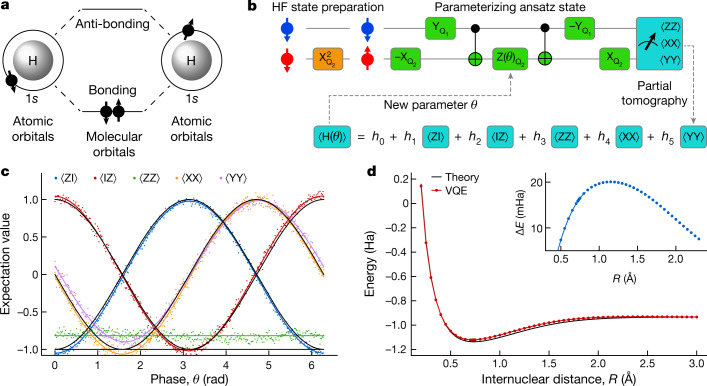
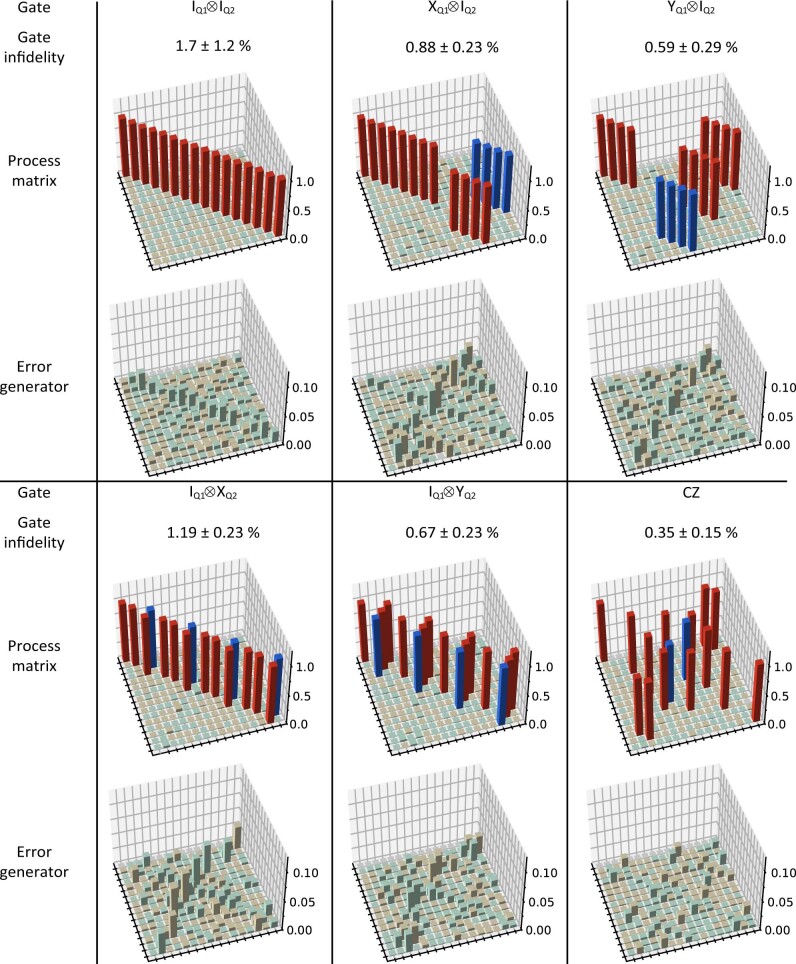
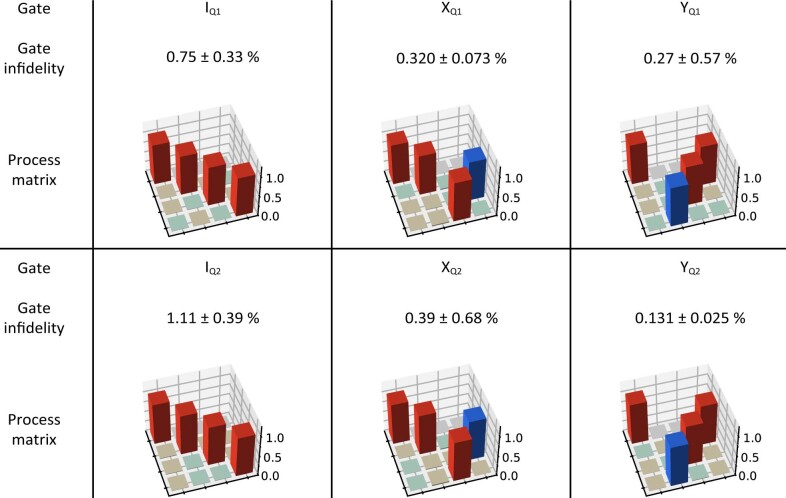
High-fidelity control of quantum bits is paramount for the reliable execution of quantum algorithms and for achieving fault tolerance—the ability to correct errors faster than they occur 1 . The central requirement for fault tolerance is expressed in terms of an error threshold. Whereas the actual threshold depends on many details, a common target is the approximately 1% error threshold of the well-known surface code 2,3 . Reaching two-qubit gate fidelities above 99% has been a long-standing major goal for semiconductor spin qubits. These qubits are promising for scaling, as they can leverage advanced semiconductor technology 4 . Here we report a spin-based quantum processor in silicon with single-qubit and two-qubit gate fidelities, all of which are above 99.5%, extracted from gate-set tomography. The average single-qubit gate fidelities remain above 99% when including crosstalk and idling errors on the neighbouring qubit. Using this high-fidelity gate set, we execute the demanding task of calculating molecular ground-state energies using a variational quantum eigensolver algorithm 5 . Having surpassed the 99% barrier for the two-qubit gate fidelity, semiconductor qubits are well positioned on the path to fault tolerance and to possible applications in the era of noisy intermediate-scale quantum devices.
Overview
The claims and statistics of this paper haven’t been checked yet.
Free: it reads the open-access text and checks the first 5 claims that cite a source we can check. Create a free account to check every claim.
Integrity signals
Registry
Cites
Statistics
Figures
Verification
Claims the paper makes
The claims and statistics of this paper haven’t been checked yet.
Free: it reads the open-access text and checks the first 5 claims that cite a source we can check. Create a free account to check every claim.
Self-check
Percentages, sums and reported differences re-computed from the paper’s own numbers.
The self-check needs the paper’s full text.
Citations
Cites
Quantum Computation and Quantum Information
Nielsen, M. A., Chuang, I., & Grover, L. K. (2002) · American Journal of Physics · doi:10.1119/1.1463744 · Cited by 21,895
Quantum computation and quantum information
Law, J. (2001) · ACM SIGSOFT Software Engineering Notes · doi:10.1145/505482.505499 · Cited by 18,842
Quantum Computing in the NISQ era and beyond
Preskill, J. (2018) · Quantum · doi:10.22331/q-2018-08-06-79 · Cited by 8,830 · cited 1×
“The higher the accuracy, or fidelity, of the operations, the higher the likelihood that near-term applications for quantum computers come in reach [6].”
BackgroundQuantum computation with quantum dots
Loss, D., & DiVincenzo, D. P. (1998) · Physical Review A · doi:10.1103/physreva.57.120 · Cited by 6,840 · cited 2×
“The native two-qubit gate for spin qubits utilizes the exchange interaction [22, 23], originating from the wavefunction overlap of electrons in neighbouring dots.”
BackgroundCoherent Manipulation of Coupled Electron Spins in Semiconductor Quantum Dots
Petta, J. R., Johnson, A. C., Taylor, J. M., Laird, E. A., Yacoby, A., Lukin, M. D., Marcus, C. M., Hanson, M. P., & Gossard, A. C. (2005) · Science · doi:10.1126/science.1116955 · Cited by 3,183 · cited 1×
“The native two-qubit gate for spin qubits utilizes the exchange interaction [22, 23], originating from the wavefunction overlap of electrons in neighbouring dots.”
BackgroundSurface codes: Towards practical large-scale quantum computation
Fowler, A. G., Mariantoni, M., Martinis, J. M., & Cleland, A. N. (2012) · Physical Review A · doi:10.1103/physreva.86.032324 · Cited by 3,059 · cited 2×
“6% and 1%, under certain assumptions, albeit at the cost of a large redundancy in the number of physical qubits [2].”
BackgroundSingle-shot read-out of an individual electron spin in a quantum dot
Elzerman, J. M., Hanson, R., Willems van Beveren, L. H., Witkamp, B., Vandersypen, L. M. K., & Kouwenhoven, L. P. (2004) · Nature · doi:10.1038/nature02693 · Cited by 1,679
Self-citationQuantum computational chemistry
McArdle, S., Endo, S., Aspuru-Guzik, A., Benjamin, S. C., & Yuan, X. (2020) · Reviews of Modern Physics · doi:10.1103/revmodphys.92.015003 · Cited by 1,621 · cited 2×
“the Bravyi-Kitaev (BK) transformation [4].”
MethodLinear transformations which preserve trace and positive semidefiniteness of operators
Jamiołkowski, A. (1972) · Reports on Mathematical Physics · doi:10.1016/0034-4877(72)90011-0 · Cited by 1,512
NMR techniques for quantum control and computation
Vandersypen, L. M. K., & Chuang, I. L. (2005) · Reviews of Modern Physics · doi:10.1103/revmodphys.76.1037 · Cited by 1,217 · cited 1×
“Single-qubit X and Y gates are implemented by frequency-multiplexed microwave signals applied to gate MW, and virtual Z gates are implemented by a phase update of the reference frame [21].”
MethodSelf-citation
Research works printed but not linked: 1
- Xue X Benchmarking gate fidelities in a Si/SiGe two-qubit device Phys. Rev. X 2019 9 021011
Cited by
Items 101–200 of 577
Long optical and electron spin coherence times for erbium ions in silicon
Berkman, I. R., Lyasota, A., de Boo, G. G., Bartholomew, J. G., Lim, S. Q., Johnson, B. C., McCallum, J. C., Xu, B.-B., Xie, S., Abrosimov, N. V., et al. (2025) · npj Quantum Information · doi:10.1038/s41534-025-01008-x · Cited by 40
Correcting non-independent and non-identically distributed errors with surface codes
Tiurev, K., Derks, P.-J. H. S., Roffe, J., Eisert, J., & Reiner, J.-M. (2023) · Quantum · doi:10.22331/q-2023-09-26-1123 · Cited by 47
Enhanced quantum state transfer by circumventing quantum chaotic behavior
Xiang, L., Chen, J., Zhu, Z., Song, Z., Bao, Z., Zhu, X., Jin, F., Wang, K., Xu, S., Zou, Y., et al. (2024) · Nature Communications · doi:10.1038/s41467-024-48791-3 · Cited by 46
“Recently, the growing system sizes of quantumcomputingplatforms 9 – 13 makeitofparamountimportanceto realize quantum communication between different parts of a single device(orshort-rangequantumnetworks 14 ),particularlyforsolid-state architectures with local interactions 11,15 .”
BackgroundFully autonomous tuning of a spin qubit
Schuff, J., Carballido, M. J., Kotzagiannidis, M. S., Calvo, J., Caselli, M., Rawling, J. H., Craig, D., van Straaten, B., Severin, B., Fedele, F., et al. (2026) · Nature Electronics · doi:10.1038/s41928-025-01562-4 · Cited by 46
“Recent work with such systems has demonstrated two-qubit gates with fidelities that surpass the thresholds for fault-tolerant computing 4,12,13 and hot qubits that can address the bottleneck of millikelvin refrigeration 7,14,15 .”
Quantum Control of Hole Spin Qubits in Double Quantum Dots
Fernández-Fernández, D., Ban, Y., & Platero, G. (2022) · Physical Review Applied · doi:10.1103/physrevapplied.18.054090 · Cited by 37
Zalivako, I. V., Nikolaeva, A. S., Borisenko, A. S., Korolkov, A. E., Sidorov, P., Galstyan, K. P., Semenin, N. V., Smirnov, V. N., Aksenov, M. A., Makushin, K. M., et al. (2025) · Quantum Reports · doi:10.3390/quantum7020019 · Cited by 40
“We also note, that during this process, all population from the | 0 ⟩ state is pumped to the 2 S 1 / 2 ( F = 1). to To distinguish states | 1 ⟩ , | 2 ⟩ , and | 3 ⟩ , we follow the protocols similar described in Refs. to all [21, 22].”
A 2D quantum dot array in planar 28Si/SiGe
Unseld, F. K., Meyer, M., Mądzik, M. T., Borsoi, F., de Snoo, S. L., Amitonov, S. V., Sammak, A., Scappucci, G., Veldhorst, M., & Vandersypen, L. M. K. (2023) · Applied Physics Letters · doi:10.1063/5.0160847 · Cited by 36
Self-citationLooped Pipelines Enabling Effective 3D Qubit Lattices in a Strictly 2D Device
Cai, Z., Siegel, A. C., & Benjamin, S. C. (2023) · PRX Quantum · doi:10.1103/prxquantum.4.020345 · Cited by 41
“5%, which is below threshold and has been demonstrated in state-of-the-art experiments [61, 62].”
High‐Fidelity Frequency Converter in High‐Dimensional Spaces
Yuan, J., Wang, X., Chen, G., Wang, L., Xiao, L., & Jia, S. (2024) · Laser & Photonics Review · doi:10.1002/lpor.202400368 · Cited by 33
CMOS compatibility of semiconductor spin qubits
Stuyck, N. D., Saraiva, A., Gilbert, W., Pardo, J. C., Li, R., Escott, C. C., Greve, K. D., Voinigescu, S. P., Reilly, D. J., & Dzurak, A. S. (2026) · Nature Reviews Electrical Engineering · doi:10.1038/s44287-026-00283-w · Cited by 42
Efficient implementation of arbitrary two-qubit gates using unified control
Chen, Z., Liu, W., Ma, Y., Sun, W., Wang, R., Wang, H., Xu, H., Xue, G., Yan, H., Yang, Z., et al. (2025) · Nature Physics · doi:10.1038/s41567-025-02990-x · Cited by 52
“For example, some hardware-native gates, such as the CZ gate 7,25,26 and the cross-resonance (CR) gate 27 , are all locally equivalent to the CNOT gate.”
Coherent spin–valley oscillations in silicon
Cai, X., Connors, E. J., Edge, L. F., & Nichol, J. M. (2023) · Nature Physics · doi:10.1038/s41567-022-01870-y · Cited by 42
Challenges and opportunities for quantum information hardware
Awschalom, D. D., Bernien, H., Hanson, R., Oliver, W. D., & Vučković, J. (2025) · Science · doi:10.1126/science.adz8659 · Cited by 56
Electrical Control of Uniformity in Quantum Dot Devices
Meyer, M., Déprez, C., van Abswoude, T. R., Meijer, I. N., Liu, D., Wang, C.-A., Karwal, S., Oosterhout, S. D., Borsoi, F., Sammak, A., et al. (2023) · Nano Letters · doi:10.1021/acs.nanolett.2c04446 · Cited by 33
Self-citationTowards Early Fault Tolerance on a 2 × N Array of Qubits Equipped with Shuttling
Siegel, A. C., Strikis, A., & Fogarty, M. A. (2024) · PRX Quantum · doi:10.1103/prxquantum.5.040328 · Cited by 48
“Electron spins in silicon quantum dots (QDs) are a promising physical platform to perform quantum computing: single-and two-qubit gates with fidelity well above 99% [21–23] or even beyond 99 .”
Single-Electron Spin Qubits in Silicon for Quantum Computing
Hu, G., Huang, W., Cai, R., Wang, L., Yang, C. H., Cao, G., Xue, X., Huang, P., & He, Y. (2025) · Intelligent Computing · doi:10.34133/icomputing.0115 · Cited by 33
Self-citationBaseband control of single-electron silicon spin qubits in two dimensions
Unseld, F. K., Undseth, B., Raymenants, E., Matsumoto, Y., de Snoo, S. L., Karwal, S., Pietx-Casas, O., Ivlev, A., Meyer, M., Sammak, A., et al. (2025) · Nature Communications · doi:10.1038/s41467-025-60351-x · Cited by 46
“Currently, on-chip micromagnets have enabled state-of-the-art devices to exhibit powerful primitives including high-fi delity universal gate sets 6 – 8 , high-fi delity initialization and readout of multiple qubits 9,10 , and coherent spin shuttling 11,12 .”
Self-citationCryo-CMOS Interfaces for Large-Scale Quantum Computers
Sebastiano, F., van Dijk, J. P. G., Hart, P. A. T., Patra, B., van Staveren, J., Xue, X., Almudéver, C. G., Scappucci, G., Veldhorst, M., Vandersypen, L. M. K., et al. (2020) · Technical digest - International Electron Devices Meeting/Technical digest · doi:10.1109/iedm13553.2020.9372075 · Cited by 35
Self-citationCrawford, O., Cruise, J. R., Mertig, N., & González-Zalba, M. F. (2023) · npj Quantum Information · doi:10.1038/s41534-023-00679-8 · Cited by 31
Tailoring quantum error correction to spin qubits
Hetényi, B., & Wootton, J. R. (2024) · Physical Review A · doi:10.1103/physreva.109.032433 · Cited by 29
“Spin qubit platforms to date have demonstrated single-and two-qubit operations and spin read-out above 99% fidelity [4–6] in devices with up to six qubits [7].”
BackgroundBlueprint for All-to-All-Connected Superconducting Spin Qubits
Pita‐Vidal, M., Wesdorp, J. J., & Andersen, C. K. (2025) · PRX Quantum · doi:10.1103/prxquantum.6.010308 · Cited by 40
A bright future for silicon in quantum technologies
Khoury, M., & Abbarchi, M. (2022) · Journal of Applied Physics · doi:10.1063/5.0093822 · Cited by 32
Scalable Improvement of the Generalized Toffoli Gate Realization Using Trapped-Ion-Based Qutrits
Nikolaeva, A. S., Zalivako, I. V., Borisenko, A. S., Semenin, N. V., Galstyan, K. P., Korolkov, A. E., Kiktenko, E. O., Khabarova, K. Y., Semerikov, I. A., Fedorov, A. K., et al. (2025) · Physical Review Letters · doi:10.1103/p1z9-6w93 · Cited by 37
An 11-qubit atom processor in silicon
Edlbauer, H., Wang, J., Huq, A. M. S., Thorvaldson, I., Jones, M. T., Misha, S. H., Pappas, W. J., Moehle, C. M., Hsueh, Y., Bornemann, H., et al. (2025) · Nature · doi:10.1038/s41586-025-09827-w · Cited by 49
Wafer-scale low-disorder 2DEG in 28Si/SiGe without an epitaxial Si cap
Esposti, D. D., Wuetz, B. P., Fezzi, V., Lodari, M., Sammak, A., & Scappucci, G. (2022) · Applied Physics Letters · doi:10.1063/5.0088576 · Cited by 31
Self-citationAutomated Extraction of Capacitive Coupling for Quantum Dot Systems
Ziegler, J., Luthi, F., Ramsey, M., Borjans, F., Zheng, G., & Zwolak, J. P. (2023) · Physical Review Applied · doi:10.1103/physrevapplied.19.054077 · Cited by 33
High-Fidelity Spin Qubit Shuttling via Large Spin-Orbit Interactions
Bosco, S., Zou, J., & Loss, D. (2024) · PRX Quantum · doi:10.1103/prxquantum.5.020353 · Cited by 36
Weight-four parity checks in a spin-shuttling architecture
Undseth, B., Meggiato, N., Wu, Y.-H., Katiraee-Far, S. R., Tryputen, L., de Snoo, S. L., Esposti, D. D., Scappucci, G., Greplová, E., & Vandersypen, L. M. K. (2026) · Nature · doi:10.1038/s41586-026-10766-3 · Cited by 33
Self-citationLet Each Quantum Bit Choose Its Basis Gates
Lin, S. F., Sussman, S., Duckering, C., Mundada, P., Baker, J. M., Kumar, R. S., Houck, A., & Chong, F. T. (2022) · IEEE/ACM International Symposium on Microarchitecture (MICRO) · doi:10.1109/micro56248.2022.00075 · Cited by 33
“Our proposed calibration approach uses two techniques for experimentally characterizing the unitary of a potentially non-standard 2Q gate: quantum process tomography (QPT) [46], [47] and gate set tomography (GST) [48], [49], [50],”
MethodRobust Quantum Gates against Correlated Noise in Integrated Quantum Chips
Yi, K., Hai, Y.-J., Luo, K., Chu, J., Zhang, L., Zhou, Y., Song, Y., Liu, S., Yan, T., Deng, X., et al. (2024) · Physical Review Letters · doi:10.1103/physrevlett.132.250604 · Cited by 39
Coupled superconducting spin qubits with spin-orbit interaction
Spethmann, M., Zhang, X., Klinovaja, J., & Loss, D. (2022) · Physical review. B./Physical review. B · doi:10.1103/physrevb.106.115411 · Cited by 24
“This length scale is significantly longer than the direct exchange of regular spin qubits (∼ 50 nm [9]), which makes it easier to add control and readout components.”
BackgroundUniversal quantum computing with qubits embedded in trapped-ion qudits
Nikolaeva, A. S., Kiktenko, E. O., & Fedorov, A. K. (2024) · Physical Review A · doi:10.1103/physreva.109.022615 · Cited by 28
Coupler-Assisted Leakage Reduction for Scalable Quantum Error Correction with Superconducting Qubits
Yang, X., Chu, J., Guo, Z., Huang, W., Liang, Y., Liu, J., Qiu, J., Sun, X., Tao, Z., Zhang, J., et al. (2024) · Physical Review Letters · doi:10.1103/physrevlett.133.170601 · Cited by 40
“The effective coupling strength g between the target levels is determined by the modulation amplitude A p [10], where g qc is the intrinsic coupling strength between the qubit and the coupler, n ex is the total excitations of the corresponding level, J m ( ) the m -th Bessel function of the first…”
BackgroundFast Bayesian Tomography of a Two-Qubit Gate Set in Silicon
Evans, T. J., Huang, W., Yoneda, J., Harper, R., Tanttu, T., Chan, K. W., Hudson, F. E., Itoh, K. M., Saraiva, A., Yang, C. H., et al. (2022) · Physical Review Applied · doi:10.1103/physrevapplied.17.024068 · Cited by 25
Nikolaeva, A. S., Kiktenko, E. O., & Fedorov, A. K. (2023) · Entropy · doi:10.3390/e25020387 · Cited by 29
“Recent experimental progress has been demonstrated with physical platforms of various nature including superconducting circuits [9–11], semiconductor quantum dots [12–14], quantum light [15, 16], neutral atoms [17– 20], and trapped ions [21–23] (for a review, see Ref.”
BackgroundFlopping-mode spin qubit in a Si-MOS quantum dot
Hu, R.-Z., Ma, R.-L., Ni, M., Zhou, Y. L., Chu, N., Liao, W.-Z., Kong, Z., Cao, G., Wang, G., Li, H.-O., et al. (2023) · Applied Physics Letters · doi:10.1063/5.0137259 · Cited by 26
Interface and electromagnetic effects in the valley splitting of Si quantum dots
Lima, J. R. F., & Burkard, G. (2023) · Materials for Quantum Technology · doi:10.1088/2633-4356/acd743 · Cited by 23
Continuous dynamical decoupling of optical 171Yb+ qudits with radiofrequency fields
Zalivako, I. V., Borisenko, A. S., Semerikov, I. A., Korolkov, A. E., Sidorov, P., Galstyan, K. P., Semenin, N. V., Smirnov, V. N., Aksenov, M. D., Fedorov, A. K., et al. (2023) · Frontiers in Quantum Science and Technology · doi:10.3389/frqst.2023.1228208 · Cited by 23
Benchmarking quantum logic operations relative to thresholds for fault tolerance
Hashim, A., Seritan, S., Proctor, T. J., Rudinger, K., Goss, N., Naik, R., Kreikebaum, J. M., Santiago, D., & Siddiqi, I. A. (2023) · npj Quantum Information · doi:10.1038/s41534-023-00764-y · Cited by 39
“…in two-qubit gates on many hardware platforms engender optimism for FT, caution must be taken in the claims inferred from gate fidelities, as results which include estimates of the diamond norm suggest that many contemporary two-qubit gates fall short of FT thresholds [30, 51, 116– 118].”
BackgroundInfluentialScalable on-chip multiplexing of silicon single and double quantum dots
Bohuslavskyi, H., Ronzani, A., Hätinen, J., Rantala, A., Shchepetov, A., Koppinen, P. J., Lehtinen, J. S., & Prunnila, M. (2024) · Communications Physics · doi:10.1038/s42005-024-01806-3 · Cited by 25
Two-qubit logic and teleportation with mobile spin qubits in silicon
Matsumoto, Y., Smet, M. D., Tryputen, L., de Snoo, S. L., Amitonov, S. V., Sammak, A., Rimbach-Russ, M., Scappucci, G., & Vandersypen, L. M. K. (2026) · Nature · doi:10.1038/s41586-026-10423-9 · Cited by 29
“…the region with very short T ∗ 2 , the frequency shifts due to both the magnetic field gradient and the exchange interaction add constructively, as voltage fluctu-4 ations or charge noise simultaneously a ff ect both the Zeeman energy splitting and the exchange interaction in a correlated way [13].”
Self-citationQuantum Snakes on a Plane: Mobile, Low-Dimensional Logical Qubits on a 2D Surface
Siegel, A., Cai, Z., Jnane, H., Koczor, B., Pexton, S., Strikis, A., & Benjamin, S. C. (2026) · PRX Quantum · doi:10.1103/494s-jd8h · Cited by 32
“1 µ s [21–23, 30 ] ),”
Jellybean Quantum Dots in Silicon for Qubit Coupling and On‐Chip Quantum Chemistry
Wang, Z., Feng, M., Serrano, S., Gilbert, W., Leon, R. C. C., Tanttu, T., Mai, P. Y., Liang, D., Huang, J. Y., Su, Y., et al. (2023) · Advanced Materials · doi:10.1002/adma.202208557 · Cited by 27
Supporting quantum technologies with an ultralow-loss silicon photonics platform
Cherchi, M., Bera, A., Kemppinen, A., Nissilä, J., Tappura, K., Caputo, M., Lehtimäki, L., Lehtinen, J. S., Govenius, J., Hassinen, T., et al. (2023) · Advanced Photonics Nexus · doi:10.1117/1.apn.2.2.024002 · Cited by 25
High-fidelity collisional quantum gates with fermionic atoms
Bojović, P., Hilker, T., Wang, S., Obermeyer, J., Barendregt, M., Tell, D., Chalopin, T., Preiss, P. M., Bloch, I., & Franz, T. (2026) · Nature · doi:10.1038/s41586-026-10356-3 · Cited by 29
“In the responses, the authors discuss positive aspects of both the fermionic nature of 6Li, as well as the parameters achieved harnessing a low-mass atom.”
Phase-Driving Hole Spin Qubits
Bosco, S., Geyer, S., Camenzind, L. C., Eggli, R. S., Fuhrer, A., Warburton, R. J., Zumbühl, D. M., Egues, J. C., Kuhlmann, A. V., & Loss, D. (2023) · Physical Review Letters · doi:10.1103/physrevlett.131.197001 · Cited by 21
Klos, J., Tröger, J., Keutgen, J., Losert, M. P., Abrosimov, N. V., Knoch, J., Bracht, H. A., Coppersmith, S. N., Friesen, M. G., Cojocaru‐Mirédin, O., et al. (2024) · Advanced Science · doi:10.1002/advs.202407442 · Cited by 24
The path to scalable quantum computing with silicon spin qubits
Vinet, M. (2021) · Nature Nanotechnology · doi:10.1038/s41565-021-01037-5 · Cited by 21
Impact of the local valley splitting on the coherence of conveyor-belt spin shuttling in 28Si/SiGe
Volmer, M., Struck, T., Sala, A., Tu, J., Trellenkamp, S., Esposti, D. D., Scappucci, G., Cywiński, Ł., Bluhm, H., & Schreiber, L. R. (2026) · Nature Communications · doi:10.1038/s41467-026-74382-5 · Cited by 23
“We measure P S ( τ ) for B ∈ [10 , 20 , 40] mT at a fixed v S = 5 .”
Self-citationProgrammable nonlinear quantum photonic circuits
Nielsen, K. H., Wang, Y., Deacon, E. C. R., Sund, P. I., Liu, Z., Scholz, S., Wieck, A. D., Ludwig, A., Midolo, L., Sørensen, A. S., et al. (2025) · Nature Communications · doi:10.1038/s41467-025-66205-w · Cited by 33
“…error correction 13 methods can be used to turn such probabilistic operations into near-deterministic ones or to tolerate their failures, respectively, but require enormous overheads in terms of hardware components, stringent performance and noise requirements, and classical co-processing 14,15 .”
Coherence of group-IV color centers
Harris, I., & Englund, D. R. (2024) · Physical review. B./Physical review. B · doi:10.1103/physrevb.109.085414 · Cited by 20
Pipeline quantum processor architecture for silicon spin qubits
Patomäki, S. M., González-Zalba, M. F., Fogarty, M. A., Cai, Z., Benjamin, S. C., & Morton, J. J. L. (2024) · npj Quantum Information · doi:10.1038/s41534-024-00823-y · Cited by 28
“In the logic basis f ∣ " i " j i ; ∣ " i # j i ; ∣ # i " j i ; ∣ # i # j ig , the interaction between two exchange-coupled spins with a Zeeman energy difference Δ E Z (see Supplementary Note 4) generates time-evolution which is analogous to the single-qubit semiclassical Rabi dynamics in the m z = 0 subspace, while th…”
InfluentialCavity-Mediated Entanglement of Parametrically Driven Spin Qubits via Sidebands
Srinivasa, V., Taylor, J. M., & Petta, J. R. (2024) · PRX Quantum · doi:10.1103/prxquantum.5.020339 · Cited by 28
Cross-architecture tuning of silicon and SiGe-based quantum devices using machine learning
Severin, B., Lennon, D. T., Camenzind, L. C., Vigneau, F., Fedele, F., Jirovec, D., Ballabio, A., Chrastina, D., Isella, G., de Kruijf, M., et al. (2024) · Scientific Reports · doi:10.1038/s41598-024-67787-z · Cited by 27
Beating the Thermal Limit of Qubit Initialization with a Bayesian Maxwell’s Demon
Johnson, M. A. I., Mądzik, M. T., Hudson, F. E., Itoh, K. M., Jakob, A., Jamieson, D. N., Dzurak, A. S., & Morello, A. (2022) · Physical Review X · doi:10.1103/physrevx.12.041008 · Cited by 25
Bell inequality violation in gate-defined quantum dots
Steinacker, P., Tanttu, T., Lim, W. H., Stuyck, N. D., Feng, M., Serrano, S., Vahapoglu, E., Su, R. Y., Huang, J. Y., Jones, C., et al. (2025) · Nature Communications · doi:10.1038/s41467-025-57987-0 · Cited by 25
“Our two-qubit gates areimplemented asdecoupled controlled phasegates (DCZ) 22,25 that are performed at V J =0.98V ( J on ).”
An automated approach for consecutive tuning of quantum dot arrays
Liu, H., Wang, B., Wang, N., Sun, Z., Yin, H., Li, H.-O., Cao, G., & Guo, G. (2022) · Applied Physics Letters · doi:10.1063/5.0111128 · Cited by 22
Woods, B. D., Soomro, H., Joseph, E. S., Frink, C. C. D., Joynt, R., Eriksson, M. A., & Friesen, M. G. (2024) · npj Quantum Information · doi:10.1038/s41534-024-00853-6 · Cited by 19
“Si/SiGe quantum dots are an attractive platform for quantum computation 1 – 3 ,asdemonstratedbyrecentexperiments 4 – 6 wherebothsingle and two-qubitgate fi delitieshaveexceeded theerror correction thresholdof 99% 7 .”
Wyss, R. M., Kewes, G., Marabotti, P., Koepfli, S. M., Schlichting, K.-P., Parzefall, M., Bonvin, E., Sarott, M. F., Trassin, M., Oezkent, M., et al. (2024) · Nature Communications · doi:10.1038/s41467-024-49130-2 · Cited by 20
“These SiGe heterostructures are utilized as electron spin qubits in gate-de fi ned silicon quantum dots and represent a promising and fast-developing technology for quantum computing 40,41 .”
Quantum geometric protocols for fast high-fidelity adiabatic state transfer
Meinersen, C. V., Bosco, S., & Rimbach-Russ, M. (2025) · EPJ Quantum Technology · doi:10.1140/epjqt/s40507-025-00426-2 · Cited by 25
Time-Dependent Hamiltonian Reconstruction Using Continuous Weak Measurements
Siva, K., Koolstra, G., Steinmetz, J., Livingston, W. P., Das, D., Chen, L., Kreikebaum, J. M., Stevenson, N. J., Jünger, C., Santiago, D., et al. (2023) · PRX Quantum · doi:10.1103/prxquantum.4.040324 · Cited by 24
“[14] Xiao Xue, Maximilian Russ, Nodar Samkharadze, Brennan Undseth, Amir Sammak, Giordano Scappucci, and Lieven M.”
BackgroundA quantum dot crossbar with sublinear scaling of interconnects at cryogenic temperature
Bavdaz, P. L., Eenink, H. G. J., van Staveren, J., Lodari, M., Almudever, C. G., Clarke, J. S., Sebasatiano, F., Veldhorst, M., & Scappucci, G. (2022) · npj Quantum Information · doi:10.1038/s41534-022-00597-1 · Cited by 18
Self-citationFeedback-based active reset of a spin qubit in silicon
Kobayashi, T., Nakajima, T., Takeda, K., Noiri, A., Yoneda, J., & Tarucha, S. (2023) · npj Quantum Information · doi:10.1038/s41534-023-00719-3 · Cited by 25
von Horstig, F.-E., Ibberson, D. J., Oakes, G. A., Cochrane, L., Wise, D. F., Stelmashenko, N. A., Barraud, S., Robinson, J. W. A., Martins, F., & González-Zalba, M. F. (2024) · Physical Review Applied · doi:10.1103/physrevapplied.21.044016 · Cited by 21
“In conjunction with high-fidelity one-and two-qubit gates [18–20], the demonstrations of simple instances of quantum error correction [21], the operation of a six-qubit processors [22] and the compatibility with advanced manufacturing techniques [23–27], these steps show important progress towards a…”
BackgroundHigh-fidelity geometric quantum gates exceeding 99.9% in germanium quantum dots
Zhou, Y.-C., Ma, R.-L., Kong, Z., Li, A.-R., Zhang, C., Zhang, X., Liu, Y., Jiang, H.-T., Wu, Z., Wang, G., et al. (2025) · Nature Communications · doi:10.1038/s41467-025-63241-4 · Cited by 32
“Ontheotherhand, some pulse sequences in the GST experiment include idle times much longer than T *2 , which mainly limits the control fi delity 57 .”
Running a Six-Qubit Quantum Circuit on a Silicon Spin-Qubit Array
de Fuentes, I. F., Raymenants, E., Undseth, B., Pietx-Casas, O., Philips, S. G. J., Mądzik, M. T., de Snoo, S. L., Amitonov, S. V., Tryputen, L., Schmitz, A. T., et al. (2026) · PRX Quantum · doi:10.1103/f285-l2v5 · Cited by 26
Self-citationImproved Placement Precision of Donor Spin Qubits in Silicon using Molecule Ion Implantation
Holmes, D., Wilhelm, B., Jakob, A., Yu, X., Hudson, F. E., Itoh, K. M., Dzurak, A. S., Jamieson, D. N., & Morello, A. (2024) · Advanced Quantum Technologies · doi:10.1002/qute.202300316 · Cited by 16
Long, C. K., Dalton, K., Barnes, C. H. W., Arvidsson-Shukur, D. R. M., & Mertig, N. (2024) · Physical Review A · doi:10.1103/physreva.109.042413 · Cited by 21
Kam, C., & Hu, X. (2024) · npj Quantum Information · doi:10.1038/s41534-024-00924-8 · Cited by 16
Lim, S., Vaganov, M. V., Liu, J., & Ardavan, A. (2025) · Physical Review Letters · doi:10.1103/physrevlett.134.070603 · Cited by 22
Geometric correspondence of noisy quantum dynamics and universal robust quantum gates
Hai, Y.-J., Song, Y., Li, J., Zeng, J., & Deng, X. (2025) · Physical Review Applied · doi:10.1103/physrevapplied.23.054002 · Cited by 21
“First, we consider a gate-defined double quantum dot (QD) system, in which the spin states of electrons serve as a qubit [10, 48–51].”
Throckmorton, R. E., & Sarma, S. D. (2022) · Physical review. B./Physical review. B · doi:10.1103/physrevb.105.245413 · Cited by 16
Spin-orbit enhancement in Si/SiGe heterostructures with oscillating Ge concentration
Woods, B. D., Eriksson, M. A., Joynt, R., & Friesen, M. G. (2023) · Physical review. B./Physical review. B · doi:10.1103/physrevb.107.035418 · Cited by 24
Single-Electron Occupation in Quantum Dot Arrays at Selectable Plunger Gate Voltage
Meyer, M., Déprez, C., Meijer, I. N., Unseld, F. K., Karwal, S., Sammak, A., Scappucci, G., Vandersypen, L. M. K., & Veldhorst, M. (2023) · Nano Letters · doi:10.1021/acs.nanolett.3c03349 · Cited by 17
Self-citationCrosstalk analysis for simultaneously driven two-qubit gates in spin qubit arrays
Heinz, I., & Burkard, G. (2022) · Physical review. B./Physical review. B · doi:10.1103/physrevb.105.085414 · Cited by 18
High-Fidelity CNOT Gate for Donor Electron Spin Qubits in Silicon
Kranz, L., Roche, S., Gorman, S. K., Keizer, J. G., & Simmons, M. Y. (2023) · Physical Review Applied · doi:10.1103/physrevapplied.19.024068 · Cited by 15
Accelerated Adiabatic Passage of a Single Electron Spin Qubit in Quantum Dots
Liu, X.-F., Matsumoto, Y., Fujita, T., Ludwig, A., Wieck, A. D., & Oiwa, A. (2024) · Physical Review Letters · doi:10.1103/physrevlett.132.027002 · Cited by 21
“Recently, two-qubit gate fidelity of more than 99% have been demonstrated experimentally [11–14], crossing the well-known surface code threshold [15, 16].”
BackgroundValley splitting depending on the size and location of a silicon quantum dot
Lima, J. R. F., & Burkard, G. (2024) · Physical Review Materials · doi:10.1103/physrevmaterials.8.036202 · Cited by 15
Hybrid Quantum Systems with Artificial Atoms in Solid State
Chia, C., Huang, D., Leong, V., Kong, J. F., & Goh, K. E. J. (2024) · Advanced Quantum Technologies · doi:10.1002/qute.202300461 · Cited by 17
Valley-Free Silicon Fins Caused by Shear Strain
Adelsberger, C., Bosco, S., Klinovaja, J., & Loss, D. (2024) · Physical Review Letters · doi:10.1103/physrevlett.133.037001 · Cited by 15
Impact of electrostatic crosstalk on spin qubits in dense CMOS quantum dot arrays
Cifuentes, J. D., Tanttu, T., Steinacker, P., Serrano, S., Hansen, I., Slack-Smith, J., Gilbert, W., Huang, J. Y., Vahapoglu, E., Leon, R. C. C., et al. (2024) · Physical review. B./Physical review. B · doi:10.1103/physrevb.110.125414 · Cited by 17
Gradwohl, K., Cvitkovich, L., Lu, C.-H., Koelling, S., Oezkent, M., Liu, Y., Waldhoer, D., Grasser, T., Niquet, Y., Albrecht, M., et al. (2025) · Nano Letters · doi:10.1021/acs.nanolett.4c05326 · Cited by 22
Noise correlations in an atom-based quantum dot array
Donnelly, M. B., Rowlands, J., Kranz, L., Hsueh, Y., Chung, Y., Timofeev, A. V., Geng, H., Singh-Gregory, P., Gorman, S. K., Keizer, J. G., et al. (2025) · Physical Review Applied · doi:10.1103/kr2l-c97c · Cited by 18
“Substantial progress has been made in the past few years in another solid-state qubit platform - silicon spin qubits, with the recent demonstration of error rates below the fault tolerant threshold [11–13].”
Single-Step High-Fidelity Three-Qubit Gates by Anisotropic Chiral Interactions
Nguyen, M. T. P., Rimbach-Russ, M., Vandersypen, L. M. K., & Bosco, S. (2025) · PRX Quantum · doi:10.1103/kp8s-py9m · Cited by 19
Self-citationMicrowave-Frequency Scanning Gate Microscopy of a Si/SiGe Double Quantum Dot
Denisov, A. O., Oh, S. W., Fuchs, G., Mills, A., Chen, P., Anderson, C. R., Gyure, M. F., Barnard, A., & Petta, J. R. (2022) · Nano Letters · doi:10.1021/acs.nanolett.2c01098 · Cited by 15
Prospect of optical chirality logic computing
Zhang, Y., Muñoz, J. A., Cui, X., & Sun, Z. (2023) · Applied Physics Letters · doi:10.1063/5.0178917 · Cited by 15
Gate reflectometry in dense quantum dot arrays
Ansaloni, F., Bohuslavskyi, H., Fedele, F., Rasmussen, T., Brovang, B., Berritta, F., Heskes, A., Li, J., Hutin, L., Venitucci, B., et al. (2023) · New Journal of Physics · doi:10.1088/1367-2630/acc126 · Cited by 18
Hamiltonian phase error in resonantly driven CNOT gate above the fault-tolerant threshold
Wu, Y.-H., Camenzind, L. C., Noiri, A., Takeda, K., Nakajima, T., Kobayashi, T., Chang, C. Y., Sammak, A., Scappucci, G., Goan, H., et al. (2024) · npj Quantum Information · doi:10.1038/s41534-023-00802-9 · Cited by 16
Self-citationAnalysis and mitigation of residual exchange coupling in linear spin-qubit arrays
Heinz, I., Mills, A., Petta, J. R., & Burkard, G. (2024) · Physical Review Research · doi:10.1103/physrevresearch.6.013153 · Cited by 14
Decay-protected superconducting qubit with fast control enabled by integrated on-chip filters
Sah, A., Kundu, S., Suominen, H., Chen, Q., & Möttönen, M. (2024) · Communications Physics · doi:10.1038/s42005-024-01733-3 · Cited by 21
Measurement of cryoelectronics heating using a local quantum dot thermometer in silicon
de Kruijf, M., Noah, G. M., Gomez-Saiz, A., Morton, J. J. L., & González-Zalba, M. F. (2024) · Chip · doi:10.1016/j.chip.2024.100097 · Cited by 17
“One-and two-qubit gates have been shown to perform above fault-tolerant thresholds for electron spins [2–4], simple instances of quantum error correction have been performed [5] and a 6-qubit quantum processor has been demonstrated [6].”
BackgroundCoherence limit due to hyperfine interaction with nuclei in the barrier material of Si spin qubits
Cvitkovich, L., Stano, P., Wilhelmer, C., Waldhoer, D., Loss, D., Niquet, Y., & Grasser, T. (2024) · Physical Review Applied · doi:10.1103/physrevapplied.22.064089 · Cited by 20
Passive and active suppression of transduced noise in silicon spin qubits
Park, J., Jang, H., Sohn, H., Yun, J., Song, Y., Kang, B., Stehouwer, L. E. A., Esposti, D. D., Scappucci, G., & Kim, D. (2025) · Nature Communications · doi:10.1038/s41467-024-55338-z · Cited by 24
“Single and two-qubit gate fi delities exceeding 99% 8 – 11 were realized along with elementary quantum error correction 12 .”
Self-citationMolecular Cocrystal Packing Suppresses Hopping-Driven Decoherence of Excitonic Spin Qubits
Palmer, J. R., Tyndall, S. B., Mantel, G. C., Buras, O. J., Young, R. M., Krzyaniak, M. D., & Wasielewski, M. R. (2025) · Journal of the American Chemical Society · doi:10.1021/jacs.5c03973 · Cited by 16
Thayil, A., Ermoneit, L., & Kantner, M. (2025) · Physical review. B./Physical review. B · doi:10.1103/4sdz-f9cr · Cited by 14
“Experiments have demonstrated high-fidelity state initialization and readout in combination with one and two-qubit gates exceeding the fault-tolerance threshold [7–9].”
Buried Unstrained Germanium Channels: A Lattice‐Matched Platform for Quantum Technology
Costa, D., Vecchio, P. D., Hudson, K., Stehouwer, L. E. A., Tosato, A., Esposti, D. D., Calvi, V., Moreschini, L., Lodari, M., Bosco, S., et al. (2026) · Advanced Science · doi:10.1002/advs.202600066 · Cited by 18
Self-citationEffective out-of-plane g factor in strained-Ge/SiGe quantum dots
Miller, A. J., Hardy, W., Luhman, D., Brickson, M. I., Baczewski, A., Liu, C.-Y., Li, J., Lilly, M. P., & Lu, T. (2022) · Physical review. B./Physical review. B · doi:10.1103/physrevb.106.l121402 · Cited by 20
Scalable estimation of pure multi-qubit states
Pereira, L., Zambrano, L., & Delgado, A. (2022) · npj Quantum Information · doi:10.1038/s41534-022-00565-9 · Cited by 20
“~ P j aβ 1⁄4 1 2uava Pjaβ u(2)ajhWaj~ Ψ j 1 2β ij(2) v(2)ajhWaj~ Ψ j 1 2βþ1ij(2) ; (13)”
Ability of error correlations to improve the performance of variational quantum algorithms
Kattemölle, J., & Burkard, G. (2023) · Physical Review A · doi:10.1103/physreva.107.042426 · Cited by 16
Designing Globally Time-Optimal Entangling Gates Using Geometric Space Curves
Tang, H. L., Connelly, K., Warren, A., Zhuang, F., Economou, S. E., & Barnes, E. (2023) · Physical Review Applied · doi:10.1103/physrevapplied.19.044094 · Cited by 15
Metadata
- Authors
- Xue, X., Russ, M., Samkharadze, N., Undseth, B., Sammak, A., Scappucci, G., & Vandersypen, L. M. K.
- Affiliations
- QuTech (NL)
- Netherlands Organisation for Applied Scientific Research (NL)
- Corresponding author
- Vandersypen, Lieven M. K.
- ORCID
- Venue
- Nature
- Published
- 2022-01-19
- Volume
- 601
- Issue
- 7893
- Pages
- 343-347
- ISSN
- 0028-0836 (ISSN-L)
- 1476-4687
- PMC
- PMC8770146
- OpenAlex
- W4206313080
- Semantic Scholar
- 7bcfa132bc89fec7035f0da0af7464cda3722bc4
- Cited by
- 524
- References
- 65
- Citations by year
- 2026: 69 · 2025: 131 · 2024: 124 · 2023: 110 · 2022: 82
- FWCI
- 45.93
- Type
- journal article
- Language
- en
- Open access
- hybrid
- doi.org
- Licence
- cc-by
- creativecommons.org/licenses/by/4.0 (tdm)
- creativecommons.org/licenses/by/4.0 (vor)
- Locations
- Nature (publishedVersion, cc-by)
- PubMed Central (publishedVersion, cc-by)
- PubMed (publishedVersion)
- arXiv (Cornell University) (submittedVersion)
- TNO Repository (submittedVersion)
- RePEc: Research Papers in Economics (submittedVersion)
- Research Repository (Delft University of Technology) (submittedVersion, cc-by)
- Data Archiving and Networked Services (DANS) (submittedVersion, other-oa)
- arXiv (Cornell University)
- Funders
- Army Research Office (W911NF‐17‐1‐0274, W911NF)
- Topics
- Physical Sciences › Physics and Astronomy › Condensed Matter Physics › Quantum and electron transport phenomena
- Physical Sciences › Computer Science › Artificial Intelligence › Quantum Computing Algorithms and Architecture
- Physical Sciences › Materials Science › Materials Chemistry › Diamond and Carbon-based Materials Research
- Keywords
- spin qubits, fault tolerance, two-qubit gate fidelity, single-qubit gate fidelity, gate set tomography, variational quantum eigensolver, crosstalk error, NISQ devices
About these checks
Registry, retraction, Cites and statistics results are computed, not judged, with one exception: a printed reference that no index lists is read once by a model before it counts as a citation error. Claims are extracted by a model and kept only when their quote appears verbatim in the text; each cited source is then checked, with a model’s help, for whether it says what the claim relies on. Those verdicts can be wrong — read the claim’s quote and the cited source before relying on one.
Statistics and arithmetic are recomputed, not judged.
Confidence bands are shown only for fields calibrated on our annotated test set. None is calibrated yet, so no band is shown.
What counts as a claim ›How we measure confidence ›How we check this ›
Are you an author, or do you see a problem with this page? Request a review
Data sources
Bibliographic data: Semantic Scholar, OpenAlex, Crossref.
Contains information from the Semantic Scholar Academic Graph Datasets, made available under the ODC Attribution License (ODC-BY 1.0).
Semantic Scholar’s data is described in: Kinney, R., et al. (2023). The Semantic Scholar Open Data Platform. arXiv:2301.10140.
