

Quantum logic with spin qubits crossing the surface code threshold
Open accessThe DOI matches its Crossref record; 62 of the 65 references it cites were found in a registry or an index.
Abstract
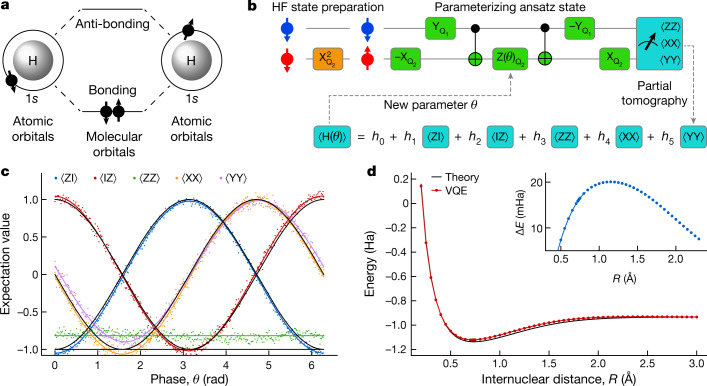
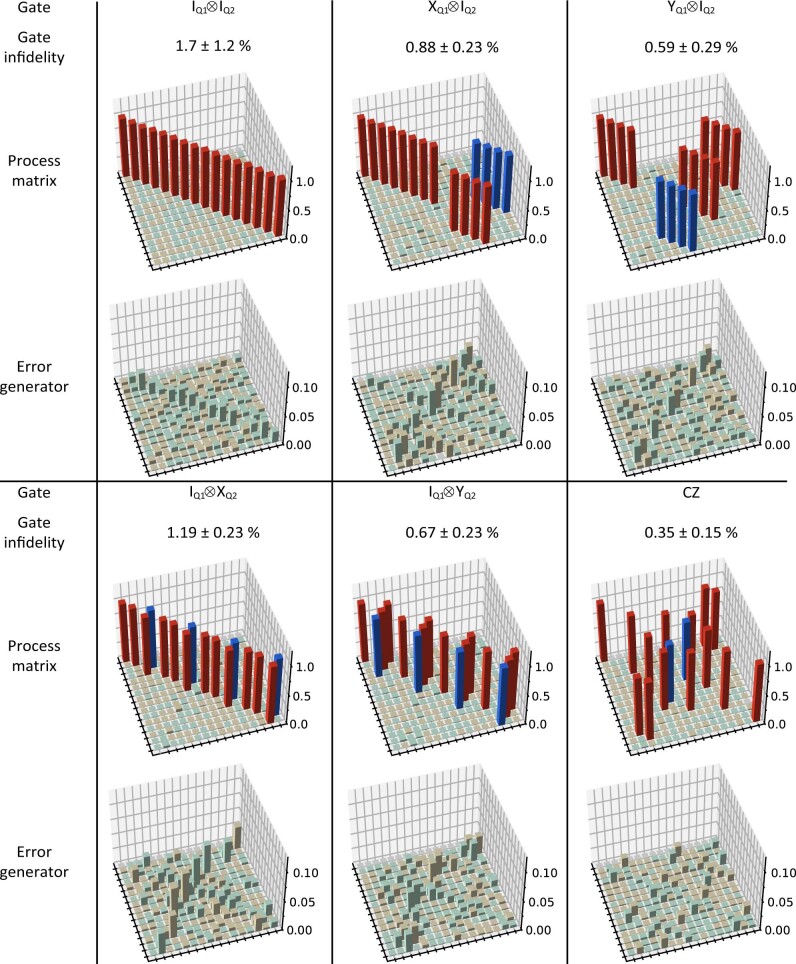
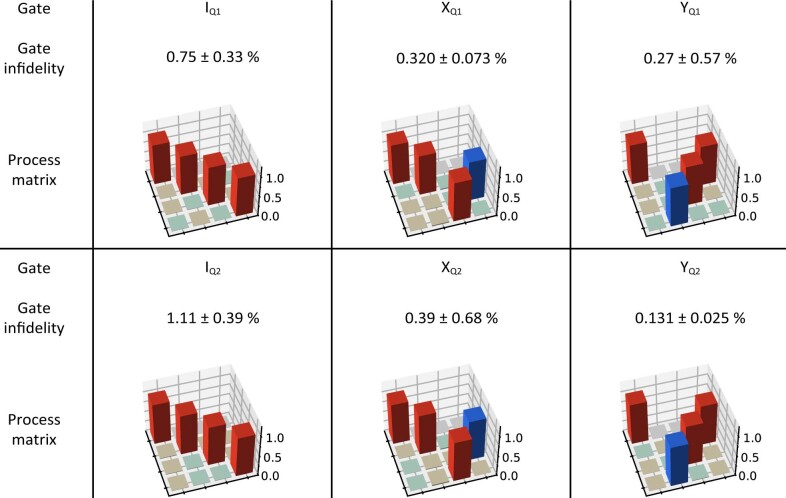
High-fidelity control of quantum bits is paramount for the reliable execution of quantum algorithms and for achieving fault tolerance—the ability to correct errors faster than they occur 1 . The central requirement for fault tolerance is expressed in terms of an error threshold. Whereas the actual threshold depends on many details, a common target is the approximately 1% error threshold of the well-known surface code 2,3 . Reaching two-qubit gate fidelities above 99% has been a long-standing major goal for semiconductor spin qubits. These qubits are promising for scaling, as they can leverage advanced semiconductor technology 4 . Here we report a spin-based quantum processor in silicon with single-qubit and two-qubit gate fidelities, all of which are above 99.5%, extracted from gate-set tomography. The average single-qubit gate fidelities remain above 99% when including crosstalk and idling errors on the neighbouring qubit. Using this high-fidelity gate set, we execute the demanding task of calculating molecular ground-state energies using a variational quantum eigensolver algorithm 5 . Having surpassed the 99% barrier for the two-qubit gate fidelity, semiconductor qubits are well positioned on the path to fault tolerance and to possible applications in the era of noisy intermediate-scale quantum devices.
Overview
The claims and statistics of this paper haven’t been checked yet.
Free: it reads the open-access text and checks the first 5 claims that cite a source we can check. Create a free account to check every claim.
Integrity signals
Registry
Cites
Statistics
Figures
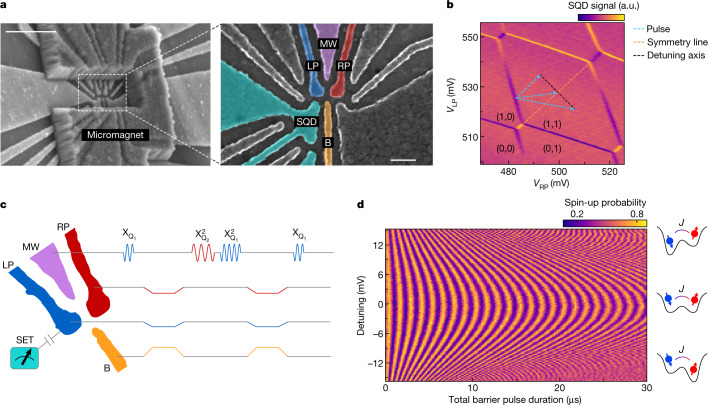
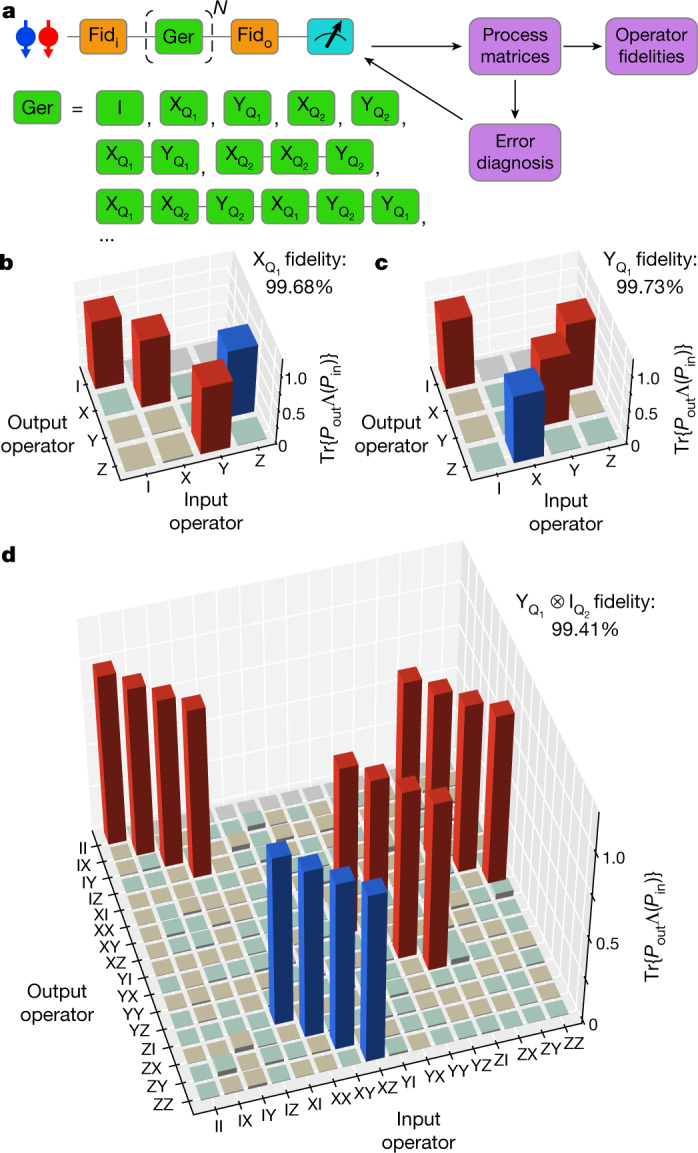
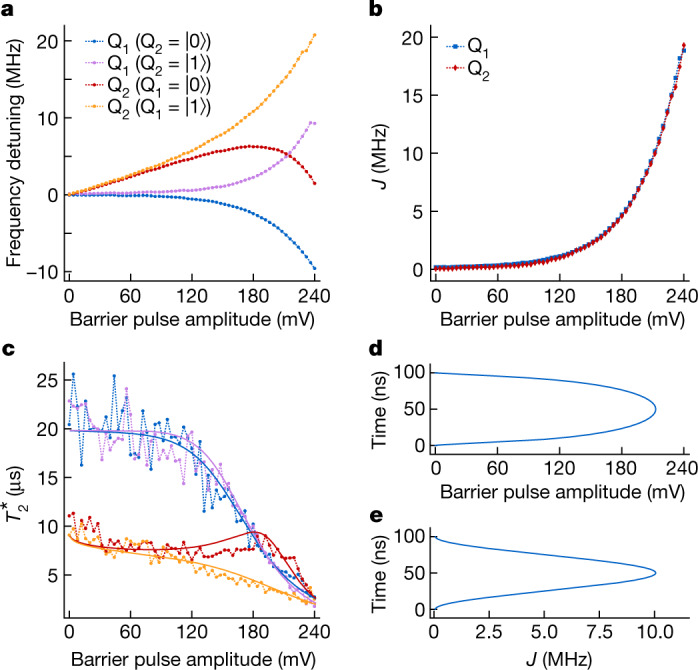
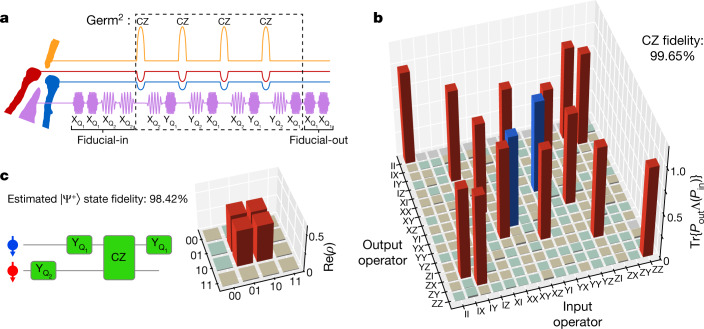
Verification
Claims the paper makes
The claims and statistics of this paper haven’t been checked yet.
Free: it reads the open-access text and checks the first 5 claims that cite a source we can check. Create a free account to check every claim.
Self-check
Percentages, sums and reported differences re-computed from the paper’s own numbers.
The self-check needs the paper’s full text.
Citations
Cites
Quantum Computation and Quantum Information
Nielsen, M. A., Chuang, I., & Grover, L. K. (2002) · American Journal of Physics · doi:10.1119/1.1463744 · Cited by 21,895
Quantum computation and quantum information
Law, J. (2001) · ACM SIGSOFT Software Engineering Notes · doi:10.1145/505482.505499 · Cited by 18,842
Quantum Computing in the NISQ era and beyond
Preskill, J. (2018) · Quantum · doi:10.22331/q-2018-08-06-79 · Cited by 8,830 · cited 1×
“The higher the accuracy, or fidelity, of the operations, the higher the likelihood that near-term applications for quantum computers come in reach [6].”
BackgroundQuantum computation with quantum dots
Loss, D., & DiVincenzo, D. P. (1998) · Physical Review A · doi:10.1103/physreva.57.120 · Cited by 6,840 · cited 2×
“The native two-qubit gate for spin qubits utilizes the exchange interaction [22, 23], originating from the wavefunction overlap of electrons in neighbouring dots.”
BackgroundCoherent Manipulation of Coupled Electron Spins in Semiconductor Quantum Dots
Petta, J. R., Johnson, A. C., Taylor, J. M., Laird, E. A., Yacoby, A., Lukin, M. D., Marcus, C. M., Hanson, M. P., & Gossard, A. C. (2005) · Science · doi:10.1126/science.1116955 · Cited by 3,183 · cited 1×
“The native two-qubit gate for spin qubits utilizes the exchange interaction [22, 23], originating from the wavefunction overlap of electrons in neighbouring dots.”
BackgroundSurface codes: Towards practical large-scale quantum computation
Fowler, A. G., Mariantoni, M., Martinis, J. M., & Cleland, A. N. (2012) · Physical Review A · doi:10.1103/physreva.86.032324 · Cited by 3,059 · cited 2×
“6% and 1%, under certain assumptions, albeit at the cost of a large redundancy in the number of physical qubits [2].”
BackgroundSingle-shot read-out of an individual electron spin in a quantum dot
Elzerman, J. M., Hanson, R., Willems van Beveren, L. H., Witkamp, B., Vandersypen, L. M. K., & Kouwenhoven, L. P. (2004) · Nature · doi:10.1038/nature02693 · Cited by 1,679
Self-citationQuantum computational chemistry
McArdle, S., Endo, S., Aspuru-Guzik, A., Benjamin, S. C., & Yuan, X. (2020) · Reviews of Modern Physics · doi:10.1103/revmodphys.92.015003 · Cited by 1,621 · cited 2×
“the Bravyi-Kitaev (BK) transformation [4].”
MethodLinear transformations which preserve trace and positive semidefiniteness of operators
Jamiołkowski, A. (1972) · Reports on Mathematical Physics · doi:10.1016/0034-4877(72)90011-0 · Cited by 1,512
NMR techniques for quantum control and computation
Vandersypen, L. M. K., & Chuang, I. L. (2005) · Reviews of Modern Physics · doi:10.1103/revmodphys.76.1037 · Cited by 1,217 · cited 1×
“Single-qubit X and Y gates are implemented by frequency-multiplexed microwave signals applied to gate MW, and virtual Z gates are implemented by a phase update of the reference frame [21].”
MethodSelf-citation
Research works printed but not linked: 1
- Xue X Benchmarking gate fidelities in a Si/SiGe two-qubit device Phys. Rev. X 2019 9 021011
Cited by
Items 401–500 of 577
Highly tunable ultrafast control of a spin qubit
Hu, X. (2023) · Nature Nanotechnology · doi:10.1038/s41565-022-01298-8 · Cited by 3
Tailoring quantum error correction to spin qubits
Hetényi, B., & Wootton, J. R. (2023) · arXiv (Cornell University) · doi:10.48550/arxiv.2306.17786 · Cited by 3
“Spin qubit platforms to date have demonstrated single-and two-qubit operations and spin read-out above 99% fidelity [4–6] in devices with up to six qubits [7].”
BackgroundCrosstalk In Contemporary Quantum DevicesPreprint
Gicev, S., Harper, B., Kang, H., Usman, M., & Sevior, M. (2026) · arXiv (Cornell University) · doi:10.48550/arxiv.2605.26528 · Cited by 4
“In previous work, the heating-based crosstalk effect was mitigated by applying compensating Z rotation phase corrections [82].”
Throckmorton, R. E., & Sarma, S. D. (2022) · Physical review. B./Physical review. B · doi:10.1103/physrevb.106.245419 · Cited by 2
CMOS Enabling Quantum Computing
Edoardo Charbon, A. (2023) · Wiley eBooks · doi:10.1002/9781394202478.ch32 · Cited by 2
Quantum information processing in electrically defined Silicon triple quantum dot systems
Kang, J.-H., & Ryu, H. (2024) · Solid-State Electronics · doi:10.1016/j.sse.2024.108863 · Cited by 2
Coupling and characterization of a Si/SiGe triple quantum dot array with a microwave resonator
Jiang, S.-L., Jiang, T.-Y., Xu, Y.-Q., 吴, R. 睿. W., Hao, T.-Y., Ye, S.-K., 蔡, R.-R. 冉. C., Wang, B., Li, H.-O., Cao, G., et al. (2024) · Chinese Physics B · doi:10.1088/1674-1056/ad711d · Cited by 2
Single-electron charge sensor self-aligned to a quantum dot array by double-gate patterning process
Kuno, T., Utsugi, T., Tsuchiya, R., Lee, N., Mine, T., Yanagi, I., Mizokuchi, R., Yoneda, J., Kodera, T., Saito, S., et al. (2024) · Japanese Journal of Applied Physics · doi:10.35848/1347-4065/ada348 · Cited by 2
Teleportation based detection of quantum critical points using small spin chains
Ribeiro, G. A. P., & Rigolin, G. (2025) · International Journal of Modern Physics C · doi:10.1142/s0129183125430016 · Cited by 2
Hole spin splitting in a Ge quantum dot with finite barriers
Wang, J., Hu, X., & Fotso, H. F. (2025) · Physical review. B./Physical review. B · doi:10.1103/xrqt-xrnm · Cited by 2
Modern Quantum Computing: Languages, Simulators, Architectures and Future Directions
Karhan, D., Çimen, S., & Güllü, M. (2025) · International Conference on Artificial Intelligence, Computer, Data Sciences and Applications (ACDSA) · doi:10.1109/acdsa65407.2025.11165857 · Cited by 2
“Alongside these platforms, various approaches such as topological, photonic, and silicon-based spin qubits are also being developed in parallel [67]– [69].”
Concatenated continuous driving of silicon qubit by amplitude and phase modulation
Kuno, T., Utsugi, T., Ramsay, A. J., Mertig, N., Lee, N., Yanagi, I., Mine, T., Kusuno, N., Arimoto, H., Beyne, S., et al. (2026) · Physical review. B./Physical review. B · doi:10.1103/f2kd-x628 · Cited by 2
Quantum error correction assisted axion search in CMOS spin qubit arrays
Tan, X., & Wang, Z. M. (2026) · Physical review. D/Physical review. D. · doi:10.1103/2y5c-x1kz · Cited by 3
“Isotopically enriched Si/SiGe and related heterostructure support long coherence times and high fidelity one-and two-qubit gates [56–58].”
Wang, S., Xia, Z., Yan, Y., & Wang, X. (2026) · npj Quantum Information · doi:10.1038/s41534-026-01276-1 · Cited by 3
Samaha, P., Torki, A., Renaud, Y., Fiette, S., Chanrion, E., Mortemousque, P.-A., & Beilliard, Y. (2026) · Machine Learning Science and Technology · doi:10.1088/2632-2153/ae7cda · Cited by 3
Nano-MOSFET – Foundation of Quantum Computing Part I
Xue, X., Hart, P. A. T., Charbon, E., Sebastiano, F., & Vladimirescu, A. (2023) · IEEE Nanotechnology Magazine · doi:10.1109/mnano.2022.3228097 · Cited by 2
“…the coherence times of electron spins. the dephasing time (t2 * ) of spin qubits in purified silicon ( 28 si) is reported to be 10 - 120 μs [13], [14], while the relaxation time (t1) is typically in the range of a few hundred milliseconds to a few seconds [13]. such relatively long coherence…”
BackgroundInfluentialSelf-citationFayyaz, A., & Kestner, J. P. (2023) · Physical review. B./Physical review. B · doi:10.1103/physrevb.108.l081303 · Cited by 4
“An indicator of the success of the spin qubit approach is the demonstration of high-fidelity single-qubit [12–16] and two-qubit [15, 17, 18] gates in silicon quantum devices with fidelities above the surface code error-correction threshold [19].”
BackgroundCurrent status and future development of quantum computing
Jin, Y. (2024) · Theoretical and Natural Science · doi:10.54254/2753-8818/36/20240606 · Cited by 2
Semiconductor Innovations in Quantum Computing
Mangaiyarkkarasi, J., & Revathy, J. S. (2024) · Advances in mechatronics and mechanical engineering (AMME) book series · doi:10.4018/979-8-3693-7076-6.ch005 · Cited by 3
Amitonov, S. V., Aprá, A., Asker, M., Bals, R., Barry, B., Bashir, I., Blokhina, E., Giounanlis, P., Harkin, M., Hanos-Puskai, P., et al. (2026) · Applied Physics Letters · doi:10.1063/5.0312195 · Cited by 2
Self-citationRF detection of split-gate modes in Si-MOS quantum dots
楚, N. 凝. C., Zhu, S.-K., Li, A.-R., Wang, C., Liao, W.-Z., 曹, G. 刚. C., Li, H.-O., & Guo, G. (2025) · Chinese Physics B · doi:10.1088/1674-1056/adb68b · Cited by 2
Fault-tolerant Quantum Error Correction Using a Linear Array of Emitters
Kim, J., Han, J. H., & Kim, I. H. (2025) · Quantum · doi:10.22331/q-2025-03-26-1676 · Cited by 2
“Experimentally, two-qubit gate fidelities exceeding 99% have been demonstrated in systems with a small number of gate-defined quantum dots [40, 42, 46, 80].”
A low-noise and high-stability DC source for superconducting quantum circuits
孙, D. 大. S., Zhang, J., 黄, P. 培. H., Zhang, Y., Guo, Z., Chen, T., Wang, R., Sun, X., Zhang, J., Huang, W., et al. (2025) · Chinese Physics B · doi:10.1088/1674-1056/ade1c5 · Cited by 2
Compilation Techniques for Spin Qubits in a Shuttling Bus Architecture
Escofet, P., Семенов, А. А., Murphy, N., Blokhina, E., Abadal, S., Alarcón, E., & Almudéver, C. G. (2025) · IEEE International Symposium on Circuits and Systems proceedings · doi:10.1109/iscas56072.2025.11044097 · Cited by 2
“Recent advancements have demonstrated that single-and two-qubit gate fidelities in silicon spin qubits have already exceeded the threshold for quantum error correction [17].”
Complete switching of transverse and longitudinal spin-photon coupling in silicon
Li, F.-G., Cai, R., Wei, Z.-C., Wang, B., Li, H.-O., Cao, G., & Guo, G. (2025) · Science China Physics Mechanics and Astronomy · doi:10.1007/s11433-025-2695-7 · Cited by 2
Chen, K., Godfrin, C., Simion, G., Fattal, I., Jussot, J., Kubicek, S., Beyne, S., Raes, B., Loenders, A., Kao, K.-H., et al. (2025) · Physical review. B./Physical review. B · doi:10.1103/physrevb.111.125301 · Cited by 3
Impact of leakage on the dynamics of an ST 0 qubit implemented in a double quantum dot device
del Moral, J. O., Larrarte, O. S., Dastbasteh, R., Martínez, J. E., & Otxoa, R. M. (2026) · Physical review. B./Physical review. B · doi:10.1103/6p7p-w1lc · Cited by 2
Bridging pulse and circuit levels: a geometric framework for deterministic error suppression
Zeng, J., Liang, H., Hai, Y.-J., & Deng, X. (2026) · Quantum Science and Technology · doi:10.1088/2058-9565/ae9b3b · Cited by 2
Paz, B. C., El-Homsy, V., Niegemann, D. J., Klemt, B., Chanrion, E., Thiney, V., Jadot, B., Mortemousque, P.-A., Bertrand, B., Bédécarrats, T., et al. (2022) · European Solid-State Circuits Conference (ESSCIRC) · doi:10.1109/esscirc55480.2022.9911381 · Cited by 2
“The interest in CMOS-based silicon quantum dots have been recently boosted thanks to demonstrations of fidelities above 99% for two-qubit gates implemented using electron spins in semiconductor QDs [1,2].”
BackgroundSpin-based Quantum Computing in Silicon: Scaling with CMOS
González-Zalba, M. F. (2022) · IEEE International Conference on Electronics, Circuits and Systems (ICECS) · doi:10.1109/icecs202256217.2022.9971032 · Cited by 2
“Such feature has enabled the simultaneous demonstration of high-fidelity one-and two-qubits gates beyond the requirements for quantum error correction on two-qubit Si/SiGe quantum processors [8,9] and has allowed scaling to a fully programmable 6-qubit Si/SiGe quantum processor [10].”
BackgroundDenisov, A. O., Fuchs, G., Oh, S. W., & Petta, J. R. (2023) · PRX Quantum · doi:10.1103/prxquantum.4.030309 · Cited by 2
Brackmann, V., Neul, M., Friedrich, M., Langheinrich, W., Simon, M., Muster, P., Pregl, S., Demmler, A., Hanisch, N., Lederer, M., et al. (2023) · European Mask and Lithography Conference (EMLC) · doi:10.1117/12.2675943 · Cited by 2
Coulomb collisions of hot and cold single electrons in series-coupled silicon single-electron pumps
Yamahata, G., Johnson, N., & Fujiwara, A. (2023) · Physical Review Applied · doi:10.1103/physrevapplied.20.044043 · Cited by 2
Partial randomized benchmarking
Dubovitskii, K., & Makhlin, Y. (2022) · Scientific Reports · doi:10.1038/s41598-022-13813-x · Cited by 1
Long-range entanglement between spin qubits in quantum dots by virtual photon process
Hu, Y.-B., Chen, R., Yan, G., & Zhu, X. (2023) · Modern Physics Letters A · doi:10.1142/s0217732323500530 · Cited by 1
Wang, Y., Wang, T., & Zhu, X. (2024) · Entropy · doi:10.3390/e26050379 · Cited by 2
Donarini, A., & Grifoni, M. (2024) · Lecture notes in physics · doi:10.1007/978-3-031-55619-7_7 · Cited by 1
Zhou, R., & Jiao, D. (2025) · IEEE journal on multiscale and multiphysics computational techniques · doi:10.1109/jmmct.2025.3550117 · Cited by 1
“Multiple solid-state spin systems have demonstrated high-fidelity quantum computing by effectively addressing various sources of noise [1], [4].”
Ballast Charges for Semiconductor Spin Qubits
Choi, Y., Nichol, J. M., & Barnes, E. (2025) · Physical Review Letters · doi:10.1103/81qt-48bl · Cited by 2
“They have reached the fidelities needed for fault-tolerant operation [2–5] and are also compatible with CMOS manufacturing infrastructure [6, 7].”
BackgroundProtecting Quantum Gates from Arbitrary Single‐ and Two‐Qubit Errors
Wang, G., Wu, C., Sun, C., & Feng, X. (2025) · Advanced Quantum Technologies · doi:10.1002/qute.202500041 · Cited by 2
Crosstalk analysis in single hole-spin qubits within highly anisotropic g -tensors
Hajati, Y., Heinz, I., & Burkard, G. (2025) · Physical Review Research · doi:10.1103/qzn2-l71q · Cited by 1
Resonator-activated entangling gates for spin qubits in quantum dots
He, W.-Q., Liu, J.-R., & Zhu, X. (2025) · Physical Review A · doi:10.1103/xx7c-36f5 · Cited by 1
Liu, J., Liu, X., Lu, W., Li, Z., Zhang, Y., Wang, X., Zhao, C., Cao, G., Li, H., Guo, G., et al. (2025) · Physical review. B./Physical review. B · doi:10.1103/4vzf-c3vm · Cited by 1
Matsuoka, R., Wachi, Y., Tsuchiya, R., Mizuno, H., & Kodera, T. (2025) · Japanese Journal of Applied Physics · doi:10.35848/1347-4065/adeb23 · Cited by 3
Addressable and tunable module for donor-based scalable silicon quantum computing
Zhang, S., He, Y., & Huang, P. (2025) · Physical review. B./Physical review. B · doi:10.1103/tfnf-b78h · Cited by 1
Quantum gates in coupled quantum dots controlled by coupling modulation
Bendersky, A. D., Gómez, S. S., & Romero, R. H. (2026) · Quantum Science and Technology · doi:10.1088/2058-9565/ae3a12 · Cited by 3
On the feasibility of quantum teleportation protocols implemented with silicon devices
Ryu, J., & Ryu, H. (2025) · Nanoscale · doi:10.1039/d5nr02992a · Cited by 1
Kolok, B., Frank, G., & Pályi, A. (2025) · Physical review. B./Physical review. B · doi:10.1103/gfk2-lm2j · Cited by 2
Controlling quantum chaos via Parrondo strategies on noisy intermediate-scale quantum hardware
Rath, A. M., Panda, D. K., & Benjamin, C. (2025) · Physical review. E · doi:10.1103/m89r-2dy5 · Cited by 1
“These NISQ systems are typically based on superconducting qubits [3], trapped ions [4], nuclear spin qubits in silicon [5], or other solid-state platforms [6].”
Replacement-type quantum gates
Ginzel, F., Kazemi, J., Torggler, V., & Lechner, W. (2026) · Physical Review A · doi:10.1103/frwk-cb6n · Cited by 1
Tsuzuki, T., Yuta, H., Muto, Y., Ludwig, A., Wieck, A. D., Oiwa, A., & Fujita, T. (2026) · Japanese Journal of Applied Physics · doi:10.35848/1347-4065/ae2b7a · Cited by 2
Improved readout accuracy of a silicon spin qubit via log-likelihood ratio
Mizokuchi, R., Wada, R., Matsuoka, R., Ota, S., Yanagi, I., Mine, T., Tsuchiya, R., Hisamoto, D., Mizuno, H., & Kodera, T. (2025) · Japanese Journal of Applied Physics · doi:10.35848/1347-4065/ae2d60 · Cited by 1
Spin qubit shuttling between coupled quantum dots with inhomogeneous Landé g tensors
Liu, Z.-H., Liu, X., & Xu, H. Q. (2026) · Physical review. B./Physical review. B · doi:10.1103/2yvw-xdy3 · Cited by 1
Matsuoka, R., Mizokuchi, R., Yoneda, J., & Kodera, T. (2026) · Applied Physics Express · doi:10.35848/1882-0786/ae420b · Cited by 1
Color It, Code It, Cancel It: k -Local Dynamical Decoupling from Classical Additive Codes
Nguyen, M. T. P., Rimbach-Russ, M., & Bosco, S. (2026) · PRX Quantum · doi:10.1103/8q24-zj73 · Cited by 7
Statistical structure of charge disorder in Si / Si - Ge quantum dots
Samadi, S., Cywiński, Ł., & Krzywda, J. A. (2026) · Physical Review Applied · doi:10.1103/x86t-n64x · Cited by 1
High-fidelity, robust, and programmable quantum logic units via intersubspace dynamical decoupling
Anonymous, Zeng, J., Hu, G., He, Y., & Deng, X. (2026) · Physical Review Applied · doi:10.1103/l2l1-632m · Cited by 2
Analysis of the action of conventional trapped-ion entangling gates in qudit space
Anonymous, Semenin, N. V., Zalivako, I. V., Smirnov, V. N., Semerikov, I. A., Khabarova, K. Y., & Kolachevsky, N. (2026) · Physical Review A · doi:10.1103/sxrf-1h7v · Cited by 2
“There are different physical platforms on which a quantum computer can be built, and the most prominent ones are superconducting circuits [4, 5], photons [6, 7], neutral atoms [8–10], trapped ions [11–13] and semi-conductor quantum dots [14, 15].”
Multilevel spectral navigation with geometric diabatic-adiabatic control
Anonymous, Valvo, E., Bosco, S., & Rimbach-Russ, M. (2026) · Physical Review Research · doi:10.1103/hfv7-3pxt · Cited by 2
Vegh, N. M., Philippopoulos, P., Prentki, R. J., Zhang, W., Zhu, Y., Beaudoin, F., & Guo, H. (2026) · Semiconductor Science and Technology · doi:10.1088/1361-6641/ae949d · Cited by 1
Exchange interaction in gate-defined quantum dots beyond the Hubbard model
Anonymous, Bethke, P., Shehata, M. M. E. K., Simion, G., Wolfe, M. A., Botzem, T., McNeil, R. P. G., Ritzmann, J., Ludwig, A., Wieck, A. D., et al. (2026) · Physical review. B./Physical review. B · doi:10.1103/fb37-f7ky · Cited by 2
“Exchange coupling is a very convenient control resource because it can be electrically controlled by modifying the tunnel coupling or detuning between adjacent quantum dots or donor sites, and is so far the most successful approach for high-fidelity two-qubit gates [1–7].”
Guo, L., Gu, X., Zhang, C., Wang, Y., Hu, Y., Zhang, R., Hu, H., Chen, P., Qin, Y., Meng, K., et al. (2026) · Nature Electronics · doi:10.1038/s41928-026-01727-9 · Cited by 1
Silicon-based Quantum Computing: High-density, High-temperature Qubits
Dzurak, A. S. (2021) · Technical digest - International Electron Devices Meeting/Technical digest · doi:10.1109/iedm19574.2021.9720602 · Cited by 2
Nichol, J. M. (2022) · Quantum science and technology · doi:10.1007/978-3-031-03998-0_17 · Cited by 3
Silicon-based Quantum Computing: Scaling Strategies
González-Zalba, M. F. (2022) · IEEE Silicon Nanoelectronics Workshop · doi:10.1109/snw56633.2022.9889051 · Cited by 1
“With the recent demonstrations of long spin coherence times [1], highfidelity spin readout [2], and one- and two-qubit gates [3-5], the basic requirements to build a quantum computer have been fulfilled.”
BackgroundTomari, K., Yoneda, J., & Kodera, T. (2023) · IEICE Transactions on Electronics · doi:10.1587/transele.2022fus0001 · Cited by 1
“They can be operated with high fidelities [5-8] and are considered suitable for large-scale integration in the future owing to high compatibility with conventional CMOS technologies [9-12].”
BackgroundEnergy shift and subharmonics induced by nonlinearity in a quantum dot system
Zhou, Y. L., Cao, G., Li, H.-O., & Guo, G. (2023) · Chinese Physics B · doi:10.1088/1674-1056/acc521 · Cited by 1
Integrated Control Addressing Circuits for a Surface Code Quantum Computer in Silicon
Absar, R., Merino, Z. D., Elgabra, H., Chen, X., Baugh, J., & Wei, L. (2022) · IEEE/ACM International Symposium on Nanoscale Architectures (NANOARCH) · doi:10.1145/3565478.3572541 · Cited by 1
“Silicon-based QD qubits have several characteristics that make them promising and realistic for universal quantum computing [7, 11, 22, 24, 31, 32, 35].”
BackgroundInfluentialThreshold-independent method for single-shot readout of spin qubits in semiconductor quantum dots
Hu, R.-Z., Zhu, S.-K., Zhang, X., Zhou, Y. L., Ni, M., Ma, R.-L., Luo, G., Kong, Z., Wang, G., Cao, G., et al. (2023) · Chinese Physics B · doi:10.1088/1674-1056/ace3a9 · Cited by 1
Semiconductor quantum computing
ZHANG, J., Li, H.-O., & Guo, G. (2023) · Scientia Sinica Informationis · doi:10.1360/ssi-2023-0333 · Cited by 1
Cryogenic CMOS for Quantum Computing
Absar, R., Elgabra, H., Ma, D., Zhao, Y., & Wei, L. (2023) · Springer eBooks · doi:10.1007/978-3-031-42478-6_22 · Cited by 2
Kanaar, D. W., & Kestner, J. P. (2024) · Physical Review A · doi:10.1103/physreva.109.032605 · Cited by 4
Electric field dependence of spin qubit in a Si-MOS quantum dot
Ma, R.-L., 倪, M. 铭. N., 周, Y.-C. 雨. Z., 孔, Z.-Z. 真. K., 王, G.-L. 桂. W., 刘, D. 頔. L., 罗, G. 刚. L., Cao, G., Li, H.-O., & Guo, G. (2024) · Chinese Physics B · doi:10.1088/1674-1056/ad3812 · Cited by 3
RESCUED: Robust Quantum Error Correction with Surface Code in Noisy Channels Using Ensemble Decoder
Barua, S., Shubha, S. E. U., Rahman, M., Uchash, A. J., & Mahdy, M. R. C. (2023) · IEEE International Conference on Telecommunications and Photonics (ICTP) · doi:10.1109/ictp60248.2023.10490966 · Cited by 3
“Xue et al. [10] exhibit a spin-based quantum processor in silicon featuring single-qubit and two-qubit gate fidelities exceeding 99.5%, as determined through gate-set tomography.”
MethodInfluentialEpitaxy and characterization of undoped Si/SiGe heterojunctions
Geng, X., Zhang, J., Lu, W., Ming, M., Liu, F., Fu, B.-X., Chu, Y.-X., Yan, M.-H., Wang, B., Zhang, X.-D., et al. (2024) · Acta Physica Sinica · doi:10.7498/aps.73.20240310 · Cited by 1
Cakar, E., Ercan, H. E., Fuchs, G., Denisov, A. O., Anderson, C. R., Gyure, M. F., & Petta, J. R. (2024) · Applied Physics Letters · doi:10.1063/5.0217704 · Cited by 3
Negative exchange interaction in Si quantum dot arrays via valley-phase induced Z 2 gauge field
Woods, B. D. (2025) · Physical review. B./Physical review. B · doi:10.1103/x2jk-714n · Cited by 1
Enhancement of electric drive in silicon quantum dots with electric quadrupole spin resonance
Mai, P. Y., Pereira, P. H., Alonso, L. A., Leon, R. C. C., Yang, C. H., Hwang, J. C. C., Dunmore, D., Lemyre, J. C., Tanttu, T., Huang, W., et al. (2025) · Physical Review Research · doi:10.1103/gk5h-l7q4 · Cited by 1
Scalable Addressing Circuits for a Surface Code Silicon-based Quantum ComputerPreprint
Absar, R., Merino, Z. D., Elgabra, H., Chen, X., Baugh, J., & Wei, L. (2023) · doi:10.36227/techrxiv.22685098.v1 · Cited by 1
Spatial correlations of charge noise captured
Cywiński, Ł. (2023) · Nature Physics · doi:10.1038/s41567-023-02189-y · Cited by 1
Surface acoustic waves as testbed for electron flying qubits
Wang, J. (2022) · theses.fr (ABES) · doi:10.70675/262a84adz8049z4ff9z8e53zcdd4e6800184 · Cited by 1
Kriekouki, I. (2022) · theses.fr (ABES) · doi:10.70675/9fed023fze214z429fzbf66z0d82f6e955c8 · Cited by 5
Klemt, B. (2023) · theses.fr (ABES) · doi:10.70675/c9289d27z7165z4474z83c2ze6a5cd30184e · Cited by 1
Sah, A., Ranadive, A., Suominen, H., Chen, Q., & Möttönen, M. (2024) · Zenodo (CERN European Organization for Nuclear Research) · doi:10.5281/zenodo.11234842 · Cited by 1
Schaal, S., & González-Zalba, M. F. (2021) · Frontiers of nanoscience · doi:10.1016/b978-0-12-822083-2.00005-8
Emerging qubit systems: Guest editorial
Sigillito, A. J., Covey, J. P., Fink, J. M., Petersson, K. D., & Preble, S. F. (2022) · Applied Physics Letters · doi:10.1063/5.0097339
Robust electron spin qubit control in a nanowire double quantum dot
Lu, R., Liu, K., & Ban, Y. (2022) · Philosophical Transactions of the Royal Society A Mathematical Physical and Engineering Sciences · doi:10.1098/rsta.2021.0270
QUANTUM COMPUTERS: AN OVERVIEW OF THEIR MARKET AND PHYSICAL REALISATIONS
MARMELLO, P. T. D. S. M., & PAULA, C. D. P. (2022) · doi:10.17771/pucrio.acad.61595 · Cited by 1
Enabling full fault tolerant quantum computing with silicon based VLSI technologies
Vinet, M. (2022) · Technical digest - International Electron Devices Meeting/Technical digest · doi:10.1109/iedm45625.2022.10019418
Interplay of Pauli blockade with electron-photon coupling in quantum dots
Ginzel, F., & Burkard, G. (2023) · Physical review. B./Physical review. B · doi:10.1103/physrevb.107.115302 · Cited by 1
Scalable Addressing Circuits for a Surface Code Silicon-based Quantum ComputerPreprint
Absar, R., Merino, Z. D., Elgabra, H., Chen, X., Baugh, J., & Wei, L. (2023) · doi:10.36227/techrxiv.22685098
High-fidelity single-qubit gates of a strong driven singlet-triplet qubit
Liu, Q.-P., Zhang, C.-X., & Xue, Z. (2023) · Acta Physica Sinica · doi:10.7498/aps.72.20230906
Ji, S., & Iwamoto, S. (2023) · Optics Continuum · doi:10.1364/optcon.492718
Benchmarking and Analysis of Quantum Error Correction Codes
Timmaraju, R. (2023) · Journal of Student Research · doi:10.47611/jsrhs.v12i3.5127
Towards Scalable Cryogenic Quantum Dot Biasing Using Memristor-Based Dc SourcesPreprint
Mouny, P.-A., Dawant, R., Dufour, P., Valdenaire, M., Ecoffey, S., Pioro-Ladrière, M., Beilliard, Y., & Drouin, D. (2024) · SSRN Electronic Journal · doi:10.2139/ssrn.4814534
Simulation of time-dependent quantum dynamics using quantum computers
Lötstedt, E., Nishi, T., & Yamanouchi, K. (2024) · Advances in atomic, molecular, and optical physics · doi:10.1016/bs.aamop.2024.05.002 · Cited by 1
Gys, B., Burgelman, L., Greve, K. D., Gielen, G. E., & Catthoor, F. (2024) · IEEE Transactions on Quantum Engineering · doi:10.1109/tqe.2024.3486546
Information about the Universe with Gravity in the magnetic seaPreprint
Lee, J. (2025) · OSF Preprints (OSF Preprints) · doi:10.31219/osf.io/r63d8
Noise Correlation in Silicon Spin Qubits: A Computational Study
Cheng, G., & Guo, J. H. (2024) · IEEE International Conference on Quantum Computing and Engineering (QCE) · doi:10.1109/qce60285.2024.00140
Li, Y.-C., Chang, C.-H., Wu, Y.-J., Liao, C.-Y., & Li, J. (2025) · Applied Physics Letters · doi:10.1063/5.0245929
Metadata
- Authors
- Xue, X., Russ, M., Samkharadze, N., Undseth, B., Sammak, A., Scappucci, G., & Vandersypen, L. M. K.
- Affiliations
- QuTech (NL)
- Netherlands Organisation for Applied Scientific Research (NL)
- Corresponding author
- Vandersypen, Lieven M. K.
- ORCID
- Venue
- Nature
- Published
- 2022-01-19
- Volume
- 601
- Issue
- 7893
- Pages
- 343-347
- ISSN
- 0028-0836 (ISSN-L)
- 1476-4687
- PMC
- PMC8770146
- OpenAlex
- W4206313080
- Semantic Scholar
- 7bcfa132bc89fec7035f0da0af7464cda3722bc4
- Cited by
- 524
- References
- 65
- Citations by year
- 2026: 69 · 2025: 131 · 2024: 124 · 2023: 110 · 2022: 82
- FWCI
- 45.93
- Type
- journal article
- Language
- en
- Open access
- hybrid
- doi.org
- Licence
- cc-by
- creativecommons.org/licenses/by/4.0 (tdm)
- creativecommons.org/licenses/by/4.0 (vor)
- Locations
- Nature (publishedVersion, cc-by)
- PubMed Central (publishedVersion, cc-by)
- PubMed (publishedVersion)
- arXiv (Cornell University) (submittedVersion)
- TNO Repository (submittedVersion)
- RePEc: Research Papers in Economics (submittedVersion)
- Research Repository (Delft University of Technology) (submittedVersion, cc-by)
- Data Archiving and Networked Services (DANS) (submittedVersion, other-oa)
- arXiv (Cornell University)
- Funders
- Army Research Office (W911NF‐17‐1‐0274, W911NF)
- Topics
- Physical Sciences › Physics and Astronomy › Condensed Matter Physics › Quantum and electron transport phenomena
- Physical Sciences › Computer Science › Artificial Intelligence › Quantum Computing Algorithms and Architecture
- Physical Sciences › Materials Science › Materials Chemistry › Diamond and Carbon-based Materials Research
- Keywords
- spin qubits, fault tolerance, two-qubit gate fidelity, single-qubit gate fidelity, gate set tomography, variational quantum eigensolver, crosstalk error, NISQ devices
About these checks
Registry, retraction, Cites and statistics results are computed, not judged, with one exception: a printed reference that no index lists is read once by a model before it counts as a citation error. Claims are extracted by a model and kept only when their quote appears verbatim in the text; each cited source is then checked, with a model’s help, for whether it says what the claim relies on. Those verdicts can be wrong — read the claim’s quote and the cited source before relying on one.
Statistics and arithmetic are recomputed, not judged.
Confidence bands are shown only for fields calibrated on our annotated test set. None is calibrated yet, so no band is shown.
What counts as a claim ›How we measure confidence ›How we check this ›
Are you an author, or do you see a problem with this page? Request a review
Data sources
Bibliographic data: Semantic Scholar, OpenAlex, Crossref.
Contains information from the Semantic Scholar Academic Graph Datasets, made available under the ODC Attribution License (ODC-BY 1.0).
Semantic Scholar’s data is described in: Kinney, R., et al. (2023). The Semantic Scholar Open Data Platform. arXiv:2301.10140.
