

Discovering faster matrix multiplication algorithms with reinforcement learning
Open accessThe DOI matches its Crossref record; 51 of the 51 references it cites were found in a registry or an index.
Abstract
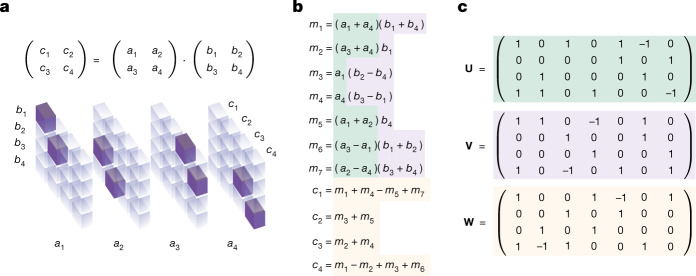
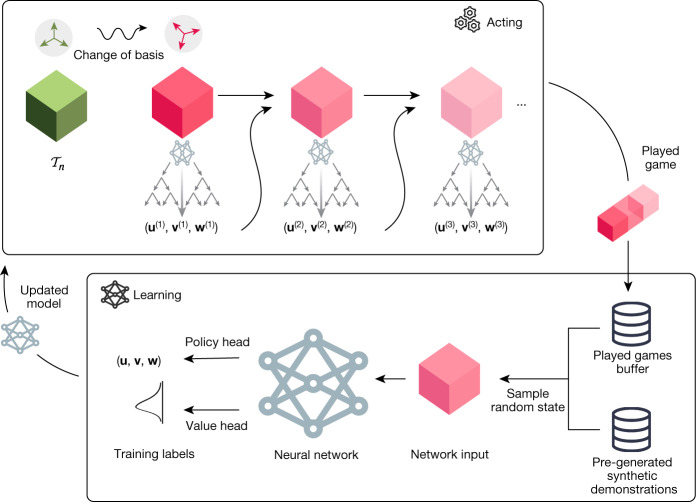
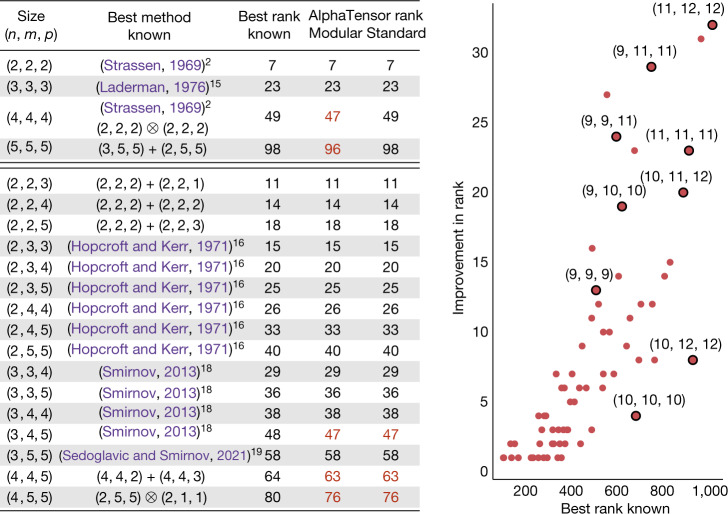
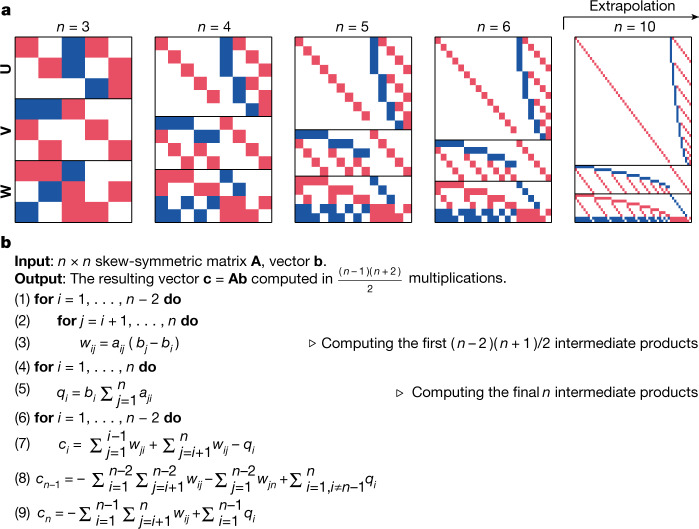
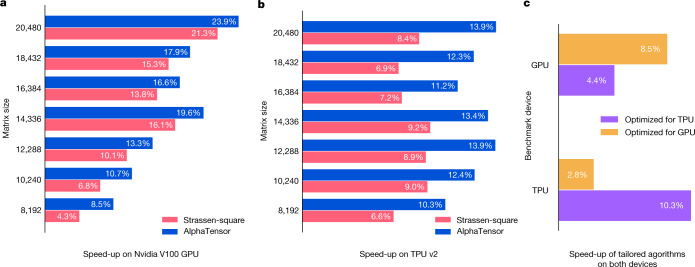
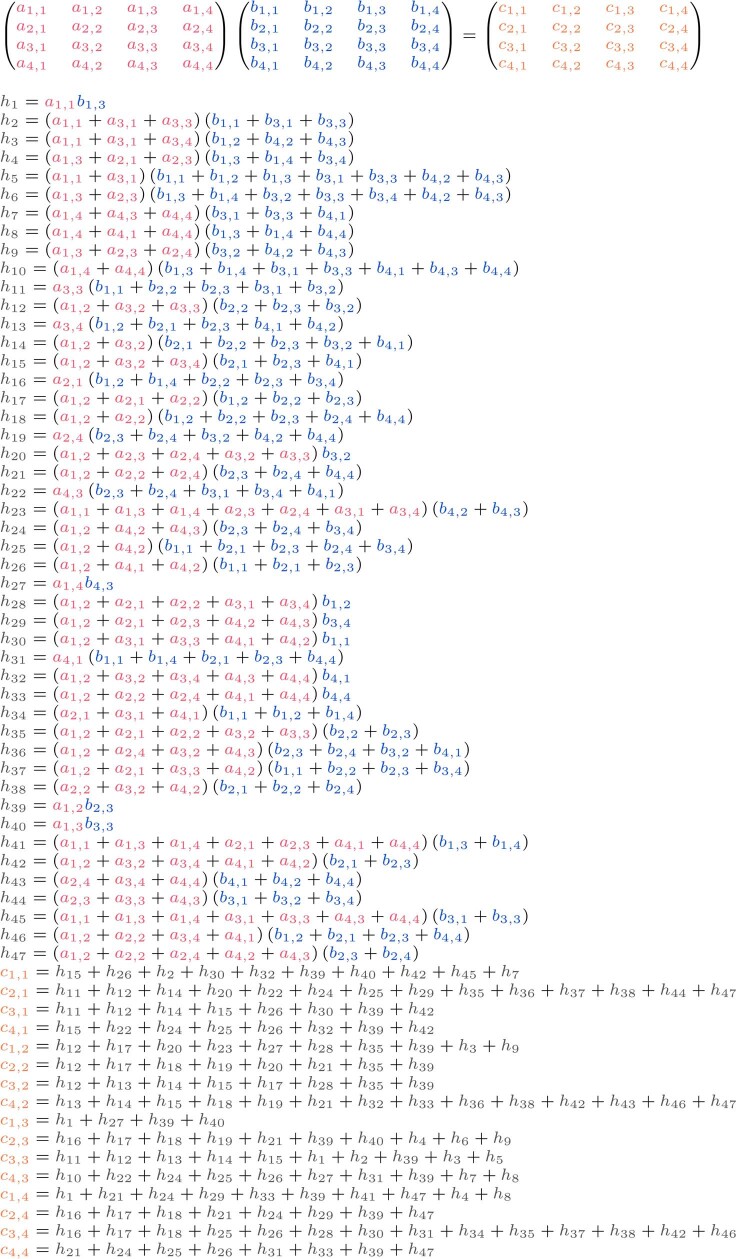
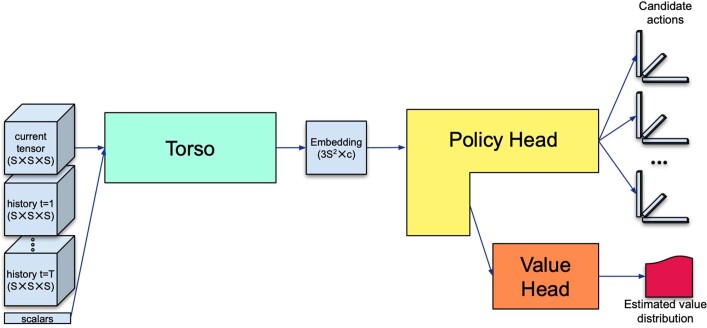
Improving the efficiency of algorithms for fundamental computations can have a widespread impact, as it can affect the overall speed of a large amount of computations. Matrix multiplication is one such primitive task, occurring in many systems—from neural networks to scientific computing routines. The automatic discovery of algorithms using machine learning offers the prospect of reaching beyond human intuition and outperforming the current best human-designed algorithms. However, automating the algorithm discovery procedure is intricate, as the space of possible algorithms is enormous. Here we report a deep reinforcement learning approach based on AlphaZero 1 for discovering efficient and provably correct algorithms for the multiplication of arbitrary matrices. Our agent, AlphaTensor, is trained to play a single-player game where the objective is finding tensor decompositions within a finite factor space. AlphaTensor discovered algorithms that outperform the state-of-the-art complexity for many matrix sizes. Particularly relevant is the case of 4 × 4 matrices in a finite field, where AlphaTensor’s algorithm improves on Strassen’s two-level algorithm for the first time, to our knowledge, since its discovery 50 years ago 2 . We further showcase the flexibility of AlphaTensor through different use-cases: algorithms with state-of-the-art complexity for structured matrix multiplication and improved practical efficiency by optimizing matrix multiplication for runtime on specific hardware. Our results highlight AlphaTensor’s ability to accelerate the process of algorithmic discovery on a range of problems, and to optimize for different criteria.
Overview
The claims and statistics of this paper haven’t been checked yet.
Free: it reads the open-access text and checks the first 5 claims that cite a source we can check. Create a free account to check every claim.
Integrity signals
Registry
Cites
Statistics
Figures
Verification
Claims the paper makes
The claims and statistics of this paper haven’t been checked yet.
Free: it reads the open-access text and checks the first 5 claims that cite a source we can check. Create a free account to check every claim.
Claims other papers make about this one
Each is checked against this paper’s own text: does it say what the citing paper says it does?
The source backs part of the claim, not all of it — or backs it for a different population, condition or comparison.
In the citing paper
“Despite being general-purpose, AlphaEvolve goes beyond [26], improving the SOTA for 14 matrix multiplication algorithms”
From AlphaEvolve: A coding agent for scientific and algorithmic discovery (2025) · cites this paper as [26]
Experimental — accuracy not yet measured
Self-check
Percentages, sums and reported differences re-computed from the paper’s own numbers.
The self-check needs the paper’s full text.
Citations
Cites
Mastering the game of Go with deep neural networks and tree search
Silver, D., Huang, A., Maddison, C. J., Guez, A., Sifre, L., van den Driessche, G., Schrittwieser, J., Antonoglou, I., Panneershelvam, V., Lanctot, M., et al. (2016) · Nature · doi:10.1038/nature16961 · Cited by 15,612
Self-citationTensorFlow: A system for large-scale machine learning
Abadi, M., Barham, P., Chen, J., Chen, Z., Davis, A., Dean, J., Devin, M., Ghemawat, S., Irving, G., Isard, M., et al. (2016) · arXiv (Cornell University) · doi:10.48550/arxiv.1605.08695 · Cited by 11,822
Tensor Decompositions and Applications
Kolda, T. G., & Bader, B. W. (2009) · SIAM Review · doi:10.1137/07070111x · Cited by 10,301
International Conference on Learning Representations (ICLR 2013)
松尾, 豊. (2013) · 人工知能学会誌 = Journal of Japanese Society for Artificial Intelligence · Cited by 6,286
A general reinforcement learning algorithm that masters chess, shogi, and Go through self-play
Silver, D., Hubert, T., Schrittwieser, J., Antonoglou, I., Lai, M., Guez, A., Lanctot, M., Sifre, L., Kumaran, D., Graepel, T., et al. (2018) · Science · doi:10.1126/science.aar6404 · Cited by 3,562 · cited 8×
“, n(2) do (4) c w m w m i R 1 i i R (1) ( ) ← + + return C”
BackgroundMethodInfluentialSelf-citationGaussian elimination is not optimal
Strassen, V. (1969) · Numerische Mathematik · doi:10.1007/bf02165411 · Cited by 2,509 · cited 5×
“, R do (2) ← + + + + m u a u a v b v b ( ) ( ) r n n 1 1 r n r r n r 1 ( ) ( ) 1 ( ) ( ) 2 2 2 2”
InfluentialPlanning chemical syntheses with deep neural networks and symbolic AI
Segler, M. H. S., Preuss, M., & Waller, M. P. (2018) · Nature · doi:10.1038/nature25978 · Cited by 1,847
Deep reinforcement learning for de novo drug design
Popova, M., Isayev, O., & Tropsha, A. (2018) · Science Advances · doi:10.1126/sciadv.aap7885 · Cited by 1,182
Most Tensor Problems Are NP-Hard
Hillar, C. J., & Lim, L.-H. (2013) · Journal of the ACM · doi:10.1145/2512329 · Cited by 1,099
Powers of tensors and fast matrix multiplication
Le Gall, F. (2014) · Proceedings of the 39th International Symposium on Symbolic and Algebraic Computation · doi:10.1145/2608628.2608664 · Cited by 856
Research works printed but not linked: 10
- Bürgisser, P., Clausen, M. & Shokrollahi, A. Algebraic Complexity Theory Vol. 315 (Springer Science & Business Media, 2013).
- Zhang, W. & Dietterich, T. G. A reinforcement learning approach to job-shop scheduling. In International Joint Conferences on Artificial Intelligence Vol. 95, 1114–1120 (Morgan Kaufmann Publishers, 1995).
- Vaswani, A. Attention is all you need. In International Conference on Neural Information Processing Systems Vol 30, 5998–6008 (Curran Associates, 2017).
- Loshchilov, I. & Hutter, F. Decoupled weight decay regularization. In International Conference on Learning Representations (ICLR) (2019).
- Elser V A network that learns Strassen multiplication J. Mach. Learn. Res. 2016 17 3964 3976
- Tschannen, M., Khanna, A. & Anandkumar, A, StrassenNets: deep learning with a multiplication budget. In International Conference on Machine Learning 4985–4994 (PMLR, 2018).
- Bunel, R., Desmaison, A., Kohli, P., Torr, P. H. & Kumar, M. P. Learning to superoptimize programs. In International Conference on Learning Representations (ICLR) (2017).
- Schmidhuber, J. Evolutionary Principles in Self-Referential Learning. On Learning now to Learn: The Meta-Meta-Meta...-Hook. Diploma thesis, Technische Univ. Munchen (1987).
- Kaliszyk, C., Urban, J., Michalewski, H. & Olšák, M. Reinforcement learning of theorem proving. In International Conference on Neural Information Processing Systems 8836–8847 (Curran Associates, 2018).
- Bansal, K., Loos, S., Rabe, M., Szegedy, C. & Wilcox, S. HOList: an environment for machine learning of higher order logic theorem proving. In International Conference on Machine Learning 454–463 (PMLR, 2019).
Cited by
Items 201–300 of 622
Deep Reinforcement Learning in the Era of Foundation Models: A Survey
Mienye, I. D., Esenogho, E., & Modisane, C. (2026) · Computers · doi:10.3390/computers15010040 · Cited by 13
Chaotic van der Pol Oscillator Control Algorithm Comparison
Ribordy, L., & Sands, T. A. (2023) · Dynamics · doi:10.3390/dynamics3010012 · Cited by 8
“Least mean squares is a search algorithm based on gradient search that is known for its computational simplicity and stable behavior in discrete models with finite precision [26].”
BackgroundInfluentialSasagawa, T., & Tanaka, M. (2023) · Scientific Reports · doi:10.1038/s41598-023-38393-2 · Cited by 8
FGeo-TP: A Language Model-Enhanced Solver for Euclidean Geometry Problems
He, Y., Zou, J., Zhang, X., Zhu, N., & Leng, T. (2024) · Symmetry · doi:10.3390/sym16040421 · Cited by 13
Simillides, Y., Huthwaite, P., Kalkowski, M. K., & Lowe, M. J. S. (2024) · Computers & Structures · doi:10.1016/j.compstruc.2024.107369 · Cited by 8
Evaluating regular path queries on compressed adjacency matrices
Arroyuelo, D., Gómez‐Brandón, A., & Navarro, G. (2024) · The VLDB Journal · doi:10.1007/s00778-024-00885-6 · Cited by 8
“Very recent advances [32] suggest that this exponent can be further pushed towards the lower bound Ω ( n 2 ) .”
Liang, Z., Yang, Z., & Cheng, J. (2023) · Complex & Intelligent Systems · doi:10.1007/s40747-023-01066-8 · Cited by 8
“…require fast adaptation, user needs are changing and can lead to changes in the environment, often leading to reinforcement learning before the existing part of the needs has been learned to change, which in turn leads to non-convergence in the reinforcement learning [33] recommendation algorithm.”
BackgroundInferring the fractional nature of Wu Baleanu trajectories
Conejero, J. A., Garibo‐i‐Orts, Ò., & Lizama, C. (2023) · Nonlinear Dynamics · doi:10.1007/s11071-023-08463-1 · Cited by 8
“Nevertheless, some barriers have already fallen with the discovery of new multiplication algorithms [5].”
BackgroundAuto-Logging: AI-centred Logging Instrumentation
Bogatinovski, J., & Kao, O. (2023) · IEEE/ACM International Conference on Software Engineering: New Ideas and Emerging Results (ICSE-NIER) · doi:10.1109/icse-nier58687.2023.00023 · Cited by 11
“…(generated by ”Agent 1”), paired with ideas such as building a learning curriculum and constructing surrogate quality evaluation functions enable informative guidance on what best suits the automatic methods to achieve better instrumentation (similar to the solution for matrix multiplication [37]).”
BackgroundExploring the Meta Flip Graph for Matrix MultiplicationPreprint
Kauers, M., & Wood, I. (2025) · arXiv (Cornell University) · doi:10.48550/arxiv.2510.19787 · Cited by 8
“AlphaTensor and AlphaEvolve (Fawzi et al., 2022; Novikov et al., 2025) used machine learning to improve the rank bounds for a number of small formats.”
InfluentialA Domain-Specific Harness for End-to-End Automation of Optimization ResearchPreprint
Kim, H.-T., Ryu, E. K., & Gupta, S. D. (2026) · arXiv (Cornell University) · doi:10.48550/arxiv.2608.07407 · Cited by 13
Loss of Plasticity in Continual Deep Reinforcement Learning
Abbas, Z., Zhao, R., Modayil, J., White, A., & Machado, M. C. (2023) · arXiv · doi:10.48550/arxiv.2303.07507 · Cited by 10
“The search is typically done offline using a batch of historical data or more often on a simulator (e.g., Madeka et al., 2022; Zhan et al., 2022; Mandhane et al., 2022; Fawzi et al., 2022; Degrave et al., 2022; Bellemare et al., 2020).”
BackgroundMethodEpidemIQs: Prompt-to-Paper LLM Agents for Epidemic Modeling and Analysis
Samaei, M. H., Sahneh, F. D., Cohnstaedt, L. W., & Scoglio, C. (2026) · IEEE Transactions on Artificial Intelligence · doi:10.1109/tai.2026.3666830 · Cited by 9
“LLM agents have since been applied to diverse domains, including software engineering [15], [16], cybersecurity [17], medical diagnosis [18], chemistry [19], [20], material science [21], [22], [23], computational biology [24], algorithm design [25], and healthcare [26].”
Complex to Rational Fast Matrix Multiplication
Moran, Y., Schwartz, O., & Yuan, S. (2026) · International Symposium on Symbolic and Algebraic Computation · doi:10.1145/3815436.3815461 · Cited by 7
“These techniques include trilinear aggregation [37, 36, 38, 31, 14, 9, 41], flip-graphs-based search [29, 30, 3, 34], SAT-solver-based search [12, 20, 21, 54], alternating least squares [26, 45, 6], zero-padding [14, 43, 18], and reinforcement learning [18, 50, 35].”
Chang, Y., & Li, Y. (2023) · Journal of Chemical Theory and Computation · doi:10.1021/acs.jctc.3c00696 · Cited by 7
Optimizing Automatic Differentiation with Deep Reinforcement Learning
Lohoff, J., & Neftci, E. (2024) · JuSER (Forschungszentrum Jülich) · doi:10.48550/arxiv.2406.05027 · Cited by 8
“Inspired by recent advances in finding optimal matrix-multiplication and sorting algorithms [Fawzi et al., 2022, Mankowitz et al., 2023], we demonstrate that deep RL successfully finds efficient elimination orders which translate into new automatic differentiation algorithms and practical runtime…”
POR UMA REVISÃO CRÍTICA DO USO DE INTELIGÊNCIA ARTIFICIAL NA EDUCAÇÃO
de Lima-Lopes, R. E. (2025) · Revista de Estudos de Cultura · doi:10.32748/revec.v11i27.22719 · Cited by 12
“…a mesma tecnologia de treinamento para construção de outros sistemas, como a aplicação em jogos de tabuleiro como shogi e xadrez (Silver et al. , 2018), predição e mapeamento de estrutura de proteínas (Jumper et al. , 2021) e melhoria de algorítimos complexos de treinamento (Fawzi et al. , 2022).”
Zhang, R., Jiang, C., Zhang, J., Fan, J., Ren, J., & Xia, H. (2023) · Internet of Things · doi:10.1016/j.iot.2023.100921 · Cited by 7
Inferring Coupling Strengths of Mixed-mode Oscillations in Red Giant Stars Using Deep Learning
Dhanpal, S., Benomar, O., Hanasoge, S. M., Takata, M., Panda, S. K., & Kundu, A. (2023) · The Astrophysical Journal · doi:10.3847/1538-4357/ad0046 · Cited by 7
“Deep learning has been very successful in identifying complex patterns in wide range of problems (Krizhevsky et al. 2017; Fawzi et al. 2022; Jim´enez-Luna et al. 2020).”
BackgroundSome New Non-Commutative Matrix Multiplication Algorithms of Size ( n, m , 6)
Kauers, M., & Moosbauer, J. (2024) · ACM communications in computer algebra · doi:10.1145/3712020.3712021 · Cited by 7
“[2] recently found an algorithm of rank 47 for (n,m, p) = (4, 4, 4) over fields of characteristic 2, while the best known algorithm for (n,m, p) = (4, 4, 4) over fields of any other characteristic has rank 49.”
Traffic Signal Control with Successor Feature-Based Deep Reinforcement Learning Agent
Szőke, L., Aradi, S., & Bécsi, T. (2023) · Electronics · doi:10.3390/electronics12061442 · Cited by 8
Vanneste, A., Vanneste, S., Schepper, T. D., Mercelis, S., Hellinckx, P., & Mets, K. (2026) · Neural Computing and Applications · doi:10.1007/s00521-025-11782-6 · Cited by 8
Efficient training of unitary optical neural networks
Lu, K., & Guo, X. (2023) · Optics Express · doi:10.1364/oe.500544 · Cited by 9
Market Concentration Implications of Foundation Models
Vipra, J., & Korinek, A. (2023) · arXiv · doi:10.48550/arxiv.2311.01550 · Cited by 6
GVFs in the real world: making predictions online for water treatment
Janjua, M. K., Shah, H., White, M., Miahi, E., Machado, M. C., & White, A. (2023) · Machine Learning · doi:10.1007/s10994-023-06413-x · Cited by 14
“In many applications, such as chip design [5], matrix multiplication [6], and even video compression [7], the problem setting of interest is simulation.”
Tang, J., Haddad, Y., Patsavellas, J., & Salonitis, K. (2023) · IFAC-PapersOnLine · doi:10.1016/j.ifacol.2023.10.814 · Cited by 6
Lin, Y., Ma, J., Yuan, H., Chen, Z., Xu, X., Jiang, M., Zhu, J., Meng, W., Qiu, W., & Liu, Y. (2024) · Briefings in Bioinformatics · doi:10.1093/bib/bbae247 · Cited by 7
“Reinforcement Learning (RL) trains agents to optimize long-term rewards through their interactions with intricate environments, and it has found applications in various fields, including robotics [30], game playing [31], finance [32], mathematics [33] and beyond.”
BackgroundMolecular Classification Using Hyperdimensional Graph Classification
Vergés, P., Nunes, I., Heddes, M., Givargis, T., & Nicolau, A. E. (2024) · International Joint Conference on Neural Networks (IJCNN) · doi:10.1109/ijcnn60899.2024.10650746 · Cited by 6
“As Machine Learning gains popularity for solving complex problems [20], HDC has emerged as a favored solution for resource-constrained scenarios [21], [22], spanning voice and gesture recognition [23], [24], nat-ural language processing [25], graph learning [26], [27], and bioinformatics [28].”
BackgroundZhang, S., Liu, L., Ge, Z., Liu, Y., Feng, L., & Wang, J. (2024) · Communications in Nonlinear Science and Numerical Simulation · doi:10.1016/j.cnsns.2024.108407 · Cited by 6
Finding Complex-Valued Solutions of Brent Equations Using Nonlinear Least Squares
Kaporin, I. (2024) · Computational Mathematics and Mathematical Physics · doi:10.1134/s0965542524701021 · Cited by 6
Luan, L., & Daoyu, Z. (2025) · Frontiers in Public Health · doi:10.3389/fpubh.2025.1565471 · Cited by 7
Mitigating data bias and ensuring reliable evaluation of AI models with shortcut hull learning
Zhou, W., Liu, F., Zheng, H., & Zhao, R. J. (2025) · Nature Communications · doi:10.1038/s41467-025-60801-6 · Cited by 13
AI for Science: Opportunities, Challenges, and Future Directions
Fu, V. (2026) · Journal of Data Science · doi:10.6339/25-jds1214 · Cited by 9
AI and atoms: How artificial intelligence is revolutionizing nuclear material production
He, J., & Degtyarev, N. (2023) · Bulletin of the Atomic Scientists · doi:10.1080/00963402.2023.2245251 · Cited by 6
“AlphaTensor) (Fawzi et al. 2022), AI has demonstrated its capability to revolutionize the scientific world at an exponential rate.”
BackgroundSolving the Storage Location Assignment Problem Using Reinforcement Learning
Troch, A., Mannens, E., & Mercelis, S. (2023) · International Conference on Mathematics and Artificial Intelligence (ICMAI) · doi:10.1145/3594300.3594314 · Cited by 9
“Other improvements can be made on the RL side, where techniques such as Model-Based Reinforcement Learning (MBRL) have shown great promise in a varying range of applications by adding the concept of planning to an RL agent [32], [33].”
MethodClustering-Driven State Embedding for Reinforcement Learning Under Visual Distractions
Wang, R., Cheng, Y., & Wang, X. (2024) · IEEE Transactions on Systems Man and Cybernetics Systems · doi:10.1109/tsmc.2024.3449294 · Cited by 6
“…scenarios, solving many key scientific problems across different fields, such as MuZero [5] for Atari video games, AlphaFold [6] for protein structure analysis in life sciences, AlphaCode [7] for competition code programming, and AlphaTensor [8] for fast matrix multiplication in mathematics.”
Fast and Practical Strassen’s Matrix Multiplication using FPGAs
Ahmad, A., Du, L., & Zhang, W. (2024) · International Conference on Field Programmable Logic and Applications (FPL) · doi:10.1109/fpl64840.2024.00050 · Cited by 10
“However, practical implementations of Strassen’s algorithm apply only a few levels of recursion until the submatrices are small enough to be efficiently multiplied using an optimized standard GeMM micro-kernel [4].”
BackgroundMethodInfluentialMultiple-objective control of stormwater basins using deep reinforcement learning
Song, Z., Tian, W., He, W., & Chu, S. (2024) · Journal of Hydroinformatics · doi:10.2166/hydro.2024.191 · Cited by 6
Cai, S., Wu, Z., Guo, L., Wang, J., Zhang, S., Yan, J., & Shen, S. (2025) · IEEE Transactions on Pattern Analysis and Machine Intelligence · doi:10.1109/tpami.2025.3568582 · Cited by 6
“AlphaTensor [50] uses reinforcement learning to discover faster matrix multiplication algorithms.”
Mathematical discovery in the age of artificial intelligence
Naskręcki, B., & Ono, K. (2025) · Nature Physics · doi:10.1038/s41567-025-03042-0 · Cited by 6
Zhao, C., Zhao, J., Du, Z., & Lü, K. (2022) · Electronics · doi:10.3390/electronics11244204 · Cited by 7
Algorithm-assisted discovery of an intrinsic order among mathematical constants
Elimelech, R., David, O., Mengual, C. D. L. C., Kalisch, R., Berndt, W., Shalyt, M., Silberstein, M., Hadad, Y., & Kaminer, I. E. (2024) · Proceedings of the National Academy of Sciences · doi:10.1073/pnas.2321440121 · Cited by 12
“Our algorithm-driven approach exemplifies the vision of experimental mathematics [21–24]—leveraging algorithms at scale to generate new insights in mathematics (see, e.g., [19,25–27]).”
MethodChen, H., Tang, Y., Wan, W., Matsushita, M., Takahashi, J., Kotaka, T., & Harada, K. (2026) · The International Journal of Robotics Research · doi:10.1177/02783649261430363 · Cited by 6
Multiagent Gumbel MuZero: Efficient Planning in Combinatorial Action Spaces
Hao, X., Hao, J., Xiao, C., Li, K., Li, D., & Zheng, Y. (2024) · Proceedings of the AAAI Conference on Artificial Intelligence · doi:10.1609/aaai.v38i11.29121 · Cited by 5
“Therefore, it’s computationally prohibitive to directly run MCTS over the full joint action space.”
BackgroundMethodInfluentialAlternative Basis Matrix Multiplication is Fast and Stable
Schwartz, O., Toledo, S., Vaknin, N., & Wiernik, G. (2024) · IEEE International Parallel and Distributed Processing Symposium (IPDPS) · doi:10.1109/ipdps57955.2024.00013 · Cited by 5
Xi, M., Cao, L., Wen, J., Wang, Z., Wu, Q., & Wang, J. (2025) · IEEE Transactions on Consumer Electronics · doi:10.1109/tce.2025.3614074 · Cited by 5
“In recent years, with the rapid development of deep learning and neural network, deep reinforcement learning algorithm has shown a strong intelligence [5], [6].”
Intercepting unauthorized aerial robots in controlled airspace using reinforcement learning
Giral, F., Gómez, I., & Clainche, S. L. (2025) · Aerospace Science and Technology · doi:10.1016/j.ast.2025.110985 · Cited by 7
“RL has been successfully applied in various fields such as video games [1, 2], mathematical discoveries [3], and robotics [4, 5].”
Optimal Quantization for Matrix Multiplication
Ordentlich, O., & Polyanskiy, Y. (2025) · IEEE Transactions on Information Theory · doi:10.1109/tit.2025.3649596 · Cited by 8
“Classical work in this field focused on minimizing the number of required operations [1], [2], [3], [4].”
Towards human-centric intelligent treatment planning for radiation therapy
Jafar, A., & Jia, X. (2026) · npj Digital Medicine · doi:10.1038/s41746-026-02339-5 · Cited by 7
Reinforcement learning for adaptive composition of quantum circuit optimisation passes
Mills, D., Williams, I., Swain, J., Matos, G., Rinaldi, E., & Koziell-Pipe, A. (2026) · Machine Learning Science and Technology · doi:10.1088/2632-2153/aeb2a2 · Cited by 5
MadEvolve: evolutionary optimization of cosmological algorithms with large language models
Li, T., 臧, S.-H. 诗. Z., & Münchmeyer, M. (2026) · Machine Learning Science and Technology · doi:10.1088/2632-2153/ae7e3b · Cited by 7
“In the evaluation step, r ( k ) is averaged over k ∈ [0 .”
Beyond Quantity: Research with Subsymbolic AI
Sudmann, A., Echterhölter, A., Ramsauer, M., Retkowski, F., Schröter, J., & Waibel, A. (2023) · AI critique · doi:10.1515/9783839467664 · Cited by 14
DISeR: Designing Imaging Systems with Reinforcement Learning
Klinghoffer, T., Tiwary, K., Behari, N., Agrawalla, B., & Raskar, R. (2023) · IEEE/CVF International Conference on Computer Vision (ICCV) · doi:10.1109/iccv51070.2023.02160 · Cited by 10
“Deep reinforcement learning (RL) has become widely used in recent years as a way to do sequential decision mak-23633 ing for a wide array of problems, such as protein folding [24], learning faster matrix multiplication [17], and automated machine learning [3].”
BackgroundReinforcement learning for in silico determination of adsorbate—substrate structures
Lourenço, M. P., Hostaš, J., Bellinger, C., Tchagang, A., & Salahub, D. R. (2024) · Journal of Computational Chemistry · doi:10.1002/jcc.27322 · Cited by 5
Numerical stability and tensor nuclear norm
Dai, Z., & Lim, L. (2023) · Numerische Mathematik · doi:10.1007/s00211-023-01377-5 · Cited by 5
Matzko, R. O., & Konur, S. (2024) · Bioinformatics Advances · doi:10.1093/bioadv/vbae046 · Cited by 5
“AI, which can be considered to be fundamentally generative, has been making headway in a range of challenging domains from protein folding to mathematical operations (David et al. 2022, Fawzi et al. 2022).”
BackgroundAcceleration of Approximate Matrix Multiplications on GPUs
Okuyama, T., Röhm, A., Mihana, T., & Naruse, M. (2023) · Entropy · doi:10.3390/e25081130 · Cited by 5
“Recently, an AI-powered method that utilizes reinforcement learning to discover matrix arithmetic algorithms that are computationally less expensive than existing methods has been reported [22], building upon a previous study by Strassen [16].”
MethodModel-free reinforcement learning with noisy actions for automated experimental control in optics
Richtmann, L., Schmiesing, V.-S., Wilken, D. M., Heine, J., Tranter, A. D., Anand, A., Osborne, T. J., & Heurs, M. (2025) · Transactions on machine learning research · doi:10.48550/arxiv.2405.15421 · Cited by 6
“…seen considerable success in recent years, both in general (Silver et al., 2017; 2018; Mnih et al., 2015; Vinyals et al., 2019; Berner et al., 2019; Fawzi et al., 2022; Ruiz et al., 2024) and specifically in robotics (James et al., 2019; Andrychowicz et al., 2020; Kumar et al., 2023; Sontakke et…”
DeepMind unveils ‘spectacular’ general-purpose science AI
Gibney, E. (2025) · Nature · doi:10.1038/d41586-025-01523-z · Cited by 5
Quantifying entanglement from the geometric perspective
(2025) · doi:10.1209/0295-5075/adffb5 · Cited by 4
Dasgupta, A., & Kumar, P. (2023) · Lecture notes in computer science · doi:10.1007/978-3-031-43421-1_28 · Cited by 4
“Recently, [8] used MCTS for discovering faster matrix multiplication algorithms.”
MethodAlternative Basis matrix multiplication is fast and stable†
Schwartz, O., Toledo, S., Vaknin, N., & Wiernik, G. (2026) · Numerische Mathematik · doi:10.1007/s00211-026-01531-9 · Cited by 4
“-algorithm of [54], which is the fastest (cid:2) 3 , 4 , 5; 47 (cid”
Deep Reinforcement Learning combined with RRT for trajectory tracking of autonomous vehicles.
Kővári, B., Gergo, A. B., & Bécsi, T. (2024) · Transportation research procedia · doi:10.1016/j.trpro.2024.02.032 · Cited by 4
Trend-Heuristic Reinforcement Learning Framework for News-Oriented Stock Portfolio Management
Ding, W., Chen, Z., Jiang, H.-P., Lin, Y., & Lin, F. (2024) · IEEE International Conference on Acoustics Speech and Signal Processing · doi:10.1109/icassp48485.2024.10447993 · Cited by 10
“Recently, reinforcement learning (RL) techniques have yielded remarkable results in many areas such as games [1], robotics [2], and matrix arithmetic [3], and have also shown great potential in quantitative trading tasks like portfolio management [4].”
BackgroundLarge language models and their role in modern scientific discoveries
Filimonov, V. Y. (2024) · Philosophical Problems of IT & Cyberspace (PhilIT&C) · doi:10.17726/philit.2024.1.3 · Cited by 4
Accelerating Inference for Multilayer Neural Networks with Quantum Computers
Rattew, A. G., Huang, P., Guo, N., Pira, L., & Rebentrost, P. (2026) · International Conference on Learning Representations · doi:10.48550/arxiv.2510.07195 · Cited by 5
“…intelligence, including tasks in computer vision (He et al., 2016; Ho et al., 2020; Dosovitskiy et al., 2021), natural language processing (Vaswani et al., 2017; Brown et al., 2020) and various other tasks with increasing applicability (Silver et al., 2016; Jumper et al., 2021; Fawzi et al., 2022).”
Demmel, J. W., Luo, H., Schneider, R., & Wang, Y. (2026) · IMA Journal of Numerical Analysis · doi:10.1093/imanum/drag104 · Cited by 4
Neural Acceleration of Graph Based Utility Functions for Sparse Matrices
Booth, J. D., & Bolet, G. (2023) · IEEE Access · doi:10.1109/access.2023.3262453 · Cited by 4
“For completeness’ sake, we believe that we should mention that learning or tuning new algorithms for better complexity and performance has become a popular topic [36], [37], [38].”
BackgroundEnhanced matrix inference with Seq2seq models via diagonal sorting
Peng, W., Wang, Y., & Wu, M. (2024) · Scientific Reports · doi:10.1038/s41598-023-50919-2 · Cited by 4
Stability improvements for fast matrix multiplication
Vermeylen, C., & Barel, M. V. (2024) · Numerical Algorithms · doi:10.1007/s11075-024-01806-y · Cited by 4
“One of the difficulties is that R ∗ ( T mpn ) is not known for most combinations of ( m , p , n ) .”
Shaping dynamical neural computations using spatiotemporal constraints
Kim, J. Z., Larsen, B., & Parkes, L. (2024) · Biochemical and Biophysical Research Communications · doi:10.1016/j.bbrc.2024.150302 · Cited by 4
Waseem, H. M., Hafeez, M. A., Ahmed, S., Deebak, B. D., Munir, N., Majeed, A., & Hwang, S. O. (2024) · IEEE Access · doi:10.1109/access.2024.3477260 · Cited by 5
“1, pseudorandom sequences and probability distributions were adopted, developed by Alhussein Fawzi et al. in [74].”
MethodApSpGEMM: Accelerating Large-scale SpGEMM with Heterogeneous Collaboration and Adaptive Panel
Yao, D., Zhao, S., Liu, T., Wu, G., & Jin, H. (2024) · ACM Transactions on Architecture and Code Optimization · doi:10.1145/3703352 · Cited by 4
“Currently, there is ongoing work aimed at reducing the computational complexity of DGEMM by decreasing the number of multiplication operations, such as AlphaZero [9] and Strassen.”
Uotila, V. (2024) · IEEE International Conference on Quantum Computing and Engineering (QCE) · doi:10.1109/qce60285.2024.00053 · Cited by 5
“Although the number of variables stays reasonable for the matrices considered in [9], the challenge rises from the number of interactions.”
InfluentialCross-Task Affinity Learning for Multitask Dense Scene Predictions
Sinodinos, D., & Armanfard, N. (2025) · IEEE Winter Conference on Applications of Computer Vision · doi:10.1109/wacv61041.2025.00158 · Cited by 11
“Although various optimization strategies can reduce additional FLOPs—such as algorithmic optimizations [8], improved hardware utilization [12], and sparse matrix operations [10]—the most effective approach is manipulating feature scales.”
Nuclear microreactor transient and load-following control with deep reinforcement learning
Tunkle, L., Abdulraheem, K. K., Lin, L., & Radaideh, M. I. (2025) · Energy Conversion and Management X · doi:10.1016/j.ecmx.2025.101090 · Cited by 4
Consequences of the Moosbauer-Poole Algorithms
Kauers, M., & Wood, I. (2025) · ACM communications in computer algebra · doi:10.1145/3832046.3832048 · Cited by 4
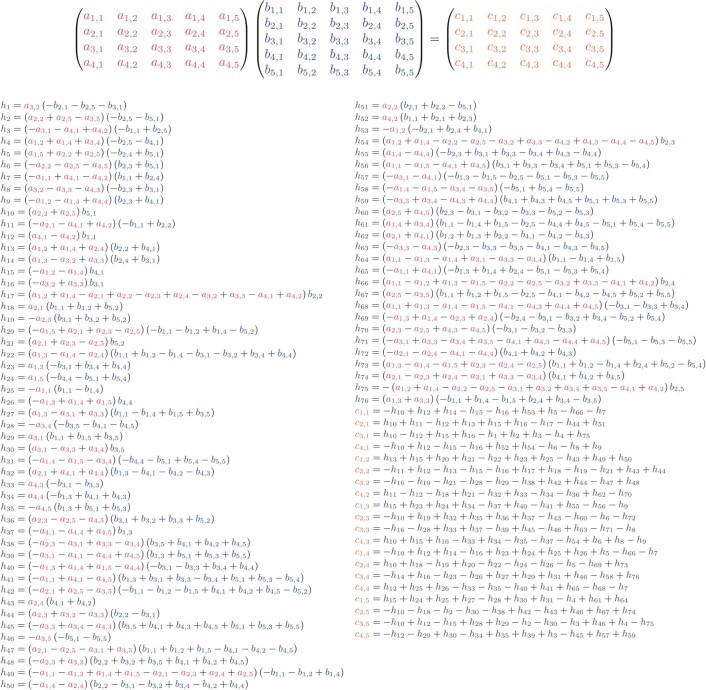
“For (5 , 5 , 5), they obtained a better result using a scheme found by AlphaTensor [2] rather than the standard algorithm.”
Exploring Explicit Coarse-Grained Structure in Artificial Neural Networks
Yang, X.-C., Xie, Z. Y., & Yang, X.-T. (2022) · Chinese Physics Letters · doi:10.1088/0256-307x/40/2/020501 · Cited by 4
Draw on advantages and avoid disadvantages by making a multi-step prediction
Zhu, G., & Zhu, F. (2023) · Expert Systems with Applications · doi:10.1016/j.eswa.2023.121345 · Cited by 5
Two-Memory Reinforcement Learning
Zhao, Y., Moerland, T. M., Preuß, M., & Plaat, A. (2023) · IEEE Conference on Games (CoG) · doi:10.1109/cog57401.2023.10333174 · Cited by 5
“Recently, it also has shown promise in scientific applications such as controlling nuclear plasma fusion [4] and discovering new matrix multiplication algorithms [5].”
BackgroundRank Selection Method of CP Decomposition Based on Deep Deterministic Policy Gradient Algorithm
Zhang, S., Li, Z., Liu, W., Zhao, J., & Qin, T. W. (2024) · IEEE Access · doi:10.1109/access.2024.3428370 · Cited by 4
“…can be formalized as a low-rank decomposition of a specific three-dimensional (3D) tensor for optimization and adjustment, Fawzi et al. [27] used Deep Reinforcement Learning (DRL) to identify and analyze patterns and features in tensor data and used learned agents to predict effective…”
BackgroundReservoir computing with memristors
(2022) · Nature Electronics · doi:10.1038/s41928-022-00867-y · Cited by 4
Mohammed, T., & Mehmood, R. (2022) · arXiv (Cornell University) · doi:10.48550/arxiv.2212.07490 · Cited by 4
“AI-based approaches for matrix operations have unimaginable potential and could be evidenced in the recent work, “discovering faster matrix multiplication algorithms with reinforcement learning" [216].”
BackgroundRuling Out Low-rank Matrix Multiplication Tensor Decompositions with Symmetries via SATPreprint
Yang, J. L. T. (2024) · arXiv (Cornell University) · doi:10.48550/arxiv.2402.01011 · Cited by 4
“Additionally, numerous previous works have searched for decompositions of T ⟨ 3 , 3 , 3 ⟩ over the integers mod 2, using approaches such as SAT [5] [12], machine learning [7], and randomized local search [8] [10] [1], with some new low-rank decompositions being found.”
BackgroundMethodTechniques for Theoretical Prediction of Immunogenic Peptides
Friedman, R. (2024) · Encyclopedia · doi:10.3390/encyclopedia4010038 · Cited by 4
“In this case, deep reinforcement learning is also applicable, particularly where both the method of deep learning and of reinforcement learning are applied [82,83].”
MethodAn AI-Cyborg System for Adaptive Intelligent Modulation of Organoid MaturationPreprint
Liu, R., Ren, Z., Zhang, X., Li, Q., Wang, W., Lin, Z., Lee, R. T., Ding, J., Li, N., & Liu, J. (2024) · bioRxiv (Cold Spring Harbor Laboratory) · doi:10.1101/2024.12.07.627355 · Cited by 5
Klęsk, P. (2025) · SoftwareX · doi:10.1016/j.softx.2025.102139 · Cited by 4
On the Slow Death of ScalingPreprint
Hooker, S. (2025) · SSRN Electronic Journal · doi:10.2139/ssrn.5877662 · Cited by 14
Equivariant Reinforcement Learning for Clifford Quantum Circuit SynthesisPreprint
Yeung, R., Kissinger, A., & Cornish, R. (2026) · arXiv (Cornell University) · doi:10.48550/arxiv.2605.10910 · Cited by 4
“AlphaTensor [17] was adapted to T -count optimization, improving state-of-the-art results on quantum arithmetic circuits [35].”
SWE-Search: Enhancing Software Agents with Monte Carlo Tree Search and Iterative Refinement
Antoniades, A., Örwall, A., Zhang, K., Xie, Y., Goyal, A., & Wang, W. (2024) · arXiv · doi:10.48550/arxiv.2410.20285 · Cited by 3
“The MCTS Planning Module efficiently guides exploration and exploitation, ensuring that the agent balances the need for innovation with the need to focus on promising solutions.”
Neural Network-Guided Synthesis of Recursive List Functions
Kobayashi, N., & Wu, M. (2023) · Lecture notes in computer science · doi:10.1007/978-3-031-30823-9_12 · Cited by 3
Artificial Intelligence for Research (AI4R): Knowledge Base and Impact
Yu, X., Xia, J., & Shen, Z. (2024) · International Conference on Intelligent Education and Intelligent Research (IEIR) · doi:10.1109/ieir62538.2024.10959986 · Cited by 3
“This paradigm shift is reshaping the research landscape, enhancing researchers’ ability to tackle complex challenges with increased efficiency and creativity [3]–[5], [13], [26], [35], [36].”
InfluentialDu, Y., Wang, X., Chen, H., Zhang, C., Cao, J., & Buyya, R. (2025) · Knowledge-Based Systems · doi:10.1016/j.knosys.2025.113946 · Cited by 3
Discovering expert-level Nash equilibrium algorithms with large language models
Li, H., Li, D., & Deng, X. (2026) · Nature Communications · doi:10.1038/s41467-026-74003-1 · Cited by 6
“In recent years, combining LLMs with automated evaluators has produced advances across scienti fi c domains, from geometry theorem proving 17,18 to algorithm discovery for matrix multiplication 19 and combinatorial optimization 20 .”
Faster Algorithms for Structured Matrix Multiplication via Flip Graph Search
Khoruzhii, K., Gelß, P., & Pokutta, S. (2026) · International Symposium on Symbolic and Algebraic Computation · doi:10.1145/3815436.3815455 · Cited by 3
Reusability report: Optimizing T count in general quantum circuits with AlphaTensor-Quantum
Zen, R. A. M., Nägele, M., & Marquardt, F. (2025) · Nature Machine Intelligence · doi:10.1038/s42256-025-01166-9 · Cited by 3
Finding Matrix Multiplication Algorithms with Classical Planning
Speck, D., Höft, P., Gnad, D., & Seipp, J. (2023) · Proceedings of the International Conference on Automated Planning and Scheduling · doi:10.1609/icaps.v33i1.27220 · Cited by 3
“A tensor T m,n,p describing a MM can be written as a column-wise outer product of tensors of rank one, T m,n,p = =1 u q ⊗ v q ⊗ w q , where R is the number of multiplications of the underlying algorithm (Fawzi et al. 2022).”
BackgroundMethodResultInfluentialAn intellectual design case of compressor airfoils based on reinforcement learning
Xu, X., Huang, X., Zhang, K., & Zhou, M. (2023) · Engineering Computations · doi:10.1108/ec-07-2022-0502 · Cited by 3
О билинейной сложности умножения $3\times 2$ матрицы на $2\times 3$ матрицу
Burichenko, V. P. (2024) · Дискретная математика · doi:10.4213/dm1804 · Cited by 3
Working with machines in mathematics
Davies, A. (2024) · Bulletin of the American Mathematical Society · doi:10.1090/bull/1843 · Cited by 4
Metadata
- Authors
- Fawzi, A., Balog, M., Huang, A., Hubert, T., Romera-Paredes, B., Barekatain, M., Novikov, A., R. Ruiz, F. J., Schrittwieser, J., Swirszcz, G., Silver, D., Hassabis, D., & Kohli, P.
- Affiliations
- Google DeepMind (United Kingdom) (GB)
- Corresponding author
- Fawzi, Alhussein
- ORCID
- Venue
- Nature
- Published
- 2022-10-05
- Volume
- 610
- Issue
- 7930
- Pages
- 47-53
- ISSN
- 0028-0836 (ISSN-L)
- 1476-4687
- PMC
- PMC9534758
- OpenAlex
- W4302010773
- Semantic Scholar
- 442ab95eb9cfbc03bb17a27b52313b5d25eaa738
- Cited by
- 478
- References
- 40
- Citations by year
- 2026: 69 · 2025: 115 · 2024: 136 · 2023: 148 · 2022: 7
- FWCI
- 54.92
- Type
- journal article
- Language
- en
- Open access
- hybrid
- doi.org
- Licence
- cc-by
- creativecommons.org/licenses/by/4.0 (tdm)
- creativecommons.org/licenses/by/4.0 (vor)
- Locations
- Nature (publishedVersion, cc-by)
- PubMed Central (publishedVersion, cc-by)
- PubMed (publishedVersion)
- RePEc: Research Papers in Economics (submittedVersion)
- Funders
- DeepMind
- Topics
- Physical Sciences › Computer Science › Computational Theory and Mathematics › Complexity and Algorithms in Graphs
- Physical Sciences › Computer Science › Artificial Intelligence › Artificial Intelligence Applications
- Physical Sciences › Computer Science › Computational Theory and Mathematics › Polynomial and algebraic computation
- Keywords
- matrix multiplication, algorithm discovery, AlphaZero, deep reinforcement learning, tensor decomposition, Strassen's algorithm, computational complexity
About these checks
Registry, retraction, Cites and statistics results are computed, not judged, with one exception: a printed reference that no index lists is read once by a model before it counts as a citation error. Claims are extracted by a model and kept only when their quote appears verbatim in the text; each cited source is then checked, with a model’s help, for whether it says what the claim relies on. Those verdicts can be wrong — read the claim’s quote and the cited source before relying on one.
Statistics and arithmetic are recomputed, not judged.
Confidence bands are shown only for fields calibrated on our annotated test set. None is calibrated yet, so no band is shown.
What counts as a claim ›How we measure confidence ›How we check this ›
Are you an author, or do you see a problem with this page? Request a review
Data sources
Bibliographic data: Semantic Scholar, OpenAlex, Crossref.
Contains information from the Semantic Scholar Academic Graph Datasets, made available under the ODC Attribution License (ODC-BY 1.0).
Semantic Scholar’s data is described in: Kinney, R., et al. (2023). The Semantic Scholar Open Data Platform. arXiv:2301.10140.
