

Discovering faster matrix multiplication algorithms with reinforcement learning
Open accessThe DOI matches its Crossref record; 51 of the 51 references it cites were found in a registry or an index.
Abstract
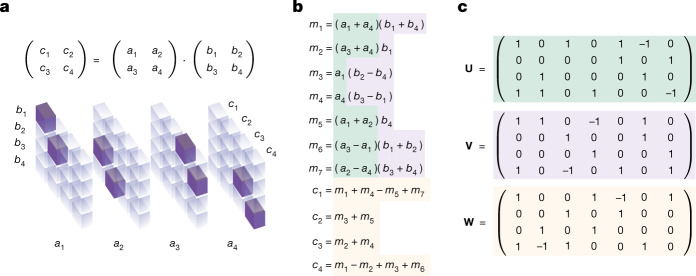
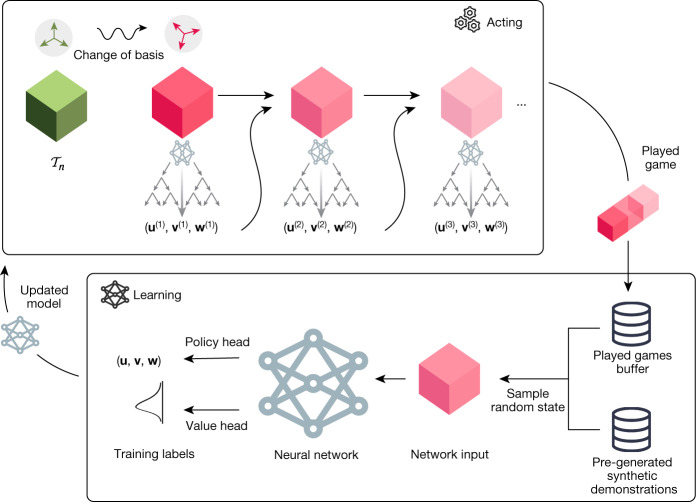
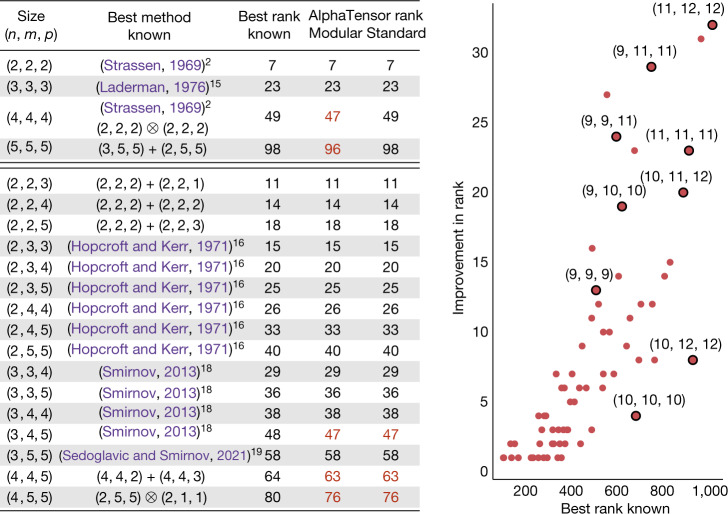
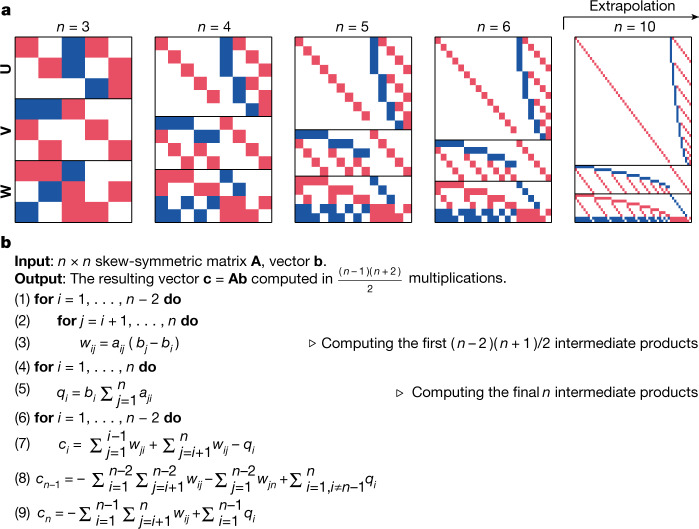
Improving the efficiency of algorithms for fundamental computations can have a widespread impact, as it can affect the overall speed of a large amount of computations. Matrix multiplication is one such primitive task, occurring in many systems—from neural networks to scientific computing routines. The automatic discovery of algorithms using machine learning offers the prospect of reaching beyond human intuition and outperforming the current best human-designed algorithms. However, automating the algorithm discovery procedure is intricate, as the space of possible algorithms is enormous. Here we report a deep reinforcement learning approach based on AlphaZero 1 for discovering efficient and provably correct algorithms for the multiplication of arbitrary matrices. Our agent, AlphaTensor, is trained to play a single-player game where the objective is finding tensor decompositions within a finite factor space. AlphaTensor discovered algorithms that outperform the state-of-the-art complexity for many matrix sizes. Particularly relevant is the case of 4 × 4 matrices in a finite field, where AlphaTensor’s algorithm improves on Strassen’s two-level algorithm for the first time, to our knowledge, since its discovery 50 years ago 2 . We further showcase the flexibility of AlphaTensor through different use-cases: algorithms with state-of-the-art complexity for structured matrix multiplication and improved practical efficiency by optimizing matrix multiplication for runtime on specific hardware. Our results highlight AlphaTensor’s ability to accelerate the process of algorithmic discovery on a range of problems, and to optimize for different criteria.
Overview
The claims and statistics of this paper haven’t been checked yet.
Free: it reads the open-access text and checks the first 5 claims that cite a source we can check. Create a free account to check every claim.
Integrity signals
Registry
Cites
Statistics
Figures
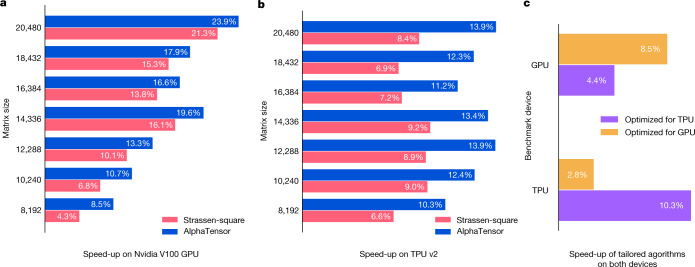
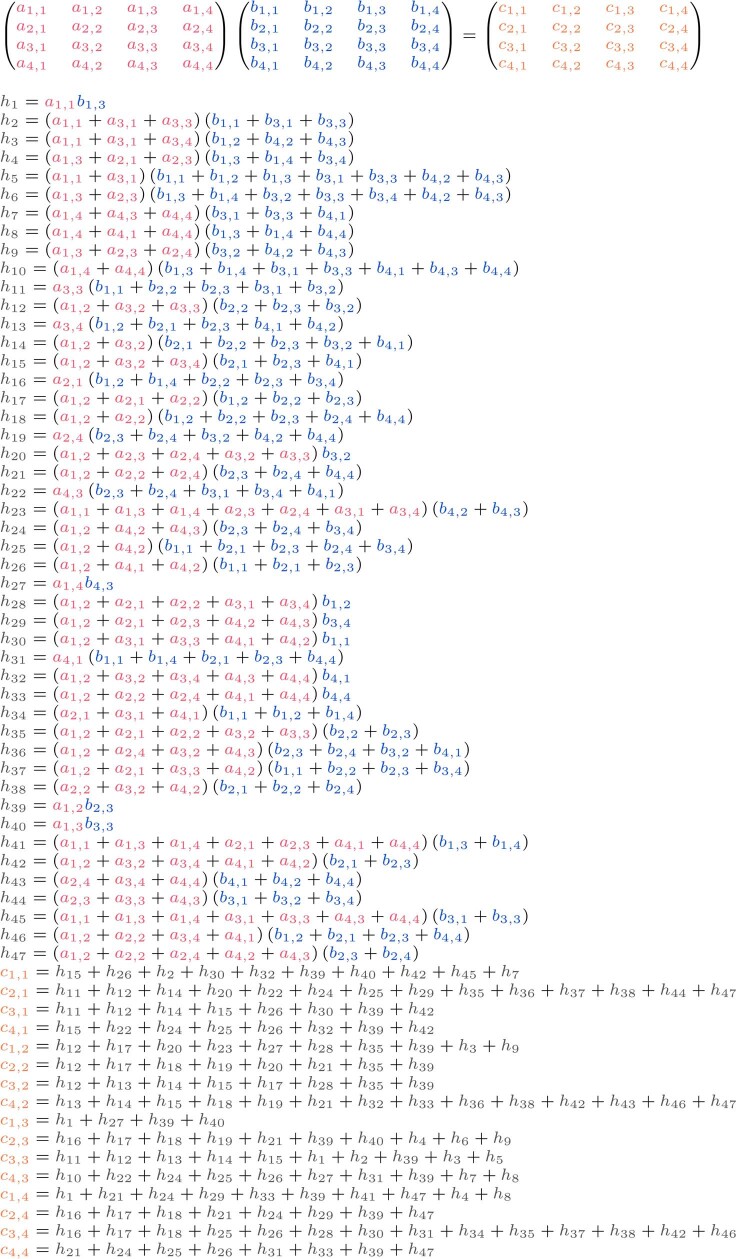
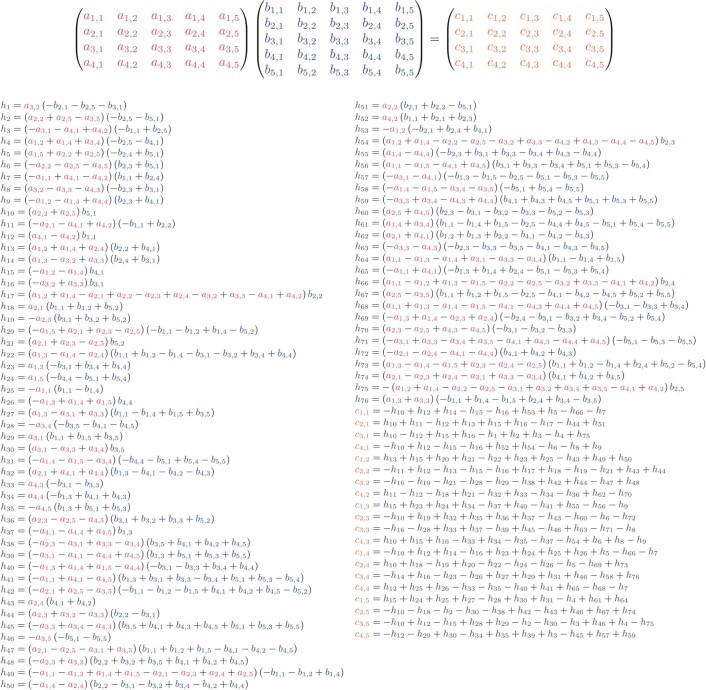
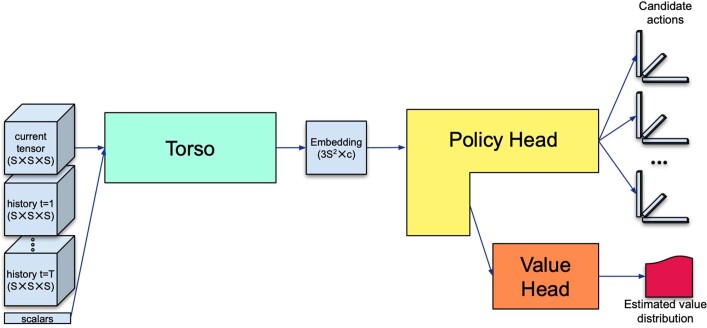
Verification
Claims the paper makes
The claims and statistics of this paper haven’t been checked yet.
Free: it reads the open-access text and checks the first 5 claims that cite a source we can check. Create a free account to check every claim.
Claims other papers make about this one
Each is checked against this paper’s own text: does it say what the citing paper says it does?
The source backs part of the claim, not all of it — or backs it for a different population, condition or comparison.
In the citing paper
“Despite being general-purpose, AlphaEvolve goes beyond [26], improving the SOTA for 14 matrix multiplication algorithms”
From AlphaEvolve: A coding agent for scientific and algorithmic discovery (2025) · cites this paper as [26]
Experimental — accuracy not yet measured
Self-check
Percentages, sums and reported differences re-computed from the paper’s own numbers.
The self-check needs the paper’s full text.
Citations
Cites
Mastering the game of Go with deep neural networks and tree search
Silver, D., Huang, A., Maddison, C. J., Guez, A., Sifre, L., van den Driessche, G., Schrittwieser, J., Antonoglou, I., Panneershelvam, V., Lanctot, M., et al. (2016) · Nature · doi:10.1038/nature16961 · Cited by 15,612
Self-citationTensorFlow: A system for large-scale machine learning
Abadi, M., Barham, P., Chen, J., Chen, Z., Davis, A., Dean, J., Devin, M., Ghemawat, S., Irving, G., Isard, M., et al. (2016) · arXiv (Cornell University) · doi:10.48550/arxiv.1605.08695 · Cited by 11,822
Tensor Decompositions and Applications
Kolda, T. G., & Bader, B. W. (2009) · SIAM Review · doi:10.1137/07070111x · Cited by 10,301
International Conference on Learning Representations (ICLR 2013)
松尾, 豊. (2013) · 人工知能学会誌 = Journal of Japanese Society for Artificial Intelligence · Cited by 6,286
A general reinforcement learning algorithm that masters chess, shogi, and Go through self-play
Silver, D., Hubert, T., Schrittwieser, J., Antonoglou, I., Lai, M., Guez, A., Lanctot, M., Sifre, L., Kumaran, D., Graepel, T., et al. (2018) · Science · doi:10.1126/science.aar6404 · Cited by 3,562 · cited 8×
“, n(2) do (4) c w m w m i R 1 i i R (1) ( ) ← + + return C”
BackgroundMethodInfluentialSelf-citationGaussian elimination is not optimal
Strassen, V. (1969) · Numerische Mathematik · doi:10.1007/bf02165411 · Cited by 2,509 · cited 5×
“, R do (2) ← + + + + m u a u a v b v b ( ) ( ) r n n 1 1 r n r r n r 1 ( ) ( ) 1 ( ) ( ) 2 2 2 2”
InfluentialPlanning chemical syntheses with deep neural networks and symbolic AI
Segler, M. H. S., Preuss, M., & Waller, M. P. (2018) · Nature · doi:10.1038/nature25978 · Cited by 1,847
Deep reinforcement learning for de novo drug design
Popova, M., Isayev, O., & Tropsha, A. (2018) · Science Advances · doi:10.1126/sciadv.aap7885 · Cited by 1,182
Most Tensor Problems Are NP-Hard
Hillar, C. J., & Lim, L.-H. (2013) · Journal of the ACM · doi:10.1145/2512329 · Cited by 1,099
Powers of tensors and fast matrix multiplication
Le Gall, F. (2014) · Proceedings of the 39th International Symposium on Symbolic and Algebraic Computation · doi:10.1145/2608628.2608664 · Cited by 856
Research works printed but not linked: 10
- Bürgisser, P., Clausen, M. & Shokrollahi, A. Algebraic Complexity Theory Vol. 315 (Springer Science & Business Media, 2013).
- Zhang, W. & Dietterich, T. G. A reinforcement learning approach to job-shop scheduling. In International Joint Conferences on Artificial Intelligence Vol. 95, 1114–1120 (Morgan Kaufmann Publishers, 1995).
- Vaswani, A. Attention is all you need. In International Conference on Neural Information Processing Systems Vol 30, 5998–6008 (Curran Associates, 2017).
- Loshchilov, I. & Hutter, F. Decoupled weight decay regularization. In International Conference on Learning Representations (ICLR) (2019).
- Elser V A network that learns Strassen multiplication J. Mach. Learn. Res. 2016 17 3964 3976
- Tschannen, M., Khanna, A. & Anandkumar, A, StrassenNets: deep learning with a multiplication budget. In International Conference on Machine Learning 4985–4994 (PMLR, 2018).
- Bunel, R., Desmaison, A., Kohli, P., Torr, P. H. & Kumar, M. P. Learning to superoptimize programs. In International Conference on Learning Representations (ICLR) (2017).
- Schmidhuber, J. Evolutionary Principles in Self-Referential Learning. On Learning now to Learn: The Meta-Meta-Meta...-Hook. Diploma thesis, Technische Univ. Munchen (1987).
- Kaliszyk, C., Urban, J., Michalewski, H. & Olšák, M. Reinforcement learning of theorem proving. In International Conference on Neural Information Processing Systems 8836–8847 (Curran Associates, 2018).
- Bansal, K., Loos, S., Rabe, M., Szegedy, C. & Wilcox, S. HOList: an environment for machine learning of higher order logic theorem proving. In International Conference on Machine Learning 454–463 (PMLR, 2019).
Cited by
Items 301–400 of 622
Deflation Conjecture and Local Dimensions of Brent Equations
Li, X., Zhang, L., & Ke, Y. (2024) · Experimental Mathematics · doi:10.1080/10586458.2024.2381212 · Cited by 4
Improved certification of Bell-operator correlations via optimization
Li, W., Hu, M., Wang, K., Xu, S., Lu, Z., Chen, J., Wu, Y., Zhang, C., Jin, F., Zhu, X., et al. (2026) · Physical Review A · doi:10.1103/sglx-xq8z · Cited by 3
“This could possibly be mitigated by applying cutting-edge machine-learning techniques from deep reinforcement learning [54] or large language models.”
Solving the 2-level atom non-LTE problem using soft actor-critic reinforcement learning
Panos, B., & Milić, I. (2026) · RAS Techniques and Instruments · doi:10.1093/rasti/rzag005 · Cited by 3
Synthesis of Fault-Tolerant Reliable Broadcast Algorithms With Reinforcement Learning
Vaz, D., Matos, D. R., Pardal, M. L., & Correia, M. P. (2023) · IEEE Access · doi:10.1109/access.2023.3287405 · Cited by 3
岳, 天., 吴, 晨., 刘, 熠., 杜, 正., 赵, 娜., 焦, 毅., 徐, 喆., & 史, 文. (2023) · SCIENTIA SINICA Terrae · doi:10.1360/sste-2022-0319 · Cited by 3
Research and analysis of matrix multiplica-tion in distributed learning algorithms
Zhou, X. (2023) · Applied and Computational Engineering · doi:10.54254/2755-2721/14/20230753 · Cited by 3
Generalizations of Matrix Multiplication can solve the Light Bulb Problem
Alman, J., & Zhang, H. (2023) · Annual Symposium on Foundations of Computer Science · doi:10.1109/focs57990.2023.00090 · Cited by 3
“First, using such a small tensor is typically necessary to design a practical algorithm (see, e.g., the introductions of [20], [23], [24], [28] where practicality concerns are discussed).”
MethodThe Ethics of Life as It Could Be: Do We Have Moral Obligations to Artificial Life?
Witkowski, O., & Schwitzgebel, E. (2024) · Artificial Life · doi:10.1162/artl_a_00436 · Cited by 8
“…Brown & Sandholm, 2019; Campbell et al., 2002; Silver et al., 2018; Silver et al., 2017), and in practical domains, such as lung cancer screening (Ardila et al., 2019), predicting protein structure (Jumper et al., 2021), and discovering novel matrix multiplication algorithms (Fawzi et al., 2022).”
BackgroundBernardi, A., Oneto, A., & Santarsiero, P. (2025) · Journal of Symbolic Computation · doi:10.1016/j.jsc.2025.102451 · Cited by 3
Aspri, A., Frischauf, L., & Scherzer, O. (2025) · ETNA - Electronic Transactions on Numerical Analysis · doi:10.1553/etna_vol64s23 · Cited by 3
f-Policy Gradients: A General Framework for Goal-Conditioned RL using f-Divergences
Agarwal, S., Durugkar, I., Stone, P., & Zhang, A. (2023) · neural information processing systems · doi:10.52202/075280-0530 · Cited by 3
Iterative improvements from feedback for language modelsPreprint
Li, Y. (2023) · doi:10.14293/pr2199.000220.v1 · Cited by 5
Algorithms, Bytes, and Chips: The Emerging Political Economy of Foundation ModelsPreprint
Mills, S. (2024) · SSRN Electronic Journal · doi:10.2139/ssrn.4834417 · Cited by 5
Counterexample-Guided Repair of Reinforcement Learning Systems Using Safety CriticsPreprint
Boetius, D., & Leue, S. (2024) · arXiv (Cornell University) · doi:10.48550/arxiv.2405.15430 · Cited by 3
“Deep Reinforcement Learning is at the core of several recent breakthroughs in AI [13,23,26].”
BackgroundTwice Sequential Monte Carlo for Tree SearchPreprint
Oren, Y., de Vries, J. A., van der Vaart, P. R., Spaan, M. T. J., & Böhmer, W. (2025) · arXiv (Cornell University) · doi:10.48550/arxiv.2511.14220 · Cited by 3
“Examples include games (Silver et al., 2016), robotics (Hubert et al., 2021) and algorithm discovery (Fawzi et al., 2022; Mankowitz et al., 2023).”
FalconGEMM: Surpassing Hardware Peaks with Lower-Complexity Matrix MultiplicationPreprint
Zhu, H., Cao, J., Shao, J., Feng, S., Qiu, Q., Chen, P., Zhang, X., Zhou, Y.-X., Yiu, M.-L., Ji, G., et al. (2026) · arXiv.org · doi:10.48550/arxiv.2605.06057 · Cited by 2
“For example, concurrent SMs process H 1 [0] , H 4 [3] , and H 7 [1] during the initial wave in Figure 4(b), which requires accessing data in ˜ A 1 , ˜ A 4 , and ˜ A 7 .”
InfluentialParticle Monte Carlo Tree SearchPreprint
Oren, Y., Vadocz, V., de Vries, J. A., Böhmer, W., Spaan, M. T. J., & Baier, H. (2026) · arXiv (Cornell University) · doi:10.48550/arxiv.2605.08982 · Cited by 3
Harness Engineering for LLM-Driven GPU Kernel GenerationPreprint
Shui, Y.-Q., Ma, C., Xu, H., Wen, S., & Wang, Y.-P. (2026) · arXiv.org · doi:10.48550/arxiv.2607.17979 · Cited by 6
“Closed-loop algorithm and program-search systems such as AlphaTensor, AlphaEvolve, OpenEvolve, LoongFlow, ShinkaEvolve, and AVO further motivate generate-evaluate-select loops with evolutionary memory (Fawzi et al., 2022; Novikov et al., 2025; Sharma, Correspondence to: Yue Shui <shuiyue@baidu.com>.”
What is scientific knowledge produced by Large Language Models?
Барышников, П. Н. (2024) · Philosophical Problems of IT & Cyberspace (PhilIT&C) · doi:10.17726/philit.2024.1.6 · Cited by 2
Reinforcement Learning for Scientific Application: A Survey
Xin, Z., Wu, Z., Zhu, D., Wang, X., Wang, J., & Wang, Y. (2024) · Lecture notes in computer science · doi:10.1007/978-981-97-5489-2_17 · Cited by 2
Quantum machine learning with indefinite causal order
Ma, N.-N., Zhao, P.-Z., & Gong, J. (2024) · Physical Review A · doi:10.1103/physreva.110.052406 · Cited by 4
“Inspired by the capabilities of classical-computation-based machine learning [12] across various fields [13–15], the pursuit of a new era in machine learning founded on quantum computation [16–18] is natural and necessary to harness quantum advantages.”
MethodArbitrary-Resolution Hyperspectral Pansharpening Neural Operators
He, L., Zhou, F. J., Li, J., Ye, H., & Plaza, A. (2025) · IEEE Transactions on Geoscience and Remote Sensing · doi:10.1109/tgrs.2025.3558086 · Cited by 5
“After 300 epochs learning with the AdamW optimizer [70], [71] setting with weight decay 10 4 , beta [ 0 .”
Accelerating Edge Intelligence: Challenges and Future Directions in Hardware-Driven Machine Learning
Batzolis, E., & Karampatzakis, D. (2024) · Pan-Hellenic Conference on Progress in Computing and Informatics (PCI) · doi:10.1145/3716554.3716579 · Cited by 2
“Power usage is challenging for resource-constrained devices [4, 8].”
Yang, Y., Li, Z., Ding, Y., & Hu, M. (2025) · Cybersecurity · doi:10.1186/s42400-024-00303-y · Cited by 2
“Matrix multiplication is a common operation that is widely used in machine learning (Fawzi et al 2022).”
$\pi$-eLight: Learning Interpretable Programmatic Policies for Effective Traffic Signal Control
Gu, Y., Zhang, K., Liu, Q., Yuan, H., & Yu, R. (2025) · IEEE Transactions on Mobile Computing · doi:10.1109/tmc.2025.3600533 · Cited by 4
“MCTS has been proven to be an effective algorithm in many fields, such as AlphaGo [48] and AlphaTensor [49].”
MCTS-Based Policy Improvement for Reinforcement Learning
Csippán, G., Péter, I., Kővári, B., & Bécsi, T. (2025) · Machine Learning and Knowledge Extraction · doi:10.3390/make7030098 · Cited by 2
“Thanks to its flexibility and generality, RL has been successfully applied in several fields, from autonomous driving systems [1,2] and robotics [3] to video game playing [4], board games [5], algorithm development [6,7], and resource management [8].”
Automating approximation analysis for Nash equilibria algorithms in two-player games
Deng, X., Li, D., & Li, H. (2025) · Information and Computation · doi:10.1016/j.ic.2025.105362 · Cited by 4
AIssistant: Human-AI Collaborative Review and Perspective Research Workflows in Data Science
Gaddipati, S. K., Keya, F., Rabby, G., & Auer, S. (2026) · Lecture notes in computer science · doi:10.1007/978-981-92-1468-6_35 · Cited by 2
“Later studies have explored such integration in mathematics [18], chemistry [19], material science [20] [21], biodiversity [22], and algorithm design [23].”
Understanding emergence in complex systems using abductive AI
Ding, J., Zheng, Y., Xu, F., Cannistraci, C. V., Dong, X., Santi, P., Caldarelli, G., Sun, Y., Wang, Q., Szymanski, B. K., et al. (2025) · Nature Reviews Physics · doi:10.1038/s42254-025-00895-5 · Cited by 2
Open CUDA convolution neural network inference implementation
Lopes, P. A. C. (2026) · Cluster Computing · doi:10.1007/s10586-025-05895-9 · Cited by 2
“The implementation focuses on speed; other efficiency met - rics, like resource usage, are within common bounds.”
Li, N., Liu, Z., Wang, X., Jiang, J., & Wei, Y. (2026) · ENGINEERING Information Technology & Electronic Engineering · doi:10.1631/eng.itee.2025.0111 · Cited by 2
Compiling Strassen-like Matrix Multiplication Algorithms to Fast CUDA Kernels
Jangda, A. (2026) · Proc. ACM Program. Lang. · doi:10.1145/3808267 · Cited by 3
How to grade the accuracy of the BLAS
Demmel, J. W., Henry, G., Kozachenko, I., Langou, J., Li, X. S., Riedy, J., & Vanover, J. (2026) · ACM Transactions on Mathematical Software · doi:10.1145/3862636 · Cited by 2
Monte-Carlo Tree Search for Multi-agent Pathfinding: Preliminary Results
Pitanov, Y., Skrynnik, A., Андреевич, А. А., Yakovlev, K., & Panov, A. I. (2023) · Lecture notes in computer science · doi:10.1007/978-3-031-40725-3_55 · Cited by 11
Kosar, T., Kovačević, Ž., Mernik, M., & Slivnik, B. (2023) · Mathematics · doi:10.3390/math11173744 · Cited by 2
Optimisation of Matrix Production System Reconfiguration with Reinforcement Learning
Czarnetzki, L., Laflamme, C., Halbwidl, C., Günther, L. C., Sobottka, T., & Bachlechner, D. (2023) · Lecture notes in computer science · doi:10.1007/978-3-031-42608-7_2 · Cited by 2
“Intelligent Heuristics Are the Future of Computing”
Teng, S. (2023) · ACM Transactions on Intelligent Systems and Technology · doi:10.1145/3627708 · Cited by 2
Buzer, L., & Cazenave, T. (2023) · Lecture notes in computer science · doi:10.1007/978-3-031-44505-7_13 · Cited by 2
“It has been recently used to discover new fast matrix multiplication algorithms [21].”
MethodAlgorithm of Digital Branding of Presidential Candidacy on Instagram: Duty of Computer Technology
Wibisono, I. (2023) · Jurnal Penelitian Pendidikan IPA · doi:10.29303/jppipa.v9ispecialissue.6270 · Cited by 2
Una introducciön amable pero rigurosa al aprendizaje por refuerzo
Computación, C. D. I. E., Meza, M. A. M., Menchaca-Méndez, R., Centro de Investigación en Computación del, I. P. N., Méndez, R. M., & Centro de Investigación en Computación del, I. P. N. (2023) · RECIBE REVISTA ELECTRÓNICA DE COMPUTACIÓN INFORMÁTICA BIOMÉDICA Y ELECTRÓNICA · doi:10.32870/recibe.v12i1.268 · Cited by 2
Utomo, W. (2024) · Journal of Soft Computing Exploration · doi:10.52465/joscex.v5i1.271 · Cited by 2
“Reinforcement learning is a branch of artificial intelligence that trains algorithms using a trial and error system [10].”
BackgroundMethodAutomated Design in Hybrid Action Spaces by Reinforcement Learning and Differential Evolution
Göttl, Q., Asif, H., Mattick, A., Marzilger, R., & Plinge, A. (2024) · Lecture notes in computer science · doi:10.1007/978-3-031-70893-0_22 · Cited by 2
Improving Zero-Shot Coordination with Diversely Rewarded Partner Agents
Wu, P., Yang, Z., & Yang, P. (2024) · International Joint Conference on Neural Networks (IJCNN) · doi:10.1109/ijcnn60899.2024.10649945 · Cited by 2
“Deep reinforcement learning has achieved considerable success across various fields[1–3].”
BackgroundMiao, Q., & Wang, F. (2024) · SpringerBriefs in service science · doi:10.1007/978-3-031-67419-8_2 · Cited by 4
How would future mathematicians embrace digital literacy? An TAM model-based analysis
Sun, Z., Yuan, R., & Liu, X. (2025) · Journal of University Teaching and Learning Practice · doi:10.53761/x1m1ja93 · Cited by 3
Lussiné, C. P. S., Yaquelin, M. A. L., & Elio, N. V. (2024) · IEEE International Conference on Advanced Learning Technologies on Education & Research (ICALTER) · doi:10.1109/icalter65499.2024.10819208 · Cited by 2
“Solutions like adaptive model tuning and tools like AlphaTensor allow DL models to adapt to different educational contexts [27], providing scalable personalization that enhances learning and facilitates the understanding of complex concepts.”
A load-balanced acceleration method for small and irregular batch matrix multiplication on GPU
Yu, Z., Lu, L., Yang, Z., Liang, Z., & Suo, S. (2025) · Journal of Systems Architecture · doi:10.1016/j.sysarc.2025.103341 · Cited by 2
Kumar, S., Gao, S. F., Goyal, M., Jindal, T., Kumar, M., Sharma, A., Bhardwaj, S., & Sharma, A. (2025) · Journal of Intelligent Manufacturing · doi:10.1007/s10845-025-02690-6 · Cited by 5
“Recent advancements in DRL, such as Alpha Tensor by (Fawzi et al., 2022), have further underscored the transfor-mative potential of reinforcement learning in solving computationally intensive problems.”
ULTHO: Ultra-Lightweight Yet Efficient Hyperparameter Optimization in Deep Reinforcement Learning
Yuan, M., Li, B., Jin, X., & Zeng, W. (2025) · IEEE/CVF International Conference on Computer Vision (ICCV) · doi:10.1109/iccv51701.2025.00252 · Cited by 2
“Deep reinforcement learning (RL) has propelled significant advancements across various fields, such as game playing [46, 55, 60], chip design [25], algorithm innovation [22, 43], and large language model (LLM) [6, 12, 41, 47].”
Faster search for tensor decomposition over finite fields
Yang, J. (2025) · International Symposium on Symbolic and Algebraic Computation · doi:10.1145/3747199.3747555 · Cited by 2
Unbiased and Efficient Sampling of Dependency Trees
Stanojević, M. (2022) · Conference on Empirical Methods in Natural Language Processing (EMNLP) · doi:10.18653/v1/2022.emnlp-main.110 · Cited by 2
Delay Embedded Echo-State Network: A Predictor for Partially Observed Systems
Goswami, D. (2023) · IFAC-PapersOnLine · doi:10.1016/j.ifacol.2023.10.470 · Cited by 2
Decoupled Search for the Masses: A Novel Task Transformation for Classical Planning
Speck, D., & Gnad, D. (2024) · Proceedings of the International Conference on Automated Planning and Scheduling · doi:10.1609/icaps.v34i1.31516 · Cited by 5
“Similarly, in the design of algorithms for matrix multiplication, the search is often not in the space of arithmetic instructions, but encapsulated as a tensor decomposition (Fawzi et al. 2022; Speck et al. 2023).”
BackgroundDeepMind AI creates algorithms that sort data faster than those built by people
Hutson, M. (2023) · Nature · doi:10.1038/d41586-023-01883-4 · Cited by 2
Reasoning Algorithmically in Graph Neural NetworksPreprint
Numeroso, D. (2024) · arXiv (Cornell University) · doi:10.48550/arxiv.2402.13744 · Cited by 2
Flip Graphs for Polynomial MultiplicationPreprint
Chen, S., & Kauers, M. (2025) · arXiv (Cornell University) · doi:10.48550/arxiv.2502.06264 · Cited by 2
“Some have been found by hand [10, 13, 17], some by numerical techniques [15, 16], some by SAT solvers [6, 8, 9], some by machine learning [7].”
Exploiting the Structure in Tensor Decompositions for Matrix MultiplicationPreprint
Kauers, M., Moosbauer, J., & Wood, I. (2026) · arXiv (Cornell University) · doi:10.48550/arxiv.2602.11041 · Cited by 2
The Dynamics of Intelligence ExplosionsPreprint
Ord, T. (2026) · arXiv (Cornell University) · doi:10.48550/arxiv.2608.14426 · Cited by 3
“…AI to: find better optimisation algorithms for training neural networks (Andrychowicz et al. 2016), design a more efficient matrix multiply algorithm (Fawzi et al. 2022), help write the code for new AI systems (Anthropic 2026), and run experiments to iteratively improve AI systems (Karpathy 2026).”
Ning, J., Zhong, S., Li, X., & Zeng, J. (2026) · arXiv (Cornell University) · doi:10.48550/arxiv.2609.09219 · Cited by 3
“AlphaTensor, AlphaDev, FunSearch, and AlphaEvolve combine search with objective evaluation (Fawzi et al., 2022; Mankowitz et al., 2023; Romera-Paredes et al., 2024; Novikov et al., 2025).”
Conejero, J. A., Falcó, A., & Mora–Jiménez, M. (2023) · AIMS Mathematics · doi:10.3934/math.20231308 · Cited by 1
Лемешко, О. В., Yeremenko, O., Yevdokymenko, M., & Maiba, M. (2024) · Lecture notes in electrical engineering · doi:10.1007/978-3-031-61221-3_6 · Cited by 1
Machine Learning Discovers Invariants of Braids and Flat Braids
Lisitsa, A., Salles, M., & Vernitski, A. (2024) · Advances in Applied Clifford Algebras · doi:10.1007/s00006-024-01349-4 · Cited by 1
“Automated discovery of theorems or, in other words, AI-assisted conjectures is an increasingly important direction of research in recent years, see, for example, [3, 4, 16].”
BackgroundRank-one approximation of a higher-order tensor by a Riemannian trust-region method
Chen, J., & Huang, W. T. (2024) · Computational Optimization and Applications · doi:10.1007/s10589-024-00634-z · Cited by 1
“Especially, tensor rank-one approximation has a wide range of applications, such as multi-target tracking [3], acceleration of matrix multiplication [4], and intelligent reconfigurable surface (IRS) Phase-Shift Feedback Overhead-Aware Model [5].”
Trainability Issues in Quantum Policy Gradients with Softmax Activations
Sequeira, A., Santos, L. P., & Barbosa, L. S. (2024) · IEEE International Conference on Quantum Computing and Engineering (QCE) · doi:10.1109/qce60285.2024.10302 · Cited by 1
Multivariate Hensel Lifting Without Assuming as Many Variables as Equations
Grochow, J. A. (2025) · American Mathematical Monthly · doi:10.1080/00029890.2024.2440297 · Cited by 1
“Several groups have used software [ 8 , 9 ] to solve these equations—and thereby find algorithms for multiplying matrices—over finite fields, and then attempted to use Hensel lifting to extend those to the integers (and hence to all rings).”
Péter, I., Kővári, B., & Bécsi, T. (2025) · Electronics · doi:10.3390/electronics14030443 · Cited by 2
Kim, W., Jeong, J., Kim, T. H., & Lee, K. (2025) · Entropy · doi:10.3390/e27030251 · Cited by 3
Chen, B., & Ye, J. (2025) · Applied Sciences · doi:10.3390/app15052624 · Cited by 2
Monte Carlo Search Algorithms Discovering Monte Carlo Tree Search Exploration Terms
Cazenave, T. (2025) · Lecture notes in computer science · doi:10.1007/978-3-031-86585-5_9 · Cited by 1
Firework Swarm Learning (FSL): A Universal Machine Learning Framework
Tan, Y., Liu, Y., & Chen, J. (2025) · Communications in computer and information science · doi:10.1007/978-981-96-7175-5_1 · Cited by 1
AGD: Analytic Gradient Descent for Discrete Optimization in EDA and its Use to Gate Sizing
Pham, P., Park, T.-M., Cho, S.-H., Mahmood, T., Yang, J.-S., & Chung, J. (2025) · ACM Transactions on Design Automation of Electronic Systems · doi:10.1145/3748257 · Cited by 1
“With the advancement of machine learning, reinforcement learning ( RL ) has demonstrated tremendous success in solving challenging problems across various fields, ranging from games [37] to protein folding [22] and matrix multiplication algorithms [14].”
Wang, X., Miao, S., Zhu, Z., Qu, P., & Zhang, Y. (2025) · Lecture notes in computer science · doi:10.1007/978-3-031-99857-7_14 · Cited by 1
Class Separation Dynamics in Vision Transformers: An Empirical Study
Varam, D., Khalil, L., Darwish, M., & AlHajri, M. I. (2025) · IEEE Access · doi:10.1109/access.2025.3602733 · Cited by 1
“While these milestones echo earlier Machine Learning (ML) breakthroughs in large-scale classification tasks [6], [7], [8], the inner workings of ViTs remain less understood than those of their CNN predecessors [9].”
Improving Inventory Management Quality with Reinforcement Learning: AI versus Human Decision-Making
Chen, Y., Xu, X., & Zhang, J. H. (2026) · Accounting Horizons · doi:10.2308/horizons-2024-121 · Cited by 4
He, W., Liu, H., Duan, Z., Liao, X., Zhang, S., Mao, F., & Jin, H. (2025) · International Conference for High Performance Computing, Networking, Storage and Analysis (SC) · doi:10.1145/3712285.3759826 · Cited by 1
Clustering-Based Weight Orthogonalization for Stabilizing Deep Reinforcement Learning
Ma, G., Zhang, Y., Dai, Y., Hao, G., Chen, Y., & Yu, S. (2025) · International Joint Conference on Neural Networks (IJCNN) · doi:10.1109/ijcnn64981.2025.11227331 · Cited by 3
Outperforming Classical PI Tuning Methods via AlphaZero Algorithm
Queiroz, K. I. P. D. M., Dias, S. M., Oliveira, T. R., & Araújo, A. (2025) · Journal of Control Automation and Electrical Systems · doi:10.1007/s40313-025-01225-x · Cited by 1
ELSA: Equivariant Self-Supervised Adaptation for Small Data Learning
Kong, L., Chen, D., Tang, C., Xiong, D., & Lv, J. (2025) · IEEE Transactions on Artificial Intelligence · doi:10.1109/tai.2025.3628282 · Cited by 1
“N OWADAYS deep learning has outperformed human-level performance in various tasks such as vision, audio, text, and biomedical [1], [2], [3], [4], [5], [6], [7], [8].”
Embracing AI and formalization: Experimenting with tomorrow’s mathematical tools
Alper, J. (2025) · Bulletin of the American Mathematical Society · doi:10.1090/bull/1879 · Cited by 3
“…and Dyer’s combinatorial invariance conjecture [BBD + 22], – generating counterexamples: conjectures in graph theory have been disproved [Wag21], and – producing efficient formulas: efficient tensor decompositions have been discovered leading to improvements in matrix multiplication [FBH + 22].”
Reinforcement Learning-Based Autonomous Navigation for Unmanned Surface Vehicles
Liu, Z., Wang, Y., Hao, J., Zhang, Y., Liu, Y., & Liu, W. (2025) · IEEE International Conference on Unmanned Systems (ICUS) · doi:10.1109/icus66297.2025.11294131 · Cited by 1
“The effectiveness of DRL has been demonstrated across various domains such as video games [23], robotic navigation [24], computational optimization [25], and strategic games like Go [26].”
Dimitriadou, E. A., & Lanitis, A. (2026) · Lecture notes in educational technology · doi:10.1007/978-981-95-2521-8_13 · Cited by 1
Quantum artificial intelligence: A comprehensive survey
Jiang, H., Pan, Y., Chen, J., Liu, Z., Sun, L., Li, Q., Zhang, L., Zhu, D., Wang, X., Liu, W., et al. (2026) · Meta-Radiology · doi:10.1016/j.metrad.2026.100205 · Cited by 3
Contextual Convolutions for Scalable Forward-Only Learning on Tiny Devices
Abbassi, M., Ancilotto, A., & Farella, E. (2025) · IEEE International Conference on Computer Vision Workshops · doi:10.1109/iccvw69036.2025.00181 · Cited by 1
“Unlike more complex algorithms such as Strassen [8] or Winograd [11], im2col is straightforward to implement and yields substantial performance gains for small to moderate feature sizes, which are typical in edge applications. im2col reformulates the convolution operation by extracting and…”
Lv, J.-Y., Li, H.-R., Han, C., & Guo, T.-D. (2026) · Journal of the Operations Research Society of China · doi:10.1007/s40305-026-00682-8 · Cited by 1
“Reinforcement learning (RL), supported by the Markov Decision Process (MDP) framework [1], has achieved great success in the fields of both science and engineering, see, for example, [3, 6, 16, 21].”
Exploring the holographic entropy cone via reinforcement learning
He, T., Lee, J., & Ooguri, H. (2026) · Journal of High Energy Physics · doi:10.1007/jhep06(2026)267 · Cited by 1
“Reinforcement learning (RL) has proven to be an effective framework for exploring high-dimensional search spaces, with notable applications including game playing [38], protein structure prediction [39], and the discovery of novel mathematical algorithms [40].”
Wang, C., Zhu, C., Lu, M., Bai, J., & Qiao, L. (2026) · Engineering Applications of Artificial Intelligence · doi:10.1016/j.engappai.2026.115720 · Cited by 1
FNO-Speed: Accelerate Fourier Neural Operators Training for Solving PDEs
Song, T., Ouyang, Y., Meng, X., Li, J., Xia, F., & Wang, X. (2026) · ACM Transactions on Architecture and Code Optimization · doi:10.1145/3838188 · Cited by 1
“Existing deep learning frameworks (such as PyTorch) have deeply optimized fundamental operations such as GEMM (general matrix multiplication) for conventional batch data processing [3, 5, 24], signiicantly enhancing computational eiciency.”
Rethinking Mathematical Intuition in the Age of AI
Friedman, M., & Bar-On, K. K. (2026) · The Mathematical Intelligencer · doi:10.1007/s00283-026-10561-y · Cited by 2
Matrix Multiplication: Verifying Strong Uniquely Solvable Puzzles
Anderson, M., Ji, Z., & Xu, A. Y. (2020) · Lecture notes in computer science · doi:10.1007/978-3-030-51825-7_32 · Cited by 1
“showed how reinforcement learning techniques can be used to develop new matrix multiplication algorithms [17].”
BackgroundI Shop Therefore I Am: The Artificial Consumer
Manzotti, R. (2022) · Journal of Artificial Intelligence and Consciousness · doi:10.1142/s2705078522500151 · Cited by 1
Recovering discrete delayed fractional equations from trajectories
Conejero, J. A., Garibo‐i‐Orts, Ò., & Lizama, C. (2023) · Mathematical Methods in the Applied Sciences · doi:10.1002/mma.9228 · Cited by 1
“Machine learning and artificial intelligence methods have been also successfully incorporated in the study of formal mathematical problems, as is the case of finding the solution of nonlinear models [36, 37] or the recent success of discovering new multiplication algorithms [10].”
Fast Robust Principle Component Analysis Using Gauss-Newton Iterations
Chettleburgh, W., Huang, Z., & Yan, M. (2023) · IEEE International Conference on Acoustics Speech and Signal Processing · doi:10.1109/icassp49357.2023.10096269 · Cited by 1
“The term mnp in the complexity comes from matrix multiplication, which can be improved if tensors are used [14,15].”
BackgroundOperasi Dasar Baris/Kolom Matriks Secara Interaktif Dengan Menggunakan R
Yudistira, I. G. A. A., & Nariswari, R. (2023) · Engineering MAthematics and Computer Science (EMACS) Journal · doi:10.21512/emacsjournal.v5i1.9206 · Cited by 1
FastAct: A Lightweight Actor Compression Framework for Fast Policy Learning
Zhang, H., Ma, H., & Chen, Z. (2023) · International Joint Conference on Neural Networks (IJCNN) · doi:10.1109/ijcnn54540.2023.10191108 · Cited by 2
“Deep reinforcement learning (DRL) combines the advantages of deep learning and reinforcement learning to achieve breakthroughs in complex decision-making tasks, such as Go [1], MOBA games [2], financial investments [3], mathematics [4], physics [5], and so on.”
BackgroundJardim, R. R.-A. J. (2023) · Springer eBooks · doi:10.1007/978-3-031-37345-9_1 · Cited by 1
Deep estimation for Q⁎ with minimax Bellman error minimization
Kang, L., Liao, X., Liu, J., & Luo, Y. (2023) · Information Sciences · doi:10.1016/j.ins.2023.119565 · Cited by 1
BiERL: A Meta Evolutionary Reinforcement Learning Framework via Bilevel Optimization
Wang, J., Zhu, Y., Wang, Z., Zheng, Y., Hao, J., & Chen, C. (2023) · Frontiers in artificial intelligence and applications · doi:10.3233/faia230551 · Cited by 2
Analysis of faster matrix multiplication
Liu, J. (2023) · Theoretical and Natural Science · doi:10.54254/2753-8818/11/20230394 · Cited by 1
AI in mathematics: On guided intuition and the new environment of calculation
Biau, G., & Echterhölter, A. (2023) · AI critique · doi:10.14361/9783839467664-018 · Cited by 1
Curling Strategy Teaching Case Design Based on Deep Reinforcement Learning
Liu, G., Zhou, Q., & Jin, Y. (2024) · Communications in computer and information science · doi:10.1007/978-981-99-9499-1_23 · Cited by 1
Metadata
- Authors
- Fawzi, A., Balog, M., Huang, A., Hubert, T., Romera-Paredes, B., Barekatain, M., Novikov, A., R. Ruiz, F. J., Schrittwieser, J., Swirszcz, G., Silver, D., Hassabis, D., & Kohli, P.
- Affiliations
- Google DeepMind (United Kingdom) (GB)
- Corresponding author
- Fawzi, Alhussein
- ORCID
- Venue
- Nature
- Published
- 2022-10-05
- Volume
- 610
- Issue
- 7930
- Pages
- 47-53
- ISSN
- 0028-0836 (ISSN-L)
- 1476-4687
- PMC
- PMC9534758
- OpenAlex
- W4302010773
- Semantic Scholar
- 442ab95eb9cfbc03bb17a27b52313b5d25eaa738
- Cited by
- 478
- References
- 40
- Citations by year
- 2026: 69 · 2025: 115 · 2024: 136 · 2023: 148 · 2022: 7
- FWCI
- 54.92
- Type
- journal article
- Language
- en
- Open access
- hybrid
- doi.org
- Licence
- cc-by
- creativecommons.org/licenses/by/4.0 (tdm)
- creativecommons.org/licenses/by/4.0 (vor)
- Locations
- Nature (publishedVersion, cc-by)
- PubMed Central (publishedVersion, cc-by)
- PubMed (publishedVersion)
- RePEc: Research Papers in Economics (submittedVersion)
- Funders
- DeepMind
- Topics
- Physical Sciences › Computer Science › Computational Theory and Mathematics › Complexity and Algorithms in Graphs
- Physical Sciences › Computer Science › Artificial Intelligence › Artificial Intelligence Applications
- Physical Sciences › Computer Science › Computational Theory and Mathematics › Polynomial and algebraic computation
- Keywords
- matrix multiplication, algorithm discovery, AlphaZero, deep reinforcement learning, tensor decomposition, Strassen's algorithm, computational complexity
About these checks
Registry, retraction, Cites and statistics results are computed, not judged, with one exception: a printed reference that no index lists is read once by a model before it counts as a citation error. Claims are extracted by a model and kept only when their quote appears verbatim in the text; each cited source is then checked, with a model’s help, for whether it says what the claim relies on. Those verdicts can be wrong — read the claim’s quote and the cited source before relying on one.
Statistics and arithmetic are recomputed, not judged.
Confidence bands are shown only for fields calibrated on our annotated test set. None is calibrated yet, so no band is shown.
What counts as a claim ›How we measure confidence ›How we check this ›
Are you an author, or do you see a problem with this page? Request a review
Data sources
Bibliographic data: Semantic Scholar, OpenAlex, Crossref.
Contains information from the Semantic Scholar Academic Graph Datasets, made available under the ODC Attribution License (ODC-BY 1.0).
Semantic Scholar’s data is described in: Kinney, R., et al. (2023). The Semantic Scholar Open Data Platform. arXiv:2301.10140.
