

Discovering faster matrix multiplication algorithms with reinforcement learning
Open accessThe DOI matches its Crossref record; 51 of the 51 references it cites were found in a registry or an index.
Abstract
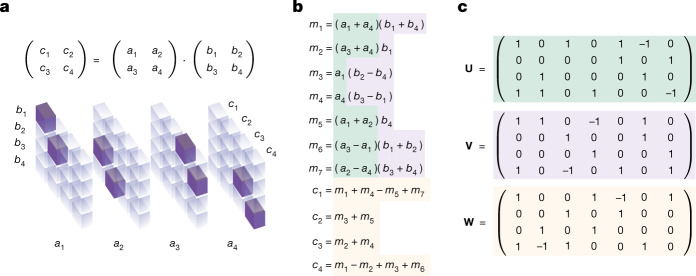
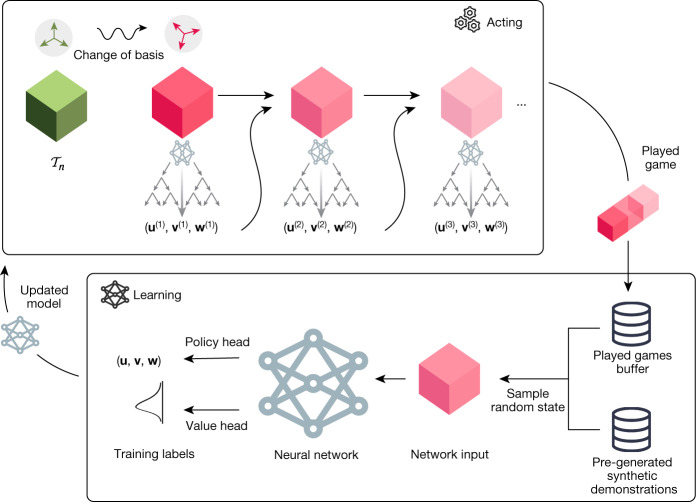
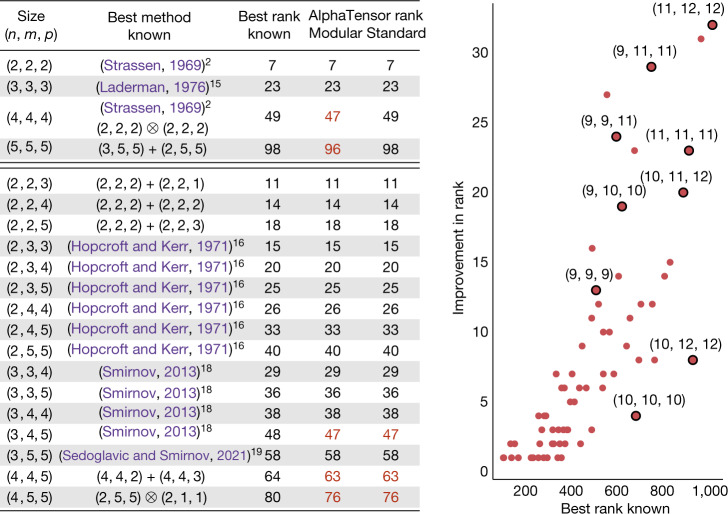
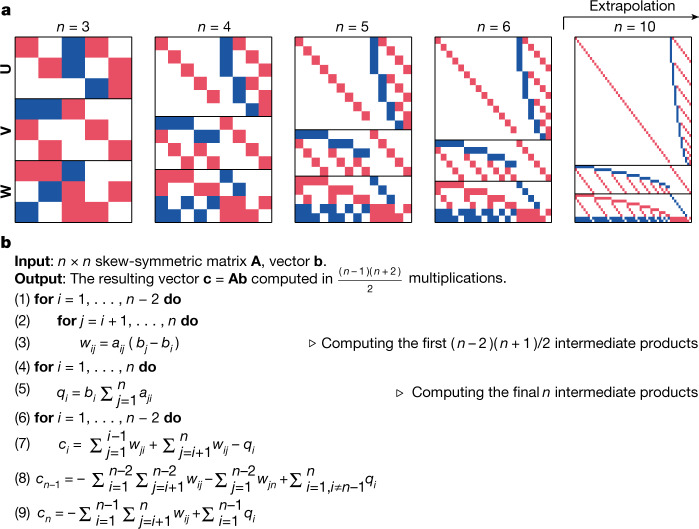
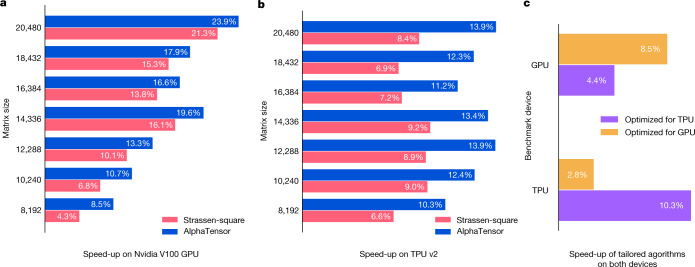
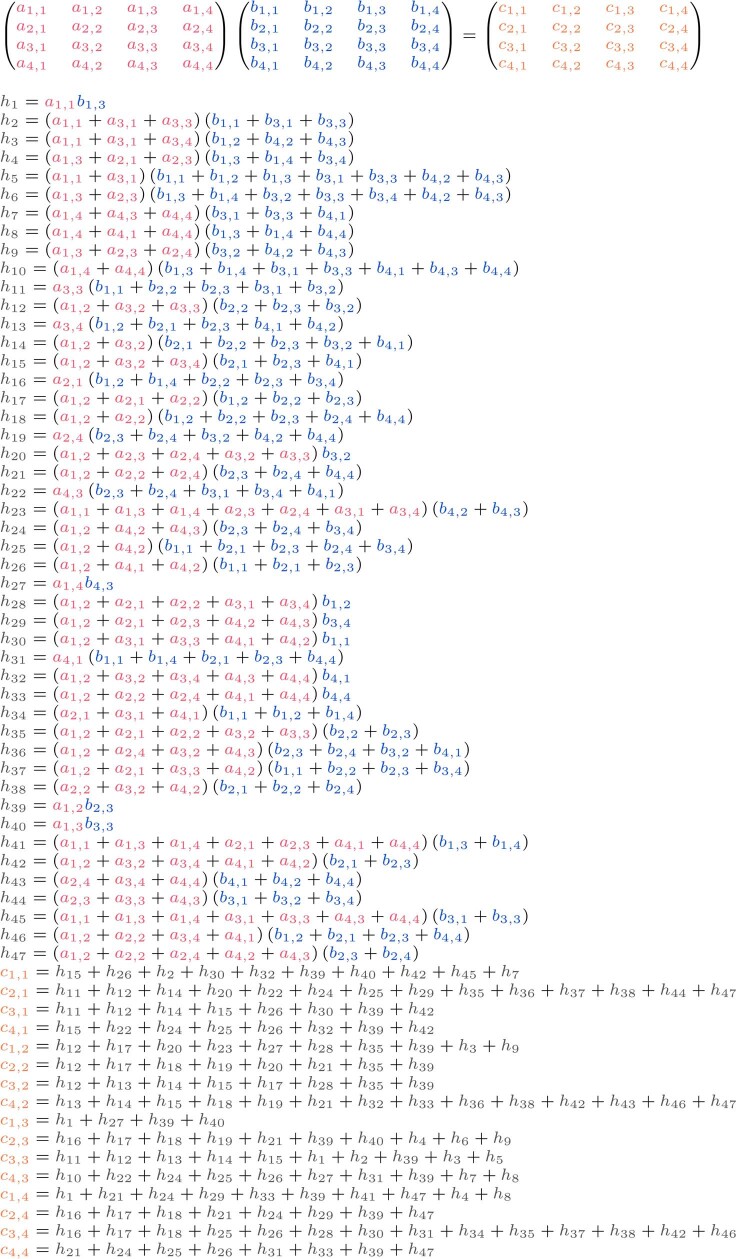
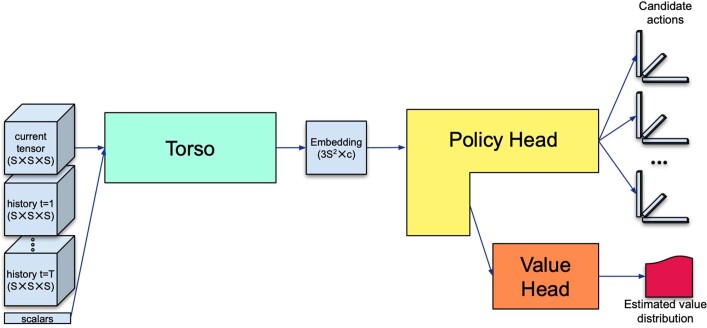
Improving the efficiency of algorithms for fundamental computations can have a widespread impact, as it can affect the overall speed of a large amount of computations. Matrix multiplication is one such primitive task, occurring in many systems—from neural networks to scientific computing routines. The automatic discovery of algorithms using machine learning offers the prospect of reaching beyond human intuition and outperforming the current best human-designed algorithms. However, automating the algorithm discovery procedure is intricate, as the space of possible algorithms is enormous. Here we report a deep reinforcement learning approach based on AlphaZero 1 for discovering efficient and provably correct algorithms for the multiplication of arbitrary matrices. Our agent, AlphaTensor, is trained to play a single-player game where the objective is finding tensor decompositions within a finite factor space. AlphaTensor discovered algorithms that outperform the state-of-the-art complexity for many matrix sizes. Particularly relevant is the case of 4 × 4 matrices in a finite field, where AlphaTensor’s algorithm improves on Strassen’s two-level algorithm for the first time, to our knowledge, since its discovery 50 years ago 2 . We further showcase the flexibility of AlphaTensor through different use-cases: algorithms with state-of-the-art complexity for structured matrix multiplication and improved practical efficiency by optimizing matrix multiplication for runtime on specific hardware. Our results highlight AlphaTensor’s ability to accelerate the process of algorithmic discovery on a range of problems, and to optimize for different criteria.
Overview
The claims and statistics of this paper haven’t been checked yet.
Free: it reads the open-access text and checks the first 5 claims that cite a source we can check. Create a free account to check every claim.
Integrity signals
Registry
Cites
Statistics
Figures
Verification
Claims the paper makes
The claims and statistics of this paper haven’t been checked yet.
Free: it reads the open-access text and checks the first 5 claims that cite a source we can check. Create a free account to check every claim.
Claims other papers make about this one
Each is checked against this paper’s own text: does it say what the citing paper says it does?
The source backs part of the claim, not all of it — or backs it for a different population, condition or comparison.
In the citing paper
“Despite being general-purpose, AlphaEvolve goes beyond [26], improving the SOTA for 14 matrix multiplication algorithms”
From AlphaEvolve: A coding agent for scientific and algorithmic discovery (2025) · cites this paper as [26]
Experimental — accuracy not yet measured
Self-check
Percentages, sums and reported differences re-computed from the paper’s own numbers.
The self-check needs the paper’s full text.
Citations
Cites
Mastering the game of Go with deep neural networks and tree search
Silver, D., Huang, A., Maddison, C. J., Guez, A., Sifre, L., van den Driessche, G., Schrittwieser, J., Antonoglou, I., Panneershelvam, V., Lanctot, M., et al. (2016) · Nature · doi:10.1038/nature16961 · Cited by 15,612
Self-citationTensorFlow: A system for large-scale machine learning
Abadi, M., Barham, P., Chen, J., Chen, Z., Davis, A., Dean, J., Devin, M., Ghemawat, S., Irving, G., Isard, M., et al. (2016) · arXiv (Cornell University) · doi:10.48550/arxiv.1605.08695 · Cited by 11,822
Tensor Decompositions and Applications
Kolda, T. G., & Bader, B. W. (2009) · SIAM Review · doi:10.1137/07070111x · Cited by 10,301
International Conference on Learning Representations (ICLR 2013)
松尾, 豊. (2013) · 人工知能学会誌 = Journal of Japanese Society for Artificial Intelligence · Cited by 6,286
A general reinforcement learning algorithm that masters chess, shogi, and Go through self-play
Silver, D., Hubert, T., Schrittwieser, J., Antonoglou, I., Lai, M., Guez, A., Lanctot, M., Sifre, L., Kumaran, D., Graepel, T., et al. (2018) · Science · doi:10.1126/science.aar6404 · Cited by 3,562 · cited 8×
“, n(2) do (4) c w m w m i R 1 i i R (1) ( ) ← + + return C”
BackgroundMethodInfluentialSelf-citationGaussian elimination is not optimal
Strassen, V. (1969) · Numerische Mathematik · doi:10.1007/bf02165411 · Cited by 2,509 · cited 5×
“, R do (2) ← + + + + m u a u a v b v b ( ) ( ) r n n 1 1 r n r r n r 1 ( ) ( ) 1 ( ) ( ) 2 2 2 2”
InfluentialPlanning chemical syntheses with deep neural networks and symbolic AI
Segler, M. H. S., Preuss, M., & Waller, M. P. (2018) · Nature · doi:10.1038/nature25978 · Cited by 1,847
Deep reinforcement learning for de novo drug design
Popova, M., Isayev, O., & Tropsha, A. (2018) · Science Advances · doi:10.1126/sciadv.aap7885 · Cited by 1,182
Most Tensor Problems Are NP-Hard
Hillar, C. J., & Lim, L.-H. (2013) · Journal of the ACM · doi:10.1145/2512329 · Cited by 1,099
Powers of tensors and fast matrix multiplication
Le Gall, F. (2014) · Proceedings of the 39th International Symposium on Symbolic and Algebraic Computation · doi:10.1145/2608628.2608664 · Cited by 856
Research works printed but not linked: 10
- Bürgisser, P., Clausen, M. & Shokrollahi, A. Algebraic Complexity Theory Vol. 315 (Springer Science & Business Media, 2013).
- Zhang, W. & Dietterich, T. G. A reinforcement learning approach to job-shop scheduling. In International Joint Conferences on Artificial Intelligence Vol. 95, 1114–1120 (Morgan Kaufmann Publishers, 1995).
- Vaswani, A. Attention is all you need. In International Conference on Neural Information Processing Systems Vol 30, 5998–6008 (Curran Associates, 2017).
- Loshchilov, I. & Hutter, F. Decoupled weight decay regularization. In International Conference on Learning Representations (ICLR) (2019).
- Elser V A network that learns Strassen multiplication J. Mach. Learn. Res. 2016 17 3964 3976
- Tschannen, M., Khanna, A. & Anandkumar, A, StrassenNets: deep learning with a multiplication budget. In International Conference on Machine Learning 4985–4994 (PMLR, 2018).
- Bunel, R., Desmaison, A., Kohli, P., Torr, P. H. & Kumar, M. P. Learning to superoptimize programs. In International Conference on Learning Representations (ICLR) (2017).
- Schmidhuber, J. Evolutionary Principles in Self-Referential Learning. On Learning now to Learn: The Meta-Meta-Meta...-Hook. Diploma thesis, Technische Univ. Munchen (1987).
- Kaliszyk, C., Urban, J., Michalewski, H. & Olšák, M. Reinforcement learning of theorem proving. In International Conference on Neural Information Processing Systems 8836–8847 (Curran Associates, 2018).
- Bansal, K., Loos, S., Rabe, M., Szegedy, C. & Wilcox, S. HOList: an environment for machine learning of higher order logic theorem proving. In International Conference on Machine Learning 454–463 (PMLR, 2019).
Cited by
Items 101–200 of 622
Olympiad-level formal mathematical reasoning with reinforcement learning
Hubert, T., Mehta, R., Sartran, L., Horváth, M. Z., Žužić, G., Wieser, E., Huang, A., Schrittwieser, J., Schroecker, Y., Masoom, H., et al. (2026) · Nature · doi:10.1038/s41586-025-09833-y · Cited by 346
“…family of agents, for instance, demonstrated the ability to achieve superhuman performance in challenging board games such as Go, chess and shogi 2 , optimize quantum dynamics 5 , and discover more efficient algorithms for fundamental computations such as sorting 6 and matrix multiplication 7 .”
Self-citationBeyond games: a systematic review of neural Monte Carlo tree search applications
Kemmerling, M., Lütticke, D., & Schmitt, R. H. (2024) · Applied Intelligence · doi:10.1007/s10489-023-05240-w · Cited by 19
“Fawzi et al. [26] follow a similar strategy.”
InfluentialSelf-organized free-flight arrival for urban air mobility
Waltz, M., Okhrin, O., & Schultz, M. (2024) · Transportation Research Part C Emerging Technologies · doi:10.1016/j.trc.2024.104806 · Cited by 22
AI in science: When and where it makes a difference
Bianchini, S., Girolamo, V. D., Ravet, J., & Arranz, D. (2026) · Research Policy · doi:10.1016/j.respol.2026.105478 · Cited by 27
CP decomposition for tensors via alternating least squares with QR decomposition
Minster, R., Viviano, I., Liu, X., & Ballard, G. (2023) · Numerical Linear Algebra with Applications · doi:10.1002/nla.2511 · Cited by 19
“28-31 Bini, Capovani, Romani, and Lotti 32 introduced the first Arbitrary Precision Approximating (APA) algorithm for matrix multiplication, which is designed for multiplying 3 × 2 and 2 × 2 matrices.”
MethodPebbling Game and Alternative Basis for High Performance Matrix Multiplication
Schwartz, O., & Vaknin, N. (2023) · SIAM Journal on Scientific Computing · doi:10.1137/22m1502719 · Cited by 19
Li, D., & Okhrin, O. (2024) · Communications Engineering · doi:10.1038/s44172-024-00292-3 · Cited by 25
Girdhar, N., Raj, A., Sharma, D., Singh, V. K., Doucet, A., & Renz, M. (2025) · Soft Computing · doi:10.1007/s00500-025-10854-y · Cited by 23
“This allows for faster experimentation and prototyping, as well as faster deployment and adaptation to new data or environments Fawzi et al. ( 2022 ); Tan and Le ( 2021 ); Wani et al. ( 2020 ).”
Watson, E. ‘., Viana, T., & Zhang, S. (2023) · AI · doi:10.3390/ai4010007 · Cited by 24
Yao, L., Huang, X., Chen, H., Jiang, H., Liang, Y., & Liu, P. (2024) · IEEE Transactions on Antennas and Propagation · doi:10.1109/tap.2024.3511089 · Cited by 18
“Among these, AI compute technology, which optimizes algorithms to achieve the best results at minimal cost, has gained significant attention [25].”
AI-induced hyper-learning in humans
Glickman, M., & Sharot, T. (2024) · Current Opinion in Psychology · doi:10.1016/j.copsyc.2024.101900 · Cited by 23
CuAsmRL: Optimizing GPU SASS Schedules via Deep Reinforcement Learning
He, G., & Yoneki, E. (2025) · Proceedings of the CGO/Proceedings of the ... CGO · doi:10.1145/3696443.3708943 · Cited by 20
Decoding complexity through machine learning is redefining scientific discovery
Vinuesa, R., Cinnella, P., Rabault, J., Azizpour, H., Bauer, S., Brunton, B. W., Elofsson, A., Jarlebring, E., Kjellström, H., Markidis, S., et al. (2026) · Communications Physics · doi:10.1038/s42005-026-02676-7 · Cited by 21
Autonomous Research Agents: A Survey of AI Scientists and the Verification GapPreprint
Ding, T., Nannapaneni, A., Liu, B., & Zhang, L. (2026) · arXiv (Cornell University) · doi:10.48550/arxiv.2608.05179 · Cited by 23
International AI Safety Report
Bengio, Y., Mindermann, S., Privitera, D., Besiroglu, T., Bommasani, R., Casper, S., Choi, Y., Fox, P., Garfinkel, B., Goldfarb, D., et al. (2025) · arXiv · doi:10.48550/arxiv.2501.17805 · Cited by 16
Ge, H., Liu, J., Sebek, M., Li, Z., Fu, W., Wang, Z., & Wang, Z. (2025) · AI for Science · doi:10.1088/3050-287x/ae0353 · Cited by 17
A Transistor Operations Model for Deep Learning Energy Consumption Scaling Law
Li, C., Tsourdos, A., & Guo, W. (2022) · IEEE Transactions on Artificial Intelligence · doi:10.1109/tai.2022.3229280 · Cited by 21
“The maximum energy efficiency of deep learning models can only be achieved through combined optimization of both computation and data movement energy consumption.”
BackgroundAmalur: Data Integration Meets Machine Learning
Hai, R., Koutras, C., Ionescu, A., Li, Z., Sun, W., van Schijndel, J., Kang, Y., & Katsifodimos, A. (2023) · IEEE International Conference on Data Engineering (ICDE) · doi:10.1109/icde55515.2023.00301 · Cited by 22
“The High Performance Computing community [46], [47] has started optimizing numeric algorithms for tensor cores.”
MethodA Recursively Recurrent Neural Network (R2N2) Architecture for Learning Iterative Algorithms
Doncevic, D. T., Mitsos, A., Guo, Y., Li, Q., Dietrich, F., Dahmen, M., & Kevrekidis, I. G. (2024) · SIAM Journal on Scientific Computing · doi:10.1137/22m1535310 · Cited by 22
Secure and efficient general matrix multiplication on cloud using homomorphic encryption
Gao, Y., Quan, G., Homsi, S., Wen, W., & Wang, L. (2024) · The Journal of Supercomputing · doi:10.1007/s11227-024-06428-8 · Cited by 21
A reinforcement learning-based approach for solving multi-agent job shop scheduling problem
Dong, Z., Ren, T., Qi, F., Weng, J., Bai, D., Yang, J., & Wu, C. (2024) · International Journal of Production Research · doi:10.1080/00207543.2024.2423807 · Cited by 16
“In addition, the DRL-based approach outperforms existing methods in competitive gaming (Berner et al. 2019) and even algorithm design (Fawzi et al. 2022).”
Service risk evaluation of telecommunication core network: A perspective of routing resilience
Xue, Z., & Liang, Z. (2024) · Reliability Engineering & System Safety · doi:10.1016/j.ress.2024.110629 · Cited by 17
Fully memristive spiking neural network for energy-efficient graph learning
Shi, T., Gao, L., Zhou, R., Tian, Y., Chen, P., Ding, Y., Tang, S., Ma, H., Lu, J., Zhang, H., et al. (2025) · Science Advances · doi:10.1126/sciadv.adv2312 · Cited by 19
Standing on the Shoulders of AI Giants
Lin, H.-Y. (2023) · Computer · doi:10.1109/mc.2022.3218176 · Cited by 18
CodeIt: Self-Improving Language Models with Prioritized Hindsight ReplayPreprint
Butt, N., Manczak, B., Wiggers, A., Rainone, C., Zhang, D. W., Defferrard, M., & Cohen, T. (2024) · arXiv (Cornell University) · doi:10.48550/arxiv.2402.04858 · Cited by 32
“Many expert iteration approaches rely on the emergence of a curriculum of increasingly difficult tasks, even creating a curriculum by comparing the current agent to past versions of itself (Silver et al., 2016; Fawzi et al., 2022) or reward shaping (Laterre et al., 2019; Gulcehre et al., 2023).”
BackgroundA non-commutative algorithm for multiplying 4x4 matrices using 48 non-complex multiplicationsPreprint
Dumas, J., Pernet, C., & Sedoglavic, A. (2025) · arXiv (Cornell University) · doi:10.48550/arxiv.2506.13242 · Cited by 16
AlphaEvolve: A coding agent for scientific and algorithmic discovery
Novikov, A., Vũ, N., Eisenberger, M., Dupont, E., Huang, P.-S., Wagner, A. Z., Shirobokov, S., Kozlovskii, B., Ruiz, F. J. R., Mehrabian, A., et al. (2025) · arXiv · doi:10.48550/arxiv.2506.13131 · Cited by 15
“This problem has been tackled with many approaches, from specialized alternating least squares solvers [93] to deep reinforcement learning [26] and custom search algorithms [47]; yet, despite decades of effort, even for the simple case of multiplying two 3 × 3 matrices, the minimum achievable rank…”
InfluentialSelf-citationWang, Q., Hao, Y., & Zhang, J. (2023) · Journal of King Saud University - Computer and Information Sciences · doi:10.1016/j.jksuci.2023.101787 · Cited by 18
Quantum compiling with reinforcement learning on a superconducting processor
Wang, Z., Chen, Q., Du, Y., Yang, Z., Cai, X., Huang, K., Zhang, J.-N., Xu, K., Du, J., Li, Y., et al. (2026) · Machine Learning Science and Technology · doi:10.1088/2632-2153/ae835e · Cited by 17
“A future direction will be to design more informative RL models [74, 75] for training, particularly for scenarios of increasing qubit number.”
Song, Z., Zhou, Q., Lu, S., Dieb, S., Ling, C., & Wang, J. (2023) · The Journal of Physical Chemistry Letters · doi:10.1021/acs.jpclett.3c00242 · Cited by 15
Durán‐Vinet, B., Araya-Castro, K., Zaiko, A., Pochon, X., Wood, S. A., Stanton, J. L., Jeunen, G., Scriver, M., Kardailsky, A., Chao, T., et al. (2023) · The CRISPR Journal · doi:10.1089/crispr.2023.0019 · Cited by 15
“57 Therein, showcasing the widespread impact potential of these approaches for different scientific challenges that can be solved with computing routines.”
A 60-Addition, Rank-23 Scheme for Exact 3x3 Matrix MultiplicationPreprint
Stapleton, J. (2025) · arXiv (Cornell University) · doi:10.48550/arxiv.2508.03857 · Cited by 15
“In 2022, DeepMind’s reinforcement-learning system AlphaTensor [2] unearthed new state-of-the-art (SOTA) schemes for the 4 × 4 case, cutting the multiplicative rank from 49 (Strassen recursion) to 47 scalar multiplications (in Z 2 ).”
Automated quantum software engineering
Sarkar, A. (2024) · Automated Software Engineering · doi:10.1007/s10515-024-00436-x · Cited by 26
“• Artificial neural networks (ANN): and deep reinforcement learning (DRL) has been successfully applied in many cases on program learning, including the recent success of AlphaTensor (Fawzi et al. 2022) and AlphaDev (Mankowitz et al. 2023).”
Multi-Server Multi-Function Distributed Computation
Malak, D., Salehi, M. R. D., Serbetci, B., & Elia, P. (2024) · Entropy · doi:10.3390/e26060448 · Cited by 14
Advancing geometry with AI: Multi-agent generation of polytopes
Świrszcz, G., Wagner, A. Z., Williamson, G., Blackwell, S., Georgiev, B., Davies, A., Eslami, A., Racanière, S., Weber, T., & Kohli, P. (2026) · Advances in Theoretical and Mathematical Physics · doi:10.4310/atmp.260413001421 · Cited by 14
Self-citationOptimal Quantization for Matrix Multiplication
Ordentlich, O., & Polyanskiy, Y. (2025) · IEEE International Symposium on Information Theory (ISIT) · doi:10.1109/isit63088.2025.11195544 · Cited by 14
Straggler- and Adversary-Tolerant Secure Distributed Matrix Multiplication Using Polynomial Codes
Byrne, E., Gnilke, O. W., & Kliewer, J. (2023) · Entropy · doi:10.3390/e25020266 · Cited by 14
Xu, X., Huang, X., Bi, D., & Zhou, M. H. (2023) · Applied Sciences · doi:10.3390/app13021026 · Cited by 13
An Intellectual Aerodynamic Design Method for Compressors Based on Deep Reinforcement Learning
Xu, X., Huang, X., Bi, D., & Zhou, M. H. (2023) · Aerospace · doi:10.3390/aerospace10020171 · Cited by 13
AGD: A Learning-based Optimization Framework for EDA and its Application to Gate Sizing
Pham, P., & Chung, J. (2023) · ACM/IEEE Design Automation Conference (DAC) · doi:10.1109/dac56929.2023.10247924 · Cited by 13
“from games [3] to protein folding [15] and matrix multiplication algorithms [19].”
MethodHe, L., Zhou, F. J., Li, J., Chanussot, J., & Plaza, A. (2024) · IEEE Transactions on Geoscience and Remote Sensing · doi:10.1109/tgrs.2024.3380067 · Cited by 13
Cui, Q., He, S., Hu, C., Bao, J., Peng, Y., & Chen, J. (2024) · Measurement · doi:10.1016/j.measurement.2024.115726 · Cited by 13
Neural combinatorial optimization: A tutorial
Angioni, D., Archetti, C., & Speranza, M. G. (2025) · Computers & Operations Research · doi:10.1016/j.cor.2025.107102 · Cited by 18
A Survey on Population-Based Deep Reinforcement Learning
Long, W., Hou, T., Wei, X., Yan, S., Zhai, P., & Zhang, L. (2023) · Mathematics · doi:10.3390/math11102234 · Cited by 18
Analog Programmable‐Photonic Computation
Macho, A., Pérez, D., Azaña, J., & Capmany, J. (2023) · Laser & Photonics Review · doi:10.1002/lpor.202200360 · Cited by 20
ML Framework for Wireless MAC Protocol Design
Keshtiarast, N., & Petrova, M. (2024) · IEEE International Conference on Machine Learning for Communication and Networking (ICMLCN) · doi:10.1109/icmlcn59089.2024.10624788 · Cited by 13
“In contrast to using AI/ ML for only tuning one or two parameters, AI-based methods such as deep reinforcement learning (DRL) show promise to not only optimize the parameters of conventional algorithms but also generate new algorithms that can outperform conventional robust methods [6].”
MethodAutonomous Air Combat Maneuver Decision-Making Based on PPO-BWDA
Wang, H., Zhou, Z., Jiang, J., Deng, W., & Chen, X. (2024) · IEEE Access · doi:10.1109/access.2024.3419889 · Cited by 13
BCQQ: Batch-Constraint Quantum Q-Learning with Cyclic Data Re-uploading
Periyasamy, M., Hölle, M., Wiedmann, M., Scherer, D. D., Plinge, A., & Mutschler, C. (2024) · International Joint Conference on Neural Networks (IJCNN) · doi:10.1109/ijcnn60899.2024.10651268 · Cited by 15
“Using this framework, agents based on deep neural networks (DNNs) have been remarkably successful in a variety of complex tasks, including super-human performance in computationally-hard board games [1] and discovering fast matrix multiplication algorithms [2].”
MethodEpistemic Monte Carlo Tree Search
Oren, Y., Vadocz, V., Spaan, M. T. J., & Böhmer, W. (2025) · International Conference on Learning Representations · doi:10.48550/arxiv.2210.13455 · Cited by 15
“…relied on intricate human engineering (Mandhane et al., 2022) and even made real world impact with the design of novel, more efficient algorithms (Fawzi et al., 2022; Mankowitz et al., 2023) for day-to-day problems, a task that is often formulated as a challenging sparse reward environment.”
TextGrad: Automatic "Differentiation" via Text
Yuksekgonul, M., Bianchi, F., Boen, J., Liu, S., Huang, Z., Guestrin, C., & Zou, J. (2024) · arXiv · doi:10.48550/arxiv.2406.07496 · Cited by 650
Automated discovery of algorithms from data
Blazek, P. J., Venkatesh, K., & Lin, M. M. (2024) · Nature Computational Science · doi:10.1038/s43588-024-00593-9 · Cited by 14
“Another approach to algorithm discovery—specifically designed for matrix multiplication—instead used reinforcement learning to optimize the details of specific lines in a human-designed algorithmic structure specific to the task domain 9 .”
Symbolic equation solving via reinforcement learning
Dabelow, L., & Ueda, M. (2024) · Neurocomputing · doi:10.1016/j.neucom.2024.128732 · Cited by 16
“…of algebraic (Liao and Li, 2022) and differential (Han et al., 2018) equations, representations of solutions for certain partial differential equations (Zhang and Bilige, 2019; Zhang and Li, 2022; Zhang et al., 2022), and efficient algorithms for high-dimensional arithmetic (Fawzi et al., 2022).”
BackgroundThe Decoupling Concept Bottleneck Model
Zhang, R., Du, X., Yan, J., & Zhang, S. (2024) · IEEE Transactions on Pattern Analysis and Machine Intelligence · doi:10.1109/tpami.2024.3489597 · Cited by 19
“T HE field of deep learning has achieved remarkable progress, leading to significant advancements in various applications, such as computer vision [1], [2], natural language processing [3], [4], and even scientific computing [5], [6].”
Towards Agentic AI for Science: Hypothesis Generation, Comprehension, Quantification, and Validation
Huang, L., Koutra, D., Kulkarni, A., Prioleau, T., Wu, Q., Yan, Y., Yang, Y., Zou, J., & Zhou, D. (2025) · International World Wide Web Conference (WWW) · doi:10.1145/3701716.3717754 · Cited by 17
Ma, L., Zhao, X., Jiang, R., Chengke, W., Yang, Z., Tan, J., & Lei, X. (2025) · Buildings · doi:10.3390/buildings15234296 · Cited by 18
An algebraic formulation of Pauli flow, leading to faster flow-finding algorithms
Mitosek, P., & Backens, M. (2026) · Journal of Physics A Mathematical and Theoretical · doi:10.1088/1751-8121/ae2999 · Cited by 13
“Recent breakthroughs suggest further improvements by decomposing matrices into different-sized block matrices, see for example [24].”
Stability in training PINNs for stiff PDEs: Why initial conditions matter
Hao, B., Liu, C., Braga-Neto, U., Wang, L., & Zhong, M. (2026) · Foundations of Data Science · doi:10.3934/fods.2026016 · Cited by 12
“However, solution of stiff time-dependent PDEs can be exceedingly challenging to obtain and often requires substantial computational resources and specialized numerical techniques.”
Routing optimization with Monte Carlo Tree Search-based multi-agent reinforcement learning
Wang, Q., & Hao, Y. (2023) · Applied Intelligence · doi:10.1007/s10489-023-04881-1 · Cited by 13
“Deepmind has revolutionized artificial intelligence by showing that deep learning and reinforcement learning [7] can solve some CO problems since playing Go [8], resource allocation [9], and matrix decomposition [10] are about searching for solutions across large combinatorial spaces.”
BackgroundDucoing, J. C. D. L., Jayawardena, C., & Nikitopoulos, K. (2023) · IEEE Access · doi:10.1109/access.2023.3311821 · Cited by 13
Chip design with machine learning: a survey from algorithm perspective
He, W., Li, X., Song, X., Hao, Y., Zhang, R., Du, Z., & Chen, Y. (2023) · Science China Information Sciences · doi:10.1007/s11432-022-3772-8 · Cited by 16
Quantum Frequential Computing: a quadratic runtime advantage for all computationsPreprint
Woods, M. P. (2024) · arXiv (Cornell University) · doi:10.48550/arxiv.2403.02389 · Cited by 12
Dyna-style Model-based reinforcement learning with Model-Free Policy Optimization
Dong, K., Luo, Y., Wang, Y., Liu, Y., Qu, C., Zhang, Q., Cheng, E., Sun, Z., & Song, B. (2024) · Knowledge-Based Systems · doi:10.1016/j.knosys.2024.111428 · Cited by 13
MiniZero: Comparative Analysis of AlphaZero and MuZero on Go, Othello, and Atari Games
Wu, T.-R., Guei, H., Peng, P.-C., Huang, P.-W., Wei, T.-H., Shih, C.-C., & Tsai, Y.-J. (2024) · IEEE Transactions on Games · doi:10.1109/tg.2024.3394900 · Cited by 29
“SinceAlphaZero can achieve superhuman performance without the need for human knowledge, it has been widely extended to other games [15], [16] as well as nongame applications, such as optimization problems like matrix multiplication discovery [22] and sorting algorithm improvement [23].”
OFDM Radar Sensing in Joint Communication and Sensing Systems Without Cyclic Prefix Overhead
Oliari, V., Pandharipande, A., & van Houtum, W. J. (2024) · IEEE Sensors Journal · doi:10.1109/jsen.2024.3405822 · Cited by 11
“However, these lower bounds usually require galactic algorithms, and are, therefore, not suitable for practical applications [24].”
BackgroundRamadhanty, N. C., & Setiyawati, E. (2024) · Jurnal Pendidikan Guru Sekolah Dasar · doi:10.47134/pgsd.v1i4.711 · Cited by 16
RiskMiner: Discovering Formulaic Alphas via Risk Seeking Monte Carlo Tree Search
Ren, T., Zhou, R., Jiang, J., Liang, J., Wang, Q., & Peng, Y. (2024) · ACM International Conference on AI in Finance (ICAIF) · doi:10.1145/3677052.3698613 · Cited by 17
Birklbauer, M. J., Müller, F., Geetha, S. S., Matzinger, M., Mechtler, K., & Dorfer, V. (2024) · Communications Chemistry · doi:10.1038/s42004-024-01386-x · Cited by 11
“The choice of algorithm is up to the user and depends on the available hardware, by default MS Annika uses algorithm i32CPU_DM which works on all systems and which was used for all results presented in this study.”
Xiang, L., Zhang, B., Zha, Y., Xing, G., Yang, X., Wang, Z., Cheng, Y., Yu, X., Hu, R., & Luo, X. (2025) · ASME Journal of Heat and Mass Transfer · doi:10.1115/1.4068266 · Cited by 11
Zhao, Q. G., Bai, Y., Hu, T., Chen, X., Yang, J., Cheng, S., & Shi, Y. (2025) · IEEE Transactions on Emerging Topics in Computational Intelligence · doi:10.1109/tetci.2025.3561629 · Cited by 11
“Furthermore, by fully exploring potential design choices and discovering novelties with computing power, the automated design could go beyond human experience and gain enhanced performance regarding human problem-solving [11], [12].”
Flip Graphs with Symmetry and New Matrix Multiplication Schemes
Moosbauer, J., & Poole, M. (2025) · International Symposium on Symbolic and Algebraic Computation · doi:10.1145/3747199.3747566 · Cited by 11
Lan, F., Guo, Z., Zhang, R., Lai, H., Luo, J., Duan, Z., Gong, Y., Xiao, F., Travish, G., & Gong, H. (2023) · IEEE Transactions on Electron Devices · doi:10.1109/ted.2023.3279814 · Cited by 12
“…capabilities in various fields, such as quantum control [19], accelerator systems optimization [20], [21], [22], [23], algorithms discovery [24], game battle [25], autonomous driving [26], robotic control [27], optical thin-film design [28], metamaterial design [29], antenna design [30],…”
BackgroundAdaptive Flip Graph Algorithm for Matrix Multiplication
Arai, Y., Ichikawa, Y., & Hukushima, K. (2024) · International Symposium on Symbolic and Algebraic Computation · doi:10.1145/3666000.3669701 · Cited by 11
Ten Hard Problems in Artificial Intelligence We Must Get RightPreprint
Leech, G., Garfinkel, S., Yagudin, M., Briand, A., & Zhuravlev, A. (2024) · arXiv (Cornell University) · doi:10.48550/arxiv.2402.04464 · Cited by 14
Zimmer, M., Pelleriti, N., Roux, C., & Pokutta, S. (2026) · arXiv
“Related approaches have also produced faster algorithms: AlphaTensor (Fawzi et al., 2022) discovered efficient tensor decompositions for matrix multiplication, and AlphaDev (Mankowitz et al., 2023) found improved sorting routines now deployed in production software.”
What if eye...? Computationally recreating vision evolution
Tiwary, K., Young, A., Tasneem, Z., Klinghoffer, T., Dave, A., Poggio, T., Nilsson, D.-E., Cheung, B., & Raskar, R. (2025) · Science Advances · doi:10.1126/sciadv.ady2888 · Cited by 10
Lin, H., Zhu, C., Shang, T., Zhu, N., Lin, K., Zhang, C., Shao, X., Wang, X., & Duan, H. (2025) · Journal of Medicinal Chemistry · doi:10.1021/acs.jmedchem.5c00896 · Cited by 10
MiniMalloc: A Lightweight Memory Allocator for Hardware-Accelerated Machine Learning
Moffitt, M. D. (2023) · International Conference on Architectural Support for Programming Languages and Operating Systems (ASPLOS) · doi:10.1145/3623278.3624752 · Cited by 16
Zhou, Y., Kang, J., Liu, M., Ma, G., Zhang, Q., Zhang, J., Peng, Q.-Q., Gao, R., & Wang, H. (2025) · Materials Today Communications · doi:10.1016/j.mtcomm.2025.113804 · Cited by 14
AAV Weapon Target Assignment via State Split Flow Deep Q-Learning Network With Threat Degree Index
Yang, F., Gong, Z., Zhao, Z., & Fang, C. (2025) · IEEE Internet of Things Journal · doi:10.1109/jiot.2025.3611829 · Cited by 10
“…such as deep Q-learning network (DQN) [16], [17], deep deterministic policy gradient (DDPG) [18], proximal policy optimization (PPO) [19], and so on, which have achieved significant success in many challenging tasks, such as Go games [20], video games [21], robotics [22], and mathematics [23].”
Bayesian Dictionary Learning on Robust Tubal Transformed Tensor Factorization
Luo, Q., Li, W., & Xiao, M. (2023) · IEEE Transactions on Neural Networks and Learning Systems · doi:10.1109/tnnls.2023.3248156 · Cited by 10
A3T: accuracy aware adversarial training
Altınışık, E., Messaoud, S., Sencar, H. T., & Chawla, S. (2023) · Machine Learning · doi:10.1007/s10994-023-06341-w · Cited by 12
“Deep learning achieved excellent generalization on a wide variety of tasks (Jumper et al., 2021; Fawzi et al., 2022; Ramesh et al., 2021; He et al., 2015; Vaswani et al., 2017).”
BackgroundAutomatic Generation of Distributed Algorithms with Generative AI
Vaz, D., Matos, D. R., Pardal, M. L., & Correia, M. P. (2023) · IEEE/IFIP International Conference on Dependable Systems and Networks - Supplemental Volume (DSN-S) · doi:10.1109/dsn-s58398.2023.00037 · Cited by 10
A novel feature selection method with transition similarity measure using reinforcement learning
Bouchlaghem, Y., Akhiat, Y., Touchanti, K., & Amjad, S. (2024) · Decision Analytics Journal · doi:10.1016/j.dajour.2024.100477 · Cited by 10
Balanced prioritized experience replay in off-policy reinforcement learning
Lou, Z., Wang, Y., Shan, S., Zhang, K., & Wei, H. (2024) · Neural Computing and Applications · doi:10.1007/s00521-024-09913-6 · Cited by 12
Chen, L., Liu, H., Jia, N., Ren, N., Cui, R., & Wei, W. (2024) · International Journal of Production Research · doi:10.1080/00207543.2024.2361441 · Cited by 10
“RL is widely used in situations that require decision-making and control, such as in complex strategy games (Arulkumaran, Cully, and Togelius 2019), the discovery of faster matrix multiplication algorithms (Fawzi et al. 2022), and code generation (Y. Li et al. 2022).”
Two-step dynamic obstacle avoidance
Hart, F., Waltz, M., & Okhrin, O. (2024) · Knowledge-Based Systems · doi:10.1016/j.knosys.2024.112402 · Cited by 12
Wei, Y., Zhang, H., Wang, Y., & Huang, C. (2023) · IEEE Access · doi:10.1109/access.2023.3297095 · Cited by 10
“Fan et al. [4] proposed a maneuver decision-making method based on asynchronous advantage actor critic algorithm [5], which incorporates a two-layer reward mechanism of internal rewards and sparse rewards [6], [7], [8].”
Method(2025) · doi:10.1101/2025.03.17.643626 · Cited by 10
SwarmRL: building the future of smart active systems
Tovey, S., Lohrmann, C., Merkt, T., Zimmer, D., Nikolaou, K., Koppenhöfer, S., Bushmakina, A., Scheunemann, J., & Holm, C. (2025) · The European Physical Journal E · doi:10.1140/epje/s10189-025-00477-4 · Cited by 10
“In 2022, it solved a 50-year-old open question in mathematics how to most efficiently use matrix multiplication [48]; this discovery likely improves the efficiency of machine learning significantly due to its widespread use of matrix multiplication.”
The dual edges of AI: Advancing knowledge while reducing diversity
Choi, S., Kang, H., Kim, N., & Kim, J. (2025) · PNAS Nexus · doi:10.1093/pnasnexus/pgaf138 · Cited by 11
“Such AI algorithms have been widely adopted in a variety of scientific domains such as material science and mathematics and are expected to rap - idly expand their application cases across fields (21 – 23).”
Li, F., Tian, Y., Noortwyck, R., Zhou, J., Kuang, L., & Schulz, R. (2025) · Journal of Intelligent Manufacturing · doi:10.1007/s10845-025-02654-w · Cited by 9
“…as a crucial subdomain has yielded promising achievements in various decision-making fields, such as discovering novel matrix multiplication method (Fawzi et al., 2022), mastering strategy video games (Silver et al., 2018; Tian et al., 2023), controlling robotic behaviors (Han et al., 2024), as…”
Go, S., Jiang, Y., & Loke, D. K. (2023) · Advanced Intelligent Systems · doi:10.1002/aisy.202300335 · Cited by 14
Acceleration of Fully Connected Layers on FPGA using the Strassen Matrix Multiplication
León-Vega, L. G., Chacón-Rodríguez, A., Salazar-Villalobos, E., & Godinez, J. C. (2023) · IEEE International Conference on BioInspired Processing (BIP) · doi:10.1109/bip60195.2023.10379257 · Cited by 9
“According to reported work, Rein-forcement Learning helps to discover new ways of performing matrix-multiplications [12] using Game Theory.”
A Review of Biosensors and Artificial Intelligence in Healthcare and their Clinical Significance
Tariq, M. (2024) · Psychology & Psychological Research International Journal · doi:10.23880/pprij-16000392 · Cited by 9
Fixed-point Encoding and Architecture Exploration for Residue Number Systems
Deng, B., Nadendla, B. S., Suo, K., Xie, Y., & Lo, D. C.-T. (2024) · ACM Transactions on Architecture and Code Optimization · doi:10.1145/3664923 · Cited by 13
“The real-number encoding and associated arithmetical algorithms are critical factors that determine the efficiency of the underline system, especially in serving addition/multiplication-intensive applications, such as training/inference of various AI models [26, 51, 67].”
Variational optimization for quantum problems using deep generative networks
Zhang, L., Lin, X., Wang, P., Yang, K., Zeng, X., Wei, Z., & Wang, Z. (2025) · Communications Physics · doi:10.1038/s42005-025-02261-4 · Cited by 11
Zhu, Q., Li, X., & Lin, W. J. (2023) · Chaos An Interdisciplinary Journal of Nonlinear Science · doi:10.1063/5.0143839 · Cited by 9
Hari, S. K. S., Balaji, V., Damani, S., Huang, Q., & Kozyrakis, C. (2026) · arXiv (Cornell University) · doi:10.48550/arxiv.2603.29010 · Cited by 11
Towards Faster Feasible Matrix Multiplication by Trilinear Aggregation
Schwartz, O., & Zwecher, E. (2026) · International Symposium on Symbolic and Algebraic Computation · doi:10.1145/3815436.3815438 · Cited by 8
“than Strassen’s 𝑂 (cid:0) 𝑛 (cid:1) algorithm. as the ⟨ 3 , 3 , 6;40 ⟩ -algorithms by Smirnov [58] and by Tichavsk`y and Kováč [63], and the ⟨ 4 , 4 , 4;48 ⟩ -algorithm by Dumas et al. [24]. as the ⟨ 4 , 4 , 4;47 ⟩ -algorithm [25] and the ⟨ 4 , 4 , 5;60 ⟩ -algorithm [34] 2”
Optimizing the non-Clifford-count in unitary synthesis using reinforcement learning
Kremer, D., Javadi-Abhari, A., & Mukhopadhyay, P. (2026) · Machine Learning Science and Technology · doi:10.1088/2632-2153/aeb648 · Cited by 9
“Recently, techniques of AI have been applied to quantum circuit synthesis and optimization problems [17, 26–40].”
Metadata
- Authors
- Fawzi, A., Balog, M., Huang, A., Hubert, T., Romera-Paredes, B., Barekatain, M., Novikov, A., R. Ruiz, F. J., Schrittwieser, J., Swirszcz, G., Silver, D., Hassabis, D., & Kohli, P.
- Affiliations
- Google DeepMind (United Kingdom) (GB)
- Corresponding author
- Fawzi, Alhussein
- ORCID
- Venue
- Nature
- Published
- 2022-10-05
- Volume
- 610
- Issue
- 7930
- Pages
- 47-53
- ISSN
- 0028-0836 (ISSN-L)
- 1476-4687
- PMC
- PMC9534758
- OpenAlex
- W4302010773
- Semantic Scholar
- 442ab95eb9cfbc03bb17a27b52313b5d25eaa738
- Cited by
- 478
- References
- 40
- Citations by year
- 2026: 69 · 2025: 115 · 2024: 136 · 2023: 148 · 2022: 7
- FWCI
- 54.92
- Type
- journal article
- Language
- en
- Open access
- hybrid
- doi.org
- Licence
- cc-by
- creativecommons.org/licenses/by/4.0 (tdm)
- creativecommons.org/licenses/by/4.0 (vor)
- Locations
- Nature (publishedVersion, cc-by)
- PubMed Central (publishedVersion, cc-by)
- PubMed (publishedVersion)
- RePEc: Research Papers in Economics (submittedVersion)
- Funders
- DeepMind
- Topics
- Physical Sciences › Computer Science › Computational Theory and Mathematics › Complexity and Algorithms in Graphs
- Physical Sciences › Computer Science › Artificial Intelligence › Artificial Intelligence Applications
- Physical Sciences › Computer Science › Computational Theory and Mathematics › Polynomial and algebraic computation
- Keywords
- matrix multiplication, algorithm discovery, AlphaZero, deep reinforcement learning, tensor decomposition, Strassen's algorithm, computational complexity
About these checks
Registry, retraction, Cites and statistics results are computed, not judged, with one exception: a printed reference that no index lists is read once by a model before it counts as a citation error. Claims are extracted by a model and kept only when their quote appears verbatim in the text; each cited source is then checked, with a model’s help, for whether it says what the claim relies on. Those verdicts can be wrong — read the claim’s quote and the cited source before relying on one.
Statistics and arithmetic are recomputed, not judged.
Confidence bands are shown only for fields calibrated on our annotated test set. None is calibrated yet, so no band is shown.
What counts as a claim ›How we measure confidence ›How we check this ›
Are you an author, or do you see a problem with this page? Request a review
Data sources
Bibliographic data: Semantic Scholar, OpenAlex, Crossref.
Contains information from the Semantic Scholar Academic Graph Datasets, made available under the ODC Attribution License (ODC-BY 1.0).
Semantic Scholar’s data is described in: Kinney, R., et al. (2023). The Semantic Scholar Open Data Platform. arXiv:2301.10140.
