

The DOI matches its Crossref record; 120 of the 120 references it cites were found in a registry or an index.
An atlas of substrate specificities for the human serine/threonine kinome
Open accessPublished version of a preprint
Abstract
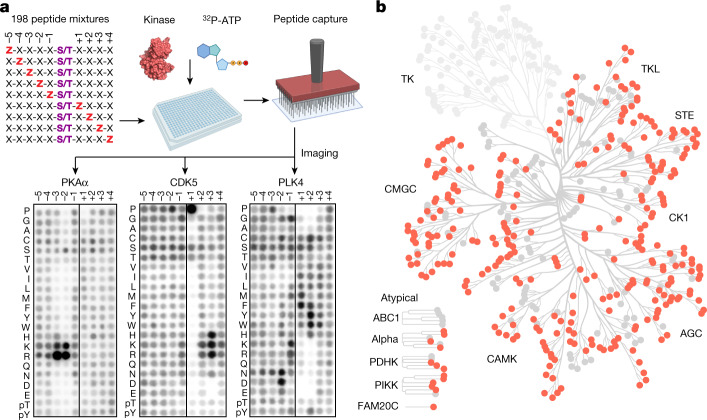
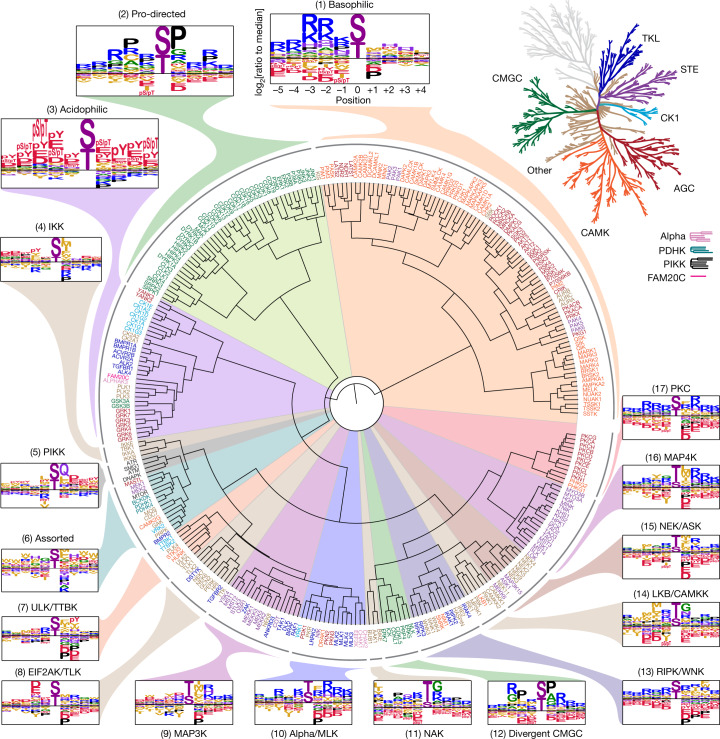
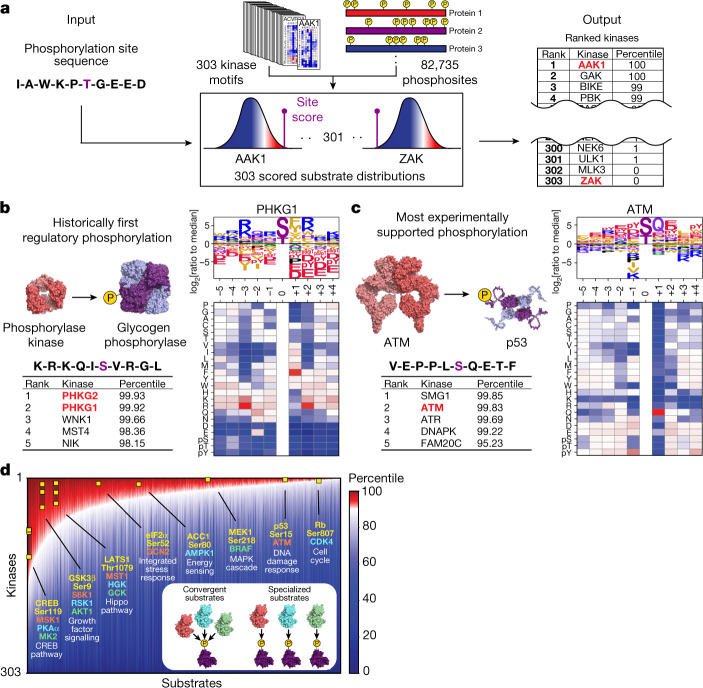
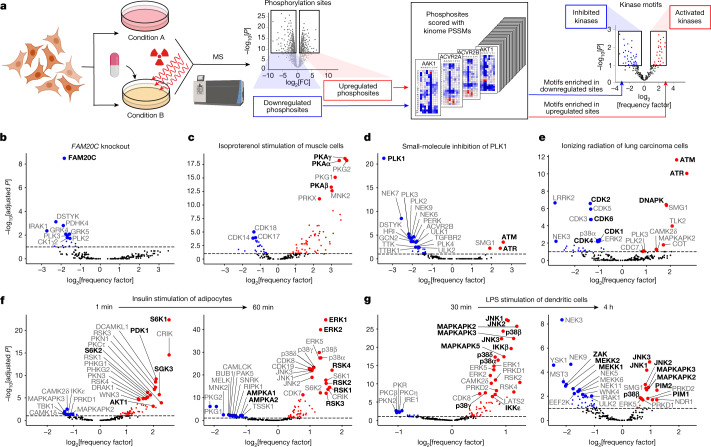
Protein phosphorylation is one of the most widespread post-translational modifications in biology 1,2 . With advances in mass-spectrometry-based phosphoproteomics, 90,000 sites of serine and threonine phosphorylation have so far been identified, and several thousand have been associated with human diseases and biological processes 3,4 . For the vast majority of phosphorylation events, it is not yet known which of the more than 300 protein serine/threonine (Ser/Thr) kinases encoded in the human genome are responsible 3 . Here we used synthetic peptide libraries to profile the substrate sequence specificity of 303 Ser/Thr kinases, comprising more than 84% of those predicted to be active in humans. Viewed in its entirety, the substrate specificity of the kinome was substantially more diverse than expected and was driven extensively by negative selectivity. We used our kinome-wide dataset to computationally annotate and identify the kinases capable of phosphorylating every reported phosphorylation site in the human Ser/Thr phosphoproteome. For the small minority of phosphosites for which the putative protein kinases involved have been previously reported, our predictions were in excellent agreement. When this approach was applied to examine the signalling response of tissues and cell lines to hormones, growth factors, targeted inhibitors and environmental or genetic perturbations, it revealed unexpected insights into pathway complexity and compensation. Overall, these studies reveal the intrinsic substrate specificity of the human Ser/Thr kinome, illuminate cellular signalling responses and provide a resource to link phosphorylation events to biological pathways.
Overview
The claims and statistics of this paper haven’t been checked yet.
Run the check — free, no account needed. It reads the open-access text and checks the sources it cites.
Integrity signals
Registry
Cites
Statistics
Figures
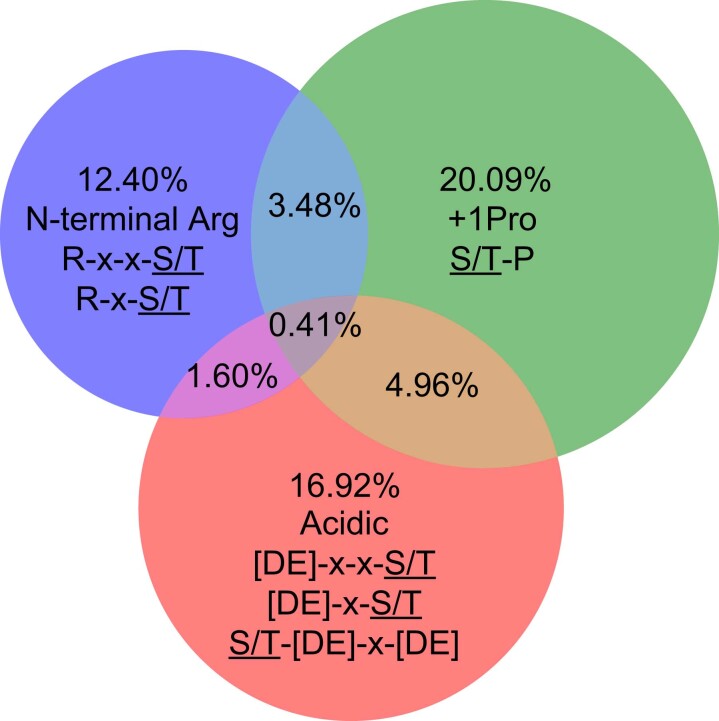
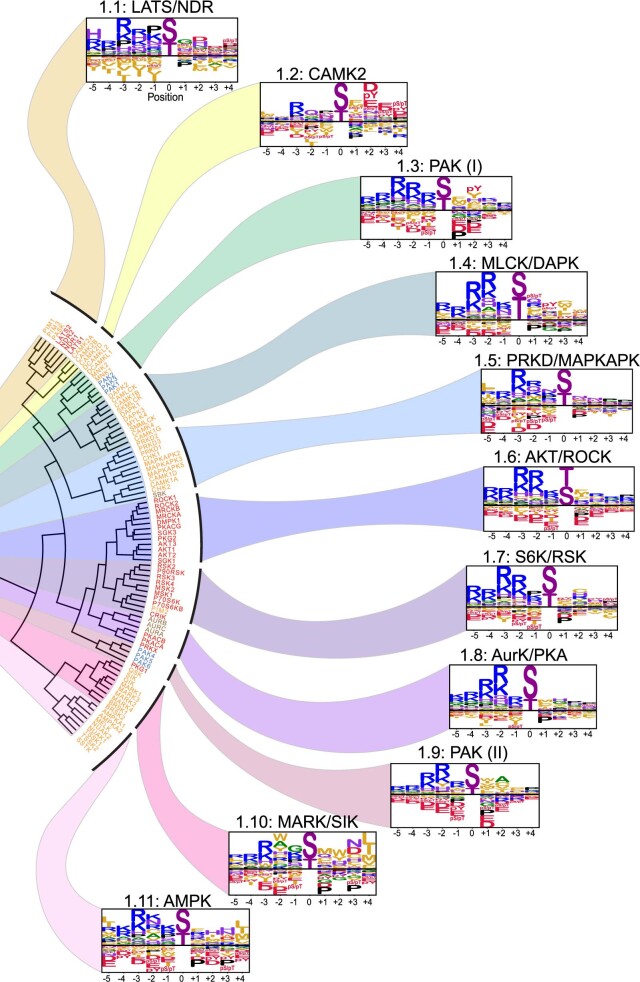
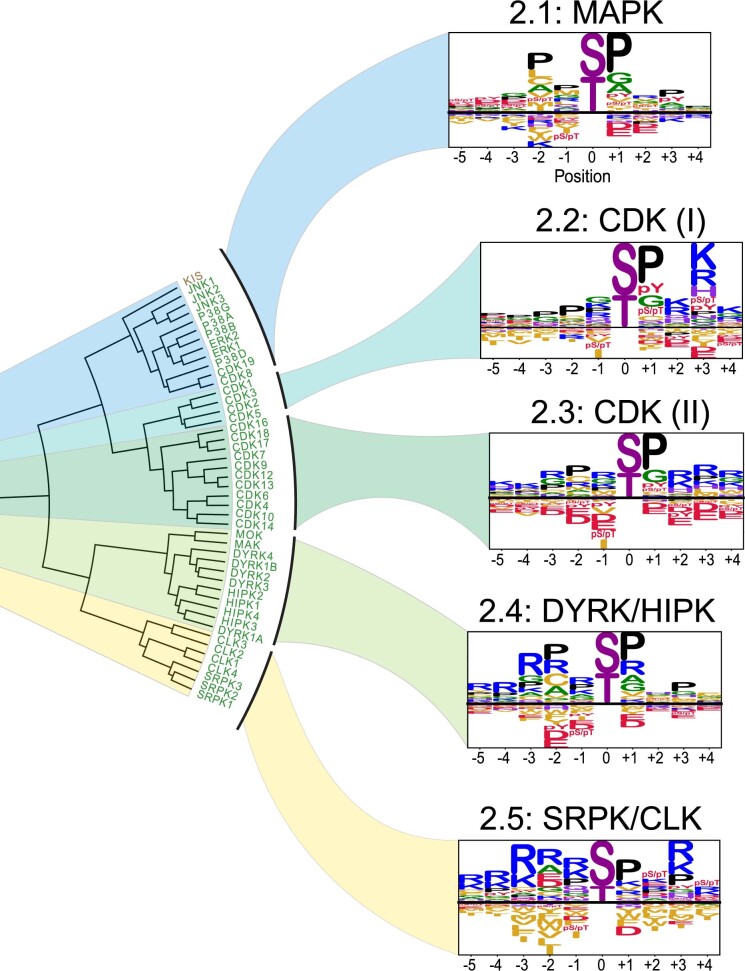
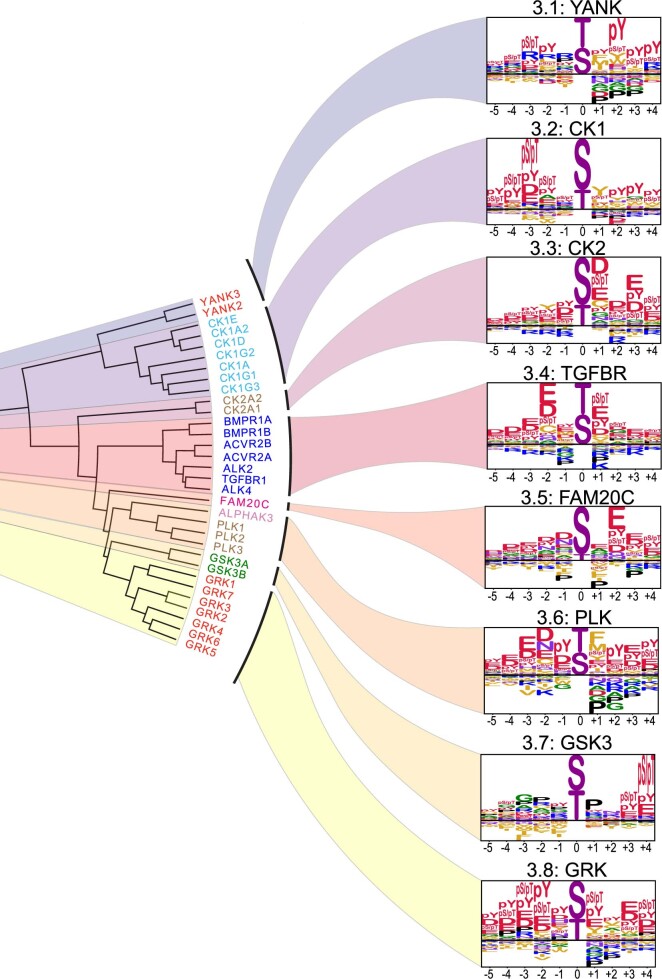
Verification
Claims the paper makes
The claims and statistics of this paper haven’t been checked yet.
Run the check — free, no account needed. It reads the open-access text and checks the sources it cites.
Claims other papers make about this one
Each is checked against this paper’s own text: does it say what the citing paper says it does?
The source backs part of the claim, not all of it — or backs it for a different population, condition or comparison.
In the citing paper
“Our comprehensive in silico kinase library screen for SNX17 S38 phosphorylation has expanded the list of candidates to include SNRK, DAPK2, DAPK1, and kinases of the CAMK class (45, 46).”
From Phosphorylation of SNX17 impedes activation of Retriever-mediated sorting (2025) · cites this paper as [45]
Experimental — accuracy not yet measured
Self-check
Percentages, sums and reported differences re-computed from the paper’s own numbers.
The self-check needs the paper’s full text.
Citations
Cites
Highly accurate protein structure prediction with AlphaFold
Jumper, J., Evans, R., Pritzel, A., Green, T., Figurnov, M., Ronneberger, O., Tunyasuvunakool, K., Bates, R., Žídek, A., Potapenko, A., et al. (2021) · Nature · doi:10.1038/s41586-021-03819-2 · Cited by 43,764
Berman, H. M. (2000) · Nucleic Acids Research · doi:10.1093/nar/28.1.235 · Cited by 40,196
The protein kinase complement of the human genome
Manning, G., Whyte, D. B., Martinez, R., Hunter, T., & Sudarsanam, S. (2002) · Science · doi:10.1126/science.1075762 · Cited by 8,145
Accurate prediction of protein structures and interactions using a 3-track network
Baek, M., DiMaio, F., Anishchenko, I., Dauparas, J., Ovchinnikov, S., Lee, G. R., Wang, J., Cong, Q., Kinch, L. N., Schaeffer, R. D., et al. (2021) · doi:10.1101/2021.06.14.448402 · Cited by 5,549
Mitogen-Activated Protein Kinase Pathways Mediated by ERK, JNK, and p38 Protein Kinases
Johnson, G. L., & Lapadat, R. (2002) · Science · doi:10.1126/science.1072682 · Cited by 4,295
Blume-Jensen, P., & Hunter, T. (2001) · Nature · doi:10.1038/35077225 · Cited by 3,738
Mass-spectrometric exploration of proteome structure and function
Aebersold, R., & Mann, M. (2016) · Nature · doi:10.1038/nature19949 · Cited by 2,334
CREB: A Stimulus-Induced Transcription Factor Activated by A Diverse Array of Extracellular Signals
Shaywitz, A. J., & Greenberg, M. E. (1999) · Annual Review of Biochemistry · doi:10.1146/annurev.biochem.68.1.821 · Cited by 2,133
GSK-3: tricks of the trade for a multi-tasking kinase
Doble, B. W., & Woodgett, J. R. (2003) · Journal of Cell Science · doi:10.1242/jcs.00384 · Cited by 2,084
Scansite 2.0: proteome-wide prediction of cell signaling interactions using short sequence motifs
Obenauer, J. C. (2003) · Nucleic Acids Research · doi:10.1093/nar/gkg584 · Cited by 1,609
Cited by
Sorted by citations
Items 701–734 of 734
Regulation of Protein Kinase Pathways in Primary Neuron Model of Anti-NMDA Receptor Encephalitis
Joo, Y., Ciryam, P., Zhang, T., Huang, W., Dean, C. A., Lawrence, A. P., Vu, T. H., Gooya, N., Dessain, S. K., Kane, M., et al. (2026) · Journal of Neuroscience · doi:10.1523/jneurosci.0708-25.2026
Vijayan, J., Subair, S., Gopalakrishnan, A. P., Sambreena, A., Raju, R., & Rajeev, A. C. (2026) · OMICS A Journal of Integrative Biology · doi:10.1177/15578100261488080
Albatarni, R., Choi, S., Shin, K. C., Vemulapalli, P. B., Shaker, M. R., Schmidt, F., & Park, Y. (2026) · Frontiers in Bioengineering and Biotechnology · doi:10.3389/fbioe.2026.1932407
In Silico Phosphoproteomic Profiling of the MAP3K3 Signaling Network
John, J., Subair, S., Dcunha, L., Mahin, A., Madhusudhanan, M., John, L., Gopalakrishnan, A. P., Ahmed, M., & Raju, R. (2026) · Proteomes · doi:10.3390/proteomes14040050
Palollathil, A., Najar, M. A., Pervaje, R., Raju, R., Prasad, T. S. K., & Modi, P. K. (2026) · Neurochemistry International · doi:10.1016/j.neuint.2026.106268
A TBK1/ULK1 signalling axis couples lysosomal stress to TFEB activation
Esposito, A., Bayramoglu, I., Varriale, C., Cavaliere, M., Brunetti, M. E., Agostinis, R., Jansen, R. M., Tudorica, D. A., Duan, Y.-J., Spacci, M., et al. (2026) · Nature · doi:10.1038/s41586-026-11093-3
Leong, K. W., Mok, L., Gu, K., Oakhill, J. S., & Chong, M. M. W. (2026) · Frontiers in Cell and Developmental Biology · doi:10.3389/fcell.2026.1918038
DeLiberty, J. M., Kong, F. Y., Yu, Q., Sindoni, N., Lin, J., Kang, K., Kim, E. Y., Chen, S., Padhye, A., Coker, O., et al. (2026) · bioRxiv (Cold Spring Harbor Laboratory) · doi:10.64898/2026.10.01.756025
Gopalakrishnan, V., Mahin, A., Fahma, A., Khanum, A., Soman, S., & Raju, R. (2026) · Integrative Biology · doi:10.1093/intbio/zyag020
Padhye, A., Kang, K., Kong, F. Y., Sindoni, N., Yu, Q., 姜, 柏., Chang, W.-H., Coker, O., Kim, E., Dilly, J., et al. (2026) · bioRxiv (Cold Spring Harbor Laboratory) · doi:10.64898/2026.10.01.756013
Ji, W., Zhang, S.-P., Li, L., Liu, H., Qi, Y., Liu, M., Yang, Z., Cai, Q.-Y., Yuan, J.-J., Niu, Z.-H., et al. (2026) · Acta Pharmacologica Sinica · doi:10.1038/s41401-026-01940-4
Illuminating the Co‐Phosphoregulatory Network of the Dark Kinase STK10 by Omics Approaches
Gopalakrishnan, V., Fahma, A., Mahin, A., Dcunha, L., Gopalakrishnan, A. P., Ummar, S., Raju, R., & Soman, S. (2026) · BioMed Research International · doi:10.1155/bmri/7315694
Basha, F. A., Kammarambath, S. R., Dcunha, L., Mahin, A., Gopalakrishnan, A. P., Sambreena, A., Madar, I. H., & Raju, R. (2026) · International Journal of Molecular Sciences · doi:10.3390/ijms27198892
Citron kinase activity controls alternative splicing events that drive prostate cancer growth
Rawat, C., Singh, N., Dahiya, U. R., Hu, Q., Ng, S., Zhang, D., Stauffer, S. R., Zoubeidi, A., Corey, E., McKenney, J. K., et al. (2026) · Science Advances · doi:10.1126/sciadv.aee5257
Liu, H., Tang, L., Chen, B., & Yu, J. (2026) · Journal of bone oncology · doi:10.1016/j.jbo.2026.100807
Atomic, structural and molecular insights into GPCR ligand binding and signalling
Nemec, K., Mészáros, B., Skiniotis, G., Blanchard, S. C., & Babu, M. M. (2026) · Nature Reviews Molecular Cell Biology · doi:10.1038/s41580-026-01030-7
Shaji, M., Thomas, J., Sekhar, P. S., Subair, S., Mahin, A., Dcunha, L., Sambreena, A., Raju, R., & Soman, S. (2026) · International Journal of Molecular Sciences · doi:10.3390/ijms27209132
Wolski, W., Dittmann, A., Panse, C., Kunz, L., & Grossmann, J. (2026) · Methods in molecular biology · doi:10.1007/978-1-0716-5519-1_8
Khan, N. A., Fahma, A., Gopalakrishnan, A. P., Sambreena, A., Raju, R., & Rajeev, A. C. (2026) · BioTech · doi:10.3390/biotech15040095
Genetic determinants of protein phosphorylation in humansPreprint
Needham, E. J., Zhao, J. H., Hirschmüller, N., Wolford, C., Jiang, X., & Butterworth, A. S. (2026) · medRxiv · doi:10.64898/2026.10.17.26365814
Rong, J., & Yu, X. (2026) · Journal of Biological Chemistry · doi:10.1016/j.jbc.2026.113669
Rai, S. B., Sujina, A., Kammarambath, S. R., Mahin, A., Subair, S., Sambreena, A., Pavithra, S., Raju, R., & Palollathil, A. (2026) · Frontiers in Bioinformatics · doi:10.3389/fbinf.2026.1972498
Global phosphoproteomics uncovers PANK2 phosphorylation sites and co-phosphoregulation networks
Rajeev, A. C., Mahin, A., Gopalakrishnan, A. P., Shivamurthy, P. B., & Raju, R. (2026) · Results in Chemistry · doi:10.1016/j.rechem.2026.104004
Gu, L. L., Fu, L., Zhao, W., Ding, L., Yu, Z., & Chen, F. (2026) · Food & Function · doi:10.1039/d6fo03570a
Kinase Regulation Through Metabolic Control Points Directs Glucose Fate
Varghese, S., Shivamurthy, P. B., Pai, V. R., Soman, S., Ramesh, P., & Raju, R. (2026) · International Journal of Molecular Sciences · doi:10.3390/ijms27219402
BindingDB (2025) · UC San Diego · doi:10.7270/q27d30sc
An Integrative Phosphoregulatory Landscape of FAK Signaling
George, M., Dcunha, L., Ahmed, M., Mahin, A., Gopalakrishnan, A. P., Modi, P. K., Velikkakath, A. K. G., & Raju, R. (2026) · International Journal of Molecular Sciences · doi:10.3390/ijms27219484
Palková, N., Palek, M., Brodinova, M., Chalupova, Z., Storchova, R., Jašprová, J., Talacko, P., Cmarko, D., & Macůrek, L. (2026) · Nucleic Acids Research · doi:10.1093/nar/gkag1060
Myristoylated alanine rich C kinase substrate (MARCKS) and its role in the pathogenesis of cancer
Ibrahim, K. B., Meyakumla, R. T. K., Joanna, P. S., Ranjani, J., Mukherjee, A., & Ganesan, T. S. (2026) · Molecular Biology Reports · doi:10.1007/s11033-026-12918-0
Pasquer, H., Forget, A., Battistella, M., Marie, R., Provent, L., Baroudjian, B., Latour, E., Culeux, C., Roux, B., Saadallah, K., et al. (2026) · Journal of Clinical Investigation · doi:10.1172/jci199141
Second-Generation JNK Activity Reporter Illuminates the Mechanism of AT1R-Induced JNK Activation
Stehle, D., LI, B., Han, N. N., Bergkamp, N. D., Mehta, S., & Zhang, J. (2026) · ACS Sensors · doi:10.1021/acssensors.6c02648
Kinome profiling enabled development of a LATS1/2 inhibitor with wound healing potential
Tosto, F. A., Morris, P. J., Qu, Y., Evsen, L., Tawa, G. J., Tharakan, R., Scherer, B. S., Duveau, D. Y., Blivis, D., Voss, T. C., et al. (2026) · Proceedings of the National Academy of Sciences · doi:10.1073/pnas.2602240123
Fujiki, T., Takami, J., Ihara, K., Kawajiri, K., Ishida, R., Nagaoka, K., Mori, Y., Waseda, Y., Yoshida, S., Mandai, S., et al. (2026) · Metabolism · doi:10.1016/j.metabol.2026.156819
Metadata
- Authors
- Johnson, J. L., Yaron, T. M., Huntsman, E. M., Kerelsky, A., Song, J., Regev, A., Lin, T.-Y., Liberatore, K., Cizin, D. M., Cohen, B. M., Vasan, N., Ma, Y., Krismer, K., Robles, J. T., van de Kooij, B., van Vlimmeren, A. E., Andrée-Busch, N., Käufer, N. F., Dorovkov, M. V., Ryazanov, A. G., Takagi, Y., Kastenhuber, E. R., Goncalves, M. D., Hopkins, B. D., Elemento, O., Taatjes, D. J., Maucuer, A., Yamashita, A., Degterev, A., Uduman, M., Lu, J., Landry, S. D., Zhang, B., Cossentino, I., Linding, R., Blenis, J., Hornbeck, P. V., Turk, B. E., Yaffe, M. B., & Cantley, L. C.
- Affiliations
- Weill Cornell Medicine (US)
- Memorial Sloan Kettering Cancer Center (US)
- Cornell University (US)
- Columbia University Irving Medical Center (US)
- MIT Computer Science and Artificial Intelligence Laboratory (US)
- Yale University (US)
- Massachusetts Institute of Technology (US)
- Technische Universität Braunschweig (DE)
- Rutgers, The State University of New Jersey (US)
- Indiana University School of Medicine (US)
- Icahn School of Medicine at Mount Sinai (US)
- University of Colorado Boulder (US)
- Inserm (FR)
- University of the Ryukyus (JP)
- Tufts University (US)
- Cell Signaling Technology (United States) (US)
- Humboldt-Universität zu Berlin (DE)
- National Institutes of Health (US)
- Corresponding author
- Turk, Benjamin E.
- Yaffe, Michael B.
- Cantley, Lewis C.
- ORCID
- Johnson, Jared L.
- Yaron, Tomer M.
- Huntsman, Emily M.
- Song, Junho
- Regev, Amit
- Lin, Ting-Yu
- Liberatore, Katarina
- Cohen, Benjamin M.
- Vasan, Neil
- Ma, Yilun
- Krismer, Konstantin
- Robles, Jaylissa Torres
- van de Kooij, Bert
- van Vlimmeren, Anne E.
- Andrée-Busch, Nicole
- Dorovkov, Maxim V.
- Takagi, Yuichiro
- Kastenhuber, Edward R.
- Goncalves, Marcus D.
- Hopkins, Benjamin D.
- Elemento, Olivier
- Taatjes, Dylan J.
- Maucuer, Alexandre
- Yamashita, Akio
- Degterev, Alexei
- Uduman, Mohamed
- Lu, Jingyi
- Landry, Sean D.
- Cossentino, Ian
- Linding, Rune
- Blenis, John
- Hornbeck, Peter V.
- Turk, Benjamin E.
- Yaffe, Michael B.
- Cantley, Lewis C.
- Venue
- Nature
- Published
- 2023-01-11
- Volume
- 613
- Issue
- 7945
- Pages
- 759-766
- ISSN
- 0028-0836 (ISSN-L)
- 1476-4687
- PMC
- PMC9876800
- OpenAlex
- W4315642941
- Cited by
- 728
- References
- 120
- Citations by year
- 2026: 206 · 2025: 223 · 2024: 193 · 2023: 102
- FWCI
- 67.03
- Type
- journal article
- Language
- en
- Open access
- hybrid
- doi.org
- Locations
- Nature (publishedVersion, cc-by)
- bioRxiv (Cold Spring Harbor Laboratory) (acceptedVersion, cc-by-nc)
- PubMed Central (publishedVersion, cc-by)
- PubMed (publishedVersion)
- HAL (submittedVersion, cc-by)
- RePEc: Research Papers in Economics (submittedVersion)
- Institutional Repositories DataBase (IRDB) (submittedVersion, cc-by)
- University of Groningen research database (University of Groningen / Centre for Information Technology) (submittedVersion, cc-by)
- IUScholarWorks (Indiana University) (submittedVersion, cc-by)
- University oh the Ryukyus Repository (submittedVersion, cc-by-nc-nd)
- Funders
- Cancer Research UK (A28596, C42454/A28596)
- National Cancer Institute (CA120964, CA14051, T32CA203702, CA197588, CA226898, R01CA226898, Grant P30-CA14051, R35CA197588, P01CA120964, P30CA014051, P01CA117969, P30-CA-14051)
- National Institute of General Medical Sciences (R01GM104047, R35GM139550)
- National Institute of Diabetes and Digestive and Kidney Diseases (U24DK116204)
- National Institute of Environmental Health Sciences (R35ES028374)
- Topics
- Physical Sciences › Chemistry › Spectroscopy › Advanced Proteomics Techniques and Applications
- Life Sciences › Biochemistry, Genetics and Molecular Biology › Molecular Biology › Protein Kinase Regulation and GTPase Signaling
- Life Sciences › Biochemistry, Genetics and Molecular Biology › Molecular Biology › Protein Tyrosine Phosphatases
- Keywords
- serine/threonine kinase, kinase substrate specificity, protein phosphorylation, phosphoproteome, synthetic peptide libraries, kinase profiling
- MeSH terms
- Cell Line, Humans, Phosphoproteins, Phosphorylation, Phosphoserine, Phosphothreonine, Serine, Substrate Specificity, Threonine, Protein Serine-Threonine Kinases, Proteome, Datasets as Topic
About these checks
Registry, retraction, Cites and statistics results are computed, not judged, with one exception: a printed reference that no index lists is read once by a model before it counts as a citation error. Claims are extracted by a model and kept only when their quote appears verbatim in the text; each cited source is then checked, with a model’s help, for whether it says what the claim relies on. Those verdicts can be wrong — read the claim’s quote and the cited source before relying on one.
Statistics and arithmetic are recomputed, not judged.
Confidence bands are shown only for fields calibrated on our annotated test set. None is calibrated yet, so no band is shown.
What counts as a claim ›How we measure confidence ›How we check this ›
Are you an author, or do you see a problem with this page? Request a review
