

The person-to-person transmission landscape of the gut and oral microbiomes
Open accessThe DOI matches its Crossref record; 129 of the 129 references it cites were found in a registry or an index.
Abstract
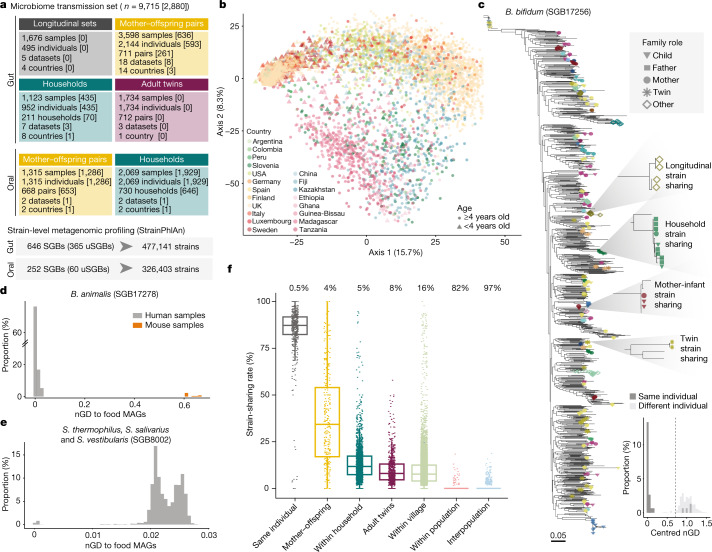
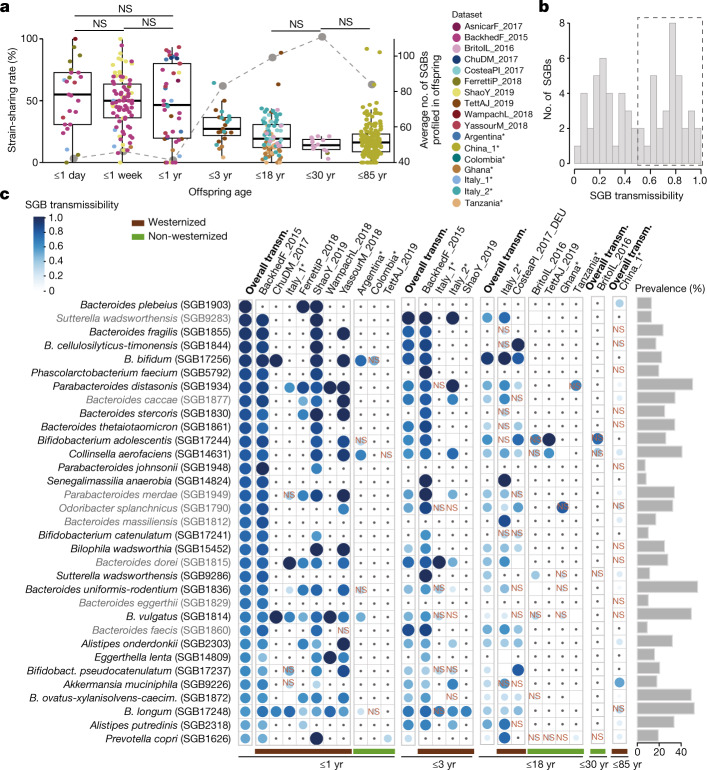
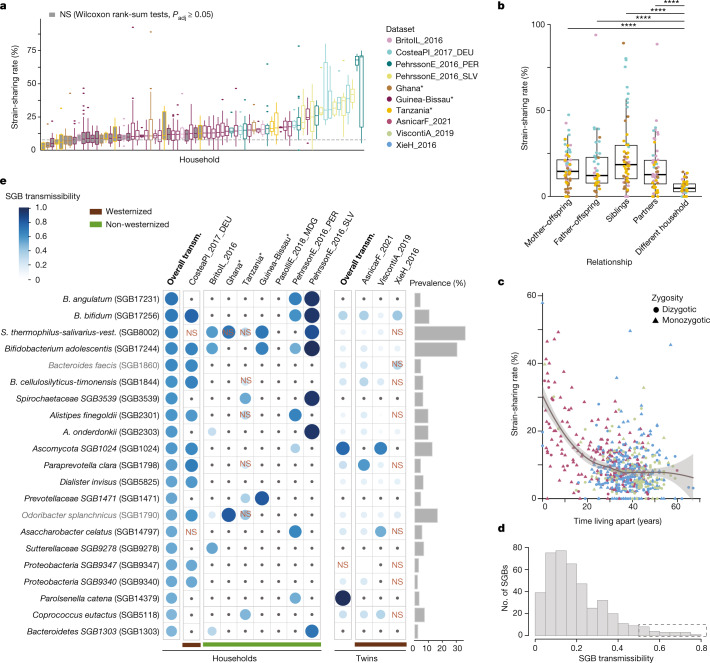
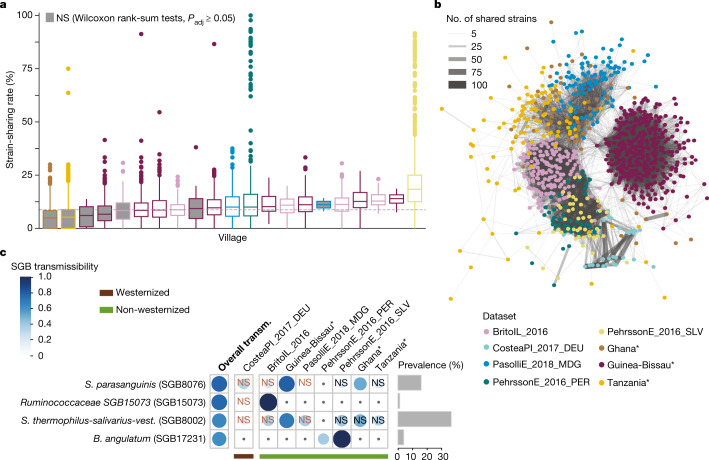
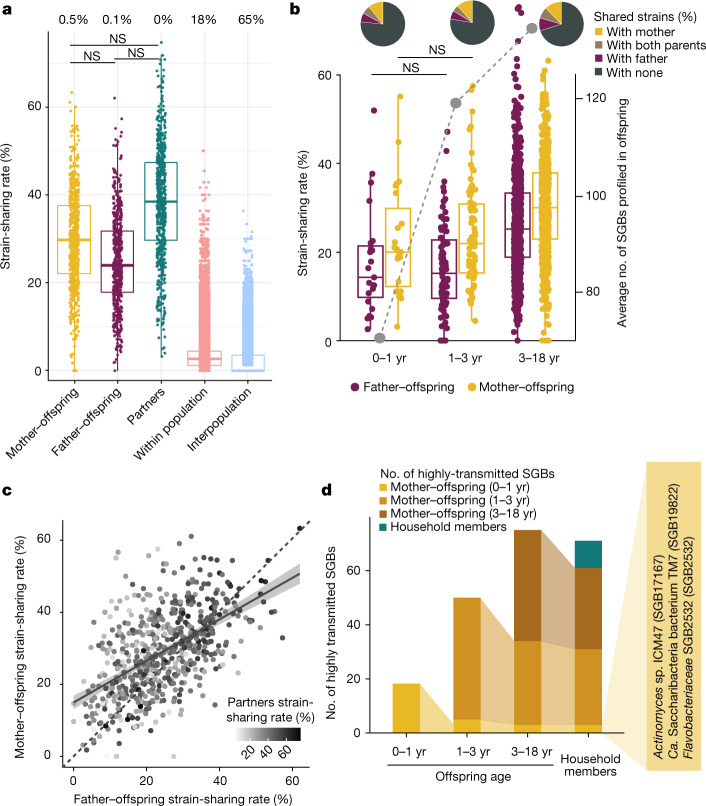
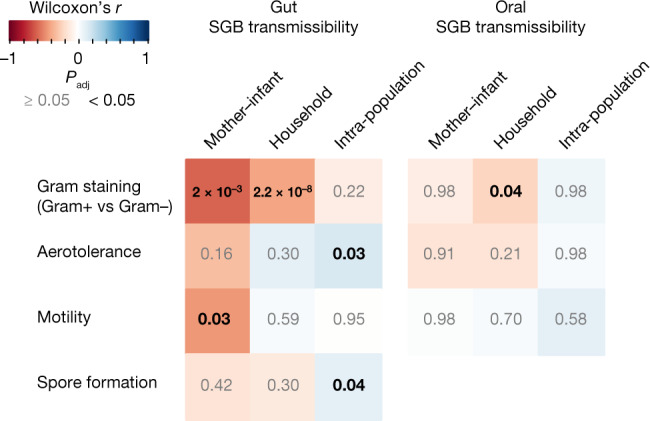
The human microbiome is an integral component of the human body and a co-determinant of several health conditions 1,2 . However, the extent to which interpersonal relations shape the individual genetic makeup of the microbiome and its transmission within and across populations remains largely unknown 3,4 . Here, capitalizing on more than 9,700 human metagenomes and computational strain-level profiling, we detected extensive bacterial strain sharing across individuals (more than 10 million instances) with distinct mother-to-infant, intra-household and intra-population transmission patterns. Mother-to-infant gut microbiome transmission was considerable and stable during infancy (around 50% of the same strains among shared species (strain-sharing rate)) and remained detectable at older ages. By contrast, the transmission of the oral microbiome occurred largely horizontally and was enhanced by the duration of cohabitation. There was substantial strain sharing among cohabiting individuals, with 12% and 32% median strain-sharing rates for the gut and oral microbiomes, and time since cohabitation affected strain sharing more than age or genetics did. Bacterial strain sharing additionally recapitulated host population structures better than species-level profiles did. Finally, distinct taxa appeared as efficient spreaders across transmission modes and were associated with different predicted bacterial phenotypes linked with out-of-host survival capabilities. The extent of microorganism transmission that we describe underscores its relevance in human microbiome studies 5 , especially those on non-infectious, microbiome-associated diseases.
Overview
The claims and statistics of this paper haven’t been checked yet.
Free: it reads the open-access text and checks the first 5 claims that cite a source we can check. Create a free account to check every claim.
Integrity signals
Registry
Cites
Statistics
Figures
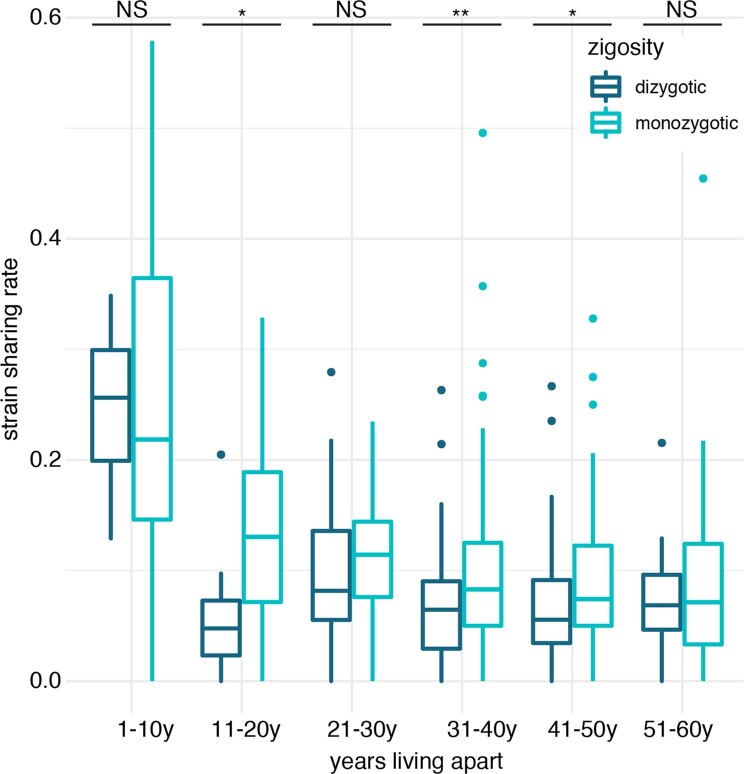
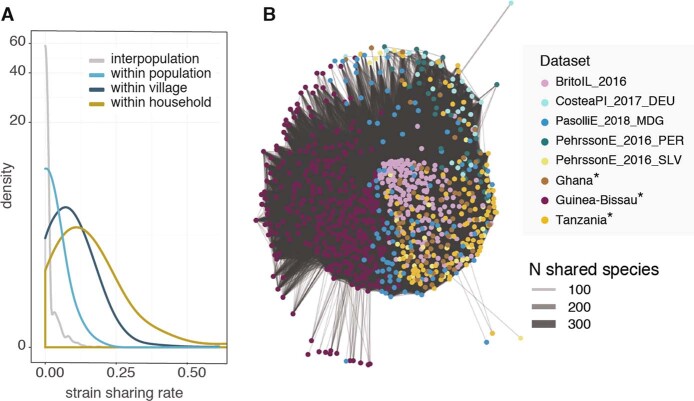
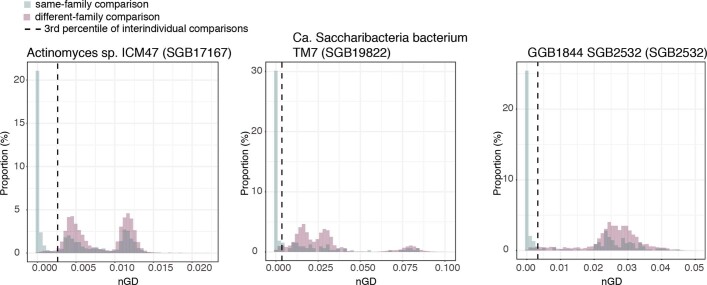
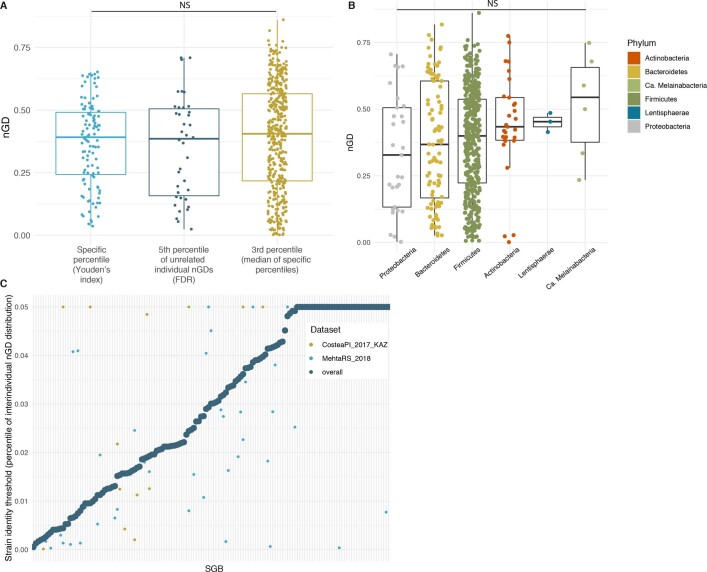
Verification
Claims the paper makes
The claims and statistics of this paper haven’t been checked yet.
Free: it reads the open-access text and checks the first 5 claims that cite a source we can check. Create a free account to check every claim.
Claims other papers make about this one
Each is checked against this paper’s own text: does it say what the citing paper says it does?
The source backs part of the claim, not all of it — or backs it for a different population, condition or comparison.
In the citing paper
“adult microbial communities seem to be predominantly shaped by prior stochastic environmental exposures, as well as multiple other factors such as diet, antibiotic therapy and host genetics, with direct 'inheritance' from the mother at birth playing a lesser role.”
From Human microbiome myths and misconceptions (2023) · cites this paper as [15]
Experimental — accuracy not yet measuredThe source backs part of the claim, not all of it — or backs it for a different population, condition or comparison.
In the citing paper
“proportionally few microbiota species are truly 'heritable' and persist through from birth to adulthood in the offspring 15,16 .”
From Human microbiome myths and misconceptions (2023) · cites this paper as [15]
Experimental — accuracy not yet measuredThe cited source says what the claim attributes to it.
In the citing paper
“Although some microbes are directly transferred from mother to baby during birth 14,15 ,”
From Human microbiome myths and misconceptions (2023) · cites this paper as [15]
The cited source says what the claim attributes to it.
In the citing paper
“However, the recently described horizontal and vertical person-to-person microbial transmission 42 is likely not the only source of microbiome diversity, 43”
From Unexplored microbial diversity from 2,500 food metagenomes and links with the human microbiome. (2024) · cites this paper as [42]
The cited source says what the claim attributes to it.
In the citing paper
“A large fraction of the infant gut microbiome contained food SGBs (mean = 56%, Figure 5C), despite direct acquisition from food being only one of the possible routes of transmission (e.g., vertical and horizontal transmission 42,44,122 ).”
From Unexplored microbial diversity from 2,500 food metagenomes and links with the human microbiome. (2024) · cites this paper as [42]
2 more claims about this paper
Create a free account to see every claim other papers make about this one.
Self-check
Percentages, sums and reported differences re-computed from the paper’s own numbers.
The self-check needs the paper’s full text.
Citations
Cites
Fast gapped-read alignment with Bowtie 2
Langmead, B., & Salzberg, S. L. (2012) · Nature Methods · doi:10.1038/nmeth.1923 · Cited by 56,400 · cited 1×
“This was done by a procedure that first divided core genes into fragments of 150 nt and then aligned the fragments against the genomes of all SGBs using Bowtie2 (version 2.3.5.1; -sensitive option) 66 .”
MethodInfluentialphyloseq: An R Package for Reproducible Interactive Analysis and Graphics of Microbiome Census Data
McMurdie, P. J., & Holmes, S. (2013) · PLoS ONE · doi:10.1371/journal.pone.0061217 · Cited by 21,322 · cited 1×
“28.0) 126 , using one randomly selected sample per individual ( n = 4,840 gut samples, n = 2,069 oral samples).”
MethodInfluentialProkka: rapid prokaryotic genome annotation
Seemann, T. (2014) · Bioinformatics · doi:10.1093/bioinformatics/btu153 · Cited by 18,818
Fast and sensitive protein alignment using DIAMOND
Buchfink, B., Xie, C., & Huson, D. H. (2015) · Nature Methods · doi:10.1038/nmeth.3176 · Cited by 14,201 · cited 1×
“Coding sequences were then assigned to a UniRef90 cluster 90 by performing a Diamond search (version 0.9.24) 91 of the coding sequences against the UniRef90 database (version 201906) and assigning a UniRef90 ID if the mean sequence identity to the centroid sequence was above 90% and covered more…”
MethodInfluentialParks, D. H., Imelfort, M., Skennerton, C. T., Hugenholtz, P., & Tyson, G. W. (2015) · Genome Research · doi:10.1101/gr.186072.114 · Cited by 12,496
Diet rapidly and reproducibly alters the human gut microbiome
David, L. A., Maurice, C. F., Carmody, R. N., Gootenberg, D. B., Button, J. E., Wolfe, B. E., Ling, A. V., Devlin, A. S., Varma, Y., Fischbach, M. A., et al. (2014) · Nature · doi:10.1038/nature12820 · Cited by 10,100 · cited 1×
“711 pairs [261] 18 datasets [8] 14 countries [3]”
Human gut microbiome viewed across age and geography
Yatsunenko, T., Rey, F. E., Manary, M. J., Trehan, I., Dominguez-Bello, M. G., Contreras, M., Magris, M., Hidalgo, G., Baldassano, R. N., Anokhin, A. P., et al. (2012) · Nature · doi:10.1038/nature11053 · Cited by 7,815 · cited 3×
“3e) in concordance with their divergent microbiome composition 30,45,50,51 .”
BackgroundInfluentialMMseqs2 enables sensitive protein sequence searching for the analysis of massive data sets
Steinegger, M., & Söding, J. (2017) · Nature Biotechnology · doi:10.1038/nbt.3988 · Cited by 4,840
metaSPAdes: a new versatile metagenomic assembler
Nurk, S., Meleshko, D., Korobeynikov, A., & Pevzner, P. A. (2017) · Genome Research · doi:10.1101/gr.213959.116 · Cited by 4,496 · cited 1×
“MAGs from the Italian mother–infant dataset, and those of non-human hosts were assembled using MEGAHIT 85 , while those of the Italian centenarian dataset and non-westernized populations were assembled with metaSPAdes 86 , using default parameters in both cases.”
MethodKang, D. D., Li, F., Kirton, E., Thomas, A., Egan, R., An, H., & Wang, Z. (2019) · PeerJ · doi:10.7717/peerj.7359 · Cited by 3,750 · cited 1×
“Assembled contigs longer than 1,500 nucleotides were binned into MAGs using MetaBAT2 87 .”
Method
Research works printed but not linked: 2
- Bergey, D. H. et al. Bergey’s Manual of Systematic Bacteriology (Lippincott Raven, 1989).
- Csardi G Nepusz T The igraph software package for complex network research InterJournal Complex Syst. 2006 1695 1 9
Cited by
Items 201–300 of 514
Alzheimer's disease and gut-brain axis: Drosophila melanogaster as a model
Alves, S. D. M., Lisboa‐Filho, P. N., Vieira, C. L. Z., & Piacenti‐Silva, M. (2025) · Frontiers in Neuroscience · doi:10.3389/fnins.2025.1543826 · Cited by 11
Duan, Y., Xu, C., Wang, W., Wang, X., Xu, N., Zhong, J., Gong, W., Zheng, W., Wu, Y., Myers, A., et al. (2025) · BMC Medicine · doi:10.1186/s12916-025-03969-4 · Cited by 9
Aromatics from fossil fuels and breast cancer
Hilakivi-Clarke, L. A., Jolejole, T. K. B., da Silva, J. L., Andrade, F. D. O., Dennison, G., & Mueller, S. (2025) · iScience · doi:10.1016/j.isci.2025.112204 · Cited by 9
“198 Further, several diseases are linked to specific changes in the gut microbiome, and at least in some cases these changes are causative for the development of a disease.”
Nourishing the brain on deep space missions: nutritional psychiatry in promoting resilience
Pathare, N. N., Fayet‐Moore, F., Fogarty, J. A., Jacka, F. N., Strandwitz, P., Strangman, G. E., & Donoviel, D. B. (2023) · Frontiers in Neural Circuits · doi:10.3389/fncir.2023.1170395 · Cited by 9
Qi, Q., Gao, C., Meng, X., Liu, W., Xue, Y., & Yan, Y. (2025) · Journal Of Clinical Periodontology · doi:10.1111/jcpe.70016 · Cited by 8
Relationship Functioning and Gut Microbiota Composition among Older Adult Couples
Cheng, Q., Krajmalnik‐Brown, R., DiBaise, J. K., Maldonado, J., Guest, M. A., Todd, M. W., & Langer, S. L. (2023) · International Journal of Environmental Research and Public Health · doi:10.3390/ijerph20085435 · Cited by 8
“Finally, we did not assess relationship length or length of cohabitation, which may play important roles in the system of associations linking relationship functioning and microbial diversity [27].”
BackgroundOral–Gut Microbiome Crosstalk in Cancer
Inamura, K. (2023) · Cancers · doi:10.3390/cancers15133396 · Cited by 8
From wolves to humans: oral microbiome resistance to transfer across mammalian hosts
Podar, N. A., Carrell, A. A., Cassidy, K. A., Klingeman, D. M., Yang, Z. K., Stahler, E. E., Smith, D. W., Stahler, D. R., & Podar, M. (2024) · mBio · doi:10.1128/mbio.03342-23 · Cited by 8
Davison, C., Tallman, S., Croix, M. D. S., Antonio, M., Oggioni, M. R., Kwambana-Adams, B., Freund, F., & Beleza, S. S. (2024) · PLoS Genetics · doi:10.1371/journal.pgen.1011317 · Cited by 8
“Estimates of N e , HGT, between-host transmission and of dispersal are known to vary among commensal species, but there is evidence for a great fraction of the human microbiome that they are high enough to lead to the same patterns as in S . mitis and S . pneumoniae [4,12,56,72,73].”
InfluentialFrom vacant to vivid: The nutritional landscape drives infant gut microbiota establishment
Melki, R., & Litvak, Y. (2024) · Molecular Microbiology · doi:10.1111/mmi.15296 · Cited by 10
“…progressively acquire an increasing number of bacterial strains in the days and weeks following birth, with the mother serving as the primary source of these bacterial strains (Beller, Deboutte, Falony, et al., 2021; Bogaert et al., 2023; Nayfach et al., 2016; Valles-Colomer et al., 2023).”
Qiu, T., Fang, Q., Tian, X., Cao, Y., Fan, X., Li, Y., Tu, Y., Liu, L., Chen, Z., Wei, Y., et al. (2024) · Environmental Pollution · doi:10.1016/j.envpol.2024.124705 · Cited by 8
Gem, H., Ebadi, M., Sebastian, G., Abasaeed, R., Lloid, M. E., Minot, S. S., Dean, D. R., & Rashidi, A. (2024) · npj Biofilms and Microbiomes · doi:10.1038/s41522-024-00611-8 · Cited by 8
“Our strain-level analysis demonstrated subject-level speci fi city, with no strain sharing between subjects and consistent with prior studies of the oral microbiota in healthy adults 30 .”
Czeszewska-Rosiak, G., Adamczyk, I., Ludwiczak, A., Fijałkowski, P., Fijałkowski, P., Twarużek, M., Złoch, M., Gabryś, D., Miśta, W., Tretyn, A., et al. (2025) · Heliyon · doi:10.1016/j.heliyon.2025.e42015 · Cited by 8
Gut Bacteroides fragilis in health and diseases: an updated review
Yang, Y., Cao, X., Kato, N., & Wang, Y. (2025) · Journal of Future Foods · doi:10.1016/j.jfutfo.2024.11.025 · Cited by 8
The tongue microbiome of young patients with chronic kidney disease and their healthy mothers
Höfer, K. C., Weber, L. T., Barbe, A. G., Graf, I., Thom, S., Nowag, A., Scholz, C. J., Wisplinghoff, H., Noack, M. J., & Jazmati, N. (2024) · Clinical Oral Investigations · doi:10.1007/s00784-024-05492-x · Cited by 9
“These early life interactions between the microbiome and human, in particular in a household, host are responsible for the characteristics of postnatal acquired and innate immune functions and physiological development influencing future health [11, 16–18].”
van der Vossen, E. W. J., Davids, M., Voermans, B., Wortelboer, K., Hartstra, A. V., Koopen, A. M., de Groot, P. F., Levin, E., & Nieuwdorp, M. (2024) · Gut Microbes · doi:10.1080/19490976.2024.2388295 · Cited by 7
“We furthermore determined which sample pairs are unrelated as done previously by Valles-Colomer et al. 28 Hereafter, we estimated the strain-identity thresholds.”
MethodChanges in social environment impact primate gut microbiota composition
Pearce, C. S., Bukovsky, D. L., Douchant, K., Katoch, A., Greenlaw, J., Gale, D. J., Nashed, J. Y., Brien, D. C., Kuhlmeier, V. A., Sabbagh, M. A., et al. (2024) · Animal Microbiome · doi:10.1186/s42523-024-00355-y · Cited by 7
“These animals’ tendency for frequent social activity is critical for enabling us to assess social influences on GM composition, as physical social contact provides a key vector for microbial transmission [21, 79–81].”
Gut‐Kidney Axis: Novel Insights in Kidney Diseases
Iwata, Y., Nakade, Y., Tokumaru, T., Oshima, M., Mita, M., Toyama, T., Linh, H. T., & Wada, T. (2025) · Chemistry & Biodiversity · doi:10.1002/cbdv.202501506 · Cited by 7
“Considering the associations between gut microbiota and various diseases, the authors speculate that diseases that are supposedly non-transmissible may potentially spread to others through the transmission of gut microbiota [15].”
Familial Patterns of Oral–Gut Dysbiosis and Systemic Markers in Periodontitis
Paz, H. E. S., Monteiro, M. F., Stolf, C. S., Araújo, C. F., Silbereisen, A., Santamaria, M. P., Bostancı, N., & Casarin, R. C. V. (2025) · Journal Of Clinical Periodontology · doi:10.1111/jcpe.70047 · Cited by 7
Microbial succession at weaning is guided by microbial metabolism of host glycans
Lubin, J., Planet, P. J., & Silverman, M. A. (2025) · Microbiome · doi:10.1186/s40168-025-02193-9 · Cited by 8
“While this study focuses on carbohydrate utilization, factors such as lipid and protein availability [48–50], environmental exposures, geography, and host genetics [51–53] also influence microbial colonization and succession in the gut.”
Yu, W., Qu, H., Wang, S., Shī, M., Lu, Y., Xia, S., Stanton, C., Zhang, C., Wang, Y., Zhu, T., et al. (2026) · The Lancet Microbe · doi:10.1016/j.lanmic.2026.101428 · Cited by 8
Fermented food microbiome: influence on oral and gut microbiota, and human health
Kim, D., Joe, H.-I., Bae, J., Wu, G. D., Compher, C. W., & Koo, H. (2026) · Nature Reviews Microbiology · doi:10.1038/s41579-026-01333-8 · Cited by 9
“Many of these taxa encode functional genes involved in bacteriocin synthesis, bile salt hydrolase activity, SCFA production and mucin degradation 12,34,72 .”
Microbiome and infectious disease: diagnostics to therapeutics
Zaatry, R., Herren, R., Gefen, T., & Geva‐Zatorsky, N. (2024) · Microbes and Infection · doi:10.1016/j.micinf.2024.105345 · Cited by 7
Microbes, macrophages, and melanin: a unifying theory of disease as exemplified by cancer
Berg, S. Z., & Berg, J. (2025) · Frontiers in Immunology · doi:10.3389/fimmu.2024.1493978 · Cited by 7
Beyond Genetics: Exploring Aspects of Non-Biological Kinship in Prehistoric Times
Sabina, C., Corral, A. M. H., Rebay‐Salisbury, K., Eszter, B., Brami, M., Chaix, R., Hrnčíř, V., Kent, J., David, F. L., Roy, M. L., et al. (2025) · Nature anthropology · doi:10.70322/natanthropol.2025.10016 · Cited by 7
“Modern studies show that the oral microbiome experiences extensive person-to-person transmission and that cohabiting individuals feature 10 times higher oral strain-sharing rates than non-cohabitants [70].”
Li, X., Tian, C., Zhuang, D., Shi, X., Tian, L., Bai, L., Gao, H., Zhou, H., Zhao, F., Dai, M., et al. (2025) · Microbiome · doi:10.1186/s40168-025-02232-5 · Cited by 7
“Synchronously, host-swap events—a form of horizontal inheritance—occur when microbial communities transfer between related hosts, facilitated by shared ecological niches (e.g., diet, habitat) [66] or social behaviors [67, 68].”
Human milk oligosaccharide mediates mutualism between Escherichia coli and Bifidobacterium bifidum
Seki, D., Pollak, S., Kujawska, M., Kiu, R., Acuna-Gonzalez, A., Crouch, L. I., Bakshani, C. R., Chivers, P. T., Mommers, M., van Best, N., et al. (2026) · Nature Communications · doi:10.1038/s41467-026-71764-7 · Cited by 7
“However, our data also suggest that the specialized organisms for GH2 breakdown product utilization (high E GH2 and high O GH2 ) primarily include species from the genera Bacteroides and Parabacteroides , rather than typically dominant members of the infant gut microbiome (Supplementary Data 3).”
InfluentialBethlehem, L., Bartu, L., Marke, G., Mar, P., Feldman, S., Eggers, J., Ruprecht, C., Britton, G. J., Aggarwala, V., Bongers, G., et al. (2026) · Nature Medicine · doi:10.1038/s41591-026-04442-2 · Cited by 7
Fu, G., Ma, G., Dou, S., Wang, Q., Fu, L., Zhang, X., Lu, C., Cong, B., & Li, S. (2023) · Frontiers in Microbiology · doi:10.3389/fmicb.2023.1210638 · Cited by 7
“Therefore, there would be an increase in microbiota similarity between MZT pairs with increased co-habitation time, and a decrease after they live apart (Stahringer et al., 2012; Valles-Colomer et al., 2023).”
BackgroundGut microbes predominantly act as living beneficial partners rather than raw nutrients
Silva-Soares, N. F., Quagliariello, A., Yigitturk, S., & Martino, M. E. (2023) · Scientific Reports · doi:10.1038/s41598-023-38669-7 · Cited by 7
Eco-evolutionary dynamics of experimental Pseudomonas aeruginosa populations under oxidative stress
Fu, T., Gifford, D. R., Cg, K., & Brockhurst, M. A. (2023) · Microbiology · doi:10.1099/mic.0.001396 · Cited by 8
“We predict, therefore, that ROS defences may be more effective at lower concentrations in host niches with higher turnover, such as the bladder or gut [56, 57].”
Impact of diet change on the gut microbiome of common marmosets ( Callithrix jacchus )
Tang-Wing, C., Mohanty, I., Bryant, M., Makowski, K., Melendez, D., Dorrestein, P. C., Knight, R. D., Caraballo‐Rodríguez, A. M., Allaband, C., & Jenné, K. J. (2024) · mSystems · doi:10.1128/msystems.00108-24 · Cited by 7
Beyond personal space: Unveiling the transmission pattern of the human gut and oral microbiome
Andreu‐Sánchez, S., Wu, J., & Fu, J. (2023) · iMeta · doi:10.1002/imt2.98 · Cited by 7
Dou, S., Ma, G., Liang, Y., Fu, G., Shen, J., Fu, L., Wang, Q., Li, T., Cong, B., & Li, S. (2024) · Frontiers in Microbiology · doi:10.3389/fmicb.2023.1330603 · Cited by 6
Martínez‐Renau, E., Martín-Platero, A. M., Bodawatta, K. H., Martín‐Vivaldi, M., Martínez‐Bueno, M., Poulsen, M., & Soler, J. J. (2024) · Animal Microbiome · doi:10.1186/s42523-024-00327-2 · Cited by 6
“This indicates that the magnitude of the effect of social and shared physical environment varies depending on whether the host-associated microbiomes are external or internal [34, 103].”
BackgroundOrme, W. H., Grimm, S. L., Vella, D. D., Fowler, J. C., Frueh, B. C., Weinstein, B. L., Petrosino, J. F., Coarfa, C., & Madan, A. (2025) · Journal of Neuropsychiatry · doi:10.1176/appi.neuropsych.20240126 · Cited by 6
Ma, R., Yu, X., Huang, C., Xue, F., Hou, R., Wu, W., Feng, F., Bi, W., Zhang, L., Liu, J., et al. (2025) · BMC Microbiology · doi:10.1186/s12866-025-04084-3 · Cited by 6
“The oral microbiota is a complex ecosystem, composed of hundreds of microbial species [13]. oral microbiota ecosystem plays a crucial role in the overall health and ecological balance of its host [14].”
A comprehensive atlas of the bonobo gut bacteriome and its associated host and exposome factors
Torfs, J. R. R., Kreyer, M., Wittouck, S., Ahannach, S., Fruth, B., Lebeer, S., Eens, M., & Staes, N. (2025) · Cell Reports · doi:10.1016/j.celrep.2025.116128 · Cited by 6
Stinson, L. F., Pang, W. W., Rea, A., Fok, D., Chua, M. C., Tan, K. H., Yap, F. K. P., Godfrey, K. M., Shek, L. P., Eriksson, J. G., et al. (2025) · mSystems · doi:10.1128/msystems.00677-25 · Cited by 6
Farmer, N. M., Benezra, A., Maki, K. A., Ishaq, S. L., & Kozik, A. J. (2025) · mSystems · doi:10.1128/msystems.00640-25 · Cited by 6
Dog ownership during adolescence alters the microbiota and improves mental health
Miyauchi, E., Yamaoka, M., Kamimura, I., Mizuta, M., Takenaka, M., Akiyama, U., Kawasumi, M., Sasaki, N., Ohno, H., Ando, S., et al. (2025) · iScience · doi:10.1016/j.isci.2025.113948 · Cited by 6
“41 This suggests that sharing a living environment is one of the most important factors for sharing oral and gut microbiome.”
Park, H., Kim, J. S., Kim, D. J., & Suk, K. T. (2026) · Microorganisms · doi:10.3390/microorganisms14030720 · Cited by 6
Skrabulyte-Barbulescu, J., Yassin, L. K., Almazrouei, S., Alkuwaiti, S. H., Almarzooqi, S., AlNuaimi, F., Alketbi, S., Nakhal, M. M., Rutkowska-Gauvry, P., Matar, S. A., et al. (2026) · Gut Microbes · doi:10.1080/19490976.2026.2673888 · Cited by 9
“6,17,99,100”
Family studies: A useful tool to better understand spondyloarthritis
Costantino, F., & Bréban, M. (2023) · Joint Bone Spine · doi:10.1016/j.jbspin.2023.105588 · Cited by 6
PETR: A novel peristaltic mixed tubular bioreactor simulating human colonic conditions
Vorländer, D., Schultz, G., Hoffmann, K., Rasch, D., & Dohnt, K. (2023) · Biotechnology and Bioengineering · doi:10.1002/bit.28636 · Cited by 6
Captivity Shifts Gut Microbiota Communities in Plateau Zokor (Eospalax baileyi)
Liu, D., Li, B., Song, P., Jiang, F., & Zhang, T. (2024) · Microorganisms · doi:10.3390/microorganisms12040789 · Cited by 6
“While the gut microbiota modulates Microorganisms 2024 , 12 , 789 2 of 8 host physiology and metabolism through different mechanisms, the composition and function of the gut microbiota are strictly linked to the host and its environment [10,11].”
BackgroundEffect of Human Infant Gut Microbiota on Mouse Behavior, Dendritic Complexity, and MyelinationPreprint
Dubey, H., Roychoudhury, R., Alex, A., Best, C., Liu, S., White, A., Carlson, A. L., Azcárate-Peril, M. A., Mansfield, L. S., & Knickmeyer, R. C. (2023) · bioRxiv (Cold Spring Harbor Laboratory) · doi:10.1101/2023.10.24.563309 · Cited by 6
Hu, X., Ma, C., & Kong, X. (2024) · Cancer Screening and Prevention · doi:10.14218/csp.2024.00017 · Cited by 5
Labisa-Morais, F., Valente, D., Blanco‐Míguez, A., Manghi, P., García-Valiente, A., Andriamaniraka, H., Armanini, F., Asnicar, F., Gregorio, C. D., Golzato, D., et al. (2025) · The ISME Journal · doi:10.1093/ismejo/wraf136 · Cited by 5
“As no NHP longitudinal samples were available, none of the SGBs were found in human longitudinal datasets [25], and no longitudinal shotgun metagenomic datasets with I. indri fecal samples are available, we used a species-specific conservative strain identity threshold corresponding to the 5th…”
InfluentialSelf-citationDagogo-Jack, S. E., Kazemi, E. J., Doherty, L., Srikanthan, P., Echouffo-Tcheugui, J. B., Knowler, W. C., Kahn, S. E., Mudaliar, S. R. D., Temprosa, M. G., Bray, G. A., et al. (2025) · Diabetes Care · doi:10.2337/dc25-0633 · Cited by 5
Wu, G., Hossain, H., Amin, M. B., Parveen, S., Islam, M. A., Sraboni, A. S., Pervez, A. F. M., Zeba, D., Gurley, E. S., Luby, S. P., et al. (2025) · PLoS ONE · doi:10.1371/journal.pone.0325404 · Cited by 5
Whitehead, K., Eppinger, J., Srinivasan, V., & Ugalde, J. A. (2025) · Frontiers in Microbiology · doi:10.3389/fmicb.2025.1667606 · Cited by 5
Plant-to-plant signaling: building networks for resilience to stress, or merely eavesdropping?
Peláez‐Vico, M. Á., Rillig, M. C., & Mittler, R. (2025) · Trends in Plant Science · doi:10.1016/j.tplants.2025.10.021 · Cited by 5
MOMMY study profile: An integrative early‐life multi‐omics cohort in China
Zhang, L., Liu, Y., Wang, S., Ching, J. Y., Tam, W. H., Leung, T. F., Leung, T. Y., Chan, P. K. S., Mak, J. W. Y., Cheung, C. P., et al. (2025) · iMetaOmics. · doi:10.1002/imo2.70068 · Cited by 5
Comparative insights into the gut–heart axis: cross-species and cross-population perspectives
Tang, T. W.-H., Ullah, K., Lee, J., Chen, H.-C., & Hsieh, P. C. H. (2026) · Gut Microbes · doi:10.1080/19490976.2025.2611617 · Cited by 5
“18,34 For instance, Mediterranean diet-fed female macaques exhibited significant higher abundance of Lactobacillus in their mammary gland microbiota than their Western diet-fed.”
Yersin, S., Gody, J., Mazel, F., Djimbele, E., Nigateloum, S. N., Gondje, B. P., Vondo, S. S., Kandou, K. J. E., Raub, A., Teo, Y., et al. (2026) · Gut Microbes · doi:10.1080/19490976.2026.2653550 · Cited by 5
Prehistoric global migration of vanishing gut microbes with humans
Carter, M. M., Liu, Z., Olm, M. R., Martin, M., Sprockett, D. D., Ghadermazi, P., Trumble, B. C., Kaplan, H. S., Stieglitz, J., Rodríguez, D. E., et al. (2026) · Nature · doi:10.1038/s41586-026-11106-1 · Cited by 6
“One limitation of strain sharing metrics is that the overall number of clonal pairs is shaped by multiple factors, such as host contact networks 24,25 or genome-wide selective sweeps 26 , which can be difficult to compare across populations.”
Synthetic β- d -Glucuronides: Substrates for Exploring Glucuronide Degradation by Human Gut Bacteria
Gorecka, A., Schacht, H., Fraser, M. K., Teriosina, A., London, J. A., Barsukov, I., Powell, A. K., Cartmell, A., Stachulski, A. V., & Yates, E. A. (2024) · ACS Omega · doi:10.1021/acsomega.4c09036 · Cited by 5
Brumfield, K. D., Cox, P., Geyer, J. D., & Goepp, J. G. (2023) · Pathogens · doi:10.3390/pathogens12020238 · Cited by 5
“Recent findings also show that the horizontal, person-to-person transmission of gut and oral microbiomes is important in shaping individual microbiota [31].”
BackgroundPark, Y. E., & Kim, J. H. (2023) · Kosin Medical Journal · doi:10.7180/kmj.23.115 · Cited by 5
“In contrast, the strain-sharing rate was almost 0% for unrelated individuals in different populations or even in different villages of the same population [14].”
BackgroundThe Oral Microbiota, Its Evolution, and Aspects of Support for Oral Health
Плескова, С. Н., & Bezrukov, N. A. (2025) · Molecular Oral Microbiology · doi:10.1111/omi.70011 · Cited by 4
The social microbiome of older people
Ticinesi, A., Zuliani, G., Spaggiari, R., Volpato, S., Maggi, S., & Franceschi, C. (2025) · Ageing Research Reviews · doi:10.1016/j.arr.2025.103008 · Cited by 4
Yamauchi, T., Waki, N., Suzuki, S., Tanaka, T., 横山, 慎., Murashita, K., Mikami, T., Tamada, Y., Itoh, K., Tamura, Y., et al. (2026) · npj Biofilms and Microbiomes · doi:10.1038/s41522-026-00936-6 · Cited by 4
“It has been reported that the oral micro-biome is shared among household members 41,42 .”
Huang, Y., Liang, Q., Youjin, S., Chen, J., & Xu, W. (2026) · Frontiers in Microbiology · doi:10.3389/fmicb.2026.1783810 · Cited by 4
“Under conditions that compromise protective barriers such as gastric acid, bile, or resident intestinal microbiota, oral bacteria can establish ectopic colonies in the gut (Valles-Colomer et al., 2023).”
Off to a good start: current gaps and priorities in early-life microbiome research
Pettersen, V. K., Ponsero, A. J., Jian, C., Riumin, A., Kurilshikov, A., Moyo, S. J., Justine, M., Klingenberg, C., Debelius, J. W., Valles‐Colomer, M., et al. (2026) · FEMS Microbiology Reviews · doi:10.1093/femsre/fuag010 · Cited by 4
“In older individuals, gut micro-biome strain sharing mirrors social networks, highlighting phys-10 ical proximity as a key driver of microbial exchange (Brito et al. 2019 , Tavalire et al. 2021 , Amir et al. 2022 , Valles-Colomer et al. 2022 , 2023 , Beghini et al. 2025 ).”
Self-citationBarros, H. D. D. F. Q., Casagrande, B. P., Araújo, D. D., Mutran, T. A. J., Telles, M. M., Estadella, D., & Pisani, L. P. (2026) · Reviews in Endocrine and Metabolic Disorders · doi:10.1007/s11154-026-10038-5 · Cited by 4
“Importantly, these functional outputs are more reproducible across cohorts than specific compositional signatures, reflecting a more stable associa - tion with host energy harvest, nutrient sensing, and metabolic phenotype [20–22].”
Mouali, Y. E., Tawk, C., Huang, K. D., Sivapornnukul, P., Mengoni, C., Segata, N., & Strowig, T. (2026) · Cell Host & Microbe · doi:10.1016/j.chom.2026.04.006 · Cited by 4
Self-citationKlebsiella genus as driver of human disease: from infections to non-communicable disorders
Porcari, S., Ferrari, M., Melekhova, A., Severino, A., Fusco, W., Carlà, A. S., Maio, F. D., Tilg, H., Gasbarrini, A., Elinav, E., et al. (2026) · Nature Reviews Microbiology · doi:10.1038/s41579-026-01331-w · Cited by 4
Bridge, L. A., Vargas, J. A. H., Trujillo-Cáceres, S. J., Beigrezaei, S., Chatelan, A., Salehi‐Abargouei, A., Muka, T., Uriza-Pinzón, J. P., Raeisi‐Dehkordi, H., Franco, O. H., et al. (2024) · Maturitas · doi:10.1016/j.maturitas.2024.107951 · Cited by 4
Ma, J., Wang, M., Sun, Y., Zheng, Y., Lai, S., Zhang, Y., Wu, Y. H., Jiang, C., & Shen, F. (2024) · Environment & Health · doi:10.1021/envhealth.4c00216 · Cited by 4
Ashton, P., Mageiros, L., Meiring, J., Chirambo, A. C., Khanam, F., Dongol, S., Banda, H., Karkey, A., Preciado‐Llanes, L., Thomaides-Brears, H. B., et al. (2025) · Microbiome · doi:10.1186/s40168-025-02125-7 · Cited by 4
“It has been reported that shared household membership is positively associated with microbiota phylogenetic similarity [58, 62], so differences between household members could be responsible for, or due to, the development of typhoid fever.”
Disentangling the mechanisms underlying phylosymbiosis in mammals
Mallott, E. K. (2023) · Molecular Ecology · doi:10.1111/mec.17193 · Cited by 4
“The hypothesized links between bacterial traits and putative transmission mode between hosts have rarely been incorporated into studies of microbiome dynamics within a host species (Valles-Colomer et al., 2023).”
BackgroundImpact of evolution on lifestyle in microbiome
González, A., Fullaondo, A., & Odriozola, A. (2024) · Advances in genetics · doi:10.1016/bs.adgen.2024.02.003 · Cited by 4
Algavi, Y. M., & Borenstein, E. (2024) · Nature Communications · doi:10.1038/s41467-024-48717-z · Cited by 4
“For example, some work has studied the migration of bacteria across human hosts in a shared household 17 , during contact sport 18 , or via intimate kissing 19 .”
Parent–child microbiota relationships involved in childhood obesity: A CORALS ancillary study
de Cuevillas, B., Riezu‐Boj, J. I., Milagro, F. I., Alquegui, S. G., Babió, N., Pastor‐Villaescusa, B., Gil‐Campos, M., Leis, R., Miguel‐Etayo, P. D., Moreno, L. A., et al. (2024) · Nutrition · doi:10.1016/j.nut.2024.112603 · Cited by 4
Barón, M. D., Stanback, M. T., Martínez‐Renau, E., Soler, J. J., & Martín‐Vivaldi, M. (2024) · Journal of Avian Biology · doi:10.1111/jav.03347 · Cited by 4
Assessing live microbial therapeutic transmission
Faith, J. J. (2025) · Gut Microbes · doi:10.1080/19490976.2024.2447836 · Cited by 4
Baehr, S., Ho, W.-C., Perez, S., Cenzano, A., Hancock, K., Patrick, L., Brown, A., Miller, S. F., & Lynch, M. (2025) · Genome Biology and Evolution · doi:10.1093/gbe/evaf049 · Cited by 4
A Pipeline for Constructing Reference Genomes for Large Cohort-Specific Metagenome Compression
Wang, L., Ding, R., He, S., Wang, Q., & Zhou, Y. (2023) · Microorganisms · doi:10.3390/microorganisms11102560 · Cited by 4
Walton, S. J., Xu, Q., Sharma, R., Gellert, H. R., Yeh, C.-F., Cremer, J., Xue, K. S., Petrov, D. A., & Good, B. H. (2025) · bioRxiv (Cold Spring Harbor Laboratory) · doi:10.1101/2025.11.06.687011 · Cited by 4
“…for extended periods of time ( 26– 30, 43– 46) , even Distinguishing these scenarios can be challenging in natural microbial communities due to the confounding effects of spatial structure ( 62, 63) , migration ( 25, 59, 60) , and stochastic environ-65 mental variation ( 7, 25, 26, 62, 64) .”
Self-citationTrueba, G. A., Cárdenas, P., Romo, G., & Gutiérrez, B. (2024) · Biosystems · doi:10.1016/j.biosystems.2024.105283 · Cited by 3
Dysbiosis of the Evolved Intestinal Microbiome
Smith, D. (2025) · MDPI eBooks · doi:10.3390/books978-3-7258-1523-4 · Cited by 4
Natural sex reversal imparts permanent compositional changes to the swamp eel gonadal microbiome
Meng, K., Hu, M., Chen, Y., Lin, X., Jiang, C., Song, J., Bai, Y., Zhao, Y., Liu, F., & Luo, D. (2025) · Microbiome · doi:10.1186/s40168-025-02187-7 · Cited by 3
“Although some microorganisms are directly transferred from the reproductive tract of the mother to the baby during birth [4, 5], the microbial communities in healthy gonads—neither the ovary nor the testis—have not been extensively characterized, particularly in relation to sex differentiation and…”
Febinia, C. A., Luqman, H., Kusuma, P., Priliani, L., Lewis, J., Wihandani, D. M., Pinatih, G. N. I., Sudoyo, H., Almeida, A., Malik, S. G., et al. (2025) · Cell Reports · doi:10.1016/j.celrep.2025.116573 · Cited by 3
Xia, W., Gao, C., Cui, X., Li, H., Wang, X., Wang, F., Zhu, L., & Li, D. (2025) · iScience · doi:10.1016/j.isci.2025.114147 · Cited by 3
“42 It has been shown that microbial transfer can occur between the environment and amphibian skin, 43 and the seasonal environmental changes (water or soil) can lead to the amphibian commensal microbiome carrying a microbiome of putative corresponding environmental origin.”
The interaction between the gut microbiota, nutrition, and human health
Hrustemović, E. (2025) · Journal of the Science of Food and Agriculture · doi:10.1002/jsfa.70395 · Cited by 3
Banik, M., Bashyal, S., Ahmed, K. A., Banik, K., Dua, K., Choi, J. P., Paudel, K. R., & Majumder, R. (2026) · The Veterinary Journal · doi:10.1016/j.tvjl.2026.106566 · Cited by 4
Gut microbiome composition and strain-sharing in multiplex autism spectrum disorder families
Lu, W., Wong, O. W., Zhu, J., Chen, S., Tun, H. M., Wan, Y., Xu, Z., Cheung, C. P., Ching, J. Y. L., Cheong, P. K., et al. (2026) · Nature Communications · doi:10.1038/s41467-026-70142-7 · Cited by 3
“Several studies revealed the impact of cohabitation on the microbiome strain-sharing among individuals 21,22,35 .”
Isolation by distance promotes gut microbial strain divergence in wild mouse populations
Dillard, B. A., Sanders, J. G., Husain, A. P., Yule, K. M., & Moeller, A. H. (2026) · Nature Ecology & Evolution · doi:10.1038/s41559-026-03073-7 · Cited by 3
“Strain-level bacterial diversity in the mammalian gastrointestinal tract varies systematically among host individuals, populations and species 1–5 .”
Coarse graining the human gut microbiome
Diener, C., & Gibbons, S. M. (2023) · Cell Host & Microbe · doi:10.1016/j.chom.2023.06.001 · Cited by 3
Microbiome-wide PheWAS links gut microbial SNVs to health and exposures
Wang, D., Goumagias, A., Andreu‐Sánchez, S., Peng, H., Ruiz-Moreno, A. J., Zhernakova, D. V., Krempel, T., Zhang, Y., Wu, J., Kurilshikov, A., et al. (2026) · Nature · doi:10.21203/rs.3.rs-5063726/v1 · Cited by 3
Cultivation of the Oligo-Mouse-Microbiota OMM12 in the peristaltic mixed tubular bioreactor PETR
Vorländer, D., Hoffmann, K., & Dohnt, K. (2025) · Current Research in Biotechnology · doi:10.1016/j.crbiot.2025.100294 · Cited by 3
Ng’eno, E., Cobos, M. E., Kiplangat, S., Mugoh, R., Ouma, A., Bigogo, G., Omulo, S., & Peterson, A. T. (2024) · PLoS ONE · doi:10.1371/journal.pone.0302521 · Cited by 3
“Broad-scale horizontal movements of bacteria within community setting and persistence of resistant bacteria long after antibiotic use cessation [1, 14, 20] suggest that differentiation of bacteria strains on the basis of susceptibility to antibiotics in community setting could occur over broad time…”
BackgroundRicci, L., Selma‐Royo, M., Golzato, D., Servais, C., Nabinejad, A., Marchi, P., Punčochář, M., Trenti, F., Garcia‐Aloy, M., Armanini, F., et al. (2025) · INTERNATIONAL JOURNAL OF SYSTEMATIC AND EVOLUTIONARY MICROBIOLOGY · doi:10.1099/ijsem.0.006798 · Cited by 3
“The C. mitsuokai subsp. tridentinum subspecies, and not the subsp. mitsuokai , is also highly transmitted amongst adult individuals residing in the same household according to previous studies [7].”
Self-citationFecal microbiota profiles of growing pigs and their relation to growth performance
König, E., Beasley, S. S., Heponiemi, P., Kivinen, S., Räkköläinen, J., Salminen, S., Collado, M. C., Borman, T., Lahti, L., Piirainen, V., et al. (2024) · PLoS ONE · doi:10.1371/journal.pone.0302724 · Cited by 3
Self-citationMetagenome-assembled microbial genomes (n = 3,448) of the oral microbiomes of Tibetan and Duroc pigs
Hu, H. W., Huang, Y., Yang, F., Ma, L., Zhang, J., Deng, X., Ma, N., Wang, K., Tao, Y., Lin, Q., et al. (2025) · Scientific Data · doi:10.1038/s41597-025-04413-1 · Cited by 3
The human gut metacommunity as a conceptual aid in the development of precision medicine
Tannock, G. W. (2024) · Frontiers in Microbiology · doi:10.3389/fmicb.2024.1469543 · Cited by 2
Acquisition of the Oral Microbiome
Azevedo, M. J., Kaan, A. M., Costa, C. F. F. A., Sampaio‐Maia, B., & Zaura, E. (2025) · Advances in experimental medicine and biology · doi:10.1007/978-3-031-79146-8_2 · Cited by 2
Oral microbiota in allergic diseases, and sublingual allergen immunotherapy
Gazi, U., & Bahçeciler, N. N. (2025) · Clinical Immunology · doi:10.1016/j.clim.2025.110538 · Cited by 3
Metadata
- Authors
- Valles-Colomer, M., Blanco-Míguez, A., Manghi, P., Asnicar, F., Dubois, L., Golzato, D., Armanini, F., Cumbo, F., Huang, K. D., Manara, S., Masetti, G., Pinto, F., Piperni, E., Punčochář, M., Ricci, L., Zolfo, M., Farrant, O., Goncalves, A., Selma-Royo, M., Binetti, A. G., Becerra, J. E., Han, B., Lusingu, J., Amuasi, J., Amoroso, L., Visconti, A., Steves, C. M., Falchi, M., Filosi, M., Tett, A., Last, A., Xu, Q., Qin, N., Qin, H., May, J., Eibach, D., Corrias, M. V., Ponzoni, M., Pasolli, E., Spector, T. D., Domenici, E., Collado, M. C., & Segata, N.
- Affiliations
- University of Trento (IT)
- European Institute of Oncology (IT)
- London School of Hygiene & Tropical Medicine (GB)
- Consejo Nacional de Investigaciones Científicas y Técnicas (AR)
- Universidad Metropolitana (CO)
- Xi'an Jiaotong University (CN)
- National Institute for Medical Research (TZ)
- Kwame Nkrumah University of Science and Technology (GH)
- Istituto Giannina Gaslini (IT)
- King's College London (GB)
- University of Vienna (AT)
- Tongji University (CN)
- Bernhard Nocht Institute for Tropical Medicine (DE)
- University of Naples Federico II (IT)
- Corresponding author
- Segata, Nicola
- ORCID
- Valles-Colomer, Mireia
- Blanco-Míguez, Aitor
- Manghi, Paolo
- Asnicar, Francesco
- Golzato, Davide
- Armanini, Federica
- Cumbo, Fabio
- Huang, Kun D.
- Manara, Serena
- Masetti, Giulia
- Pinto, Federica
- Piperni, Elisa
- Punčochář, Michal
- Ricci, Liviana
- Zolfo, Moreno
- Farrant, Olivia
- Binetti, Ana G.
- Becerra, Jimmy E.
- Han, Bei
- Lusingu, John
- Amuasi, John
- Amoroso, Loredana
- Visconti, Alessia
- Falchi, Mario
- Filosi, Michele
- Tett, Adrian
- Last, Anna
- Xu, Qian
- Qin, Nan
- Qin, Huanlong
- May, Jürgen
- Eibach, Daniel
- Corrias, Maria Valeria
- Ponzoni, Mirco
- Pasolli, Edoardo
- Spector, Tim D.
- Domenici, Enrico
- Segata, Nicola
- Venue
- Nature
- Published
- 2023-01-18
- Volume
- 614
- Issue
- 7946
- Pages
- 125-135
- ISSN
- 0028-0836 (ISSN-L)
- 1476-4687
- PMC
- PMC9892008
- OpenAlex
- W4317242243
- Semantic Scholar
- fc34a4d655e2ec47ece6745db96ef00dde2c8fb4
- Cited by
- 449
- References
- 128
- Citations by year
- 2026: 98 · 2025: 147 · 2024: 124 · 2023: 80
- FWCI
- 40.81
- Type
- journal article
- Language
- en
- Open access
- hybrid
- doi.org
- Licence
- cc-by
- creativecommons.org/licenses/by/4.0 (tdm)
- creativecommons.org/licenses/by/4.0 (vor)
- Locations
- Nature (publishedVersion, cc-by)
- PubMed Central (publishedVersion, cc-by)
- PubMed (publishedVersion)
- LSHTM Research Online (London School of Hygiene and Tropical Medicine) (acceptedVersion)
- DIGITAL.CSIC (Spanish National Research Council (CSIC)) (submittedVersion, cc-by)
- Iris (University of Trento) (submittedVersion, cc-by)
- RePEc: Research Papers in Economics (submittedVersion)
- Institutional Research Information System University of Turin (University of Turin) (submittedVersion, cc-by)
- Research Portal (King's College London) (submittedVersion, other-oa)
- Funders
- Simons Foundation
- National Institute for Health and Care Research (ACF-2022-21-007)
- Ministero dell’Istruzione, dell’Università e della Ricerca (H2020, RBFR13EWWI_001)
- Università degli Studi di Trento
- National Institutes of Health (1u01ca230551-01a1, H2020, 1U01CA230551)
- Horizon 2020 Framework Programme (OncoBiome 825410, 818368, ONCOBIOME-825410 project, MASTER-818368 project, 964590, 825410)
- Medical Research Council (MR/S005013/1, MR/N01183X/1)
- National Cancer Institute (1U01CA230551, U01 CA230551, R01CA230551)
- H2020 European Research Council (639226, 716575)
- HORIZON EUROPE European Research Council (101045015)
- Topics
- Life Sciences › Biochemistry, Genetics and Molecular Biology › Molecular Biology › Gut microbiota and health
- Health Sciences › Dentistry › Periodontics › Oral microbiology and periodontitis research
- Physical Sciences › Environmental Science › Ecology › Microbial Community Ecology and Physiology
- Keywords
- human-to-human transmission, gut microbiota, oral microbiota, mother-to-child transmission, cohabitation, host population structure, horizontal transmission
- MeSH terms
- Gastrointestinal Microbiome, Home Environment, Aging, Bacteria, Family Characteristics, Female, Humans, Infant, Mothers, Mouth, Time Factors, Infectious Disease Transmission, Vertical, Disease Transmission, Infectious, Microbial Viability, Metagenome, Microbiota
About these checks
Registry, retraction, Cites and statistics results are computed, not judged, with one exception: a printed reference that no index lists is read once by a model before it counts as a citation error. Claims are extracted by a model and kept only when their quote appears verbatim in the text; each cited source is then checked, with a model’s help, for whether it says what the claim relies on. Those verdicts can be wrong — read the claim’s quote and the cited source before relying on one.
Statistics and arithmetic are recomputed, not judged.
Confidence bands are shown only for fields calibrated on our annotated test set. None is calibrated yet, so no band is shown.
What counts as a claim ›How we measure confidence ›How we check this ›
Are you an author, or do you see a problem with this page? Request a review
Data sources
Bibliographic data: Semantic Scholar, OpenAlex, Crossref.
Contains information from the Semantic Scholar Academic Graph Datasets, made available under the ODC Attribution License (ODC-BY 1.0).
Semantic Scholar’s data is described in: Kinney, R., et al. (2023). The Semantic Scholar Open Data Platform. arXiv:2301.10140.
