

The person-to-person transmission landscape of the gut and oral microbiomes
Open accessThe DOI matches its Crossref record; 129 of the 129 references it cites were found in a registry or an index.
Abstract
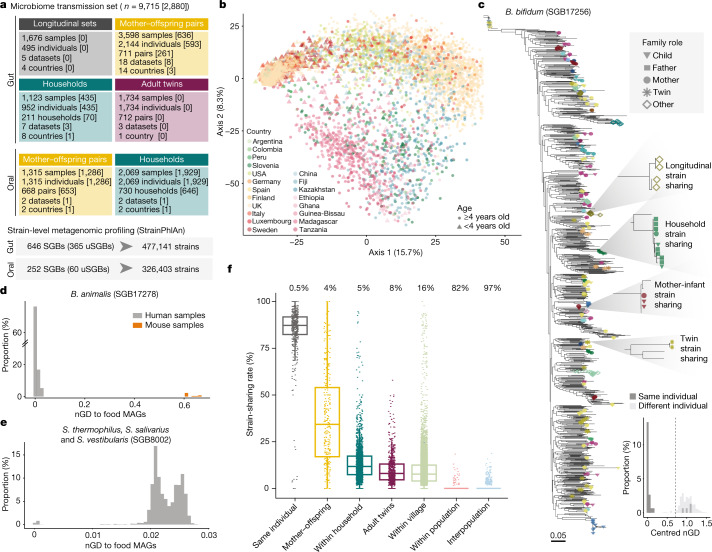
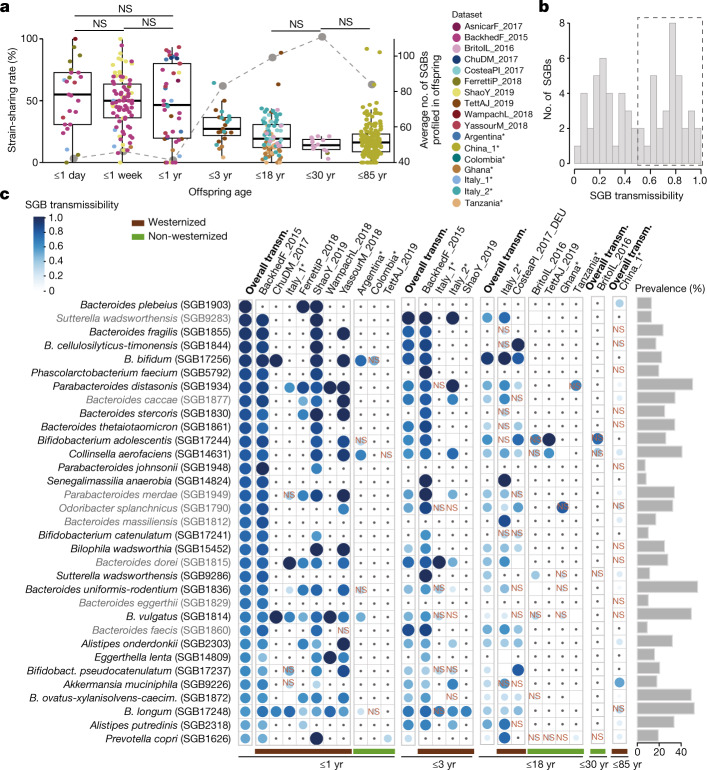
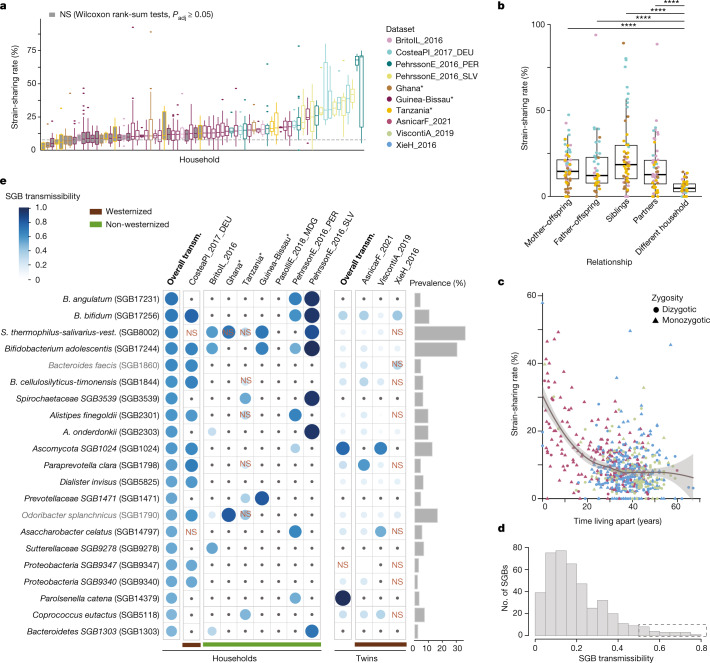
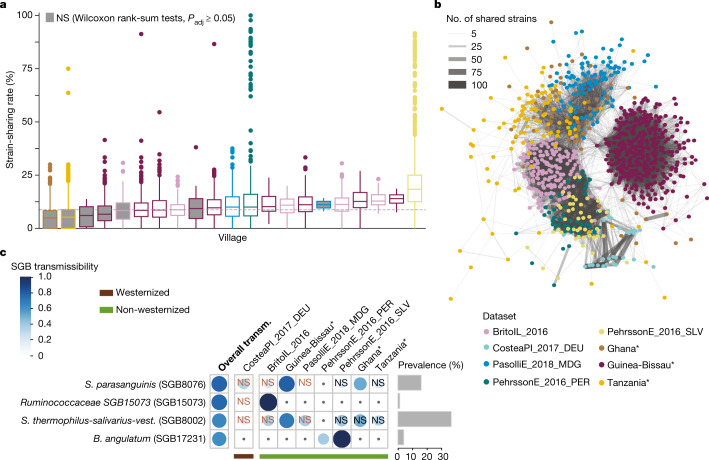
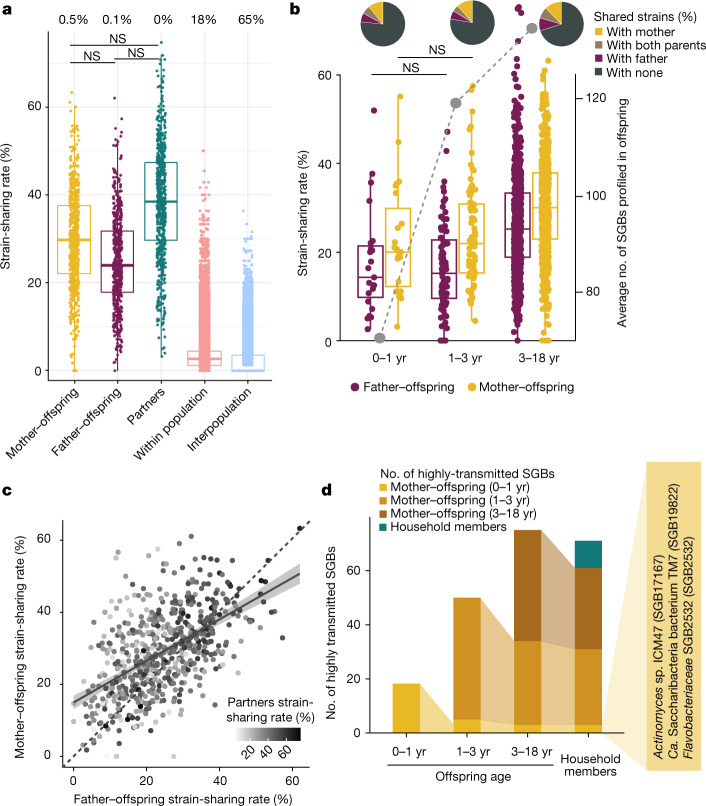
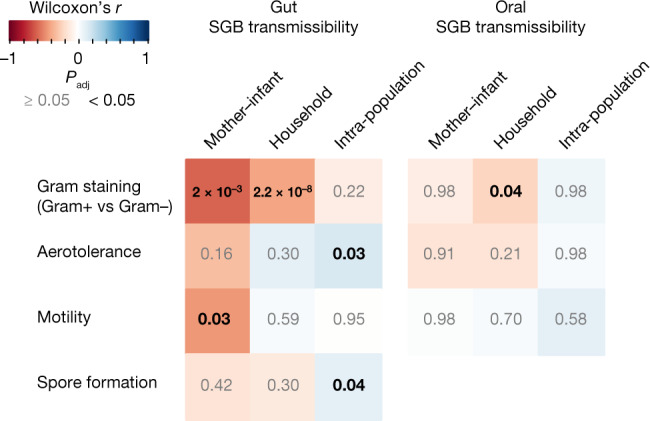
The human microbiome is an integral component of the human body and a co-determinant of several health conditions 1,2 . However, the extent to which interpersonal relations shape the individual genetic makeup of the microbiome and its transmission within and across populations remains largely unknown 3,4 . Here, capitalizing on more than 9,700 human metagenomes and computational strain-level profiling, we detected extensive bacterial strain sharing across individuals (more than 10 million instances) with distinct mother-to-infant, intra-household and intra-population transmission patterns. Mother-to-infant gut microbiome transmission was considerable and stable during infancy (around 50% of the same strains among shared species (strain-sharing rate)) and remained detectable at older ages. By contrast, the transmission of the oral microbiome occurred largely horizontally and was enhanced by the duration of cohabitation. There was substantial strain sharing among cohabiting individuals, with 12% and 32% median strain-sharing rates for the gut and oral microbiomes, and time since cohabitation affected strain sharing more than age or genetics did. Bacterial strain sharing additionally recapitulated host population structures better than species-level profiles did. Finally, distinct taxa appeared as efficient spreaders across transmission modes and were associated with different predicted bacterial phenotypes linked with out-of-host survival capabilities. The extent of microorganism transmission that we describe underscores its relevance in human microbiome studies 5 , especially those on non-infectious, microbiome-associated diseases.
Overview
The claims and statistics of this paper haven’t been checked yet.
Free: it reads the open-access text and checks the first 5 claims that cite a source we can check. Create a free account to check every claim.
Integrity signals
Registry
Cites
Statistics
Figures
Verification
Claims the paper makes
The claims and statistics of this paper haven’t been checked yet.
Free: it reads the open-access text and checks the first 5 claims that cite a source we can check. Create a free account to check every claim.
Claims other papers make about this one
Each is checked against this paper’s own text: does it say what the citing paper says it does?
The source backs part of the claim, not all of it — or backs it for a different population, condition or comparison.
In the citing paper
“adult microbial communities seem to be predominantly shaped by prior stochastic environmental exposures, as well as multiple other factors such as diet, antibiotic therapy and host genetics, with direct 'inheritance' from the mother at birth playing a lesser role.”
From Human microbiome myths and misconceptions (2023) · cites this paper as [15]
Experimental — accuracy not yet measuredThe source backs part of the claim, not all of it — or backs it for a different population, condition or comparison.
In the citing paper
“proportionally few microbiota species are truly 'heritable' and persist through from birth to adulthood in the offspring 15,16 .”
From Human microbiome myths and misconceptions (2023) · cites this paper as [15]
Experimental — accuracy not yet measuredThe cited source says what the claim attributes to it.
In the citing paper
“Although some microbes are directly transferred from mother to baby during birth 14,15 ,”
From Human microbiome myths and misconceptions (2023) · cites this paper as [15]
The cited source says what the claim attributes to it.
In the citing paper
“However, the recently described horizontal and vertical person-to-person microbial transmission 42 is likely not the only source of microbiome diversity, 43”
From Unexplored microbial diversity from 2,500 food metagenomes and links with the human microbiome. (2024) · cites this paper as [42]
The cited source says what the claim attributes to it.
In the citing paper
“A large fraction of the infant gut microbiome contained food SGBs (mean = 56%, Figure 5C), despite direct acquisition from food being only one of the possible routes of transmission (e.g., vertical and horizontal transmission 42,44,122 ).”
From Unexplored microbial diversity from 2,500 food metagenomes and links with the human microbiome. (2024) · cites this paper as [42]
2 more claims about this paper
Create a free account to see every claim other papers make about this one.
Self-check
Percentages, sums and reported differences re-computed from the paper’s own numbers.
The self-check needs the paper’s full text.
Citations
Cites
Fast gapped-read alignment with Bowtie 2
Langmead, B., & Salzberg, S. L. (2012) · Nature Methods · doi:10.1038/nmeth.1923 · Cited by 56,400 · cited 1×
“This was done by a procedure that first divided core genes into fragments of 150 nt and then aligned the fragments against the genomes of all SGBs using Bowtie2 (version 2.3.5.1; -sensitive option) 66 .”
MethodInfluentialphyloseq: An R Package for Reproducible Interactive Analysis and Graphics of Microbiome Census Data
McMurdie, P. J., & Holmes, S. (2013) · PLoS ONE · doi:10.1371/journal.pone.0061217 · Cited by 21,322 · cited 1×
“28.0) 126 , using one randomly selected sample per individual ( n = 4,840 gut samples, n = 2,069 oral samples).”
MethodInfluentialProkka: rapid prokaryotic genome annotation
Seemann, T. (2014) · Bioinformatics · doi:10.1093/bioinformatics/btu153 · Cited by 18,818
Fast and sensitive protein alignment using DIAMOND
Buchfink, B., Xie, C., & Huson, D. H. (2015) · Nature Methods · doi:10.1038/nmeth.3176 · Cited by 14,201 · cited 1×
“Coding sequences were then assigned to a UniRef90 cluster 90 by performing a Diamond search (version 0.9.24) 91 of the coding sequences against the UniRef90 database (version 201906) and assigning a UniRef90 ID if the mean sequence identity to the centroid sequence was above 90% and covered more…”
MethodInfluentialParks, D. H., Imelfort, M., Skennerton, C. T., Hugenholtz, P., & Tyson, G. W. (2015) · Genome Research · doi:10.1101/gr.186072.114 · Cited by 12,496
Diet rapidly and reproducibly alters the human gut microbiome
David, L. A., Maurice, C. F., Carmody, R. N., Gootenberg, D. B., Button, J. E., Wolfe, B. E., Ling, A. V., Devlin, A. S., Varma, Y., Fischbach, M. A., et al. (2014) · Nature · doi:10.1038/nature12820 · Cited by 10,100 · cited 1×
“711 pairs [261] 18 datasets [8] 14 countries [3]”
Human gut microbiome viewed across age and geography
Yatsunenko, T., Rey, F. E., Manary, M. J., Trehan, I., Dominguez-Bello, M. G., Contreras, M., Magris, M., Hidalgo, G., Baldassano, R. N., Anokhin, A. P., et al. (2012) · Nature · doi:10.1038/nature11053 · Cited by 7,815 · cited 3×
“3e) in concordance with their divergent microbiome composition 30,45,50,51 .”
BackgroundInfluentialMMseqs2 enables sensitive protein sequence searching for the analysis of massive data sets
Steinegger, M., & Söding, J. (2017) · Nature Biotechnology · doi:10.1038/nbt.3988 · Cited by 4,840
metaSPAdes: a new versatile metagenomic assembler
Nurk, S., Meleshko, D., Korobeynikov, A., & Pevzner, P. A. (2017) · Genome Research · doi:10.1101/gr.213959.116 · Cited by 4,496 · cited 1×
“MAGs from the Italian mother–infant dataset, and those of non-human hosts were assembled using MEGAHIT 85 , while those of the Italian centenarian dataset and non-westernized populations were assembled with metaSPAdes 86 , using default parameters in both cases.”
MethodKang, D. D., Li, F., Kirton, E., Thomas, A., Egan, R., An, H., & Wang, Z. (2019) · PeerJ · doi:10.7717/peerj.7359 · Cited by 3,750 · cited 1×
“Assembled contigs longer than 1,500 nucleotides were binned into MAGs using MetaBAT2 87 .”
Method
Research works printed but not linked: 2
- Bergey, D. H. et al. Bergey’s Manual of Systematic Bacteriology (Lippincott Raven, 1989).
- Csardi G Nepusz T The igraph software package for complex network research InterJournal Complex Syst. 2006 1695 1 9
Cited by
Discovery of antimicrobial peptides in the global microbiome with machine learning
Santos-Júnior, C. D., Torres, M. D. T., Duan, Y., Rodríguez del Río, Á., Schmidt, T. S. B., Chong, H., Fullam, A., Kuhn, M., Zhu, C., Houseman, A., et al. (2024) · Cell · doi:10.1016/j.cell.2024.05.013 · Cited by 419
Key determinants of success in fecal microbiota transplantation: From microbiome to clinic
Porcari, S., Benech, N., Valles-Colomer, M., Segata, N., Gasbarrini, A., Cammarota, G., Sokol, H., & Ianiro, G. (2023) · Cell Host & Microbe · doi:10.1016/j.chom.2023.03.020 · Cited by 331
Self-citationMa, Z., Zuo, T., Frey, N., & Rangrez, A. Y. (2024) · Signal Transduction and Targeted Therapy · doi:10.1038/s41392-024-01946-6 · Cited by 259
“616,617 This gives rise to another concept: the social microbiome, which encapsulates the intricate interplay of microbial communities across a host ’ s social fabric, shaping the landscape of health and disease.”
BackgroundAn ANI gap within bacterial species that advances the definitions of intra-species units
Rodriguez-R, L. M., Conrad, R. E., Viver, T., Feistel, D. J., Lindner, B. G., Venter, S. N., Orellana, L. H., Amann, R., Rossello-Mora, R., & Konstantinidis, K. T. (2024) · mBio · doi:10.1128/mbio.02696-23 · Cited by 210
“15 microbiome (38) have also revealed distinct intra-species units closely matching the 99.”
BackgroundUtilization of the microbiome in personalized medicine
Ratiner, K., Ciocan, D., Abdeen, S. K., & Elinav, E. (2024) · Nature Reviews Microbiology · doi:10.1038/s41579-023-00998-9 · Cited by 170
“Whereas the host genome is largely determined by parental genomes, the human microbiome is constantly evolving and displays significant personalization and temporal variability 3–5 .”
Examining the healthy human microbiome concept
Joos, R., Boucher, K., Lavelle, A., Arumugam, M., Blaser, M. J., Claesson, M. J., Clarke, G., Cotter, P. D., De Sordi, L., Dominguez-Bello, M. G., et al. (2025) · Nature Reviews Microbiology · doi:10.1038/s41579-024-01107-0 · Cited by 166
“For faecal microbiome studies, emerging research indicates that going beyond species to capture strain-level information 136,137 , as well as genomic detail such as structural variants 138 and single-nucleotide polymorphisms (SNPs) 139 , is important to understand the association of gut microbiomes…”
Self-citationHuman microbiome myths and misconceptions
Walker, A. W., & Hoyles, L. (2023) · Nature Microbiology · doi:10.1038/s41564-023-01426-7 · Cited by 163
Role of the intestinal microbiome and its therapeutic intervention in cardiovascular disorder
Luqman, A., Hassan, A., Ullah, M., Naseem, S., Ullah, M., Zhang, L., Din, A. U., Ullah, K., Ahmad, W., & Wang, G. (2024) · Frontiers in Immunology · doi:10.3389/fimmu.2024.1321395 · Cited by 157
Enterosignatures define common bacterial guilds in the human gut microbiome
Frioux, C., Ansorge, R., Özkurt, E., Nedjad, C. G., Fritscher, J., Quince, C., Waszak, S. M., & Hildebrand, F. (2023) · Cell Host & Microbe · doi:10.1016/j.chom.2023.05.024 · Cited by 154
“REAGENT or RESOURCE SOURCE IDENTIFIER Deposited data Deposited data This paper DOI: 10.5281/zenodo.7923559 Previously sequenced cohort Hildebrand et al.1 SRA: PRJEB41102 Previously sequenced cohort (Kazakhstan) Kushugulova et al.44 SRA: PRJEB17632 Previously sequenced cohort (Germany) Willmann et al.45 SRA: PRJEB10391…”
MethodInfluentialMicrobial transmission in the social microbiome and host health and disease
Sarkar, A., McInroy, C. J. A., Harty, S., Raulo, A., Ibata, N. G. O., Valles‐Colomer, M., Johnson, K. V. ‐., Brito, I., Henrich, J., Archie, E. A., et al. (2024) · Cell · doi:10.1016/j.cell.2023.12.014 · Cited by 152
Self-citationUnexplored microbial diversity from 2,500 food metagenomes and links with the human microbiome.
Carlino, N., Blanco-Míguez, A., Punčochář, M., Mengoni, C., Pinto, F., Tatti, A., Manghi, P., Armanini, F., Avagliano, M., Barcenilla, C., et al. (2024) · Cell · doi:10.1016/j.cell.2024.07.039 · Cited by 146
“Alarge fractionoftheinfantgut microbiome containedfood SGBs (mean = 56%, Figure 5C), despite direct acquisition from food being only one of the possible routes of transmission (e.g., vertical and horizontal transmission 42,44,122 ).”
Self-citationGenome-resolved metagenomics: a game changer for microbiome medicine
Kim, N., Ma, J., Kim, W., Kim, J., Belenky, P. A., & Lee, I. (2024) · Experimental & Molecular Medicine · doi:10.1038/s12276-024-01262-7 · Cited by 144
“In addition to individual-level studies, metagenotyping is instrumental for examining interindividual microbial transfers, including vertical transmission from mothers to infants and microbial sharing within households or larger populations 16,134 .”
BackgroundStarter Culture Development and Innovation for Novel Fermented Foods
Gänzle, M. G., Monnin, L., Zheng, J., Zhang, L., Coton, M., Sicard, D., & Walter, J. (2023) · Annual Review of Food Science and Technology · doi:10.1146/annurev-food-072023-034207 · Cited by 143
Sessitsch, A., Wakelin, S. A., Schloter, M., Maguin, E., Cernava, T., Champomier‐Vergès, M., Charles, T. C., Cotter, P. D., Ferrocino, I., Kriaa, A., et al. (2023) · Microbiology and Molecular Biology Reviews · doi:10.1128/mmbr.00212-22 · Cited by 132
“(182) analyzed more than 9,700 human metagenomes and Microbiome Interconnectedness Microbiology and Molecular Biology Reviews”
BackgroundPiperni, E., Nguyen, L. H., Manghi, P., Kim, H., Pasolli, E., Andreu‐Sánchez, S., Arrè, A., Bermingham, K. M., Blanco‐Míguez, A., Manara, S., et al. (2024) · Cell · doi:10.1016/j.cell.2024.06.018 · Cited by 115
“Overall, our results offer an improved understanding of the complex interplay between the human gut microbiome, diet, and cardiometabolic diseases 40 involving the currently over-looked Blastocystis species.”
Self-citationCardiometabolic health, diet and the gut microbiome: a meta-omics perspective
Valles-Colomer, M., Menni, C., Berry, S. E., Valdes, A. M., Spector, T. D., & Segata, N. (2023) · Nature Medicine · doi:10.1038/s41591-023-02260-4 · Cited by 114
Self-citationThe microbiome: an integral player in immune homeostasis and inflammation in the respiratory tract
Perdijk, O., Azzoni, R., & Marsland, B. J. (2023) · Physiological Reviews · doi:10.1152/physrev.00020.2023 · Cited by 105
Tierney, B. T., Kim, J., Overbey, E. G., Ryon, K. A., Foox, J., Sierra, M. A., Bhattacharya, C., Damle, N., Najjar, D., Park, J., et al. (2024) · Nature Microbiology · doi:10.1038/s41564-024-01635-8 · Cited by 100
Jia, M., Zhu, S., Xue, M., Chen, H., Xu, J., Song, M., Tang, Y., Liu, X., Tao, Y., Zhang, T., et al. (2024) · Nature Microbiology · doi:10.1038/s41564-024-01723-9 · Cited by 96
Zhu, J., Sun, C., Li, M., Hu, G., Zhao, X., & Chen, W. (2023) · Gut · doi:10.1136/gutjnl-2023-330168 · Cited by 93
Melanoma and microbiota: Current understanding and future directions
Routy, B., Jackson, T., Mählmann, L., Baumgartner, C. K., Blaser, M., Byrd, A., Corvaia, N., Couts, K., Davar, D., Derosa, L., et al. (2024) · Cancer Cell · doi:10.1016/j.ccell.2023.12.003 · Cited by 89
Primary succession of Bifidobacteria drives pathogen resistance in neonatal microbiota assembly
Shao, Y., Garcia-Mauriño, C., Clare, S., Dawson, N. J. R., Mu, A., Adoum, A., Harcourt, K., Liu, J., Browne, H. P., Stares, M. D., et al. (2024) · Nature Microbiology · doi:10.1038/s41564-024-01804-9 · Cited by 75
“This result, consistent with a recent global meta-analysis 19 , strongly indicates the maternal gut microbiota as the main source of the BL community state (Extended Data Fig.”
MethodResultSelma‐Royo, M., Dubois, L., Manara, S., Armanini, F., Cabrera‐Rubio, R., Valles‐Colomer, M., González, S., Llorca, A. P., Escuriet, R., Bode, L., et al. (2024) · Cell Host & Microbe · doi:10.1016/j.chom.2024.05.005 · Cited by 84
Self-citationOdendaal, M.-L., Piters, W. A. A. D. S., Franz, E., Chu, M. L. J. N., Groot, J. A., van Logchem, E. M., Hasrat, R., Kuiling, S., Pijnacker, R., Mariman, R., et al. (2024) · Cell · doi:10.1016/j.cell.2024.07.008 · Cited by 84
Zhang, Y., Shen, Y., Liufu, N., Liu, L., Li, W., Shi, Z., Zheng, H., Mei, X., Chen, C.-Y., Jiang, Z., et al. (2023) · Molecular Psychiatry · doi:10.1038/s41380-023-02216-7 · Cited by 83
“We wrote the manuscript according to ARRIVE guidelines.”
Andreu-Sánchez, S., Blanco-Míguez, A., Wang, D., Golzato, D., Manghi, P., Heidrich, V., Fackelmann, G., Zhernakova, D. V., Kurilshikov, A., Valles-Colomer, M., et al. (2025) · Cell · doi:10.1016/j.cell.2025.04.014 · Cited by 81
Self-citationA perspective on green, blue, and grey spaces, biodiversity, microbiota, and human health
Potter, J. D., Brooks, C., Donovan, G. H., Cunningham, C. W., & Douwes, J. E. (2023) · The Science of The Total Environment · doi:10.1016/j.scitotenv.2023.164772 · Cited by 83
Gut micro-organisms associated with health, nutrition and dietary interventions
Asnicar, F., Manghi, P., Fackelmann, G., Baldanzi, G., Bakker, E., Ricci, L., Piccinno, G., Piperni, E., Mladenović, K., Amati, F., et al. (2025) · Nature · doi:10.1038/s41586-025-09854-7 · Cited by 82
“…microbiome variability, the existence of several distinct health-associated microbiome configurations 19,46 , the personalized nature of diet’s impact on the gut microbiome 16,47 , the diversity of dietary regimes 48,49 and the effect of social interaction on microbiome transmission 44 .”
Self-citationThe relationship between the gut microbiota and thyroid disorders
Ludgate, M., Masetti, G., & Soares, P. (2024) · Nature Reviews Endocrinology · doi:10.1038/s41574-024-01003-w · Cited by 80
“Horizontal transmission of micro-organisms has also been described, with influences from the family and wider community 52 .”
Self-citationBastiaanssen, T. F. S., Quinn, T. P., & Loughman, A. (2023) · Nature Mental Health · doi:10.1038/s44220-023-00148-3 · Cited by 76
“58 and the section on fecal microbiota transplantation in the companion paper 25 ).”
BackgroundRoager, H. M., Stanton, C., & Hall, L. J. (2023) · Gut Microbes · doi:10.1080/19490976.2023.2192151 · Cited by 75
The role of animal hosts in shaping gut microbiome variation
Maritan, E., Quagliariello, A., Frago, E., Patarnello, T., & Martino, M. E. (2024) · Philosophical Transactions of the Royal Society B Biological Sciences · doi:10.1098/rstb.2023.0071 · Cited by 75
“In humans, mother-to-infant transmission is one of the most influential variables in microbiome composition, as it has been estimated that approximately 50% of the total infant gut microbiome shares exactly the same bacterial strains as the respective mothers [193].”
BackgroundResultThe microbiota-gut-brain axis in stress and depression
Tan, H.-E. (2023) · Frontiers in Neuroscience · doi:10.3389/fnins.2023.1151478 · Cited by 72
Gut microbiota strain richness is species specific and affects engraftment
Chen-Liaw, A., Aggarwala, V., Mogno, I., Haifer, C., Li, Z., Eggers, J., Helmus, D. S., Hart, A. B., Wehkamp, J., Lamousé-Smith, E. S. N., et al. (2024) · Nature · doi:10.1038/s41586-024-08242-x · Cited by 73
Paternal and induced gut microbiota seeding complement mother-to-infant transmission
Dubois, L., Valles‐Colomer, M., Ponsero, A. J., Helve, O., Andersson, S., Kolho, K.-L., Asnicar, F., Korpela, K., Salonen, A., Segata, N., et al. (2024) · Cell Host & Microbe · doi:10.1016/j.chom.2024.05.004 · Cited by 73
Self-citationPorcari, S., CICCARESE, C., Heidrich, V., Rondinella, D., Quaranta, G., Severino, A., Arduini, D., Buti, S., Fornarini, G., Primi, F., et al. (2026) · Nature Medicine · doi:10.1038/s41591-025-04189-2 · Cited by 71
“…population (as some strains might be clonally spreading in a population, and there can be direct or indirect social interactions within populations leading to strain transmission 46 ); it can be applied also in the case of p-FMT patients to verify the absence of a donor’s effects in this arm.”
Self-citationPacheco‐Yanes, J., Reynolds, E. C., Li, J., & Mariño, E. (2023) · Trends in Molecular Medicine · doi:10.1016/j.molmed.2023.08.006 · Cited by 69
Maternal-infant antibiotic resistance genes transference: what do we know?
Samarra, A., Esteban-Torres, M., Cabrera‐Rubio, R., Bernabeu, M., Arboleya, S., Gueimonde, M., & Collado, M. C. (2023) · Gut Microbes · doi:10.1080/19490976.2023.2194797 · Cited by 63
Self-citationBarker‐Tejeda, T. C., Zubeldia‐Varela, E., Macías‐Camero, A., Alonso, L., Martín‐Antoniano, I. A., Rey-Stolle, F., Mera‐Berriatua, L., Bazire, R., Cabrera‐Freitag, P., Shanmuganathan, M., et al. (2024) · Nature Communications · doi:10.1038/s41467-024-47182-y · Cited by 58
“Several studies have applied genomics to analyze the microbiome in infants and their mothers and, to a lesser extent, the elderly generations 20 – 22 .”
Early life microbiome influences on development of the mucosal innate immune system
Ignácio, A., Czyz, S., & McCoy, K. D. (2024) · Seminars in Immunology · doi:10.1016/j.smim.2024.101885 · Cited by 59
Korpela, K., Hurley, S., Ahearn-Ford, S., Franklin, R., Byrne, S., Lunjani, N., Forde, B. M., Neogi, U., Venter, C., Walter, J., et al. (2024) · Allergy · doi:10.1111/all.16069 · Cited by 57
“26 Indeed, reduced external exposures during pandemic-enforced social distancing measures was associated with increased relative abundance of beneficial bifidobacteria.”
Fecal microbiota transplantation in clinical practice: Present controversies and future prospects
Tian, H., Wang, X., Fang, Z., Li, L., Wu, C., Bi, D., Li, N., Chen, Q., & Qin, H. (2024) · hLife · doi:10.1016/j.hlife.2024.01.006 · Cited by 56
“Its ef fi cacy has been validated through extensive utilization in prior studies focused on strain colonization [48,49].”
Self-citationHuman microbiome acquisition and transmission
Heidrich, V., Valles‐Colomer, M., & Segata, N. (2025) · Nature Reviews Microbiology · doi:10.1038/s41579-025-01166-x · Cited by 56
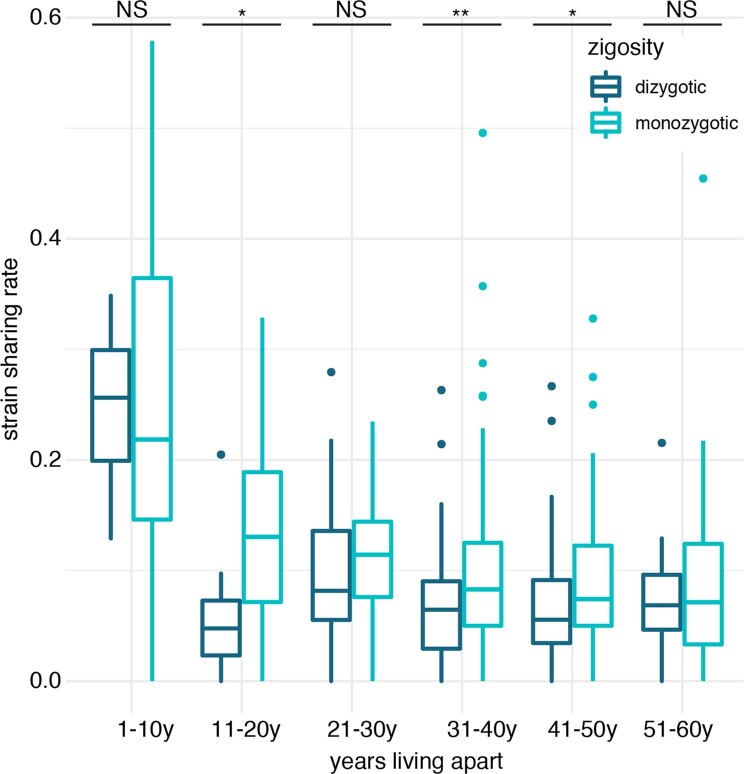
“…to shaping the gut microbiome in adults emerged from an analysis of strain-sharing patterns between twins: whereas age was negatively correlated with strain-sharing rates, consistent with the loss of maternally acquired strains, time since moving apart was a much stronger determinant 25 .”
InfluentialSelf-citationGenome-scale models in human metabologenomics
Mardinoglu, A., & Palsson, B. Ø. (2025) · Nature Reviews Genetics · doi:10.1038/s41576-024-00768-0 · Cited by 54
Social and environmental transmission spread different sets of gut microbes in wild mice
Raulo, A., Bürkner, P.-C., Finerty, G. E., Dale, J., Hanski, E., English, H. M., Lamberth, C., Firth, J. A., Coulson, T., & Knowles, S. C. L. (2024) · Nature Ecology & Evolution · doi:10.1038/s41559-024-02381-0 · Cited by 52
“In humans, sharing a living space predicts sharing of gut microorganisms 20–24 , typically much more so than genetic relatedness 21,24 .”
InfluentialFunctional host-specific adaptation of the intestinal microbiome in hominids
Rühlemann, M. C., Bang, C., Gogarten, J. F., Hermes, B. M., Groussin, M., Waschina, S., Poyet, M., Ulrich, M., Akoua-Koffi, C. G., Deschner, T., et al. (2024) · Nature Communications · doi:10.1038/s41467-023-44636-7 · Cited by 52
“However, on species, Dialister invisus , was found to be moderately transmissible between human mother-infant pairs and within households in a large meta-analysis 46 .”
Gut microbiome strain-sharing within isolated village social networks
Beghini, F., Pullman, J., Alexander, M., Shridhar, S. V., Prinster, D., Singh, A., Matute Juárez, R., Airoldi, E. M., Brito, I. L., & Christakis, N. A. (2025) · Nature · doi:10.1038/s41586-024-08222-1 · Cited by 51
Transmission and dynamics of mother-infant gut viruses during pregnancy and early life
Garmaeva, S., Sinha, T., Gulyaeva, A. A., Kuzub, N., Spreckels, J. E., Andreu‐Sánchez, S., Gaćeša, R., Vila, A. V., Brushett, S., Kruk, M., et al. (2024) · Nature Communications · doi:10.1038/s41467-024-45257-4 · Cited by 51
“To de fi ne strain-sharing events within mother-infant pairs, we used an approach similartothatusedinValles-Colomeretal 60 .”
MethodLarge-scale metagenomic analysis of oral microbiomes reveals markers for autism spectrum disorders
Manghi, P., Filosi, M., Zolfo, M., Casten, L. G., García-Valiente, A., Mattevi, S., Heidrich, V., Golzato, D., Perini, S., Thomas, A. M., et al. (2024) · Nature Communications · doi:10.1038/s41467-024-53934-7 · Cited by 53
Self-citationChen, C., Su, Q., Zi, M., Hua, X., & Zhang, Z. (2025) · npj Biofilms and Microbiomes · doi:10.1038/s41522-025-00818-3 · Cited by 51
“While the host genome is largely inherited from parental DNA, the microbiome is highly personalized, characterized by signi fi cant variability across individuals and over time 223,224 .”
A bacterial sialidase mediates early-life colonization by a pioneering gut commensal
Buzun, E., Hsu, C.-Y., Sejane, K., Oles, R. E., Ayala, A. V., Loomis, L. R., Zhao, J., Rossitto, L.-A. M., McGrosso, D., Gonzalez, D. J., et al. (2024) · Cell Host & Microbe · doi:10.1016/j.chom.2023.12.014 · Cited by 49
Dispersion of antimicrobial resistant bacteria in pig farms and in the surrounding environment
Scicchitano, D., Leuzzi, D., Babbi, G., Palladino, G., Turroni, S., Laczny, C. C., Wilmes, P., Correa, F., Leekitcharoenphon, P., Savojardo, C., et al. (2024) · Animal Microbiome · doi:10.1186/s42523-024-00305-8 · Cited by 49
“To gain a deeper understanding of the potential sharing of microbiome components between pig and environmental metagenomes, we performed a strain-level population structure analysis using StrainPhlAn3 [2] as previously described in the work by Valles-Colomer et al. [56].”
MethodLinks between Diet, Intestinal Anaerobes, Microbial Metabolites and Health
Duncan, S. H., Conti, E., Ricci, L., & Walker, A. W. (2023) · Biomedicines · doi:10.3390/biomedicines11051338 · Cited by 46
Self-citationFrom hype to hope: Considerations in conducting robust microbiome science
McGuinness, A. J., Stinson, L. F., Snelson, M., Loughman, A., Stringer, A. M., Hannan, A. J., Cowan, C. S. M., Jama, H. A., Caparros-Martin, J. A., West, M. L., et al. (2023) · Brain Behavior and Immunity · doi:10.1016/j.bbi.2023.09.022 · Cited by 47
Wang, S., Liu, Y., Tam, W. H., Ching, J. Y. L., Xu, W., Yan, S., Qin, B., Lin, L., Peng, Y., Zhu, J., et al. (2024) · Cell Host & Microbe · doi:10.1016/j.chom.2024.06.005 · Cited by 46
Daily skin-to-skin contact alters microbiota development in healthy full-term infants
Eckermann, H. A., Meijer, J., Cooijmans, K. H. M., Lahti, L., & de Weerth, C. (2024) · Gut Microbes · doi:10.1080/19490976.2023.2295403 · Cited by 45
“9–11 Subsequently, other household members, close contacts, and pets may become sources of bacteria.”
BackgroundBruno, A., Arnoldi, I., Barzaghi, B., Boffi, M., Casiraghi, M., Colombo, B., Gennaro, P. D., Epis, S., Facciotti, F., Ferrari, N., et al. (2024) · iScience · doi:10.1016/j.isci.2024.110959 · Cited by 44
Wilson, B. C., Zuppi, M., Derraik, J. G. B., Albert, B. B., Tweedie‐Cullen, R. Y., Leong, K. S. W., Beck, K. L., Vatanen, T., O'Sullivan, J. M., Cutfield, W. S., et al. (2025) · Nature Communications · doi:10.1038/s41467-025-62752-4 · Cited by 44
Seed-mediated vertical transmission of Pantoea core endophytes
Sanz-Puente, I., Redondo-Salvo, S., Torres‐Cortés, G., de Toro, M., Fernandes, S., Börner, A., Lorenzo, Ó., de la Cruz, F., & Robledo, M. (2025) · The ISME Journal · doi:10.1093/ismejo/wraf192 · Cited by 43
“Similarly, some microorganisms are directly transferred from mother to baby during birth, although few persist from birth to adulthood in the offspring [60].”
Profiling lateral gene transfer events in the human microbiome using WAAFLE
Hsu, T. Y., Nzabarushimana, É., Wong, D. H.-J., Luo, C., Beiko, R. G., Langille, M. G. I., Huttenhower, C., Nguyen, L. H., & Franzosa, E. A. (2025) · Nature Microbiology · doi:10.1038/s41564-024-01881-w · Cited by 41
Zhernakova, A., Yassour, M., Hall, L. J., & Collado, M. C. (2025) · Cell Host & Microbe · doi:10.1016/j.chom.2025.05.014 · Cited by 42
Self-citationHill, C. A., Casterline, B. W., Valguarnera, E., Hecht, A. L., Shepherd, E. S., Sonnenburg, J. L., & Wardenburg, J. B. (2024) · Nature Microbiology · doi:10.1038/s41564-023-01559-9 · Cited by 40
“Analysis of the human microbiome shows that B. fragilis is highly transmissible from mother to offspring 2 , with evidence that strain-level colonization remains stable in adulthood 4 .”
Segatella clades adopt distinct roles within a single individual’s gut
Xiao, X., Singh, A., Giometto, A., & Brito, I. (2024) · npj Biofilms and Microbiomes · doi:10.1038/s41522-024-00590-w · Cited by 43
“Within the human gut microbiome, each species is often represented by numerous strains exhibiting genomic and functional diversity 14 – 17 .”
Nooij, S., Plomp, N., Sanders, I. M. J. G., Schout, L., van der Meulen, A. E., Terveer, E. M., Norman, J. M., Karcher, N., Larralde, M., Vossen, R. H. A. M., et al. (2025) · Nature Communications · doi:10.1038/s41467-025-56449-x · Cited by 41
“This variation could be partly explained by Westernization status; this binary classi fi cation of Wes-ternized/non-Westernizedlifestylesisbasedon,amongothers,access to medical care and pharmaceuticals, livestock exposure and diet 22 .”
Clinical implications of maternal multikingdom transmissions and early-life microbiota
Zeng, S., Zhou, M., Mu, D., & Wang, S. (2025) · The Lancet Microbe · doi:10.1016/j.lanmic.2024.101042 · Cited by 38
Muhummed, A. M., Lanker, K. C., Yersin, S., Zinsstag, J., & Vonaesch, P. (2025) · Microbiome · doi:10.1186/s40168-025-02231-6 · Cited by 40
“This work has shown that there is extensive sharing of strains within each domain, i.e. between family members [19, 20], mothers and their babies [1–3, 21] , including through bacteria Strains can also be shared between domains, i.e. between humans and animals, especially if they are close in their…”
Impact of breastfeeding and other early-life factors on the development of the oral microbiome
Arishi, R. A., Lai, C. T., Geddes, D. T., & Stinson, L. F. (2023) · Frontiers in Microbiology · doi:10.3389/fmicb.2023.1236601 · Cited by 37
“Parents are also a major source of vertical transmission of oral strains to their infants, with recent data demonstrating a higher degree of strain sharing between mothers and infants than between fathers and infants (Valles-Colomer et al., 2023).”
BackgroundFecal microbiota transplantation, a tool to transfer healthy longevity
Novelle, M. G., Naranjo-Martínez, B., Lopez-Canovas, J. L., & Díaz‐Ruiz, A. (2024) · Ageing Research Reviews · doi:10.1016/j.arr.2024.102585 · Cited by 37
Integration of polygenic and gut metagenomic risk prediction for common diseases
Liu, Y., Ritchie, S. C., Teo, S. M., Ruuskanen, M. O., Kambur, O., Zhu, Q., Sanders, J. G., Vázquez‐Baeza, Y., Verspoor, K. M., Jousilahti, P., et al. (2024) · Nature Aging · doi:10.1038/s43587-024-00590-7 · Cited by 35
“Although the gut microbiome remains largely stable during adulthood, the microbial community is influenced by environment and cohabitation in the long term 38,68,69 ; thus their effects on future disease may change from what we estimated here.”
BackgroundVentura, E. F., Esteban-Torres, M., Gueimonde, M., van Sinderen, D., Koren, O., Hall, L. J., Segata, N., Valles‐Colomer, M., & Collado, M. C. (2025) · npj Biofilms and Microbiomes · doi:10.1038/s41522-025-00720-y · Cited by 36
“…encompassed a range of sample sizes, including less than 20 mother-infant pairs 18,25,80 – 92 , between 20 and 50 pairs 15,19,93 – 98 , 50 to 100 pairs 39,99 – 103 and with more than 100 pairs 13,14,104,105 , including 24 studies that had followed a longitudinal prospective study design 13 – 15”
InfluentialSelf-citationA gut (microbiome) feeling about addiction: Interactions with stress and social systems
García‐Cabrerizo, R., & Cryan, J. F. (2024) · Neurobiology of Stress · doi:10.1016/j.ynstr.2024.100629 · Cited by 36
Dual-functional core–shell microneedle patches for oral ulcers treatment
Tang, Q. H., Song, C., Wu, X., Chen, H., Yu, C., Zhao, Y., & Qian, X. (2024) · Chemical Engineering Journal · doi:10.1016/j.cej.2024.157041 · Cited by 33
Gut microbiome evolution from infancy to 8 years of age
Sawhney, S. S., Thänert, R., Thänert, A., Hall-Moore, C. M., Ndao, I. M., Mahmud, B., Warner, B. B., Tarr, P. I., & Dantas, G. A. (2025) · Nature Medicine · doi:10.1038/s41591-025-03610-0 · Cited by 35
“Of these, 226 RGs were shared between mothers and their infants, reflecting prior literature highlighting the maternal microbiome as a source for strain seeding within the infant microbiome 22,52 .”
Within-host bacterial evolution and the emergence of pathogenicity
Tonkin‐Hill, G. Q., Ruis, C., Bentley, S. D., Lythgoe, K., & Bryant, J. M. (2025) · Nature Microbiology · doi:10.1038/s41564-025-02036-1 · Cited by 33
“Moreover, deep population sequencing and metagenomics are increasingly being used to track the transmission of individual bacterial strains within complex communities, both between hosts and within hosts across different anatomical sites 7 .”
InfluentialRoutes of dispersion of antibiotic resistance genes from the poultry farm system
Scicchitano, D., Babbi, G., Palladino, G., Turroni, S., Mekonnen, Y. T., Laczny, C. C., Wilmes, P., Leekitcharoenphon, P., Castagnetti, A., D’Amico, F., et al. (2023) · The Science of The Total Environment · doi:10.1016/j.scitotenv.2023.169086 · Cited by 32
Impact of occupational pesticide exposure on the human gut microbiome
Gois, M. F. B., Fernández-Pato, A., Huss, A., Gaćeša, R., Wijmenga, C., Weersma, R. K., Fu, J., Vermeulen, R. C. H., Zhernakova, A., Lenters, V. C., et al. (2023) · Frontiers in Microbiology · doi:10.3389/fmicb.2023.1223120 · Cited by 31
Stankevič, E., Kern, T., Borisevich, D., Poulsen, C. S., Madsen, A. L., Hansen, T. H., Jonsson, A. E., Schubert, M., Nygaard, N., Nielsen, T., et al. (2024) · Scientific Reports · doi:10.1038/s41598-024-65538-8 · Cited by 32
Gut microbiota in inflammation and colorectal cancer: A potential Toolbox for Clinicians
Grellier, N., Severino, A., Archilei, S., Kim, J., Gasbarrini, A., Cammarota, G., Porcari, S., & Benech, N. (2024) · Best Practice & Research Clinical Gastroenterology · doi:10.1016/j.bpg.2024.101942 · Cited by 31
The role of gut microbiota in cerebrovascular disease and related dementia
Cuartero, M. I., García‐Culebras, A., Nieto‐Vaquero, C., Fraga, E., Torres‐López, C., Pradillo, J. M., Lizasoaín, I., & Moro, M. Á. (2023) · British Journal of Pharmacology · doi:10.1111/bph.16167 · Cited by 31
Stringer, A. M., Hargreaves, B. M., Mendes, R. A., Blijlevens, N. M. A., Bruno, J. S., Joyce, P. M., Kamath, S., Laheij, A. M. G. A., Ottaviani, G., Secombe, K. R., et al. (2024) · Supportive Care in Cancer · doi:10.1007/s00520-024-08752-4 · Cited by 30
“…on several mucosal and skin surfaces, the immune system is tolerant of these commensal microorganisms, and this symbiotic alliance enables activation of protective immune responses towards pathogens and maintenance of immune tolerance responses to harmless (commensal) antigens [8, 9].”
BackgroundBaby-to-baby strain transmission shapes the developing gut microbiome
Ricci, L., Heidrich, V., Punčochář, M., Armanini, F., Ciciani, M., Nabinejad, A., FAZAELI, F., Piperni, E., Servais, C., Pinto, F., et al. (2026) · Nature · doi:10.1038/s41586-025-09983-z · Cited by 31
“Metagenomic assembly also validated such transmission patterns for the limited number of strains (8 out of 19 StrainPhlAn-positive samples) that could be reconstructed into draft genomes of sufficient quality, with high genomic similarity between assemblies from samples with the same strain according to StrainPhlAn (p…”
InfluentialSelf-citationDeterminants of microbial colonization in the premature gut
Chen, X., & Shi, Y. (2023) · Molecular Medicine · doi:10.1186/s10020-023-00689-4 · Cited by 31
“The GM can be transmitted vertically from mother to infant via lactation (Jost et al. 2014; Valles-Colomer et al. 2023; Zhong et al. 2022), and the HBM microbiota may originate from the maternal gastrointestinal tract (Greiner et al. 2022).”
BackgroundWang, X., Zhao, D., Bi, D., Li, L., Tian, H., Yin, F., Zuo, T., Ianiro, G., Li, N., Chen, Q., et al. (2025) · Science Bulletin · doi:10.1016/j.scib.2025.01.029 · Cited by 31
Self-citationCayman enables large-scale analysis of gut microbiome carbohydrate-active enzyme repertoires
Ducarmon, Q. R., Karcher, N., Giri, S., Tytgat, H. L. P., Delannoy-Bruno, O., Pekel, S., Springer, F., Wörz, P., Schudoma, C., Typas, A., et al. (2026) · Nature Microbiology · doi:10.1038/s41564-026-02318-2 · Cited by 31
“Binary classification of Western versus non-Western was obtained from this resource, and classification is based on the adoption of a westernized lifestyle encompassing different characteristics, as was previously explained in detail 56 .”
Effect of Probiotic Supplements on the Oral Microbiota—A Narrative Review
Lundtorp-Olsen, C., Markvart, M., Twetman, S., & Belstrøm, D. (2024) · Pathogens · doi:10.3390/pathogens13050419 · Cited by 31
“In continuation, metagenomic sequencing has enabled strain-level taxonomic resolution [20].”
BackgroundA genome catalog of the early-life human skin microbiome
Shen, Z., Robert, L., Stolpman, M., Che, Y., Allen, K. J., Saffery, R., Walsh, A., Young, A., Eckert, J., Deming, C., et al. (2023) · Genome biology · doi:10.1186/s13059-023-03090-w · Cited by 28
Merrick, B., Prossomariti, D., Allen, E. M., Bisnauthsing, K. N., Kertanegara, M., Sergaki, C., Guennec, A. D. L., Delord, M., Bell, J. T., Conte, M. R., et al. (2025) · Journal of Infection · doi:10.1016/j.jinf.2025.106504 · Cited by 28
Maternal transmission gives way to social transmission during gut microbiota assembly in wild mice
Wanelik, K. M., Raulo, A., Troitsky, T. S., Husby, A., & Knowles, S. C. L. (2023) · Animal Microbiome · doi:10.1186/s42523-023-00247-7 · Cited by 27
Evolution of gut microbiota across honeybee species revealed by comparative metagenomics
Prasad, A., Pallujam, A. D., Siddaganga, R., Suryanarayanan, A., Mazel, F., Brockmann, A., Yek, S. H., & Engel, P. (2025) · Nature Communications · doi:10.1038/s41467-025-64115-5 · Cited by 27
Human and bacterial genetic variation shape oral microbiomes and health
Kamitaki, N., Handsaker, R. E., Hujoel, M. L. A., Mukamel, R. E., Usher, C. L., McCarroll, S. A., & Loh, P. (2026) · Nature · doi:10.1038/s41586-025-10037-7 · Cited by 28
“1a), building on previous work 26,27 .”
Gut microbiota as a sensor of autoimmune response and treatment for rheumatoid arthritis
Lamba, A., & Taneja, V. (2024) · Immunological Reviews · doi:10.1111/imr.13359 · Cited by 26
“56 However, the gut microbiome transmission from mother to infant was detectable even at older ages, suggesting there might be a core microbiome based on genetics or non-inherited maternal antigens (NIMA).”
Zolfo, M., Silverj, A., Blanco‐Míguez, A., Manghi, P., Rota‐Stabelli, O., Heidrich, V., Jensen, J., Maharjan, S., Franzosa, E. A., Menni, C., et al. (2024) · bioRxiv (Cold Spring Harbor Laboratory) · doi:10.1101/2024.02.19.580813 · Cited by 26
“This is similar to what has been found by other studies, both for bacteria and viruses in the human microbiome 52,69–72 .”
Self-citationFecal microbiota transplantation: A new strategy to delay aging
Yan, H., Ren, J., & Liu, G. (2023) · hLife · doi:10.1016/j.hlife.2023.06.002 · Cited by 25
“However, FMT faces several challenges, including the dif fi culty of transferring gut microbes compared to oral microbes [20] and the heterogeneity of the spatial distribution of microorganisms in the host gastrointestinal tract, which reduces its precision [21].”
Carter, K. A., France, M., Rutt, L., Bilski, L., Martinez-Greiwe, S., Regan, M. B., Brotman, R. M., & Ravel, J. (2024) · mSphere · doi:10.1128/msphere.00030-24 · Cited by 25
Prolonged delays in human microbiota transmission after a controlled antibiotic perturbationPreprint
Xue, K. S., Walton, S. J., Goldman, D. A., Morrison, M. L., Verster, A. J., Parrott, A. B., Yu, F. B., Neff, N. F., Rosenberg, N. A., Ross, B. D., et al. (2023) · bioRxiv (Cold Spring Harbor Laboratory) · doi:10.1101/2023.09.26.559480 · Cited by 25
“Understanding these ecological barriers is crucial for understanding how gut bacteria spread between hosts 12–14 and for the design and maintenance of microbiome therapeutics 3,11,15–17 .”
BackgroundSelf-citationPham, V. D., Simpson, D. J. W., & Gänzle, M. G. (2024) · Current Opinion in Food Science · doi:10.1016/j.cofs.2024.101245 · Cited by 24
Assessing the safety of microbiome perturbations
Métris, A., Walker, A. W., Showering, A., Doolan, A., McBain, A. J., Ampatzoglou, A., Murphy, B., O’Neill, C. A., Shortt, C., Darby, E. M., et al. (2025) · Microbial Genomics · doi:10.1099/mgen.0.001405 · Cited by 26
“Birth is the first major transmission event, with a subset of commensal microbes transferring from mother to baby, with further environmental transmission continuing throughout life within family and social networks [25–28].”
Parental diet and offspring health: a role for the gut microbiome via epigenetics
Yang, C., Snelson, M., El‐Osta, A., & Marques, F. Z. (2025) · Nature Reviews Gastroenterology & Hepatology · doi:10.1038/s41575-025-01106-3 · Cited by 24
“A higher percentage of mother-to-offspring shared microbiome was observed in infants delivered via vaginal birth relative to caesarean section during the first year of life only 43 .”
InfluentialArredondo, A., Àlvarez, G., Isabal, S., Teughels, W., Laleman, I., Contreras, M. J., Isbej, L., Huapaya, E., Mendoza‐Azpur, G., Mor, C., et al. (2023) · Journal Of Clinical Periodontology · doi:10.1111/jcpe.13827 · Cited by 24
The case for microbial intervention at weaning
Flores, J. N., Lubin, J., & Silverman, M. A. (2024) · Gut Microbes · doi:10.1080/19490976.2024.2414798 · Cited by 24
“156 These data underscore the need to consider the impact of modern sanitation, hygiene practices, and antibiotics usage on the strains that are circulating among human populations and make efforts to avoid the loss of beneficial taxa.”
BackgroundInfluential
Metadata
- Authors
- Valles-Colomer, M., Blanco-Míguez, A., Manghi, P., Asnicar, F., Dubois, L., Golzato, D., Armanini, F., Cumbo, F., Huang, K. D., Manara, S., Masetti, G., Pinto, F., Piperni, E., Punčochář, M., Ricci, L., Zolfo, M., Farrant, O., Goncalves, A., Selma-Royo, M., Binetti, A. G., Becerra, J. E., Han, B., Lusingu, J., Amuasi, J., Amoroso, L., Visconti, A., Steves, C. M., Falchi, M., Filosi, M., Tett, A., Last, A., Xu, Q., Qin, N., Qin, H., May, J., Eibach, D., Corrias, M. V., Ponzoni, M., Pasolli, E., Spector, T. D., Domenici, E., Collado, M. C., & Segata, N.
- Affiliations
- University of Trento (IT)
- European Institute of Oncology (IT)
- London School of Hygiene & Tropical Medicine (GB)
- Consejo Nacional de Investigaciones Científicas y Técnicas (AR)
- Universidad Metropolitana (CO)
- Xi'an Jiaotong University (CN)
- National Institute for Medical Research (TZ)
- Kwame Nkrumah University of Science and Technology (GH)
- Istituto Giannina Gaslini (IT)
- King's College London (GB)
- University of Vienna (AT)
- Tongji University (CN)
- Bernhard Nocht Institute for Tropical Medicine (DE)
- University of Naples Federico II (IT)
- Corresponding author
- Segata, Nicola
- ORCID
- Valles-Colomer, Mireia
- Blanco-Míguez, Aitor
- Manghi, Paolo
- Asnicar, Francesco
- Golzato, Davide
- Armanini, Federica
- Cumbo, Fabio
- Huang, Kun D.
- Manara, Serena
- Masetti, Giulia
- Pinto, Federica
- Piperni, Elisa
- Punčochář, Michal
- Ricci, Liviana
- Zolfo, Moreno
- Farrant, Olivia
- Binetti, Ana G.
- Becerra, Jimmy E.
- Han, Bei
- Lusingu, John
- Amuasi, John
- Amoroso, Loredana
- Visconti, Alessia
- Falchi, Mario
- Filosi, Michele
- Tett, Adrian
- Last, Anna
- Xu, Qian
- Qin, Nan
- Qin, Huanlong
- May, Jürgen
- Eibach, Daniel
- Corrias, Maria Valeria
- Ponzoni, Mirco
- Pasolli, Edoardo
- Spector, Tim D.
- Domenici, Enrico
- Segata, Nicola
- Venue
- Nature
- Published
- 2023-01-18
- Volume
- 614
- Issue
- 7946
- Pages
- 125-135
- ISSN
- 0028-0836 (ISSN-L)
- 1476-4687
- PMC
- PMC9892008
- OpenAlex
- W4317242243
- Semantic Scholar
- fc34a4d655e2ec47ece6745db96ef00dde2c8fb4
- Cited by
- 449
- References
- 128
- Citations by year
- 2026: 98 · 2025: 147 · 2024: 124 · 2023: 80
- FWCI
- 40.81
- Type
- journal article
- Language
- en
- Open access
- hybrid
- doi.org
- Licence
- cc-by
- creativecommons.org/licenses/by/4.0 (tdm)
- creativecommons.org/licenses/by/4.0 (vor)
- Locations
- Nature (publishedVersion, cc-by)
- PubMed Central (publishedVersion, cc-by)
- PubMed (publishedVersion)
- LSHTM Research Online (London School of Hygiene and Tropical Medicine) (acceptedVersion)
- DIGITAL.CSIC (Spanish National Research Council (CSIC)) (submittedVersion, cc-by)
- Iris (University of Trento) (submittedVersion, cc-by)
- RePEc: Research Papers in Economics (submittedVersion)
- Institutional Research Information System University of Turin (University of Turin) (submittedVersion, cc-by)
- Research Portal (King's College London) (submittedVersion, other-oa)
- Funders
- Simons Foundation
- National Institute for Health and Care Research (ACF-2022-21-007)
- Ministero dell’Istruzione, dell’Università e della Ricerca (H2020, RBFR13EWWI_001)
- Università degli Studi di Trento
- National Institutes of Health (1u01ca230551-01a1, H2020, 1U01CA230551)
- Horizon 2020 Framework Programme (OncoBiome 825410, 818368, ONCOBIOME-825410 project, MASTER-818368 project, 964590, 825410)
- Medical Research Council (MR/S005013/1, MR/N01183X/1)
- National Cancer Institute (1U01CA230551, U01 CA230551, R01CA230551)
- H2020 European Research Council (639226, 716575)
- HORIZON EUROPE European Research Council (101045015)
- Topics
- Life Sciences › Biochemistry, Genetics and Molecular Biology › Molecular Biology › Gut microbiota and health
- Health Sciences › Dentistry › Periodontics › Oral microbiology and periodontitis research
- Physical Sciences › Environmental Science › Ecology › Microbial Community Ecology and Physiology
- Keywords
- human-to-human transmission, gut microbiota, oral microbiota, mother-to-child transmission, cohabitation, host population structure, horizontal transmission
- MeSH terms
- Gastrointestinal Microbiome, Home Environment, Aging, Bacteria, Family Characteristics, Female, Humans, Infant, Mothers, Mouth, Time Factors, Infectious Disease Transmission, Vertical, Disease Transmission, Infectious, Microbial Viability, Metagenome, Microbiota
About these checks
Registry, retraction, Cites and statistics results are computed, not judged, with one exception: a printed reference that no index lists is read once by a model before it counts as a citation error. Claims are extracted by a model and kept only when their quote appears verbatim in the text; each cited source is then checked, with a model’s help, for whether it says what the claim relies on. Those verdicts can be wrong — read the claim’s quote and the cited source before relying on one.
Statistics and arithmetic are recomputed, not judged.
Confidence bands are shown only for fields calibrated on our annotated test set. None is calibrated yet, so no band is shown.
What counts as a claim ›How we measure confidence ›How we check this ›
Are you an author, or do you see a problem with this page? Request a review
Data sources
Bibliographic data: Semantic Scholar, OpenAlex, Crossref.
Contains information from the Semantic Scholar Academic Graph Datasets, made available under the ODC Attribution License (ODC-BY 1.0).
Semantic Scholar’s data is described in: Kinney, R., et al. (2023). The Semantic Scholar Open Data Platform. arXiv:2301.10140.
