

The person-to-person transmission landscape of the gut and oral microbiomes
Open accessThe DOI matches its Crossref record; 129 of the 129 references it cites were found in a registry or an index.
Abstract
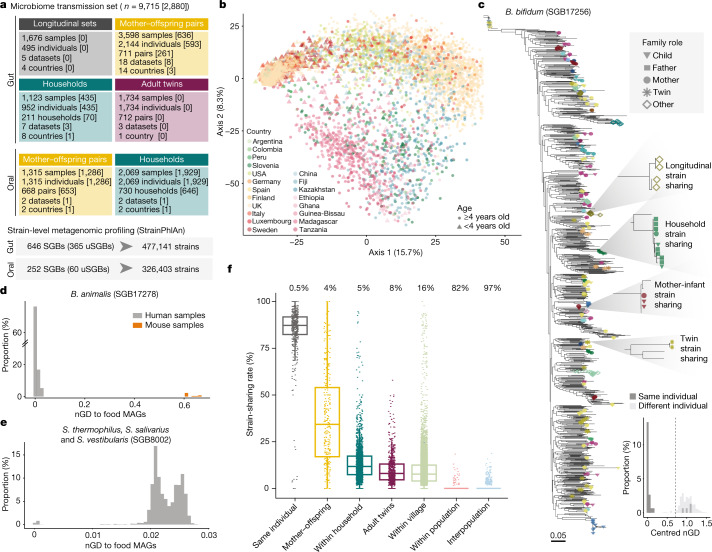
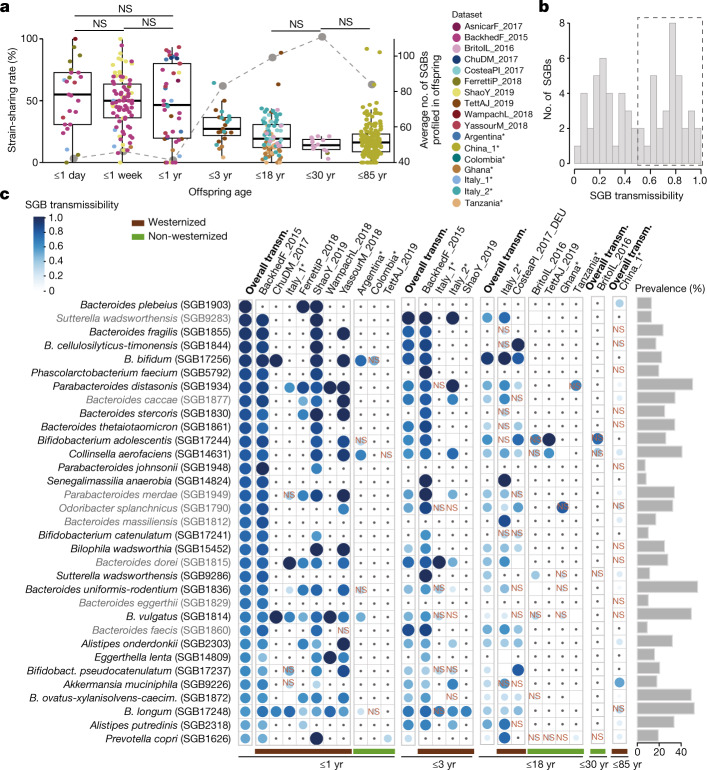
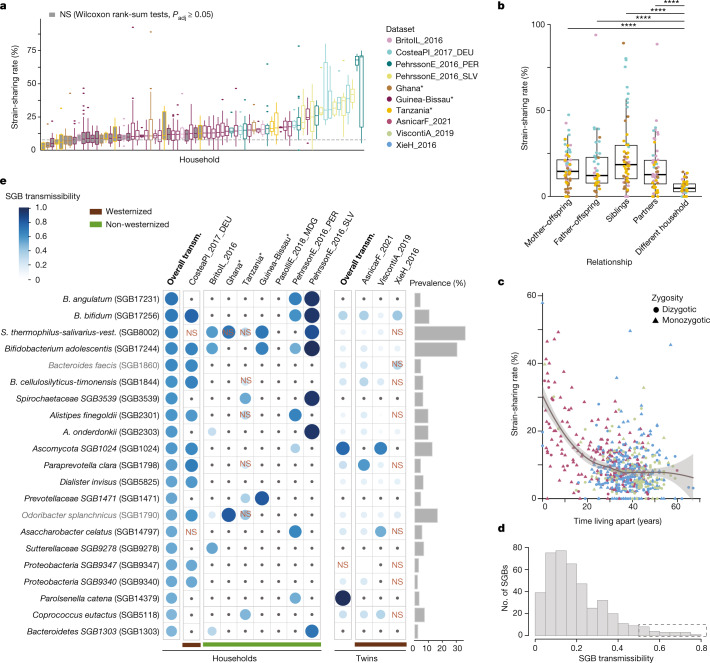
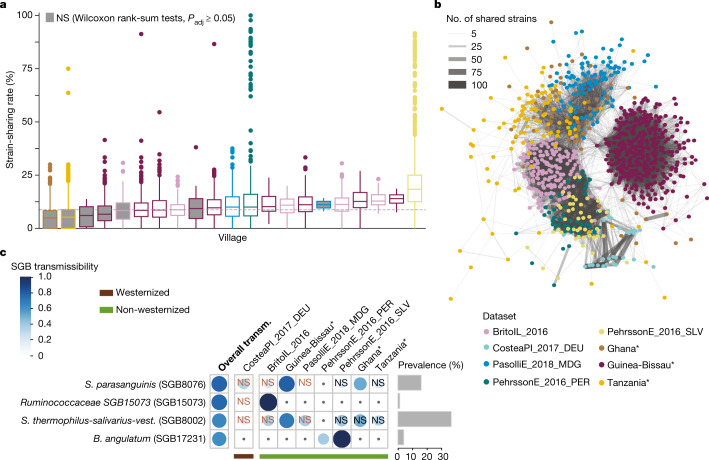
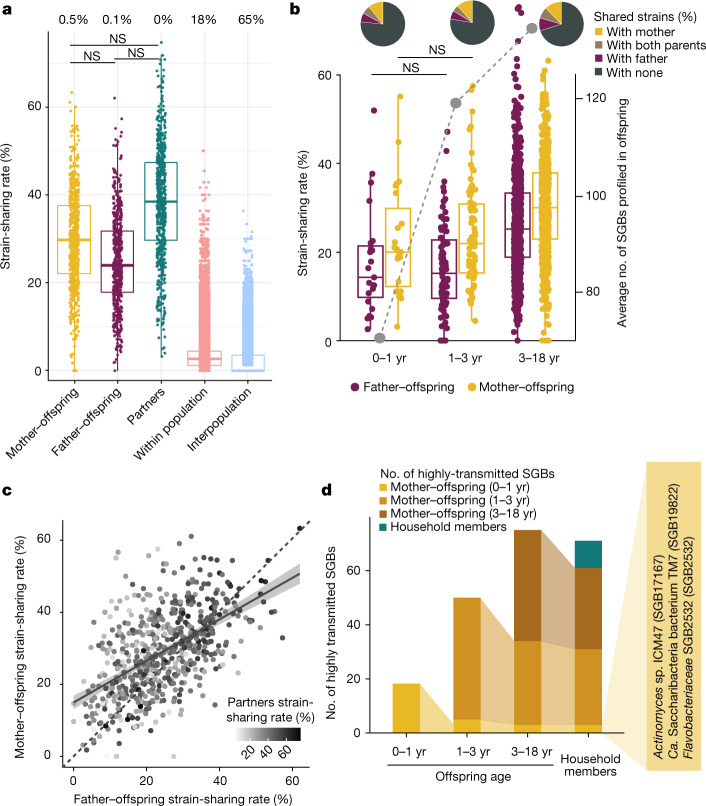
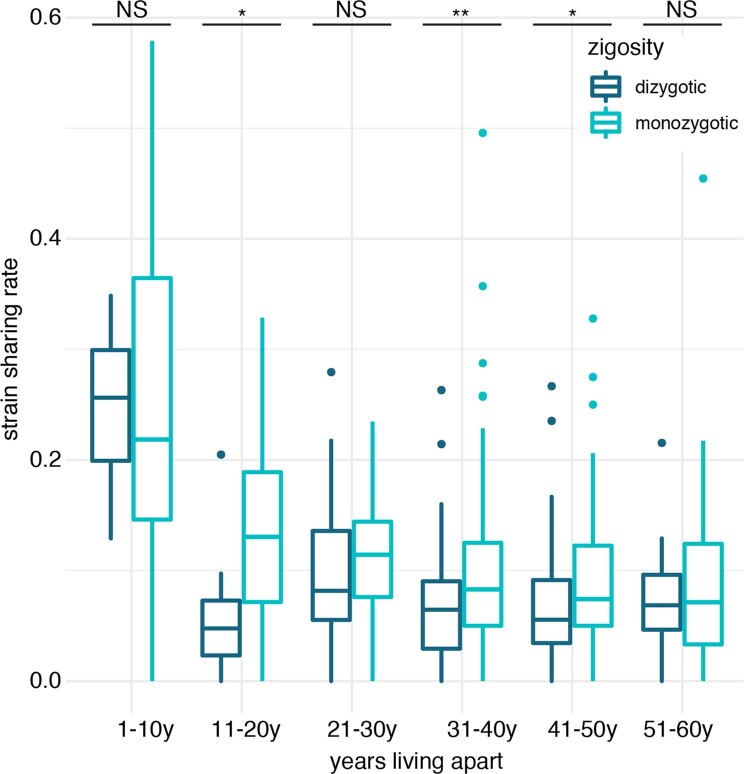
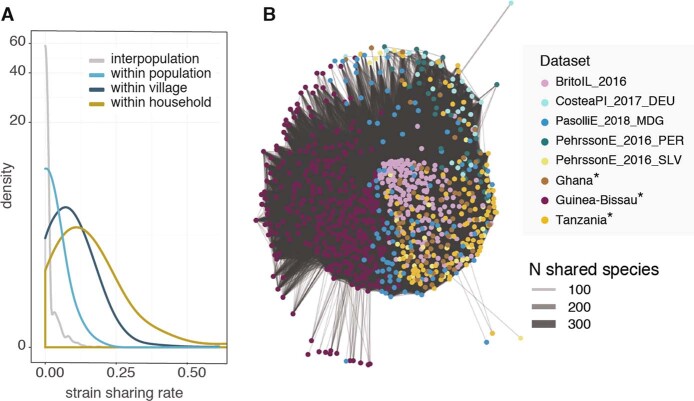
The human microbiome is an integral component of the human body and a co-determinant of several health conditions 1,2 . However, the extent to which interpersonal relations shape the individual genetic makeup of the microbiome and its transmission within and across populations remains largely unknown 3,4 . Here, capitalizing on more than 9,700 human metagenomes and computational strain-level profiling, we detected extensive bacterial strain sharing across individuals (more than 10 million instances) with distinct mother-to-infant, intra-household and intra-population transmission patterns. Mother-to-infant gut microbiome transmission was considerable and stable during infancy (around 50% of the same strains among shared species (strain-sharing rate)) and remained detectable at older ages. By contrast, the transmission of the oral microbiome occurred largely horizontally and was enhanced by the duration of cohabitation. There was substantial strain sharing among cohabiting individuals, with 12% and 32% median strain-sharing rates for the gut and oral microbiomes, and time since cohabitation affected strain sharing more than age or genetics did. Bacterial strain sharing additionally recapitulated host population structures better than species-level profiles did. Finally, distinct taxa appeared as efficient spreaders across transmission modes and were associated with different predicted bacterial phenotypes linked with out-of-host survival capabilities. The extent of microorganism transmission that we describe underscores its relevance in human microbiome studies 5 , especially those on non-infectious, microbiome-associated diseases.
Overview
The claims and statistics of this paper haven’t been checked yet.
Free: it reads the open-access text and checks the first 5 claims that cite a source we can check. Create a free account to check every claim.
Integrity signals
Registry
Cites
Statistics
Figures
Verification
Claims the paper makes
The claims and statistics of this paper haven’t been checked yet.
Free: it reads the open-access text and checks the first 5 claims that cite a source we can check. Create a free account to check every claim.
Claims other papers make about this one
Each is checked against this paper’s own text: does it say what the citing paper says it does?
The source backs part of the claim, not all of it — or backs it for a different population, condition or comparison.
In the citing paper
“adult microbial communities seem to be predominantly shaped by prior stochastic environmental exposures, as well as multiple other factors such as diet, antibiotic therapy and host genetics, with direct 'inheritance' from the mother at birth playing a lesser role.”
From Human microbiome myths and misconceptions (2023) · cites this paper as [15]
Experimental — accuracy not yet measuredThe source backs part of the claim, not all of it — or backs it for a different population, condition or comparison.
In the citing paper
“proportionally few microbiota species are truly 'heritable' and persist through from birth to adulthood in the offspring 15,16 .”
From Human microbiome myths and misconceptions (2023) · cites this paper as [15]
Experimental — accuracy not yet measuredThe cited source says what the claim attributes to it.
In the citing paper
“Although some microbes are directly transferred from mother to baby during birth 14,15 ,”
From Human microbiome myths and misconceptions (2023) · cites this paper as [15]
The cited source says what the claim attributes to it.
In the citing paper
“However, the recently described horizontal and vertical person-to-person microbial transmission 42 is likely not the only source of microbiome diversity, 43”
From Unexplored microbial diversity from 2,500 food metagenomes and links with the human microbiome. (2024) · cites this paper as [42]
The cited source says what the claim attributes to it.
In the citing paper
“A large fraction of the infant gut microbiome contained food SGBs (mean = 56%, Figure 5C), despite direct acquisition from food being only one of the possible routes of transmission (e.g., vertical and horizontal transmission 42,44,122 ).”
From Unexplored microbial diversity from 2,500 food metagenomes and links with the human microbiome. (2024) · cites this paper as [42]
2 more claims about this paper
Create a free account to see every claim other papers make about this one.
Self-check
Percentages, sums and reported differences re-computed from the paper’s own numbers.
The self-check needs the paper’s full text.
Citations
Cites
Fast gapped-read alignment with Bowtie 2
Langmead, B., & Salzberg, S. L. (2012) · Nature Methods · doi:10.1038/nmeth.1923 · Cited by 56,400 · cited 1×
“This was done by a procedure that first divided core genes into fragments of 150 nt and then aligned the fragments against the genomes of all SGBs using Bowtie2 (version 2.3.5.1; -sensitive option) 66 .”
MethodInfluentialphyloseq: An R Package for Reproducible Interactive Analysis and Graphics of Microbiome Census Data
McMurdie, P. J., & Holmes, S. (2013) · PLoS ONE · doi:10.1371/journal.pone.0061217 · Cited by 21,322 · cited 1×
“28.0) 126 , using one randomly selected sample per individual ( n = 4,840 gut samples, n = 2,069 oral samples).”
MethodInfluentialProkka: rapid prokaryotic genome annotation
Seemann, T. (2014) · Bioinformatics · doi:10.1093/bioinformatics/btu153 · Cited by 18,818
Fast and sensitive protein alignment using DIAMOND
Buchfink, B., Xie, C., & Huson, D. H. (2015) · Nature Methods · doi:10.1038/nmeth.3176 · Cited by 14,201 · cited 1×
“Coding sequences were then assigned to a UniRef90 cluster 90 by performing a Diamond search (version 0.9.24) 91 of the coding sequences against the UniRef90 database (version 201906) and assigning a UniRef90 ID if the mean sequence identity to the centroid sequence was above 90% and covered more…”
MethodInfluentialParks, D. H., Imelfort, M., Skennerton, C. T., Hugenholtz, P., & Tyson, G. W. (2015) · Genome Research · doi:10.1101/gr.186072.114 · Cited by 12,496
Diet rapidly and reproducibly alters the human gut microbiome
David, L. A., Maurice, C. F., Carmody, R. N., Gootenberg, D. B., Button, J. E., Wolfe, B. E., Ling, A. V., Devlin, A. S., Varma, Y., Fischbach, M. A., et al. (2014) · Nature · doi:10.1038/nature12820 · Cited by 10,100 · cited 1×
“711 pairs [261] 18 datasets [8] 14 countries [3]”
Human gut microbiome viewed across age and geography
Yatsunenko, T., Rey, F. E., Manary, M. J., Trehan, I., Dominguez-Bello, M. G., Contreras, M., Magris, M., Hidalgo, G., Baldassano, R. N., Anokhin, A. P., et al. (2012) · Nature · doi:10.1038/nature11053 · Cited by 7,815 · cited 3×
“3e) in concordance with their divergent microbiome composition 30,45,50,51 .”
BackgroundInfluentialMMseqs2 enables sensitive protein sequence searching for the analysis of massive data sets
Steinegger, M., & Söding, J. (2017) · Nature Biotechnology · doi:10.1038/nbt.3988 · Cited by 4,840
metaSPAdes: a new versatile metagenomic assembler
Nurk, S., Meleshko, D., Korobeynikov, A., & Pevzner, P. A. (2017) · Genome Research · doi:10.1101/gr.213959.116 · Cited by 4,496 · cited 1×
“MAGs from the Italian mother–infant dataset, and those of non-human hosts were assembled using MEGAHIT 85 , while those of the Italian centenarian dataset and non-westernized populations were assembled with metaSPAdes 86 , using default parameters in both cases.”
MethodKang, D. D., Li, F., Kirton, E., Thomas, A., Egan, R., An, H., & Wang, Z. (2019) · PeerJ · doi:10.7717/peerj.7359 · Cited by 3,750 · cited 1×
“Assembled contigs longer than 1,500 nucleotides were binned into MAGs using MetaBAT2 87 .”
Method
Research works printed but not linked: 2
- Bergey, D. H. et al. Bergey’s Manual of Systematic Bacteriology (Lippincott Raven, 1989).
- Csardi G Nepusz T The igraph software package for complex network research InterJournal Complex Syst. 2006 1695 1 9
Cited by
Items 101–200 of 514
Pangenomes of human gut microbiota uncover links between genetic diversity and stress response
Shoer, S., Reicher, L., Zhao, C., Pollard, K. S., Pilpel, Y., & Segal, E. (2024) · Cell Host & Microbe · doi:10.1016/j.chom.2024.08.017 · Cited by 23
Consequences of host-microbiome interactions in preterm infants
Erickson, I., Tung, J., & Schwartz, D. J. (2025) · Infection and Immunity · doi:10.1128/iai.00501-24 · Cited by 24
“1A) (11–14).”
Microbiome in heritage: how maternal microbiome transmission impacts next generation health
Delaroque, C., & Chassaing, B. (2025) · Microbiome · doi:10.1186/s40168-025-02186-8 · Cited by 23
“…as the amount of strains found in both mother and child, being higher between them than with unrelated mother, father, or individuals living in the same household in early-life [15, 74, 78], but not later, suggesting microbiota transfer between both parents and children after early infancy [77].”
Bifidobacteriaceae diversity in the human microbiome from a large-scale genome-wide analysis
Pasolli, E., Mauriello, I. E., Avagliano, M., Cavaliere, S., De Filippis, F., & Ercolini, D. (2024) · Cell Reports · doi:10.1016/j.celrep.2024.115027 · Cited by 22
Self-citationDevelopment and establishment of oral microbiota in early life
Kageyama, S., & Takeshita, T. (2024) · Journal of Oral Biosciences · doi:10.1016/j.job.2024.05.001 · Cited by 22
First insights into microbial changes within an Inflammatory Bowel Disease Family Cohort study
Rausch, P., Ratjen, I., Tittmann, L., Enderle, J., Wacker, E. M., Jaeger, K., Rühlemann, M. C., Franzpötter, K., Ellul, P., Kruse, R., et al. (2025) · Gut Microbes · doi:10.1080/19490976.2025.2559119 · Cited by 22
The gut microbiome shapes social behaviour across animal species
Griffiths, J. A., Nirmalkar, K., Wu, W., Krajmalnik‐Brown, R., & Mazmanian, S. K. (2025) · Nature Reviews Microbiology · doi:10.1038/s41579-025-01262-y · Cited by 23
Liu, J., Spencer, N., Utter, D. R., Grossman, A. S., Lei, L., dos Santos, N. C. C., Shi, W., Baker, J. L., Hastürk, H., He, X., et al. (2024) · Microbiome · doi:10.1186/s40168-024-01854-5 · Cited by 22
“Crucially, oral microbes and COPs can asymptomatically colonize and transmit between people, complicating their disease etiology [8].”
BackgroundGut Microbiota‐Derived Extracellular Vesicles Influence Alcohol Intake Preferences in Rats
Díaz‐Ubilla, M., Figueroa‐Valdés, A. I., Tobar, H. E., Quintanilla, M. E., Díaz, E., Morales, P., Berríos‐Cárcamo, P., Santapau, D., Gallardo, J., Gregorio, C. D., et al. (2025) · Journal of Extracellular Vesicles · doi:10.1002/jev2.70059 · Cited by 21
Multi-dimensional metagenomics
Peng, H., Ruiz-Moreno, A. J., & Fu, J. (2025) · Nature Reviews Bioengineering · doi:10.1038/s44222-025-00346-x · Cited by 21
“More recent MWAS have started to progress towards identification of strain-level genetic diversity and of individual microbial genetic variants and their links to host traits 21 .”
InfluentialBernabeu, M., Cabello-Yeves, E., Ventura, E. F., Samarra, A., Summers, J. K., Marina, A., & Collado, M. C. (2024) · Current Opinion in Microbiology · doi:10.1016/j.mib.2023.102424 · Cited by 22
Self-citationIntraspecies dynamics underlie the apparent stability of two important skin microbiome species
Baker, J. S., Qu, E. B., Mancuso, C. P., Tripp, A. D., Conwill, A., & Lieberman, T. D. (2025) · Cell Host & Microbe · doi:10.1016/j.chom.2025.04.010 · Cited by 21
From One-Size-Fits-All to Precision Medicine: The Promise of Personalized Probiotics
Montazeri‐Najafabady, N. (2025) · Probiotics and Antimicrobial Proteins · doi:10.1007/s12602-025-10815-9 · Cited by 22
Accurate profiling of microbial communities for shotgun metagenomic sequencing with Meteor2
Ghozlane, A., Thirion, F., Oñate, F. P., Gauthier, F., Chatelier, E. L., Annamalé, A., Almeida, M., Ehrlich, S. D., & Pons, N. (2025) · Microbiome · doi:10.1186/s40168-025-02249-w · Cited by 20
“Despite its complexity, integrating taxonomic, functional, and strain-level profiling (TFSP) is crucial for a complete understanding of microbial community structures and their roles in various environments [1–3].”
Microbial collagenase activity is linked to oral–gut translocation in advanced chronic liver disease
Jin, S., Cenier, A., Wetzel, D., Arefaine, B., Moreno‐Gonzalez, M., Stamouli, M., Mohamad, M., Lupatsii, M., Ríos, E. G., Lee, S., et al. (2025) · Nature Microbiology · doi:10.1038/s41564-025-02223-0 · Cited by 20
“This was also reported for other diseases, including ulcerative colitis 24 , colorectal cancer 25,26 , rheumatoid arthritis, type 1 diabetes 27,28 and hypertension 29 , suggesting that microbiome oral–gut translocation may have an important role in these diseases 30,31 .”
Harnessing human microbiomes for disease prediction
Liu, Y., Fachrul, M., Inouye, M., & Méric, G. (2024) · Trends in Microbiology · doi:10.1016/j.tim.2023.12.004 · Cited by 20
Ecology and Evolution of the Social Microbiome
Debray, R., Tung, J., & Archie, E. A. (2024) · Annual Review of Ecology Evolution and Systematics · doi:10.1146/annurev-ecolsys-102622-030749 · Cited by 20
Targeted protein evolution in the gut microbiome by diversity-generating retroelements
Macadangdang, B. R., Wang, Y., Woodward, C. L., Revilla, J. I., Shaw, B. M., Sasaninia, K., Varnum, G. E., Makanani, S. K., Berruto, C., Ahuja, U., et al. (2025) · Science · doi:10.1126/science.adv2111 · Cited by 19
Tannock, G. W. (2023) · Microbiology and Molecular Biology Reviews · doi:10.1128/mmbr.00127-22 · Cited by 19
Bugs as features (part 2): a perspective on enriching microbiome–gut–brain axis analyses
Bastiaanssen, T. F. S., Quinn, T. P., & Loughman, A. (2023) · Nature Mental Health · doi:10.1038/s44220-023-00149-2 · Cited by 19
“Strain transmission and engraftment analysis is a relatively new field of study with applicability to FMT studies as well as to non-FMT horizontal microorganism transmission studies 90–93 .”
Shropshire, W. C., Hanson, B., & Shelburne, S. A. (2025) · Current Opinion in Infectious Diseases · doi:10.1097/qco.0000000000001118 · Cited by 18
Selection and transmission of the gut microbiome alone can shift mammalian behavior
Suzuki, T. A., Tanja, A.-S., Waters, J. L., Jakob, D., Vu, D. L., Ballinger, M. A., Rienzi, S. C. D., Chang, H., de Araújo, I. E., Tyakht, A., et al. (2025) · Nature Communications · doi:10.1038/s41467-025-65368-w · Cited by 19
“Coprophagy was used to simulate natural microbiome transmission, but we acknowledge that high-fi delity transmission ofa complex microbiome from a singleindividual is unrealistic in nature 5,30 .”
Quasi-normal modes and shadows of scale-dependent regular black holes
Koch, B., Olmo, G. J., Riahinia, A., Rincón, Á., & Rubiera-García, D. (2026) · Journal of Cosmology and Astroparticle Physics · doi:10.1088/1475-7516/2026/03/048 · Cited by 18
Microbiota-Gut-Brain Axis and Antidepressant Treatment
Lachmansingh, D. A., Lavelle, A., Cryan, J. F., & Clarke, G. A. (2023) · Current topics in behavioral neurosciences · doi:10.1007/7854_2023_449 · Cited by 18
Microbiome and Brain Development: A Tale of Two Systems
Cryan, J. F. (2025) · Annals of Nutrition and Metabolism · doi:10.1159/000544950 · Cited by 18
Delaroque, C., Rytter, H., Bonazzi, E., Huillet, M., Ellero‐Simatos, S., Chatonnat, E., Hao, F., Patterson, A. D., & Chassaing, B. (2025) · Nature Communications · doi:10.1038/s41467-025-62397-3 · Cited by 18
“Environmental factors such as early-life antibiotic treatments 2,20 , maternal in fl uence through transmission of select bacterial strains 21,22 , as well as indirect mechanisms including the involvement of milk components and genetic factors 23 – 25 , have emerged as a contributors of early-life…”
Genomic atlas of Bifidobacterium infantis and B. longum informs infant probiotic design
Shao, Y., Wang, S., Gichuki, B. M., Stares, M. D., Rozday, T. J., Kumar, N., Browne, H. P., Dawson, N. J. R., Njunge, J. M., Tigoi, C., et al. (2026) · Cell · doi:10.1016/j.cell.2026.01.007 · Cited by 17
A critical review of metagenomic approaches for foodborne pathogen surveillance
Wang, J., den Bakker, H. C., & Denes, T. G. (2025) · Critical Reviews in Food Science and Nutrition · doi:10.1080/10408398.2025.2503453 · Cited by 17
Huang, K. D., Amend, L., Gálvez, E. J. C., Lesker, T.-R., de Oliveira, R., Bielecka, A., Blanco‐Míguez, A., Valles‐Colomer, M., Ruf, I., Pasolli, E., et al. (2024) · Cell Reports Medicine · doi:10.1016/j.xcrm.2024.101426 · Cited by 18
“…to the strain-level profiling of the microbiome, including the establishment of operational species-specific strain boundaries, and then quantified frequency of engraftment of microbial species upon FMT 50 (engraftment rate) and of transmission within households 47 (horizontal transmissibility).”
BackgroundMethodInfluentialSelf-citationTranslating the Microbiome: What’s the Target?
O’Toole, P. W., Ghosh, T. S., Goswami, S., Manghi, P., Segata, N., & Shanahan, F. (2023) · Gastroenterology · doi:10.1053/j.gastro.2023.04.008 · Cited by 17
Self-citationGarcía, S. I., Ordoñez, S., López-Molina, V. M., Lacruz-Pleguezuelos, B., Pau, E. C. D. S., & Marcos-Zambrano, L. J. (2023) · Gut Microbes · doi:10.1080/19490976.2023.2241207 · Cited by 16
“Moreover, recent reports demonstrate an effect of social interactions in shaping the microbiome, which may play a role in microbiome-associated diseases.(26) Hence strategies that might favorably modulate the gut microbiota to reduce the risk of many NCDs through diet and lifestyle changes are of great interest.”
BackgroundThe social microbiome: The missing mechanism mediating the sociality-fitness nexus?
Baniel, A., & Charpentier, M. J. E. (2024) · iScience · doi:10.1016/j.isci.2024.109806 · Cited by 16
“73 At the dyadic level, pairs of individuals that engage in more frequent social 68,74,75 andsexual 76,77 interactionsalsoexhibitmoresimilarmicrobialcommunities.”
BackgroundA macroecological perspective on genetic diversity in the human gut microbiome
Shoemaker, W. R. (2023) · PLoS ONE · doi:10.1371/journal.pone.0288926 · Cited by 16
Wen, L., Yang, K., Wang, J., Zhou, H., & Ding, W. (2025) · Frontiers in Pharmacology · doi:10.3389/fphar.2025.1574887 · Cited by 15
Huang, S., Jiang, J., & Gong, H. (2024) · Scientific Reports · doi:10.1038/s41598-024-78486-0 · Cited by 15
“These shared strains may significantly impact microbiome-related diseases 40 .”
BackgroundCharacteristics of Oral-Gut Microbiota in Model Rats with CUMS-Induced Depression
Li, Y., & Liu, P. (2024) · Neuropsychiatric Disease and Treatment · doi:10.2147/ndt.s448940 · Cited by 15
Valles-Colomer, M., Manghi, P., Cumbo, F., Masetti, G., Armanini, F., Asnicar, F., Blanco-Miguez, A., Pinto, F., Punčochář, M., Garaventa, A., et al. (2024) · eBioMedicine · doi:10.1016/j.ebiom.2023.104917 · Cited by 14
“22,27 Here, we assessed gut microbiome composition by shotgun metagenomic pro fi ling in patients with neuro-blastoma at disease onset as compared to 1) a group of healthy controls balanced on the main covariates of microbiome composition (age, sex, stool consistency, mode of delivery [vaginal or…”
BackgroundMethodInfluentialSelf-citationGrossman, A. S., Lei, L., Botting, J. M., Liu, J., Nahar, N., Liu, J., McLean, J. S., He, X., & Bor, B. (2025) · The ISME Journal · doi:10.1093/ismejo/wraf119 · Cited by 14
Comparison of the performance of MiSeq and NovaSeq in oral microbiome study
Han, H., Lee, H., Kim, K., Chung, J., & Na, H. S. (2024) · Journal of Oral Microbiology · doi:10.1080/20002297.2024.2344293 · Cited by 14
“Due to these advantages, research using Novaseq in micro-biome analysis, which requires large amounts of data are gradually increasing [14,15].”
BackgroundMaternal pre- and postnatal stress and maternal and infant gut microbiota features
Eckermann, H. A., Lustermans, H., Pärnänen, K. M. M., Lahti, L., & de Weerth, C. (2025) · Psychoneuroendocrinology · doi:10.1016/j.psyneuen.2024.107273 · Cited by 14
Debray, R., Dickson, C. C., Webb, S. E., Archie, E. A., & Tung, J. (2025) · Microbiome · doi:10.1186/s40168-025-02051-8 · Cited by 15
“Samples can be classified as “sharing a strain” if the lineages they carry are close in the phylogeny [30, 31], have highly similar marker gene sequences [25], or have high genome-wide nucleotide or structural identity [26, 32].”
Leveraging strain competition to address antimicrobial resistance with microbiota therapies
Steed, D. B., Koundakjian, D., Harris, A. D., Rosato, A. E., Konstantinidis, K. T., & Woodworth, M. H. (2025) · Gut Microbes · doi:10.1080/19490976.2025.2488046 · Cited by 15
Shekarriz, S., Szamosi, J. C., Whelan, F., Lau, J. T., Libertucci, J., Rossi, L., Fontes, M. E., Wolfe, M., Lee, C., Moayyedi, P., et al. (2025) · Nature Communications · doi:10.1038/s41467-025-58673-x · Cited by 14
“However, placebo samples have been used to examine background noise in a de fi ned consortium to treat rCDI 23,24 , and alternatively, sam-plesfromthesameanddifferentindividualshavebeenusedtoestimate potential noise in colonization 21,25 .”
Ren, L., Yang, J., Xiao, Y., Guo, L., Rao, J. Y., Wu, H., Wang, X., Wang, Y., Zhang, L., Zhang, L. M., et al. (2025) · Microbiome · doi:10.1186/s40168-025-02107-9 · Cited by 14
“The threshold ranged between 0.006 to 0.038 for different species, similar to that applied in previous studies [17].”
InfluentialCommensal resilience: ancient ecological lessons for the modern microbiota
Rose, A. E., Fansler, R. T., & Zhu, W. (2025) · Infection and Immunity · doi:10.1128/iai.00502-24 · Cited by 15
Using the microbiota to study connectivity at human–animal interfaces
Muloi, D. M., Caron, A., Berkley, J. A., Hassell, J. M., Brito, I., King, K. C., Moodley, A., & Fèvre, E. M. (2025) · Trends in Microbiology · doi:10.1016/j.tim.2025.05.006 · Cited by 14
Wu, S., Luo, G., Jiang, F., Jia, W., Li, J., Huang, T., Zhang, X., Mao, Y., Su, S., Han, W., et al. (2025) · mSystems · doi:10.1128/msystems.00480-25 · Cited by 14
Olate, P., Martínez, A., Sans-Serramitjana, E., Cortés, M., Díaz, R., Hernández, G., Paz, E. A., Sepúlveda, N., & Quiñones, J. (2025) · International Journal of Molecular Sciences · doi:10.3390/ijms26167983 · Cited by 16
“These findings highlight the global challenges of establishing oral hygiene habits and efficient educational interventions for children’s caregivers to improve oral hygiene habits in diverse populations [109].”
Profiling the Bacterial Microbiome Across Peri‐Implant Conditions
Espinoza‐Arrue, J., Arce, M., Endo, N., Hoare, A., Dutzan, N., & Abusleme, L. (2025) · Journal Of Clinical Periodontology · doi:10.1111/jcpe.70024 · Cited by 17
Stinson, L. F., Norrish, I., Mhembere, F., Cheema, A. S., Mullally, C. A., Payne, M. S., & Geddes, D. T. (2025) · Gut Microbes · doi:10.1080/19490976.2025.2557981 · Cited by 14
“Prior studies have demonstrated vertical transfer of Bifidobacterium strains from mother to infant via both the gut and breast milk, 70–74 suggesting that low maternal abundance may limit neonatal colonization.”
metaTraits: a large-scale integration of microbial phenotypic trait information
Podlesny, D., Kim, C. Y., Robbani, S. M., Schudoma, C., Fullam, A., Reimer, L. C., Koblitz, J., Schober, I., Iyappan, A., Rossum, T. V., et al. (2025) · Nucleic Acids Research · doi:10.1093/nar/gkaf1241 · Cited by 14
“…gut microbes [ 3 ], to characterize diverse global microbial habitats [ 4 ], to study functional microbiome shifts in disease contexts [ 5 , 6 ], and to reveal links between traits and biogeographical and social patterns in microbial strain sharing networks [ 7 , 8 ], among many other applications.”
Dijck, C. V., Laumen, J., de Block, T., Abdellati, S., Baetselier, I. D., Tsoumanis, A., Malhotra‐Kumar, S., Manoharan-Basil, S. S., Kenyon, C. R., & Xavier, B. B. (2023) · Journal of Infection · doi:10.1016/j.jinf.2023.02.006 · Cited by 14
Wang, Y., Zhan, H., Saif, A., Zhang, X., & Su, H. (2024) · Ecological Indicators · doi:10.1016/j.ecolind.2024.111782 · Cited by 14
Grossman, A. S., Lei, L., Botting, J. M., Liu, J., Nahar, N., Souza, J. G. S., Liu, J., McLean, J. S., He, X., & Bor, B. (2024) · doi:10.1101/2024.11.25.624915 · Cited by 14
Epigenetic phase variation in the gut microbiome enhances bacterial adaptation
Ni, M., Junker, K., Liu, Y., Fan, Y., Li, Y., Qiao, W., Zhang, X.-S., Ksiezarek, M., Mead, E. A., Tourancheau, A., et al. (2026) · Cell Host & Microbe · doi:10.1016/j.chom.2026.04.019 · Cited by 13
Dunham, S. J. B., Avelar‐Barragan, J., Rothman, J. A., Adams, E. D., Faraci, G., Forner, S., Kawauchi, S., Tenner, A. J., Green, K. N., LaFerla, F. M., et al. (2024) · Alzheimer s & Dementia · doi:10.1002/alz.13794 · Cited by 13
Shaping Microbiota During the First 1000 Days of Life
Samarra, A., Ventura, E. F., Bernabeu, M., Cabrera‐Rubio, R., Bäuerl, C., Selma‐Royo, M., & Collado, M. C. (2024) · Advances in experimental medicine and biology · doi:10.1007/978-3-031-58572-2_1 · Cited by 13
Self-citationPark, J.-W., Yun, Y.-E., Cho, J. A., Yoon, S.-I., In, S.-A., Park, E., & Kim, M. (2025) · Nature Communications · doi:10.1038/s41467-025-58856-6 · Cited by 13
“To be able to draw conclusions regarding the associations between plant hosts, farming type and virome composition, one needs to control for the many collection variables and account for nested covariates.”
Zhu, T.-T., Liu, P., Hashimoto, K., & Yang, J. (2026) · Molecular Psychiatry · doi:10.1038/s41380-026-03603-6 · Cited by 14
“While preclinical data support NP delivery of probiotics, antimicrobials, and gene modulators, risks include disruption of community stability, metabolite networks, and immune activation; broad microbiome variability further limits reproducibility and generalizability [247].”
Strain-level transmission inference across multi-kingdom metagenomic data using TRACS
Tonkin‐Hill, G. Q., Shao, Y., Zarebski, A. E., Mallawaarachchi, S., Xie, O., Mäklin, T., Thorpe, H. A., Davies, M. R., Bentley, S. D., Lawley, T. D., et al. (2026) · Nature Microbiology · doi:10.1038/s41564-026-02339-x · Cited by 13
“In all cases, StrainPhlAn was run using version 4.0.5 with the default database using the command line parameters outlined in the study by Valles-Colomer et al. 4 .”
InfluentialWithin-host evolution and transmission of a human gut symbiont across ecological scales
Vasquez, K. S., Wong, D. P. G. H., Kotaka, K., McKeithen-Mead, S. A., Pedro, M. F., Yu, F. B., Jain, S., Meng, X., Higginbottom, S. K., DeFelice, B. C., et al. (2026) · Cell Host & Microbe · doi:10.1016/j.chom.2026.09.002 · Cited by 13
Self-citationThe case for microbiome stewardship: what it is and how to get there
Choudoir, M. J., Ishaq, S. L., Beiko, R. G., Silva, D. S., Allen‐Vercoe, E., & O’Doherty, K. C. (2025) · mSystems · doi:10.1128/msystems.00062-25 · Cited by 12
Continual Evolution in Nonreciprocal Ecological Models
Mahadevan, A., & Fisher, D. S. (2025) · PRX Life · doi:10.1103/dv3k-75b9 · Cited by 12
Intraspecies warfare restricts strain coexistence in human skin microbiomes
Mancuso, C. P., Baker, J. S., Qu, E. B., Tripp, A. D., Balogun, I. O., & Lieberman, T. D. (2025) · Nature Microbiology · doi:10.1038/s41564-025-02041-4 · Cited by 12
“It is now clear that new strains are acquired throughout life in the gut 1–3 , oral 3 , vaginal 4 and skin 5,6 microbiomes.”
Challenges and Opportunities in Analyzing Cancer-Associated Microbiomes
Chia, M., Pop, M., Salzberg, S. L., & Nagarajan, N. (2025) · Cancer Research · doi:10.1158/0008-5472.can-24-3629 · Cited by 12
Genome-wide sweeps create ecological units in the human gut microbiome
Yu, X. A., Strachan, C. R., Herbold, C. W., Lang, M., Gasché, C., Makristathis, A., Segata, N., Pollak, S., Tett, A., & Polz, M. F. (2026) · Nature · doi:10.1038/s41586-026-10476-w · Cited by 12
“Indeed, once acquired, strains have been shown to persist over extended periods of time 5 , on average over one-third of the human lifespan 40 .”
Self-citationMaternal influences on infant gut microbiome and health
Sinha, T., Brushett, S., Fernández-Pato, A., Garmaeva, S., Andreu‐Sánchez, S., Spreckels, J. E., Mallon, C. A., Kuzub, N., Gois, M. F. B., Wu, J., et al. (2026) · Nature · doi:10.1038/s41586-026-10922-9 · Cited by 12
“2b and Supplementary Table 22).”
InfluentialGuidelines for microbiome studies in renal physiology
Muralitharan, R. R., Snelson, M., Méric, G., Coughlan, M. T., & Marques, F. Z. (2023) · American Journal of Physiology-Renal Physiology · doi:10.1152/ajprenal.00072.2023 · Cited by 12
Identifying Microbiome Dynamics in Pediatric IBD: More than a Family Matter
Dovrolis, N., Moschoviti, A., Fessatou, S., Karamanolis, G. P., Kolios, G. C., & Gazouli, M. (2023) · Biomedicines · doi:10.3390/biomedicines11071979 · Cited by 12
From biodiversity to nature deficiency in human health and disease
Haahtela, T., Bousquet, J. J., & Antó, J. M. (2024) · Porto Biomedical Journal · doi:10.1097/j.pbj.0000000000000245 · Cited by 12
“40 Loneliness is both physical and mental!”
Rook, G. A. W. (2024) · Neuroscience & Biobehavioral Reviews · doi:10.1016/j.neubiorev.2024.105653 · Cited by 12
Shridhar, S. V., Beghini, F., Alexander, M., Singh, A., Juárez, R. M., Brito, I., & Christakis, N. A. (2024) · Cell Reports · doi:10.1016/j.celrep.2024.114442 · Cited by 12
A host of issues: pseudoreplication in host–microbiota studies
Reish, H. M., Dewey, L., & Kirschman, L. J. (2024) · Applied and Environmental Microbiology · doi:10.1128/aem.01033-24 · Cited by 11
CroCoDeEL: accurate control-free detection of cross-sample contamination in metagenomic data
Goulet, L., Plaza Oñate, F., Famechon, A., Quinquis, B., Belda, E., Prifti, E., Le Chatelier, E., & Gautreau, G. (2026) · Nature Communications · doi:10.1038/s41467-026-72637-9 · Cited by 4
“Naturalstrain sharing, suchasvertical transmission among relatives or horizontal transmission among cohabiting individuals 18,19 , can also confound results.”
Peng, H., & Fu, J. (2025) · National Science Review · doi:10.1093/nsr/nwaf128 · Cited by 11
Shen, H., Ma, X., Zhang, L., Li, H., Zheng, J., Wu, S., Zuo, K., Yin, Y., Wang, J., & Tan, B. (2025) · Advanced Science · doi:10.1002/advs.202503411 · Cited by 11
Liu, Y., Hou, J., Qi, Z., Yang, L., Du, Z., Wu, Y., Song, Q., Li, X., Sun, J., Chen, P., et al. (2025) · BMC Psychology · doi:10.1186/s40359-025-03088-y · Cited by 11
“Extensive research has revealed significant maternal-to-infant transmission patterns of the gut microbiome, with notable stability during infancy and detectable impacts on gut microbiota composition and metabolites in early childhood [1–3].”
A Latin American perspective on microbiome research
Reyes, A., Durán, C., Rodríguez-Otálora, S., Pugley, D. D., Iraola, G., Domínguez-Bello, M. G., Lawley, T. D., & Tsukayama, P. (2025) · Nature Communications · doi:10.1038/s41467-025-66756-y · Cited by 12
“Moreover, social structures such as kinship and co-residence networks have been shown to in fl uence microbial sharing within communities, offering insights not readily accessible in more indus-trialized settings 16,17 .”
You, Y., Yin, M., Zheng, X., Liang, Q., Zhang, H., Wu, B., & Xu, W. (2023) · PeerJ · doi:10.7717/peerj.15605 · Cited by 11
Pucci, N., Ujčič-Voortman, J. K., Verhoeff, A. P., & Mende, D. R. (2025) · PeerJ · doi:10.7717/peerj.18602 · Cited by 11
Closest relatives of poxviruses prevail in human and animal guts worldwide
Gaïa, M., Guyet, U., Ruscheweyh, H., Eren, A. M., Sunagawa, S., Koonin, E. V., Krupovìč, M., & Delmont, T. O. (2026) · Nature · doi:10.1101/2024.03.23.586382 · Cited by 12
The gut microbiome of Baka forager-horticulturalists from Cameroon is optimized for wild plant foods
Rampelli, S., Gallois, S., D’Amico, F., Turroni, S., Fabbrini, M., Scicchitano, D., Candela, M., & Henry, A. G. (2024) · iScience · doi:10.1016/j.isci.2024.109211 · Cited by 11
Vega‐Abellaneda, S., Dopazo, C., Yáñez, F., Soler, Z., Xie, Z., Canalda-Baltrons, A., Pons-Tarín, M., Bilbao, I., & Manichanh, C. (2024) · American Journal of Transplantation · doi:10.1016/j.ajt.2024.03.038 · Cited by 10
Unveiling familial aggregation of nasopharyngeal carcinoma: Insights from oral microbiome dysbiosis
Liao, Y., Tong, X., Zhou, T., Xue, W., Wang, T., He, Y., Zheng, M., Jia, Y., Yang, D.-W., Wu, Y., et al. (2025) · Cell Reports Medicine · doi:10.1016/j.xcrm.2025.101979 · Cited by 10
“Notably, both the human oral and gut microbiomes exhibit the potential for horizontal and vertical transmission across successive family generations, 23,24 facilitating the spread of pathogenic microbes.”
A reconceptualized framework for human microbiome transmission in early life
Rakoff-Nahoum, S., Debelius, J. W., Valles‐Colomer, M., Noordzij, H. T., Esteban-Torres, M., Zhernakova, A., Brusselaers, N., & Pettersen, V. K. (2025) · Nature Communications · doi:10.1038/s41467-025-61998-2 · Cited by 11
“…acquisition at early life, the lens of 4W can be applied for microbial transmission, colonization, and succession throughout a person ’ s lifetime 36 , such as de fi ning the 4Ws of microbiome ecology during travel, hospital admissions, and microbiome repopulation through and after antibiotic use.”
InfluentialSelf-citationSjödin, K. S., Sjödin, A., Rydén, P., Mogren, I., Domellöf, M., Holgerson, P. L., & West, C. E. (2025) · BMC Microbiology · doi:10.1186/s12866-025-04521-3 · Cited by 10
Labossiere, A., Ramsey, M. M., Merritt, J. L., & Kreth, J. (2023) · mBio · doi:10.1128/mbio.01342-23 · Cited by 10
Naddaf, R., Carasso, S., Levi, G. R., Hasnis, E., Qarawani, A., Maza, I., Gefen, T., Half, E., & Geva‐Zatorsky, N. (2023) · Scientific Reports · doi:10.1038/s41598-023-47723-3 · Cited by 10
“This is especially important since person-to-person microbiome transmissions are becoming increasingly evident 25,26 .”
BackgroundYang, Z., Zhu, J., Lu, W., Tian, F., Zhang, H., & Chen, W. (2024) · Food Bioscience · doi:10.1016/j.fbio.2024.104541 · Cited by 10
Is there a role for intestinal sporobiota in the antimicrobial resistance crisis?
Romero-Rodríguez, A., Ruiz‐Villafán, B., Sánchez, S., & Paredes‐Sabja, D. (2024) · Microbiological Research · doi:10.1016/j.micres.2024.127870 · Cited by 10
Haahtela, T., O'Mahony, L., Traidl‐Hoffmann, C., Akdis, M., Ceylan, O., Chaslaridis, P., Damialis, A., Del Giacco, S., Lauerma, A., Nadeau, K. C., et al. (2026) · Allergy · doi:10.1111/all.70182 · Cited by 9
“Increase social interaction and contacts with other people [123] 12.”
Zhang, H., Wei, H., Qin, X., Song, H., Yang, M., Zhang, L., Liu, Y., Wang, Z., Zhang, Y., Lai, Y., et al. (2024) · Journal of Affective Disorders · doi:10.1016/j.jad.2024.08.164 · Cited by 9
Gao, F., Wang, C., Cao, Z., Zhang, X., Xi, W., Liu, Y., Zhan, X., Jia, M., Gou, N., Yu, L., et al. (2025) · Brain Behavior and Immunity · doi:10.1016/j.bbi.2025.05.030 · Cited by 9
“Species transmissibility was defined as the frequency of species-sharing events detected for each species, divided by the total number of potential species-sharing events within the group, as previously described [41].”
The Father’s Microbiome: A Hidden Contributor to Fetal and Long-Term Child Health
Zambella, E., Inversetti, A., Salerno, S., Mueller, M., & Simone, N. D. (2025) · Biology · doi:10.3390/biology14081002 · Cited by 9
Genome sequencing for prevention of health-care-associated bacterial infections
Hayden, M. K., Sansom, S. E., & Snitkin, E. S. (2025) · Nature Reviews Microbiology · doi:10.1038/s41579-025-01254-y · Cited by 9
Laser-assisted microbial culturomics
Qu, T., Koch, L., Mukherjee, R., Tu, Y., Seidel, A. L., Püttmann, L. D., Winkel, A., Yang, I., Grischke, J., Liu, D., et al. (2025) · Nature Communications · doi:10.1038/s41467-025-66804-7 · Cited by 9
“5, Supplementary Data 6).”
InfluentialTonnelé, H., Chen, D., Morillo, F., Garcia-Calleja, J., Chitre, A. S., Johnson, B. B., Sanches, T. M., Cheng, R., Bonder, M. J., González, A., et al. (2025) · Nature Communications · doi:10.1038/s41467-025-66105-z · Cited by 9
“…for glycan biosynthesis, play a role in susceptibility to pathogens 52,54,62 and given recent evidence of microbiome transmission in humans 16 – 18 , it is clear that modelling approaches that fully account for microbiome transmission in the population are necessary to understand the…”
InfluentialShared Evolutionary Path in Social Microbiomes
Frazão, N., & Gordo, I. (2023) · Molecular Biology and Evolution · doi:10.1093/molbev/msad153 · Cited by 9
“found among cohabiting persons, with 12% and 32% strain-sharing rates observed for the gut and oral microbiomes, respectively (Valles-Colomer et al. 2023).”
BackgroundFinnegan, P., Garber, P. A., McKenney, A. C., Bicca‐Marques, J. C., la Fuente, M. F. D., Abreu, F., Souto, A., Schiel, N., Amato, K. R., & Mallott, E. K. (2024) · mSphere · doi:10.1128/msphere.00233-24 · Cited by 9
“Intra-and intergroup similarity in microbiome composition may reflect the degree of horizontal transmission of microbes during social interactions and physical contact both within and between groups (33, 34, 38, 40, 41).”
BackgroundGut Microbes as the Major Drivers of Rheumatoid Arthritis: Our Microbes Are Our Fortune!
Taneja, V. (2025) · Microorganisms · doi:10.3390/microorganisms13020255 · Cited by 9
“…microbial diversity and richness in symbiosis with the host, dictated by an individual’s environment, and bacteria acquired during birth and in utero are no longer represented predominantly during adulthood, though some maternal microbial clades can be present, suggesting a core microbiome [14,15].”
Metadata
- Authors
- Valles-Colomer, M., Blanco-Míguez, A., Manghi, P., Asnicar, F., Dubois, L., Golzato, D., Armanini, F., Cumbo, F., Huang, K. D., Manara, S., Masetti, G., Pinto, F., Piperni, E., Punčochář, M., Ricci, L., Zolfo, M., Farrant, O., Goncalves, A., Selma-Royo, M., Binetti, A. G., Becerra, J. E., Han, B., Lusingu, J., Amuasi, J., Amoroso, L., Visconti, A., Steves, C. M., Falchi, M., Filosi, M., Tett, A., Last, A., Xu, Q., Qin, N., Qin, H., May, J., Eibach, D., Corrias, M. V., Ponzoni, M., Pasolli, E., Spector, T. D., Domenici, E., Collado, M. C., & Segata, N.
- Affiliations
- University of Trento (IT)
- European Institute of Oncology (IT)
- London School of Hygiene & Tropical Medicine (GB)
- Consejo Nacional de Investigaciones Científicas y Técnicas (AR)
- Universidad Metropolitana (CO)
- Xi'an Jiaotong University (CN)
- National Institute for Medical Research (TZ)
- Kwame Nkrumah University of Science and Technology (GH)
- Istituto Giannina Gaslini (IT)
- King's College London (GB)
- University of Vienna (AT)
- Tongji University (CN)
- Bernhard Nocht Institute for Tropical Medicine (DE)
- University of Naples Federico II (IT)
- Corresponding author
- Segata, Nicola
- ORCID
- Valles-Colomer, Mireia
- Blanco-Míguez, Aitor
- Manghi, Paolo
- Asnicar, Francesco
- Golzato, Davide
- Armanini, Federica
- Cumbo, Fabio
- Huang, Kun D.
- Manara, Serena
- Masetti, Giulia
- Pinto, Federica
- Piperni, Elisa
- Punčochář, Michal
- Ricci, Liviana
- Zolfo, Moreno
- Farrant, Olivia
- Binetti, Ana G.
- Becerra, Jimmy E.
- Han, Bei
- Lusingu, John
- Amuasi, John
- Amoroso, Loredana
- Visconti, Alessia
- Falchi, Mario
- Filosi, Michele
- Tett, Adrian
- Last, Anna
- Xu, Qian
- Qin, Nan
- Qin, Huanlong
- May, Jürgen
- Eibach, Daniel
- Corrias, Maria Valeria
- Ponzoni, Mirco
- Pasolli, Edoardo
- Spector, Tim D.
- Domenici, Enrico
- Segata, Nicola
- Venue
- Nature
- Published
- 2023-01-18
- Volume
- 614
- Issue
- 7946
- Pages
- 125-135
- ISSN
- 0028-0836 (ISSN-L)
- 1476-4687
- PMC
- PMC9892008
- OpenAlex
- W4317242243
- Semantic Scholar
- fc34a4d655e2ec47ece6745db96ef00dde2c8fb4
- Cited by
- 449
- References
- 128
- Citations by year
- 2026: 98 · 2025: 147 · 2024: 124 · 2023: 80
- FWCI
- 40.81
- Type
- journal article
- Language
- en
- Open access
- hybrid
- doi.org
- Licence
- cc-by
- creativecommons.org/licenses/by/4.0 (tdm)
- creativecommons.org/licenses/by/4.0 (vor)
- Locations
- Nature (publishedVersion, cc-by)
- PubMed Central (publishedVersion, cc-by)
- PubMed (publishedVersion)
- LSHTM Research Online (London School of Hygiene and Tropical Medicine) (acceptedVersion)
- DIGITAL.CSIC (Spanish National Research Council (CSIC)) (submittedVersion, cc-by)
- Iris (University of Trento) (submittedVersion, cc-by)
- RePEc: Research Papers in Economics (submittedVersion)
- Institutional Research Information System University of Turin (University of Turin) (submittedVersion, cc-by)
- Research Portal (King's College London) (submittedVersion, other-oa)
- Funders
- Simons Foundation
- National Institute for Health and Care Research (ACF-2022-21-007)
- Ministero dell’Istruzione, dell’Università e della Ricerca (H2020, RBFR13EWWI_001)
- Università degli Studi di Trento
- National Institutes of Health (1u01ca230551-01a1, H2020, 1U01CA230551)
- Horizon 2020 Framework Programme (OncoBiome 825410, 818368, ONCOBIOME-825410 project, MASTER-818368 project, 964590, 825410)
- Medical Research Council (MR/S005013/1, MR/N01183X/1)
- National Cancer Institute (1U01CA230551, U01 CA230551, R01CA230551)
- H2020 European Research Council (639226, 716575)
- HORIZON EUROPE European Research Council (101045015)
- Topics
- Life Sciences › Biochemistry, Genetics and Molecular Biology › Molecular Biology › Gut microbiota and health
- Health Sciences › Dentistry › Periodontics › Oral microbiology and periodontitis research
- Physical Sciences › Environmental Science › Ecology › Microbial Community Ecology and Physiology
- Keywords
- human-to-human transmission, gut microbiota, oral microbiota, mother-to-child transmission, cohabitation, host population structure, horizontal transmission
- MeSH terms
- Gastrointestinal Microbiome, Home Environment, Aging, Bacteria, Family Characteristics, Female, Humans, Infant, Mothers, Mouth, Time Factors, Infectious Disease Transmission, Vertical, Disease Transmission, Infectious, Microbial Viability, Metagenome, Microbiota
About these checks
Registry, retraction, Cites and statistics results are computed, not judged, with one exception: a printed reference that no index lists is read once by a model before it counts as a citation error. Claims are extracted by a model and kept only when their quote appears verbatim in the text; each cited source is then checked, with a model’s help, for whether it says what the claim relies on. Those verdicts can be wrong — read the claim’s quote and the cited source before relying on one.
Statistics and arithmetic are recomputed, not judged.
Confidence bands are shown only for fields calibrated on our annotated test set. None is calibrated yet, so no band is shown.
What counts as a claim ›How we measure confidence ›How we check this ›
Are you an author, or do you see a problem with this page? Request a review
Data sources
Bibliographic data: Semantic Scholar, OpenAlex, Crossref.
Contains information from the Semantic Scholar Academic Graph Datasets, made available under the ODC Attribution License (ODC-BY 1.0).
Semantic Scholar’s data is described in: Kinney, R., et al. (2023). The Semantic Scholar Open Data Platform. arXiv:2301.10140.
