

Accurate medium-range global weather forecasting with 3D neural networks
Open accessThe DOI matches its Crossref record; 41 of the 41 references it cites were found in a registry or an index.
Abstract
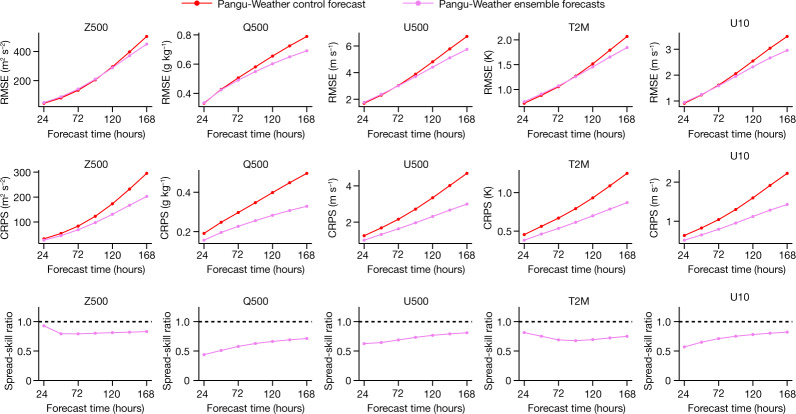
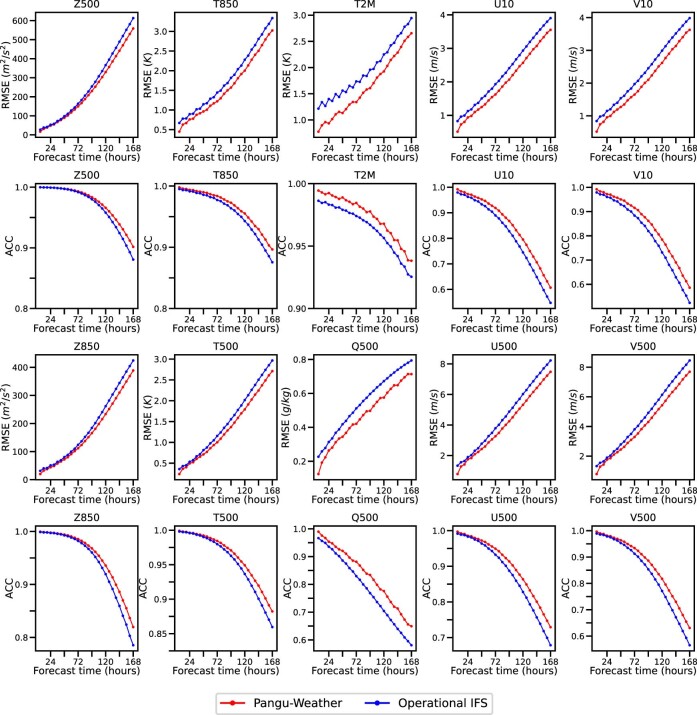
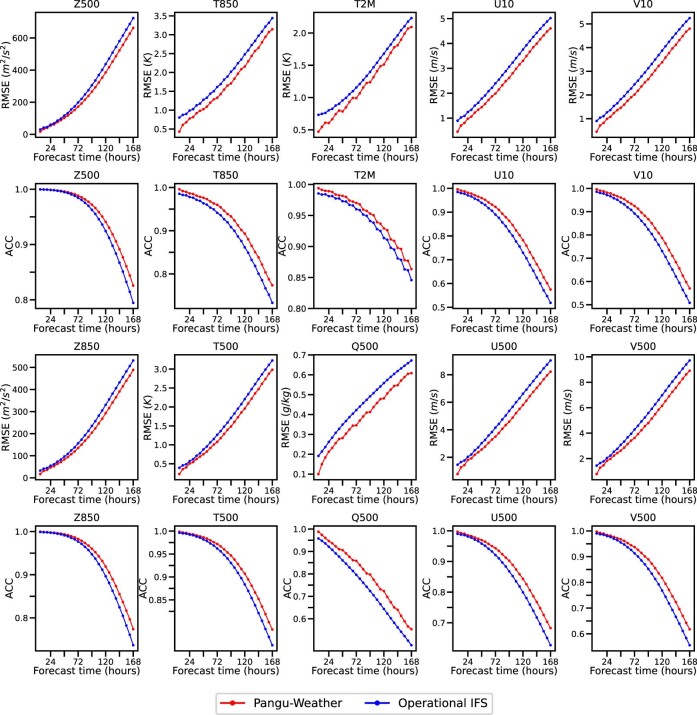
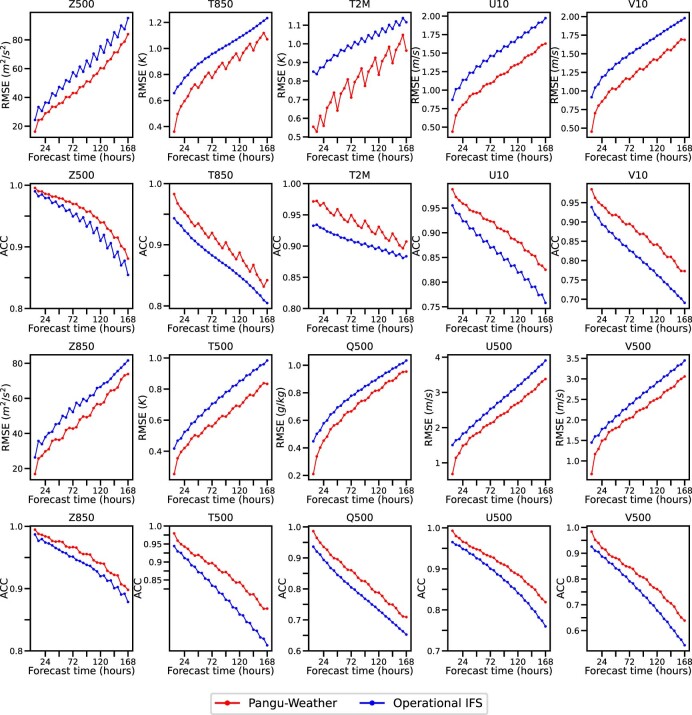
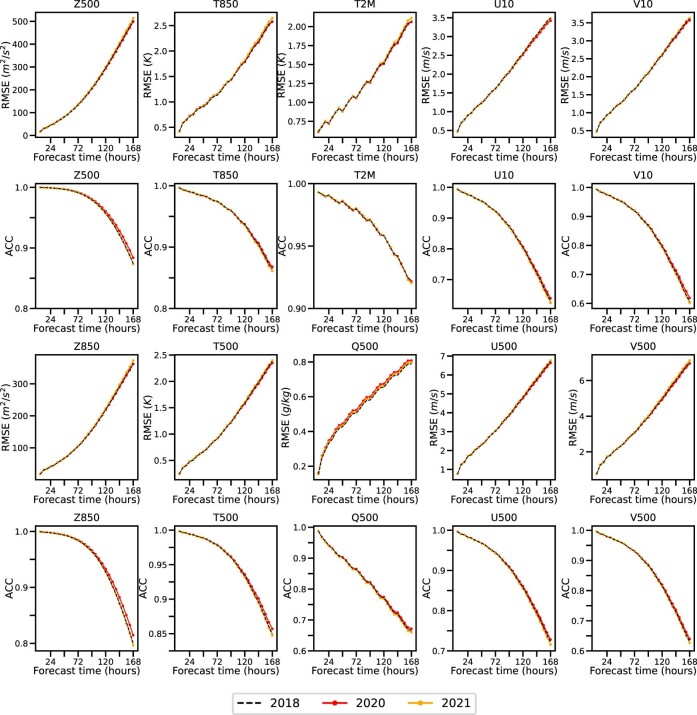
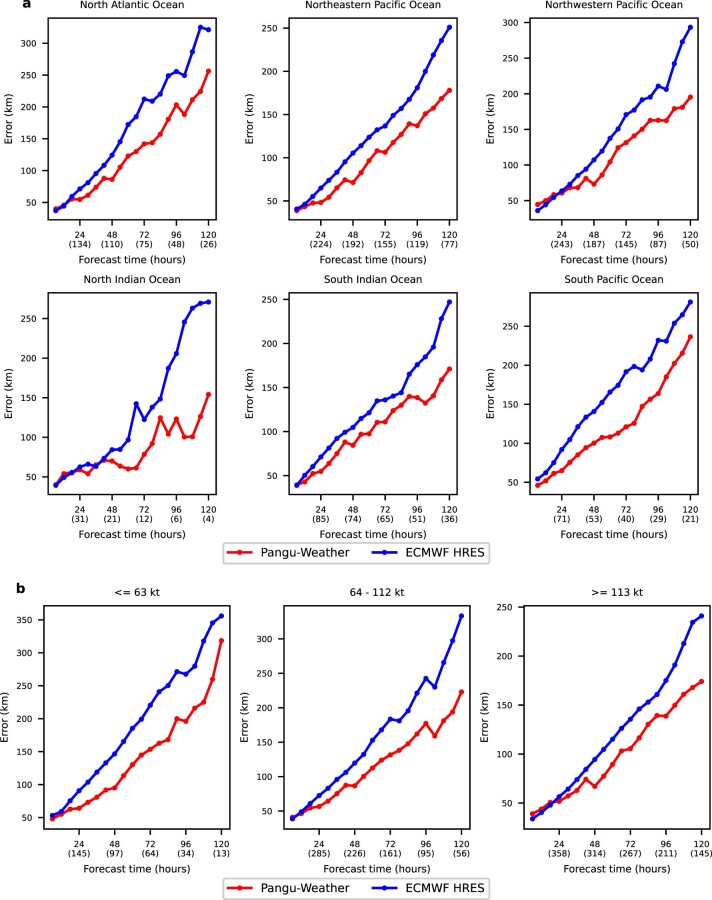
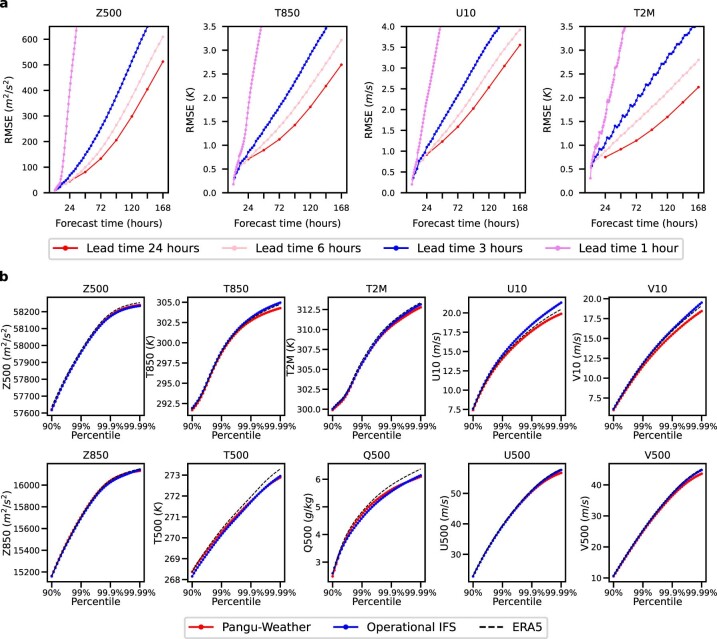
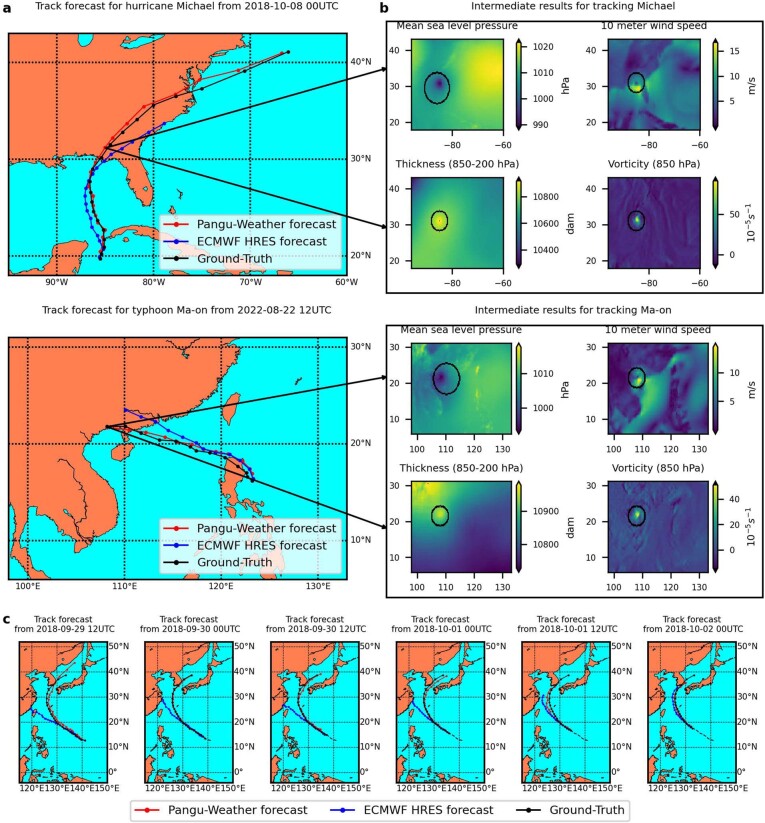
Weather forecasting is important for science and society. At present, the most accurate forecast system is the numerical weather prediction (NWP) method, which represents atmospheric states as discretized grids and numerically solves partial differential equations that describe the transition between those states 1 . However, this procedure is computationally expensive. Recently, artificial-intelligence-based methods 2 have shown potential in accelerating weather forecasting by orders of magnitude, but the forecast accuracy is still significantly lower than that of NWP methods. Here we introduce an artificial-intelligence-based method for accurate, medium-range global weather forecasting. We show that three-dimensional deep networks equipped with Earth-specific priors are effective at dealing with complex patterns in weather data, and that a hierarchical temporal aggregation strategy reduces accumulation errors in medium-range forecasting. Trained on 39 years of global data, our program, Pangu-Weather, obtains stronger deterministic forecast results on reanalysis data in all tested variables when compared with the world’s best NWP system, the operational integrated forecasting system of the European Centre for Medium-Range Weather Forecasts (ECMWF) 3 . Our method also works well with extreme weather forecasts and ensemble forecasts. When initialized with reanalysis data, the accuracy of tracking tropical cyclones is also higher than that of ECMWF-HRES.
Overview
The claims and statistics of this paper haven’t been checked yet.
Free: it reads the open-access text and checks the first 5 claims that cite a source we can check. Create a free account to check every claim.
Integrity signals
Registry
Cites
Statistics
Figures
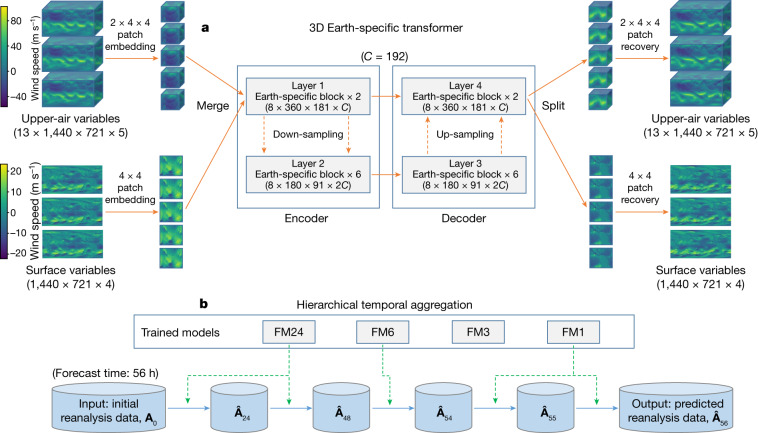
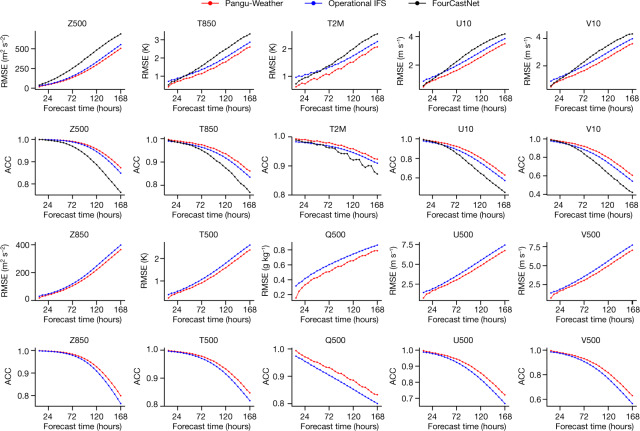
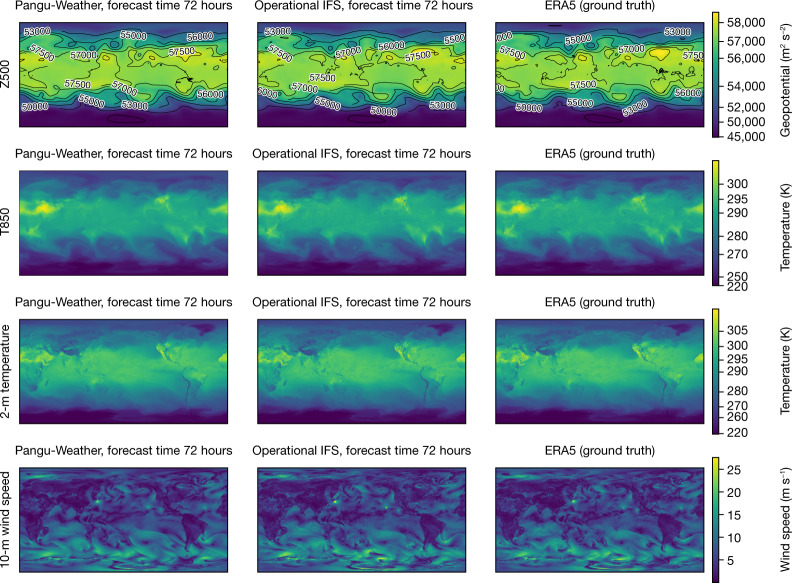
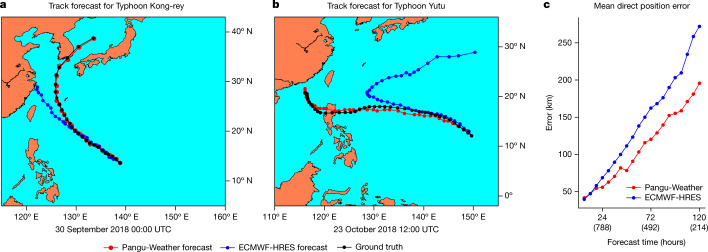
Verification
Claims the paper makes
The claims and statistics of this paper haven’t been checked yet.
Free: it reads the open-access text and checks the first 5 claims that cite a source we can check. Create a free account to check every claim.
Claims other papers make about this one
Each is checked against this paper’s own text: does it say what the citing paper says it does?
The source backs part of the claim, not all of it — or backs it for a different population, condition or comparison.
In the citing paper
“However, they do not produce calibrated uncertainty estimates4, which is essential for useful weather forecasts1.”
From Neural general circulation models for weather and climate (2024) · cites this paper as [4]
Experimental — accuracy not yet measuredThe source backs part of the claim, not all of it — or backs it for a different population, condition or comparison.
In the citing paper
“Recently, machine-learning models trained on reanalysis data have achieved comparable or better skill than GCMs for deterministic weather forecasting3,4.”
From Neural general circulation models for weather and climate (2024) · cites this paper as [4]
Experimental — accuracy not yet measuredThe source backs part of the claim, not all of it — or backs it for a different population, condition or comparison.
In the citing paper
“Existing machine-learning models have focused on deterministic prediction, and surpass deterministic numerical weather prediction in terms of the aggregate metrics for which they are trained3,4.”
From Neural general circulation models for weather and climate (2024) · cites this paper as [4]
Experimental — accuracy not yet measuredThe source backs part of the claim, not all of it — or backs it for a different population, condition or comparison.
In the citing paper
“Most state-of-the-art machine learning models utilized in medium-range weather forecasting are built upon encoder-decoder84 architectures27–29,85.”
From A machine learning model that outperforms conventional global subseasonal forecast models (2024) · cites this paper as [28]
Experimental — accuracy not yet measuredThe source backs part of the claim, not all of it — or backs it for a different population, condition or comparison.
In the citing paper
“However, these advances have focused primarily on single, deterministic forecasts that fail to represent uncertainty and estimate risk.”
From Probabilistic weather forecasting with machine learning (2025) · cites this paper as [3]
Experimental — accuracy not yet measured
4 more claims about this paper
Create a free account to see every claim other papers make about this one.
Self-check
Percentages, sums and reported differences re-computed from the paper’s own numbers.
The self-check needs the paper’s full text.
Citations
Cites
LeCun, Y., Bengio, Y., & Hinton, G. (2015) · Nature · doi:10.1038/nature14539 · Cited by 84,126
An Image is Worth 16x16 Words: Transformers for Image Recognition at Scale
Dosovitskiy, A., Beyer, L., Kolesnikov, A., Weissenborn, D., Zhai, X., Unterthiner, T., Dehghani, M., Minderer, M., Heigold, G., Gelly, S., et al. (2020) · arXiv · doi:10.48550/arxiv.2010.11929 · Cited by 47,472
Swin Transformer: Hierarchical Vision Transformer using Shifted Windows
Liu, Z., Lin, Y., Cao, Y., Hu, H., Wei, Y., Zhang, Z., Lin, S., & Guo, B. (2021) · 2021 IEEE/CVF International Conference on Computer Vision (ICCV) · doi:10.1109/iccv48922.2021.00986 · Cited by 35,534
Hersbach, H., Bell, B., Berrisford, P., Hirahara, S., Horányi, A., Muñoz‐Sabater, J., Nicolas, J., Peubey, C., Radu, R., Schepers, D., et al. (2020) · Quarterly Journal of the Royal Meteorological Society · doi:10.1002/qj.3803 · Cited by 31,882
Language Models are Few-Shot Learners
Brown, T. B., Mann, B., Ryder, N., Subbiah, M., Kaplan, J., Dhariwal, P., Neelakantan, A., Shyam, P., Sastry, G., Askell, A., et al. (2020) · arXiv · doi:10.48550/arxiv.2005.14165 · Cited by 23,372
Learning Transferable Visual Models From Natural Language Supervision
Radford, A., Kim, J. W., Hallacy, C., Ramesh, A., Goh, G., Agarwal, S., Sastry, G., Askell, A., Mishkin, P., Clark, J., et al. (2021) · arXiv · doi:10.48550/arxiv.2103.00020 · Cited by 15,293
Momentum Contrast for Unsupervised Visual Representation Learning
He, K., Fan, H., Wu, Y., Xie, S., & Girshick, R. (2020) · 2020 IEEE/CVF Conference on Computer Vision and Pattern Recognition (CVPR) · doi:10.1109/cvpr42600.2020.00975 · Cited by 13,347
Learning Transferable Architectures for Scalable Image Recognition
Zoph, B., Vasudevan, V., Shlens, J., & Le, Q. V. (2018) · 2018 IEEE/CVF Conference on Computer Vision and Pattern Recognition · doi:10.1109/cvpr.2018.00907 · Cited by 7,831
Convolutional LSTM Network: A Machine Learning Approach for Precipitation Nowcasting
Shi, X., Chen, Z., Wang, H., Yeung, D.-Y., Wong, W.-K., & Woo, W.-C. (2015) · arXiv · doi:10.48550/arxiv.1506.04214 · Cited by 7,709
Atmospheric Modeling, Data Assimilation and Predictability
Kalnay, E. (2002) · doi:10.1017/cbo9780511802270 · Cited by 3,391
Research works printed but not linked: 2
- Devlin, J., Chang, M. W., Lee, K. & Toutanova, K. BERT: pre-training of deep bidirectional transformers for language understanding. In Proc. Conference North American Chapter of the Association of Computational Linguistics Vol. 1, 4171–4186 (NAACL, 2019).
- Stensrud, D. J. Parameterization Schemes: Keys to Understanding Numerical Weather Prediction Models (Cambridge Univ. Press 2009).
Cited by
Items 201–300 of 1,006
Zhou, Y., Zhan, R., Wang, Y., Chen, P., Tan, Z., Xie, Z., & Nie, X. (2024) · Advances in Atmospheric Sciences · doi:10.1007/s00376-024-3282-z · Cited by 22
Improving Explainability of Deep Learning for Polarimetric Radar Rainfall Estimation
Li, W., Chen, H., & Han, L. (2024) · Geophysical Research Letters · doi:10.1029/2023gl107898 · Cited by 25
Artificial intelligence as a catalyst for combustion science and engineering
Ihme, M., & Chung, W. T. (2024) · Proceedings of the Combustion Institute · doi:10.1016/j.proci.2024.105730 · Cited by 29
He, J., Hu, Z., Wang, S., Mujeeb, A., & Yang, P. (2024) · Energy · doi:10.1016/j.energy.2024.133206 · Cited by 18
Liu, Z., Chen, H., Bai, L., Li, W., Ouyang, W., Zou, Z., & Shi, Z. (2024) · IEEE Transactions on Geoscience and Remote Sensing · doi:10.1109/tgrs.2024.3496895 · Cited by 34
Wang, X., Chen, K., Liu, L., Han, T., Li, B., & Bai, L. (2025) · IEEE International Conference on Acoustics Speech and Signal Processing · doi:10.1109/icassp49660.2025.10888556 · Cited by 28
“On a global scale, [Bi et al. , 2023; Lam et al. , 2023; Chen et al. , 2023; Zhong et al. , 2023] have leveraged ERA5 data to train models that predict future atmospheric variables for up to one week or even longer, based on atmospheric variables from the previous time step.”
InfluentialA Survey of Reasoning with Foundation ModelsPreprint
Sun, J., Zheng, C., Xie, E., Liu, Z., Chu, R., Liu, J., Xu, J., Ding, M., Li, H., Geng, M., et al. (2023) · OSF Preprints (OSF Preprints) · doi:10.31219/osf.io/ac4sp · Cited by 157
Soto, Á. M., Cervantes, A., & Soler, M. (2024) · Open Research Europe · doi:10.12688/openreseurope.17388.1 · Cited by 17
Applications of the Fourier neural operator in a regional ocean modeling and prediction
Choi, B., Jin, H. S., & Lkhagvasuren, B. (2024) · Frontiers in Marine Science · doi:10.3389/fmars.2024.1383997 · Cited by 31
Tang, R., Ng, K. K. H., Li, L., & Yang, Z. (2025) · Transportation Research Part C Emerging Technologies · doi:10.1016/j.trc.2025.105115 · Cited by 17
Probabilistic Diffusion Models Advance Extreme Flood Forecasting
Ou, Z., Nai, C., Pan, B., Zheng, Y., Shen, C., Jiang, P., Liu, X., Tang, Q., Li, W., & Pan, M. (2025) · Geophysical Research Letters · doi:10.1029/2025gl115705 · Cited by 35
“This finding underscores the value of ongoing efforts to advance meteorological prediction using DL (Bi et al., 2023; Price et al., 2025).”
Mahesh, A., Collins, W. D., Bonev, B., Brenowitz, N., Cohen, Y., Elms, J., Harrington, P., Kashinath, K., Kurth, T., North, J. S., et al. (2025) · Geoscientific model development · doi:10.5194/gmd-18-5575-2025 · Cited by 81
“…perturbations are stronger in the tropics than at the poles, in line with the Equator-to-pole moisture gradient These physical qualities of bred vectors are a benefit of using bred vectors over simple spherical noise, as in GraphCast-Perturbed (Price et al., 2023) or Perlin noise (Bi et al., 2023)”
A Survey on Spatio-Temporal Prediction: From Transformers to Foundation Models
Mao, Y., Zhou, H., Chen, L., Qi, R., Sun, Z., Rong, Y., He, X., Chen, M., Mumtaz, S., Frascolla, V., et al. (2025) · ACM Computing Surveys · doi:10.1145/3766546 · Cited by 29
“PanGu [81] injects deep networks with earth-specific prior knowledge, utilizing a 3D model to capture the relationships between atmospheric states at different pressure levels.”
Espinosa, R., Jiménez, F., & Palma, J. T. (2024) · Swarm and Evolutionary Computation · doi:10.1016/j.swevo.2024.101587 · Cited by 20
Combined dynamical-deep learning ENSO forecasts
Chen, Y., Jin, Y., Liu, Z., Shen, X., Chen, X., Lin, X., Zhang, R., Luo, J., Zhang, W., Duan, W., et al. (2025) · Nature Communications · doi:10.1038/s41467-025-59173-8 · Cited by 36
Self-citationCFDBench: A Comprehensive Benchmark for Machine Learning Methods in Fluid DynamicsPreprint
Luo, Y., Chen, Y., & Zhang, Z. (2023) · Preprints.org · doi:10.20944/preprints202309.1550.v1 · Cited by 106
Liu, G., Jiang, S., Zheng, M., Lin, S., Kong, Y., & Zhan, P. (2025) · Scientific Data · doi:10.1038/s41597-025-05789-w · Cited by 31
“In parallel, deep learning-based models, such as Aurora 25 and Pangu-Weather 26 , have demonstrated promising capabilities in improving weather forecasting accuracy.”
Improving global weather and ocean wave forecast with large artificial intelligence models
Ling, F., Ouyang, L., Boufeniza, R. L., Luo, J., Han, T., Zhong, X., & Bai, L. (2024) · Science China Earth Sciences · doi:10.1007/s11430-024-1452-3 · Cited by 31
“Recently, the emergence of Large AI Weather forecast Models (LWM), such as FourCastNet (Pathak et al., 2022), Pangu-Weather (Bi et al., 2023), GraphCast (Lam et al., 2023), FengWu (Chen K et al., 2023a), and FuXi (Chen L et al., 2023a), show the potential of AI-driven methods to surpass traditional…”
InfluentialAssimilating Observed Surface Pressure Into ML Weather Prediction Models
Slivinski, L., Whitaker, J. S., Frolov, S., Smith, T. A., & Agarwal, N. (2025) · Geophysical Research Letters · doi:10.1029/2024gl114396 · Cited by 29
“For example, the pure emulators FourCastNet (Pathak et al., 2022), Pan-guWeather (Bi et al., 2023), and GraphCast (Lam et al., 2023) have all shown performance competitive with state‐ of‐the‐art operational weather prediction models.”
Marabelli, M., & Davison, R. M. (2025) · The Journal of Strategic Information Systems · doi:10.1016/j.jsis.2025.101921 · Cited by 24
Data-driven global ocean modeling for seasonal to decadal prediction
Guo, Z., Lyu, P., Ling, F., Bai, L., Luo, J., Boers, N., Yamagata, T., Izumo, T., Cravatte, S., Capotondi, A. M., et al. (2025) · Science Advances · doi:10.1126/sciadv.adu2488 · Cited by 56
“Learning from atmospheric data, such models have achieved notable success in predicting global weather up to the medium range ( 20 – 23 ).”
FuXi-ENS: A machine learning model for efficient and accurate ensemble weather prediction
Zhong, X.-H., Chen, L., Li, H., Buizza, R., Liu, J., Feng, J., Zhu, Z.-J., Fan, X., Dai, K., Luo, J., et al. (2025) · Science Advances · doi:10.1126/sciadv.adu2854 · Cited by 39
“Despite this, recent ML-based deterministic weather forecasting models ( 22 , 23 , 43 ) have demonstrated improved TC track prediction accuracy compared to ECMWF high-resolution forecast, suggesting potential for further improvements.”
Unraveling Spatio-Temporal Foundation Models via the Pipeline Lens: A Comprehensive Review
Fang, Y., Miao, H., Liang, Y., Deng, L., Cui, Y., Zeng, X., Xia, Y., Zhao, Y. L., Pedersen, T. B., Jensen, C. N., et al. (2026) · IEEE Transactions on Knowledge and Data Engineering · doi:10.1109/tkde.2026.3651536 · Cited by 58
“Restrictions apply. embeddings ( e.g. , learnable embeddings [43] or sinusoidal encodings [44]) and spatial embeddings ( e.g. , earth-specific positional biases [45] and ground sample distance embeddings [48]).”
Huang, W., Yang, Z., Zhang, Y., Vogt, T., Armstrong, B., Yu, W., Xu, R., Yu, P., Liu, Y., Gasparrini, A., et al. (2024) · PLoS Medicine · doi:10.1371/journal.pmed.1004341 · Cited by 19
Kumar, P., Vogel, H., Bruckert, J., Muth, L. J., & Hoshyaripour, G. A. (2024) · npj Climate and Atmospheric Science · doi:10.1038/s41612-024-00652-y · Cited by 23
“This prominence is re fl ected in its diverse applications, spanning across various aspects including weather prediction 21,22 , the re fi nement of numerical model outputs through post-processing 23 , and even the substitution of pivotal model physics 24 and parameterizations 25,26 .”
Ensemble forecasting: A foray of dynamics into the realm of statistics
Feng, J., Toth, Z., Zhang, J., & Peña, M. (2024) · Quarterly Journal of the Royal Meteorological Society · doi:10.1002/qj.4745 · Cited by 21
“With developing machine-learning applications like recent data-driven weather modeling (Bi et al. , 2023; Chen et al. , 2023), spatiotemporal and cross-variable covariances may also be induced into statistically generated perturbations.”
Cheng, T., Chen, R., Lin, N., Liang, T., & Dinavahi, V. (2024) · IEEE Transactions on Power Systems · doi:10.1109/tpwrs.2024.3409729 · Cited by 24
Liu, R., Wang, J., Shen, Z.-H., & Shen, Y. (2024) · Energy storage materials · doi:10.1016/j.ensm.2024.103612 · Cited by 22
McGovern, A., Demuth, J. L., Bostrom, A., Wirz, C. D., Tissot, P. E., Cains, M. G., & Musgrave, K. D. (2024) · npj natural hazards. · doi:10.1038/s44304-024-00014-x · Cited by 21
Jevrejeva, S., Calafat, F. M., Dominicis, M. D., Hirschi, J., Mecking, J., Polton, J. A., Sinha, B., Wise, A., & Holt, J. (2024) · Earth s Future · doi:10.1029/2024ef004886 · Cited by 22
“…is opening further avenues for example, for running “hybrid” simulations where machine learning flanks “classical” modeling, as a tool to extract valuable information from the vast data sets, or as pragmatic (but black box like) forecasting systems (e.g., Bi et al., 2023; Sonnewald et al., 2021).”
Wei, M., Fang, G., Nikitas, N., & Ge, Y. (2024) · Journal of Wind Engineering and Industrial Aerodynamics · doi:10.1016/j.jweia.2024.105936 · Cited by 16
Wesselkamp, M., Chantry, M., Pinnington, E., Choulga, M., Boussetta, S., Kalweit, G., Bödecker, J., Dormann, C. F., Pappenberger, F., & Balsamo, G. (2025) · Geoscientific model development · doi:10.5194/gmd-18-921-2025 · Cited by 22
Xiong, Z., Zhang, Z., Gui, H., Chen, X., Hu, S., Gao, L., He, Y., Qiu, J., & Xin, Q. (2025) · IEEE Transactions on Geoscience and Remote Sensing · doi:10.1109/tgrs.2025.3543611 · Cited by 28
“D Earth-specific Transformer used in Pangu weather highlights that the encoder–decoder architecture and positional encoding can effectively handle complex patterns in meteorological data, thereby improving the accuracy of deterministic forecasts and extreme weather predictions [42].”
Self-citationRadford, J. T., Ebert‐Uphoff, I., & Stewart, J. Q. (2025) · Weather and Forecasting · doi:10.1175/waf-d-24-0081.1 · Cited by 21
Transformer-Based Water Quality Forecasting With Dual Patch and Trend Decomposition
Lin, Y., Qiao, J., Bi, J., Yuan, H., Wang, M., Zhang, J., & Zhou, M. (2024) · IEEE Internet of Things Journal · doi:10.1109/jiot.2024.3514133 · Cited by 19
“Recently, deep learning [28], [29], [30], [31] has been widely used in the time series forecasting.”
Zhang, C., Niu, X., Wu, H., Ding, Z., Chan, K. L., Kim, J., Wagner, T., & Liu, C. (2025) · Atmospheric chemistry and physics · doi:10.5194/acp-25-759-2025 · Cited by 19
Using deep learning to generate key variables in global mitigation scenarios
Li, P., Zhu, R., McJeon, H. C., Byers, E. A., Zhou, P., & Ou, Y. (2025) · Nature Climate Change · doi:10.1038/s41558-025-02352-8 · Cited by 22
AI Improves the Accuracy, Reliability, and Economic Value of Continental‐Scale Flood Predictions
Tran, V. N., Kim, T., Xu, D., Tran, H., Le, M., Tran, T., Kim, J., Tran, T. D., Wright, D. B., Restrepo, P. J., et al. (2025) · AGU Advances · doi:10.1029/2025av001678 · Cited by 21
“It additionally helps avoiding the accumulation of forecast errors, which is the case when applying a single trained model for sequential predictions (Bi et al., 2023; Tran, Ivanov, Tien Nguyen, et al., 2024).”
Mahesh, A., Collins, W. D., Bonev, B., Brenowitz, N., Cohen, Y., Harrington, P., Kashinath, K., Kurth, T., North, J. S., O'Brien, T. A., et al. (2025) · Geoscientific model development · doi:10.5194/gmd-18-5605-2025 · Cited by 52
Solving the many-electron Schrödinger equation with a transformer-based framework
Shang, H., Guo, C., Wu, Y., Li, Z., & Yang, J. (2025) · Nature Communications · doi:10.1038/s41467-025-63219-2 · Cited by 42
Protein–protein interaction and site prediction using transfer learning
Liu, T., Gao, H., Ren, X., Xu, G., Liu, B., Wu, N., Luo, H., Wang, Y., Tu, T., Yao, B., et al. (2023) · Briefings in Bioinformatics · doi:10.1093/bib/bbad376 · Cited by 18
A Four‐Dimensional Variational Constrained Neural Network‐Based Data Assimilation Method
Wang, W., Ren, K., Duan, B., Zhu, J., Li, X., Ni, W., Lu, J., & Yuan, T. (2024) · Journal of Advances in Modeling Earth Systems · doi:10.1029/2023ms003687 · Cited by 19
The Evidence Contraction Issue in Deep Evidential Regression: Discussion and Solution
Wu, Y., Shi, B., Dong, B., Zheng, Q., & Wei, H. (2024) · Proceedings of the AAAI Conference on Artificial Intelligence · doi:10.1609/aaai.v38i19.30172 · Cited by 29
Toward a Learnable Climate Model in the Artificial Intelligence Era
Huang, G., Wang, Y., Ham, Y., Mu, B., Tao, W., & Xie, C. (2024) · Advances in Atmospheric Sciences · doi:10.1007/s00376-024-3305-9 · Cited by 24
3-D Ocean Temperature Prediction via Graph Neural Network With Optimized Attention Mechanisms
Ou, M., Xu, S., Luo, B., Zhou, H., Zhang, M., Xu, P., & Zhu, H. (2024) · IEEE Geoscience and Remote Sensing Letters · doi:10.1109/lgrs.2024.3398709 · Cited by 18
Generative Diffusion for Regional Surrogate Models From Sea‐Ice Simulations
Finn, T. S., Durand, C., Farchi, A., Bocquet, M., Rampal, P., & Carrassi, A. (2024) · Journal of Advances in Modeling Earth Systems · doi:10.1029/2024ms004395 · Cited by 37
“In recent years, surrogate modeling with deep neural networks has made substantial progress in weather forecasting up to 15 days (Bi et al., 2023; Keisler, 2022; Lam et al., 2023; Pathak et al., 2022), which was seen as highly unlikely a few years ago (Dueben & Bauer, 2018; Palmer, 2022; Rasp &…”
Yu, H., Zhang, C., & Yu, L. (2024) · IEEE Journal of Selected Topics in Applied Earth Observations and Remote Sensing · doi:10.1109/jstars.2024.3517837 · Cited by 17
“…at handling nonlinear relationships between numerous features from diverse sources (such as satellite and street view images) and UHI, but their implementation processes are relatively opaque, focusing on global interpretability and making it challenging to consider feature interactions [46], [47].”
Bai, H., Gong, Z., Li, L., Ma, J., & Dogar, M. M. (2024) · Chaos Solitons & Fractals · doi:10.1016/j.chaos.2024.115917 · Cited by 17
Predicting atmospheric turbulence for secure quantum communications in free space
Jaouni, T., Scarfe, L., Bouchard, F., Krenn, M., Heshami, K., Colandrea, F. D., & Karimi, E. (2025) · Optics Express · doi:10.1364/oe.546606 · Cited by 24
Chen, X., Zhang, Y., Ye, A., Li, J., Hsu, K., & Sorooshian, S. (2025) · Environmental Modelling & Software · doi:10.1016/j.envsoft.2025.106350 · Cited by 17
Self-citationGDCM: Generalized data completion model for satellite observations
Wang, H., Zhou, Y., & Li, X. (2025) · Remote Sensing of Environment · doi:10.1016/j.rse.2025.114760 · Cited by 21
Huang, L., Zheng, Z., Zhu, G., Bi, H., Li, H., Liu, L., & Liu, L. (2025) · IEEE Journal of Selected Topics in Applied Earth Observations and Remote Sensing · doi:10.1109/jstars.2025.3574006 · Cited by 14
“Recently, the Pangu-Weather system was developed by the Huawei Cloud research and development team [44], which has powerful performance for forecasting meteorological data on a global scale.”
Cheng, X., Liu, B., Liu, X., Liu, E., & Huang, Z. (2025) · IEEE Transactions on Network Science and Engineering · doi:10.1109/tnse.2025.3587238 · Cited by 39
“In addition to general-purpose FMs for NLP or CV, domain-specific FMs are constantly emerging for various fields, such as time series prediction [14], weather forecasting [15], and remote sensing [16].”
AI‐Driven Weather Forecasts to Accelerate Climate Change Attribution of Heatwaves
Jiménez‐Esteve, B., Barriopedro, D., Johnson, J. E., & García‐Herrera, R. (2025) · Earth s Future · doi:10.1029/2025ef006453 · Cited by 28
“State‐of‐the‐art AIWP models such as Pangu‐ Weather (Bi et al., 2023), FourCastNet (Pathak et al., 2022), FourCastNet‐v2 (Bonev et al., 2023) or GraphCast (Lam et al., 2023) have already demonstrated strong capabilities in forecasting extreme events, such as HWs, extratropical storms, or tropical…”
InfluentialMulti‐Platform Observations of Severe Typhoon Koinu
He, J., Chan, P. W., Choy, C.-W., Cheung, P., Chan, Y. W., Lam, C., He, Y., Rong, P., Su, H., & Li, Z. M. (2024) · Earth and Space Science · doi:10.1029/2023ea003366 · Cited by 14
Forecasting Super Typhoon Saola and its effects on Hong Kong
Chan, P. W., He, Y., & Lui, Y. S. (2024) · Weather · doi:10.1002/wea.4569 · Cited by 14
Zhou, L., & Zhang, R. (2024) · Geophysical Research Letters · doi:10.1029/2023gl107347 · Cited by 17
Park, I., Ho, C.-H., Kim, J., Kim, J.-H., & Jun, S. (2024) · Atmospheric Research · doi:10.1016/j.atmosres.2024.107576 · Cited by 15
Spatiotemporal Meteorological Prediction Based on Fully Convolutional Neural Network
Zhang, J., Wang, B., Hua, M., Chen, Z., Liang, S., & Kang, X. (2024) · IEEE Transactions on Geoscience and Remote Sensing · doi:10.1109/tgrs.2024.3439390 · Cited by 15
Multi‐view street view image fusion for city‐scale assessment of wind damage to building clusters
Gu, D., Shuai, Q., Zhang, N., Jin, N. J., Zheng, Z. X., Xu, Z., & Xu, Y. (2024) · Computer-Aided Civil and Infrastructure Engineering · doi:10.1111/mice.13324 · Cited by 18
“Notably, Huawei’s Pangu-Weather, a medium-range global weather forecasting model trained on 39 years of meteorological data, enables rapid and accurate prediction of weather conditions, including extreme events such as typhoons, within hours to days in advance (Bi et al., 2023).”
Gao, H., Shen, C., Wang, X., Chan, P. W., Hon, K. K., & Li, J. (2024) · Nature Communications · doi:10.1038/s41467-024-51597-y · Cited by 14
Li, D., Zeng, Z., Wang, Z., & Yang, H. (2025) · Knowledge-Based Systems · doi:10.1016/j.knosys.2025.113345 · Cited by 36
“Based on the classical Sincos absolute positional encoding method [54], we adopt a 3D approach to encode the position information on the x-, y, and z-axes separately, and integrate them to obtain the final 3D spatial positional encoding, as shown in Eq.”
Toward Calibrated Ensembles of Neural Weather Model Forecasts
Baño‐Medina, J., Sengupta, A., Watson‐Parris, D., Hu, W., & Monache, L. D. (2025) · Journal of Advances in Modeling Earth Systems · doi:10.1029/2024ms004734 · Cited by 18
“We choose the Root Mean Squared Error (RMSE) as one of our primary metrics to evaluate the methods since it has been widely utilized in previous studies (Bi et al., 2023; Lam et al., 2023; Pathak et al., 2022; Rasp et al., 2020).”
InfluentialChakraborty, D., Chung, S. W., Arcomano, T., & Maulik, R. (2024) · Computer Methods in Applied Mechanics and Engineering · doi:10.1016/j.cma.2024.117442 · Cited by 20
An Online Paleoclimate Data Assimilation With a Deep Learning‐Based Network
Sun, H., Lei, L., Liu, Z., Ning, L., & Tan, Z. (2025) · Journal of Advances in Modeling Earth Systems · doi:10.1029/2024ms004675 · Cited by 18
“The deep learning‐based networks, including the NowcastNet (Zhang et al., 2023), FourCastNet (Pathak et al., 2022), Pangu‐Weather (Bi et al., 2023), GraphCast (Lam et al., 2023) and so on, can provide high‐quality weather forecasts from short terms to medium ranges, with comparable or better…”
Zhang, L., Cheng, W., Zhang, S., Xing, J., Nie, Z., Chen, X., Lan, D., Liu, Y., Yang, Y., & Pang, Z. (2025) · IEEE Transactions on Industrial Informatics · doi:10.1109/tii.2025.3575118 · Cited by 20
“Pangu-Weather[53]andClimaX[54]haverevolution-izedweatherpredictionwithunparalleledaccuracyandreduced computationaloverhead.”
Self-citationMayer, M. J., Yang, D., & Markovics, D. (2025) · Energy Conversion and Management · doi:10.1016/j.enconman.2025.120303 · Cited by 18
ADAF: An Artificial Intelligence Data Assimilation Framework for Weather Forecasting
Xiang, Y., Jin, W., Dong, H., Weyn, J. A., Bai, M., Fang, Z., Zhao, P., Sun, H., Thambiratnam, K., Zhang, Q., et al. (2025) · Journal of Advances in Modeling Earth Systems · doi:10.1029/2024ms004839 · Cited by 30
“Thus, the analysis field is indispensable for accurate weather forecasting, serving as initial conditions in both traditional numerical and AI forecasting models (Bi et al., 2023; L. Chen et al., 2023; K. Chen et al., 2023; Lam et al., 2023; Pathak et al., 2022).”
Deep learning for air pollutant forecasting: opportunities, challenges, and future directions
Tao, C., Wang, Y., Wang, Y., Zheng, Z., & Zhang, H. (2025) · Frontiers of Environmental Science & Engineering · doi:10.1007/s11783-025-2092-6 · Cited by 20
“…applying DL techniques to model the highly non-linear, multi-scale spatiotemporal characteristics of meteorological dynamics for weather forecasting, as a way to break through the limits of tradi-tional numerical models (Bi et al., 2023; Lam et al., 2023; Kochkov et al., 2024; Price et al., 2025).”
Self-citationChen, B., Sheng, Z., & He, Y. (2023) · Geophysical Research Letters · doi:10.1029/2023gl106115 · Cited by 14
Lie–Poisson Neural Networks (LPNets): Data-based computing of Hamiltonian systems with symmetries
Eldred, C., Gay–Balmaz, F., Huraka, S., & Putkaradze, V. (2024) · Neural Networks · doi:10.1016/j.neunet.2024.106162 · Cited by 27
Enhancing Hydrological Variable Prediction through Multitask LSTM Models
Yan, Y., Li, G., Li, Q., & Zhu, J. (2024) · Water · doi:10.3390/w16152156 · Cited by 18
“In 2023, Bi and colleagues introduced the Pangu weather forecasting system, trained using a 39-year reanalysis dataset ([46]).”
Chowell, G., & Skums, P. (2024) · Physics of Life Reviews · doi:10.1016/j.plrev.2024.10.011 · Cited by 17
Miao, Z., Zhang, Y., Wu, J., Jing, G., Piao, X., & Yin, B. (2024) · IEEE Transactions on Geoscience and Remote Sensing · doi:10.1109/tgrs.2024.3486684 · Cited by 15
“Furthermore, Bi et al. [20] proposed an accurate, medium-range global weather forecasting method based on artificial intelligence.”
MethodLockwood, J. W., Gori, A., & Gentine, P. (2024) · Journal of Geophysical Research Machine Learning and Computation · doi:10.1029/2024jh000375 · Cited by 32
Yuan, S., Wang, G., Mu, B., & Zhou, F. (2024) · Advances in Atmospheric Sciences · doi:10.1007/s00376-024-3313-9 · Cited by 22
Large AI Models and Their Applications: Classification, Limitations, and Potential Solutions
Bi, J., Wang, Z., Yuan, H., Shi, X., Wang, Z., Zhang, J., Zhou, M., & Buyya, R. (2025) · Software Practice and Experience · doi:10.1002/spe.3408 · Cited by 21
“For example, with the assistance of Huawei Cloud’s Pangu LM [66], the screening process for drug molecules has been dramatically accelerated, shortening the lead drug research and development cycle from several years to approximately 1 month.”
Potential for equation discovery with AI in the climate sciences
Huntingford, C., Nicoll, A. J., Klein, C. M., & Ahmad, J. A. (2025) · Earth System Dynamics · doi:10.5194/esd-16-475-2025 · Cited by 21
“AI methods are proposed to support the mitigation of climate change (e.g Kaack et al., 2022; Chen et al., 2023; Rolnick et al., 2023) and climate research itself (e. .”
Li, Y., Duan, W., Han, W., Li, H., & Qin, X. (2025) · Journal of Geophysical Research Atmospheres · doi:10.1029/2024jd043261 · Cited by 19
“…with examples including FourCastNet (2022) (Pathak et al., 2022), GraphCast (2023) (Lam et al., 2023), NowcastNet (2023) (Y. Zhang et al., 2023), Pangu‐Weather (2023) (Bi et al., 2023), Fengwu (2023) (K. Chen et al., 2023), FuXi (2023) (L. Chen et al., 2023), and AIFS (2024) (Lang et al., 2024).”
Development of an offline and online hybrid model for the Integrated Forecasting System
Farchi, A., Chrust, M., Bocquet, M., & Bonavita, M. (2025) · Quarterly Journal of the Royal Meteorological Society · doi:10.1002/qj.4934 · Cited by 27
“In this section, we introduce the main methodological aspects of the present work, which are the same as in our previous work (Farchi et al. , 2023).”
Dastani, M., Mardaneh, J., & Rostamian, M. (2025) · Scientific Reports · doi:10.1038/s41598-025-03074-9 · Cited by 19
Applications of Machine Learning and Artificial Intelligence in Tropospheric Ozone Research
Hickman, S. H. M., Kelp, M., Griffiths, P. T., Doerksen, K., Miyazaki, K., Pennington, E. A., Koren, G., Iglesias‐Suarez, F., Schultz, M. G., Chang, K., et al. (2025) · Geoscientific model development · doi:10.5194/gmd-18-8777-2025 · Cited by 25
“There exists a growing number of studies forecasting ozone on short-(hourly) (Yafouz et al., 2022) and longer-term (Du et al., 2022; Chen et al., 2023) timescales, spanning from city-(Ojha et al., 2021) to regional-level (Or-tiz et al., 2021) spatial scales.”
Physics-based models outperform AI weather forecasts of record-breaking extremes
Zhang, Z., Fischer, E. M., Zscheischler, J., & Engelke, S. (2026) · Science Advances · doi:10.1126/sciadv.aec1433 · Cited by 80
“Because of limited data availability [GraphCast forecasts are only available for 2018 and 2020 on WeatherBench 2 ( 31 ), and Fuxi fore-casts are only available for 2020], the evaluation is shown for a single year only as in most previous studies ( 8 , 15 ).”
InfluentialMachine learning data practices through a data curation lens: An evaluation framework
Bhardwaj, E., Gujral, H., Wu, S., Zogheib, C., Maharaj, T., & Becker, C. (2024) · ACM Conference on Fairness, Accountability, and Transparency (FAccT) · doi:10.1145/3630106.3658955 · Cited by 44
Brecht, R., & Bihlo, A. (2024) · Geophysical Research Letters · doi:10.1029/2023gl107718 · Cited by 17
A novel physics-aware graph network using high-order numerical methods in weather forecasting model
Seol, Y., Kim, S., Jung, M., & Hong, Y. (2024) · Knowledge-Based Systems · doi:10.1016/j.knosys.2024.112158 · Cited by 14
Alibudbud, R. C., Aruta, J. J. B. R., Sison, K. A., & Guinto, R. (2024) · International Review of Psychiatry · doi:10.1080/09540261.2024.2363373 · Cited by 13
“For instance, AI-based approaches have demonstrated encouraging outcomes in predicting medium-range global weather patterns, including extreme weather events, achieving accuracy levels comparable to, or surpassing, those of leading numerical weather prediction models (Bi et al., 2023).”
Pic, R., Dombry, C., Naveau, P., & Taillardat, M. (2025) · Advances in statistical climatology, meteorology and oceanography · doi:10.5194/ascmo-11-23-2025 · Cited by 32
“to ECMWF deterministic high-resolution forecasts (Keisler, 2022; Pathak et al., 2022; Bi et al., 2023; Lam et al., 2022; Chen et al., 2023).”
Comparative study of cloud evolution for rainfall nowcasting using AI-based deep learning algorithms
Jiang, X., Chen, J., Chen, X., Wong, W. K., Wang, M., & Wang, S. (2024) · Journal of Hydrology · doi:10.1016/j.jhydrol.2024.131593 · Cited by 15
Self-citationLing, X., Li, C., Zhu, L., Qin, F., Zhu, P., & Huang, Y. (2024) · IEEE Transactions on Geoscience and Remote Sensing · doi:10.1109/tgrs.2024.3444789 · Cited by 15
Liu, Z., Chen, H., Bai, L., Li, W., Chen, K., Wang, Z., Ouyang, W., Zou, Z., & Shi, Z. (2024) · IEEE Transactions on Geoscience and Remote Sensing · doi:10.1109/tgrs.2024.3447073 · Cited by 16
“These efforts utilize large-scale gridded historical meteorological field data, combined with advanced models from computer vision, and have demonstrated powerful performance in many forecasting tasks [4], [5], [6], [7], even surpassing the long-developed numerical weather prediction systems [8].”
MethodMu, B., Cui, Y., Yuan, S., & Qin, B. (2024) · npj Climate and Atmospheric Science · doi:10.1038/s41612-024-00741-y · Cited by 20
“In recent years, deep learning algorithms have emerged as powerful toolsthatsigni fi cantlyadvanceweatherandclimateresearch,particularlyin modeling and predicting complex processes 17 – 24 .”
Khaira, U., Cerrai, D., Thompson, G. J., & Astitha, M. (2024) · Journal of Hydrology · doi:10.1016/j.jhydrol.2024.132113 · Cited by 14
Xie, J., Hsu, P., Hu, Y., Zhang, H., & Ye, M. (2024) · Geophysical Research Letters · doi:10.1029/2024gl111076 · Cited by 16
“…recognition, efficient parallel training, relatively low computational cost, and interpretability (Delaunay & Christensen, 2022; Shin et al., 2024; Xie et al., 2023; Yang et al., 2023), we employed it to develop SAT prediction models that incorporate the source of predictability provided by…”
Self-citationForecasting of Tropospheric Delay Using AI Foundation Models in Support of Microwave Remote Sensing
Ding, J., Mi, X., Chen, W., Chen, J., Wang, J., Zhang, Y., Awange, J. L., Soja, B. S., Bai, L., Deng, Y., et al. (2024) · IEEE Transactions on Geoscience and Remote Sensing · doi:10.1109/tgrs.2024.3488727 · Cited by 20
“While slightly less accurate than IFS, FourCastNet offers significantly faster predictions and energy savings [43], making it a valuable addition to the forecasting landscape.”
Feldmann, M., Beucler, T., Gomez, M. S., & Martius, O. (2024) · Geophysical Research Letters · doi:10.1029/2024gl110960 · Cited by 19
“D visual earth transformer to encode the relative location on a sphere and additionally employs a hierarchical temporal aggregation, combining a 24h-prediction model with a 6h-prediction model (Bi et al., 2023).”
City AI: a strategic framework for urban artificial intelligence application and development
Zhu, D., & Liu, H. (2025) · Urban Informatics · doi:10.1007/s44212-025-00077-9 · Cited by 22
“…on the other hand, it is important to maintain R&D investment in technology routes outside of the existing architecture, and to encourage a diversity of technological implementations, including industry large models (e.g., the prominence of large model in weather forecasting (Bi et al., 2023)).”
Zhou, Z., Duan, W., Yang, R., Qin, X., & Li, Y. (2025) · Atmospheric Research · doi:10.1016/j.atmosres.2025.108313 · Cited by 15
Husain, S. Z., Šeparović, L., Caron, J.-F., Aider, R., Buehner, M., Chamberland, S., Lapalme, E., McTaggart‐Cowan, R., Subich, C. J., Vaillancourt, P., et al. (2025) · Weather and Forecasting · doi:10.1175/waf-d-24-0139.1 · Cited by 40
An Hourly Dataset of Moisture Budget Components Over the Indian Subcontinent (1940–2024)
Raghuvanshi, A. S., & Agarwal, A. (2025) · Scientific Data · doi:10.1038/s41597-025-06044-y · Cited by 15
“The dataset is publicly available via the Copernicus Climate Change Service Climate Data Store (https://cds.climate.copernicus.eu/datasets) and has been widely applied in numerous climate and weather studies, including recent advances in machine learning-based weather forecasting 27,28 .”
Metadata
- Authors
- Bi, K., Xie, L., Zhang, H., Chen, X., Gu, X., & Tian, Q.
- Affiliations
- Huawei Technologies (China) (CN)
- Corresponding author
- Tian, Qi
- Venue
- Nature
- Published
- 2023-07-05
- Volume
- 619
- Issue
- 7970
- Pages
- 533-538
- ISSN
- 0028-0836 (ISSN-L)
- 1476-4687
- PMC
- PMC10356604
- OpenAlex
- W4383218913
- Semantic Scholar
- 6a78c73c92d5e5d9759b46eff892baf1d6e83754
- Cited by
- 1,670
- References
- 36
- Citations by year
- 2026: 565 · 2025: 594 · 2024: 444 · 2023: 67
- FWCI
- 184.37
- Type
- journal article
- Language
- en
- Update notices
- correction (2023-09-14)
- Open access
- hybrid
- doi.org
- Licence
- cc-by
- creativecommons.org/licenses/by/4.0 (tdm)
- creativecommons.org/licenses/by/4.0 (vor)
- Locations
- Nature (publishedVersion, cc-by)
- PubMed Central (publishedVersion, cc-by)
- PubMed (publishedVersion)
- RePEc: Research Papers in Economics (submittedVersion)
- Funders
- National Oceanic and Atmospheric Administration
- Topics
- Physical Sciences › Earth and Planetary Sciences › Atmospheric Science › Meteorological Phenomena and Simulations
- Physical Sciences › Environmental Science › Environmental Engineering › Hydrological Forecasting Using AI
- Social Sciences › Transportation › Traffic Prediction and Management Techniques
- Keywords
- medium-range weather forecasting, global weather forecasting, 3D neural networks, Pangu-Weather, deterministic forecasting, tropical cyclone tracking, extreme weather prediction, ensemble forecasting, reanalysis data, ECMWF comparison
About these checks
Registry, retraction, Cites and statistics results are computed, not judged, with one exception: a printed reference that no index lists is read once by a model before it counts as a citation error. Claims are extracted by a model and kept only when their quote appears verbatim in the text; each cited source is then checked, with a model’s help, for whether it says what the claim relies on. Those verdicts can be wrong — read the claim’s quote and the cited source before relying on one.
Statistics and arithmetic are recomputed, not judged.
Confidence bands are shown only for fields calibrated on our annotated test set. None is calibrated yet, so no band is shown.
What counts as a claim ›How we measure confidence ›How we check this ›
Are you an author, or do you see a problem with this page? Request a review
Data sources
Bibliographic data: Semantic Scholar, OpenAlex, Crossref.
Contains information from the Semantic Scholar Academic Graph Datasets, made available under the ODC Attribution License (ODC-BY 1.0).
Semantic Scholar’s data is described in: Kinney, R., et al. (2023). The Semantic Scholar Open Data Platform. arXiv:2301.10140.
