

Accurate medium-range global weather forecasting with 3D neural networks
Open accessThe DOI matches its Crossref record; 41 of the 41 references it cites were found in a registry or an index.
Abstract
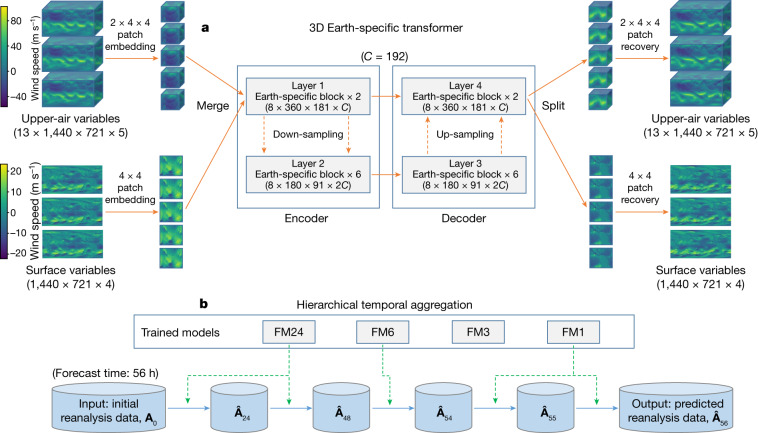
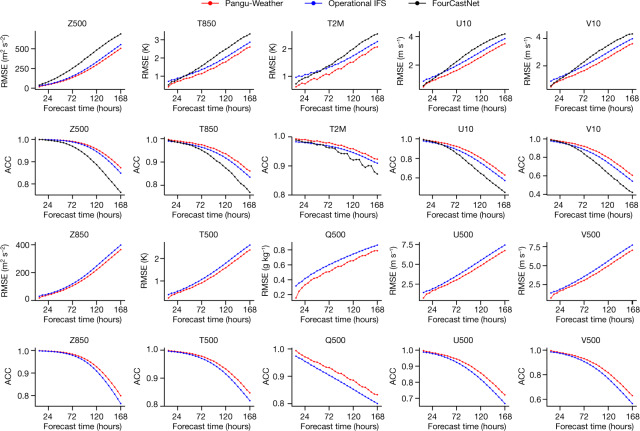
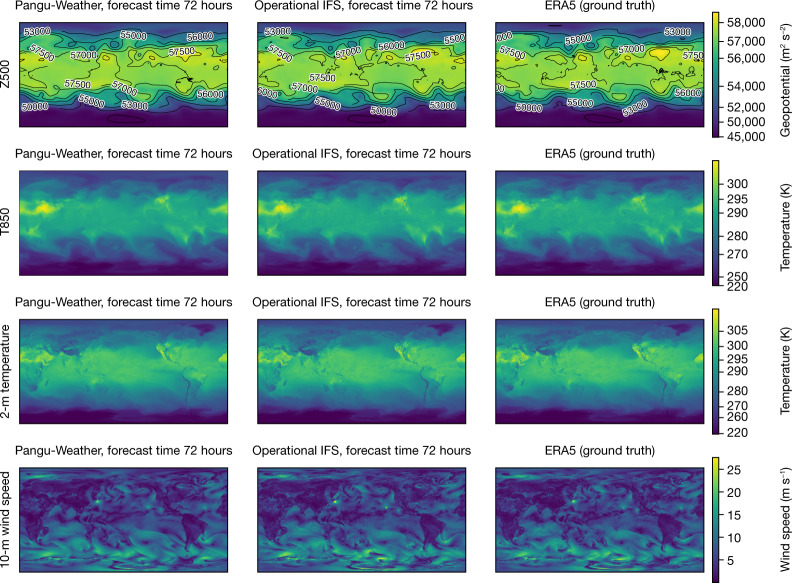
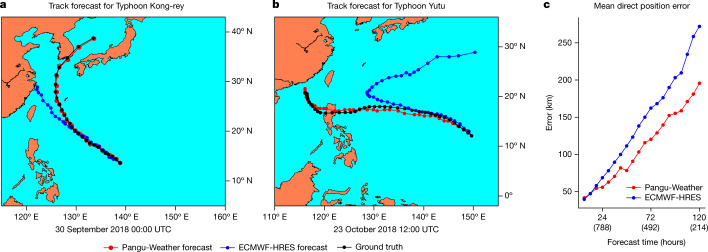
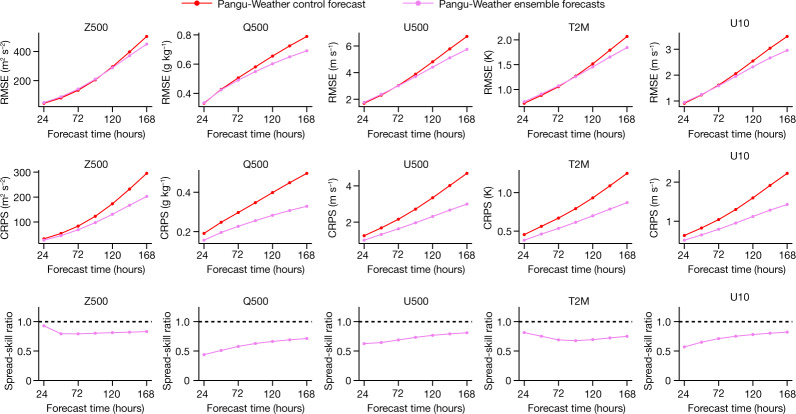
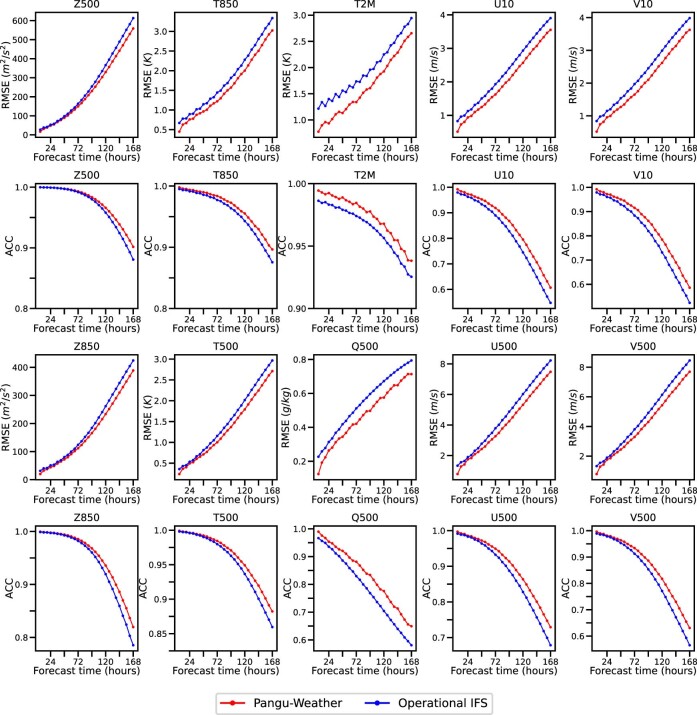
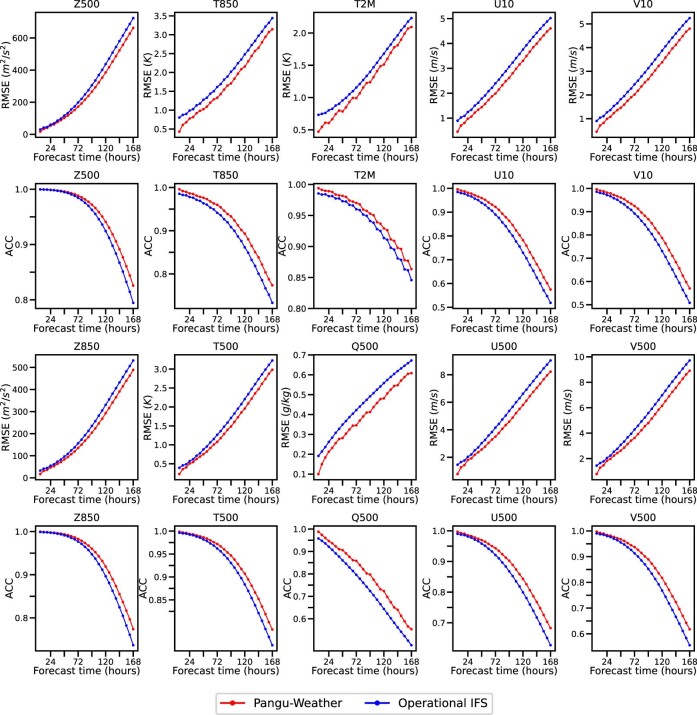
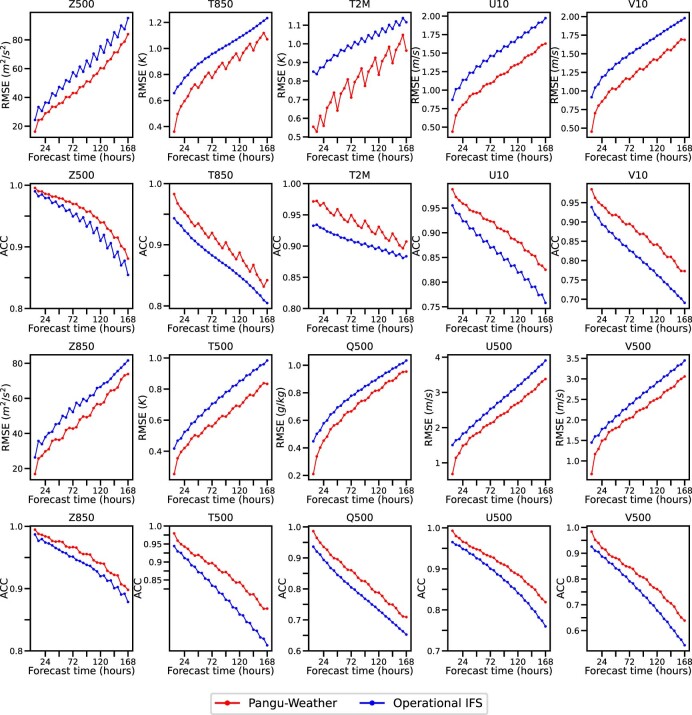
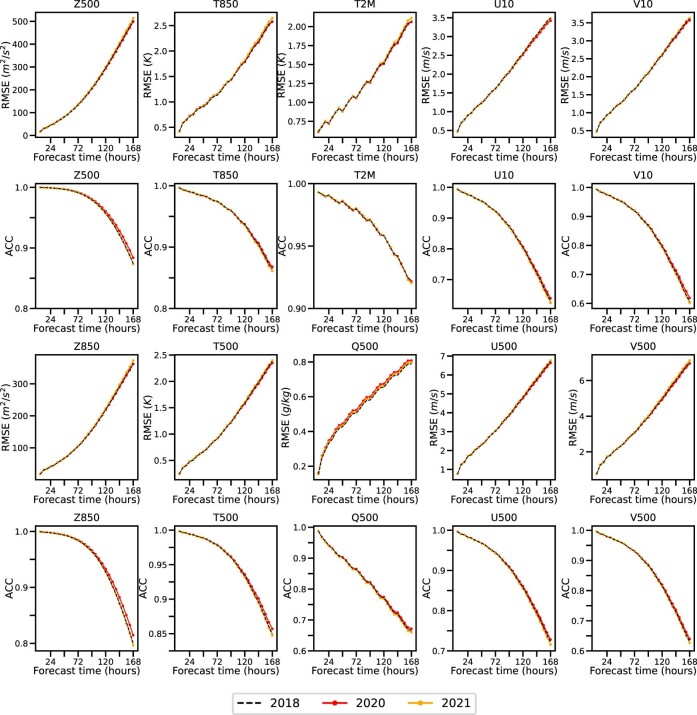
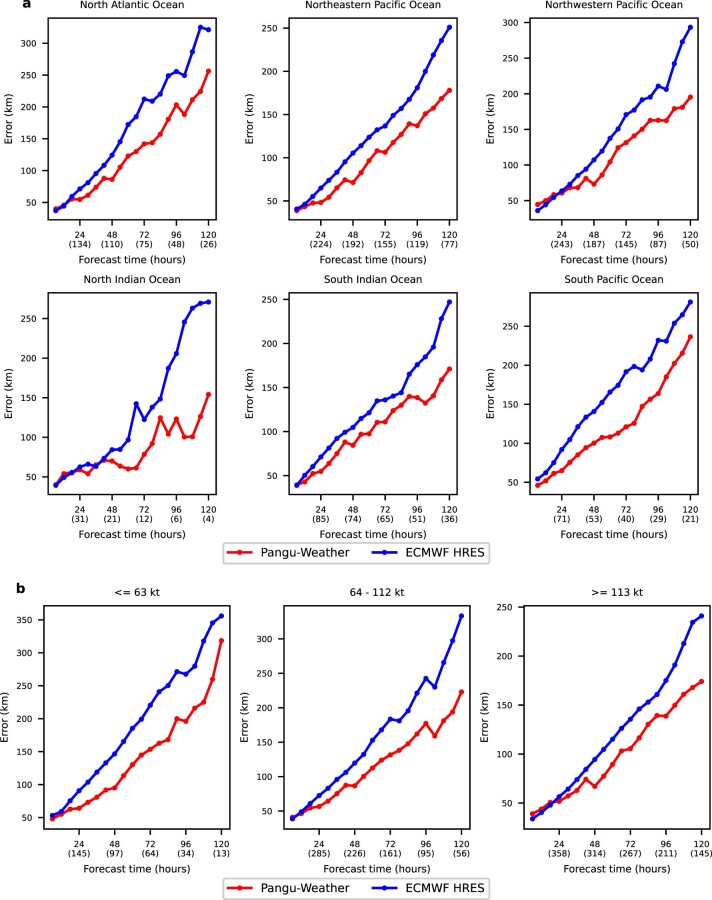
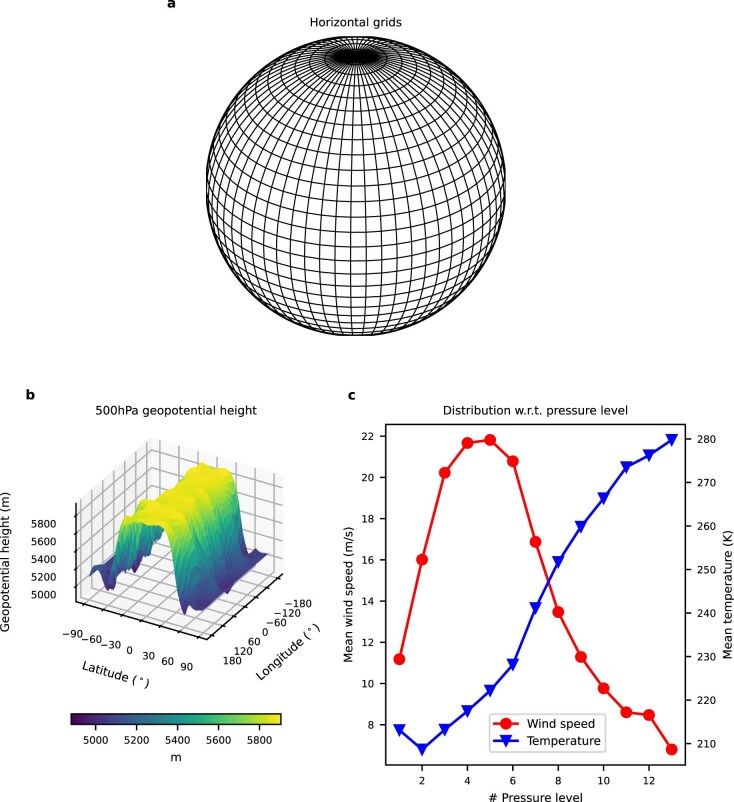
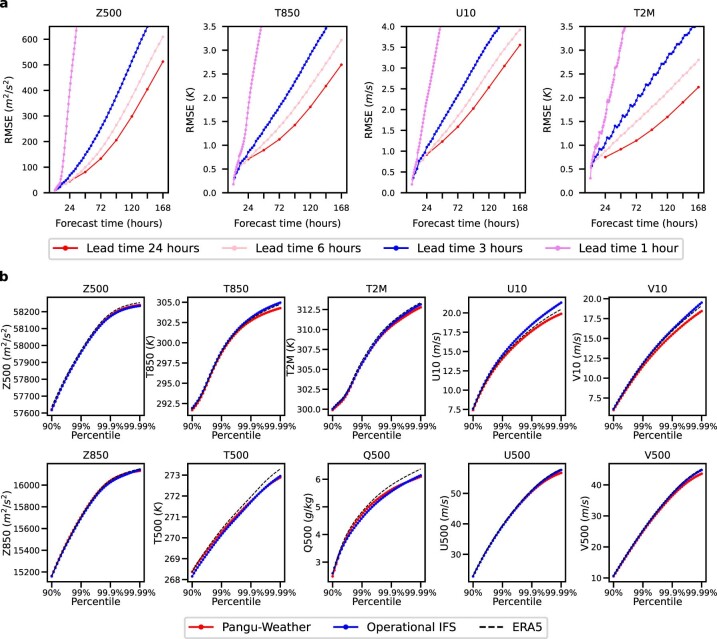
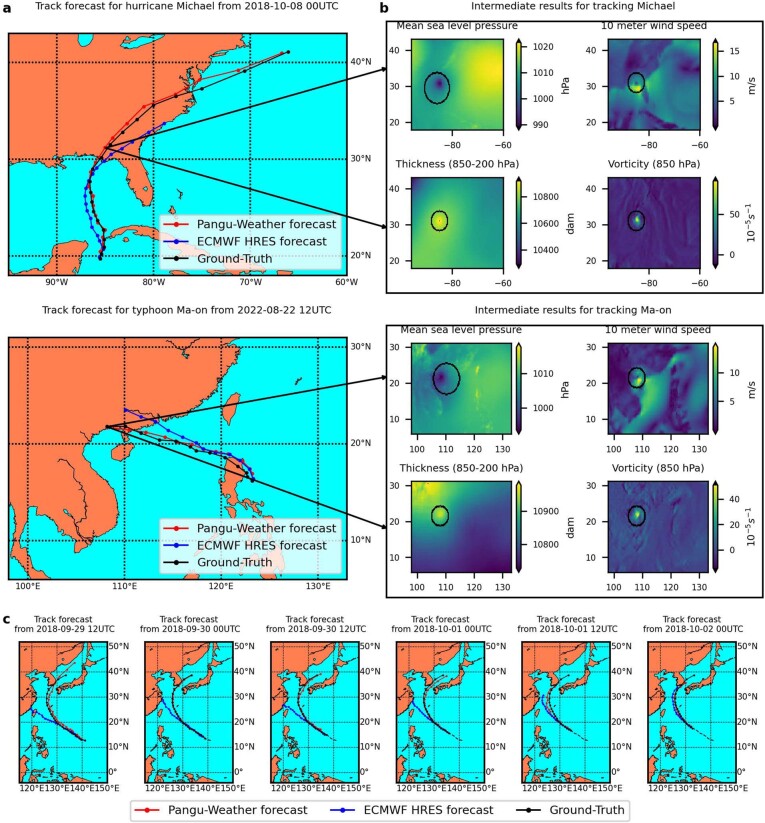
Weather forecasting is important for science and society. At present, the most accurate forecast system is the numerical weather prediction (NWP) method, which represents atmospheric states as discretized grids and numerically solves partial differential equations that describe the transition between those states 1 . However, this procedure is computationally expensive. Recently, artificial-intelligence-based methods 2 have shown potential in accelerating weather forecasting by orders of magnitude, but the forecast accuracy is still significantly lower than that of NWP methods. Here we introduce an artificial-intelligence-based method for accurate, medium-range global weather forecasting. We show that three-dimensional deep networks equipped with Earth-specific priors are effective at dealing with complex patterns in weather data, and that a hierarchical temporal aggregation strategy reduces accumulation errors in medium-range forecasting. Trained on 39 years of global data, our program, Pangu-Weather, obtains stronger deterministic forecast results on reanalysis data in all tested variables when compared with the world’s best NWP system, the operational integrated forecasting system of the European Centre for Medium-Range Weather Forecasts (ECMWF) 3 . Our method also works well with extreme weather forecasts and ensemble forecasts. When initialized with reanalysis data, the accuracy of tracking tropical cyclones is also higher than that of ECMWF-HRES.
Overview
The claims and statistics of this paper haven’t been checked yet.
Free: it reads the open-access text and checks the first 5 claims that cite a source we can check. Create a free account to check every claim.
Integrity signals
Registry
Cites
Statistics
Figures
Verification
Claims the paper makes
The claims and statistics of this paper haven’t been checked yet.
Free: it reads the open-access text and checks the first 5 claims that cite a source we can check. Create a free account to check every claim.
Claims other papers make about this one
Each is checked against this paper’s own text: does it say what the citing paper says it does?
The source backs part of the claim, not all of it — or backs it for a different population, condition or comparison.
In the citing paper
“However, they do not produce calibrated uncertainty estimates4, which is essential for useful weather forecasts1.”
From Neural general circulation models for weather and climate (2024) · cites this paper as [4]
Experimental — accuracy not yet measuredThe source backs part of the claim, not all of it — or backs it for a different population, condition or comparison.
In the citing paper
“Recently, machine-learning models trained on reanalysis data have achieved comparable or better skill than GCMs for deterministic weather forecasting3,4.”
From Neural general circulation models for weather and climate (2024) · cites this paper as [4]
Experimental — accuracy not yet measuredThe source backs part of the claim, not all of it — or backs it for a different population, condition or comparison.
In the citing paper
“Existing machine-learning models have focused on deterministic prediction, and surpass deterministic numerical weather prediction in terms of the aggregate metrics for which they are trained3,4.”
From Neural general circulation models for weather and climate (2024) · cites this paper as [4]
Experimental — accuracy not yet measuredThe source backs part of the claim, not all of it — or backs it for a different population, condition or comparison.
In the citing paper
“Most state-of-the-art machine learning models utilized in medium-range weather forecasting are built upon encoder-decoder84 architectures27–29,85.”
From A machine learning model that outperforms conventional global subseasonal forecast models (2024) · cites this paper as [28]
Experimental — accuracy not yet measuredThe source backs part of the claim, not all of it — or backs it for a different population, condition or comparison.
In the citing paper
“However, these advances have focused primarily on single, deterministic forecasts that fail to represent uncertainty and estimate risk.”
From Probabilistic weather forecasting with machine learning (2025) · cites this paper as [3]
Experimental — accuracy not yet measured
4 more claims about this paper
Create a free account to see every claim other papers make about this one.
Self-check
Percentages, sums and reported differences re-computed from the paper’s own numbers.
The self-check needs the paper’s full text.
Citations
Cites
LeCun, Y., Bengio, Y., & Hinton, G. (2015) · Nature · doi:10.1038/nature14539 · Cited by 84,126
An Image is Worth 16x16 Words: Transformers for Image Recognition at Scale
Dosovitskiy, A., Beyer, L., Kolesnikov, A., Weissenborn, D., Zhai, X., Unterthiner, T., Dehghani, M., Minderer, M., Heigold, G., Gelly, S., et al. (2020) · arXiv · doi:10.48550/arxiv.2010.11929 · Cited by 47,472
Swin Transformer: Hierarchical Vision Transformer using Shifted Windows
Liu, Z., Lin, Y., Cao, Y., Hu, H., Wei, Y., Zhang, Z., Lin, S., & Guo, B. (2021) · 2021 IEEE/CVF International Conference on Computer Vision (ICCV) · doi:10.1109/iccv48922.2021.00986 · Cited by 35,534
Hersbach, H., Bell, B., Berrisford, P., Hirahara, S., Horányi, A., Muñoz‐Sabater, J., Nicolas, J., Peubey, C., Radu, R., Schepers, D., et al. (2020) · Quarterly Journal of the Royal Meteorological Society · doi:10.1002/qj.3803 · Cited by 31,882
Language Models are Few-Shot Learners
Brown, T. B., Mann, B., Ryder, N., Subbiah, M., Kaplan, J., Dhariwal, P., Neelakantan, A., Shyam, P., Sastry, G., Askell, A., et al. (2020) · arXiv · doi:10.48550/arxiv.2005.14165 · Cited by 23,372
Learning Transferable Visual Models From Natural Language Supervision
Radford, A., Kim, J. W., Hallacy, C., Ramesh, A., Goh, G., Agarwal, S., Sastry, G., Askell, A., Mishkin, P., Clark, J., et al. (2021) · arXiv · doi:10.48550/arxiv.2103.00020 · Cited by 15,293
Momentum Contrast for Unsupervised Visual Representation Learning
He, K., Fan, H., Wu, Y., Xie, S., & Girshick, R. (2020) · 2020 IEEE/CVF Conference on Computer Vision and Pattern Recognition (CVPR) · doi:10.1109/cvpr42600.2020.00975 · Cited by 13,347
Learning Transferable Architectures for Scalable Image Recognition
Zoph, B., Vasudevan, V., Shlens, J., & Le, Q. V. (2018) · 2018 IEEE/CVF Conference on Computer Vision and Pattern Recognition · doi:10.1109/cvpr.2018.00907 · Cited by 7,831
Convolutional LSTM Network: A Machine Learning Approach for Precipitation Nowcasting
Shi, X., Chen, Z., Wang, H., Yeung, D.-Y., Wong, W.-K., & Woo, W.-C. (2015) · arXiv · doi:10.48550/arxiv.1506.04214 · Cited by 7,709
Atmospheric Modeling, Data Assimilation and Predictability
Kalnay, E. (2002) · doi:10.1017/cbo9780511802270 · Cited by 3,391
Research works printed but not linked: 2
- Devlin, J., Chang, M. W., Lee, K. & Toutanova, K. BERT: pre-training of deep bidirectional transformers for language understanding. In Proc. Conference North American Chapter of the Association of Computational Linguistics Vol. 1, 4171–4186 (NAACL, 2019).
- Stensrud, D. J. Parameterization Schemes: Keys to Understanding Numerical Weather Prediction Models (Cambridge Univ. Press 2009).
Cited by
Items 501–600 of 1,006
A fast transonic airfoil flow field prediction model based on a modified Fourier neural operator
Tang, W., Wu, C., Yang, Y., & Zhang, Y. (2025) · Science China Physics Mechanics and Astronomy · doi:10.1007/s11433-024-2659-1 · Cited by 6
DualSG: A Dual-Stream Explicit Semantic-Guided Multivariate Time Series Forecasting Framework
Ding, K., Fan, F., Wang, Y., Jian, R., Wang, X., Gong, L., Jiang, Y., Luo, C., & Zhan, J. (2025) · ACM International Conference on Multimedia (ACM MM) · doi:10.1145/3746027.3755458 · Cited by 14
High computational density nanophotonic media for machine learning inference
Zhao, Z., Pan, Y., Xiang, J., Zhang, Y., He, A., Zhao, Y., Chen, Y., He, Y., Fang, X., Su, Y., et al. (2025) · Nature Communications · doi:10.1038/s41467-025-65213-0 · Cited by 24
“Our design achieved an unprecedentedly compact footprint of just 64 µm 2 —orders of magnitude smaller than traditional on-chip optical neural networks, which typically occupy square millimeter scales.”
Wang, D., Cao, L., Du, Y., Xiong, H., Ye, F., & Zhong, Y. (2025) · ISPRS Journal of Photogrammetry and Remote Sensing · doi:10.1016/j.isprsjprs.2025.10.039 · Cited by 6
Han, T., Chen, Z., Guo, S., Xu, W., Ouyang, W., & Bai, L. (2025) · Communications Earth & Environment · doi:10.1038/s43247-025-02903-z · Cited by 14
“2ms − 1 )exceed ERA5 ’ s values, suggesting CRA5 may mitigate ERA5 ’ s known under-estimationofcycloneintensity 10 .”
InfluentialUncertainty quantification of surrogate models using conformal prediction
Gopakumar, V., Gray, A., Oskarsson, J., Zanisi, L., Giles, D., Kusner, M. J., Pamela, S. J. P., & Deisenroth, M. P. (2026) · Machine Learning Science and Technology · doi:10.1088/2632-2153/ae2e7b · Cited by 35
“This allows for orders of magnitude faster forecasting speed and, when training on data incorporating observations, also more accurate forecasts (Bi et al 2023, Kurth et al 2023, Lam et al 2023, Bouallègue et al 2024).”
A systems-oriented review of China’s wind and solar power development toward carbon neutrality
Ruan, Z., Wang, Y., Lu, X., Li, D., Qin, H., Yu, G., Jiang, H., Zhao, X., Luo, Y., He, J., et al. (2025) · Technology Review for Carbon Neutrality · doi:10.26599/trcn.2025.9550010 · Cited by 12
Li, K., Jiang, Y., Li, A., Tian, X., Lu, J., Wei, T., Xiangli, J., Huang, X., Li, Y., & Sun, S. (2025) · Agricultural Systems · doi:10.1016/j.agsy.2025.104567 · Cited by 6
Baño-Medina, J., Sengupta, A., Steinhoff, D., Mulrooney, P., Nipen, T., Cruz, M. S., Nie, Y., & Monache, L. D. (2025) · npj Climate and Atmospheric Science · doi:10.1038/s41612-025-01265-9 · Cited by 26
Park, H., Park, S. G., Kang, D., & Kim, J. Y. (2026) · npj Climate and Atmospheric Science · doi:10.1038/s41612-026-01328-5 · Cited by 15
“Therehas beentremendousprogressindevelopingDLWPmodelssincePangu-WeatherandGraphCastdemonstratedforecastaccuracysurpassingthatof theoperationalphysics-basedIntegratedForecastSystems(IFS)ofthe EuropeanCentreforMedium-RangeWeatherForecast(ECMWF),which isbasedontraditionalNWP 13,14 .”
AI for atmosphere–ocean sciences: advancements, challenges and ways forward
Luo, J., Xia, J., Pan, B., Ham, Y.-G., Li, X., Shangguan, W., Xue, W., Wang, Y., Mu, B., Hong, Y., et al. (2026) · National Science Review · doi:10.1093/nsr/nwag063 · Cited by 25
“…datasets, AI models reconstruct missing or finer-resolution observations in seconds [7 ], detect and track critical phenomena [8 ] and deliver global forecasts on hourly, days, seasonal and even decadal timescales [9 –11 ], with their performance often exceeding those of current dynamical models.”
Enhancing Big Data Forecasting with Gradient Boosting Machine Learning Framework
Rao, S., Seema, M., VijayaDurga, D., Nagarjuna, N., Manasa, S., & Keerthana, N. V. (2025) · International Conference on Electronics, Communication and Aerospace Technology (ICECA) · doi:10.1109/iceca66444.2025.11382977 · Cited by 6
“But to extract significant patterns in big data, one needs powerful algorithms that can cope with high dimensionality, noise, and nonlinear relations among variables [4].”
Passive all-optical nonlinear neuron activation via PPLN nanophotonic waveguides
Fu, W., Shi, X., Mohanraj, S. S., Shi, L., Gao, Y., Wang, Z., Wang, J., Xu, C., Qi, L. L. L., Aashna, P., et al. (2026) · eLight · doi:10.1186/s43593-026-00125-0 · Cited by 15
“Artificial general intelligence (AGI) has emerged as a widely pursued goal, showing the potential to revolutionize diverse fields such as climate prediction 1 , autonomous driving 2 , drug discovery 3 , controlled nuclear fusion 4 , and other areas of scientific research and engineering 5 .”
Chain-of-Thought ICL for GeoAI: Breaking the Hardness Barrier
Hawarey, M. (2026) · doi:10.65737/airmcs2026482 · Cited by 7
Dimensional balance improves large scale spatiotemporal prediction performance
Chen, J., Pan, S., Fan, Y., Ye, H., Xu, H., & Xu, W. (2026) · Neural Networks · doi:10.1016/j.neunet.2026.109434 · Cited by 9
“Accurate spatiotemporal prediction supports numerous critical applications[1], including urban traffic management[2, 3], meteorological forecasting[4, 5], and public health monitoring[6, 7].”
Prior-Guided gated convolutional networks for rainstorm forecasting
Zhang, T., Liu, J., Gao, C., Wang, P., Leng, L., & Xiao, Y. (2024) · Journal of Hydrology · doi:10.1016/j.jhydrol.2024.130962 · Cited by 8
Liu, X., Zheng, Y., Zhuang, X., Wang, Y., Li, X., Zhang, B., & Zhang, W. (2024) · Weather and Forecasting · doi:10.1175/waf-d-23-0068.1 · Cited by 6
AI model to improve the mountain boundary layer height of ERA5
Xin, J., Peng, K., Zhu, X., Pan, X., Wang, Q., Cao, J., Wang, Z., Cao, X., Ren, X., Yang, S., et al. (2024) · Atmospheric Research · doi:10.1016/j.atmosres.2024.107352 · Cited by 6
Qian, J., Wang, Q., Liang, P., Peng, S., Wang, H., & Wu, Y. (2024) · Journal of Physical Oceanography · doi:10.1175/jpo-d-23-0175.1 · Cited by 6
Zhang, W., Li, X., Zhang, H., Yang, L., Bi, K., Chai, S., Zhou, L., Dang, Y., Ji, X., & Dai, Y. (2024) · Industrial & Engineering Chemistry Research · doi:10.1021/acs.iecr.4c01068 · Cited by 7
Self-citationJiang, J., Wang, J., Liu, Y., Feng, L., Jiang, Q., Huang, C., Xiang, L., & Zhang, X. (2024) · IEEE Journal of Selected Topics in Applied Earth Observations and Remote Sensing · doi:10.1109/jstars.2024.3427845 · Cited by 6
“For instance, Bi et al. [46] introduced the powerful “Pangu” model for three-dimensional meteorological prediction using the Swin Transformer.”
MethodSun, X., Lan, T., Liu, Y., Zhou, C., Feng, J., Yang, H., Zhang, Y., Chen, Z., Xu, T., Deng, Z., et al. (2024) · Atmosphere · doi:10.3390/atmos15091069 · Cited by 7
Niu, Z., & Zou, X. (2024) · Journal of Geophysical Research Machine Learning and Computation · doi:10.1029/2024jh000170 · Cited by 6
Current progress in subseasonal-to-decadal prediction based on machine learning
Shen, Z., Sun, Q., Lu, X., Ling, F., Li, Y., Wu, J., Luo, J., & Yuan, C. (2024) · Applied Computing and Geosciences · doi:10.1016/j.acags.2024.100201 · Cited by 11
Fidelity of global tropical cyclone activity in a new reanalysis dataset ( CRA40 )
Jinxiao, L., Tian, Q., Shen, Z., Xu, Y., Yan, Z., Li, M., Zhu, C., Xue, J., Lin, Z., Yang, Y., et al. (2024) · Meteorological Applications · doi:10.1002/met.70009 · Cited by 10
“…consistent coverage of meteorological variables, reanalysis datasets have been used for training machine learning models for weather/climate prediction applications (Al-Musaylh et al., 2019; Bi et al., 2023; Cornejo-Bueno et al., 2017; Ham et al., 2019; Han et al., 2017; Lam et al., 2023).”
Self-citationAccurate and efficient AI-assisted paradigm for adding granularity to ERA5 precipitation reanalysis
Cavaiola, M., Tuju, P. E., & Mazzino, A. (2024) · Scientific Reports · doi:10.1038/s41598-024-77542-z · Cited by 7
Schreck, J. S., Sha, Y., Chapman, W. E., Kimpara, D., Berner, J., McGinnis, S., Kazadi, A., Sobhani, N., Kirk, B. S., Becker, C., et al. (2025) · npj Climate and Atmospheric Science · doi:10.1038/s41612-025-01125-6 · Cited by 27
“…framework [1] on the ERA5 reanalysis dataset [2], multiple teams spanning motivated individuals [3], universities [4, 5], tech companies [6, 7, 8], non-profits [9], and government agencies [10] have developed a variety of AI NWP models that have quickly advanced and surpassed the headline…”
Li, R., Guilloteau, C., Kirstetter, P., & Foufoula‐Georgiou, E. (2024) · Journal of Hydrology · doi:10.1016/j.jhydrol.2024.132610 · Cited by 11
“…of observational data into the ECMWF Integrated Forecasting System (IFS) model outputs, yielding a comprehensive and consistent record of global atmospheric, land, and oceanic variables, and has been widely used in weather and climate studies (Bi et al., 2023; Ham et al., 2023; Yuan et al., 2023).”
Historical rainstorm in Hong Kong on 7–8 September 2023: Diagnosis, forecasting and nowcasting
Tam, H., He, Y., Chan, P. W., Yu, S., Mo, H., Su, H., Hsiao, L., & Gong, Y. (2025) · Atmospheric Science Letters · doi:10.1002/asl.1284 · Cited by 8
“The results are given in Figure S8a – f, where Pangu-Weather was initialized with the operational analysis of ECMWF.”
InfluentialWang, S., Li, W., & Hsu, C.-Y. (2025) · IEEE Journal of Selected Topics in Applied Earth Observations and Remote Sensing · doi:10.1109/jstars.2025.3532219 · Cited by 6
Pronounced advance on typhoon track forecast with global convection-permitting model
Gu, J., Zhao, C., Li, G., Feng, J., Xu, M., Du, Q., Xia, Z., Li, Y., Chen, G., Hao, X., et al. (2025) · 中国科学通报:英文版 · doi:10.1016/j.scib.2025.01.032 · Cited by 6
Liu, Y., Huang, Z., Zhang, F., & Zhang, X. (2025) · Expert Systems with Applications · doi:10.1016/j.eswa.2025.126584 · Cited by 6
PPGF: Probability Pattern-Guided Time Series Forecasting
Sun, Y., Xie, Z., Xing, H., Yu, H., & Hu, Q. (2025) · IEEE Transactions on Neural Networks and Learning Systems · doi:10.1109/tnnls.2025.3540873 · Cited by 25
“It plays a crucial role in many real-world applications, including traffic flow forecasting [1], [2], air quality supervision [3], [4], weather [5], [6], [7], [8], and others [9], [10], [11], [12].”
Typhoon track tracking and forecasting algorithm based on multi-source information
Feng, X.-C., & Xu, H. (2025) · Physics of Fluids · doi:10.1063/5.0253675 · Cited by 6
Li, H., Li, J., Wu, Z., Wang, M., Liu, G., Sun, R., Li, R., Wang, N., Song, H., & Zhen, S. (2025) · Machine Learning Science and Technology · doi:10.1088/2632-2153/adc53b · Cited by 9
“Models such as Huawei’s Pangu [46], Fudan University’s Fuxi [47], Google’s GraphCast [48], and Microsoft’s Aurora [49] have demonstrated outstanding efficacy in forecasting diverse meteorological variables.”
Zhang, Y., Zhou, X., Zhang, Y., Li, S., & Liu, S. (2025) · Scientific Reports · doi:10.1038/s41598-025-95529-2 · Cited by 9
Kotsuki, S., Shiraishi, K., & Okazaki, A. (2025) · Geoscientific model development · doi:10.5194/gmd-18-7215-2025 · Cited by 16
Al-Shibli, F., Maher, W. A., Ottom, M. A., & Al-Bakri, J. T. (2024) · Earth Systems and Environment · doi:10.1007/s41748-024-00374-4 · Cited by 7
“To show the differences in climate parameters over time, we used ERA5 the best-known estimation for most atmospheric variables (Bi et al. 2023).”
Chen, B., Sheng, Z., & Cui, F. (2024) · Earth and Space Science · doi:10.1029/2024ea003509 · Cited by 8
How artificial intelligence is transforming weather forecasting for the future
Huang, J., & Chen, B. (2024) · Chinese Science Bulletin (Chinese Version) · doi:10.1360/tb-2024-0100 · Cited by 12
Sustainability Nexus AID: storms
Papalexiou, S. M., Mascaro, G., Pendergrass, A. G., Mamalakis, A., de Brito, M. M., Andreadis, K. M., Schiro, K. A., Zaerpour, M., Hatami, S., Rita, Y. L., et al. (2025) · Sustainability Nexus Forum · doi:10.1007/s00550-024-00544-y · Cited by 6
“Specifically, the intensive current research on AI algorithms will improve early warning systems by enhancing forecasting capacity and speeding up the availability of predictions (Bi et al. 2023).”
Machine Learning to Access and Ensure Safe Drinking Water Supply: A Systematic ReviewPreprint
Feng, F., Chen, Z., Ni, J., Zhang, Y., Feng, Y., Xie, Y., & Zhang, C. (2024) · ChemRxiv · doi:10.26434/chemrxiv-2024-cc4jd · Cited by 6
Wang, Y., Li, X., Yan, Z., Du, Y., Bai, J., Liu, B., Rabczuk, T., & Liu, Y. (2024) · Research Square · doi:10.21203/rs.3.rs-3994416/v1 · Cited by 7
Artificial Intelligence in Climate Science: A State-of-the-Art Review (2020–2025)Preprint
Ramachandra, V. (2025) · doi:10.31223/x5m73j · Cited by 15
Hsieh, M., & Wu, C. (2024) · Journal of Geophysical Research Atmospheres · doi:10.1029/2024jd041167 · Cited by 11
Evaluation of Near-Taiwan Strait Sea Surface Wind Forecast Based on PanGu Weather Prediction Model
Yi, J. J., Li, X., Zhang, Y., Yao, J., Qu, H., & Yi, K. (2024) · Atmosphere · doi:10.3390/atmos15080977 · Cited by 5
“…forecast data, and two groups of PanGu model’s 5-day 10 m wind field forecast data made with ERA5 re-analysis data and GRAPES_GFS analysis data as initial fields. process used the minimum number of iterations to reduce the rapid increase in forecast errors due to more iterations of the model [27].”
MethodResultInfluentialXu, Y., Sha, Y., Wang, C., Cui, H., & Wei, Y. (2024) · Ocean Engineering · doi:10.1016/j.oceaneng.2024.119386 · Cited by 6
Enhanced Typhoon Center Localization Using Geostationary Satellite Imagery
Zhou, Y., Min, M., Li, J., Cao, Z., & Gao, L. (2024) · Geophysical Research Letters · doi:10.1029/2024gl112252 · Cited by 8
“…years, cutting‐edge artificial intelligence (AI) techniques have revolutionized meteorological science, offering transformative approaches for forecasting and analysis, such as predicting extreme weather events and enhancing satellite retrieval (Bi et al., 2023; Min et al., 2020; Xia et al., 2024).”
Huang, J., Ma, Z., Liu, L., Li, X., & Jiang, T. (2024) · Atmospheric and Oceanic Science Letters · doi:10.1016/j.aosl.2024.100573 · Cited by 4
Architectural insights into and training methodology optimization of Pangu-Weather
To, D., Quinting, J., Hoshyaripour, G. A., Götz, M., Streit, A., & Debus, C. (2024) · Geoscientific model development · doi:10.5194/gmd-17-8873-2024 · Cited by 13
A modified transformer model for the extended-range forecast of intraseasonal oscillation
Lu, C., Shen, Y., & Guan, Z. (2025) · npj Climate and Atmospheric Science · doi:10.1038/s41612-025-00902-7 · Cited by 8
“Many previous studies have tried to use ensemble forecast to improve neural network forecast results, like Pangu 23 .”
InfluentialAnomaly-Aware Tropical Cyclone Track Prediction Using Multi-Scale Generative Adversarial Networks
Huang, H., Deng, D., Hu, L., & Sun, N. (2025) · Remote Sensing · doi:10.3390/rs17040583 · Cited by 6
Domain-informed CNN architectures for downscaling regional wind forecasts
Campbell, A. M., Warder, S. C., Bhaskaran, B., & Piggott, M. D. (2025) · Energy and AI · doi:10.1016/j.egyai.2025.100485 · Cited by 5
Impacts of climate change on agricultural areal systems and the mitigation strategies
Liu, Y., Zhao, Y., & Li, Y. (2025) · Chinese Science Bulletin (Chinese Version) · doi:10.1360/tb-2024-1165 · Cited by 8
The Applications of AI Tools in the Fields of Weather and Climate—Selected Examples
Krzyżewska, A. (2025) · Atmosphere · doi:10.3390/atmos16050490 · Cited by 5
Robust Typhoon Rainfall forecasting based on machine learning and Bayesian model averaging
Chen, Y., Zhang, J., Li, Z., Liu, P., Guo, L., Lin, K., Xiao, M., & Chen, X. (2025) · Atmospheric Research · doi:10.1016/j.atmosres.2025.108216 · Cited by 5
Self-citationResearch on weather classification of atmospheric complex pollution: Progress and prospect
Yan, Y., Wang, H., Zhang, X., Yan, X., Nie, Y., Li, J., Zhang, H., Ren, Y., & Li, H. (2025) · Atmospheric Environment · doi:10.1016/j.atmosenv.2025.121346 · Cited by 6
Self-citationDustNet (v1): skilful neural network predictions of dust aerosols over the Saharan desert
Nowak, T., Augousti, A. T., Simmons, B. I., & Siegert, S. (2025) · Geoscientific model development · doi:10.5194/gmd-18-3509-2025 · Cited by 6
“…the computational burden of a dedicated physics-based aerosol scheme Models such as GraphCast, Pangu-Weather, and FourCastNet can now skillfully predict the main ERA5 variables and in many cases outperform the state-of-the-art NWP models (Lam et al., 2023; Bi et al., 2023; Pathak et al., 2022 .”
Reinforcement learning for optimizing hurricane evacuation decisions: Hurricane Irma case study
Cui, Y., Feng, K., Ma, W., & He, B. (2025) · Transportation Research Part D Transport and Environment · doi:10.1016/j.trd.2025.104882 · Cited by 6
Global climate model bias correction using deep learning
Pasula, A., & Subramani, D. (2025) · Machine Learning Earth · doi:10.1088/3049-4753/ade9c3 · Cited by 10
Long-term wave height forecasting using VMD-informer
Shen, L., Ban, W., Xu, X., Yan, K., & Ni, Y. (2025) · Anthropocene Coasts · doi:10.1007/s44218-025-00100-1 · Cited by 7
“Accurate ocean weather forecasting is essential for modern marine engineering (Bi et al. 2023; Wu et al. 2023a; Kim et al. 2020), providing the foundation for marine transportation planning and serving as a key reference for evaluating and utilizing marine energy.”
Challenges in forecasting super typhoon Yagi (2024)
Li, Y., Chan, J. C. L., Li, X., Wen, F., & Zhang, Y. (2025) · Tropical Cyclone Research and Review · doi:10.1016/j.tcrr.2025.08.007 · Cited by 5
Haji-Aghajany, S., Rohm, W., Lipiński, P., & Kryza, M. (2025) · Engineering Applications of Artificial Intelligence · doi:10.1016/j.engappai.2025.112335 · Cited by 20
Incorporating Causality Into Deep Learning Architectures to Improve Flash Drought Forecasts
Tang, S., Wang, S., Jiang, J., & Zheng, Y. (2025) · Water Resources Research · doi:10.1029/2024wr039470 · Cited by 12
“The high variance and underestimation in the high complexity groups further underscore the challenges in predicting and issuing warnings for accelerating multi‐driver flash droughts.”
Huang, Z., Li, H., Liu, Y., Zhang, F., & Zhang, X. (2025) · Applied Soft Computing · doi:10.1016/j.asoc.2025.114036 · Cited by 8
Application of machine learning models for non-invasive seed quality detection
Griffo, A., Usai, F., Sehmisch, S., Laager, F., Börner, A., Pasotti, L., & Macovei, A. (2025) · Current Plant Biology · doi:10.1016/j.cpb.2025.100557 · Cited by 6
Individual incentives that promote collective intelligence
Wang, G., Su, Q., Wang, L., & Plotkin, J. B. (2025) · Proceedings of the National Academy of Sciences · doi:10.1073/pnas.2516535122 · Cited by 10
Kong, S., Bi, L., Han, W., Yin, R., & Zhang, H. (2025) · Advances in Atmospheric Sciences · doi:10.1007/s00376-025-5070-9 · Cited by 8
Self-citationBeyond five senses: Shaping memorable tourism experiences
Zeng, Y., Zhang, K., Wang, J., Xia, A., & Li, X. (2025) · Annals of Tourism Research · doi:10.1016/j.annals.2025.104070 · Cited by 7
Chang, L., Yu, H.-B., Yang, M., Zhang, Z., Chen, S., & Wang, J. (2026) · Applied Energy · doi:10.1016/j.apenergy.2026.127438 · Cited by 8
Weather forecasting in a changing climate: the rise of AI and Machine learning?
Rabier, F., Brown, A., Chantry, M., & Pappenberger, F. (2026) · Journal of the European Meteorological Society. · doi:10.1016/j.jemets.2026.100040 · Cited by 10
Duan, Y., Zhao, X., Sun, W., Liu, Q. P., & Qin, M. (2024) · International Journal of Digital Earth · doi:10.1080/17538947.2024.2313313 · Cited by 6
“…optimizing discrete global grids using the in fl uence weights of grid metrics; for example, when using deep learning for global weather forecasting (Bi et al. 2023; Kurth et al. 2023), the optimized discrete global grid can be used as a framework to build a global deep learning weather forecasting…”
Recurrent neural network for the dynamics of Zika virus spreading
Nisar, K. S., Anjum, M. W., Raja, M. A. Z., & Shoaib, M. (2024) · AIMS Public Health · doi:10.3934/publichealth.2024022 · Cited by 6
Integration of Indigenous Traditional Knowledge and AI in Hurricane Resilience and Adaptation
Chakravarty, P., & Gattupalli, S. (2024) · Hurricane Risk/Hurricane risk · doi:10.1007/978-3-031-63186-3_6 · Cited by 9
Long-term Solar Irradiance Forecasting Based on TimesNet with Multiple Weather Parameters
Gong, F., Shan, S., Wei, H., & Zhang, K. (2024) · Chinese Control and Decision Conference (CCDC) · doi:10.1109/ccdc62350.2024.10587733 · Cited by 5
Integrated RNNs for Rainfall Sensing with Wireless Communication Networks
Jacoby, D., Ostrometzky, J., & Messer, H. (2024) · IEEE International Conference on Acoustics, Speech, and Signal Processing Workshops (ICASSPW) · doi:10.1109/icasspw62465.2024.10627216 · Cited by 5
“Recently, machine learning models have been increasingly utilized for sensing applications using CMLs, including tasks like rain detection [15], [16] and estimation [17], as well as for a range of forecasting from short to long term [18]–[20].”
MethodProbabilistic Weather Forecasting with Deterministic Guidance-Based Diffusion Model
Yoon, D., Seo, M., Kim, D., Choi, Y., & Cho, D. (2024) · Lecture notes in computer science · doi:10.1007/978-3-031-73404-5_7 · Cited by 13
PredBench: Benchmarking Spatio-Temporal Prediction Across Diverse Disciplines
Wang, Z., Lu, Z., Huang, D., He, T., Liu, X., Ouyang, W., & Bai, L. (2024) · Lecture notes in computer science · doi:10.1007/978-3-031-73636-0_17 · Cited by 14
Cooperative game during phase transformations in complex alloy systems
Zhao, D., Qiao, J., Zhang, Y., & Liaw, P. K. (2024) · Scripta Materialia · doi:10.1016/j.scriptamat.2024.116440 · Cited by 6
NeuSmoke: Efficient Smoke Reconstruction and View Synthesis with Neural Transportation Fields
Qiu, J., Cen, R., Li, Z., Yan, H., Cheng, M., & Ren, B. (2024) · SIGGRAPH Asia Conference Papers · doi:10.1145/3680528.3687667 · Cited by 7
“Understanding fluids plays an important role for weather forecasting [Bauer et al. 2015; Bi et al. 2023], machinery designing and manufacturing [Bushnell and Moore 1991] and various visual effects [Li et al. 2020; Ren et al. 2014; Xie et al. 2018].”
Efficient inference of large-scale air quality using a lightweight ensemble predictor
Wang, P., Zhang, H., Liu, J., Lu, F., & Zhang, T. (2024) · International Journal of Geographical Information Systems · doi:10.1080/13658816.2024.2437044 · Cited by 5
“The large coverage of images makes grid-based models particularly suitable for large-scale prediction tasks, such as global-scale extreme rainfall prediction (Bi et al .”
Self-citationEnvisioning better benchmarks for machine learning PDE solvers
Brandstetter, J. (2024) · Nature Machine Intelligence · doi:10.1038/s42256-024-00962-z · Cited by 10
Uncertainty Quantification of Satellite-Based Essential Climate Variables Derived from Deep Learning
Gou, J., Salberg, A.-B., Shahvandi, M. K., Tourian, M. J., Meyer, U., Boergens, E., Waldeland, A. U., Velicogna, I., Dahl, F., Jäggi, A., et al. (2026) · Surveys in Geophysics · doi:10.1007/s10712-025-09919-2 · Cited by 14
Machine learning for stochastic parametrization
Christensen, H. M., Kouhen, S., Miller, G., & Parthipan, R. (2024) · Environmental Data Science · doi:10.1017/eds.2024.45 · Cited by 12
“For example, the data-driven NWP model GraphCast (Lam et al., 2022) uses a graph neural network as the backbone, while FourCastNet (Pathak et al., 2022) and Pangu-Weather (Bi et al., 2023) each develop separate inductive biases to use on top of a transformer backbone.”
Zhang, W., Wu, Y., Fan, K., Song, X., Pang, R., & Guoan, B. (2025) · Remote Sensing · doi:10.3390/rs17040610 · Cited by 6
Numerically Consistent Data-Driven Subgrid-Scale Model via Data Assimilation and Machine Learning
Ling, Y., & Lozano-Durán, A. (2025) · AIAA SciTech Forum · doi:10.2514/6.2025-1280 · Cited by 5
Data Science and AI for Sustainable Futures: Opportunities and Challenges
Shaddick, G., Topping, D. O., Hales, T. C., Kadri, U., Patterson, J. L., Pickett, J. A., Petri, I., Taylor, S. H., Li, P., Sharma, A. S., et al. (2025) · Sustainability · doi:10.3390/su17052019 · Cited by 10
“Current AI models for weather forecasting, such as GraphCast [48], Pangu-Weather [49], and FourCastNet [50 physical models. have not surpassed the comprehensive functionality that is available when using traditional models, which remain and long-term climate the outputs from physical models, which…”
Fan, Y., Deng, X., Yang, X., Long, Y., & Bai, F. (2025) · IEEE Aerospace and Electronic Systems Magazine · doi:10.1109/maes.2025.3547284 · Cited by 5
“Nowadays, neural network-based approaches have been extensively developed for medium-range global fore-casts [24], [25], [26], [27], nowcasting [28], [29], [30], and wind power predictions [31], offering shorter inference times and improved accuracy with increasing historical data.”
Cheng, Y., Huang, X., Yan, P., Cao, L., Peng, X., Wu, J., & He, L. (2025) · Journal of Geophysical Research Atmospheres · doi:10.1029/2024jd042477 · Cited by 5
“…in machine learning, these techniques are now highly effective in managing large high‐dimensional data sets and identifying complex nonlinear patterns in atmospheric science (Bi et al., 2023; Wei et al., 2023; Zhu et al., 2024), positioning them as promising tools for air pollution prediction.”
Ritvanen, J., Pulkkinen, S., Moisseev, D. N., & Nerini, D. (2025) · Geoscientific model development · doi:10.5194/gmd-18-1851-2025 · Cited by 7
Spherical multigrid neural operator for improving autoregressive global weather forecasting
Hu, Y., Yin, F., Zhang, W., Ren, K., Song, J., Deng, K., & Zhang, D. (2025) · Scientific Reports · doi:10.1038/s41598-025-96208-y · Cited by 17
“Recent advancements in data-driven global weather forecasting systems 1,2,4,8 have demonstrated superior deterministic forecasting capabilities compared to the ECMWF’s IFS 36 .”
Zhang, L., Song, Y., Cui, H., Lu, M., Li, C., Yuan, B., Wang, B., Lall, U., & Yang, J. (2025) · Water Resources Research · doi:10.1029/2024wr039553 · Cited by 14
“…further highlights that the primary strength of the tested FMs lies in natural language processing rather than in processing geospatial data for forecasting, which is the core capability of specialized AI‐ based forecast models (Bi et al., 2023; L. Chen et al., 2023; Kochkov et al., 2024).”
InfluentialDeng, Y., Chen, W., Ding, J., El‐Mowafy, A., Weng, D., Tang, L., Bai, L., & Mi, X. (2025) · Geo-spatial Information Science · doi:10.1080/10095020.2025.2513650 · Cited by 6
“Pangu-Weather is a data-driven weather model which employs a specially designed three-dimensional Earth-specific transformer architecture (Bi et al. 2023).”
Data-driven rolling model for global wave height
Wang, X., Wang, J., Lu, W., Dong, C., Qin, H., & Jiang, H. (2025) · Geoscientific model development · doi:10.5194/gmd-18-5101-2025 · Cited by 7
Mo, C., Wan, X., Lei, X., Chen, X., Rong-yong, M., Huang, Y., & Sun, G. (2024) · Atmosphere · doi:10.3390/atmos15020236 · Cited by 5
Self-citationMu, M., Qin, B., & Dai, G. (2024) · Fundamental Research · doi:10.1016/j.fmre.2024.03.006 · Cited by 6
Zhang, H., Deng, Y., Wang, Y., Lan, L., Wen, X., Fang, C., & Xu, J. (2024) · Remote Sensing · doi:10.3390/rs16111921 · Cited by 5
Self-citationWalz, E., Knippertz, P., Fink, A. H., Köhler, G., & Gneiting, T. (2024) · Monthly Weather Review · doi:10.1175/mwr-d-24-0005.1 · Cited by 14
A Unified Model for Spatio-Temporal Prediction Queries with Arbitrary Modifiable Areal Units
Chen, L., Fang, J. H., Liu, T., Cao, S., & Wang, L. (2024) · IEEE International Conference on Data Engineering (ICDE) · doi:10.1109/icde60146.2024.00111 · Cited by 5
“Swin-Transformer [34] has recently achieved great success in ST modeling [35] and can also be applied for spatial modeling.”
Sun, M., Xu, P., Zhang, J.-J., Du, T.-J., & Wang, J. (2024) · Machine Learning Science and Technology · doi:10.1088/2632-2153/ad6ee9 · Cited by 8
“…data-driven approach (e.g. graph neural networks (GNNs) [19], convolutional neural network (CNN) [20], 3D earth-specific transformer (3DEST) [21], etc), model-driven approach (e.g. physics-informed neural networks (PINNs) [22], Fourier neural operators (FNOs) [23], deep operator networks…”
Metadata
- Authors
- Bi, K., Xie, L., Zhang, H., Chen, X., Gu, X., & Tian, Q.
- Affiliations
- Huawei Technologies (China) (CN)
- Corresponding author
- Tian, Qi
- Venue
- Nature
- Published
- 2023-07-05
- Volume
- 619
- Issue
- 7970
- Pages
- 533-538
- ISSN
- 0028-0836 (ISSN-L)
- 1476-4687
- PMC
- PMC10356604
- OpenAlex
- W4383218913
- Semantic Scholar
- 6a78c73c92d5e5d9759b46eff892baf1d6e83754
- Cited by
- 1,670
- References
- 36
- Citations by year
- 2026: 565 · 2025: 594 · 2024: 444 · 2023: 67
- FWCI
- 184.37
- Type
- journal article
- Language
- en
- Update notices
- correction (2023-09-14)
- Open access
- hybrid
- doi.org
- Licence
- cc-by
- creativecommons.org/licenses/by/4.0 (tdm)
- creativecommons.org/licenses/by/4.0 (vor)
- Locations
- Nature (publishedVersion, cc-by)
- PubMed Central (publishedVersion, cc-by)
- PubMed (publishedVersion)
- RePEc: Research Papers in Economics (submittedVersion)
- Funders
- National Oceanic and Atmospheric Administration
- Topics
- Physical Sciences › Earth and Planetary Sciences › Atmospheric Science › Meteorological Phenomena and Simulations
- Physical Sciences › Environmental Science › Environmental Engineering › Hydrological Forecasting Using AI
- Social Sciences › Transportation › Traffic Prediction and Management Techniques
- Keywords
- medium-range weather forecasting, global weather forecasting, 3D neural networks, Pangu-Weather, deterministic forecasting, tropical cyclone tracking, extreme weather prediction, ensemble forecasting, reanalysis data, ECMWF comparison
About these checks
Registry, retraction, Cites and statistics results are computed, not judged, with one exception: a printed reference that no index lists is read once by a model before it counts as a citation error. Claims are extracted by a model and kept only when their quote appears verbatim in the text; each cited source is then checked, with a model’s help, for whether it says what the claim relies on. Those verdicts can be wrong — read the claim’s quote and the cited source before relying on one.
Statistics and arithmetic are recomputed, not judged.
Confidence bands are shown only for fields calibrated on our annotated test set. None is calibrated yet, so no band is shown.
What counts as a claim ›How we measure confidence ›How we check this ›
Are you an author, or do you see a problem with this page? Request a review
Data sources
Bibliographic data: Semantic Scholar, OpenAlex, Crossref.
Contains information from the Semantic Scholar Academic Graph Datasets, made available under the ODC Attribution License (ODC-BY 1.0).
Semantic Scholar’s data is described in: Kinney, R., et al. (2023). The Semantic Scholar Open Data Platform. arXiv:2301.10140.
