

Accurate medium-range global weather forecasting with 3D neural networks
Open accessThe DOI matches its Crossref record; 41 of the 41 references it cites were found in a registry or an index.
Abstract
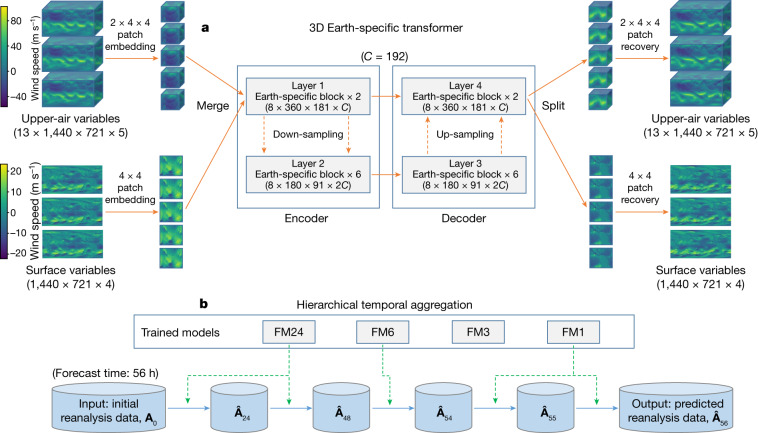
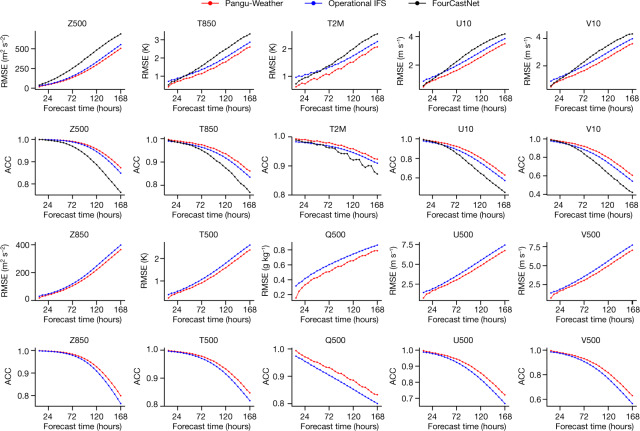
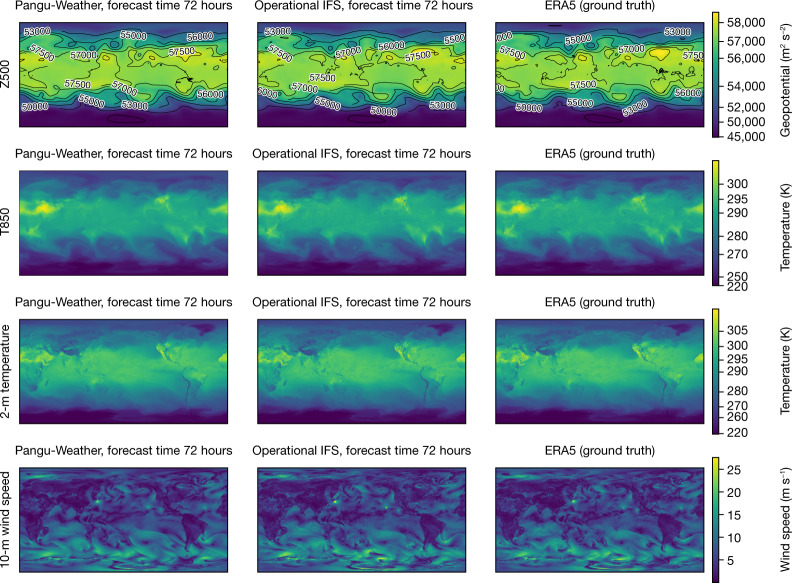
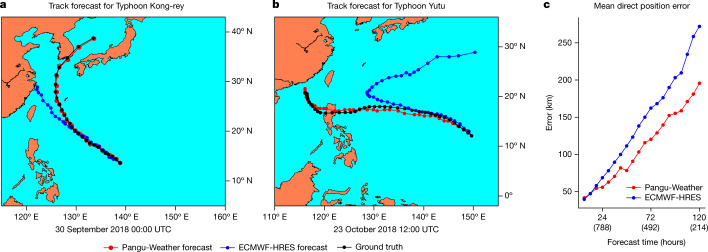
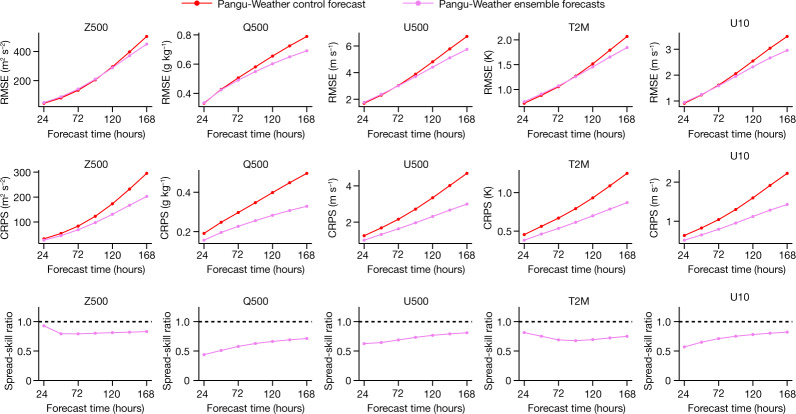
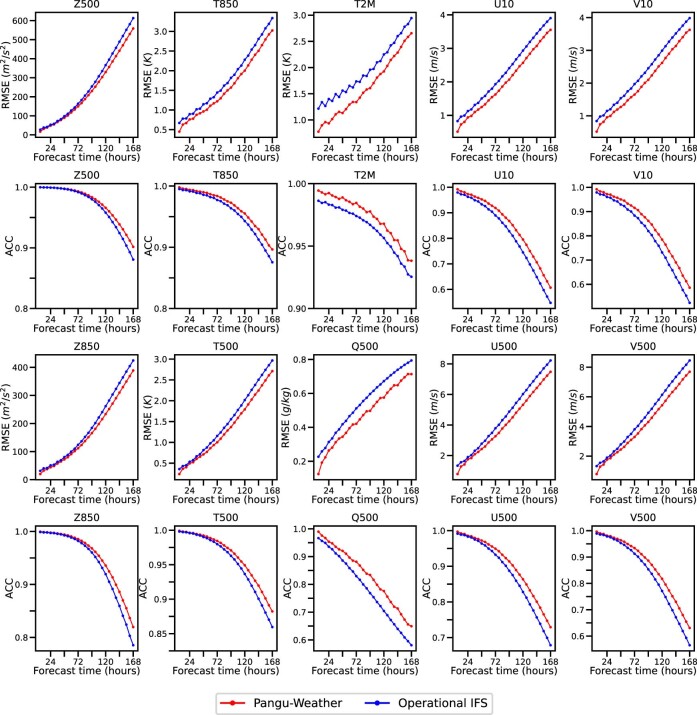
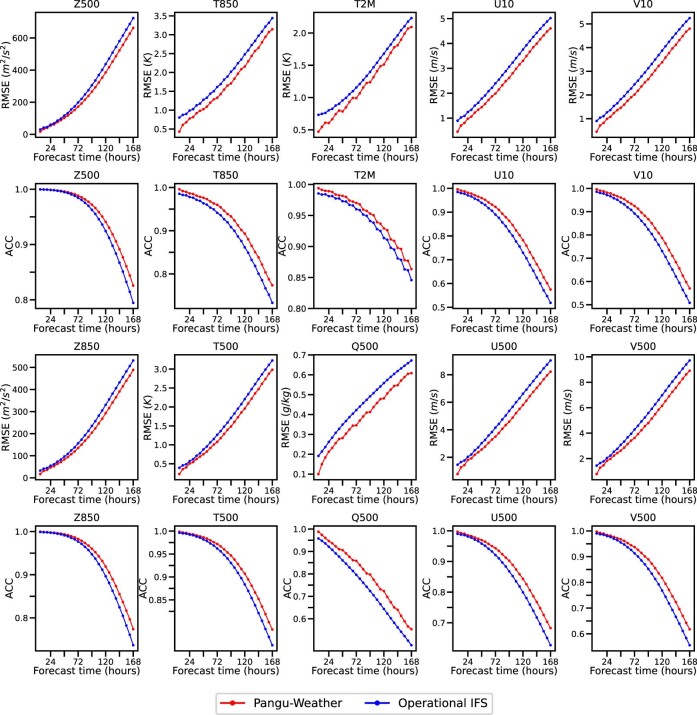
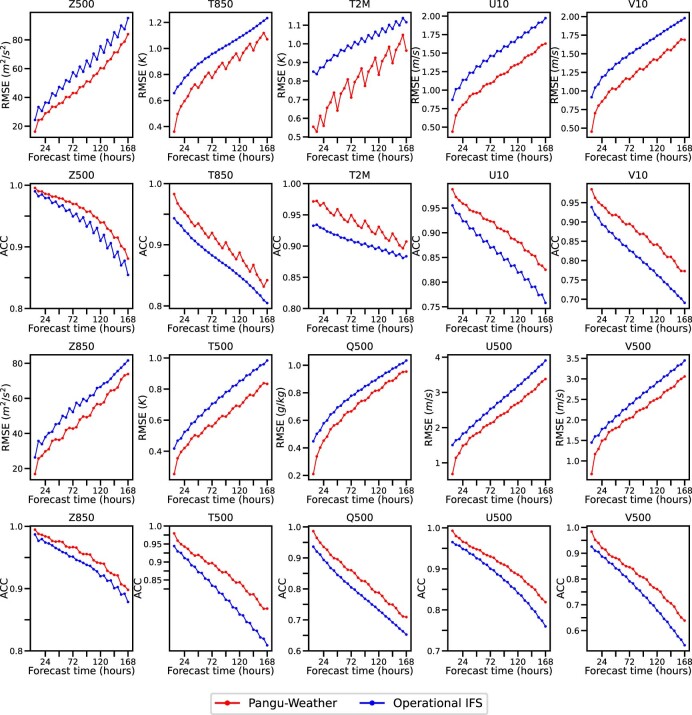
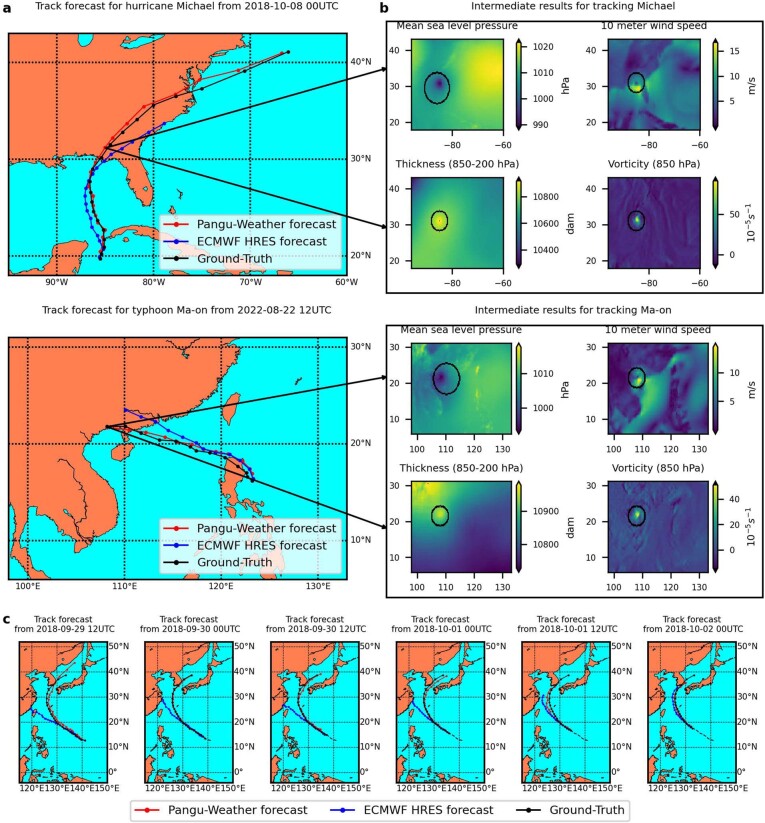
Weather forecasting is important for science and society. At present, the most accurate forecast system is the numerical weather prediction (NWP) method, which represents atmospheric states as discretized grids and numerically solves partial differential equations that describe the transition between those states 1 . However, this procedure is computationally expensive. Recently, artificial-intelligence-based methods 2 have shown potential in accelerating weather forecasting by orders of magnitude, but the forecast accuracy is still significantly lower than that of NWP methods. Here we introduce an artificial-intelligence-based method for accurate, medium-range global weather forecasting. We show that three-dimensional deep networks equipped with Earth-specific priors are effective at dealing with complex patterns in weather data, and that a hierarchical temporal aggregation strategy reduces accumulation errors in medium-range forecasting. Trained on 39 years of global data, our program, Pangu-Weather, obtains stronger deterministic forecast results on reanalysis data in all tested variables when compared with the world’s best NWP system, the operational integrated forecasting system of the European Centre for Medium-Range Weather Forecasts (ECMWF) 3 . Our method also works well with extreme weather forecasts and ensemble forecasts. When initialized with reanalysis data, the accuracy of tracking tropical cyclones is also higher than that of ECMWF-HRES.
Overview
The claims and statistics of this paper haven’t been checked yet.
Free: it reads the open-access text and checks the first 5 claims that cite a source we can check. Create a free account to check every claim.
Integrity signals
Registry
Cites
Statistics
Figures
Verification
Claims the paper makes
The claims and statistics of this paper haven’t been checked yet.
Free: it reads the open-access text and checks the first 5 claims that cite a source we can check. Create a free account to check every claim.
Claims other papers make about this one
Each is checked against this paper’s own text: does it say what the citing paper says it does?
The source backs part of the claim, not all of it — or backs it for a different population, condition or comparison.
In the citing paper
“However, they do not produce calibrated uncertainty estimates4, which is essential for useful weather forecasts1.”
From Neural general circulation models for weather and climate (2024) · cites this paper as [4]
Experimental — accuracy not yet measuredThe source backs part of the claim, not all of it — or backs it for a different population, condition or comparison.
In the citing paper
“Recently, machine-learning models trained on reanalysis data have achieved comparable or better skill than GCMs for deterministic weather forecasting3,4.”
From Neural general circulation models for weather and climate (2024) · cites this paper as [4]
Experimental — accuracy not yet measuredThe source backs part of the claim, not all of it — or backs it for a different population, condition or comparison.
In the citing paper
“Existing machine-learning models have focused on deterministic prediction, and surpass deterministic numerical weather prediction in terms of the aggregate metrics for which they are trained3,4.”
From Neural general circulation models for weather and climate (2024) · cites this paper as [4]
Experimental — accuracy not yet measuredThe source backs part of the claim, not all of it — or backs it for a different population, condition or comparison.
In the citing paper
“Most state-of-the-art machine learning models utilized in medium-range weather forecasting are built upon encoder-decoder84 architectures27–29,85.”
From A machine learning model that outperforms conventional global subseasonal forecast models (2024) · cites this paper as [28]
Experimental — accuracy not yet measuredThe source backs part of the claim, not all of it — or backs it for a different population, condition or comparison.
In the citing paper
“However, these advances have focused primarily on single, deterministic forecasts that fail to represent uncertainty and estimate risk.”
From Probabilistic weather forecasting with machine learning (2025) · cites this paper as [3]
Experimental — accuracy not yet measured
4 more claims about this paper
Create a free account to see every claim other papers make about this one.
Self-check
Percentages, sums and reported differences re-computed from the paper’s own numbers.
The self-check needs the paper’s full text.
Citations
Cites
LeCun, Y., Bengio, Y., & Hinton, G. (2015) · Nature · doi:10.1038/nature14539 · Cited by 84,126
An Image is Worth 16x16 Words: Transformers for Image Recognition at Scale
Dosovitskiy, A., Beyer, L., Kolesnikov, A., Weissenborn, D., Zhai, X., Unterthiner, T., Dehghani, M., Minderer, M., Heigold, G., Gelly, S., et al. (2020) · arXiv · doi:10.48550/arxiv.2010.11929 · Cited by 47,472
Swin Transformer: Hierarchical Vision Transformer using Shifted Windows
Liu, Z., Lin, Y., Cao, Y., Hu, H., Wei, Y., Zhang, Z., Lin, S., & Guo, B. (2021) · 2021 IEEE/CVF International Conference on Computer Vision (ICCV) · doi:10.1109/iccv48922.2021.00986 · Cited by 35,534
Hersbach, H., Bell, B., Berrisford, P., Hirahara, S., Horányi, A., Muñoz‐Sabater, J., Nicolas, J., Peubey, C., Radu, R., Schepers, D., et al. (2020) · Quarterly Journal of the Royal Meteorological Society · doi:10.1002/qj.3803 · Cited by 31,882
Language Models are Few-Shot Learners
Brown, T. B., Mann, B., Ryder, N., Subbiah, M., Kaplan, J., Dhariwal, P., Neelakantan, A., Shyam, P., Sastry, G., Askell, A., et al. (2020) · arXiv · doi:10.48550/arxiv.2005.14165 · Cited by 23,372
Learning Transferable Visual Models From Natural Language Supervision
Radford, A., Kim, J. W., Hallacy, C., Ramesh, A., Goh, G., Agarwal, S., Sastry, G., Askell, A., Mishkin, P., Clark, J., et al. (2021) · arXiv · doi:10.48550/arxiv.2103.00020 · Cited by 15,293
Momentum Contrast for Unsupervised Visual Representation Learning
He, K., Fan, H., Wu, Y., Xie, S., & Girshick, R. (2020) · 2020 IEEE/CVF Conference on Computer Vision and Pattern Recognition (CVPR) · doi:10.1109/cvpr42600.2020.00975 · Cited by 13,347
Learning Transferable Architectures for Scalable Image Recognition
Zoph, B., Vasudevan, V., Shlens, J., & Le, Q. V. (2018) · 2018 IEEE/CVF Conference on Computer Vision and Pattern Recognition · doi:10.1109/cvpr.2018.00907 · Cited by 7,831
Convolutional LSTM Network: A Machine Learning Approach for Precipitation Nowcasting
Shi, X., Chen, Z., Wang, H., Yeung, D.-Y., Wong, W.-K., & Woo, W.-C. (2015) · arXiv · doi:10.48550/arxiv.1506.04214 · Cited by 7,709
Atmospheric Modeling, Data Assimilation and Predictability
Kalnay, E. (2002) · doi:10.1017/cbo9780511802270 · Cited by 3,391
Research works printed but not linked: 2
- Devlin, J., Chang, M. W., Lee, K. & Toutanova, K. BERT: pre-training of deep bidirectional transformers for language understanding. In Proc. Conference North American Chapter of the Association of Computational Linguistics Vol. 1, 4171–4186 (NAACL, 2019).
- Stensrud, D. J. Parameterization Schemes: Keys to Understanding Numerical Weather Prediction Models (Cambridge Univ. Press 2009).
Cited by
Items 701–800 of 1,006
Seasonal forecasting using the GenCast probabilistic machine learning model
Antonio, B., Strømmen, K., & Christensen, H. M. (2026) · Climate Dynamics · doi:10.1007/s00382-026-08077-4 · Cited by 10
“…of machine-learnt weather prediction (MLWP) models that are competitive with conventional physics-based models at medium-range weather forecasting, for both deterministic (Lam et al. 2023; Bi et al. 2023; Allen et al. 2025) and probabilistic forecasts (Price et al. 2025; Lang et al. 2024).”
Heterogeneous Spatiotemporal Graph Learning for Localized Sparse Meteorological Forecasting
Li, S., Li, Q., Du, Z., Zhou, Z., Wang, M., Zhang, L., & Li, W. (2025) · IEEE Transactions on Geoscience and Remote Sensing · doi:10.1109/tgrs.2025.3628905 · Cited by 4
“For instance, Bi et al. [9] employed a 3-”
LUCIE: A Lightweight Uncoupled Climate Emulator With Long‐Term Stability and Physical Consistency
Guan, H., Arcomano, T., Chattopadhyay, A., & Maulik, R. (2025) · Journal of Advances in Modeling Earth Systems · doi:10.1029/2025ms005152 · Cited by 46
“Compared to other data‐driven models such as FourCastNet, GraphCast, Pangu, and ACE, LUCIE has far few prognostic variables to be trained on ( ≈ 2GB of data).”
InfluentialTemporal super-resolution reconstruction of weather radar echoes using a deep learning approach
Wang, H., Zeng, Q., Wang, H., He, J., Yu, T., & Liu, G. (2025) · Expert Systems with Applications · doi:10.1016/j.eswa.2025.130189 · Cited by 5
Mayer, M. J., Baran, Á., Lerch, S., Horat, N., Yang, D., & Baran, S. (2026) · Solar Energy · doi:10.1016/j.solener.2026.114361 · Cited by 13
“Over the past years, there have been rapid advances in machine learning-based, purely data-driven weather models, including Pangu-Weather (Bi et al., 2023), GraphCast (Lam et al., 2023), or AIFS (Lang et al., 2024a), providing deterministic forecasts, and the more recent ensemble prediction systems…”
Liu, Y., Long, J., Wang, B.-F., Chang, T., & Qiu, X. (2025) · Acta Mechanica Sinica · doi:10.1007/s10409-025-25013-x · Cited by 4
“With the advancement of deep learning, numerous methods have been developed for turbulence prediction [13-15].”
Advancing AI for science: From the revolution of tools to the tools for revolution
Zhou, B., Ding, N., Bai, L., & Zhou, H. (2025) · AI Open · doi:10.1016/j.aiopen.2025.11.002 · Cited by 7
Accurate tropical cyclone intensity forecasts using a non-iterative spatiotemporal transformer model
Qu, H., Xu, H., Dong, L., Xiang, C., & Nie, G. (2025) · npj Climate and Atmospheric Science · doi:10.1038/s41612-025-01279-3 · Cited by 7
“Unlikeconventionalnumerical weathermodels 9,31 andmanyAI-based forecasting systems 15,25 – 27, 32, 33 , TIFNet is”
Accurate Mediterranean Sea forecasting via graph-based deep learning
Holmberg, D., Clementi, E., Epicoco, I., & Roos, T. (2025) · Scientific Reports · doi:10.1038/s41598-025-31177-w · Cited by 18
“Notable developments include architectures based on Transformers [11, 12], neural operators [13], and graph neural networks (GNNs) [14–16].”
70 Years of Development in China’s Operational Numerical Weather Prediction
Zhang, W., Shen, X., Cao, X., Sun, J., Wu, J., Peng, J., Song, J., Zhu, X., Wang, J., Li, Z., et al. (2025) · 气象学报:英文版 · doi:10.1007/s13351-025-4917-4 · Cited by 5
“…trained on ECMWF’s ERA5 reanalysis data—demonstrate comparable skill to the ECMWF Integrated Forecasting System (IFS) in midlatitude 500-hPa geopotential height predictions, achieving a root-mean-square error (RMSE) reduction of 15% over traditional methods at 6-day lead times (Bi et al., 2023).”
Xu, K., Yang, F., Zhou, L., Hao, R., Wang, Z., Zhang, Y., & Zhu, Y. (2025) · Advances in Space Research · doi:10.1016/j.asr.2025.12.040 · Cited by 3
NoahPy: a differentiable Noah land surface model for simulating permafrost thermo-hydrology
Tian, W., Yu, H., Zhao, S., Cao, Y., Yi, W., Xu, J., & Nan, Z. (2026) · Geoscientific model development · doi:10.5194/gmd-19-57-2026 · Cited by 9
Liu, Y., Li, D., Gong, X., Feng, J., Liu, H., Qi, J., & Yin, B. (2026) · Journal of Sea Research · doi:10.1016/j.seares.2026.102670 · Cited by 3
Nelli, N., Francis, D., Fonseca, R., Hassanzadeh, P., & Cherif, C. (2026) · Atmospheric Research · doi:10.1016/j.atmosres.2026.108779 · Cited by 5
Rewiring climate modeling with machine learning emulators
Katwyk, P. V., Fox‐Kemper, B., Hewitt, H. T., & Bergen, K. J. (2026) · Communications Earth & Environment · doi:10.1038/s43247-026-03238-z · Cited by 10
“Emulators are increasingly being developed for individual Earth system components: (cid:129) Atmosphere : Climate emulators (e.g., ACE 11,12 , DiffESM 38 ) provide task-speci fi c atmospheric fi elds at resolutions previously achievable only with numerical models 43,90 .”
A survey on memory-efficient transformer-based model training in AI for science
Tian, K., Qiao, L., Liu, B., Jiang, G., Li, S., & Li, D. (2026) · Frontiers of Computer Science · doi:10.1007/s11704-025-50302-6 · Cited by 16
“The Pangu-Weather model [10,11], proposed by Bi et al., employs the 3D Earth-Specific Transformer (3DEST) architecture to process 3D climate data, which is a variant of Swin Transformer [65,66].”
Bröcker, J., Driscoll, S., Necker, T., Rodríguez, J. M., Dacre, H., Harvey, N. J., & Bouallègue, Z. B. (2026) · Journal of the European Meteorological Society. · doi:10.1016/j.jemets.2026.100032 · Cited by 9
Yam, H., Li, S., Wang, S., Fang, K., & Liu, D. (2026) · Reliability Engineering & System Safety · doi:10.1016/j.ress.2026.112595 · Cited by 3
Tong, J., Wang, S., Wang, G., Wang, Y., & Moraros, J. (2026) · npj Urban Sustainability · doi:10.1038/s42949-026-00377-2 · Cited by 6
“When combined with Compact City and Sustainable Design theories, outcomes evolved from temperature predictions to vulnerability-aware planning guidelines with interpretable interventions – theory added not accuracy but actionability 104,105 .”
Couairon, G., Singh, R., Charantonis, A., Lessig, C., & Monteleoni, C. (2026) · Science Advances · doi:10.1126/sciadv.adx2372 · Cited by 76
“…usually by adding priors related to the specificity of processing physical fields from a three-dimensional (3D) spherical atmosphere [local 3D attention for Pangu-Weather ( 2 ); Fourier Spherical Operators for FourCastNet ( 3 ); Graph Neural Networks on a spherical mesh for GraphCast ( 4 )].”
TopoFlow: topography-aware pollutant Flow learning for high-resolution air quality prediction
Kheder, A., Toropainen, H., Peng, W., Antão, S., Chen, J., Boy, M., & Liu, Z.-S. (2026) · npj Climate and Atmospheric Science · doi:10.1038/s41612-026-01417-5 · Cited by 8
“TopoFlow predictions exhibit smoother spatial fi elds, a characteristic shared by other AI weather models, including GraphCast 14 and Pangu-Weather 15 , that arise from neural network regression under mean squared error optimisation.”
Du, P., Ming, B., Hussain, F., Fang, W., Yan, Z., Yang, X., Huang, Q., & Liu, P. (2026) · Energy · doi:10.1016/j.energy.2026.141237 · Cited by 4
Smart battery with intelligent management system: A lifespan perspective
Han, X., Wang, Y., Guo, D., Mao, S., Xu, X., Wang, D., Sun, Y., Pan, Y., Yuan, Y., Feng, X., et al. (2026) · eTransportation · doi:10.1016/j.etran.2026.100587 · Cited by 5
Zhang, Z., Wang, Z., Cui, X., Zheng, Y., & Wang, D. (2026) · Journal of Manufacturing Processes · doi:10.1016/j.jmapro.2026.05.003 · Cited by 3
Guo, R., Wang, W., Takakuwa, M., Fukuda, K., & Someya, T. (2023) · Solar RRL · doi:10.1002/solr.202300594 · Cited by 3
Advancements and Challenges in Deep Learning-Driven Marine Data Assimilation: A Comprehensive Review
Ma, Y., Zhang, D., Zhang, Y., Zhao, G., Xie, Y., & Jiang, H. (2023) · COMPUTATIONAL RESEARCH PROGRESS IN APPLIED SCIENCE & ENGINEERING · doi:10.61186/crpase.9.4.2876 · Cited by 4
TensorBank: Tensor Lakehouse for Foundation Model Training
Kienzler, R., Schmude, J., Simumba, N., Blumenstiel, B., Freitag, M., Kimura, D., Nagy, Z. A., Behrendt, M., Hamann, H. F., Mukkavilli, S. K., et al. (2023) · IEEE International Conference on Big Data (BigData) · doi:10.1109/bigdata59044.2023.10386912 · Cited by 5
Mu, B., Wang, X., Yuan, S., Chen, Y., Wang, G., Qin, B., & Zhou, G. (2024) · Science China Earth Sciences · doi:10.1007/s11430-023-1383-6 · Cited by 9
“…long-term dependencies as well as performing classification tasks across various domains (Bai et al., 2022; He et al., 2022; Liu et al., 2022; Bi et al., 2023; Chen et al., 2023b; Hu et al., 2023), this study develops a TCG prediction model (TCGP-Net) based on Swin Transformer, as shown in…”
A Lightning Nowcasting Model Using GNSS PWV and Multisource Data
Yin, W., Zhou, C., Zhou, F., Tian, Y., Xu, Y., Wang, X., Tian, R., Xiao, Y., Zhang, W., Kong, J., et al. (2024) · IEEE Transactions on Geoscience and Remote Sensing · doi:10.1109/tgrs.2024.3487774 · Cited by 5
“Forecasters and researchers have successfully integrated machine learning with atmospheric science to enhance predictions for various weather-related phenomena at different scales [33], [34], [35], [36], [37].”
Construction and application of materials database under data-driven research paradigm
Feng, J., Zhou, K., Li, M., Wang, X., & Zhang, L. (2024) · Chinese Science Bulletin (Chinese Version) · doi:10.1360/tb-2024-0946 · Cited by 4
Improving blended probability forecasts with neural networks
Trotta, B. (2024) · Meteorological Applications · doi:10.1002/met.70021 · Cited by 5
“Current state-of-the-art deep learning models are competitive with NWP forecasts (Bi et al., 2023; Lam et al., 2023; Nguyen et al., 2023; Pathak et al., 2022), and the ECMWF now operationally runs a pure-ML forecast alongside traditional NWP fore-casts (European Centre for Medium-Range Weather…”
Informer_Casual_LSTM: Causal Characteristics and Non-Stationary Time Series Prediction
Yang, Y., & Dong, Y. (2024) · International Conference on Machine Learning and Natural Language Processing (MLNLP) · doi:10.1109/mlnlp63328.2024.10800525 · Cited by 3
Meddahi, A., Tuomiranta, A., & Guillon, S. (2025) · Solar RRL · doi:10.1002/solr.202400664 · Cited by 4
Deng, M., Li, K., Liu, N., Bu, L., Zhang, Z., Wang, C., Yang, Y., & Nie, X. (2025) · Measurement · doi:10.1016/j.measurement.2025.116904 · Cited by 3
Yin, H., Wu, Z., & He, H. (2025) · Journal of Hydrology Regional Studies · doi:10.1016/j.ejrh.2025.102231 · Cited by 4
Wang, B., Jiang, Y., Lin, M., & Wang, Q. (2025) · Nuclear Engineering and Design · doi:10.1016/j.nucengdes.2025.113998 · Cited by 3
Integrated loads forecasting with absence of crucial factors
Hu, R., Zhou, K., & Lu, X. (2025) · Energy · doi:10.1016/j.energy.2025.135632 · Cited by 3
Krinitskiy, M. (2024) · Moscow University Physics Bulletin · doi:10.3103/s0027134924702217 · Cited by 8
Song, Z., Cheng, Z., Li, Y., Yu, S., Zhang, X., Yuan, L., & Liu, M. (2025) · Earth system science data · doi:10.5194/essd-17-1501-2025 · Cited by 7
Patel, D., Arcomano, T., Hunt, B. R., Szunyogh, I., & Ott, E. (2025) · Journal of Advances in Modeling Earth Systems · doi:10.1029/2024ms004480 · Cited by 8
Mu, B., Chen, Y., Yuan, S., Qin, B., & Liu, Z. (2025) · Advances in Atmospheric Sciences · doi:10.1007/s00376-024-4223-6 · Cited by 5
Intercomparison of Deep Learning Model Architectures for Atmospheric River Prediction
Galea, D., & Ma, H. (2025) · Artificial Intelligence for the Earth Systems · doi:10.1175/aies-d-24-0057.1 · Cited by 4
Bowler, E., Byrne, J., Leclerc, L., Roberto‐Charron, A., Rogers, M. S. J., Cavanagh, R. D., Harasimo, J., Lancaster, M. L., Chan, R. S. Y., Strickson, O., et al. (2025) · Ecological Solutions and Evidence · doi:10.1002/2688-8319.70034 · Cited by 4
Huang, L., Leng, H., Song, J., Wang, D., Wang, W., Hu, R., & Cao, H. (2025) · Applied Sciences · doi:10.3390/app15126399 · Cited by 3
Fan, H., Liu, Y., Huo, Z., Liu, Y., Shi, Y., & Li, Y. (2025) · Monthly Weather Review · doi:10.1175/mwr-d-24-0057.1 · Cited by 9
A novel approach to wind speed modeling: A fast and robust model with high generalizability
Hakimi, A., Ghafarian, P., & Farjami, H. (2025) · Engineering Applications of Artificial Intelligence · doi:10.1016/j.engappai.2025.111316 · Cited by 3
Gray, M., Chattopadhyay, A., Wu, T., Lowe, A., & He, R. (2025) · Ocean science · doi:10.5194/os-21-1065-2025 · Cited by 7
KeAD: Knowledge-enhanced Graph Attention Network for Accurate Anomaly Detection
Li, Y., Zhou, Z., Sun, P., Deng, S., Sun, X., Xue, X., Yangui, S., & Gaaloul, W. (2025) · IEEE Transactions on Services Computing · doi:10.1109/tsc.2025.3583241 · Cited by 3
“However, in certain scenarios such as traffic prediction, tasks correlations between geographic attributes and predicted attributes are hardly derived completely based on training data solely [29], [30], and certain parts should be generated from domain knowledge [31].”
Xia, Z., Zhao, C., Du, Q., Yang, Z., Zhang, M., & Qiao, L. (2025) · Journal of Advances in Modeling Earth Systems · doi:10.1029/2024ms004646 · Cited by 5
“Simultaneously, transformer architectures (Liu et al., 2021; Vaswani et al., 2017), particularly the Multi‐Head Self‐Attention (MHSA) algorithm, demonstrate exceptional capability for modeling complex nonlinear systems (Bi et al., 2023).”
Chen, B., Chen, B., Hsiao, C.-M., Teng, H., Lee, C., & Kuo, H. (2025) · Artificial Intelligence for the Earth Systems · doi:10.1175/aies-d-24-0064.1 · Cited by 11
Lupin-Jimenez, L. C., Darman, M., Hazarika, S., Wu, T., Gray, M., He, R., Wong, A., & Chattopadhyay, A. (2025) · Journal of Geophysical Research Machine Learning and Computation · doi:10.1029/2025jh000851 · Cited by 17
Machine learning for subseasonal-to-seasonal prediction
Mayer, K. J., Lerch, S., de Burgh-Day, C., & Arcodia, M. C. (2025) · Elsevier eBooks · doi:10.1016/b978-0-443-31538-1.00003-8 · Cited by 4
Park, C., Kim, S., & Lee, J. H. (2026) · Modern Physics Letters A · doi:10.1142/s021773232650046x · Cited by 16
Spatio-Temporal Alignment and Track-To-Velocity Module for Tropical Cyclone Forecast
Geng, X., Liu, Z., & Shi, Z. (2023) · Remote Sensing · doi:10.3390/rs15204938 · Cited by 5
Two Random Forest Models for the Non‐Iterative Parametrization of Surface‐Layer Turbulent Fluxes
Yu, Y., Gao, C. Y., Li, Y., & Gao, Z. (2023) · Geophysical Research Letters · doi:10.1029/2023gl105923 · Cited by 3
Alamsyah, N., Budiman, B., Danestiara, V. R., Akbar, I., & Setiana, E. (2023) · International Conference on Informatics and Computing (ICIC) · doi:10.1109/icic60109.2023.10382057 · Cited by 5
Uncertainty Quantification for Forward and Inverse Problems of PDEs via Latent Global Evolution
Wu, T., Neiswanger, W., Zheng, H., Ermon, S., & Leskovec, J. (2024) · Proceedings of the AAAI Conference on Artificial Intelligence · doi:10.1609/aaai.v38i1.27785 · Cited by 16
Zhou, Z., Tian, J., Ma, P., Tang, P., Lei, S., Chen, B., & Tian, D. (2024) · IEEE Antennas and Wireless Propagation Letters · doi:10.1109/lawp.2024.3430557 · Cited by 3
“As a data-driven method, the neural network (NN) has shown its advantages in accuracy and efficiency in the evaluation of complex mathematical problems that has to be solved numerically before [14].”
MethodDeep learning accelerated numerical simulation for three-dimensional compressible fluids
Zhang, M., Cui, Q., Xiao, M., & Ni, G. (2024) · Physics of Fluids · doi:10.1063/5.0214669 · Cited by 4
Constructing an Optimal Prediction System for Infectious Disease
Huang, J., Li, L., Chen, S., Chen, B., Wang, D. L., & Hu, B. (2024) · IEEE Transactions on Computational Social Systems · doi:10.1109/tcss.2024.3427222 · Cited by 3
张, 昊., 李, 明., & Hu, Y. (2025) · SCIENTIA SINICA Terrae · doi:10.1360/sste-2024-0090 · Cited by 3
Predicting Global Average Temperature Time Series Using an Entire Graph Node Training Approach
Wang, Z., Chen, Z., Shi, Z., & Gao, J. (2024) · IEEE Transactions on Geoscience and Remote Sensing · doi:10.1109/tgrs.2024.3480888 · Cited by 5
“Various tools are available from the fields of machine learning (ML), particularly deep learning (DL), although they require further development and adaptation for effective application in Earth system analysis [5], [6], [7], [8].”
BackgroundPan-spatial Earth information system: A new methodology for cognizing the earth system
Tao, L., Xu, Y., He, K., Ma, X., & Wang, L. (2024) · The Innovation · doi:10.1016/j.xinn.2024.100770 · Cited by 4
Deng, J., Zhang, J., Liu, H., Li, H., Chen, F., & Chen, J. (2025) · Atmospheric and Oceanic Science Letters · doi:10.1016/j.aosl.2025.100589 · Cited by 4
Chen, K., Chen, J., Xu, M., Wu, M., & Zhang, C. (2025) · Remote Sensing · doi:10.3390/rs17020206 · Cited by 4
“In recent years, as interdisciplinary research between deep learning (DL) and meteo-rology has advanced [25–30], DL-based models have demonstrated remarkable abilities for exploring and modeling the complex dependencies in meteorological data.”
Niu, Y., Sarkis, R., Psaltis, D., Paoloné, M., Moser, C., & Lambertini, L. (2025) · IEEE Workshop/Winter Conference on Applications of Computer Vision · doi:10.1109/wacv61041.2025.00494 · Cited by 4
“Traditionally, short-term (hours) solar forecasting has been conducted using analytical equations, such as the numerical weather prediction (NWP) [1].”
Bayesian Source Identification With Dual Hierarchical Neural Networks for Urban Air Pollution
Aawar, E. A., Resifi, S., Jebari, H., & Hoteit, I. (2025) · Journal of Advances in Modeling Earth Systems · doi:10.1029/2024ms004790 · Cited by 3
“To mitigate this issue, we adopt a multi‐model approach (Bi et al., 2023; Liu et al., 2022).”
AI in paleontologyPreprint
Yu, C., Qin, F., Watanabe, A., Yao, W., Li, Y., Qin, Z., Liu, Y., Wang, H., Jiangzuo, Q., Hsiang, A. Y., et al. (2023) · bioRxiv (Cold Spring Harbor Laboratory) · doi:10.1101/2023.08.07.552217 · Cited by 3
Lie-Poisson Neural Networks (LPNets): Data-Based Computing of Hamiltonian Systems with SymmetriesPreprint
Eldred, C., Gay–Balmaz, F., Huraka, S., & Putkaradze, V. (2023) · SSRN Electronic Journal · doi:10.2139/ssrn.4573125 · Cited by 5
Xue, Z., Zhao, X., Xiu, Y., Hua, C., & Kong, J. (2023) · Agronomy · doi:10.3390/agronomy13122893 · Cited by 2
Improvement and Evaluation of CLM5 Application in the Songhua River Basin Based on CaMa-Flood
Li, H., Zhang, Z., & Zhang, Z. (2024) · Water · doi:10.3390/w16030442 · Cited by 5
Zong, K., Liu, Y., Liu, S., Cui, X., & Huang, L. (2024) · Ocean Engineering · doi:10.1016/j.oceaneng.2024.118336 · Cited by 2
Kretschmer, M., Jézéquel, A., Labe, Z. M., & Touma, D. (2024) · Atmospheric Science Letters · doi:10.1002/asl.1268 · Cited by 2
“Additionally, tech giants like Huawei Cloud, Google DeepMind, and NVIDIA are developing machine learning-based weather forecasting technologies (Bi et al., 2023; Chen et al., 2023; Kurth et al., 2023; Lam et al., 2023).”
AI-based Multimodel Superensemble for Improved Weather Prediction
Purohit, K., Sinha, M., & Nanjundiah, R. S. (2024) · IEEE International Conference on High Performance Computing, Data and Analytics Workshop (HiPCW) · doi:10.1109/hipcw63042.2024.00017 · Cited by 2
“For this study, we selected two state-of-the-art AI-based models, Spherical Fourier Neural Operator (SFNO) [3] and Pangu-Weather [4], because of their superior performance in medium-range weather forecasting and significantly lower computational costs compared to NWP models.”
Shen, J., Xue, H., Ge, F., & Zhang, J. (2025) · Quarterly Journal of the Royal Meteorological Society · doi:10.1002/qj.4966 · Cited by 3
“Recently, many methods based on the integration of artificial intelligence (AI) technologies have produced notable advances in medium-range weather forecasting (Bi et al., 2023; Lam et al., 2023).”
Aniley, E., Zemen, A., Belay, M., Geremew, B. B., & Taye, H. (2025) · Geocarto International · doi:10.1080/10106049.2025.2480298 · Cited by 3
Morcrette, C. J., Cave, T., Reid, H., Rodrigues, J., Deveney, T., Kreußer, L. M., Weverberg, K. V., & Budd, C. J. (2025) · Journal of Advances in Modeling Earth Systems · doi:10.1029/2024ms004651 · Cited by 10
“While the whole‐forecast emulators described by Bi et al. (2023) interesting hybrid approach given the better performance of a weather emulator at the large‐scale but the better performance of the traditional model at the smaller scale.”
Spatial verification of global precipitation forecasts
Skok, G., & Lledó, L. (2025) · Quarterly Journal of the Royal Meteorological Society · doi:10.1002/qj.5006 · Cited by 9
“…continue to be developed and improved along with the new machine-learning-based models that also show increasing potential for global forecasting (e.g., Bi et al. , 2023; Lam et al. , 2023; Weyn et al. , 2020), there clearly exists a need for spatial metrics that could be used in the global domain.”
Tropical monsoon rainfall can be predicted with lead times up to 10 months
Ran, G., Meng, J., & Fan, J. (2025) · Communications Earth & Environment · doi:10.1038/s43247-025-02391-1 · Cited by 5
“Recently, AI-based methods have enabled the development of machine learning (ML) weather prediction systems, such as FourCastNet 15 , GraphCast 16 , Pangu-Weather 17 , NowcastNet 18 , and GenCast 19 .”
Dynamic Autoregressive Tensor Factorization for Pattern Discovery of Spatiotemporal Systems
Chen, X., Zhuang, D., Cai, H., Wang, S., & Zhao, J. (2025) · IEEE Transactions on Pattern Analysis and Machine Intelligence · doi:10.1109/tpami.2025.3576719 · Cited by 8
“…performing predictions, and guiding decision-making processes, as nowadays, large amounts of spatiotemporal data are readily available in several scientific areas such as fluid flow dynamics [1], [2], climate [3], weather [4], mobility [5], traffic flow [6], and neuroscience [7], to name but a few.”
Self-citationLin, J., Liu, D., Wu, T., Xu, Y., & Chen, Y. (2025) · Information Sciences · doi:10.1016/j.ins.2025.122440 · Cited by 3
State-observation augmented diffusion model for nonlinear assimilation with unknown dynamics
Li, Z., Dong, B., & Zhang, P. (2025) · Journal of Computational Physics · doi:10.1016/j.jcp.2025.114240 · Cited by 13
Clement, F. D., Yan, J., & Zhou, S. (2025) · Journal of Asian Architecture and Building Engineering · doi:10.1080/13467581.2025.2533219 · Cited by 2
“Table 1 presents the classification of these cities, along with population data, cooling degree day totals (using an 18°C baseline), along with the meteorological data-sets used (using 18°C as the baseline), and meteorological datasets (Bi et al. 2023; Gao et al. 2014).”
Respiratory viral infections: when and where? A scoping review of spatiotemporal methods
Liang, J., Horvath, D., Luz, S. F., Li, Y., & Nair, H. (2025) · Journal of Global Health · doi:10.7189/jogh.15.04213 · Cited by 2
Chien, M., Barnes, E. A., & Maloney, E. D. (2025) · Machine Learning Earth · doi:10.1088/3049-4753/adfd61 · Cited by 13
Wang, X., Li, Y., Zuo, Y., Zhu, J., Zhuo, J., Li, X., Liu, L., & Niu, S. (2025) · Journal of Wind Engineering and Industrial Aerodynamics · doi:10.1016/j.jweia.2025.106215 · Cited by 3
Robust battery swapping for e-bike sharing with uncertain covariates and partial outsourcing
Yu, C., & Liu, L. (2025) · Omega · doi:10.1016/j.omega.2025.103385 · Cited by 3
Projecting U.S. coastal storm surge risks and impacts with deep learning
Rice, J. R., Balaguru, K., Rollano, F. T., Wilson, J., Daniel, W. B., Judi, D. R., Sun, N., & Leung, L.-Y. R. (2025) · Environmental Research Letters · doi:10.1088/1748-9326/adfd74 · Cited by 4
“…neural network components which are known to be skilled in processing these forms of data respectively (Hochreiter and Schmidhuber 1997, O’Shea and Nash 2015) and have been successfully utilized in previous storm surge modeling approaches (Adeli et al 2023, Xie et al 2023, Giaremis et al 2024).”
Ouyang, H., Baklanov, A. A., Tang, X., Wang, P. H., & Zhang, R. (2025) · Frontiers of Environmental Science & Engineering · doi:10.1007/s11783-025-2091-7 · Cited by 2
“…data, AI technologies have already demonstrated significant advantages in various fields, including convective parameterization in climate models (Gentine et al., 2018; Yuval and O’Gorman, 2020) and weather forecasting models (Bi et al., 2023; Lam et al., 2023; Yoshikane and Yoshimura, 2023).”
Nowcasting Echo Top for Aviation Operations Using CNN-Transformer
Wang, S., Sun, M., & Li, Y. (2025) · IEEE Transactions on Intelligent Transportation Systems · doi:10.1109/tits.2025.3612976 · Cited by 2
“However, NWP requires extensive computational resources, long processing times, and heavily depends on parameterized models [5], [6].”
Investigating the Use of Terrain‐Following Coordinates in AI‐Driven Precipitation Forecasts
Sha, Y., Schreck, J. S., Chapman, W. E., & Gagne, D. J. (2025) · Geophysical Research Letters · doi:10.1029/2025gl118478 · Cited by 7
“…scores are competitive with top global Numerical Weather Prediction (NWP) models and can be improved further with additional training data (e.g., Bi et al., 2023; Bodnar et al., 2024; Bonev et al., 2023; Chen et al., 2023; Lam et al., 2023; Lang et al., 2024; Nguyen, Brandstetter, et al., 2023;…”
UrbanPlan-GPT: A Specialized AI Model for Human Settlement Design
Muneer, T. A. S. (2025) · International Conference on Smart & Sustainable Technology (INCSST) · doi:10.1109/incsst64791.2025.11210393 · Cited by 3
Feature selection for data-driven seasonal forecasts of European heatwaves
McAdam, R., Pérez-Aracil, J., Squintu, A., Peláez-Rodríguez, C., Hansen, F., Torralba, V., Loukos, H., Zorita, E., Giuliani, M., Cavicchia, L., et al. (2025) · Communications Earth & Environment · doi:10.1038/s43247-025-02863-4 · Cited by 2
Energy-saving operation and control strategies for sustainable industrialized aquaponics: A review
Li, D., Guo, X., & Zhang, S. (2025) · Renewable and Sustainable Energy Reviews · doi:10.1016/j.rser.2025.116400 · Cited by 2
Global performance benchmarking of artificial intelligence models in atmospheric river forecasting
Zhang, L., Lu, M., Bao, Q., Zhao, Y., & Yang, J. (2025) · Communications Earth & Environment · doi:10.1038/s43247-025-02823-y · Cited by 8
“To assess the accuracy of forecasts for global variables such as speci fi c humidity, we use two widely recognized metrics: anomaly correlation coef-fi cient(ACC)androotmeansquareerror(RMSE) 4 .”
InfluentialAERIS: Argonne Earth Systems Model for Reliable and Skillful Predictions
Hatanpää, V., Ku, E., Stock, J., Emani, M. K., Foreman, S., Jung, C., Madireddy, S., Nguyen, T., Sastry, V. K., Sinurat, R. A. O., et al. (2025) · International Conference for High Performance Computing, Networking, Storage and Analysis (SC) · doi:10.1145/3712285.3772094 · Cited by 9
Liu, J., Wang, H., Wang, P., Wang, X., & Zhang, X. (2025) · Deep Sea Research Part I Oceanographic Research Papers · doi:10.1016/j.dsr.2025.104622 · Cited by 2
Jiang, Y., Zhou, Y., & Zhang, J. (2025) · Water · doi:10.3390/w17233383 · Cited by 2
Gu, H., Xu, Y., Pan, H., Shi, Y., Wei, C., Cao, X., & He, Y. (2025) · Chem & Bio Engineering · doi:10.1021/cbe.5c00074 · Cited by 3
Jiang, J., Mo, H., Zhang, L., Wan, L., Zhang, X., Drévillon, M., Xu, B., Wang, J., Xin, J., & Ma, Y. (2025) · International Journal of Digital Earth · doi:10.1080/17538947.2025.2595786 · Cited by 3
“…due to the high computational costs associated with solving physical partial differential equations, the instability of the ocean's nonlinear dynamics, and our incomplete understanding of natural scientific laws (Bi et al. 2023; Fox-Kemper et al. 2019; Wang et al. 2024; Xiong et al. 2023).”
Metadata
- Authors
- Bi, K., Xie, L., Zhang, H., Chen, X., Gu, X., & Tian, Q.
- Affiliations
- Huawei Technologies (China) (CN)
- Corresponding author
- Tian, Qi
- Venue
- Nature
- Published
- 2023-07-05
- Volume
- 619
- Issue
- 7970
- Pages
- 533-538
- ISSN
- 0028-0836 (ISSN-L)
- 1476-4687
- PMC
- PMC10356604
- OpenAlex
- W4383218913
- Semantic Scholar
- 6a78c73c92d5e5d9759b46eff892baf1d6e83754
- Cited by
- 1,670
- References
- 36
- Citations by year
- 2026: 565 · 2025: 594 · 2024: 444 · 2023: 67
- FWCI
- 184.37
- Type
- journal article
- Language
- en
- Update notices
- correction (2023-09-14)
- Open access
- hybrid
- doi.org
- Licence
- cc-by
- creativecommons.org/licenses/by/4.0 (tdm)
- creativecommons.org/licenses/by/4.0 (vor)
- Locations
- Nature (publishedVersion, cc-by)
- PubMed Central (publishedVersion, cc-by)
- PubMed (publishedVersion)
- RePEc: Research Papers in Economics (submittedVersion)
- Funders
- National Oceanic and Atmospheric Administration
- Topics
- Physical Sciences › Earth and Planetary Sciences › Atmospheric Science › Meteorological Phenomena and Simulations
- Physical Sciences › Environmental Science › Environmental Engineering › Hydrological Forecasting Using AI
- Social Sciences › Transportation › Traffic Prediction and Management Techniques
- Keywords
- medium-range weather forecasting, global weather forecasting, 3D neural networks, Pangu-Weather, deterministic forecasting, tropical cyclone tracking, extreme weather prediction, ensemble forecasting, reanalysis data, ECMWF comparison
About these checks
Registry, retraction, Cites and statistics results are computed, not judged, with one exception: a printed reference that no index lists is read once by a model before it counts as a citation error. Claims are extracted by a model and kept only when their quote appears verbatim in the text; each cited source is then checked, with a model’s help, for whether it says what the claim relies on. Those verdicts can be wrong — read the claim’s quote and the cited source before relying on one.
Statistics and arithmetic are recomputed, not judged.
Confidence bands are shown only for fields calibrated on our annotated test set. None is calibrated yet, so no band is shown.
What counts as a claim ›How we measure confidence ›How we check this ›
Are you an author, or do you see a problem with this page? Request a review
Data sources
Bibliographic data: Semantic Scholar, OpenAlex, Crossref.
Contains information from the Semantic Scholar Academic Graph Datasets, made available under the ODC Attribution License (ODC-BY 1.0).
Semantic Scholar’s data is described in: Kinney, R., et al. (2023). The Semantic Scholar Open Data Platform. arXiv:2301.10140.
