

Accurate medium-range global weather forecasting with 3D neural networks
Open accessThe DOI matches its Crossref record; 41 of the 41 references it cites were found in a registry or an index.
Abstract
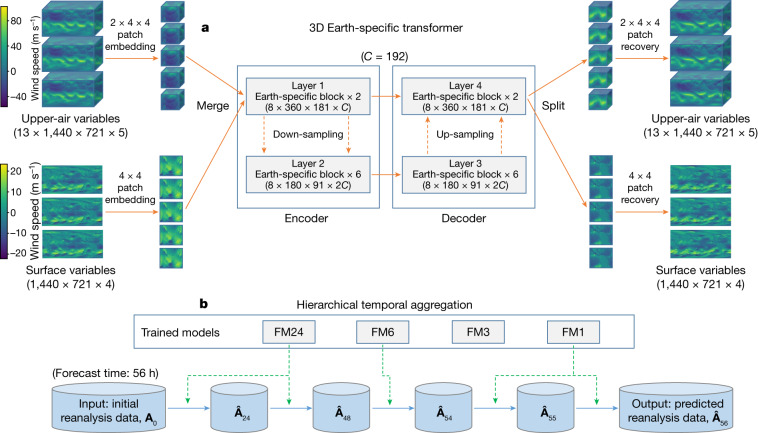
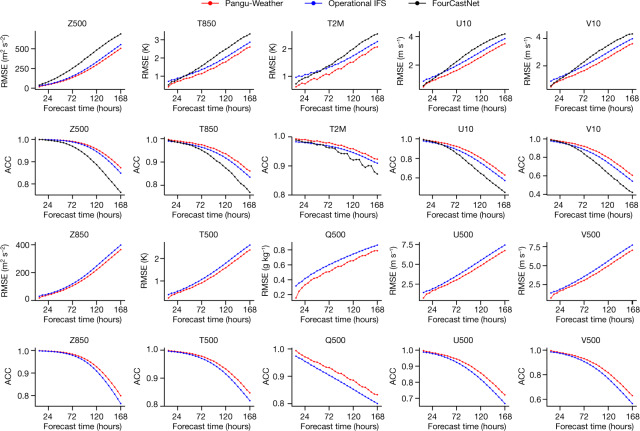
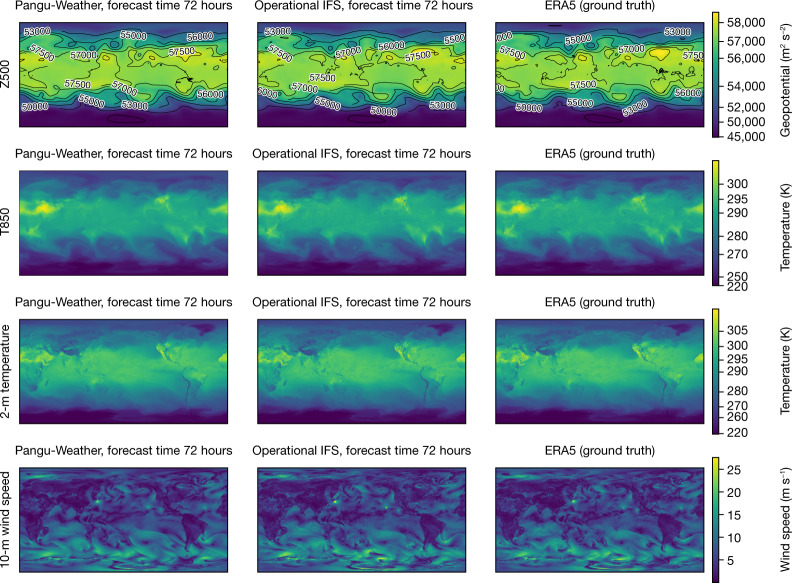
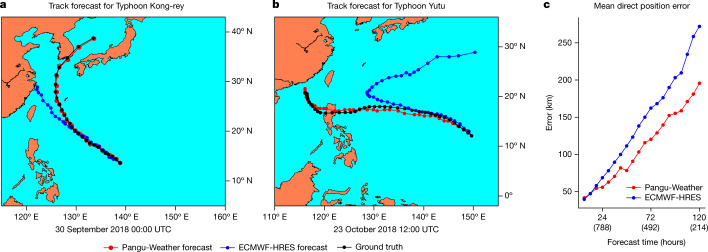
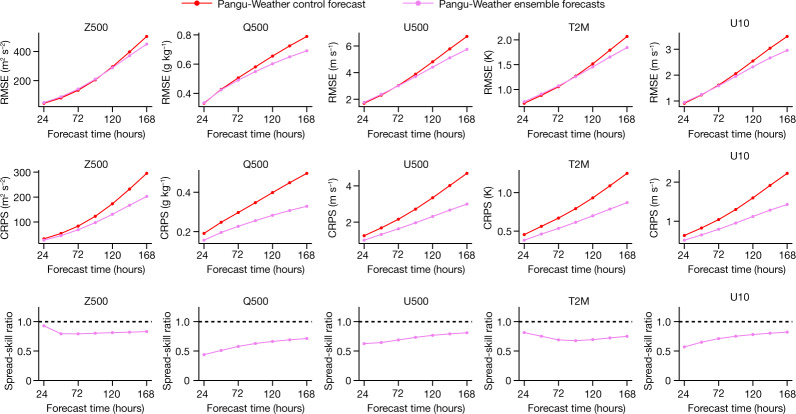
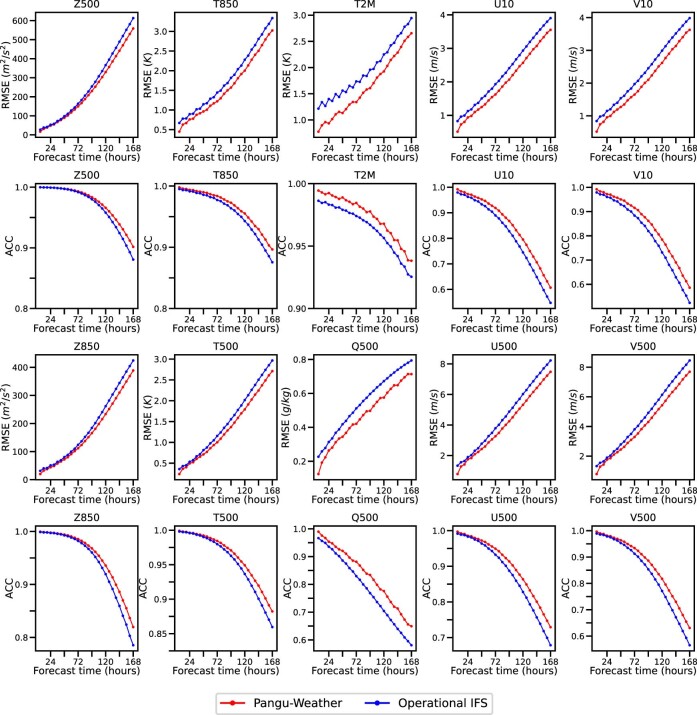
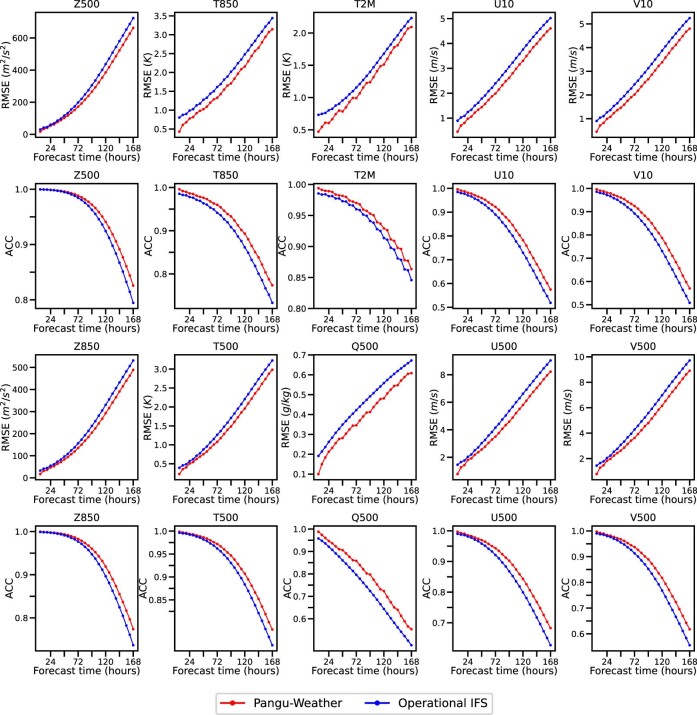
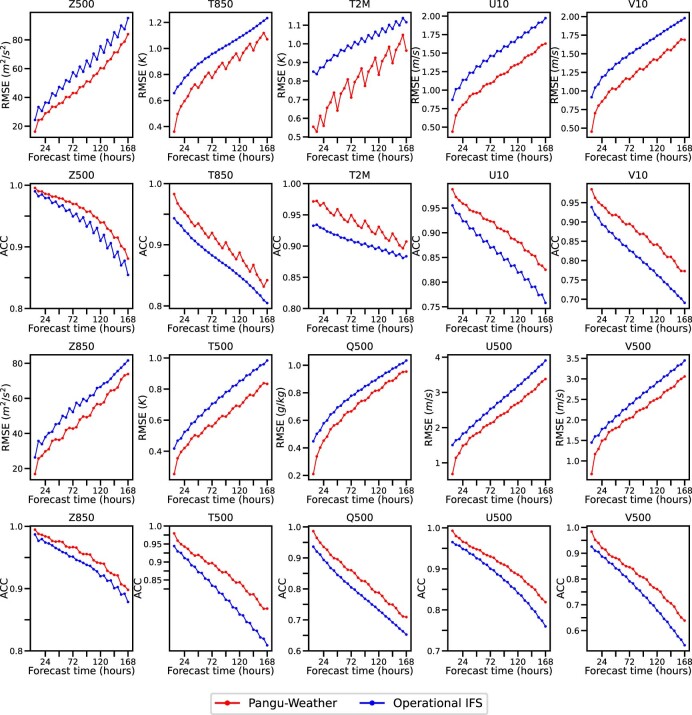
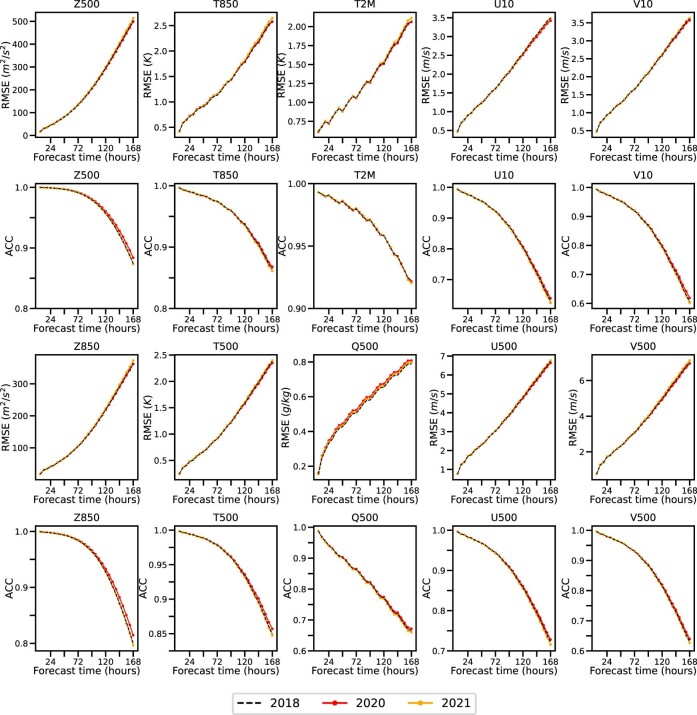
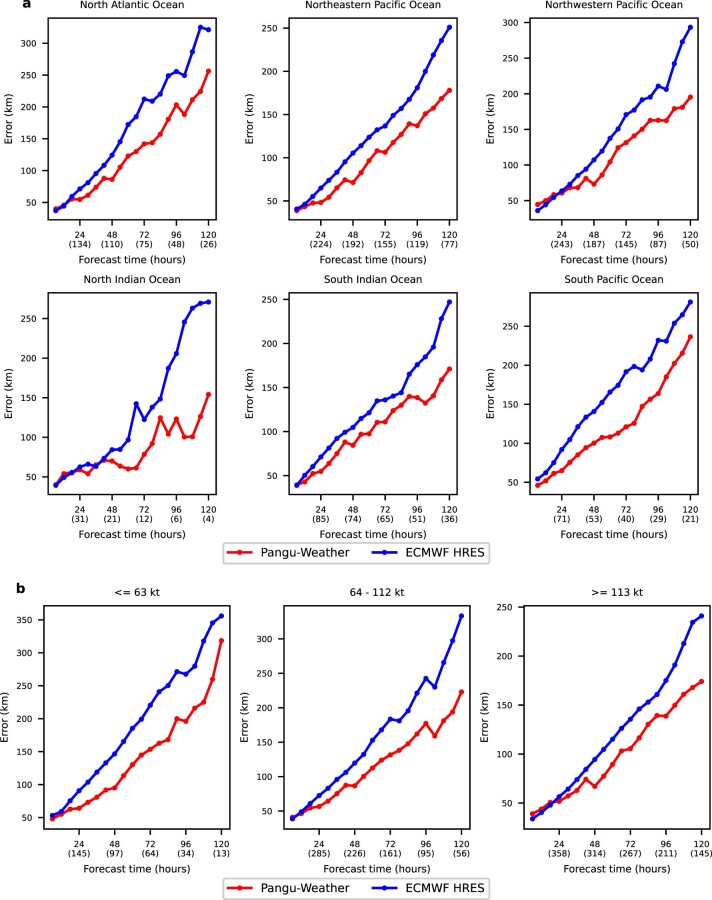
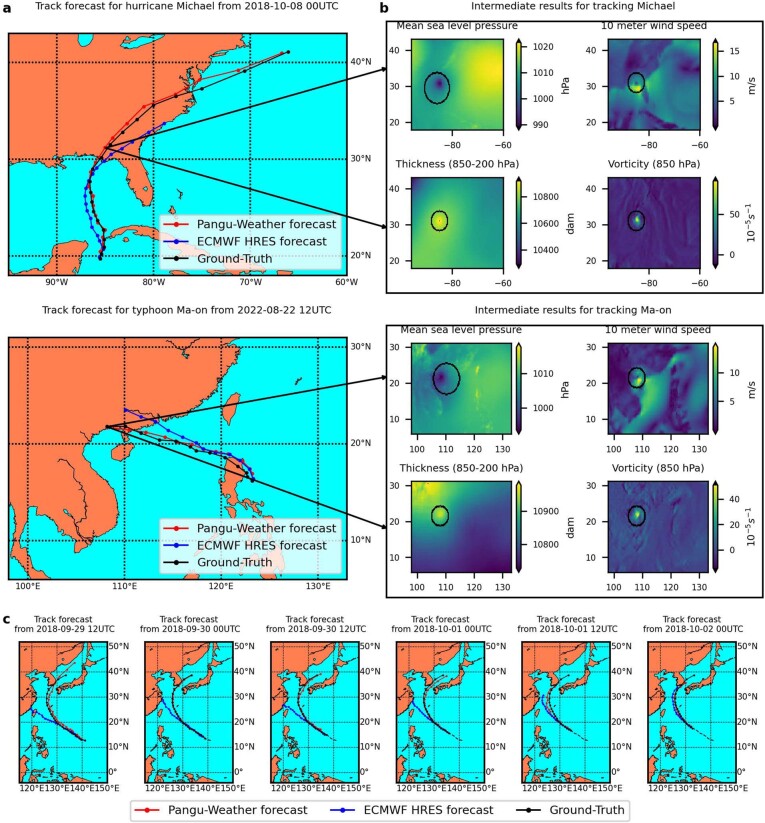
Weather forecasting is important for science and society. At present, the most accurate forecast system is the numerical weather prediction (NWP) method, which represents atmospheric states as discretized grids and numerically solves partial differential equations that describe the transition between those states 1 . However, this procedure is computationally expensive. Recently, artificial-intelligence-based methods 2 have shown potential in accelerating weather forecasting by orders of magnitude, but the forecast accuracy is still significantly lower than that of NWP methods. Here we introduce an artificial-intelligence-based method for accurate, medium-range global weather forecasting. We show that three-dimensional deep networks equipped with Earth-specific priors are effective at dealing with complex patterns in weather data, and that a hierarchical temporal aggregation strategy reduces accumulation errors in medium-range forecasting. Trained on 39 years of global data, our program, Pangu-Weather, obtains stronger deterministic forecast results on reanalysis data in all tested variables when compared with the world’s best NWP system, the operational integrated forecasting system of the European Centre for Medium-Range Weather Forecasts (ECMWF) 3 . Our method also works well with extreme weather forecasts and ensemble forecasts. When initialized with reanalysis data, the accuracy of tracking tropical cyclones is also higher than that of ECMWF-HRES.
Overview
The claims and statistics of this paper haven’t been checked yet.
Free: it reads the open-access text and checks the first 5 claims that cite a source we can check. Create a free account to check every claim.
Integrity signals
Registry
Cites
Statistics
Figures
Verification
Claims the paper makes
The claims and statistics of this paper haven’t been checked yet.
Free: it reads the open-access text and checks the first 5 claims that cite a source we can check. Create a free account to check every claim.
Claims other papers make about this one
Each is checked against this paper’s own text: does it say what the citing paper says it does?
The source backs part of the claim, not all of it — or backs it for a different population, condition or comparison.
In the citing paper
“However, they do not produce calibrated uncertainty estimates4, which is essential for useful weather forecasts1.”
From Neural general circulation models for weather and climate (2024) · cites this paper as [4]
Experimental — accuracy not yet measuredThe source backs part of the claim, not all of it — or backs it for a different population, condition or comparison.
In the citing paper
“Recently, machine-learning models trained on reanalysis data have achieved comparable or better skill than GCMs for deterministic weather forecasting3,4.”
From Neural general circulation models for weather and climate (2024) · cites this paper as [4]
Experimental — accuracy not yet measuredThe source backs part of the claim, not all of it — or backs it for a different population, condition or comparison.
In the citing paper
“Existing machine-learning models have focused on deterministic prediction, and surpass deterministic numerical weather prediction in terms of the aggregate metrics for which they are trained3,4.”
From Neural general circulation models for weather and climate (2024) · cites this paper as [4]
Experimental — accuracy not yet measuredThe source backs part of the claim, not all of it — or backs it for a different population, condition or comparison.
In the citing paper
“Most state-of-the-art machine learning models utilized in medium-range weather forecasting are built upon encoder-decoder84 architectures27–29,85.”
From A machine learning model that outperforms conventional global subseasonal forecast models (2024) · cites this paper as [28]
Experimental — accuracy not yet measuredThe source backs part of the claim, not all of it — or backs it for a different population, condition or comparison.
In the citing paper
“However, these advances have focused primarily on single, deterministic forecasts that fail to represent uncertainty and estimate risk.”
From Probabilistic weather forecasting with machine learning (2025) · cites this paper as [3]
Experimental — accuracy not yet measured
4 more claims about this paper
Create a free account to see every claim other papers make about this one.
Self-check
Percentages, sums and reported differences re-computed from the paper’s own numbers.
The self-check needs the paper’s full text.
Citations
Cites
LeCun, Y., Bengio, Y., & Hinton, G. (2015) · Nature · doi:10.1038/nature14539 · Cited by 84,126
An Image is Worth 16x16 Words: Transformers for Image Recognition at Scale
Dosovitskiy, A., Beyer, L., Kolesnikov, A., Weissenborn, D., Zhai, X., Unterthiner, T., Dehghani, M., Minderer, M., Heigold, G., Gelly, S., et al. (2020) · arXiv · doi:10.48550/arxiv.2010.11929 · Cited by 47,472
Swin Transformer: Hierarchical Vision Transformer using Shifted Windows
Liu, Z., Lin, Y., Cao, Y., Hu, H., Wei, Y., Zhang, Z., Lin, S., & Guo, B. (2021) · 2021 IEEE/CVF International Conference on Computer Vision (ICCV) · doi:10.1109/iccv48922.2021.00986 · Cited by 35,534
Hersbach, H., Bell, B., Berrisford, P., Hirahara, S., Horányi, A., Muñoz‐Sabater, J., Nicolas, J., Peubey, C., Radu, R., Schepers, D., et al. (2020) · Quarterly Journal of the Royal Meteorological Society · doi:10.1002/qj.3803 · Cited by 31,882
Language Models are Few-Shot Learners
Brown, T. B., Mann, B., Ryder, N., Subbiah, M., Kaplan, J., Dhariwal, P., Neelakantan, A., Shyam, P., Sastry, G., Askell, A., et al. (2020) · arXiv · doi:10.48550/arxiv.2005.14165 · Cited by 23,372
Learning Transferable Visual Models From Natural Language Supervision
Radford, A., Kim, J. W., Hallacy, C., Ramesh, A., Goh, G., Agarwal, S., Sastry, G., Askell, A., Mishkin, P., Clark, J., et al. (2021) · arXiv · doi:10.48550/arxiv.2103.00020 · Cited by 15,293
Momentum Contrast for Unsupervised Visual Representation Learning
He, K., Fan, H., Wu, Y., Xie, S., & Girshick, R. (2020) · 2020 IEEE/CVF Conference on Computer Vision and Pattern Recognition (CVPR) · doi:10.1109/cvpr42600.2020.00975 · Cited by 13,347
Learning Transferable Architectures for Scalable Image Recognition
Zoph, B., Vasudevan, V., Shlens, J., & Le, Q. V. (2018) · 2018 IEEE/CVF Conference on Computer Vision and Pattern Recognition · doi:10.1109/cvpr.2018.00907 · Cited by 7,831
Convolutional LSTM Network: A Machine Learning Approach for Precipitation Nowcasting
Shi, X., Chen, Z., Wang, H., Yeung, D.-Y., Wong, W.-K., & Woo, W.-C. (2015) · arXiv · doi:10.48550/arxiv.1506.04214 · Cited by 7,709
Atmospheric Modeling, Data Assimilation and Predictability
Kalnay, E. (2002) · doi:10.1017/cbo9780511802270 · Cited by 3,391
Research works printed but not linked: 2
- Devlin, J., Chang, M. W., Lee, K. & Toutanova, K. BERT: pre-training of deep bidirectional transformers for language understanding. In Proc. Conference North American Chapter of the Association of Computational Linguistics Vol. 1, 4171–4186 (NAACL, 2019).
- Stensrud, D. J. Parameterization Schemes: Keys to Understanding Numerical Weather Prediction Models (Cambridge Univ. Press 2009).
Cited by
Items 601–700 of 1,006
Zhou, K., Wang, Y., Lv, T., Shen, Q., & Cao, X. (2024) · IEEE Transactions on Pattern Analysis and Machine Intelligence · doi:10.1109/tpami.2024.3449994 · Cited by 8
“…website: http://www.nsmc.org.cn/nsmc/en/home/index.html research, including but not limited to astronomy, fluid mechanics, atmospheric science [111], and medical fields, some examples encompass the application of combustion analysis, computer-aided diagnosis of pulmonary nodules [106] and…”
MethodAI for Science: Practice from Baidu PaddlePaddle
Chai, X., Zhang, M., & Tian, H. (2024) · Portland International Conference on Management of Engineering and Technology (PICMET) · doi:10.23919/picmet64035.2024.10652607 · Cited by 9
“This was designed to handle complex and inhomogeneous 3D meteorological data [10] .”
BackgroundDing, S., Cai, Z., Wu, Y., Zhang, H., & Shen, X. (2024) · Knowledge-Based Systems · doi:10.1016/j.knosys.2024.112591 · Cited by 5
Self-citationAccurate Anomaly Detection Leveraging Knowledge-enhanced GAT
Li, Y., Zhou, Z., Deng, S., Sun, X., Xue, X., Yangui, S., & Gaaloul, W. (2024) · IEEE International Conference on Web Services (ICWS) · doi:10.1109/icws62655.2024.00077 · Cited by 5
“In fact, tasks depende‘ncies between geographic attributes and predicted attributes may hardly be derived solely from training data in certain scenario like traffic prediction, and certain aspects need to be derived from domain knowledge [9].”
BackgroundThe Prospective Application of Machine Learning in Turbulence Forecasting over China
Shao, J., Zhuang, Z., Yu, Z., Lin, K., Wu, K., Leung, Y. Y., & Chan, P. W. (2024) · Journal of Applied Meteorology and Climatology · doi:10.1175/jamc-d-23-0236.1 · Cited by 5
Xu, H., Duan, Y., & Xu, X. (2024) · Environmental Research Letters · doi:10.1088/1748-9326/ad93e8 · Cited by 12
“Recent strides in deep learning have ushered in a new era of forecasting technologies, with models such as Pangu-Weather, GraphCast, Fengwu, and Fuxi at the forefront (Bi et al 2023, Lam et al 2023, Chen et al 2023b, 2023c).”
Ma, Y., Jiao, L., Liu, F., Li, L., Ma, W., Yang, S., Liu, X., & Chen, P. (2024) · IEEE Transactions on Pattern Analysis and Machine Intelligence · doi:10.1109/tpami.2024.3510048 · Cited by 14
Lin, Y., Fang, H., Duan, D., Yang, D., Huang, H., Xiao, C., & Ren, G. (2025) · Space Weather · doi:10.1029/2024sw004018 · Cited by 5
“In recent years, Transformer, proposed by Vaswani et al. (2017), has achieved great success in many fields, such as chatGPT, Pangu‐Weather (Bi et al., 2023), etc. Compared to RNN and LSTM Networks, it uses the attention mechanism instead of the temporal memory units.”
Wang, L. H., Liu, X., Liu, Y., Li, H., Liu, J., & Yang, L. (2023) · PLoS ONE · doi:10.1371/journal.pone.0292004 · Cited by 7
Fighting the disagreement in Explainable Machine Learning with consensusPreprint
Banegas‐Luna, A. J., Martínez-Cortés, C., & Pérez‐Sánchez, H. (2024) · Research Square · doi:10.21203/rs.3.rs-4106083/v1 · Cited by 7
Tracking Soil Health: Monitoring and Modeling the Soil-Plant SystemPreprint
Zeng, Y., Verhoef, A., Vereecken, H., Ben‐Dor, E., Veldkamp, A., Shaw, L. J., Wang, Y., & Su, Z. (2024) · doi:10.22541/essoar.171804479.91646868/v1 · Cited by 5
DeepMind AI weather forecaster beats world-class system
Soliman, A. (2024) · Nature · doi:10.1038/d41586-024-03957-3 · Cited by 5
Yamaguchi, M., Ikuta, Y., Ito, K., & Satoh, M. (2025) · Journal of the Meteorological Society of Japan Ser II · doi:10.2151/jmsj.2025-018 · Cited by 7
Predicting water movement in unsaturated soil using physics-informed deep operator networks
Ye, Q., Huang, Z., Zheng, Q., & Zeng, L. (2025) · Advances in Water Resources · doi:10.1016/j.advwatres.2025.105001 · Cited by 7
Spatio-temporal graph neural networks to improve precipitation forecasts from numerical models
Yousaf, U., Rango, A. D., Furnari, L., D’Ambrosio, D., Senatore, A., & Mendicino, G. (2025) · Soft Computing · doi:10.1007/s00500-025-10635-7 · Cited by 9
“…(NVIDIA) (Pathak et al. 2022) MetNet-3 (Google) (Andrychowicz et al. 2023) FengWu (Shanghai AI Laboratory) (Chen et al. 2023b) WLSTM (Valipour et al. 2024) FuXi (Fudan University, Shanghai) (Chen et al. 2023a) Pangu-Weather (Huawei) (Bi et al. 2023) GraphCast (Google DeepMind) (Lam et al. 2023)”
Advancing seasonal prediction of tropical cyclone activity with a hybrid AI-physics climate model
Zhang, G., Rao, M., Yuval, J., & Zhao, M. (2025) · Environmental Research Letters · doi:10.1088/1748-9326/adf864 · Cited by 19
“Machine learning (ML) models recently made break-throughs in weather forecasting (e.g. Keisler 2022, Pathak et al 2022, Bi et al 2023, Lam et al 2023, Price et al 2023, Kochkov et al 2024).”
IceDiff: High Resolution and High-Quality Arctic Sea Ice Forecasting with Generative Diffusion Prior
Xu, J., Tu, S., Yang, W., Fei, B., Li, S., Liu, K. J. R., Luo, Y., Ma, L., & Bai, L. (2025) · IEEE Computer Society Conference on Computer Vision and Pattern Recognition/Proceedings - IEEE Computer Society Conference on Computer Vision and Pattern Recognition/Proceedings · doi:10.1109/cvpr52734.2025.00988 · Cited by 10
“Encouraged by the success of Swin Transformer [25] in various data-driven weather forecasting methods [6, 11, 12] , we propose to construct forecasting module by utilizing the U-Net architecture [8] and building on top of the Swin Transformer V2 backbone [26] with ResNet TSAM block [35] for better…”
Jiang, Y., Cheng, W. X., Wang, S., Bian, S., Sun, J., Li, Y., & Liu, J. (2025) · Remote Sensing · doi:10.3390/rs17162853 · Cited by 4
Evaluating machine‐learning models for wind‐speed downscaling from ECMWF‐IFS data
Ericson, W., Achermann, F., Lawrance, N., Pasquier, J. T., Andersson, O., & Siegwart, R. (2025) · Quarterly Journal of the Royal Meteorological Society · doi:10.1002/qj.5063 · Cited by 5
“In weather forecasts, such architectures have been used in global weather forecasting models (Bi et al. , 2023; Kurth et al. , 2023) as well as for downscaling (Zhong et al. , 2024).”
InfluentialAn extension of WeatherBench 2 to binary hydroclimatic forecasts
Zhao, T., Li, Q., Tu, T., & Chen, X. (2025) · Geoscientific model development · doi:10.5194/gmd-18-5781-2025 · Cited by 10
“Accurate numerical weather prediction (NWP) is of great importance to the economy and society (Bi et al., 2023; Lam et al., 2023; Bauer et al., 2015).”
InfluentialSelf-citationFostering tropical cyclone research and applications with Synthetic Aperture Radar
Mouche, A. A., Avenas, A., Chang, P. C., Chapron, B., Cévaër, T., Combot, C., Courtney, J. B., Febvre, Q., Foster, R. C., Grouazel, A., et al. (2025) · Remote Sensing of Environment · doi:10.1016/j.rse.2025.115139 · Cited by 10
Applying deep learning to a chemistry-climate model for improved ozone prediction
Liu, Z., Li, K., Wild, O., Doherty, R. M., O’Connor, F. M., & Turnock, S. T. (2025) · Atmospheric chemistry and physics · doi:10.5194/acp-25-16969-2025 · Cited by 6
“Specific applications include mimicking atmospheric photochemical processes (Xing et al., 2022), and directly predicting future weather (Bi et al., 2023; Lam et al., 2023), often outperforming traditional numerical methods in speed and accuracy.”
Increasing resolution and accuracy in sub-seasonal forecasting through 3D U-Net: the western US
Ryu, J., Kim, H., Wang, S.-Y. (., & Yoon, J. (2026) · Geoscientific model development · doi:10.5194/gmd-19-27-2026 · Cited by 9
“Some studies use only target variables, meaning the same variable is used as both input and target, such as us-ing ECMWF precipitation as input and PRISM precipitation as the target (Xin et al., 2024), while others use a broader set of additional variables (Horat and Lerch, 2024; Weyn et al., 2021 .”
Machine Learning Improves Mesoscale Offshore Wind Resource Assessment over the Yellow Sea
Gong, H., Yi, K., Yang, D., Huang, W., Fan, C., Hao, R., Sha, L., Deng, M., & Zhang, H. (2025) · 气象学报:英文版 · doi:10.1007/s13351-025-5051-z · Cited by 4
“Building on these advances, Attention-based models have exhibited exceptional potential for meteorological applications by dynamically focusing on the most relevant temporal information in long sequences (Vaswani et al., 2017; Bi et al., 2023; Zhang et al., 2024a).”
Self-citationPredictability of complex systems
Xu, E., Bi, Y., Hu, H., Chen, X., Yu, Z., Li, Y., Hu, Y., & Zhou, T. (2026) · Physics Reports · doi:10.1016/j.physrep.2026.01.001 · Cited by 11
Self-citationA deep learning-based land-atmosphere coupled model for heatwave prediction
Cho, D., Ham, Y.-G., Jeong, S., & Kang, S.-Y. (2026) · npj Climate and Atmospheric Science · doi:10.1038/s41612-025-01311-6 · Cited by 7
Sanz-Alonso, D., & Waniorek, N. (2025) · SIAM Journal on Applied Dynamical Systems · doi:10.1137/24m1719232 · Cited by 16
Snow or rain? hybrid AI deciphers surface precipitation phase from satellite observations
Yang, C., Li, H., Zhu, R., Wang, Y., Zhang, F., Gu, M., Jiang, G., ZHANG, R., & Tang, X. (2026) · Nature Communications · doi:10.1038/s41467-026-69487-w · Cited by 12
Zeng, Y., Liu, H., Zeng, G.-Z., Ni, Y.-Q., Chen, Z., & Chan, P. W. (2026) · Physics of Fluids · doi:10.1063/5.0303579 · Cited by 6
Qiao, Y., Min, X., Ge, S., Zhu, X., & Yang, N. (2026) · Journal of environmental chemical engineering · doi:10.1016/j.jece.2026.122522 · Cited by 7
Bhosale, Y. H. (2026) · National Academy Science Letters · doi:10.1007/s40009-026-02154-2 · Cited by 6
Integrated planning of net-zero power systems for all
Zhu, Z., Mao, H., Yu, R., Botterud, A., Davidson, M. R., Lu, X., Qin, Y., Su, B., Wu, G. C., Zhou, Y., et al. (2026) · Nature Energy · doi:10.1038/s41560-026-02054-1 · Cited by 13
“We therefore employed the European Centre for Medium-Range Weather Forecasts Reanalysis v5 (ERA5) dataset, a widely validated historical meteorology dataset that is even used to train high-accuracy weather forecasting models 78 .”
Verma, S., Karthikeyan, L., & Ghosh, S. (2026) · Agricultural Water Management · doi:10.1016/j.agwat.2026.110597 · Cited by 5
Latent assimilation with implicit neural representations for unknown dynamics
Li, Z., Dong, B., & Zhang, P. (2024) · Journal of Computational Physics · doi:10.1016/j.jcp.2024.112953 · Cited by 15
Zhou, K., & Shi, X. (2024) · The Science of The Total Environment · doi:10.1016/j.scitotenv.2024.175119 · Cited by 5
Forecasting High Resolution Precipitation Events With Logistic Echo State Networks
Morales, L. N. M., Bonas, M., Castruccio, S., & Crippa, P. (2024) · Journal of Geophysical Research Machine Learning and Computation · doi:10.1029/2024jh000291 · Cited by 5
“Specifically, recent advancements in machine learning and computational power have allowed the development of numerous high‐resolution data‐ driven forecasting models such as FourCastNet (Pathak et al., 2022), Pangu‐Weather (Bi et al., 2022, 2023) and Fuxi (Chen et al., 2023).”
Yu, Z., Zhou, C., & Li, M. (2024) · IEEE Transactions on Geoscience and Remote Sensing · doi:10.1109/tgrs.2024.3511118 · Cited by 7
“SSL can accelerate the convergence of the model and achieve a stronger performance with a limited training dataset; thus, it has emerged as one of the most commonly used technologies in the CV and NLP communities [58], [59], particularly when building a foundational model [60], [61].”
Radford, J. T., Ebert‐Uphoff, I., Stewart, J. Q., Musgrave, K. D., DeMaria, R., Tourville, N. D., & Hilburn, K. (2024) · Bulletin of the American Meteorological Society · doi:10.1175/bams-d-24-0057.1 · Cited by 21
The challenge of land in a neural network ocean model
Furner, R., Haynes, P., Jones, D. C., Munday, D. R., Paige, B., & Shuckburgh, E. F. (2024) · Environmental Data Science · doi:10.1017/eds.2024.49 · Cited by 5
“Specifically Pathak et al. (2022) used a Fourier neural operator; Keisler (2022), Bi et al. (2023) and Lam et al. (2023) used graph neural networks; and Chen et al. (2023a) used a transformer-based architecture.”
Rabault, J., Sætra, M. L., Dobler, A., Eastwood, S., & Berge, E. (2025) · Solar Energy · doi:10.1016/j.solener.2025.113337 · Cited by 5
Christakis, N., Drikakis, D., & Tirchas, P. (2025) · Physics of Fluids · doi:10.1063/5.0260592 · Cited by 4
ECMWF’s societal impact through service provision, partnerships and collaborations
Venuti, F., Rabier, F., Andersson, E., Modigliani, U., English, S. J., Kitchen, C., Berrone, M., Pinsault, D., de Brux, J., & Jarraud, M. (2025) · Journal of the European Meteorological Society. · doi:10.1016/j.jemets.2025.100013 · Cited by 6
Huang, X., & Wang, N. (2025) · Structural Safety · doi:10.1016/j.strusafe.2025.102620 · Cited by 5
Jiang, W., Zhong, X., Zhang, J., & Kareem, A. (2025) · Journal of Wind Engineering and Industrial Aerodynamics · doi:10.1016/j.jweia.2025.106127 · Cited by 4
Liu, Z., Chen, H., Bai, L., Li, W., Zou, Z., & Shi, Z. (2025) · IEEE Transactions on Geoscience and Remote Sensing · doi:10.1109/tgrs.2025.3578701 · Cited by 8
“D EEP learning-based weather forecasting has achieved remarkable progress in recent years [1], [2], [3], demonstrating superior performance across various tasks including data assimilation [4], [5], [6] and precipitation nowcasting [7], [8], often surpassing traditional numerical weather prediction…”
Artificial Intelligence in Paleobotany and Palynology
Liu, Y., Torres, L. N., Wang, B., Pei, W., Na, Y., Song, Q., & Shi, X. (2025) · Geological Journal · doi:10.1002/gj.70007 · Cited by 7
“…historical data and spatial information, AI models can generate short-term forecasts of local weather conditions and the likelihood of geological hazards with notable accuracy (Reichstein et al. 2019; Bi et al. 2023; Zhang, Long, et al. 2023b; Zhang, Zhang, et al. 2024b; Zhang and Wang 2024).”
Chen, M., Zhang, J., Dong, R., Xu, Y., Liang, H., Zheng, J., Wang, L., & Fu, H. (2025) · Geophysical Research Letters · doi:10.1029/2024gl114310 · Cited by 7
“While some attention‐based architectures (Bi et al., 2023; Lang et al., 2024) offer partial interpretability by modeling variable interactions, their attention is computed over patches or extended spatial regions, which limits interpretability at the grid‐point level, making it harder to trace how…”
Transformer-based full-track simulation of tropical cyclones
Tong, B., Hu, G., & Duan, Z. (2025) · Journal of Wind Engineering and Industrial Aerodynamics · doi:10.1016/j.jweia.2025.106176 · Cited by 5
Deng, Z., Meng, Q., Li, Y., Liu, X., Chen, G., Chen, L., Liu, C., & Xu, H. (2025) · Engineering Applications of Artificial Intelligence · doi:10.1016/j.engappai.2025.110109 · Cited by 5
AI for Anticipatory Action: Moving beyond Climate Forecasting
Huynh, B. Q., & Kiang, M. V. (2024) · Proceedings of the AAAI Symposium Series · doi:10.1609/aaaiss.v2i1.27652 · Cited by 6
Learning to downscale satellite gravimetry data through artificial intelligence
Sun, A. Y. (2024) · Nature Water · doi:10.1038/s44221-024-00199-5 · Cited by 4
Yu, H., Wang, H., Yuan, C., & Xing, Q. (2024) · Weather and Climate Extremes · doi:10.1016/j.wace.2024.100663 · Cited by 4
A data-driven approach to morphogenesis under structural instability
Zhao, Y., & Xu, Z. (2024) · Cell Reports Physical Science · doi:10.1016/j.xcrp.2024.101872 · Cited by 7
Shi, Z., Zheng, H., & Dong, J. (2024) · Knowledge-Based Systems · doi:10.1016/j.knosys.2024.112090 · Cited by 4
STAA: Spatiotemporal Alignment Attention for Short-Term Precipitation Forecasting
Chen, M., Yang, H., Li, S., & Qin, X. (2024) · IEEE Geoscience and Remote Sensing Letters · doi:10.1109/lgrs.2024.3431099 · Cited by 6
Peng, K., Xin, J., Zhu, X., Xu, Q., Wang, X., Wang, W., Tan, Y., Zhao, D., Jia, D., Cao, X., et al. (2024) · Journal of Geophysical Research Atmospheres · doi:10.1029/2023jd039993 · Cited by 6
“Recent studies have pointed out the excellent ability of the weather forecasting systems on the basis of artificial intelligence big models, performance of which is far beyond the traditional numerical simulations (Bi et al., 2023; Lam et al., 2023).”
Enhancing climate monitoring and prediction: The integration of advanced AI techniques
Zeng, C. (2024) · Applied and Computational Engineering · doi:10.54254/2755-2721/71/20241583 · Cited by 4
Data-driven acceleration of multi-physics simulations
Meinecke, S., Selig, M., Köster, F., Knorr, A., & Lüdge, K. (2024) · Machine Learning Science and Technology · doi:10.1088/2632-2153/ad7572 · Cited by 5
“The different approaches can be distinguished into two classes: The data-driven model can either be designed to entirely emulate the multi-physics system [33, 35–39], or to integrate with sys-tem equations [34, 40–42].”
BackgroundTrends and challenges of the interactions between microclimate and electric power systems
Li, C., Cheng, Y., Yusheng, X., Ran, L., Xue, F., Chang, K., Liu, J., Tai, N., Huang, W., Xu, Y., et al. (2024) · The Innovation Energy · doi:10.59717/j.xinn-energy.2024.100046 · Cited by 4
Advances in Deep-Learning-based Precipitation Nowcasting Techniques
Zheng, Q., Liu, Q., Lao, P., & Zhen-ci, L. U. (2024) · Journal of Tropical Meteorology · doi:10.3724/j.1006-8775.2024.028 · Cited by 6
“Such defects were mainly attributed to the lack of physical constraints, and this was the primary concern in developing the NowcastNet model.”
BackgroundLong-term urban air quality prediction with hierarchical attention loop network
Zheng, H., Zhao, J., Zhu, J., Ye, Z., & Deng, F. Y. (2024) · Sustainable Cities and Society · doi:10.1016/j.scs.2024.106010 · Cited by 4
Reconstructing damaged fNIRS signals with a generative deep learning model
Zhi, Y., Zhang, B., Xu, B., Wan, F., Niu, P., & Niu, H. (2024) · Artificial Intelligence Review · doi:10.1007/s10462-024-11028-2 · Cited by 5
“…et al. 2024; Redhu et al. 2023), stock prices (Mehtab et al. 2021; Mukherjee et al. 2023 ; Lee et al. 2024), and weather forecasting (Shi et al. 2015; Bi et al. 2023; Venkatachalam et al. 2023), the lack of historical information in this study makes the prediction task particularly challenging.”
Yuan, D., Tang, B., Wang, D., Chen, J., Zhang, Z., & Fu, Z. (2025) · IEEE Journal of Selected Topics in Applied Earth Observations and Remote Sensing · doi:10.1109/jstars.2024.3525132 · Cited by 4
Paleoclimate data assimilation: Principles and prospects
Zhang, H., Li, M., & Hu, Y. (2025) · Science China Earth Sciences · doi:10.1007/s11430-024-1439-y · Cited by 6
“Climate prediction methods based on AI, such as the large-scale Pangu model, have already shown promising results, achieving precise global climate ensemble predictions and extreme weather forecasts (Bi et al., 2023).”
Self-citationDeep Learning-based Bias Correction Method for Seasonal Prediction of Summer Rainfall in China
Qu, A., Bao, Q., Zhu, Τ., & Zhao-ming, L. U. O. (2024) · Journal of Tropical Meteorology · doi:10.3724/j.1006-8775.2024.040 · Cited by 6
MEMO: Fine-grained Tensor Management For Ultra-long Context LLM Training
Zhao, P., Zhang, H., Fu, F., Nie, X., Liu, Q., Yang, F., Peng, Y., Jiao, D., Li, S., Xue, J., et al. (2025) · Proceedings of the ACM on Management of Data · doi:10.1145/3709703 · Cited by 17
Self-citationWang, Z., Luo, Z., Yang, Z., & Liu, Y. (2025) · Applied Sciences · doi:10.3390/app15073935 · Cited by 5
Solvik, K. K., Penny, S. G., & Hoyer, S. (2025) · Journal of Advances in Modeling Earth Systems · doi:10.1029/2024ms004608 · Cited by 10
“…ML weather prediction (MLWP) models have been released, including the NeuralGCM (Kochkov et al., 2024), GraphCast (Lam et al., 2023), PanguWeather (Bi et al., 2023), FourCastNet (Kurth et al., 2023), and Spherical Fourier Neural Operators (Bonev et al., 2023), which all show potential for…”
Tang, C., Hu, Y., Wei, Y., Wang, Z., & Zhao, Z. (2025) · Earth Science Informatics · doi:10.1007/s12145-025-01883-0 · Cited by 4
“It has been broadly utilized in numerous situations, encompassing traffic flow prediction (L. Wang et al. b; Zhao et al. 2020), urban traffic analysis, as well as weather forecasting (Bi et al. 2023).”
Sunil, A., Devda, A., Murthy, R., & Deepthi, B. (2025) · Natural Hazards · doi:10.1007/s11069-025-07267-3 · Cited by 8
“In a ConvLSTM2D model, the filters extract different features from the input data and captures various aspects from the spatial information (Ravuri et al. 2021; Guastavino et al. 2022; Bi et al. 2023), and therefore a greater number of filters implies model learns from a rich representation of data.”
Yan, Z., Lu, X., Wu, L., Zhang, H., Fa, L., Wang, X., Xu, W., & Liu, W. (2025) · Expert Systems with Applications · doi:10.1016/j.eswa.2025.128042 · Cited by 11
Self-citationPahlavan, H. A., Hassanzadeh, P., & Alexander, M. J. (2025) · Geophysical Research Letters · doi:10.1029/2024gl114136 · Cited by 5
“To date, rigorous frameworks for analyzing, understanding, and systematically rectifying such instability remain elusive.”
AI models still lag behind traditional numerical models in predicting sudden-turning typhoons
Xu, D., Lu, Z., Leung, J. C., Zhao, D., Li, Y., Shi, Y., Chen, B., Nie, G., Wu, N., Tian, X., et al. (2025) · 中国科学通报:英文版 · doi:10.1016/j.scib.2025.06.010 · Cited by 8
“The Pangu - Weather model, similar to other AI - based weather prediction (AIWP) models such as FourCastNet [2] and GraphCast [3], demonstrates the ability to generate forecast results with overall accuracies comparable to those of the leading numerical weather prediction (NWP) model, namely, the…”
InfluentialShan, S., Sreeram, V., Li, C., Dou, W., Wang, K., Zhang, K., & Wei, H. (2025) · Journal of Renewable and Sustainable Energy · doi:10.1063/5.0254162 · Cited by 6
Monaco, S., Monaco, L., Apiletti, D., Cremonini, R., & Barbero, S. (2025) · Computers & Geosciences · doi:10.1016/j.cageo.2025.105992 · Cited by 7
Sources of predictability of synoptic‐scale rainfall during the West African summer monsoon
Satheesh, A. R., Knippertz, P., Fink, A. H., Walz, E., & Gneiting, T. (2023) · Quarterly Journal of the Royal Meteorological Society · doi:10.1002/qj.4581 · Cited by 12
Zang, T., Zou, J., Li, Y., Qiu, Z., Wang, B., Cui, C., Li, Z., Hu, T., & Guo, Y. (2024) · Atmosphere · doi:10.3390/atmos15020197 · Cited by 6
Super Typhoon Saola (2309) affecting Hong Kong in September 2023–Forecasting AspectPreprint
Chan, P. W., He, Y., & Lui, Y. S. (2023) · Preprints.org · doi:10.20944/preprints202309.1634.v1 · Cited by 4
Niu, Z., Huang, W., Yang, Y., Yang, M., Deng, L., Wang, H., Li, H., & Zhang, X. (2025) · Advances in Atmospheric Sciences · doi:10.1007/s00376-025-5464-8 · Cited by 7
AFS-FCM With Memory: A Model for Air Quality Multi-Dimensional Prediction With Interpretability
Peng, Z., Liu, W., & Oh, S. (2024) · IEEE Transactions on Big Data · doi:10.1109/tbdata.2024.3433467 · Cited by 4
“H IGH-PERFORMANCE machine learning models excel in their predictive ability [1], [2], [3], while the black-box problem caused by the overly complex structure of the model is detrimental to the use of machine learning models.”
Mu, B., Zhao, Z.-J., Yuan, S., Chen, X., Qin, B., & Dai, G. (2024) · Atmospheric Research · doi:10.1016/j.atmosres.2024.107682 · Cited by 3
Self-citationJing, R., Gao, J., Cai, Y., Xi, D., Zhang, Y., Fu, Y., Emanuel, K., Diffenbaugh, N. S., & Bendavid, E. (2024) · Journal of Advances in Modeling Earth Systems · doi:10.1029/2023ms004203 · Cited by 10
“Recent progress in machine learning‐based high‐resolution global weather modeling (ML‐GWM) (Bi et al., 2023a; Lam et al., 2022; Pathak et al., 2022) has made this possible.”
Shenolikar, J., Ruti, P. M., Lee, D., Thonipparambil, S., Tervo, R., Fierli, F., Obligis, E., Cacciari, A., Raspaud, M., Bouchet, V. S., et al. (2024) · Bulletin of the American Meteorological Society · doi:10.1175/bams-d-23-0261.1 · Cited by 6
“Good examples include FourCastNet (Pathak, et al., 2022), GraphCast (Lam, et al., 2022) and PanguWeather (Kaifeng, et al., 2023).”
Postprocessing East African Rainfall Forecasts Using a Generative Machine Learning Model
Antonio, B., McRae, A. T. T., MacLeod, D. A., Cooper, F., Marsham, J. H., Aitchison, L., Palmer, T. N., & Watson, P. A. G. (2025) · Journal of Advances in Modeling Earth Systems · doi:10.1029/2024ms004796 · Cited by 15
“This has inspired several attempts to train ML models to predict the weather from large amounts of historical data (Bi et al., 2023; Lam et al., 2023; Nguyen et al., 2023; Ravuri et al., 2021; Zhang et al., 2023) and for bias correction (Ben‐Bouallegue et al., 2023; Chen et al., 2024; Dai & Hemri,…”
U‐Net Kalman Filter (UNetKF): An Example of Machine Learning‐Assisted Data Assimilation
Lu, F. (2025) · Journal of Advances in Modeling Earth Systems · doi:10.1029/2023ms003979 · Cited by 7
“The rapid advancement of ML‐based weather and climate models (Bi et al., 2023; Kochkov et al., 2024; Lam et al., 2023) points to an exciting future where very large ensembles can be efficiently generated for ensemble data assimilation using these data‐driven models.”
AI Merged With Human Knowledge Produces the Best Possible Weather Forecasts
Penny, S. G. (2025) · Geophysical Research Letters · doi:10.1029/2025gl116465 · Cited by 3
“The highest profile MLWP models (e.g., Bi et al., 2023; Bodnar et al., 2024; Bonev et al., 2023; Lam et al., 2023; Pathak et al., 2022) have been trained on reanalysis data sets (i.e., historical reconstruction simulations that have been guided to the observations via data assimilation methods) and…”
Calculation of neutral source terms with deep learning to accelerate edge plasma simulations
Zhang, J., Mao, S., 郭, J. 晋. G., He, J., & Liu, T. (2025) · Plasma Science and Technology · doi:10.1088/2058-6272/add1b0 · Cited by 3
Liu, X., Chen, J., Zhu, Y., Liu, Y., Chen, F., Huo, Z., Peng, F., Ma, Y., & Gong, Y. (2025) · Advances in Atmospheric Sciences · doi:10.1007/s00376-024-4173-z · Cited by 7
Anomalous Behavior in Weather Forecast Uncertainty: Implications for Ship Weather Routing
Marjanović, M., Prpić-Oršić, J., Turk, A., & Valčić, M. (2025) · Journal of Marine Science and Engineering · doi:10.3390/jmse13061185 · Cited by 5
Improving PM2.5 and Visibility Predictions in China Using Machine Learning and Ensemble Forecasting
Zhang, Z., Xu, F., Zhao, X., & Cheng, S. (2025) · Journal of Geophysical Research Machine Learning and Computation · doi:10.1029/2025jh000640 · Cited by 8
Xia, Z., Zhao, C., Yang, Z., Du, Q., Feng, J., Jin, C., Jun, S., & An, H. (2025) · Atmospheric chemistry and physics · doi:10.5194/acp-25-6197-2025 · Cited by 3
Baño‐Medina, J., Sengupta, A., Michaelis, A., Monache, L. D., Kalansky, J. F., & Watson‐Parris, D. (2025) · Artificial Intelligence for the Earth Systems · doi:10.1175/aies-d-24-0090.1 · Cited by 8
Decoding the Primacy of Transportation Emissions of Formaldehyde Pollution in an Urban Atmosphere
Liu, S., Ma, H.-N., Tang, M., Shao, Y.-M., Yao, T.-T., He, L., & Huang, X. (2025) · Toxics · doi:10.3390/toxics13080643 · Cited by 3
“Trained AI models have achieved subseasonal forecasting accuracy of complex events, such as global weather prediction, which was regarded as a significant breakthrough in the scientific community [25,26].”
Huang, H., Deng, D., Hu, L., Chen, Y., & Sun, N. (2025) · Remote Sensing · doi:10.3390/rs17152675 · Cited by 4
Toward accurate and efficient weather prediction using a dual-gated spatiotemporal attention network
Zhang, Z., Lin, L., Gao, S., Wang, J., & Zhao, H. (2025) · Engineering Applications of Artificial Intelligence · doi:10.1016/j.engappai.2025.111990 · Cited by 4
Xin, X., Wei, S., Feng, D., Xu, C. W., Ying, X., & Gu, M. (2025) · Ocean Engineering · doi:10.1016/j.oceaneng.2025.122512 · Cited by 4
SirP: Semi-Recurrent Paradigm-Based Prediction Network for Satellite Image Sequences
Chen, K., Xu, M., Li, W., Mo, F., Huang, Y., Wu, M., & Zhang, C. (2025) · IEEE Journal of Selected Topics in Applied Earth Observations and Remote Sensing · doi:10.1109/jstars.2025.3610082 · Cited by 3
“The emergence of deep learning has revolutionized spatiotemporal prediction by enabling data-driven models to learn complex, nonlinear dynamics [20], [21].”
Li, S., Zhang, B., Bi, H., Huang, L., Shi, B. Q., & Ai, Q. (2025) · Remote Sensing · doi:10.3390/rs17183164 · Cited by 3
Constructing extreme heatwave storylines with differentiable climate models
Whittaker, T., & Luca, A. D. (2026) · Weather and Climate Dynamics · doi:10.5194/wcd-7-393-2026 · Cited by 14
Increasing flood hazard in the Lower Mississippi River due to extreme storm clustering
Liu, Y., Wright, D. B., Quintero, F., Michalek, A., Villarini, G., & Smith, J. A. (2025) · Science Advances · doi:10.1126/sciadv.adt1868 · Cited by 8
Metadata
- Authors
- Bi, K., Xie, L., Zhang, H., Chen, X., Gu, X., & Tian, Q.
- Affiliations
- Huawei Technologies (China) (CN)
- Corresponding author
- Tian, Qi
- Venue
- Nature
- Published
- 2023-07-05
- Volume
- 619
- Issue
- 7970
- Pages
- 533-538
- ISSN
- 0028-0836 (ISSN-L)
- 1476-4687
- PMC
- PMC10356604
- OpenAlex
- W4383218913
- Semantic Scholar
- 6a78c73c92d5e5d9759b46eff892baf1d6e83754
- Cited by
- 1,670
- References
- 36
- Citations by year
- 2026: 565 · 2025: 594 · 2024: 444 · 2023: 67
- FWCI
- 184.37
- Type
- journal article
- Language
- en
- Update notices
- correction (2023-09-14)
- Open access
- hybrid
- doi.org
- Licence
- cc-by
- creativecommons.org/licenses/by/4.0 (tdm)
- creativecommons.org/licenses/by/4.0 (vor)
- Locations
- Nature (publishedVersion, cc-by)
- PubMed Central (publishedVersion, cc-by)
- PubMed (publishedVersion)
- RePEc: Research Papers in Economics (submittedVersion)
- Funders
- National Oceanic and Atmospheric Administration
- Topics
- Physical Sciences › Earth and Planetary Sciences › Atmospheric Science › Meteorological Phenomena and Simulations
- Physical Sciences › Environmental Science › Environmental Engineering › Hydrological Forecasting Using AI
- Social Sciences › Transportation › Traffic Prediction and Management Techniques
- Keywords
- medium-range weather forecasting, global weather forecasting, 3D neural networks, Pangu-Weather, deterministic forecasting, tropical cyclone tracking, extreme weather prediction, ensemble forecasting, reanalysis data, ECMWF comparison
About these checks
Registry, retraction, Cites and statistics results are computed, not judged, with one exception: a printed reference that no index lists is read once by a model before it counts as a citation error. Claims are extracted by a model and kept only when their quote appears verbatim in the text; each cited source is then checked, with a model’s help, for whether it says what the claim relies on. Those verdicts can be wrong — read the claim’s quote and the cited source before relying on one.
Statistics and arithmetic are recomputed, not judged.
Confidence bands are shown only for fields calibrated on our annotated test set. None is calibrated yet, so no band is shown.
What counts as a claim ›How we measure confidence ›How we check this ›
Are you an author, or do you see a problem with this page? Request a review
Data sources
Bibliographic data: Semantic Scholar, OpenAlex, Crossref.
Contains information from the Semantic Scholar Academic Graph Datasets, made available under the ODC Attribution License (ODC-BY 1.0).
Semantic Scholar’s data is described in: Kinney, R., et al. (2023). The Semantic Scholar Open Data Platform. arXiv:2301.10140.
