

Concurrent inhibition of oncogenic and wild-type RAS-GTP for cancer therapy
Open accessPublished version of a preprint
The DOI matches its Crossref record; 43 of the 48 references it cites were found in a registry or an index.
Abstract
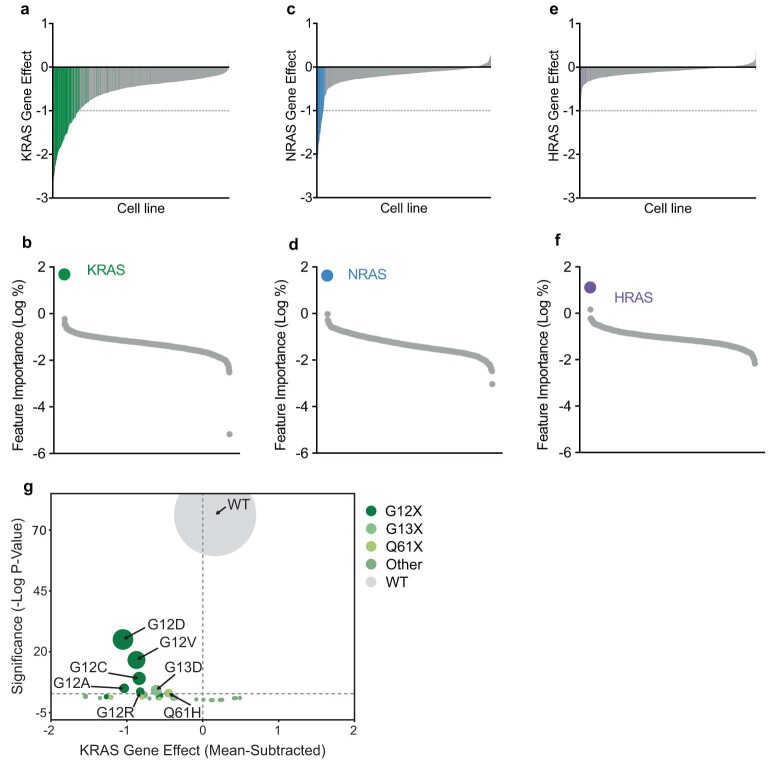
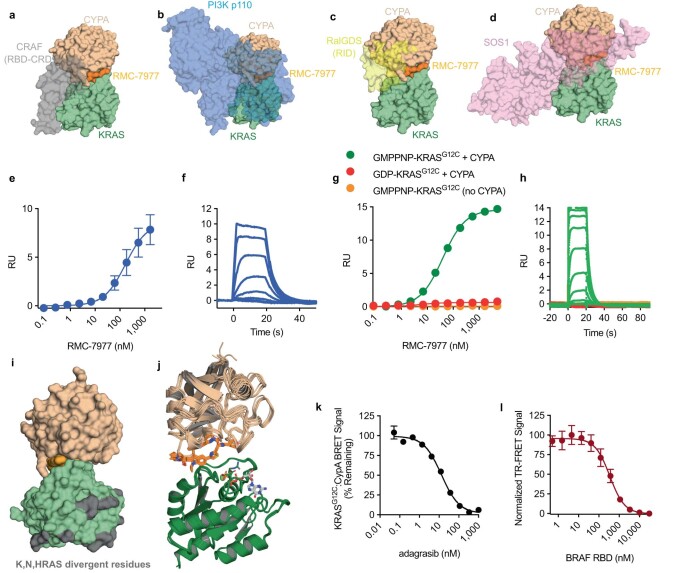
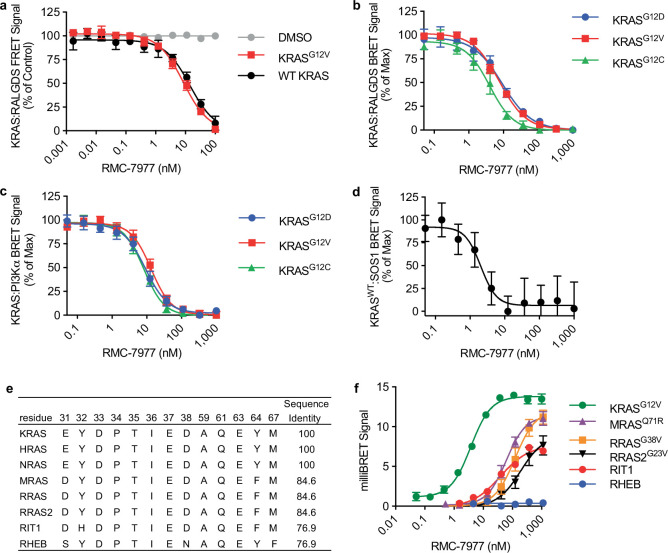
RAS oncogenes (collectively NRAS , HRAS and especially KRAS ) are among the most frequently mutated genes in cancer, with common driver mutations occurring at codons 12, 13 and 61 1 . Small molecule inhibitors of the KRAS(G12C) oncoprotein have demonstrated clinical efficacy in patients with multiple cancer types and have led to regulatory approvals for the treatment of non-small cell lung cancer 2,3 . Nevertheless, KRAS G12C mutations account for only around 15% of KRAS -mutated cancers 4,5 , and there are no approved KRAS inhibitors for the majority of patients with tumours containing other common KRAS mutations. Here we describe RMC-7977, a reversible, tri-complex RAS inhibitor with broad-spectrum activity for the active state of both mutant and wild-type KRAS, NRAS and HRAS variants (a RAS(ON) multi-selective inhibitor). Preclinically, RMC-7977 demonstrated potent activity against RAS-addicted tumours carrying various RAS genotypes, particularly against cancer models with KRAS codon 12 mutations ( KRAS G12X ). Treatment with RMC-7977 led to tumour regression and was well tolerated in diverse RAS-addicted preclinical cancer models. Additionally, RMC-7977 inhibited the growth of KRAS G12C cancer models that are resistant to KRAS(G12C) inhibitors owing to restoration of RAS pathway signalling. Thus, RAS(ON) multi-selective inhibitors can target multiple oncogenic and wild-type RAS isoforms and have the potential to treat a wide range of RAS-addicted cancers with high unmet clinical need. A related RAS(ON) multi-selective inhibitor, RMC-6236, is currently under clinical evaluation in patients with KRAS -mutant solid tumours (ClinicalTrials.gov identifier: NCT05379985).
Overview
The claims and statistics of this paper haven’t been checked yet.
Free: it reads the open-access text and checks the first 5 claims that cite a source we can check. Create a free account to check every claim.
Integrity signals
Registry
Cites
Statistics
Figures
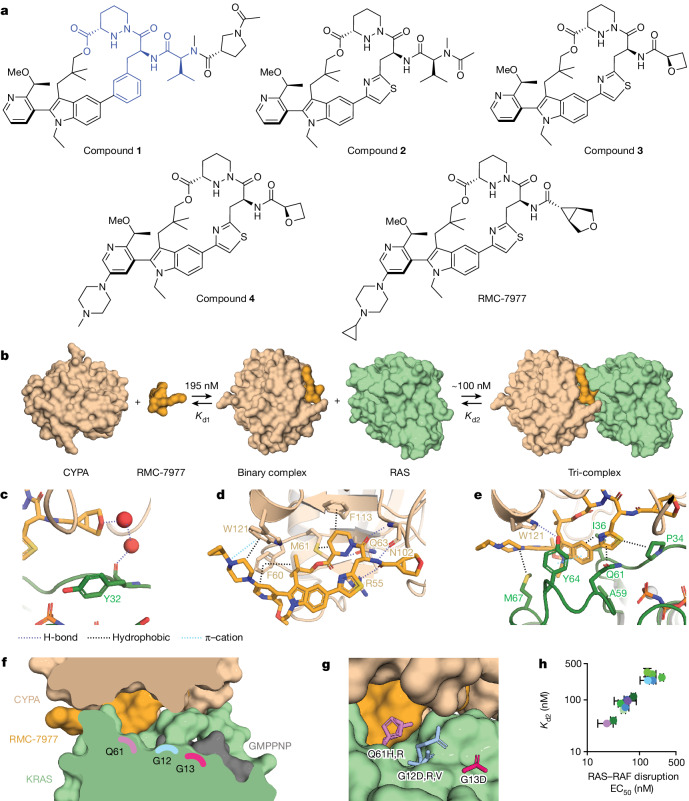
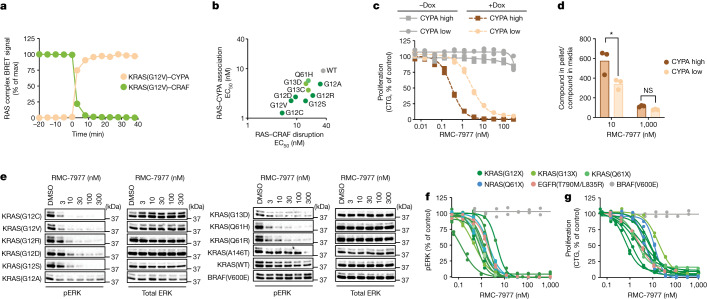
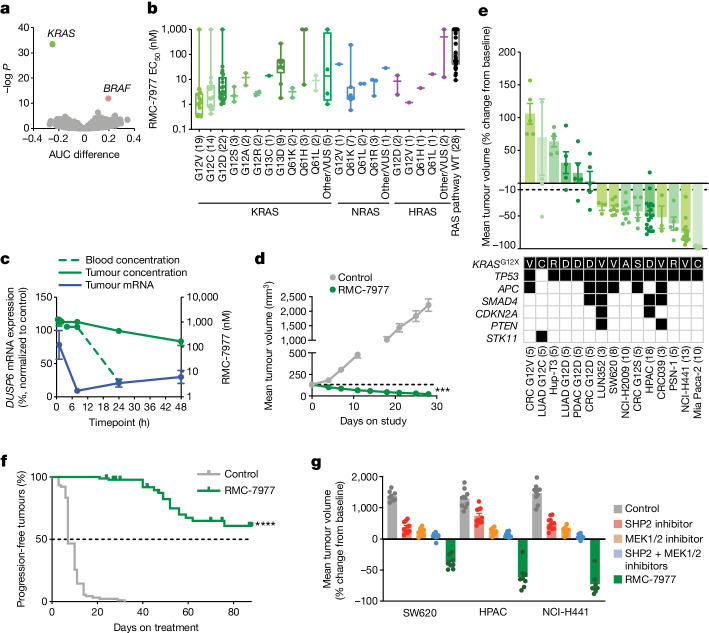
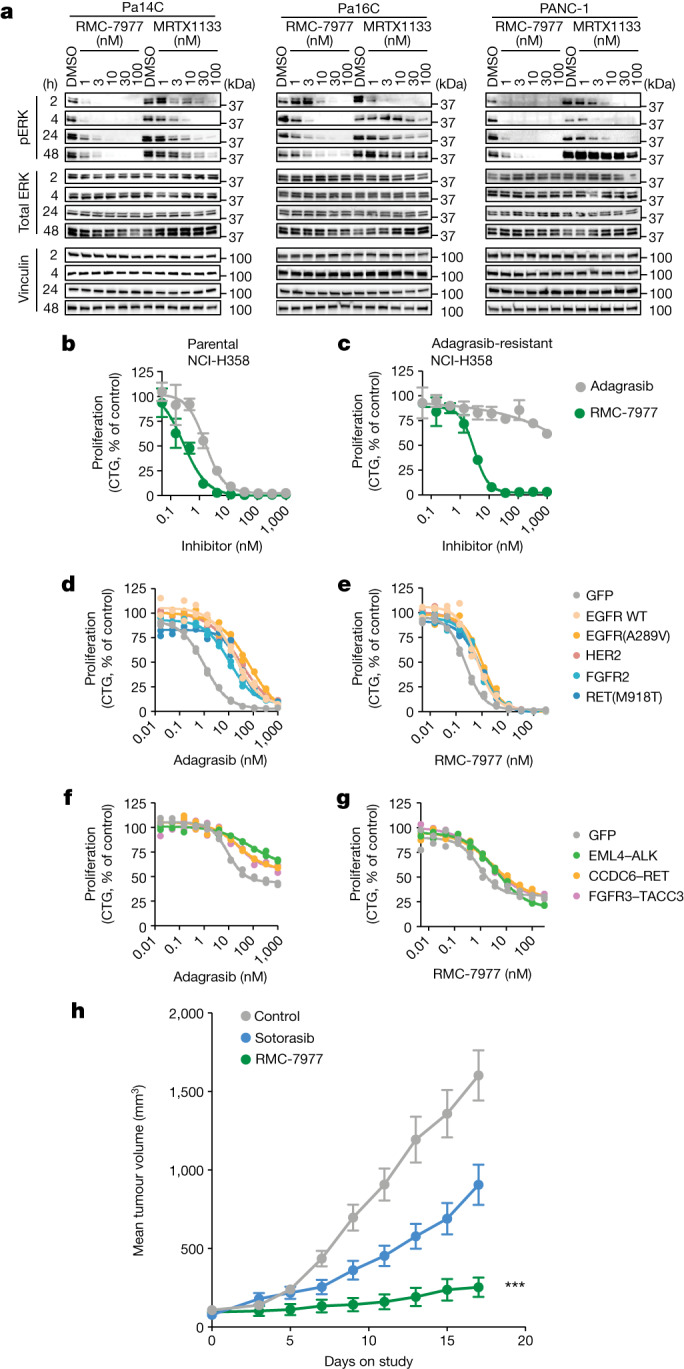
Verification
Claims the paper makes
The claims and statistics of this paper haven’t been checked yet.
Free: it reads the open-access text and checks the first 5 claims that cite a source we can check. Create a free account to check every claim.
Claims other papers make about this one
Each is checked against this paper’s own text: does it say what the citing paper says it does?
The source backs part of the claim, not all of it — or backs it for a different population, condition or comparison.
In the citing paper
“Recently developed “pan-RAS” or “pan-KRAS” inhibitors capable of targeting all RAS isoforms or all KRAS alleles will be broadly applicable to most patients with PDAC (71–74).”
From Mechanisms of Resistance to Oncogenic KRAS Inhibition in Pancreatic Cancer (2024) · cites this paper as [73]
Experimental — accuracy not yet measured
Self-check
Percentages, sums and reported differences re-computed from the paper’s own numbers.
The self-check needs the paper’s full text.
Citations
Cites
Colorectal cancer statistics, 2023
Siegel, R. L., Wagle, N. S., Cercek, A., Smith, R. A., & Jemal, A. (2023) · CA: A Cancer Journal for Clinicians · doi:10.3322/caac.21772 · Cited by 3,733
K-Ras(G12C) inhibitors allosterically control GTP affinity and effector interactions
Ostrem, J. M., Peters, U., Sos, M. L., Wells, J. A., & Shokat, K. M. (2013) · Nature · doi:10.1038/nature12796 · Cited by 2,557
Improved Survival with MEK Inhibition in BRAF-Mutated Melanoma
Flaherty, K. T., Robert, C., Hersey, P., Nathan, P., Garbe, C., Milhem, M., Demidov, L. V., Hassel, J. C., Rutkowski, P., Mohr, P., et al. (2012) · New England Journal of Medicine · doi:10.1056/nejmoa1203421 · Cited by 2,160
Drugging the undruggable RAS: Mission Possible?
Cox, A. D., Fesik, S. W., Kimmelman, A. C., Luo, J., & Der, C. J. (2014) · Nature Reviews Drug Discovery · doi:10.1038/nrd4389 · Cited by 1,997 · cited 1×
“RAS proteins have historically been recalcitrant drug targets 2,3 , although progress in targeting the inactive, GDP-bound state of KRAS(G12C) has resulted in regulatory approvals for two drugs, sotorasib and adagra-sib 10,11 .”
BackgroundSelf-citationRAS Proteins and Their Regulators in Human Disease
Simanshu, D. K., Nissley, D. V., & McCormick, F. (2017) · Cell · doi:10.1016/j.cell.2017.06.009 · Cited by 1,943 · cited 2×
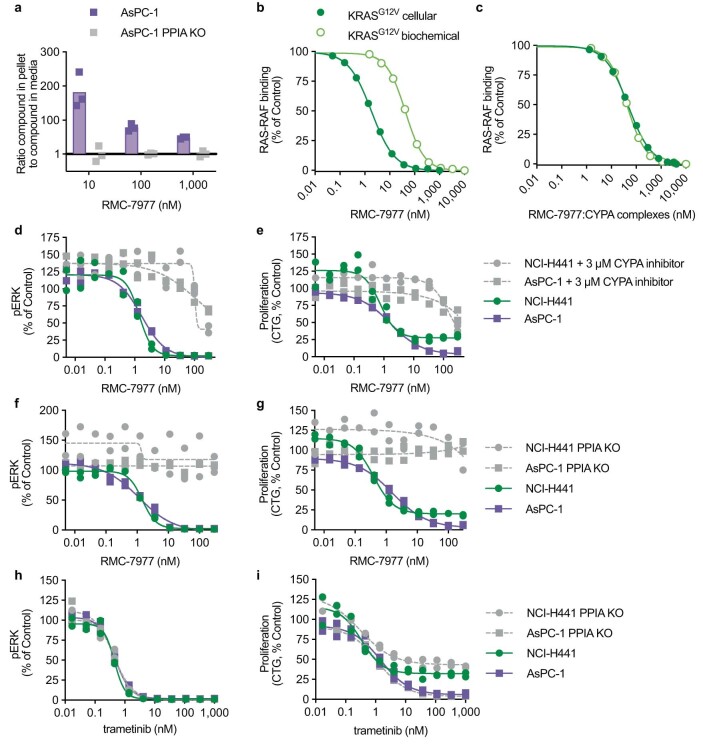
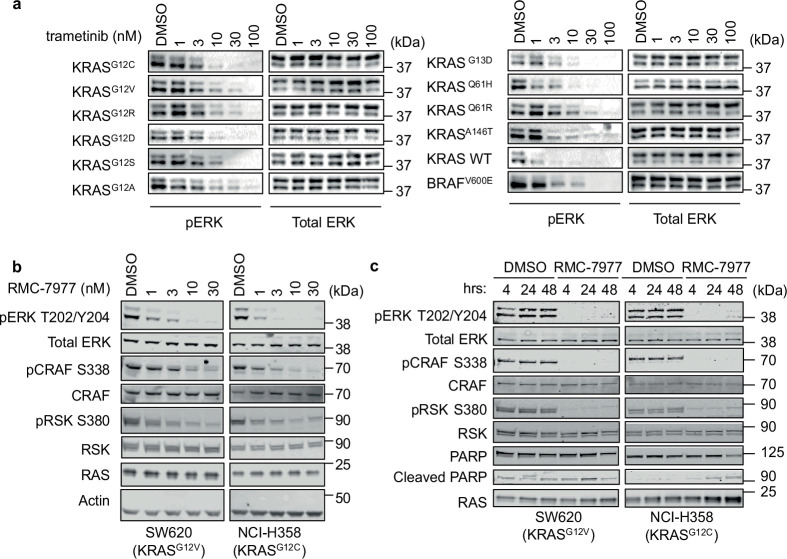
“These studies confirm that CYPA binding is required for inhibition of RAF–MEK–ERK signalling and proliferation by RMC-7977 in NCI-H441 ( KRAS G12V , NSCLC) and AsPC-1 ( KRAS G12D , PDAC) cells (Extended Data Fig.”
BackgroundRAS oncogenes: the first 30 years
Malumbres, M., & Barbacid, M. (2003) · Nature Reviews Cancer · doi:10.1038/nrc1097 · Cited by 1,902
Sotorasib for Lung Cancers with KRAS p.G12C Mutation
Skoulidis, F., Li, B. T., Dy, G. K., Price, T. J., Falchook, G. S., Wolf, J., Italiano, A., Schuler, M., Borghaei, H., Barlesi, F., et al. (2021) · New England Journal of Medicine · doi:10.1056/nejmoa2103695 · Cited by 1,849 · cited 1×
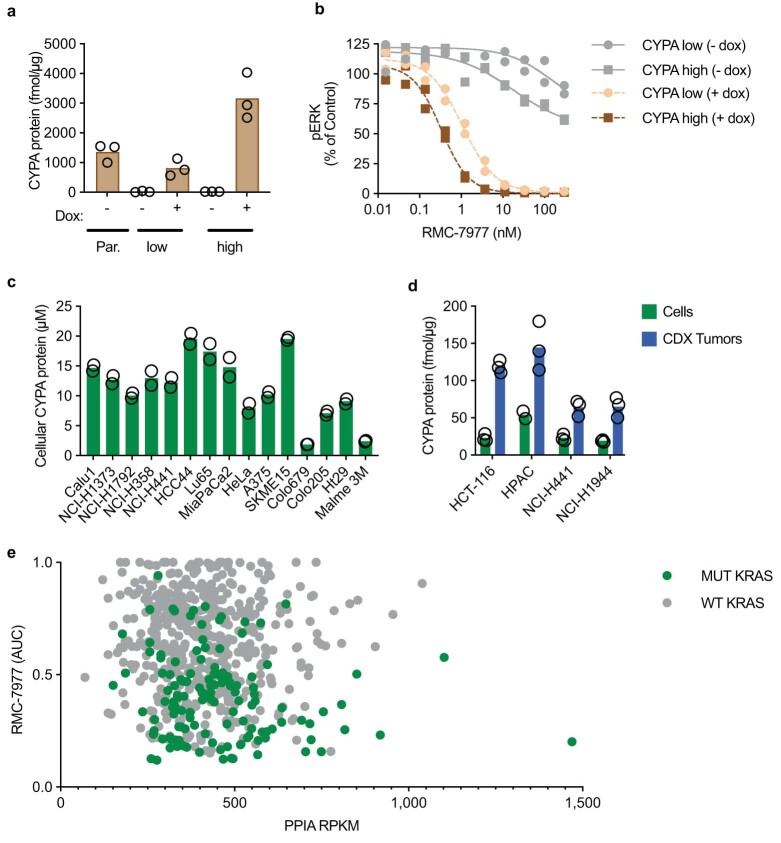
“Finally, CYPA is abundantly expressed across cancer types and exhibits low inter-patient variation in expression 12 , suggesting that tumour expression of CYPA is unlikely to be limiting for RMC-7977 potency.”
BackgroundRAS oncogenes: weaving a tumorigenic web
Pylayeva-Gupta, Y., Grabocka, E., & Bar-Sagi, D. (2011) · Nature Reviews Cancer · doi:10.1038/nrc3106 · Cited by 1,789 · cited 1×
“We further investigated whether exogenous CYPA expression could restore RMC-7977 sensitivity in NCI-H358 ( KRAS G12C , NSCLC) cells lacking PPIA .”
BackgroundAcquired Resistance to KRAS G12C Inhibition in Cancer
Awad, M. M., Liu, S., Rybkin, I. I., Arbour, K. C., Dilly, J., Zhu, V. W., Johnson, M. L., Heist, R. S., Patil, T., Riely, G. J., et al. (2021) · New England Journal of Medicine · doi:10.1056/nejmoa2105281 · Cited by 1,247
Self-citationRAS-targeted therapies: is the undruggable drugged?
Moore, A. R., Rosenberg, S. C., McCormick, F., & Malek, S. (2020) · Nature Reviews Drug Discovery · doi:10.1038/s41573-020-0068-6 · Cited by 1,103 · cited 1×
“RAS proteins have historically been recalcitrant drug targets 2,3 , although progress in targeting the inactive, GDP-bound state of KRAS(G12C) has resulted in regulatory approvals for two drugs, sotorasib and adagra-sib 10,11 .”
Background
Cited by
Singhal, A., Li, B. T., & O’Reilly, E. M. (2024) · Nature Medicine · doi:10.1038/s41591-024-02903-0 · Cited by 332
“Adaptive resistance describes the rapid reactivation of upstream RTKs, KRAS or their effector pathways as a consequence of feedback signaling mechanisms (Fig.”
InfluentialMechanisms of Resistance to Oncogenic KRAS Inhibition in Pancreatic Cancer
Dilly, J., Hoffman, M. T., Abbassi, L., Li, Z., Paradiso, F., Parent, B. D., Hennessey, C. J., Jordan, A. C., Morgado, M., Dasgupta, S., et al. (2024) · Cancer Discovery · doi:10.1158/2159-8290.cd-24-0177 · Cited by 308
Self-citationTumour-selective activity of RAS-GTP inhibition in pancreatic cancer
Wasko, U. N., Jiang, J., Dalton, T. C., Curiel-Garcia, A., Edwards, A. C., Wang, Y., Lee, B., Orlen, M., Tian, S., Stalnecker, C. A., et al. (2024) · Nature · doi:10.1038/s41586-024-07379-z · Cited by 209
“Efforts to target prenylation of RAS proteins, upstream receptors and downstream signalling have been hampered by functional redundancies and compensatory feedback mechanisms 1,3,10,11,15,16 .”
BackgroundMethodInfluentialSelf-citationAdvances in molecular pathology and therapy of non-small cell lung cancer
Huang, Q., Li, Y., Huang, Y., Wu, J., Bao, W., Xue, C., Li, X., Dong, S., Dong, Z., & Hu, S. (2025) · Signal Transduction and Targeted Therapy · doi:10.1038/s41392-025-02243-6 · Cited by 197
KRAS inhibitors: resistance drivers and combinatorial strategies
Isermann, T., Sers, C., Der, C. J., & Papke, B. (2025) · Trends in Cancer · doi:10.1016/j.trecan.2024.11.009 · Cited by 196
Self-citationExploiting the therapeutic implications of KRAS inhibition on tumor immunity
Molina-Arcas, M., & Downward, J. (2024) · Cancer Cell · doi:10.1016/j.ccell.2024.02.012 · Cited by 152
Defining the KRAS- and ERK-dependent transcriptome in KRAS-mutant cancers
Klomp, J. A., Klomp, J. E., Stalnecker, C. A., Bryant, K. L., Edwards, A. C., Drizyte-Miller, K., Hibshman, P. S., Diehl, J. N., Lee, Y. S., Morales, A. J., et al. (2024) · Science · doi:10.1126/science.adk0775 · Cited by 120
Self-citationDaraxonrasib or Chemotherapy in Previously Treated Metastatic Pancreatic Cancer
O’Reilly, E. M., Wainberg, Z. A., Hendifar, A. E., Borad, M. J., Pietrantonio, F., Pant, S., Hammel, P., Cremolini, C., Manji, G. A., Oberstein, P. E., et al. (2026) · New England Journal of Medicine · doi:10.1056/nejmoa2605555 · Cited by 147
Cregg, J., Edwards, A. V., Chang, S., Lee, B. J., Knox, J. E., Tomlinson, A. C. A., Marquez, A., Liu, Y., Freilich, R., Aay, N., et al. (2025) · Journal of Medicinal Chemistry · doi:10.1021/acs.jmedchem.4c02314 · Cited by 151
Self-citationRAS signaling in carcinogenesis, cancer therapy and resistance mechanisms
Yang, X., & Wu, H. K. (2024) · Journal of Hematology & Oncology · doi:10.1186/s13045-024-01631-9 · Cited by 146
RAS-mutant leukaemia stem cells drive clinical resistance to venetoclax
Sango, J., Carcamo, S., Sirenko, M., Maiti, A., Mansour, H. M., Ulukaya, G. B., Tomalin, L. E., Cruz‐Rodriguez, N., Wang, T., Olszewska, M., et al. (2024) · Nature · doi:10.1038/s41586-024-08137-x · Cited by 122
“This was reversed by treat-ment with an active state-selective RAS multi inhibitor (RASi) 40,41 (Fig.”
Self-citationConsensus, debate, and prospective on pancreatic cancer treatments
Wang, J., Yang, J., Narang, A. K., He, J., Wolfgang, C. L., Li, K., & Zheng, L. (2024) · Journal of Hematology & Oncology · doi:10.1186/s13045-024-01613-x · Cited by 109
The tumour microenvironment in pancreatic cancer — new clinical challenges, but more opportunities
Kung, H., Zheng, K., Zimmerman, J. W., & Zheng, L. (2025) · Nature Reviews Clinical Oncology · doi:10.1038/s41571-025-01077-z · Cited by 101
“RMC-7977 is a pan-RAS inhibitor that targets both wild-type and mutant forms of RAS in the GTP-bound ON state, resulting in sustained suppression of ERK phosphorylation in PDAC cells 369 .”
Molecular principles underlying aggressive cancers
Nussinov, R., Yavuz, B. R., & Jang, H. (2025) · Signal Transduction and Targeted Therapy · doi:10.1038/s41392-025-02129-7 · Cited by 100
Daraxonrasib in Previously Treated Advanced RAS -Mutated Pancreatic Cancer
Wolpin, B. M., Park, W., Garrido-Laguna, I., Spira, A., Starodub, A., Sommerhalder, D., Punekar, S. R., Barve, M., Pelster, M., Herzberg, B., et al. (2026) · New England Journal of Medicine · doi:10.1056/nejmoa2505783 · Cited by 90
Targeting KRAS: from metabolic regulation to cancer treatment
Shi, Y., Zheng, H., Wang, T., Zhou, S., Zhao, S., Li, M., & Cao, B. (2025) · Molecular Cancer · doi:10.1186/s12943-024-02216-3 · Cited by 89
“…tri-complex RAS (ON) inhibitor, has demonstrated potent preclinical activity against tumors carrying various RAS genotypes, including cancer models resistant to first-generation KRAS G12C inhibitors with secondary NRAS mutations, amplification of wild-type KRAS and amplifications of RTKs [174,175].”
Determining the ERK-regulated phosphoproteome driving KRAS-mutant cancer
Klomp, J. E., Diehl, J. N., Klomp, J. A., Edwards, A. C., Yang, R., Morales, A. J., Taylor, K. E., Drizyte-Miller, K., Bryant, K. L., Schaefer, A., et al. (2024) · Science · doi:10.1126/science.adk0850 · Cited by 83
“Resolution for the precursor scan (m/z 400 to 1500) was set to 120,000 with an AGC target set to standard and a maximum injection time of 50 ms. MS2 scans consisted of CID normalized collision energy (NCE) 32; AGC target set to standard; maximum injection time of 50 ms; isolation window of 0.7 Da.”
MethodInfluentialSelf-citationResponse and Resistance to RAS Inhibition in Cancer
Ebright, R. Y., Dilly, J., Shaw, A. T., & Aguirre, A. J. (2025) · Cancer Discovery · doi:10.1158/2159-8290.cd-25-0349 · Cited by 83
Self-citationTargeting KRAS mutations: orchestrating cancer evolution and therapeutic challenges
Choucair, K., Imtiaz, H., Uddin, M. H., Nagasaka, M., Al-Hallak, M. N., Philip, P. A., El-Rayes, B., Pasche, B., & Azmi, A. S. (2025) · Signal Transduction and Targeted Therapy · doi:10.1038/s41392-025-02473-8 · Cited by 83
RAS-ON inhibition overcomes clinical resistance to KRAS G12C-OFF covalent blockade
Nokin, M., Mira, A., Patrucco, E., Ricciuti, B., Cousin, S., Soubeyran, I., José, S. S., Peirone, S., Caizzi, L., Michelina, S. V., et al. (2024) · Nature Communications · doi:10.1038/s41467-024-51828-2 · Cited by 76
Self-citationA neomorphic protein interface catalyzes covalent inhibition of RAS G12D aspartic acid in tumors
Weller, C. E., Burnett, G. L., Jiang, L., Chakraborty, S., Zhang, D., Vita, N. A., Dilly, J., Kim, E., Maldonato, B. J., Seamon, K. J., et al. (2025) · Science · doi:10.1126/science.ads0239 · Cited by 78
Self-citationKRAS: the Achilles’ heel of pancreas cancer biology
Drizyte‐Miller, K., Talabi, T., Somasundaram, A., Cox, A. D., & Der, C. J. (2025) · Journal of Clinical Investigation · doi:10.1172/jci191939 · Cited by 73
“RMC-7977 and its clinical analog daraxonrasib/RMC-6236 are first-in-class reversible tri-complex RAS(ON) pan-RAS-selective inhibitors that bind to both WT and mutant KRAS, NRAS, and HRAS proteins (148–150) (Figure 3).”
Self-citationAraujo, H. A., Pechuan-Jorge, X., Zhou, T., Do, M. T., Hu, X., Rojas Alvarez, F. R., Salvatierra, M. E., Ibarguen, H. P., Lee, R., Raghulan, R., et al. (2024) · Cancer Discovery · doi:10.1158/2159-8290.cd-24-0421 · Cited by 70
Self-citationOrlen, M., Vostrejs, W. P., Sor, R., McDevitt, J. C., Kemp, S. B., Kim, I., Kramer, A. B., Shifrin, N. T., Markosyan, N., Clendenin, C., et al. (2025) · Cancer Discovery · doi:10.1158/2159-8290.cd-24-1475 · Cited by 71
“See related commentary by Lasse Opsahl and Pasca di Magliano, p. 1537 aBstRact RMC-7977 is a preclinical tool compound representative of a class of oral RAS(ON) multi-selective inhibitors, including the investigational drug candidate daraxonrasib, which targets the active GTP-bound forms of both mutant and WT KRAS, NR…”
InfluentialSelf-citationRiedl, J. M., Fece de la Cruz, F., Lin, J. J., Parseghian, C., Kim, J. E., Matsubara, H., Barnes, H., Caughey, B., Norden, B. L., Morales-Giron, A. A., et al. (2025) · Annals of Oncology · doi:10.1016/j.annonc.2025.01.020 · Cited by 68
Pancreatic cancer: molecular pathogenesis and emerging therapeutic strategies
Rozengurt, E., & Eibl, G. (2026) · Signal Transduction and Targeted Therapy · doi:10.1038/s41392-025-02499-y · Cited by 66
“Undruggable KRAS”: druggable after all
Cox, A. D., & Der, C. J. (2024) · Genes & Development · doi:10.1101/gad.352081.124 · Cited by 61
“9, 10; Holderfield et al. 2024; Wasko et al. 2024).”
Self-citationThe Missing Link(er): A Roadmap to Macrocyclization in Drug Discovery
Brudy, C., Walz, C., Spiske, M., Dreizler, J. K., & Hausch, F. (2024) · Journal of Medicinal Chemistry · doi:10.1021/acs.jmedchem.4c01163 · Cited by 55
Pharmacological restoration of GTP hydrolysis by mutant RAS
Cuevas-Navarro, A., Pourfarjam, Y., Hu, F., Rodriguez, D. J., Vides, A., Sang, B., Fan, S., Goldgur, Y., de Stanchina, E., & Lito, P. (2024) · Nature · doi:10.1038/s41586-024-08283-2 · Cited by 55
“Tri-complex inhibitors (TCIs) recruit cyclophilin A (CYPA) to the GTP-bound conformation of certain KRAS mutants in a covalent manner or multiple RAS variants in a reversible manner 18,19 .”
Self-citationBreakthrough in RAS targeting with pan-RAS(ON) inhibitors RMC-7977 and RMC-6236
Filis, P., Salgkamis, D., Matikas, A., & Zerdes, I. (2024) · Drug Discovery Today · doi:10.1016/j.drudis.2024.104250 · Cited by 55
USP7 deubiquitinates KRAS and promotes non-small cell lung cancer
Huang, B., Cao, D., Yuan, X., Xiong, Y., Chen, B., Wang, Y., Niu, X., Tian, R., & Huang, H. (2024) · Cell Reports · doi:10.1016/j.celrep.2024.114917 · Cited by 54
Self-citationLi, Y., Tang, S., Wang, H., Zhu, H., Lu, Y., Zhang, Y., Guo, S., He, J., Li, Y., Zhang, Y., et al. (2025) · Cell stem cell · doi:10.1016/j.stem.2025.07.008 · Cited by 54
Self-citationDisrupted molecular glue complex drives RAS inhibitor resistance
Sang, B., Ye, L. F., Fu, Z., Pourfarjam, Y., Cuevas-Navarro, A., Fan, S., Hu, F., Washington, A., Rodriguez, D. J., Vides, A., et al. (2026) · Cell · doi:10.1016/j.cell.2026.03.031 · Cited by 53
“22,23,27,28 The inhibitors elironrasib (RMC-6291) and zoldonrasib (RMC-9805) covalently target RAS G12C or G12D, respectively, whereas daraxonrasib (RMC-6236) targets multiple RAS variants in a reversible manner.”
Self-citationEmerging landscape of KRAS inhibitors in cancer treatment
Riedl, J. M., Matsubara, H., McNeil, R., Patel, P. S., de la Cruz, F. F., Gulhan, D., & Corcoran, R. B. (2026) · Cancer Cell · doi:10.1016/j.ccell.2026.01.001 · Cited by 53
Feng, J., Xiao, X., Xia, X., Min, J., Tang, W., Shi, X., Xu, K., Zhou, G., Li, K., Shen, P., et al. (2025) · Cancer Cell · doi:10.1016/j.ccell.2025.07.006 · Cited by 46
Navarro-Jiménez, M., González, B., Mulet-Margalef, N., Hierro, C., & Alonso, S. (2025) · npj Precision Oncology · doi:10.1038/s41698-025-01166-3 · Cited by 45
Glecirasib in KRASG12C-mutated nonsmall-cell lung cancer: a phase 2b trial
Shi, Y., Fang, J., Xing, L., Yao, Y., Zhang, J., Liu, L., Wang, Y., Hu, C., Xiong, J., Liu, Z., et al. (2025) · Nature Medicine · doi:10.1038/s41591-024-03401-z · Cited by 42
“New KRAS or pan-RAS inhibitors have exhibited anticancer efficacy in pre-clinical studies that can target other types of KRAS alterations and even wild-type of RAS 25,26 .”
Self-citationA first-in-class EGFR-directed KRAS G12V selective inhibitor
Stanland, L. J., Huggins, H. P., Sahoo, S. S., Porrello, A., Chareddy, Y. S., Azam, S. H., Perry, J. L., Pallan, P. S., Whately, K. M., Edatt, L., et al. (2025) · Cancer Cell · doi:10.1016/j.ccell.2025.05.016 · Cited by 42
Chronic myelomonocytic leukemia: molecular pathogenesis and therapeutic innovations
Marando, L., Csizmar, C. M., & Patnaik, M. M. (2024) · Haematologica · doi:10.3324/haematol.2024.286061 · Cited by 41
Negrao, M. V., Paula, A. G., Molkentine, D. P., Hover, L. D., Nilsson, M. B., Vokes, N. I., Engstrom, L. D., Calinisan, A., Briere, D. M., Waters, L. M., et al. (2025) · Clinical Cancer Research · doi:10.1158/1078-0432.ccr-24-2310 · Cited by 41
“The clinical efficacy of novel off-state GDP-RAS [opnurasib (40), olomorasib (41), and divarasib (42)] and on-state GTP-RAS inhibitors [e.g., RMC-6291 (43), RMC-6236 (44, 45), FMC-376 (46), and BBO-8520 (47)] for treatment of co-mutation subtypes of KRAS G12C -mutant NSCLC may also provide important insights into thes…”
Functional and structural insights into RAS effector proteins
Mozzarelli, A. M., Simanshu, D. K., & Castel, P. (2024) · Molecular Cell · doi:10.1016/j.molcel.2024.06.027 · Cited by 40
Discovery of fully synthetic FKBP12-mTOR molecular glues
Deutscher, R. C. E., Meyners, C., Repity, M. L., Sugiarto, W. O., Kolos, J., Maciel, E. V. S., Heymann, T., Geiger, T. M., Knapp, S., Lermyte, F., et al. (2025) · Chemical Science · doi:10.1039/d4sc06917j · Cited by 40
Decoding the functional impact of the cancer genome through protein–protein interactions
Fu, H., Mo, X., & Ivanov, A. A. (2025) · Nature reviews. Cancer · doi:10.1038/s41568-024-00784-6 · Cited by 41
“On the contrary, hypoPPIs can be targeted through the development of molecular glues that can enable specific anticancer PPIs, or even link a mutated oncogenic driver with an unrelated effector protein to suppress tumour growth 230,231,237,238,268 .”
Recent Developments and Challenges in the Enzymatic Formation of Nitrogen–Nitrogen Bonds
Angeli, C., Atienza-Sanz, S., Schröder, S., Hein, A., Li, Y., Argyrou, A., Osipyan, A., Terholsen, H., & Schmidt, S. (2024) · ACS Catalysis · doi:10.1021/acscatal.4c05268 · Cited by 39
Lineage plasticity and histological transformation: tumor histology as a spectrum
Li, X., Gardner, E. E., Molina‐Pinelo, S., Wilhelm, C., Mu, P., & Quintanal-Villalonga, À. (2025) · Cell Research · doi:10.1038/s41422-025-01180-x · Cited by 38
Liaki, V., Barrambana, S., Kostopoulou, M., Lechuga, C. G., Zamorano-Domínguez, E., Acosta, D., Morales-Cacho, L., Álvarez, R., Sun, P., Rosas-Pérez, B., et al. (2025) · Proceedings of the National Academy of Sciences · doi:10.1073/pnas.2523039122 · Cited by 37
RetractedTedeschi, A., Schischlik, F., Rocchetti, F., Popow, J., Ebner, F., Gerlach, D., Geyer, A., Santoro, V., Boghossian, A. S., Rees, M. G., et al. (2024) · Molecular Cancer Therapeutics · doi:10.1158/1535-7163.mct-24-0386 · Cited by 36
Self-citationEmerging Targeted Therapies in Non-Small-Cell Lung Cancer (NSCLC)
Mina, S. A., Shanshal, M., Leventakos, K., & Parikh, K. (2025) · Cancers · doi:10.3390/cancers17030353 · Cited by 35
“It has demonstrated potent activity in preclinical models of RAS-addicted tumors, particularly those with KRAS codon 12 mutations (KRAS G12X) [51].”
Drugging the ‘undruggable’ KRAS: breakthroughs, challenges, and opportunities in pancreatic cancer
Khan, N., Raza, U., Zaidi, S. A. A., Nuer, M., Abudurousuli, K., Paerhati, Y., Aikebaier, A., & Zhou, W. (2025) · Cancer Biology and Medicine · doi:10.20892/j.issn.2095-3941.2025.0122 · Cited by 34
“At the pre-clinical level, multi-selective inhibitors, such as RMC-7977, which delay ERK rebound and target secondary resistance mutations 128 , warrant clinical validation.”
InfluentialBandi, D. S. R., Nagaraju, G. P., Sarvesh, S., Carstens, J. L., Foote, J. B., Graff, E. C., Fang, Y.-H. D., Keeton, A. B., Chen, X., Valiyaveettil, J., et al. (2025) · Molecular Cancer · doi:10.1186/s12943-025-02288-9 · Cited by 32
Broderick, C., Mezzadra, R., Sisso, E. M., Mbuga, F., Raghulan, R., Perez, A. C., Kulick, A. R., Jiang, L., Jiang, J., Ho, Y.-J., et al. (2025) · Cancer Discovery · doi:10.1158/2159-8290.cd-24-1425 · Cited by 32
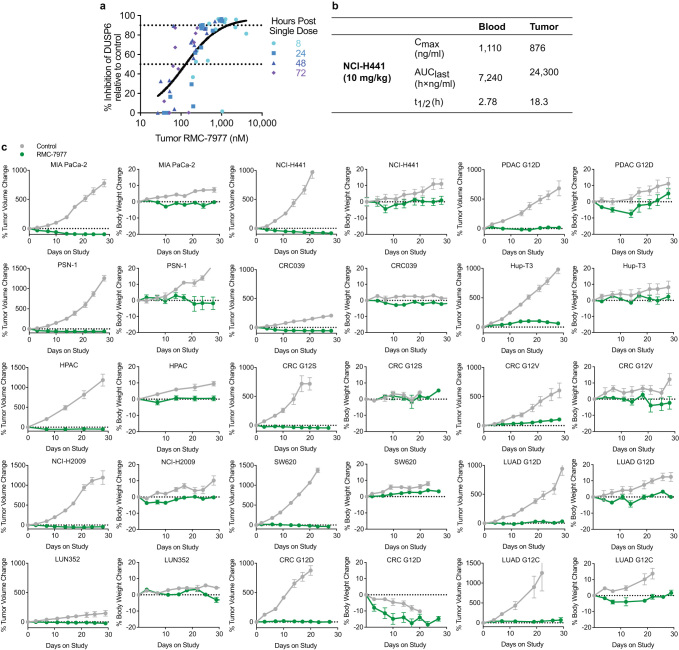
“Tumor regressions triggered by RMC-7977 in murine PDAC have previously been linked to apoptosis (8, 10).”
Self-citationDirect-to-Biology Enabled Molecular Glue Discovery
Hu, M., Ochoada, J., Actis, M., McGowan, K. M., Jarusiewicz, J., Yoshimura, S., McGrath, L., Neelakantan, U., Aggarwal, A., Mayasundari, A., et al. (2025) · Journal of the American Chemical Society · doi:10.1021/jacs.5c13496 · Cited by 32
Evaluation of KRAS inhibitor-directed therapies for pancreatic cancer treatment
Long, S.-A., Amparo, A. M., Goodhart, G., Ahmad, S. A., & Waters, A. M. (2024) · Frontiers in Oncology · doi:10.3389/fonc.2024.1402128 · Cited by 31
Self-citationPrecision Oncology: 2024 in Review
Repetto, M., Fernandez, N. C., Drilon, A. E. D. C., & Chakravarty, D. (2024) · Cancer Discovery · doi:10.1158/2159-8290.cd-24-1476 · Cited by 31
Wang, X., Li, S., Lin, S., Han, Y., Zhan, T., Huang, Z., Wang, J., Li, Y., Deng, H., Zhang, M., et al. (2025) · Cell Research · doi:10.1038/s41422-025-01085-9 · Cited by 31
Mathur, S., van der Vleuten, N., Yager, K. G., & Tsai, E. H. R. (2025) · Machine Learning Science and Technology · doi:10.1088/2632-2153/add9e4 · Cited by 33
“…that generate extremely intense x-ray beams to enable scientific discoveries [12, 13] by, for example, revealing the internal 3D nano-structure of integrated circuits [14, 15] or biological materials [16, 17], as well as capturing the dynamics of battery and photovoltaic operations [18–20].”
Recommendations on Perihilar Cholangiocarcinoma. The Milan Jury-Based Consensus
Pfister, M., Ratti, F., Gores, G. J., Lesurtel, M., Chiche, L., Ebata, T., Ardiles, V., Valle, J. W., Heimbach, J. K., Braconi, C., et al. (2025) · Annals of Surgery · doi:10.1097/sla.0000000000006773 · Cited by 31
Kinase signaling cascades: an updated mechanistic landscape
Nussinov, R., Regev, C., & Jang, H. (2025) · Chemical Science · doi:10.1039/d5sc04657b · Cited by 33
Ma, Z., Zhou, M., Shen, Q., & Zhou, J. (2025) · Journal of Medicinal Chemistry · doi:10.1021/acs.jmedchem.5c01441 · Cited by 31
Tanaka, N., & Ebi, H. (2024) · Cancer Science · doi:10.1111/cas.16441 · Cited by 30
Drizyte‐Miller, K., Engstrom, L. D., Klomp, J. A., Stalnecker, C. A., Stamey, A. G., Taylor, K. E., Roach, M. K., Robb, R. N., Waters, L. M., Calinisan, A., et al. (2025) · Cancer Research · doi:10.1158/0008-5472.can-25-1507 · Cited by 31
Self-citationLokhandwala, J., Smalley, T. B., & Tran, T. H. (2024) · Frontiers in Oncology · doi:10.3389/fonc.2024.1394702 · Cited by 29
DeLiberty, J. M., Roach, M. K., Stalnecker, C. A., Robb, R. N., Schechter, E. G., Pieper, N. L., Taylor, K. E., Pita, L. M., Yang, R. Y., Bang, S., et al. (2025) · Cancer Research · doi:10.1158/0008-5472.can-24-1757 · Cited by 30
Self-citationEvolution of direct RAS inhibitors: from undruggable target to clinical breakthroughs
Wang, X., Wu, J., Xiao, A., Wang, J., & Tian, J. (2025) · Molecular Cancer · doi:10.1186/s12943-025-02364-0 · Cited by 29
“RMC-6236 is a multi-selective RAS(ON) inhibitor against mutant and wild-type KRAS, NRAS and HRAS [60].”
Aronchik, I., Kar, S., Zhuang, Y., Ahler, E., Lai, L., Seshadri, V., Yang, Y. C., Bulle, A. S., Ménard, M., Nayak, B., et al. (2026) · Nature Medicine · doi:10.1038/s41591-026-04537-w · Cited by 34
“Notably, no compensatory oncogenic alterations in NRAS or HRAS following daraxonrasib treatment were identified, consistent with the broad and concomitant inhibition of active state mutant and WT canonical RAS proteins by daraxonrasib 28 .”
Self-citationZhang, F., Wang, B., Wu, M., Zhang, L., & Ji, M. Q. (2025) · Frontiers in Immunology · doi:10.3389/fimmu.2025.1509173 · Cited by 28
Pancreatic cancer in 2025: Have we found a solution?
Tonini, V., & Zanni, M. (2025) · World Journal of Gastroenterology · doi:10.3748/wjg.v31.i43.111433 · Cited by 26
“It has shown promising results in preclinical models[160,161].”
From cell cycle control to cancer therapy: exploring the role of CDK1 and CDK2 in tumorigenesis
Gupta, J., Saeed, B. I., Bishoyi, A. K., Alkhathami, A. G., Asliddin, S., Nathiya, D., Kumar, M., Bhanot, D., Rashed, A. B., & Mustafa, Y. F. (2025) · Medical Oncology · doi:10.1007/s12032-025-02973-1 · Cited by 24
“…studies have highlighted the growing emphasis on both the upstream and downstream signaling pathways of RAS for cancer therapy, given the ongoing limitations in directly targeting RAS proteins (e.g., due to their lack of deep binding pockets or affinity for GTP in the picomolar range) [67, 68].”
KRAS-Driven Tumorigenesis and KRAS-Driven Therapy in Pancreatic Adenocarcinoma
Than, M. T., O’Hara, M. H., Stanger, B. Z., & Reiss, K. A. (2024) · Molecular Cancer Therapeutics · doi:10.1158/1535-7163.mct-23-0519 · Cited by 23
Ma, J., Fu, S., Tan, J., Han, Y., Chen, Y., Deng, X., Shen, H., Zeng, S., Peng, Y., & Cai, C. (2025) · Advanced Science · doi:10.1002/advs.202502714 · Cited by 23
The “three body solution”: Structural insights into molecular glues
Tomlinson, A. C. A., Knox, J. E., Brunsveld, L., Ottmann, C., & Yano, J. K. (2025) · Current Opinion in Structural Biology · doi:10.1016/j.sbi.2025.103007 · Cited by 23
Self-citationLloyd, E. G., Jihad, M., Manansala, J. S., Li, W., Cheng, P. S. W., Teles, S. P., Mucciolo, G., Henríquez, J. A., Ashworth, S., Luo, W., et al. (2025) · Cancer Research · doi:10.1158/0008-5472.can-24-2330 · Cited by 22
MolGlueDB: an online database of molecular glues
Wang, X., Zhuang, Z., Zhang, C., Zhang, B., Zhan, W., Wang, Y., Liu, Z., Yuan, S., Niu, W., He, Q., et al. (2025) · Nucleic Acids Research · doi:10.1093/nar/gkaf811 · Cited by 22
Self-citationMarasco, M., Kumar, D., Borrego, S. G., Seale, T. S., Maddalena, G., Mezzadra, R., Belanger, K., Cole, S., Perez, B., Luan, W., et al. (2025) · Cancer Discovery · doi:10.1158/2159-8290.cd-24-0614 · Cited by 21
Carvalho, L. A. D. C., Shifrin, N. T., Phadke, M. S., Emmons, M. F., Pechuan-Jorge, X., Mbuga, F., Ospina, O. E., Chow, C., Seu, L., Rose, O. L., et al. (2025) · Cancer Immunology Research · doi:10.1158/2326-6066.cir-25-0744 · Cited by 21
Self-citationAlagesan, B., Varghese, A. M., Ang, C., Gutiérrez, M., Kamar, M., Passhak, M., Geva, R., Yarom, N., Lahav, M., Ligresti, R., et al. (2026) · Clinical Cancer Research · doi:10.1158/1078-0432.ccr-25-3189 · Cited by 21
Contreras, C. T., Falke, J. D., Seifert, D., Schneider, C., Krauß, L., Fang, X., Müller, D., Demirdizen, E., Spitzner, M., Oliveira, T. D., et al. (2024) · Molecular Oncology · doi:10.1002/1878-0261.13725 · Cited by 22
Targeted degradation of oncogenic KRASG12V triggers antitumor immunity in lung cancer models
Li, D., Geng, K., Yuan, H., Gu, J., Kumar, S., Olson, A. T., Kuismi, C. C., Kim, H. M., Pan, Y., Sherman, F., et al. (2024) · Journal of Clinical Investigation · doi:10.1172/jci174249 · Cited by 21
Self-citationSrivastava, J., Yadav, V., Jimenez, R. V., Phadatare, P. R., Inamdar, N. A., Young, M. M., Bacchiocchi, A., Halaban, R., Fang, B., Pulido, Á. D. M., et al. (2025) · Cancer Research · doi:10.1158/0008-5472.can-24-0693 · Cited by 20
“Despite panRAS and NRAS inhibitors being in preclinical/clinical stages (3, 4), MEK inhibitors (MEKi), immunotherapy, or their combination show limited efficacy (5, 6).”
Identification of a Highly Cooperative PROTAC Degrader Targeting GTP-Loaded KRAS(On) Alleles
Vetma, V., Puoti, I., Karolak, N. K., Chakraborti, S., Diers, E., Girardi, E., Khan, S., Kidd, G., Kropatsch, K., McLennan, R., et al. (2025) · Journal of the American Chemical Society · doi:10.1021/jacs.5c10354 · Cited by 21
The RAS-MEK-ERK pathway in low-grade serous ovarian cancer
Stover, E. H., Lee, E. K., Shapiro, G. I., Brugge, J. S., Matulonis, U. A., & Liu, J. F. (2025) · Gynecologic Oncology · doi:10.1016/j.ygyno.2025.06.022 · Cited by 20
Nalawansha, D. A., Mazis, G., Husemoen, G., Ashton, K. S., Deng, W., Wurz, R. P., Tran, A. T., Lanman, B. A., Xie, J., Guenette, R. G., et al. (2025) · Nature Communications · doi:10.1038/s41467-025-63128-4 · Cited by 20
“In addition, membrane-bound KRAS is susceptible to pathway rebound driven by upstream receptor tyrosine kinases such as EGFR, ultimately contributing to therapeutic resistance 42,51,52 .”
McAndrews, K. M., Paradiso, F., Stalnecker, C. A., Selvanesan, B. C., Thege, F. I., Peng, D. H., Diaz, B. A. M., Sugimoto, H., Patel, S. I., Mahadevan, K. K., et al. (2025) · Science Translational Medicine · doi:10.1126/scitranslmed.adt5511 · Cited by 19
Self-citationPopescu, B., Jones, M. F., Piao, M., Tran, E., Koh, A., Lomeli, I., Peretz, C. A. C., Murad, N. F., Abelson, S., Morales, C. E., et al. (2025) · Blood · doi:10.1182/blood.2025030558 · Cited by 18
KRAS-mutant non-small cell lung cancer (NSCLC) therapy based on tepotinib and omeprazole combination
Rosell, R., Lewintre, E. J., Cao, P., Cai, X., Xing, B., Ito, M., Gomez-Vazquez, J. L., Marco-Jordán, M., Fariñas, S. C., Cardona, A. F., et al. (2024) · Cell Communication and Signaling · doi:10.1186/s12964-024-01667-x · Cited by 18
“Of interest is the fact that combining a pan-RAS inhibitor with a mutant-selective KRAS G12C inhibitor has been proposed to avoid or attenuate any reactivation of wild-type RAS proteins [44].”
BackgroundAdvances and Challenges in RAS Signaling Targeted Therapy in Leukemia
Chen, Y., Yin, Z., Westover, K. D., Zhou, Z., & Shu, L. (2024) · Molecular Cancer Therapeutics · doi:10.1158/1535-7163.mct-24-0504 · Cited by 18
Kang, D., Wang, Y., Lin, Y., Ma, W. W., Morgensztern, D., Leventakos, K., Bi, C., Ding, Y., Xiong, J., Yan, M., et al. (2025) · Clinical Cancer Research · doi:10.1158/1078-0432.ccr-24-3691 · Cited by 17
Self-citationAdvances in Targeted Therapy for Non-Small-Cell Lung Cancer: Current Progress and Future Directions
Peshin, S., Takrori, E., Yazji, J. H., Haque, J., Dharia, A. A., Mithani, M. S., Anum, F., Asfeen, U. Z., Couch, J. K., Donovan, M., et al. (2025) · International Journal of Molecular Sciences · doi:10.3390/ijms262311517 · Cited by 17
“RMC-7977 is a reversible RAS-ON inhibitor that exhibits broad-spectrum activity against both wild-type and mutant KRAS proteins, particularly those involving codon 12 substitutions (KRAS G12X) [157].”
HRS-4642: The next piece of the puzzle to keep KRAS in check
Flores-Gómez, A. A., & Drosten, M. (2024) · Cancer Cell · doi:10.1016/j.ccell.2024.06.005 · Cited by 17
Unveiling the Promise: Navigating Clinical Trials 1978–2024 for PDAC
Dominguez, A. A., Perz, M., Xu, Y., Cedillo, L. G., Huang, O. L., McIntyre, C. A., Vudatha, V., Trevino, J. G., Liu, J., & Wang, P. (2024) · Cancers · doi:10.3390/cancers16213564 · Cited by 17
“Ongoing PDAC Trials (C: Combination, I: Immune, U: Unique, M: Method, G: Gemcitabine, F: FOLFIRINOX or components of FOLFIRINOX, P: Paclitaxel).”
KRAS/ABHD17C/ALOX15B Axis Promotes Pancreatic Cancer Progression via Ferroptosis Evasion
Li, M., Yu, X., Liu, Y., Ouyang, S., Wu, L., Chen, X., Yu, H. J., Chen, H., Lian, S., Li, Z., et al. (2025) · Advanced Science · doi:10.1002/advs.202504470 · Cited by 17
Self-citationLu, J. G., Hu, M., Zhao, Y., Chu, T., Zhang, W., Zhou, Y., Cai, X., Wu, J., Hu, L., Shi, C., et al. (2025) · Signal Transduction and Targeted Therapy · doi:10.1038/s41392-025-02382-w · Cited by 16
KRAS-targeted therapies in cancer: novel approaches and overcoming resistance
Tang, D., Kroemer, G., & Kang, R. (2025) · BMJ Oncology · doi:10.1136/bmjonc-2025-000946 · Cited by 16
Kage, M., Hayashi, R., Matsuo, A., Tamiya, M., Kuramoto, S., Ohara, K., Irie, M., Chiyoda, A., Takano, K., Ito, T., et al. (2024) · Bioorganic & Medicinal Chemistry · doi:10.1016/j.bmc.2024.117830 · Cited by 16
Zandi, T. A., Romanowski, M. J., Viscomi, J., Gunderson, K., Tan, Z. Y., Tong, B., Bonazzi, S., Zécri, F. J., Schreiber, S. L., & Michaud, G. A. (2026) · Nature Communications · doi:10.1038/s41467-026-71512-x · Cited by 17
Stanger, B. Z., & Vonderheide, R. H. (2026) · Clinical Cancer Research · doi:10.1158/1078-0432.ccr-25-0821 · Cited by 15
Finding the sweet spot: Targeting RAS in tumors while sparing normal tissue
Perurena, N., & Cichowski, K. M. (2024) · Cancer Cell · doi:10.1016/j.ccell.2024.05.020 · Cited by 15
Combining EGFR and KRAS G12C Inhibitors for KRAS G12C Mutated Advanced Colorectal Cancer
Miyashita, H., & Hong, D. S. (2024) · Journal of Cancer Immunology · doi:10.33696/cancerimmunol.6.086 · Cited by 16
“( NCT05382559) Beyond KRAS G12C or G12D, pan-RAS inhibitors, such as RMC6236 and RMC7977, are being developed [28-30].”
BackgroundRAS Pathway Mutations and Therapeutics in Vascular Anomalies
Alharbi, S., Merkle, S., Hammill, A. M., Waters, A. M., & Cras, T. D. L. (2025) · Pediatric Blood & Cancer · doi:10.1002/pbc.31605 · Cited by 15
Self-citationTargeting the MAPK pathway for NRAS mutant melanoma: from mechanism to clinic
Wang, Y., Xu, G., & Xia, H. (2025) · British Journal of Dermatology · doi:10.1093/bjd/ljaf178 · Cited by 15
Self-citation
Metadata
- Authors
- Holderfield, M., Lee, B. J., Jiang, J., Tomlinson, A., Seamon, K. J., Mira, A., Patrucco, E., Goodhart, G., Dilly, J., Gindin, Y., Dinglasan, N., Wang, Y., Lai, L. P., Cai, S., Jiang, L., Nasholm, N., Shifrin, N., Blaj, C., Shah, H., Evans, J. W., Montazer, N., Lai, O., Shi, J., Ahler, E., Quintana, E., Chang, S., Salvador, A., Marquez, A., Cregg, J., Liu, Y., Milin, A., Chen, A., Ziv, T. B., Parsons, D., Knox, J. E., Klomp, J. E., Roth, J., Rees, M., Ronan, M., Cuevas-Navarro, A., Hu, F., Lito, P., Santamaria, D., Aguirre, A. J., Waters, A. M., Der, C. J., Ambrogio, C., Wang, Z., Gill, A. L., Koltun, E. S., Smith, J. A. M., Wildes, D., & Singh, M.
- Affiliations
- Revolution Medicines (United States) (US)
- University of Turin (IT)
- University of Cincinnati (US)
- Dana-Farber Cancer Institute (US)
- University of North Carolina at Chapel Hill (US)
- Broad Institute (US)
- Memorial Sloan Kettering Cancer Center (US)
- Corresponding author
- Smith, Jacqueline A. M.
- Wildes, David
- Singh, Mallika
- ORCID
- Holderfield, Matthew
- Lee, Bianca J.
- Jiang, Jingjing
- Tomlinson, Aidan
- Seamon, Kyle J.
- Mira, Alessia
- Patrucco, Enrico
- Goodhart, Grace
- Dilly, Julien
- Gindin, Yevgeniy
- Dinglasan, Nuntana
- Wang, Yingyun
- Cai, Shurui
- Jiang, Lingyan
- Nasholm, Nicole
- Shifrin, Nataliya
- Blaj, Cristina
- Shah, Harshit
- Evans, James W.
- Shi, Jade
- Ahler, Ethan
- Quintana, Elsa
- Chang, Stephanie
- Salvador, Anthony
- Marquez, Abby
- Milin, Anthony
- Chen, Anqi
- Ziv, Tamar Bar
- Parsons, Dylan
- Knox, John E.
- Klomp, Jennifer E.
- Roth, Jennifer
- Rees, Matthew
- Ronan, Melissa
- Cuevas-Navarro, Antonio
- Hu, Feng
- Lito, Piro
- Aguirre, Andrew J.
- Waters, Andrew M.
- Der, Channing J.
- Ambrogio, Chiara
- Wang, Zhengping
- Gill, Adrian L.
- Koltun, Elena S.
- Smith, Jacqueline A. M.
- Wildes, David
- Singh, Mallika
- Venue
- Nature
- Published
- 2024-04-08
- Volume
- 629
- Issue
- 8013
- Pages
- 919-926
- ISSN
- 0028-0836 (ISSN-L)
- 1476-4687
- PMC
- PMC11111408
- OpenAlex
- W4394580100
- Cited by
- 369
- References
- 48
- Citations by year
- 2026: 135 · 2025: 169 · 2024: 64
- FWCI
- 50.10
- Type
- journal article
- Language
- en
- Open access
- hybrid
- doi.org
- Licence
- cc-by
- creativecommons.org/licenses/by/4.0 (tdm)
- creativecommons.org/licenses/by/4.0 (vor)
- Locations
- Nature (publishedVersion, cc-by)
- Research Square (acceptedVersion, cc-by)
- PubMed Central (publishedVersion, cc-by)
- PubMed (publishedVersion)
- Carolina Digital Repository (University of North Carolina at Chapel Hill) (submittedVersion)
- Institutional Research Information System University of Turin (University of Turin) (submittedVersion, other-oa)
- RePEc: Research Papers in Economics (submittedVersion)
- DIGITAL.CSIC (Spanish National Research Council (CSIC)) (submittedVersion, cc-by)
- UNC Libraries
- Funders
- U.S. Department of Defense (P30CA008748, W81XWH2110692)
- U.S. Department of Health and Human Services (P30 CA008748)
- American Cancer Society
- Pew Charitable Trusts
- Damon Runyon Cancer Research Foundation (P30 CA008748)
- Pancreatic Cancer Action Network (22-WG-DERB)
- Bristol-Myers Squibb
- Eli Lilly and Company
- Jackson Laboratory
- Giovanni Armenise-Harvard Foundation
- Memorial Sloan-Kettering Cancer Center (CA008748, P30 CA008748)
- Pershing Square Sohn Cancer Research Alliance (P30 CA008748)
- Deciphera Pharmaceuticals
- Mirati Therapeutics
- Revolution Medicines
- Springworks Therapeutics
- European Commission (HORIZON2020)
- Associazione Italiana per la Ricerca sul Cancro (IG 2021, 25737)
- Pharmaron
- National Institutes of Health (CA008748)
- National Cancer Institute (R01CA230267, K99CA276700, CA008748, R35CA232113, T32CA009156, F32CA239328, P30CA008748, K22CA276632, P50CA257911, R01CA279264, R01CA230745, R01CA276268, R00CA276700)
- H2020 European Research Council (101001288)
- Topics
- Life Sciences › Biochemistry, Genetics and Molecular Biology › Molecular Biology › Protein Kinase Regulation and GTPase Signaling
- Life Sciences › Biochemistry, Genetics and Molecular Biology › Molecular Biology › Protein Tyrosine Phosphatases
- Life Sciences › Biochemistry, Genetics and Molecular Biology › Molecular Biology › Melanoma and MAPK Pathways
- Keywords
- oncogenic Ras, RMC-7977, RMC-6236, KRAS G12C, K-ras codon 12 mutation, NRAS, HRAS, KRAS inhibitor resistance, cancer therapy
- MeSH terms
- Animals, Antineoplastic Agents, Female, Guanosine Triphosphate, Humans, Male, Membrane Proteins, Mice, Inbred BALB C, Mice, Inbred C57BL, Mutation, Neoplasms, Piperazines, Signal Transduction, Oncogene Protein p21(ras), Proto-Oncogene Proteins p21(ras), GTP Phosphohydrolases, Xenograft Model Antitumor Assays, Cell Line, Tumor, Mice
About these checks
Registry, retraction, Cites and statistics results are computed, not judged, with one exception: a printed reference that no index lists is read once by a model before it counts as a citation error. Claims are extracted by a model and kept only when their quote appears verbatim in the text; each cited source is then checked, with a model’s help, for whether it says what the claim relies on. Those verdicts can be wrong — read the claim’s quote and the cited source before relying on one.
Statistics and arithmetic are recomputed, not judged.
Confidence bands are shown only for fields calibrated on our annotated test set. None is calibrated yet, so no band is shown.
What counts as a claim ›How we measure confidence ›How we check this ›
Are you an author, or do you see a problem with this page? Request a review
Data sources
Bibliographic data: Semantic Scholar, OpenAlex, Crossref.
Contains information from the Semantic Scholar Academic Graph Datasets, made available under the ODC Attribution License (ODC-BY 1.0).
Semantic Scholar’s data is described in: Kinney, R., et al. (2023). The Semantic Scholar Open Data Platform. arXiv:2301.10140.
