

Concurrent inhibition of oncogenic and wild-type RAS-GTP for cancer therapy
Open accessPublished version of a preprint
The DOI matches its Crossref record; 43 of the 48 references it cites were found in a registry or an index.
Abstract
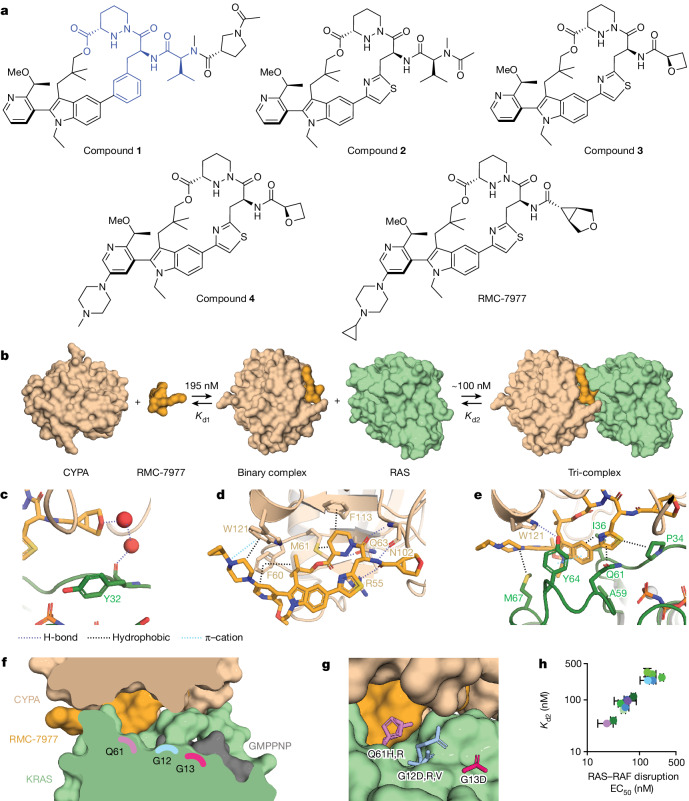
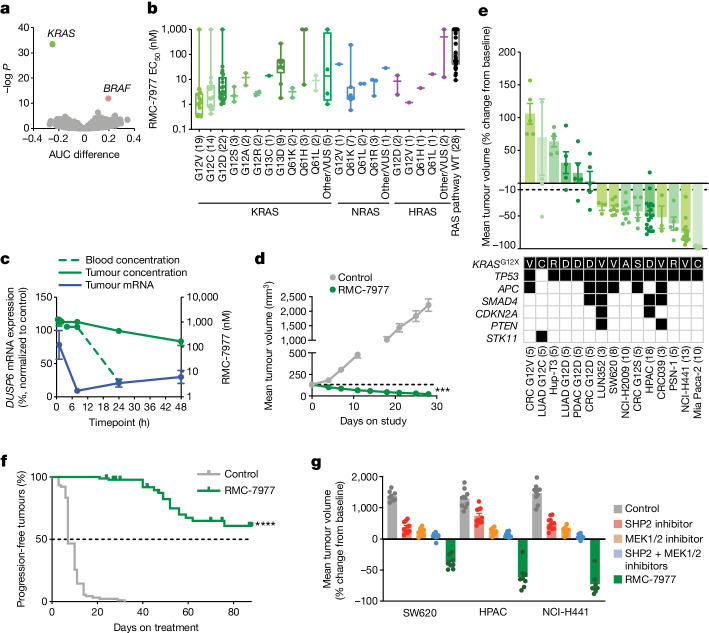
RAS oncogenes (collectively NRAS , HRAS and especially KRAS ) are among the most frequently mutated genes in cancer, with common driver mutations occurring at codons 12, 13 and 61 1 . Small molecule inhibitors of the KRAS(G12C) oncoprotein have demonstrated clinical efficacy in patients with multiple cancer types and have led to regulatory approvals for the treatment of non-small cell lung cancer 2,3 . Nevertheless, KRAS G12C mutations account for only around 15% of KRAS -mutated cancers 4,5 , and there are no approved KRAS inhibitors for the majority of patients with tumours containing other common KRAS mutations. Here we describe RMC-7977, a reversible, tri-complex RAS inhibitor with broad-spectrum activity for the active state of both mutant and wild-type KRAS, NRAS and HRAS variants (a RAS(ON) multi-selective inhibitor). Preclinically, RMC-7977 demonstrated potent activity against RAS-addicted tumours carrying various RAS genotypes, particularly against cancer models with KRAS codon 12 mutations ( KRAS G12X ). Treatment with RMC-7977 led to tumour regression and was well tolerated in diverse RAS-addicted preclinical cancer models. Additionally, RMC-7977 inhibited the growth of KRAS G12C cancer models that are resistant to KRAS(G12C) inhibitors owing to restoration of RAS pathway signalling. Thus, RAS(ON) multi-selective inhibitors can target multiple oncogenic and wild-type RAS isoforms and have the potential to treat a wide range of RAS-addicted cancers with high unmet clinical need. A related RAS(ON) multi-selective inhibitor, RMC-6236, is currently under clinical evaluation in patients with KRAS -mutant solid tumours (ClinicalTrials.gov identifier: NCT05379985).
Overview
The claims and statistics of this paper haven’t been checked yet.
Free: it reads the open-access text and checks the first 5 claims that cite a source we can check. Create a free account to check every claim.
Integrity signals
Registry
Cites
Statistics
Figures
Verification
Claims the paper makes
The claims and statistics of this paper haven’t been checked yet.
Free: it reads the open-access text and checks the first 5 claims that cite a source we can check. Create a free account to check every claim.
Claims other papers make about this one
Each is checked against this paper’s own text: does it say what the citing paper says it does?
The source backs part of the claim, not all of it — or backs it for a different population, condition or comparison.
In the citing paper
“Recently developed “pan-RAS” or “pan-KRAS” inhibitors capable of targeting all RAS isoforms or all KRAS alleles will be broadly applicable to most patients with PDAC (71–74).”
From Mechanisms of Resistance to Oncogenic KRAS Inhibition in Pancreatic Cancer (2024) · cites this paper as [73]
Experimental — accuracy not yet measured
Self-check
Percentages, sums and reported differences re-computed from the paper’s own numbers.
The self-check needs the paper’s full text.
Citations
Cites
Colorectal cancer statistics, 2023
Siegel, R. L., Wagle, N. S., Cercek, A., Smith, R. A., & Jemal, A. (2023) · CA: A Cancer Journal for Clinicians · doi:10.3322/caac.21772 · Cited by 3,733
K-Ras(G12C) inhibitors allosterically control GTP affinity and effector interactions
Ostrem, J. M., Peters, U., Sos, M. L., Wells, J. A., & Shokat, K. M. (2013) · Nature · doi:10.1038/nature12796 · Cited by 2,557
Improved Survival with MEK Inhibition in BRAF-Mutated Melanoma
Flaherty, K. T., Robert, C., Hersey, P., Nathan, P., Garbe, C., Milhem, M., Demidov, L. V., Hassel, J. C., Rutkowski, P., Mohr, P., et al. (2012) · New England Journal of Medicine · doi:10.1056/nejmoa1203421 · Cited by 2,160
Drugging the undruggable RAS: Mission Possible?
Cox, A. D., Fesik, S. W., Kimmelman, A. C., Luo, J., & Der, C. J. (2014) · Nature Reviews Drug Discovery · doi:10.1038/nrd4389 · Cited by 1,997 · cited 1×
“RAS proteins have historically been recalcitrant drug targets 2,3 , although progress in targeting the inactive, GDP-bound state of KRAS(G12C) has resulted in regulatory approvals for two drugs, sotorasib and adagra-sib 10,11 .”
BackgroundSelf-citationRAS Proteins and Their Regulators in Human Disease
Simanshu, D. K., Nissley, D. V., & McCormick, F. (2017) · Cell · doi:10.1016/j.cell.2017.06.009 · Cited by 1,943 · cited 2×
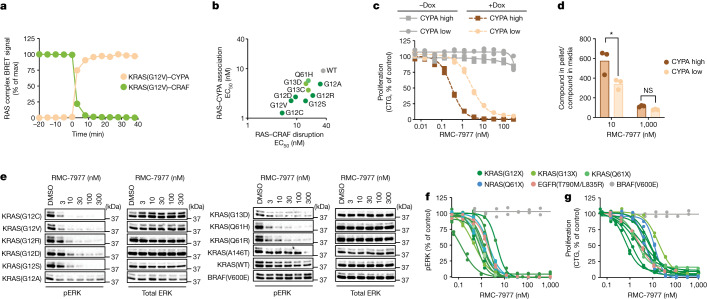
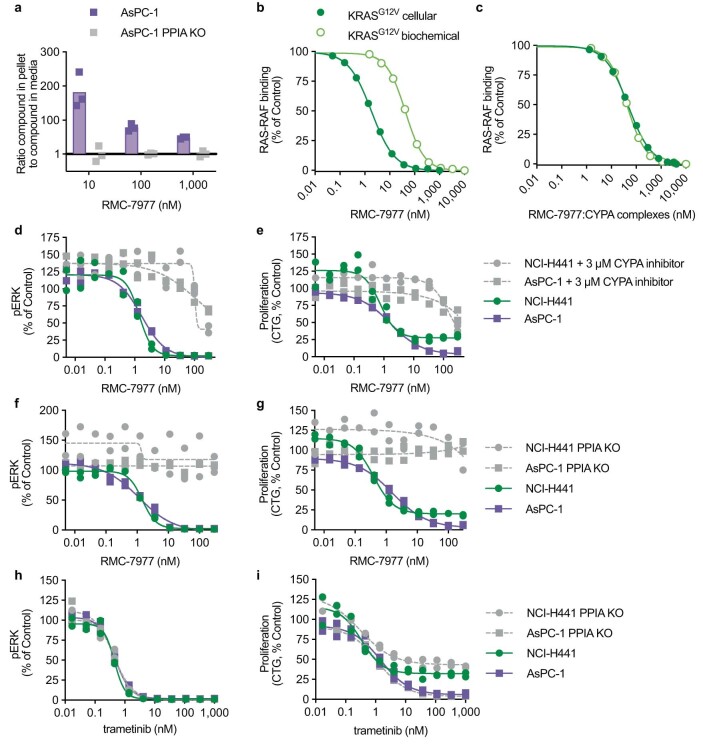
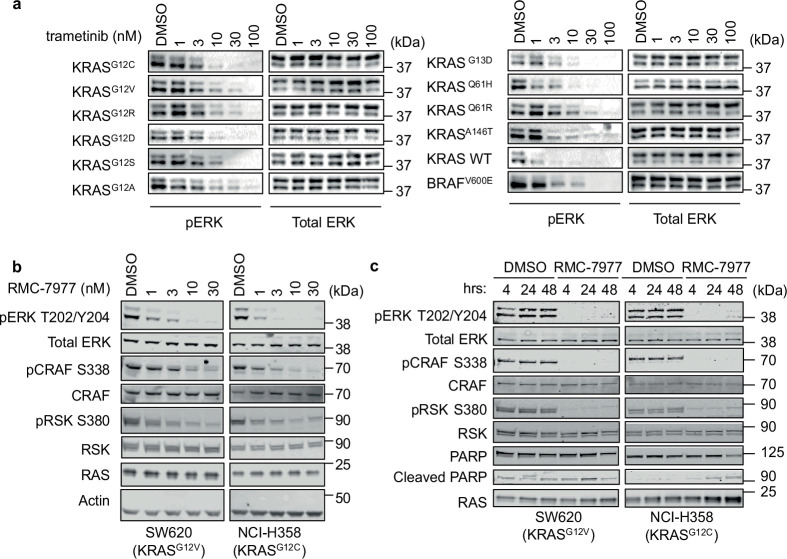
“These studies confirm that CYPA binding is required for inhibition of RAF–MEK–ERK signalling and proliferation by RMC-7977 in NCI-H441 ( KRAS G12V , NSCLC) and AsPC-1 ( KRAS G12D , PDAC) cells (Extended Data Fig.”
BackgroundRAS oncogenes: the first 30 years
Malumbres, M., & Barbacid, M. (2003) · Nature Reviews Cancer · doi:10.1038/nrc1097 · Cited by 1,902
Sotorasib for Lung Cancers with KRAS p.G12C Mutation
Skoulidis, F., Li, B. T., Dy, G. K., Price, T. J., Falchook, G. S., Wolf, J., Italiano, A., Schuler, M., Borghaei, H., Barlesi, F., et al. (2021) · New England Journal of Medicine · doi:10.1056/nejmoa2103695 · Cited by 1,849 · cited 1×
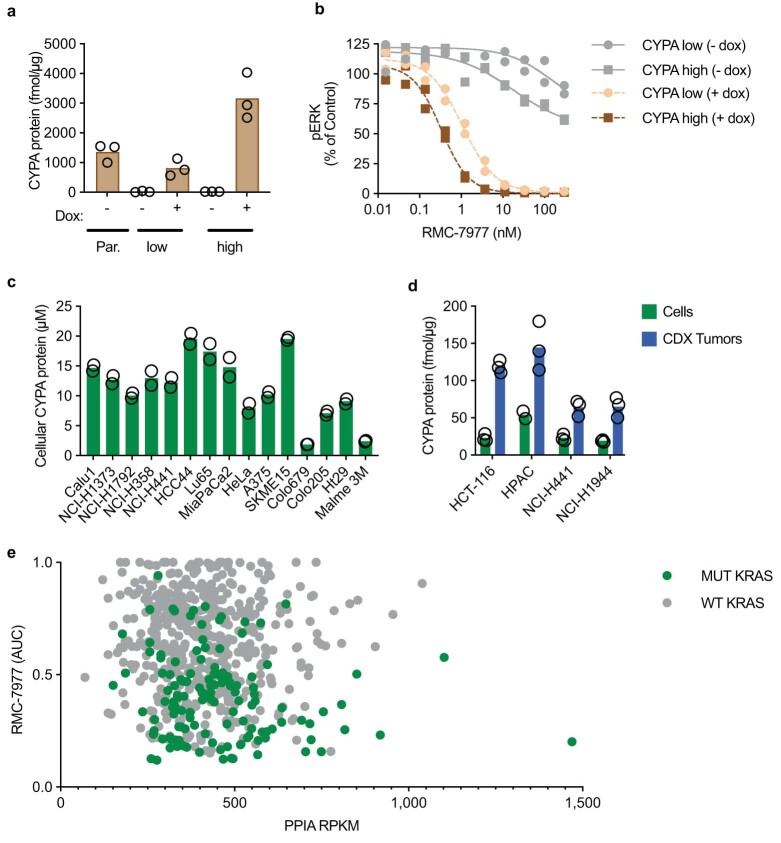
“Finally, CYPA is abundantly expressed across cancer types and exhibits low inter-patient variation in expression 12 , suggesting that tumour expression of CYPA is unlikely to be limiting for RMC-7977 potency.”
BackgroundRAS oncogenes: weaving a tumorigenic web
Pylayeva-Gupta, Y., Grabocka, E., & Bar-Sagi, D. (2011) · Nature Reviews Cancer · doi:10.1038/nrc3106 · Cited by 1,789 · cited 1×
“We further investigated whether exogenous CYPA expression could restore RMC-7977 sensitivity in NCI-H358 ( KRAS G12C , NSCLC) cells lacking PPIA .”
BackgroundAcquired Resistance to KRAS G12C Inhibition in Cancer
Awad, M. M., Liu, S., Rybkin, I. I., Arbour, K. C., Dilly, J., Zhu, V. W., Johnson, M. L., Heist, R. S., Patil, T., Riely, G. J., et al. (2021) · New England Journal of Medicine · doi:10.1056/nejmoa2105281 · Cited by 1,247
Self-citationRAS-targeted therapies: is the undruggable drugged?
Moore, A. R., Rosenberg, S. C., McCormick, F., & Malek, S. (2020) · Nature Reviews Drug Discovery · doi:10.1038/s41573-020-0068-6 · Cited by 1,103 · cited 1×
“RAS proteins have historically been recalcitrant drug targets 2,3 , although progress in targeting the inactive, GDP-bound state of KRAS(G12C) has resulted in regulatory approvals for two drugs, sotorasib and adagra-sib 10,11 .”
Background
Cited by
Items 101–200 of 433
Posttranslational modifications remodel proteome-wide ligandability
Li, W., Wei, Q., Llanos, M. A., Gathmann, C., Governa, P., Chiu, T.-Y., Wozniak, J. M., Jadhav, A. M., Holcomb, M., Cravatt, J. B., et al. (2026) · Nature Chemical Biology · doi:10.1038/s41589-026-02216-y · Cited by 16
Kwon, J. J., Dilly, J., Liu, S., Kim, E., Bian, Y., Dharmaiah, S., Tran, T. H., Kapner, K. S., Ly, S. H., Yang, X., et al. (2024) · bioRxiv (Cold Spring Harbor Laboratory) · doi:10.1101/2024.10.22.618529 · Cited by 15
“Additionally, pan-RAS inhibitors that target classical RAS isoforms, H, N, and KRAS, have also been developed and have entered clinical trials 11,16,17 .”
BackgroundSelf-citationShenoy, A., Yousif, A., & Hussain, M. D. (2025) · Cancers · doi:10.3390/cancers17081319 · Cited by 14
“These compounds exhibit broad activity against both mutant and wild-type forms of KRAS , NRAS , and HRAS in their GTP-bound state [67,68].”
The complex journey of targeting RAS in oncology
Wasiak, K., Ciunowicz, D., Kierasińska, A., Węgierska, M., Pacholczyk, M., Rieske, P., & Stoczyńska-Fidelus, E. (2025) · BMC Cancer · doi:10.1186/s12885-025-14033-y · Cited by 15
“Meanwhile, multi-RAS inhibitors such as RMC-7977 [47] and BI 3706674 (NCT06056024) [48] are designed to target both mutant and wild-type RAS proteins.”
Precision immune regulation in KRAS-mutated cancers: the final piece of the puzzle?
Fu, S., Ma, J., Cai, C., Tan, J., Deng, X., Shen, H., Zeng, S., Chen, Y., & Han, Y. (2025) · Journal of Experimental & Clinical Cancer Research · doi:10.1186/s13046-025-03444-1 · Cited by 14
Targeting KRAS Inhibitor–Resistant Pancreatic Cancer with an MUC1-C Antibody–Drug Conjugate
Ozawa, H., Takahashi, K., Motegi, T., Jacobi, J. J., Bhattacharya, A., Shigeta, K., Takamori, S., Onishi, M., Luan, Z., Fukuda, K., et al. (2025) · Clinical Cancer Research · doi:10.1158/1078-0432.ccr-25-2333 · Cited by 14
Self-citationMelanoma: Pathogenesis and Targeted Therapy
Fu, Y., Liu, J., Mo, Z., Wang, B., Deng, Y., & Jiang, Y. (2026) · MedComm · doi:10.1002/mco2.70566 · Cited by 15
“For the near term, Holderfield et al. verified that RMC-7977 not only inhibited KRAS mut , but also inhibited NRAS mut (NRAS Q61L , NRAS Q61K , and NRAS Q61R ) cancer cells [ 135 ].”
Defining a ‘cells to society’ research framework for appendiceal tumours
Holowatyj, A. N., Overman, M. J., Votanopoulos, K. I., Lowy, A. M., Wagner, P., Washington, M. K., Eng, C., Foo, W. C., Goldberg, R. M., Hosseini, M., et al. (2025) · Nature reviews. Cancer · doi:10.1038/s41568-024-00788-2 · Cited by 13
MGTbind: a comprehensive database of molecular glue ternary interactome
Zhu, J., Liao, Y., Lin, H., Xie, J., Deng, Z., Han, J., Zhang, Z., Xiao, J., Wang, Z., Zhang, S., et al. (2025) · Nucleic Acids Research · doi:10.1093/nar/gkaf1075 · Cited by 14
“A considerate number of MGs have been identified toward a wide variety of PPIs, such as KRAS(G12C)-CYPA [ 18 , 19 ], CRBN with its neosubstrate space [ 20 , 21 ], and 14-3-3 hub protein with client partners [ 22 ].”
Self-citationCancer interception with KRAS inhibitors in preclinical models of pancreatic ductal adenocarcinoma
Than, M. T., Dequiedt, L., Sor, R., Nair, S., Markosyan, N., Furth, E. E., Yang, C., Ray-Fofana, C., Menard, M. J., Quintana, E., et al. (2026) · Science · doi:10.1126/science.aec7929 · Cited by 13
Self-citationDe novo design of Ras isoform selective binders
Zhang, J. Z., Li, X., Batingana, A. R., Liu, C., Jiang, H., Shannon, K., Huang, B. J., Wu, K., & Baker, D. (2026) · Cell Chemical Biology · doi:10.1016/j.chembiol.2026.02.008 · Cited by 12
“Together, these results suggest that targeting normal GTP-loaded HRAS and NRAS with pan-Ras inhibitors like daraxonrasib 38 may represent a viable strategy to enhance the efficacy of sotorasib and other selective RasG12C inhibitors.”
Kale, R. R., Samant, C., Nandakumar, K., Pai, K. S. R., & Bhonde, M. (2025) · Biochemical and Biophysical Research Communications · doi:10.1016/j.bbrc.2025.151688 · Cited by 12
Parry, C., Pellicano, F., Schüttelkopf, A. W., Beyer, K. S., Bower, J. F., Bryson, A., Cameron, K., Cerutti, N. M., Clark, J. P., Davidson, S. C., et al. (2025) · Journal of Medicinal Chemistry · doi:10.1021/acs.jmedchem.4c02929 · Cited by 12
Kim, H., Gasmi-Seabrook, G. M. C., Uchida, A., Gebregiworgis, T., Marshall, C. B., & Ikura, M. (2025) · Journal of Molecular Biology · doi:10.1016/j.jmb.2025.169162 · Cited by 12
Fibroblast STAT3 Activation Drives Organ-Specific Premetastatic Niche Formation
Opsahl, E. L. L., Espinoza, C. E., Olivei, A. C., Okoye, J. O., Watkoske, H. R., Hoffman, M. T., Avritt, F. R., Elhossiny, A. M., Bischoff, A. C., Donahue, K. L., et al. (2025) · Cancer Research · doi:10.1158/0008-5472.can-25-3472 · Cited by 12
Self-citationCRISPR-Cas9 Screening Identifies Resistance Mechanisms to KRAS Inhibition in Pancreatic Cancer
Lim, S.-A., Todd, H., Goodhart, G., Chang, W.-H., Amparo, A. M., Bridgens, R., Dilly, J., Park, S. J., Beal, R. M., Shehadeh, S. M., et al. (2025) · Cancer Research · doi:10.1158/0008-5472.can-25-1835 · Cited by 13
“To address the first issue, we recently described RMC-7977, a RAS(ON) multiselective inhibitor that targets the GTP-bound “ON” state of a broad range of KRAS, NRAS-, and HRAS-mutant variants, as well as the wild-type (WT) isoforms (16, 17).”
InfluentialSelf-citationStahlhut, C. E., Maciag, A. E., Sullivan, K. A., Singh, K., Gitego, N., Zhang, Z., Chan, A. H., Sharma, A. K., Alexander, P., Shu, J., et al. (2026) · Cancer Discovery · doi:10.1158/2159-8290.cd-25-1280 · Cited by 12
Concurrent genetic and non-genetic resistance mechanisms to KRAS inhibition in colorectal cancer
Alonso, S., Chu, K., Granowsky, E., Saraiba-Rabanales, V., Parsons, M. J., Gunasinghe, H. I., Shia, J., Yaeger, R., & Dow, L. E. (2026) · Cancer Cell · doi:10.1016/j.ccell.2026.04.009 · Cited by 14
Nondegradative Synthetic Molecular Glues Enter the Clinic
Repity, M. L., Deutscher, R. C. E., & Hausch, F. (2025) · ChemMedChem · doi:10.1002/cmdc.202500048 · Cited by 12
Beware of extreme calculated lipophilicity when designing cyclic peptides
Poongavanam, V., Vo, D. D., & Kihlberg, J. O. (2024) · Nature Chemical Biology · doi:10.1038/s41589-024-01715-0 · Cited by 11
Lloyd, M. R., Chica-Parrado, M. D. R., Weipert, C. M., Knepper, T. C., Podany, E. L., Napolitano, F., Ye, D., Lin, C.-C. A., Uemoto, Y., Liao, J., et al. (2025) · EBioMedicine · doi:10.1016/j.ebiom.2025.105828 · Cited by 11
“28 These newly developed RAS inhibitors have thus far shown very promising early activity in RAS-activated solid tumours and are well tolerated.”
Solanki, H. S., Shah, H., Imbody, D. J., Desai, B., Kato, R., Miroshnychenko, D., Stern, Y. E., Majumder, A., Sarcar, B., Xieraili, A., et al. (2025) · Cancer Research · doi:10.1158/0008-5472.can-25-0600 · Cited by 12
Self-citationFang, X., Wang, S., & Fu, S. (2026) · Frontiers in Cell and Developmental Biology · doi:10.3389/fcell.2025.1723066 · Cited by 12
Hafner, P., Keller, S. J., Chen, X., Alrawashdeh, A. Y., Jumaa, H., Nollmann, F. I., Besson, S., Kemming, J., Gorka, O., Das, T., et al. (2026) · Signal Transduction and Targeted Therapy · doi:10.1038/s41392-025-02563-7 · Cited by 12
FGTI-2734 Inhibits ERK Reactivation to Overcome Sotorasib Resistance in KRAS G12C Lung Cancer
Kazi, A., Vasiyani, H., Ghosh, D., Bandyopadhyay, D., Shah, R. D., Vudatha, V., Trevino, J., & Sebti, S. M. (2024) · Journal of Thoracic Oncology · doi:10.1016/j.jtho.2024.11.022 · Cited by 10
Gupta, M., Choi, H., Kemp, S. B., Furth, E. E., Pickup, S., Clendenin, C., Orlen, M., Rosen, M., Liu, F., Cao, Q., et al. (2025) · Clinical Cancer Research · doi:10.1158/1078-0432.ccr-24-4049 · Cited by 10
Barrambana, S., Zamorano-Domínguez, E., Liaki, V., & Guerra, C. E. (2025) · Advanced Drug Delivery Reviews · doi:10.1016/j.addr.2025.115652 · Cited by 10
Drugging the undruggable: Chemical and biological insights into molecular glues in the pipeline
Metwally, K. A., Yahya, G., & Abo-Dya, N. E. (2025) · European Journal of Medicinal Chemistry · doi:10.1016/j.ejmech.2025.118132 · Cited by 10
Hibshman, P. S., Stalnecker, C. A., Klomp, J. A., Drizyte‐Miller, K., Klomp, J. E., Edwards, A. C., Pita, L. M., Hodge, R. G., Diehl, J. N., Mouery, R. D., et al. (2025) · Science Signaling · doi:10.1126/scisignal.adu7145 · Cited by 10
Self-citationVascular malformations: from genetics to therapeutics
Morin, G., Galasso, I., & Canaud, G. (2025) · EMBO Molecular Medicine · doi:10.1038/s44321-025-00344-x · Cited by 10
Lin, Q., Morales-Giron, A. A., Sander, C., Curtis, J. M., Barnes, H., Patel, P. S., de la Cruz, F. F., Riedl, J. M., Matsubara, H., Nakamura, H., et al. (2026) · Clinical Cancer Research · doi:10.1158/1078-0432.ccr-25-1788 · Cited by 12
“…adaptive signaling (whether through EGFR, FGFR, or other RTKs) converges to activate RAS, we evaluated a novel RAS(ON) multi-selective inhibitor—RMC-7977, a preclinical tool compound representative of the investigational agent daraxonrasib—that can inhibit all RAS isoforms (39, 47, 48).”
Aladinskiy, V., Mantsyzov, A. B., Kruse, C. G., Noev, A., Petrov, R. A., Reshetnikov, V., Shi, S., Ding, X., Cai, X., Aliper, A. M., et al. (2025) · ACS Medicinal Chemistry Letters · doi:10.1021/acsmedchemlett.5c00080 · Cited by 9
Denitrogenative Alkylation of K-Ras(G12D) Inhibits Oncogenic Signaling in Cancer Cells
Zheng, Q., & Shokat, K. M. (2025) · Journal of the American Chemical Society · doi:10.1021/jacs.5c06745 · Cited by 9
Integrative genomic identification of therapeutic targets for pancreatic cancer
Guo, J. A., Gong, D. H., Evans, K. E., Takahashi, K., Jambhale, A. D., Shiau, C., Yu, P. Z., Wang, S., Wu, W., Chugh, S., et al. (2025) · Cell Reports · doi:10.1016/j.celrep.2025.116191 · Cited by 9
“13,14 17 Nonetheless, acquired resistance to KRAS inhibition is common, 13,18– 20 and combination therapy strategies with RAS inhibition will be required.”
Self-citationMolavand, M., Majidinia, M., & Yousefi, B. (2025) · IUBMB Life · doi:10.1002/iub.70074 · Cited by 10
“The development of multi-selective inhibitors, such as RMC-7977, which targets multiple oncogenic and wild-type RAS isoforms, is also being actively explored in this field [312].”
Branching beyond bifunctional linkers: synthesis of macrocyclic and trivalent PROTACs
Cao, Y., Harris, A. L., & Ciulli, A. (2025) · Nature Protocols · doi:10.1038/s41596-025-01283-0 · Cited by 9
Alanazi, F. E., Alatawi, Y. M., Alattar, A., Alshaman, R., Kotb, A. A., & Hetta, H. F. (2025) · Pharmaceuticals · doi:10.3390/ph18121788 · Cited by 9
“RMC-7977 effectively inhibits tumor growth in KRAS G12X -mutant cancers by exploiting the pronounced oncogene addiction characteristic of RAS-driven tumors [14].”
InfluentialKRAS Inhibition in Pancreatic Ductal Adenocarcinoma
Pradeep, R., Isbeih, N. J., Abraham, F. F., Noori, E., Yeung, Z. P., & Kundranda, M. N. (2026) · Journal of Clinical Medicine · doi:10.3390/jcm15020873 · Cited by 9
Wei, X., Blaj, C., Al-Radhawi, M. A., Lai, L., Maldonato, B. J., Yang, Y. C., Seu, L., Gundlapalli, H., Jiang, L., Ayala, M. A. M., et al. (2026) · Cancer Discovery · doi:10.1158/2159-8290.cd-25-1616 · Cited by 9
“Given that RAS(ON) multi-selective inhibitors, like darax-onrasib, inhibit WT RAS in immune cells (16), we first evaluated daraxonrasib activity, alone and in combination with anti– PD-1, as compared with RAS(ON) G12C-selective inhibition via elironrasib in the immunogenic KPAR1.”
Self-citationTowards Targeting Endothelial Rap1B to Overcome Vascular Immunosuppression in Cancer
Nakhchi, B. G., Kosuru, R., & Chrzanowska‐Wodnicka, M. (2024) · International Journal of Molecular Sciences · doi:10.3390/ijms25189853 · Cited by 10
“Recent breakthroughs include RMC-7977, a reversible, tri-complex RAS inhibitor with broad-spectrum activity for the GTP-bound WT and mutant KRAS, NRAS, and HRAS variants [128].”
BackgroundJameson, N. M., Kim, D., Lee, C., Skrable, B., Shea, A., Guo, X., Izadi, H., Abed, M., Harismendy, O., Ma, J., et al. (2025) · Cancer Research Communications · doi:10.1158/2767-9764.crc-24-0411 · Cited by 9
“The KRAS inhibitor landscape has expanded in recent years to include inhibitors specific to other non-G12C mutations as well as pan-RAS inhibitors that target WT and mutant KRAS, as well as NRAS and HRAS (41, 59).”
Cherri, S., Libertini, M., Noventa, S., Oneda, E., Meriggi, F. A., & Zaniboni, A. (2025) · International Journal of Molecular Sciences · doi:10.3390/ijms26062522 · Cited by 9
“It will be interesting to monitor their development and safety data, as well as understand in which treatment lines these molecules will be placed [37,38] (see Table 2).”
Broad Target Screening Reveals Abundance of FKBP12-Based Molecular Glues in Focused Libraries
Dreizler, J. K., Meyners, C., Sugiarto, W. O., Repity, M. L., Maciel, E. V. S., Purder, P. L., Lermyte, F., Knapp, S., & Hausch, F. (2025) · Journal of Medicinal Chemistry · doi:10.1021/acs.jmedchem.5c00220 · Cited by 9
Ras-dependent activation of BMAL2 regulates hypoxic metabolism in pancreatic cancerPreprint
Curiel-Garcia, A., Holmstrom, S. R., Castillo, C., Palermo, C. F., Sastra, S. A., Andren, A. C., Tomassoni, L., Zhang, L., Large, T. Y. S. L., Sagalovskiy, I. R., et al. (2023) · bioRxiv (Cold Spring Harbor Laboratory) · doi:10.1101/2023.03.19.533333 · Cited by 9
“Together, these findings suggest that BMAL2 receives input from oncogenic KRAS via the RAF/MEK/ERK effector pathway.”
Real-Time Image Analysis Software Suitable for Resource-Constrained ComputingPreprint
Matov, A. (2024) · arXiv (Cornell University) · doi:10.48550/arxiv.2407.15735 · Cited by 9
Advances in RAS Therapeutics for Pancreatic Cancer
Der, C. J., & Yeh, J. J. (2026) · New England Journal of Medicine · doi:10.1056/nejme2600517 · Cited by 9
Self-citationProteomic analyses identify targets, pathways, and cellular consequences of oncogenic KRAS signaling
Kabella, N., Bayer, F. P., Stamatiou, K., Abele, M., Sakhteman, A., Chang, Y.-C., Wagner, V., Gabriel, A., Krumm, J., Reinecke, M., et al. (2025) · Science Signaling · doi:10.1126/scisignal.adt6552 · Cited by 8
The ubiquitin code of RAS proteins: Decoding its role in cancer progression
Shi, Y., Shen, Y., Zhang, X., Zhu, N. W., Ding, Y., Yuan, Y., & Wang, J. (2025) · iScience · doi:10.1016/j.isci.2025.113029 · Cited by 8
“151,152 Despite significant progress in developing RAS-directed inhibitors, these therapeutics are subject to certain limitations: (1) dominant therapies target the G12C mutation ( ∼ 13% of KRAS mutations), leaving prevalent G12D ( ∼ 40”
Molecular glues: A new path to the world of the unattainable
Khaledian, M., Sheikh, H., Babaei, F., Divsalar, A., Gharshasbi, M., Ottmann, C., Haertlé, T., Saboury, A. A., & Rasouli, M. (2025) · International Journal of Biological Macromolecules · doi:10.1016/j.ijbiomac.2025.148861 · Cited by 8
Identification and characterization of binders to a cryptic and functional pocket in KRAS
Beyer, K. S., Klein, J., Katz, S., Welker, P., Lanter, M., Guthy, D. A., Pollehn, K., Gluck-Gadé, A., Bleu, M., Desogus, J., et al. (2025) · Nature Communications · doi:10.1038/s41467-025-65844-3 · Cited by 8
“Together with others 16 , WarpDrive Bio 17 and Revolution Medicine 18 – 20 have harnessed the conformational plasticity of protein chaperones to identify small molecules actingas molecular glue between Cyclophilin A and active, GTP-loaded RAS proteins, precluding effector recruitment by steric…”
Bonsor, D. A., Finci, L. I., Potter, J. R., Young, L. C., Wall, V. E., de Salazar, R. G., Geis, K. R., Stephens, T., Finney, J., Nissley, D. V., et al. (2026) · Nature Communications · doi:10.1038/s41467-026-68319-1 · Cited by 8
“It is currently unknown whether MRTX1133 induces similar resistance mechanisms, though studies suggest it can trigger EGFR-mediated feedback and promote upregulation of RAS pathway genes such as Kras, Yap1, Myc , and Cdk6/Abcb1a/b 45 – 48 .”
Mulero‐Sánchez, A., Bosma, A. R., Visuvasam, B., Pouliopoulou, N., van de Ven, M., Proost, N., Boeije, M., Lieftink, C., Beijersbergen, R. L., Bernards, R., et al. (2026) · Journal of Experimental & Clinical Cancer Research · doi:10.1186/s13046-025-03616-z · Cited by 8
“…multi-selective inhibitors, such as RMC-7977 and its clinical derivative RMC-6236, directly block both wild-type and mutant KRAS in the active GTP-bound state, offering a more upstream and potentially more durable block of MAPK signaling in PDAC models where KRAS G12C mutations are rare [39].”
KRAS Oncoprotein Signaling in Cancer
Lito, P. (2025) · New England Journal of Medicine · doi:10.1056/nejmcibr2408099 · Cited by 9
Self-citationSalcius, M., Tutter, A. V., Fouché, M., Koc, H., King, D., Dhembi, A., Golosov, A. A., Jahnke, W., Henry, C., Argoti, D., et al. (2025) · RSC Chemical Biology · doi:10.1039/d4cb00279b · Cited by 8
Pan-RAS inhibitor RMC-7977 is efficacious in treating NF1-related tumors
Bai, R.-Y., Xu, M., Lu, Y., Liu, J., & Staedtke, V. (2025) · Neuro-Oncology Advances · doi:10.1093/noajnl/vdaf065 · Cited by 8
“4 Given its broad-spectrum RAS inhibition capabilities, there is a compelling rationale to investigate RMC-7977’s potential in NF1 tumors.”
Engineered protein circuits for cancer therapyPreprint
Lu, A. C., Moeller, L., Moore, S., Ho, K., Tobin, V., Qiang, A., Zhang, E., Li, Z., Wang, M., Xia, S., et al. (2025) · bioRxiv (Cold Spring Harbor Laboratory) · doi:10.1101/2025.04.16.647665 · Cited by 8
“To understand the implications of these mechanistic differences, we directly compared the LNP-delivered circuit (sensor v4 -casp) with two RAS inhibitors: Sotorasib, the clinically approved covalent KRAS G12C -targeting drug 82–84 , and RMC-7977, a tool compound of the breakthrough pan-RAS inhibitor Daraxonrasib 85,86…”
Differential Response and Resistance to KRAS-Targeted Therapy
Liu, Z., Lenz, H., Yu, J., & Zhang, L. (2025) · Molecular Carcinogenesis · doi:10.1002/mc.23908 · Cited by 7
“In preclinical studies, these inhibitors demonstrated broad ‐ spectrum activities against multiple KRAS mutants and RAS isoforms across different cancer models [47, 49].”
Anticancer activity of RAS-GTP inhibition in cholangiocarcinoma
Entrialgo‐Cadierno, R., Morali, K., Feliu, I., Wang, Y., Evans, J., Yáñez-Bartolomé, M., López, I., Macaya, I., Cueto‐Ureña, C., Sin-Coscujuela, D., et al. (2026) · Cancer Cell · doi:10.1016/j.ccell.2026.03.020 · Cited by 8
Self-citationClinical Actionability of Genes in Gastrointestinal Tumors
Gonzalez, N. S., Patelli, G., & Crisafulli, G. (2025) · Genes · doi:10.3390/genes16101130 · Cited by 7
Xu, Y., Nipper, M. H., Dominguez, A. A., He, C., Sharkey, F. E., Khan, S., Xu, H., Zhou, D., Zheng, L., Luan, Y., et al. (2026) · Journal of Clinical Investigation · doi:10.1172/jci194395 · Cited by 8
“…we observed that the increased driver mutation burden in engineered acinar cells resulted in enhanced resistance to RMC7977 (at 10 nM to 1 μ M), a recently characterized pan-RAS inhibitor (5), highlighting the contribution of a genetic predisposition to drug resistance (Supplemental Figure 8A).”
Insights into RAS-driven melanoma and its therapeutic implications
Chatziioannou, E., Lallas, K., Sinnberg, T. W., Niessner, H., Stratigos, A., Flatz, L., & Amaral, T. (2026) · Cancer Treatment Reviews · doi:10.1016/j.ctrv.2026.103090 · Cited by 7
Daraxonrasib for Previously Treated RAS -Mutant Non–Small-Cell Lung Cancer
Arbour, K. C., Punekar, S. R., Luo, J., Johnson, M., Spira, A. I., Herzberg, B., Starodub, A., Sommerhalder, D., Hecht, J. R., Garrido‐Laguna, I., et al. (2026) · New England Journal of Medicine · doi:10.1056/nejmoa2504059 · Cited by 9
Zeng, Q., Li, L., Chang, T., Sun, Y., Zheng, B., Xue, L., Liu, C., Li, X. J., Huang, R., Gu, J., et al. (2025) · Advanced Science · doi:10.1002/advs.202411503 · Cited by 7
Targeting KRAS in colorectal cancer immunotherapy: rationale, challenges and future directions
Zhu, G., Pei, L., Ye, D., Tang, Q., Xu, H., & Bi, F. (2025) · Biochimica et Biophysica Acta (BBA) - Reviews on Cancer · doi:10.1016/j.bbcan.2025.189382 · Cited by 8
Targeting oncogenic K-RAS mutants with small-molecule degrader XMU-MP-9 through NEDD4-1
Zeng, T., Jiang, T., Zhang, B., Zhang, T., Dai, W., Yin, X., Li, Y., Yu, Z., Wu, C., Wu, Y., et al. (2025) · Acta Pharmaceutica Sinica B · doi:10.1016/j.apsb.2025.07.031 · Cited by 8
Unlocking the promise of RAS inhibition in pancreatic cancer
Haldar, S. D., & Azad, N. S. (2024) · Nature Reviews Gastroenterology & Hepatology · doi:10.1038/s41575-024-00951-y · Cited by 7
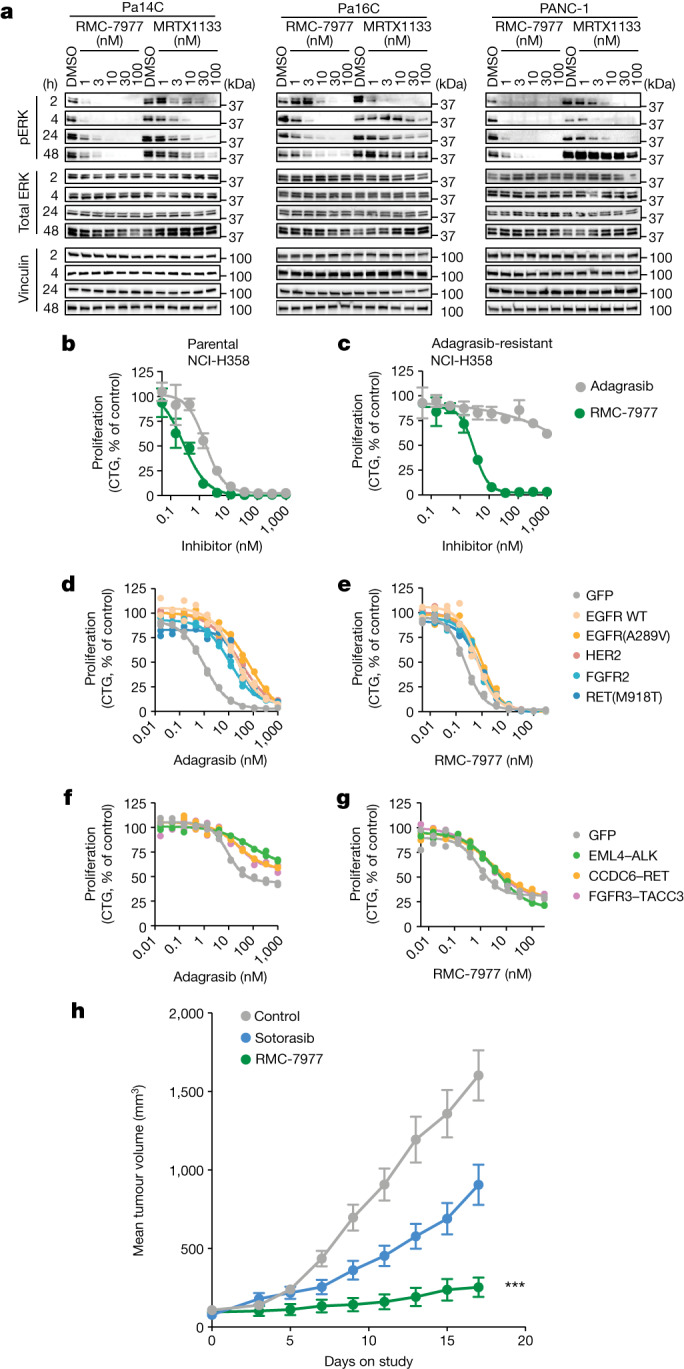
“Indeed, RMC-7977 was demonstrated to be effective in models of acquired resistance to KRAS-G12C inhibition 7 .”
Foth, M., Kim, W., O’Toole, K. T., Murphy, B., Justo-Garrido, M., Boggaram, S. S., Ghazi, P. C., Brennan, E., Wright, M. I., Shepherd, T., et al. (2026) · Cancer Research · doi:10.1158/0008-5472.can-26-1313 · Cited by 6
Self-citationMo, X., Du, Y., & Fu, H. (2025) · ASPET Discovery · doi:10.1016/j.aspetd.2025.100003 · Cited by 6
Li, R., Huang, X., Wang, R., Ren, Z., Zhu, Y. L., Lu, T., Sun, Y., & Hao, C. (2025) · European Journal of Medicinal Chemistry · doi:10.1016/j.ejmech.2025.117718 · Cited by 6
Current Status of Precision Medicine in Colorectal Cancer in Japan
Kojitani, Y., & Takeda, M. (2025) · International Journal of Molecular Sciences · doi:10.3390/ijms26115029 · Cited by 6
“Furthermore, efforts are underway to develop pan-RAS inhibitors to address an unmet need in precision medicine [38].”
InfluentialDrugging Ras trafficking—are there new roads to travel?
Schaffner‐Reckinger, E., Gómez‐Mulas, A., & Abankwa, D. (2025) · npj Drug Discovery. · doi:10.1038/s44386-025-00012-7 · Cited by 6
Recent advance of KRAS-G12C inhibitors for cancer therapy
Li, M., Wang, H., Wang, F., Liu, D., Feng, C. L., Yan, G., & Fan, X. (2025) · European Journal of Medicinal Chemistry · doi:10.1016/j.ejmech.2025.117878 · Cited by 6
Vasudevan, H. N., Arang, N., Nunez, M. S., Kennedy, P., Payne, E., Mohabeer, S., Chien, J., Wright, A., Sale, M. J., Krogan, N. J., et al. (2025) · Proceedings of the National Academy of Sciences · doi:10.1073/pnas.2506823122 · Cited by 6
“In sum, these observations support the use of KRAS inhibition, potentially obviating the need for pan Ras inhibition ( 31 ) and thus potentially providing an alternate targeted therapeutic approach for people with NF1 associated pNFs. Building on the clinical success of MEK inhibition, which…”
EGFR blockade confers sensitivity to pan-RAS inhibitors in KRAS-mutated cancers
Han, J., Yu, B., Jing, J., He, X., Hua, Y., & Xu, G. (2025) · Cellular Oncology · doi:10.1007/s13402-025-01075-4 · Cited by 6
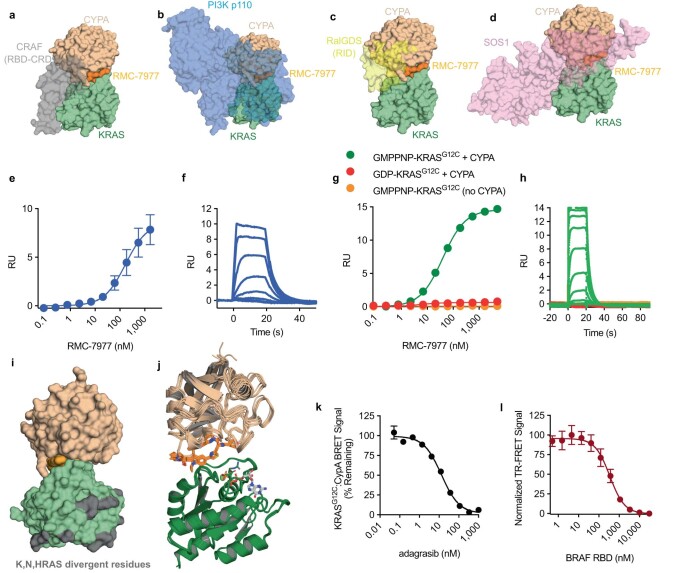
“Mechanistically, RMC-7977 and RMC-6236 can form a binary complex with cyclophilin A (CYPA) and bind to the active RAS protein with high affinity to generate a CYPA-compound-RAS (GTP) tri-complex, spatially hindering the interaction between RAS-effectors and downstream signal transduction [43].”
ELOVL6 activity attenuation induces mutant KRAS degradation
Hu, X., Atwal, R. S., Xiao, S., Ahmed, S. U., Wang, Z., Zhao, C., Wang, H., & Kelley, S. O. (2025) · Nature Chemical Biology · doi:10.1038/s41589-025-01998-x · Cited by 6
Self-citationPan‐ERBB Inhibitors Synergize With KRAS Inhibitors in Rectal Cancer
Buchloh, J., Spitzner, M., Zimmermann, H., Fang, X., Contreras, C. T., Schneider, C., de Oliveria, T., Küffer, S., Linnebacher, M., Rühlmann, F., et al. (2025) · United European Gastroenterology Journal · doi:10.1002/ueg2.70086 · Cited by 6
Wu, D., Zhu, C., Pan, H., He, X., Xu, J., Liu, Y., Wang, S., Xiao, M., Yu, X., & Shi, S. (2026) · Gut · doi:10.1136/gutjnl-2025-336235 · Cited by 6
Self-citationBiology and Clinical Management of Non-V600 BRAF Alterations in NSCLC
Ortiz‐Cuaran, S., Dupriez, L., Nicq, C., Lindsay, C. R., Mazières, J., Santamaría, D., Ambrogio, C., Calvayrac, O., Teixidó, C., Friboulet, L., et al. (2026) · Journal of Thoracic Oncology · doi:10.1016/j.jtho.2025.12.001 · Cited by 6
Self-citationPatel, H. V., Smith, A. E., Chan, S., Gasendo, J. G., Jombik, A., Greer, J. E., Samantaray, T., Kessler, L. V., Mitra, A., Zhu, X., et al. (2026) · Cancer Research · doi:10.1158/0008-5472.can-25-2764 · Cited by 6
“One candidate therapeutic strategy for patients who progress on KRAS G12C (OFF) inhibitors is switching to a RAS inhibitor of another class as it has been posited that patients will not be cross-resistant to (ON) or pan-targeted inhibitors (28).”
Self-citationSianoya, A. C., Zuo, Y., Pagba, C. V., Jakubec, J. L., Planque, S. A., Frost, J. A., Medina, P. M. B., & Gorfe, A. A. (2026) · Molecular Cancer Therapeutics · doi:10.1158/1535-7163.mct-25-1087 · Cited by 6
Velcrin compounds activate the SLFN12 tRNase to induce tomoptosis
Greulich, H. E. (2024) · Cell chemical biology · doi:10.1016/j.chembiol.2024.05.012 · Cited by 6
D'Alessio‐Sands, L., Gaynier, J., Michel‐Milian, V., Agbowuro, A. A., & Brackett, C. M. (2025) · Drug Development Research · doi:10.1002/ddr.70042 · Cited by 6
“The resulting KRAS G12C :drug:CYPA tri ‐ complex (Figure 5) inactivates down-stream oncogenic signaling, leading to tumor regression (Holderfield et al. 2024; Schulze et al. 2023).”
Programming the Kinetics of Chemical Communication: Induced Fit vs Conformational Selection
Prévost-Tremblay, C., Vigneault, A., Lauzon, D., & Vallée‐Bélisle, A. (2024) · Journal of the American Chemical Society · doi:10.1021/jacs.4c08597 · Cited by 5
Aust, O., Thiel, M. R. T., Blanc, E., Lüthen, M., Hollek, V., Astaburuaga-García, R., Klinger, B., Böhning, F., Trinks, A., Beule, D., et al. (2025) · Science Signaling · doi:10.1126/scisignal.adr3738 · Cited by 5
Self-citationGenerating Surprisingly Powerful Pharmacology from Chemically Induced Protein Interactions
Hinshaw, S. M., Banik, S. M., & Gray, N. S. (2025) · Accounts of Chemical Research · doi:10.1021/acs.accounts.5c00225 · Cited by 5
Vahabi, M., Xu, G., Sarkisjan, D., Hassouni, B. E., Mantini, G., Donati, V. L., Wang, B., Lencioni, G., Honeywell, R. J., Deng, D., et al. (2025) · Journal of Experimental & Clinical Cancer Research · doi:10.1186/s13046-025-03470-z · Cited by 6
“Considering the emergence of new anti-RAS targeted therapies [69], future studies should use models which do not harbor such mutations or test potential combinations of K-Ras and PKMYT1 inhibitors.”
Jung, O., Soto, A., Wolfe, A. L., & Mahajan, S. S. (2025) · PLoS ONE · doi:10.1371/journal.pone.0329946 · Cited by 5
“Thus, we hypothesized that daraxonrasib selectively suppresses the invasive ability of HOS-143B cells by suppressing the RAF/MEK/ERK and PI3K/AKT signaling axes [9,24].”
Knudsen, E. S., O’Connor, T. N., & Witkiewicz, A. K. (2025) · Cancer Heterogeneity and Plasticity · doi:10.47248/chp2502030015 · Cited by 5
“Similarly, mutations of EGFR and RAS are relatively common means to bypass drug effects [95–97], spurring the development of multiple “next-generation” inhibitors [98].”
Feng, C., Chun, L., KeLei, S., XiaoGuang, T., HouHong, W., YongYun, C., MengLei, X., & Bin, L. (2025) · Scientific Reports · doi:10.1038/s41598-025-26361-x · Cited by 5
O’Toole, K. T., Roan, B., Hardman, T. M., Phillips, P. P., VanBrocklin, E. M., Parkman, G. L., & Holmen, S. L. (2026) · International Journal of Molecular Sciences · doi:10.3390/ijms27042019 · Cited by 5
GAP mimetic activity of pan-Ras TCI daraxonrasib synergizes with K-Ras Switch-II pocket inhibition
Pfaff, P., & Shokat, K. M. (2026) · Biological Chemistry · doi:10.1515/hsz-2025-0249 · Cited by 5
“We hypothesize that Switch-II pocket inhibition in combination with a low concentration of pan-Ras inhibitor can similarly intercept RTK-feedback-driven rewiring through additional inhibition of GTP-loaded wildtype Ras proteins (Holder fi eld et al. 2024); analogous e ff ects have been observed when combining pan-Ras in…”
InfluentialTargeting active RAS with molecular glue
Su, W., & Hou, X. (2024) · Pharmaceutical Science Advances · doi:10.1016/j.pscia.2024.100047 · Cited by 5
Unraveling (K)RAS in pancreatic ductal adenocarcinoma
Doleschal, B. (2024) · memo - Magazine of European Medical Oncology · doi:10.1007/s12254-024-01003-6 · Cited by 5
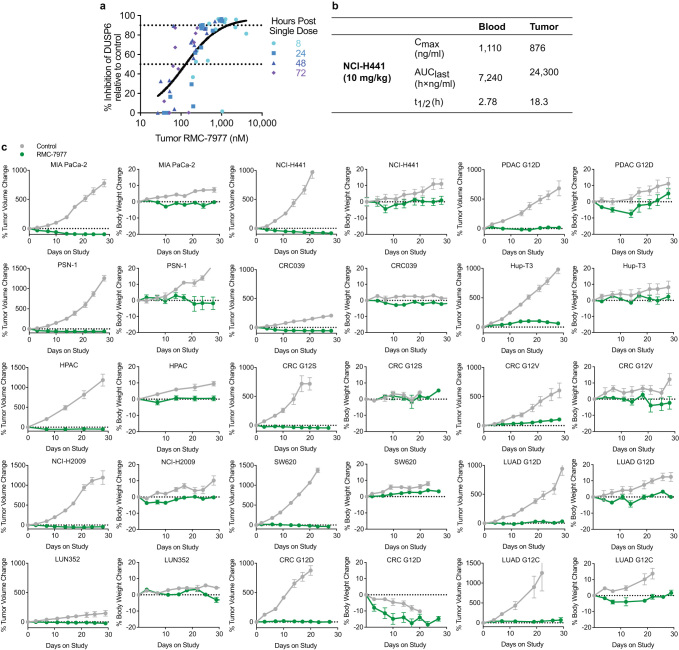
“Additionally, RMC-7977 has demonstrated efficacy across various preclinical pancreatic cancer models [25].”
Recent Advances in Peptide Inhibitors Targeting Wild-Type Ras Protein Interactions in Cancer Therapy
Qin, W., Liu, Z., Huang, M., Liang, L., Gan, Y., Huang, Z., Huang, J., & Wei, X. (2025) · International Journal of Molecular Sciences · doi:10.3390/ijms26041425 · Cited by 5
Targeted therapy for pediatric glioma: RAF(t)ing in the molecular era
Shen, Z.-P., Zhang, Z., Li, N., Xu, L., & Chen, Y. (2025) · World Journal of Pediatrics · doi:10.1007/s12519-025-00889-4 · Cited by 5
“Remarkably, recent breakthroughs in the development of RAS inhibitors (e.g., RMC-7977) offer great possibilities for treating RAS-addicted cancers [75].”
Shah, P. A., Wiman, K. G., Cichowski, K. M., & Rodon, J. A. (2025) · American Society of Clinical Oncology Educational Book · doi:10.1200/edbk-25-473616 · Cited by 5
RIT1 Drives Oncogenic Transformation and Is an Actionable Target in Lung Adenocarcinoma
Mozzarelli, A. M., Cuevas-Navarro, A., Shuldiner, E. G., Vega, M., Chatila, W. K., Xu, J., Walch, H. S., Niu, Y., Petrov, D. A., Schultz, N. D., et al. (2025) · Cancer Research · doi:10.1158/0008-5472.can-24-3819 · Cited by 5
Self-citationRAS Mutation–Specific Responses to Paralog- and State-Selective RAS Inhibitors
Baars, B., Orive-Ramos, A., Emmett, M. J., Gaire, B., Desaunay, M., Kou, Z., Li, G., Adamopoulos, C., Aaronson, S. A., Wang, S., et al. (2025) · Molecular Cancer Research · doi:10.1158/1541-7786.mcr-25-0319 · Cited by 5
Botrugno, O. A., Bianchi, E., Bruno, J. M., Gallo, G. F. M., Felici, C., Sommella, E., Stefano, P. D., Giansanti, V., Rossella, V., Merciai, F., et al. (2024) · bioRxiv (Cold Spring Harbor Laboratory) · doi:10.1101/2024.12.28.630600 · Cited by 5
Kasper, S., & Sebastian, M. (2025) · Deutsches Ärzteblatt international · doi:10.3238/arztebl.m2025.0002 · Cited by 4
Metadata
- Authors
- Holderfield, M., Lee, B. J., Jiang, J., Tomlinson, A., Seamon, K. J., Mira, A., Patrucco, E., Goodhart, G., Dilly, J., Gindin, Y., Dinglasan, N., Wang, Y., Lai, L. P., Cai, S., Jiang, L., Nasholm, N., Shifrin, N., Blaj, C., Shah, H., Evans, J. W., Montazer, N., Lai, O., Shi, J., Ahler, E., Quintana, E., Chang, S., Salvador, A., Marquez, A., Cregg, J., Liu, Y., Milin, A., Chen, A., Ziv, T. B., Parsons, D., Knox, J. E., Klomp, J. E., Roth, J., Rees, M., Ronan, M., Cuevas-Navarro, A., Hu, F., Lito, P., Santamaria, D., Aguirre, A. J., Waters, A. M., Der, C. J., Ambrogio, C., Wang, Z., Gill, A. L., Koltun, E. S., Smith, J. A. M., Wildes, D., & Singh, M.
- Affiliations
- Revolution Medicines (United States) (US)
- University of Turin (IT)
- University of Cincinnati (US)
- Dana-Farber Cancer Institute (US)
- University of North Carolina at Chapel Hill (US)
- Broad Institute (US)
- Memorial Sloan Kettering Cancer Center (US)
- Corresponding author
- Smith, Jacqueline A. M.
- Wildes, David
- Singh, Mallika
- ORCID
- Holderfield, Matthew
- Lee, Bianca J.
- Jiang, Jingjing
- Tomlinson, Aidan
- Seamon, Kyle J.
- Mira, Alessia
- Patrucco, Enrico
- Goodhart, Grace
- Dilly, Julien
- Gindin, Yevgeniy
- Dinglasan, Nuntana
- Wang, Yingyun
- Cai, Shurui
- Jiang, Lingyan
- Nasholm, Nicole
- Shifrin, Nataliya
- Blaj, Cristina
- Shah, Harshit
- Evans, James W.
- Shi, Jade
- Ahler, Ethan
- Quintana, Elsa
- Chang, Stephanie
- Salvador, Anthony
- Marquez, Abby
- Milin, Anthony
- Chen, Anqi
- Ziv, Tamar Bar
- Parsons, Dylan
- Knox, John E.
- Klomp, Jennifer E.
- Roth, Jennifer
- Rees, Matthew
- Ronan, Melissa
- Cuevas-Navarro, Antonio
- Hu, Feng
- Lito, Piro
- Aguirre, Andrew J.
- Waters, Andrew M.
- Der, Channing J.
- Ambrogio, Chiara
- Wang, Zhengping
- Gill, Adrian L.
- Koltun, Elena S.
- Smith, Jacqueline A. M.
- Wildes, David
- Singh, Mallika
- Venue
- Nature
- Published
- 2024-04-08
- Volume
- 629
- Issue
- 8013
- Pages
- 919-926
- ISSN
- 0028-0836 (ISSN-L)
- 1476-4687
- PMC
- PMC11111408
- OpenAlex
- W4394580100
- Cited by
- 369
- References
- 48
- Citations by year
- 2026: 135 · 2025: 169 · 2024: 64
- FWCI
- 50.10
- Type
- journal article
- Language
- en
- Open access
- hybrid
- doi.org
- Licence
- cc-by
- creativecommons.org/licenses/by/4.0 (tdm)
- creativecommons.org/licenses/by/4.0 (vor)
- Locations
- Nature (publishedVersion, cc-by)
- Research Square (acceptedVersion, cc-by)
- PubMed Central (publishedVersion, cc-by)
- PubMed (publishedVersion)
- Carolina Digital Repository (University of North Carolina at Chapel Hill) (submittedVersion)
- Institutional Research Information System University of Turin (University of Turin) (submittedVersion, other-oa)
- RePEc: Research Papers in Economics (submittedVersion)
- DIGITAL.CSIC (Spanish National Research Council (CSIC)) (submittedVersion, cc-by)
- UNC Libraries
- Funders
- U.S. Department of Defense (P30CA008748, W81XWH2110692)
- U.S. Department of Health and Human Services (P30 CA008748)
- American Cancer Society
- Pew Charitable Trusts
- Damon Runyon Cancer Research Foundation (P30 CA008748)
- Pancreatic Cancer Action Network (22-WG-DERB)
- Bristol-Myers Squibb
- Eli Lilly and Company
- Jackson Laboratory
- Giovanni Armenise-Harvard Foundation
- Memorial Sloan-Kettering Cancer Center (CA008748, P30 CA008748)
- Pershing Square Sohn Cancer Research Alliance (P30 CA008748)
- Deciphera Pharmaceuticals
- Mirati Therapeutics
- Revolution Medicines
- Springworks Therapeutics
- European Commission (HORIZON2020)
- Associazione Italiana per la Ricerca sul Cancro (IG 2021, 25737)
- Pharmaron
- National Institutes of Health (CA008748)
- National Cancer Institute (R01CA230267, K99CA276700, CA008748, R35CA232113, T32CA009156, F32CA239328, P30CA008748, K22CA276632, P50CA257911, R01CA279264, R01CA230745, R01CA276268, R00CA276700)
- H2020 European Research Council (101001288)
- Topics
- Life Sciences › Biochemistry, Genetics and Molecular Biology › Molecular Biology › Protein Kinase Regulation and GTPase Signaling
- Life Sciences › Biochemistry, Genetics and Molecular Biology › Molecular Biology › Protein Tyrosine Phosphatases
- Life Sciences › Biochemistry, Genetics and Molecular Biology › Molecular Biology › Melanoma and MAPK Pathways
- Keywords
- oncogenic Ras, RMC-7977, RMC-6236, KRAS G12C, K-ras codon 12 mutation, NRAS, HRAS, KRAS inhibitor resistance, cancer therapy
- MeSH terms
- Animals, Antineoplastic Agents, Female, Guanosine Triphosphate, Humans, Male, Membrane Proteins, Mice, Inbred BALB C, Mice, Inbred C57BL, Mutation, Neoplasms, Piperazines, Signal Transduction, Oncogene Protein p21(ras), Proto-Oncogene Proteins p21(ras), GTP Phosphohydrolases, Xenograft Model Antitumor Assays, Cell Line, Tumor, Mice
About these checks
Registry, retraction, Cites and statistics results are computed, not judged, with one exception: a printed reference that no index lists is read once by a model before it counts as a citation error. Claims are extracted by a model and kept only when their quote appears verbatim in the text; each cited source is then checked, with a model’s help, for whether it says what the claim relies on. Those verdicts can be wrong — read the claim’s quote and the cited source before relying on one.
Statistics and arithmetic are recomputed, not judged.
Confidence bands are shown only for fields calibrated on our annotated test set. None is calibrated yet, so no band is shown.
What counts as a claim ›How we measure confidence ›How we check this ›
Are you an author, or do you see a problem with this page? Request a review
Data sources
Bibliographic data: Semantic Scholar, OpenAlex, Crossref.
Contains information from the Semantic Scholar Academic Graph Datasets, made available under the ODC Attribution License (ODC-BY 1.0).
Semantic Scholar’s data is described in: Kinney, R., et al. (2023). The Semantic Scholar Open Data Platform. arXiv:2301.10140.
