

Concurrent inhibition of oncogenic and wild-type RAS-GTP for cancer therapy
Open accessPublished version of a preprint
The DOI matches its Crossref record; 43 of the 48 references it cites were found in a registry or an index.
Abstract
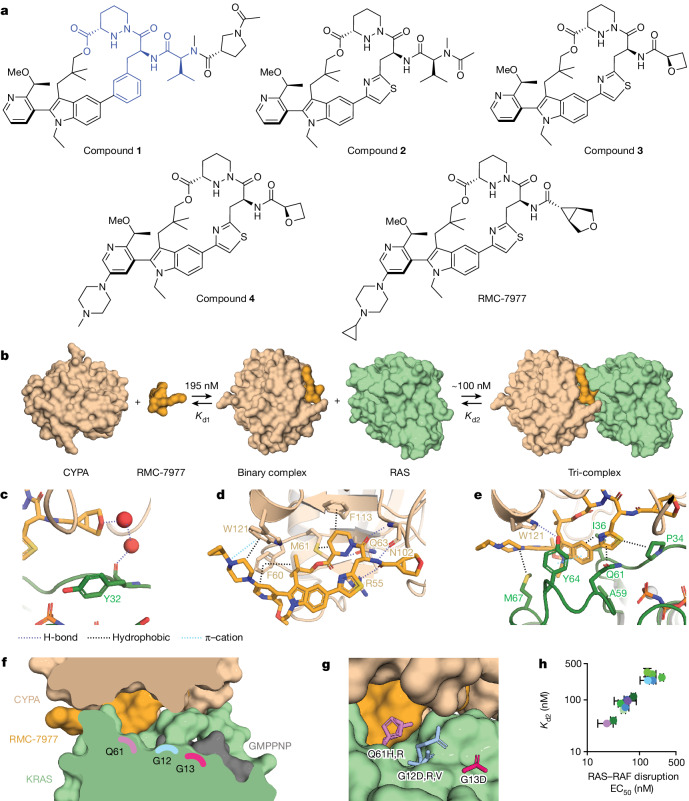
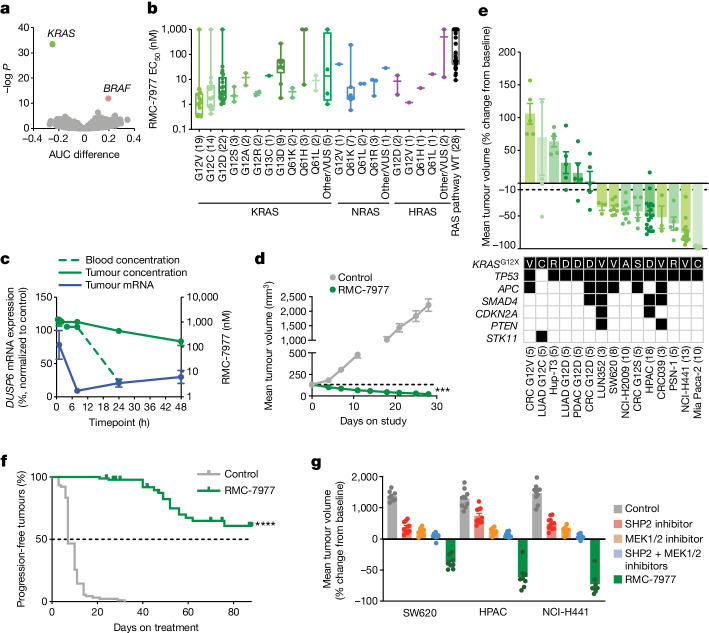
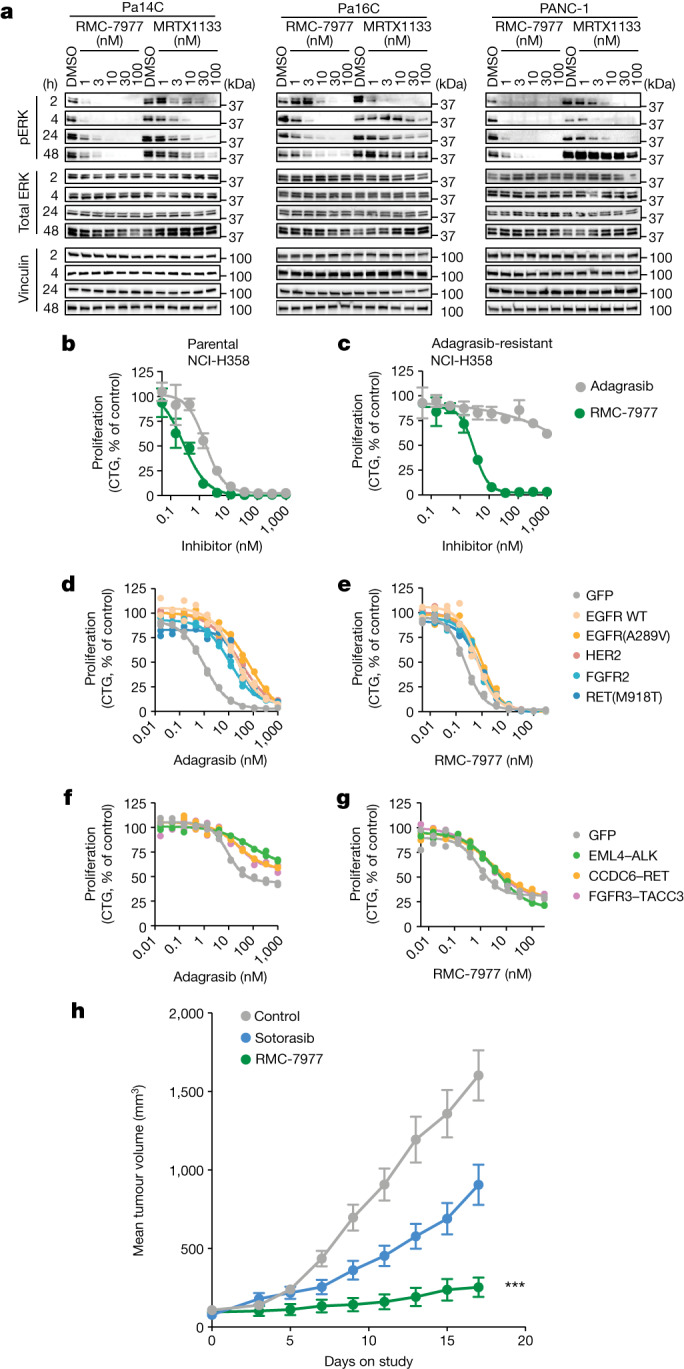
RAS oncogenes (collectively NRAS , HRAS and especially KRAS ) are among the most frequently mutated genes in cancer, with common driver mutations occurring at codons 12, 13 and 61 1 . Small molecule inhibitors of the KRAS(G12C) oncoprotein have demonstrated clinical efficacy in patients with multiple cancer types and have led to regulatory approvals for the treatment of non-small cell lung cancer 2,3 . Nevertheless, KRAS G12C mutations account for only around 15% of KRAS -mutated cancers 4,5 , and there are no approved KRAS inhibitors for the majority of patients with tumours containing other common KRAS mutations. Here we describe RMC-7977, a reversible, tri-complex RAS inhibitor with broad-spectrum activity for the active state of both mutant and wild-type KRAS, NRAS and HRAS variants (a RAS(ON) multi-selective inhibitor). Preclinically, RMC-7977 demonstrated potent activity against RAS-addicted tumours carrying various RAS genotypes, particularly against cancer models with KRAS codon 12 mutations ( KRAS G12X ). Treatment with RMC-7977 led to tumour regression and was well tolerated in diverse RAS-addicted preclinical cancer models. Additionally, RMC-7977 inhibited the growth of KRAS G12C cancer models that are resistant to KRAS(G12C) inhibitors owing to restoration of RAS pathway signalling. Thus, RAS(ON) multi-selective inhibitors can target multiple oncogenic and wild-type RAS isoforms and have the potential to treat a wide range of RAS-addicted cancers with high unmet clinical need. A related RAS(ON) multi-selective inhibitor, RMC-6236, is currently under clinical evaluation in patients with KRAS -mutant solid tumours (ClinicalTrials.gov identifier: NCT05379985).
Overview
The claims and statistics of this paper haven’t been checked yet.
Free: it reads the open-access text and checks the first 5 claims that cite a source we can check. Create a free account to check every claim.
Integrity signals
Registry
Cites
Statistics
Figures
Verification
Claims the paper makes
The claims and statistics of this paper haven’t been checked yet.
Free: it reads the open-access text and checks the first 5 claims that cite a source we can check. Create a free account to check every claim.
Claims other papers make about this one
Each is checked against this paper’s own text: does it say what the citing paper says it does?
The source backs part of the claim, not all of it — or backs it for a different population, condition or comparison.
In the citing paper
“Recently developed “pan-RAS” or “pan-KRAS” inhibitors capable of targeting all RAS isoforms or all KRAS alleles will be broadly applicable to most patients with PDAC (71–74).”
From Mechanisms of Resistance to Oncogenic KRAS Inhibition in Pancreatic Cancer (2024) · cites this paper as [73]
Experimental — accuracy not yet measured
Self-check
Percentages, sums and reported differences re-computed from the paper’s own numbers.
The self-check needs the paper’s full text.
Citations
Cites
Colorectal cancer statistics, 2023
Siegel, R. L., Wagle, N. S., Cercek, A., Smith, R. A., & Jemal, A. (2023) · CA: A Cancer Journal for Clinicians · doi:10.3322/caac.21772 · Cited by 3,733
K-Ras(G12C) inhibitors allosterically control GTP affinity and effector interactions
Ostrem, J. M., Peters, U., Sos, M. L., Wells, J. A., & Shokat, K. M. (2013) · Nature · doi:10.1038/nature12796 · Cited by 2,557
Improved Survival with MEK Inhibition in BRAF-Mutated Melanoma
Flaherty, K. T., Robert, C., Hersey, P., Nathan, P., Garbe, C., Milhem, M., Demidov, L. V., Hassel, J. C., Rutkowski, P., Mohr, P., et al. (2012) · New England Journal of Medicine · doi:10.1056/nejmoa1203421 · Cited by 2,160
Drugging the undruggable RAS: Mission Possible?
Cox, A. D., Fesik, S. W., Kimmelman, A. C., Luo, J., & Der, C. J. (2014) · Nature Reviews Drug Discovery · doi:10.1038/nrd4389 · Cited by 1,997 · cited 1×
“RAS proteins have historically been recalcitrant drug targets 2,3 , although progress in targeting the inactive, GDP-bound state of KRAS(G12C) has resulted in regulatory approvals for two drugs, sotorasib and adagra-sib 10,11 .”
BackgroundSelf-citationRAS Proteins and Their Regulators in Human Disease
Simanshu, D. K., Nissley, D. V., & McCormick, F. (2017) · Cell · doi:10.1016/j.cell.2017.06.009 · Cited by 1,943 · cited 2×
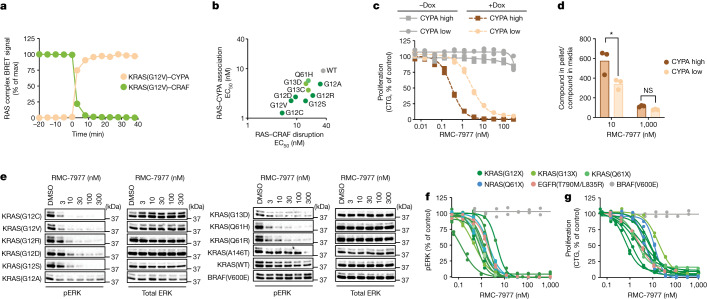
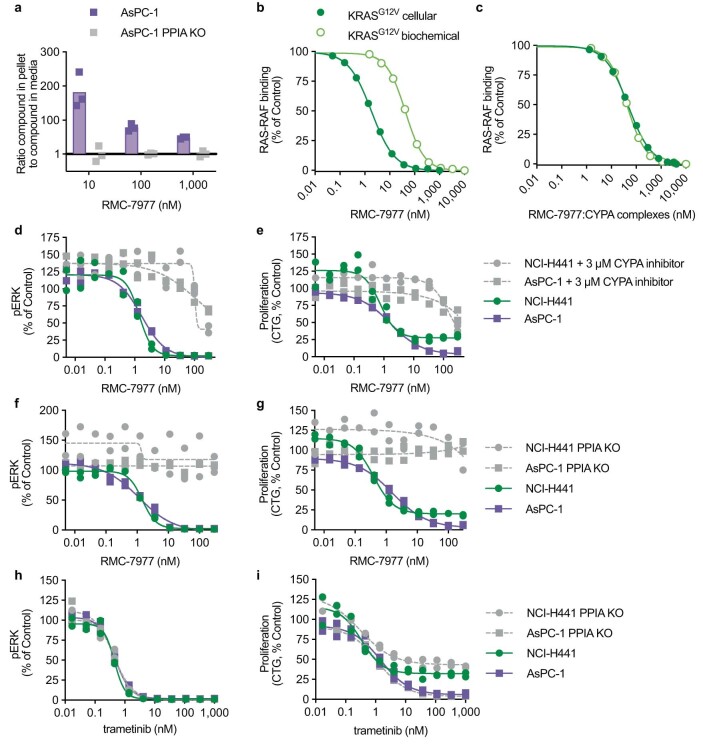
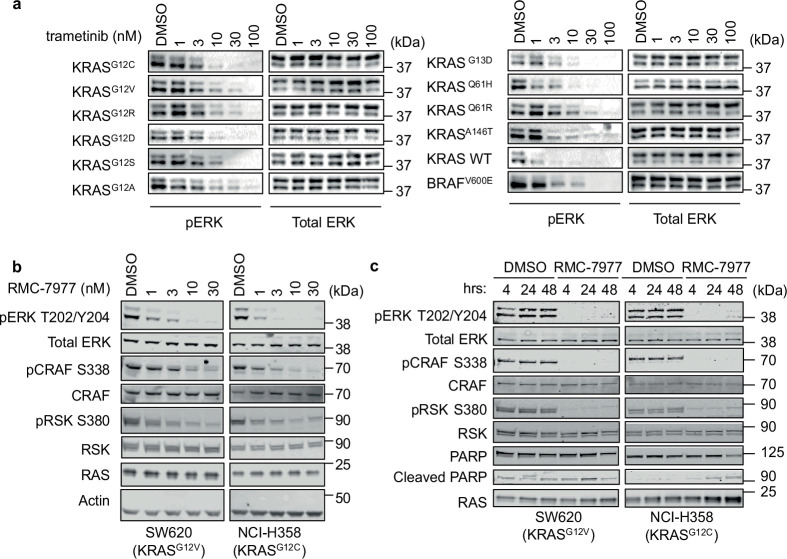
“These studies confirm that CYPA binding is required for inhibition of RAF–MEK–ERK signalling and proliferation by RMC-7977 in NCI-H441 ( KRAS G12V , NSCLC) and AsPC-1 ( KRAS G12D , PDAC) cells (Extended Data Fig.”
BackgroundRAS oncogenes: the first 30 years
Malumbres, M., & Barbacid, M. (2003) · Nature Reviews Cancer · doi:10.1038/nrc1097 · Cited by 1,902
Sotorasib for Lung Cancers with KRAS p.G12C Mutation
Skoulidis, F., Li, B. T., Dy, G. K., Price, T. J., Falchook, G. S., Wolf, J., Italiano, A., Schuler, M., Borghaei, H., Barlesi, F., et al. (2021) · New England Journal of Medicine · doi:10.1056/nejmoa2103695 · Cited by 1,849 · cited 1×
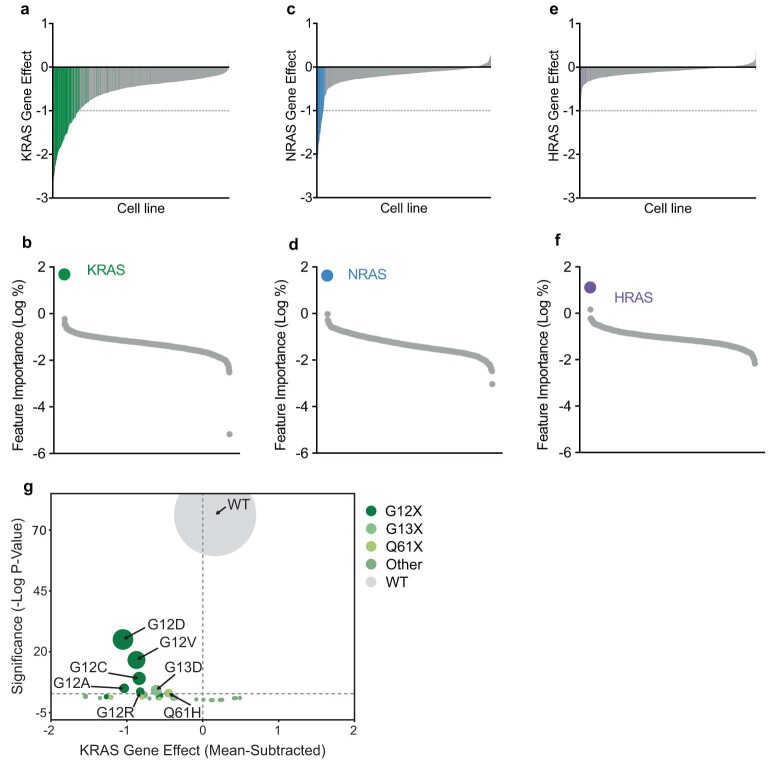
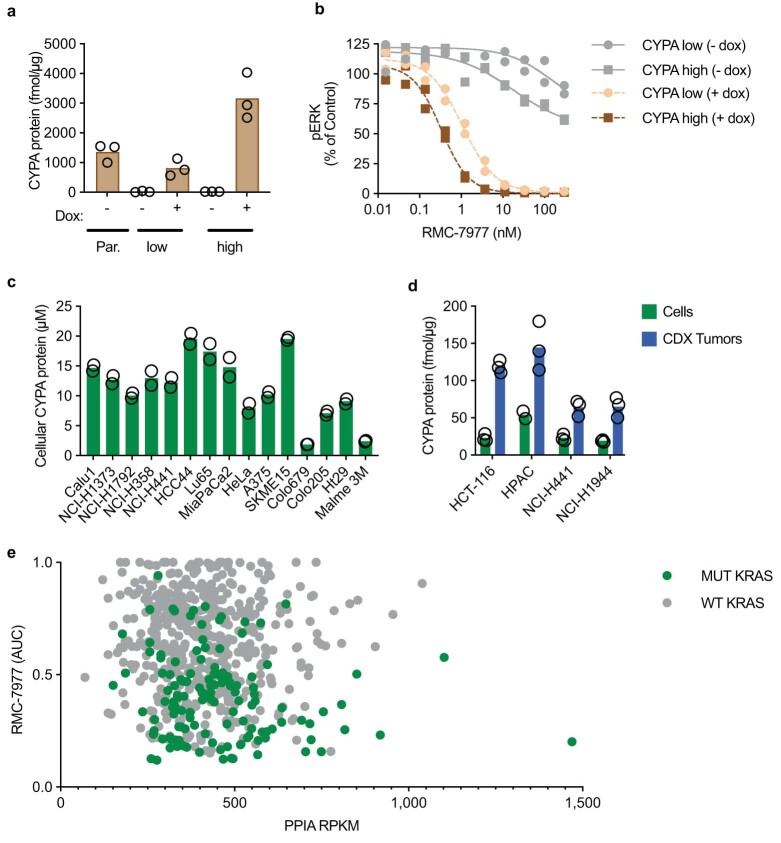
“Finally, CYPA is abundantly expressed across cancer types and exhibits low inter-patient variation in expression 12 , suggesting that tumour expression of CYPA is unlikely to be limiting for RMC-7977 potency.”
BackgroundRAS oncogenes: weaving a tumorigenic web
Pylayeva-Gupta, Y., Grabocka, E., & Bar-Sagi, D. (2011) · Nature Reviews Cancer · doi:10.1038/nrc3106 · Cited by 1,789 · cited 1×
“We further investigated whether exogenous CYPA expression could restore RMC-7977 sensitivity in NCI-H358 ( KRAS G12C , NSCLC) cells lacking PPIA .”
BackgroundAcquired Resistance to KRAS G12C Inhibition in Cancer
Awad, M. M., Liu, S., Rybkin, I. I., Arbour, K. C., Dilly, J., Zhu, V. W., Johnson, M. L., Heist, R. S., Patil, T., Riely, G. J., et al. (2021) · New England Journal of Medicine · doi:10.1056/nejmoa2105281 · Cited by 1,247
Self-citationRAS-targeted therapies: is the undruggable drugged?
Moore, A. R., Rosenberg, S. C., McCormick, F., & Malek, S. (2020) · Nature Reviews Drug Discovery · doi:10.1038/s41573-020-0068-6 · Cited by 1,103 · cited 1×
“RAS proteins have historically been recalcitrant drug targets 2,3 , although progress in targeting the inactive, GDP-bound state of KRAS(G12C) has resulted in regulatory approvals for two drugs, sotorasib and adagra-sib 10,11 .”
Background
Cited by
Items 201–300 of 433
Ehm, P. A. H., & Rehbach, C. (2025) · Lymphatics · doi:10.3390/lymphatics3040033 · Cited by 4
“Oncogenic mutations at position 12, 13 or 61 of RAS family member genes are among the most common genetic lesions in human cancers [38].”
M-Ras distinct activation scenarios: A mechanistic outlook and targeting
Xu, L., Liu, Y., Jang, H., & Nussinov, R. (2025) · Computational and Structural Biotechnology Journal · doi:10.1016/j.csbj.2025.11.025 · Cited by 4
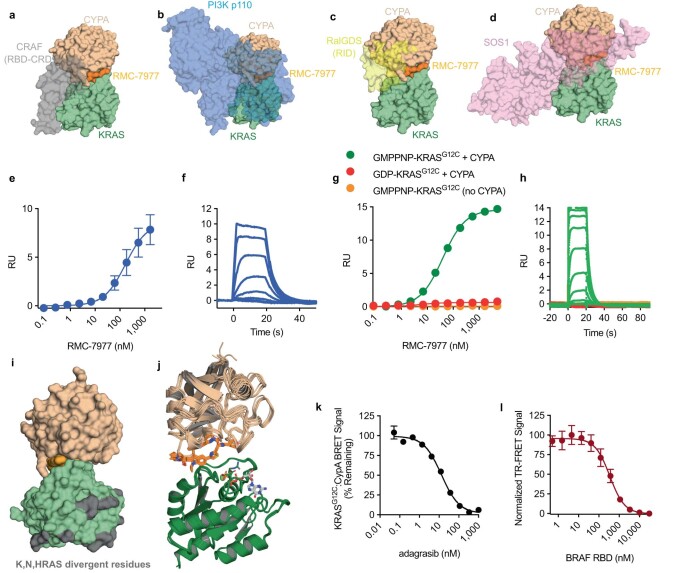
“We superimposed the crystal structure of tri-complex formed by K-Ras-GppNHp, inhibitor RMC-7977, and CypA [54] with the representative conformation of M-Ras-GTP (Fig.”
Self-citationCallaghan, J. F., & Mattingly, R. R. (2025) · Cancers · doi:10.3390/cancers17233781 · Cited by 4
“In 2024, the pan-RAS inhibitor RMC-7977 was discovered and has been shown to have efficacy in NF1-associated tumors, including MPNSTs in vivo [140,141].”
Li, J., Song, N., Ma, R., & Qu, X. (2025) · International Journal of Biological Sciences · doi:10.7150/ijbs.118831 · Cited by 5
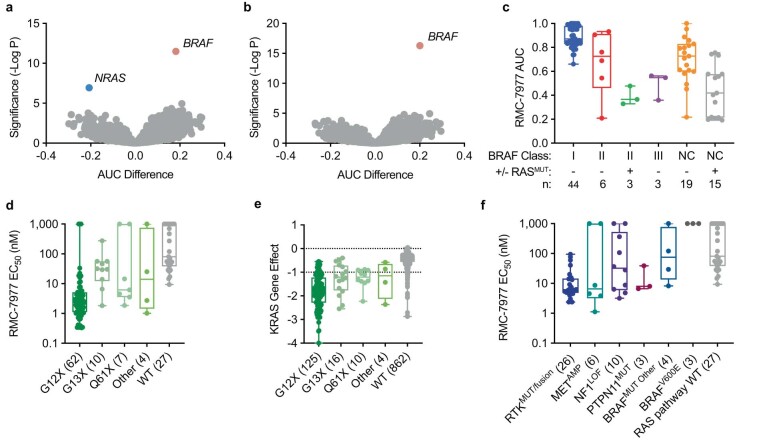
“RMC-7977 exhibited optimal efficacy against RAS -addicted neoplasms characterized by diverse RAS genotypic profiles in preclinical oncology models, showing pronounced activity in models harboring KRAS codon 12 mutations ( KRAS G12X ) [154].”
Shen, T., Fei, W., Hu, Z., Pang, M., Ma, J., Zhou, T., & Shang, Y. (2025) · Bioorganic Chemistry · doi:10.1016/j.bioorg.2025.109345 · Cited by 4
Ribosome biogenesis as a potential therapeutic target in KRAS mutant colorectal cancer
Tanaka, Y., Sakahara, M., Yamanaka, H., Natsume, Y., Kusama, D., Kumegawa, K., Yoshikawa, H., Abe, Y., Okabayashi, K., Matui, S., et al. (2025) · Nature Communications · doi:10.1038/s41467-025-67979-9 · Cited by 4
“More recently, small compounds targeting GTP-bound active state of KRAS proteins are developed 91,92 .”
Pfeil, A. J., Zhang, T., Cheng, R., Mattar, M. S., Marti, J. L. G., Gili, L., Lai, R., Khodos, I., Master, R. P., Dix, J.-M., et al. (2026) · Clinical Cancer Research · doi:10.1158/1078-0432.ccr-25-2734 · Cited by 4
Systematic and precise interventions for KRAS-mutant cancers
Liang, J., Wu, J., Zhang, Y., Wang, H., Zheng, Y., & He, Q. (2026) · Experimental Hematology and Oncology · doi:10.1186/s40164-026-00763-7 · Cited by 4
Pastor, P. G., Gonzalez, N. S., Salvà, F., Ros, J., Baraibar, I., Rodríguez-Castells, M., de Torres, C. S., García, A., Alcaráz, A., Vaghi, C., et al. (2026) · Genes · doi:10.3390/genes17040460 · Cited by 4
RAS Pathway Activation and Microenvironmental Adaptation as Hallmarks of Myeloid Sarcoma
Nadorp, B., Lasry, A., Loghavi, S., Patel, R., Mansour, H. M., Kelly, B., Walker, C. J., Buss, J., Boateng, I., Al-Santli, W., et al. (2026) · Blood Cancer Discovery · doi:10.1158/2643-3230.bcd-26-0160 · Cited by 5
Martín, A., García-Pérez, I. M., José, S. S., Rojo, P., Riego‐Mejías, C., Teodósio, C., Barbosa, B. M. G., Sánchez, C., Folch-I-Casanovas, I., Odena, M. A., et al. (2026) · Cancer Research · doi:10.1158/0008-5472.can-25-5172 · Cited by 4
Self-citationWang, H. H., Huff, A. L., Haldar, S. D., Berg, M., Thoburn, C. J., Heumann, T. R., Anders, R. A., Barrett, B., Bever, K. M., Pishvaian, M. J., et al. (2026) · Nature Communications · doi:10.1038/s41467-026-74711-8 · Cited by 4
“Second-generation mKRASandpan-RASinhibitorareinclinicaltrials,butresistanceisalso anticipated 56,57 .”
Targeting KRAS for cancer therapy
Jia, J., Liu, R., Adamide, T. A., Fernandez, I. E., & Stathopoulos, G. T. (2026) · British Journal of Pharmacology · doi:10.1111/bph.70546 · Cited by 4
Intratumor heterogeneity in KRAS signaling shapes treatment resistance
Petrenko, O., Kirillov, V., D’Amico, S., & Reich, N. C. (2024) · iScience · doi:10.1016/j.isci.2024.111662 · Cited by 4
“14,32,46,47 Additionally, a common theme among tumors harboring mutant KRAS is their propensity to acquire secondary mutations that can affect cell survival and growth, and thereby limit the efficacy of targeted therapies.”
Kato, R., Solanki, H. S., Özakıncı, H., Desai, B., Gundlapalli, H., Yang, Y. C., Aronchik, I., Singh, M., Johnson, J., Marusyk, A., et al. (2025) · Clinical Cancer Research · doi:10.1158/1078-0432.ccr-24-3714 · Cited by 4
Self-citationDbouk, M. H., Davis, B. G., Peller, M. T., Sloan, E., Hollander, T. G., Genere, J. P. R., Bazarbashi, A. N., Ismail, M. T., Lang, G. D., Kushnir, V. M., et al. (2025) · Gastrointestinal Endoscopy · doi:10.1016/j.gie.2025.03.1208 · Cited by 4
Distal Covalent Targeting Suppresses Signaling of Oncogenic K-Ras(G13C) in Cancer Cells
Zheng, Q., Shen, T., Pampel, J., & Shokat, K. M. (2025) · ACS Chemical Biology · doi:10.1021/acschembio.5c00249 · Cited by 4
Raji, S., Zaribafzadeh, H., Jones, T., Kanu, E. N., Tong, K., Fletcher, A. A., Howell, T. C., McCall, S. J., Marks, J., Rogers, B., et al. (2026) · JCO Precision Oncology · doi:10.1200/po-25-00115 · Cited by 4
Seamon, K. J., Zhuang, Y., Yang, Y. C., Chakraborty, S., Cregg, J., Tomlinson, A. C. A., Gould, A., Ahler, E., Maldonato, B. J., Spradlin, J. N., et al. (2026) · Cancer Discovery · doi:10.1158/2159-8290.cd-25-0886 · Cited by 4
Self-citationRMC-7977, a highly selective inhibitor of the active RAS-GTP to treat pancreatic cancer
Song, Y., Li, Q., & Sheng, C. (2024) · Acta Pharmaceutica Sinica B · doi:10.1016/j.apsb.2024.07.014 · Cited by 4
“…gelatinous macrocyclic peptide inhibitors that chemically remodel chaperone proteins (such as cyclophilin A, CYPA) to form tri-complex complexes with the activated state of cutting-edge tumor targets to regulate upstream and downstream effectors and cofactors, and inhibit tumor targets 2 .”
BackgroundInfluentialOncogenic mutant KRAS inhibition through oxidation at cysteine 118
Kramer‐Drauberg, M., Petrini, E., Mira, A., Patrucco, E., Scardaci, R., Savinelli, I., Wang, H., Qiao, K., Carrà, G., Nokin, M., et al. (2025) · Molecular Oncology · doi:10.1002/1878-0261.13798 · Cited by 4
Self-citationSystematic Targeting of Protein Complexes with Molecular COUPLrs
Yang, D., Harry, S. A., Chong, H. B., Khandelwal, N., Zhang, E., Nordenfelt, N. S., Chen, N. J., Lee, C., Kaluziak, S. T., Codd, E. M., et al. (2026) · Cancer Discovery · doi:10.1158/2159-8290.cd-25-2314 · Cited by 4
Decker, M., Huang, B. J., Ware, T. B., Boone, C. D., Tang, M., Ybarra, J., Sale, M. J., Francois, R. A., Ballapuram, A. C., Taran, K. A., et al. (2025) · bioRxiv (Cold Spring Harbor Laboratory) · doi:10.1101/2025.03.20.644389 · Cited by 4
“Finally, co-treatment with ABD778 and gilteritinib suppressed the growth of a patient-derived xenograft (PDX) model of adaptive resistance to FLT3 inhibition.”
Self-citationSwitching It up with New KRAS Inhibitors
Waterson, A. G. (2025) · Journal of Medicinal Chemistry · doi:10.1021/acs.jmedchem.5c00998 · Cited by 4
Thioredoxin Reductase 1 inhibition triggers ferroptosis in KRAS-independent lung cancersPreprint
Andreani, C., Bartolacci, C., Melegari, M., Sargentoni, N., Luciani, L., Marucci, A., Galeazzi, R., DeNicola, G. M., Kilgore, J. A., Williams, N. S., et al. (2025) · bioRxiv (Cold Spring Harbor Laboratory) · doi:10.1101/2025.07.25.666783 · Cited by 4
Chemical Synthesis, Refolding, and Characterization of Mirror-Image Cyclophilin A
Yeşilçimen, A., Gandhesiri, S., Travaline, T. L., Callahan, A. J., Tokareva, O. S., Loas, A., McGee, J. H., & Pentelute, B. L. (2025) · The Journal of Organic Chemistry · doi:10.1021/acs.joc.4c03049 · Cited by 3
Intrinsic resistance to RAS inhibitors is driven by dysregulation of KRAS degradation
Ivanišević, T., Ma, Y., Boxel, E. V., Magits, W., Lechat, B., Koçberber, Z., Willnow, P., Fendt, S., Velde, G. V., Sewduth, R. N., et al. (2025) · Nature Communications · doi:10.1038/s41467-025-67109-5 · Cited by 4
Shao, H., Xu, F., Xu, J., Zhou, L., Wu, Y., He, L., Qian, X., He, W., Jiao, N., Xia, Y., et al. (2026) · Science Advances · doi:10.1126/sciadv.aea2511 · Cited by 3
RetractedStickler, S., Eggerstorfer, M.-T., Rieche, M., Arslan, S., Teufelsbauer, M., HOHENEGGER, M., Weigl, L. G., & Hamilton, G. (2026) · Scientific Reports · doi:10.1038/s41598-026-43207-2 · Cited by 3
Nomura, T. K., Heishima, K., Mukai, H., Arai, K., Elhelaly, A. E., Fuchigami, H., Warashina, S., Tahara, T., Hyodo, F., Matsuo, M., et al. (2026) · Nature Communications · doi:10.1038/s41467-026-73300-z · Cited by 3
“To date, RMC-6236, a small-molecule pan-RAS inhibitor currently in Phase II/III trials, has demonstrated encouraging clinical activity 3,4 .”
Liu, H., Liu, W., Zhang, X., Jiang, Y., Xu, H., Wang, N., Liu, B., & Lin, N. (2026) · Theranostics · doi:10.7150/thno.135134 · Cited by 3
“For instance, oncogenic RAS mutations impair its intrinsic GTPase activity, turning a transient signal into a persistent one [42].”
Pan-RAS Inhibitors: Expanding Therapeutic Potential and Evading Resistance
Ramesh, S., Wang, J. W., Huang, C.-H., Moore, A. M., Fadlalla, K., Berry, K. L., Maxuitenko, Y. Y., Chen, X., Keeton, A. B., El‐Rayes, B. F., et al. (2026) · Cancers · doi:10.3390/cancers18111844 · Cited by 3
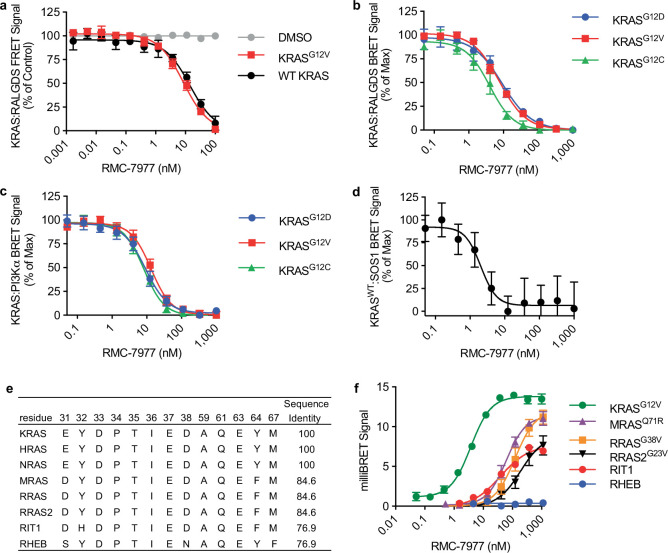
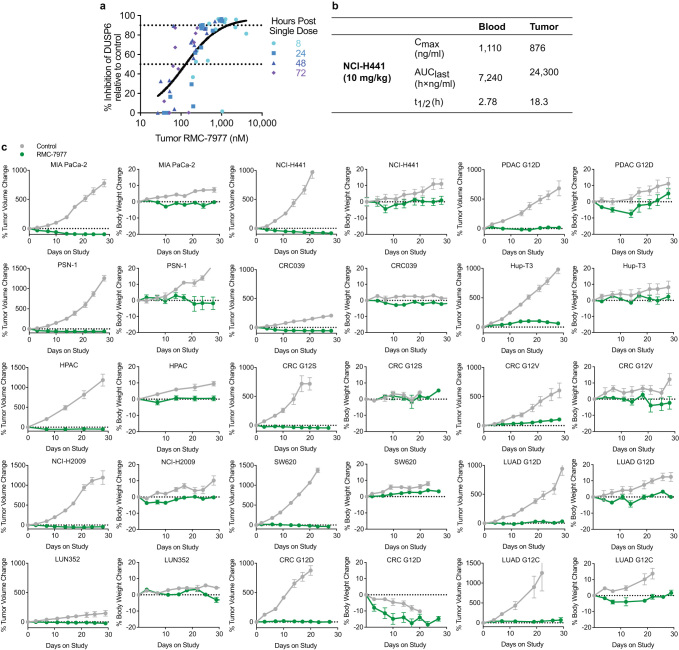
“Direct targeting of activated RAS with RMC-7977 produced a distinct and superior antitumor activity profile compared to direct upstream and downstream suppression using SHP2 and MEK inhibitors in preclinical models of KRAS G12X mutant cancers [31].”
InfluentialTargeting KRAS Codon 13 Mutations Using Direct Combination Approaches in Non–Small Cell Lung Cancer
McDaid, W. J., Adderley, H., d’Arienzo, P. D., Parreira, A. S. D. F. M., Woodhouse, L. C., Zhuang, Y., Castillo‐Lluva, S., Tinsley, K. L., Cooksedge, J., Baker, M. J., et al. (2026) · Cancer Discovery · doi:10.1158/2159-8290.cd-25-0884 · Cited by 3
Self-citationDorbin, D., Herrera, J., Davidson, R., Chandrashekar, N., Scheuber, G., Jayakrishnan, P., Rajesh, C., Johnson, G., Yuan, J., Sochor, M., et al. (2026) · Cancer Research · doi:10.1158/0008-5472.can-26-1181 · Cited by 5
Cell type–selective targeting by heterobifunctional protein binders via in-cell enrichment
Bulldan, A., Zheng, M., Meyners, C., Purder, P. L., Krieger, J., Dreizler, J. K., Geiger, T. M., Repity, M. L., Lein, M. H., Quist-Løkken, I., et al. (2026) · Nature Communications · doi:10.1038/s41467-026-77460-w · Cited by 3
“Intracellular enrichment was also observed for CypA-based molecular glues 33 and in drug sequestering strategies 32,34 , but never at this magnitude.”
Discovery of a Series of Macrocycles as Potent Inhibitors of Leishmania Infantum
Riu, F., Ruppitsch, L. A., Vo, D. D., Hong, R. S., Tyagi, M., Matheeussen, A., Hendrickx, S., Poongavanam, V., Caljon, G., Sheikh, A. Y., et al. (2024) · Journal of Medicinal Chemistry · doi:10.1021/acs.jmedchem.4c01370 · Cited by 3
Li, J., Wu, W., Chen, J., Xu, Z., Yang, B., He, Q., Yang, X., Yan, H., & Luo, P. (2024) · Toxicological Sciences · doi:10.1093/toxsci/kfae129 · Cited by 3
Cregg, J., Edwards, A. V., Tomlinson, A. C. A., Gill, A. L., & Koltun, E. S. (2024) · Elsevier eBooks · doi:10.1016/b978-0-443-21861-3.00011-5 · Cited by 3
Self-citationKRAS inhibitors in drug resistance and potential for combination therapy
Rathod, L. S., Sakle, N. S., & Mokale, S. N. (2024) · Tumori Journal · doi:10.1177/03008916241289206 · Cited by 3
Trends in Overall Survival in Lung Adenocarcinoma with EGFR Mutation, KRAS Mutation, or No Mutation
Faehling, M., Fallscheer, S., Schwenk, B., Seifarth, H., Sträter, J., Lengerke, C., & Christopoulos, P. (2025) · Cancers · doi:10.3390/cancers17071237 · Cited by 3
“However, in light of the development of pan-RAS inhibitors, which are currently reaching the early clinical trial stage [20,21], data on the prognostic significance of specific KRAS -nonG12C mutations are of special interest.”
Recent advances of synthetic strategies toward macrocyclic drugs
Fei, L., & Min, X. (2025) · Tetrahedron Letters · doi:10.1016/j.tetlet.2025.155760 · Cited by 3
He, X., Chen, P., Zhao, Z., Choe, H., Ali, T., Ding, K., Wu, X., Ma, J., & Zhang, L. (2025) · Discover Oncology · doi:10.1007/s12672-025-03697-4 · Cited by 3
Dreizler, J. K., Meyners, C., & Hausch, F. (2024) · ACS Medicinal Chemistry Letters · doi:10.1021/acsmedchemlett.4c00427 · Cited by 3
Drugging mutant KRAS by disrupting binding to effectors and GTP
Cox, A. D., & Der, C. J. (2025) · Nature Cancer · doi:10.1038/s43018-025-00914-5 · Cited by 3
Self-citationOrthogonal resistance mechanisms of classical- and induced-proximity inhibitorsPreprint
Merz, M. L., Kailass, K., Pergu, R., Tran, K., Gupta, K., Severance, Z. C., Singh, S., Sreekanth, V., Law, B. K., Rosenblatt, G., et al. (2025) · bioRxiv (Cold Spring Harbor Laboratory) · doi:10.1101/2025.05.10.652755 · Cited by 3
“Although Y64 forms similar interactions with covalent and non-covalent RMC analogs 14, 16, 33 , the covalent nature of RMC-6291 and RMC-9805 may help to reduce the dependency on other interactions in the tertiary complex.”
Coka, L. D., Roa‐Peña, L., Flescher, A. M., Escobar‐Hoyos, L. F., & Shroyer, K. R. (2025) · Cancers · doi:10.3390/cancers17121899 · Cited by 2
Kapp, J. N., Verdurmen, W. P. R., Schaefer, J. V., Kopra, K., Nagy‐Davidescu, G., Richard, É., Nokin, M., Erñst, P., Tamaskovic, R., Schwill, M., et al. (2025) · Molecular Oncology · doi:10.1002/1878-0261.70061 · Cited by 3
“Moreover, the development of a pan-KRAS and a multi-RAS(ON) inhibitor represents additional innovative approaches in the RAS-targeting landscape [15,16].”
Targeting RAS-mutant cancer cells using a synthetic RAS-activated cancer killing system
Teng, F., Gao, Q., Li, Z., Cui, T., Tan, X., Ding, Y., Li, R., Li, B., Zhong, B., Miao, M., et al. (2025) · Trends in biotechnology · doi:10.1016/j.tibtech.2025.07.031 · Cited by 2
Gray, J. P., Bildik, G., Kim, H.-N., Sutton, M. N., Wang, J., Osuji, A. O., Batistatou, N., Yang, H., Mao, W., Tan, Z., et al. (2025) · iScience · doi:10.1016/j.isci.2025.113686 · Cited by 2
Dual Inhibitors of KRASG12D and HSP90 Are Effective against KRASG12D Inhibitor Resistance
Pulido, I., Gunder, L. C., Ying, C., Wang, Y., Dai, Y., Yang, Z., Rahnama, A., Li, J., Sun, Y., Liu, C., et al. (2025) · Molecular Cancer Therapeutics · doi:10.1158/1535-7163.mct-24-1173 · Cited by 2
Self-citationChatterjee, A., Ali, M. K. M., Bailey, C. M., Liu, Y., Small, D., Smith, C. C., Traer, E. A., Wang, Y., Silvestri, G., & Baer, M. R. (2026) · Leukemia · doi:10.1038/s41375-026-02982-7 · Cited by 2
Self-citationThe evolving landscape of KRAS-targeted therapy: mechanisms of resistance and emerging strategies
Pilco‐Janeta, D. F., & Puebla, M. D. L. C. (2025) · Anti-Cancer Drugs · doi:10.1097/cad.0000000000001801 · Cited by 2
Lin, Y. (2025) · American Journal of Cancer Research · doi:10.62347/zzuw3272 · Cited by 3
Ghosh, D., Kazi, A., Vasiyani, H. K. K., Vudatha, V., Lecomte, N., Iacobuzio–Donahue, C. A., Trevino, J., & Sebti, S. M. (2026) · European Journal of Cancer · doi:10.1016/j.ejca.2026.116255 · Cited by 2
Schulte, A., & Andrechek, E. R. (2026) · Journal of Mammary Gland Biology and Neoplasia · doi:10.1007/s10911-026-09599-7 · Cited by 2
“RMC-7977 as a broad-spectrum RAS inhibitor shows promise [95].”
Yang, K., Qin, X., Wang, Y., Yan, W., Yao, M., Yu, C., Yu, C., Shi, S., Zhao, Y., Zhou, L., et al. (2026) · Journal of Advanced Research · doi:10.1016/j.jare.2026.02.013 · Cited by 2
Self-citationBalancing the Edge: Phosphatases as Homeostatic Buffers of Oncogenic Kinase Signaling in Cancer
Ehm, P. A. H. (2026) · Kinases and Phosphatases · doi:10.3390/kinasesphosphatases4010004 · Cited by 2
Global patterns of mutational profiles in biliary tract cancer
Zhu, Y., Wu, J. A., Zhang, D., Chowdhury, S., Wang, H., Lee, S. S., Meric‐Bernstam, F., Hu, Z. I., Javle, M. M., & Kwong, L. N. (2026) · Journal of Hepatology · doi:10.1016/j.jhep.2026.03.029 · Cited by 4
Targeting the H/KRAS α4-β6-α5 Allosteric Lobe with Macrocyclic Peptides
Trân, K., Lavoie, H., Wahhab, A., Garrido, D., Jo, C. H., Poupart, M.-A., Arya, T., Beautrait, A., Killoran, R. C., Dicaire-Leduc, C., et al. (2026) · ACS Medicinal Chemistry Letters · doi:10.1021/acsmedchemlett.6c00078 · Cited by 2
Mechanistic insights on spatiotemporal control of Ras-signaling
Charrier, C., Mrachacz, S., Schulze, S., & Lammers, M. (2026) · Biological Chemistry · doi:10.1515/hsz-2025-0243 · Cited by 2
Liu, X., Xiao, Y., Zhou, Y., Teng, Y., Zou, J., Zhou, Y., Fan, X., Zhao, J., Qiu, J., Tang, L., et al. (2026) · Journal of Medicinal Chemistry · doi:10.1021/acs.jmedchem.6c00196 · Cited by 2
Scaparone, P., Mira, A., Cheong, T.-C., Patrucco, E., Ricciuti, B., Gribaudo, R., Garbo, E., Scardaci, R., Savinelli, I., Michelina, S. V., et al. (2026) · Cancer Discovery · doi:10.1158/2159-8290.cd-25-0477 · Cited by 2
“New compounds targeting pan-KRAS(OFF) (32) and multi-selective RAS(ON) (33,34) alone or in combination with SOS1 or SHP2 inhibitors are currently under evaluation in different preclinical and clinical stages (21,35).”
Self-citationRobb, R. N., Ackermann, S. E., Degan, S. E., Taylor, K. E., Yang, R. Y., Marler, A. Z., Calvert, V. S., Pierobon, M., Lyons, S. P., Barker, N. K., et al. (2026) · Cancer Research Communications · doi:10.1158/2767-9764.crc-25-0731 · Cited by 2
“Furthermore, RAS(ON) multiselective RAS inhibitors that target all RAS isoforms and many different mutations are also under clinical evaluation (13–15).”
Brønsted-basic small molecules activate GTP hydrolysis in KRAS-Q61 mutants
Wang, Y., Chen, S., Cao, Y., Wu, Y., 施仲达, Wang, C. D., Norinskiy, M. A., Celik, H., & Zhang, Z. (2026) · Nature Chemical Biology · doi:10.1038/s41589-026-02291-1 · Cited by 2
Self-citationZacharias, N. M., Rupe, E. S., Chen, X., Kotecha, R. R., Rieke, D. T., McGregor, B. A., Pesquera, P. I., Yu, Z., Grover, A., Daw, N. C., et al. (2026) · Clinical Cancer Research · doi:10.1158/1078-0432.ccr-26-0392 · Cited by 2
Hu, L., Ahmari, N., Schaeper, A., Pundavela, J., Kim, M., Dombi, E., Wu, J., Brunmair, J., Petronczki, Ö. Y., & Ratner, N. (2026) · Science Advances · doi:10.1126/sciadv.aeg3475 · Cited by 2
“First, ge-netic deletion achieves complete KRAS loss, whereas small-molecule inhibitors typically achieve about 70 to 90 % inhibition of RAS/MEK signaling ( 49 , 50 ), leaving residual KRAS activity that may sustain the survival of tumor cells.”
Right ON target: a new RAS-GTP inhibitor
Senft, D. (2024) · Nature reviews. Cancer · doi:10.1038/s41568-024-00703-9 · Cited by 2
Villanueva, M. T. (2024) · Nature Reviews Drug Discovery · doi:10.1038/d41573-024-00082-8 · Cited by 2
Targeted therapies in biliary tract cancer—when precision becomes imprecise
O’Rourke, C. J., Schou, J. V., Andersen, J. B., & Høgdall, D. (2024) · ESMO Gastrointestinal Oncology · doi:10.1016/j.esmogo.2024.100085 · Cited by 2
Genetic mechanisms of resistance to targeted KRAS inhibitionPreprint
Diaz, B. J., Kops, M. S., Bernardo, S., Schmidt, H., Grankowsky, E., Vega, A., Zhang, C., Bott, M. J., Skamagki, M., Tomlinson, A. C. A., et al. (2025) · bioRxiv (Cold Spring Harbor Laboratory) · doi:10.1101/2025.08.04.668444 · Cited by 2
Self-citationChing, Y. M., Narayanan, S., Klomp, J. A., Isermann, T., Loewe, S., Chang, W.-H., Waters, A. M., Peña, S. R. N., Baldelli, E., Martin, C. P., et al. (2026) · bioRxiv (Cold Spring Harbor Laboratory) · doi:10.64898/2026.08.10.743026 · Cited by 2
Self-citationMediating kinase activity in Ras-mutant cancer: potential for an individualised approach?
Healy, F. M., Turner, A. L., Marensi, V., & MacEwan, D. J. (2024) · Frontiers in Pharmacology · doi:10.3389/fphar.2024.1441938 · Cited by 1
Clinical and prognostic characteristics of metastatic colorectal cancer with minor RAS mutations
Kojitani, Y., Sakai, D., Ogata, T., Amano, Y., Mori, R., Kitakaze, M., Sueda, T., Otsuka, T., Nishio, M., Ishihara, M., et al. (2025) · Oncology Letters · doi:10.3892/ol.2025.15123 · Cited by 1
“Moreover, several pan‑ RAS inhibi‑ tors are being developed, which may eventually address minor RAS mutations (30).”
RALGEF inhibitors suppress RAS-driven pancreatic cancer and metastasis
Donninger, H., Ferrill, R., Baby, B. V., Hobbing, K. R., Dean, W. L., Miriyala, N., Jigo, R., Burlison, J. A., Trent, J. O., Monsen, R., et al. (2025) · Journal of Biological Chemistry · doi:10.1016/j.jbc.2025.110809 · Cited by 1
Maslov, A. A., Trageser, N. H., Kichina, J. V., Elamir, H., Gardner, E., Teaman, F., Vishwanath, V., Dugas, S. M., Bianchi, A., Leonova, K. I., et al. (2025) · International Journal of Molecular Sciences · doi:10.3390/ijms262411959 · Cited by 1
“Encouragingly, we observed that ribavirin synergizes with a prototype pan-RAS inhibitor (RMC-7977 [62]) in suppressing KRAS G13D -driven HCT-15 cells (Figure 6).”
Disulfide tethering reveals cryptic pockets in oncogenic KRAS
Balius, T. E., Dyba, M. D., Kumari, V., Denson, J. L., Yi, M., Sharma, A. K., Prakash, P., Alberico, E. O., Messing, S. A. J., Wall, V. E., et al. (2026) · Communications Chemistry · doi:10.1038/s42004-026-01992-x · Cited by 1
“Pocket 2 shares residues with the binding site of RAS(ON)/CYPAtricomplexinhibitorsRMC-6291(elironrasib)andRMC-6236(daraxonrasib) 16,17,30,31 , which target KRAS G12C and pan-RAS, respectively, in the ON conformation (Supplementary Fig.”
Shkil, D. O., Eliseev, I. A., Ivanov, R. A., & Balakin, K. V. (2026) · Russian Chemical Bulletin · doi:10.1007/s11172-026-4863-z · Cited by 1
KRAS and MYC synergistic inhibition: a powerful strategy targeting KRAS-mutant cancers
Yan, M., Liu, K., Xu, J., Liu, Y., Ji, L., & Zhang, S. (2026) · Molecular Cancer · doi:10.1186/s12943-026-02659-w · Cited by 1
“Acquired resistance to KRAS inhibitors through genetic mechanisms involves secondary KRAS mutations at codons 12, 13 and 61, as well as alterations in the switch II binding pocket, including residues R68, H95 and Y96 [130].”
Self-citationFibroblast-mediated KRAS activation in double-negative prostate cancer
Kamijima, T., Izumi, K., Hiratsuka, K., Inaba, T., Koketsu, Y., Nakagawa, R., Toriumi, R., Aoyama, S., Kano, H., Makino, T., et al. (2026) · Cell Death and Disease · doi:10.1038/s41419-026-08800-3 · Cited by 1
Jiang, M., Hösle, D., Liu, Y., Sievers, S., & Wu, P. (2026) · JACS Au · doi:10.1021/jacsau.5c01600 · Cited by 1
Self-citationChiyoda, A., Matsuo, A., Yamano, T., & Tanada, M. (2026) · ACS Medicinal Chemistry Letters · doi:10.1021/acsmedchemlett.6c00122 · Cited by 1
KRAS-driven cytokine–metabolic crosstalk shapes immune exclusion in pancreatic ductal adenocarcinoma
Huang, C., Mai, G., Li, Y., Liu, H., & Huang, W. (2026) · Frontiers in Genetics · doi:10.3389/fgene.2026.1899014 · Cited by 1
“This finding supports a stromal mechanism of T-cell exclusion in KRAS-mutant PDAC.”
InfluentialPhillips, D. P., Alper, P. B., Borkin, D., Han, D., Kochanek, S. E., Gurjar, J., Mathison, C. J. N., Nelson, J. M., Pei, W., Nguyen, B., et al. (2026) · Journal of Medicinal Chemistry · doi:10.1021/acs.jmedchem.6c01454 · Cited by 1
Self-citationOrive-Ramos, A., Gaire, B., Adamopoulos, C., Baars, B., Desaunay, M., Kou, Z., Matenoglou, E., Coma, S., Gutiérrez, N., Mohammed, K., et al. (2026) · Cancer Discovery · doi:10.1158/2159-8290.cd-25-1596 · Cited by 2
Machine Learning-Driven Drug Repurposing for KRAS G12C and KRAS G12D Inhibition
Fuschi, G., Germain, J., Bebensee, D., Moawad, C., Aladysheva, A., Mohamed, A., Brooks, B. R., Savai, R., Elwakeel, E., & Amin, M. (2026) · ACS Omega · doi:10.1021/acsomega.5c12639 · Cited by 1
Branon, T. C. (2025) · Wiley eBooks · doi:10.1002/9781394236145.ch16 · Cited by 1
Singh, K., Pathan, S., Malhotra, M., Jayakannan, M., & Balasubramanian, N. (2025) · Biomacromolecules · doi:10.1021/acs.biomac.5c00366 · Cited by 1
MYADM Activates RhoA-Mediated Ameboid Migration to Drive Metastasis
Tsai, Y.-T., Liu, E.-T., Yang, M., Kao, C., Tzeng, S., Chen, Y.-C., Hsiao, P., Feng, A., Shieh, G. S., Tsai, M., et al. (2025) · Cancer Research · doi:10.1158/0008-5472.can-25-0006 · Cited by 1
Self-citationA covalent PFKL activator suppresses tumor growth
Jiang, X., Lynch, E. M., Lyu, C., Wilson, C. N., Salay, L. E., Hess, H. T., Lyons, S. N., Lu, M., Luo, S., Kim, G., et al. (2026) · Nature Chemical Biology · doi:10.1038/s41589-026-02289-9 · Cited by 1
“The downregulation of phosphorylated ERK2 (T183/Y185) was indicative of signaling changes leading to reduced proliferation 59,60 .”
Real-World Lung Cancer Cell Lines for Preclinical Development and Testing of Therapeutics
Stickler, S., Eggerstorfer, M.-T., Hochmair, M. J., & Hamilton, G. (2025) · Discovery Medicine · doi:10.24976/discov.med.202537201.182 · Cited by 1
The repressor Capicua is a barrier to lung tumor development driven by Kras/Trp53 mutations
Ballesteros-González, I., Hernández-Navas, I., Brehey, O., Lechuga, C. G., Salmón, M., Scotece, M., Velasco-Vicente, R., Flores-Gómez, A. A., Cebriá, A., Simón-Carrasco, L., et al. (2025) · EMBO Molecular Medicine · doi:10.1038/s44321-025-00326-z · Cited by 1
A DRUG HUNTER’S APPROACH TO MOLECULAR GLUES
La, D. S., Nasveschuk, C. G., & Gilbert, A. M. (2025) · Medicinal chemistry reviews · doi:10.1021/mc-2025-vol60.ch16 · Cited by 1
Targeting RAS for Cancer Treatment: What a Long, Strange Trip It's Been
Cox, A. D., & Der, C. J. (2025) · Annual Review of Cancer Biology · doi:10.1146/annurev-cancerbio-071024-082459 · Cited by 1
Self-citationM1C is a druggable target for NSCLC KRAS G12C mutant tumors resistant to KRAS inhibitors
Takamori, S., Haratake, N., Bhattacharya, A., Ozawa, H., Shigeta, K., Onishi, M., Nonaka, K., Komiya, T., Komatsuda, H., Takenaka, T., et al. (2026) · Oncogene · doi:10.1038/s41388-026-03934-2 · Cited by 1
“Identi fi cation of KRAS switch-II pocket mutations that impair binding of sotorasib and adagrasib uncovered the potential of RAS(ON) tricomplex targeted agents, such as RMC-6236 (NCT05379985) and RMC-7977, to circumvent this resistance [5, 8 – 12].”
Torgunrud, A., Lund-Andersen, C., Davidson, B., Marcussen, I. K. N., Larsen, S. G., Dagenborg, V., & Flatmark, K. (2025) · Pleura and Peritoneum · doi:10.1515/pp-2025-0034 · Cited by 1
Plasticity as Resistance: KRAS Inhibition Reveals WNT Adaptation in Metastatic Colorectal Cancer
Eng, G. M., & Yilmaz, Ö. H. (2026) · Cancer Discovery · doi:10.1158/2159-8290.cd-25-2147 · Cited by 1
Luo, G., Li, D., Peng, J., Liu, R., Meng, Y., Ward, R., Zhang, Y., Zhang, X., Cui, F., Wang, J., et al. (2026) · Cell Communication and Signaling · doi:10.1186/s12964-026-02798-z · Cited by 1
“…inhibitors that selectively target the active state of both mutant and wild-type KRAS, NRAS, and HRAS variants, exhibiting broad-spectrum antitumor activity, particularly in non-small cell lung cancer and pancreatic ductal adenocarcinoma, with minimal effects on normal tissues [11, 12, 28].”
Jiang, Z., Pan, Y. M., Liu, G., Ren, H., & Zhang, Y. (2026) · ACS Applied Bio Materials · doi:10.1021/acsabm.5c02218 · Cited by 1
The impact of K-Ras Gly12 mutants on homeostasis and tumorigenesis in the colonic epithelium
Yang, M. H., Sheth, S., Shui, B., Grabski, I. N., Park, S. S., Galán‐Cobo, A., Irizarry, R. A., Heymach, J. V., Dow, L. E., & Haigis, K. M. (2026) · Oncogene · doi:10.1038/s41388-026-03771-3 · Cited by 1
Mahmoud, A., Sukhwa, C., Giarrizzo, M., Choi, P. H., Pintar, J., Walch, H., Zhao, N., Bermeo, J., Chung, S. K., Raghavan, M. S., et al. (2026) · Developmental Cell · doi:10.1016/j.devcel.2026.04.014 · Cited by 1
Metadata
- Authors
- Holderfield, M., Lee, B. J., Jiang, J., Tomlinson, A., Seamon, K. J., Mira, A., Patrucco, E., Goodhart, G., Dilly, J., Gindin, Y., Dinglasan, N., Wang, Y., Lai, L. P., Cai, S., Jiang, L., Nasholm, N., Shifrin, N., Blaj, C., Shah, H., Evans, J. W., Montazer, N., Lai, O., Shi, J., Ahler, E., Quintana, E., Chang, S., Salvador, A., Marquez, A., Cregg, J., Liu, Y., Milin, A., Chen, A., Ziv, T. B., Parsons, D., Knox, J. E., Klomp, J. E., Roth, J., Rees, M., Ronan, M., Cuevas-Navarro, A., Hu, F., Lito, P., Santamaria, D., Aguirre, A. J., Waters, A. M., Der, C. J., Ambrogio, C., Wang, Z., Gill, A. L., Koltun, E. S., Smith, J. A. M., Wildes, D., & Singh, M.
- Affiliations
- Revolution Medicines (United States) (US)
- University of Turin (IT)
- University of Cincinnati (US)
- Dana-Farber Cancer Institute (US)
- University of North Carolina at Chapel Hill (US)
- Broad Institute (US)
- Memorial Sloan Kettering Cancer Center (US)
- Corresponding author
- Smith, Jacqueline A. M.
- Wildes, David
- Singh, Mallika
- ORCID
- Holderfield, Matthew
- Lee, Bianca J.
- Jiang, Jingjing
- Tomlinson, Aidan
- Seamon, Kyle J.
- Mira, Alessia
- Patrucco, Enrico
- Goodhart, Grace
- Dilly, Julien
- Gindin, Yevgeniy
- Dinglasan, Nuntana
- Wang, Yingyun
- Cai, Shurui
- Jiang, Lingyan
- Nasholm, Nicole
- Shifrin, Nataliya
- Blaj, Cristina
- Shah, Harshit
- Evans, James W.
- Shi, Jade
- Ahler, Ethan
- Quintana, Elsa
- Chang, Stephanie
- Salvador, Anthony
- Marquez, Abby
- Milin, Anthony
- Chen, Anqi
- Ziv, Tamar Bar
- Parsons, Dylan
- Knox, John E.
- Klomp, Jennifer E.
- Roth, Jennifer
- Rees, Matthew
- Ronan, Melissa
- Cuevas-Navarro, Antonio
- Hu, Feng
- Lito, Piro
- Aguirre, Andrew J.
- Waters, Andrew M.
- Der, Channing J.
- Ambrogio, Chiara
- Wang, Zhengping
- Gill, Adrian L.
- Koltun, Elena S.
- Smith, Jacqueline A. M.
- Wildes, David
- Singh, Mallika
- Venue
- Nature
- Published
- 2024-04-08
- Volume
- 629
- Issue
- 8013
- Pages
- 919-926
- ISSN
- 0028-0836 (ISSN-L)
- 1476-4687
- PMC
- PMC11111408
- OpenAlex
- W4394580100
- Cited by
- 369
- References
- 48
- Citations by year
- 2026: 135 · 2025: 169 · 2024: 64
- FWCI
- 50.10
- Type
- journal article
- Language
- en
- Open access
- hybrid
- doi.org
- Licence
- cc-by
- creativecommons.org/licenses/by/4.0 (tdm)
- creativecommons.org/licenses/by/4.0 (vor)
- Locations
- Nature (publishedVersion, cc-by)
- Research Square (acceptedVersion, cc-by)
- PubMed Central (publishedVersion, cc-by)
- PubMed (publishedVersion)
- Carolina Digital Repository (University of North Carolina at Chapel Hill) (submittedVersion)
- Institutional Research Information System University of Turin (University of Turin) (submittedVersion, other-oa)
- RePEc: Research Papers in Economics (submittedVersion)
- DIGITAL.CSIC (Spanish National Research Council (CSIC)) (submittedVersion, cc-by)
- UNC Libraries
- Funders
- U.S. Department of Defense (P30CA008748, W81XWH2110692)
- U.S. Department of Health and Human Services (P30 CA008748)
- American Cancer Society
- Pew Charitable Trusts
- Damon Runyon Cancer Research Foundation (P30 CA008748)
- Pancreatic Cancer Action Network (22-WG-DERB)
- Bristol-Myers Squibb
- Eli Lilly and Company
- Jackson Laboratory
- Giovanni Armenise-Harvard Foundation
- Memorial Sloan-Kettering Cancer Center (CA008748, P30 CA008748)
- Pershing Square Sohn Cancer Research Alliance (P30 CA008748)
- Deciphera Pharmaceuticals
- Mirati Therapeutics
- Revolution Medicines
- Springworks Therapeutics
- European Commission (HORIZON2020)
- Associazione Italiana per la Ricerca sul Cancro (IG 2021, 25737)
- Pharmaron
- National Institutes of Health (CA008748)
- National Cancer Institute (R01CA230267, K99CA276700, CA008748, R35CA232113, T32CA009156, F32CA239328, P30CA008748, K22CA276632, P50CA257911, R01CA279264, R01CA230745, R01CA276268, R00CA276700)
- H2020 European Research Council (101001288)
- Topics
- Life Sciences › Biochemistry, Genetics and Molecular Biology › Molecular Biology › Protein Kinase Regulation and GTPase Signaling
- Life Sciences › Biochemistry, Genetics and Molecular Biology › Molecular Biology › Protein Tyrosine Phosphatases
- Life Sciences › Biochemistry, Genetics and Molecular Biology › Molecular Biology › Melanoma and MAPK Pathways
- Keywords
- oncogenic Ras, RMC-7977, RMC-6236, KRAS G12C, K-ras codon 12 mutation, NRAS, HRAS, KRAS inhibitor resistance, cancer therapy
- MeSH terms
- Animals, Antineoplastic Agents, Female, Guanosine Triphosphate, Humans, Male, Membrane Proteins, Mice, Inbred BALB C, Mice, Inbred C57BL, Mutation, Neoplasms, Piperazines, Signal Transduction, Oncogene Protein p21(ras), Proto-Oncogene Proteins p21(ras), GTP Phosphohydrolases, Xenograft Model Antitumor Assays, Cell Line, Tumor, Mice
About these checks
Registry, retraction, Cites and statistics results are computed, not judged, with one exception: a printed reference that no index lists is read once by a model before it counts as a citation error. Claims are extracted by a model and kept only when their quote appears verbatim in the text; each cited source is then checked, with a model’s help, for whether it says what the claim relies on. Those verdicts can be wrong — read the claim’s quote and the cited source before relying on one.
Statistics and arithmetic are recomputed, not judged.
Confidence bands are shown only for fields calibrated on our annotated test set. None is calibrated yet, so no band is shown.
What counts as a claim ›How we measure confidence ›How we check this ›
Are you an author, or do you see a problem with this page? Request a review
Data sources
Bibliographic data: Semantic Scholar, OpenAlex, Crossref.
Contains information from the Semantic Scholar Academic Graph Datasets, made available under the ODC Attribution License (ODC-BY 1.0).
Semantic Scholar’s data is described in: Kinney, R., et al. (2023). The Semantic Scholar Open Data Platform. arXiv:2301.10140.
